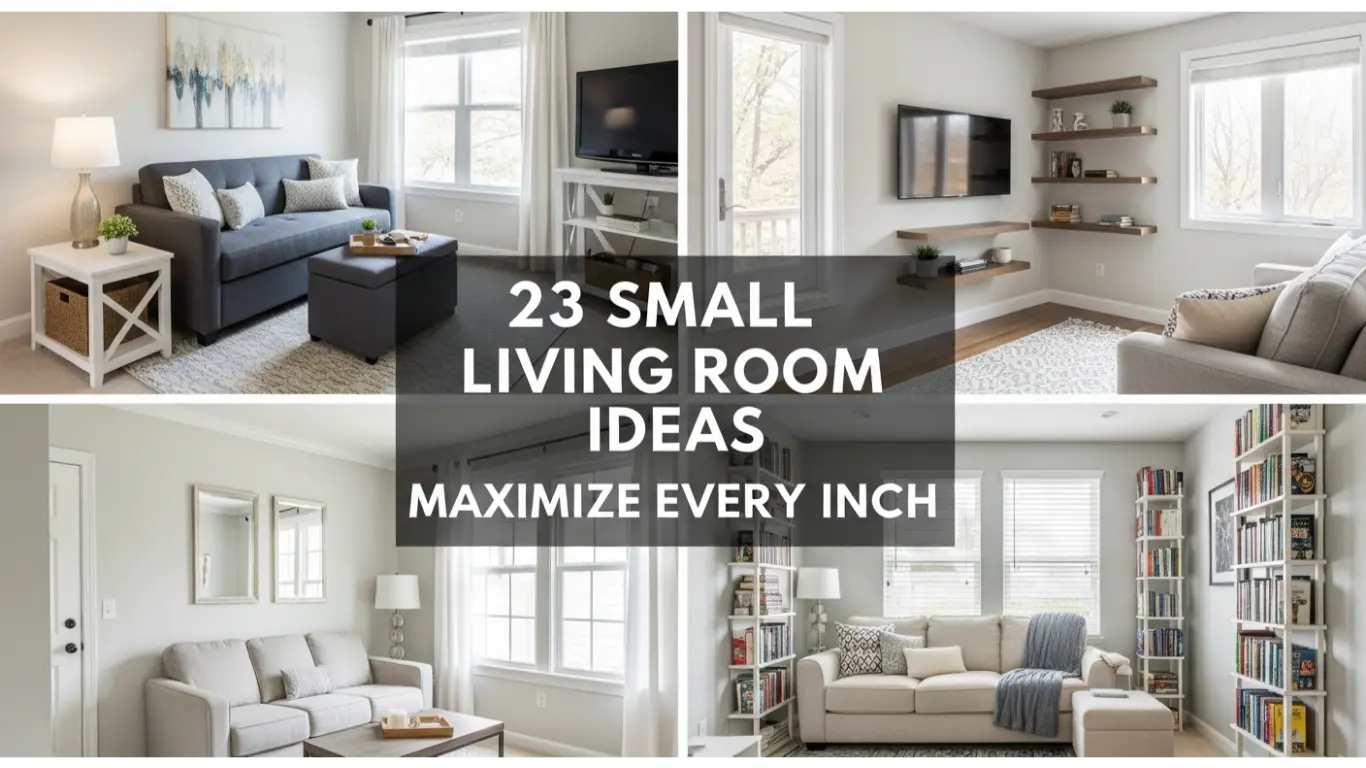
23 Small Living Room Ideas Maximize Every Inch
A small living room can feel limiting, but it does not have to be. With the right layout, furniture choices, and visual tricks, even the tightest space can feel open, stylish, and practical. This guide focuses on real, usable design ideas that help you get more comfort, storage, and personality without crowding your room.
Each idea below is designed for everyday living. These are not showroom concepts. They are proven approaches that designers use to make small spaces work harder while still feeling warm and human. If you want a living room that feels bigger than its square footage, you are in the right place.
1. Small Living Room Ideas Maximize Every Inch With Smart Furniture Scale
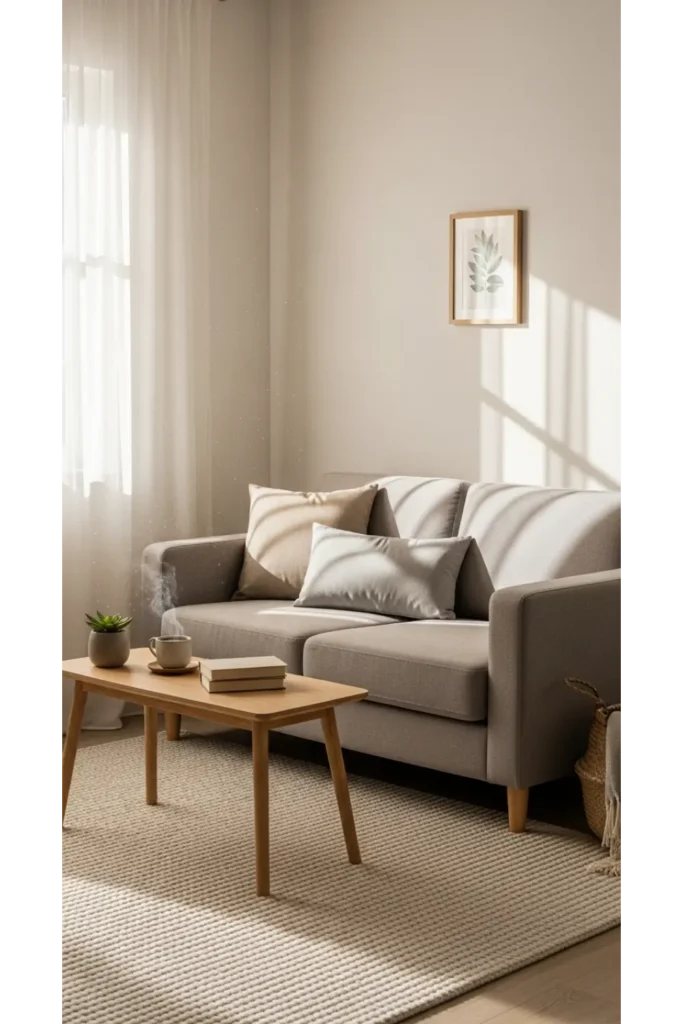
Small living room ideas maximize every inch when furniture fits the space instead of overpowering it. Choose a sofa with clean lines, exposed legs, and a shallow depth. This keeps visual weight low and allows light to move freely through the room. Avoid bulky armrests and oversized cushions that eat up valuable floor area.
Balance the seating with a slim coffee table or nesting tables that tuck away easily. When every piece feels intentional and right sized, the room feels calm instead of cramped. This approach creates better flow, improves comfort, and makes daily living easier in a compact space.
2. Use Vertical Space to Free the Floor

When floor space is limited, vertical design becomes your best ally. Tall shelving units or wall mounted cabinets draw the eye upward, making the ceiling feel higher. This simple shift reduces clutter at ground level and opens walking paths that make the room feel larger.
Use vertical storage for books, decor, and everyday items you want close by. Keep heavier objects lower and lighter decor higher to maintain balance. This method improves organization while preserving openness, which is essential in a small living room that needs to work hard every day.
3. Choose Light Reflective Colors
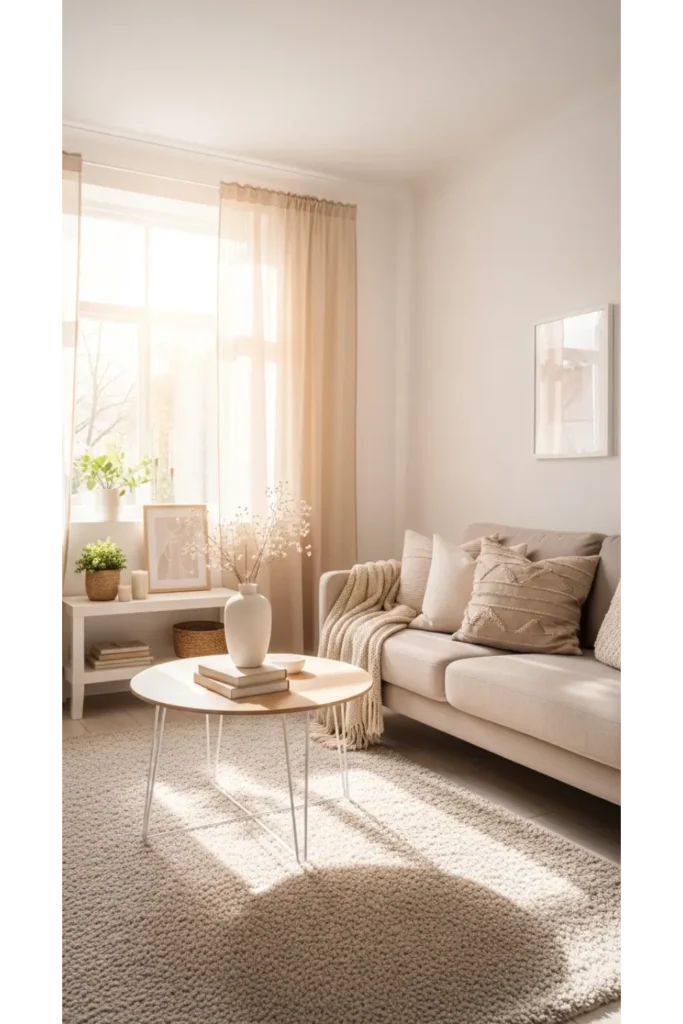
Light colors expand visual boundaries. Soft whites, warm creams, and pale grays reflect natural light and reduce harsh shadows. This instantly makes a small living room feel more open and breathable without changing the layout.
Add depth through texture instead of dark colors. Linen curtains, woven rugs, and matte finishes keep the palette interesting while maintaining brightness. The goal is not sterile minimalism but a calm, welcoming space that feels larger than it is.
4. Float Furniture Away From Walls

Pushing all furniture against the walls often backfires. Floating key pieces like the sofa a few inches forward can improve flow and make the room feel more intentional. This creates subtle zones without adding bulk.
Use a rug to anchor the seating area and define the space. Even in a small living room, this layout trick adds depth and helps the room feel designed rather than improvised. The result feels balanced and surprisingly spacious.
5. Use Multipurpose Furniture
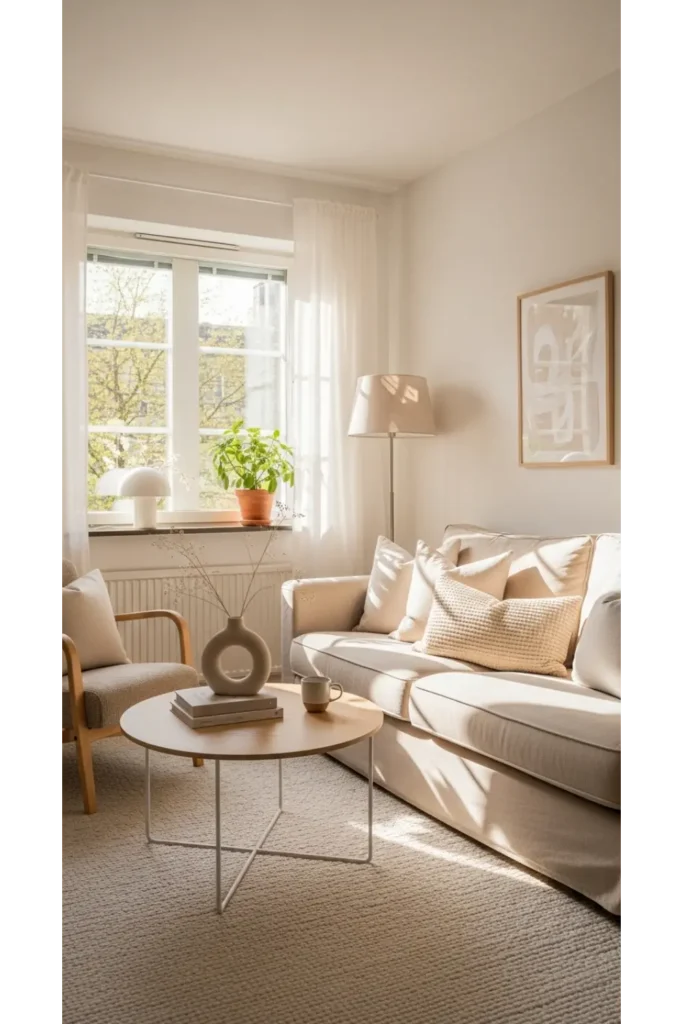
Multipurpose furniture is essential in compact spaces. A storage ottoman can serve as seating, a coffee table, and hidden storage. Sofa beds allow the living room to double as a guest space without permanent clutter.
Choose pieces that look good even when not in use. Clean silhouettes and neutral fabrics help these items blend seamlessly into the room. This strategy increases function without sacrificing comfort or style.
6. Add Mirrors to Expand the Space
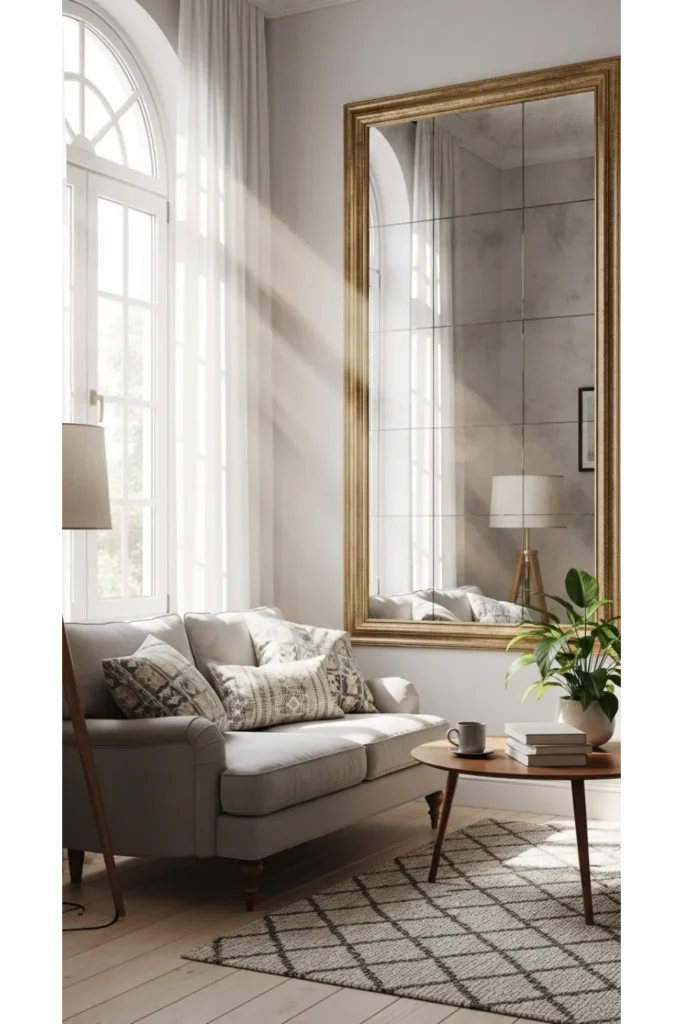
Mirrors visually double a room by reflecting light and views. Placing a large mirror opposite a window amplifies daylight and makes the living room feel more open instantly.
Choose simple frames that match your decor style. Oversized mirrors work especially well in small living rooms because they reduce visual breaks and create a continuous sense of space.
7. Use Wall Mounted Lighting
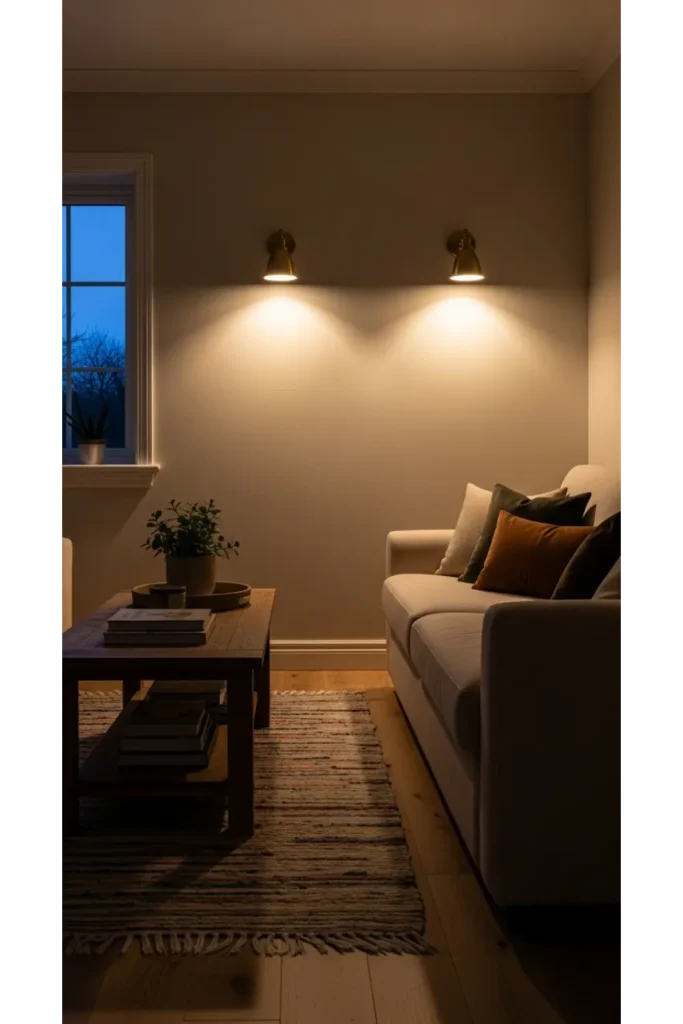
Floor lamps take up valuable real estate. Wall mounted sconces or swing arm lights free the floor and add layered lighting where you need it most.
This approach improves both function and atmosphere. It also keeps surfaces clear, which helps maintain a tidy, open feeling in a small living room.
8. Keep Window Treatments Minimal
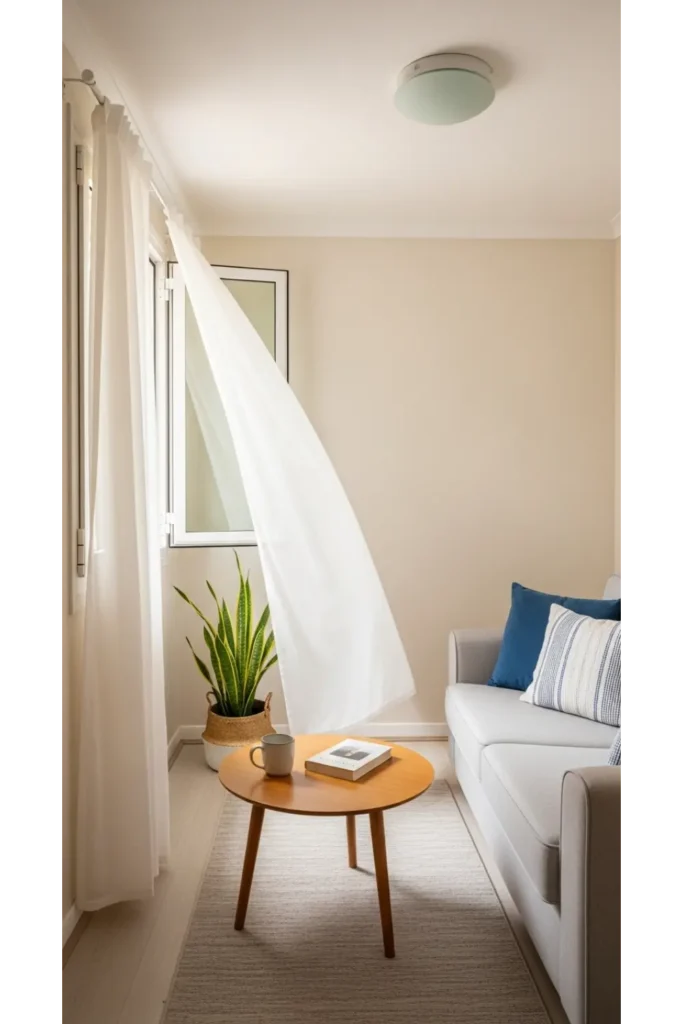
Heavy window treatments visually close in a small living room and interrupt natural light. Light, minimal coverings like sheer curtains, linen panels, or simple roller shades allow sunlight to move freely through the space. This openness reduces shadows and makes walls feel farther apart. When light spreads evenly, the room feels calmer, brighter, and more breathable without changing a single piece of furniture.
Mounting curtain rods higher than the window frame creates a subtle vertical illusion. The eye travels upward, making the ceiling appear taller than it actually is. Keeping fabrics light in color and texture also prevents visual clutter. These small decisions work together to make the room feel taller, wider, and more comfortable for daily living.
9. Use Rugs to Define Zones
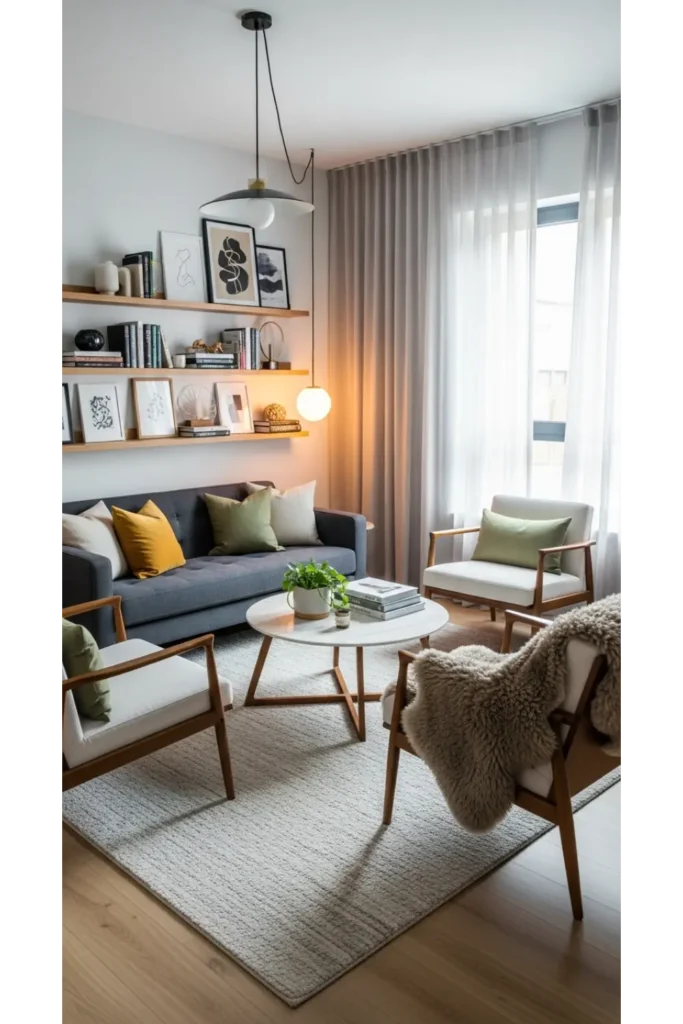
In compact living rooms, rugs act as visual anchors. A well sized area rug groups furniture together, helping the space feel intentional instead of scattered. Without this definition, small rooms can feel disorganized even when they are clean. The rug creates structure, guiding where seating begins and ends while keeping the layout easy to understand at a glance.
Choose a rug large enough for at least the front legs of sofas and chairs to rest on it. This connection visually expands the seating area rather than shrinking it. Simple patterns and lighter tones work best, as they add warmth without overwhelming the room. A good rug quietly supports flow, comfort, and balance.
10. Opt for Open Leg Furniture
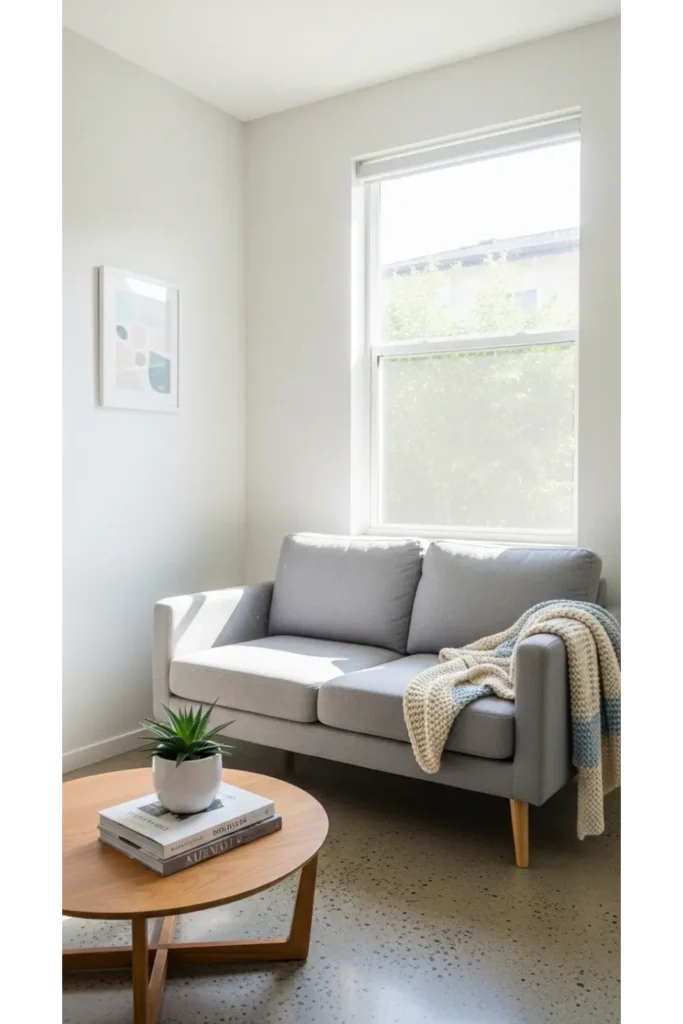
Furniture with exposed legs allows light and air to move underneath, which reduces visual heaviness. In a small living room, this makes a noticeable difference. The floor remains visible, creating the impression of more space. Sofas, chairs, and tables with slim legs feel lighter and more adaptable to tight layouts.
Avoid pieces with solid bases or heavy skirts that sit directly on the floor. Those designs block sightlines and make the room feel boxed in. Open leg furniture supports a sense of flow and keeps the space from feeling weighed down. It also pairs well with layered lighting and neutral palettes.
11. Use Built In Storage
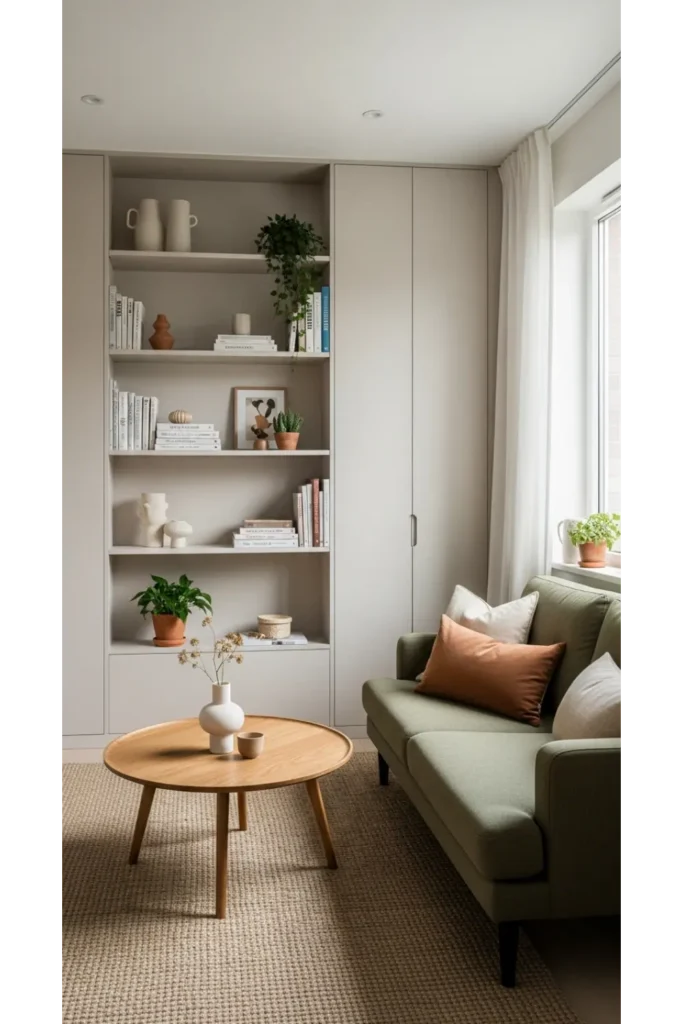
Built in storage uses wall space efficiently without adding bulky furniture. Shelves, cabinets, or media units designed into the wall create storage while maintaining clean lines. This approach works especially well in narrow or awkward rooms where standard furniture does not fit properly. Everything feels more intentional and less crowded.
Built ins also help control visual noise. When storage blends into the architecture, clutter stays hidden and the room feels calmer. Use closed cabinetry for everyday items and open shelves for a few curated pieces. The balance keeps the space functional while still feeling personal and lived in.
12. Let Fewer Pieces Make a Bigger Impact

In a small living room, visual breathing room matters as much as physical space. When every surface holds decor, the room starts to feel tight and restless. Allowing negative space to exist helps the eye move comfortably around the room. This creates a sense of openness that no amount of rearranging can replace. Fewer objects let the architecture and layout speak for themselves.
Instead of filling shelves and tables, choose one or two pieces that truly define the room’s character. A sculptural vase, a textured bowl, or a single plant can carry more presence than many small items combined. This intentional restraint adds confidence to the design and makes the space feel curated rather than crowded.
13. Choose Low Profile Seating
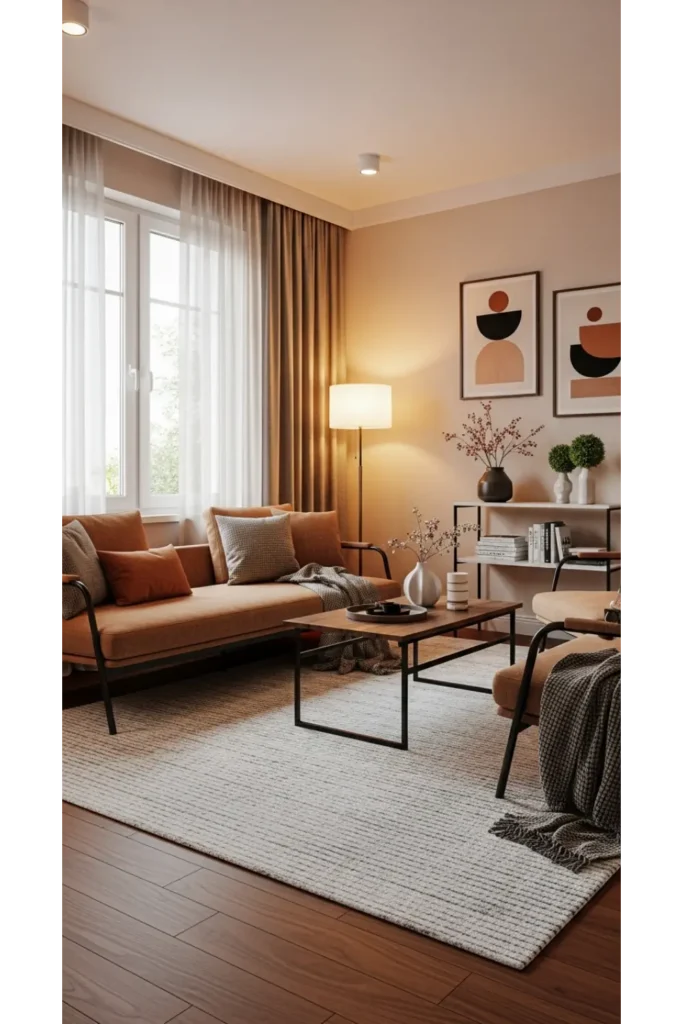
Low profile seating keeps sightlines open across the room. When furniture sits closer to the floor, ceilings appear higher and the room feels more expansive. This works particularly well in apartments or homes with standard ceiling heights where vertical space feels limited.
Pair low seating with proportionate tables and minimal back cushions to maintain comfort. Avoid overly deep or bulky designs that eat up floor space. The goal is relaxed seating that supports the room visually rather than dominating it. This balance improves both comfort and flow.
14. Use Glass or Acrylic Furniture
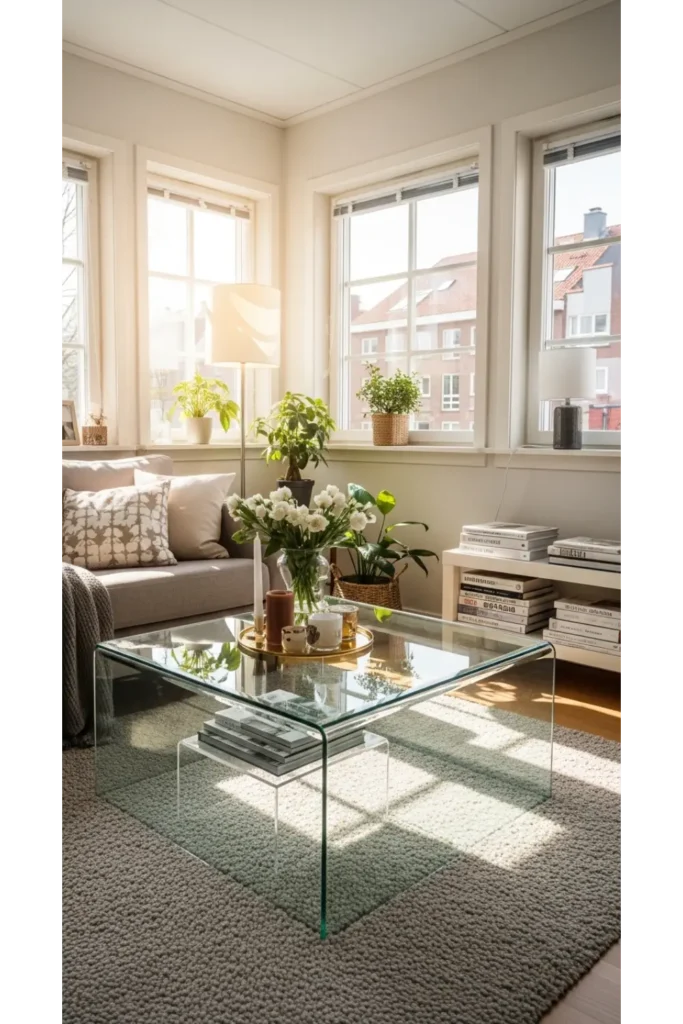
Transparent furniture visually disappears, which is powerful in small spaces. Glass or acrylic tables provide function without blocking views across the room. This keeps the layout feeling open even when furniture is present in the center of the space.
These materials work especially well for coffee tables, side tables, and consoles. They reflect light and reduce visual interruption. When paired with solid seating, transparent pieces create contrast that feels intentional and modern without adding clutter.
15. Create Hidden Storage Zones
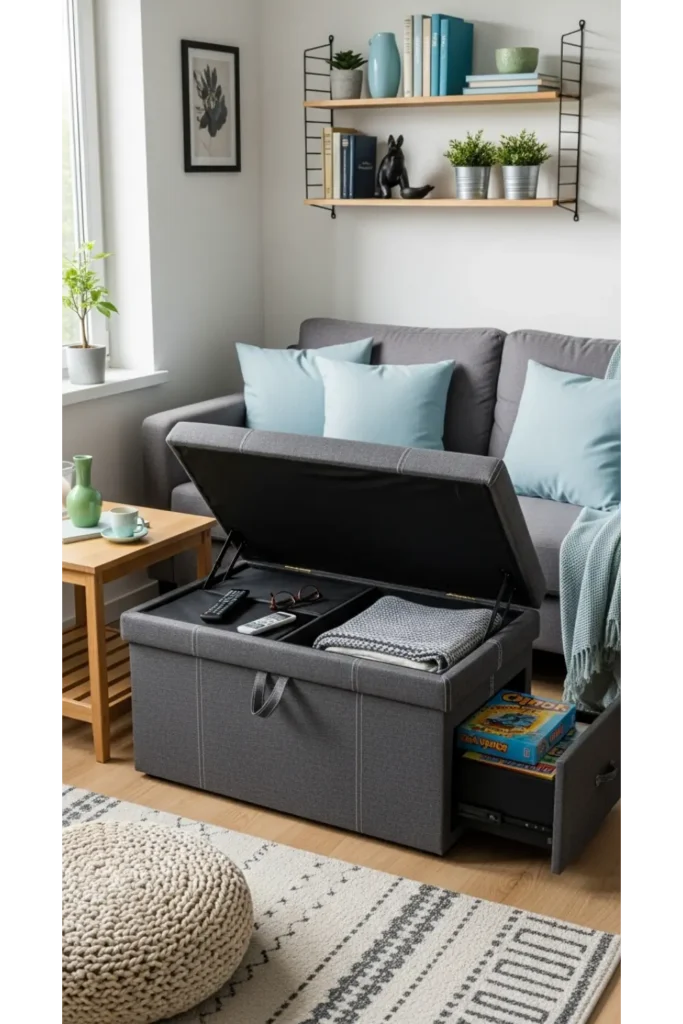
Hidden storage helps maintain order without adding visible bulk. Ottomans with storage, benches with lift tops, or drawers under seating keep everyday items out of sight. This is especially helpful in small living rooms where clutter builds quickly.
By storing blankets, books, or electronics discreetly, the room stays calm and functional. Hidden storage supports daily routines while preserving a clean look. It allows the living room to feel like a place to relax rather than manage mess.
16. Keep a Consistent Color Palette
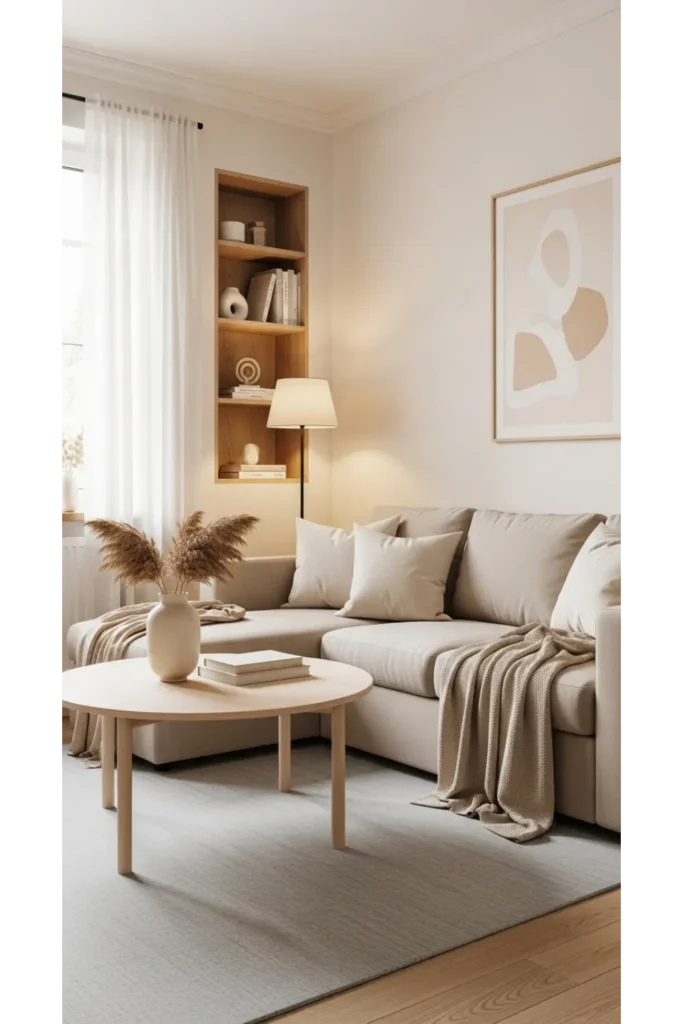
A consistent color palette reduces visual breaks and helps the room feel unified. When walls, furniture, and textiles share related tones, the eye moves smoothly through the space. This continuity makes a small living room feel larger and more composed.
Use subtle variations in texture and shade to add depth without contrast overload. Soft neutrals, warm grays, or muted earth tones work well together. This approach creates calm while still allowing personality through materials and finishes.
17. Use Sliding Doors or Curtains
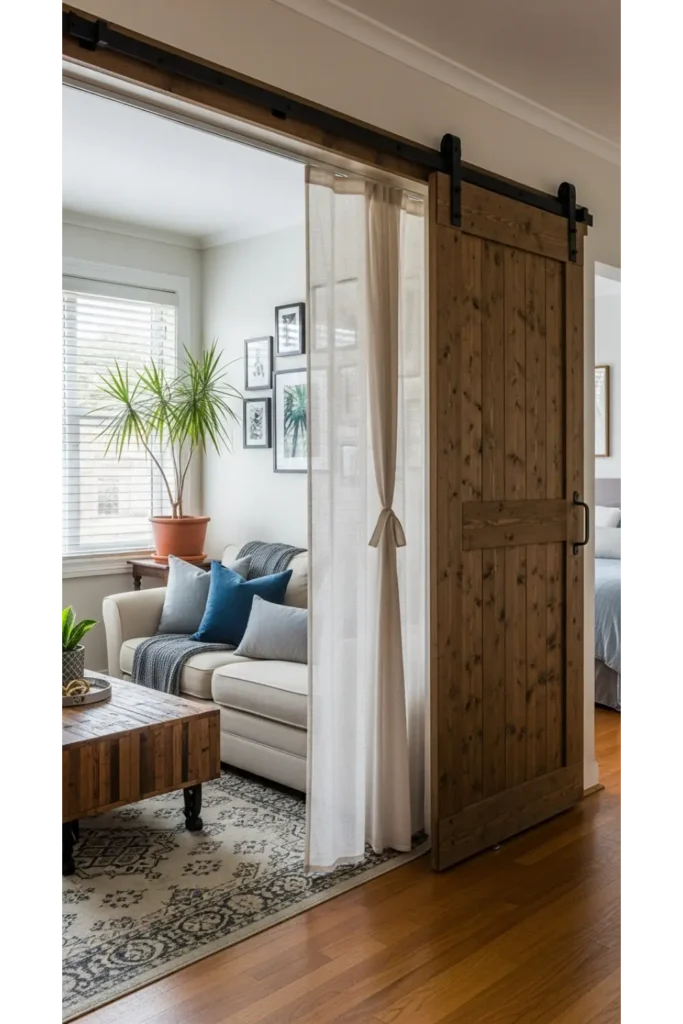
Traditional swing doors take up valuable floor space. Sliding doors or ceiling mounted curtains provide separation without intruding into the room. They allow flexibility, especially in studio apartments or open layouts.
Curtains soften the transition between spaces, while sliding doors offer privacy when needed. Both options preserve flow and light. When not in use, they disappear visually, helping the living room stay open and adaptable.
18. Scale Artwork Correctly
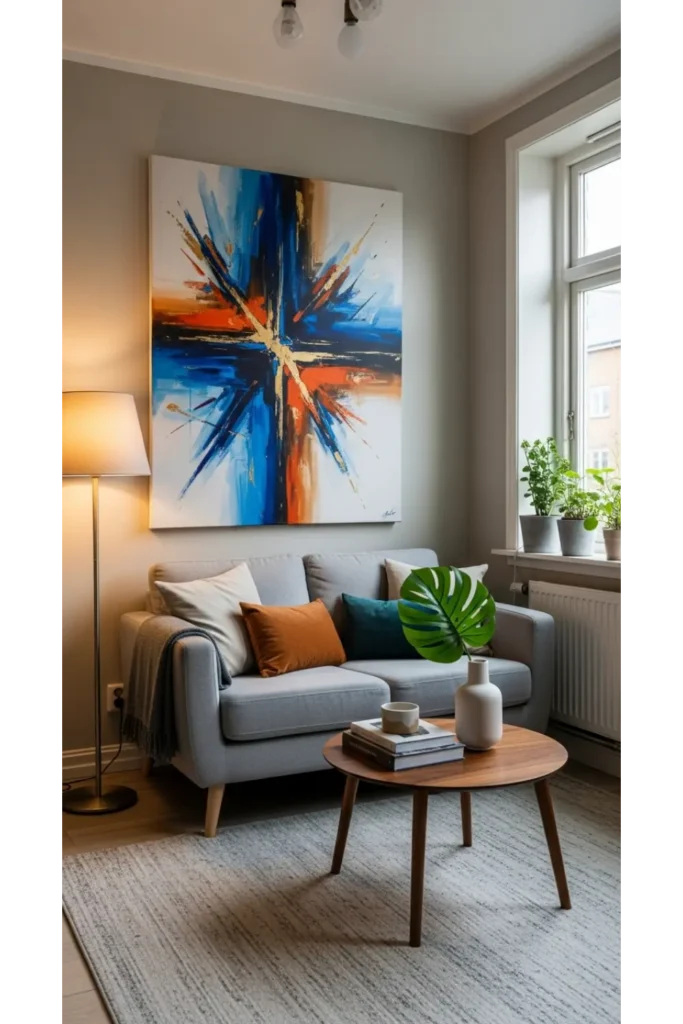
Artwork should match the scale of the room. One larger piece often works better than many small ones in a compact space. It creates a clear focal point without adding clutter or visual noise.
Choose art that complements the room’s color palette and mood. Position it where it anchors the seating area or balances the layout. Properly scaled art adds personality while keeping the room visually calm and organized.
19. Optimize Corner Spaces
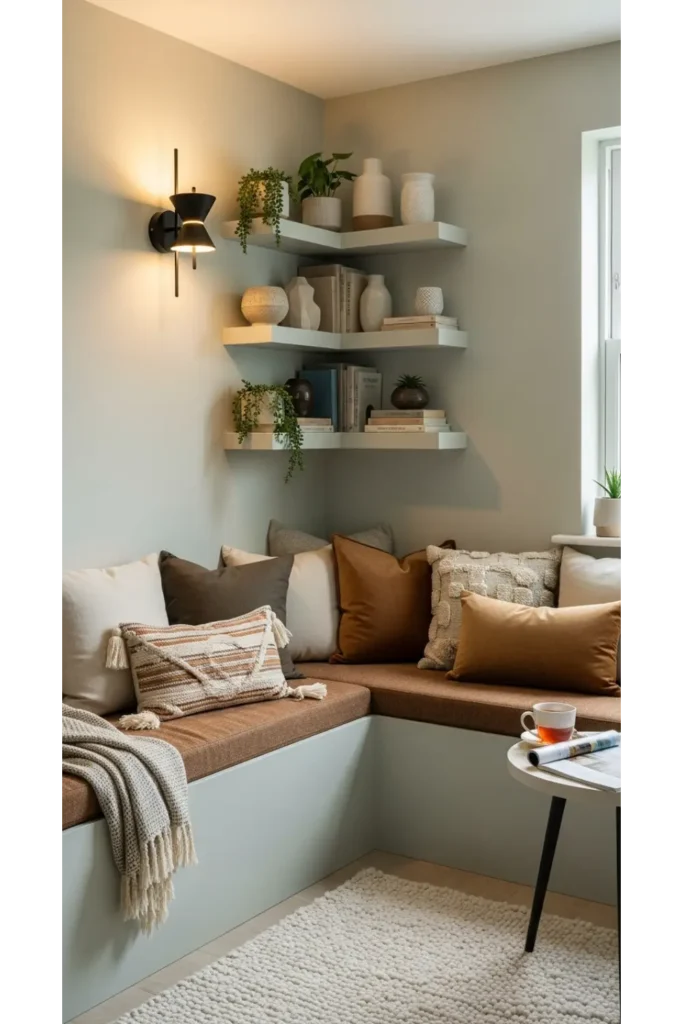
Corners often go unused, yet they offer valuable space. Corner shelving, seating, or compact desks turn dead zones into functional areas. This helps distribute furniture more evenly throughout the room.
Using corners wisely prevents crowding in central areas. It also improves flow and creates cozy moments within the space. Thoughtful corner use makes the entire living room feel more efficient and balanced.
20. Keep Pathways Clear
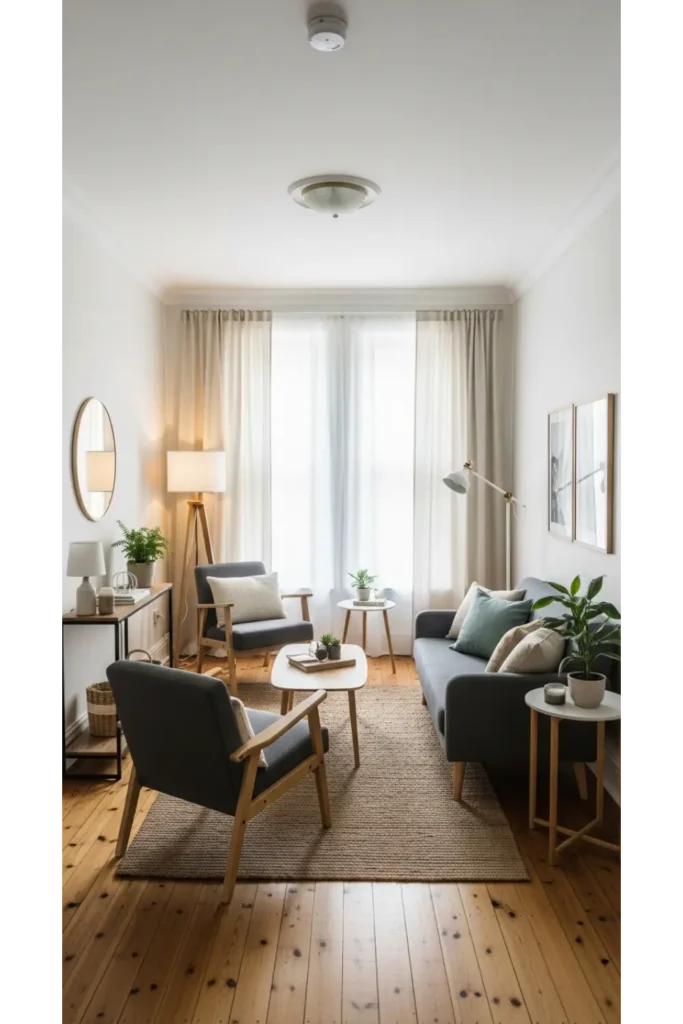
Clear pathways are essential in small living rooms. When movement feels restricted, the room instantly feels smaller. Furniture should support natural walking lines instead of blocking them.
Leave enough space between key pieces so movement feels easy and intuitive. This improves comfort and reduces visual tension. A room that flows well always feels larger, even when square footage stays the same.
21. Use Layered Lighting
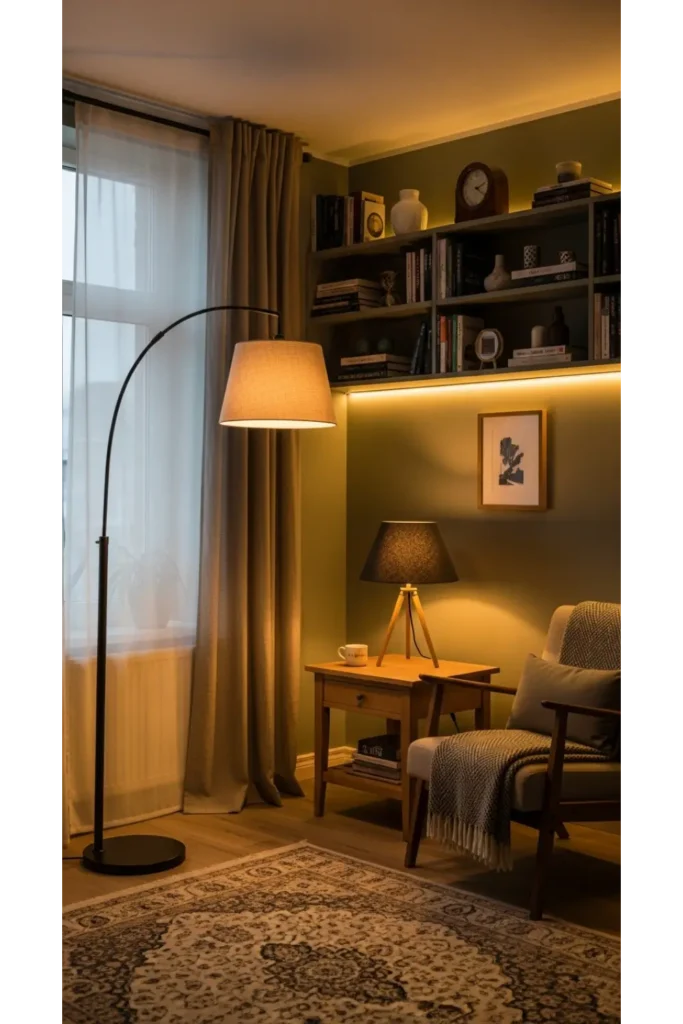
Layered lighting adds depth without taking up space. Combining ambient, task, and accent lighting creates balance and warmth. This prevents harsh shadows that can make small rooms feel tight.
Wall sconces, table lamps, and subtle accent lights work together to shape the room. Good lighting improves mood and makes the living room feel richer, more comfortable, and more welcoming at any time of day.
22. Choose Compact Media Units
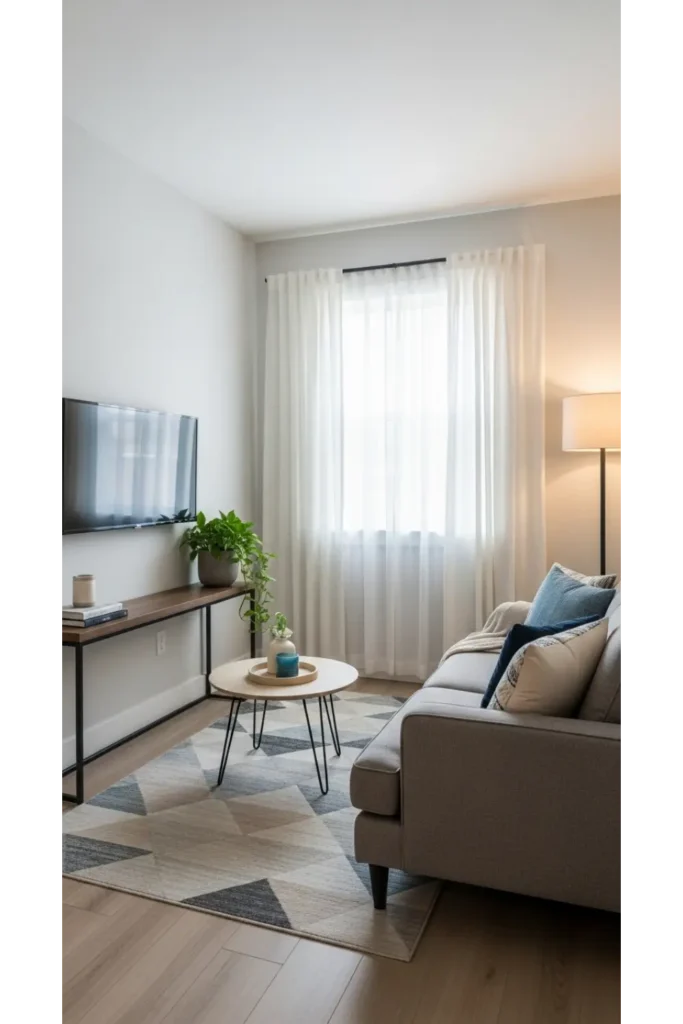
Large media units can dominate a small living room. Compact consoles or wall mounted TVs reduce visual bulk and free up floor space. This keeps the room feeling open and functional.
Choose units with closed storage to hide cables and accessories. Clean lines and low profiles help media areas blend seamlessly into the room instead of standing out.
23. Edit Regularly and Adjust
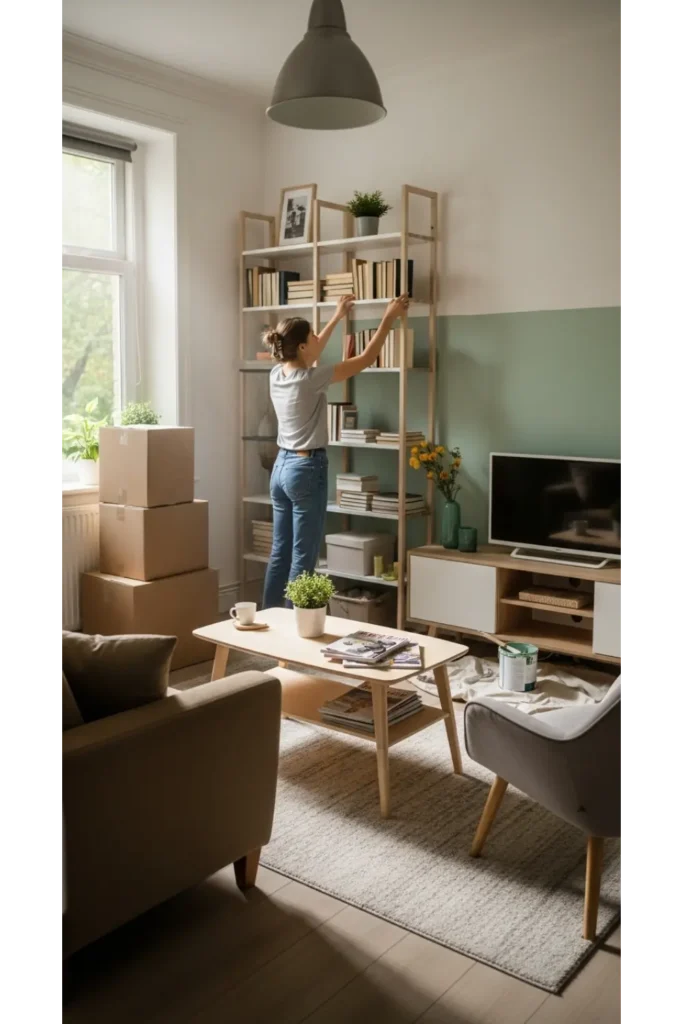
Small spaces require regular editing. Items that once felt useful can slowly create clutter. Taking time to reassess what belongs in the room keeps it functional and stress free.
Seasonal adjustments also help the space evolve with your needs. Removing unused pieces and refining layouts ensures the living room continues to feel comfortable, open, and easy to live in.
Conclusion
A small living room does not limit your style or comfort when you design with intention. By choosing the right scale, using vertical space, and prioritizing function, you can create a space that feels open, organized, and genuinely enjoyable to live in. These ideas focus on real life solutions that help you make the most of every inch without sacrificing warmth or personality.