
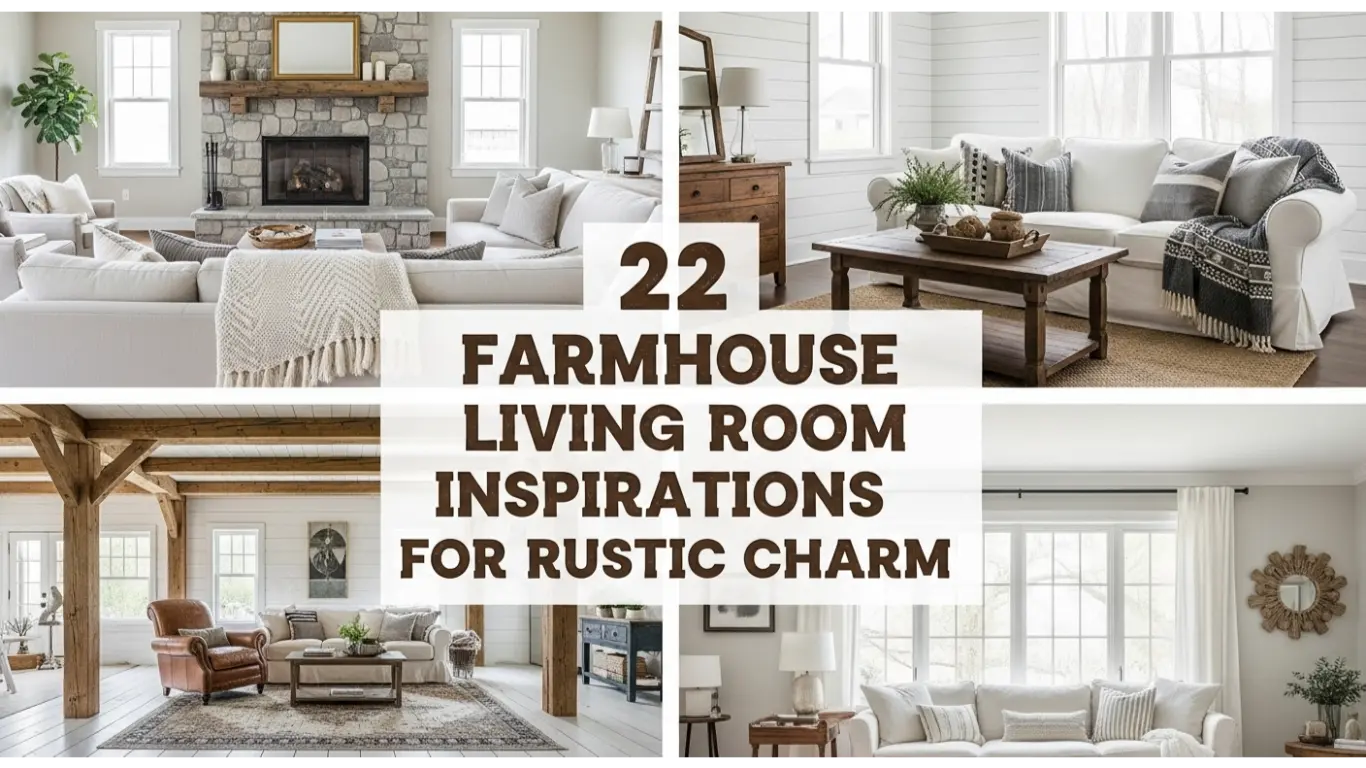
22 Farmhouse Living Room Inspirations for Rustic Charm
A farmhouse living room should feel warm, lived in, and deeply comforting. The best spaces blend rustic character with everyday comfort, creating rooms that invite you to sit down and stay awhile. These farmhouse living room inspirations focus on natural textures, thoughtful details, and timeless design choices that feel personal rather than staged. Whether you love weathered wood or cozy textiles, these ideas will help you shape a living room that feels grounded, welcoming, and effortlessly charming.
1. Farmhouse Living Room Inspirations for Rustic Charm
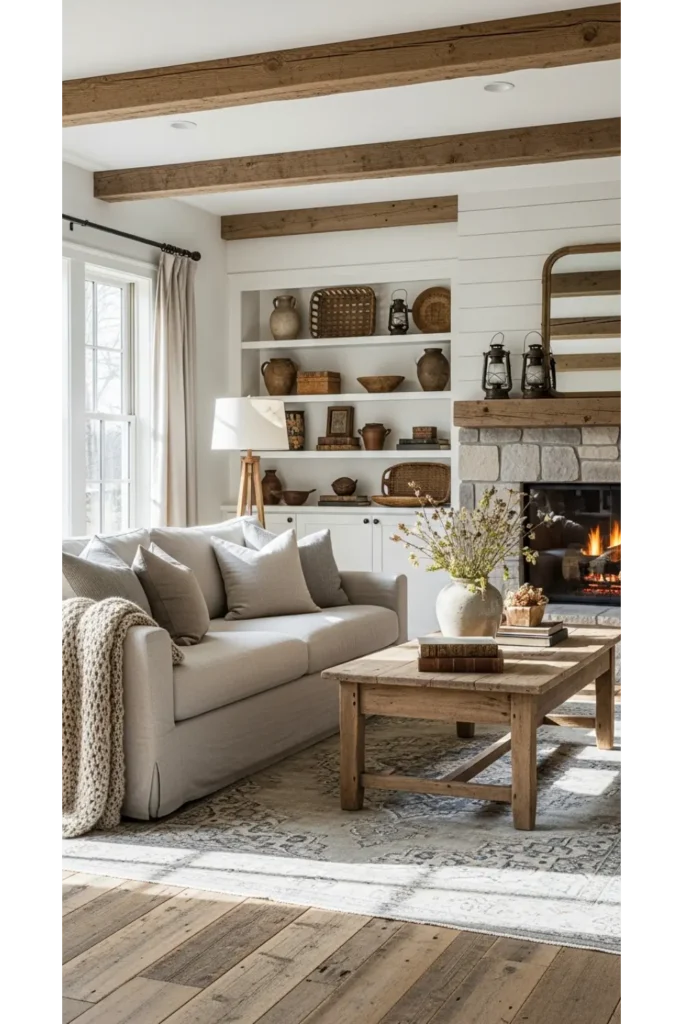
Farmhouse living room inspirations for rustic charm begin with balance. Natural wood elements set the tone, while soft fabrics keep the space comfortable. A neutral sofa paired with a worn coffee table creates an easygoing foundation. Subtle imperfections in materials add authenticity and prevent the room from feeling overly designed or cold.
Layered textures bring the room to life. Linen pillows, a wool throw, and a vintage rug work together to add depth. Keep the color palette calm with creams, warm grays, and muted earth tones. This approach creates a timeless farmhouse look that feels both relaxed and refined.
2. Exposed Wood Beams for Instant Warmth
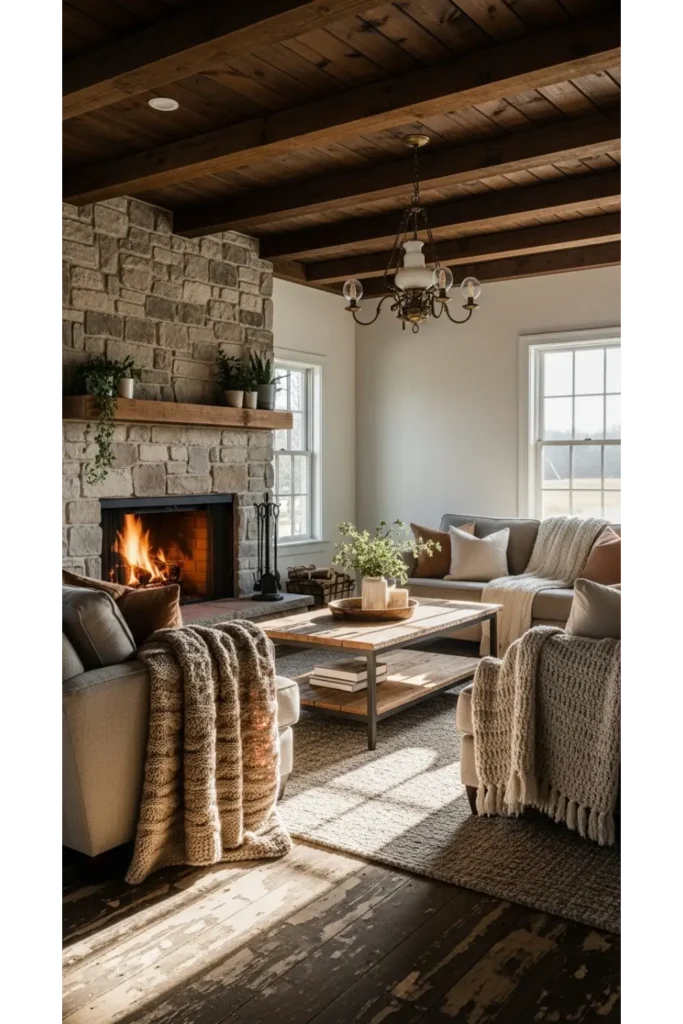
Exposed wood beams instantly anchor a farmhouse living room. They draw the eye upward and add architectural interest that feels historic and grounded. Even in newer homes, faux beams can recreate this effect without heavy renovation. The wood grain brings warmth and contrasts beautifully with light walls.
Pair beams with simple furnishings to avoid visual overload. Soft sofas and understated decor allow the ceiling to shine. When combined with natural light, beams create a sense of openness while still maintaining that cozy farmhouse atmosphere people love.
3. Stone Fireplace as a Rustic Focal Point
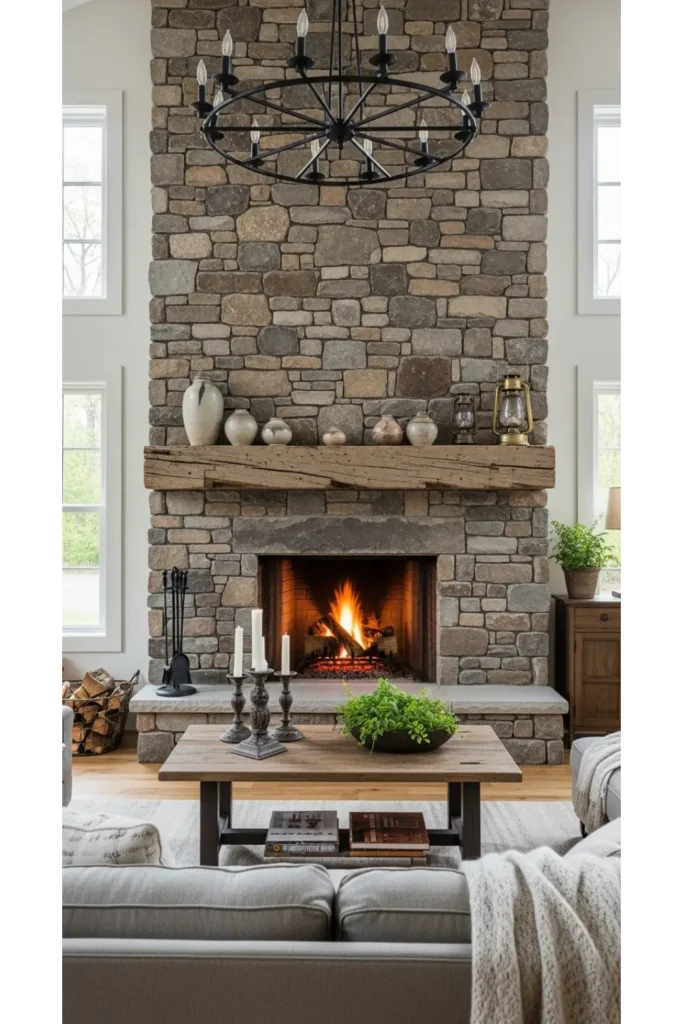
A stone fireplace creates a strong focal point rooted in rustic tradition. Natural stone textures add weight and permanence to the living room. Whether rough or refined, stone feels honest and timeless. It instantly makes the space feel gathered and welcoming.
Keep the mantel styling simple with vintage finds or seasonal greenery. Let the stone speak for itself. Surround the fireplace with comfortable seating to encourage conversation and connection, reinforcing the farmhouse idea of shared moments and warmth.
4. Neutral Color Palettes with Depth
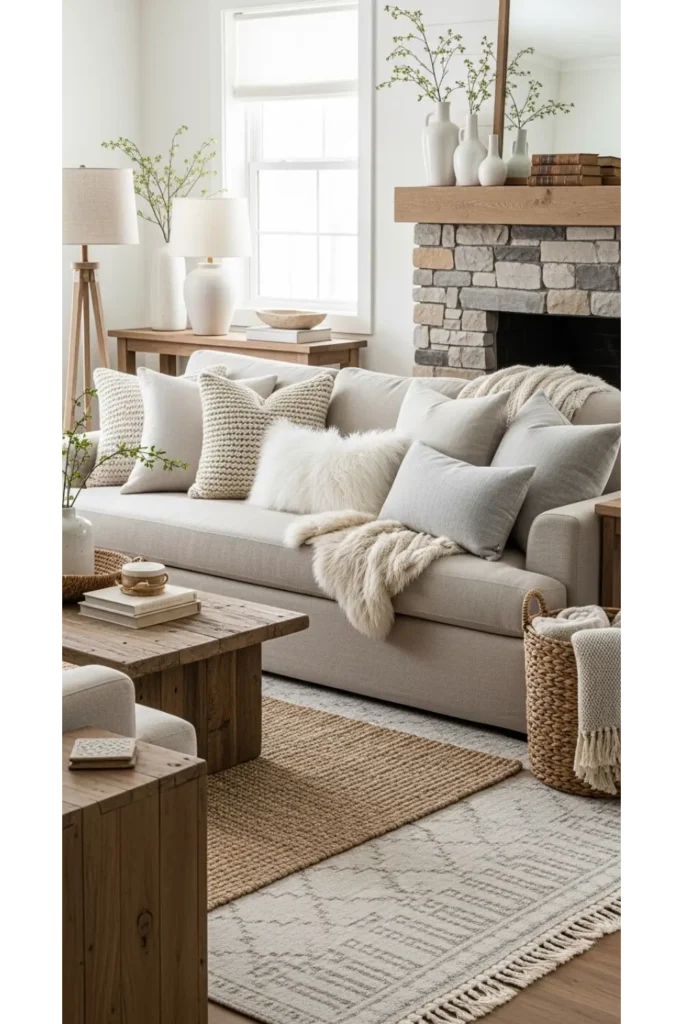
Neutral colors define many farmhouse living rooms, but depth matters. Soft whites, warm taupes, and gentle grays create a calm base without feeling flat. The key lies in mixing tones rather than sticking to one shade.
Add contrast through texture. Woven baskets, aged wood, and plush textiles bring life to the palette. This approach keeps the room visually interesting while preserving the relaxed farmhouse feel that never goes out of style.
5. Vintage Furniture with Stories
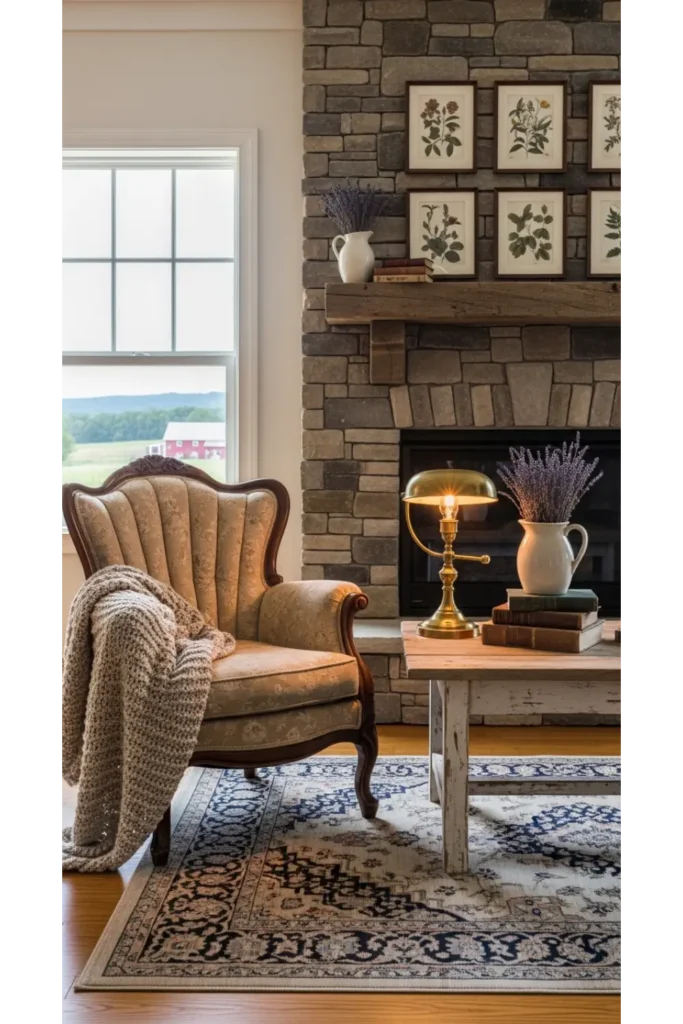
Vintage furniture adds soul to a farmhouse living room. Each piece carries history, making the space feel personal and layered. A worn armchair or antique side table can become a quiet statement without overpowering the room.
Mix vintage finds with modern comfort. This blend keeps the space livable and avoids a museum-like feel. When furniture tells a story, the living room becomes more than just a design. It becomes a reflection of life and memory.
6. Cozy Slipcovered Seating
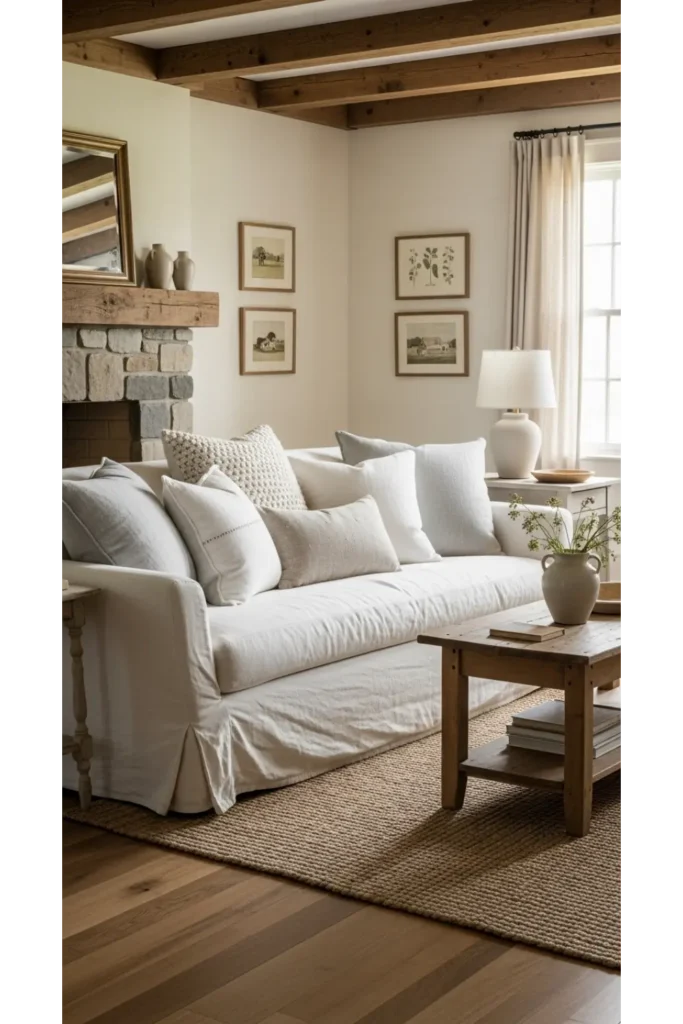
Slipcovered sofas are a farmhouse favorite for good reason. They feel casual, inviting, and easy to live with. Their soft lines and relaxed fit encourage comfort and daily use, which aligns perfectly with farmhouse values.
Choose durable fabrics in light neutral shades. Slipcovers also offer flexibility since they can be cleaned or changed. This practical beauty supports a rustic charm that feels authentic, not precious.
7. Layered Rugs for Lived In Comfort
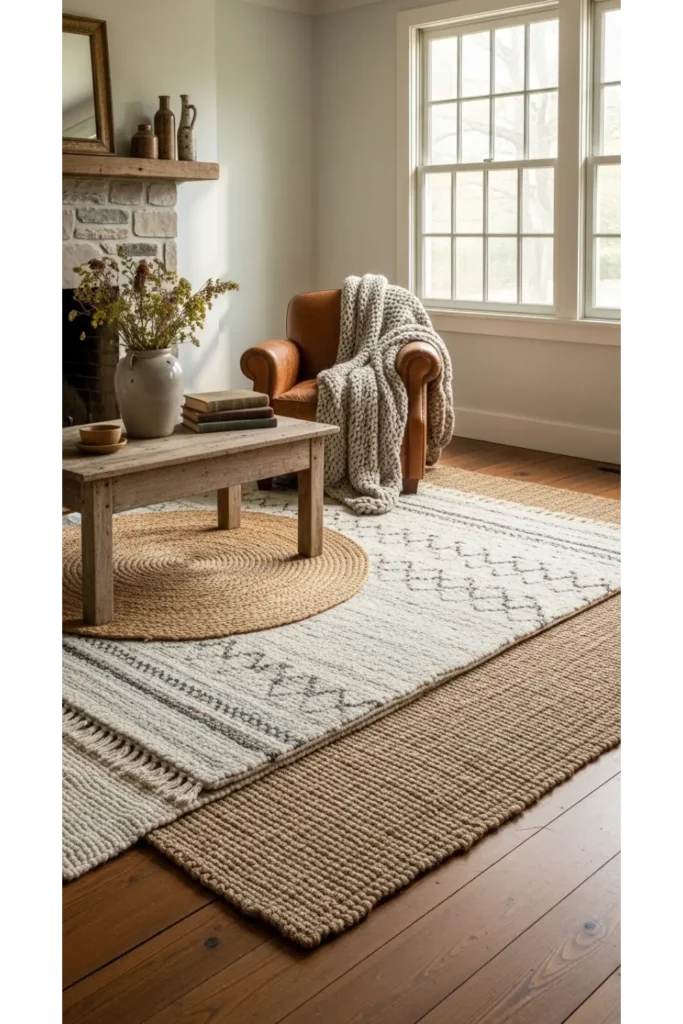
Layering rugs adds warmth and visual interest to farmhouse living rooms. A natural fiber rug topped with a patterned vintage piece creates depth underfoot. This technique softens wood floors and makes the space feel collected over time.
Stick to earthy colors and subtle patterns. The layered look feels casual and welcoming. It reflects the farmhouse spirit of function first, beauty second, yet still delivers strong style.
8. Shiplap Walls for Classic Texture
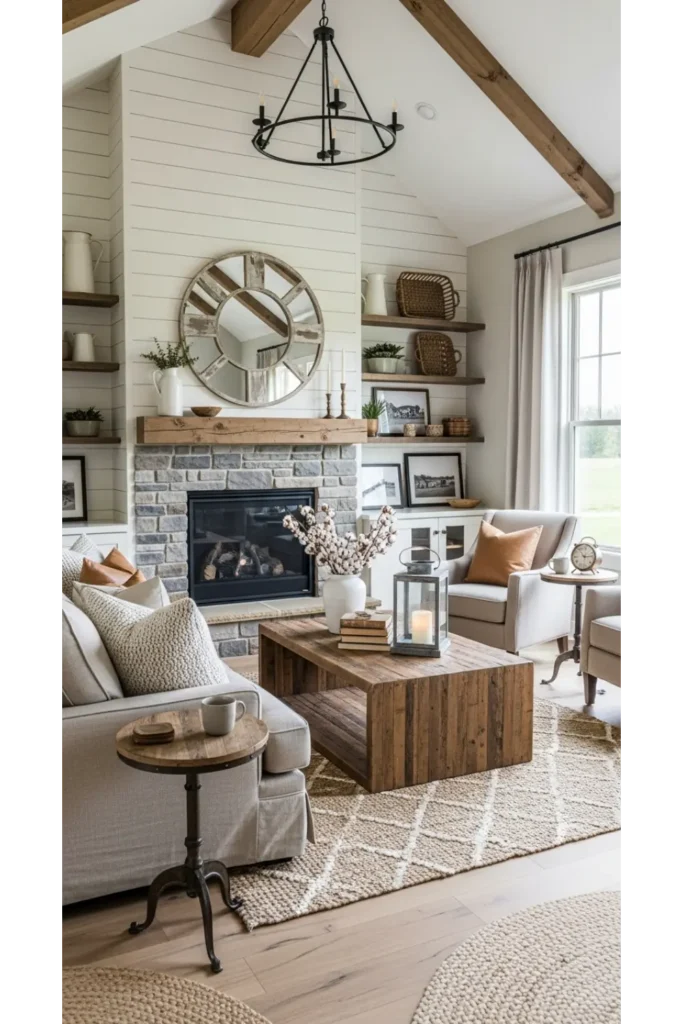
Shiplap walls bring instant farmhouse character. Their clean lines add texture without overwhelming the room. Painted in soft white or warm cream, shiplap brightens the space while keeping it grounded.
Use shiplap on one focal wall or throughout the room. Pair it with natural wood accents to avoid a sterile look. This balance keeps the living room cozy and visually rich.
9. Open Shelving with Thoughtful Styling
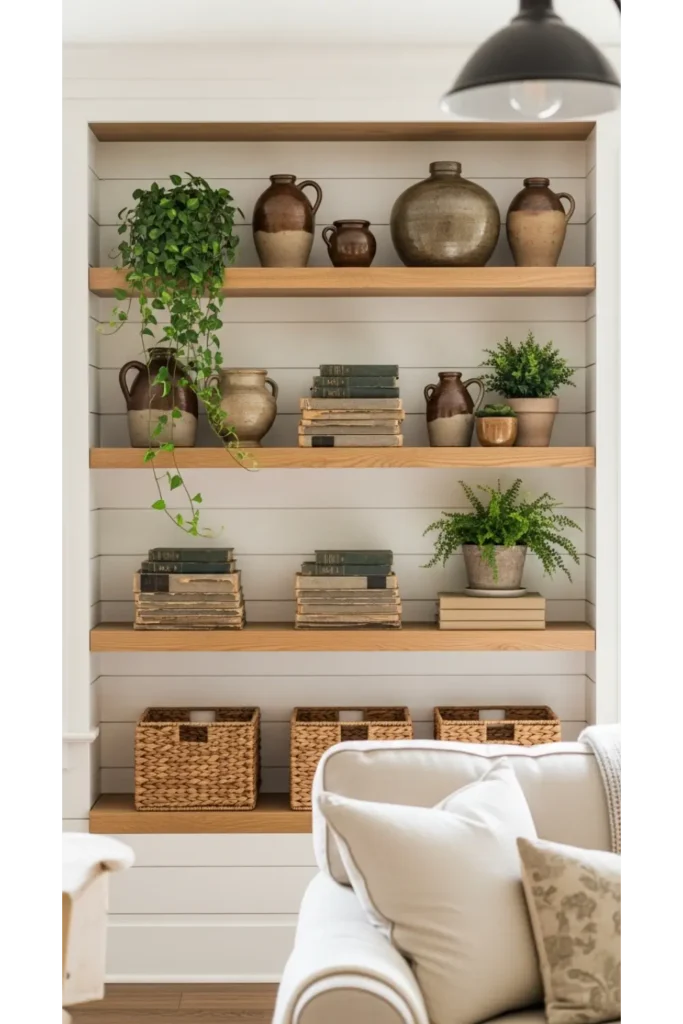
Open shelving adds both function and charm. It allows you to display meaningful objects while keeping the space light. Handmade pottery, old books, and simple greenery feel right at home in farmhouse living rooms.
Avoid overcrowding the shelves. Negative space matters. Thoughtful styling keeps the room feeling calm and intentional, reinforcing rustic charm without clutter.
10. Layered Ambient Lighting for a Cozy Farmhouse Mood
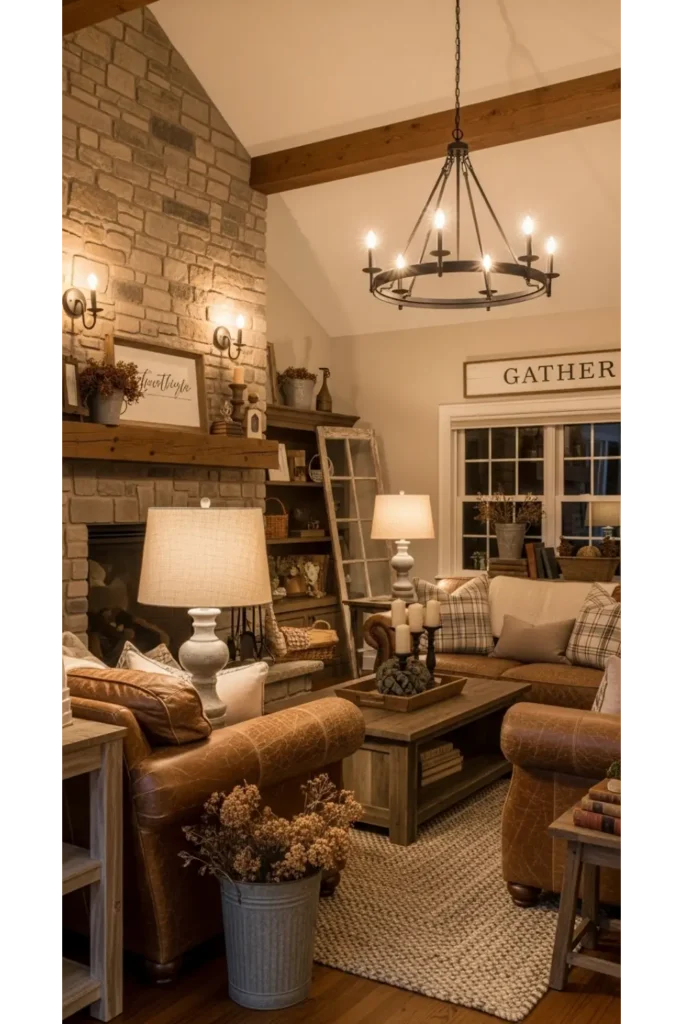
Layered ambient lighting creates depth and comfort in a farmhouse living room, especially during the evening hours. Instead of relying on a single light source, combining lamps, sconces, and subtle overhead fixtures builds a soft, welcoming atmosphere. This approach mirrors how natural light fades at sunset, allowing the room to transition gently from day to night while maintaining warmth and visual balance.
Materials and placement matter as much as brightness. Fixtures made from wood, ceramic, or aged metal blend naturally with rustic interiors. Positioning lights at different heights helps eliminate harsh shadows and adds visual rhythm. When lighting feels intentional yet understated, the living room becomes a space where people naturally relax, unwind, and feel at home.
11. Natural Wood Coffee Tables
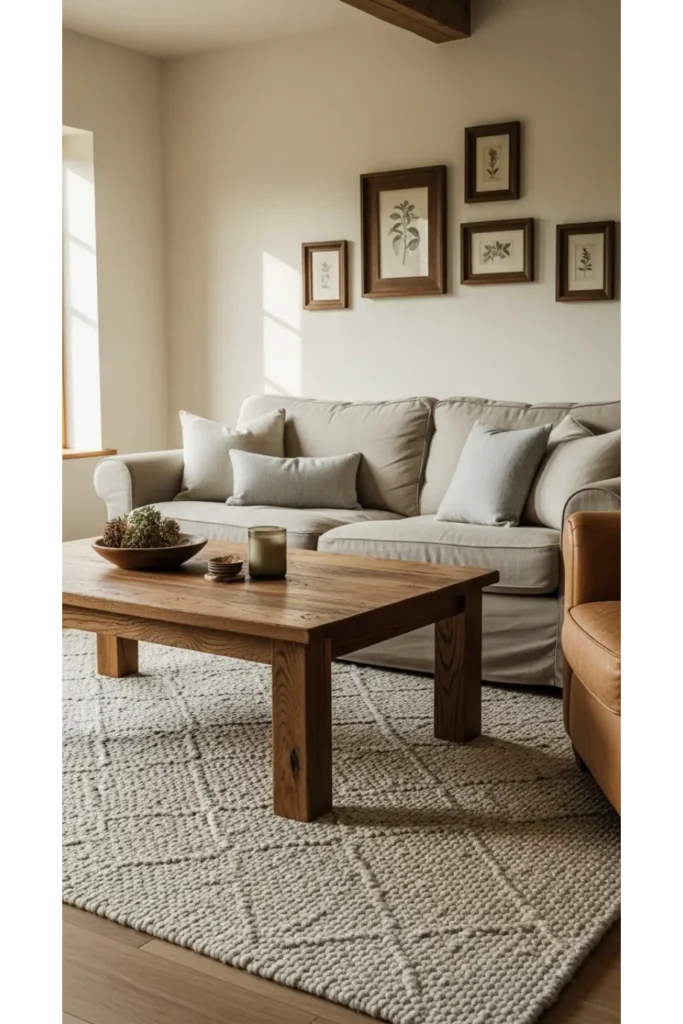
A natural wood coffee table acts as the emotional anchor of a farmhouse living room. Its solid presence grounds the seating area and brings an unmistakable sense of authenticity. Grain patterns, knots, and worn edges tell a story that polished surfaces never can. Whether reclaimed or handcrafted, wood introduces warmth and stability, helping the room feel rooted and inviting rather than styled for display.
Styling should feel intentional but effortless. A few well chosen books, a ceramic bowl, or a simple tray allow the wood to remain the hero. Avoid clutter or glossy accessories that distract from the material itself. The beauty of a farmhouse living room lies in restraint, where natural materials speak louder than decorative excess and everyday use enhances character over time.
12. Farmhouse Inspired Wall Art
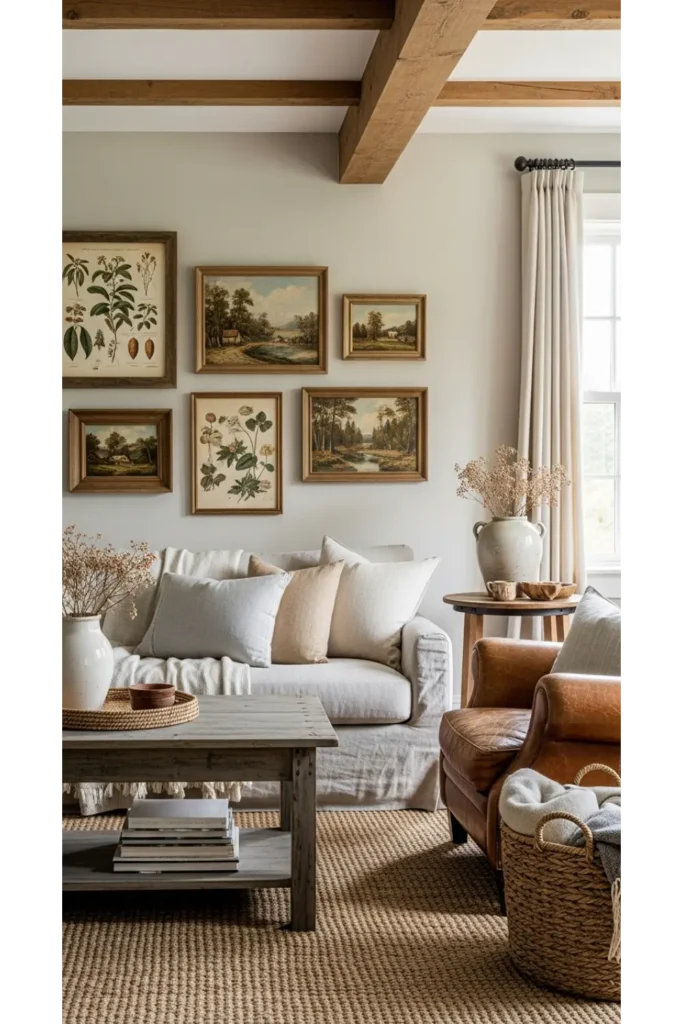
Wall art in a farmhouse living room should feel collected, not curated. Pieces inspired by nature, rural landscapes, or quiet moments bring emotional warmth and visual balance. Art works best when it supports the room’s atmosphere rather than competing with it. Subtle tones and familiar imagery help the space feel calm, personal, and grounded, reinforcing the relaxed pace that defines farmhouse interiors.
Frames matter just as much as the artwork itself. Weathered wood, antique finishes, or simple matte textures add depth without drawing attention away from the content. Spacing also plays a role. Giving art room to breathe keeps walls from feeling crowded and allows each piece to contribute gently to the overall story of the living space.
13. Comfortable Reading Corners
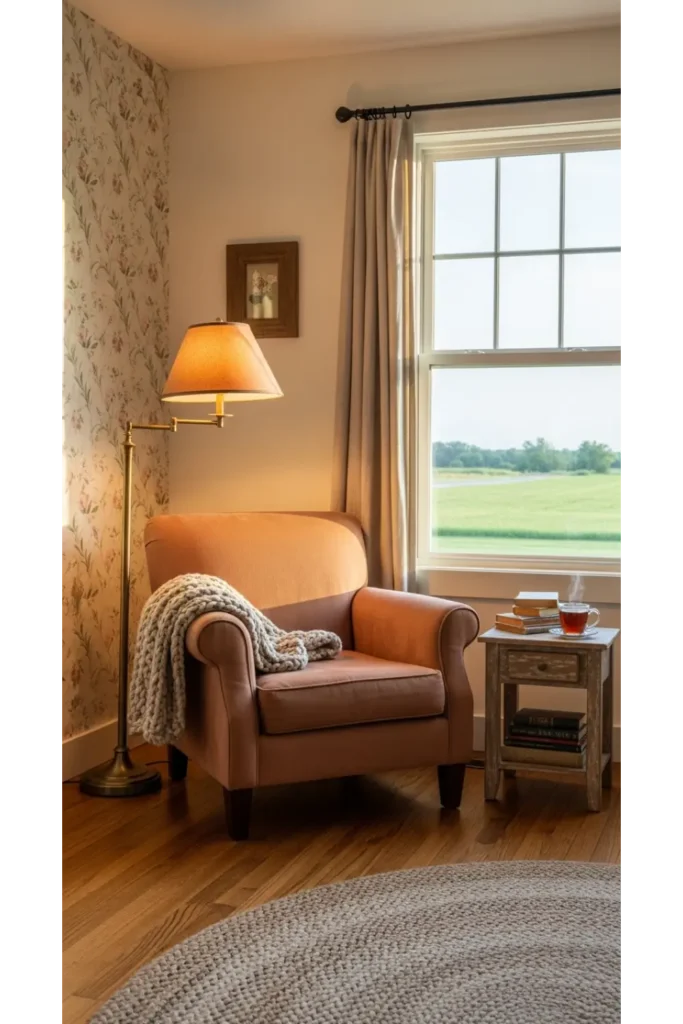
A reading corner adds purpose and intimacy to a farmhouse living room. It creates a quiet pause within the larger space, inviting rest and reflection. A supportive armchair, placed near natural light, becomes a retreat that feels both private and connected. This kind of corner supports slower living, encouraging moments of calm that align naturally with rustic design values.
Texture defines comfort in these spaces. Soft throws, linen pillows, and a warm rug help the corner feel welcoming without excess. Lighting should feel gentle rather than harsh, offering enough brightness for reading while maintaining a relaxed mood. When thoughtfully designed, a reading corner becomes one of the most lived in and loved areas of the room.
14. Woven Baskets for Storage
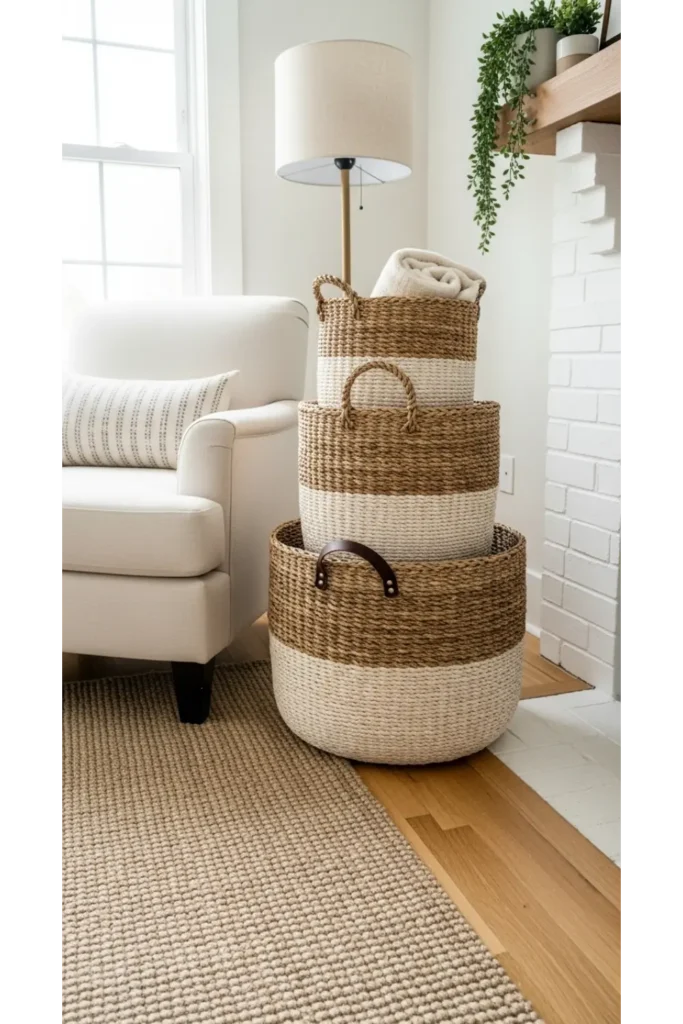
Woven baskets blend function and texture in a farmhouse living room. They offer practical storage while reinforcing the natural materials that define rustic charm. Placed beside seating or tucked under tables, baskets keep everyday items accessible without disrupting the room’s visual flow. Their organic shapes soften hard surfaces and prevent the space from feeling rigid or overly structured.
Material choice makes a difference. Natural fibers such as seagrass or rattan feel warm and timeless, aging gracefully over time. Using baskets consistently throughout the room creates visual cohesion while maintaining flexibility. Storage becomes part of the design rather than something hidden away, supporting both beauty and real life functionality.
15. Earthy Accent Colors
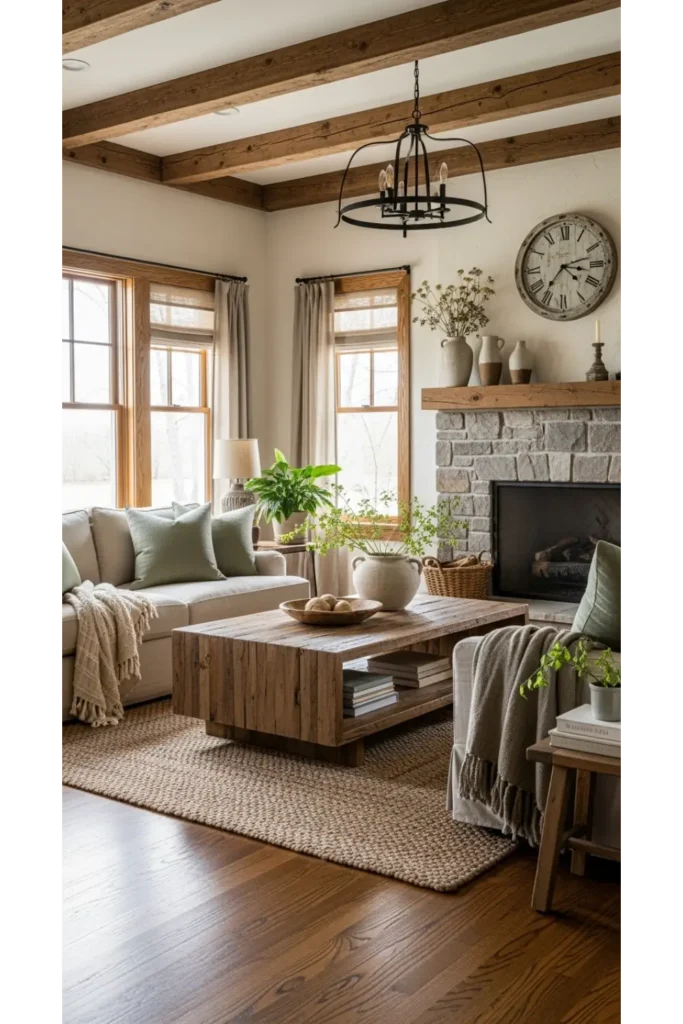
Earthy accent colors bring depth and life to a farmhouse living room built on neutral foundations. Soft greens, clay inspired browns, and weathered blues echo the natural landscape and ground the space emotionally. These tones feel calming rather than decorative, helping the room maintain a sense of balance and ease without introducing visual noise.
The key lies in moderation. Accent colors work best when layered subtly through textiles, art, or small decor pieces. Overuse can distract from the rustic core of the room. When applied thoughtfully, earthy hues enrich the environment and create a living room that feels warm, cohesive, and deeply connected to nature.
16. Antique Mirrors for Light
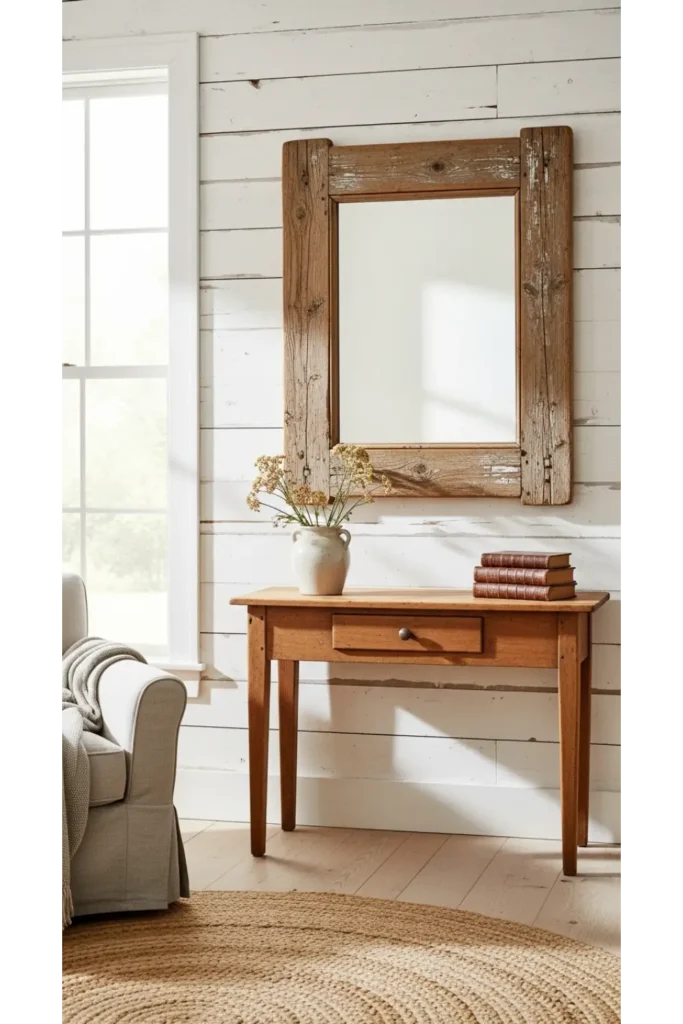
Antique mirrors add character while serving a practical role in a farmhouse living room. Their aged surfaces reflect light softly, enhancing brightness without harsh glare. Unlike modern mirrors, imperfections in antique glass create depth and warmth, reinforcing the sense of history that defines rustic interiors. They feel like heirlooms rather than decorative afterthoughts.
Placement matters for maximum impact. Positioning a mirror across from a window amplifies natural light and visually expands the space. Rustic frames in wood or distressed metal complement surrounding textures and prevent the mirror from feeling too formal. The result is a brighter room that still feels grounded and authentic.
17. Linen and Cotton Textiles
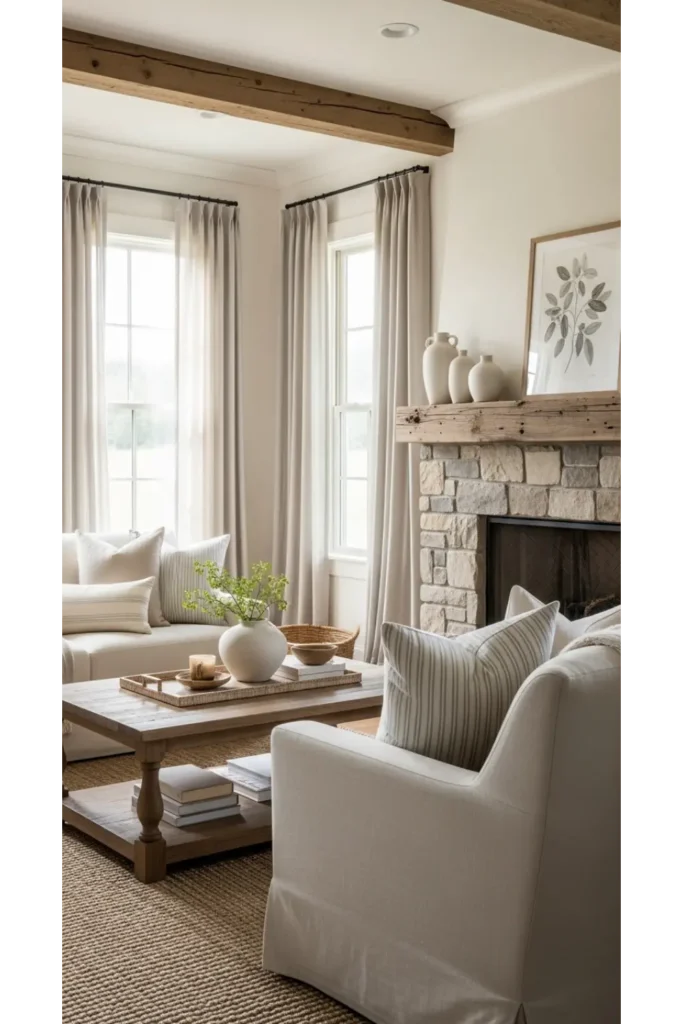
Linen and cotton textiles form the foundation of comfort in a farmhouse living room. These materials breathe easily, drape naturally, and soften the space without feeling heavy. Their subtle texture adds visual interest while supporting a relaxed atmosphere that encourages everyday use rather than careful preservation.
Over time, natural fabrics become even more beautiful. Gentle wrinkles and softened edges add character rather than detract from it. Sticking to simple patterns or solid tones keeps the look timeless. These textiles align perfectly with farmhouse values, where comfort, durability, and honesty in materials take priority.
18. Low Profile Furniture Layouts
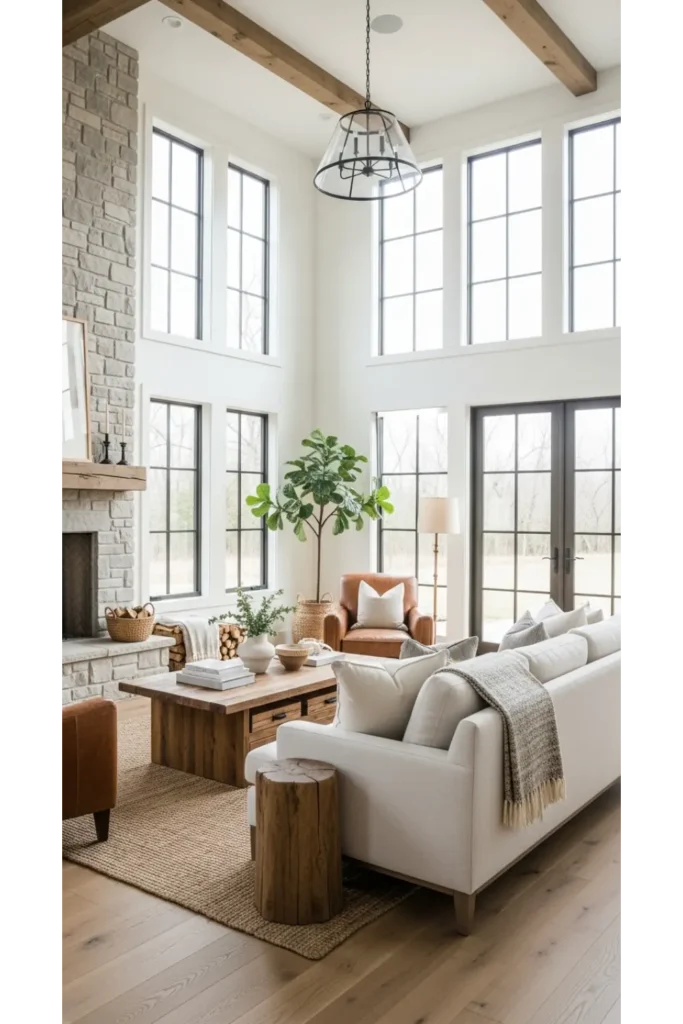
Low profile furniture helps farmhouse living rooms feel open and approachable. Sofas and chairs with shorter backs allow light to move freely through the space, creating an airy environment without sacrificing comfort. This approach works especially well in rooms with exposed beams or large windows, where openness enhances architectural features.
The layout should encourage conversation and ease. Arranging furniture closer together fosters connection while maintaining clear pathways. Low seating keeps the room grounded and relaxed, reinforcing the idea that a farmhouse living room is meant for gathering, resting, and spending unhurried time together.
19. Rustic Ceiling Fans
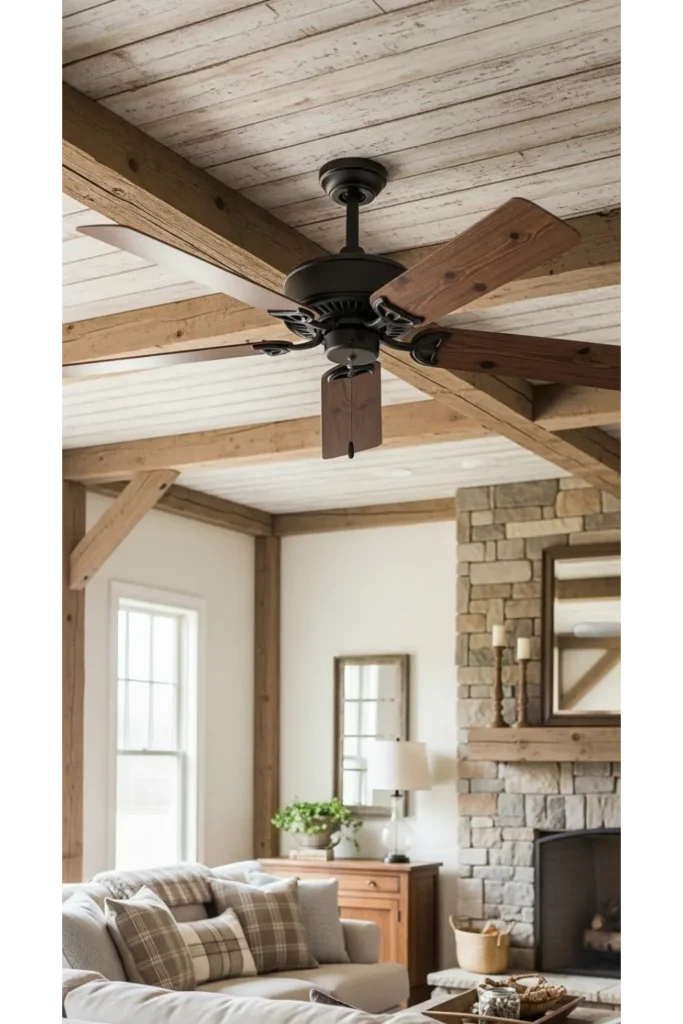
Rustic ceiling fans combine comfort and visual harmony in a farmhouse living room. Wood blades echo other natural elements and blend seamlessly with beams or plank ceilings. Unlike modern fixtures that demand attention, these fans support the room quietly while enhancing airflow and comfort throughout the seasons.
Design simplicity is essential. Fans with clean lines and natural finishes feel intentional rather than decorative. When chosen carefully, they become part of the architecture, contributing to the room’s warmth and functionality without distracting from its rustic character.
20. Handmade Decor Pieces
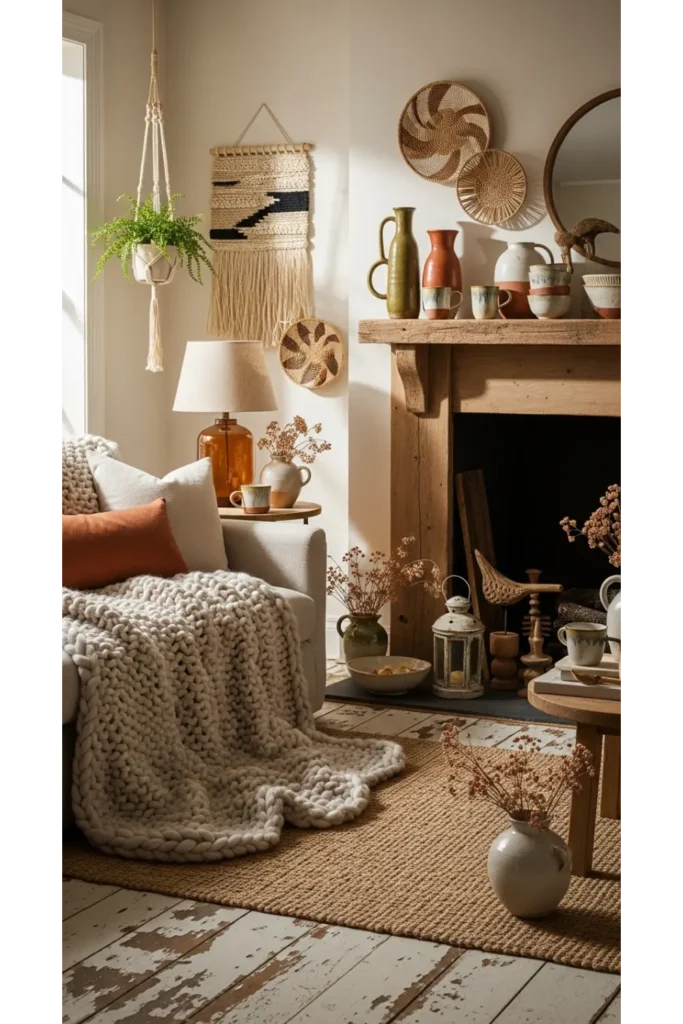
Handmade decor brings soul into a farmhouse living room. Artisan pieces reflect care, skill, and individuality, qualities that mass produced items cannot replicate. Pottery, woven objects, or carved wood accents introduce subtle imperfections that make the space feel human and lived in rather than styled for perfection.
These items work best when used sparingly. A few meaningful pieces placed intentionally create stronger impact than crowded shelves. Handmade decor supports storytelling within the home, helping the living room feel personal, grounded, and emotionally rich while staying true to rustic design principles.
21. Soft Window Treatments
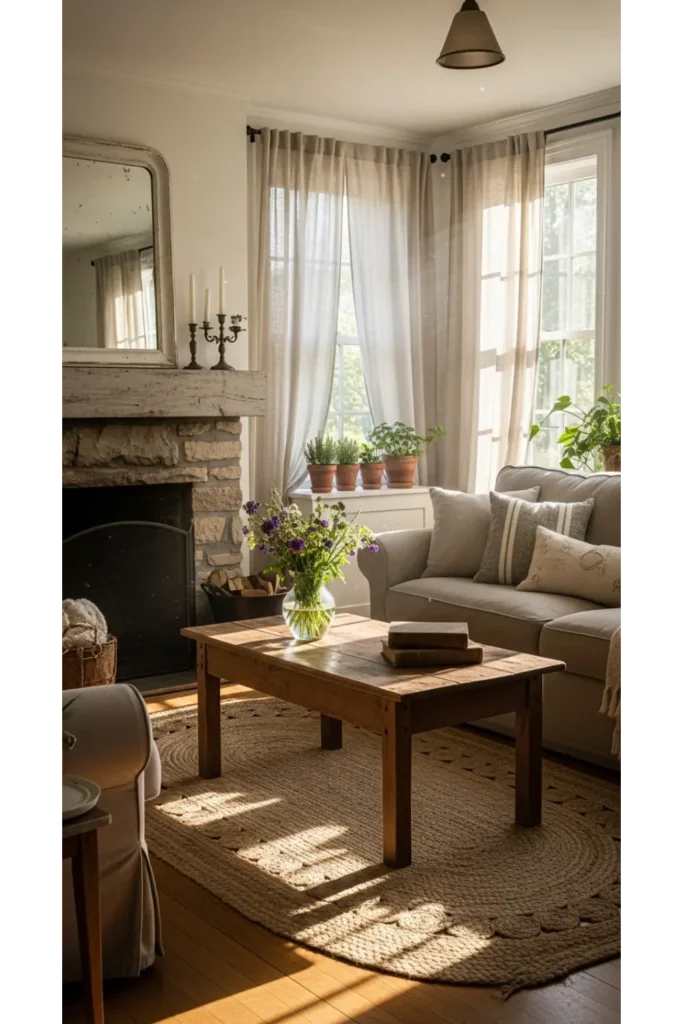
Soft window treatments shape light in a farmhouse living room without blocking its warmth. Linen or cotton curtains filter sunlight gently, creating a calm glow that enhances the room’s natural textures. They provide privacy while maintaining an open, breathable feeling that heavy drapery often disrupts.
Color and weight matter. Light neutral tones keep windows from feeling dominant, allowing walls and furnishings to remain the focus. Simple panels hung with minimal hardware support a clean, relaxed look. The result is a living room that feels bright, welcoming, and effortlessly comfortable.
22. Greenery for Fresh Balance
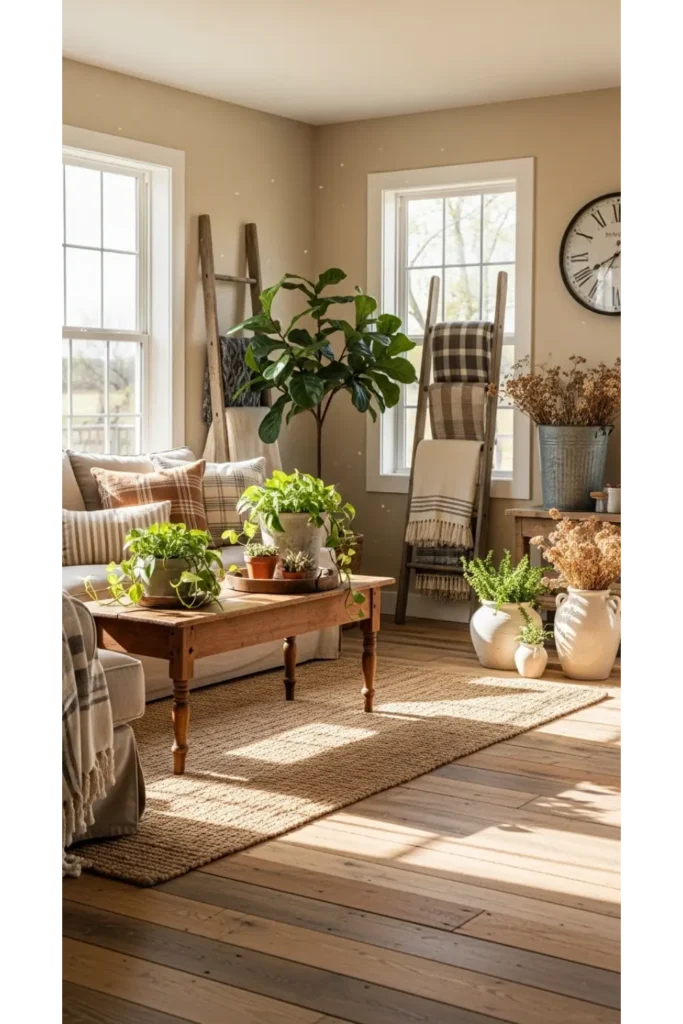
Greenery brings vitality into a farmhouse living room, softening edges and refreshing the atmosphere. Plants introduce natural movement and color, preventing neutral palettes from feeling flat. They strengthen the connection between indoor spaces and the outdoors, which sits at the heart of farmhouse living.
Low maintenance plants work best for everyday life. Their presence adds balance without requiring constant attention. Whether placed near windows or layered among furniture, greenery enhances calm and reinforces the idea that a farmhouse living room should feel alive, grounded, and deeply connected to nature.
Conclusion
Farmhouse living room inspirations for rustic charm thrive on comfort, authenticity, and thoughtful design. By blending natural materials, soft textures, and personal details, you can create a space that feels timeless and welcoming. Each idea supports a living room that works for real life while offering warmth and beauty that never feels forced.