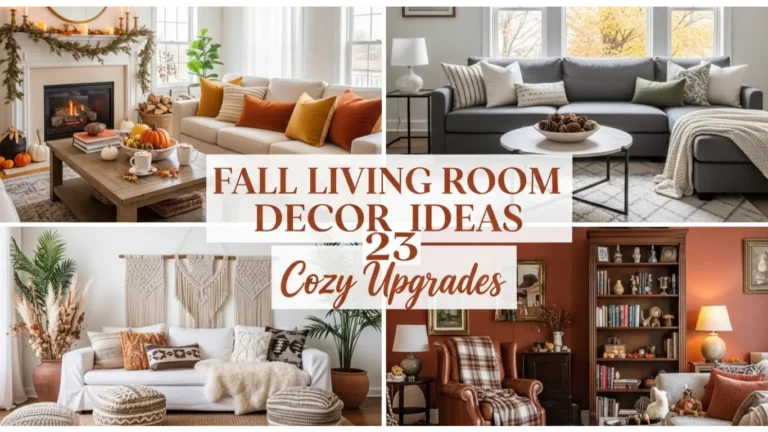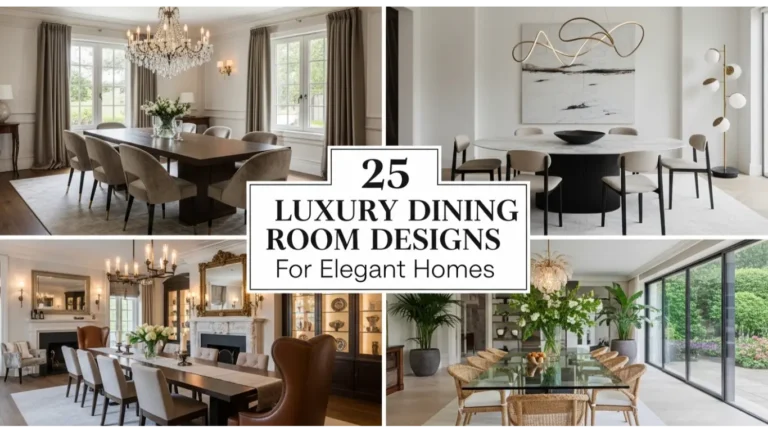
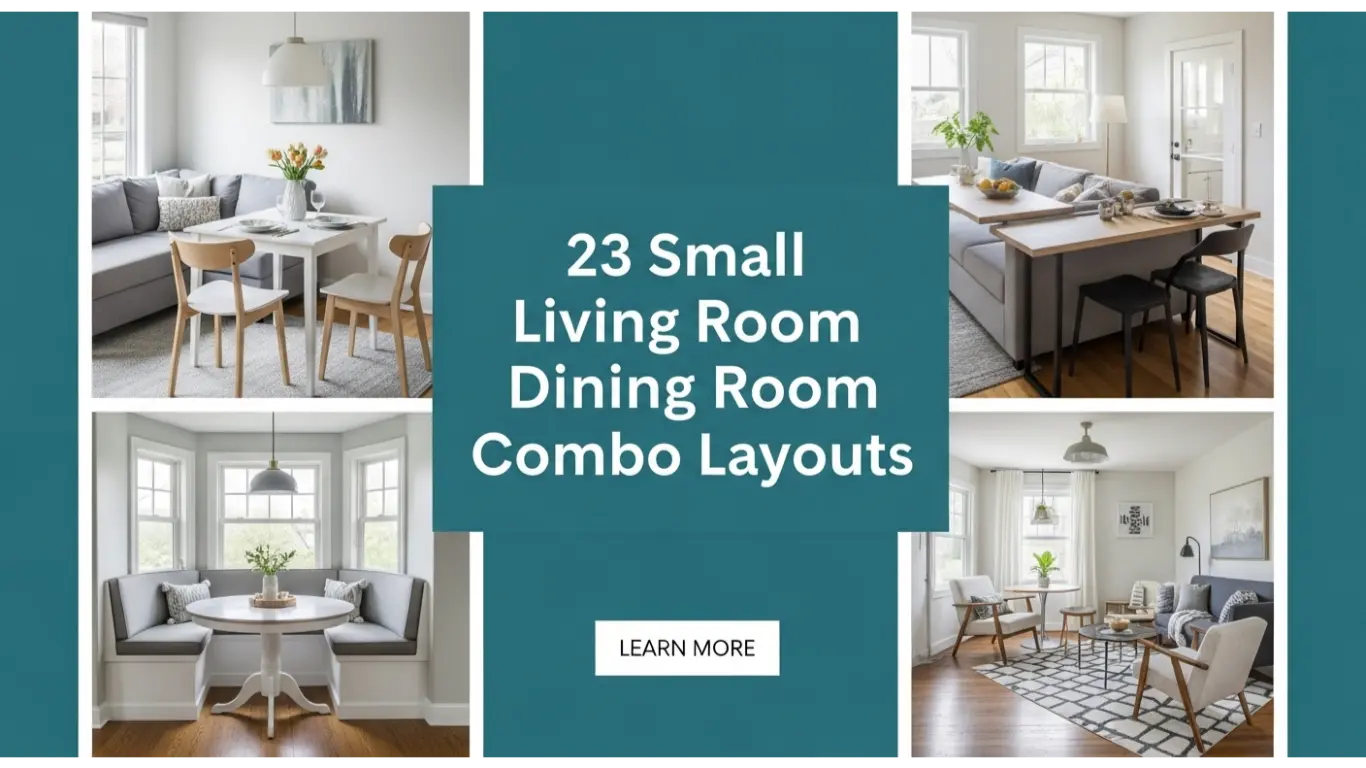
23 Small Living Room Dining Room Combo Layouts
Designing a shared living and dining space can feel overwhelming, especially when square footage is limited. The right layout turns a tight room into a comfortable, stylish, and functional home hub. This guide explores thoughtful, real world layout ideas that work for apartments, condos, and compact homes. Each concept balances comfort, storage, and flow while keeping the room open and inviting. Whether you love modern, cozy, or classic interiors, these ideas help you make every inch count without sacrificing personality or daily ease.
1. Open Flow With Defined Zones
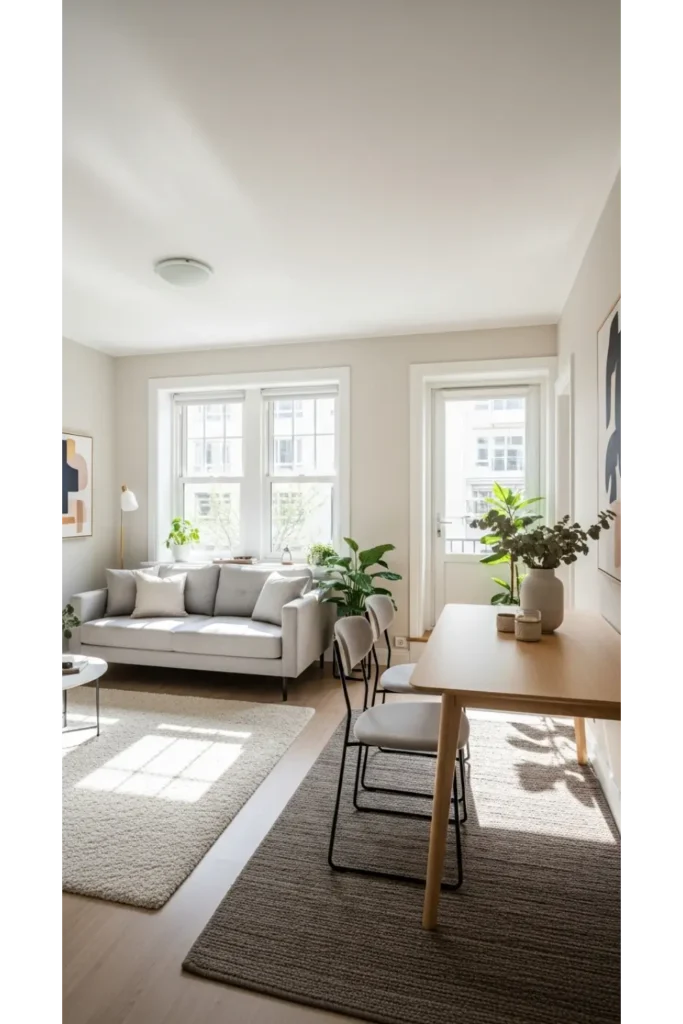
Small living room dining room combo layouts work best when zones feel clear without walls. A sofa facing inward anchors the living area while a compact dining table sits nearby. Area rugs help define each function visually without breaking flow. This layout keeps sightlines open, making the room feel larger and more breathable for daily living.
Furniture scale matters here. Choose a slim sofa and a round dining table to soften edges and improve movement. Neutral colors create continuity, while layered textures add warmth. This approach suits renters and homeowners who want flexibility without permanent changes or heavy visual barriers.
2. Sofa Back As A Natural Divider
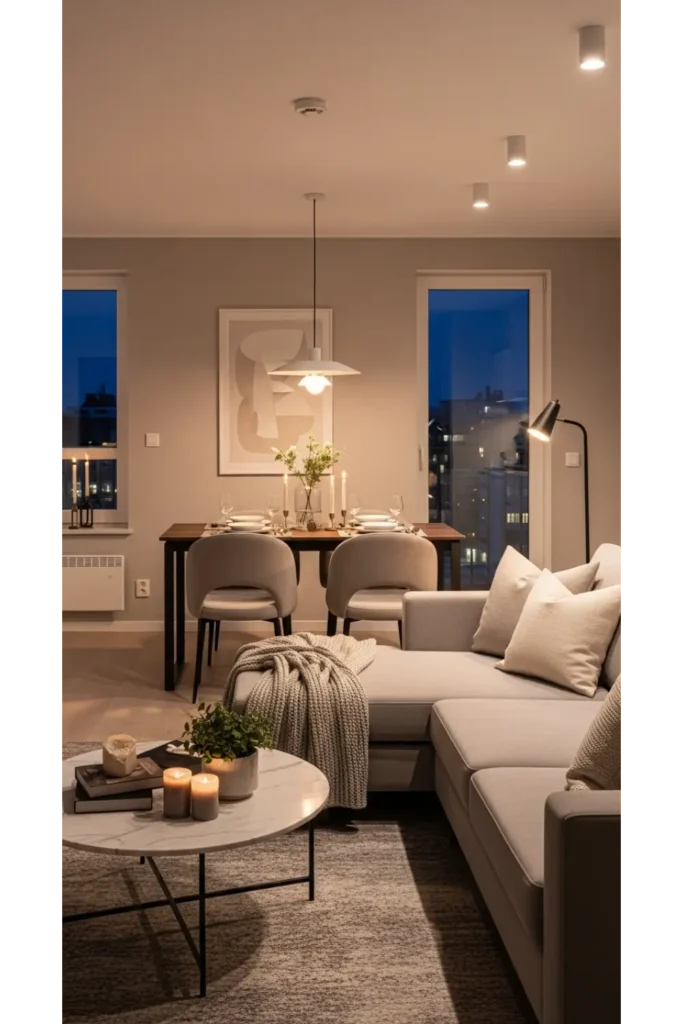
Using the back of the sofa as a divider creates structure while preserving openness. The living area feels grounded, and the dining space gains a clear boundary. This arrangement supports conversation and TV viewing without blocking light or air flow. It works especially well in rectangular rooms.
To elevate the look, add a narrow console table behind the sofa for lighting or decor. Keep dining chairs lightweight to avoid visual clutter. This layout feels intentional and polished while remaining practical for everyday routines and entertaining guests.
3. Round Dining Table To Save Space
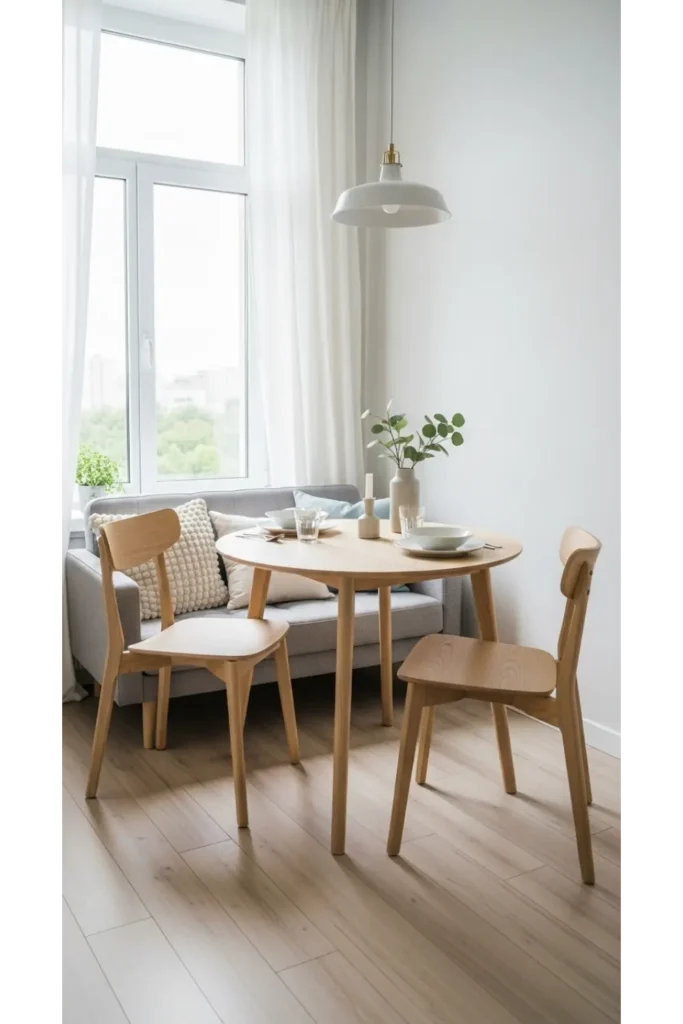
Round tables reduce sharp corners and improve circulation in tight spaces. Placing one near the living area keeps movement smooth and welcoming. This choice encourages connection and works beautifully for small households or casual meals.
Pair the table with armless chairs to maintain flexibility. Soft lighting above the table draws attention without overwhelming the room. This setup feels relaxed and social, ideal for homes that value comfort and easy interaction.
4. Wall Mounted Dining Solution
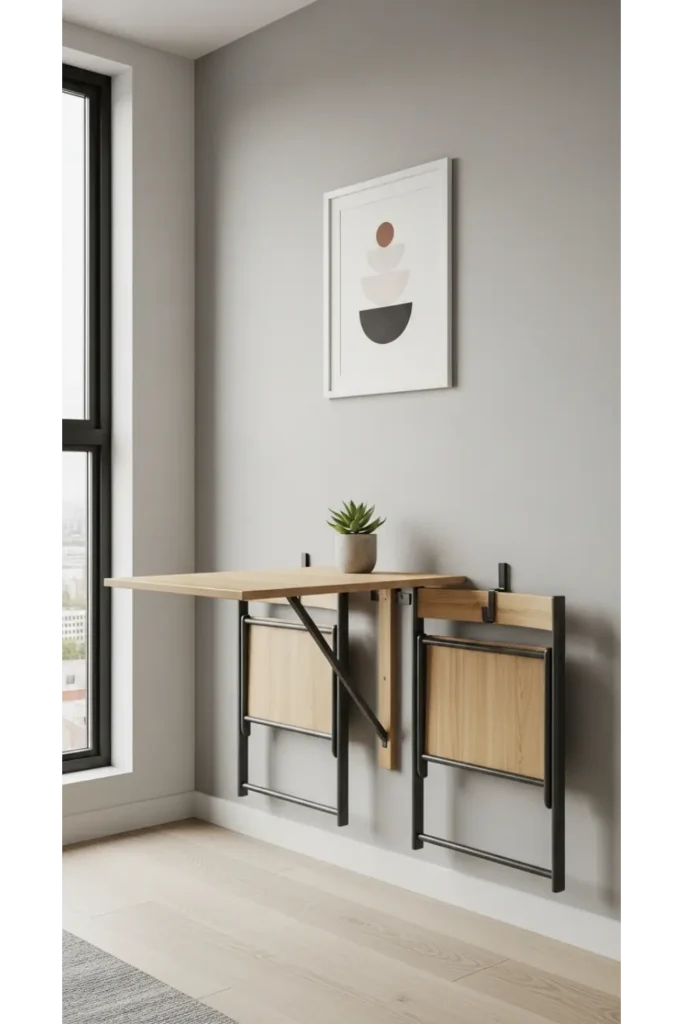
A wall mounted dining table frees up floor space when not in use. This layout suits studios or narrow rooms where flexibility matters most. When folded down, the table becomes a functional dining spot without dominating the room.
Keep surrounding decor minimal to maintain balance. Floating shelves above can store tableware while adding style. This smart approach supports daily meals and occasional hosting while keeping the living area open and clutter free.
5. Shared Lighting To Unify The Space
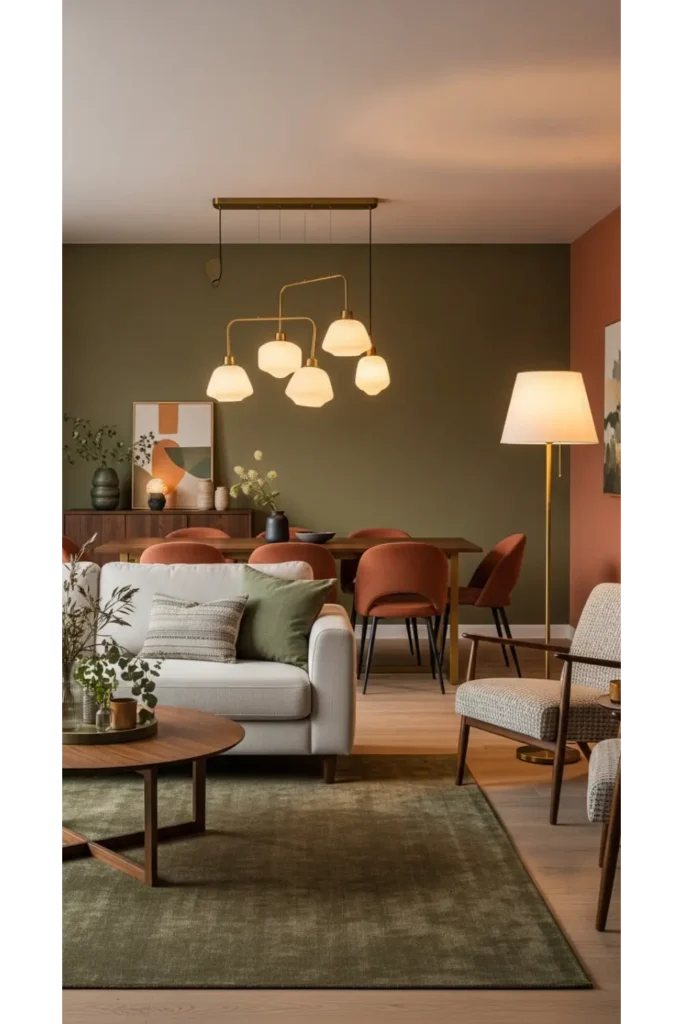
Lighting plays a powerful role in combining functions smoothly. Coordinated fixtures create harmony across the living and dining areas. A pendant over the table paired with a floor lamp near the sofa connects both zones visually.
Warm light tones enhance comfort and intimacy. Avoid overly large fixtures that overwhelm the room. Thoughtful lighting design makes the entire space feel intentional, cozy, and well planned without physical separation.
6. Neutral Palette With Texture Layers
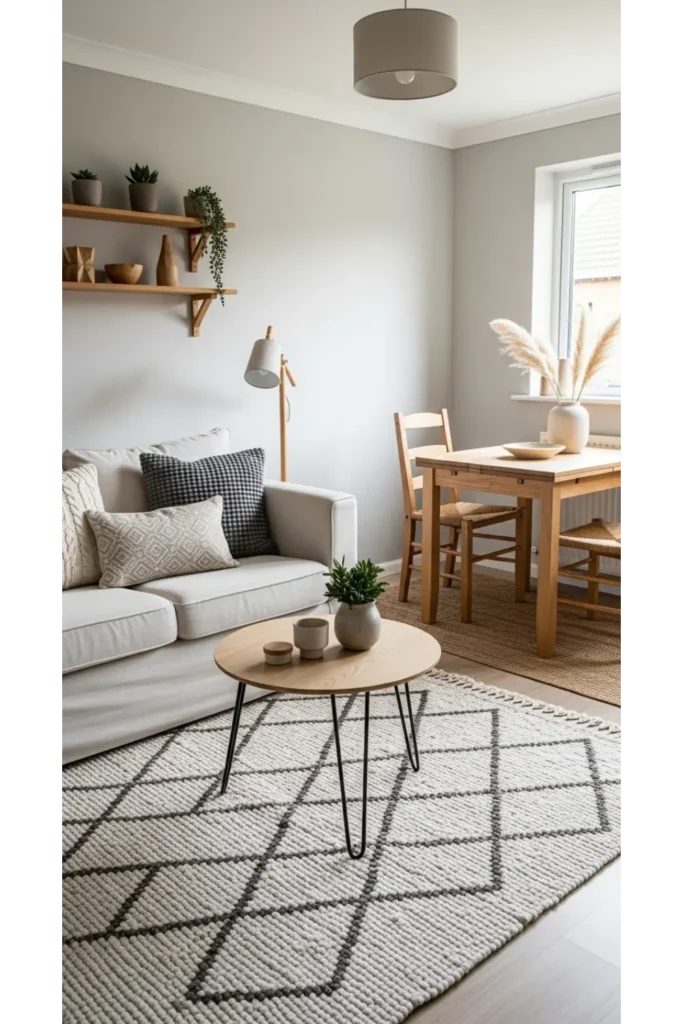
A soft color palette keeps a compact room calm and expansive. Neutral tones allow both areas to coexist without visual noise. Texture through rugs, cushions, and wood finishes adds depth and interest.
This approach works well in homes with limited natural light. Layering materials prevents the space from feeling flat. The result feels timeless, welcoming, and easy to adapt as styles or needs change.
7. Bench Seating For Dining Area
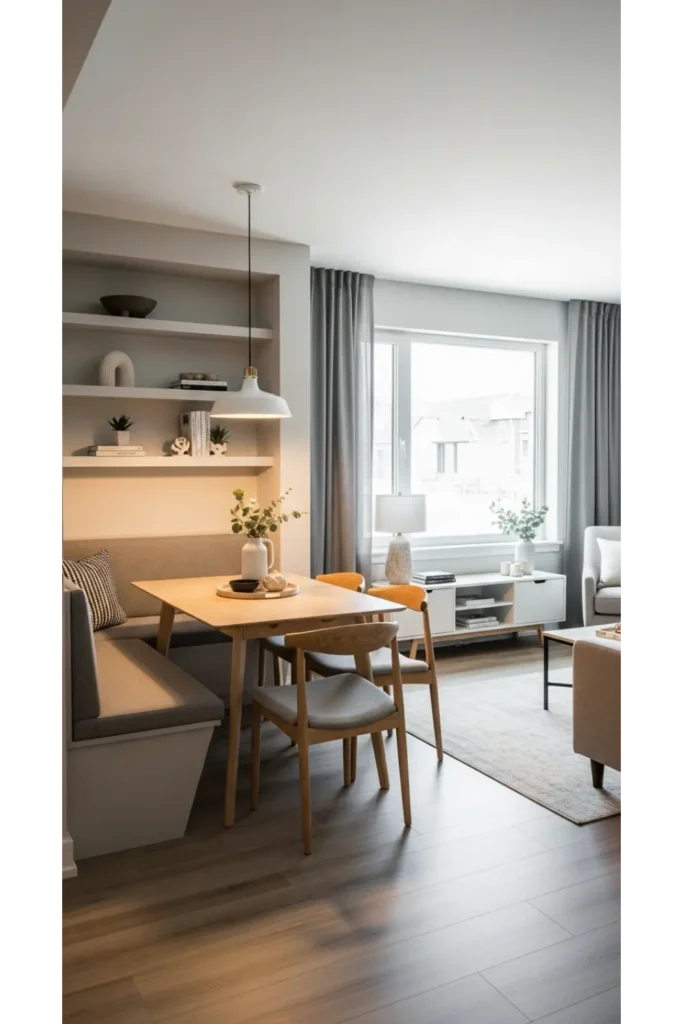
Bench seating saves space and adds flexibility. Placed against a wall, it opens up the dining area and keeps pathways clear. This layout supports family meals and casual gatherings without bulky furniture.
Add cushions for comfort and style. A bench with hidden storage adds extra value. This idea blends practicality with warmth, making the shared space feel lived in and thoughtfully designed.
8. Vertical Storage To Free Floor Space
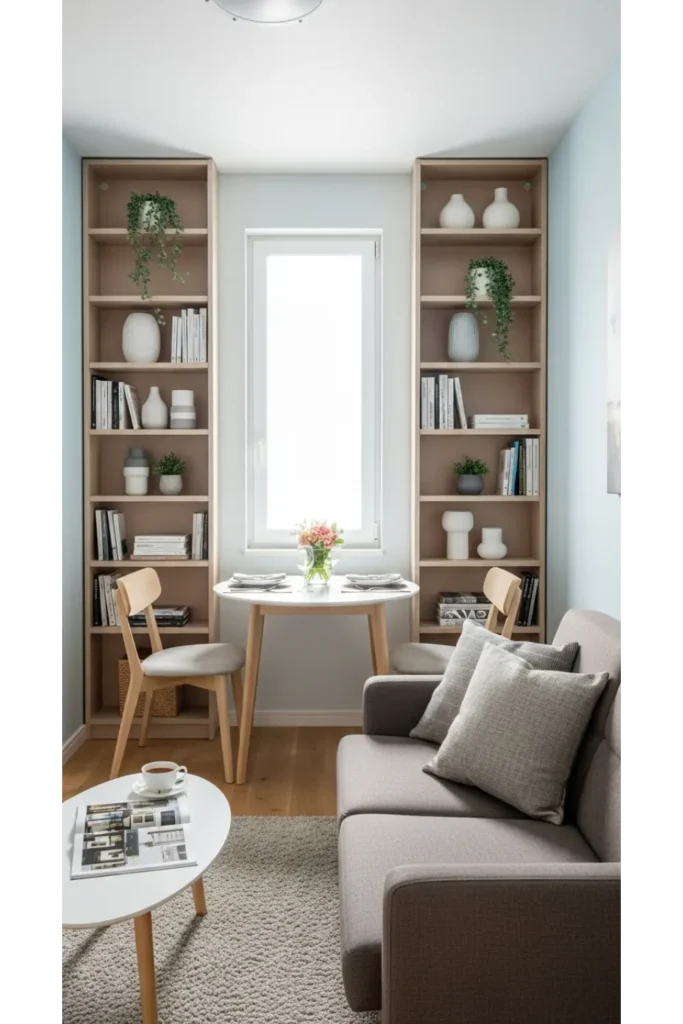
Vertical storage draws the eye upward and reduces clutter below. Tall shelves or cabinets near the dining area provide storage without crowding the floor. This keeps the living area open and relaxed.
Balance is key. Avoid overfilling shelves and maintain visual breathing room. This layout supports organization while preserving the calm flow essential in a multi use room.
9. Minimalist Furniture For Visual Calm
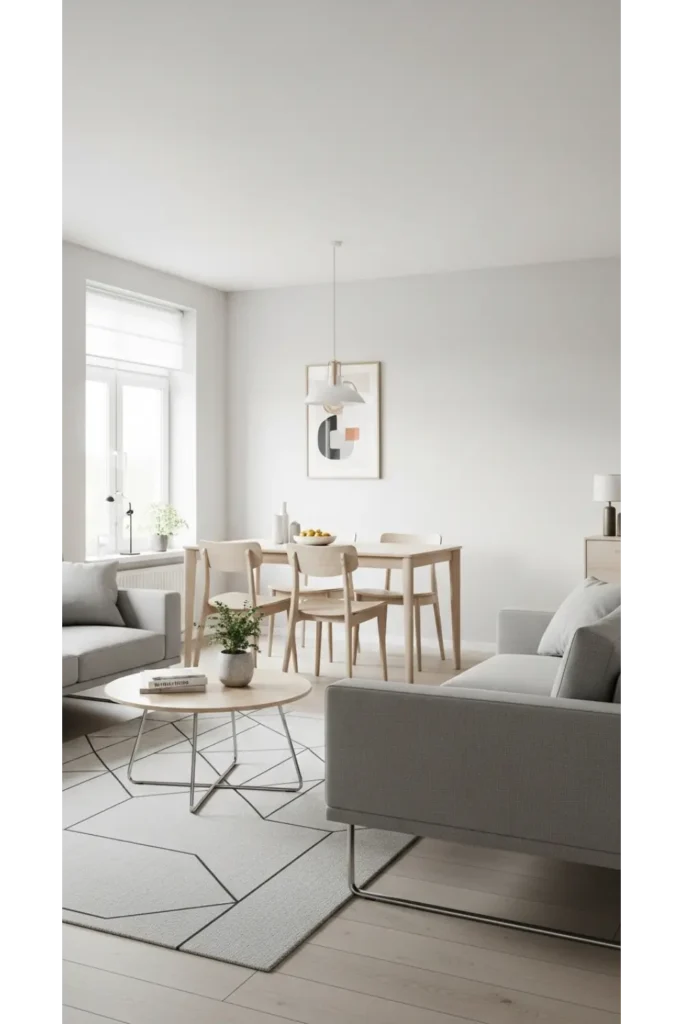
Simple furniture shapes reduce visual weight in small spaces. Clean lines allow both areas to coexist without competing for attention. This layout feels calm and intentional, perfect for modern lifestyles.
Choose multi functional pieces when possible. A streamlined dining table and compact sofa support daily comfort. This approach prioritizes clarity and ease while still feeling warm and personal.
10. Corner Dining Nook
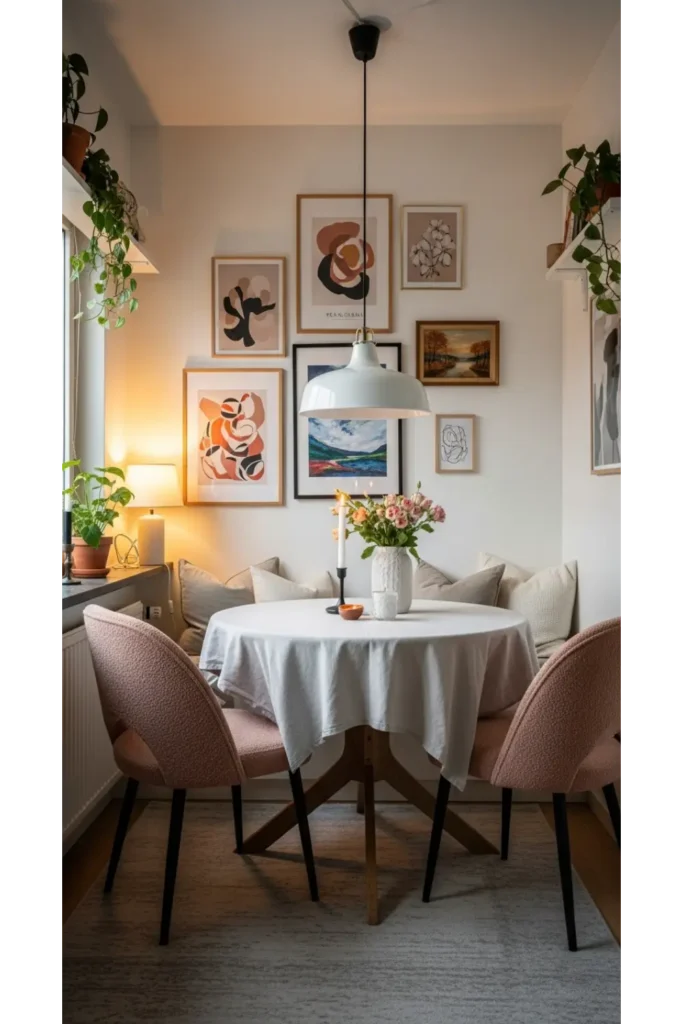
A corner dining nook transforms an overlooked area into a highly functional zone within a compact home. Tucking a small table into a corner allows the living area to breathe, which improves overall movement and comfort. This setup works especially well when the dining space feels intentional rather than squeezed in. It creates a cozy atmosphere for daily meals while maintaining openness across the shared room.
Adding thoughtful details makes the nook feel designed, not improvised. Wall art, a pendant light, or a built-in bench can visually anchor the dining area. Keeping colors consistent with the living space helps everything flow naturally. This approach suits apartments and condos where every square foot must work hard without feeling crowded or awkward.
11. Glass Furniture For Lightness
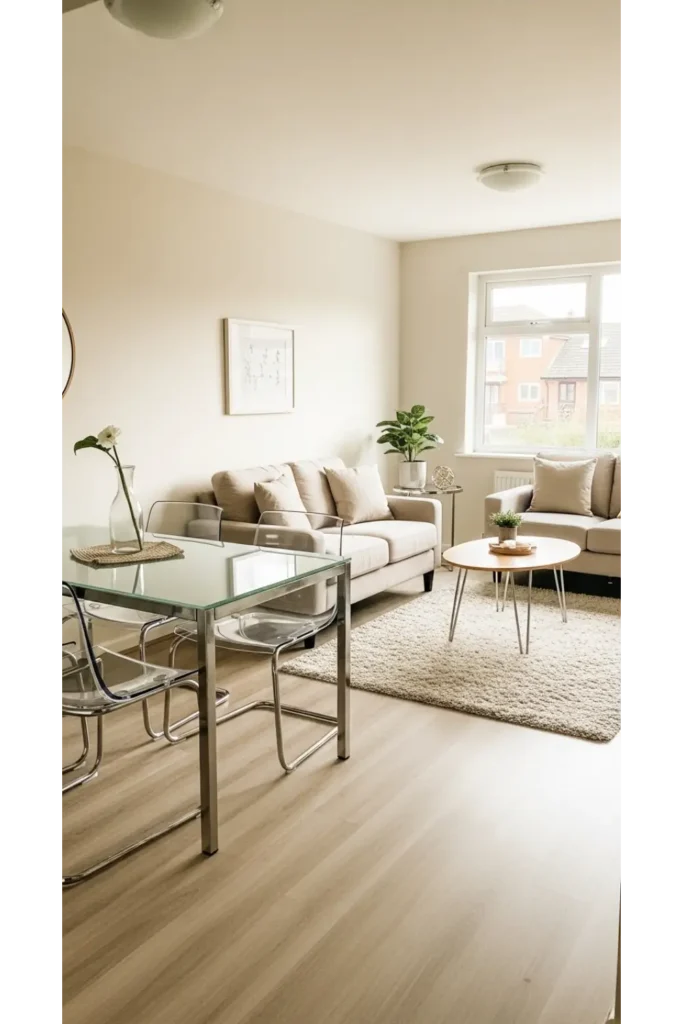
Glass furniture helps small shared spaces feel lighter and more open by reducing visual weight. A glass dining table allows light to pass through, which prevents the dining area from overpowering the living zone. This choice works particularly well in rooms with limited square footage or minimal natural light, where bulky furniture would make the space feel closed in.
To keep the room feeling warm and inviting, balance glass surfaces with soft materials. Upholstered seating, woven rugs, and textured cushions add comfort without clutter. When styled thoughtfully, glass furniture blends seamlessly into the room, supporting an airy layout that feels modern, practical, and easy to live with every day.
12. Dual Purpose Furniture Pieces
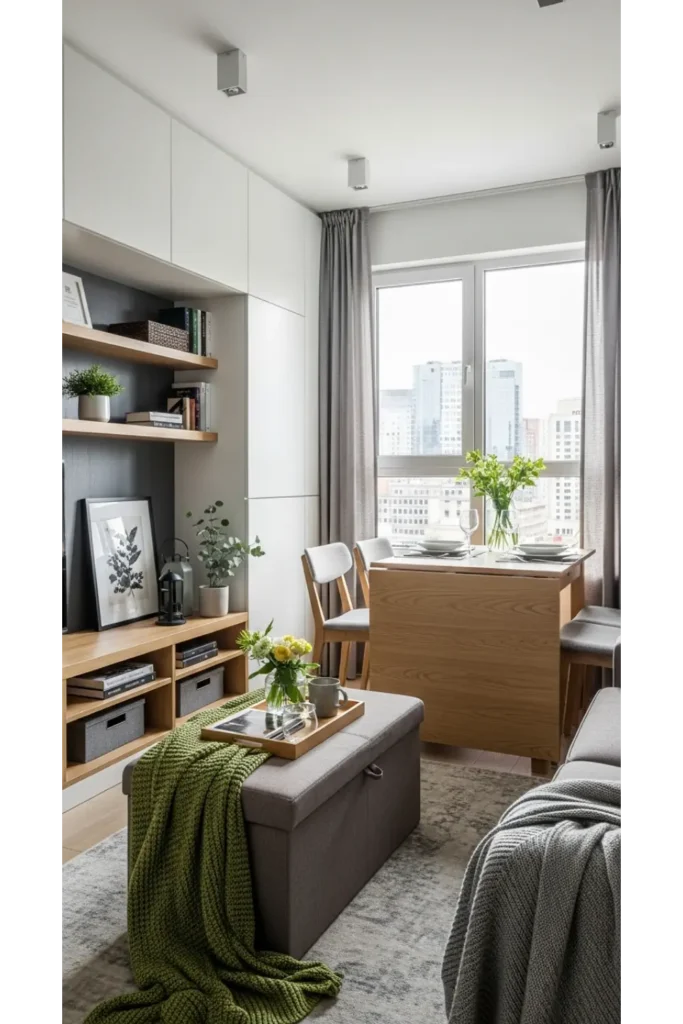
Multi functional furniture plays a critical role in shared living and dining spaces. Pieces that serve more than one purpose reduce the need for extra items, which keeps the room open and organized. An ottoman can act as seating, storage, or a coffee table, while an extendable dining table adapts easily to guests without dominating daily life.
This approach supports flexibility and long term comfort. Instead of constantly rearranging furniture, the room adjusts to your needs naturally. Choosing well designed dual purpose pieces also elevates the look of the space, proving that practicality and style can work together without compromise in a compact home.
13. Color Blocking To Define Areas
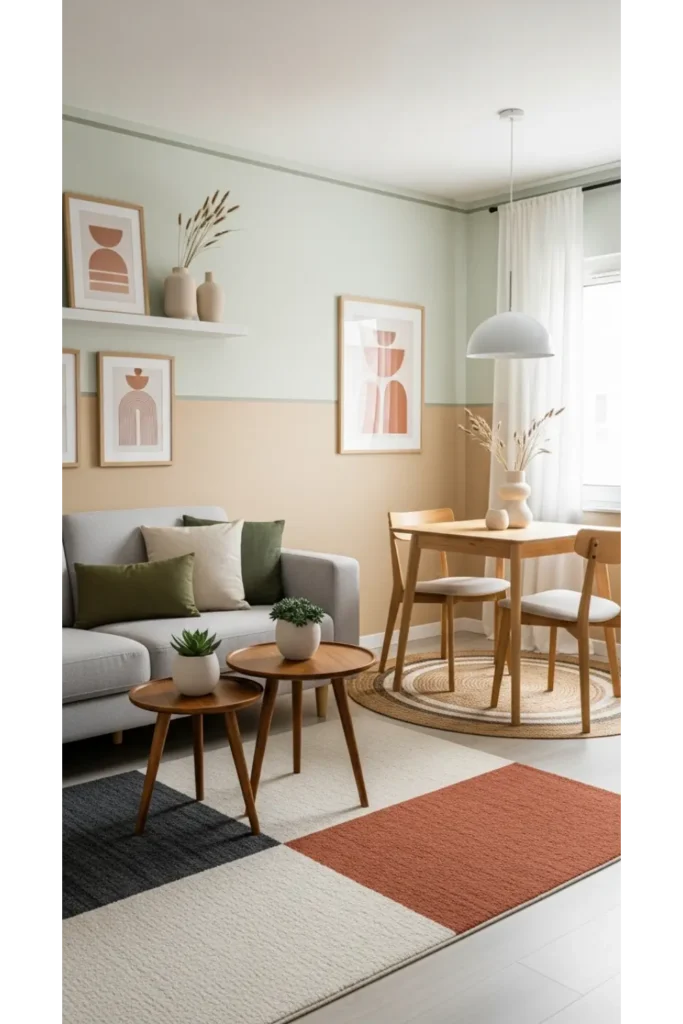
Color blocking offers a smart way to visually separate the living and dining areas without physical dividers. Subtle shifts in wall color, rugs, or upholstery help define each zone while keeping the space open. This technique adds personality and structure, making the room feel thoughtfully planned instead of randomly arranged.
The key is restraint. Using tones from the same color family prevents the space from feeling busy or disconnected. When done right, color blocking creates gentle boundaries that guide the eye naturally. It supports both function and style, helping each area feel distinct while still part of a cohesive whole.
14. Slimline Dining Chairs
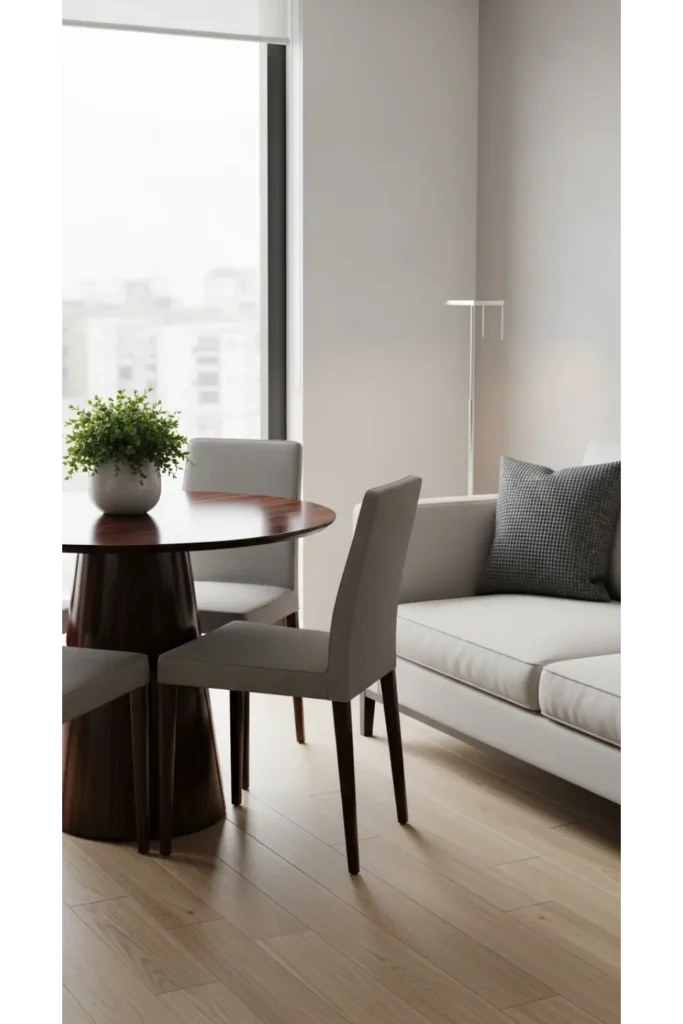
Slimline dining chairs are ideal for tight layouts where every inch matters. Their lightweight design keeps the dining area from feeling crowded and allows easy movement through the room. This choice works especially well when the dining table sits close to the living area, where bulky chairs would interrupt flow and comfort.
These chairs also offer flexibility. They can slide neatly under the table or move into the living area when extra seating is needed. Pairing them with a compact table creates balance and maintains visual clarity, making the shared space feel open, practical, and thoughtfully arranged.
15. Built In Shelving As Divider
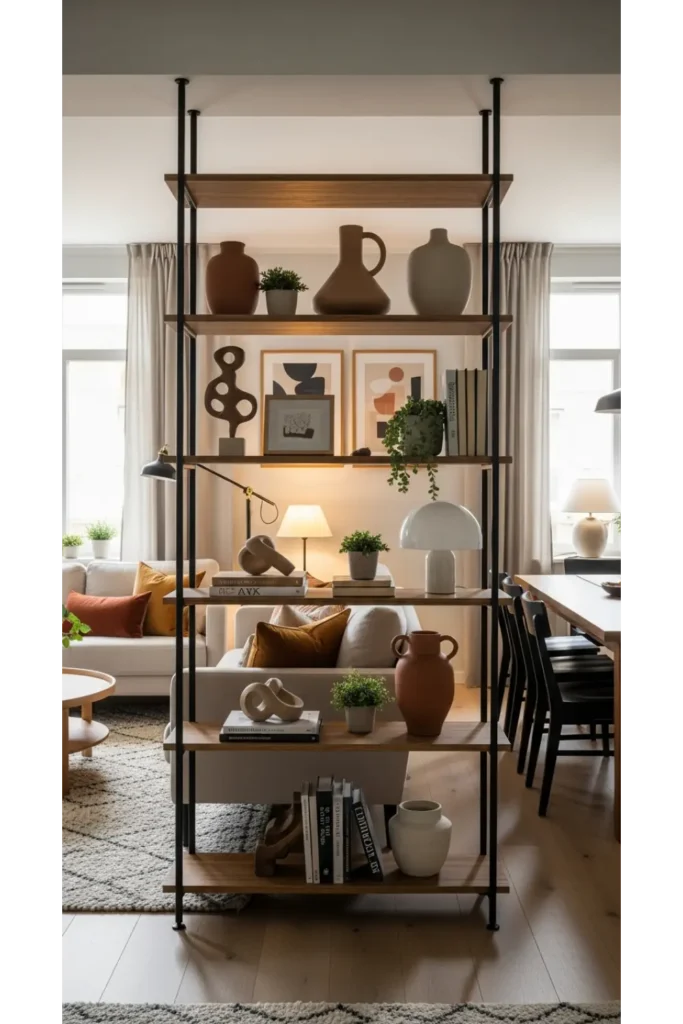
Open shelving provides a functional way to separate living and dining areas without blocking light or closing off the room. It offers storage, display space, and a subtle visual boundary that helps each zone feel defined. Unlike solid walls, shelving maintains openness and supports a more social, connected layout.
Styling matters greatly with this approach. Keeping shelves curated and uncluttered prevents visual overload. Using similar decor elements on both sides reinforces cohesion. This solution feels custom and intentional, making it ideal for homeowners who want structure without sacrificing brightness or flexibility.
16. Window Side Dining Area
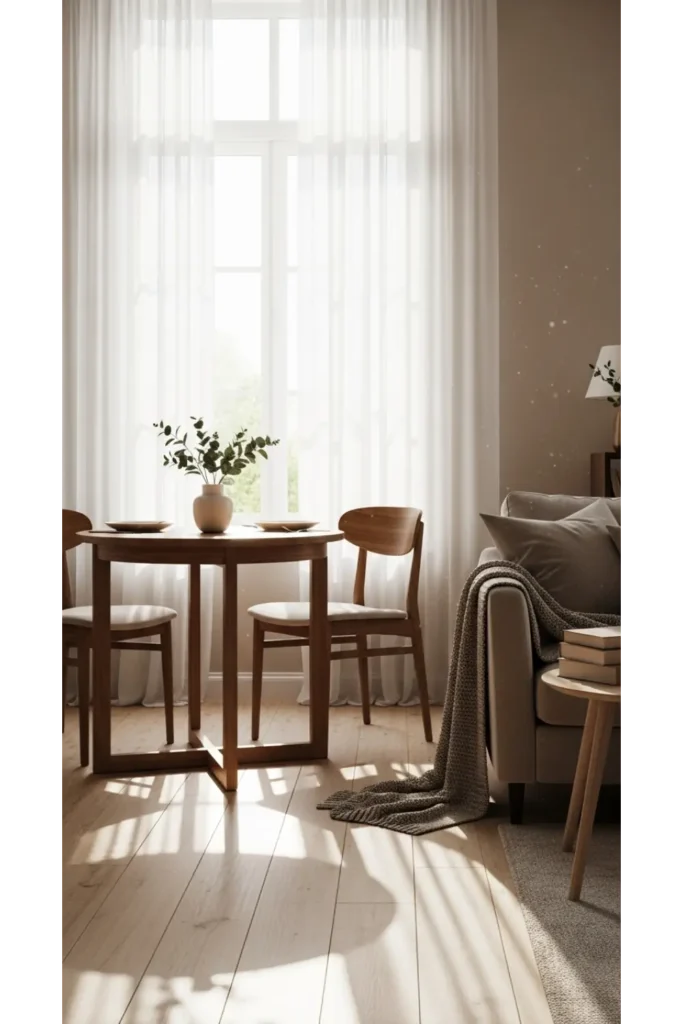
Placing the dining area near a window enhances both function and mood. Natural light makes meals feel more inviting and gives the dining zone a sense of importance within the shared room. This placement also allows the living area to remain more central, improving overall balance and flow.
Light window treatments preserve privacy while allowing daylight to filter in. The result feels bright and uplifting without glare. This layout works particularly well in apartments where windows are limited, helping the dining area feel intentional and connected to the outdoors.
17. Compact Sectional Seating
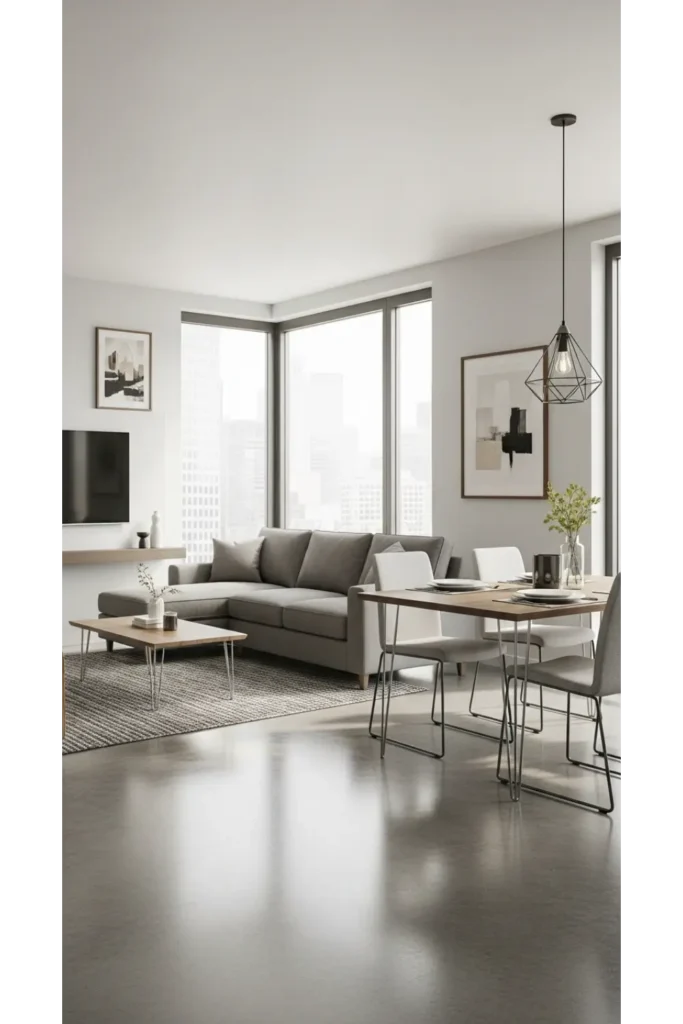
A compact sectional sofa helps anchor the living area while subtly separating it from the dining space. Its shape naturally defines boundaries without the need for additional furniture or dividers. This layout works well for households that value comfort and seating capacity without overwhelming the room.
Choosing a low profile sectional keeps the space visually light. Neutral upholstery helps it blend seamlessly with the dining area. When sized correctly, this arrangement supports daily relaxation, social gatherings, and clear movement paths, all within a limited footprint.
18. Floating Furniture Arrangement
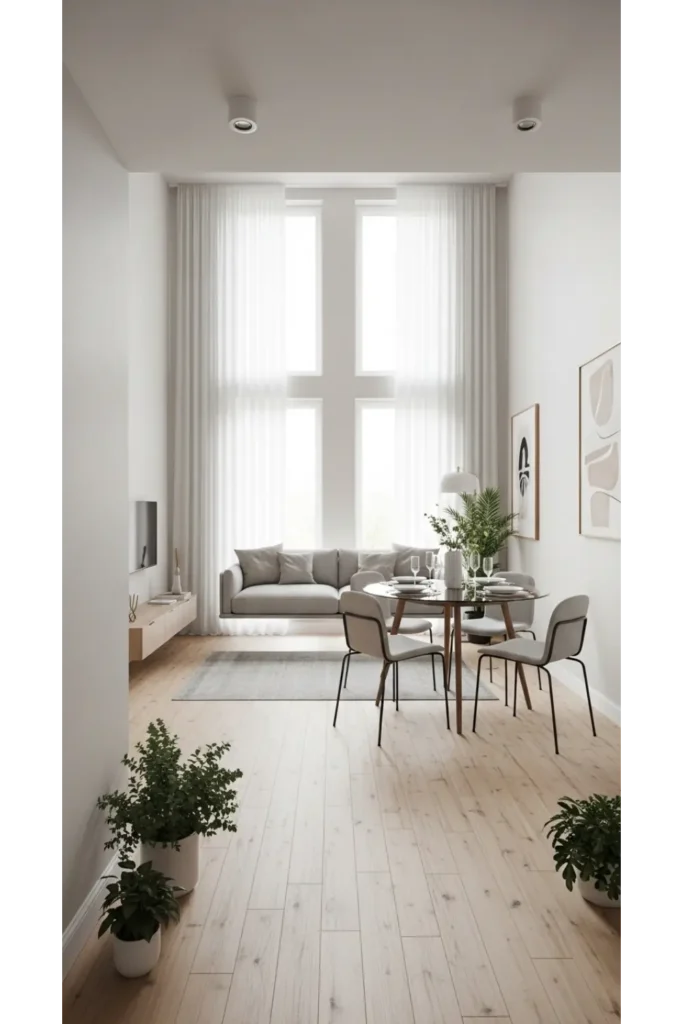
Floating furniture away from walls creates depth and improves circulation in a shared room. This approach prevents the space from feeling flat or boxed in. Leaving breathing room around key pieces allows the layout to feel more intentional and comfortable, even when square footage is limited.
Proper spacing is essential for success. Walkways should remain clear, and furniture proportions must suit the room size. When executed thoughtfully, floating arrangements add a designer feel while improving functionality and flow across both living and dining zones.
19. Consistent Flooring Throughout
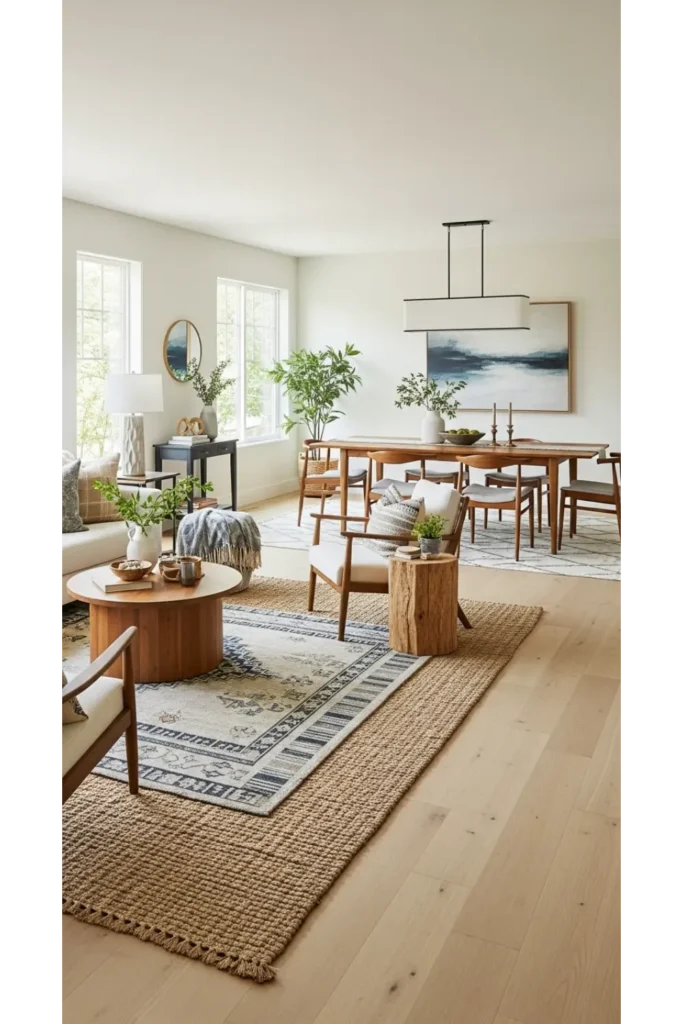
Using the same flooring across the entire space unifies the living and dining areas visually. It eliminates harsh transitions and helps the room feel larger and more connected. This strategy works especially well in open plan apartments where continuity supports a calm, organized look.
Rugs can still define individual zones without breaking flow. Layering textures adds warmth and interest while preserving cohesion. Consistent flooring creates a strong foundation that allows furniture and decor to shine without visual distraction.
20. Light Wood Finishes
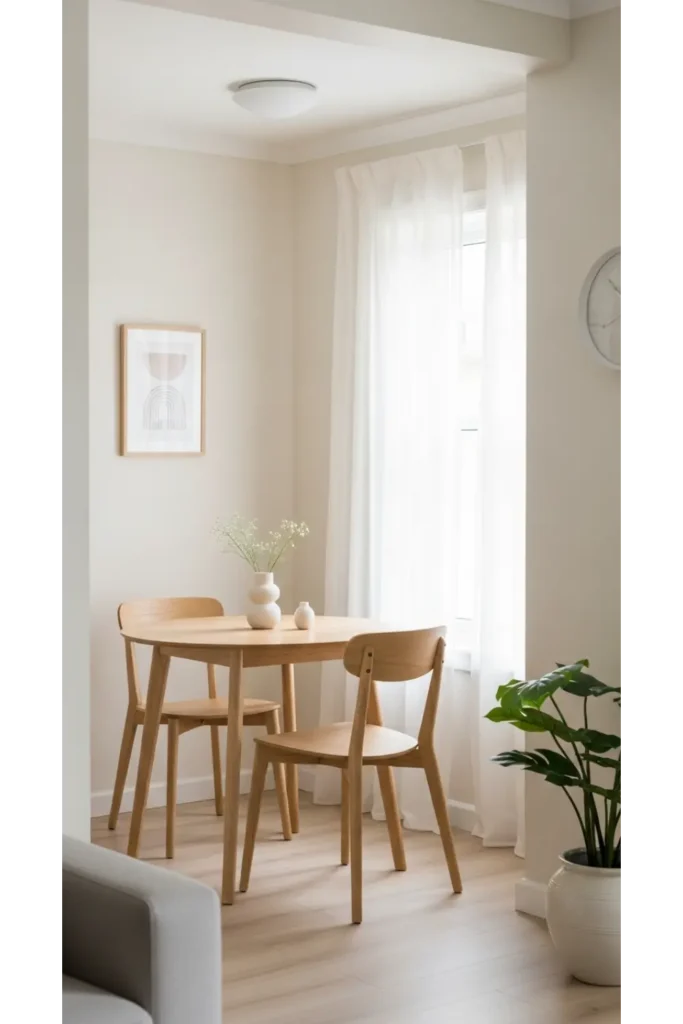
Light wood finishes bring warmth to a compact space without adding heaviness. They reflect light beautifully and pair well with many design styles, from modern to Scandinavian inspired interiors. This choice helps the room feel natural, relaxed, and welcoming throughout the day.
Balancing wood with soft textiles keeps the space comfortable and inviting. Cushions, rugs, and fabric seating prevent the room from feeling too stark. Light wood supports a timeless look that adapts easily as decor preferences evolve.
21. Mirror Placement For Depth
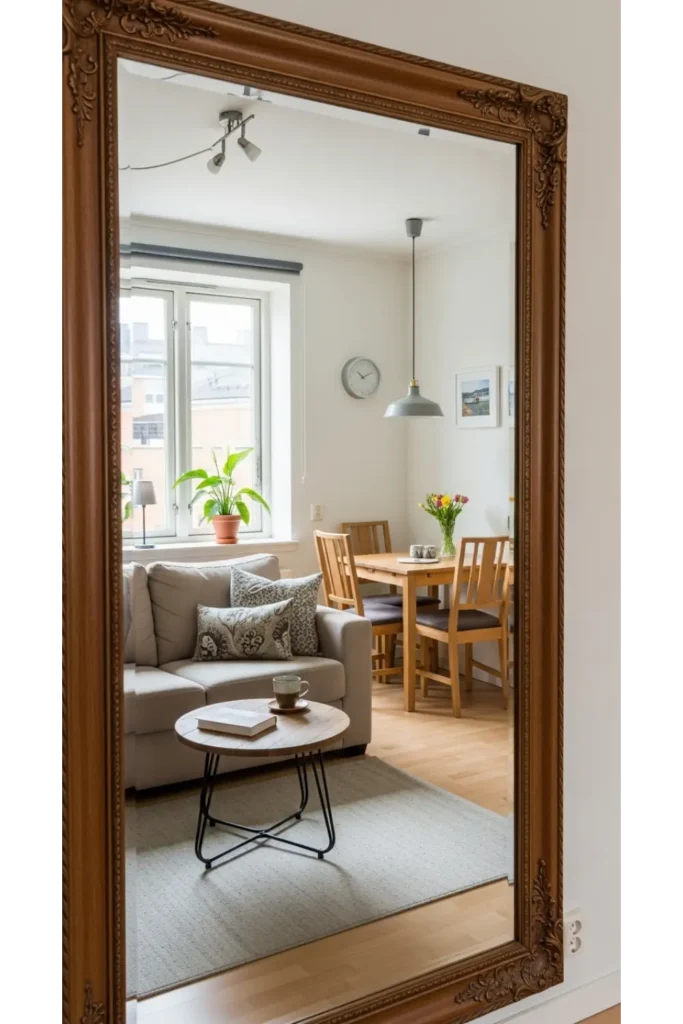
Mirrors add depth and amplify light in shared living and dining spaces. When placed thoughtfully, they visually expand the room and reflect key design elements. This makes the layout feel larger and more dynamic without changing the furniture arrangement.
One well placed mirror delivers strong impact. Overusing mirrors can feel distracting. Positioned near the dining area or opposite a window, a mirror enhances brightness and flow, supporting a more open and inviting environment.
22. Linear Layout For Narrow Rooms
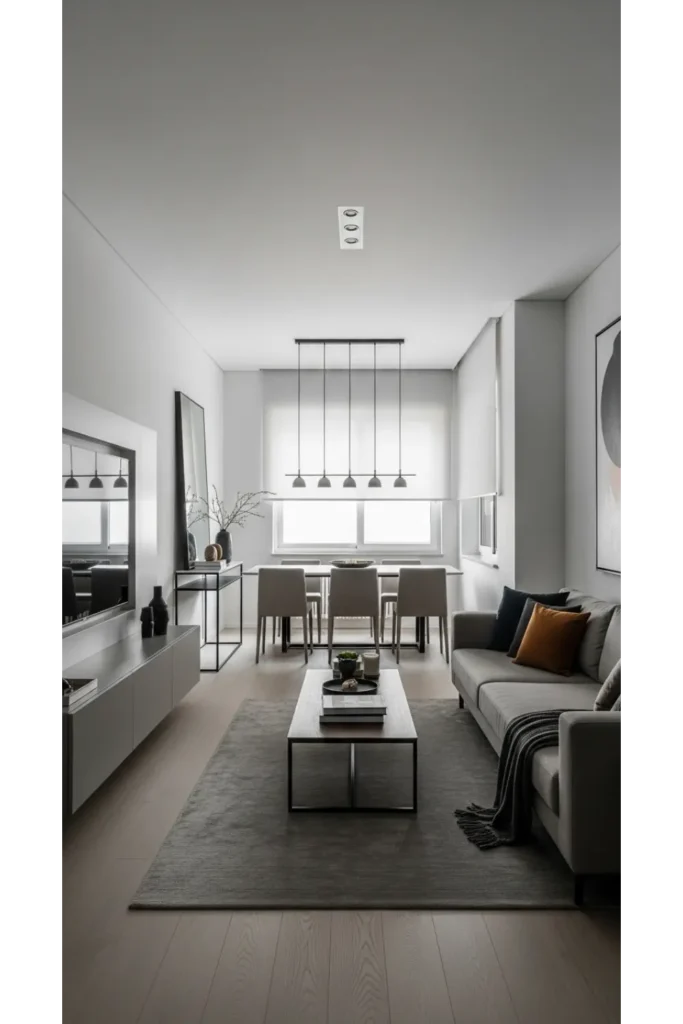
A linear layout works well in narrow rooms where width is limited. Aligning furniture along one axis improves movement and prevents congestion. This arrangement keeps pathways clear and supports a natural progression from the living area to the dining zone.
Choosing compact, proportional furniture is essential. Oversized pieces disrupt balance and comfort. A linear approach feels organized and calm, making it ideal for apartments with hallway style living spaces that need clarity and function.
23. Soft Transitional Decor
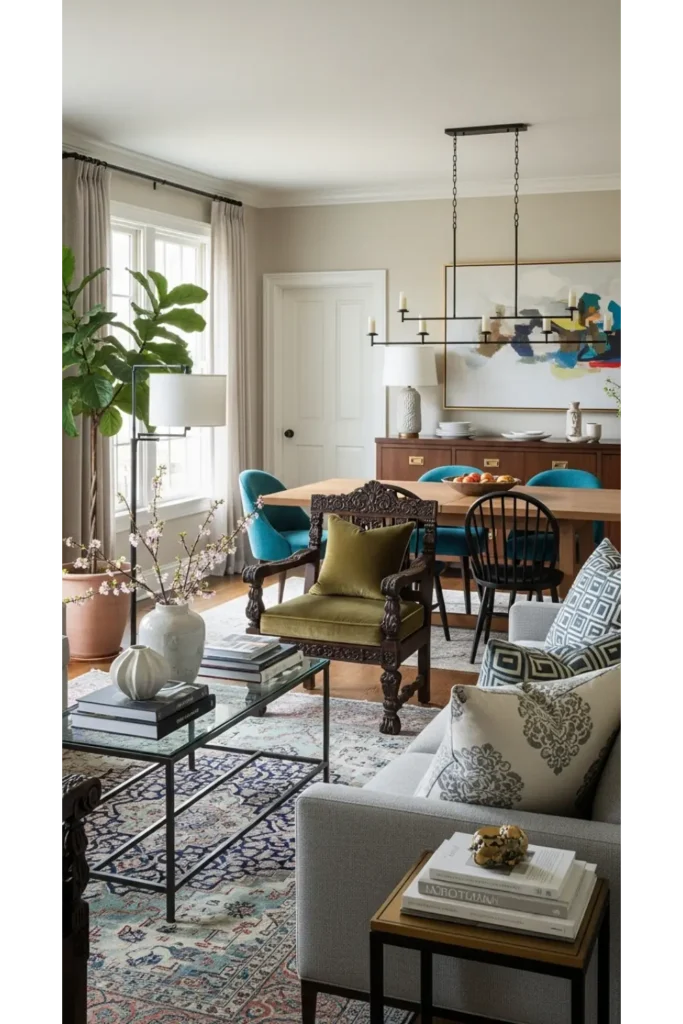
Soft transitional decor helps living and dining areas blend seamlessly. By mixing classic and modern elements, the space feels balanced and approachable. This style avoids extremes, which makes it easier for both zones to coexist without visual tension.
Repeating colors, materials, and finishes across the room reinforces unity. The result feels lived in and personal rather than staged. Transitional decor supports flexibility, allowing the space to evolve naturally as needs and tastes change.
24. Rug-Defined Dual Zones
Using separate rugs for each zone helps define function without adding walls. A rug under the sofa anchors the living area, while a second rug under the dining table establishes a clear eating space. This technique adds warmth and structure at the same time.
Rugs also help with sound absorption, which improves comfort in smaller homes. Choose low pile options that are easy to clean and proportional to the furniture to avoid visual clutter.
25. Extendable Dining Table Solution
An extendable dining table offers flexibility for compact homes. When closed, it takes up minimal space and supports daily use. When opened, it accommodates guests without requiring a separate dining room.
This layout suits people who entertain occasionally but value open space. It allows the living room to stay uncluttered while still meeting practical needs.
26. L-Shaped Seating Layout
An L-shaped sofa defines the living area while leaving room for dining nearby. This configuration works well in square rooms and helps create a sense of enclosure for lounging.
The dining table can sit just outside the sofa line, maintaining separation without walls. This layout encourages relaxation while keeping meals close and convenient.
27. Compact Bistro-Style Dining
A bistro style dining setup fits naturally into a small living room with dining area layouts where space efficiency matters most. These petite tables and slim chairs create a dining moment without overwhelming the living area. Their lightweight appearance keeps the room visually breathable while still offering everyday functionality.
This layout shines in apartments designed for one or two people. It supports casual meals, coffee breaks, and conversation without demanding excess square footage. When styled thoughtfully, a bistro set adds charm and personality, making the shared space feel curated instead of constrained.
28. Floating Shelves for Visual Balance
Floating shelves help structure small living room with dining area layouts by adding vertical definition without blocking light or sightlines. Positioned between zones, they subtly signal a shift in function while maintaining openness. This keeps the room feeling connected rather than divided.
These shelves also serve as functional decor. They hold books, plants, or dining essentials while drawing the eye upward. This vertical emphasis balances the room visually and prevents the layout from feeling heavy or bottom weighted, which is common in smaller spaces.
29. Monochrome Color Flow
Using a single color family across both zones simplifies small living room with dining area layouts and makes them feel more expansive. When walls, furniture, and decor share tonal harmony, the eye moves smoothly through the space. This reduces visual interruptions that often make small rooms feel busy.
The key to success lies in texture variation rather than contrast. Mixing fabrics, finishes, and subtle shades keeps the room engaging while preserving cohesion. This approach creates a calm, polished environment that feels intentional and easy to live in.
30. Symmetrical Balance Layout
Symmetrical balance brings clarity to small living room with dining area layouts by creating visual order. Balanced furniture placement reduces visual noise and helps the room feel calmer and more structured. This is especially useful in compact spaces where clutter quickly feels overwhelming.
When materials, proportions, and spacing align, the room gains a sense of rhythm. This layout feels timeless and grounded, making the combined space easier to decorate and more pleasant to spend time in.
31. Narrow Console Dining Option
A narrow console table offers a smart dining alternative in small living rooms with tight dining area layouts. Positioned against a wall, it provides enough surface area for meals without encroaching on walkways or seating zones.
This solution works well for light dining and flexible use. It can shift between serving, working, or dining as needed. The room stays open and functional, which is essential in compact living environments.
32. Sliding Furniture Flex Layout
Sliding or movable furniture adds adaptability to small living room with dining area layouts. Tables, chairs, or benches that shift easily allow the room to change based on daily needs or social occasions. This flexibility prevents the space from feeling rigid.
This layout supports real life use rather than fixed staging. It allows the room to breathe and evolve, making it ideal for homes where space must serve multiple purposes without constant rearranging stress.
33. Natural Material Focus
Natural materials bring warmth and authenticity to small living room with dining area layouts. Wood, linen, and woven textures soften the space and counterbalance the limitations of size. These elements make the room feel grounded and welcoming.
This approach also ages well. Natural finishes adapt easily to changing decor styles and lighting conditions. The space feels comfortable rather than trendy, supporting long term use and visual harmony.
34. Studio-Style Unified Layout
Treating the room as a single, unified environment strengthens small living room with dining area layouts by eliminating unnecessary boundaries. Furniture placement subtly guides use while maintaining openness and flow. This keeps the space flexible and visually calm.
This layout works particularly well in studio apartments. It supports daily routines without forcing strict divisions. The result is a cohesive space that feels intentional, livable, and adaptable to changing needs.
35. Fold-Down Dining Table
This dining area inspirations space saving style approach focuses on flexibility. A fold-down table stays flush against the wall when not in use, opening the floor for movement. When meals begin, it becomes a stable surface that supports everyday dining. This solution works well in studio apartments where every square foot must multitask without visual clutter.
The surrounding design should stay simple and warm. Light wood finishes, subtle wall art, and slim chairs keep the area balanced. Built-in wall shelving nearby adds storage for dishes and decor. The result feels intentional, not temporary, and blends smoothly into modern small dining space design trends.
36. Wall-Mounted Drop-Leaf Table
A wall-mounted drop leaf table offers adaptability for daily use. Keep one leaf down for quick meals and raise both sides for guests. This design supports flexible living without permanent bulk. It fits well in apartments where dining and living areas overlap.
Neutral finishes help the table blend into the wall when folded. Add lightweight chairs that store easily nearby. This solution showcases functional interior design that responds to real-life needs without visual noise.
37. Angled Dining Nook for Unused Corners
Instead of treating corners as leftover space, an angled dining nook turns them into intentional dining zones. By slightly rotating the table or seating away from rigid right angles, the area feels more dynamic and less boxed in. This approach softens the room layout and allows circulation to move naturally around the dining area, which is especially helpful in tight apartments or open-plan homes.
Comfort and cohesion make this setup work long term. Upholstered benches, rounded tables, and warm wall finishes help the nook feel integrated rather than tucked away. When styled with care, this design supports small home dining needs while proving that even challenging corners can anchor a functional, welcoming dining experience.
38. Open Wall Display for Dining Storage
Replacing traditional cabinets with an open wall display keeps the dining area visually light while still supporting daily storage needs. Slim shelves or ledge-style displays allow plates, bowls, and serving pieces to stay within reach without enclosing the space. This approach works especially well in compact dining zones where bulky cabinetry can make walls feel heavy and close in the room.
The key lies in thoughtful curation. Limiting the color palette and mixing functional items with subtle decor creates balance and rhythm. Natural materials and clean spacing prevent visual overload. This setup supports minimalist dining spaces by blending practicality with style, allowing storage to enhance the room instead of dominating it.
39. Wall-Integrated Dining Desk
A wall-integrated dining desk is a smart response to modern living where spaces must multitask. Mounted securely, it serves as a dining surface, workspace, or prep area without occupying floor space. This design works best in homes where flexibility matters more than formality. It keeps the dining area functional while allowing the room to adapt throughout the day.
Consistency in materials helps the desk blend seamlessly into the wall. Comfortable chairs that slide away easily support smooth transitions between tasks. This setup highlights multifunctional furniture that adapts to real routines, making it ideal for compact homes and work-from-home lifestyles.
40. Built-In Wall Niche Dining Area
Wall niches naturally define space, making them ideal for dining areas in compact homes. By integrating seating and a table into the niche, the dining zone feels intentional rather than added on. This setup removes the need for extra furniture and uses architectural features to guide layout decisions.
Built-in seating improves comfort and efficiency. Upholstered benches and soft lighting help the niche feel welcoming. This design reflects efficient space planning by turning structural elements into functional dining solutions with long-term value.
41. Bar-Height Dining Table
Bar-height dining tables offer a casual alternative to traditional setups. Their elevated form takes up less visual space and blends well with kitchens or open-plan layouts. Stools slide underneath easily, keeping the area clear when not in use. This makes the design ideal for quick meals and informal gatherings.
When styled thoughtfully, bar-height tables feel intentional rather than temporary. Choosing supportive stools and warm finishes ensures comfort. This approach aligns with contemporary dining layouts that prioritize flow, flexibility, and modern living habits.
42. Minimal Japandi Dining Style
Japandi dining style blends Japanese simplicity with Scandinavian warmth. Clean lines, natural wood, and muted tones create a calm environment that suits small spaces well. This style avoids excess decor, allowing the dining area to breathe and feel balanced even in compact layouts.
Texture plays a key role. Soft textiles, subtle grain patterns, and gentle lighting add depth without clutter. This approach supports modern minimalist dining while maintaining comfort and emotional warmth for everyday meals.
43. Dining Area Under the Staircase
The space under a staircase often goes unused, yet it can host a functional dining area. A compact table and bench fit naturally beneath stairs, turning awkward space into a practical zone. This solution works especially well in townhomes or duplex apartments with limited square footage.
Proper lighting and cohesive finishes help the area feel planned rather than improvised. When designed well, this setup reflects creative space usage that maximizes function without expanding the home’s footprint.
44. Indoor-Outdoor Dining Blend
Placing a dining area near outdoor access creates visual expansion and improves airflow. Glass doors or large windows connect the dining space to the outdoors, making it feel larger and more relaxed. This setup works well in apartments with balconies or patios.
Light furniture and natural materials enhance the connection. This design supports modern apartment dining by blending interior comfort with outdoor openness for a more enjoyable dining experience.
45. Modular Dining Furniture
Modular dining furniture adapts to changing needs with ease. Tables expand, seating reconfigures, and pieces move effortlessly. This flexibility supports households that value long-term usability over fixed layouts. Modular designs allow dining spaces to evolve without replacement.
Consistency in style keeps the space cohesive even as pieces shift. This solution aligns with adaptive home design, offering freedom, efficiency, and durability for compact modern living.
46. Vertical Wall Decor to Add Height
Vertical wall decor helps visually stretch a compact dining space by guiding the eye upward instead of outward. Tall artwork, slim shelving, or vertically arranged frames create the illusion of height, which makes low ceilings feel less restrictive. This approach works especially well in apartments where widening the dining footprint is not possible. When walls feel taller, the dining area automatically feels more breathable and less boxed in.
The key is restraint. Choosing one strong vertical element works better than crowding the wall with decor. Slim shelves with a few intentional objects or a single elongated art piece keeps the space calm and refined. When paired with lighter wall colors and simple furniture, vertical decor quietly enhances proportion without overwhelming the dining zone.
47. Statement Lighting for Focus
Statement lighting helps define a dining area without using walls or bulky furniture. A well-placed pendant or hanging light draws attention to the table, making it feel like a destination rather than an afterthought. In compact homes, this visual focus creates structure and gives the dining zone a clear identity within the room.
Scale and placement make all the difference. A light that is too large can overwhelm the space, while one that is too small gets lost. Choosing a fixture that fits the table size keeps everything balanced. Warm lighting tones also enhance comfort, making small dining areas feel intimate and welcoming.
48. Foldable Chairs for Flexibility
Foldable chairs bring flexibility to dining areas that cannot support permanent seating. They allow homeowners to keep the space open most of the time, then quickly add seating when needed. This solution works well for entertaining, shared apartments, or homes where the dining area serves multiple purposes.
Quality matters with foldable furniture. Chairs should feel sturdy, comfortable, and easy to store without damage. Slim designs that hang on walls or slide into closets keep clutter under control. This approach supports spontaneous hosting while keeping everyday living streamlined and efficient.
49. Dining Spaces in Entryways
Entryways often go unused beyond basic storage, yet they can host compact dining setups with smart planning. A narrow table and two chairs can fit comfortably without disrupting circulation. This placement works especially well in apartments where the living area needs to stay open and uncluttered.
Good lighting helps soften the transition between entry and dining. Wall-mounted lights or a small pendant can define the area without crowding it. Choosing slim furniture keeps the entry functional while giving the dining space a clear purpose. The result feels practical, not forced.
50. Window Ledge Dining Counters
Window ledge dining counters transform existing architectural features into usable dining surfaces. They eliminate the need for a traditional table while offering natural light and outdoor views. This setup works particularly well in studios or kitchens where floor space is limited but wall length is available.
Proper depth and height are essential for comfort. The counter should support plates and elbows without feeling cramped. Pairing it with stools that tuck neatly underneath keeps the area tidy. This solution feels casual, efficient, and well-suited to modern compact living.
Conclusion
In a compact home, thoughtful planning transforms limitations into strengths. These layout ideas prove that a shared living and dining space can feel stylish, comfortable, and practical. By focusing on flow, scale, and cohesion, you create a room that supports real life while reflecting your taste. The right layout does not just save space, it improves how you live every day.