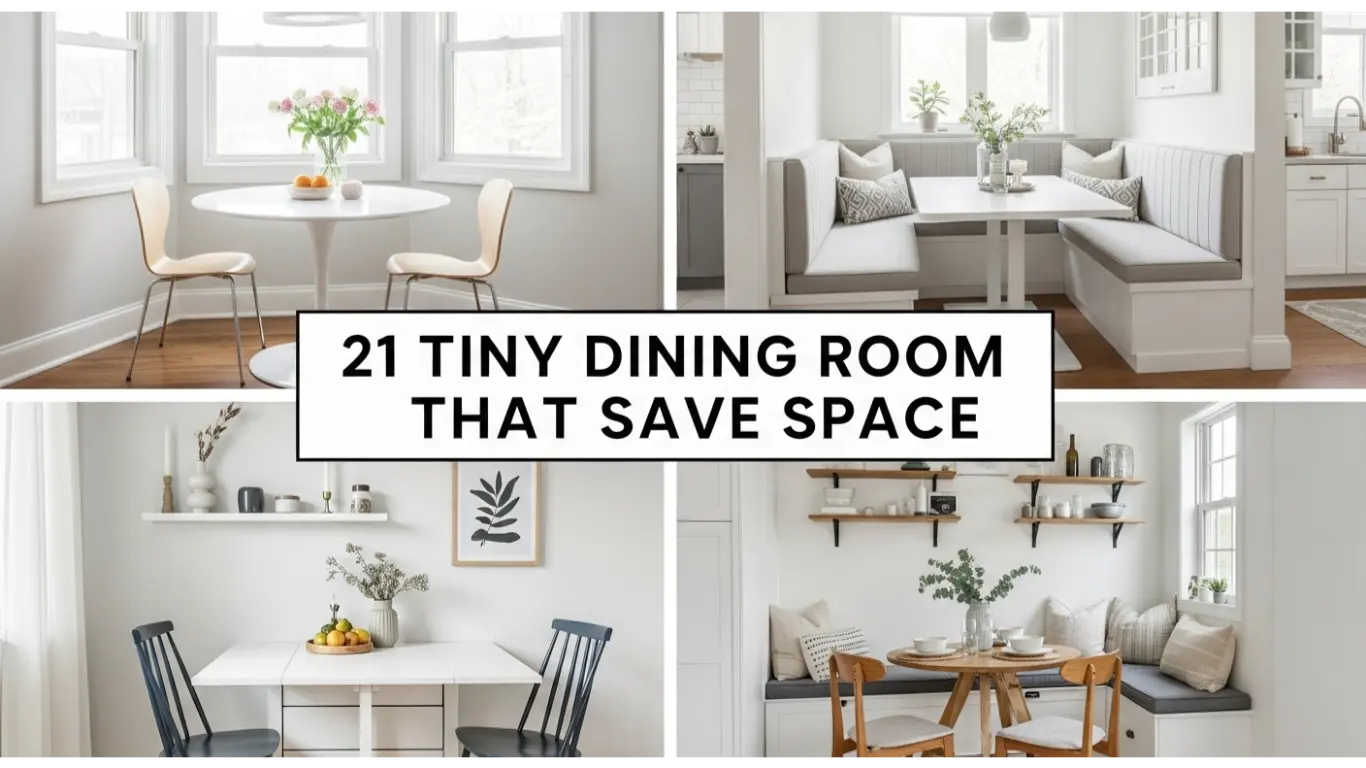
21 Tiny Dining Room Ideas That Save Space
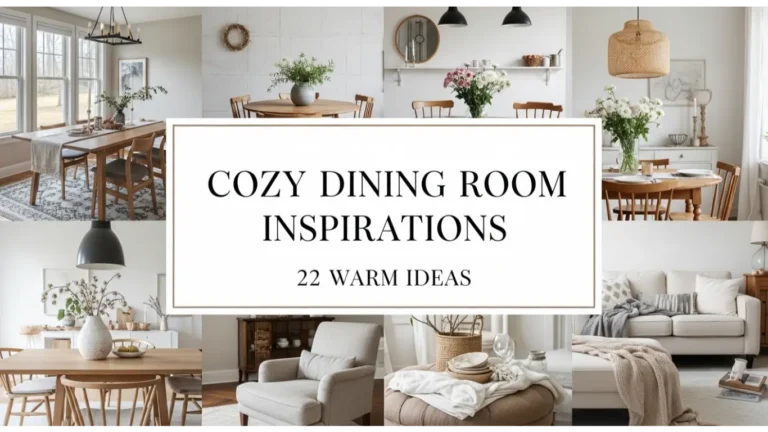
Living with a small dining area does not mean giving up comfort or style. With the right planning, even the most compact space can feel welcoming, functional, and thoughtfully designed. Smart layouts, flexible furniture, and visual tricks can turn tight dining rooms into places people actually enjoy using every day.
This guide explores practical, design driven solutions that work in real homes. Each idea focuses on saving space while improving flow, storage, and atmosphere. Whether you live in an apartment, condo, or smaller house, these ideas help you make the most of every square foot without sacrificing personality.
1. Wall mounted dining table
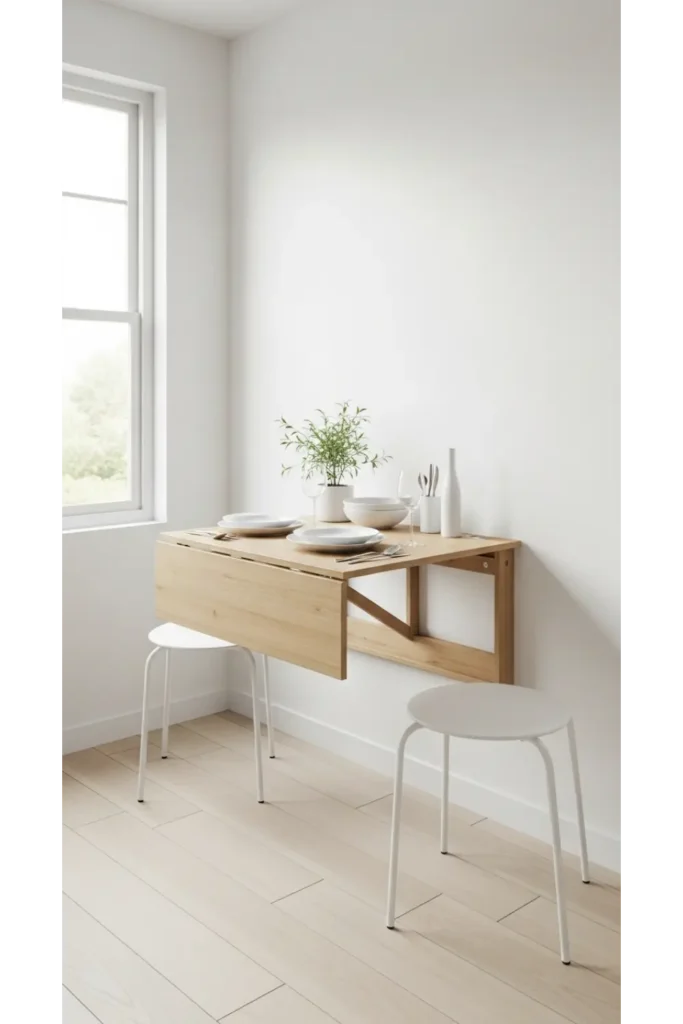
A wall mounted dining table creates instant flexibility in a compact room. When folded down, it works like a full table for meals or work. When not in use, it tucks neatly against the wall, freeing floor space. This approach is one of the most practical tiny dining room ideas for homes where every inch matters.
Pair the table with lightweight chairs that stack or hang nearby. Choose a finish that blends with the wall color to reduce visual clutter. This setup feels intentional, not temporary, and works well in apartments where rooms serve multiple purposes throughout the day.
2. Built in banquette seating
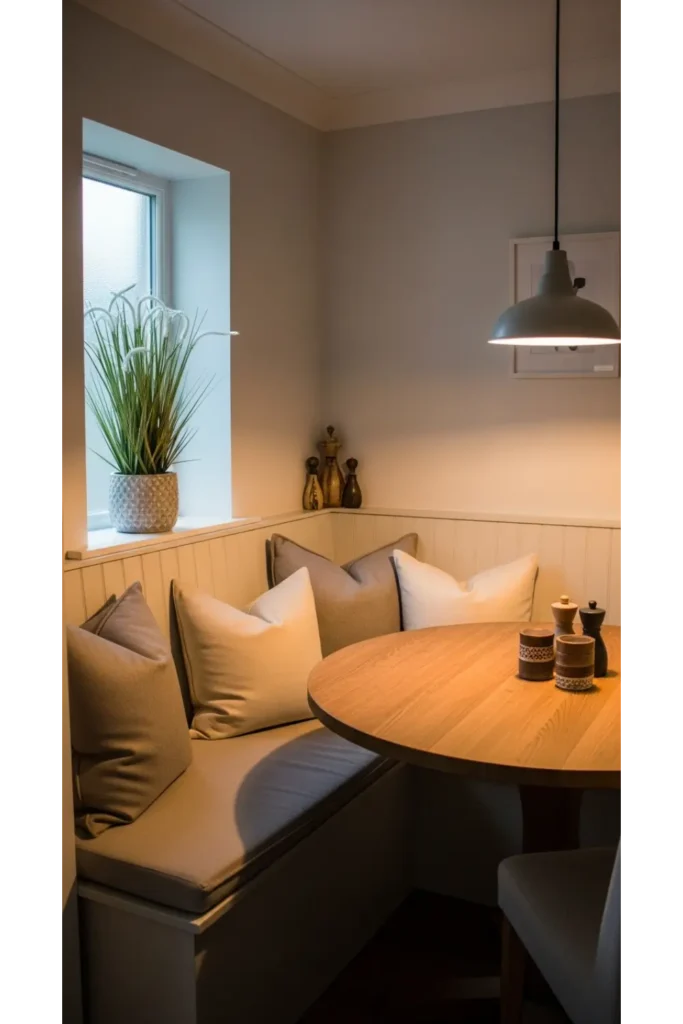
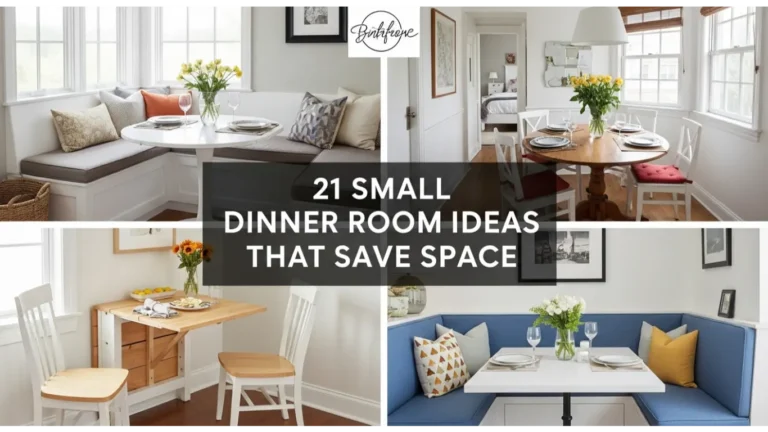
Banquette seating uses corners and walls that often go unused. A built in bench hugs the perimeter of the dining area, allowing the table to sit closer to the wall. This layout creates more legroom and eliminates the need for extra chairs taking up floor space.
Add hidden storage beneath the bench for linens or rarely used kitchen items. Upholstered cushions soften the look and improve comfort. The result feels custom and cozy, making even a small dining room feel like a purposeful destination.
3. Round pedestal table
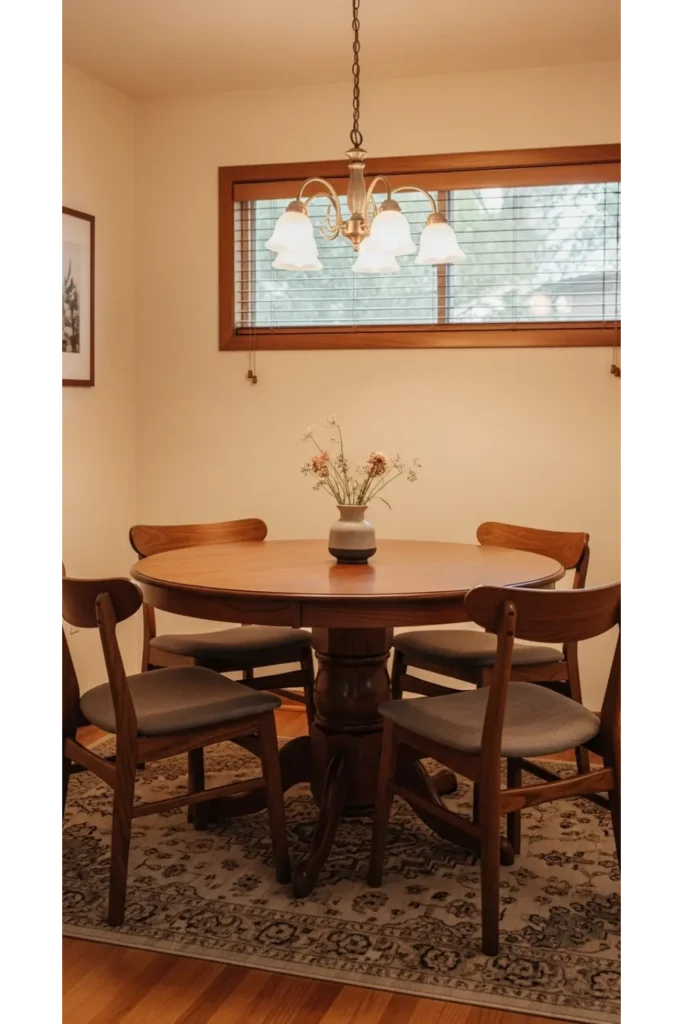
A round pedestal table works especially well in narrow or square dining rooms. Without sharp corners, it improves traffic flow and allows people to move around easily. The single base takes up less visual and physical space than four table legs.
This shape also encourages conversation and flexibility. You can often squeeze in an extra chair when needed. Choose a table with a slim profile and light finish to keep the room feeling open and balanced.
4. Extendable dining table
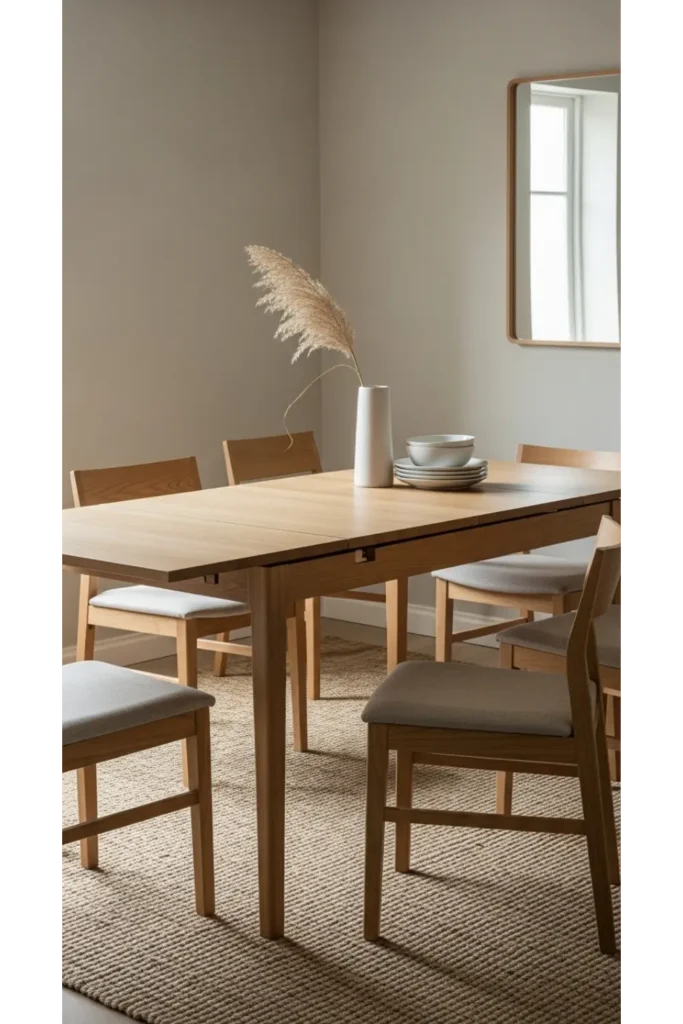
An extendable dining table adapts to your needs without demanding permanent space. Kept compact for daily use, it expands only when guests arrive. This makes it ideal for households that entertain occasionally but live small every day.
Look for designs with hidden leaves that store inside the table. Pair it with chairs that tuck in fully. When closed, the table feels proportional to the room, preserving openness and comfort.
5. Glass top dining table
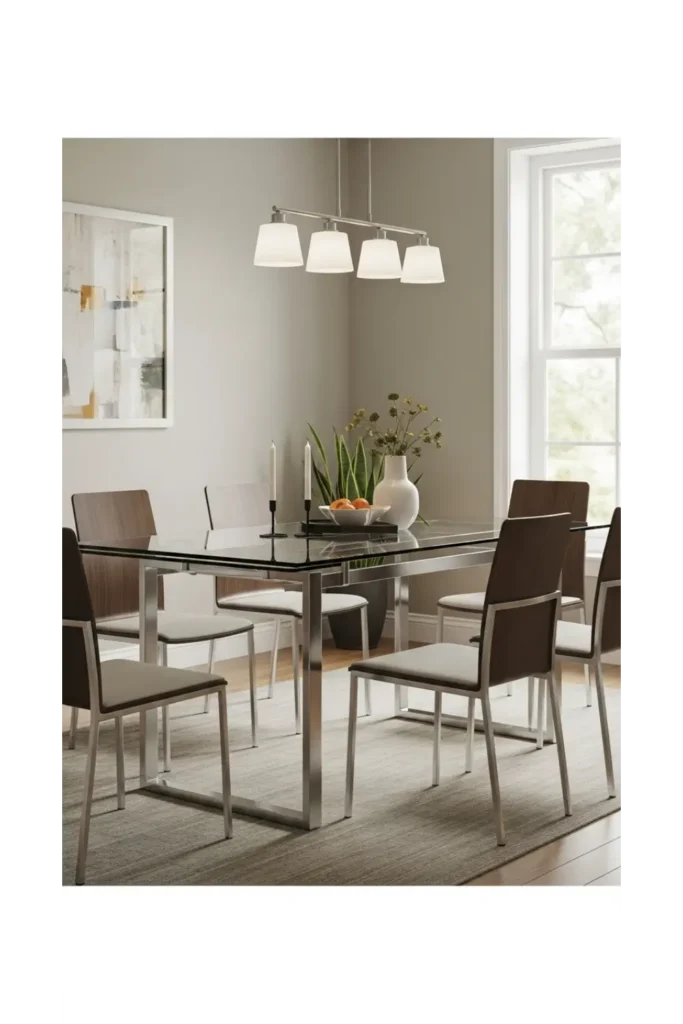
Glass top tables visually disappear, making the room feel larger than it is. Light passes through the surface, reducing visual weight and helping the space feel airy. This works well in dining rooms that lack natural light or feel boxed in.
Choose a sturdy base with clean lines to ground the look. Keep surrounding furniture minimal so the table remains the focal point. The transparency helps maintain an uncluttered feel without sacrificing function.
6. Dining table against the wall
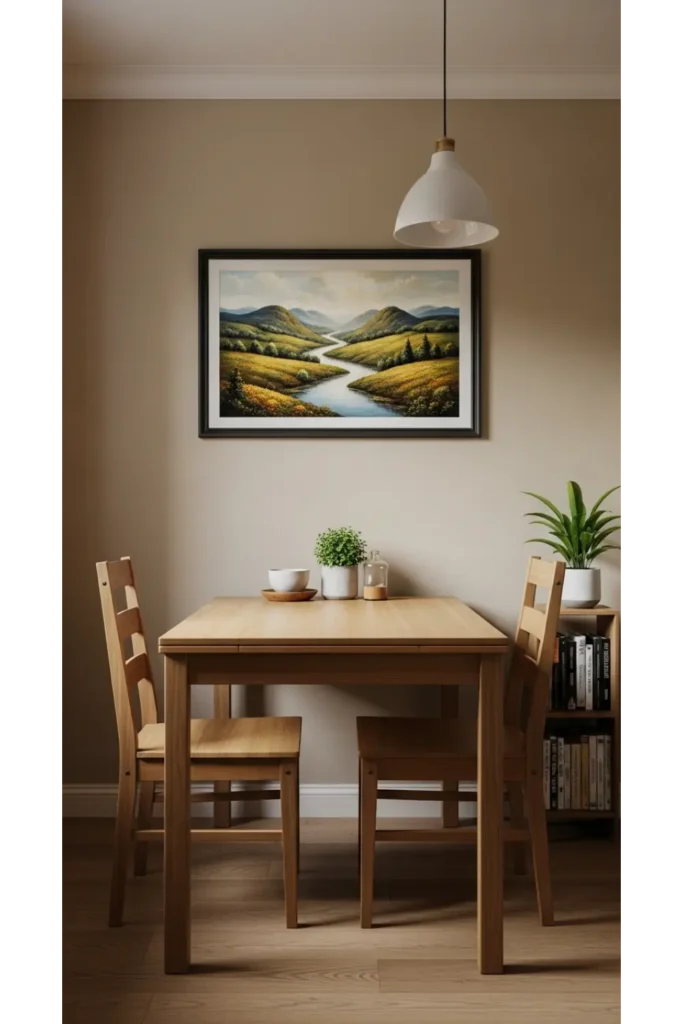
Placing a dining table against the wall saves valuable floor space while still offering a comfortable eating area. This setup works especially well for one or two people and can expand temporarily by pulling the table out when needed.
Use wall art or shelving above the table to define the dining zone. This approach creates structure without crowding the room. It also allows more open space for movement in tight layouts.
7. Drop leaf table
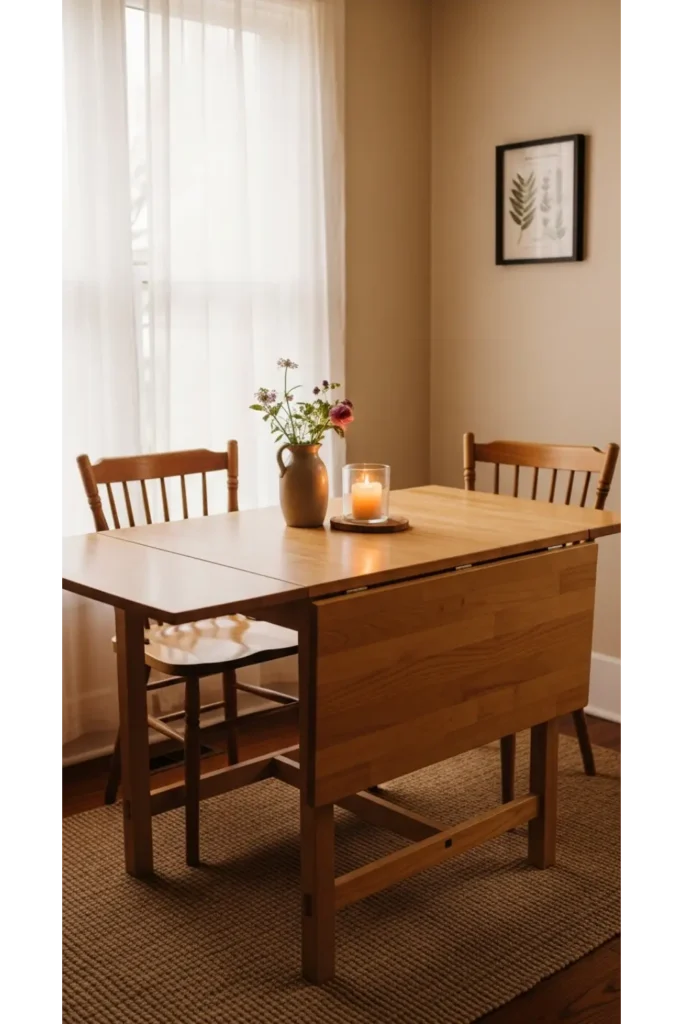
Drop leaf tables offer flexibility similar to wall mounted designs but stand independently. Fold one or both sides down to reduce the footprint when not in use. Open them fully for meals or guests.
This style works well in transitional spaces between kitchens and living rooms. When folded, it can function as a console or side table. The versatility makes it a smart choice for compact homes.
8. Slim profile dining chairs
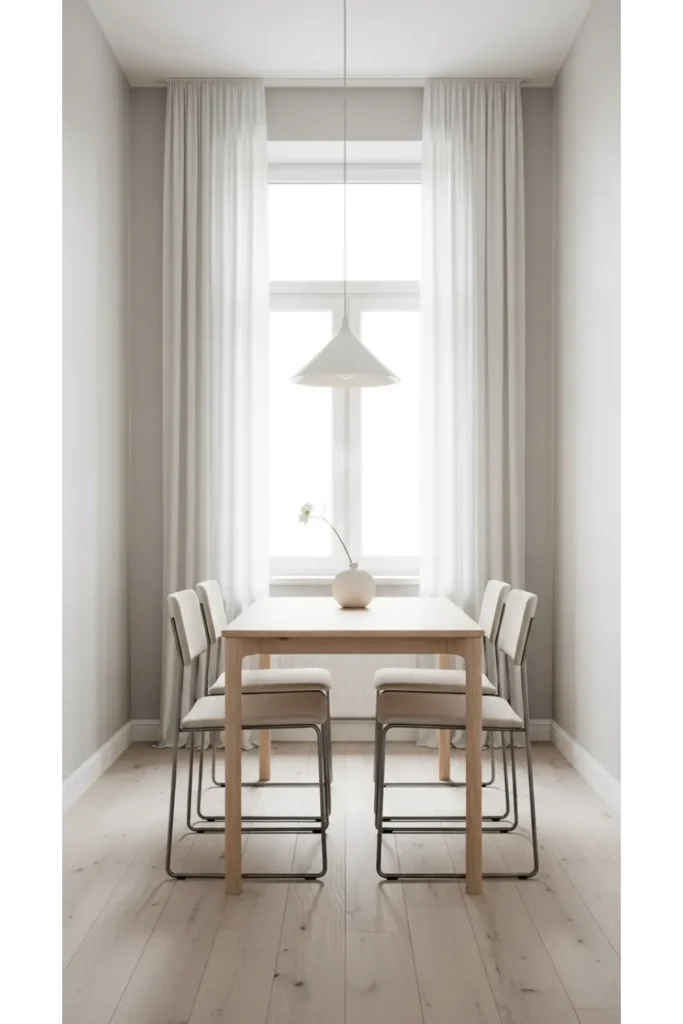
Chairs with slim frames and open backs take up less visual space than bulky designs. They make the dining area feel lighter and easier to navigate. This is especially helpful in rooms where chairs stay out most of the time.
Choose materials like metal, molded plastic, or narrow wood frames. Upholstery should stay minimal to avoid heaviness. The right chairs can dramatically change how spacious the room feels.
9. Bench instead of chairs
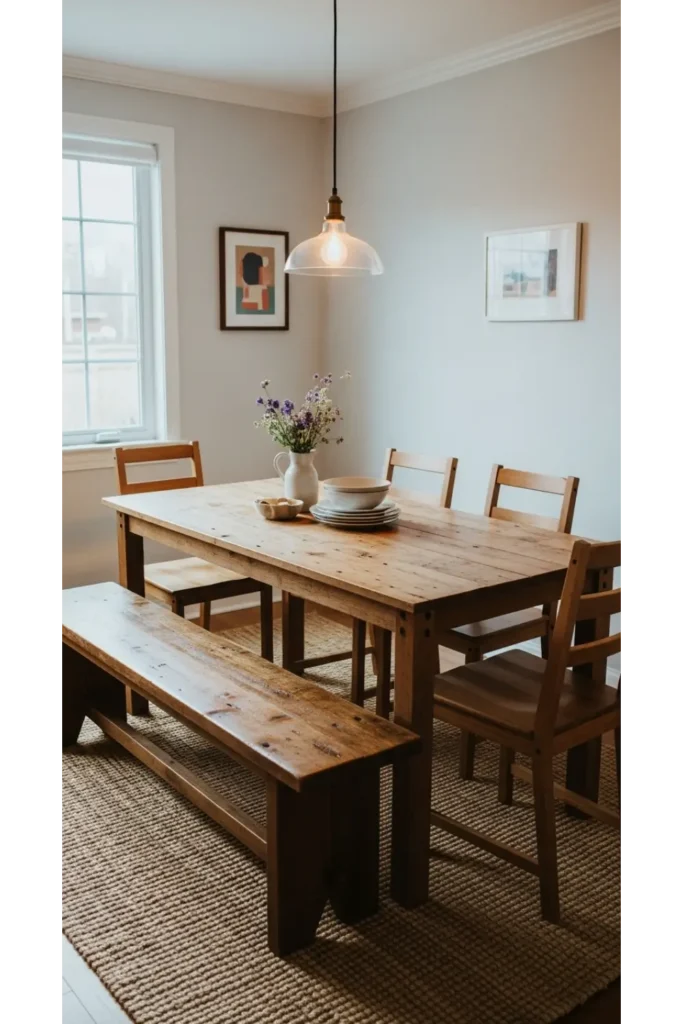
A bench can seat multiple people while taking up less space than individual chairs. It slides fully under the table when not in use, clearing walkways and improving flow.
Benches also create a casual, welcoming vibe. Pair one side of the table with a bench and the other with chairs for balance. This mix keeps the space functional and visually interesting.
10. Corner dining nook
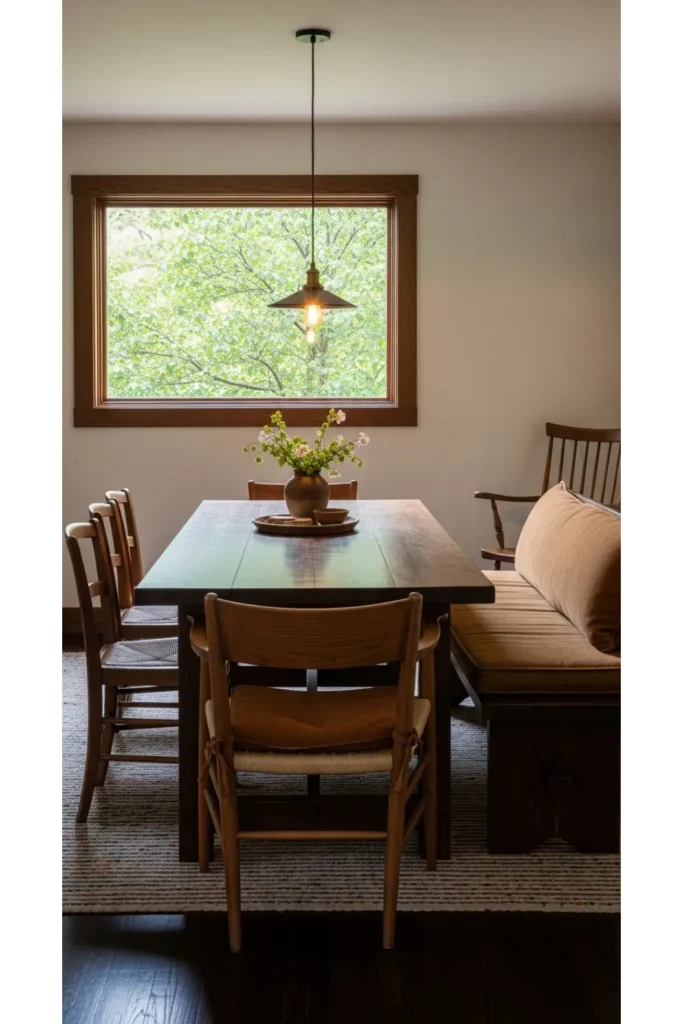
Turning a corner into a dining nook makes use of awkward spaces. An L shaped layout fits snugly into the room, creating a defined eating area without interrupting traffic flow.
This setup works well in kitchens or open plan apartments. Add cushions and a small table to make the space feel intentional. The corner placement helps the rest of the room feel more open.
11. Vertical storage integration
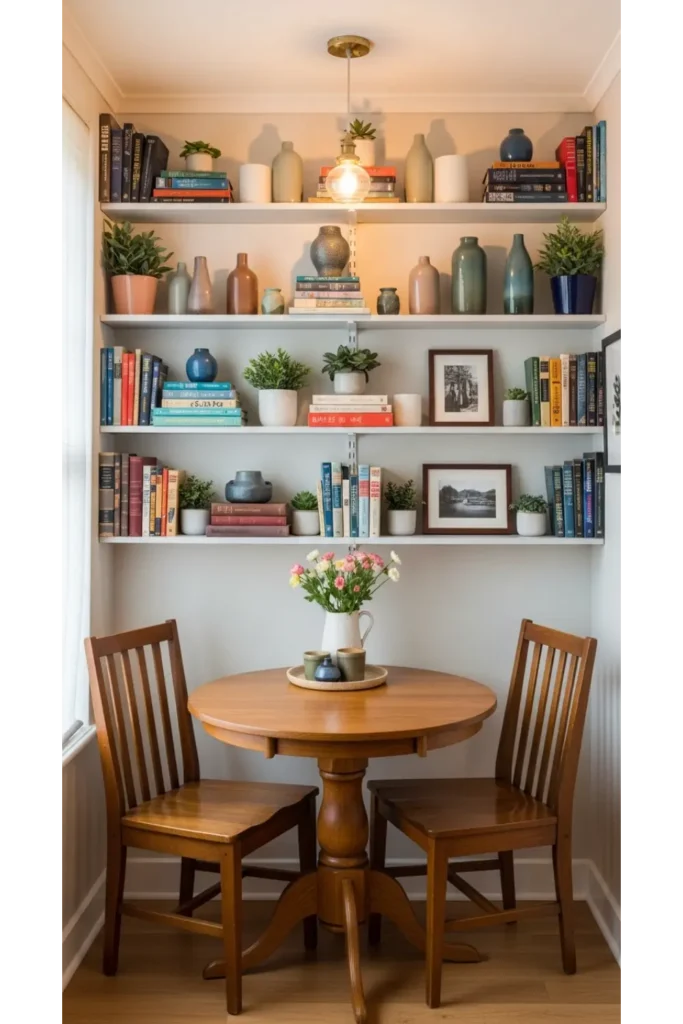
Using vertical space reduces the need for bulky furniture. Tall shelving or cabinets above the dining area store dishes, glassware, or decor without eating into floor space.
Keep shelves shallow to avoid crowding. Display only what you use or love to maintain a clean look. Vertical storage adds function while keeping the footprint small and efficient.
12. Mirror to expand space
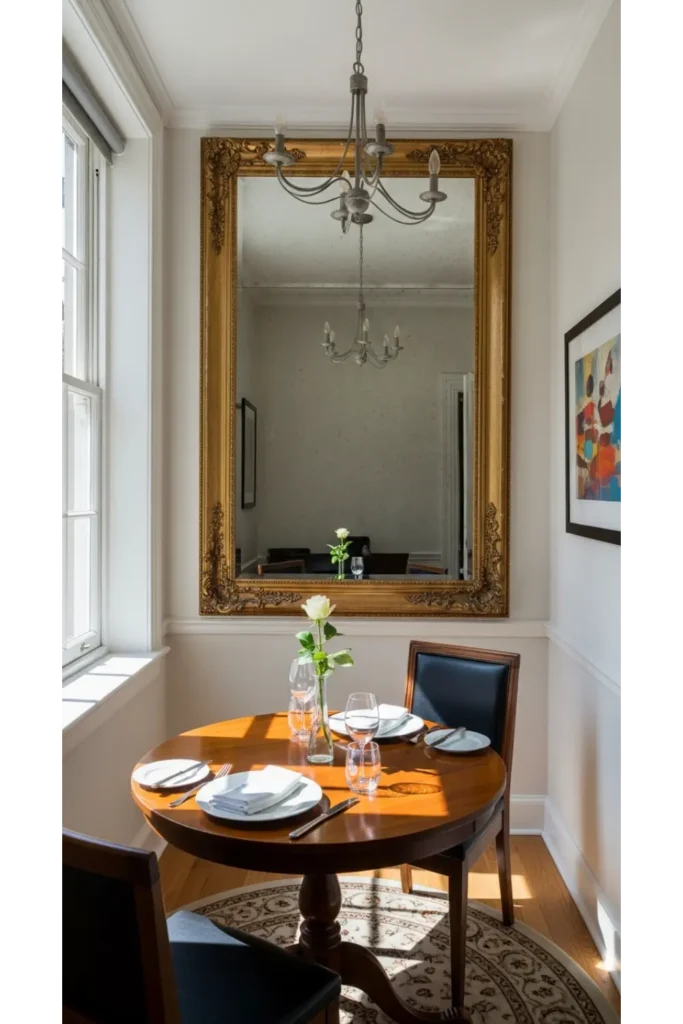
Mirrors visually double the size of a small dining room. Placed strategically, they reflect light and make the space feel brighter and more open. This works especially well in rooms with limited windows.
Choose a simple frame that complements the room’s style. Avoid overly ornate designs that add visual noise. A well placed mirror enhances depth without adding clutter.
13. Layered light tones for visual depth
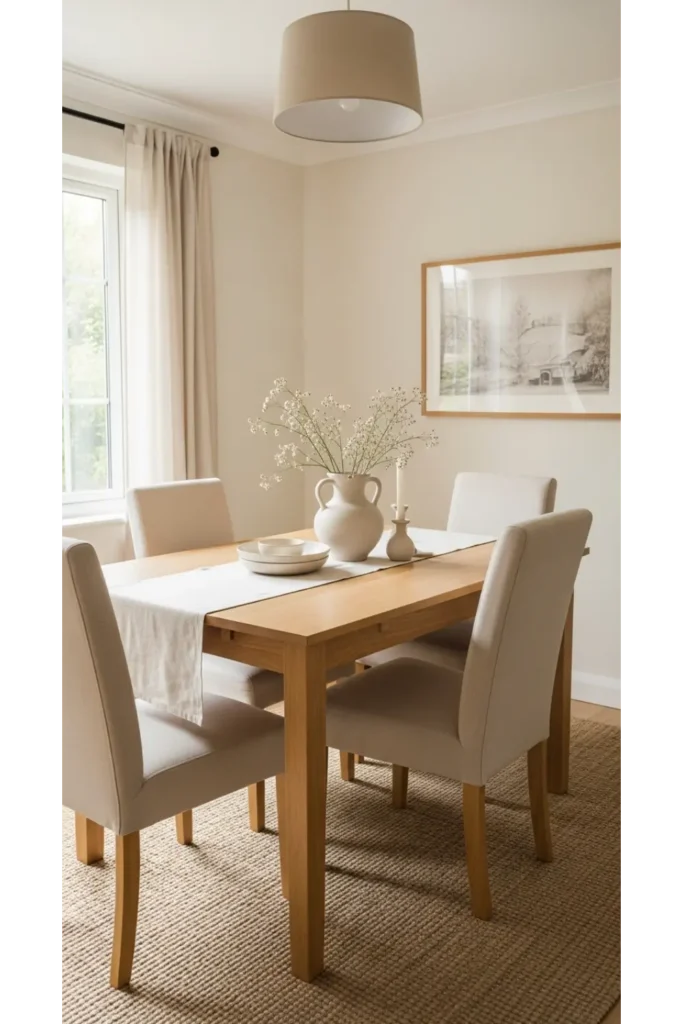
Instead of relying on flat white alone, layered light tones create depth while still keeping the dining room open and spacious. Soft variations of cream, warm beige, pale gray, and light wood work together to add dimension without shrinking the room. This approach prevents the space from feeling sterile while maintaining the airy effect that smaller dining areas need.
Texture plays a key role in making light tones feel rich rather than plain. Woven chair seats, subtle wood grain, and softly finished walls introduce warmth and comfort. By repeating these tones across furniture and decor, the dining space feels intentional and balanced, proving that light colors can feel both practical and inviting when thoughtfully layered.
14. Multi use dining furniture
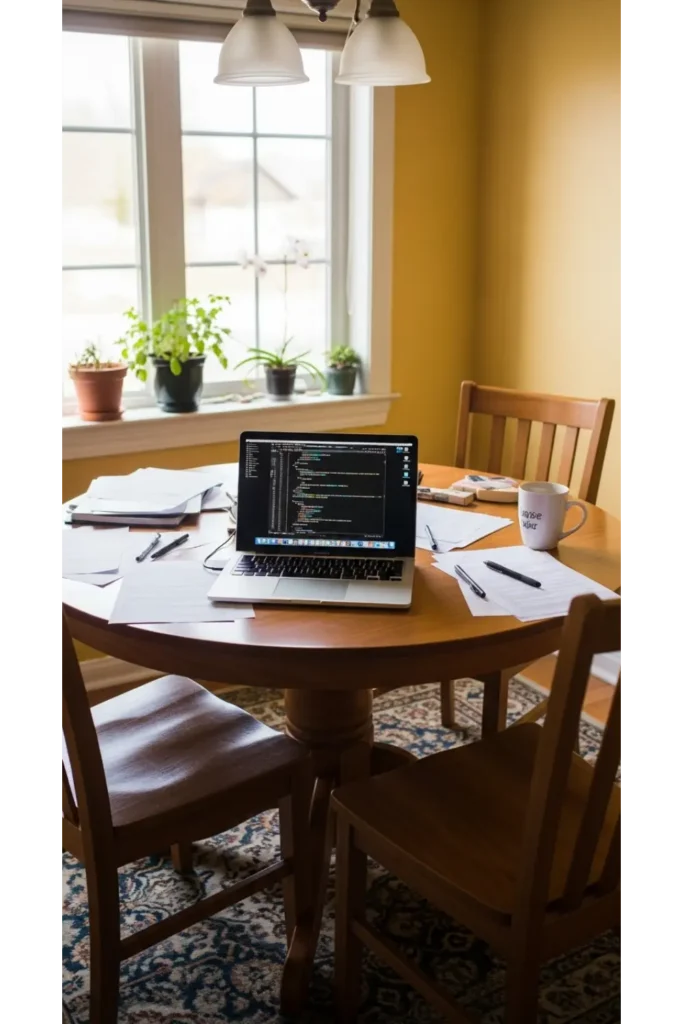
Furniture that serves more than one purpose saves space and money. A dining table that doubles as a desk or craft surface reduces the need for extra rooms or furniture pieces.
Choose durable finishes that handle daily use. Keep storage nearby for quick transitions between activities. This approach supports modern living where rooms often need to do more.
15. Slim dining table with integrated storage
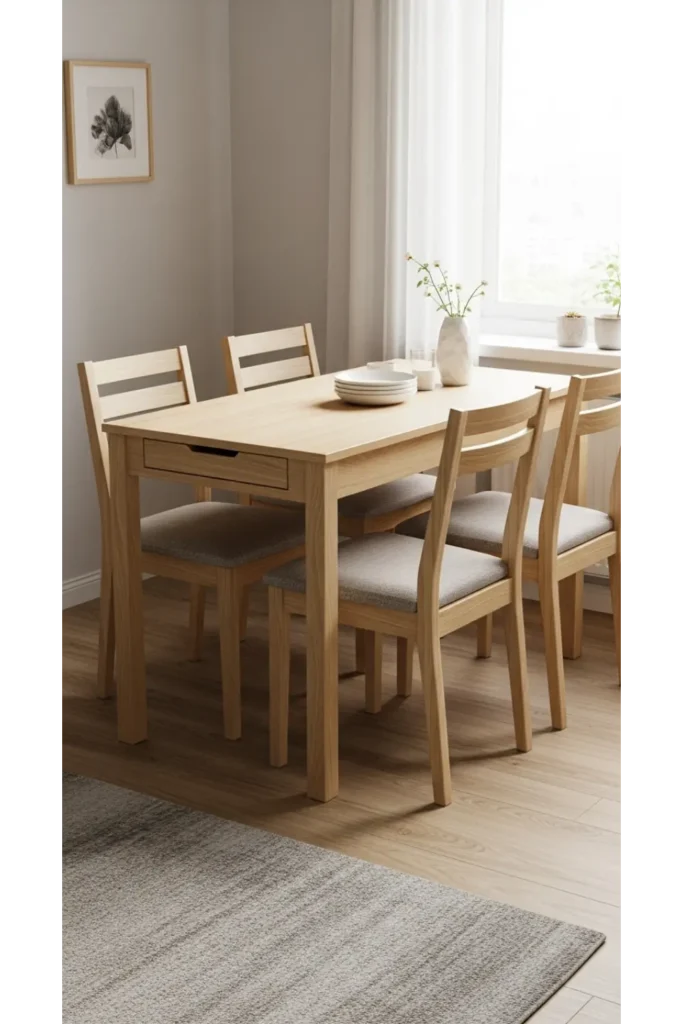
A slim dining table with integrated storage offers more than just a place to eat. Built in drawers or shallow compartments provide space for placemats, cutlery, or napkins, reducing the need for extra storage furniture. This makes the dining area more efficient while keeping the footprint small, which is essential in compact homes where every function must earn its place.
This type of table works well in narrow dining rooms because it keeps surfaces clear and organized. Choose a streamlined design with clean edges so the storage stays discreet. When paired with chairs that tuck in neatly, the table supports daily use without visually crowding the room, helping the space feel calm, practical, and thoughtfully designed.
16. Open leg furniture
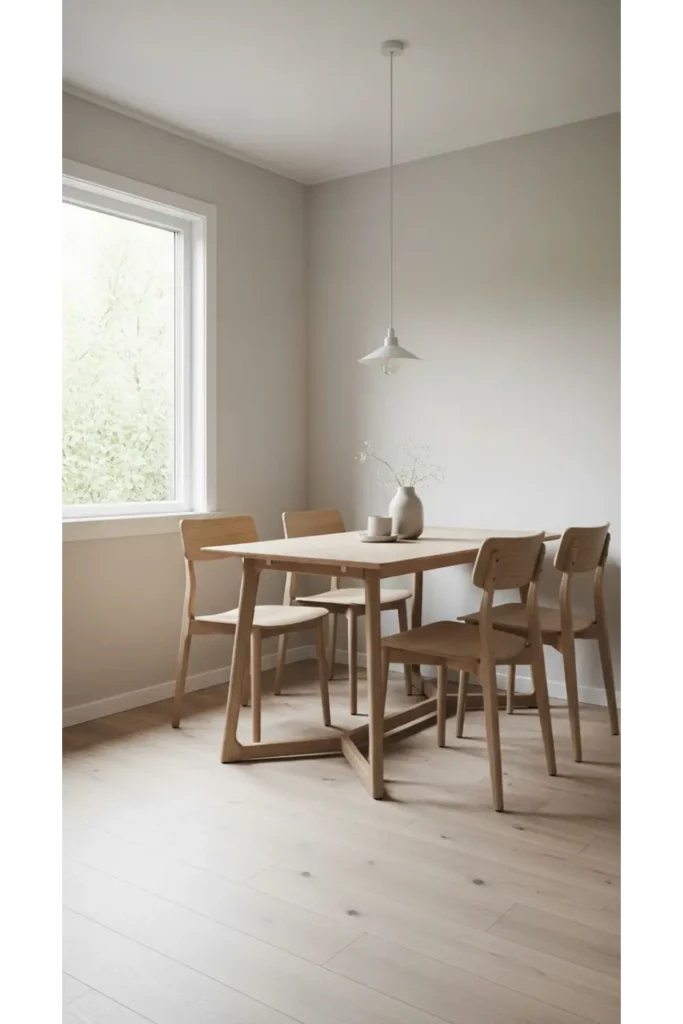
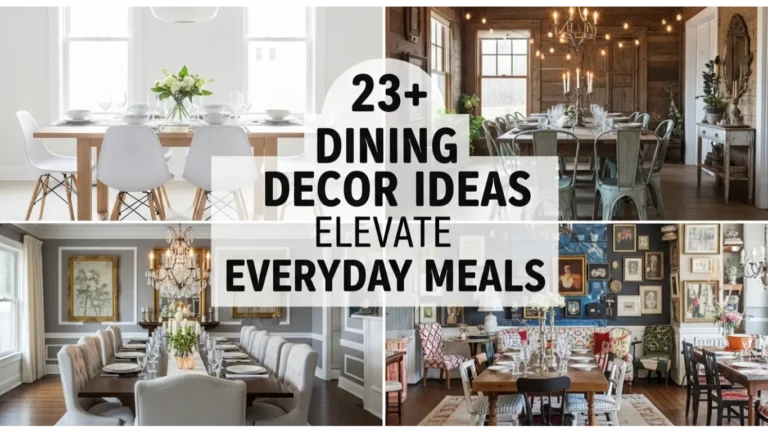
Furniture with open legs creates breathing room in a compact dining area by allowing light and sightlines to pass through. Unlike bulky bases or solid panels, open leg designs reduce visual weight and help the room feel less boxed in. This approach works especially well in dining rooms that connect to kitchens or living areas.
Selecting tables and chairs with slim legs in wood or metal keeps the floor visible, which visually expands the space. The uninterrupted view from wall to wall makes the room feel taller and wider. This simple design choice subtly improves comfort, movement, and balance without changing the room’s footprint.
17. Slim vertical display ledges for dining walls
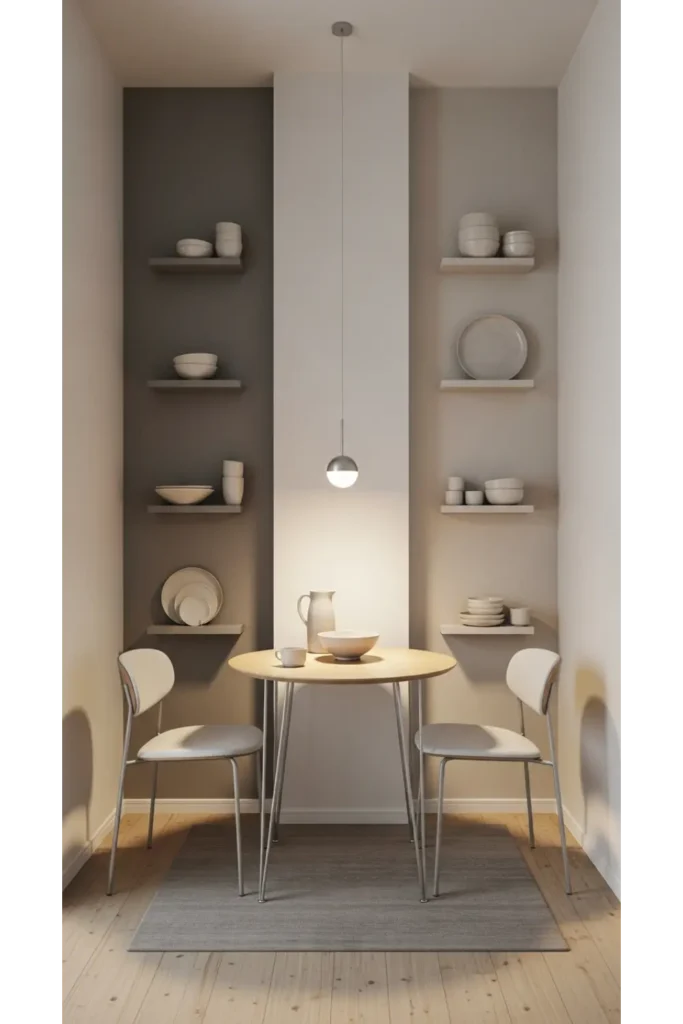
Instead of traditional floating shelves, slim vertical display ledges offer a fresher approach to wall storage in small dining rooms. These narrow ledges take up far less depth, allowing you to display a few essential items without visually pushing into the space. They work especially well in tight layouts where even shallow shelves can feel intrusive.
By arranging ledges vertically rather than horizontally, the eye moves upward, making the dining area feel taller and more open. Use them to display a small rotation of plates, artwork, or plants rather than full collections. This controlled approach keeps storage intentional, supports visual balance, and avoids the cluttered look that heavier shelving can create in compact dining spaces.
18. Compact lighting fixtures
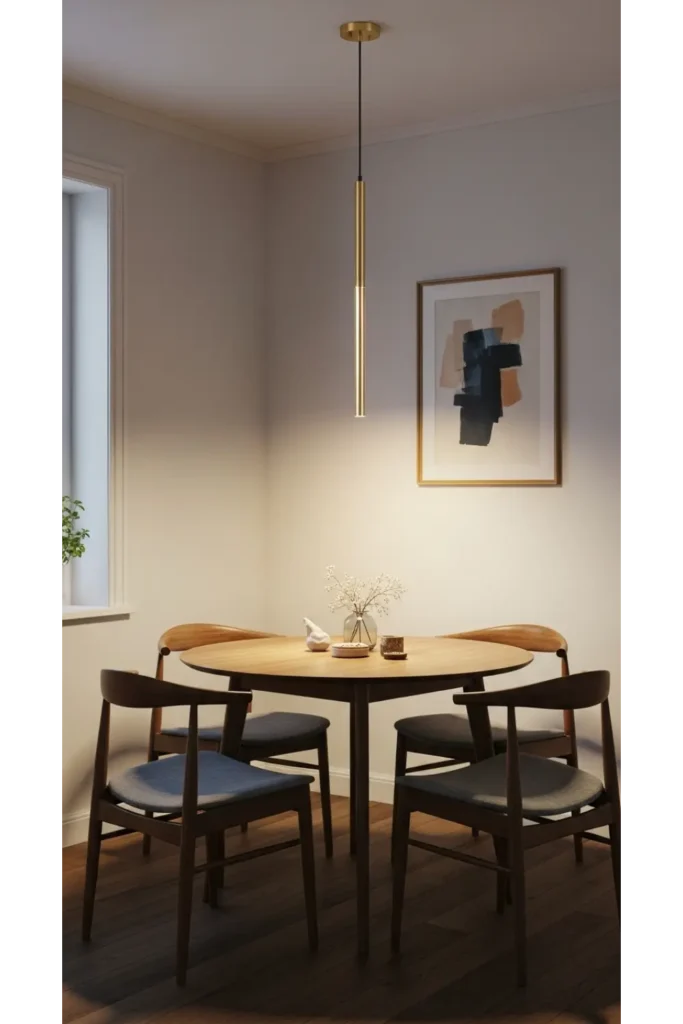
Lighting plays a major role in how spacious a dining room feels. Compact fixtures deliver focused light without overwhelming the room or drawing attention away from the layout. Oversized chandeliers can dominate small spaces, while slim pendants or flush mounts keep the ceiling visually open.
Choose fixtures with clean shapes and simple finishes that complement the table size. Position the light directly over the dining surface to define the area without excess brightness. The right lighting choice enhances mood, improves usability, and reinforces a sense of proportion in a compact dining environment.
19. Rugs to define space
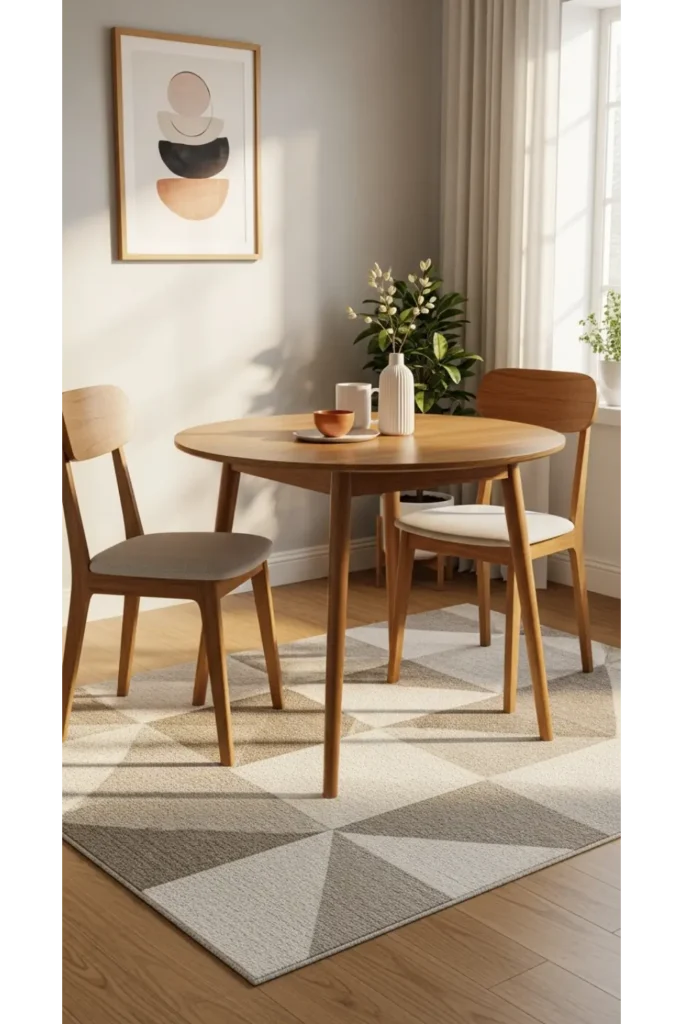
In small homes, a rug helps define the dining area without building walls or adding furniture. It visually anchors the table and chairs, giving the space a clear purpose even within an open layout. This is especially useful in apartments where dining, living, and kitchen zones share one room.
Select a rug large enough so chairs remain on it when pulled out. Low pile materials allow smooth movement and easy cleaning. Neutral tones or subtle patterns maintain balance while still adding warmth. A well chosen rug creates structure without crowding the room.
20. Minimal decor approach
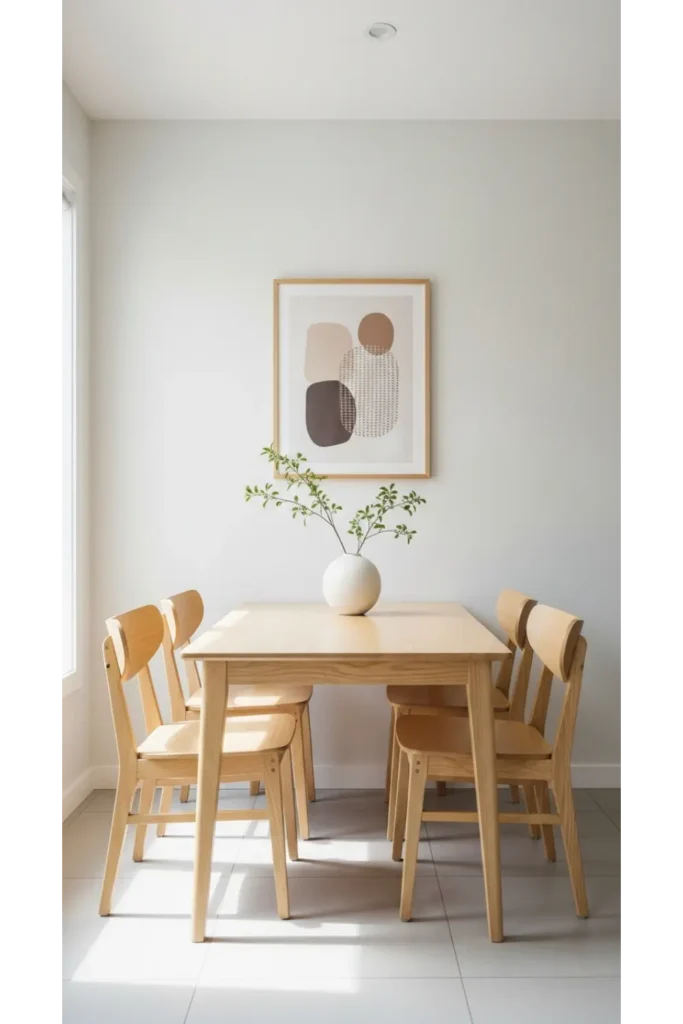
A minimal decor approach keeps small dining rooms functional and inviting rather than overwhelming. Too many accessories compete for attention and make the space feel tighter than it is. By limiting decor, the room stays calm, intentional, and easier to use for daily meals.
Focus on a few meaningful elements such as a single artwork, a simple centerpiece, or natural textures. Leave open surfaces whenever possible to maintain visual clarity. This restraint allows the furniture and layout to shine while supporting a comfortable and clutter free dining experience.
21. Open plan integration
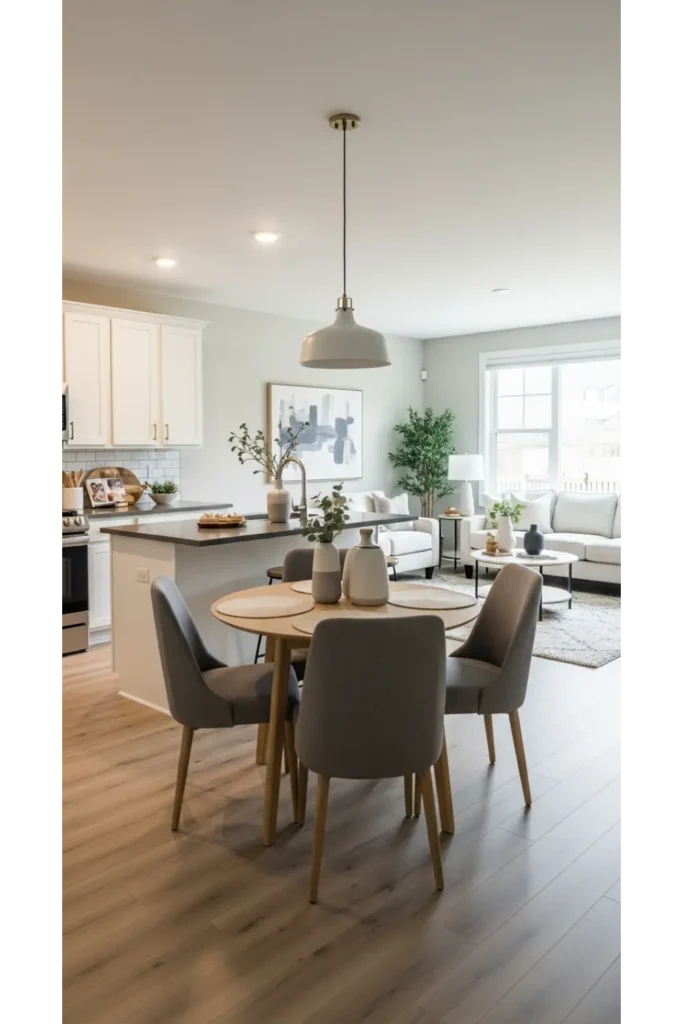
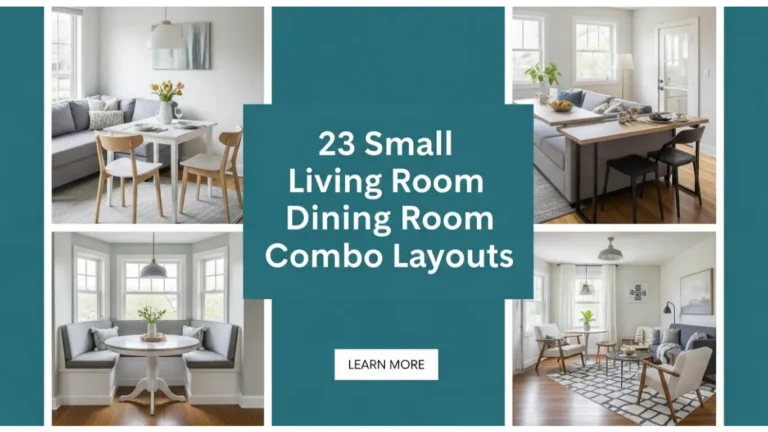
Integrating the dining area into an open plan layout reduces the need for a separate room and improves overall flow. Instead of isolating the dining space, it becomes part of a connected environment that feels larger and more adaptable. This approach works especially well in modern apartments and smaller homes.
Define the dining zone through furniture placement, lighting, or flooring changes rather than walls. Use consistent materials to tie spaces together visually. When done well, open plan integration makes the dining area feel purposeful without consuming unnecessary square footage.
Conclusion
A small dining room does not limit how you live or host. With thoughtful design choices, it can become one of the most efficient and inviting spaces in your home. The key lies in flexibility, scale, and visual balance.
By choosing furniture and layouts that support movement and multiple uses, you create a dining area that works hard without feeling crowded. These ideas prove that smart design always outweighs square footage.