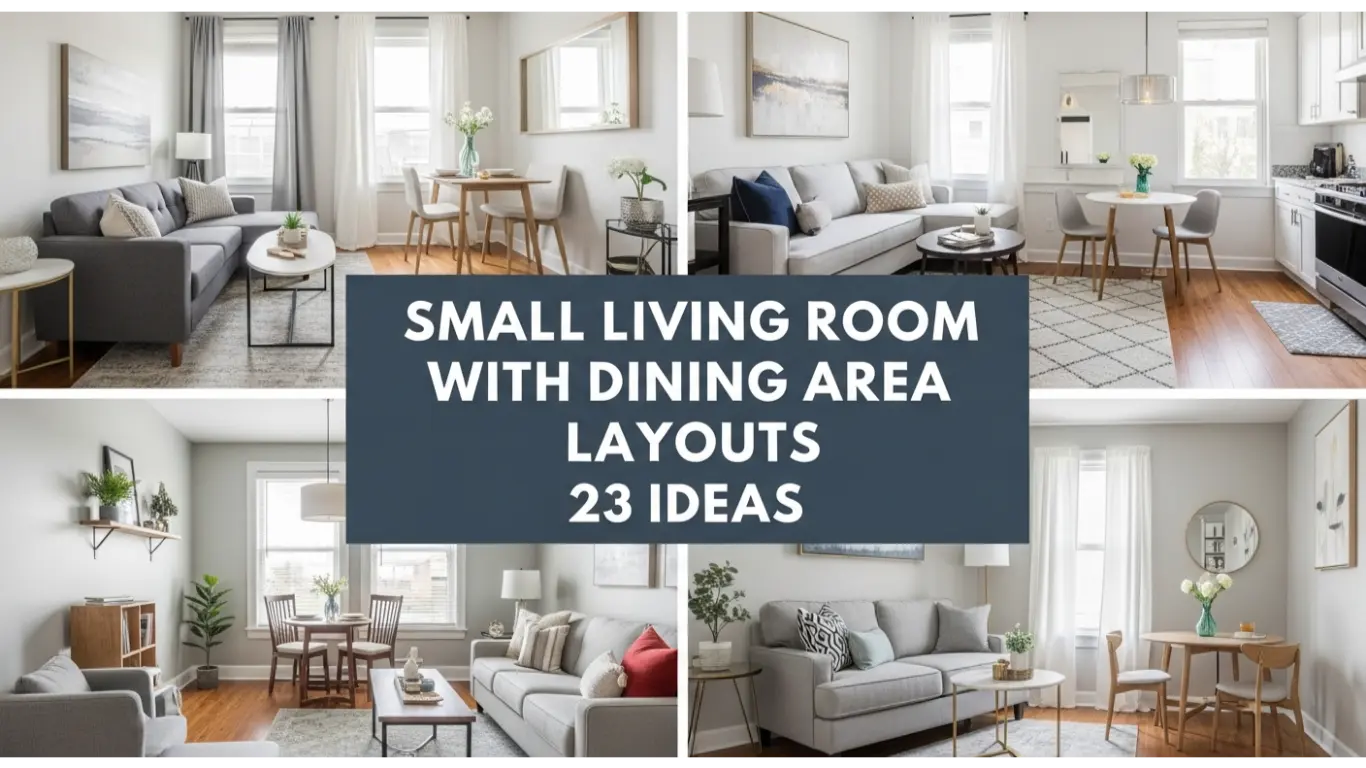
Small Living Room With Dining Area Layouts 23 Ideas
Designing a small home does not mean giving up comfort, style, or function. When your living room and dining area share the same footprint, smart layout choices make all the difference. With the right balance of furniture scale, flow, and visual separation, even compact spaces can feel open and intentional. This guide explores expert-approved layouts that help you make the most of every square foot while keeping your home warm, practical, and welcoming.
1. Open Flow Zoning With a Sofa Divider
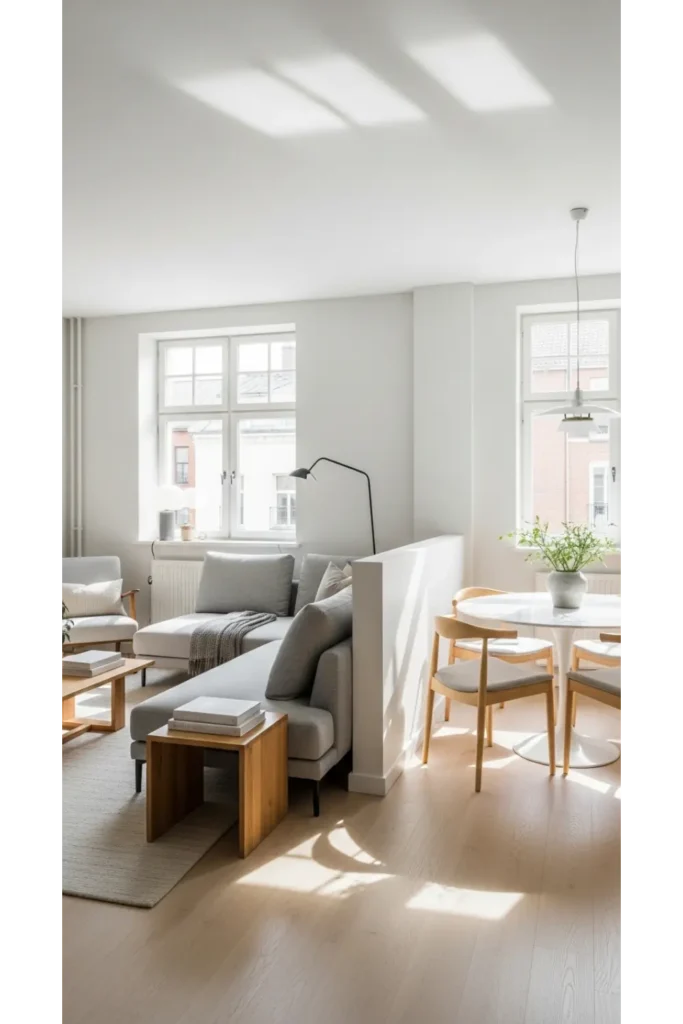
Small living room with dining area layouts work best when movement feels effortless. Placing the sofa with its back toward the dining table creates a natural boundary without closing off the room. This approach keeps sightlines open and allows light to move freely across the space, which helps the room feel larger and calmer.
This layout supports daily living because it defines purpose while keeping flexibility. You can relax on the sofa without feeling crowded by the dining setup. At the same time, the dining area stays connected, making it ideal for entertaining guests in a compact home.
2. Round Dining Table for Better Circulation
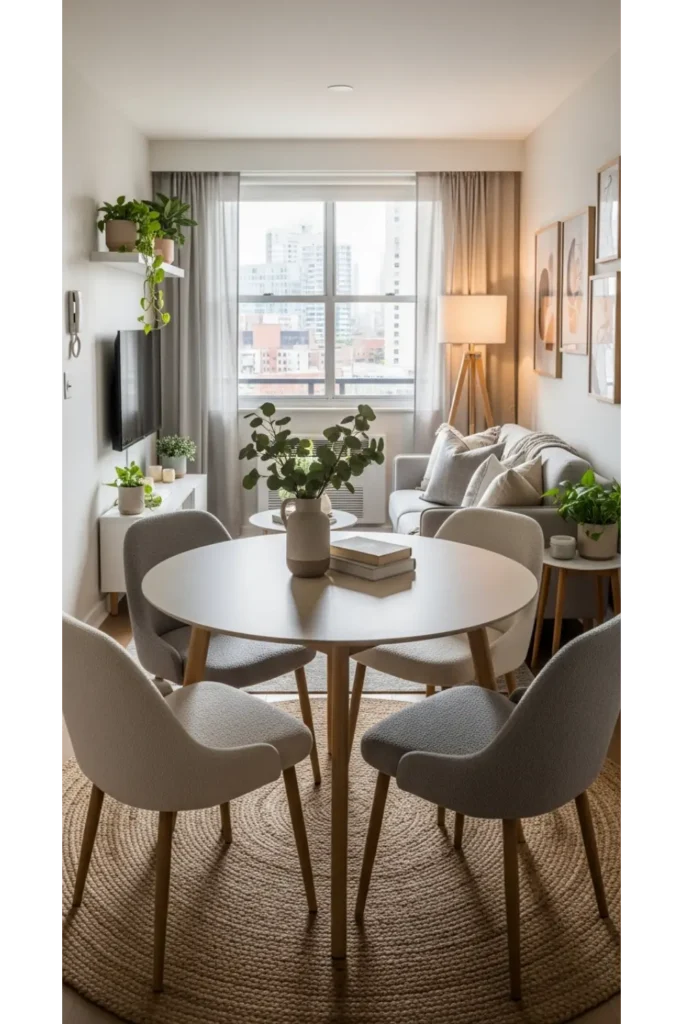
A round dining table softens the geometry of a shared room and improves flow. Without sharp corners, it allows easier movement between the living and dining zones. This layout suits apartments where every inch matters and helps prevent the space from feeling boxed in.
Visually, round tables feel lighter and less dominant. They work especially well near sofas or accent chairs because they echo organic shapes. When paired with slim dining chairs, the room stays open while still offering enough seating for everyday meals.
3. Wall Mounted Dining Setup
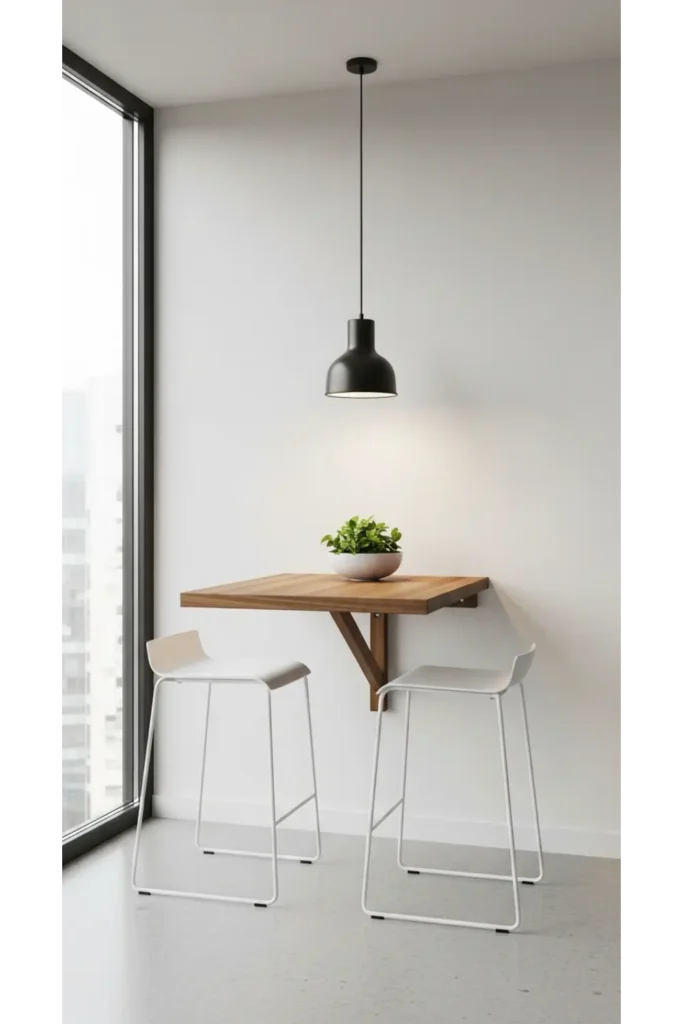
Mounting the dining table against a wall saves valuable floor space. This layout keeps the center of the room open, which benefits shared living areas. It works well in narrow rooms where a full dining set would feel overwhelming.
You can pair the table with benches or armless chairs to maintain flexibility. When not in use, the dining area blends into the background, letting the living room remain the visual focus of the space.
4. Rug Defined Dual Zones
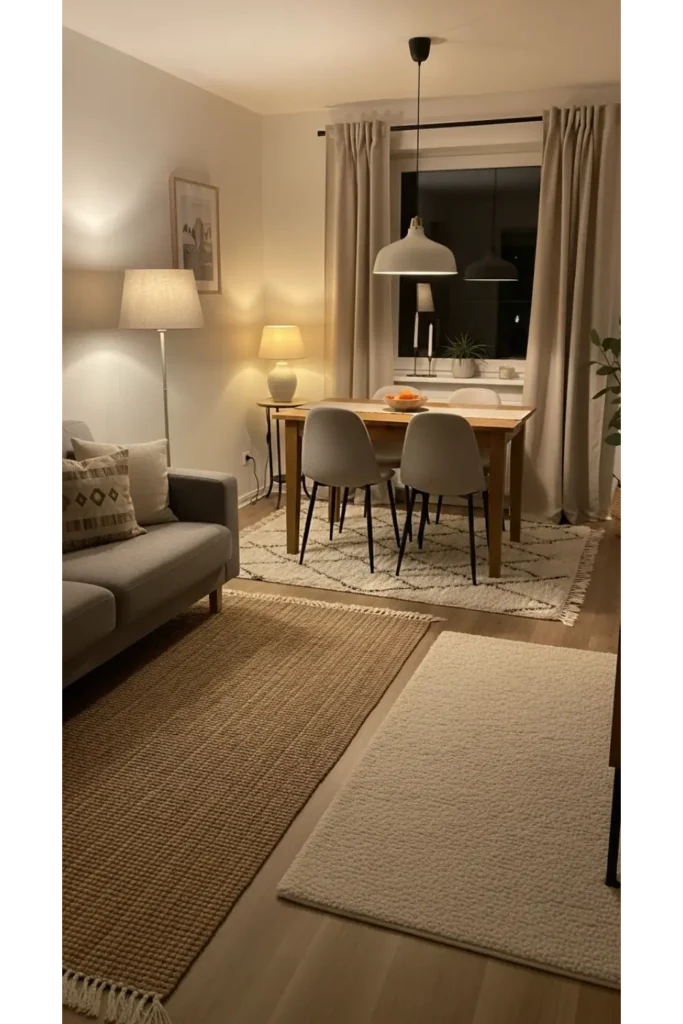
Using separate rugs for each zone helps define function without adding walls. A rug under the sofa anchors the living area, while a second rug under the dining table establishes a clear eating space. This technique adds warmth and structure at the same time.
Rugs also help with sound absorption, which improves comfort in smaller homes. Choose low pile options that are easy to clean and proportional to the furniture to avoid visual clutter.
5. Dining Table Behind the Sofa
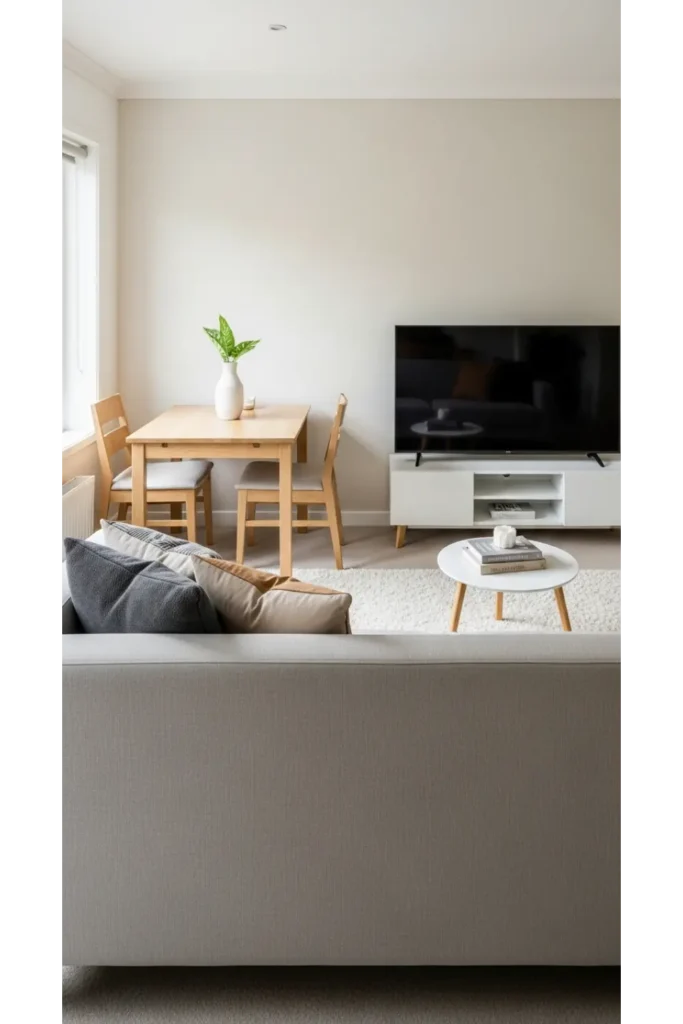
Placing the dining table directly behind the sofa creates a clean and efficient layout. This approach keeps both areas aligned and works well in rectangular rooms. It allows the sofa to act as a soft divider while keeping the space visually unified.
This setup supports social interaction because everyone stays within one open zone. It also simplifies furniture placement, making the room easier to decorate and rearrange over time.
6. Corner Dining Nook Layout
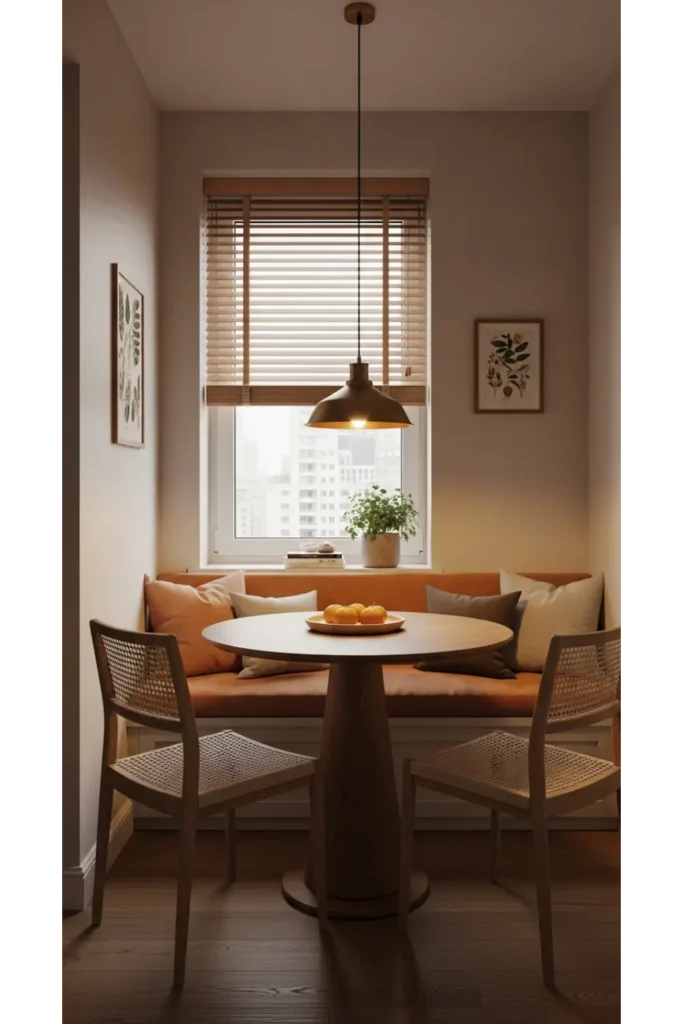
A corner dining nook maximizes unused space and creates a cozy eating area. Built in benches or compact chairs tuck neatly into corners, leaving more room for the living area. This layout feels intentional and inviting.
Corner dining setups work especially well for small households. They provide comfort without dominating the room and can double as extra seating when guests visit.
7. Extendable Dining Table Solution
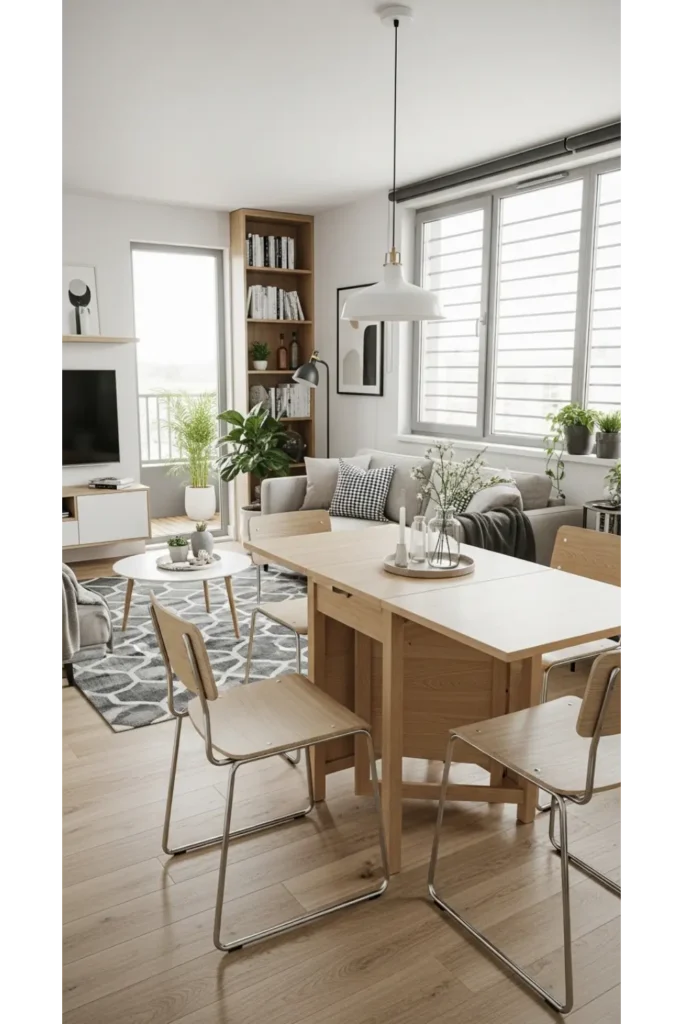
An extendable dining table offers flexibility for compact homes. When closed, it takes up minimal space and supports daily use. When opened, it accommodates guests without requiring a separate dining room.
This layout suits people who entertain occasionally but value open space. It allows the living room to stay uncluttered while still meeting practical needs.
8. Minimalist Linear Layout
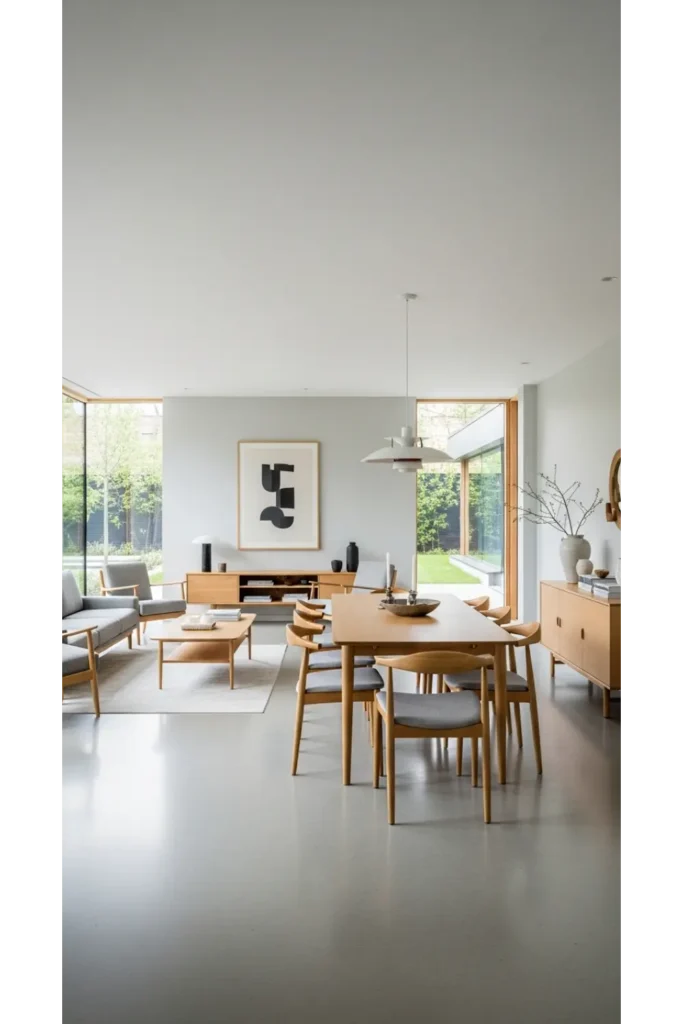
A linear layout places furniture along one axis, usually following the longest wall. This keeps pathways clear and makes the room feel longer. It is ideal for narrow apartments or studio spaces.
Minimal furniture choices enhance this layout. Clean lines and consistent materials help the space feel calm and organized, which is essential in smaller rooms.
9. Glass Dining Furniture Choice
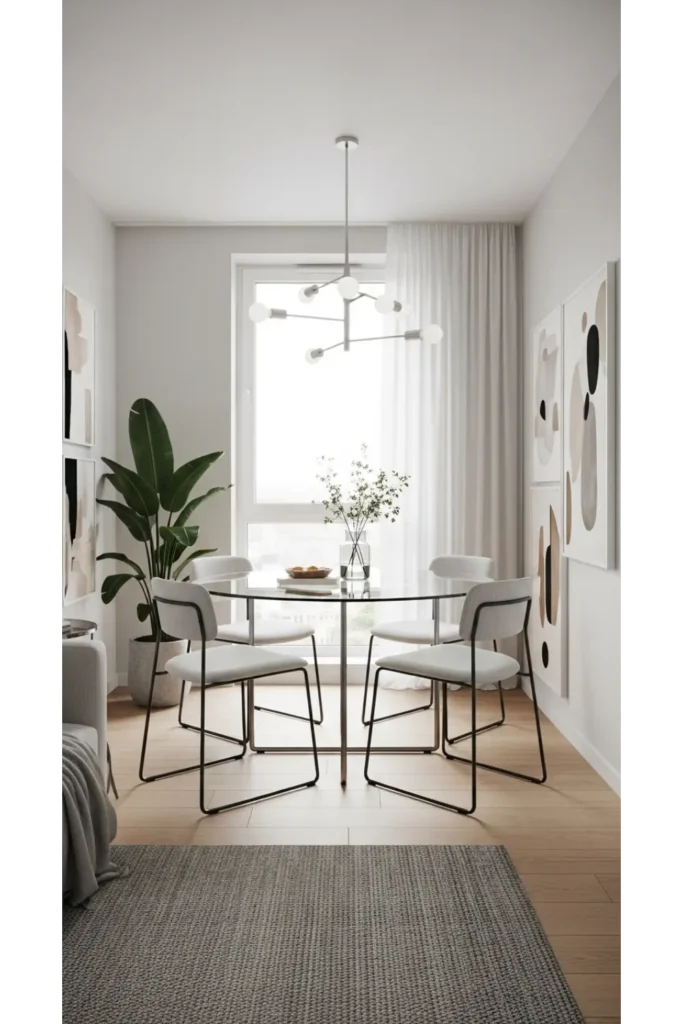
Glass dining tables visually disappear, which helps small rooms feel larger. They allow light to pass through and reduce visual weight. This makes them perfect for shared living and dining areas.
Paired with transparent or slim chairs, this layout keeps the focus on the room rather than the furniture. It supports an airy and modern aesthetic without sacrificing function.
10. L-Shaped Seating Layout
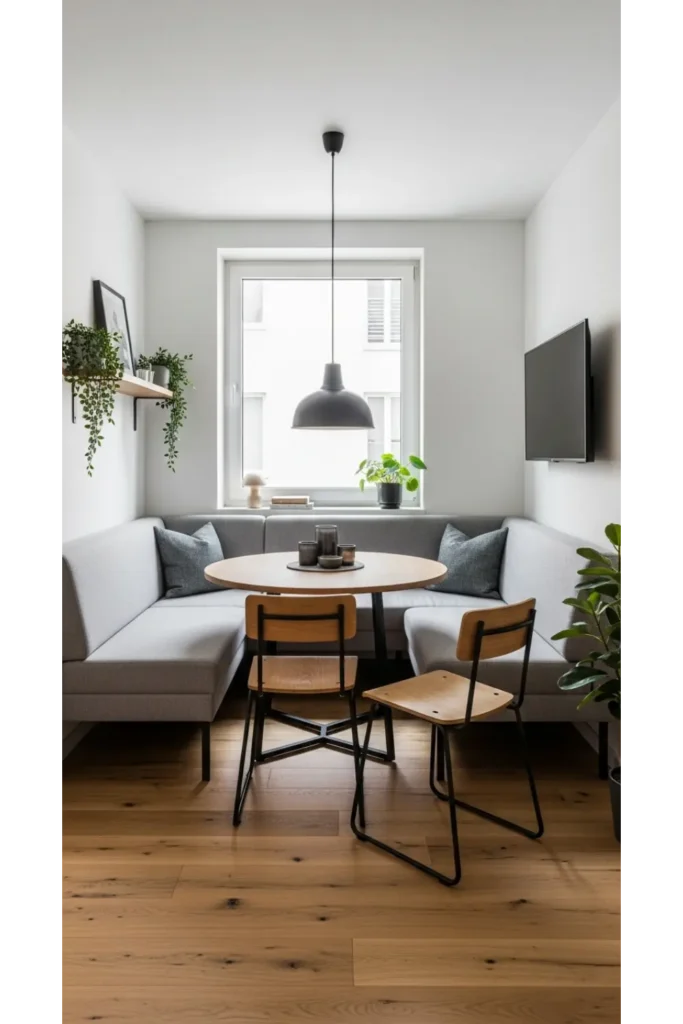
An L-shaped sofa defines the living area while leaving room for dining nearby. This configuration works well in square rooms and helps create a sense of enclosure for lounging.
The dining table can sit just outside the sofa line, maintaining separation without walls. This layout encourages relaxation while keeping meals close and convenient.
11. Window Side Dining Placement
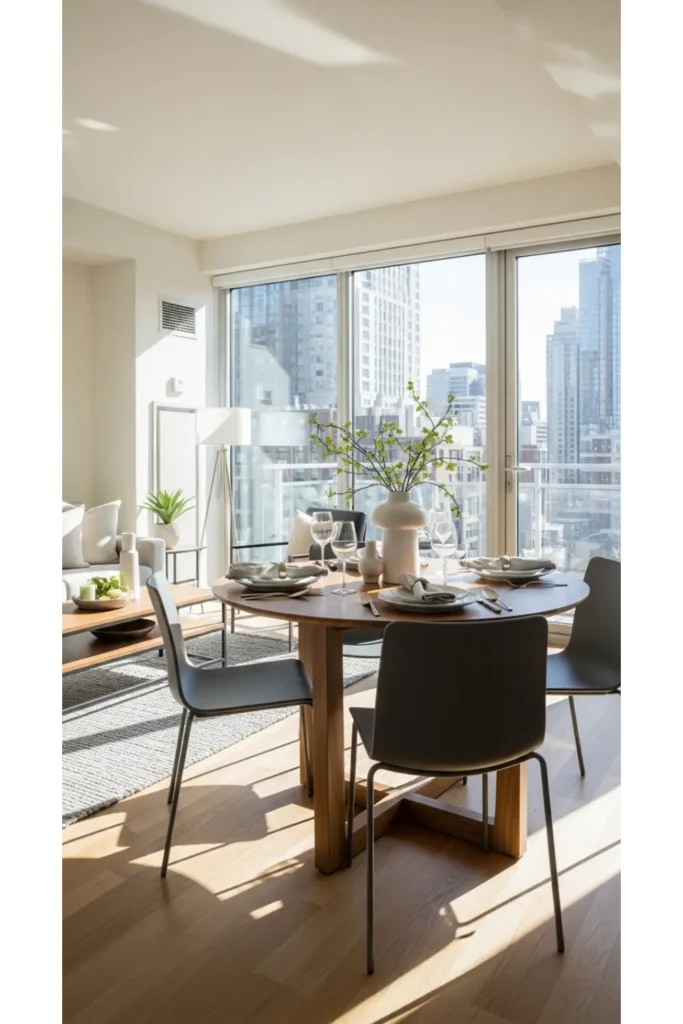
Positioning the dining table beside a window instantly elevates a small living room with dining area layouts by using natural light as a design asset. Daylight visually expands the space, making even compact dining setups feel open and pleasant. This placement also reduces the need for heavy lighting fixtures, keeping the ceiling uncluttered and the room feeling taller and calmer.
From a functional standpoint, this layout assigns the brightest zone to dining, which feels intuitive and energizing. The living area can then occupy the inner portion of the room without feeling secondary. This balance improves visual hierarchy and makes the combined space feel intentionally planned rather than forced together.
12. Compact Bistro Style Dining
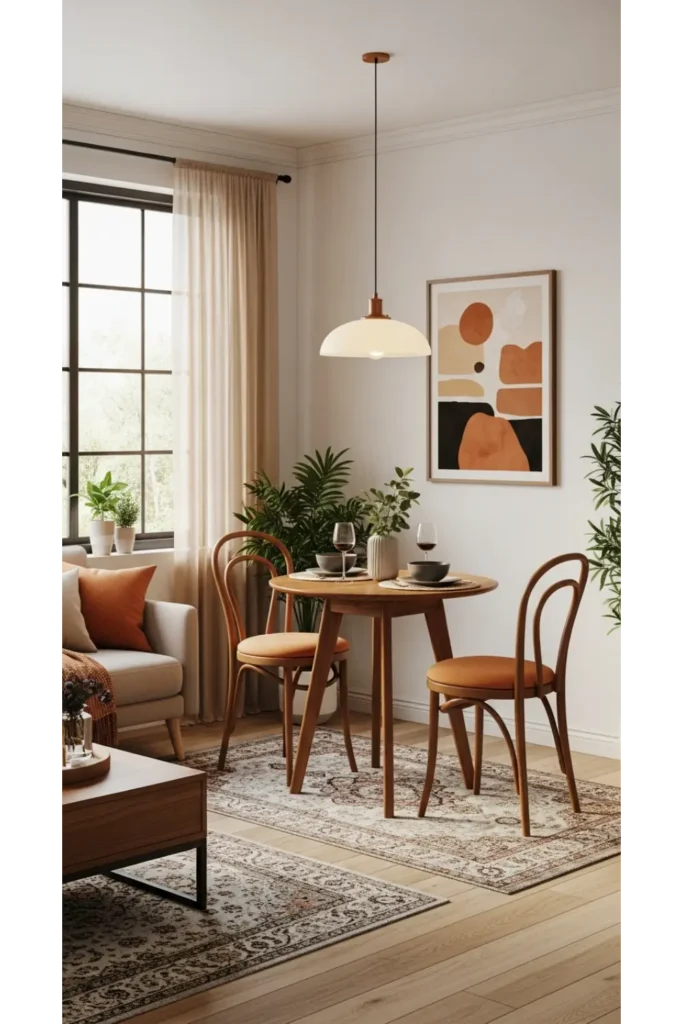
A bistro style dining setup fits naturally into a small living room with dining area layouts where space efficiency matters most. These petite tables and slim chairs create a dining moment without overwhelming the living area. Their lightweight appearance keeps the room visually breathable while still offering everyday functionality.
This layout shines in apartments designed for one or two people. It supports casual meals, coffee breaks, and conversation without demanding excess square footage. When styled thoughtfully, a bistro set adds charm and personality, making the shared space feel curated instead of constrained.
13. Built-In Bench Dining
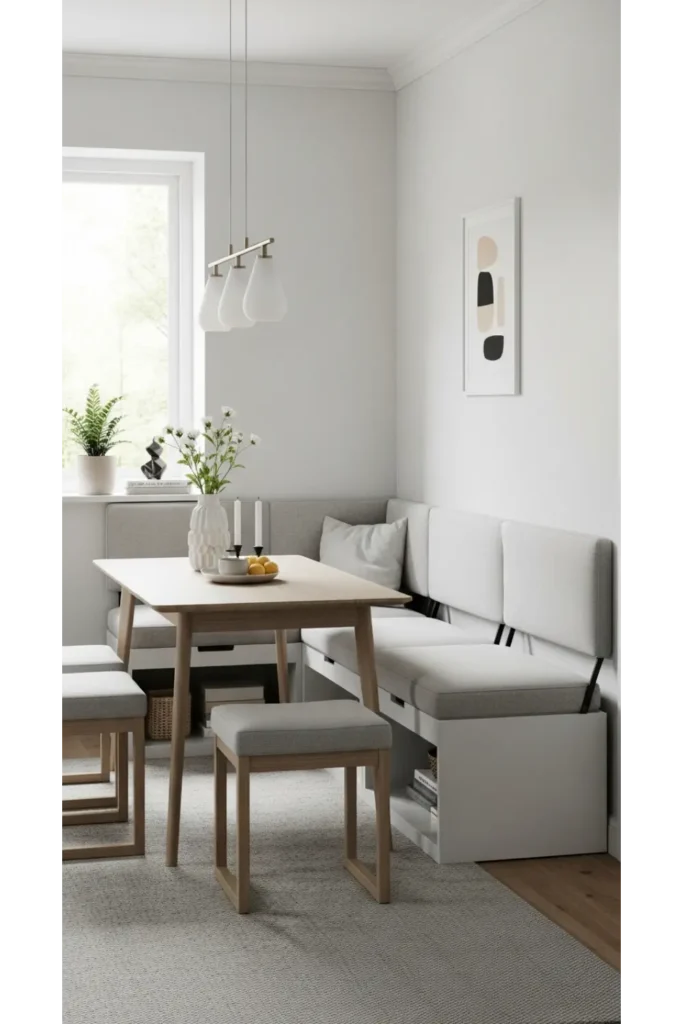
Built in bench seating transforms small living room with dining area layouts by reducing furniture bulk and maximizing wall use. By anchoring the dining area to one side, the room gains more open floor space for movement and seating flexibility. This approach also creates a tailored, architectural feel that elevates the entire room.
Beyond aesthetics, built in benches often include hidden storage, which is invaluable in compact homes. They provide a place to store linens, seasonal items, or everyday clutter. This dual purpose design supports a clean, organized environment without sacrificing comfort or style.
14. Floating Shelves for Visual Balance
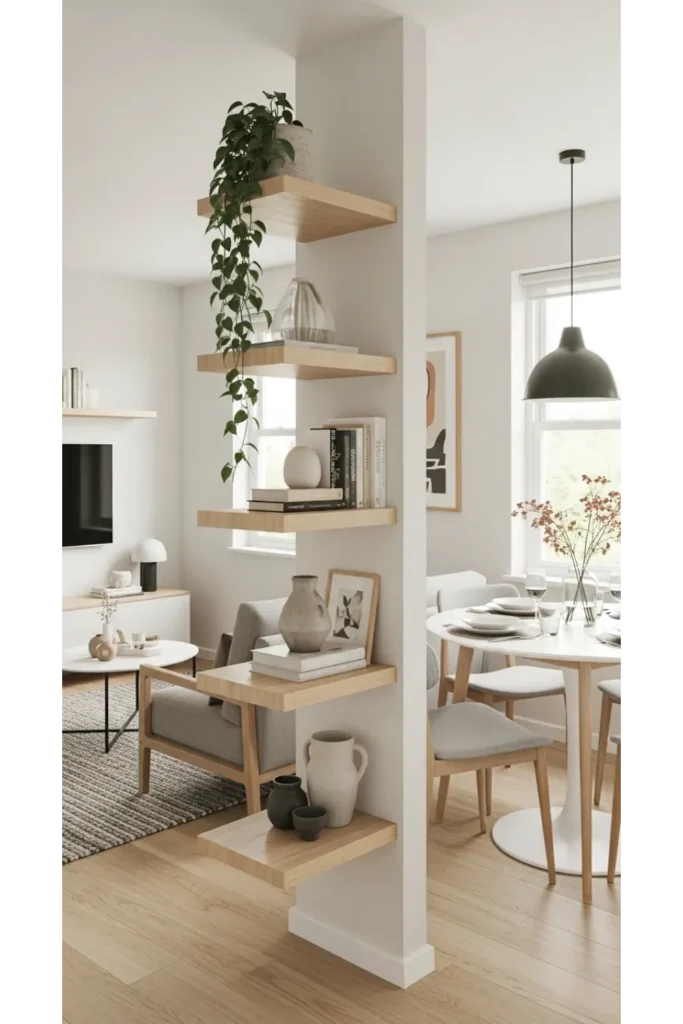
Floating shelves help structure small living room with dining area layouts by adding vertical definition without blocking light or sightlines. Positioned between zones, they subtly signal a shift in function while maintaining openness. This keeps the room feeling connected rather than divided.
These shelves also serve as functional decor. They hold books, plants, or dining essentials while drawing the eye upward. This vertical emphasis balances the room visually and prevents the layout from feeling heavy or bottom weighted, which is common in smaller spaces.
15. Monochrome Color Flow
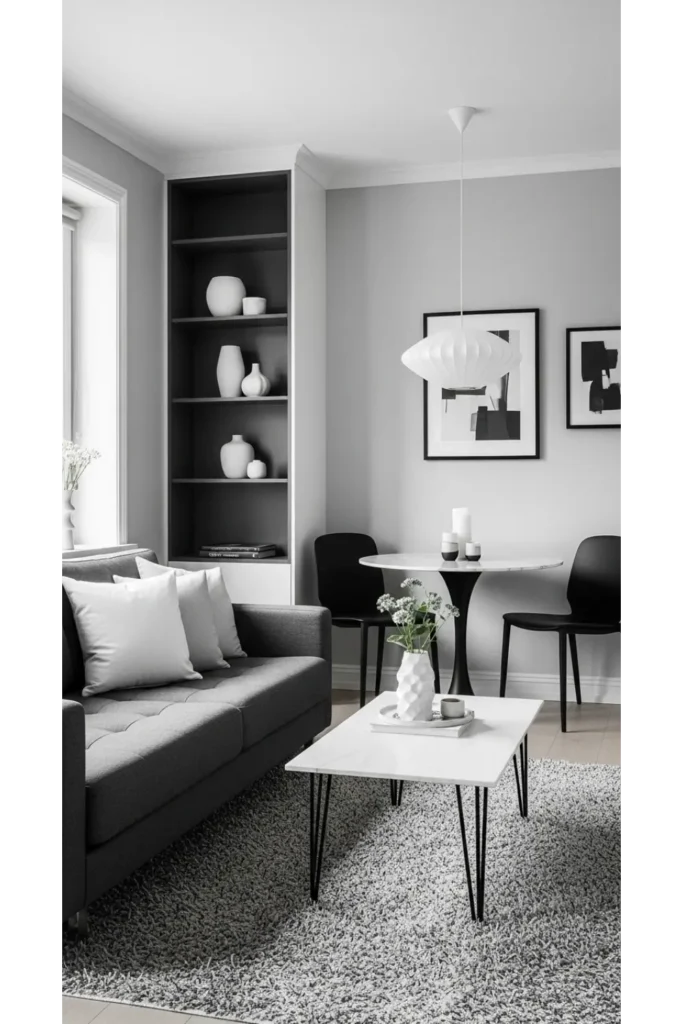
Using a single color family across both zones simplifies small living room with dining area layouts and makes them feel more expansive. When walls, furniture, and decor share tonal harmony, the eye moves smoothly through the space. This reduces visual interruptions that often make small rooms feel busy.
The key to success lies in texture variation rather than contrast. Mixing fabrics, finishes, and subtle shades keeps the room engaging while preserving cohesion. This approach creates a calm, polished environment that feels intentional and easy to live in.
16. Vertical Emphasis Layout
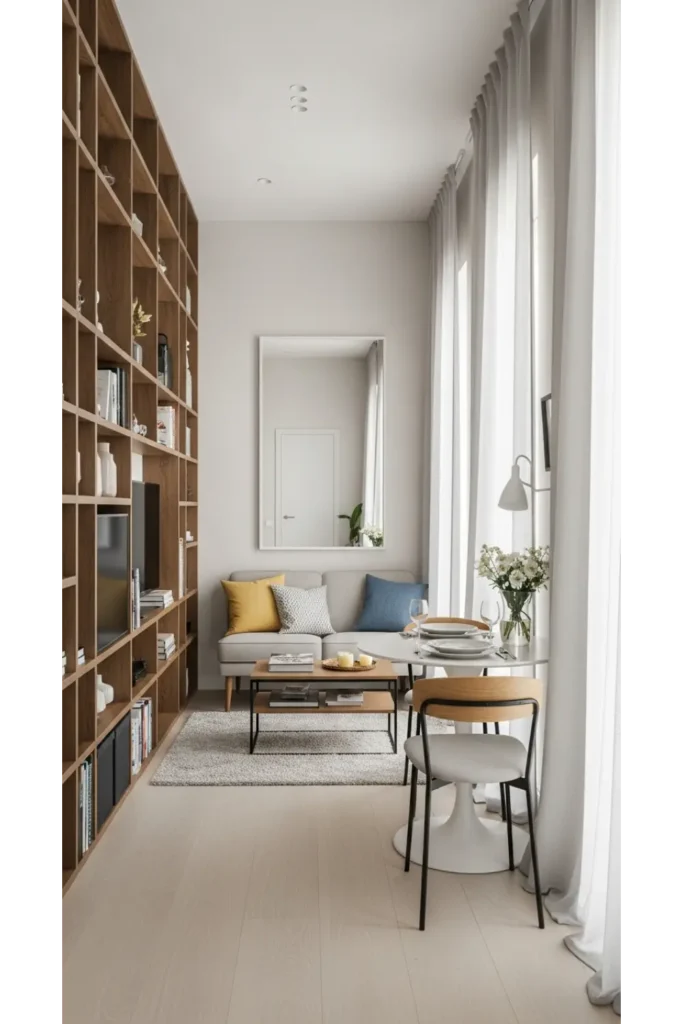
Vertical design elements play a powerful role in small living room with dining area layouts by redirecting attention upward. Tall shelving units, floor length curtains, or vertical paneling help elongate the room visually. This makes ceilings appear higher and the space feel less compressed.
This layout works especially well when floor space is limited. By stacking storage and decor vertically, you free up valuable square footage. The result is a room that feels more open, organized, and architecturally balanced without expanding its footprint.
17. Dual Purpose Furniture Layout
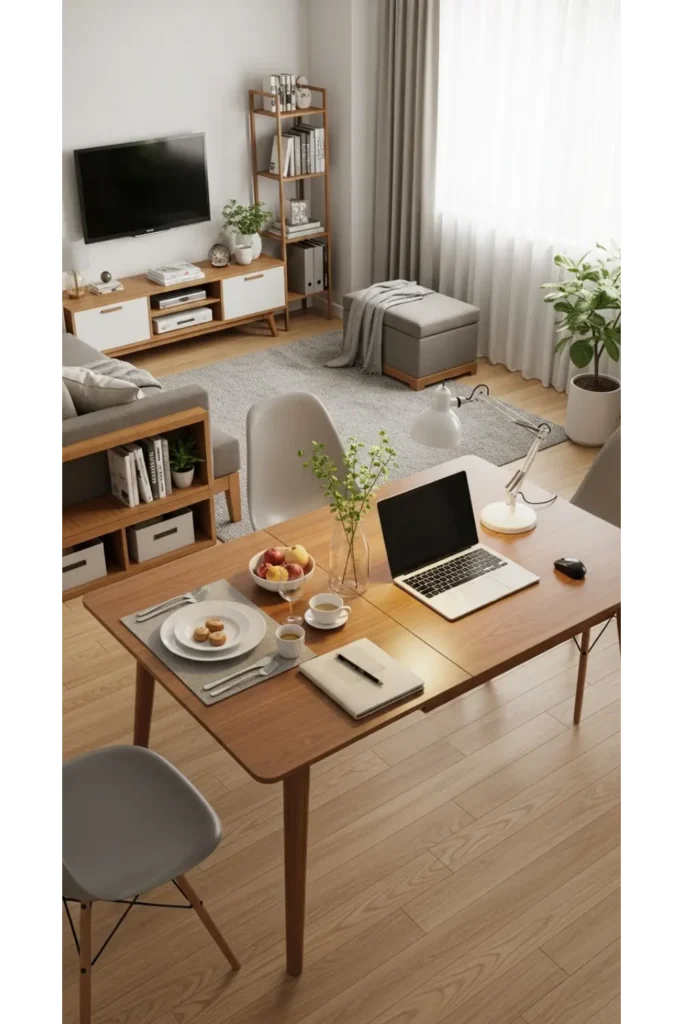
Dual purpose furniture strengthens small living rooms with dining area layouts by allowing one piece to serve multiple needs. Dining tables that function as workspaces or benches that offer storage reduce the total furniture count. This keeps the room streamlined and adaptable.
This approach supports modern living patterns where spaces must shift throughout the day. Work, dining, and relaxation coexist more comfortably when furniture adapts easily. The room stays efficient without feeling temporary or overly minimal.
18. Soft Lighting Separation
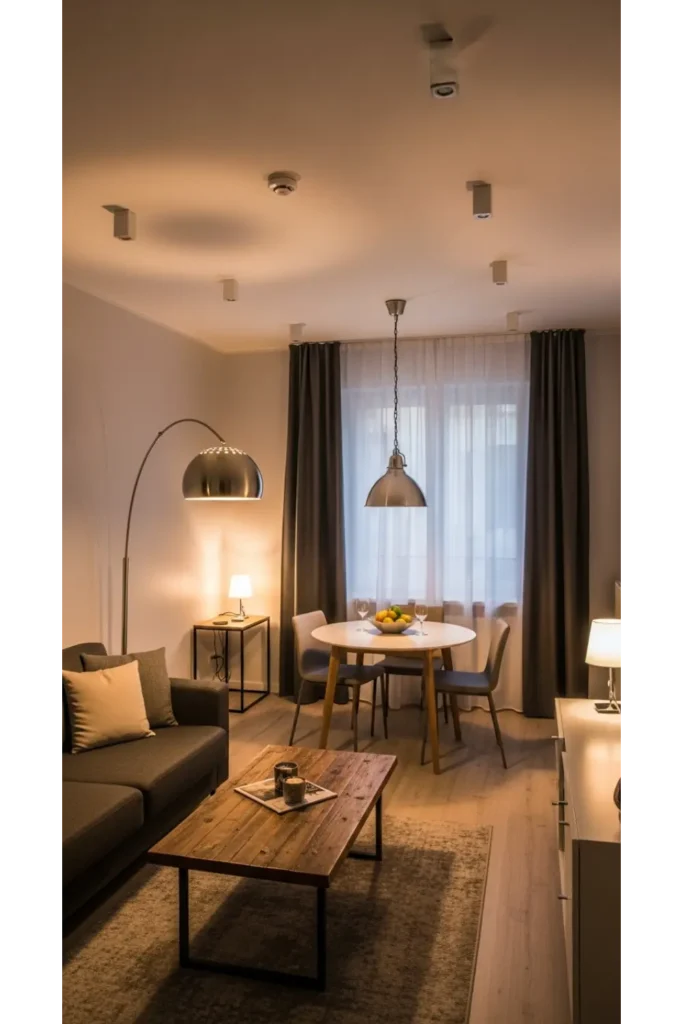
Lighting plays a defining role in organizing a small living room with dining area layouts. Instead of physical dividers, layered lighting distinguishes each zone through mood and focus. Pendant lights anchor the dining area, while softer lamps support relaxation in the living space.
This strategy improves both aesthetics and usability. Different lighting levels support different activities without altering the layout. The space feels warmer, more intentional, and better suited to daily life and evening comfort.
19. Symmetrical Balance Layout
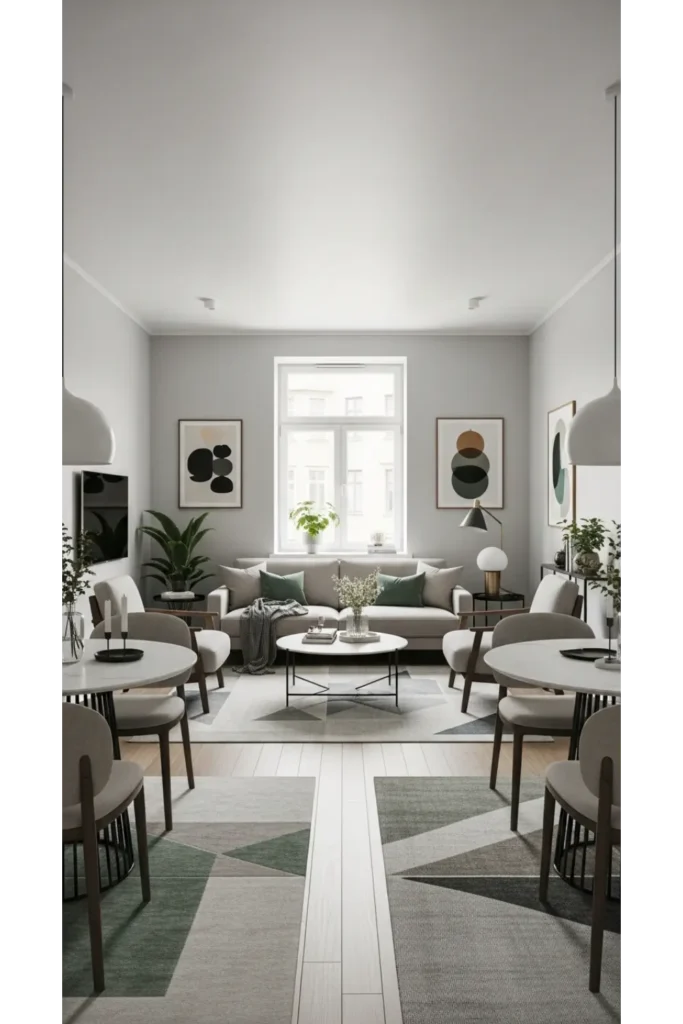
Symmetry brings clarity to small living room with dining area layouts by creating visual order. Balanced furniture placement reduces visual noise and helps the room feel calmer and more structured. This is especially useful in compact spaces where clutter quickly feels overwhelming.
When materials, proportions, and spacing align, the room gains a sense of rhythm. This layout feels timeless and grounded, making the combined space easier to decorate and more pleasant to spend time in.
20. Narrow Console Dining Option
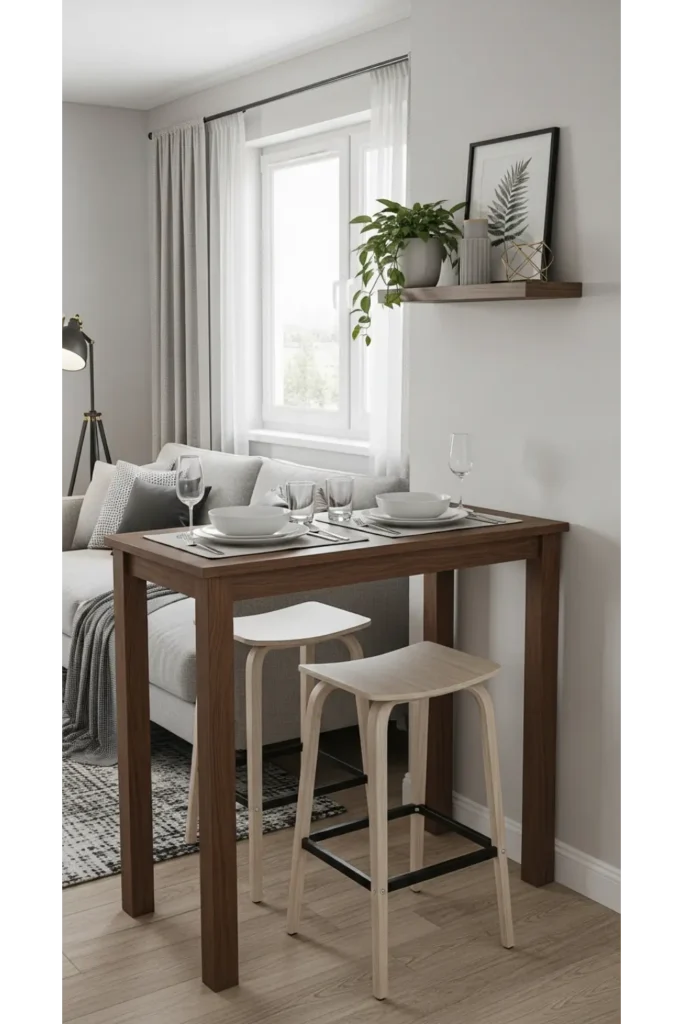
A narrow console table offers a smart dining alternative in small living rooms with tight dining area layouts. Positioned against a wall, it provides enough surface area for meals without encroaching on walkways or seating zones.
This solution works well for light dining and flexible use. It can shift between serving, working, or dining as needed. The room stays open and functional, which is essential in compact living environments.
21. Sliding Furniture Flex Layout
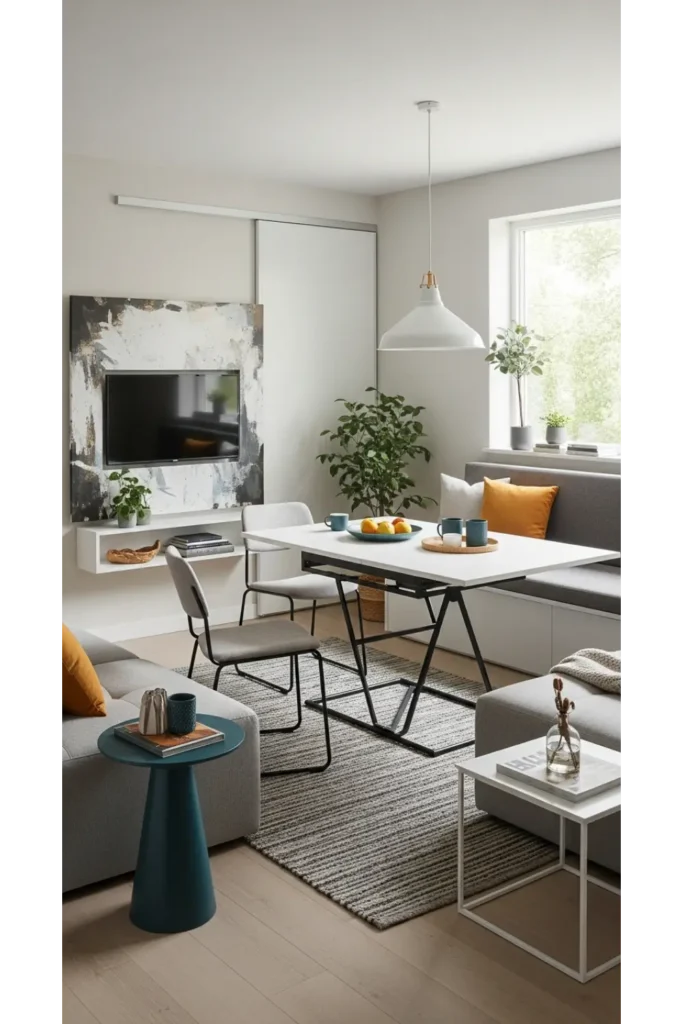
Sliding or movable furniture adds adaptability to small living room with dining area layouts. Tables, chairs, or benches that shift easily allow the room to change based on daily needs or social occasions. This flexibility prevents the space from feeling rigid.
This layout supports real life use rather than fixed staging. It allows the room to breathe and evolve, making it ideal for homes where space must serve multiple purposes without constant rearranging stress.
22. Natural Material Focus
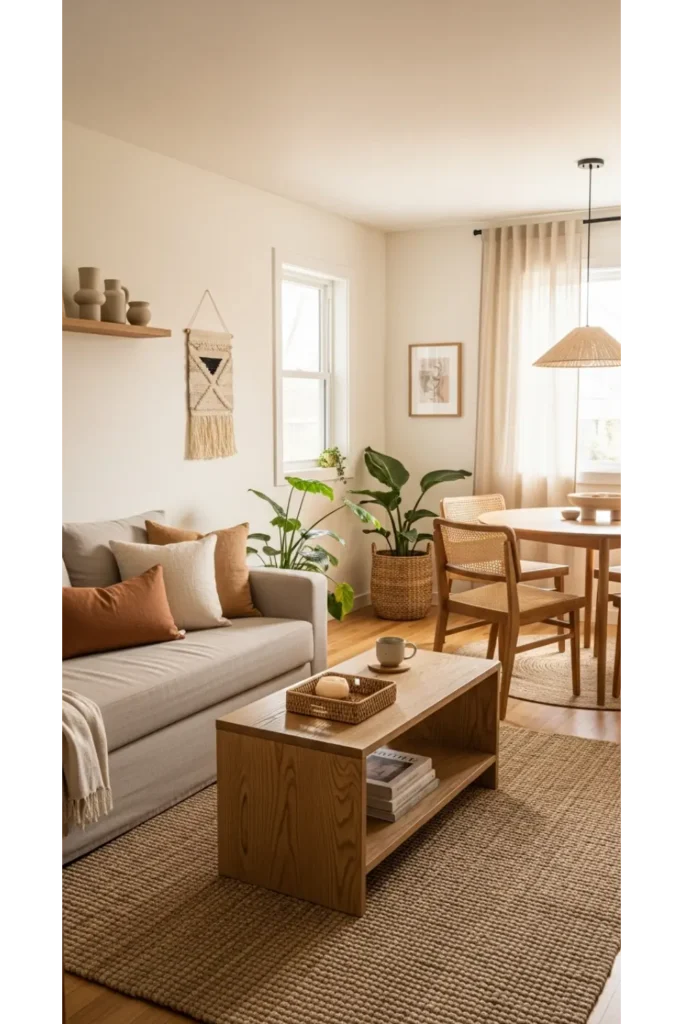
Natural materials bring warmth and authenticity to small living room with dining area layouts. Wood, linen, and woven textures soften the space and counterbalance the limitations of size. These elements make the room feel grounded and welcoming.
This approach also ages well. Natural finishes adapt easily to changing decor styles and lighting conditions. The space feels comfortable rather than trendy, supporting long term use and visual harmony.
23. Studio Style Unified Layout
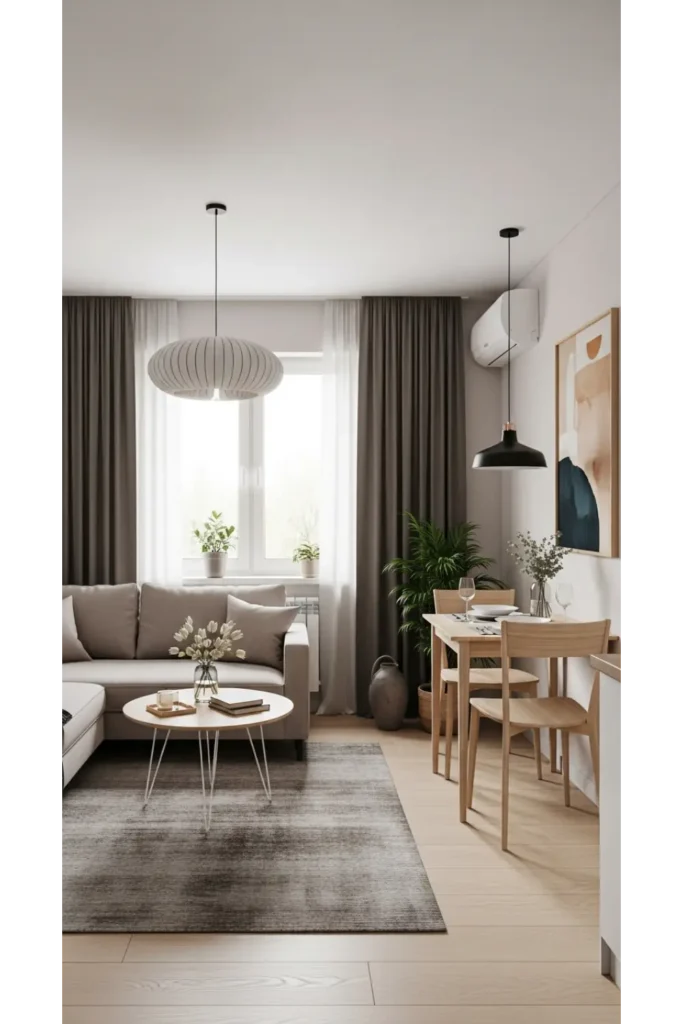
Treating the room as a single, unified environment strengthens small living room with dining area layouts by eliminating unnecessary boundaries. Furniture placement subtly guides use while maintaining openness and flow. This keeps the space flexible and visually calm.
This layout works particularly well in studio apartments. It supports daily routines without forcing strict divisions. The result is a cohesive space that feels intentional, livable, and adaptable to changing needs.
Conclusion
Smart planning turns compact homes into comfortable, stylish spaces. These small living room with dining area layouts show how thoughtful design choices improve flow, function, and visual balance. By focusing on proportion, flexibility, and cohesion, you can create a home that feels open and personal. Use these ideas as a foundation, then adapt them to your lifestyle and space for the best results.