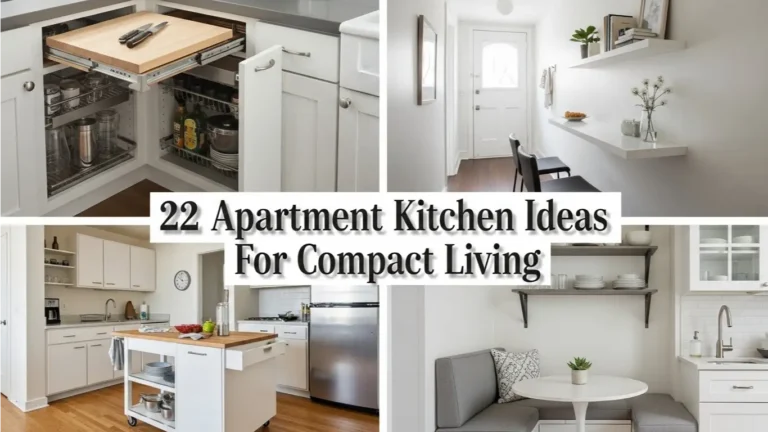
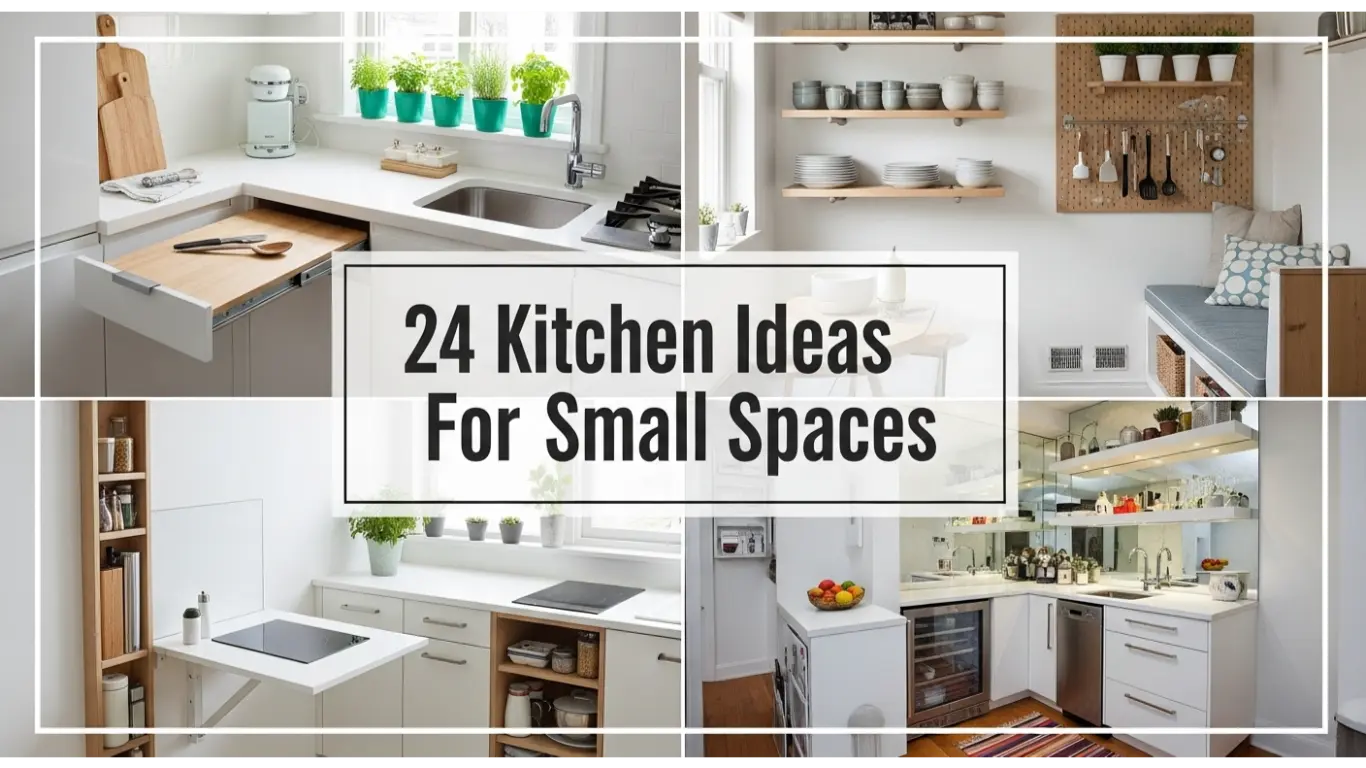
24 Kitchen Ideas For Small Spaces
Small kitchens can feel limiting, but smart design turns tight square footage into something efficient and beautiful. With the right layout choices, storage tricks, and visual balance, even the smallest kitchen can work hard and look inviting. This guide dives deep into practical, real world solutions that homeowners and renters actually use.
These kitchen ideas focus on function first while still caring about style. You will find space saving layouts, clever storage moves, and design details that visually open the room. Each idea explains why it works and how to apply it so you can make confident choices for your own space.
1. Smart Vertical Storage Walls
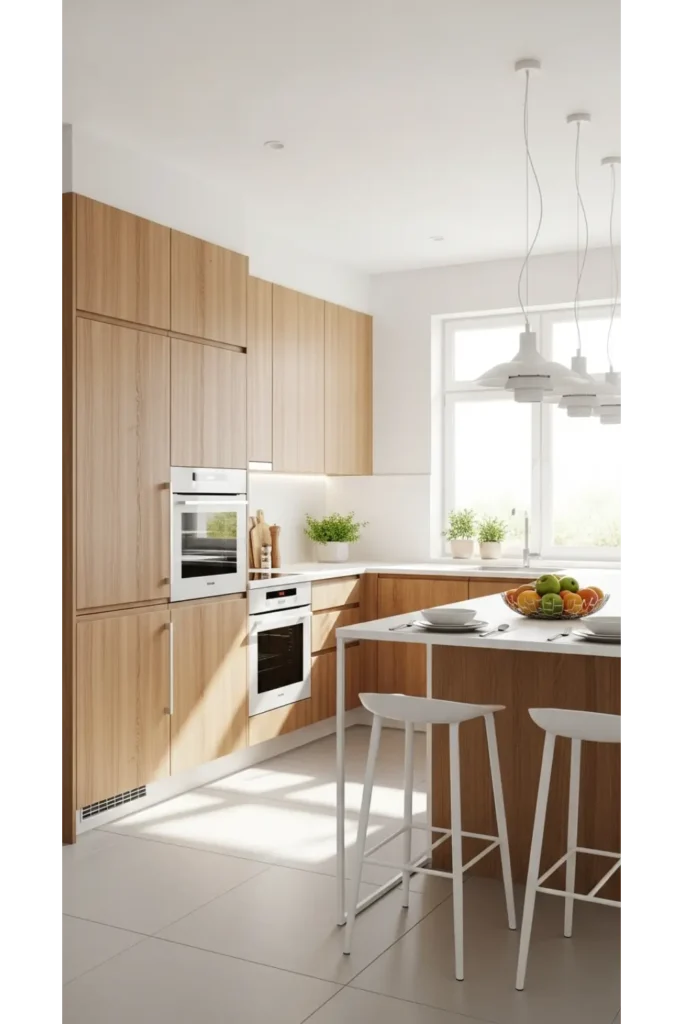
Kitchen ideas for small spaces often succeed when vertical areas do more work. Tall cabinets that reach the ceiling draw the eye upward and eliminate wasted gaps. This approach gives you extra storage for items you use less often while keeping everyday essentials easy to reach. It also creates a clean, built in look that feels intentional rather than cramped.
Using consistent cabinet colors helps the wall feel unified instead of bulky. Light finishes reflect more light and make the kitchen feel taller. Adding slim handles or touch latch doors keeps the surface visually calm. Vertical storage works best when paired with good lighting so the space stays open and practical.
2. Open Shelving With Purpose
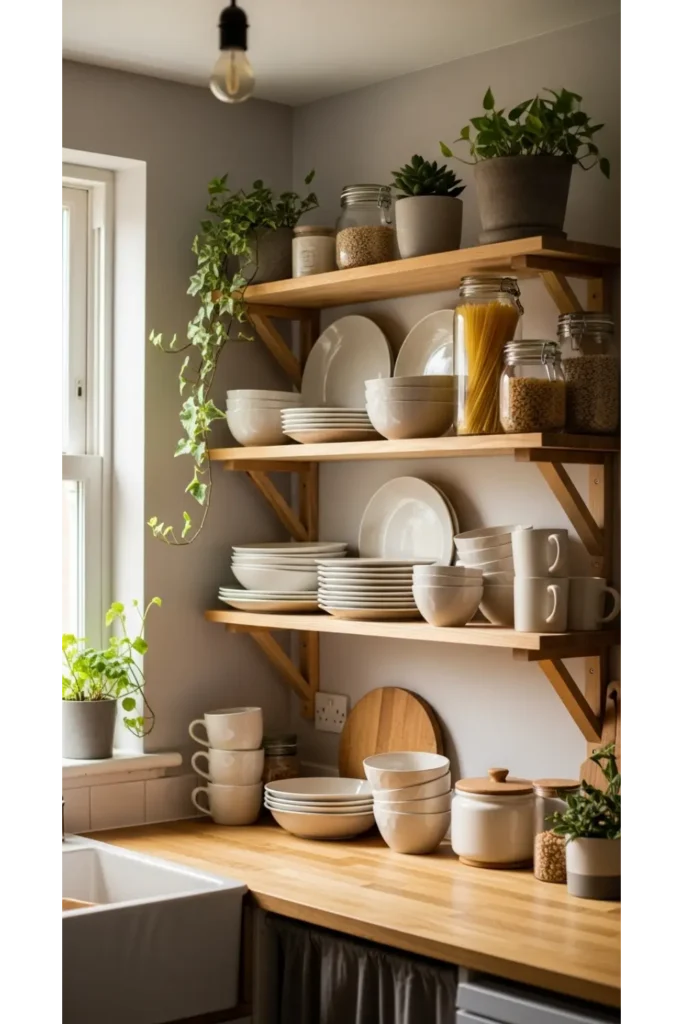
Open shelving brings breathing room into a small kitchen when done with intention. By replacing upper cabinets on one wall, you reduce visual weight and allow light to travel freely. Shelves work best when they hold daily items like plates, bowls, and glasses, keeping everything within easy reach.
To avoid clutter, limit what you display and stick to a cohesive color palette. Neutral dishes and natural materials feel calm and organized. Mixing one or two decorative items adds personality without overwhelming the space. Open shelving turns storage into a design feature rather than a compromise.
3. Compact Galley Layout Optimization
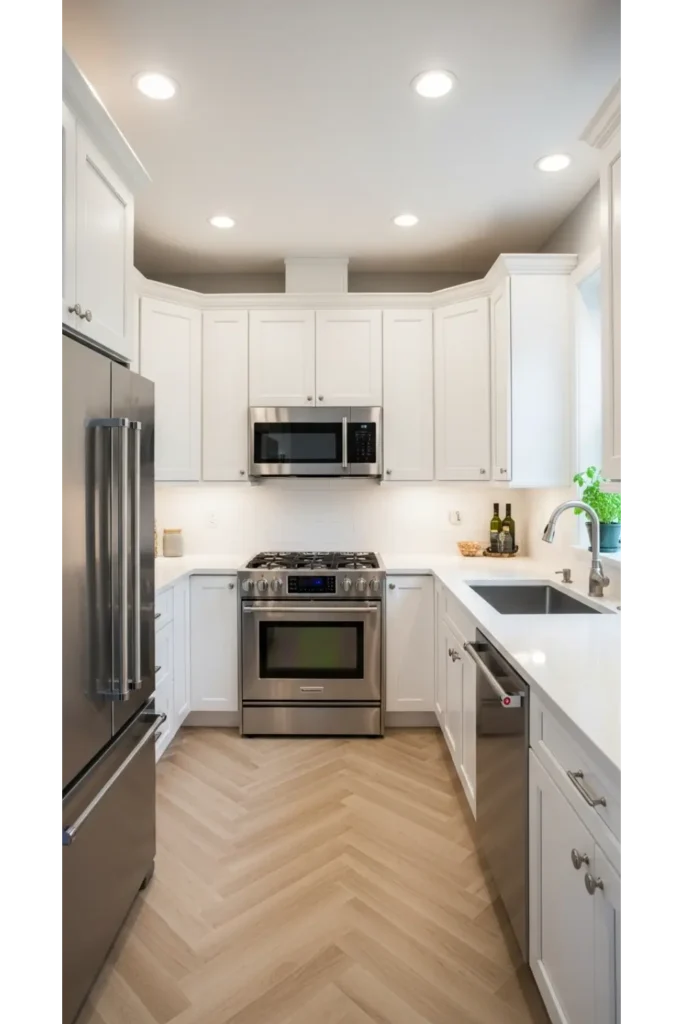
A galley layout can feel tight, but it offers unmatched efficiency. Keeping appliances and prep zones aligned reduces wasted movement and improves workflow. When designed well, this layout allows you to cook, clean, and store items without crossing the room or bumping into obstacles.
Use slim appliances and shallow cabinets where possible to widen walkways. Light colors and reflective surfaces prevent the space from feeling boxed in. Under cabinet lighting brightens work zones and adds depth. A well planned galley kitchen proves that narrow does not mean inconvenient.
4. Multi Functional Kitchen Islands
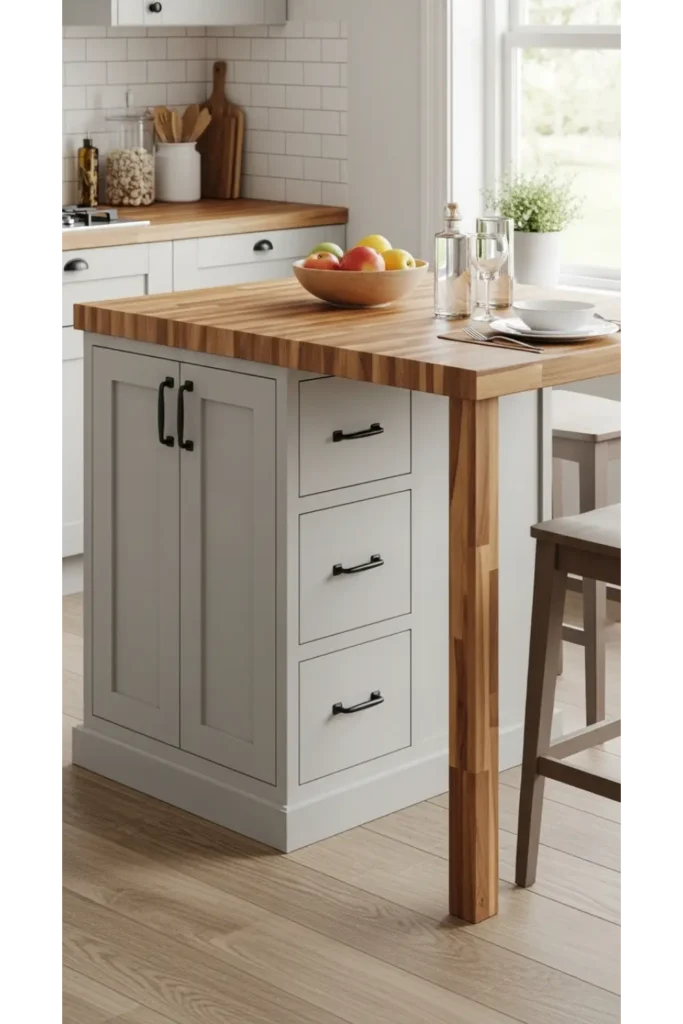
A compact island can transform a small kitchen when it serves multiple roles. It can act as a prep station, storage unit, and casual dining spot all at once. Choosing an island with built in drawers or shelves adds valuable storage without taking over the room.
Mobility matters in tight spaces. A rolling island lets you move it when needed and tuck it away when not in use. Keep the design light with open sides or slim legs. This keeps the kitchen flexible and prevents the island from feeling like a barrier.
5. Pull Out Pantry Solutions
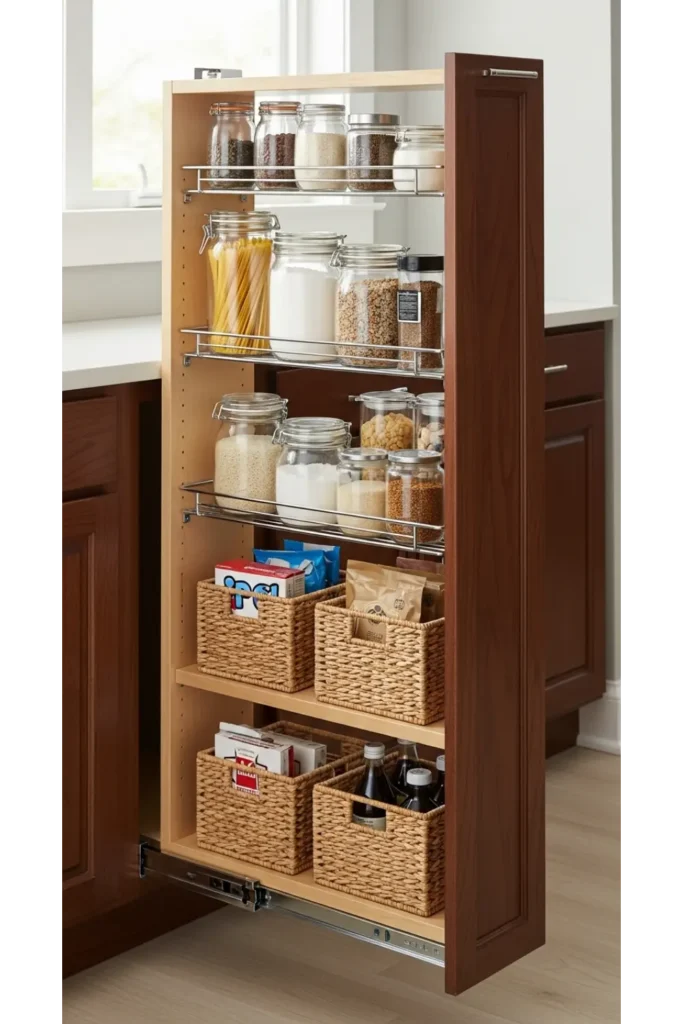
A pull out pantry uses narrow gaps that often go unused. These slim cabinets slide out smoothly and provide easy access to dry goods, spices, and snacks. Everything stays visible, which reduces waste and saves time when cooking.
This solution works especially well beside refrigerators or ovens. Vertical pull out systems keep items organized without requiring deep shelves. Clear containers and labeled jars improve function and appearance. Pull out pantries turn overlooked inches into some of the most useful storage in the kitchen.
6. Light Color Cabinet Strategies
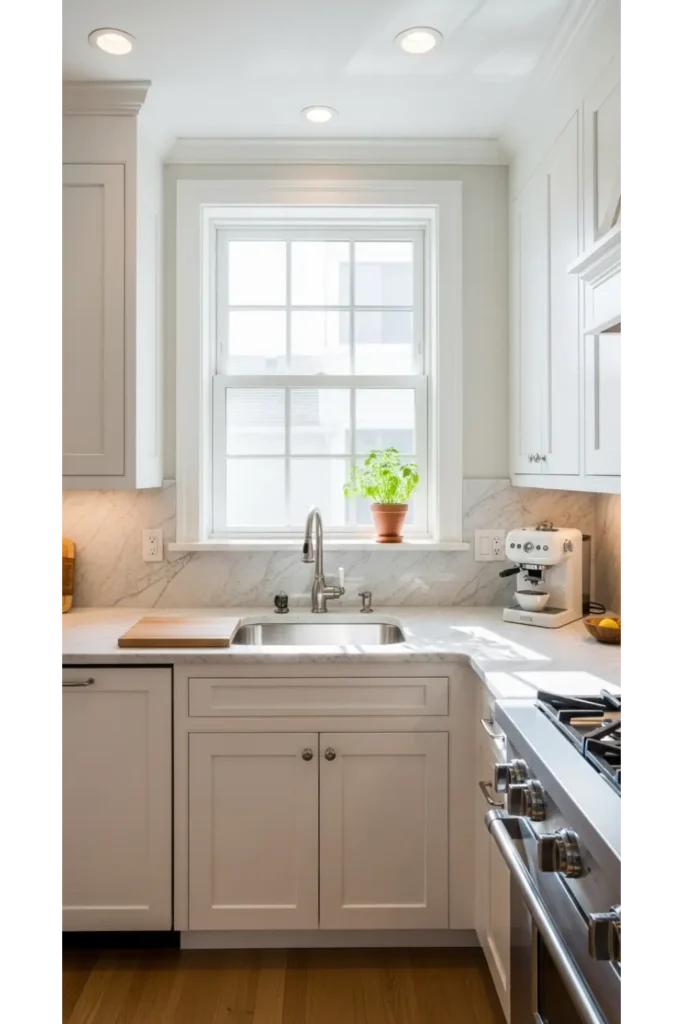
Light colored cabinets reflect more light, making a small kitchen feel open and airy. Whites, creams, and soft grays visually expand the space and reduce shadows. This effect helps the room feel calmer and less crowded.
To avoid a flat look, add texture through finishes or subtle hardware. Matte surfaces feel modern while glossy cabinets bounce light around the room. Pairing light cabinets with a slightly darker floor grounds the design. This balance keeps the kitchen warm and welcoming.
7. Integrated Appliance Design
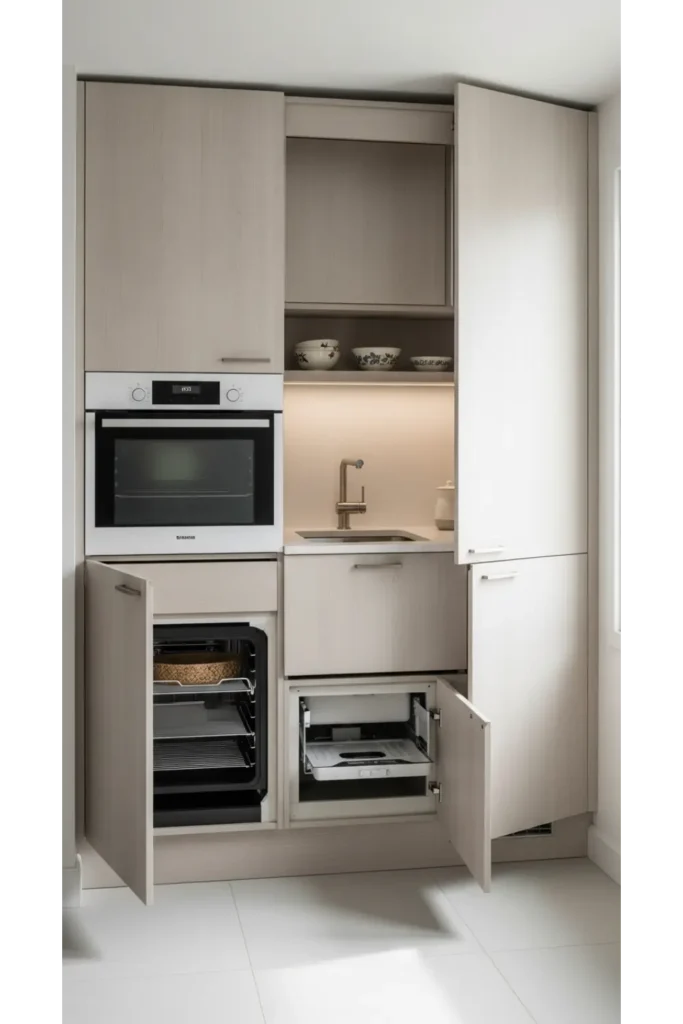
Integrated appliances blend seamlessly into cabinetry, reducing visual clutter. When appliances disappear behind matching panels, the kitchen feels more like a continuous surface than a collection of machines. This approach works well in open concept homes where the kitchen connects to living areas.
Choosing compact versions of appliances also saves space. Built in microwaves and slim dishwashers free up counter and cabinet room. Integrated design focuses on flow and simplicity, helping the kitchen feel intentional rather than crowded.
8. Corner Storage Innovations
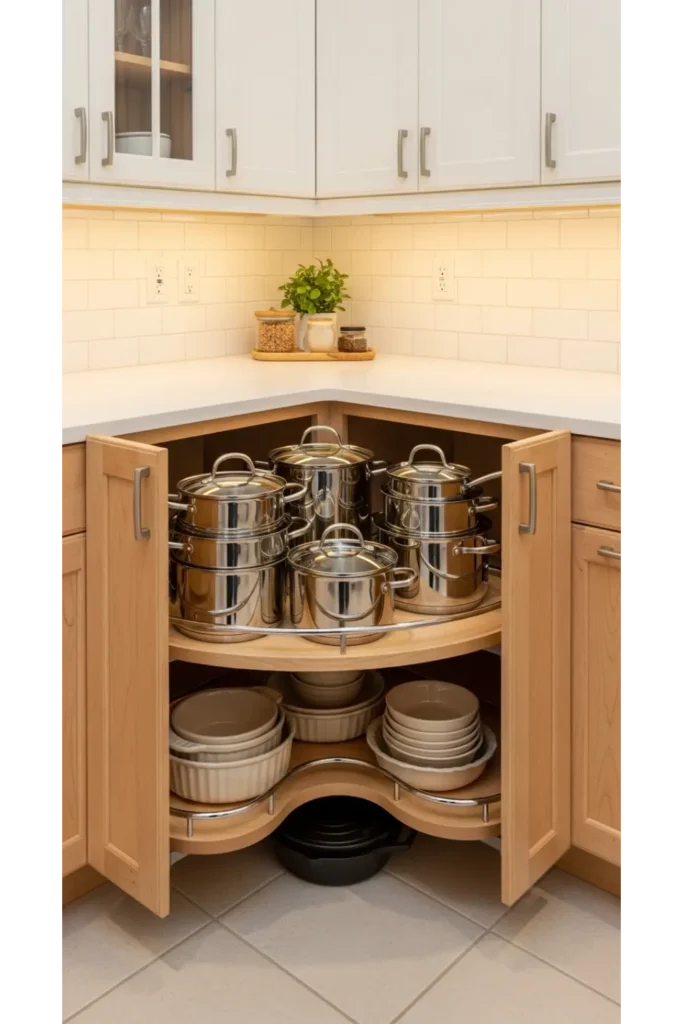
Corner cabinets often waste valuable space, but smart hardware fixes that. Pull out shelves and rotating systems make deep corners accessible and useful. You no longer lose items in the back or struggle to reach heavy cookware.
These systems work best when customized to your storage needs. Deep shelves suit pots and pans while smaller trays handle pantry items. By activating corners, you gain storage without changing the kitchen footprint. This makes a noticeable difference in small kitchens.
9. Minimalist Countertop Styling

Clear countertops instantly make a small kitchen feel larger. Limiting what stays on the counter creates visual calm and improves function. Keep only daily essentials out and store the rest inside cabinets or drawers.
Built in storage solutions support this approach. Appliance garages, deep drawers, and wall mounted racks hide clutter while keeping items accessible. A minimalist counter does not mean a lack of personality. One or two carefully chosen pieces can still add warmth.
10. Reflective Backsplash Materials
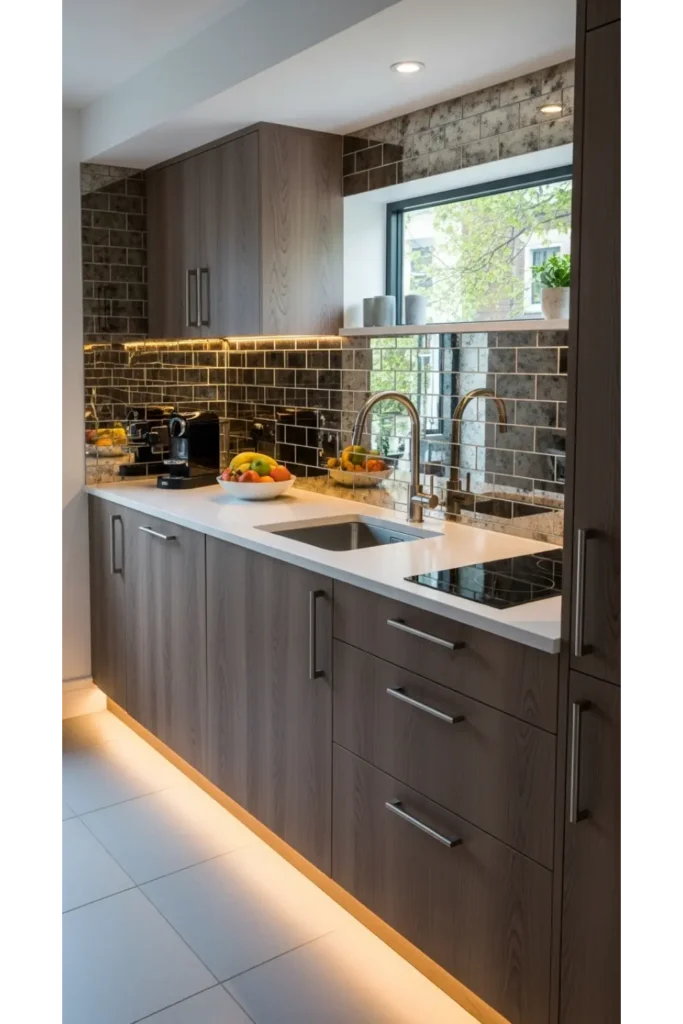
Reflective backsplashes bounce light around the kitchen and add depth. Glossy tiles, glass, or mirrored finishes help the room feel brighter and more spacious. This works especially well in kitchens with limited natural light.
Simple tile patterns prevent the space from feeling busy. A clean layout allows the reflective surface to shine without overwhelming the design. Pairing a reflective backsplash with under cabinet lighting enhances the effect and improves task visibility.
11. Built In Seating Nooks
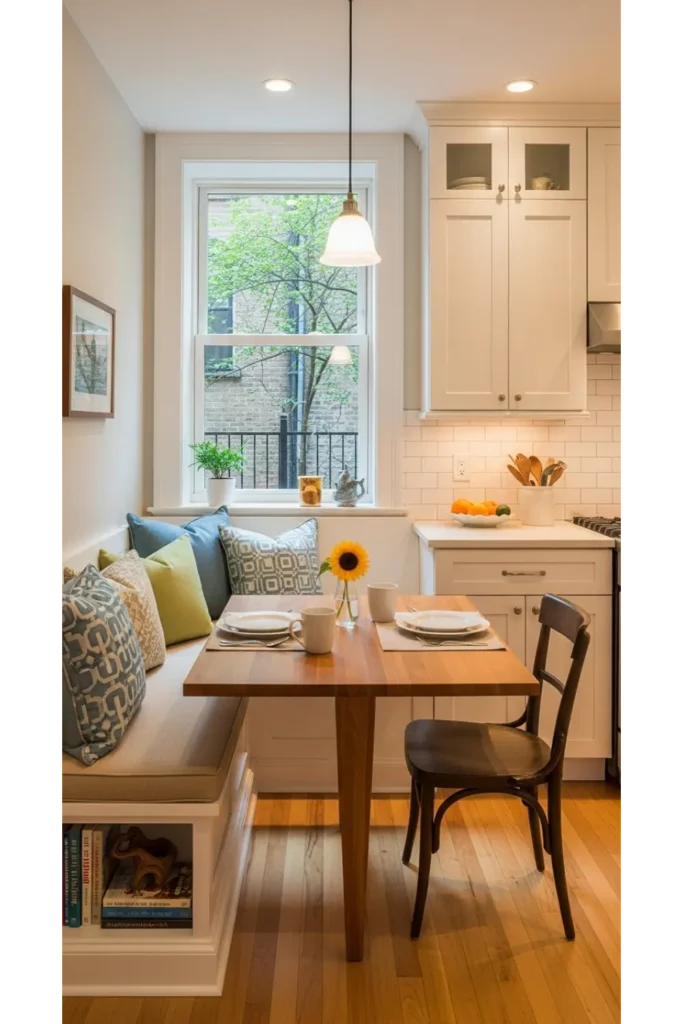
Built in seating saves space while adding comfort. A bench tucked into a corner creates a dining spot without needing extra chairs. Storage under the bench adds another layer of function.
This idea works well in eat in kitchens with limited floor space. Soft cushions and warm lighting make the nook inviting. Built in seating turns an unused corner into a practical and cozy feature.
12. Slim Profile Appliances

Slim appliances deliver full function in a smaller footprint. Narrow refrigerators, shallow ranges, and compact dishwashers free up valuable space. These appliances fit better into tight layouts without sacrificing performance.
Choosing matching finishes keeps the look cohesive. Stainless steel or panel ready options blend well with cabinetry. Slim appliances support efficient layouts and help maintain comfortable walkways in small kitchens.
13. Floating Cabinet Designs
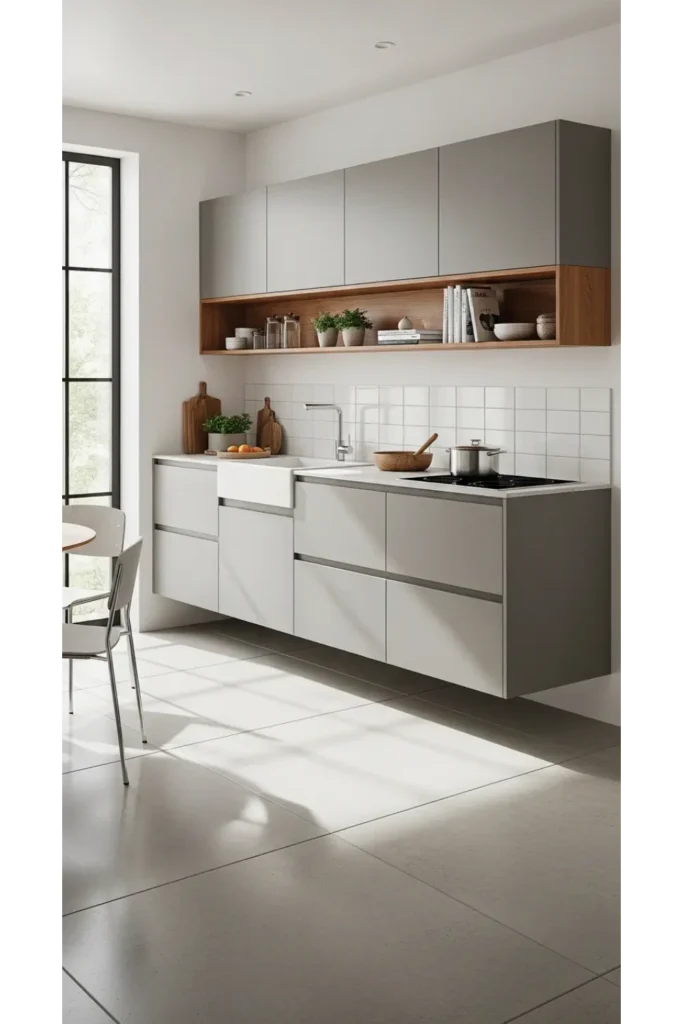
Floating cabinets expose more floor, which visually enlarges the room. By lifting cabinets off the ground, you create a lighter, more open feel. This design also makes cleaning easier.
This approach works best with strong wall support and careful planning. Pair floating cabinets with wall mounted lighting to highlight the effect. Floating designs suit modern kitchens and help small spaces feel less boxed in.
14. Drawer Based Storage Systems
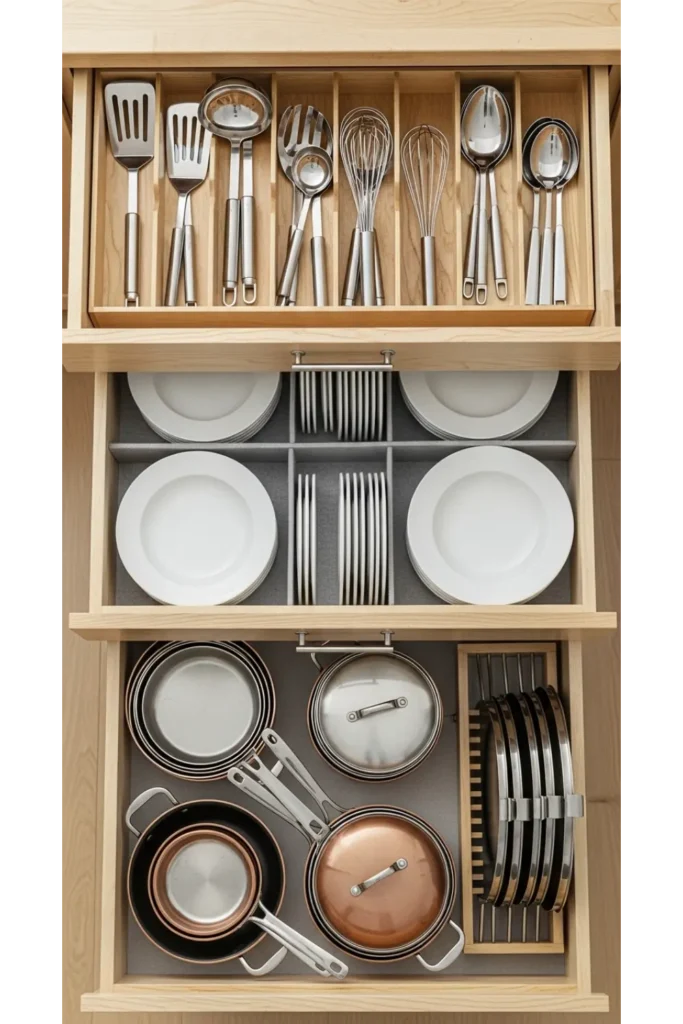
Drawers offer better access than traditional cabinets. Deep drawers hold pots and pans while shallow ones organize utensils. Everything stays visible and easy to reach.
This system reduces bending and digging, which improves daily use. Custom dividers keep items in place and prevent clutter. Drawer focused storage uses space more efficiently and supports a smooth cooking routine.
15. Under Cabinet Lighting Layers
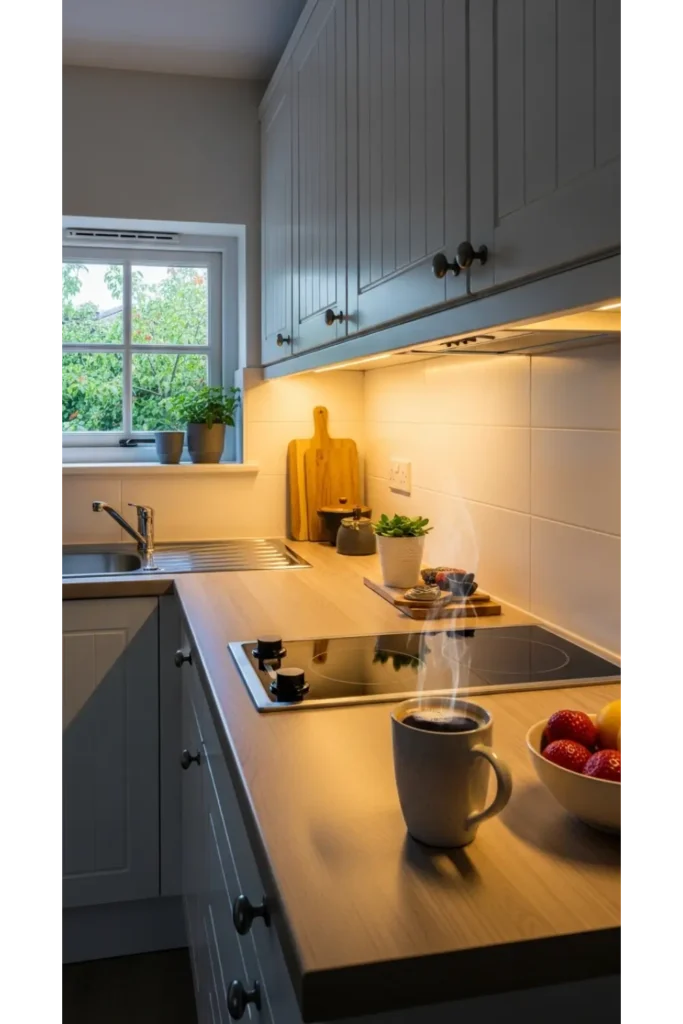
Under cabinet lighting improves both function and atmosphere. It brightens work surfaces and reduces shadows created by upper cabinets. This makes cooking safer and more enjoyable.
LED strips are energy efficient and easy to install. Warm tones create a welcoming feel while cool tones offer a modern look. Layered lighting adds depth and makes the kitchen feel larger.
16. Fold Down Work Surfaces

Fold down surfaces provide extra prep space only when needed. Mounted to the wall, they stay out of the way most of the time. This flexibility suits small kitchens with limited counters.
These surfaces work as prep tables, breakfast bars, or temporary desks. Choose sturdy hardware and durable materials. Fold down designs support multifunctional living without crowding the kitchen.
17. Glass Front Cabinet Doors

Glass front cabinets lighten the look of upper storage. They break up solid cabinetry and add visual depth. This makes the kitchen feel less enclosed.
To keep things tidy, store neatly arranged items inside. Frosted or textured glass offers a softer look while hiding clutter. Glass doors balance storage needs with openness.
18. Integrated Recycling Stations
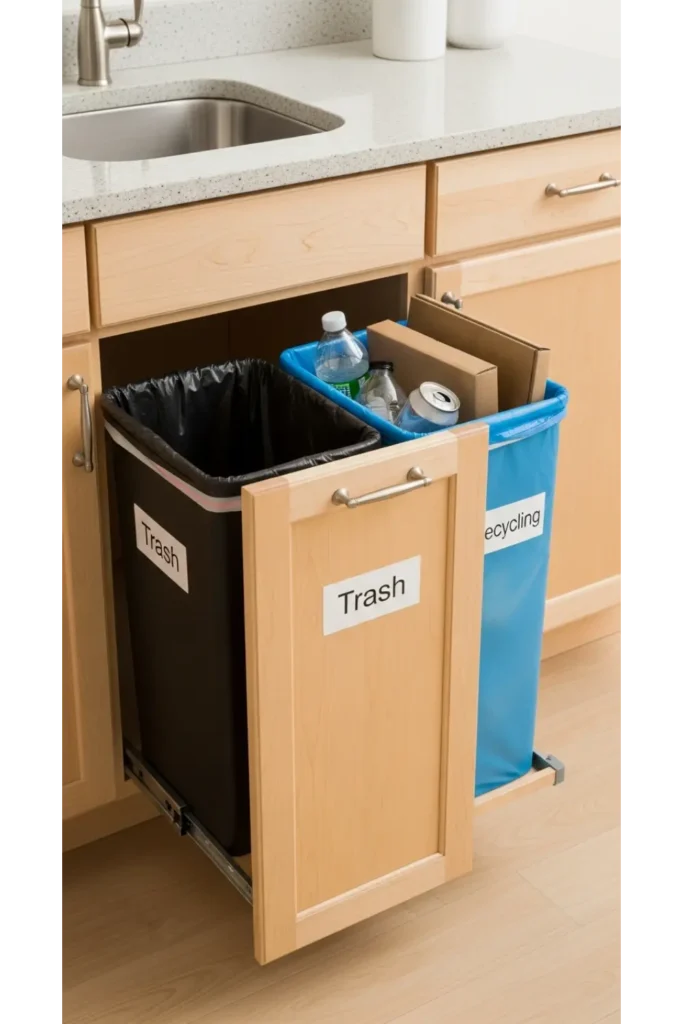
Integrated recycling keeps waste management organized and hidden. Pull out bins inside cabinets save floor space and improve cleanliness. Everything stays accessible but out of sight.
This system encourages better habits by making recycling easy. Choose bins sized for your household needs. Integrated solutions keep the kitchen streamlined and efficient.
19. Compact Breakfast Bars
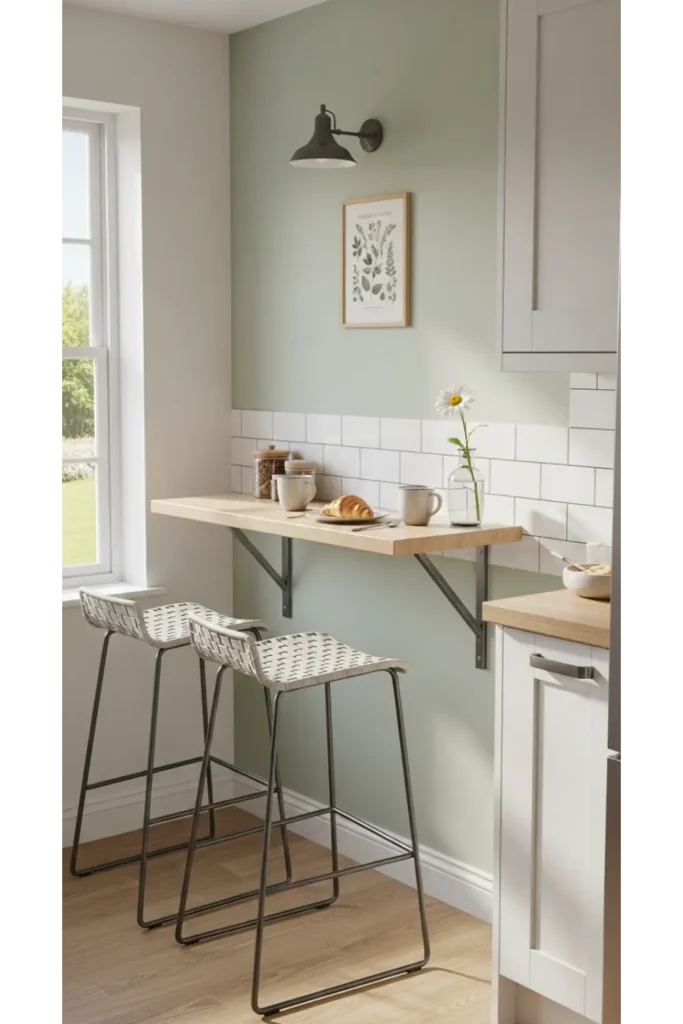
A slim breakfast bar adds seating without taking over the room. Attached to a wall or island, it provides a casual dining spot. This works well in apartments and studios.
Use stools that tuck fully underneath to save space. Keep the surface light and simple. Compact breakfast bars support everyday living while maintaining flow.
20. Smart Spice Storage
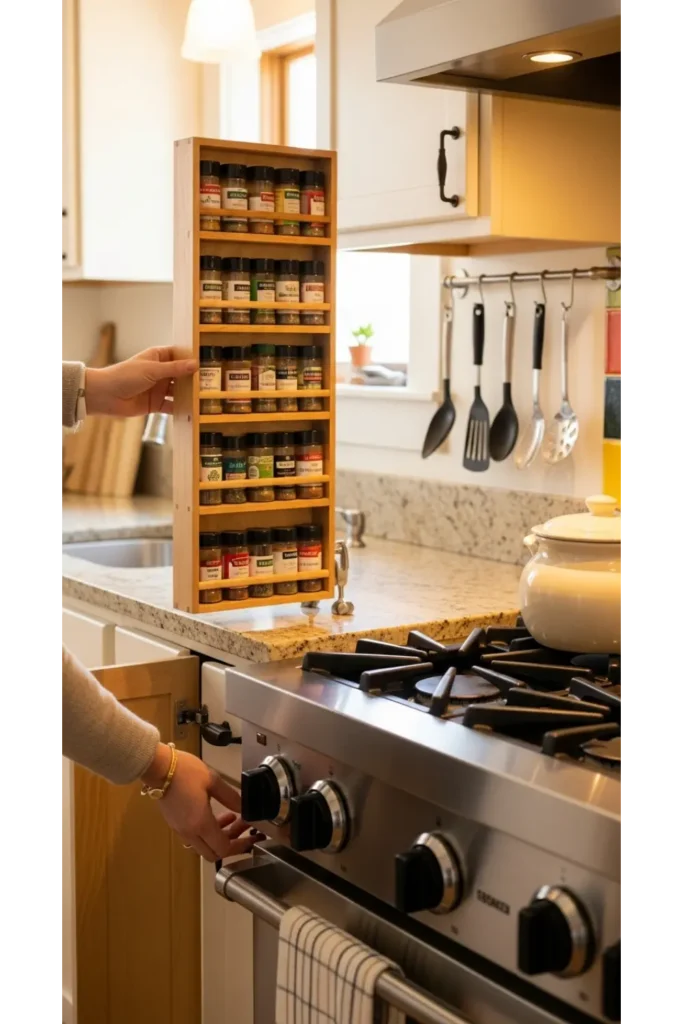
Spice storage near the stove improves cooking efficiency. Pull out racks or drawer inserts keep spices visible and organized. This prevents clutter and saves time.
Custom spice solutions fit into narrow spaces. Clear labels help with quick identification. Smart spice storage turns small gaps into highly functional zones.
21. Seamless Flooring Continuity
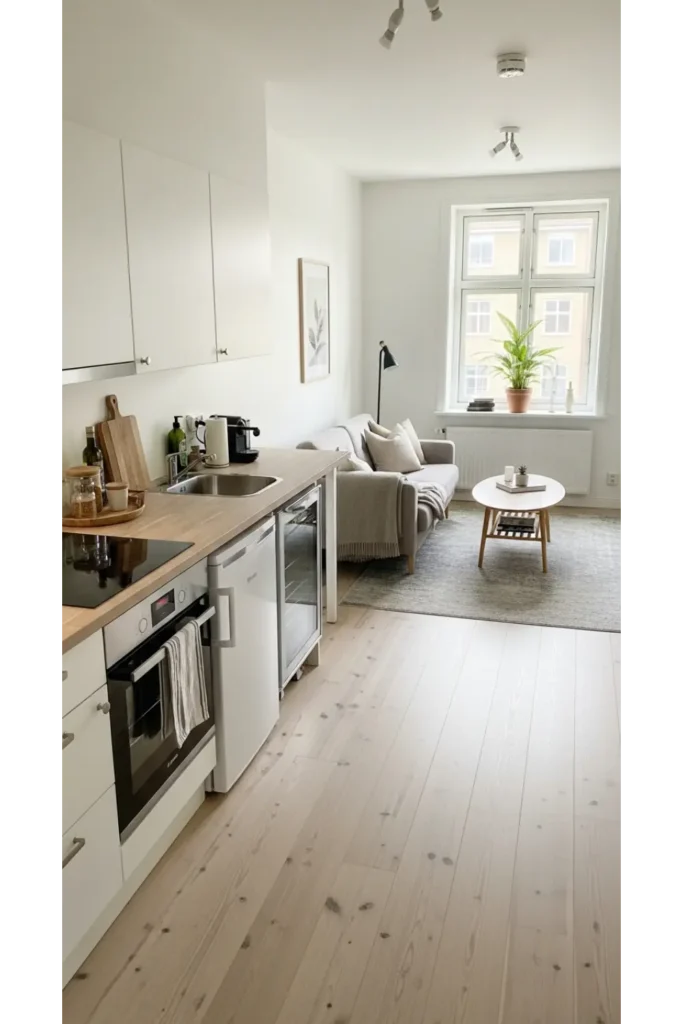
Using the same flooring throughout connected spaces makes the kitchen feel larger. Seamless floors remove visual breaks and improve flow. This works well in open layouts.
Choose durable materials that handle kitchen traffic. Light to medium tones reflect light and hide wear. Flooring continuity supports a cohesive and spacious feel.
22. Built In Microwave Drawers
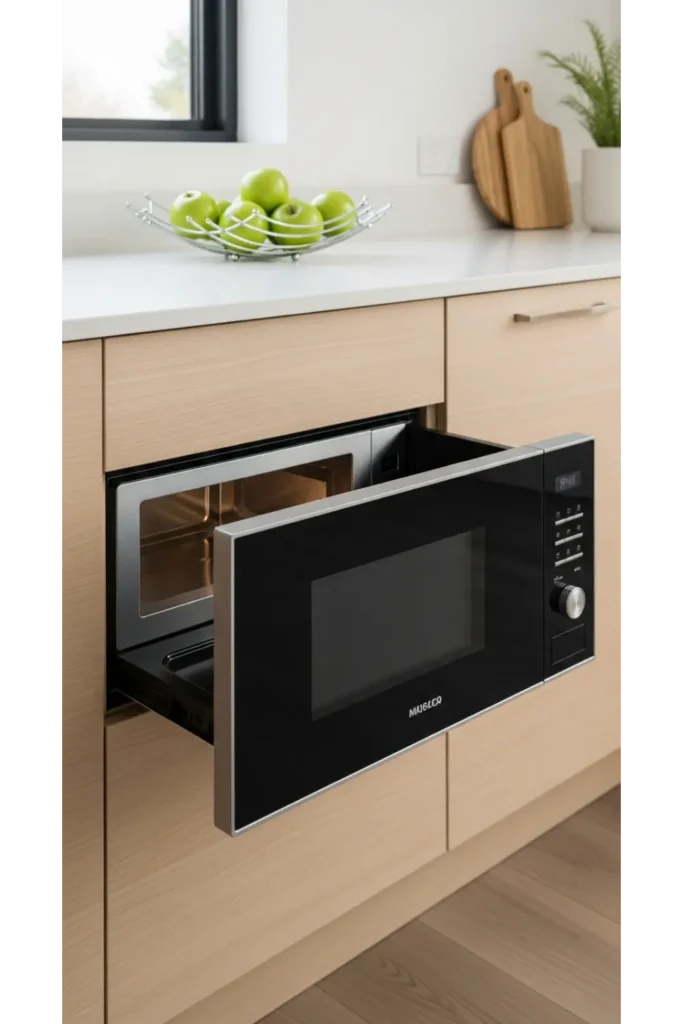
Microwave drawers free up counter and upper cabinet space. Installed at waist height, they improve accessibility and safety. This placement also keeps appliances hidden.
These drawers integrate smoothly into cabinetry. They support a clean layout and better workflow. Built in microwaves suit modern small kitchens well.
23. Accent Walls With Depth
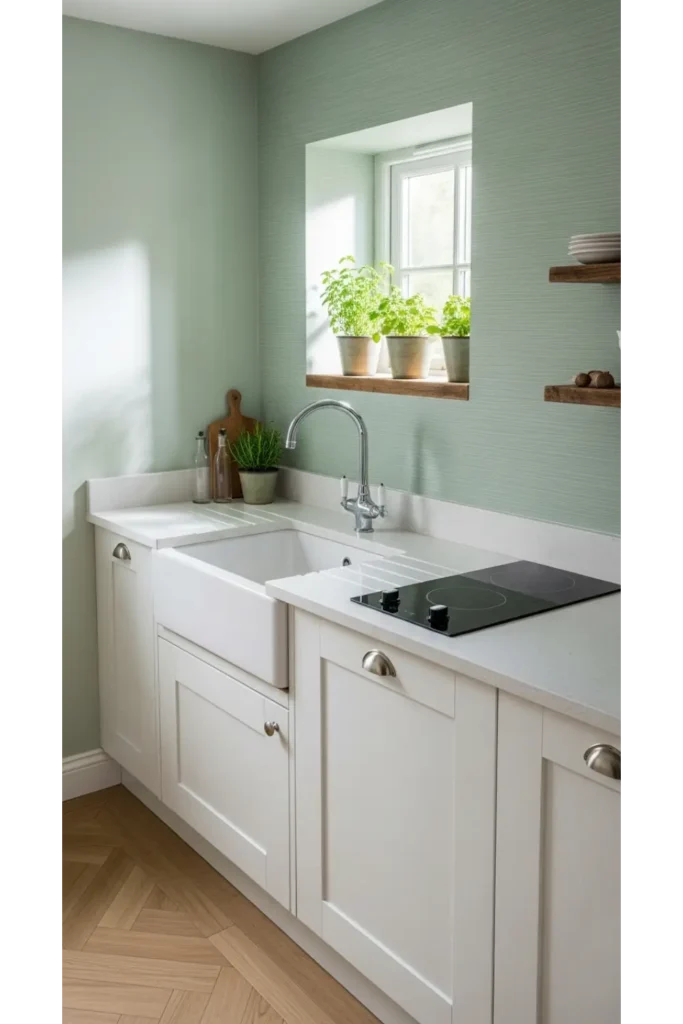
An accent wall adds interest without clutter. Texture or soft color creates depth and personality. This draws attention away from limited size.
Choose materials that are easy to clean. Subtle finishes work best in small spaces. Accent walls bring character while keeping the kitchen balanced.
24. Personalized Storage Zones
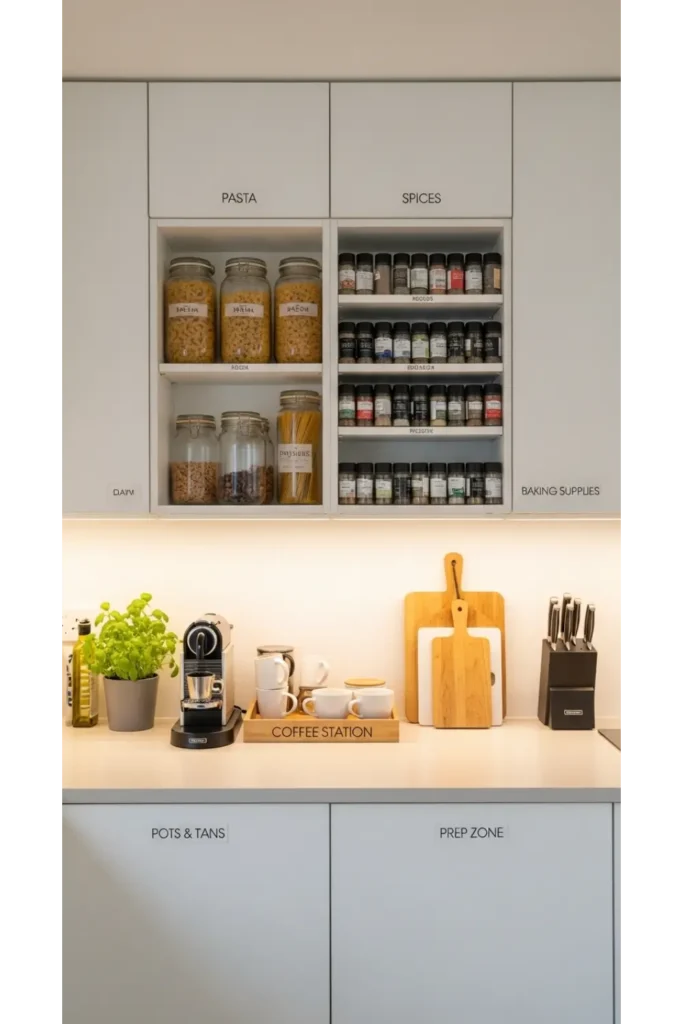
Designing storage around your habits improves efficiency. Creating zones for prep, cooking, and cleaning reduces movement. This makes the kitchen easier to use daily.
Tailoring storage to your routine ensures every inch works hard. This final approach ties all kitchen ideas for small spaces together. Thoughtful planning turns limitations into strengths.
Conclusion
Small kitchens succeed when every choice serves a purpose. By focusing on smart storage, light, and flow, you can create a space that feels open and works beautifully. These ideas show that size does not limit comfort or style. With careful planning and practical design, a small kitchen can feel just as capable and inviting as a larger one.