

Canopy bedroom ideas brown that feel calm, grounded, and made for real homes
Canopy bedroom ideas brown work because brown brings emotional stability into a space designed for rest. Brown feels familiar and natural, which matters in city bedrooms where noise, light, and tight layouts compete for attention. In Brooklyn homes near Atlantic Avenue, Clinton Street, and the residential blocks around Prospect Park, brown appears often in bedrooms that feel settled rather than styled. When paired with a canopy bed, brown creates a clear sense of enclosure that helps the body relax without making the room feel closed.
The canopy defines the sleep zone, while brown tones soften the edges of daily stress and visual clutter. Brown does not need drama to succeed. It works best when it supports the structure of the bed and the rhythm of the room. When brown shows up through wood, fabric, and subtle contrast, the bedroom feels steady and inviting at every hour of the day.
How brown transforms the feeling of a canopy bed
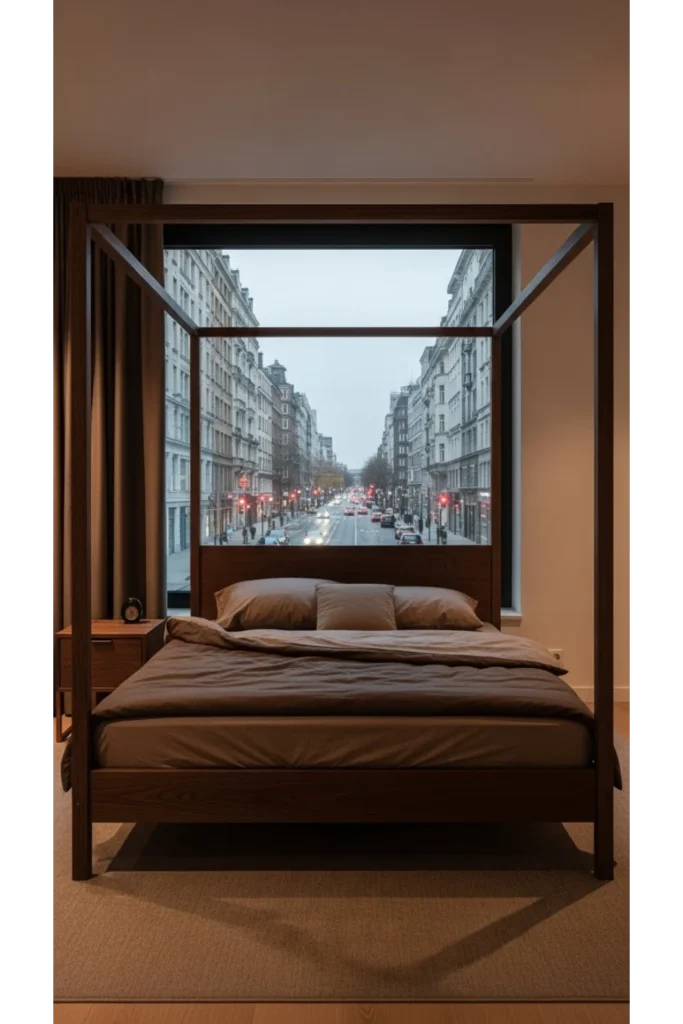
A canopy bed already brings vertical order to a room. Brown strengthens that order by making it feel protective instead of bold. In bedrooms near Flatbush Avenue, where streetlights and motion stay active late into the night, brown absorbs excess glare and reduces contrast. This makes the sleep area feel quieter without relying on heavy curtains or layered fabric.
Brown also changes with light. Morning sun pulls warmth forward. Evening light deepens tone and softness. This shift supports natural rest patterns. A brown canopy bedroom never feels flat because the color responds to time and light instead of staying static.
FAQ: Does brown make a bedroom feel dark or heavy?
No. Balanced brown tones feel warm when paired with light walls and proper lighting.
Choosing the right brown tones for a canopy bedroom
Not every brown works the same way. Deep espresso browns feel rich but need strong daylight, which works well in bedrooms facing Prospect Park or open streets. Warm walnut and chestnut feel flexible and suit most light conditions. Soft taupe and sand brown feel modern and light, which helps narrower rooms near Fulton Street feel open.
Brown works best in layers. A mid tone canopy frame paired with lighter walls and bedding creates contrast that keeps the room from closing in. When brown appears in different strengths rather than one solid block, the bedroom feels balanced and breathable. Discover even more beautiful bedroom decor inspiration in our full collection here.
Canopy bed frames that pair naturally with brown palettes
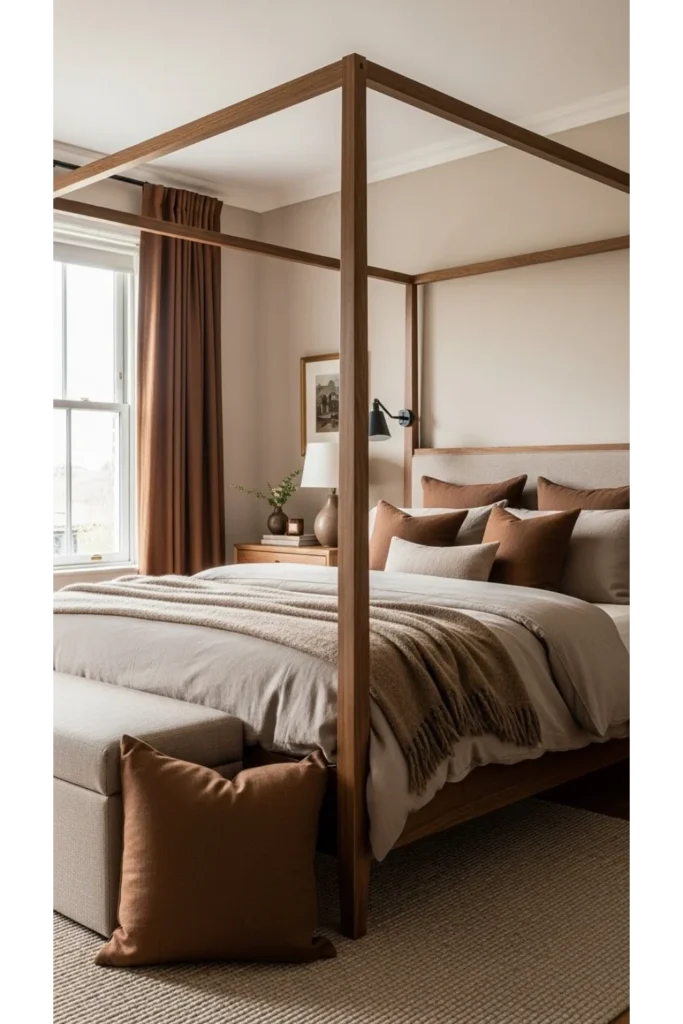
The canopy frame anchors the entire room. Wood frames work especially well with brown palettes because the grain adds texture without decoration. Oak, walnut, and maple age well and feel honest. In older Brooklyn buildings near Brooklyn Heights, wood frames echo original floors and trim, which creates visual harmony without effort.
Metal frames also fit brown bedrooms when finished in bronze or warm black. These finishes ground the room while keeping the look clean. Matte finishes feel calmer at night than glossy surfaces, which reflect too much light.

FAQ: Is wood better than metal for brown canopy bedrooms?
Both work. Wood feels warmer, while metal feels cleaner and more modern.
Layout choices that keep brown feeling open and calm
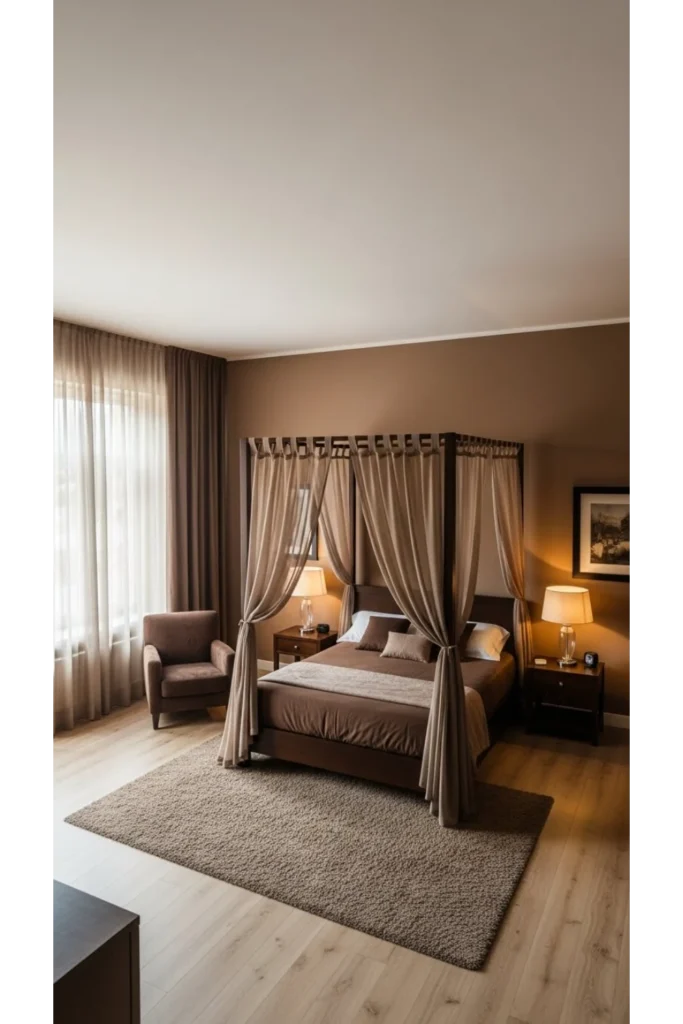
Layout matters more when darker tones enter a room. Brown feels heavy when furniture crowds the floor. It feels grounding when space flows naturally. Centering the canopy bed often creates symmetry and visual rest, especially in square rooms. In narrow railroad style apartments near Nostrand Avenue, placing the bed along the longest wall often improves movement and comfort.
Space around the bed matters. Clear walkways allow brown to feel intentional instead of dense. When the canopy defines the sleep zone but leaves breathing room, the room feels ordered rather than tight.
Fabric and texture that soften brown canopy bedrooms
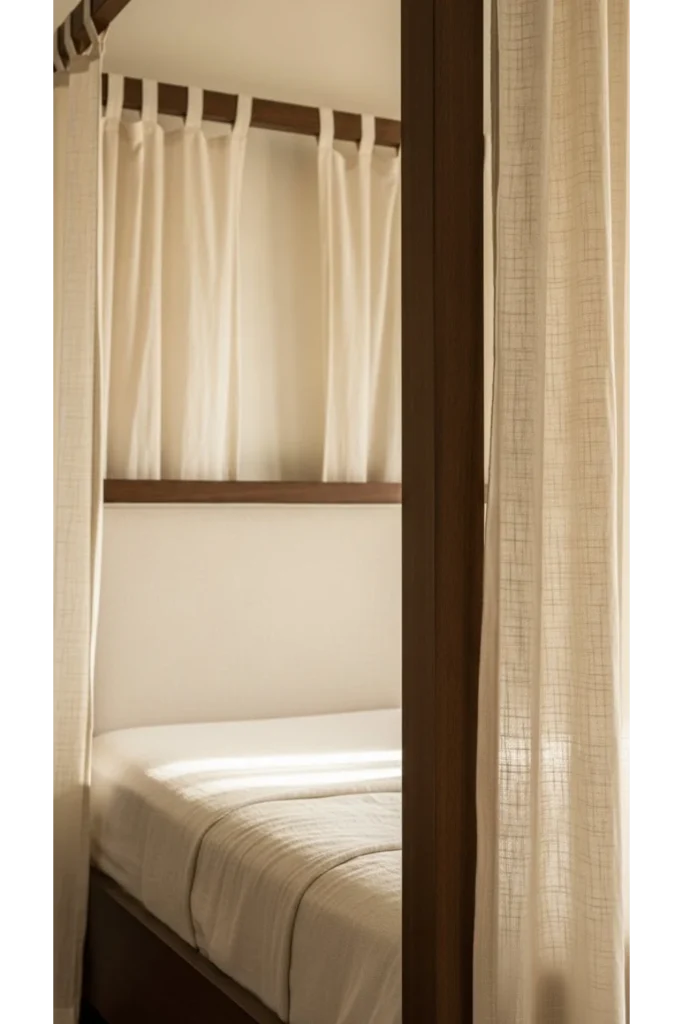
Texture balances brown better than color alone. Linen, cotton, and wool soften the canopy without adding clutter. Cream, off white, and sand fabrics lift the room and prevent heaviness. Avoid matching brown fabric to the frame, which compresses the space visually.
In homes near the East River, breathable fabric also helps manage humidity. Fabric should support comfort and airflow, not enclosure. Using fabric only at the head of the bed often provides enough softness without reducing light.
FAQ: Can brown fabric work in a canopy bedroom?
Yes. Lighter brown or neutral fabric keeps the room balanced.
Lighting that brings depth to brown tones
Lighting defines how brown reads. Poor lighting makes brown feel dull and flat. Warm lighting reveals depth and richness. Bulbs between 2700K and 3000K work best. Light placed at eye level through sconces or small lamps creates soft shadows that support rest. Don’t miss our complete bedroom decor guide packed with stylish inspiration.
Many homes near the Brooklyn Heights Promenade rely on layered lighting instead of strong overhead fixtures. This approach allows brown to feel relaxed at night and clear during the day. In brown bedrooms, lighting often replaces decoration because it shapes mood so effectively.
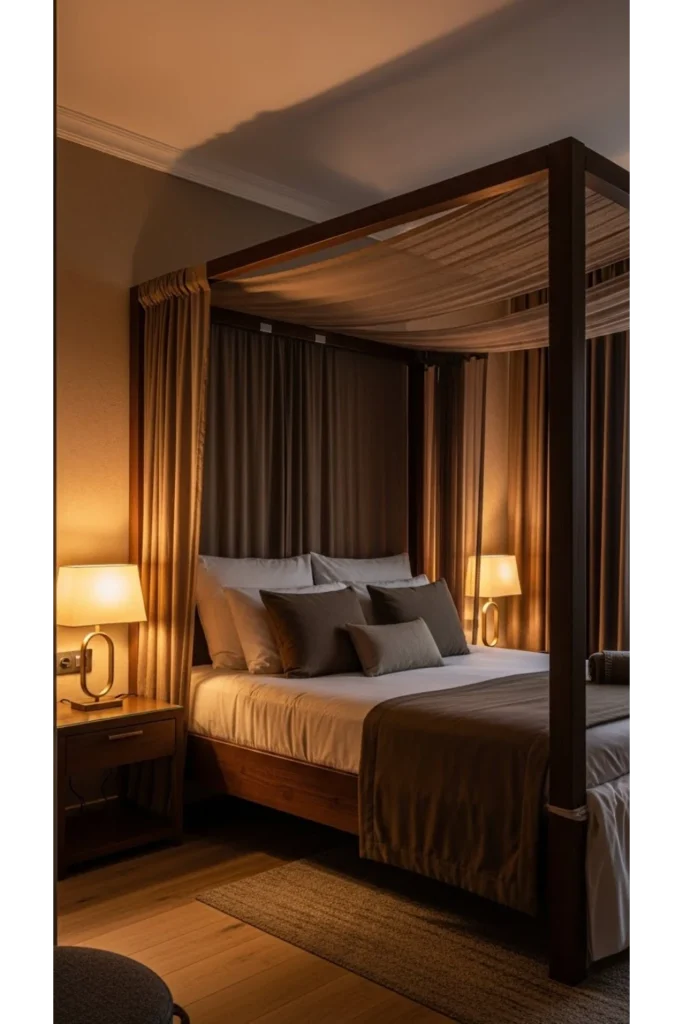
Bedding that lifts brown canopy beds visually
Bedding should counterbalance brown rather than match it. White, ivory, and pale gray sheets keep the bed light and calm. Texture matters more than pattern. Linen duvets and cotton quilts add softness without distraction.
Avoid heavy patterns that compete with the canopy. One textured throw adds warmth. The bed should feel restful and usable, not styled for display. Brown canopy bedroom ideas succeed when bedding draws the eye upward instead of outward.
Brown canopy bedrooms in modern city homes
Modern interiors use brown with restraint. Clean lines, neutral walls, and limited decor keep the room current. Brown wood frames pair well with white or light gray walls. Low furniture and floating nightstands preserve sight lines and openness.
In neighborhoods near DUMBO, modern brown bedrooms often mix concrete walls, wood frames, and soft textiles. This contrast feels contemporary while staying calm. Brown acts as the anchor, not the statement.
FAQ: Can brown feel modern instead of traditional?
Yes. Simple shapes and neutral contrast keep brown current.
Professional guidance on brown bedrooms and rest
Design professionals often recommend warm, grounding colors for sleep. Guidance aligned with the American Society of Interior Designers supports using natural tones to reduce stress and visual noise. Brown fits this guidance well when paired with proper lighting, clear layout, and restraint.
Professionals stress proportion. Brown works best when it supports structure instead of filling space. The canopy bed provides that structure naturally.
Common mistakes that weaken brown canopy bedrooms
Too much dark brown overwhelms the room. Poor lighting flattens depth. Heavy fabric traps heat and blocks airflow. Oversized frames crowd small bedrooms and make brown feel oppressive. Brown needs contrast, light, and space to work well. When each element earns its place, brown feels calming instead of heavy.
FAQ: What is the biggest mistake with brown canopy bedrooms?
Using dark brown everywhere without contrast or light.
Canopy bedroom ideas brown that last over time
Timeless brown canopy bedrooms feel steady and comforting. Homes near Prospect Park South and quiet streets off Court Street show this balance clearly. Warm wood, thoughtful layout, soft lighting, and restrained fabric create rooms that feel lived in and reliable.
Brown does not chase trends. It supports rest and routine. When chosen with care, a brown canopy bedroom becomes a grounding retreat that feels right at the end of every day, no matter how the world outside changes.






Appreciate your input! Calm, balanced bedrooms really do make a difference. If you’d like to add more details, feel free to share