
23 Small Kitchen Design Inspirations to Maximize Space
A small kitchen can feel limiting, but smart design turns tight square footage into a highly functional and beautiful space. The right layout, finishes, and storage choices make daily cooking easier while keeping the room open and inviting. This guide explores expert-backed ideas that real designers use to unlock hidden potential in compact kitchens.
These small kitchen design inspirations focus on flow, light, and clever organization. Each idea shows how to maximize space without sacrificing comfort or style. Whether you live in an apartment, condo, or small home, these concepts help you build a kitchen that works harder and feels larger than it looks.
1. Vertical Cabinetry That Reaches the Ceiling
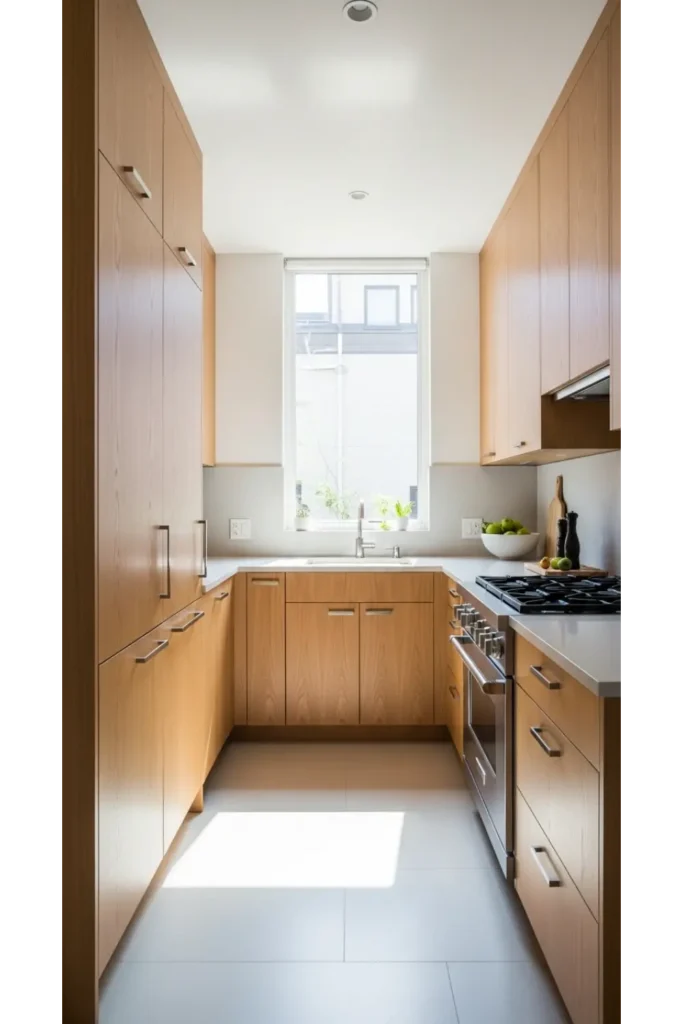
small kitchen design inspirations maximize space by extending cabinets all the way to the ceiling, eliminating wasted vertical gaps. Tall cabinetry draws the eye upward, which visually increases height while adding valuable storage for items you use less often. This approach reduces clutter on counters and keeps the kitchen feeling calm and intentional.
Upper cabinets also protect surfaces from dust and grease, making maintenance easier. Use lighter finishes or subtle textures to avoid a boxed-in feel. When paired with slim hardware and integrated pulls, vertical cabinets support a clean, efficient small kitchen layout that feels custom and thoughtfully planned.
2. Balanced Open Shelves for Everyday Function
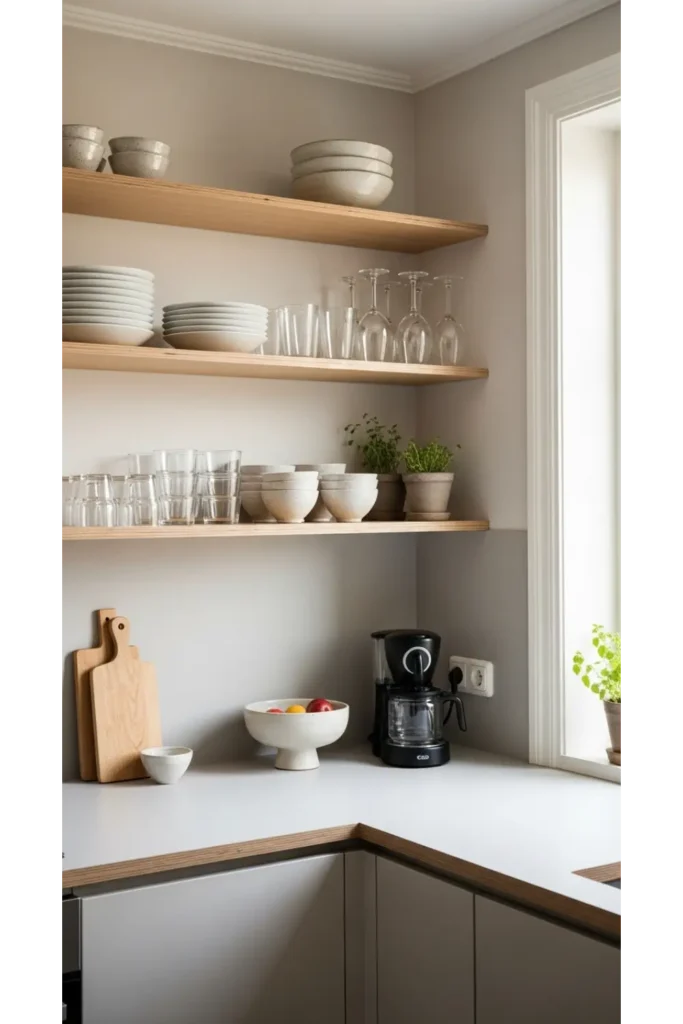
Open shelves work best in compact kitchens when balance comes first. Instead of removing all upper cabinets, designers now mix shelves with closed storage to keep the space light but practical. This approach reduces visual heaviness while still supporting daily cooking needs. Frequently used plates, bowls, and glasses stay accessible, which improves workflow and keeps counters clear in a small kitchen design.
The key is controlled styling and consistency. Use matching dishware, soft neutral colors, and natural materials to avoid clutter. When shelves feel intentional, they support smart kitchen storage while helping maximize space visually. This design choice creates openness without sacrificing organization, making the kitchen feel calm, efficient, and easy to live with.
3. Slim Appliances Designed for Small Kitchens
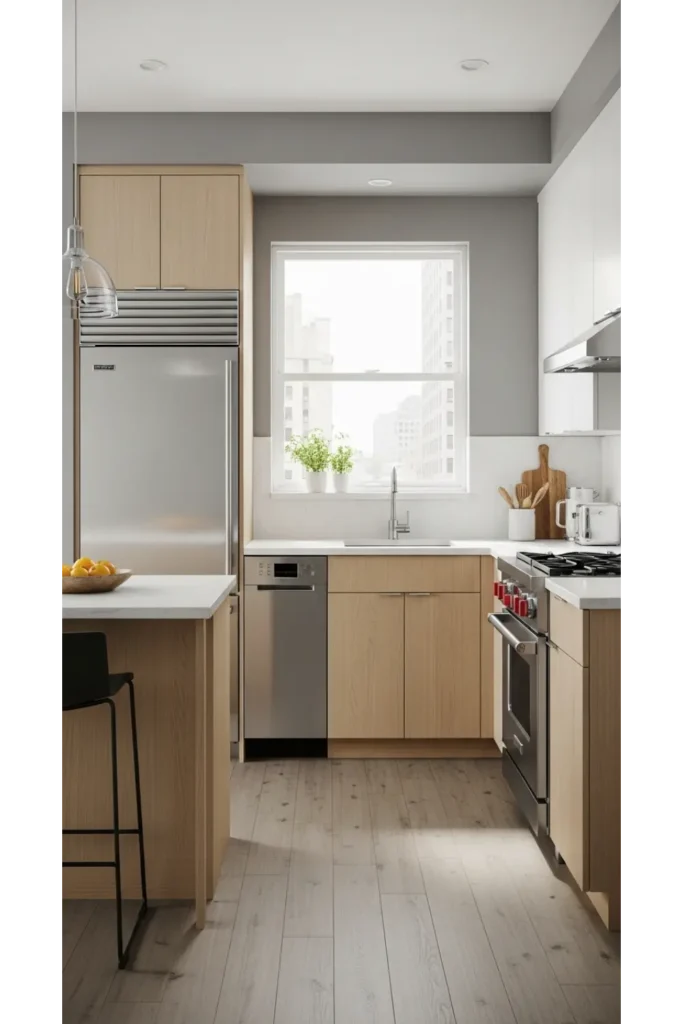
Compact appliances free up precious room without compromising performance. Many brands now offer slim refrigerators, shallow-depth dishwashers, and narrow ranges built specifically for small kitchen design needs. These appliances fit seamlessly into tight layouts, allowing better circulation and more usable counter space.
Choosing scaled-down appliances also improves workflow by reducing congestion around high-traffic zones. When everything aligns neatly, the kitchen feels balanced and efficient. This approach supports long-term usability and helps maximize space while keeping the kitchen fully equipped for daily cooking demands.
4. Soft Neutral Color Strategies for a More Spacious Feel
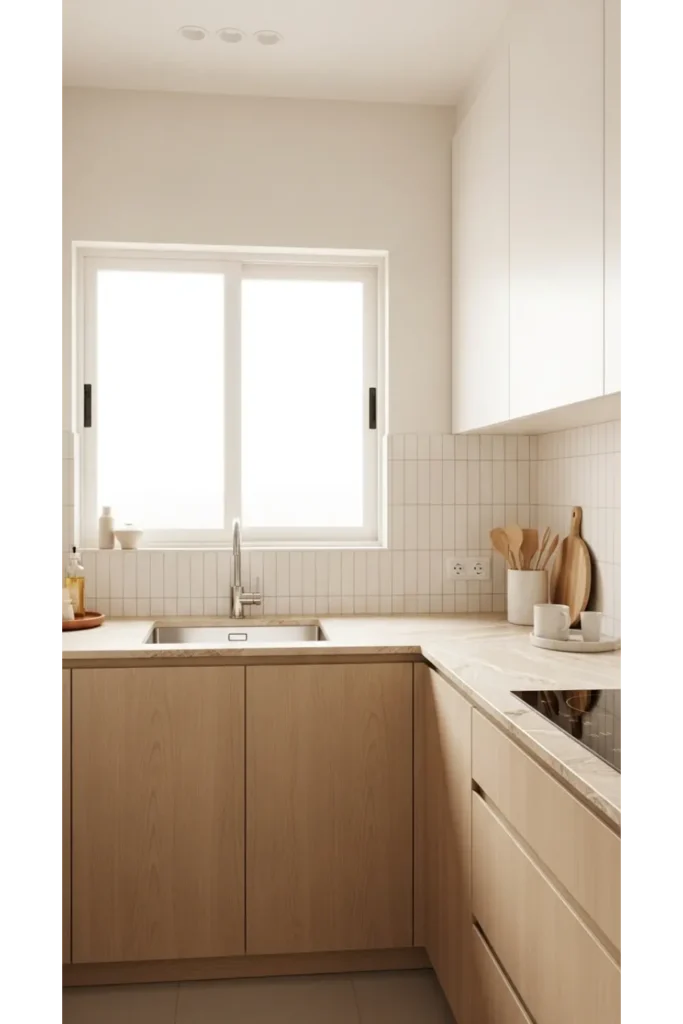
Color choices quietly shape how a small kitchen feels the moment you step inside. Soft neutrals like warm whites, light beige, muted taupe, and pale stone tones help surfaces blend rather than compete. This reduces visual breaks and allows the eye to travel smoothly across cabinets, walls, and counters. In compact kitchens, this continuity makes the room feel wider and calmer, especially when natural light is limited.
Using tonal variation instead of sharp contrast adds depth without crowding the space. Slightly darker countertops or subtle texture in backsplashes prevent the kitchen from feeling flat while still supporting openness. This approach fits naturally within small kitchen design inspirations because it improves comfort and perception together, helping homeowners maximize space through thoughtful, human-centered color planning rather than bold visual noise.
5. Integrated Pull-Out Pantry Storage
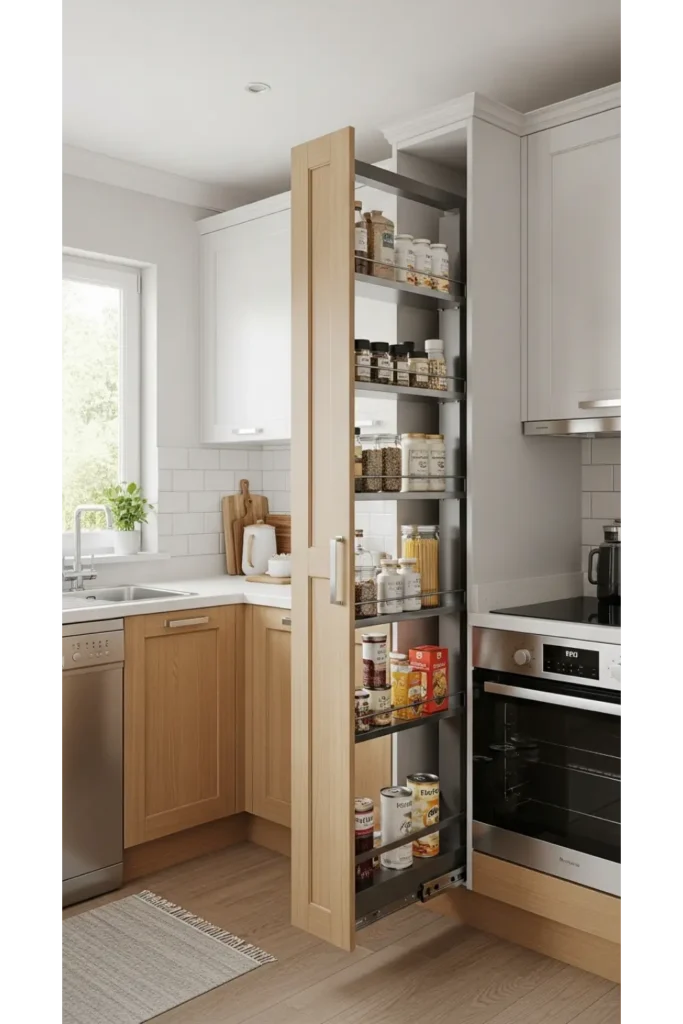
A pull-out pantry transforms narrow gaps into high-function storage zones. These vertical units slide out smoothly, offering full visibility and easy access to dry goods, spices, and small appliances. They eliminate dead space while keeping everything organized and within reach.
This solution works well between appliances or at the end of cabinet runs. By using depth efficiently, pull-out pantries support smart kitchen storage goals and help maximize space without altering the overall layout or adding visual weight.
6. Multifunctional Kitchen Islands
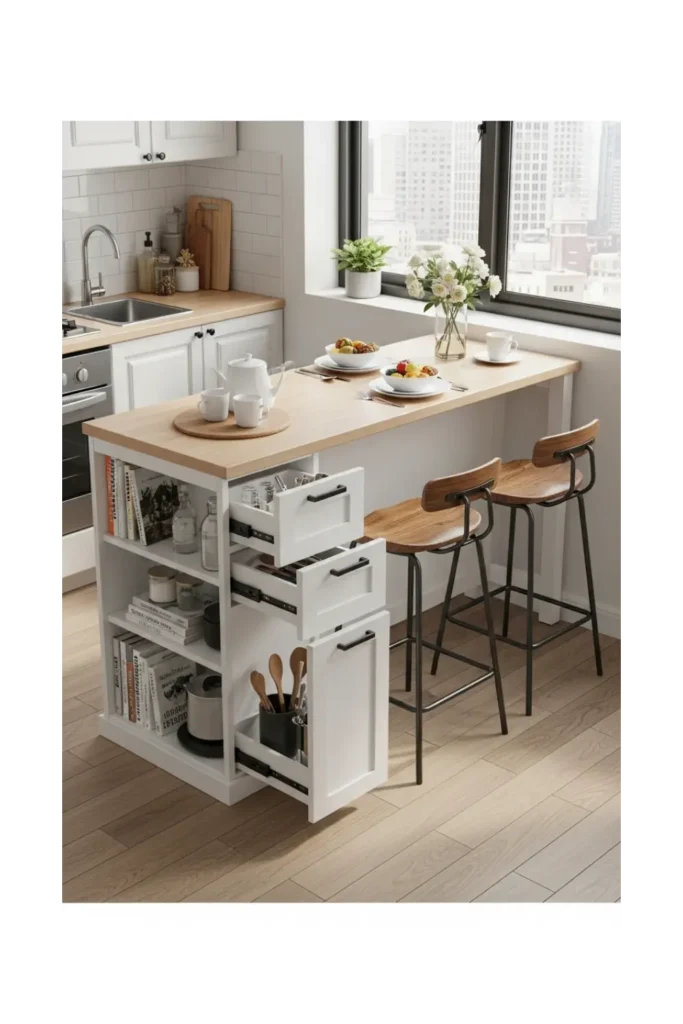
In small kitchens, an island must earn its footprint. Multifunctional islands provide prep space, storage, and seating in one compact unit. Some designs include built-in drawers, shelves, or even appliances, making them powerful space-saving tools.
Choose an island scaled to your room with open sides or slim legs to maintain flow. When designed correctly, islands enhance efficiency and social interaction while supporting small kitchen design principles that prioritize flexibility and balance.
7. Glass Cabinet Doors for Visual Depth
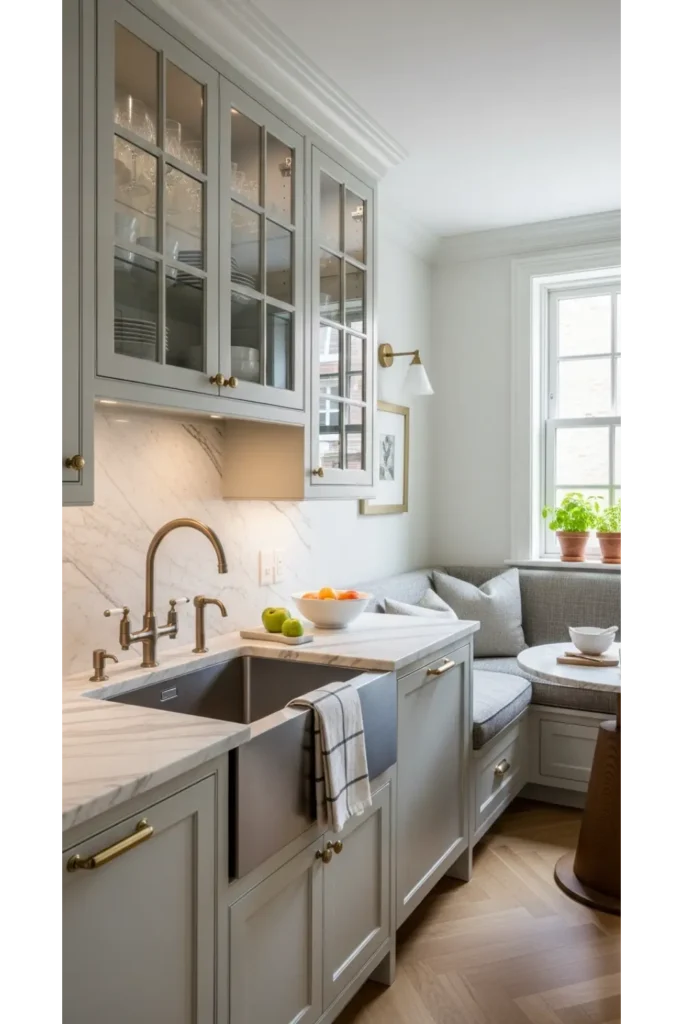
Glass-front cabinet doors reduce visual heaviness by allowing the eye to move through them. This creates a sense of depth that helps small kitchens feel less confined. Clear or lightly frosted glass works best for maintaining brightness while hiding minor imperfections.
Use this technique selectively on upper cabinets to avoid overwhelming the room. Paired with thoughtful lighting, glass doors enhance openness and align with small kitchen design inspirations focused on light, visibility, and spatial flow.
8. Built-In Seating and Breakfast Nooks
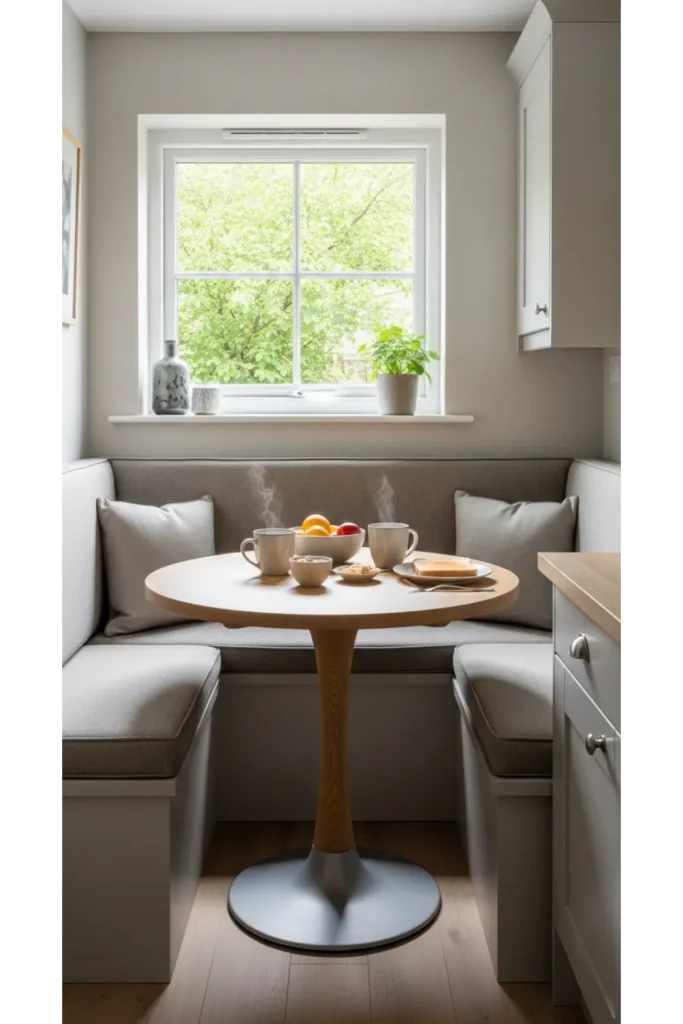
Built-in seating maximizes underused corners and replaces bulky furniture. A breakfast nook with bench seating can double as storage, offering hidden compartments beneath cushions. This approach keeps the kitchen functional while creating a cozy dining spot.
Custom seating adapts to the room’s dimensions, improving circulation. By combining comfort and efficiency, built-in nooks support maximize space goals while making the kitchen more livable and inviting for everyday use.
9. Reflective Backsplashes
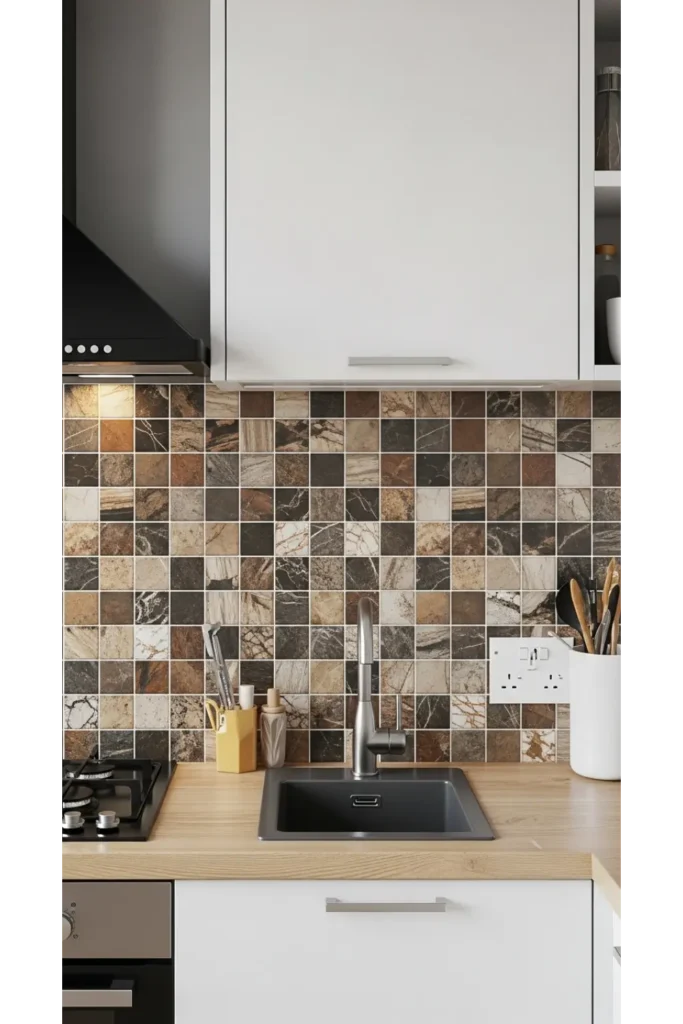
Reflective backsplash materials bounce light around the room, visually expanding the space. Glossy tiles, mirrored finishes, or polished stone surfaces create brightness and depth behind work areas. This subtle effect enhances openness without structural changes.
Keep grout lines minimal to maintain continuity. Reflective backsplashes align with small kitchen design inspirations that rely on light manipulation to improve spatial perception and overall kitchen comfort.
10. Hidden Storage in Unexpected Places
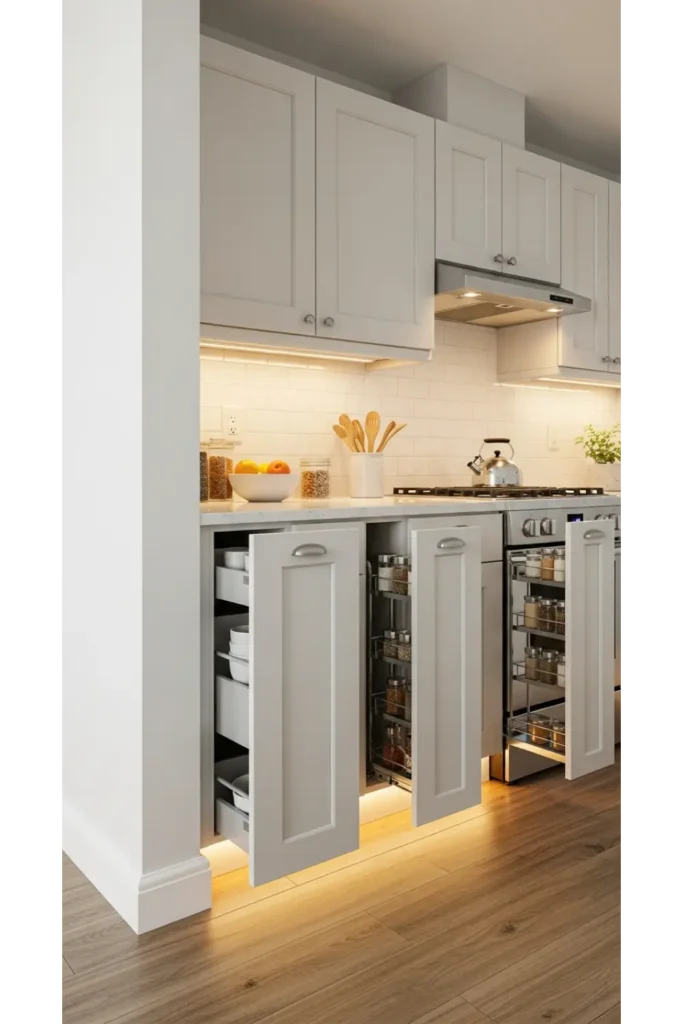
Toe-kick drawers and concealed compartments turn overlooked areas into useful storage. These hidden solutions store flat items like trays or linens without affecting the kitchen’s appearance. They help reduce clutter by spreading storage evenly throughout the room.
In compact kitchens, every inch matters. Hidden storage supports smart kitchen storage strategies that quietly maximize space while preserving a clean, streamlined look.
11. Single-Wall Kitchen Layouts
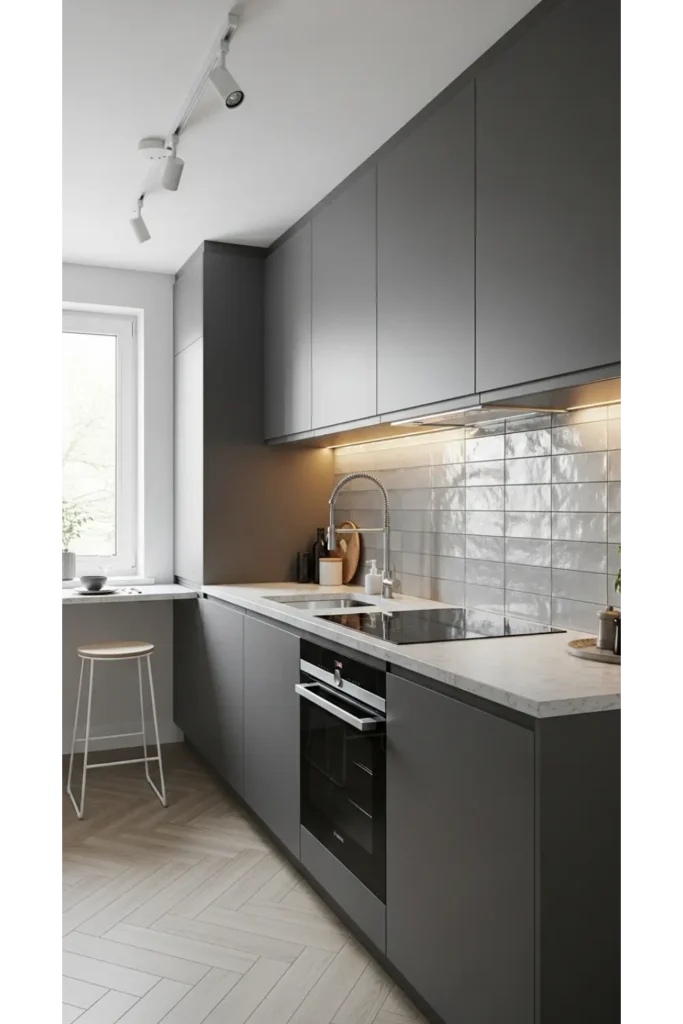
Single-wall kitchens concentrate all functions along one wall, freeing up floor space. This layout works well in studios and narrow rooms where openness matters most. With careful planning, it supports efficient workflow and clear sightlines.
Use tall cabinets and integrated appliances to maintain organization. Single-wall layouts exemplify small kitchen design solutions that balance simplicity with practicality.
12. Lightweight Wall Storage That Keeps Kitchens Open
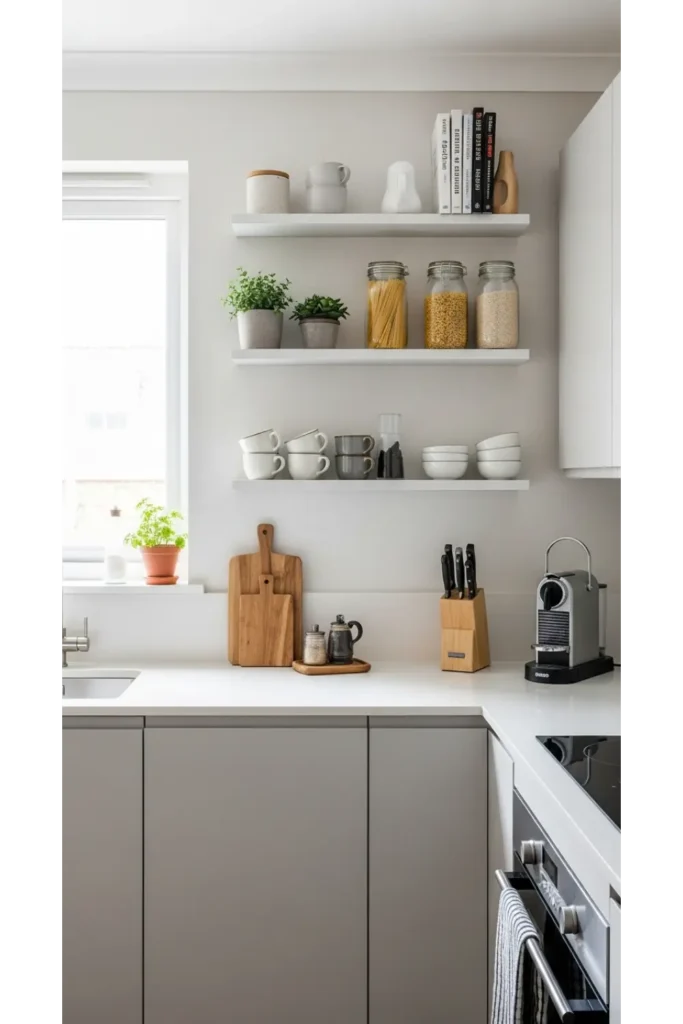
In compact kitchens, heavy upper cabinets can visually press down on the space. Lightweight wall-mounted storage offers an alternative that feels open and breathable. By using slim shelves instead of bulky boxes, the walls stay active without feeling crowded. This approach works especially well for items used daily, allowing the kitchen to function smoothly while maintaining a relaxed visual flow that supports small kitchen design inspirations.
The success of this design depends on discipline and balance. Limiting shelf length, keeping consistent spacing, and choosing materials that blend with the wall color prevents visual clutter. When styling stays simple and intentional, wall storage supports smart kitchen storage goals while helping maximize space naturally. The kitchen feels more spacious, organized, and human-friendly rather than overdesigned or cramped.
13. Compact U-Shaped Layouts
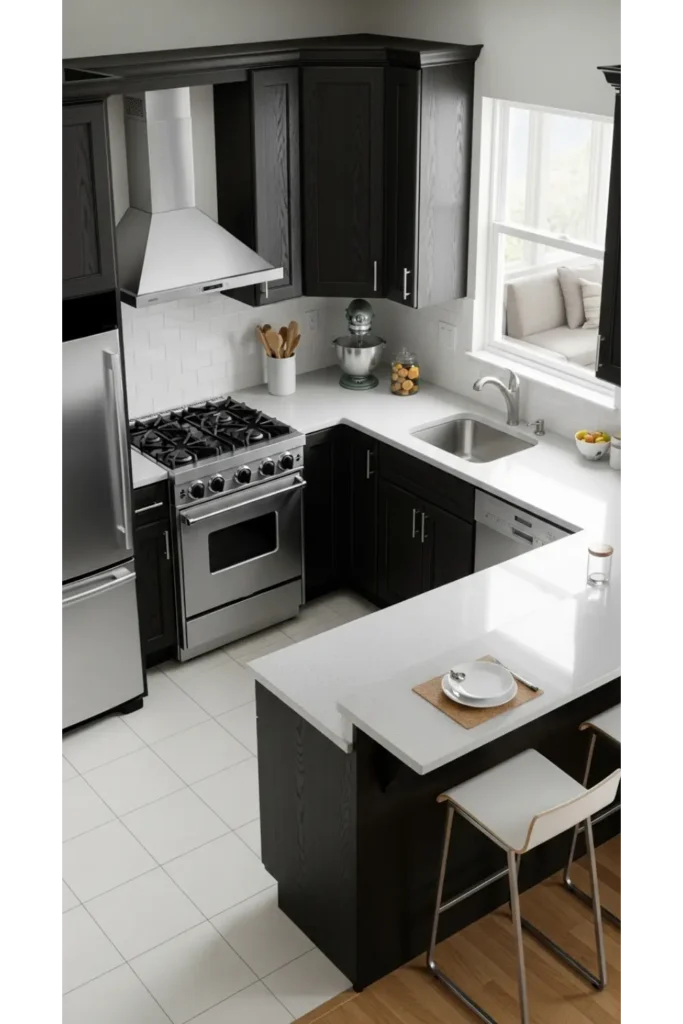
A U-shaped layout wraps storage and work zones around the cook, minimizing steps. In small kitchens, this layout maximizes counter space without increasing footprint. It supports efficient movement and clear task zones.
Use lighter finishes and open corners to avoid enclosure. This layout reflects small kitchen design inspirations that prioritize ergonomics and functionality in limited spaces.
14. Built-In Appliances for Seamless Flow

Built-in appliances blend into cabinetry, creating a unified look that reduces visual clutter. This seamless integration makes the kitchen feel larger and more cohesive. It also allows for better alignment and spacing.
Integrated designs support small kitchen design goals by improving flow and maintaining consistent sightlines, which helps maximize space perception.
15. Drawer-Based Storage Systems
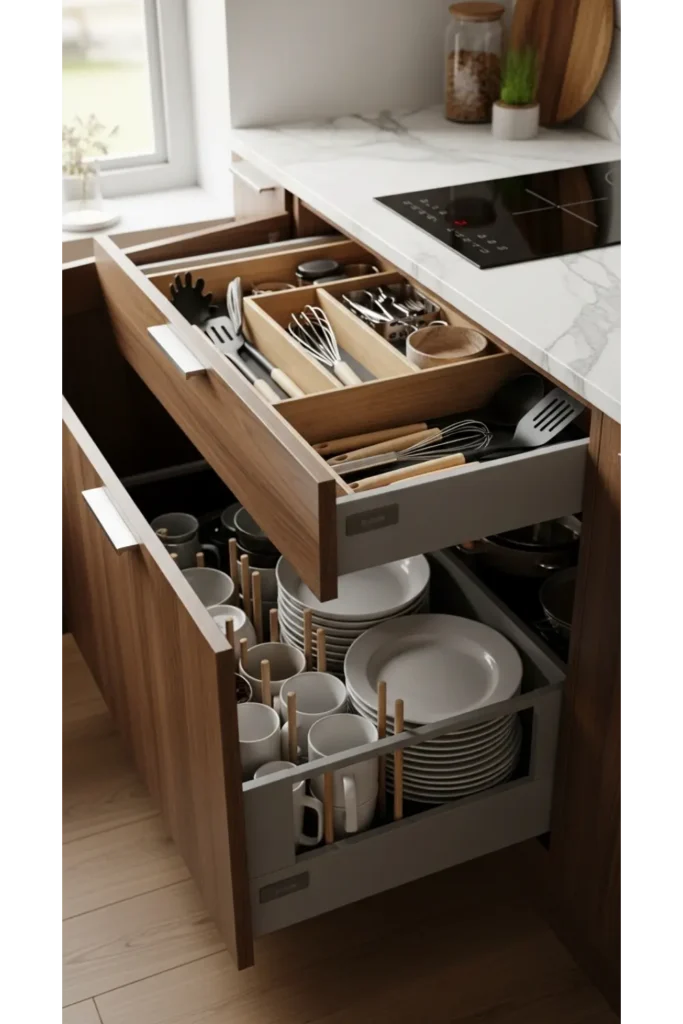
Drawers offer better access than traditional cabinets, especially in lower storage zones. Deep drawers hold pots, pans, and pantry items while keeping everything visible. This reduces wasted space and awkward bending.
Drawer systems improve organization and efficiency. They align with smart kitchen storage approaches that make small kitchens easier to use and maintain.
16. Corner Storage Solutions
image prompt: lazy Susan corner cabinet in a small kitchen
Corner cabinets often waste space, but solutions like lazy Susans and pull-out systems fix that. These designs make deep corners accessible and functional. They prevent items from getting lost or forgotten.
Optimized corners support maximize space strategies by unlocking storage that would otherwise remain unused in small kitchen design plans.
17. Streamlined Hardware for Visual Simplicity

Reducing visual interruptions plays a major role in compact kitchens. Streamlined or handleless cabinetry removes unnecessary breaks across surfaces, allowing the eye to move smoothly through the space. This design choice helps cabinetry feel lighter and less dominant, which is essential in tight layouts. When surfaces stay uninterrupted, the kitchen appears wider and more organized, supporting small kitchen design inspirations focused on clarity and balance.
Slim pulls or push-to-open systems also improve everyday usability. They reduce snag points and make movement easier in narrow walkways. When paired with flat-panel doors and consistent finishes, minimal hardware strengthens the overall structure of the room. This approach helps maximize space visually while creating a calm, modern kitchen that feels intentional rather than crowded.
18. Focused Task Lighting That Enhances Space
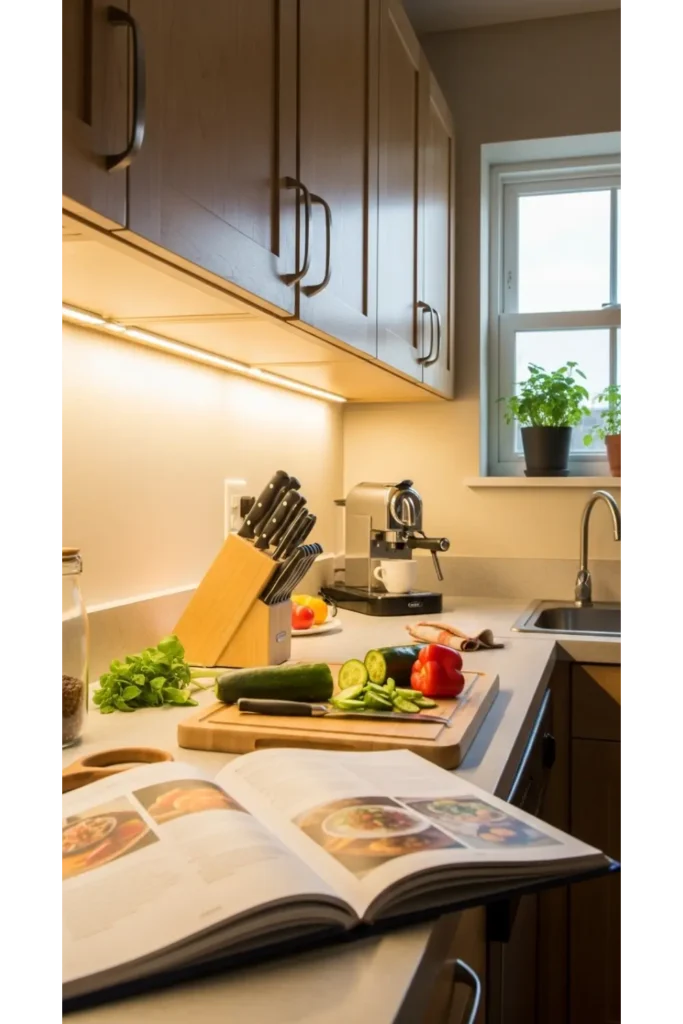
Lighting does more than illuminate in small kitchens. Well-placed task lighting defines work zones and removes dark corners that make a room feel smaller. Under-cabinet lighting is especially effective because it brightens countertops without using valuable ceiling or wall space. This targeted illumination improves safety, precision, and comfort during daily cooking tasks.
Strategic lighting also adds dimension to compact layouts. When light washes evenly across counters and backsplashes, surfaces feel more expansive. Combined with ambient ceiling lights, task lighting supports maximize space strategies by reducing harsh shadows and visual compression. The result is a kitchen that feels brighter, more open, and easier to work in at any time of day.
19. Flexible Prep Surfaces That Adapt to Your Needs
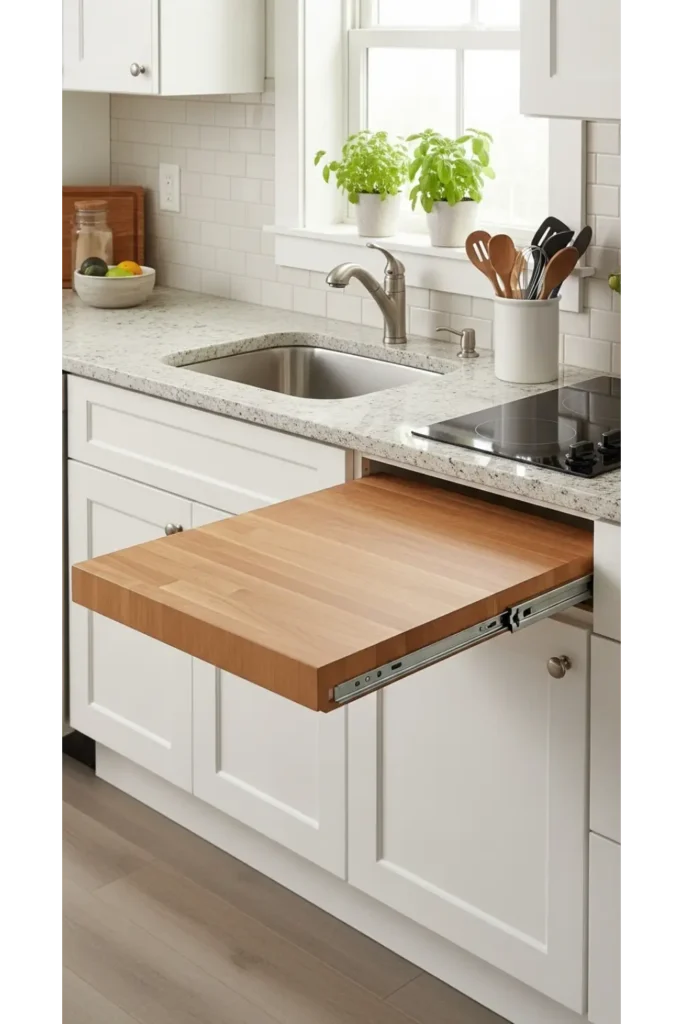
In small kitchens, flexibility is essential. Fold-down counters and pull-out work surfaces provide extra prep space only when needed, then disappear when not in use. This adaptability allows homeowners to cook comfortably without permanently sacrificing floor area. These solutions work well near sinks or cooking zones, where temporary expansion supports smoother workflow.
Because they integrate directly into cabinetry, these surfaces maintain a clean appearance. When tucked away, they preserve circulation and openness. This design choice reflects small kitchen design principles that prioritize function without clutter. By adding capability instead of bulk, flexible surfaces help maximize space while keeping the kitchen efficient and visually calm.
20. Shallow Counters for Better Movement
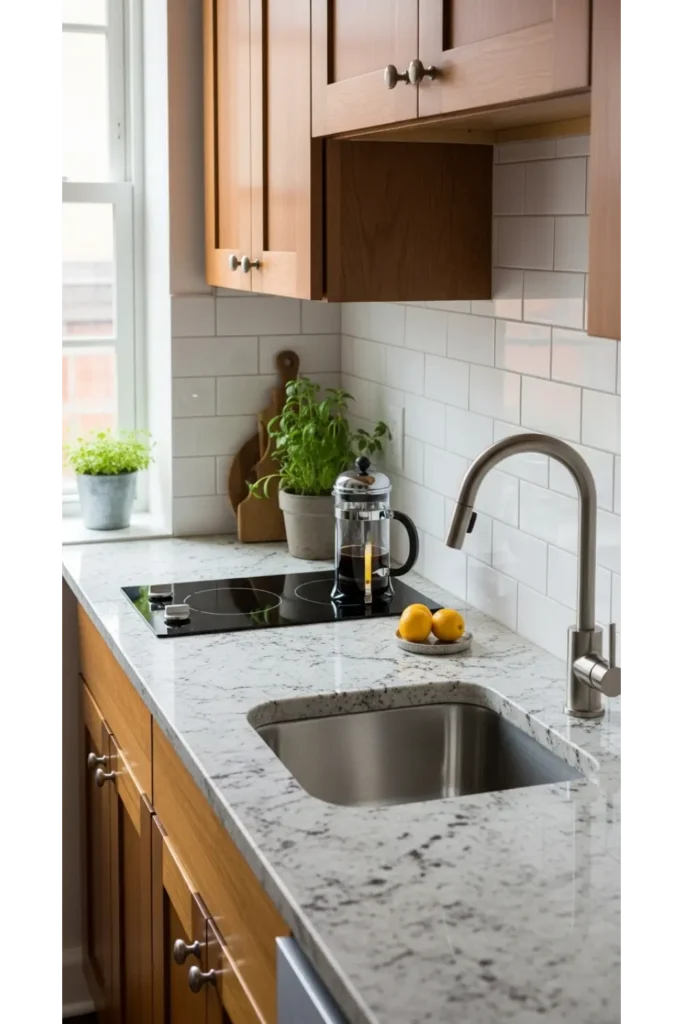
Standard countertops can overwhelm narrow kitchens. Shallow-depth counters reduce how far cabinetry extends into the room, instantly improving walking space. Even a few inches reclaimed can dramatically change how the kitchen feels during daily use. These counters still support essential prep tasks while allowing better flow between zones.
Improved circulation reduces frustration and makes the kitchen feel more comfortable for multiple users. When paired with compact appliances and smart storage, shallow counters strengthen maximize space efforts. This adjustment proves that thoughtful proportions matter as much as layout in effective small kitchen design inspirations.
21. Visually Anchored Backsplash Designs

A well-chosen backsplash can shift focus away from limited square footage. Instead of blending in, a visually anchored backsplash adds depth and personality to the kitchen. Texture, pattern, or subtle contrast draws the eye toward the wall, creating interest without introducing clutter. This technique works best when other surfaces remain simple.
By acting as a focal point, the backsplash brings structure to the room. It helps define the cooking area and adds character without crowding the layout. This approach aligns with small kitchen design inspirations that use visual hierarchy to make compact spaces feel intentional and well-designed.
22. Sliding Door Solutions for Better Flow
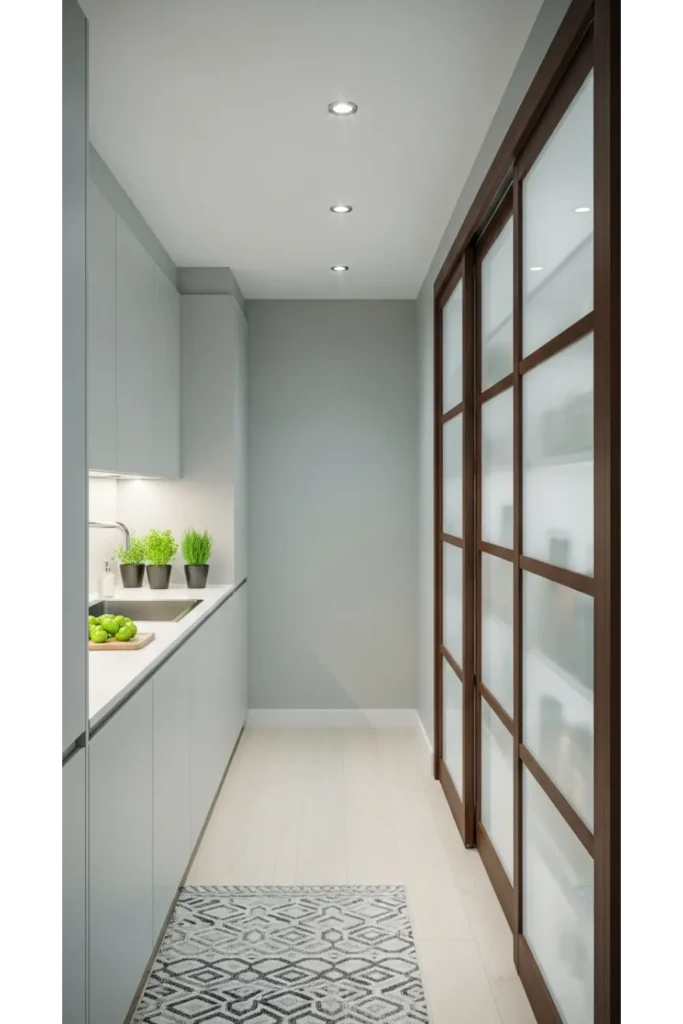
Traditional hinged doors require clearance that small kitchens often cannot spare. Sliding doors solve this issue by moving along the wall instead of into the room. They improve access to pantries, storage rooms, or adjacent spaces while keeping pathways open and functional.
Beyond saving space, sliding doors also enhance movement and comfort. They reduce congestion during busy moments and support smoother transitions between areas. This solution directly supports maximize space goals by eliminating wasted swing zones and improving the overall usability of a compact kitchen layout.
23. Unified Flooring for Seamless Expansion

Flooring plays a subtle but powerful role in how large a kitchen feels. Using the same flooring throughout connected spaces removes visual breaks that can shrink perception. When the kitchen floor flows into adjacent rooms, boundaries soften and the space feels more expansive.
This continuity enhances openness and supports modern living layouts. It also simplifies design decisions and improves visual balance. Consistent flooring reinforces small kitchen design strategies that rely on cohesion and flow, helping compact kitchens feel connected, spacious, and naturally integrated into the home.
Conclusion
Designing a small kitchen requires thoughtful choices that balance beauty and function. These small kitchen design inspirations show how smart layouts, storage solutions, and visual techniques help maximize space without compromise. By applying these ideas with intention, you can create a kitchen that feels open, efficient, and genuinely enjoyable to use every day.