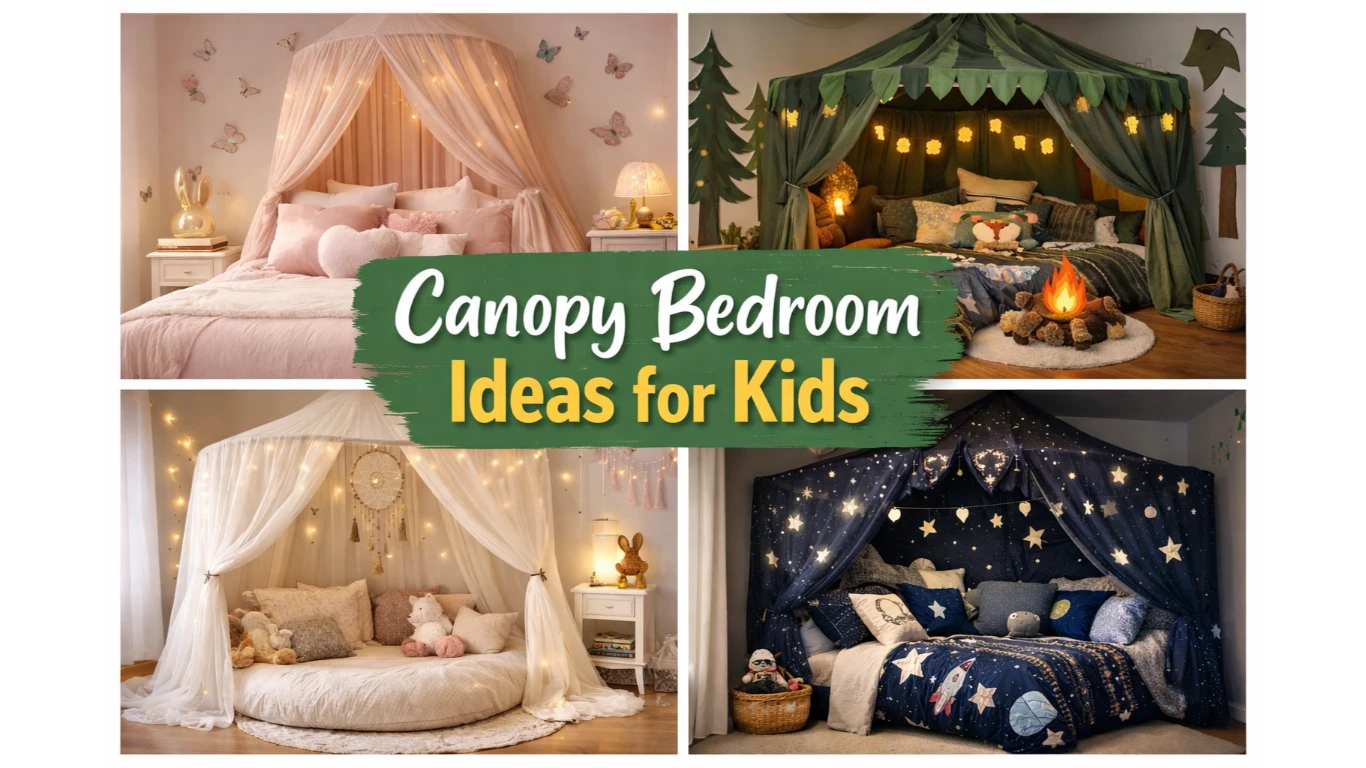
Canopy bedroom ideas for kids that balance safety, comfort, and imagination
Canopy bedroom ideas for kids work best when they respect how children actually live. A child’s bedroom is not only for sleep. It is also for reading, playing, calming down, and feeling safe. In family homes across Brooklyn, from Park Slope brownstones to apartments near Atlantic Avenue and Clinton Street, parents look for designs that grow with their children. A canopy bed can support that goal when planned with care.
A canopy creates a defined sleep space without closing a room off. For kids, that sense of enclosure often feels comforting. The key is choosing designs that feel light, flexible, and safe. When those elements come together, the bedroom feels calm at night and playful during the day.
Why canopy beds help children feel secure
Children respond strongly to spaces that feel defined. A canopy bed creates a clear boundary around sleep. That boundary helps kids relax, especially in busy households or apartments near louder streets like Flatbush Avenue. The frame signals that bedtime has a place and a rhythm.
Many parents near Prospect Park notice that kids settle faster when their bed feels protected. Even an open canopy frame can provide that comfort. It gives the child a sense of ownership over their sleep space without making the room feel closed or dark.
FAQ: Do canopy beds help kids sleep better?
Yes. A defined sleep area often helps children feel calmer at bedtime.
Safety as the foundation of kids canopy bedrooms
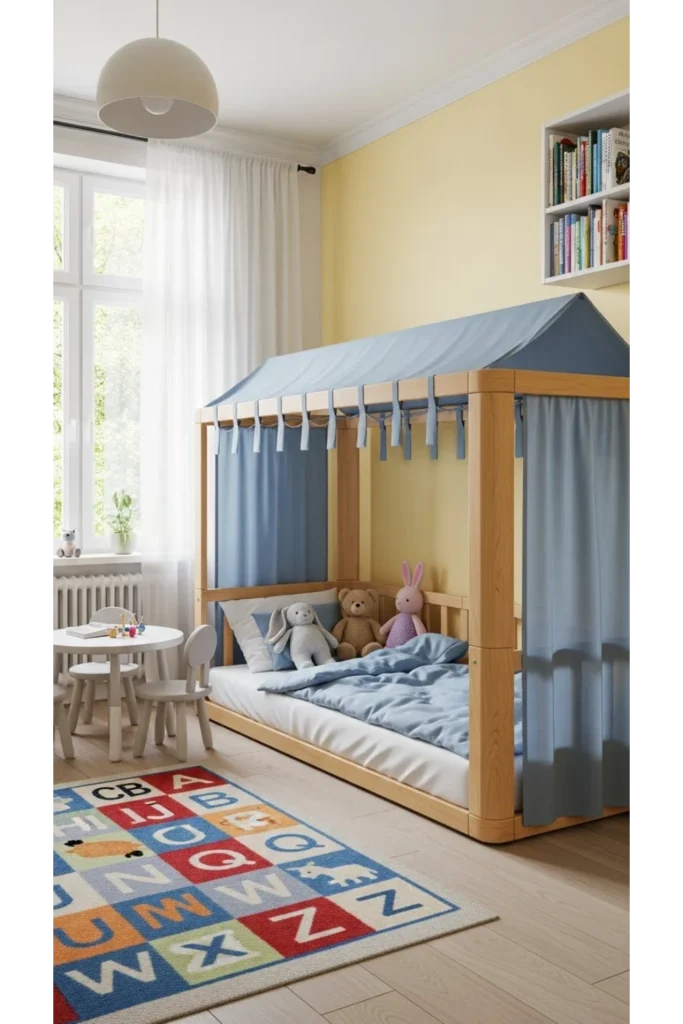
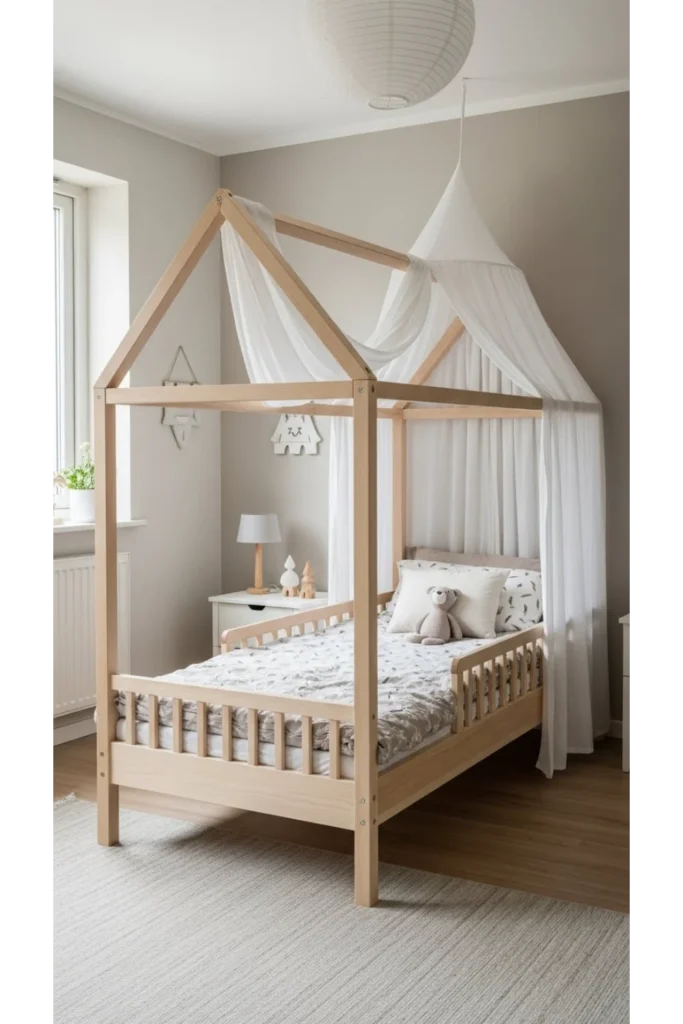
Safety must guide every design choice. A kids canopy bed should feel sturdy and stable. Frames need smooth edges and solid joints. Free standing frames work best because they do not rely on walls or ceilings.
Fabric choices matter. Lightweight cotton or linen works well. Panels should not reach the floor. Tie backs keep fabric away from faces and hands. In homes near Court Street, many parents choose open frames or very minimal fabric to keep airflow strong.
The bed height should match the child’s age. Younger children need lower beds. Older kids can handle taller frames when the structure stays secure. Explore more inspiring bedroom decor ideas in our complete style guide here.
FAQ: Are canopy beds safe for young children?
Yes. Use low beds, light fabric, and secure frames.
Choosing the right canopy frame for kids
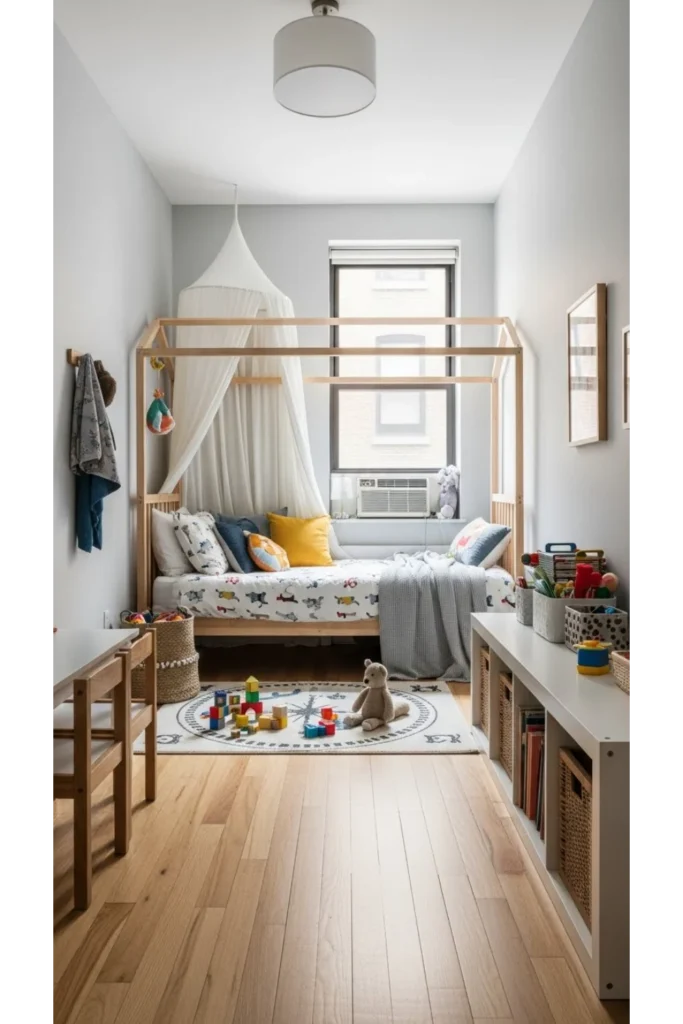
The frame sets the tone for the room. Simple frames work best for children. Metal frames offer durability and clean lines. Wood frames feel warm and familiar but should stay smooth and sealed. Neutral colors help the room adapt over time.
White, light wood, or soft gray frames allow bedding and decor to change as kids grow. In apartments near Fulton Street, parents often choose frames that assemble easily inside small rooms. Avoid ornate designs. Kids climb and move. Simple shapes reduce risk and age better.
Layout planning that leaves room to play
Layout matters as much as the bed itself. The canopy bed should not dominate the room. Place it so there is still open floor space for play. In narrow rooms near Nostrand Avenue, placing the bed along the longest wall often works best.
Clear pathways help kids move safely. Keep the bed away from windows when possible to reduce drafts and street noise. A good layout supports both sleep and play without conflict.
FAQ: Should a canopy bed be centered in a kids room?
Yes. Centering improves balance and access.
Fabric choices that support comfort and hygiene
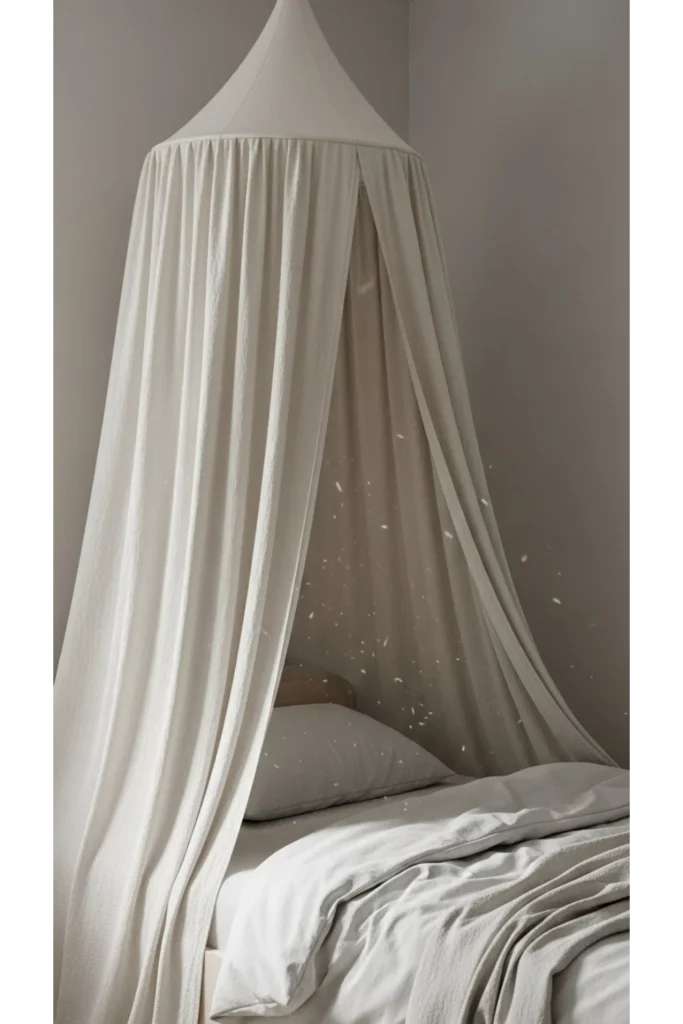
Fabric adds softness but should stay practical. Cotton and linen breathe well and wash easily. Avoid synthetic blends that trap heat and dust. In homes near the East River, breathable fabric helps manage humidity.
Light colors work best. White, cream, or pale tones reflect light and feel calm. Fabric should feel optional, not overwhelming. Many parents use fabric only at the head of the bed to create comfort without clutter. Regular washing keeps the space healthy and fresh.
Color choices that calm rather than overstimulate
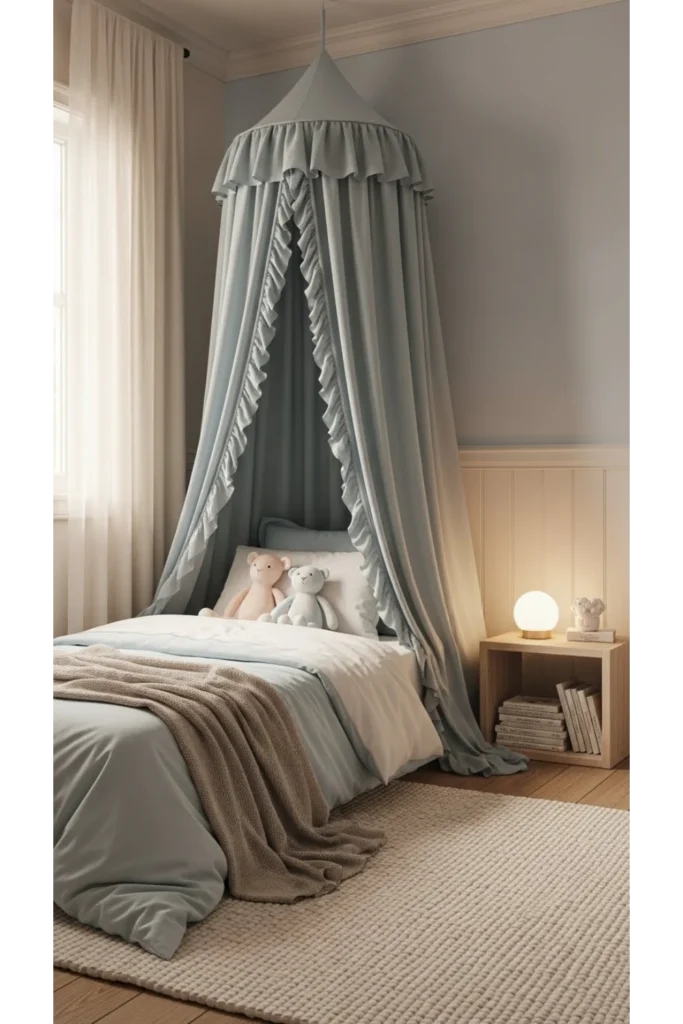
Color influences mood. For kids, softer tones support rest better than bright shades. Pastels, muted greens, soft blues, and warm neutrals feel gentle at night.
Use stronger colors in small accents like bedding or wall art. Avoid intense colors near the bed. Bedrooms near tree lined streets in Carroll Gardens often use nature inspired palettes that feel grounded and soothing. Color should support sleep first, then personality.
FAQ: What colors help kids relax at night?
Soft blues, greens, and warm neutrals help most children.
Lighting that supports bedtime routines
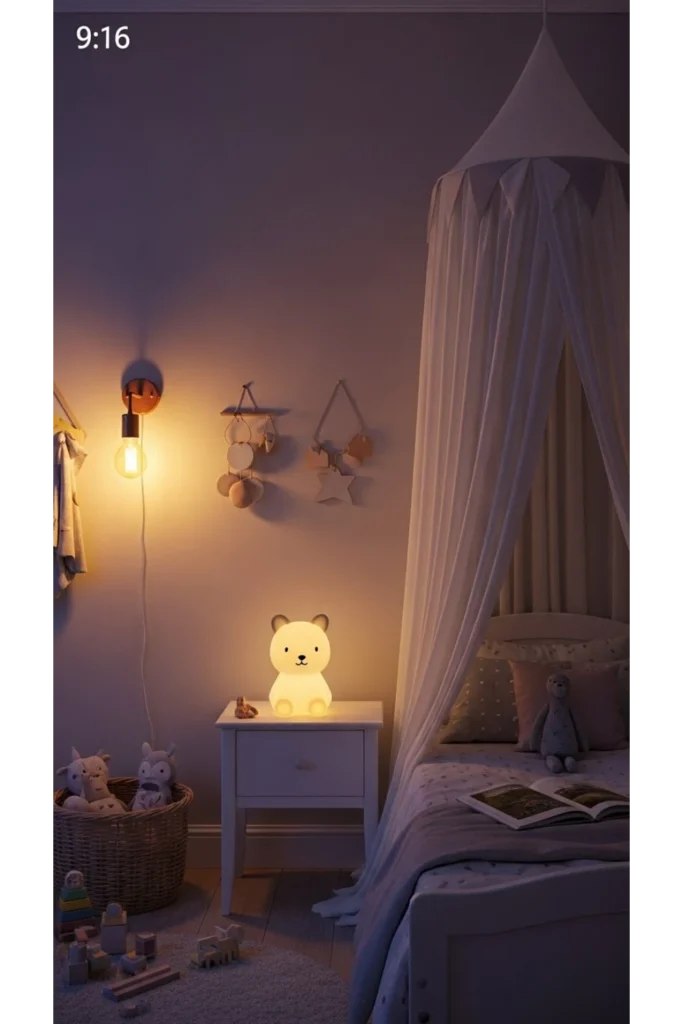
Lighting plays a big role in kids bedrooms. Harsh overhead lights make it harder to wind down. Soft, warm light works better. Wall mounted lamps or sconces placed out of reach provide gentle light for reading.
Night lights can help younger children feel secure. Choose warm bulbs only. Cool light can disrupt sleep patterns. In homes near the Brooklyn Heights Promenade, many families rely on layered lighting to create calm evenings. Lighting should feel predictable and gentle.
Bedding that supports sleep and movement
Kids move a lot in their sleep. Bedding should feel soft and breathable. Cotton sheets work well year round. Keep layers simple. One blanket and one comforter usually suffice.
Avoid too many pillows. Children need space to move safely. Bedding should feel familiar and comfortable rather than decorative. Canopy bedroom ideas for kids work best when bedding supports rest, not display.
Canopy bedroom ideas for toddlers
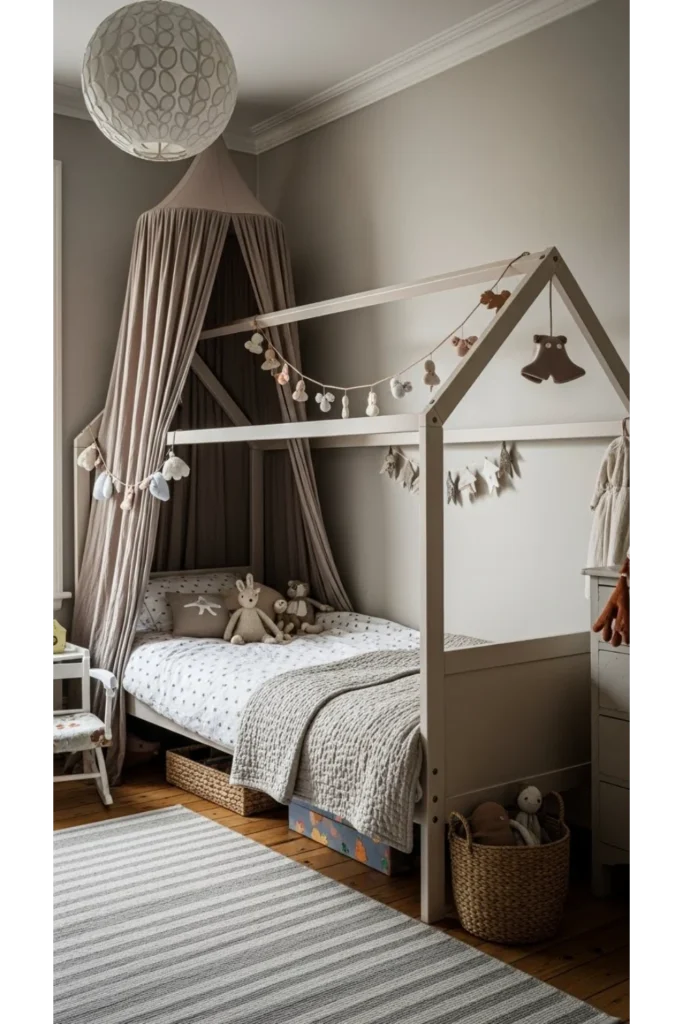
Toddlers need extra care. Low beds work best. Floor beds with light canopy frames offer comfort without risk. Open designs keep visibility clear for parents. Fabric should stay minimal or absent. Secure the frame well. Keep toys away from the sleeping area to prevent distraction. Families near Myrtle Avenue often choose very simple canopy setups for toddlers that focus on safety and routine.
FAQ: Are canopies safe for toddlers?
Yes. Use low beds and open designs only.
Canopy bedroom ideas for school age kids
School age children enjoy having a space that feels personal. A canopy bed can become a reading nook or quiet corner. Let kids choose bedding or small decor items while keeping the frame neutral. Storage nearby helps keep the room organized. Shelves for books and bins for toys support independence. This age benefits from structure and flexibility at the same time.
Shared bedrooms and canopy beds
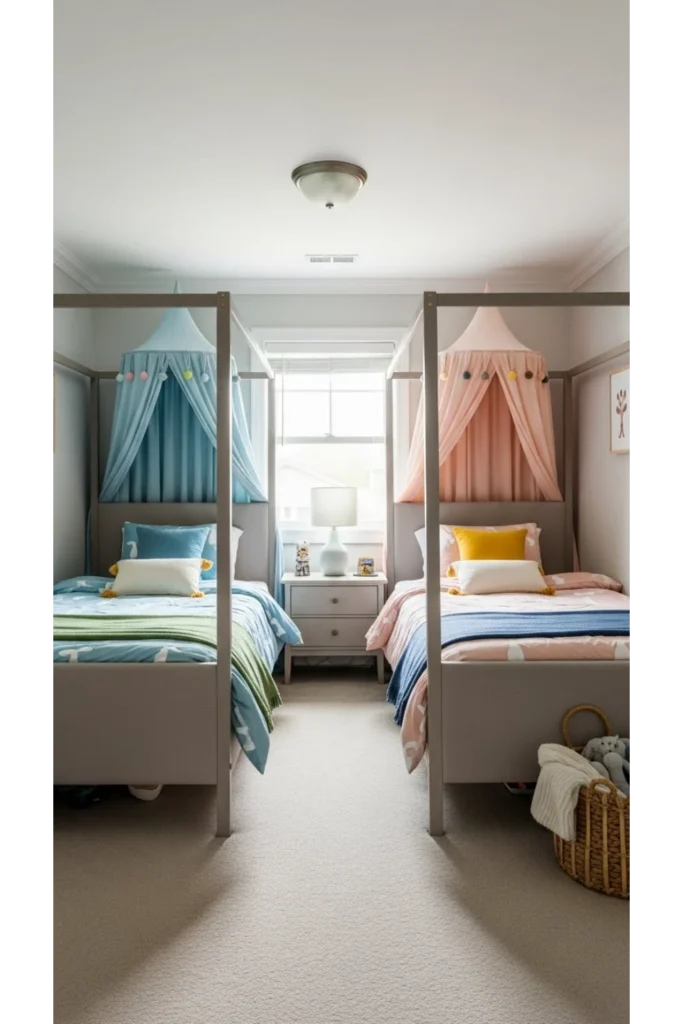
Shared rooms bring challenges. Canopy beds help define personal zones. Matching frames create balance, while different bedding colors allow individuality. Symmetrical layouts reduce conflict. Each child gets their own defined sleep space. In shared rooms near Clinton Avenue, this approach often improves harmony.
FAQ: Can canopy beds work in shared kids rooms?
Yes. They help define personal sleep spaces.
Professional insight on kids bedroom design
Design professionals emphasize safety and routine in children’s spaces. Guidance aligned with the American Society of Interior Designers supports calm layouts, soft lighting, and clear sleep zones. Canopy beds can support these goals when designed simply. Professionals also stress adaptability. Children grow fast. Bedrooms should change without major redesign.
Seasonal changes and kids canopy bedrooms
Seasonal comfort matters. In summer, use lighter bedding and remove extra layers. In winter, add warmth with blankets rather than heavy fabric near faces. Wash canopy fabric more often during allergy seasons. Homes near busy roads benefit from regular cleaning to reduce dust. Seasonal updates should feel small and manageable.
Common mistakes parents should avoid
Heavy fabric can trap heat. Tall frames pose risks for young children. Over decorating distracts from sleep. Ignoring layout reduces play space. Canopy bedroom ideas for kids succeed when safety and simplicity lead every decision.
FAQ: What is the biggest mistake with kids canopy beds?
Choosing style over safety and function.
Canopy bedroom ideas for kids that grow over time
The best kids bedrooms evolve. Simple canopy beds adapt as children grow. What feels magical at age four can feel calming at age ten with small changes. Homes near Prospect Park South often show this balance well.
Neutral frames, soft light, and flexible decor create rooms that grow with the child. A canopy bed becomes more than furniture. It becomes a familiar place of comfort, routine, and imagination.