23 Dining Nook Ideas | Maximize Small Spaces
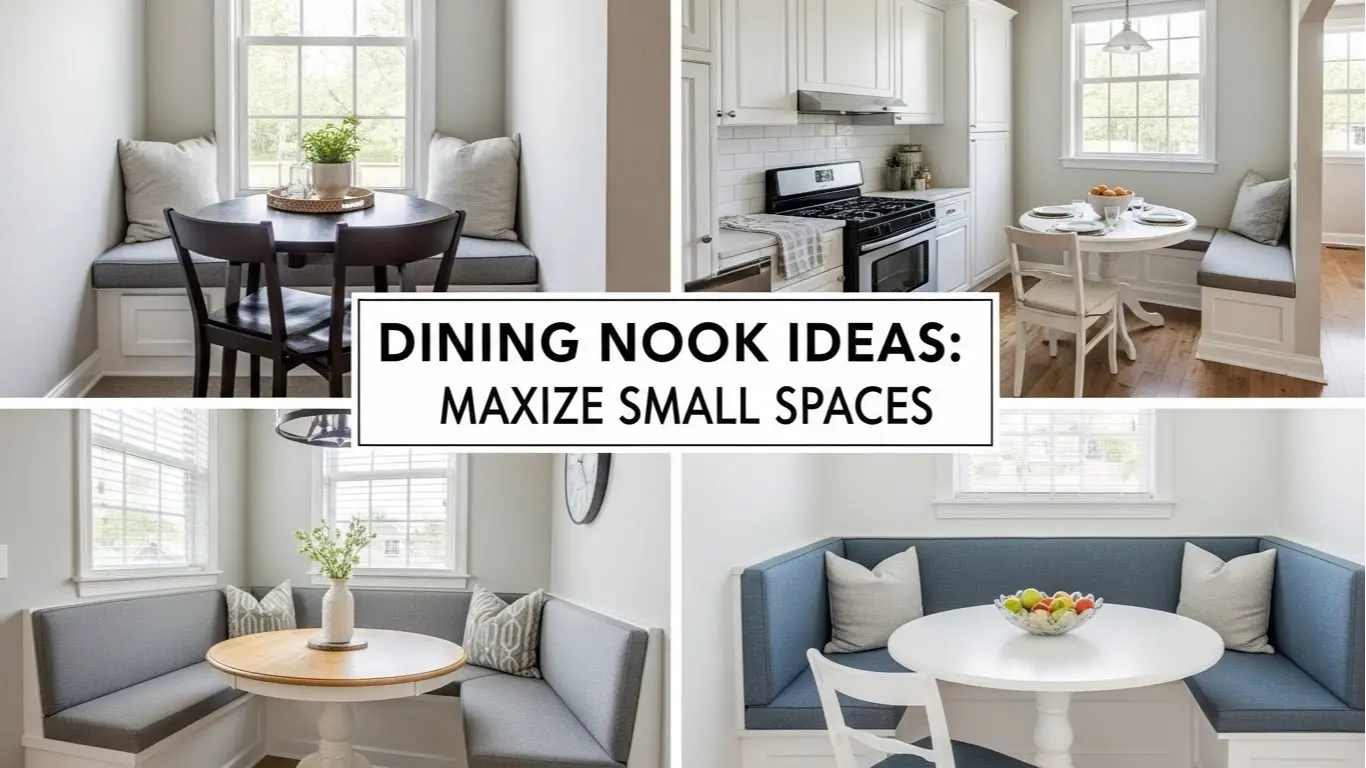
1: Built In Corner Banquette

A built in corner banquette transforms unused corners into purposeful dining zones. By following the wall lines, this layout frees up floor space while keeping the area visually grounded. It works especially well in small apartments where every inch matters. The built in look makes the dining nook feel intentional rather than added later, which helps the entire room feel more cohesive. Discover even more beautiful dining room decor inspiration in our full collection here.
Storage beneath the seating adds serious value in compact homes. Lift up benches or hidden drawers can hold linens, cookware, or pantry extras. Pair the seating with a small round or pedestal table to improve movement. With proper lighting and comfortable cushions, this nook becomes a daily gathering spot that balances function and comfort.
2: Window Seat Dining Nook
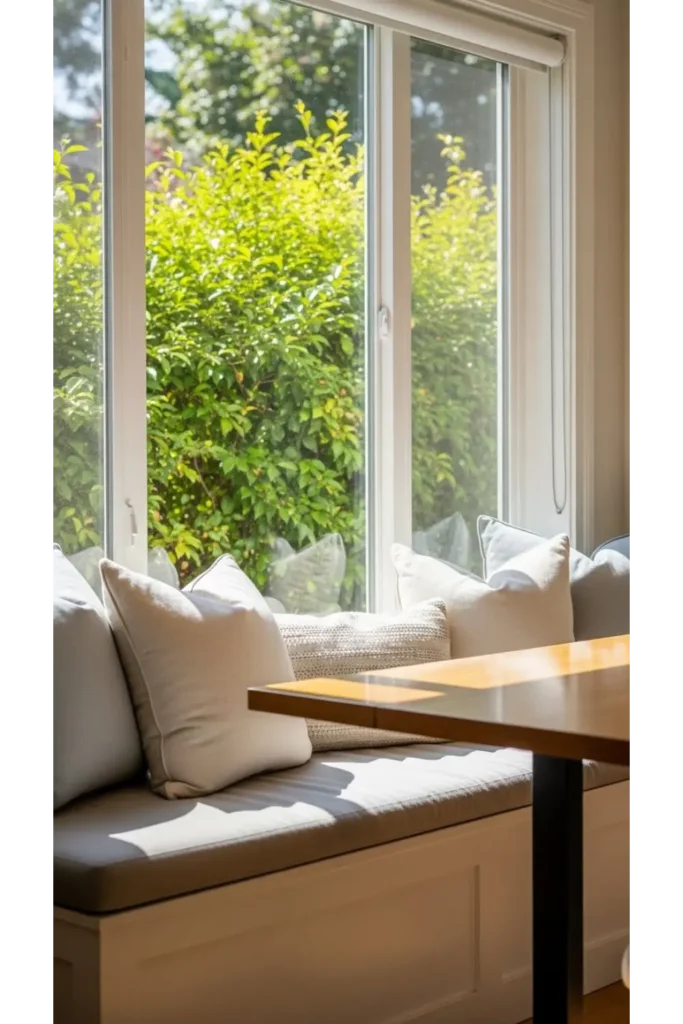
A window seat dining nook takes advantage of natural light to make small spaces feel larger. Positioning seating beneath a window draws the eye outward, creating depth and openness. This setup works well in kitchens or dining corners that lack width. The built in bench keeps the footprint tight while maintaining comfort for everyday meals.
Choosing light fabrics and simple finishes helps the nook blend into the surrounding space. The outdoor view replaces the need for heavy decor, keeping the area uncluttered. This dining nook feels relaxed and welcoming, making it ideal for morning coffee, casual meals, or quiet work moments.
3: Round Pedestal Table Nook
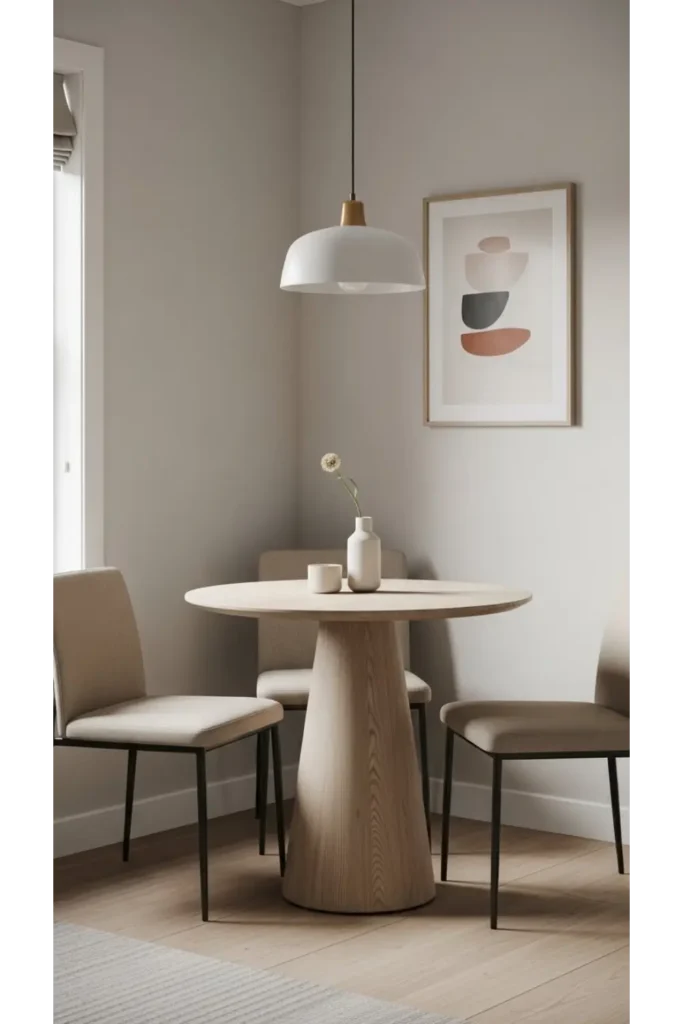
A round pedestal table suits small dining nooks because it improves flow and eliminates sharp corners. The single base allows chairs to tuck in fully, reducing visual clutter. This shape works especially well in tight layouts where movement matters more than seating capacity.
Pair the table with lightweight chairs or a bench on one side to save space. A simple rug beneath can define the nook without overwhelming it. This solution feels flexible and timeless, making it easy to adapt as layouts or needs change.
4: Wall Mounted Drop Leaf Table
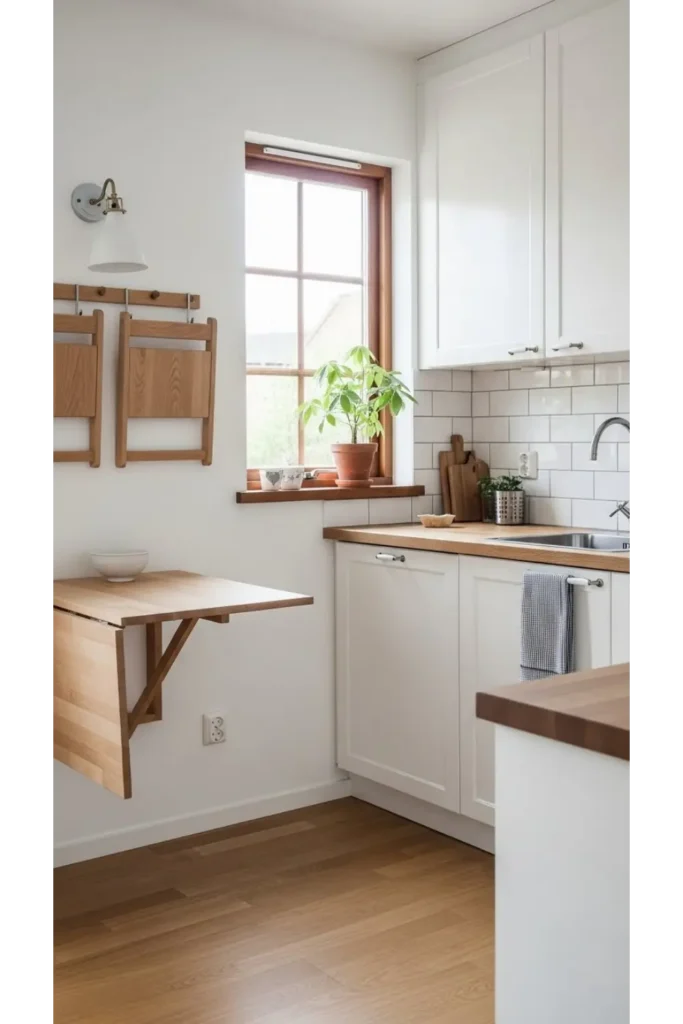
A wall mounted drop leaf table offers flexibility that small homes need. When folded down, it keeps walkways open and the room uncluttered. When opened, it provides enough surface area for meals without dominating the space. This makes it ideal for studio apartments and narrow kitchens.
Pairing the table with folding or stackable chairs improves usability. Choosing a finish that matches the wall helps the table visually disappear when not in use. This dining nook supports daily living while allowing the space to shift easily throughout the day.
5: Bench and Chair Combination
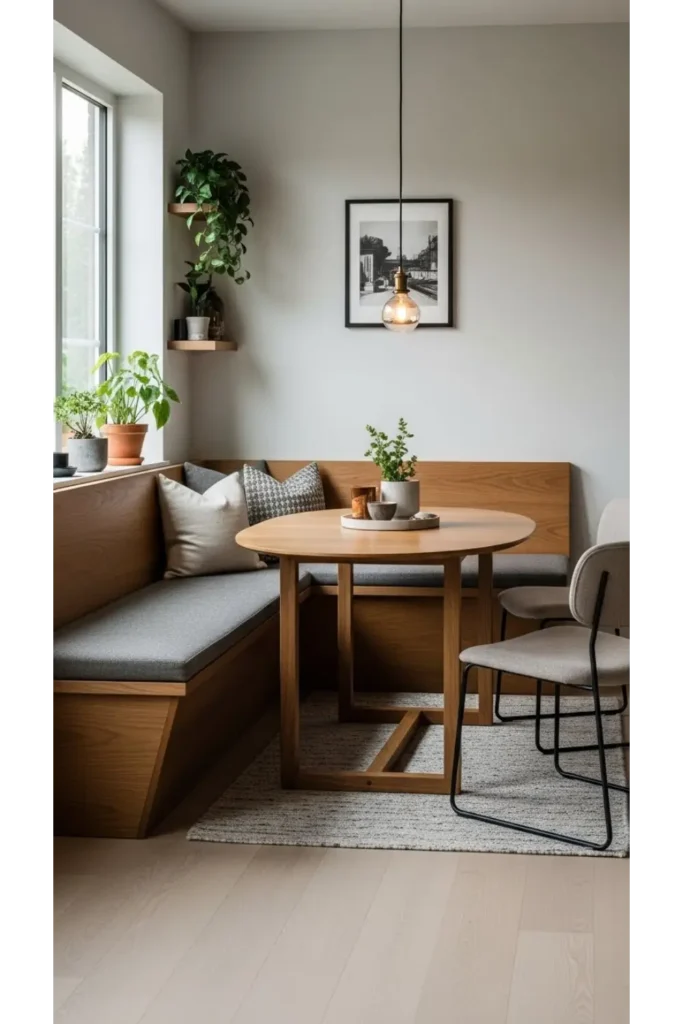
Using a bench on one side and chairs on the other maximizes seating without crowding the room. A bench slides neatly under the table, saving floor space and keeping the area visually clean. This layout works well along walls or in shallow corners.
The mix of seating styles adds interest while staying practical. Cushions improve comfort without adding bulk. This dining nook feels casual and inviting, perfect for everyday meals and relaxed gatherings.
Creative Layouts for Compact Homes
6: Galley Kitchen Dining Nook
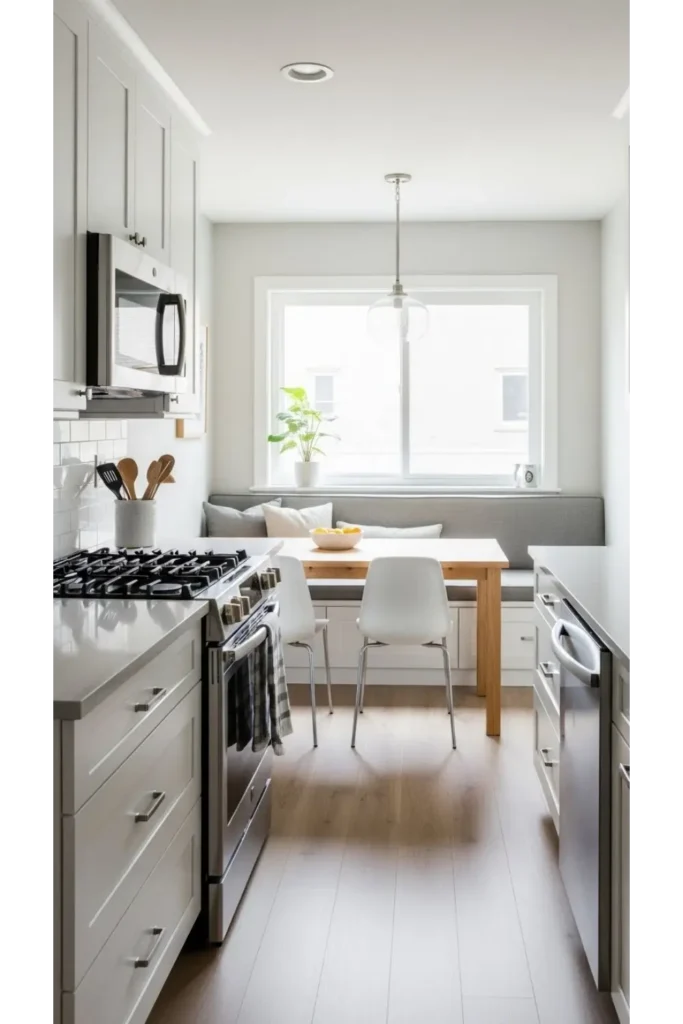
A dining nook at the end of a galley kitchen uses space that often goes unused. A shallow table and built in seating maintain clear movement while adding function. This placement creates a natural transition between cooking and living areas.
Light colors and reflective finishes help prevent the space from feeling tight. Open shelving above the bench can add storage without heaviness. This kitchen layout design improves efficiency while keeping the kitchen comfortable and inviting.
7: Floating Shelf Table

A floating shelf table creates a dining nook without legs, keeping the floor visually open. This works best for one or two people in very small homes. It supports casual dining while maintaining a clean, modern look.
Strong wall support and durable materials are essential for safety. Stools that tuck completely underneath maintain clarity. This solution fits minimalist interiors where function and simplicity matter most.
8: Bay Window Dining Area
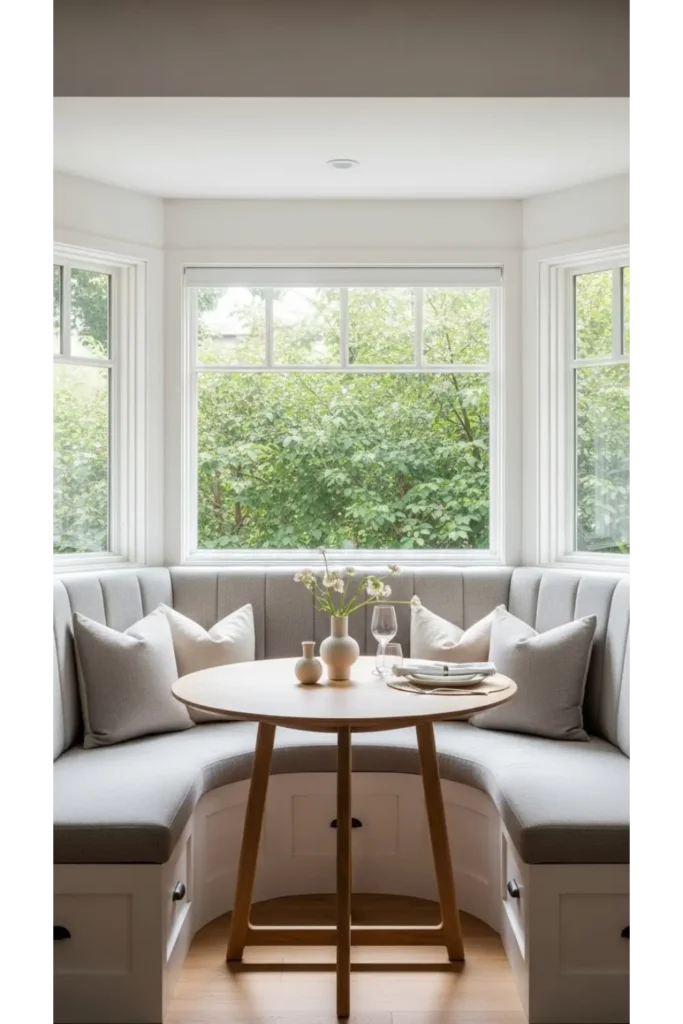
A bay window naturally forms an alcove that works perfectly as a dining nook. Placing a table within the curve uses space that might otherwise sit unused. Built in seating follows the window shape and adds architectural interest.
The abundance of daylight makes the nook feel open and cheerful. Simple textiles and a compact table keep the focus on the view. This setup adds charm while maximizing usable space.
9: Breakfast Bar Nook
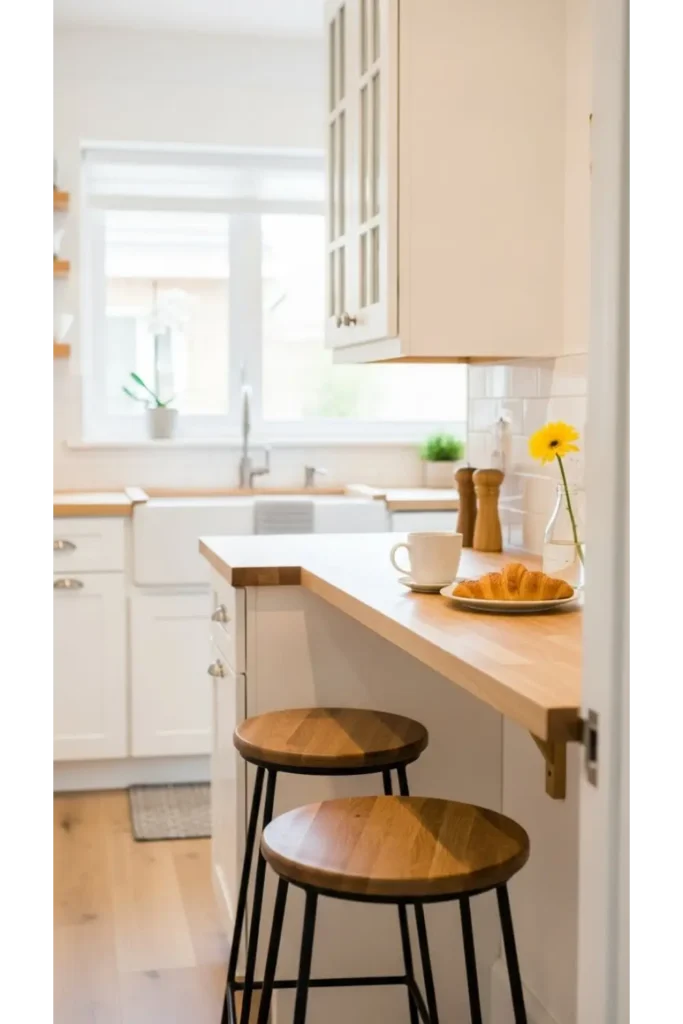
A breakfast bar dining nook blends seamlessly into the kitchen and saves space. It requires less room than a traditional table and supports quick meals or casual dining. This layout works especially well in open floor plans.
Backless stools that slide fully under the counter help maintain clear walkways. Keeping the counter depth modest ensures comfort without bulk. This nook supports modern lifestyles and social interaction.
10: Convertible Coffee Table Dining

A convertible coffee table adapts to changing needs throughout the day. When raised, it serves as a dining surface. When lowered, it functions as a standard coffee table, saving space in small homes.
Models with built in storage add extra value. Lightweight seating keeps the setup flexible. This solution works well in studio apartments where furniture must serve multiple purposes.
Style Focused Dining Nooks for Small Spaces
11: Minimal Scandinavian Nook
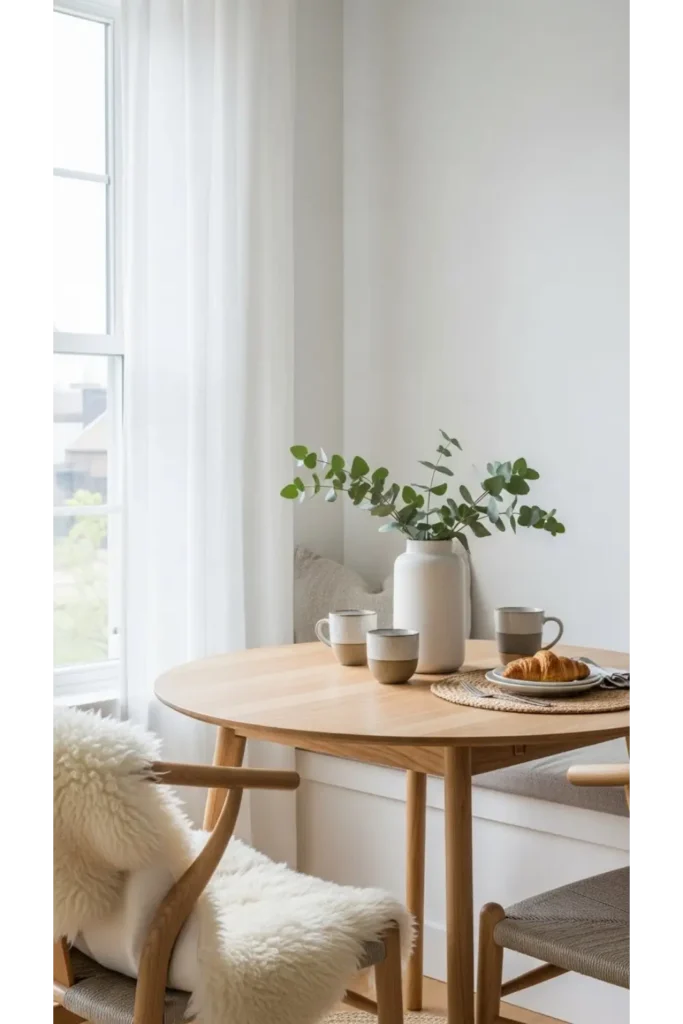
A Scandinavian dining nook emphasizes simplicity, light, and function. Pale woods and neutral tones help the space feel airy and calm. Clean lines prevent visual clutter, which is essential in small homes.
Minimal decor and warm lighting create comfort without distraction. This style supports relaxed dining while maximizing limited square footage.
12: Industrial Wall Nook
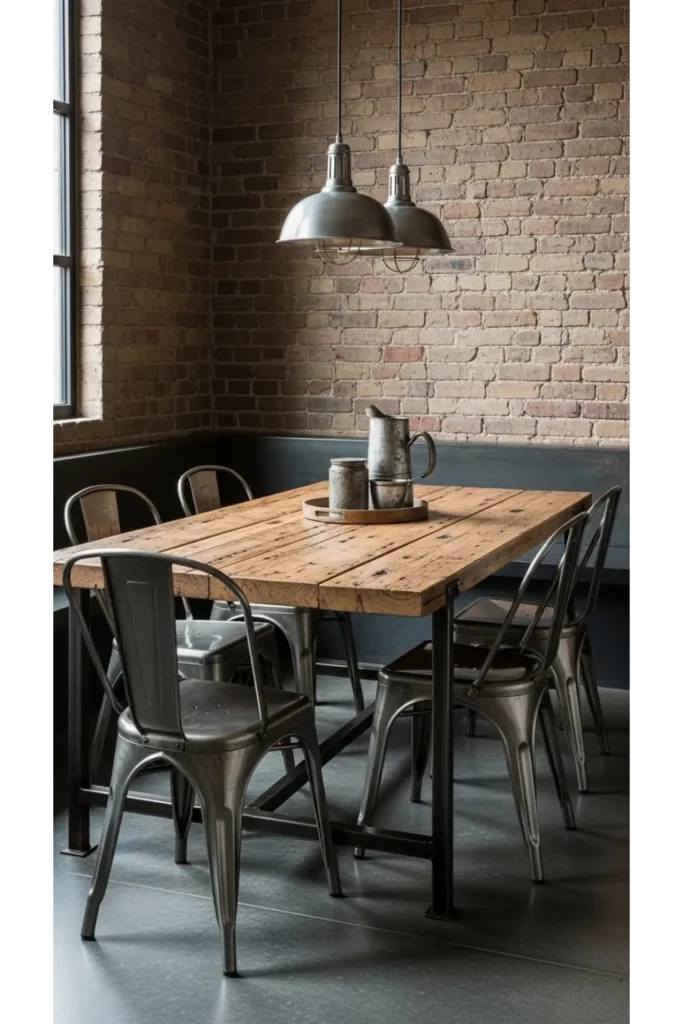
An industrial dining nook uses texture and contrast to define a small area. A narrow table against a feature wall adds character without taking up much space. Metal seating keeps the footprint slim.
Warm lighting balances the raw materials and keeps the nook inviting. This setup works well in urban apartments with architectural detail.
13: Rustic Farmhouse Corner
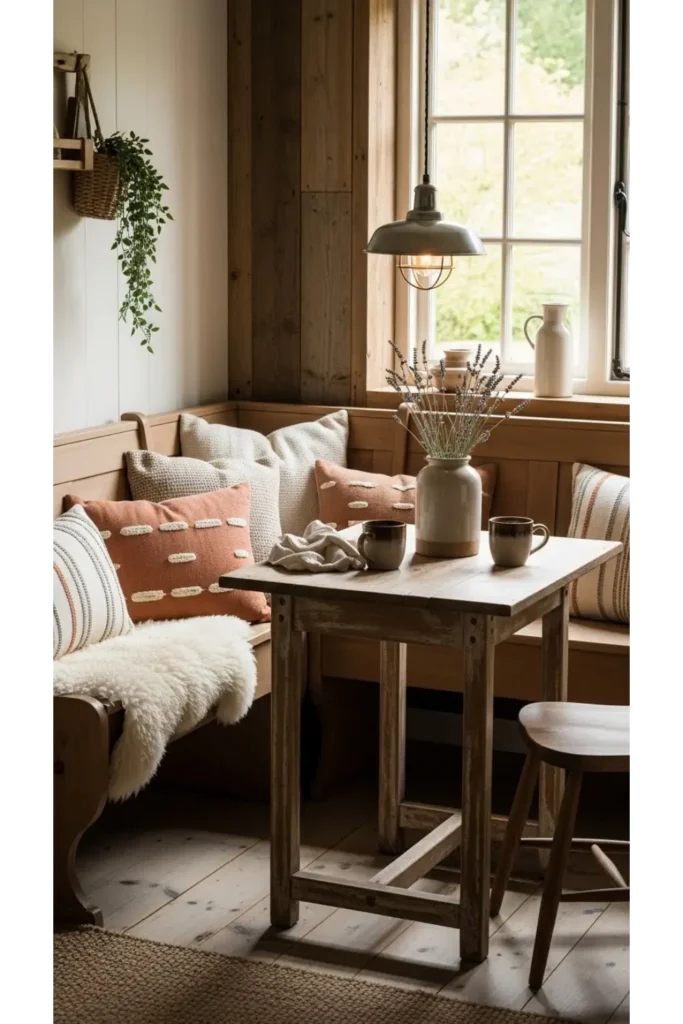
A rustic farmhouse dining nook brings warmth and comfort into small homes without overwhelming the space. Natural wood finishes, simple construction, and soft textures create a relaxed atmosphere that feels welcoming every day. A corner bench anchors the nook while allowing the table to sit closer to the wall, which helps preserve open floor space.
Comfort plays a key role in this setup, especially for daily use. Cushioned seating, woven textiles, and subtle decor details add softness without cluttering the area. This style, with its classic design elements, works well for families and casual dining, offering a timeless look that stays functional even as the home layout evolves.
14: Modern Glass Table Nook
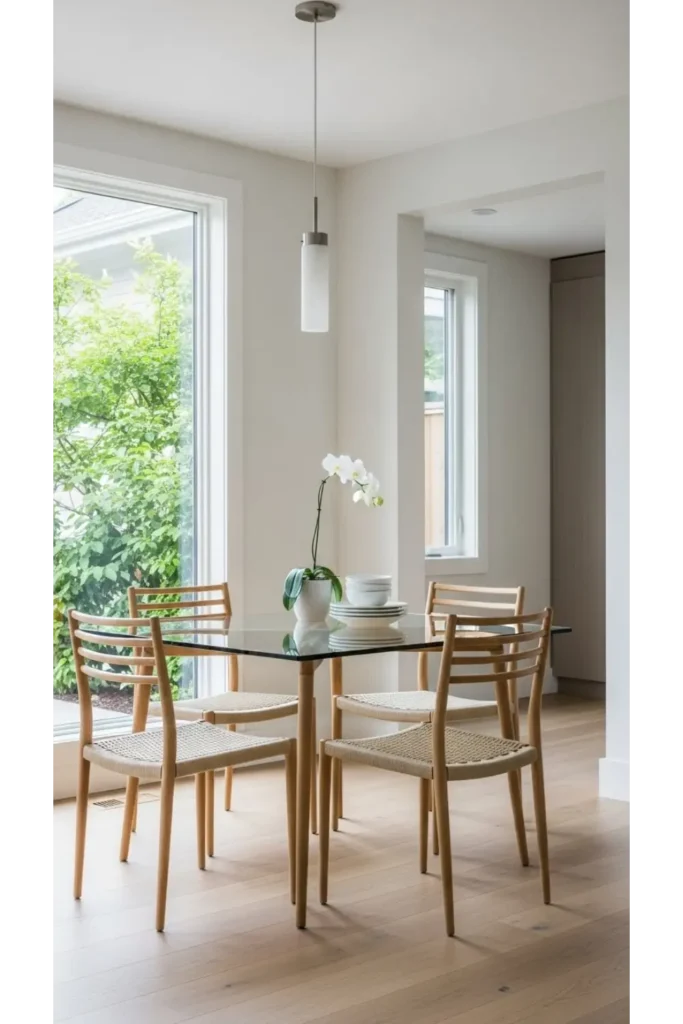
A modern glass table dining nook visually expands small spaces by allowing light to pass through freely. The transparent surface reduces visual weight, helping the dining area blend seamlessly into the surrounding room. This makes it an excellent choice for apartments where openness and flow matter most.
Slim chairs with clean profiles keep the setup balanced and uncluttered. Keeping accessories minimal ensures the nook feels intentional rather than busy. This dining solution supports modern interiors while maintaining comfort and practicality for everyday meals.
15: Built In Shelf Seating
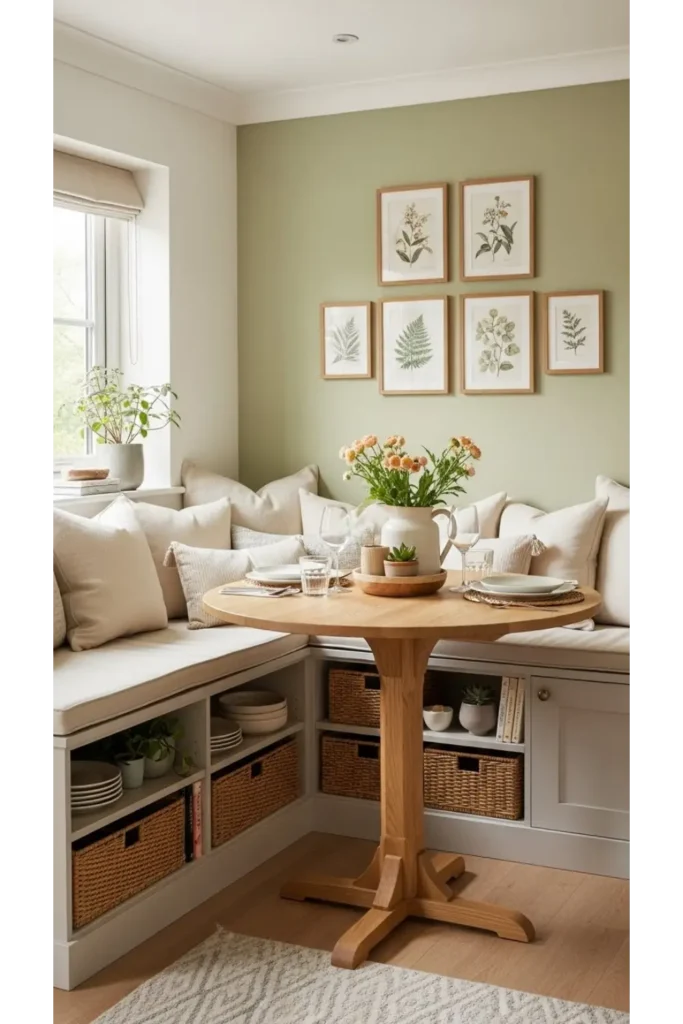
Built in shelf seating transforms a dining nook into a multifunctional space that supports both seating and storage. By using shelving as a base, the design maximizes every inch without adding extra furniture. Cushions soften the structure, making the nook comfortable for daily dining.
Storage below the seating keeps essentials close while maintaining a clean look. Books, dishware, or baskets stay accessible but visually contained. This approach works best in custom layouts where efficiency and organization are equally important.
16: Two Seat Bistro Nook
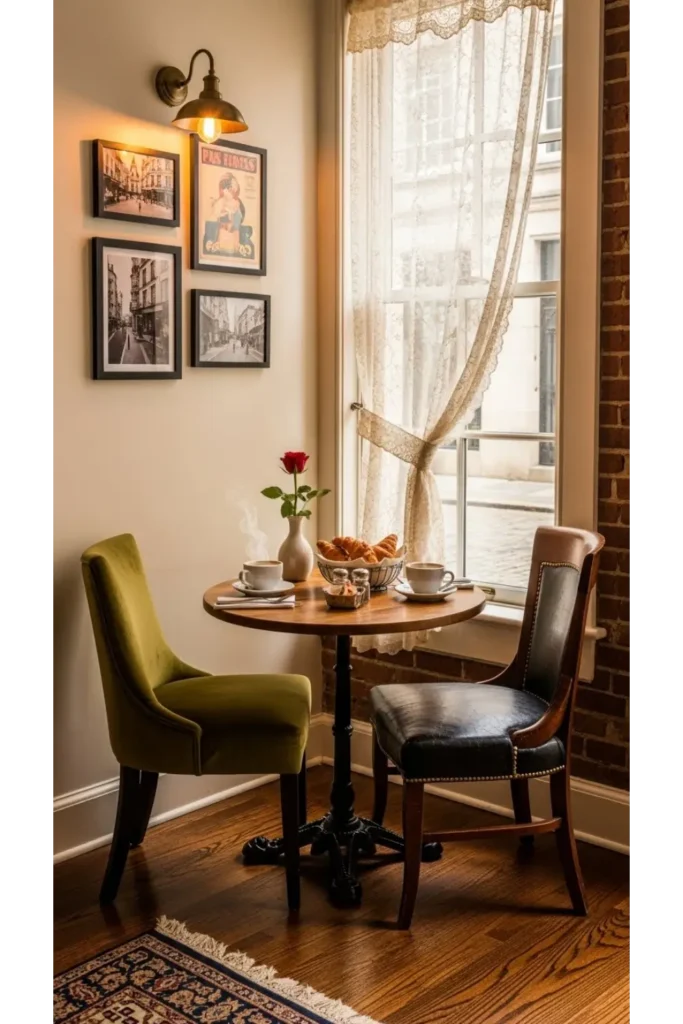
A two seat bistro dining nook fits easily into small corners while offering an intimate dining experience. The compact table size keeps the footprint light, making the nook feel flexible rather than fixed. This setup works well in kitchens or open living areas.
Slim or foldable chairs improve movement and make the space easy to adjust when needed. The simplicity of this layout keeps it practical for everyday meals while adding charm inspired by café style dining.
17: Under Stair Dining Nook
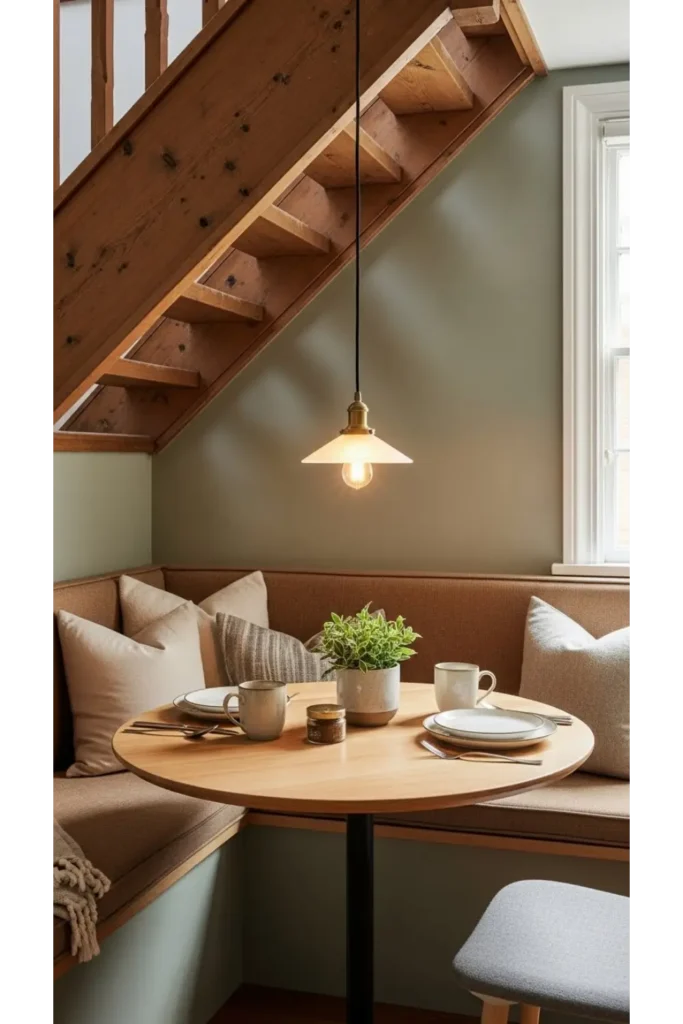
The area beneath a staircase often remains unused, yet it provides an excellent opportunity for a compact dining nook. Built in seating adapts to the angled ceiling, turning an awkward space into a functional dining zone without expanding the footprint.
Lighting plays an important role in keeping the nook comfortable and inviting. Wall lights or soft overhead fixtures prevent the space from feeling closed in. This solution adds character while solving common small space challenges.
18: Wall Facing Table Setup
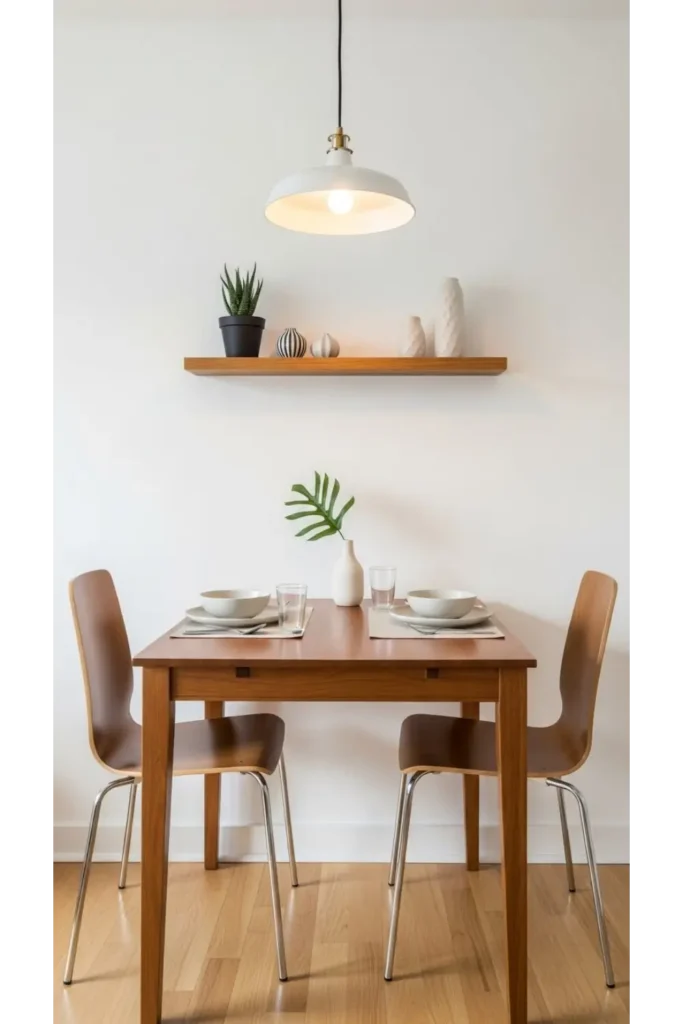
A wall facing dining table setup improves efficiency in narrow rooms where space feels limited. Placing the table directly against the wall keeps walkways clear and allows the dining area to exist without disrupting movement through the room.
Adding artwork or floating shelves above the table gives the nook a finished look. Proper lighting helps define the dining zone and enhances comfort. This setup feels simple but intentional, making it ideal for small apartments.
19: Multi Use Dining Desk
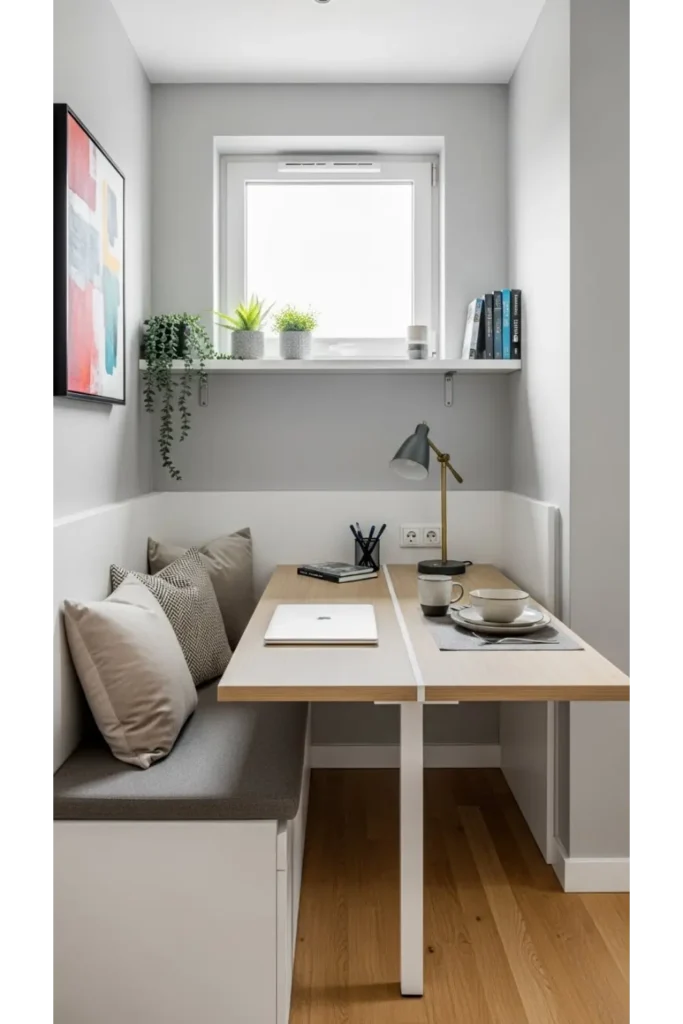
A multi use dining desk supports both eating and working in one compact footprint. This layout suits small homes where flexibility is essential and separate rooms are not possible. The table design should feel comfortable for both purposes.
Nearby storage helps keep transitions smooth between meals and work. Adjustable lighting allows the space to shift easily throughout the day. When designed thoughtfully, this nook feels efficient rather than compromised.
20: Corner Café Booth
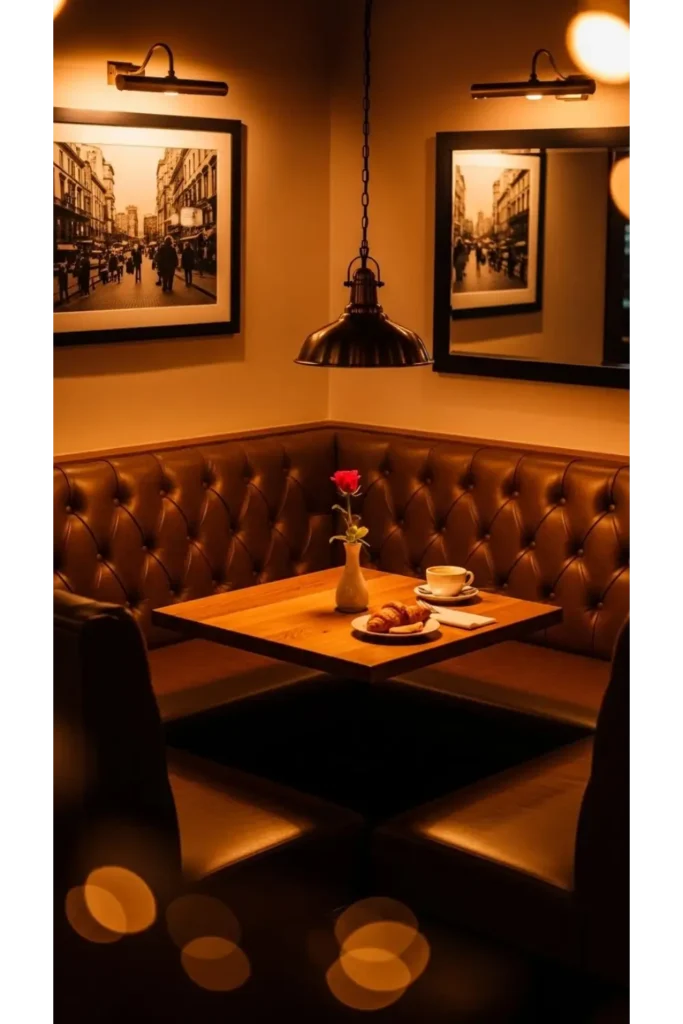
A corner café booth turns a small corner into a social dining space that feels cozy and inviting. Upholstered benches fit snugly against the walls, allowing more seating without crowding the floor. This layout encourages relaxed meals and conversation.
Durable fabrics ensure the booth works well for daily use. Rounded tables improve movement and safety in tight areas. This dining nook adds personality while remaining practical for everyday living.
21: Floating Bench Nook
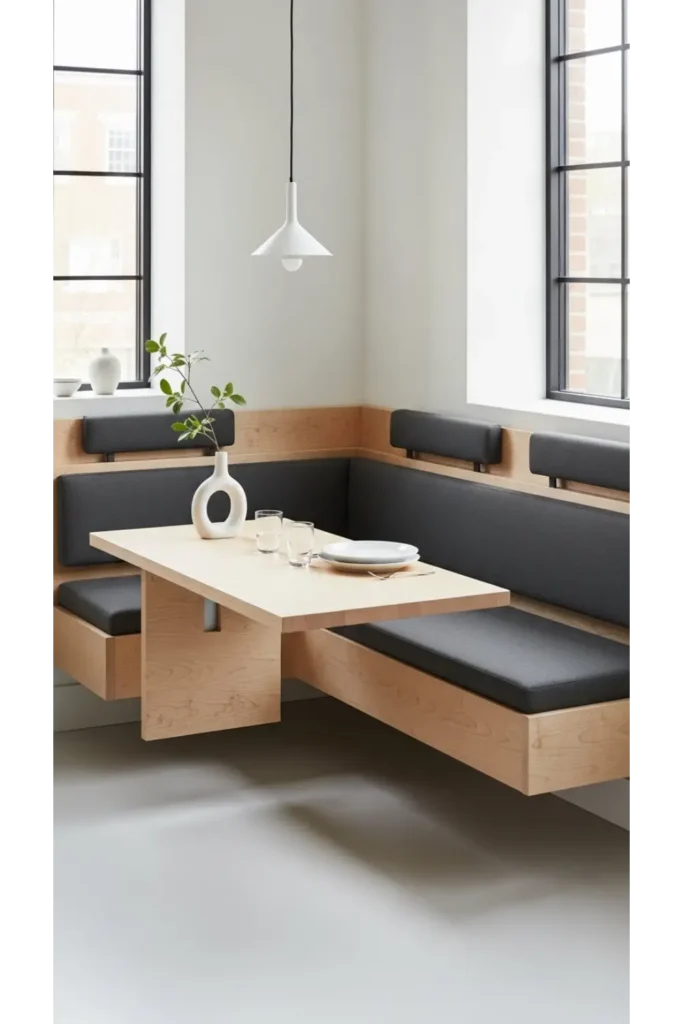
A floating bench dining nook keeps the floor visible, which helps small spaces feel open and airy. Wall mounted seating reduces visual bulk while maintaining comfort. This design works well in modern interiors where clean lines matter.
Secure installation ensures safety and long term use. Cushions add warmth without increasing the footprint. This nook balances style and function while supporting efficient layouts.
22: Kitchen Island Nook
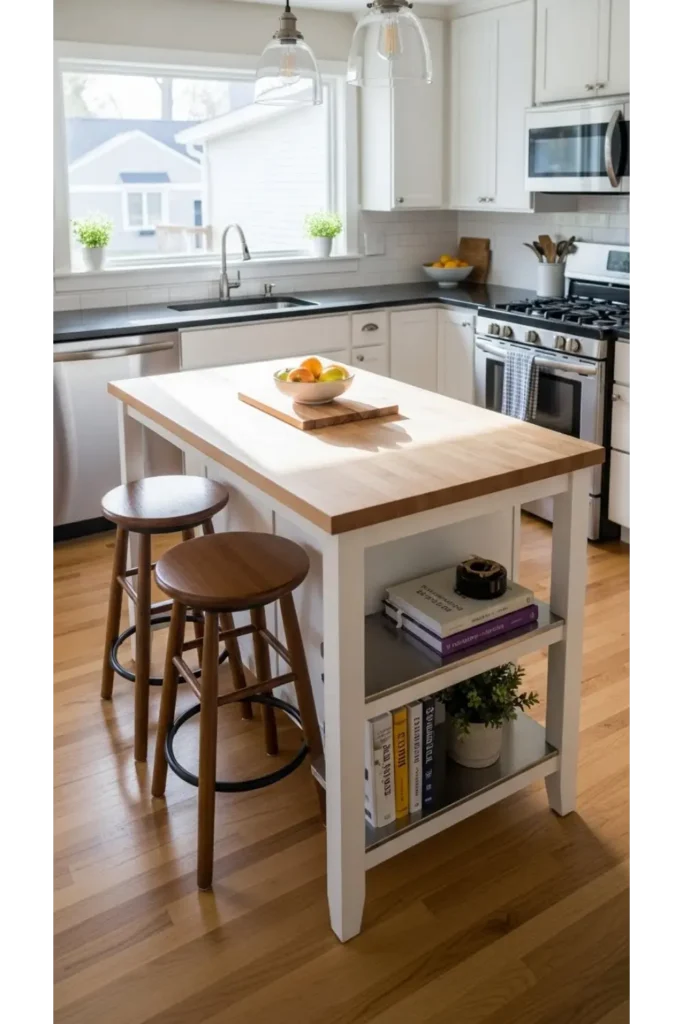
A kitchen island dining nook combines food preparation and dining into one efficient zone. Even a narrow island can support casual meals without interrupting the kitchen workflow. This setup works well in open plan layouts. Don’t miss our complete dining room decor guide packed with stylish inspiration.
Backless stools that tuck completely under the island help maintain visual balance. Keeping the island proportional prevents the space from feeling crowded. This solution supports everyday routines and social interaction.
23: Fold Away Dining Nook
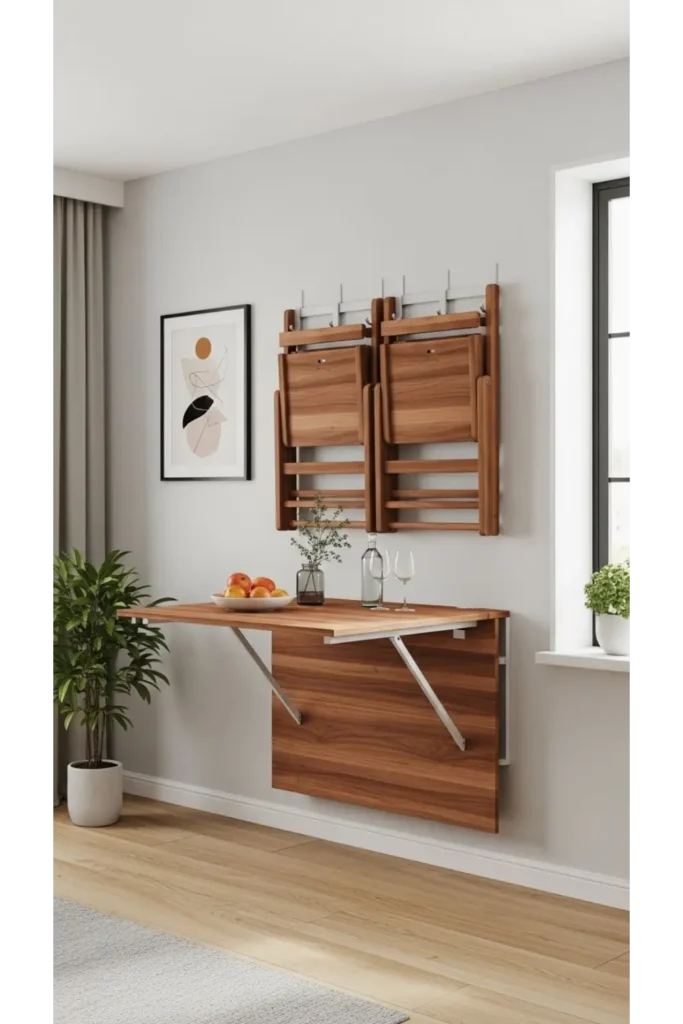
A fold away dining nook offers maximum flexibility in very small homes. When not in use, the table and chairs fold flat against the wall, freeing valuable floor space for other activities throughout the day.
High quality hardware ensures smooth operation and durability. Neutral finishes help the nook blend naturally into the wall. This setup allows small homes to adapt easily without sacrificing comfort.
Conclusion
Smart dining nook ideas prove that small spaces can still support comfort, style, and function. With thoughtful layouts and intentional furniture choices, even limited square footage can feel welcoming and complete. These dining nooks prioritize flow, efficiency, and warmth, helping small homes support everyday living without compromise.