

Japandi Bedroom 23 Calm Cozy Retreat Ideas
A restful space shapes your mood, sleep, and focus. A well-designed Japandi bedroom blends Japanese simplicity with Scandinavian comfort to create a calm and cozy retreat. This style values natural materials, soft light, and thoughtful function. It removes clutter while keeping warmth. In this complete guide, you will find fresh, practical ideas that help you design a peaceful bedroom that feels balanced, welcoming, and deeply restorative every single day.
1. Minimal Platform Bed for a Japandi Bedroom
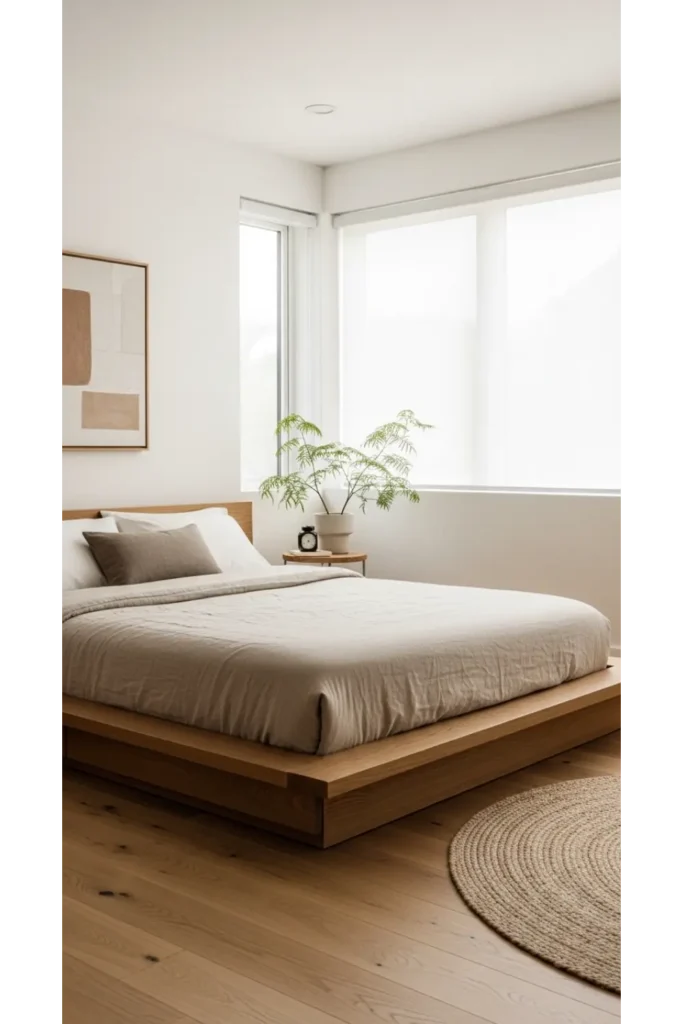
A low platform bed defines a true japandi bedroom. Its grounded profile reflects Japanese interiors while keeping the clean structure of Scandinavian design. Choose solid wood with visible grain and avoid bulky frames. Neutral bedding in warm white, sand, or soft gray supports a calm and cozy retreat that feels intentional and uncluttered.
The lower height opens visual space and improves flow. It shifts focus toward texture and craftsmanship instead of decoration. Linen or cotton sheets enhance breathability and comfort. When you keep the bed simple and refined, the entire room feels lighter, which helps your mind slow down at night.
Pro tip: Extend the headboard slightly wider than the mattress to create subtle architectural interest.
2. Soft Neutral Color Story
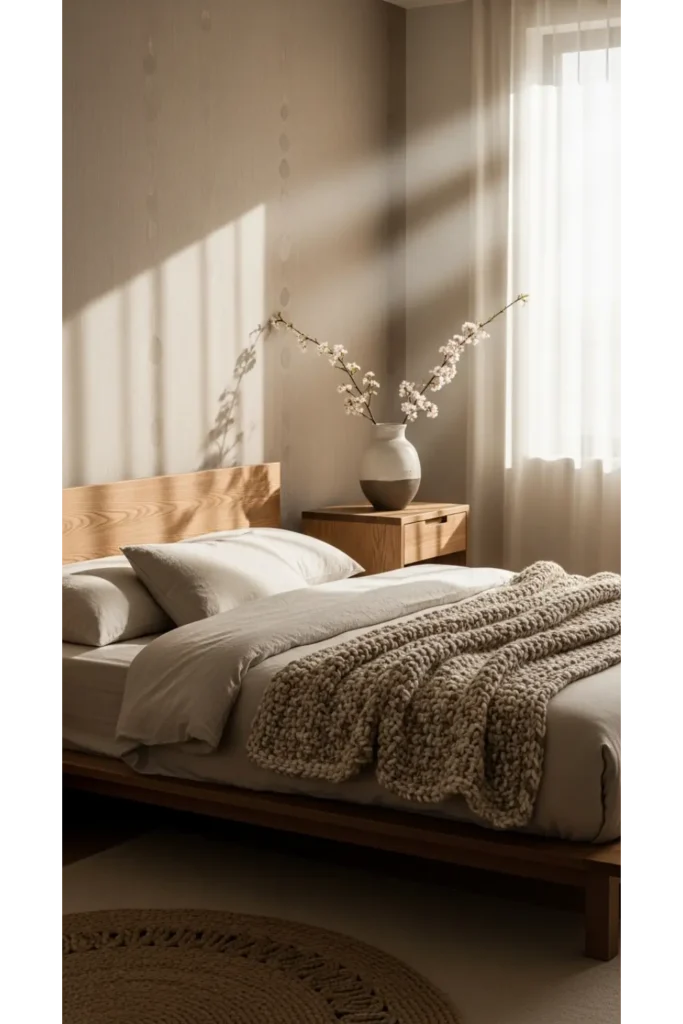
Color sets emotional tone. In a Japandi style space, warm neutrals like cream, taupe, muted clay, and stone create depth without noise. These tones reflect light gently and keep the room airy. Instead of strong contrast, layer similar shades to maintain visual harmony.
Texture replaces bold color. Add woven throws, linen curtains, and a soft area rug to bring warmth. This method reduces visual stress and supports relaxation. A balanced palette allows natural light and materials to shine, which makes the bedroom feel grounded and serene.
Pro tip: Choose matte paint finishes to avoid glare and keep walls soft.
3. Natural Wood Nightstands
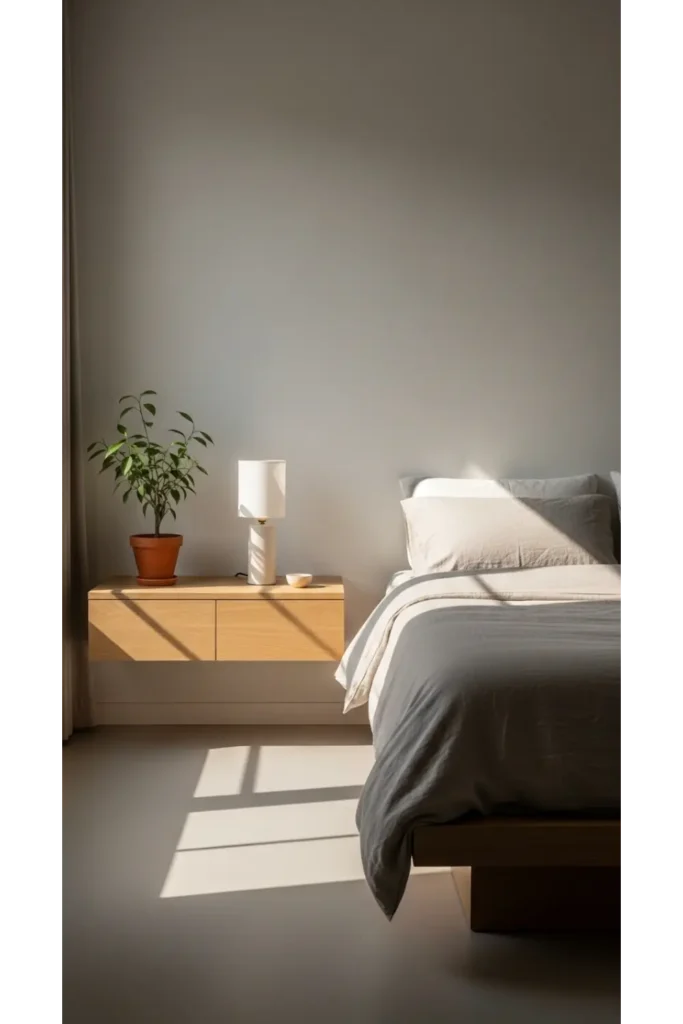
Floating wooden nightstands keep the room light and practical. Clean edges and simple forms highlight craftsmanship. Light oak or ash works beautifully in this setting. Keeping furniture slightly elevated also creates the illusion of more floor space.
Limit items on top to essentials such as a ceramic lamp and a small book. This restraint keeps surfaces calm. Wood adds warmth without clutter, which supports the balanced feel central to Scandinavian minimalism and Japanese interiors.
Pro tip: Mount nightstands at mattress height for easy access and symmetry.
4. Paper Lantern Pendant Light
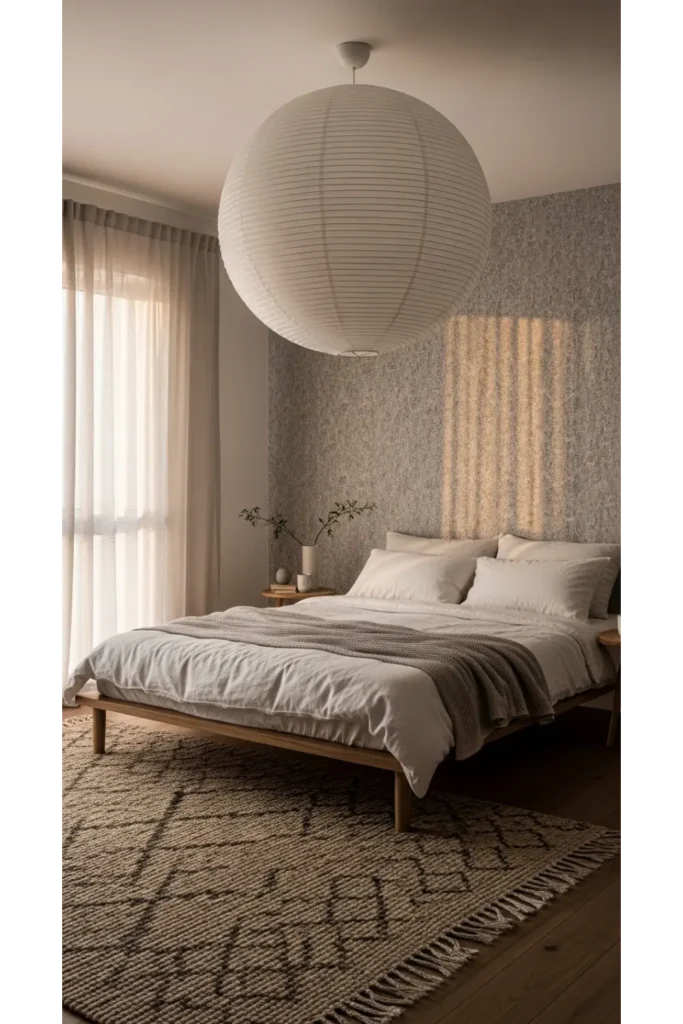
A paper lantern introduces soft curves into a structured room. It spreads warm light evenly and eliminates harsh shadows. This type of lighting encourages relaxation and creates a cozy environment before sleep.
Pair it with dimmable bedside lamps for layered illumination. Warm light enhances neutral tones and makes wood appear richer. Good lighting transforms a simple room into a comforting retreat that feels thoughtful and refined.
Pro tip: Install a dimmer switch to adjust mood throughout the day.
5. Textured Linen Bedding

Linen bedding adds softness without visual clutter. Its natural wrinkles create depth while keeping the look relaxed. Stick to earthy tones to maintain cohesion with the overall palette.
Layer pillows in similar shades rather than bold prints. This keeps the bed inviting but not overwhelming. High quality natural fabrics improve airflow and comfort, which supports better rest every night.
Pro tip: Wash linen gently to maintain texture and durability.
6. Built In Wardrobes
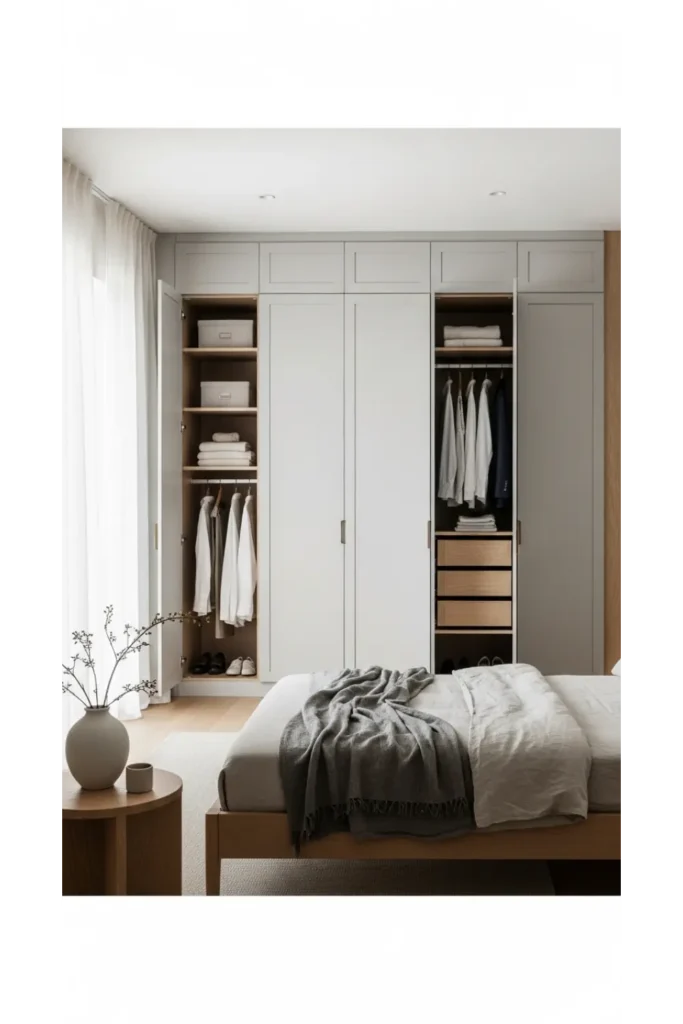
Built in storage keeps clutter hidden. Flat panel doors blend with the walls and maintain seamless lines. This design supports simplicity and maximizes floor space.
Organized storage reduces stress and creates mental clarity. Keep external decor minimal and allow clean surfaces to define the room. A tidy environment encourages calm and supports restful sleep.
Pro tip: Use interior lighting inside wardrobes for better visibility.
7. Indoor Olive Tree Accent
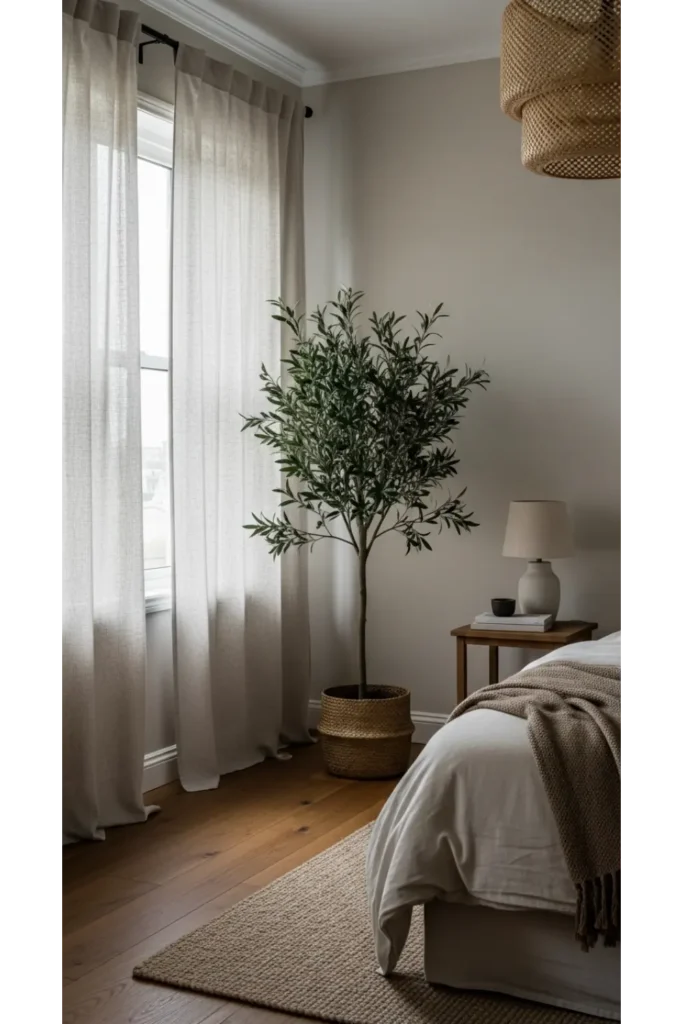
A single plant adds life and softness. An olive tree or similar greenery connects the space to nature. Place it near a bright window to enhance freshness.
Natural elements balance minimal structure. Green tones complement wood and neutral fabrics beautifully. This subtle addition strengthens the organic harmony central to this design approach.
Pro tip: Rotate plants occasionally to ensure even growth.
8. Sliding Panel Doors
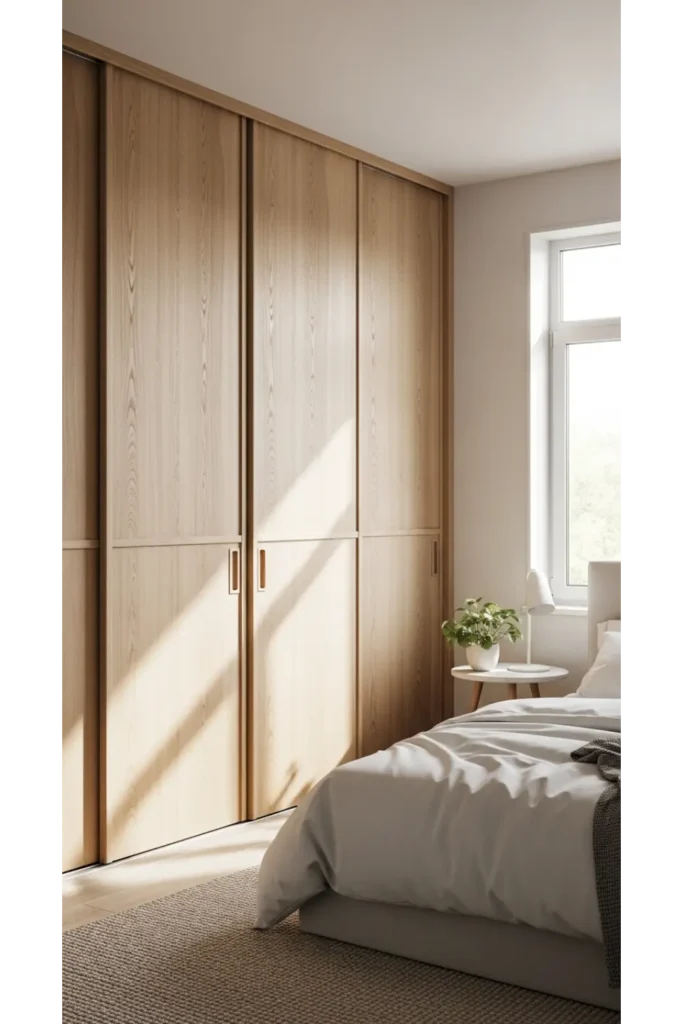
Sliding doors reflect Japanese influence and save space. Wood or frosted glass panels maintain privacy without heaviness.
They create smooth transitions and keep the layout efficient. The result feels open yet private, which enhances both comfort and practicality.
Pro tip: Choose soft close tracks for smooth movement.
9. Woven Area Rug
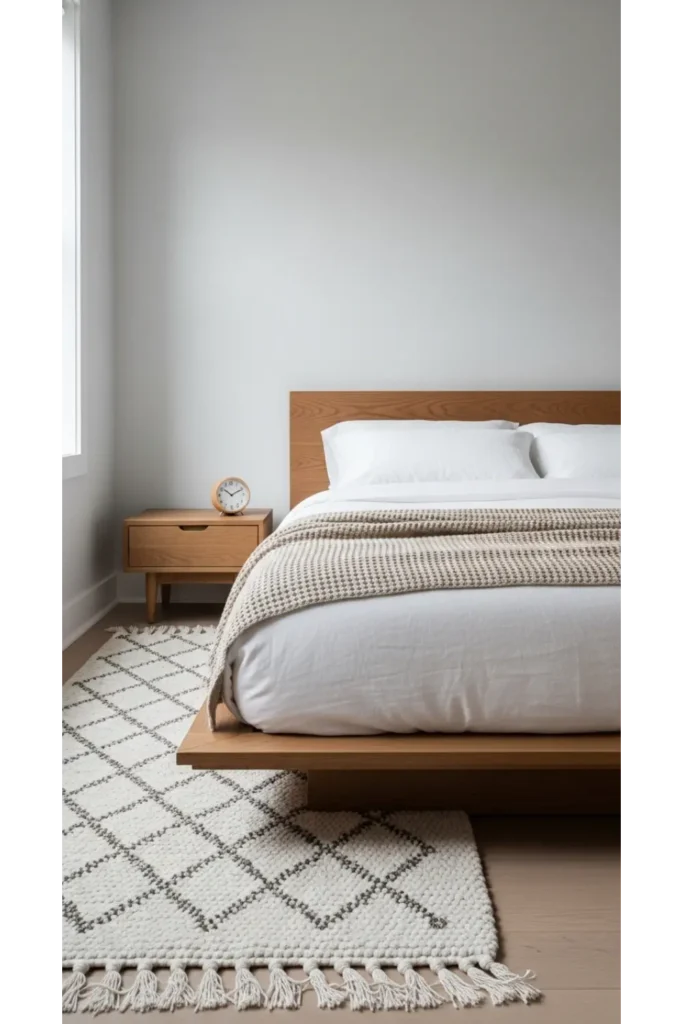
A woven rug anchors the bed and softens wood floors. Natural fibers like wool or jute add warmth without bold patterns.
Texture grounds the room and absorbs sound, which supports a peaceful environment. Keep tones subtle for cohesion.
Pro tip: Position the rug so it extends beyond the sides of the bed.
10. Sculptural Ceramic Decor
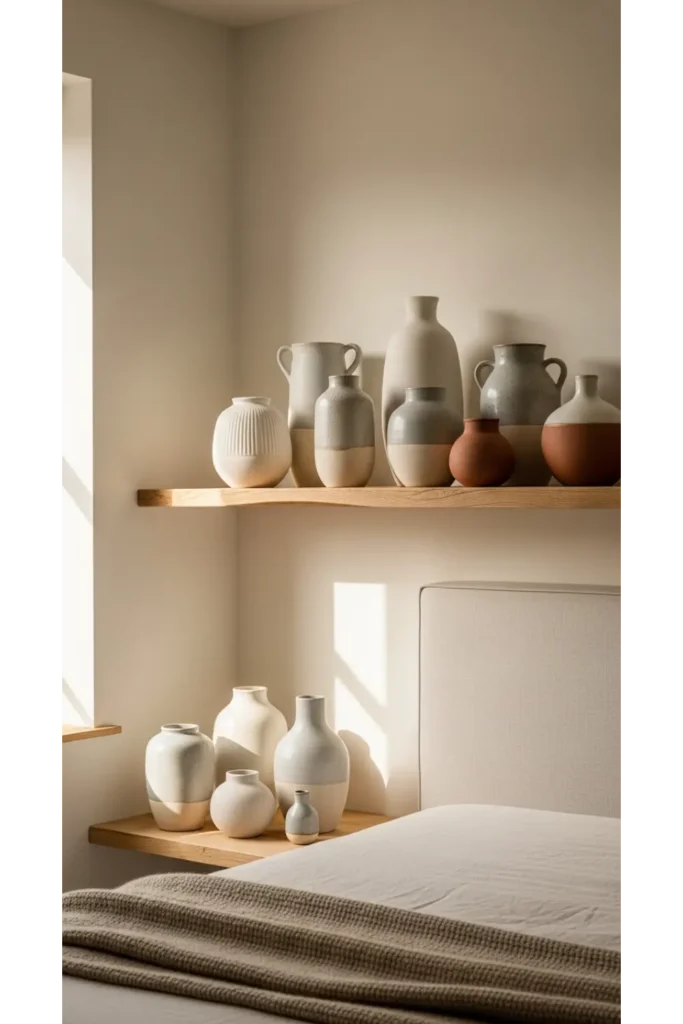
Handcrafted ceramics add artistry without clutter. Choose simple shapes in matte finishes.
Limit decorative pieces to one or two items. Quality matters more than quantity in a refined space.
Pro tip: Group objects in odd numbers for natural balance.
11. Low Wooden Bench
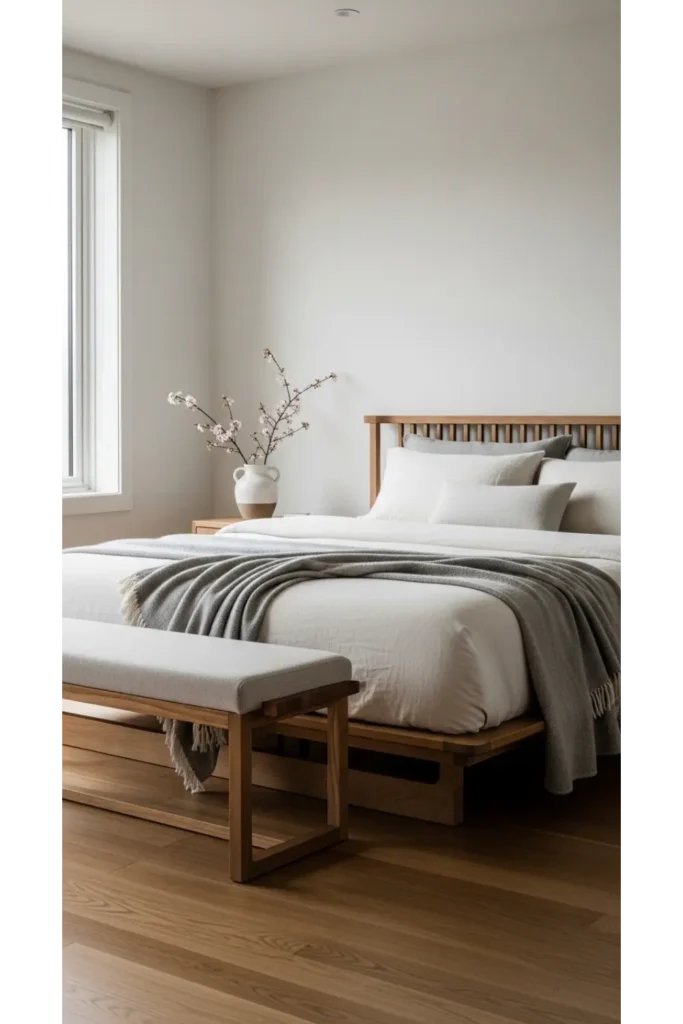
A slim bench adds function and structure. It provides seating while reinforcing horizontal lines.
Wood tones tie together furniture elements and create visual continuity. Keep cushions neutral and simple.
Pro tip: Store extra blankets neatly folded on the bench.
12. Soft Sheer Curtains
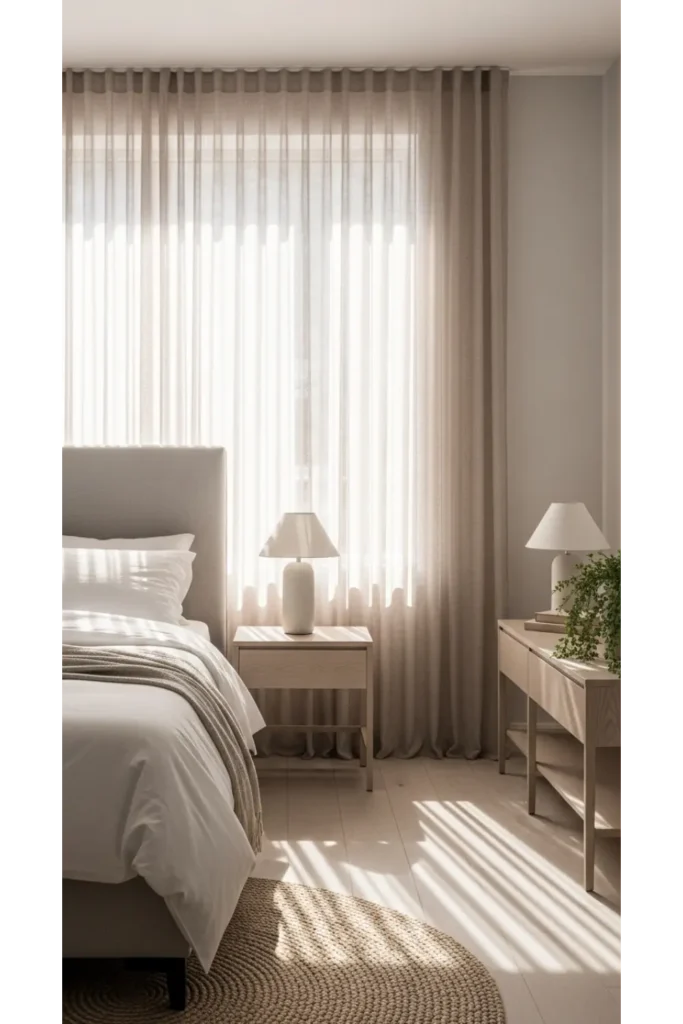
Sheer curtains filter light gently. They create privacy while allowing brightness to fill the room.
Natural fabrics enhance airflow and maintain softness. Light movement from fabric adds subtle life.
Pro tip: Hang curtains higher to make ceilings appear taller.
13. Wall Mounted Reading Lamps
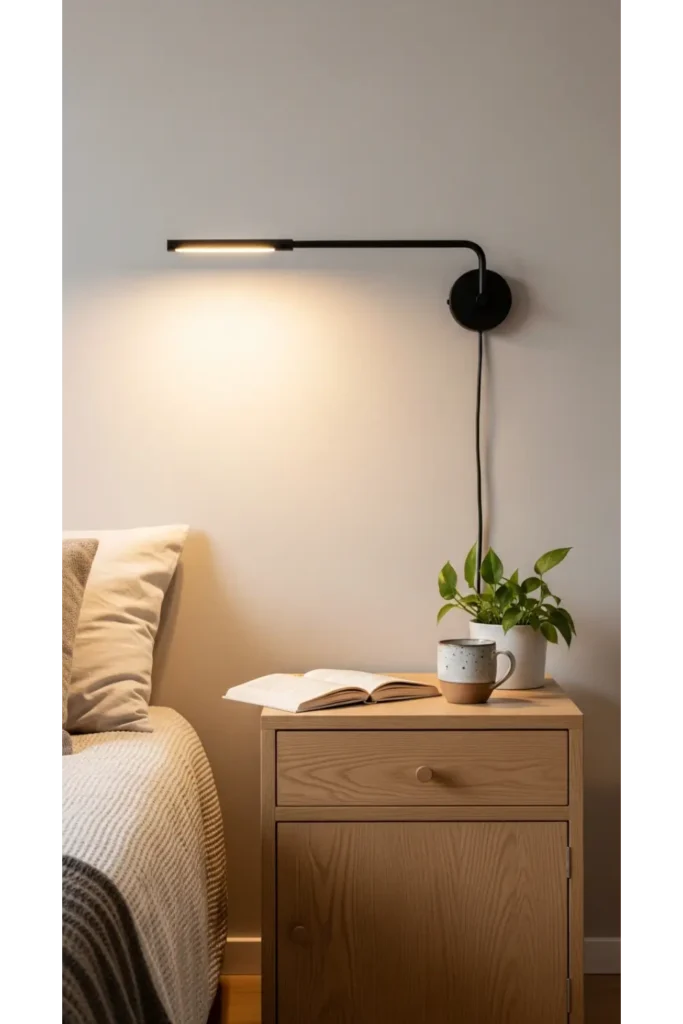
Mounted lamps free surface space. Their clean lines support efficiency and symmetry.
Warm lighting improves bedtime routines and keeps design streamlined. Function and beauty work together.
Pro tip: Choose adjustable arms for flexible reading angles.
14. Tatami Inspired Floor Mat
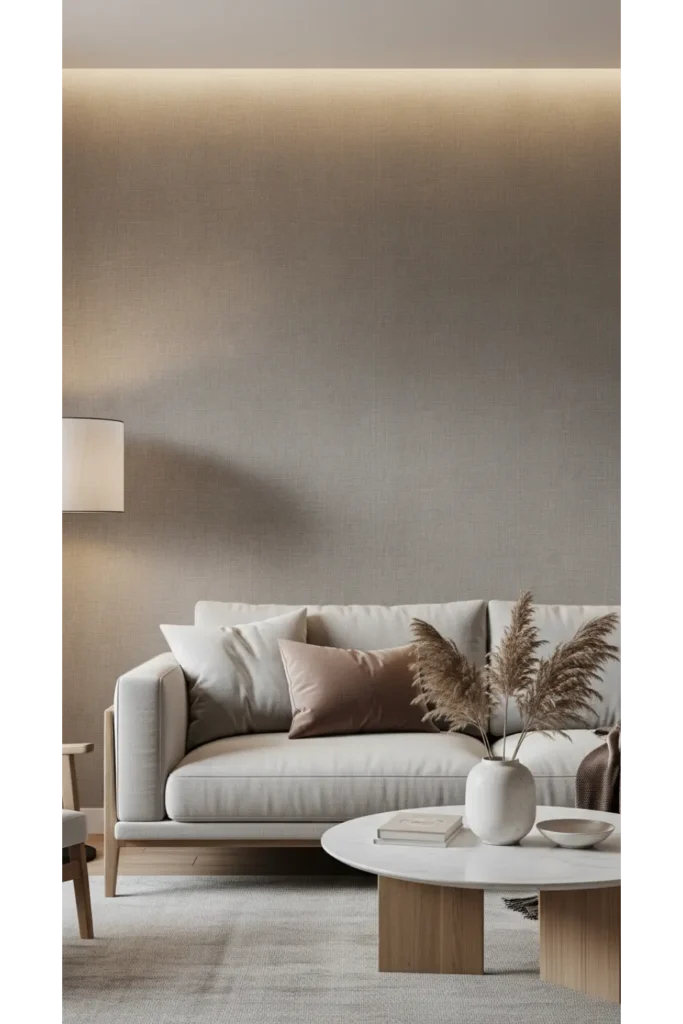
A tatami style mat introduces authentic texture. It reinforces grounded simplicity.
Natural fibers support airflow and create a traditional touch without overpowering the room.
Pro tip: Use under a meditation cushion for added function.
15. Statement Wood Headboard
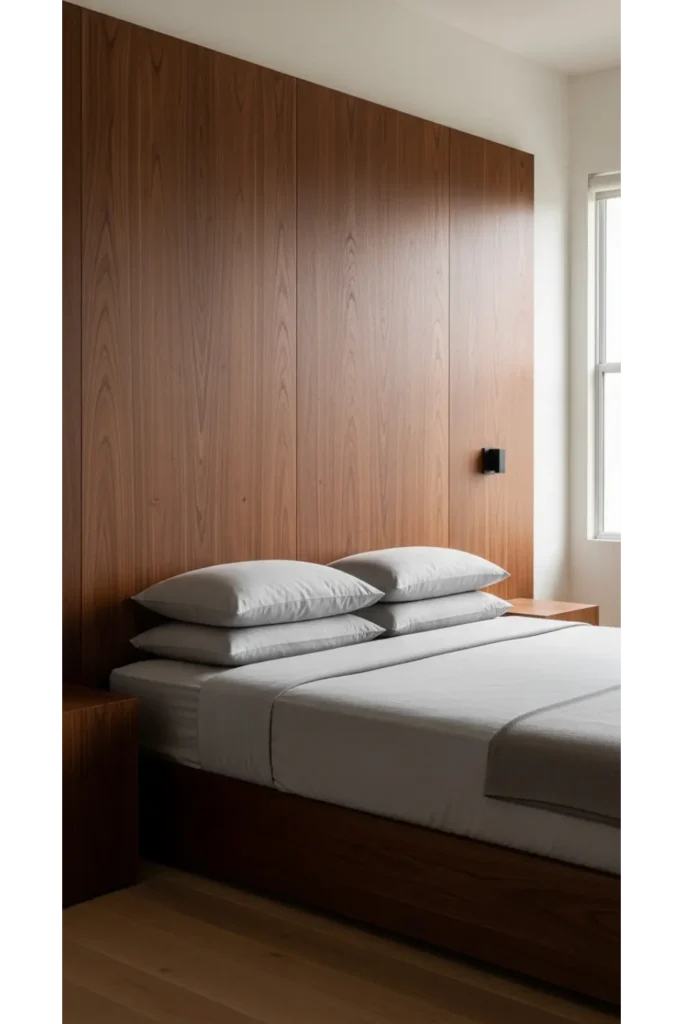
A wide wooden headboard creates quiet drama. Clean edges maintain balance. It anchors the bed and highlights craftsmanship. Keep surrounding decor minimal to let it shine.
Pro tip: Match headboard tone with nightstands.
16. Neutral Abstract Art
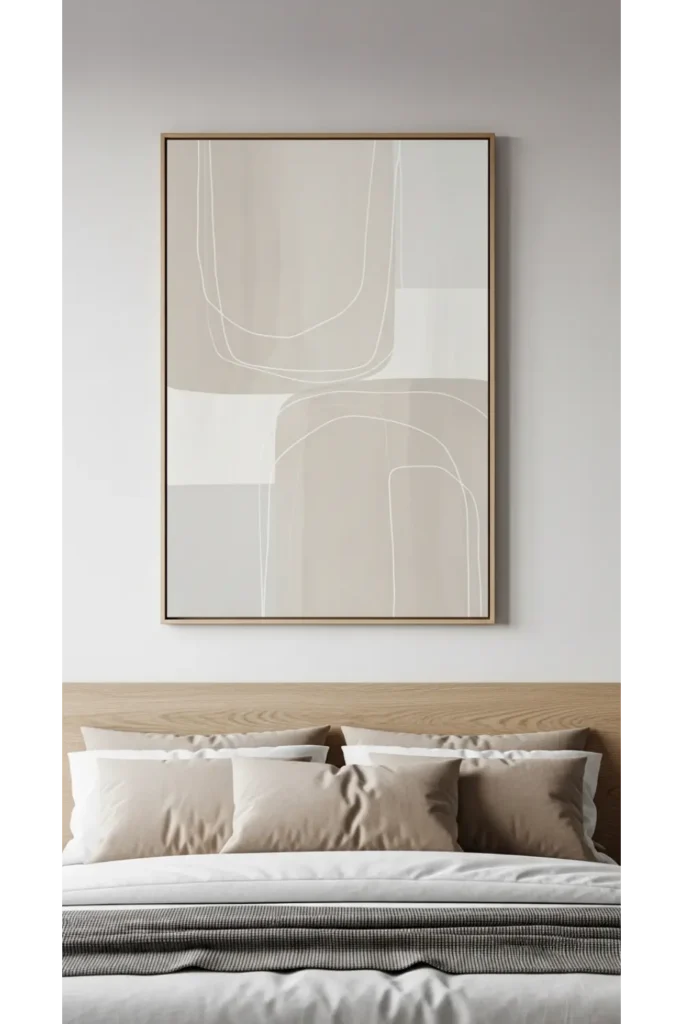
Soft abstract artwork adds personality without distraction. Choose muted palettes. Art should complement rather than dominate. This keeps the room serene and cohesive.
Pro tip: Hang art at eye level for best proportion.
17. Open Wooden Shelving
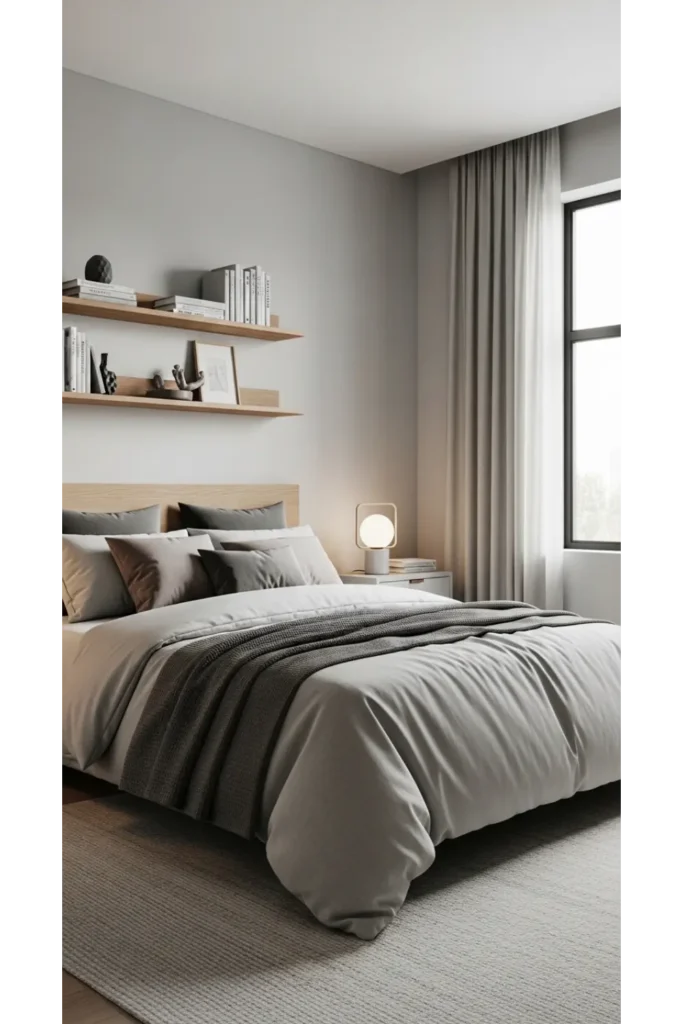
Slim shelves offer storage and display space. Keep items curated and minimal. Open storage works best when organized thoughtfully. Avoid overcrowding to preserve calm.
Pro tip: Leave negative space between objects.
18. Layered Throw Blankets

Layering throws increases warmth and texture. Choose wool or cotton blends. Keep colors cohesive to avoid visual clutter. Subtle variation adds interest.
Pro tip: Fold throws neatly at bed corner.
19. Simple Wooden Dresser
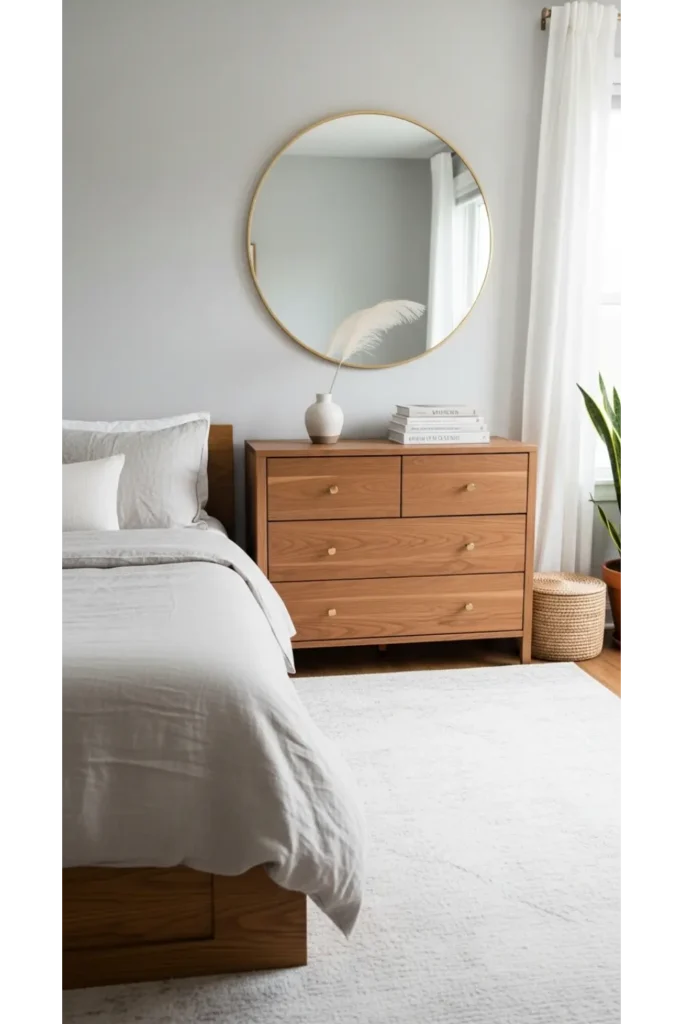
A clean lined dresser supports organization. Natural wood maintains warmth. Keep the top surface clear except for one decorative piece. Simplicity reinforces calm.
Pro tip: Use drawer dividers for tidy storage.
20. Floor Cushion Seating
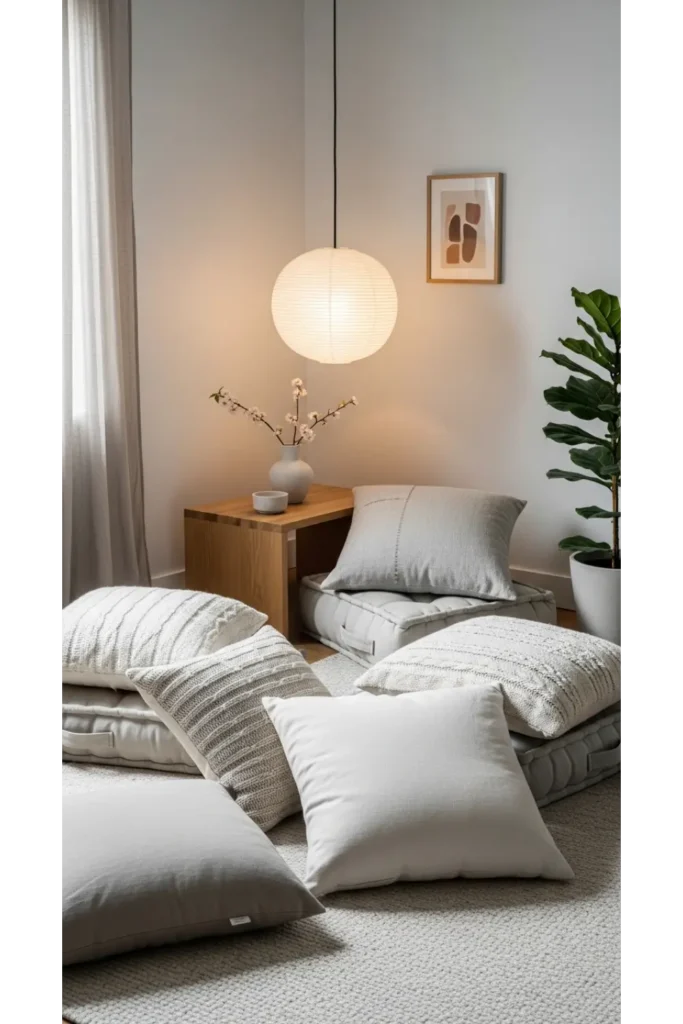
Floor cushions reflect Japanese living. They create relaxed seating for reading or reflection. Choose durable neutral fabrics to maintain harmony. This adds flexibility without crowding.
Pro tip: Store cushions in a woven basket when not in use.
21. Soft Wall Paneling
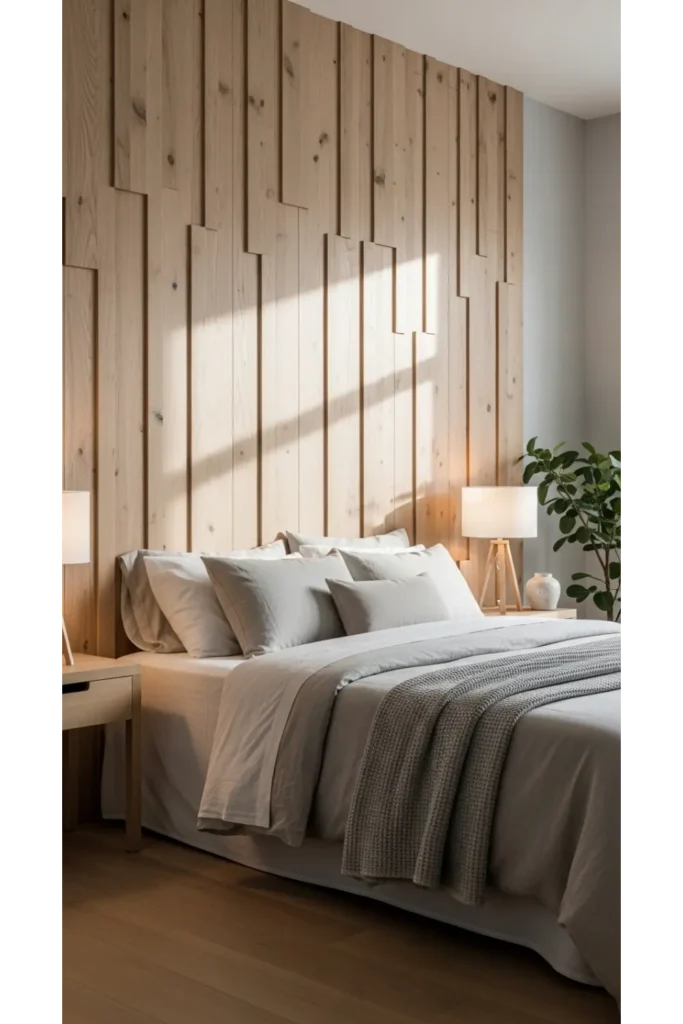
Subtle paneling adds dimension without excess decor. Vertical lines enhance height perception. Wood texture warms the space while keeping it refined and calm.
Pro tip: Use light stain finishes for airy effect.
22. Minimal Bedside Tray

A small tray organizes essentials neatly. It defines space and reduces clutter. Limiting bedside items promotes mental clarity and better rest. Thoughtful arrangement matters.
Pro tip: Choose trays with raised edges for security.
23. Calm Meditation Corner
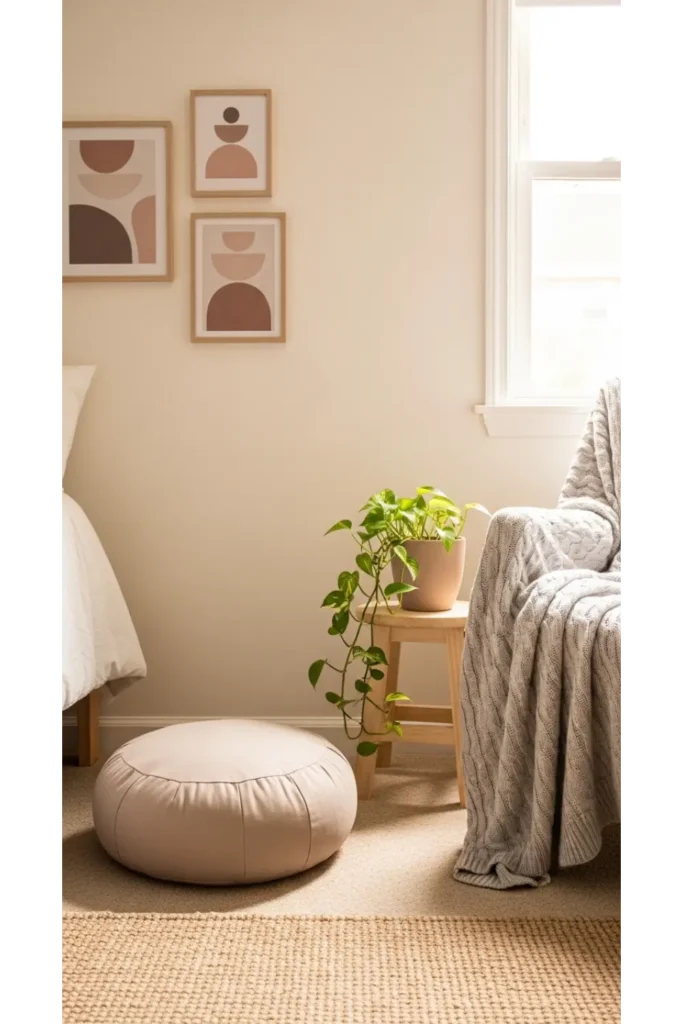
Create a quiet corner with a cushion and small plant. This dedicated space encourages mindfulness. A meditation area enhances emotional balance and transforms the bedroom into a true retreat. Keep decor minimal to preserve tranquility.
Pro tip: Face the corner toward natural light for an uplifting feel.
FAQs
What defines this style most clearly?
It combines Japanese simplicity with Scandinavian warmth, focusing on natural materials, neutral tones, and purposeful design.
Is it expensive to achieve?
You can start small with bedding, lighting, and decluttering. Quality matters more than quantity.
Does it work in small spaces?
Yes. Low furniture, light colors, and built in storage help small rooms feel open and calm.
Conclusion
A thoughtfully designed bedroom shapes your well being. By combining clean lines, natural materials, and warm minimalism, you create a space that feels balanced and deeply comforting. Each idea builds on simplicity and function while maintaining beauty. When you focus on quality, texture, and light, your bedroom becomes more than decor. It becomes a calm retreat that restores your energy every single day.