
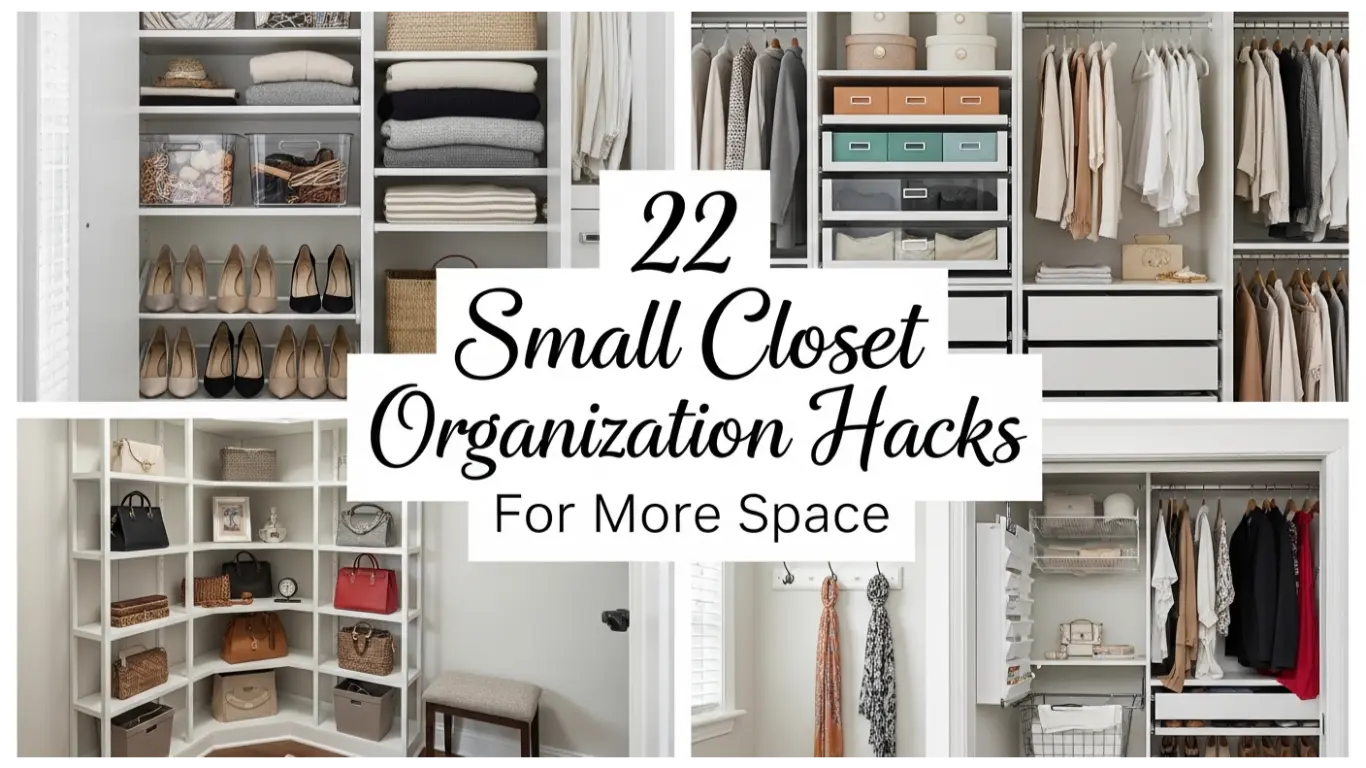
22 Small Closet Organization Hacks For More Space
A tight closet can feel frustrating, but the right approach can turn even the smallest space into something functional and calm. These small closet organization hacks focus on smart storage, better visibility, and easy daily use. You do not need a full renovation to see results. With a few simple changes, you can create more room, reduce clutter, and make your closet work harder for you.
This guide brings practical, fresh, and realistic ideas that fit real homes. Each method improves space, saves time, and keeps your closet looking clean without constant effort. Let’s get into solutions that actually make a difference.
1. Use Slim Velvet Hangers
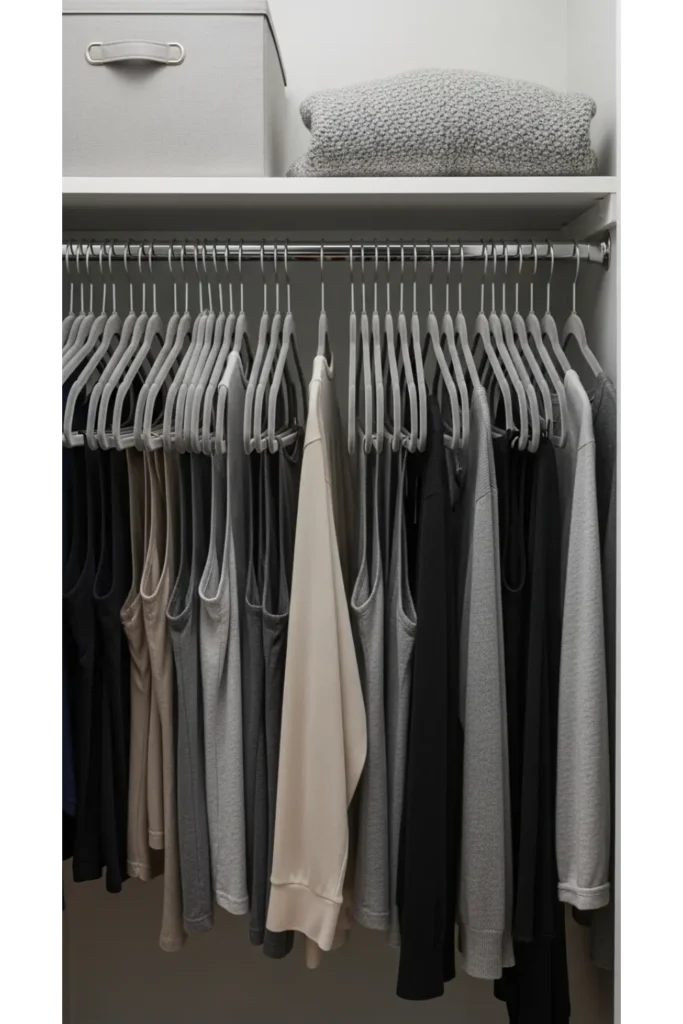
Slim hangers instantly free up space by reducing bulk between clothes. Thick plastic or wooden hangers take up more room than you realize. Switching to velvet options keeps garments from slipping while creating a clean, uniform line. This simple change makes your closet feel wider and more organized without adding anything new.
You also gain better visibility. When clothes hang evenly, you can scan your wardrobe faster and avoid overstuffing. This improves daily outfit choices and reduces the chance of wrinkled clothing. Over time, this small upgrade keeps your closet tidy with minimal effort.
Pro tip: Choose one hanger color to create a calm and visually organized closet.
2. Add Shelf Dividers
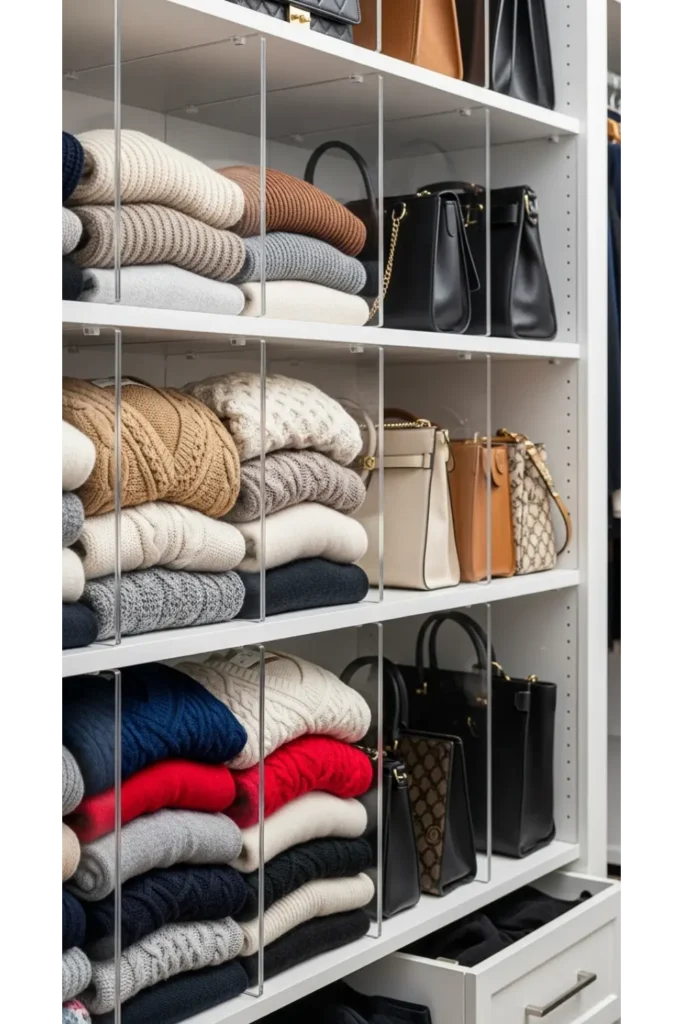
Shelf dividers help control messy stacks that tend to fall over. Sweaters, jeans, or handbags stay in place instead of blending into each other. This creates clear sections that are easier to maintain and quicker to access.
They also help maximize vertical space. Without dividers, stacks spread out and waste room. With them, you can build higher piles that stay stable. This simple addition turns cluttered shelves into structured storage zones.
Pro tip: Use clear dividers to keep the closet feeling open and not crowded.
3. Install Double Hanging Rods
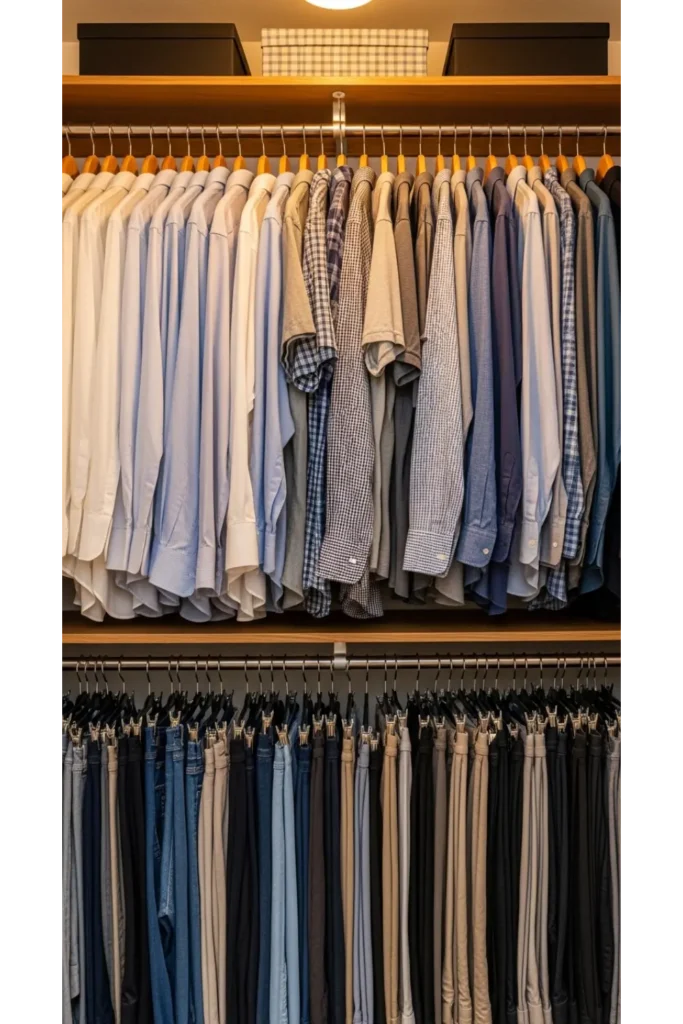
Adding a second hanging rod is one of the most effective small closet organization hacks for doubling your storage without expanding your space. Many closets waste vertical room by using only one rod. By installing another below, you create two functional levels for shorter clothing like shirts, skirts, and folded pants. This instantly increases capacity and makes your closet feel more structured and intentional.
This setup also improves how you group your clothes. You can separate workwear from casual pieces or organize by color and season. When everything has a clear place, your closet becomes easier to use daily. You spend less time searching and more time getting dressed efficiently, which reduces stress and keeps your space consistently tidy.
Pro tip: Leave enough space between rods to prevent clothes from wrinkling or overlapping.
4. Use Over the Door Organizers
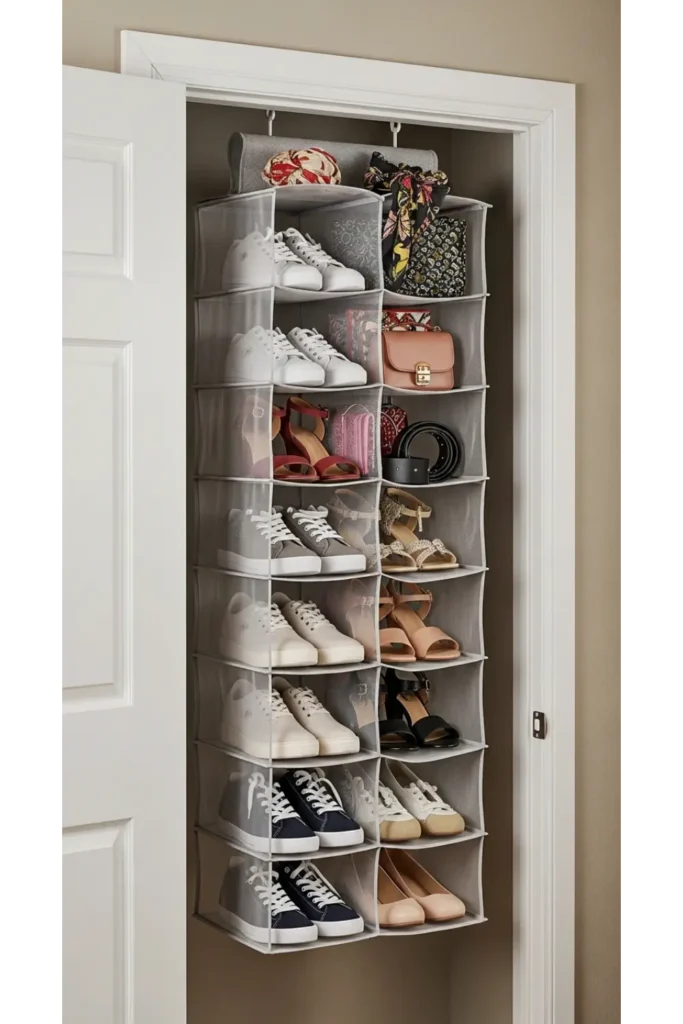
The back of your closet door is often ignored, but it offers valuable storage space. Over the door organizers turn this unused area into a functional zone for shoes, accessories, or folded clothing. This is one of the simplest closet storage solutions that requires no tools or permanent changes, making it perfect for renters or quick upgrades.
These organizers also improve visibility. Instead of hiding items in boxes or piles, everything stays in plain sight and easy to access. This reduces clutter and helps you keep track of what you own. When items are visible, you use them more often and avoid unnecessary duplicates, which keeps your closet streamlined.
Pro tip: Choose organizers with clear pockets to quickly identify items.
5. Store Seasonal Clothes Elsewhere
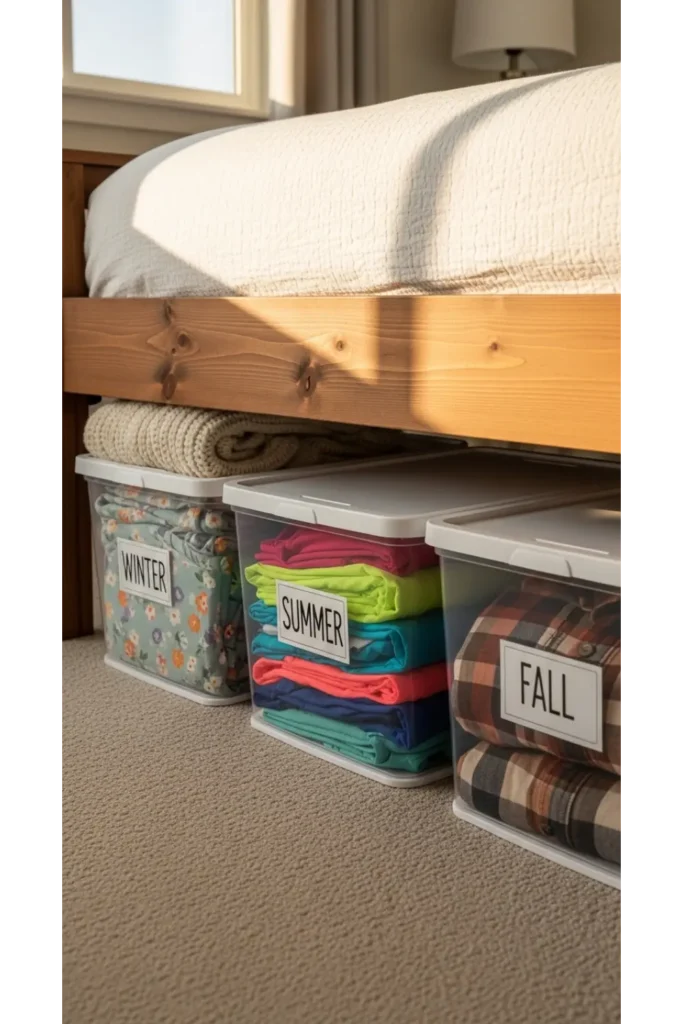
Keeping all your clothes in one place can quickly overwhelm a small closet. Rotating seasonal items is a smart way to maintain space and clarity. Store heavy winter coats or summer outfits in separate bins when they are not in use. This keeps your closet focused only on what you need right now, which improves both function and appearance.
This habit also protects your clothing. Items stored properly stay cleaner and last longer. When the season changes, rotating your wardrobe feels fresh and intentional. It helps you rediscover pieces you may have forgotten and keeps your style feeling updated without buying anything new.
Pro tip: Vacuum sealed bags can save even more space for bulky items.
6. Add Pull Out Baskets
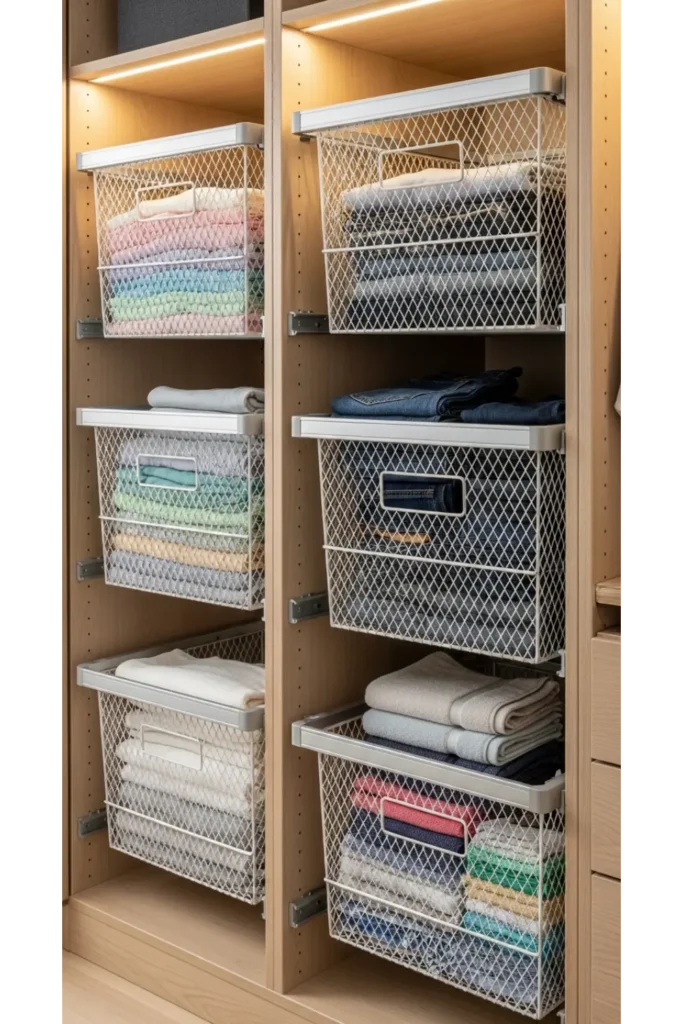
Pull out baskets make it easier to access items stored in deeper spaces. Unlike fixed shelves, these baskets slide forward so you can see everything at once. This prevents stacks from collapsing and helps maintain order over time. It is one of the most practical closet organization ideas for keeping smaller clothing items neat and reachable.
They are especially useful for categories like workout clothes, sleepwear, or accessories. Each basket can hold a specific group, making it easier to maintain structure. When everything has a designated spot, your closet stays organized with less effort and daily use becomes more efficient.
Pro tip: Use shallow baskets for smaller items to avoid overcrowding.
7. Use Clear Storage Boxes
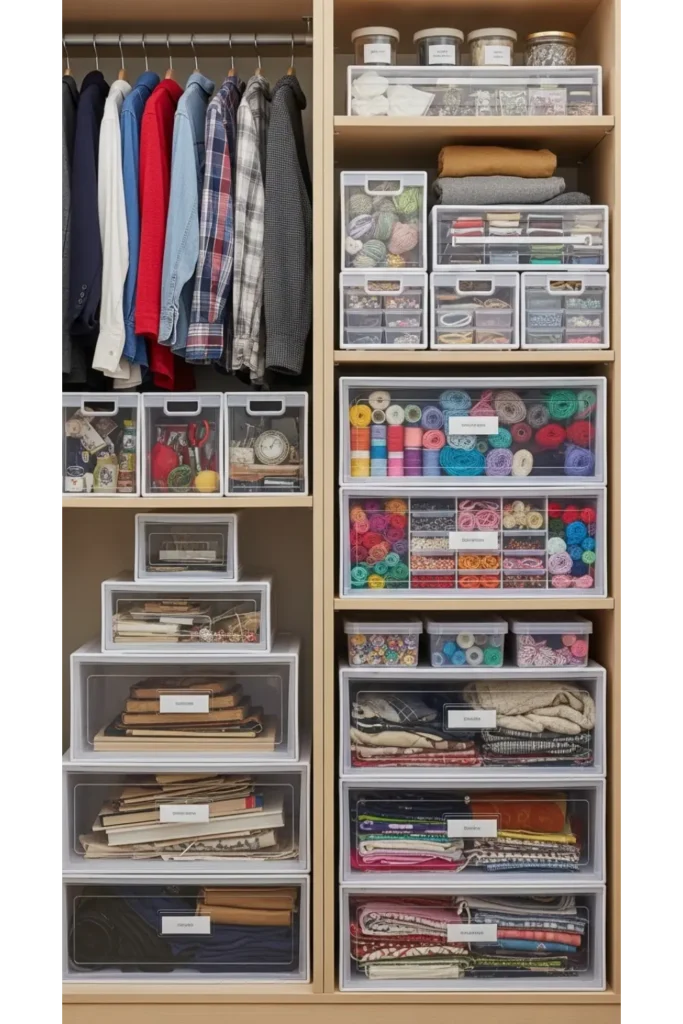
Clear storage boxes help eliminate guesswork. You can instantly see what is inside without opening each container, which saves time and reduces frustration. This approach works well for accessories, seasonal items, or rarely used clothing that still needs to stay accessible and protected.
They also support better stacking. Transparent boxes create a neat, uniform look while making use of vertical space. This keeps your closet from feeling cluttered even when it is full. It is a simple way to balance visibility with organization and maintain a clean, structured layout.
Pro tip: Group similar items in each box to make retrieval faster.
8. Hang Hooks for Accessories
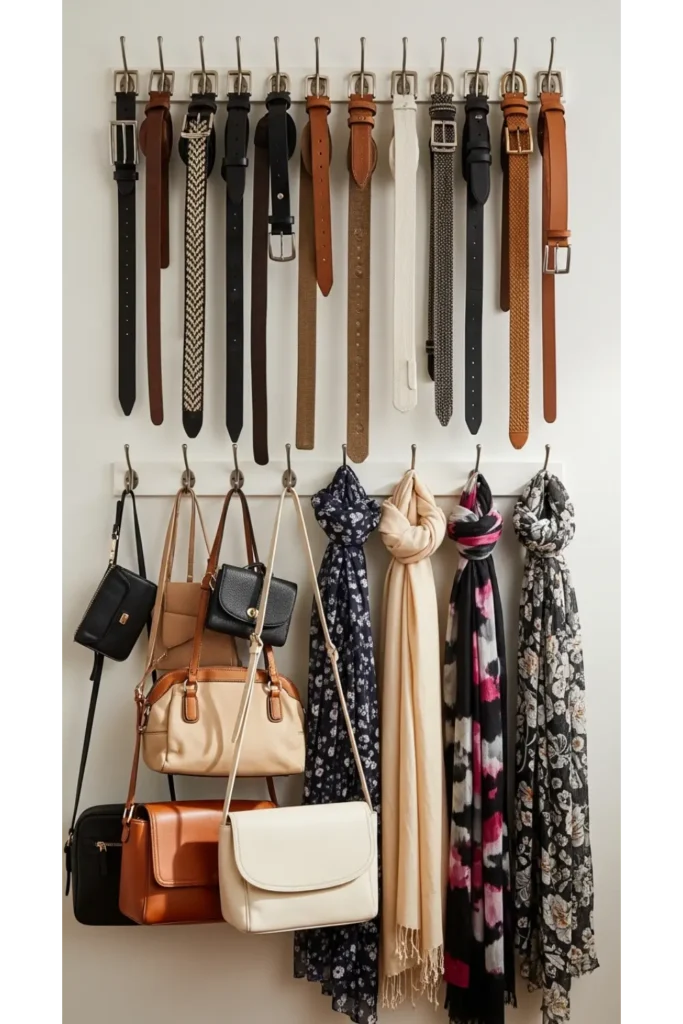
Hooks are a simple yet powerful addition to any small closet. They provide a dedicated place for accessories like belts, scarves, and handbags that often create clutter. By hanging these items, you free up shelf and drawer space while keeping everything easy to access.
They also help maintain order. When accessories have a specific spot, they are less likely to pile up or get tangled. This keeps your closet looking clean and organized while making your daily routine smoother and more efficient.
Pro tip: Install hooks on unused side walls to maximize every inch of space.
9. Use Drawer Organizers
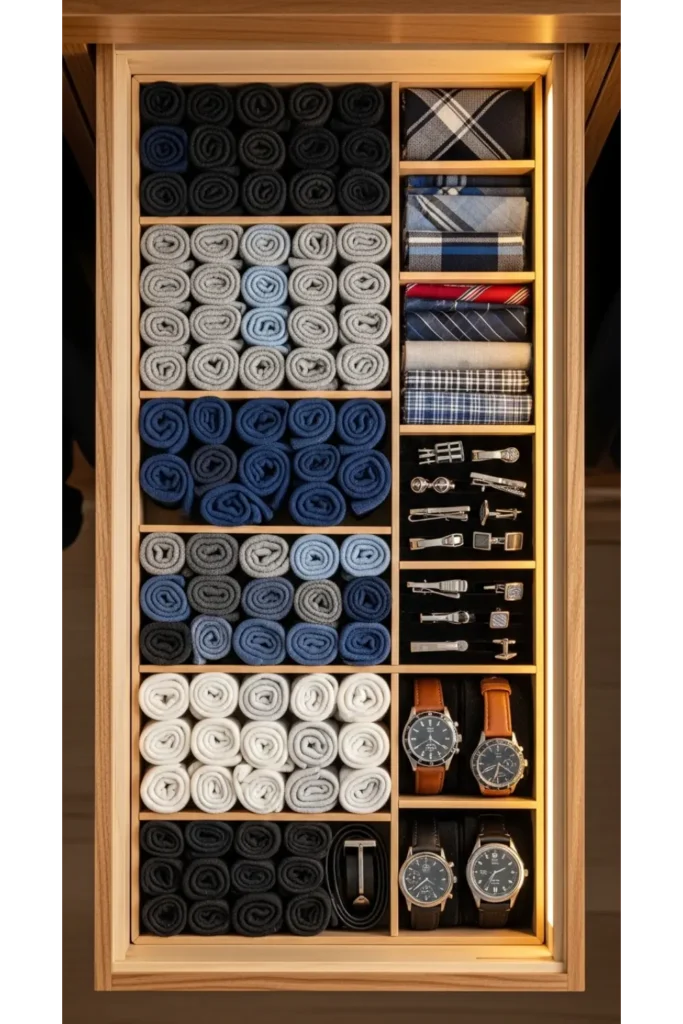
Drawer organizers bring structure to one of the most overlooked areas in a closet. Without dividers, drawers quickly turn into cluttered spaces where items get lost or mixed together. By creating sections for socks, undergarments, and accessories, you make everything easier to find and maintain. This simple step supports better daily habits and reduces the time spent searching for essentials.
They also help you use space more efficiently. Instead of random piles, each item has a defined spot, which prevents overfilling and keeps drawers neat over time. This creates a sense of order that carries into the rest of your closet, making it easier to keep everything organized and functional.
Pro tip: Choose adjustable organizers to fit different drawer sizes and needs.
10. Fold Clothes Vertically
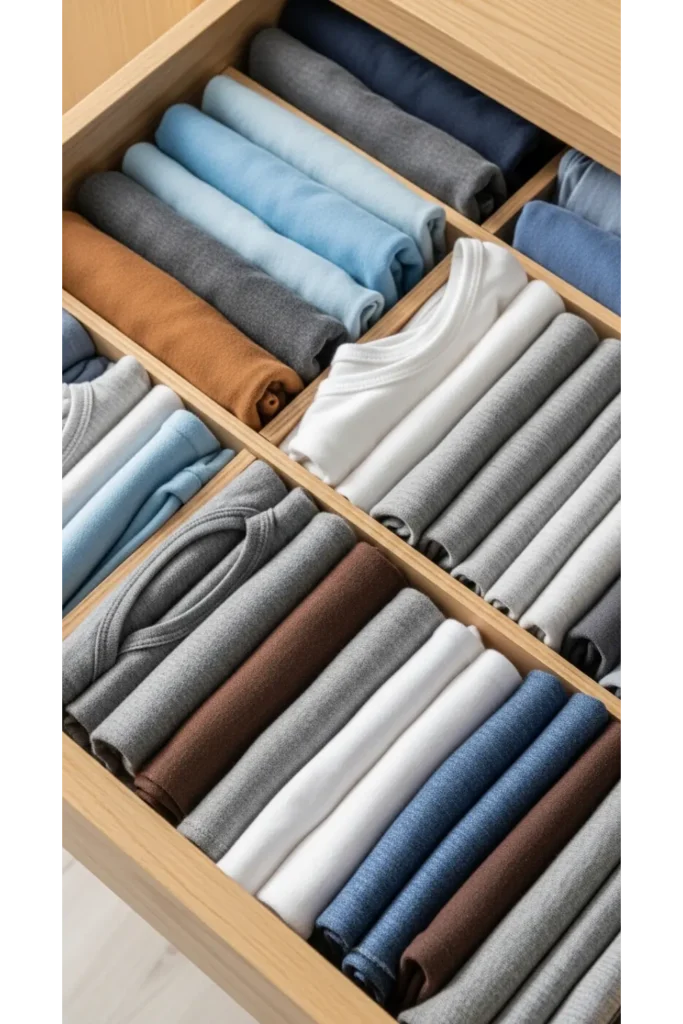
Folding clothes vertically transforms how you use drawer space. Instead of stacking items on top of each other, you place them upright so every piece is visible at a glance. This method makes it easier to find what you need without disturbing the rest, which keeps your closet neat for longer periods.
It also allows you to fit more items into the same space. Vertical folding reduces bulk and helps you maximize every inch of your drawers. Over time, this habit improves organization and ensures that you actually wear the clothes you own instead of forgetting them at the bottom of a pile.
Pro tip: Keep folds consistent in size for a clean and uniform look.
11. Use Stackable Shoe Racks
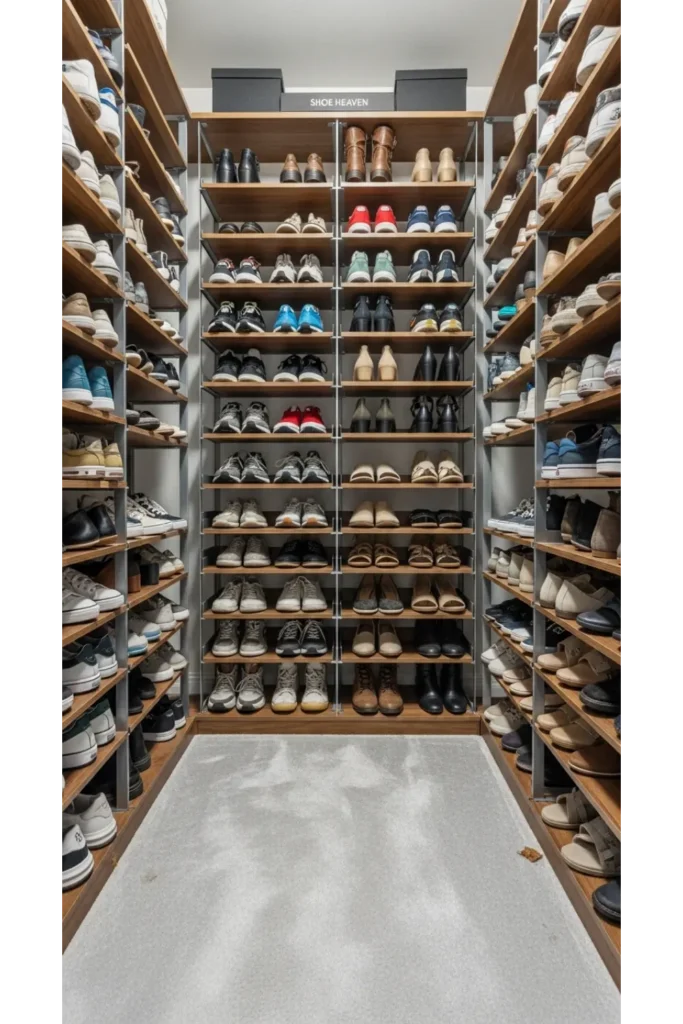
Shoes often take up more space than necessary when left scattered on the floor. Stackable racks solve this problem by using vertical space instead of spreading items out. This keeps your closet floor clear and creates a more organized, open feel even in tight areas.
They also make it easier to see your collection. When shoes are displayed neatly, you can quickly find the pair you need without digging through piles. This not only saves time but also helps maintain the condition of your footwear by preventing unnecessary wear.
Pro tip: Place everyday shoes at the most accessible level for convenience.
12. Install Lighting
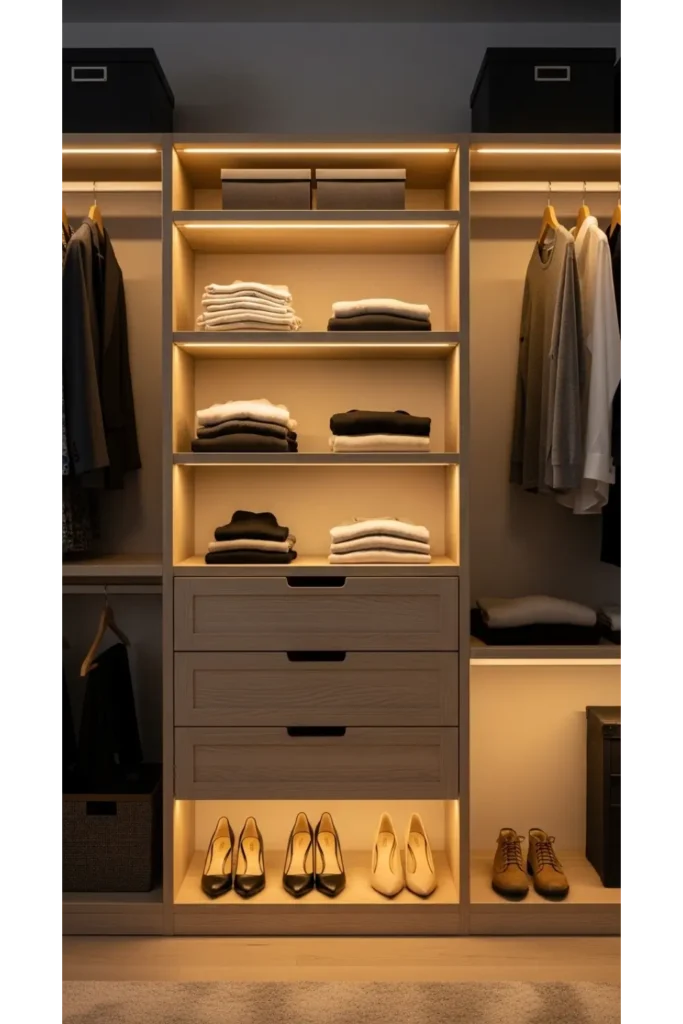
Lighting can completely change how your closet feels and functions. A dim space makes it harder to find items and often leads to clutter because things get overlooked. Adding soft, bright lighting improves visibility and makes your closet easier to use every day.
It also enhances the overall atmosphere. A well lit closet feels more spacious and inviting, which encourages you to keep it organized. Even a small lighting upgrade can make a big difference in how your space looks and works.
Pro tip: Use battery powered or motion sensor lights for quick installation.
13. Use Hanging Shelves
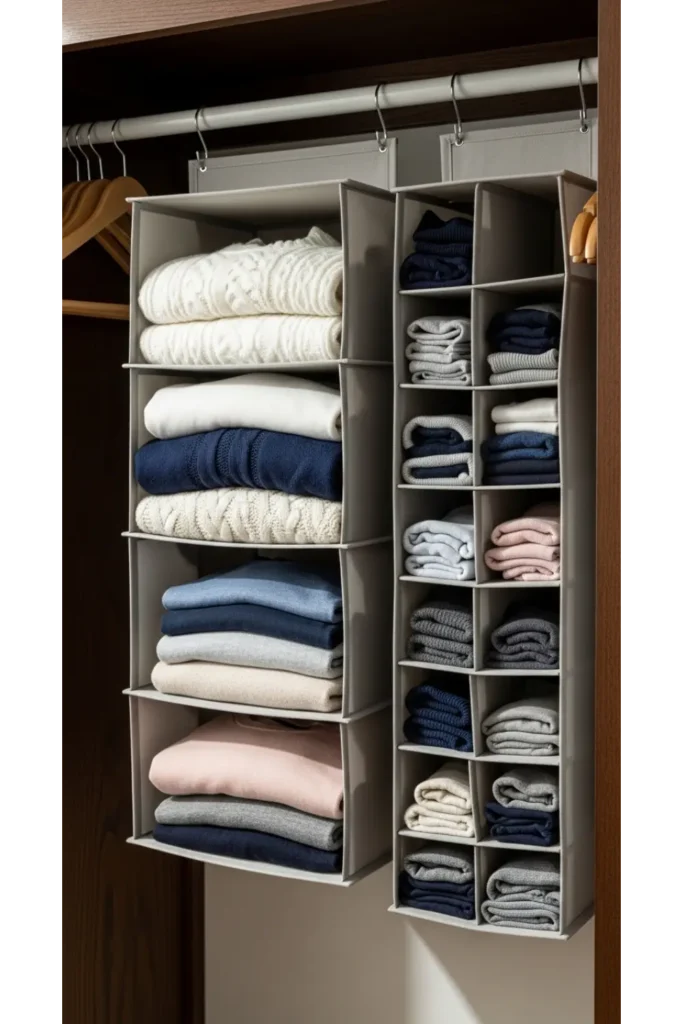
Hanging shelves offer extra storage without requiring permanent changes. They attach directly to your closet rod and create multiple levels for folded clothes, bags, or accessories. This is a practical way to maximize vertical space while keeping everything within easy reach.
They also help maintain organization. Each shelf can hold a specific category, which prevents items from mixing together. This structure makes it easier to keep your closet tidy and ensures that everything has a clear place.
Pro tip: Avoid overloading shelves to keep them stable and long lasting.
14. Label Everything
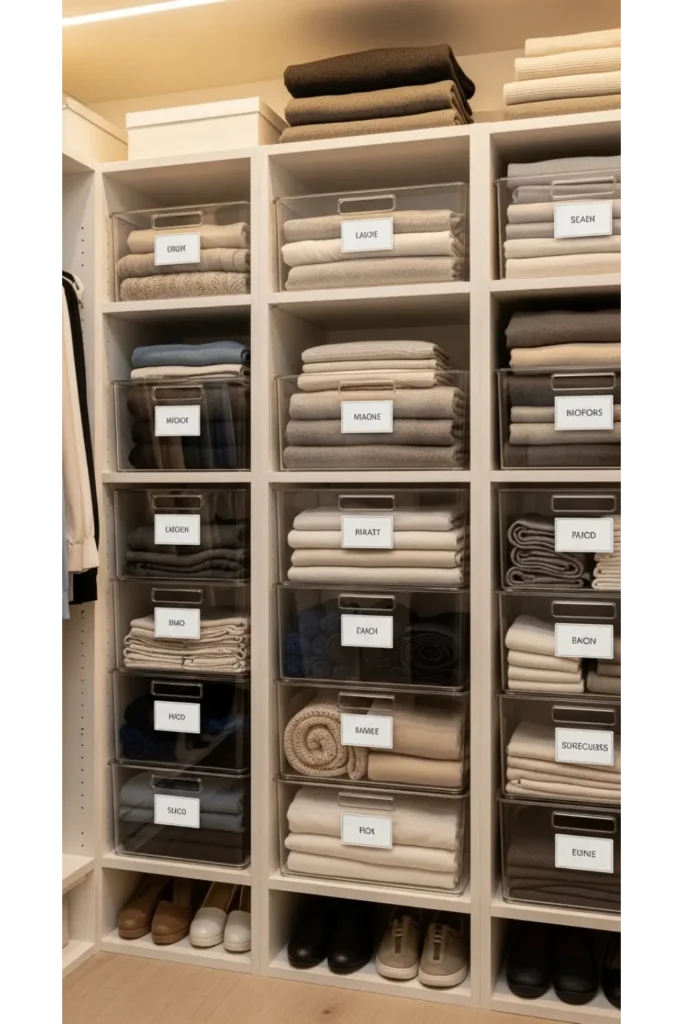
Labels bring clarity to your closet and make organization easier to maintain. When every bin, box, or shelf has a clear label, you always know where items belong. This reduces confusion and helps you put things back in the right place after use.
They also support shared spaces. If others use the same closet, labels guide everyone to keep things organized. Over time, this habit prevents clutter from building up and keeps your system working smoothly.
Pro tip: Use simple, easy to read labels for quick identification.
15. Rotate Clothes Regularly
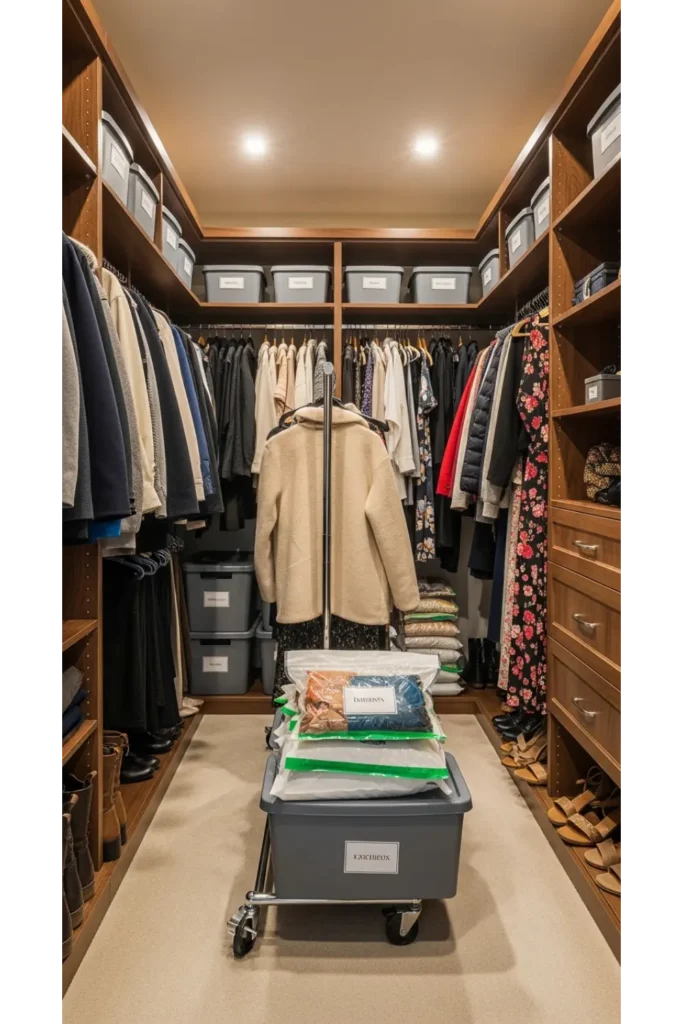
Rotating your clothes keeps your closet fresh and manageable. Instead of storing everything at once, you focus only on what you currently wear. This reduces overcrowding and makes your closet easier to navigate on a daily basis.
It also helps you reconnect with your wardrobe. When you bring items back into rotation, they feel new again. This reduces the urge to buy more and helps you make better use of what you already own.
Pro tip: Set a reminder every few months to rotate items based on the season.
16. Use Under Shelf Baskets
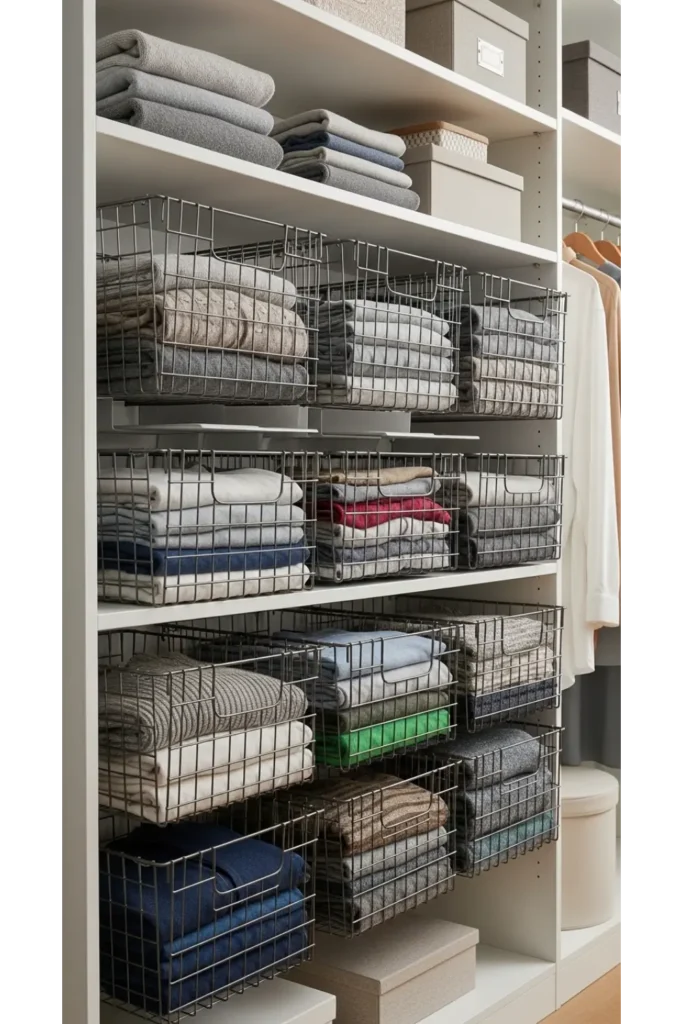
Under shelf baskets make use of space that often goes unused. They attach beneath existing shelves and provide extra storage for smaller items. This is a smart way to expand capacity without adding new furniture or taking up more room.
They also improve accessibility. Items stored in these baskets stay visible and easy to reach, which helps maintain order. This small addition can make a big difference in how efficiently your closet works.
Pro tip: Use them for lightweight items to maintain stability.
17. Add a Small Dresser Inside
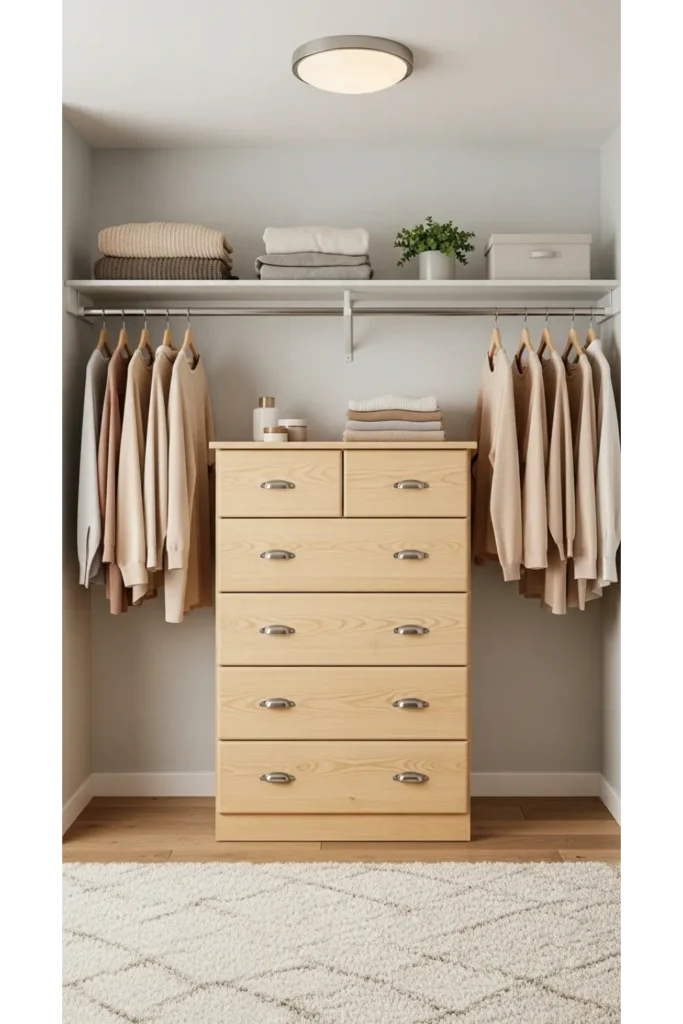
Adding a small dresser inside your closet can greatly improve storage. It provides dedicated space for folded clothes, accessories, or personal items that do not need to hang. This helps reduce clutter on shelves and keeps everything more organized.
It also creates a structured layout. With drawers handling smaller items, your hanging space stays focused and neat. This balance makes your closet easier to manage and more pleasant to use every day.
Pro tip: Choose a slim dresser that fits comfortably without overcrowding.
18. Use Pegboards
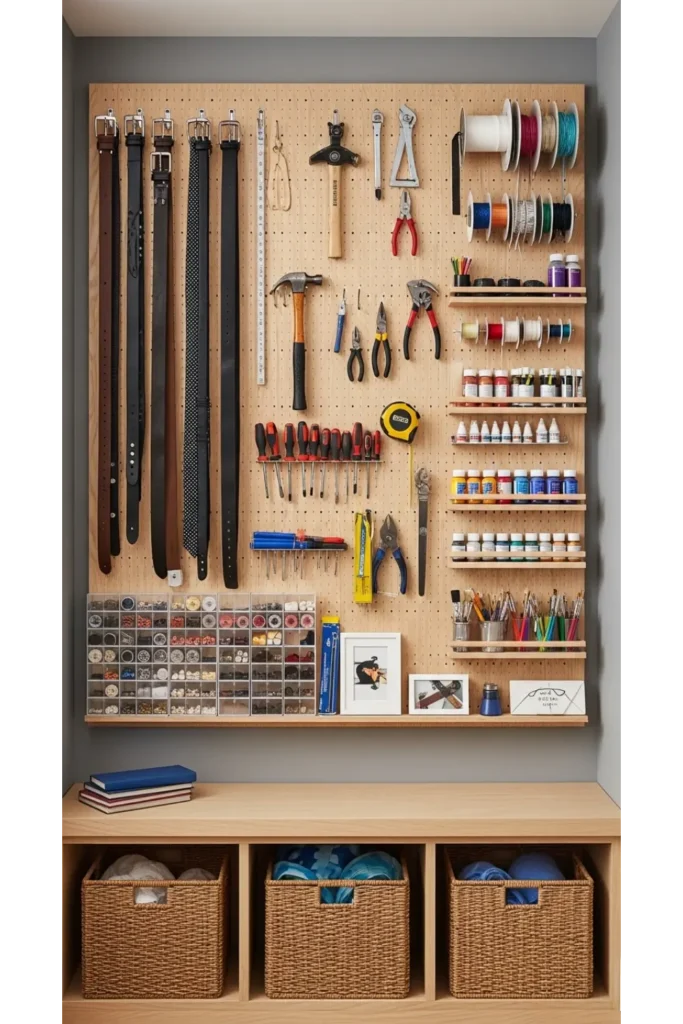
Pegboards offer flexible and customizable storage. You can arrange hooks and holders based on your needs, making them ideal for accessories or smaller items. This adaptability allows your closet to evolve as your storage needs change.
They also keep everything visible. Instead of hiding items away, pegboards display them in an organized way. This reduces clutter and makes it easier to find what you need quickly.
Pro tip: Rearrange hooks regularly to match your current needs.
19. Store Bags Properly
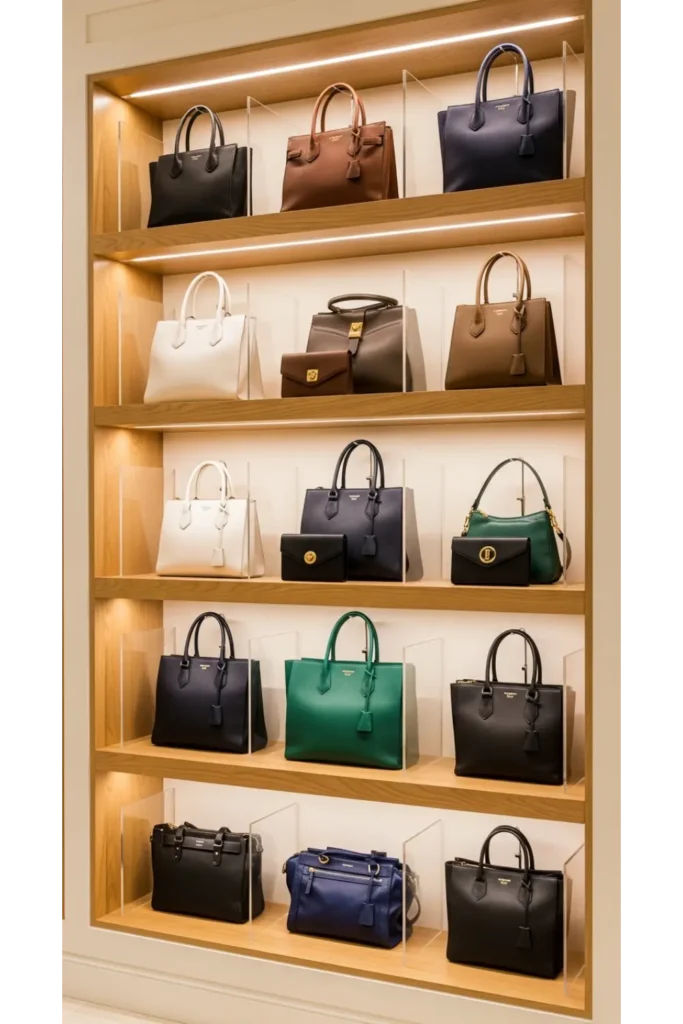
Proper bag storage keeps your closet neat and protects your accessories. Storing bags upright prevents them from losing shape and makes them easier to access. This also keeps shelves looking clean and organized.
It improves visibility as well. When bags are arranged neatly, you can see all your options at once. This helps you use them more often and avoid unnecessary purchases.
Pro tip: Lightly fill bags with soft material to maintain their shape.
20. Use Rolling Bins
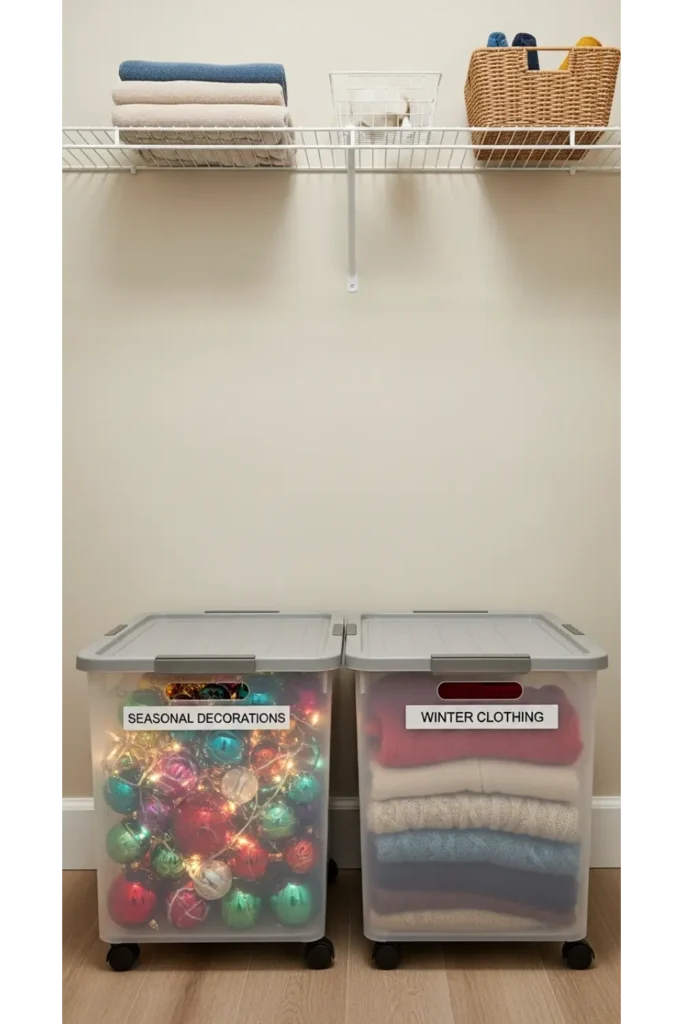
Rolling bins add hidden storage that remains easy to access. You can slide them in and out without disturbing other items, making them perfect for tight spaces. This helps you keep your closet organized without adding clutter.
They are also great for storing less used items. Seasonal clothing or extra accessories can stay tucked away but still within reach. This keeps your main closet area clear and functional.
Pro tip: Choose bins with smooth wheels for easy movement.
21. Create a Capsule Wardrobe
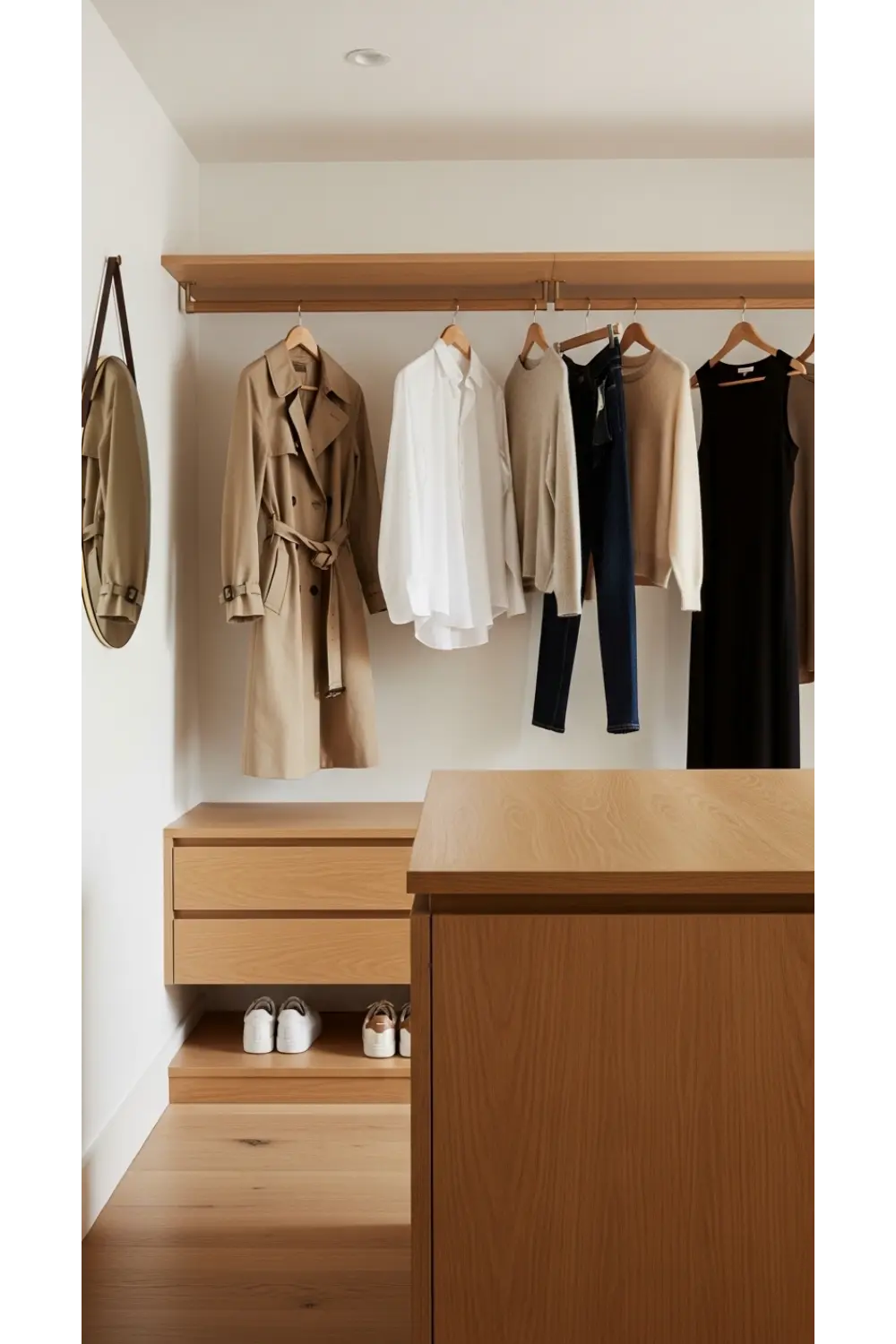
A capsule wardrobe focuses on a smaller collection of versatile pieces. This reduces clutter and makes your closet easier to manage. With fewer items, everything has a purpose and works well together.
It also simplifies daily decisions. You spend less time choosing outfits and more time enjoying your day. This approach creates a calm and organized closet that supports your lifestyle.
Pro tip: Stick to neutral colors for better mix and match options.
22. Declutter Regularly
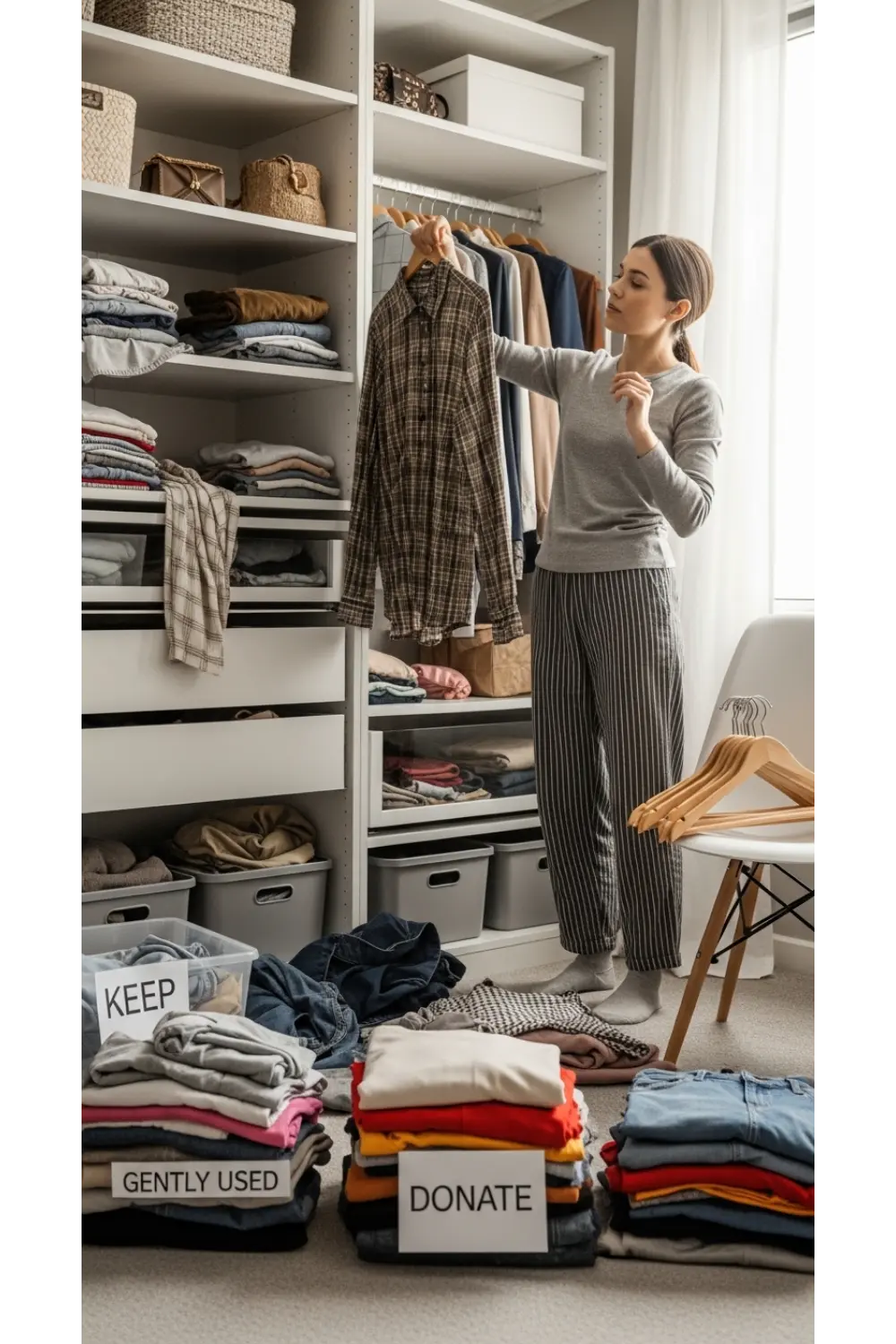
Regular decluttering is key to maintaining an organized closet. Over time, unused items build up and take valuable space. Removing what you no longer need keeps your closet functional and easy to manage.
It also helps you stay mindful of your habits. When you review your wardrobe often, you make better choices about what to keep and what to let go. This keeps your closet balanced and clutter free.
Pro tip: Follow a one in, one out rule to maintain control.
FAQs
How can I maximize space in a small closet without spending money?
Start by decluttering and rearranging what you already have. Use vertical folding, rotate seasonal items, and group similar clothing together. These simple changes can create noticeable space without any cost.
What is the most effective way to organize a small closet?
Focus on visibility and accessibility. When you can see everything clearly, it becomes easier to maintain order. Combining smart storage with regular upkeep delivers the best results.
How often should I declutter my closet?
Review your closet every three to four months. This keeps items relevant to your current needs and prevents clutter from building up over time.
Can small closets really feel spacious?
Yes, with the right approach. Using smart small closet organization hacks and maintaining good habits can make even the smallest closet feel open, functional, and easy to use.
Conclusion
A small closet does not limit you when you use it wisely. These small closet organization hacks focus on practical, realistic solutions that create more space and improve daily use. Each idea works together to build a closet that feels clean, efficient, and easy to manage.
Start with a few changes and build from there. Consistency matters more than perfection. When your closet supports your routine instead of slowing you down, it becomes a space that truly works for you.