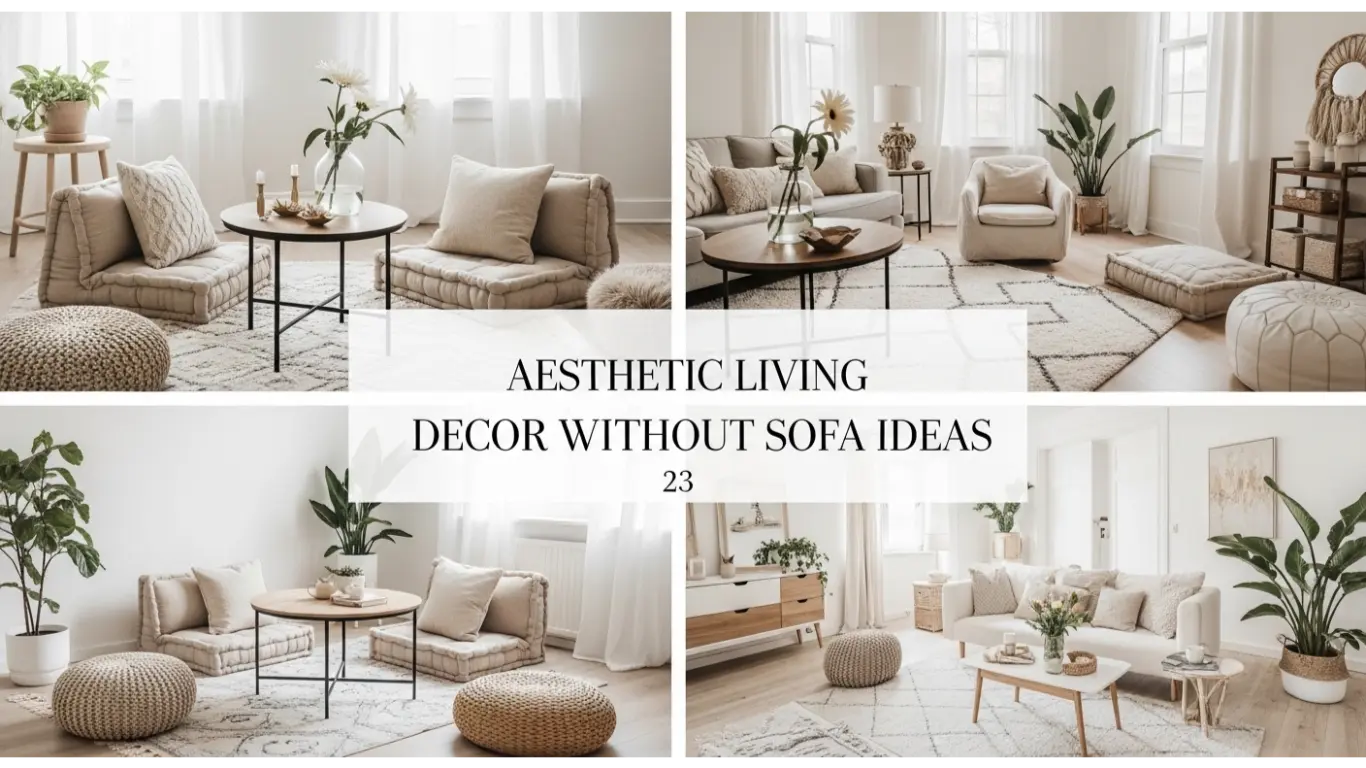
Aesthetic Living Room Decor Without Sofa Ideas 23
Creating a cozy and stylish space without a bulky couch is not only possible, it can feel more personal and creative. Many people now explore aesthetic living room decor without sofa setups to maximize space, improve flow, and build a unique vibe. This approach works well for small homes, minimalist lovers, and anyone who wants something different from the usual layout.
In this guide, you will discover fresh and practical ideas that blend comfort, beauty, and function. Each concept focuses on smart design, layered textures, and intentional styling. Whether you love boho, modern, or calm neutral tones, these ideas will help you design a space that feels inviting and visually balanced.
1. Floor Seating Lounge Setup
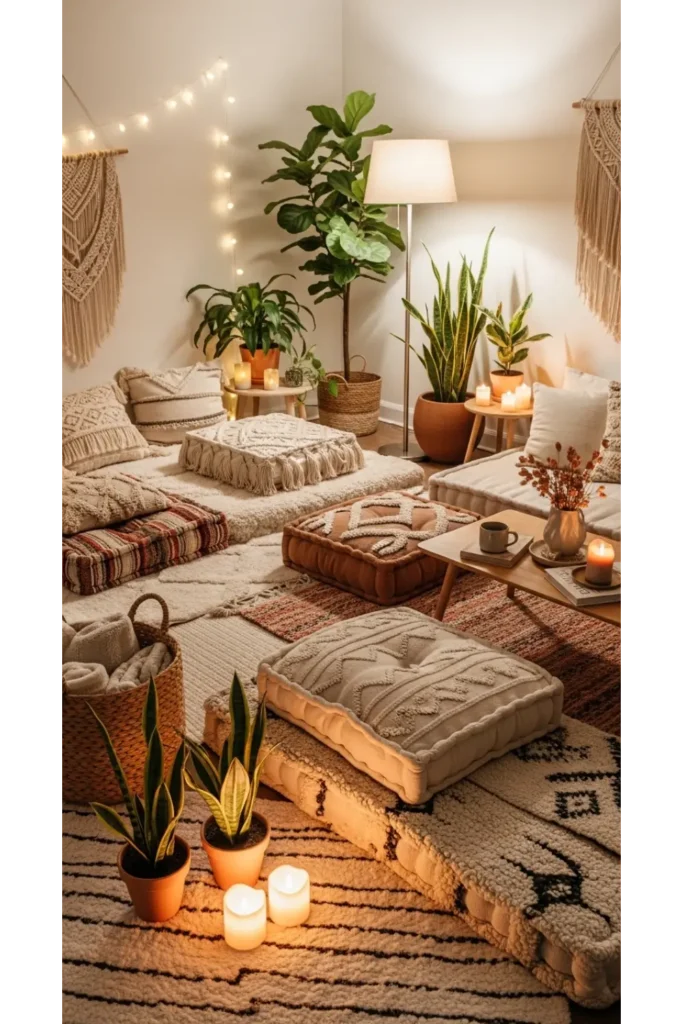
A aesthetic living room decor without sofa can feel warm and grounded when you design a floor seating area. Start with layered rugs to define the space and add depth. Place oversized cushions, poufs, and soft throws to create comfort. This setup encourages relaxation and makes the room feel more open and flexible.
Add warm lighting through floor lamps or lanterns to enhance the cozy feel. Use low wooden trays or a small coffee table to keep functionality. The key is to balance comfort and simplicity while keeping the area uncluttered and inviting for daily use or casual gatherings.
Pro tip: Choose cushions in different textures but keep a consistent color palette for a polished look.
2. Minimalist Tatami Style Corner
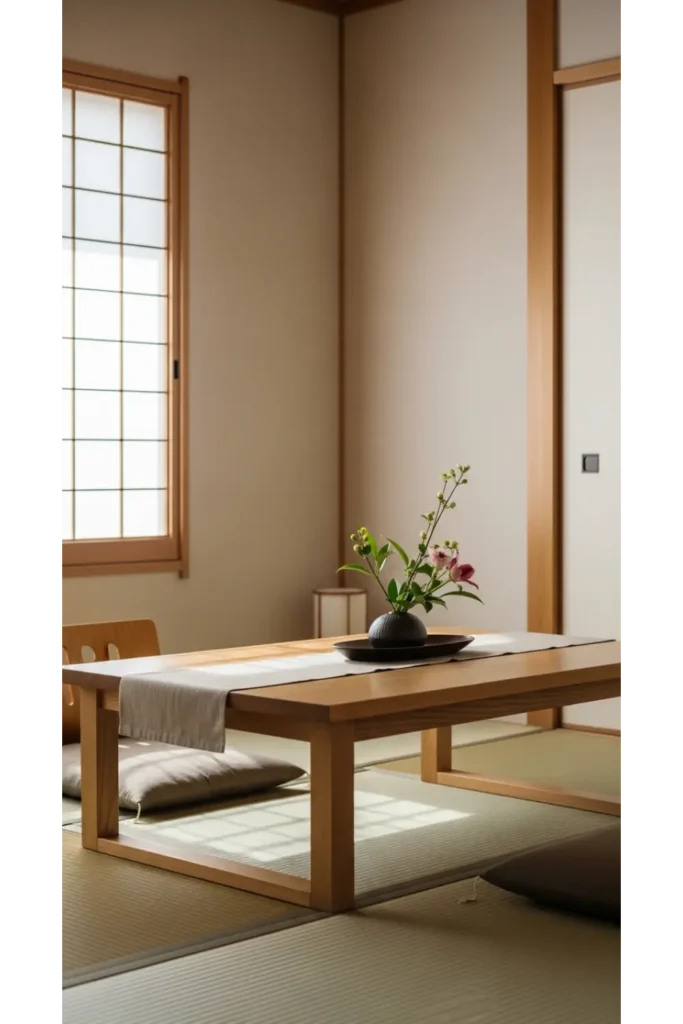
A tatami inspired corner brings calm energy into your space. Use thin floor mats and a low table to create a clean and grounded look. This idea suits anyone who loves minimalist living room decor and wants a peaceful environment without heavy furniture.
Keep the palette neutral with soft beige, cream, and light wood tones. Add one or two decor pieces like a ceramic vase or a small plant. This simplicity helps the room feel larger while promoting relaxation and mindful living.
Pro tip: Keep surfaces clear and only display items that add meaning or beauty.
3. Boho Cushion Haven
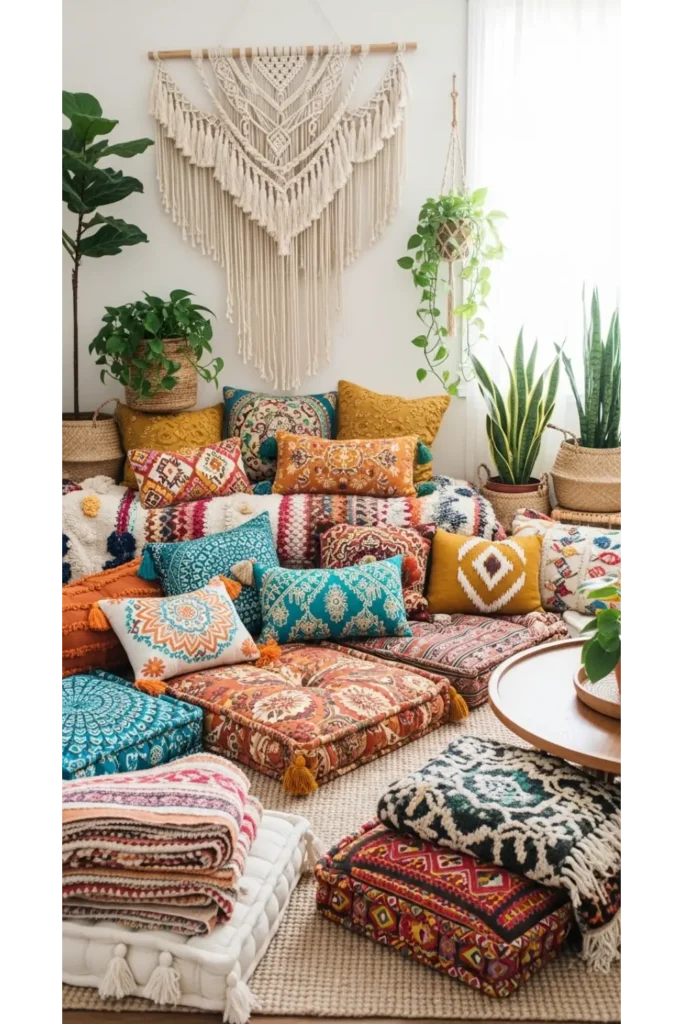
A boho style setup uses vibrant cushions and layered textiles to create a relaxed vibe. Arrange cushions in clusters to form a comfortable seating zone. Add woven rugs and throws to enhance the texture and visual appeal.
Decorate the walls with macrame, woven baskets, or hanging plants to complete the look. This approach creates a lively and inviting space that feels artistic and full of personality without relying on a traditional couch.
Pro tip: Mix patterns carefully and repeat colors to avoid a cluttered feel.
4. Window Nook Seating
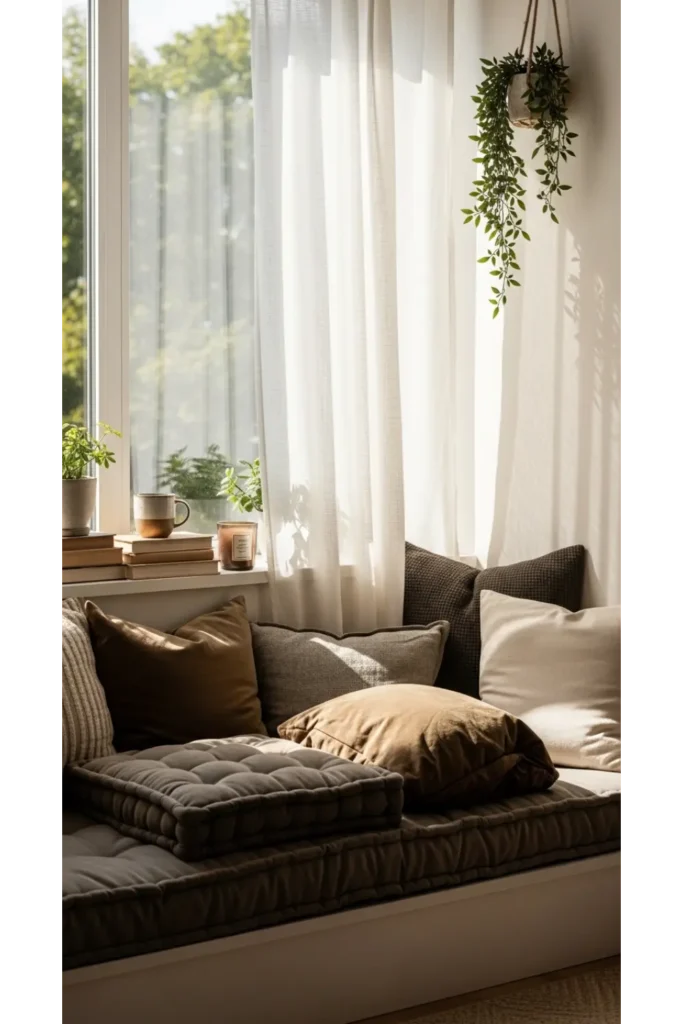
Transform a window area into a cozy seating nook. Place floor cushions or a slim bench along the window to create a relaxing spot for reading or enjoying natural light. This idea enhances both comfort and functionality.
Use sheer curtains to soften the light and add a gentle glow to the room. Add a small side table for books or tea to make the nook practical. This setup makes your living room feel brighter and more open.
Pro tip: Use light colored fabrics to reflect sunlight and keep the space airy.
5. Scandinavian Low Seating Layout
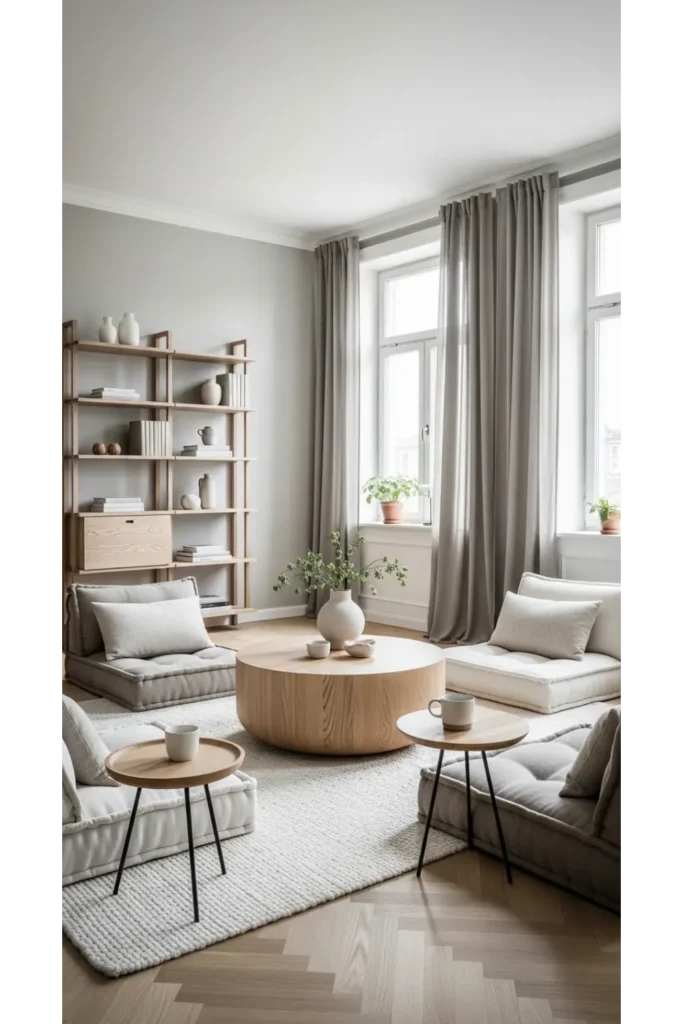
A Scandinavian approach focuses on simplicity and warmth. Use low seating options like floor chairs or compact stools paired with soft rugs. Stick to neutral tones like white, gray, and light wood to keep the space clean and calm.
Add soft textiles such as wool throws and simple decor pieces. This design keeps the room functional while maintaining a modern and cozy feel that works well in small or large spaces.
Pro tip: Add one statement piece like a textured rug to anchor the design.
6. Meditation Inspired Living Space
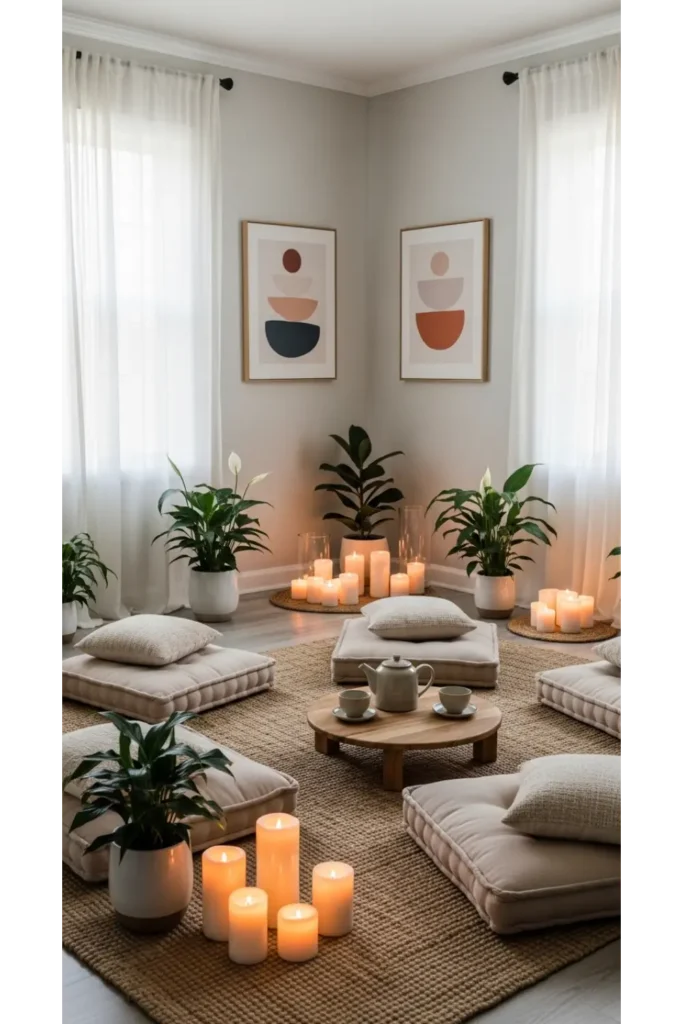
Design a living room that doubles as a meditation space. Use floor cushions arranged in a simple layout. Keep decor minimal to maintain a peaceful and focused environment.
Incorporate elements like candles, plants, and soft lighting to create a calming atmosphere. This setup encourages mindfulness and relaxation while still functioning as a living area.
Pro tip: Use calming scents like lavender to enhance the atmosphere.
7. Multi Functional Pouf Seating
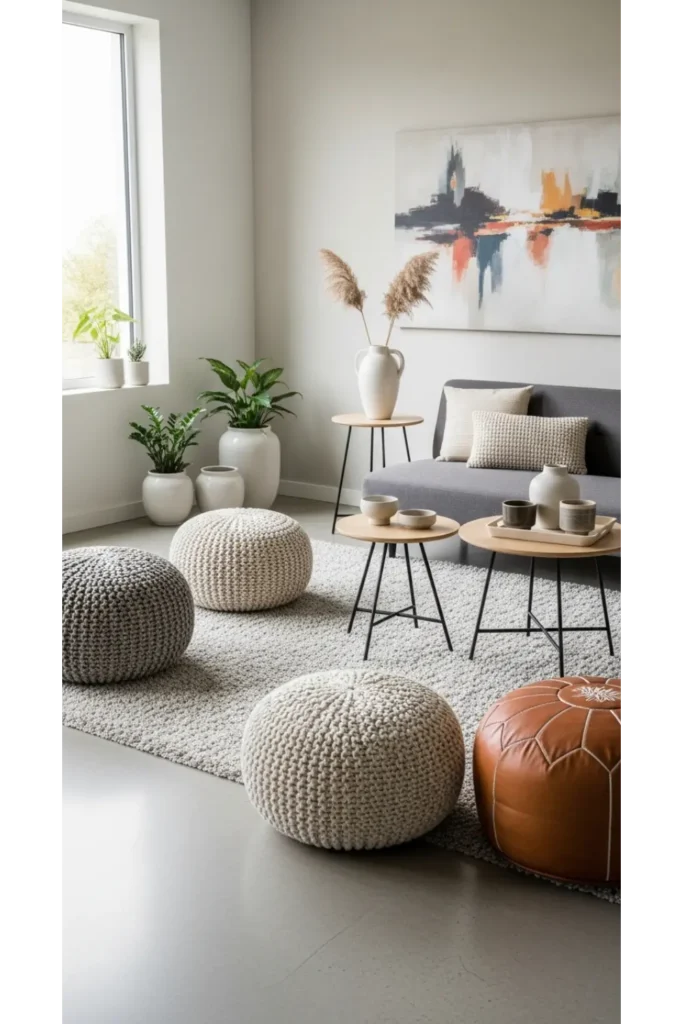
Poufs are versatile and stylish alternatives to sofas. Arrange multiple poufs to create flexible seating that can be moved easily. This works well for entertaining guests or changing layouts quickly.
Choose poufs in different sizes and textures to add visual interest. Pair them with a central rug and a small table to maintain structure. This idea blends practicality with modern style.
Pro tip: Select poufs with storage to maximize space efficiency.
8. Layered Rug Lounge
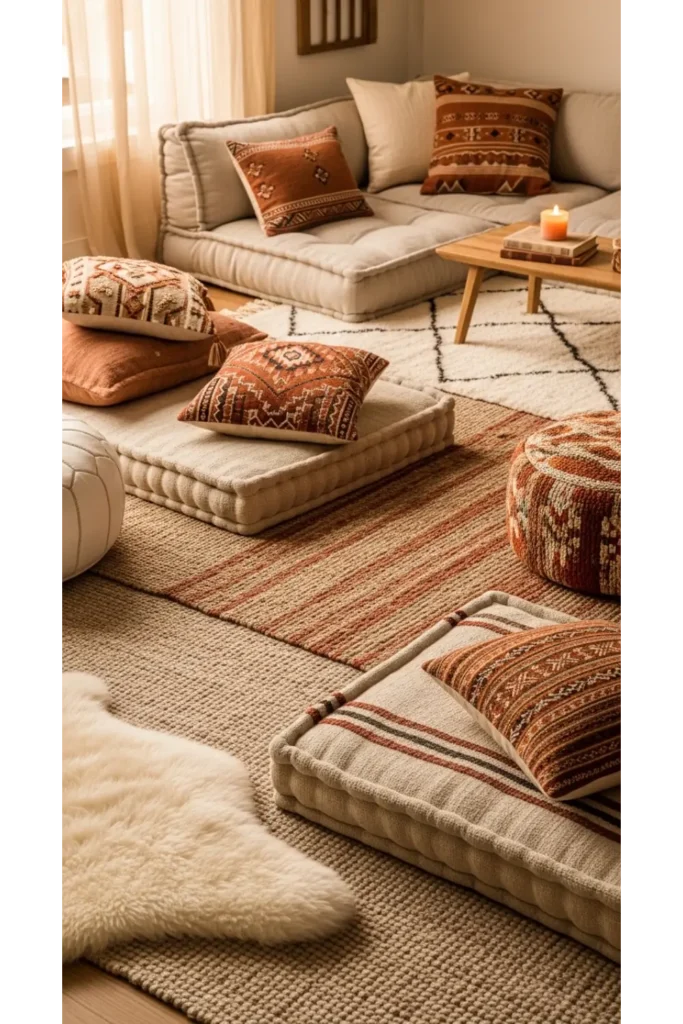
Layering rugs creates depth and defines a seating area without furniture. Place cushions or low seating options on top for comfort. This setup feels warm and inviting.
Use rugs with different textures but similar tones to keep harmony. This technique works especially well in open spaces where you want to create zones.
Pro tip: Start with a large base rug and layer smaller ones on top.
9. Low Bench Seating Arrangement
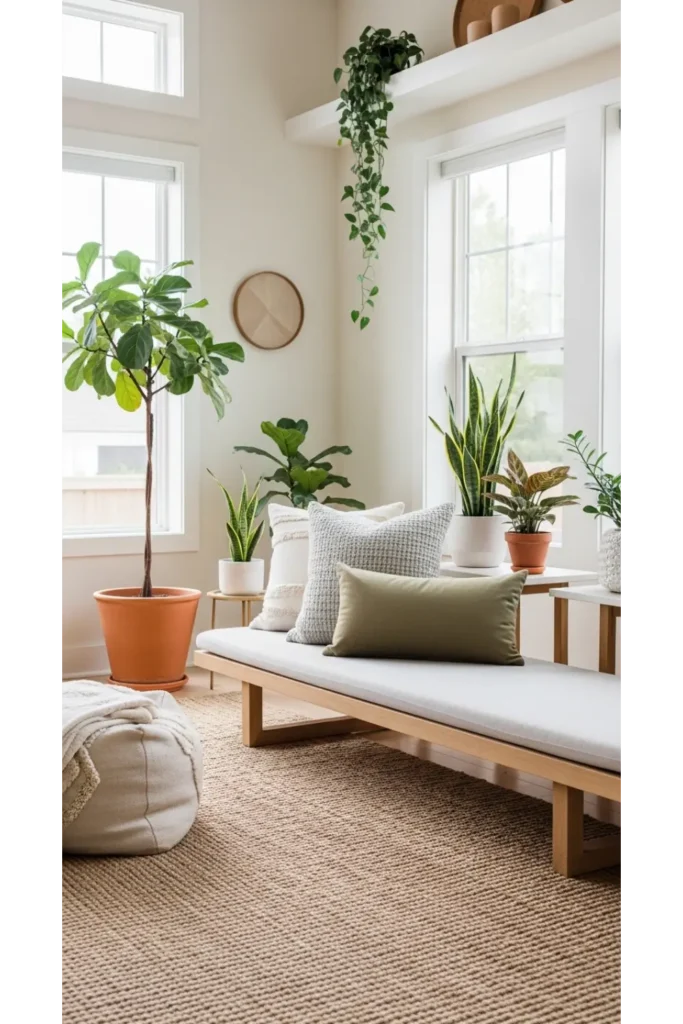
A low bench creates a structured seating option while keeping the space open. Place a wooden or upholstered bench along the wall and add cushions for comfort. This approach keeps your layout clean and functional without the heaviness of a sofa.
Style the area with a rug underneath and a small table nearby to complete the look. Add wall art or shelves above the bench to balance the vertical space and make the setup feel intentional and well designed.
Pro tip: Choose a bench with hidden storage to keep the room clutter free.
10. Cozy Corner Bean Bag Zone
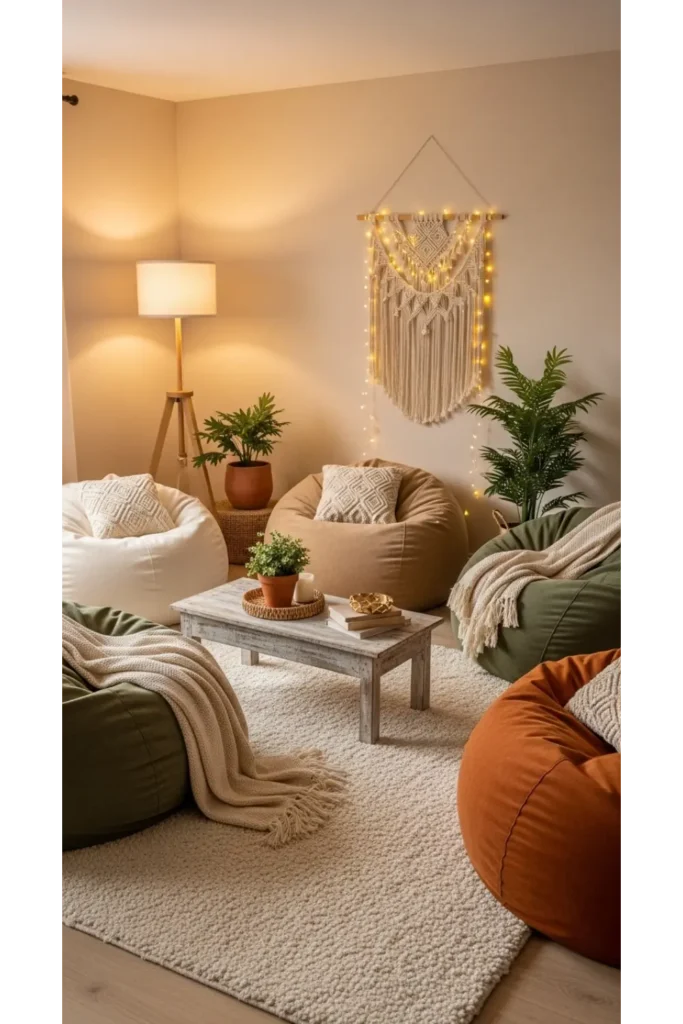
Bean bags bring a relaxed and casual feel to your space. Place them in a corner with a soft rug to create a cozy zone for lounging. This setup works well for informal spaces and adds a playful touch.
Use warm lighting and textured throws to enhance comfort. This idea suits small rooms where flexibility matters and allows you to easily move seating when needed.
Pro tip: Pick neutral or earthy tones to keep the space looking mature and stylish.
11. Reading Lounge with Floor Chairs
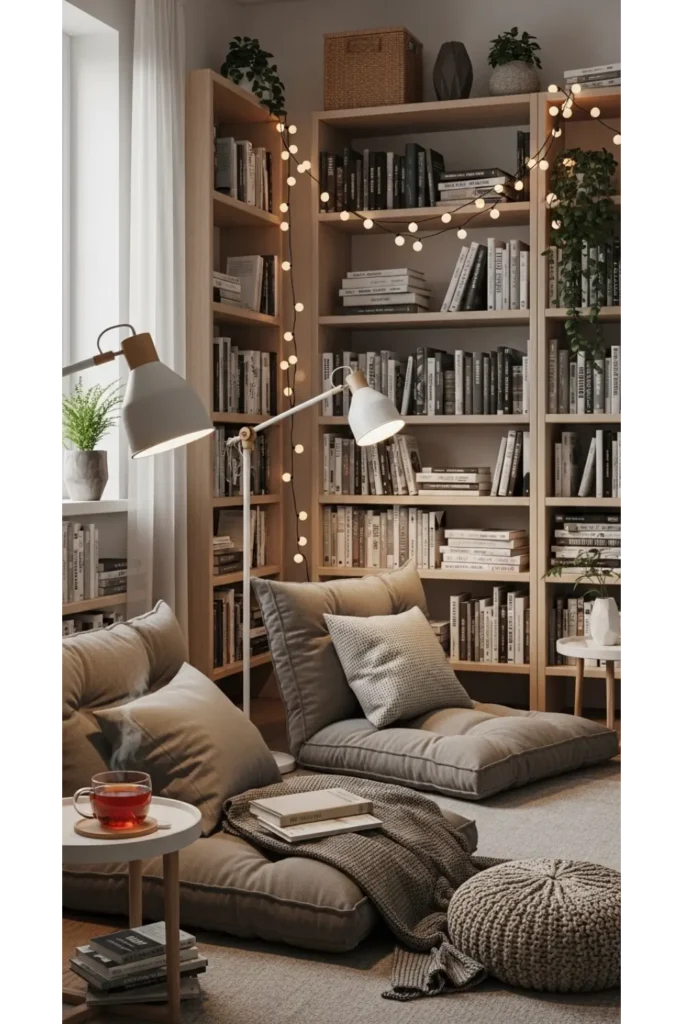
Create a reading focused area using floor chairs with back support. Pair them with a small bookshelf and a side table for functionality. This setup encourages relaxation and adds purpose to your living room.
Use soft lighting and calming colors to create a peaceful vibe. This design blends comfort with practicality while keeping the room uncluttered and inviting.
Pro tip: Add a floor lamp with adjustable light for better reading comfort.
12. Open Space Minimal Layout
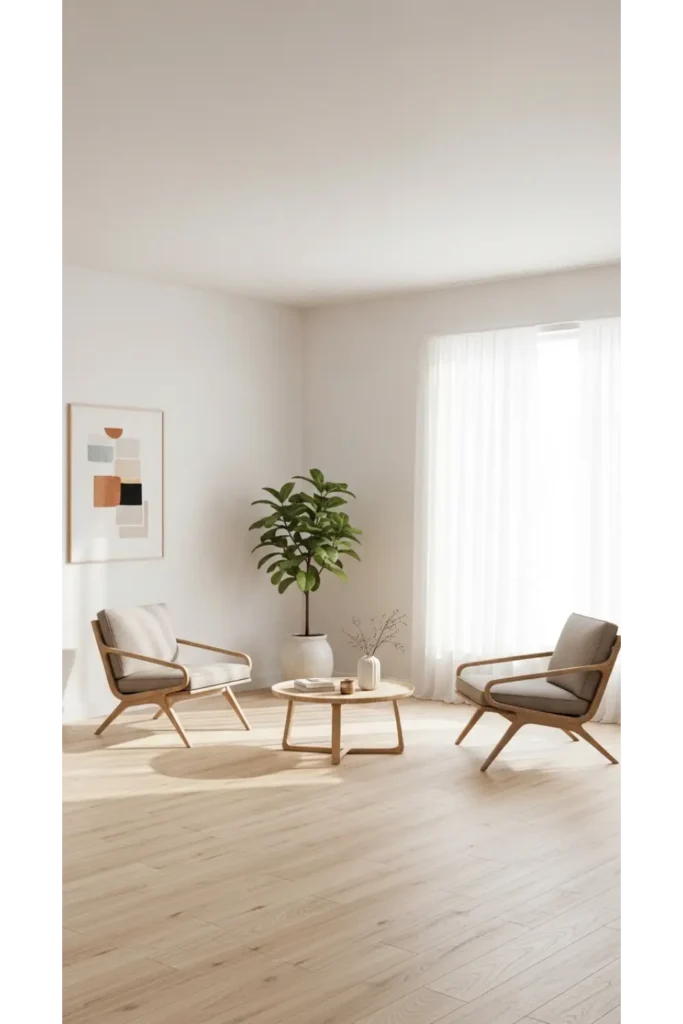
An open layout keeps the space simple and airy. Use minimal decor and avoid heavy furniture to create a clean look. This approach works well for modern homes and promotes easy movement.
Focus on a few key pieces like a rug and a statement plant. This balance helps maintain visual interest without overcrowding the room.
Pro tip: Stick to a limited color palette for a cohesive design.
13. Traditional Carpet Sitting Area
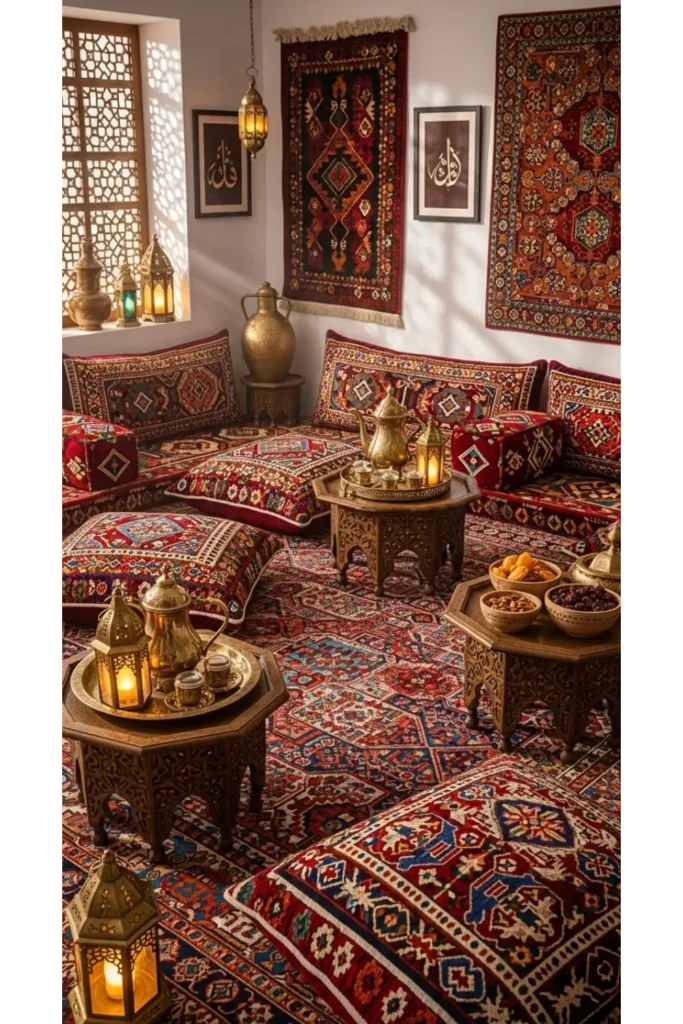
A carpet based seating area adds warmth and cultural charm. Spread a large patterned carpet and place cushions around it to form a seating circle. This idea feels welcoming and social.
Use rich colors and textures to enhance the traditional feel. Add decorative elements like lanterns or artwork to complete the look.
Pro tip: Choose durable fabrics for cushions to handle daily use.
14. Indoor Picnic Style Setup
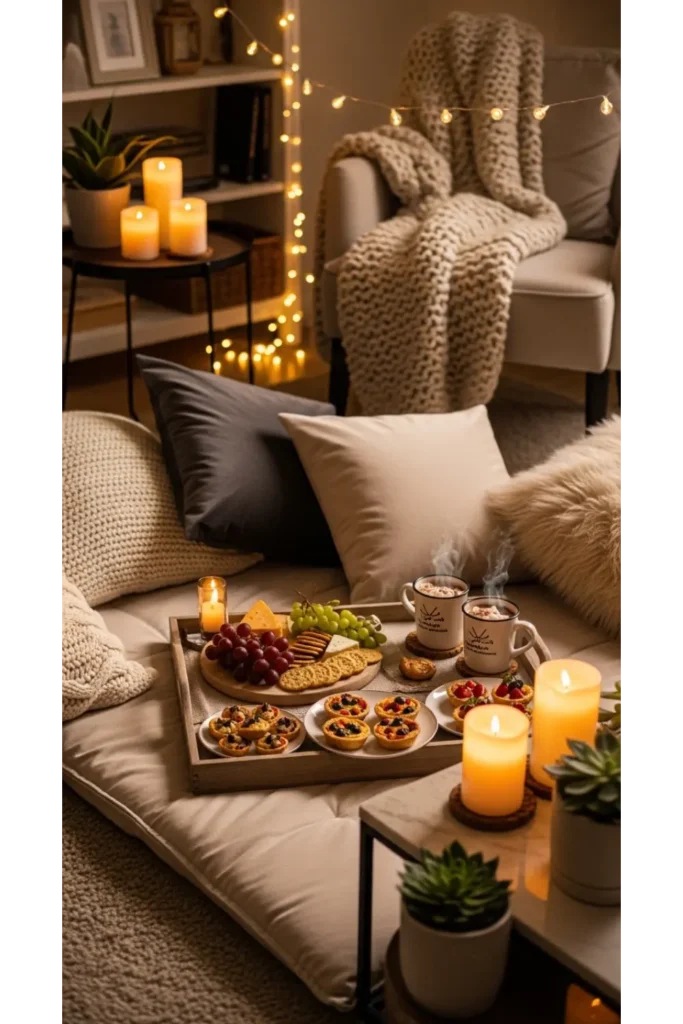
Bring a playful vibe with an indoor picnic style layout. Use a large mat or blanket and scatter soft pillows for seating. This setup feels relaxed and unique.
Add fairy lights or candles to create a warm atmosphere. This idea works well for casual gatherings or quiet evenings.
Pro tip: Use washable fabrics for easy maintenance.
15. Art Focused Sitting Space
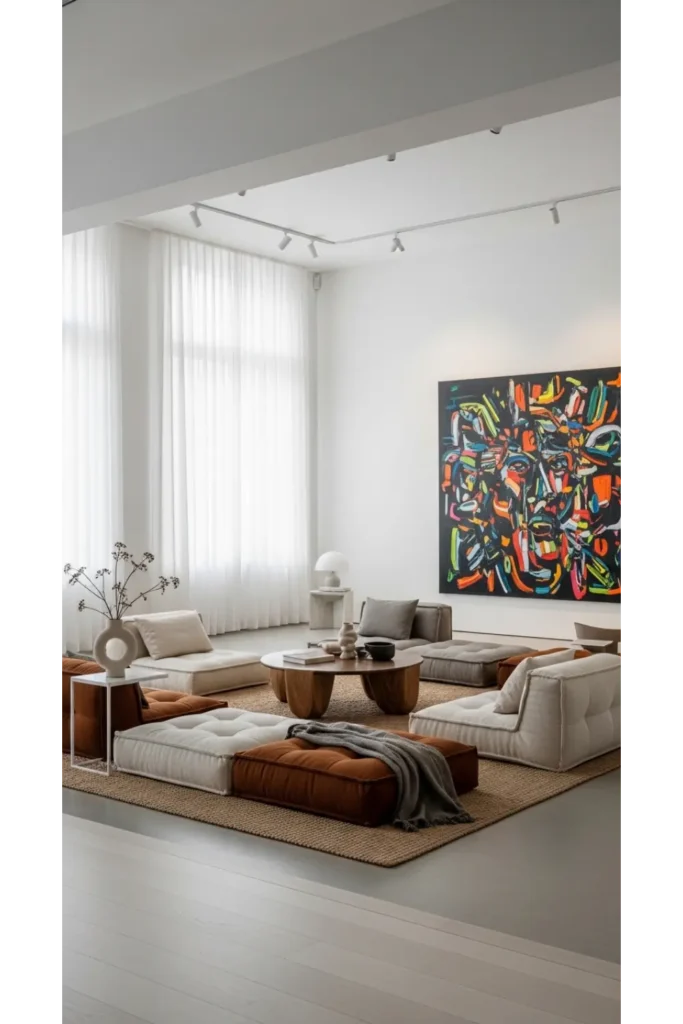
Let art take center stage by keeping seating low and simple. Use floor cushions and keep the walls filled with artwork. This creates a gallery like feel.
The minimal seating allows the decor to shine while still providing comfort. This idea suits creative individuals who want a bold and expressive space.
Pro tip: Use lighting to highlight key art pieces.
16. Neutral Tone Cushion Cluster
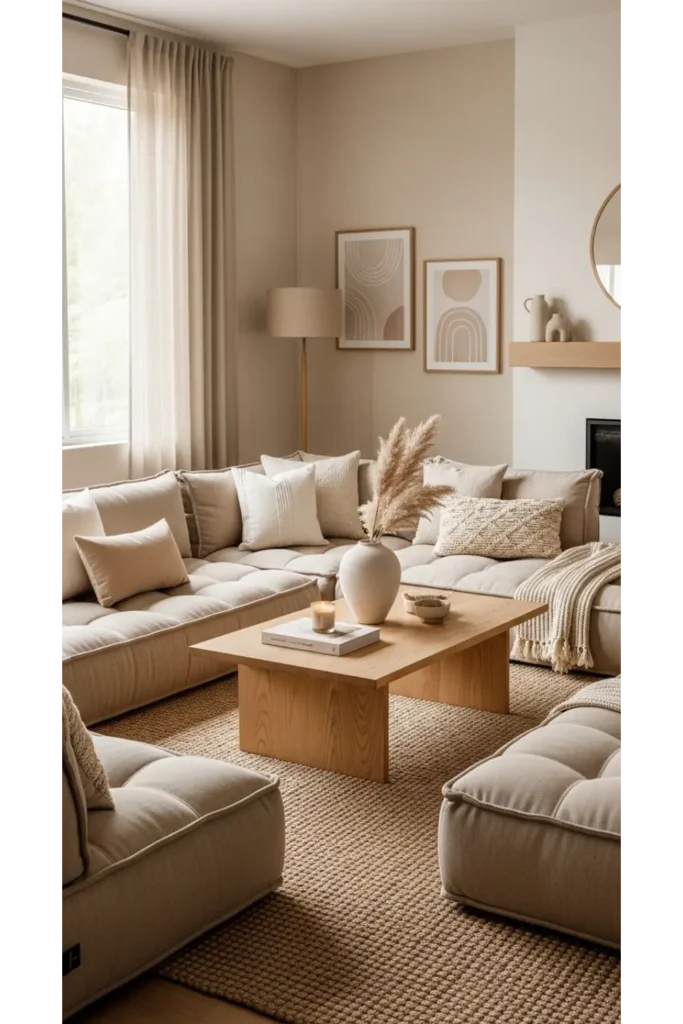
Create a calm space with cushions in soft neutral shades. Arrange them in clusters to form a comfortable seating area. This design feels peaceful and balanced.
Use textures like linen and cotton to add depth without adding color. This approach keeps the room visually soothing.
Pro tip: Add one darker shade for subtle contrast.
17. Rustic Floor Seating Style
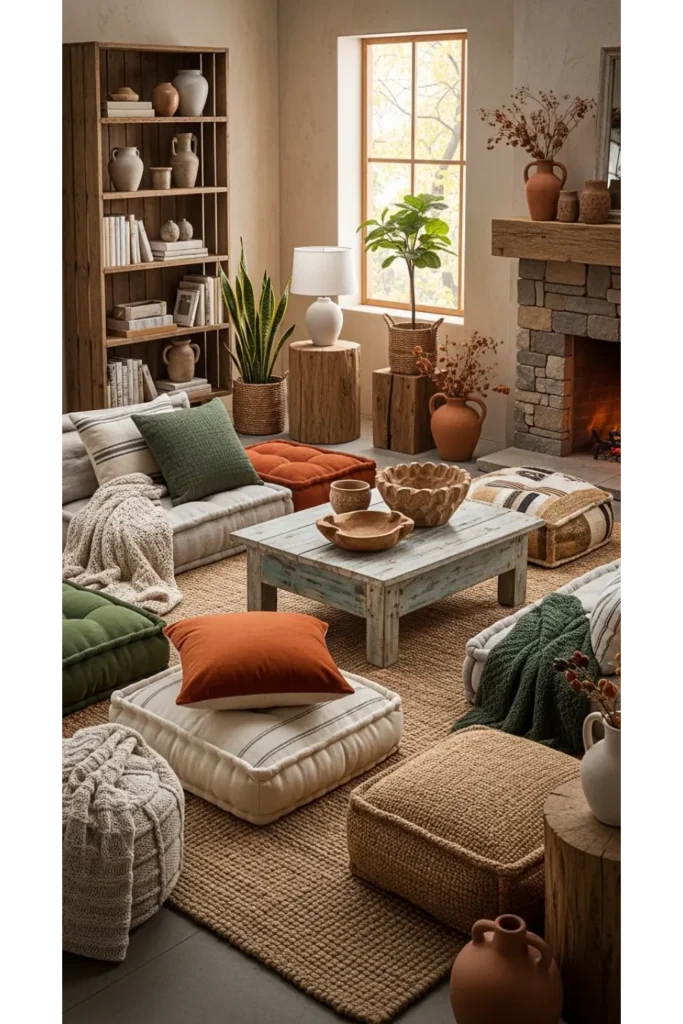
A rustic setup uses natural materials like wood and woven fabrics. Place floor cushions on a textured rug and add wooden accents. This creates a warm and grounded look.
Use earthy tones to enhance the natural feel. This idea works well for those who love a cozy and organic style.
Pro tip: Incorporate handmade decor for authenticity.
18. Compact Studio Living Layout
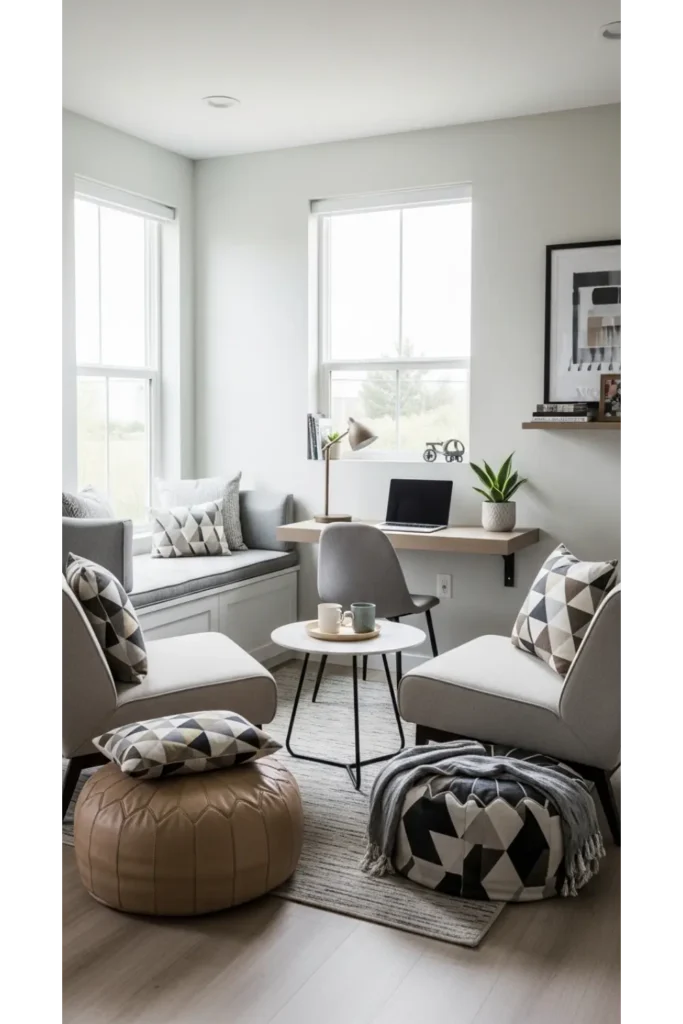
In a small studio, skip the sofa and use compact seating like poufs and floor chairs. This keeps the space flexible and open. Arrange pieces to create zones for living and relaxing.
Use smart storage solutions to keep everything organized. This setup makes small spaces feel larger and more functional.
Pro tip: Use mirrors to create an illusion of space.
19. Zen Inspired Calm Area
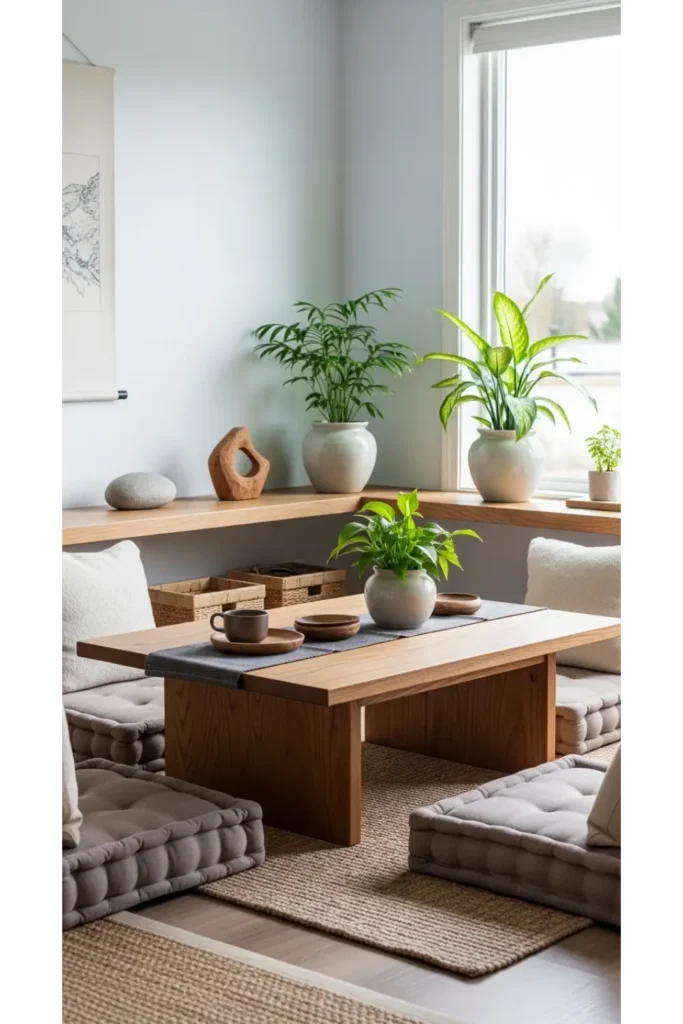
A zen inspired layout focuses on simplicity and calmness. Use minimal seating and keep decor intentional. Add plants and natural textures to enhance the peaceful vibe.
This setup encourages relaxation and mindfulness. It also helps reduce visual clutter and stress.
Pro tip: Keep colors soft and natural for a calming effect.
20. Creative Mix and Match Seating
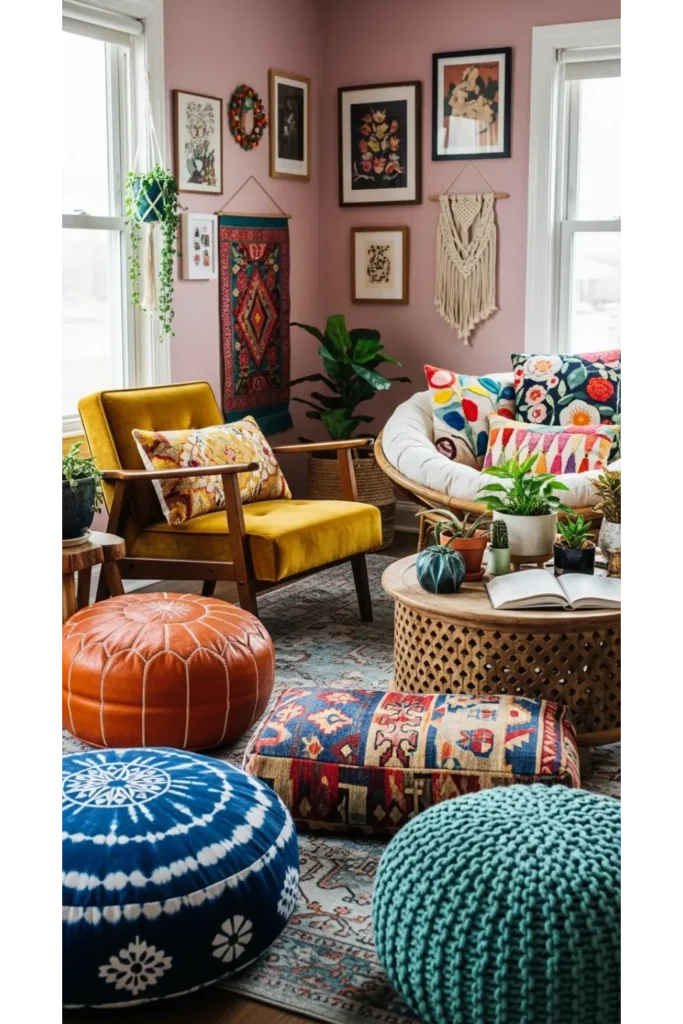
Mix different seating types like poufs, cushions, and stools. This creates a dynamic and flexible layout. It allows you to adjust the space based on your needs.
Use colors and textures to tie everything together. This idea suits those who enjoy a lively and creative environment.
Pro tip: Repeat one color across elements to maintain harmony.
21. Modern Japandi Style Seating
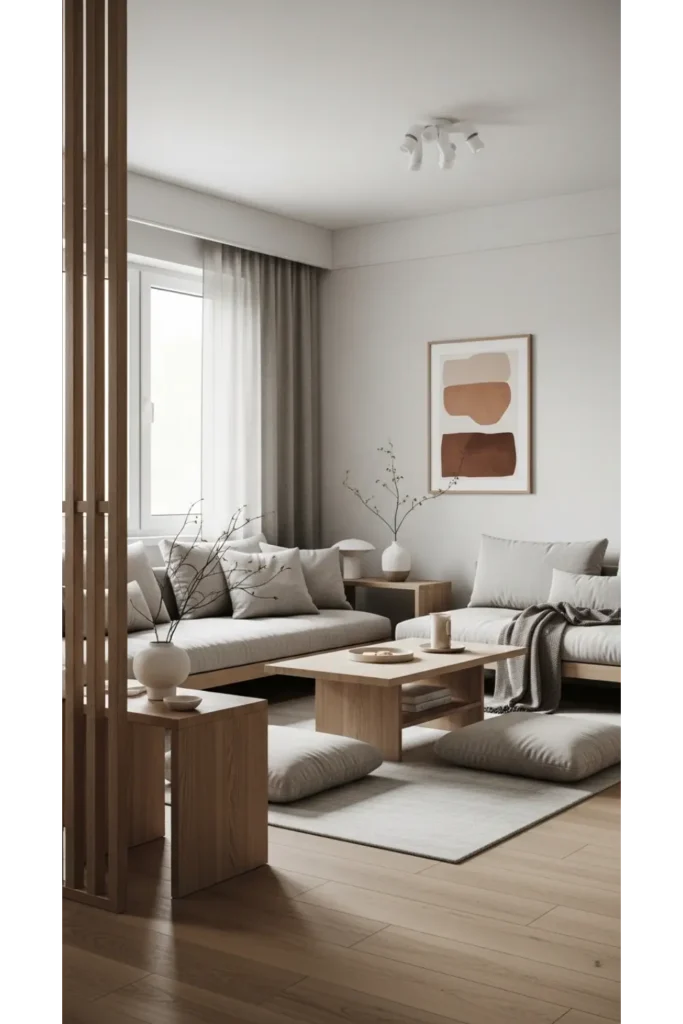
Japandi style blends Japanese and Scandinavian design. Use low seating with clean lines and natural materials. This creates a calm and modern look.
Keep decor minimal and focus on quality over quantity. This approach results in a balanced and elegant space.
Pro tip: Choose functional decor that also looks beautiful.
22. Soft Lounge with Throw Layers
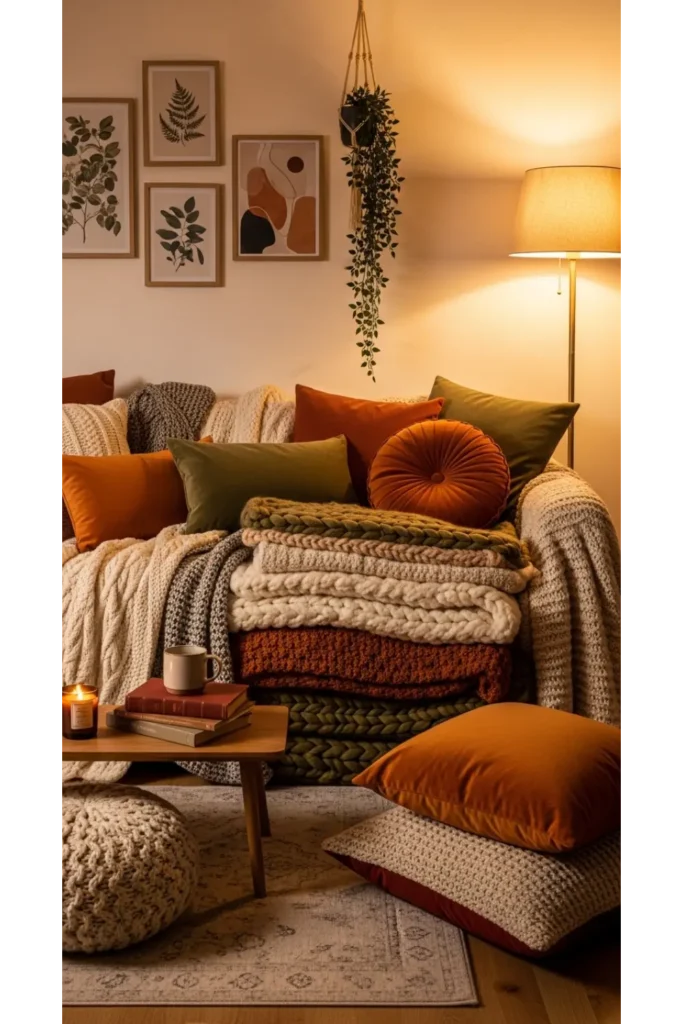
Layering throws and cushions creates a soft and inviting lounge. Place them over rugs to build a comfortable seating area. This setup feels warm and relaxed.
Use different fabrics to add depth while keeping colors coordinated. This idea works well for cozy evenings.
Pro tip: Use seasonal fabrics to refresh the look.
23. Green Living Space with Floor Seating
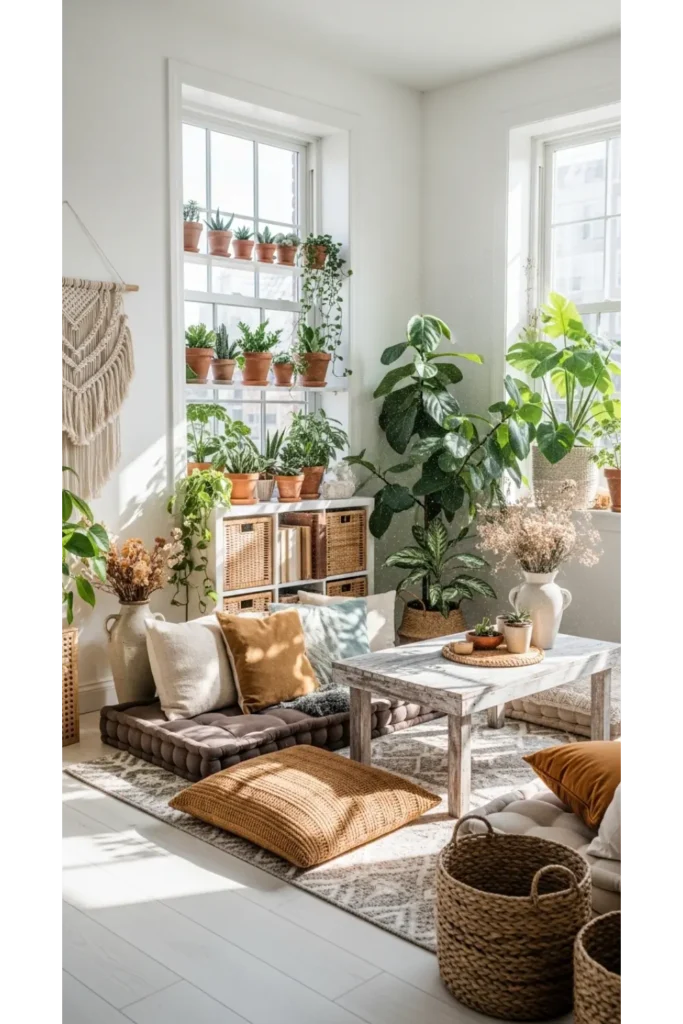
Bring nature indoors by surrounding your seating area with plants. Use floor cushions and keep the layout open. This creates a fresh and lively environment.
Natural light enhances the greenery and makes the room feel vibrant. This setup improves both mood and air quality.
Pro tip: Use plants of different heights to create visual interest.
FAQs
What can replace a sofa in a living room?
You can use floor cushions, poufs, benches, or low chairs. These options provide comfort while keeping the space flexible and open.
Is a living room without a sofa practical?
Yes, it can be very practical. It often improves movement, saves space, and allows more creative layouts that suit your lifestyle.
How do I make it look cozy without a sofa?
Use soft textiles, warm lighting, and layered decor. Rugs, cushions, and throws help create a comfortable and inviting atmosphere.
Which style works best for this setup?
Minimalist, boho, and Scandinavian styles work very well. They focus on simplicity, comfort, and thoughtful design.
Conclusion
Designing a living room without a sofa opens up new creative possibilities. It allows you to shape a space that feels personal, flexible, and visually unique. By using elements like cushions, rugs, and low seating, you can create a setup that balances comfort and style.
These ideas show that you do not need traditional furniture to build a beautiful home. With the right approach, your living room can feel more open, functional, and aligned with your lifestyle.