

23 Cozy Living Room Ideas for a Warm, Inviting Home
1. Soft Neutrals That Feel Instantly Welcoming
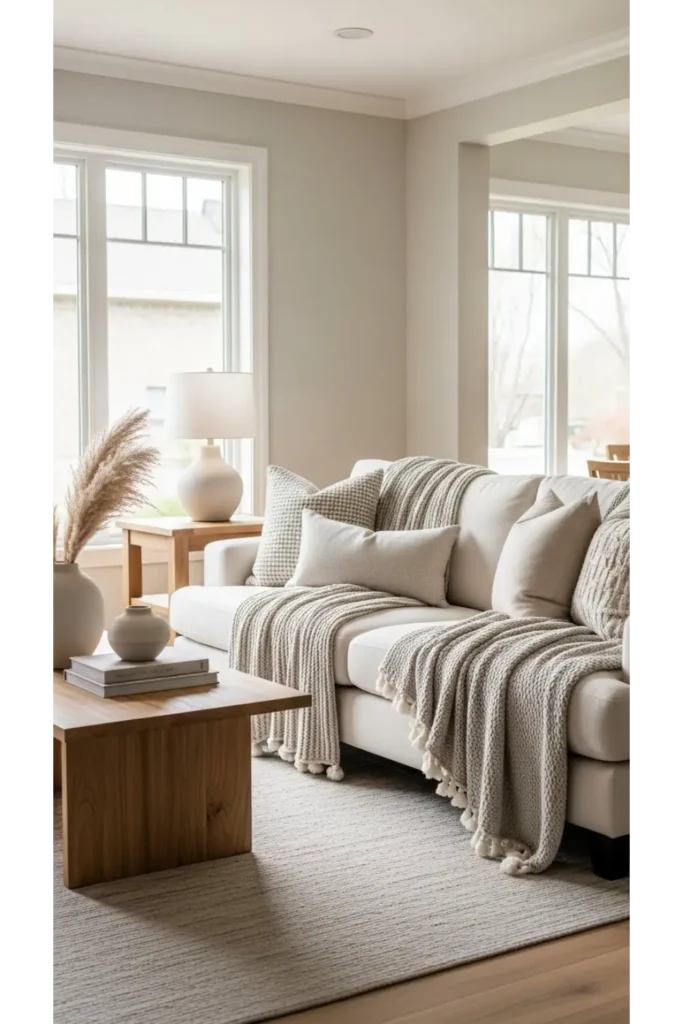
Creating cozy living room ideas often starts with a calm, neutral color palette that instantly relaxes the eye. Cream, beige, soft gray, and warm taupe work together to form a peaceful foundation. These shades reflect light beautifully, making the room feel open while still intimate. Layering subtle variations of the same tone adds depth without visual clutter, which helps the space feel balanced and lived in. Discover even more beautiful living room decor inspiration in our full collection here.
Neutrals also allow texture to shine. Linen sofas, woven baskets, and soft wool rugs introduce warmth without relying on bold colors. When paired with warm lighting and natural materials, the room feels comforting and timeless. This approach works well for both small apartments and larger homes, offering flexibility as seasons and personal tastes change.
2. Layered Lighting for a Gentle Glow
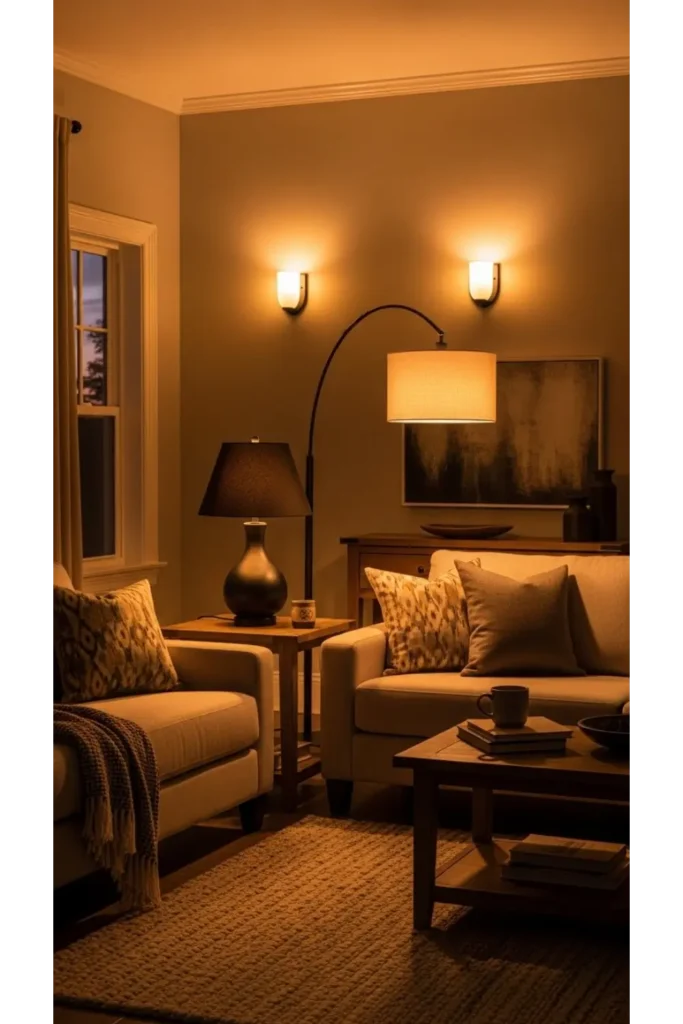
Lighting shapes how a living room feels more than almost any other element. Layered lighting uses multiple sources such as table lamps, floor lamps, and wall sconces to create a soft, welcoming glow. Instead of relying on a single overhead fixture, these layers help the space feel relaxed and adaptable for different moods and activities throughout the day.
Warm bulbs make a big difference in comfort. They soften shadows and reduce harsh contrast, which encourages rest and conversation. Placing lamps at varying heights spreads light evenly and adds visual interest. Thoughtful lighting design turns an ordinary living room into a place where people naturally want to gather and stay longer.
3. Plush Textiles That Invite You In
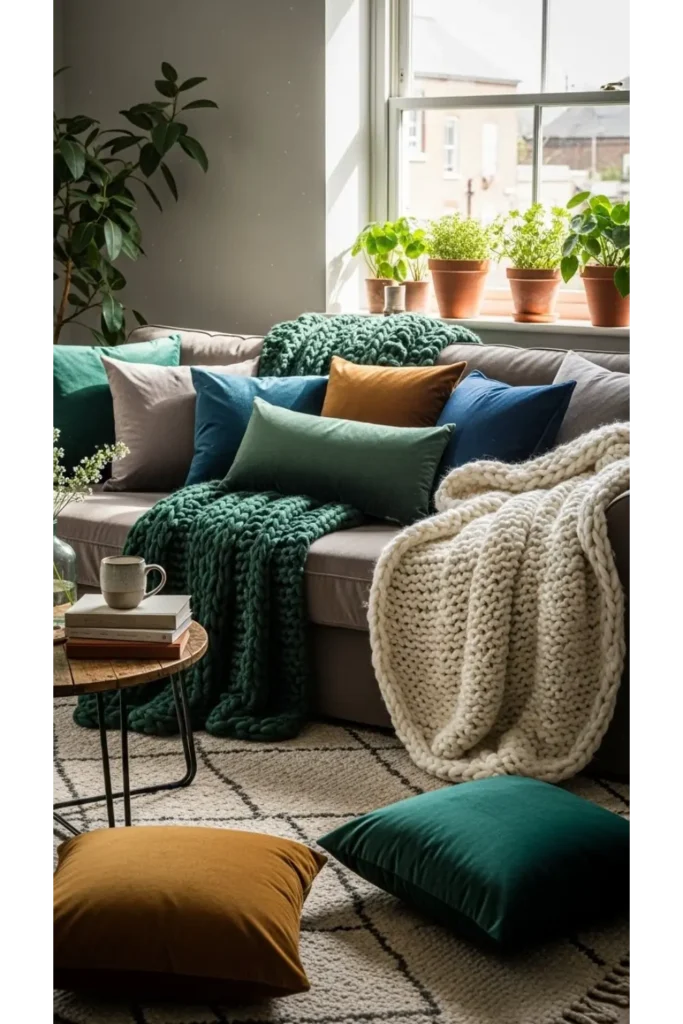
Soft textiles instantly raise the comfort level of a living room. Throw blankets draped over sofas, velvet cushions, and thick area rugs create a sense of warmth that feels both physical and emotional. These materials encourage people to sit down, relax, and settle into the space without feeling formal or stiff.
Mixing textures keeps the room visually rich while maintaining harmony. Pair smooth fabrics with chunky knits or faux fur for contrast. Choose colors that complement your main palette so the room stays cohesive. Textiles are easy to switch seasonally, which keeps the living room feeling fresh while staying inviting year round.
4. Natural Wood for Organic Warmth
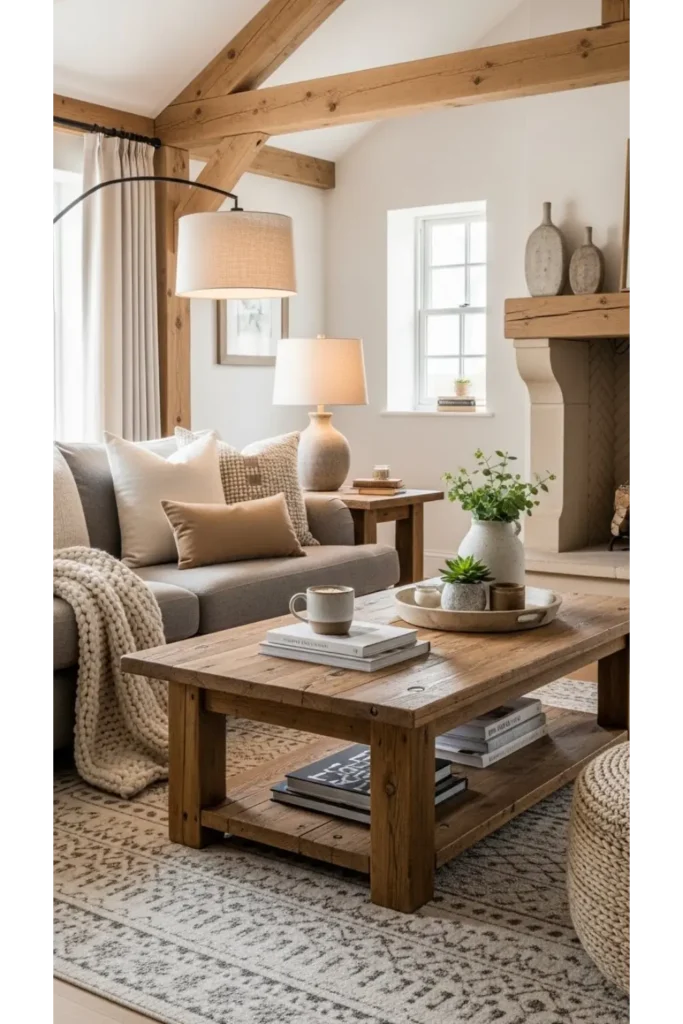
Wood adds instant warmth and authenticity to a living room. Whether through a coffee table, shelving, or exposed beams, natural wood tones ground the space and connect it to nature. Lighter woods feel airy and modern, while darker finishes create depth and richness that enhance a cozy atmosphere.
Combining wood with soft fabrics and warm lighting creates balance. The contrast between hard and soft elements makes the room feel layered and intentional. Wood also ages beautifully, developing character over time. This makes it a smart long term choice for anyone designing a living room meant to feel welcoming for years.
5. Deep Seating That Encourages Relaxation
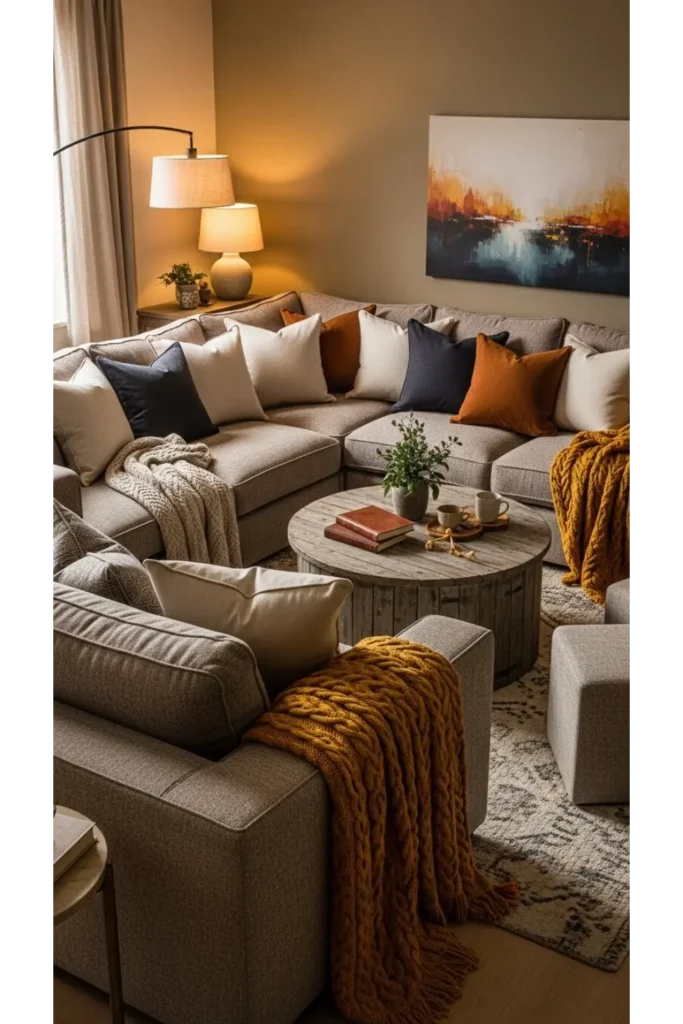
Comfortable seating defines how people use a living room. Deep sofas and sectionals invite you to lounge, curl up, or stretch out after a long day. These pieces create a relaxed tone that encourages conversation and downtime rather than formal sitting.
Choosing supportive cushions matters just as much as depth. Look for seating that balances softness with structure so it feels good over time. Arrange furniture to promote connection, keeping seats close enough for easy conversation. When seating feels good, the entire room becomes more welcoming and functional.
6. Area Rugs That Anchor the Space
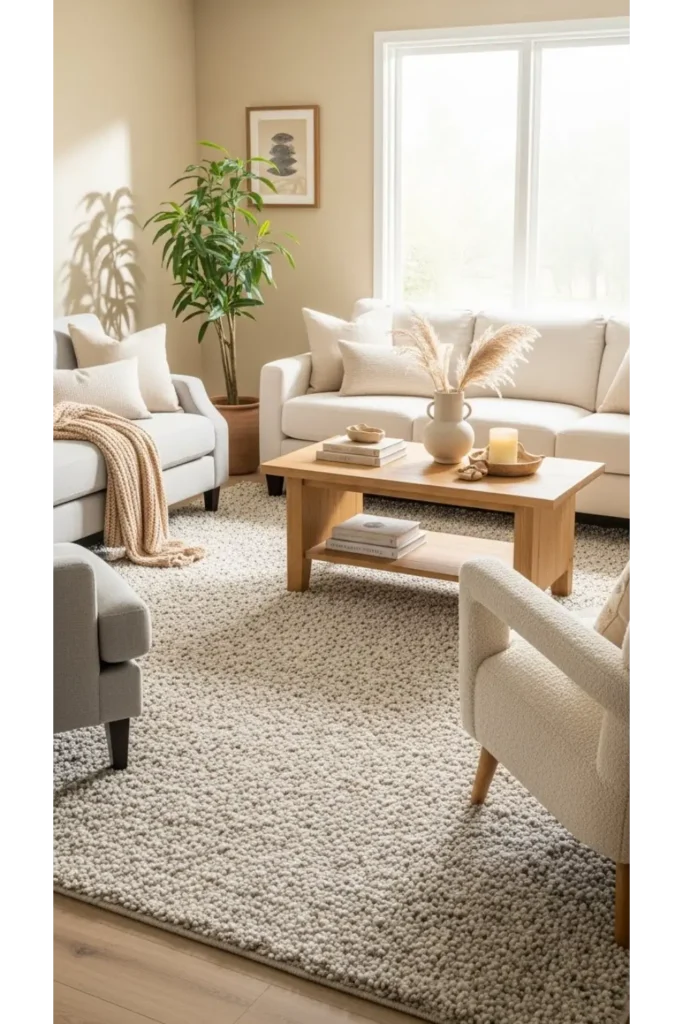
An area rug brings a living room together both visually and physically. It defines the seating area and adds softness underfoot, which instantly boosts comfort. Rugs also absorb sound, helping the room feel quieter and more peaceful, especially in open floor plans.
Texture plays a key role in coziness. Woven, shag, or wool rugs add warmth and depth without overwhelming the design. Choosing the right size matters, since a rug that fits properly makes the room feel intentional. A well chosen rug grounds the space and enhances its inviting nature.
7. Fireplace as a Natural Focal Point
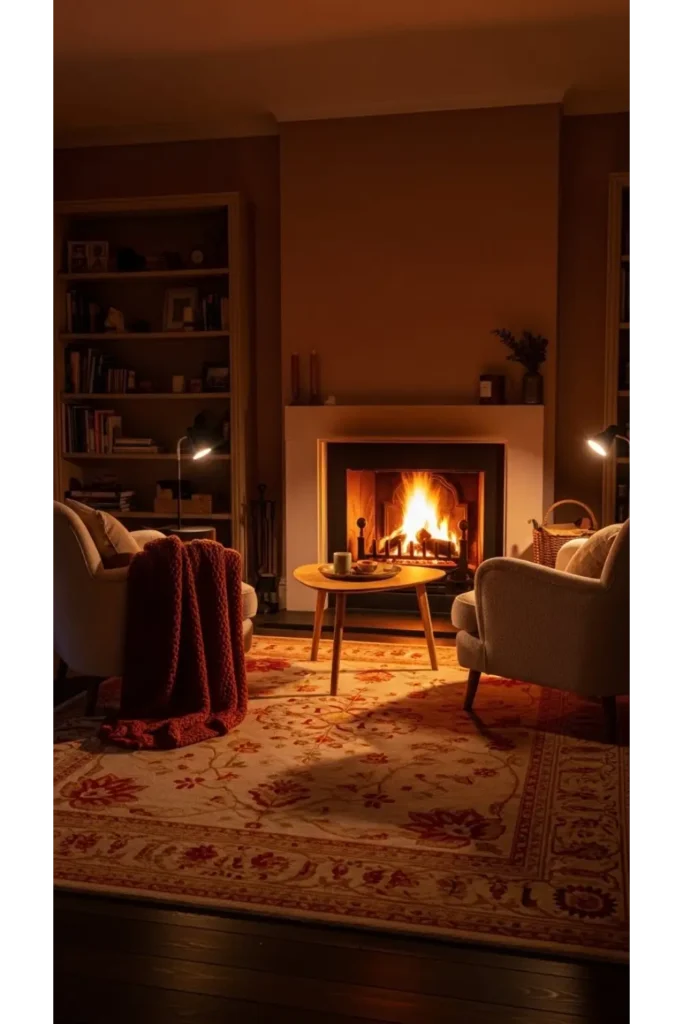
A fireplace naturally draws people in and sets a cozy tone for the entire living room. Whether traditional or modern, it provides warmth both visually and physically. Arranging seating around it creates a sense of connection and encourages lingering conversations.
Even when not in use, a fireplace adds character. Styling the mantel with simple decor keeps it from feeling cluttered. Soft lighting and comfortable seating nearby amplify the effect. The fireplace becomes the heart of the room, anchoring the design and enhancing comfort.
8. Warm Color Accents That Add Life
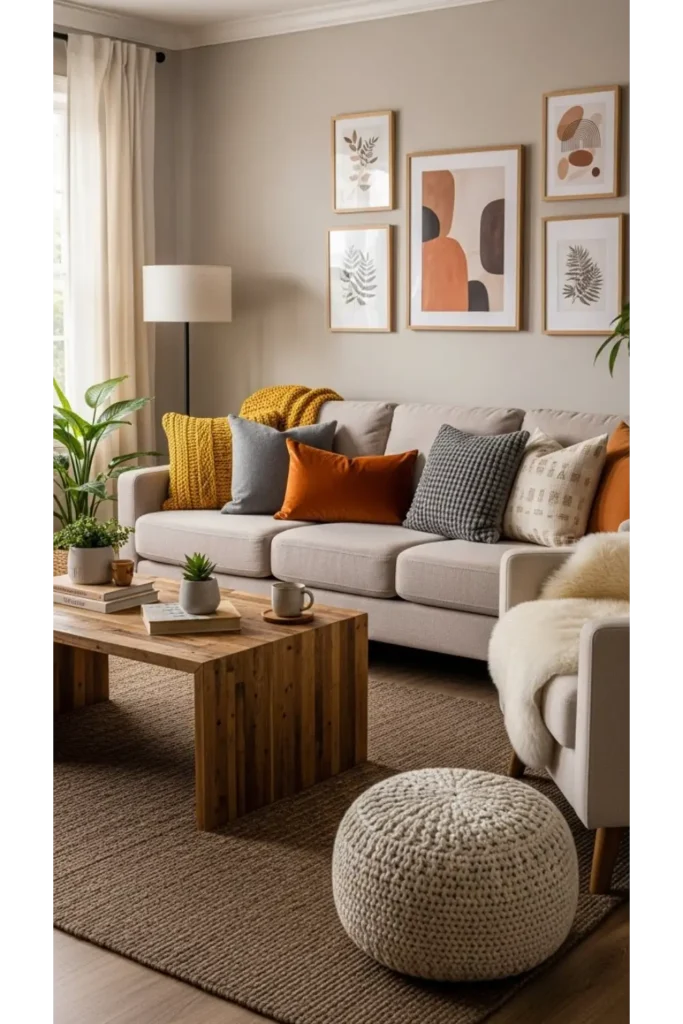
While neutrals form a calming base, warm accent colors bring energy and personality. Shades like rust, terracotta, muted mustard, and deep olive add richness without overpowering the room. These colors feel grounded and comforting, especially when used in small doses.
Accent colors work best through pillows, art, and decor. This approach keeps the space flexible and easy to update. Warm tones naturally complement wood and soft textiles, creating a cohesive look. Thoughtful color accents help the living room feel lively yet still relaxed.
9. Thoughtful Furniture Layouts
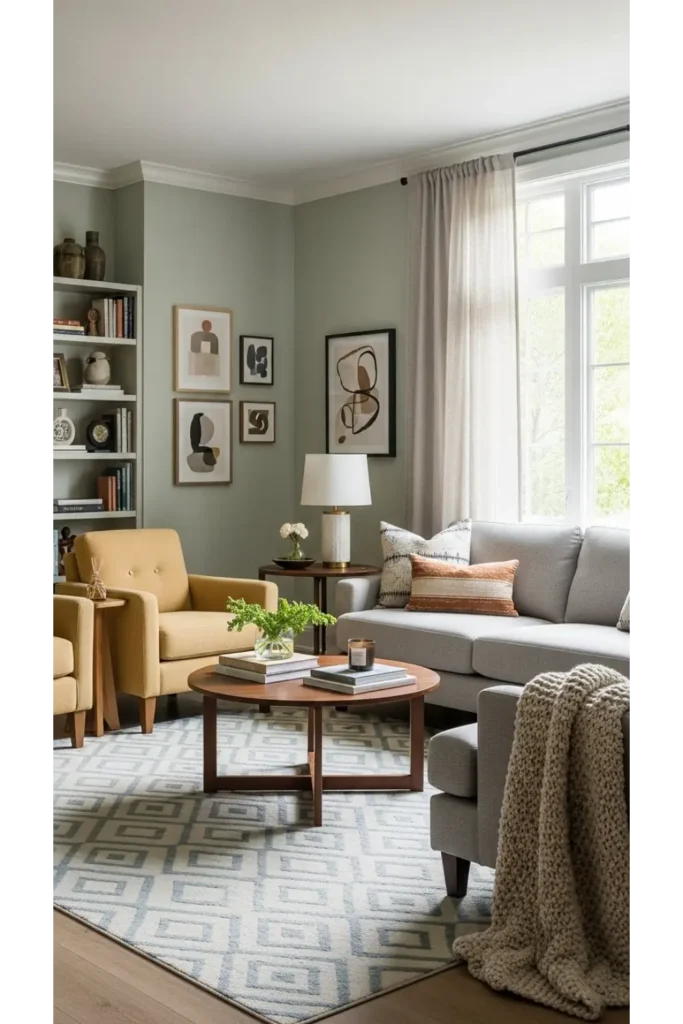
How furniture is arranged affects how a living room feels and functions. A thoughtful layout encourages conversation and movement without feeling crowded. Pulling furniture slightly away from walls often creates a more intimate and welcoming atmosphere.
Focus on balance and flow. Leave clear pathways and ensure seating faces one another when possible. This setup makes the room feel intentional and human centered. When people can move easily and sit comfortably, the space naturally feels more inviting and relaxed.
10. Personal Decor That Tells a Story
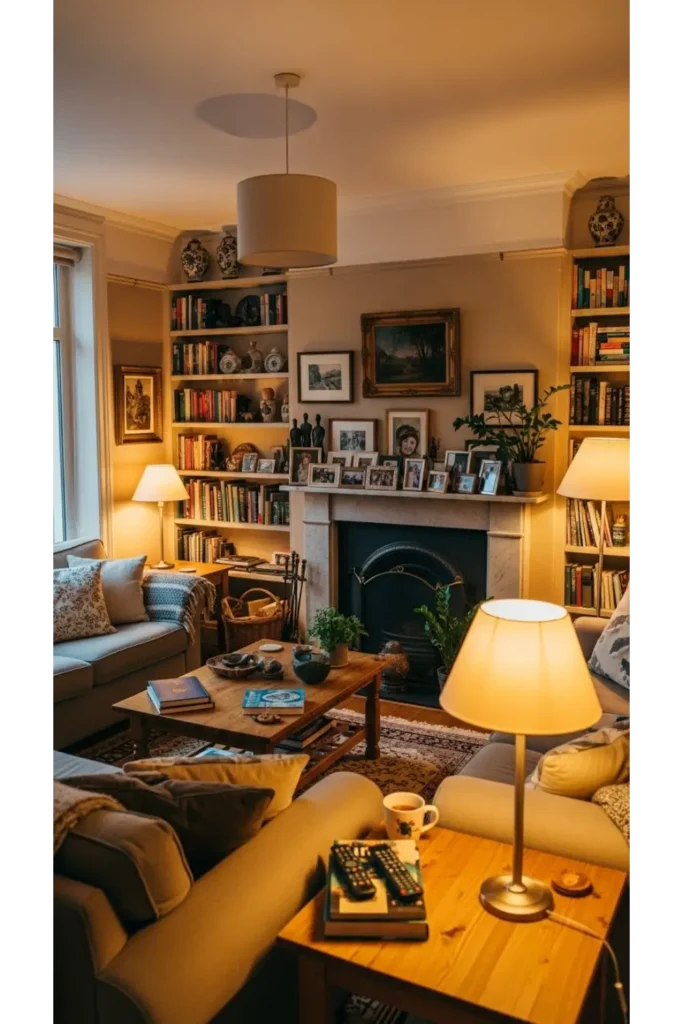
Personal items add soul to a living room. Framed photos, favorite books, and meaningful objects make the space feel lived in and authentic. These details create emotional warmth that cannot be achieved with store bought decor alone.
Balance matters here. Choose a few meaningful pieces rather than filling every surface. Group items thoughtfully to keep the room visually calm. Personal decor helps guests feel connected to the space and makes the living room truly yours.
11. Soft Window Treatments
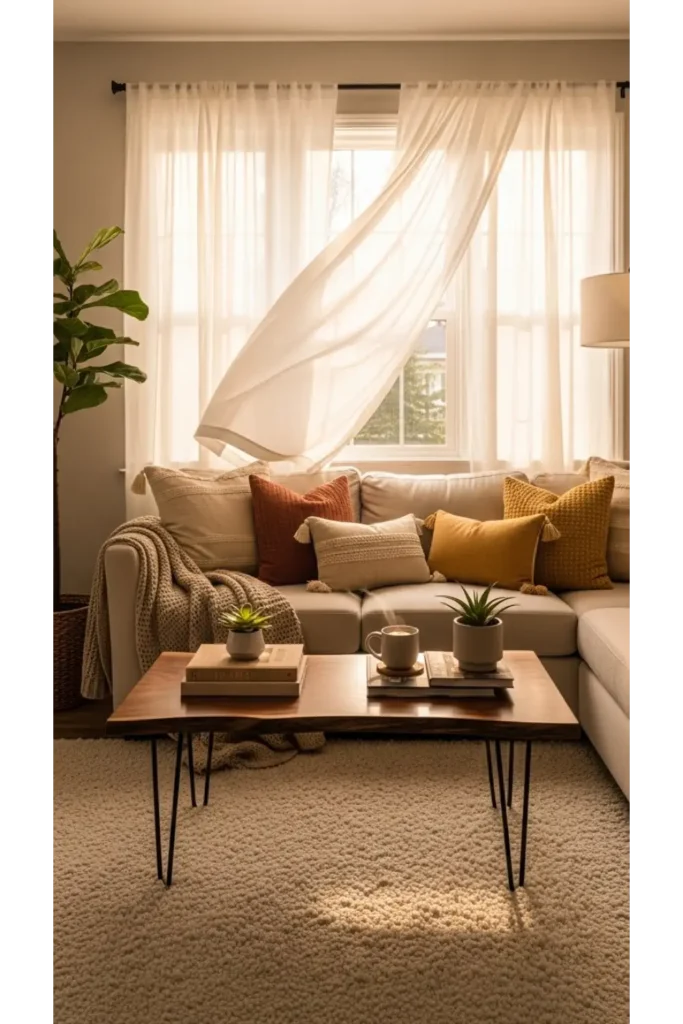
Window treatments play a big role in setting the mood. Soft curtains filter natural light and add texture without blocking brightness. Fabrics like linen or cotton feel relaxed and pair well with cozy interiors.
Hanging curtains high and wide makes windows feel larger and the room more open. Neutral tones keep the look timeless while allowing other elements to shine. Gentle light combined with soft fabrics creates a peaceful environment that feels comfortable throughout the day.
12. Bookshelves That Feel Lived In
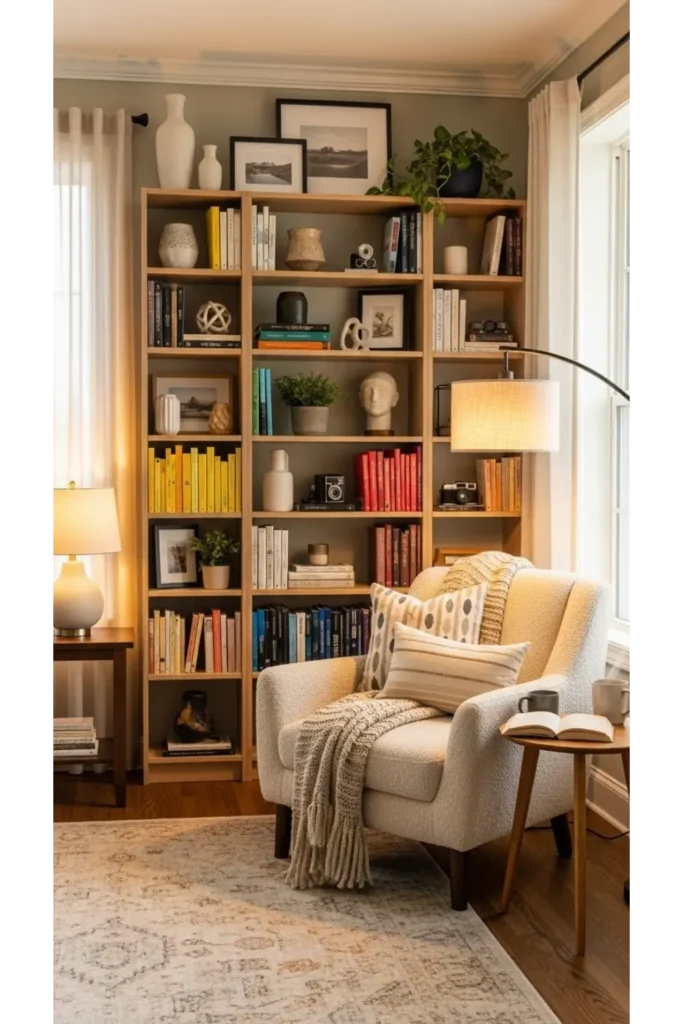
Bookshelves add warmth and personality to a living room. Filled with books and meaningful objects, they suggest comfort, curiosity, and downtime. A well styled shelf feels intentional without appearing staged.
Mix vertical and horizontal book stacks for visual interest. Leave some open space so the shelves do not feel heavy. Bookshelves also provide an opportunity to display personal items, making the room feel welcoming and reflective of real life.
13. Indoor Plants for Fresh Energy

Plants bring life and warmth into a living room. They soften hard edges and introduce organic shapes that feel calming. Even a few plants can make the space feel fresher and more inviting.
Choose plants that suit your light conditions and lifestyle. Larger plants make a statement, while smaller ones add subtle charm. Greenery pairs beautifully with neutral tones and wood, enhancing the overall sense of comfort and balance.
14. Cozy Reading Corners

A reading corner adds purpose and charm to a living room. A comfortable chair, good lighting, and a small table create a quiet spot for relaxation. This dedicated space encourages slow moments and personal time.
Position the nook near natural light if possible. Add a soft throw or cushion for extra comfort. Even in small rooms, a reading corner makes the living room feel thoughtful and layered.
15. Textured Walls for Subtle Depth

Textured walls add character without overwhelming the space. Options like plaster finishes, wood paneling, or subtle wallpaper create depth and warmth. These textures catch light differently, adding visual interest throughout the day.
Keep the palette soft so the texture remains calming. Textured walls work especially well behind seating or fireplaces. They elevate the room while maintaining a relaxed, inviting feel that supports everyday living.
16. Warm Metal Accents
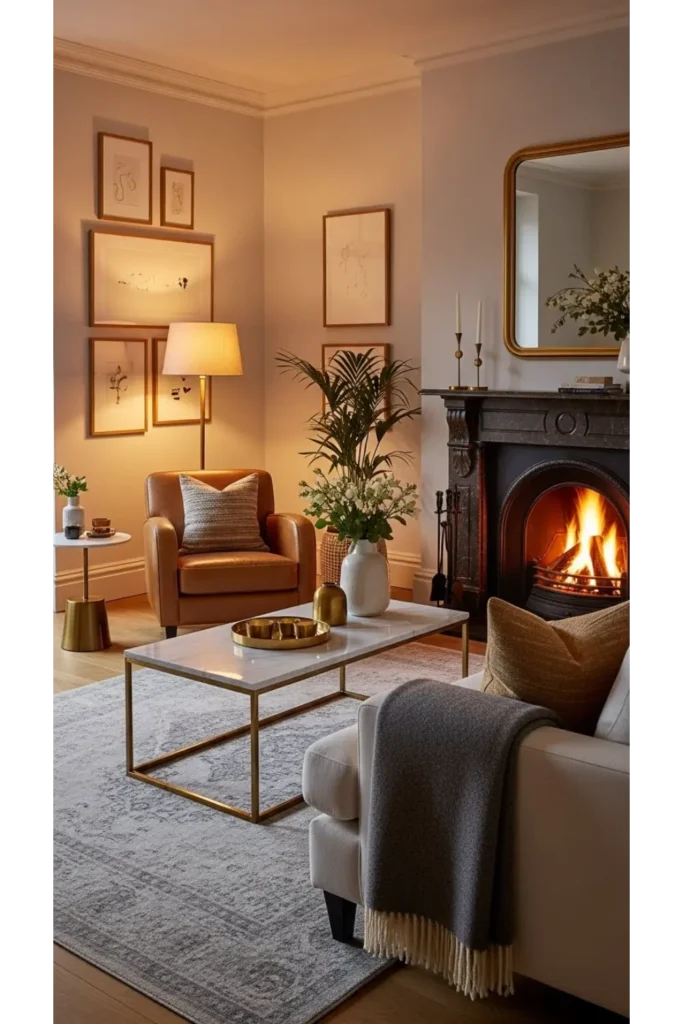
Metal accents in warm finishes add quiet elegance to a living room. Brass, bronze, and antique gold bring warmth without feeling flashy. These materials reflect light softly, enhancing the cozy atmosphere.
Use metal sparingly through lamps, trays, or decor. This keeps the room balanced and avoids visual clutter. Warm metals pair well with wood and neutral fabrics, adding polish while preserving comfort.
17. Low Profile Furniture for Calm Energy

Low profile furniture creates a grounded, relaxed feeling. Sofas and tables closer to the floor make the room feel open and calm. This approach works well in spaces where comfort and simplicity matter most.
Pair low furniture with soft textures to avoid a stark look. The contrast between clean lines and plush materials keeps the room inviting. This style encourages relaxation without sacrificing visual interest.
18. Soft Art That Feels Personal

Art influences the mood of a living room more than people realize. Soft, calming artwork supports a cozy environment and adds personality. Abstracts, landscapes, or simple line art work well in relaxed spaces.
Choose pieces that resonate emotionally rather than focusing on trends. Art should complement the color palette without overpowering it. When art feels personal and balanced, it enhances the warmth of the room.
19. Scent and Sound for Atmosphere
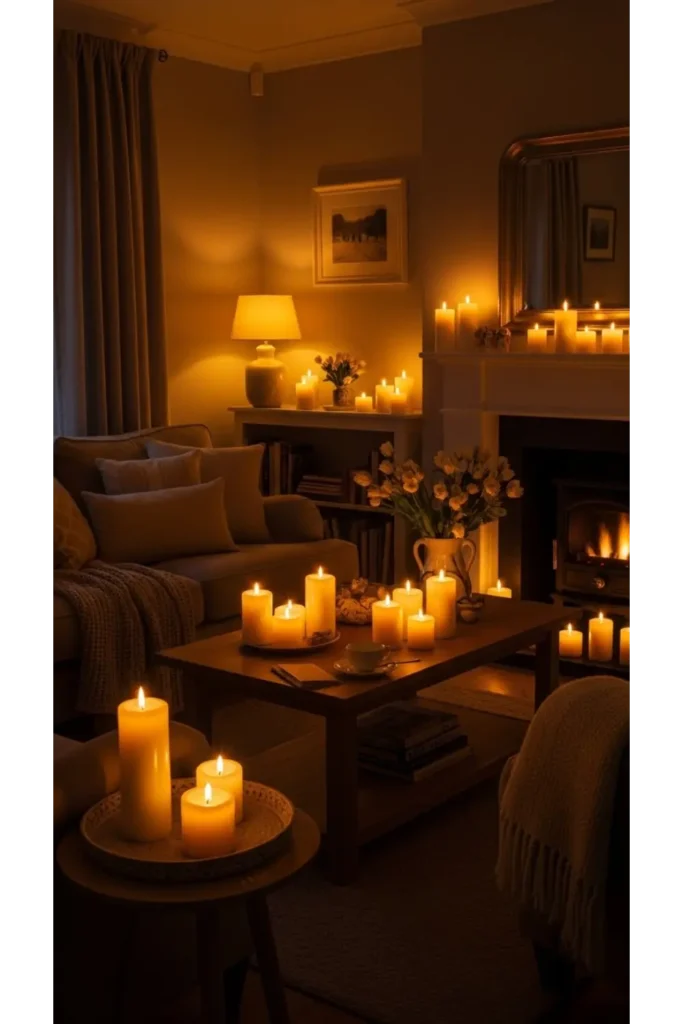
Cozy living rooms engage more than just sight. Candles, subtle fragrances, and soft background sounds create a full sensory experience. These elements help people relax and feel at ease.
Choose natural scents like wood, vanilla, or soft florals. Keep volume low if using music or ambient sound. These small details quietly support comfort and make the room feel welcoming on a deeper level.
20. Balanced Open Shelving
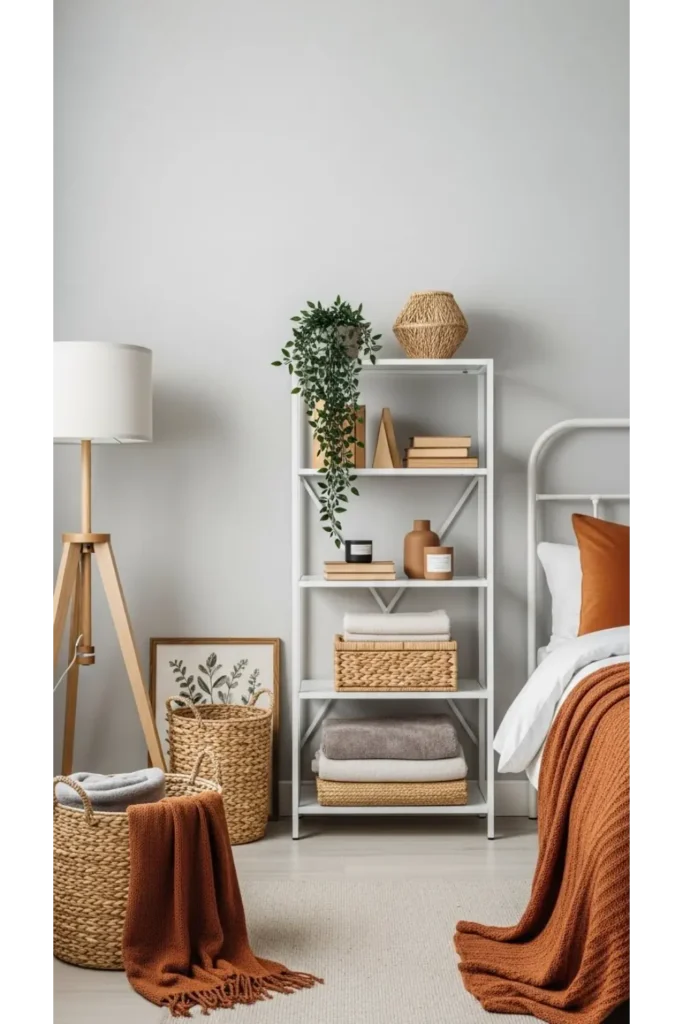
Open shelving adds character when styled with intention. It provides space for decor while keeping the room feeling open. Balance decorative items with functional pieces to avoid a cluttered look.
Stick to a cohesive color palette for a calm effect. Leaving some shelves partially empty allows the eye to rest. Open shelving can feel cozy when it reflects real life rather than perfection.
21. Soft Throws as Everyday Essentials
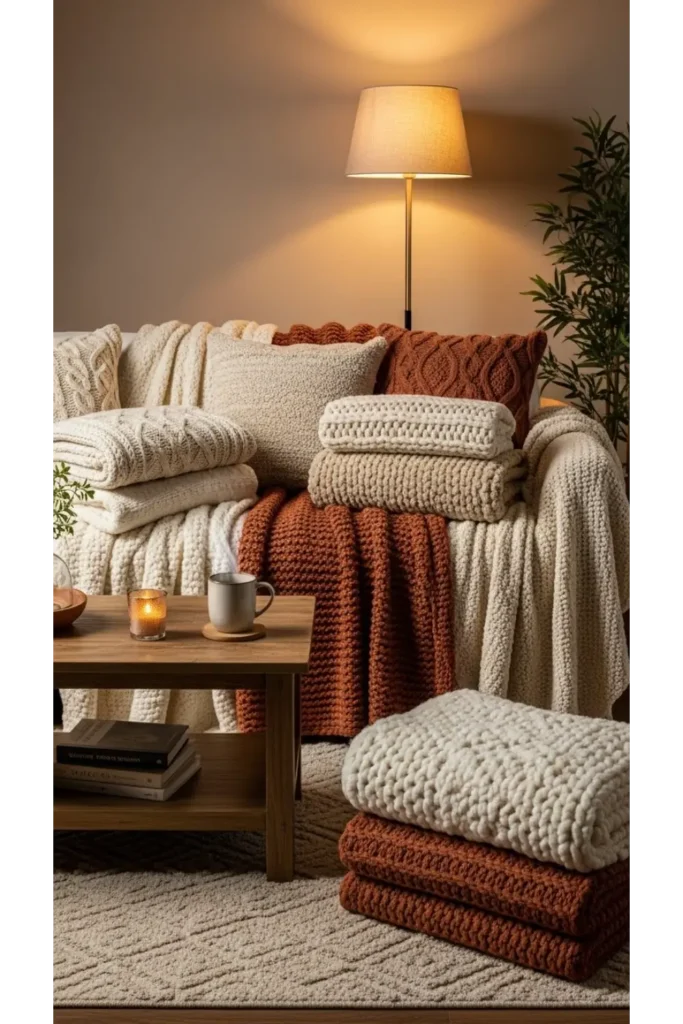
Throws are small but powerful tools for comfort. Draped over seating, they add warmth and texture while signaling relaxation. They make the living room feel ready for use at any moment.
Choose materials that feel good against the skin. Neutral or warm tones keep the look cohesive. Throws also offer an easy way to refresh the space without major changes.
22. Thoughtful Use of Space in Small Rooms

Small living rooms can feel just as cozy as large ones with thoughtful design. Choosing furniture that fits the scale of the room prevents overcrowding. Light colors and mirrors help the space feel open without losing warmth.
Focus on comfort rather than quantity. A few well chosen pieces create a welcoming environment. When every element serves a purpose, small spaces feel intentional and inviting. Don’t miss our complete living room decor guide packed with stylish inspiration.
23. A Lived In, Not Perfect Feel
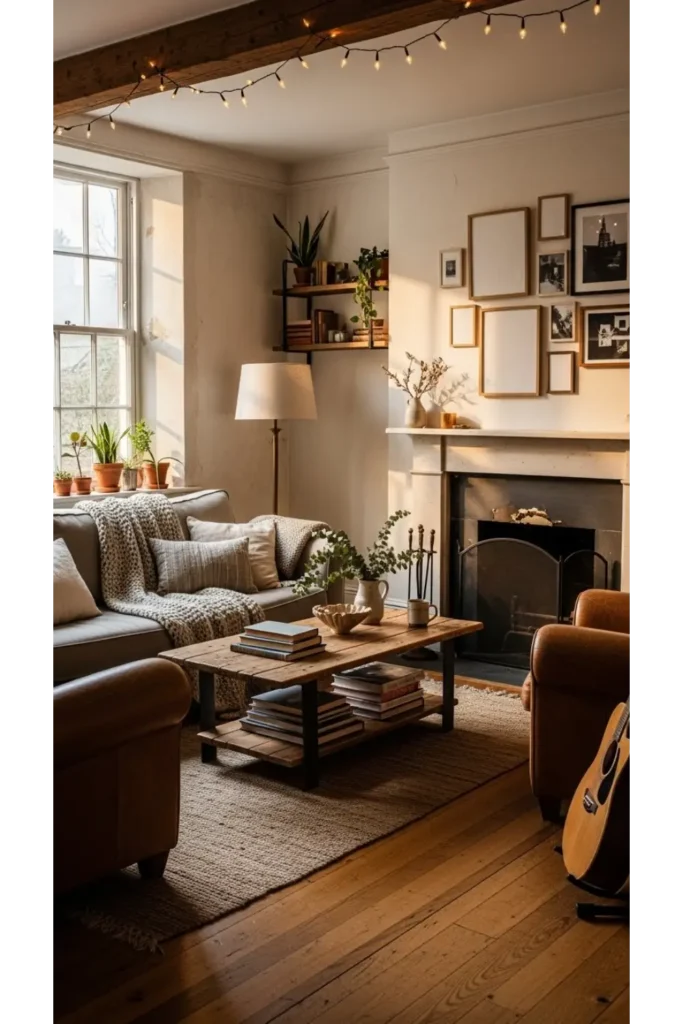
True comfort comes from authenticity. A living room should feel lived in, not staged. Slight imperfections, layered items, and personal touches make the space feel human and approachable.
Allow the room to evolve naturally. Add pieces over time rather than all at once. When a living room reflects real life, it becomes a place where people feel comfortable being themselves.
Conclusion
A cozy living room is not about following rules but about creating comfort, warmth, and connection. By focusing on texture, lighting, thoughtful layouts, and personal touches, any space can feel inviting and calm. These ideas work together to support daily life and meaningful moments. When a living room feels good to be in, it naturally becomes the heart of the home.