
21+ Dining Area Inspirations Space Saving Style
Small dining spaces can still feel thoughtful, comfortable, and visually rich when every choice serves a purpose. This guide explores bold dining area inspirations, smart layouts, and space saving style solutions that work for real homes. Each idea balances function with warmth so your dining area feels inviting, not cramped. Whether you live in an apartment or a compact house, these fresh concepts help you create a dining space that supports daily life and special moments without wasting a single inch.
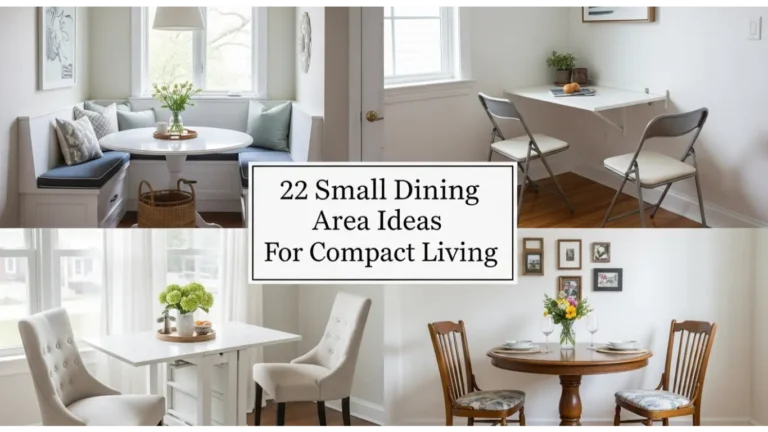
1. Dining Area Inspirations Space Saving Style with Fold-Down Table

This dining area inspirations space saving style approach focuses on flexibility. A fold-down table stays flush against the wall when not in use, opening the floor for movement. When meals begin, it becomes a stable surface that supports everyday dining. This solution works well in studio apartments where every square foot must multitask without visual clutter.
The surrounding design should stay simple and warm. Light wood finishes, subtle wall art, and slim chairs keep the area balanced. Built-in wall shelving nearby adds storage for dishes and decor. The result feels intentional, not temporary, and blends smoothly into modern small dining space design trends.
2. Built-In Bench Seating with Hidden Storage

Built-in benches hug the wall and remove the need for bulky chairs. This idea creates a clean dining zone while adding valuable hidden storage underneath the seat. It suits families who need extra space for linens, tableware, or seasonal items without adding cabinets. The bench also helps define the dining area within open layouts.
Soft cushions and textured fabrics bring comfort and warmth. Pair the bench with a compact table and simple lighting to maintain flow. This setup reflects thoughtful compact dining solutions that feel custom and lived-in rather than squeezed into place.
3. Round Pedestal Table for Easy Flow

A round pedestal table removes sharp corners and improves movement around the dining area. The single base allows chairs to tuck in fully, saving space while maintaining comfort. This design works especially well in narrow rooms where clearance matters. It also encourages conversation, making meals feel more relaxed and social.
Choose a table with a light finish to keep the area open. Slim-profile chairs enhance the effect without sacrificing support. This layout aligns naturally with modern dining ideas that prioritize comfort and spatial balance.
4. Wall-Mounted Drop Leaf Table

A wall-mounted drop leaf table offers adaptability for daily use. Keep one leaf down for quick meals and raise both sides for guests. This design supports flexible living without permanent bulk. It fits well in apartments where dining and living areas overlap.
Neutral finishes help the table blend into the wall when folded. Add lightweight chairs that store easily nearby. This solution showcases functional interior design that responds to real-life needs without visual noise.
5. Window-Side Dining Nook
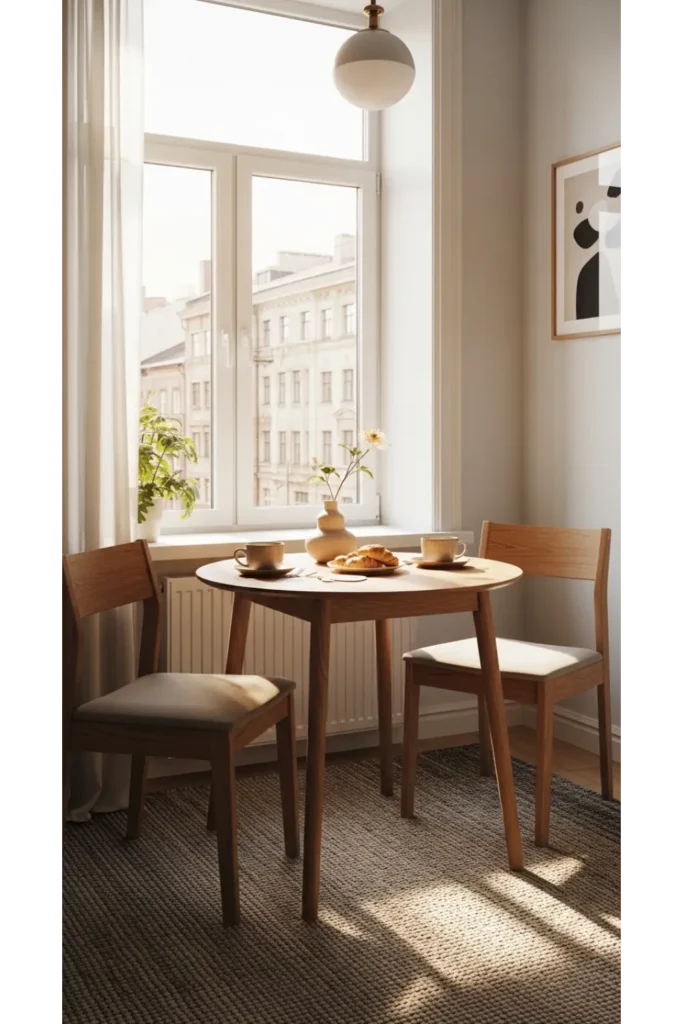
Placing a dining area near a window makes even the smallest space feel larger. Natural light enhances mood and highlights textures. A narrow table paired with a bench or slim chairs keeps the footprint minimal while maximizing comfort.
Sheer curtains and soft finishes maintain openness. This approach connects dining with the outdoors and supports calm daily routines. It fits perfectly into apartment dining ideas that rely on smart placement rather than extra furniture.
6. Convertible Dining Table for Flexible Living
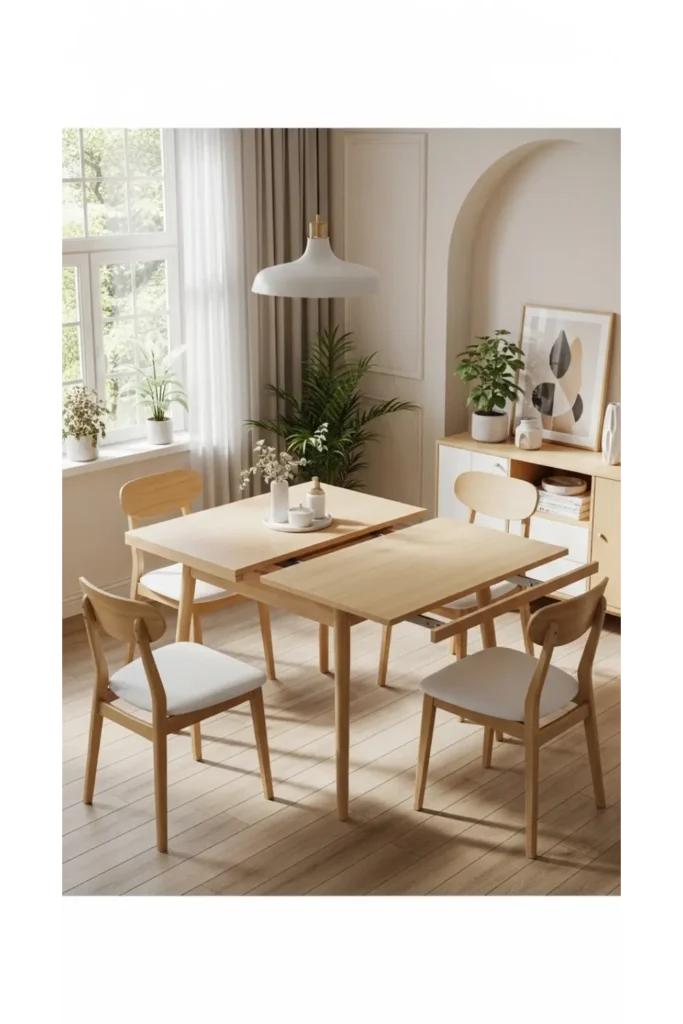
A convertible dining table offers a smarter take on flexibility by adapting to daily routines instead of occasional use only. Unlike standard extendable tables, this design often shifts height, width, or form, allowing it to function as a console, work surface, or dining table. This approach supports homes where dining areas overlap with living spaces and need to stay visually light throughout the day.
What makes this setup effective is how seamlessly it blends into the room when not fully in use. Clean lines, slim profiles, and durable mechanisms keep the table practical without feeling mechanical. When paired with lightweight seating, it reflects modern space efficient furniture choices that prioritize movement, comfort, and long-term usability in compact homes.
7. Angled Dining Nook for Unused Corners

Instead of treating corners as leftover space, an angled dining nook turns them into intentional dining zones. By slightly rotating the table or seating away from rigid right angles, the area feels more dynamic and less boxed in. This approach softens the room layout and allows circulation to move naturally around the dining area, which is especially helpful in tight apartments or open-plan homes.
Comfort and cohesion make this setup work long term. Upholstered benches, rounded tables, and warm wall finishes help the nook feel integrated rather than tucked away. When styled with care, this design supports small home dining needs while proving that even challenging corners can anchor a functional, welcoming dining experience.
8. Open Wall Display for Lightweight Dining Storage

Replacing traditional cabinets with an open wall display keeps the dining area visually light while still supporting daily storage needs. Slim shelves or ledge-style displays allow plates, bowls, and serving pieces to stay within reach without enclosing the space. This approach works especially well in compact dining zones where bulky cabinetry can make walls feel heavy and close in the room.
The key lies in thoughtful curation. Limiting the color palette and mixing functional items with subtle decor creates balance and rhythm. Natural materials and clean spacing prevent visual overload. This setup supports minimalist dining spaces by blending practicality with style, allowing storage to enhance the room instead of dominating it.
9. Bistro-Style Dining Setup

A bistro-style dining setup brings charm and efficiency to small interiors. With a compact table and two lightweight chairs, this design supports daily meals without dominating the room. The smaller scale encourages mindful dining and fits naturally into apartments where space must stay flexible. This setup blends casual comfort with intentional design, making it ideal for urban living.
Material choice elevates the look. Metal frames, slim wood tops, or rounded edges keep the area visually soft. When paired with good lighting, this setup feels relaxed yet purposeful. It reflects urban dining design principles that prioritize comfort, scale, and everyday usability without excess furniture.
10. Wall-Integrated Dining Desk
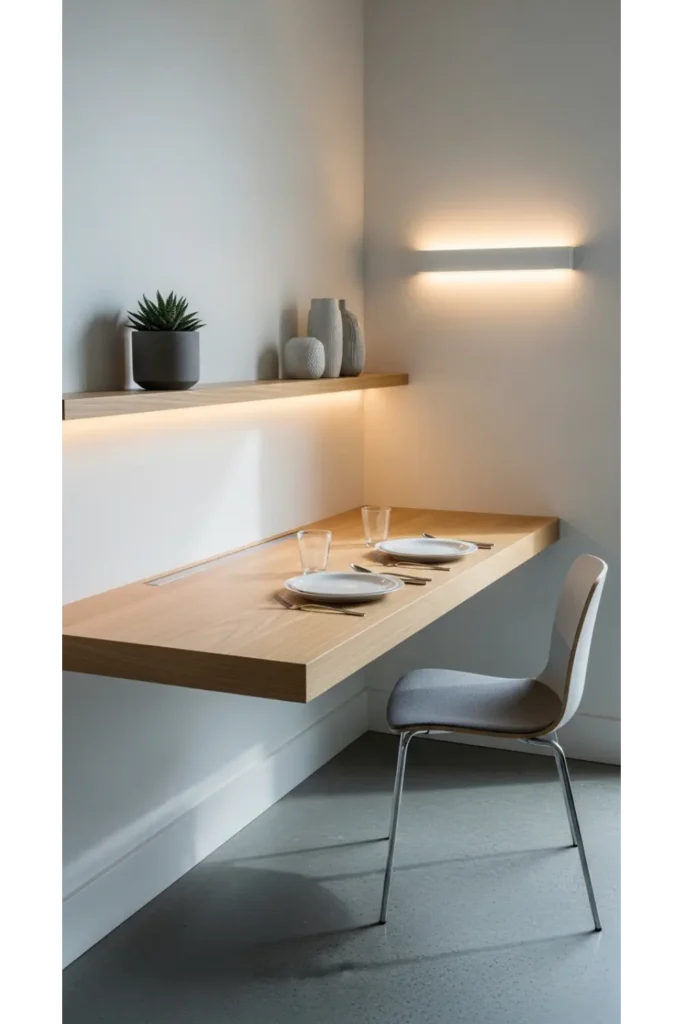
A wall-integrated dining desk is a smart response to modern living where spaces must multitask. Mounted securely, it serves as a dining surface, workspace, or prep area without occupying floor space. This design works best in homes where flexibility matters more than formality. It keeps the dining area functional while allowing the room to adapt throughout the day.
Consistency in materials helps the desk blend seamlessly into the wall. Comfortable chairs that slide away easily support smooth transitions between tasks. This setup highlights multifunctional furniture that adapts to real routines, making it ideal for compact homes and work-from-home lifestyles.
11. Transparent Chairs for Visual Lightness
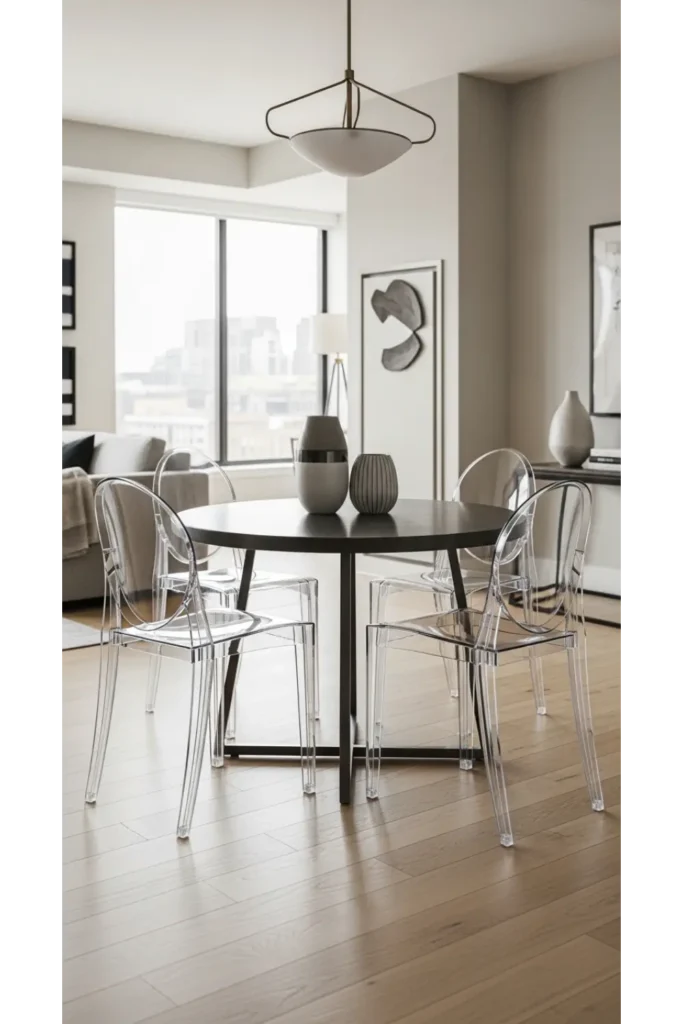
Transparent chairs solve a common small-space problem by reducing visual weight. Because they allow light to pass through, they make dining areas feel more open and less crowded. This effect works especially well when paired with darker tables or bold flooring. The chairs remain functional while almost disappearing into the space.
This choice suits interiors where traditional chairs feel bulky. Acrylic or polycarbonate designs blend with many styles, from modern to eclectic. By supporting visual space optimization, transparent seating keeps the dining area airy without compromising comfort or durability.
12. Narrow Console Table as Dining Surface

A narrow console table offers a clever dining solution for one or two people. Positioned against a wall, it functions as a dining surface while preserving walkways. This approach works well in studios or small apartments where every piece must earn its place. The slim profile prevents the dining area from overwhelming the room.
Beyond meals, the table doubles as a display or workspace. Styling it lightly keeps the area versatile. This idea supports compact living solutions that favor adaptability, making daily life smoother without adding unnecessary furniture.
13. Built-In Wall Niche Dining Area
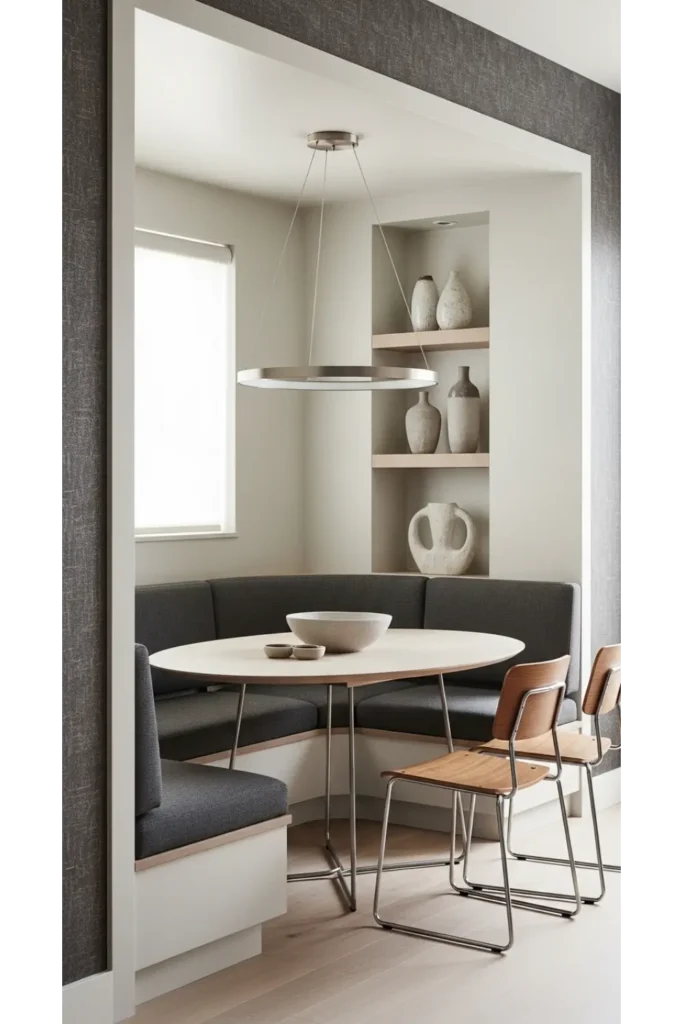
Wall niches naturally define space, making them ideal for dining areas in compact homes. By integrating seating and a table into the niche, the dining zone feels intentional rather than added on. This setup removes the need for extra furniture and uses architectural features to guide layout decisions.
Built-in seating improves comfort and efficiency. Upholstered benches and soft lighting help the niche feel welcoming. This design reflects efficient space planning by turning structural elements into functional dining solutions with long-term value.
14. Bar-Height Dining Table

Bar-height dining tables offer a casual alternative to traditional setups. Their elevated form takes up less visual space and blends well with kitchens or open-plan layouts. Stools slide underneath easily, keeping the area clear when not in use. This makes the design ideal for quick meals and informal gatherings.
When styled thoughtfully, bar-height tables feel intentional rather than temporary. Choosing supportive stools and warm finishes ensures comfort. This approach aligns with contemporary dining layouts that prioritize flow, flexibility, and modern living habits.
15. Sliding Dining Table System
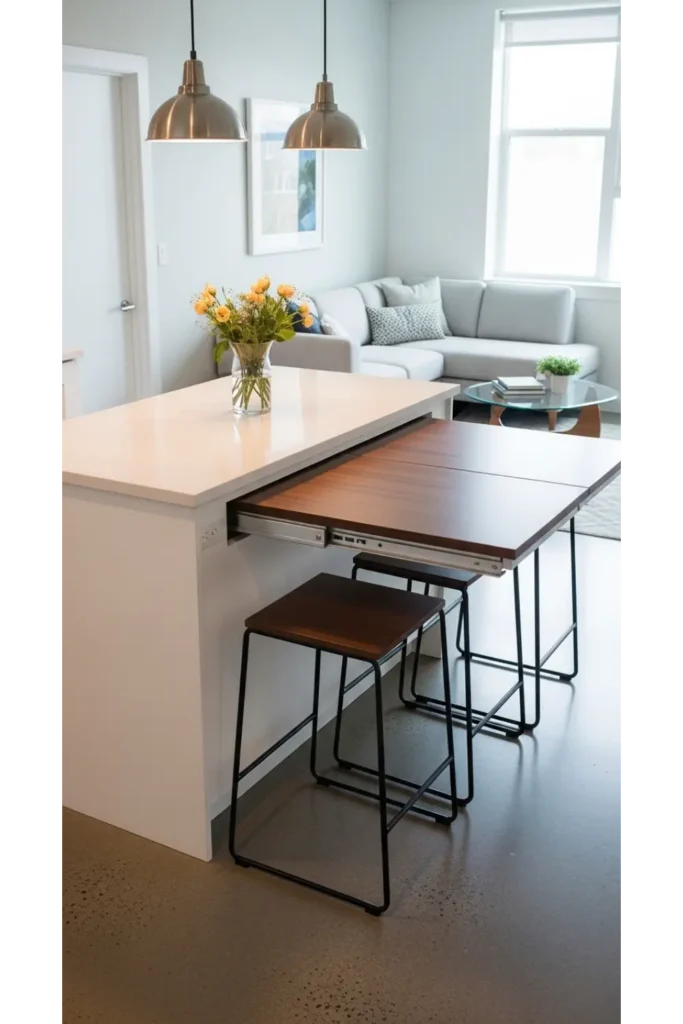
A sliding dining table system adapts to changing needs without permanent bulk. When closed, it stays compact for daily use. When extended, it accommodates guests with ease. This flexibility allows homeowners to enjoy open space most of the time while still hosting comfortably when needed.
Smooth mechanisms and durable materials are essential for daily use. Paired with stackable or lightweight chairs, this system supports innovative dining furniture design that responds to real-life patterns rather than fixed layouts.
16. Minimal Japandi Dining Style
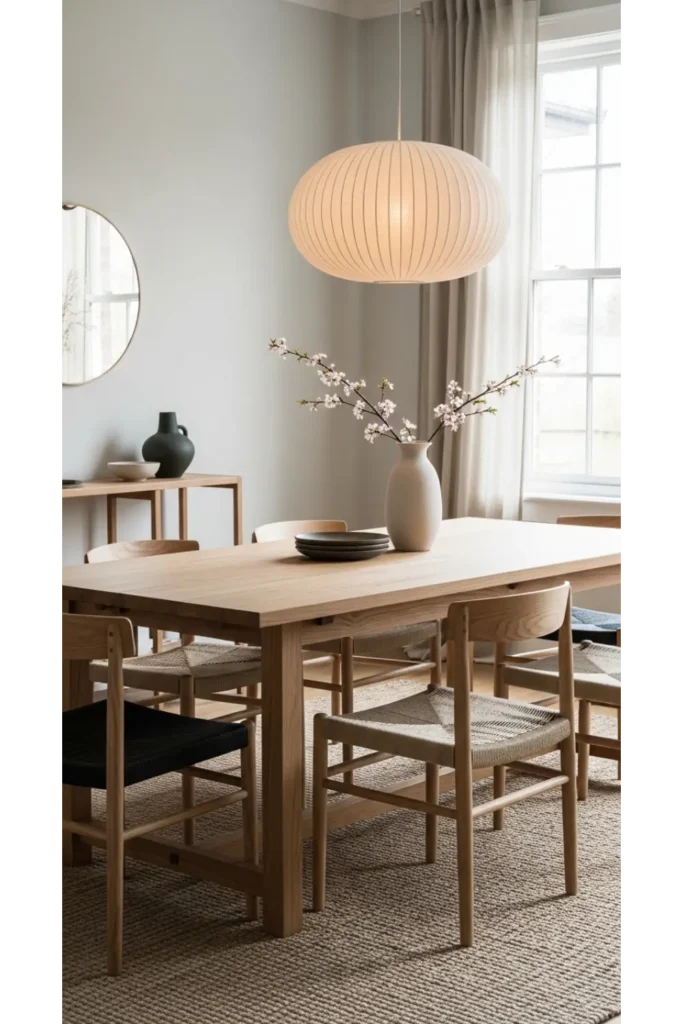
Japandi dining style blends Japanese simplicity with Scandinavian warmth. Clean lines, natural wood, and muted tones create a calm environment that suits small spaces well. This style avoids excess decor, allowing the dining area to breathe and feel balanced even in compact layouts.
Texture plays a key role. Soft textiles, subtle grain patterns, and gentle lighting add depth without clutter. This approach supports modern minimalist dining while maintaining comfort and emotional warmth for everyday meals.
17. Dining Area Under Staircase
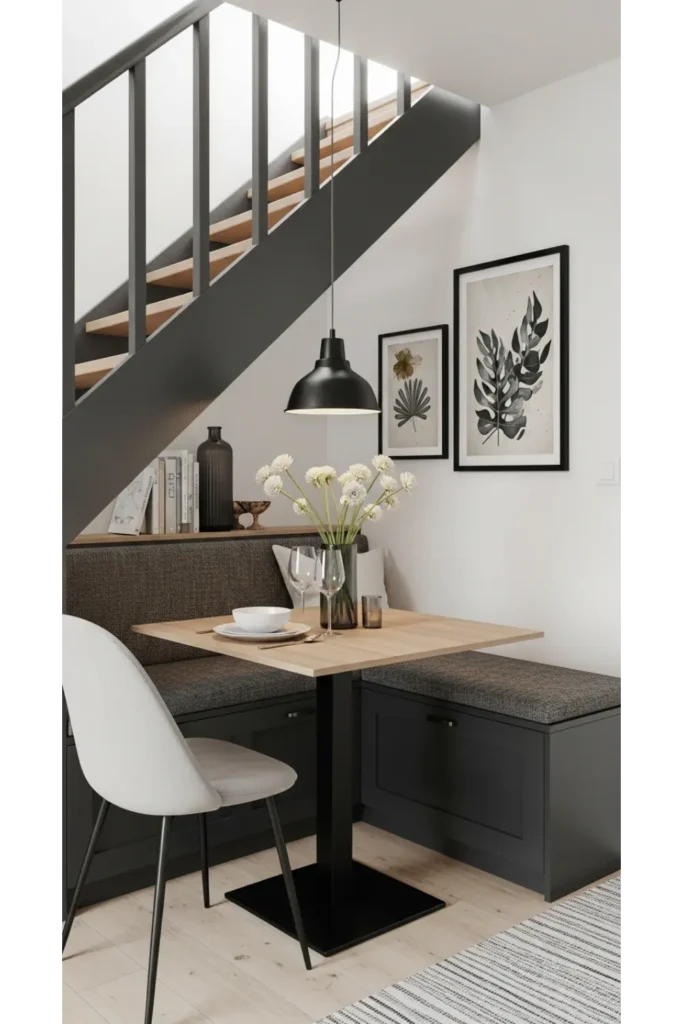
The space under a staircase often goes unused, yet it can host a functional dining area. A compact table and bench fit naturally beneath stairs, turning awkward space into a practical zone. This solution works especially well in townhomes or duplex apartments with limited square footage.
Proper lighting and cohesive finishes help the area feel planned rather than improvised. When designed well, this setup reflects creative space usage that maximizes function without expanding the home’s footprint.
18. Wall-to-Wall Dining Bench
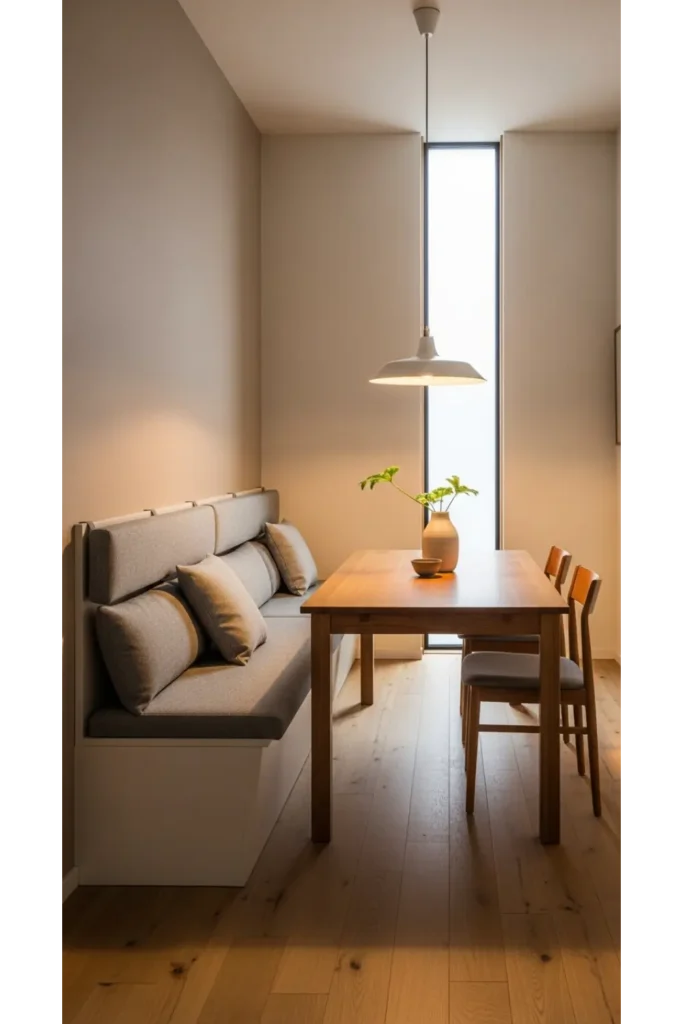
A wall-to-wall dining bench maximizes seating while keeping the layout streamlined. By eliminating gaps between furniture and walls, this design uses every inch efficiently. It works particularly well in narrow dining rooms where chairs would restrict movement.
Comfort comes from thoughtful details like cushioning and back support. When paired with a simple table, this setup reflects smart dining layouts that focus on efficiency, comfort, and clean visual lines.
19. Mirror-Enhanced Dining Area
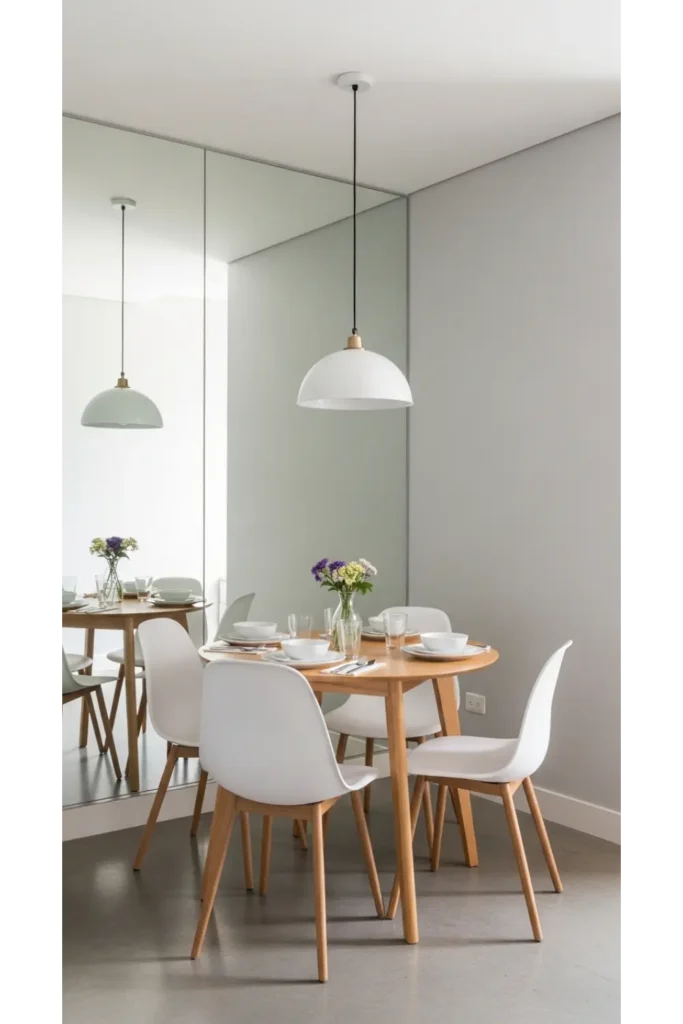
Mirrors expand dining spaces visually by reflecting light and surroundings. A well-placed mirror can double the perceived size of a small dining area without adding furniture. This technique works best on walls that receive natural light or face open spaces.
Choosing a simple frame keeps the effect subtle and refined. This approach supports small space interior design by improving brightness and depth while maintaining a clean aesthetic.
20. Outdoor-Indoor Dining Blend

Placing a dining area near outdoor access creates visual expansion and improves airflow. Glass doors or large windows connect the dining space to the outdoors, making it feel larger and more relaxed. This setup works well in apartments with balconies or patios.
Light furniture and natural materials enhance the connection. This design supports modern apartment dining by blending interior comfort with outdoor openness for a more enjoyable dining experience.
21. Modular Dining Furniture
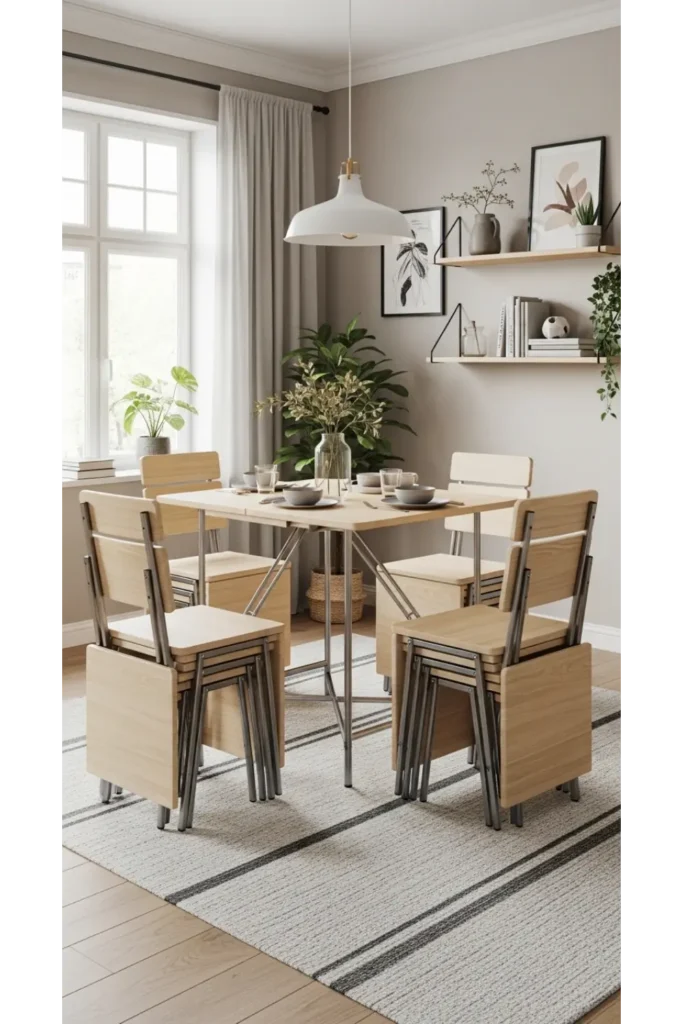
Modular dining furniture adapts to changing needs with ease. Tables expand, seating reconfigures, and pieces move effortlessly. This flexibility supports households that value long-term usability over fixed layouts. Modular designs allow dining spaces to evolve without replacement.
Consistency in style keeps the space cohesive even as pieces shift. This solution aligns with adaptive home design, offering freedom, efficiency, and durability for compact modern living.
Conclusion
Creating a functional dining space does not require more square footage, only smarter choices. These ideas show how thoughtful layouts, adaptable furniture, and intentional styling can transform compact areas into inviting dining zones. By focusing on flow, comfort, and flexibility, you can build a dining space that supports daily life while reflecting personal style. Smart dining design always serves people first, no matter the size of the room.