
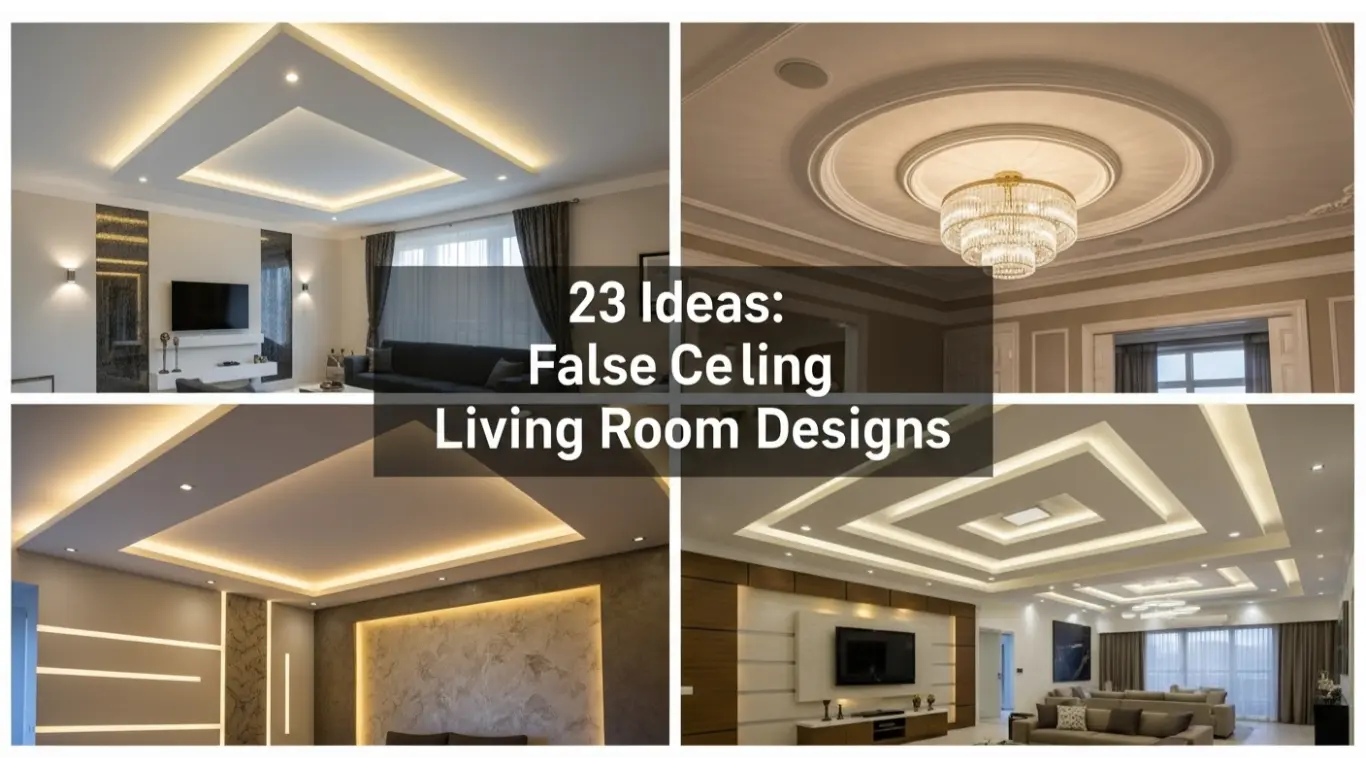
False Ceiling Living Room Designs 23 Ideas
A living room ceiling often gets ignored, yet it shapes how the entire space feels. The right ceiling design can make a room look taller, warmer, brighter, or more luxurious without changing the furniture. False ceilings also help hide wiring, improve lighting, and control acoustics, making them both practical and stylish. When planned well, they quietly elevate daily living.
This guide explores carefully selected false ceiling ideas that suit modern, classic, and transitional homes. Each concept focuses on comfort, proportion, and visual balance rather than trends alone. The ideas below are designed to help homeowners, designers, and renovators make confident choices that last. Every style connects directly to real living room needs and realistic design goals.
1. Modern Minimal Flat Ceiling
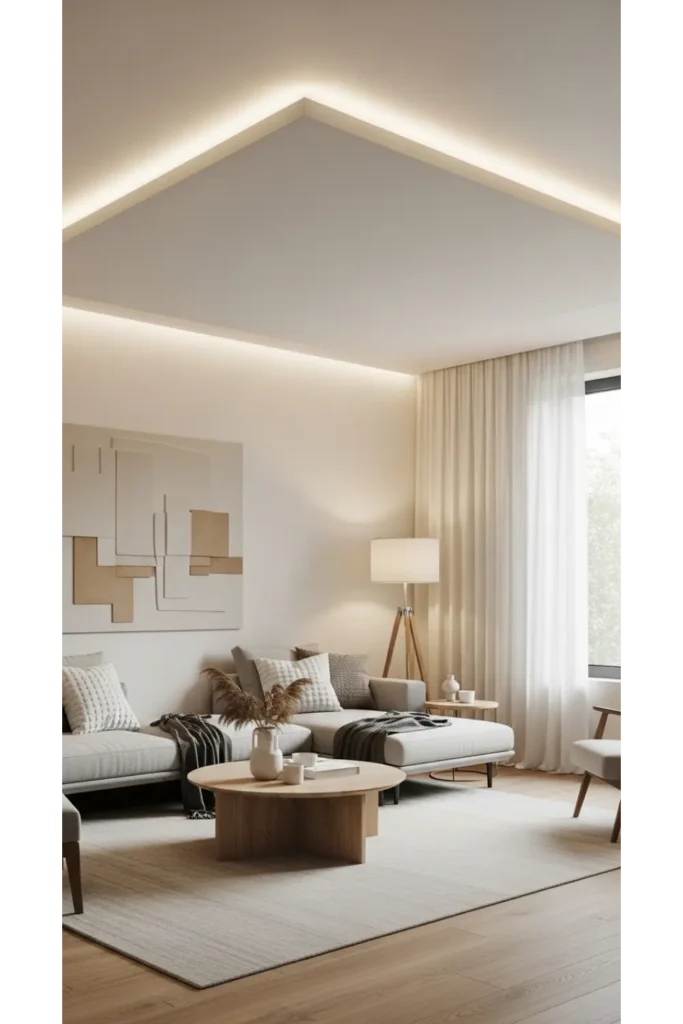
False ceiling living room designs often begin with a clean flat surface, and this style proves why simplicity works. A flat ceiling with subtle recessed lights creates an open and calm atmosphere. It works especially well in compact living rooms where visual clutter can feel overwhelming. The smooth surface allows furniture, artwork, and textures to stand out naturally without distraction.
This design fits modern homes that value balance and clarity. Soft white or warm LED lights placed evenly across the ceiling provide functional brightness while maintaining a relaxed mood. The minimal structure also reduces maintenance and keeps costs reasonable. It is an excellent choice for homeowners who want a timeless look that adapts easily as décor changes over time.
2. Layered Ceiling with Soft Cove Lighting
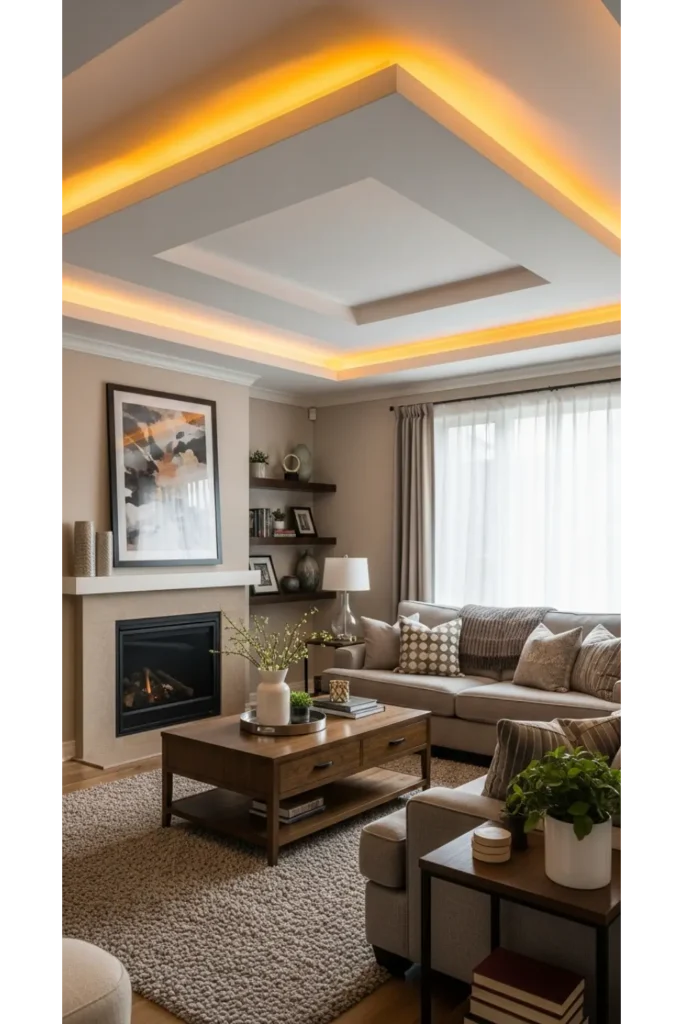
A layered ceiling adds depth without making the living room feel heavy. By introducing gentle steps or levels, this design creates visual interest while staying elegant. Cove lighting tucked into the layers casts a soft glow that spreads evenly across the room. This lighting style reduces harsh shadows and creates a welcoming environment for both family time and guests.
Homes that lean toward contemporary or transitional design benefit most from this approach. The layers help define seating areas in open layouts and subtly guide the eye upward. When paired with neutral wall colors and natural textures, the ceiling becomes a quiet focal point. It feels intentional yet relaxed, which is ideal for everyday living.
3. Wooden Accent False Ceiling
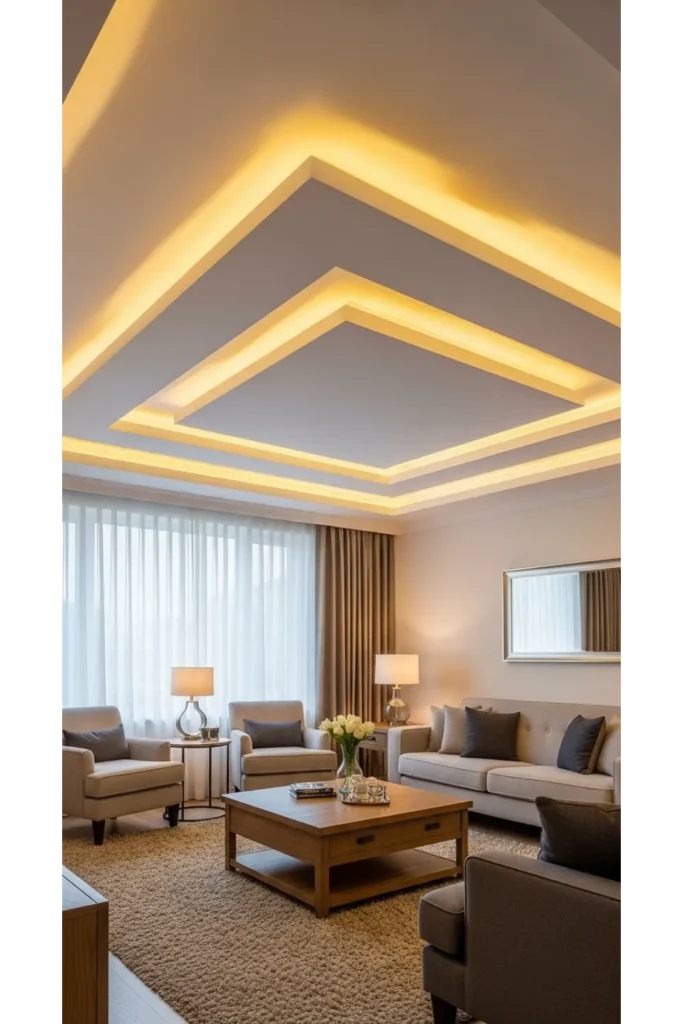
Wooden ceiling accents bring warmth and character into a living room. A false ceiling with wooden panels or beams adds texture that contrasts beautifully with smooth walls and modern furniture. This approach works well in homes that aim to feel grounded and inviting rather than overly polished. The natural grain of wood introduces organic movement overhead.
This ceiling style pairs well with earthy color palettes and soft lighting. Recessed lights or hidden LED strips highlight the wood without overpowering it. It also improves acoustics by absorbing sound, making conversations feel more comfortable. For homeowners seeking a cozy yet refined atmosphere, wood-based ceilings offer lasting appeal.
4. Gypsum Ceiling with Geometric Patterns
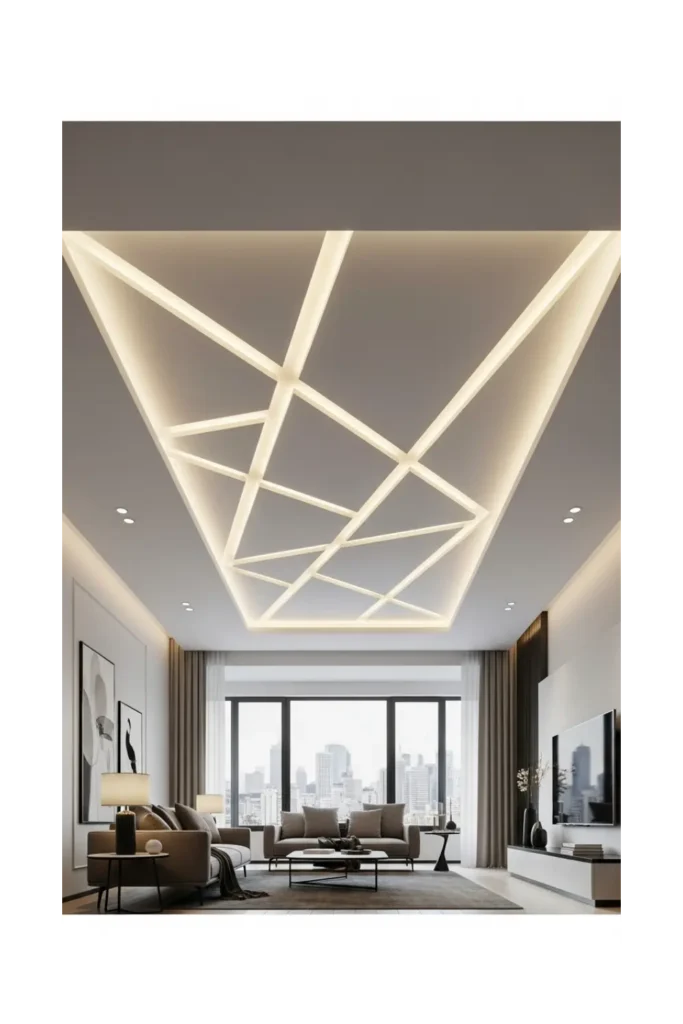
Geometric patterns add a sense of rhythm and structure to a living room ceiling. Gypsum makes it easy to shape clean lines, squares, or subtle angular forms that feel modern and intentional. These patterns draw attention upward without dominating the space, especially when kept in soft neutral shades.
This design suits urban homes and apartments where a bold yet controlled statement works best. Strategic lighting within or around the shapes enhances depth and shadow. When balanced with simple furniture and uncluttered walls, the ceiling becomes an architectural feature. It adds personality while maintaining visual order throughout the room.
5. Coffered Ceiling for Classic Homes
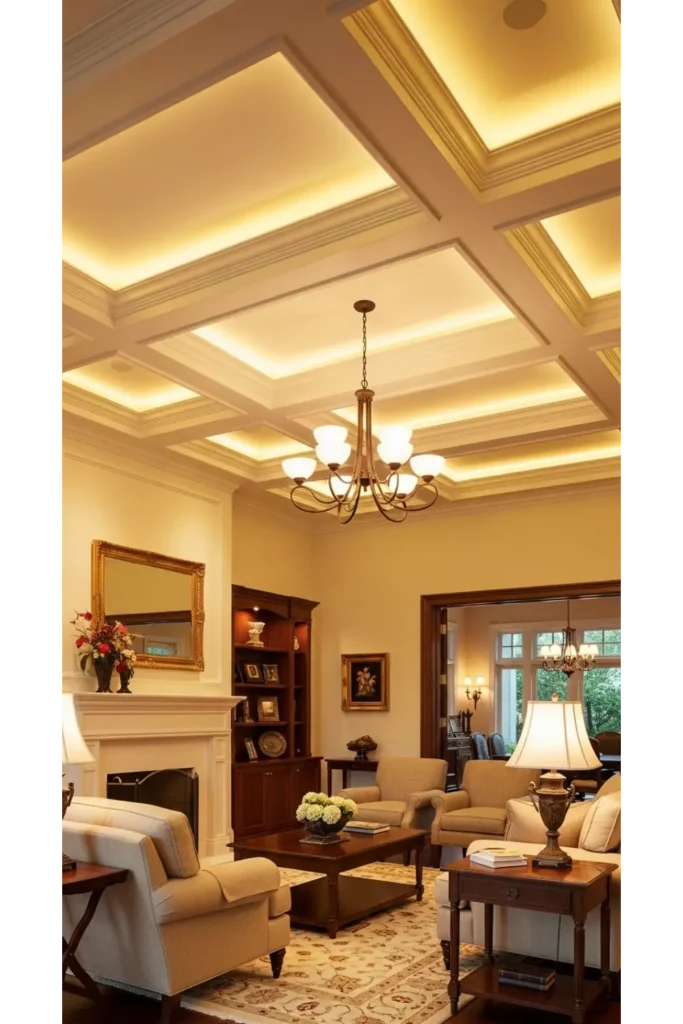
A coffered ceiling brings timeless elegance into the living room. The grid-like pattern creates depth and symmetry, making the space feel structured and refined. This design often appears in larger rooms with higher ceilings, where it can breathe without feeling crowded. It reflects traditional craftsmanship and architectural balance.
Soft ambient lighting within the coffers enhances the sense of warmth. Neutral or off-white finishes keep the ceiling from feeling too heavy. This style works beautifully in homes that blend classic furniture with modern comforts. It adds value and sophistication while remaining comfortable for everyday family life.
6. Floating Ceiling with Hidden Lighting
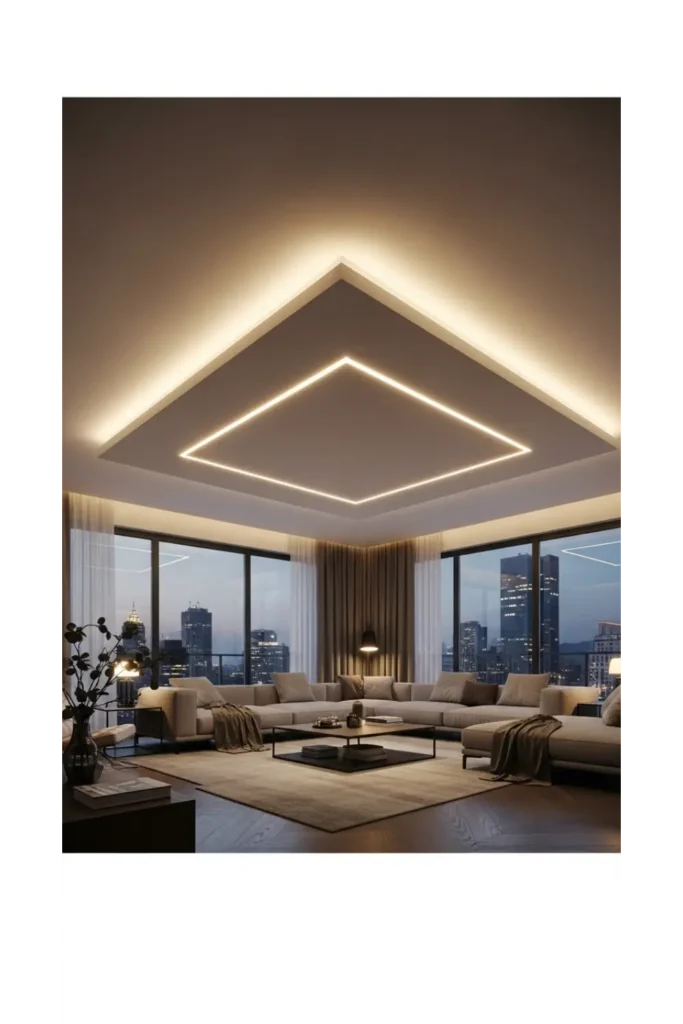
A floating ceiling creates the illusion that the ceiling hovers gently above the room. Hidden lighting around the edges separates it visually from the walls, adding depth and softness. This effect works especially well in modern living rooms that aim for a clean and airy feel.
The indirect light reduces glare and enhances relaxation. It is ideal for evening settings when softer illumination feels more comfortable. This ceiling style also helps visually expand smaller spaces by drawing attention to the perimeter rather than the center. It feels modern, calm, and thoughtfully designed.
7. False Ceiling with Central Panel Focus
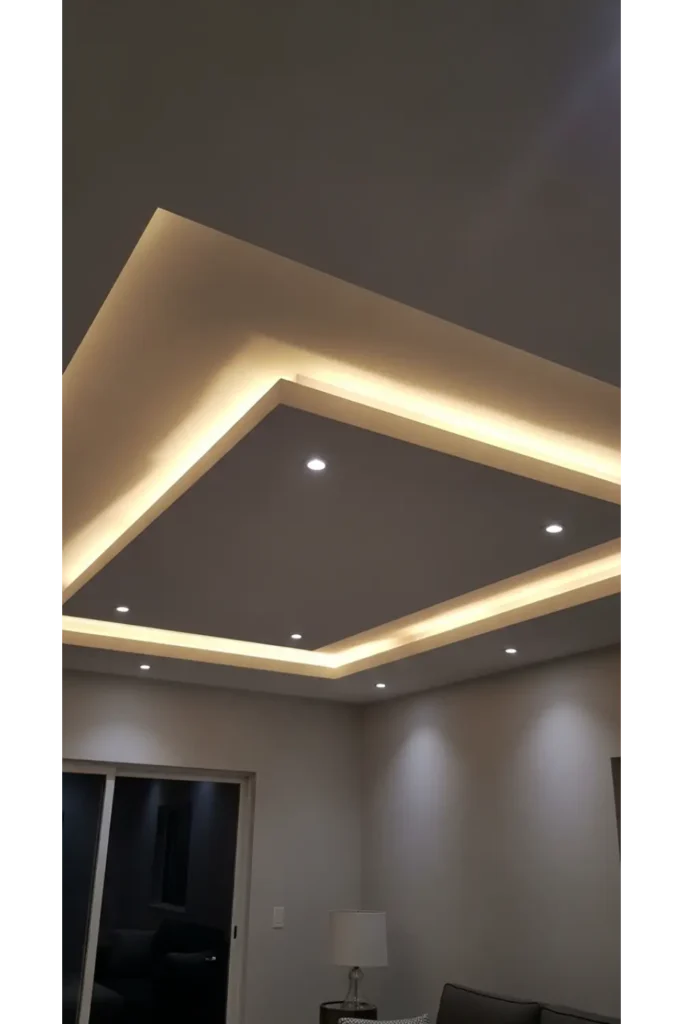
A central panel ceiling draws focus to the heart of the living room. This design frames the seating area and often pairs with a chandelier or statement light. The surrounding ceiling remains simple, allowing the central section to stand out naturally without overwhelming the room.
This approach works well in symmetrical living rooms where balance matters. The panel can feature subtle textures or color variation to add interest. When planned carefully, it anchors the space and makes the room feel cohesive. It also helps guide furniture placement with clarity.
8. Curved False Ceiling Design
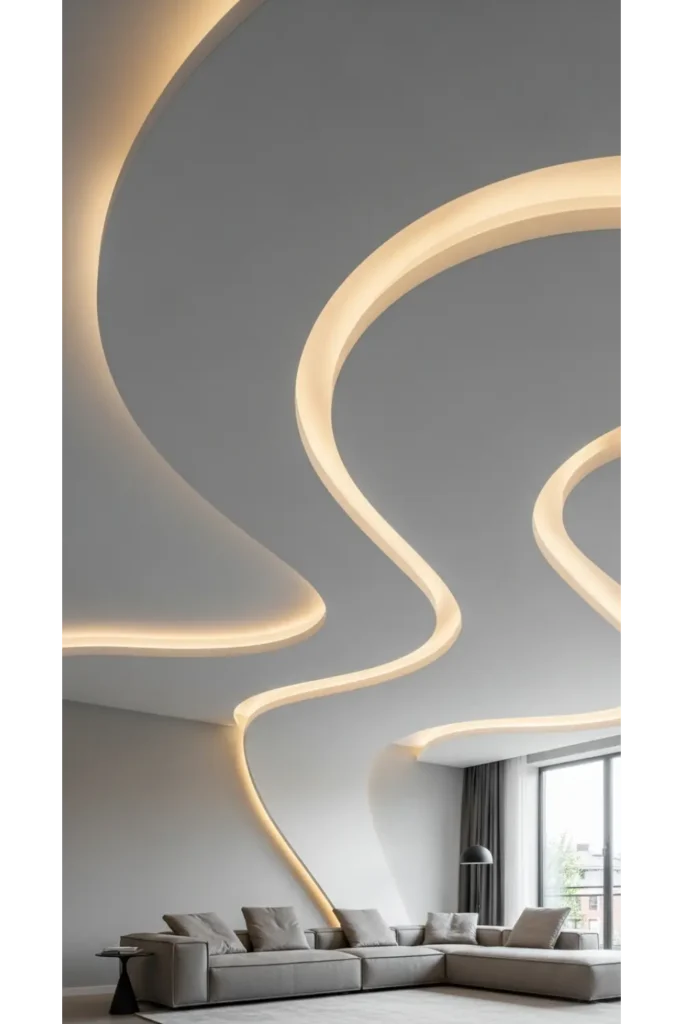
Curved ceilings soften the overall look of a living room. Unlike sharp angles, curves introduce flow and movement overhead. This style suits homes that favor a relaxed, contemporary feel and want to move away from rigid geometry.
Soft lighting follows the curve, enhancing its shape without harsh contrast. The design feels gentle and visually calming, especially when paired with rounded furniture or natural materials. It also helps break monotony in rectangular rooms, making the space feel more dynamic and inviting.
9. False Ceiling with Integrated Spotlights
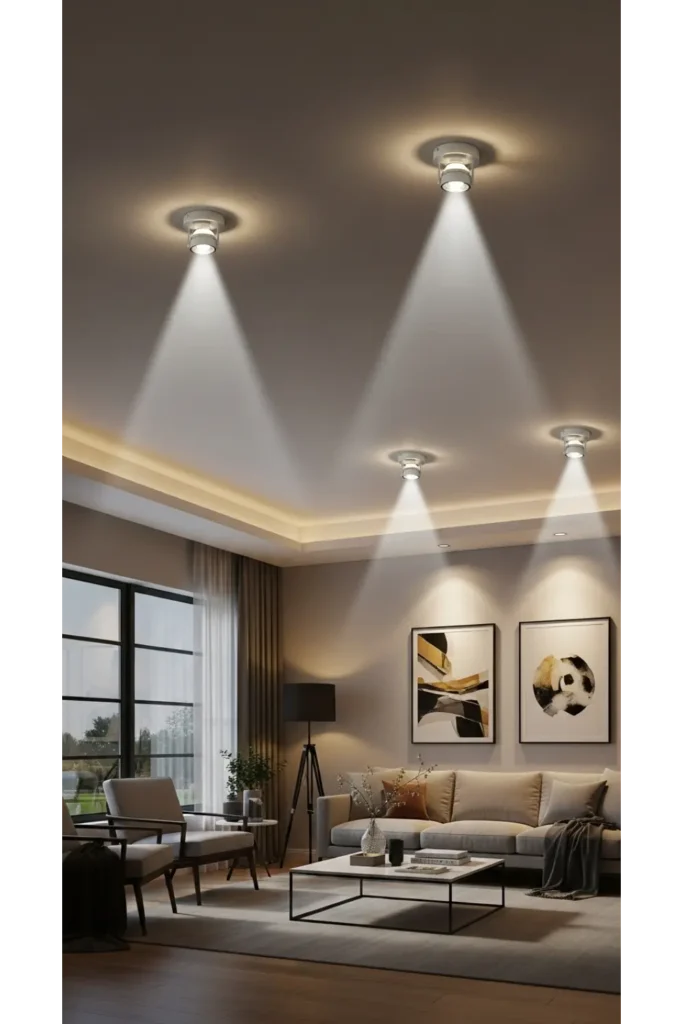
Integrated spotlights offer focused lighting without visible fixtures. When embedded into a false ceiling, they create a clean and organized look. This design supports functional lighting needs while keeping the ceiling visually uncluttered.
Spotlights work well for highlighting artwork, shelves, or seating areas. Their placement can be adjusted to suit daily activities and moods. Combined with dimmers, they provide flexibility throughout the day. This ceiling style fits both modern and transitional living rooms with ease.
10. Textured False Ceiling Finish
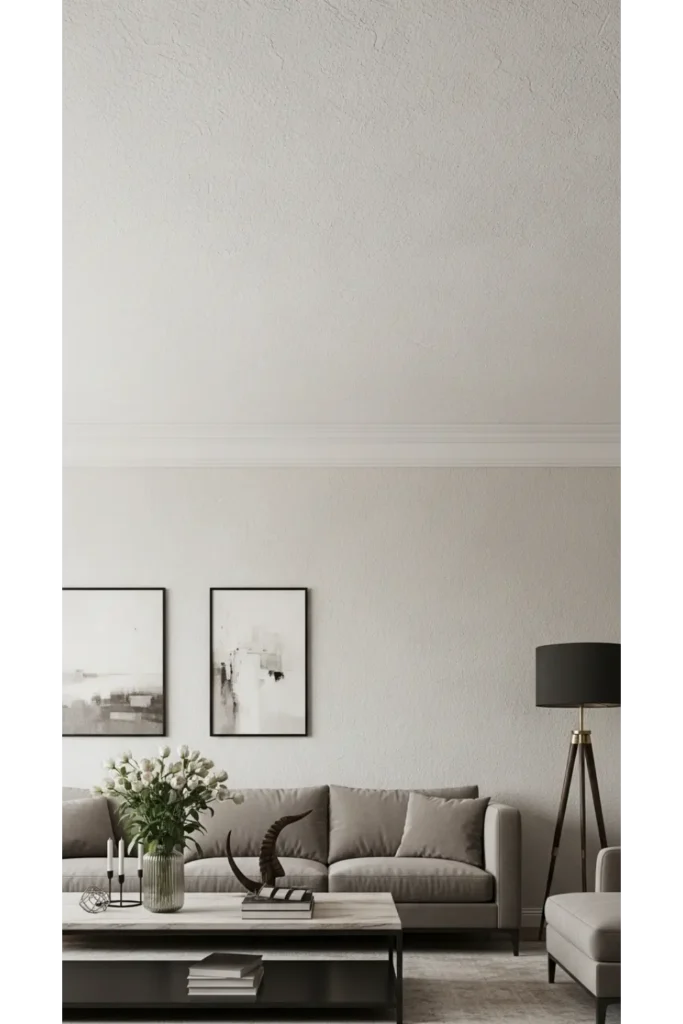
A textured ceiling adds depth through surface detail rather than structure. Subtle finishes like sand texture or light patterns create visual interest without dramatic shapes. This approach suits homeowners who want something different yet understated.
The texture interacts with light, creating gentle highlights and shadows. It pairs best with simple lighting and neutral colors. This ceiling style adds character while remaining calm and adaptable. It works well in living rooms where walls and furniture stay minimal.
11. False Ceiling with LED Strip Highlights
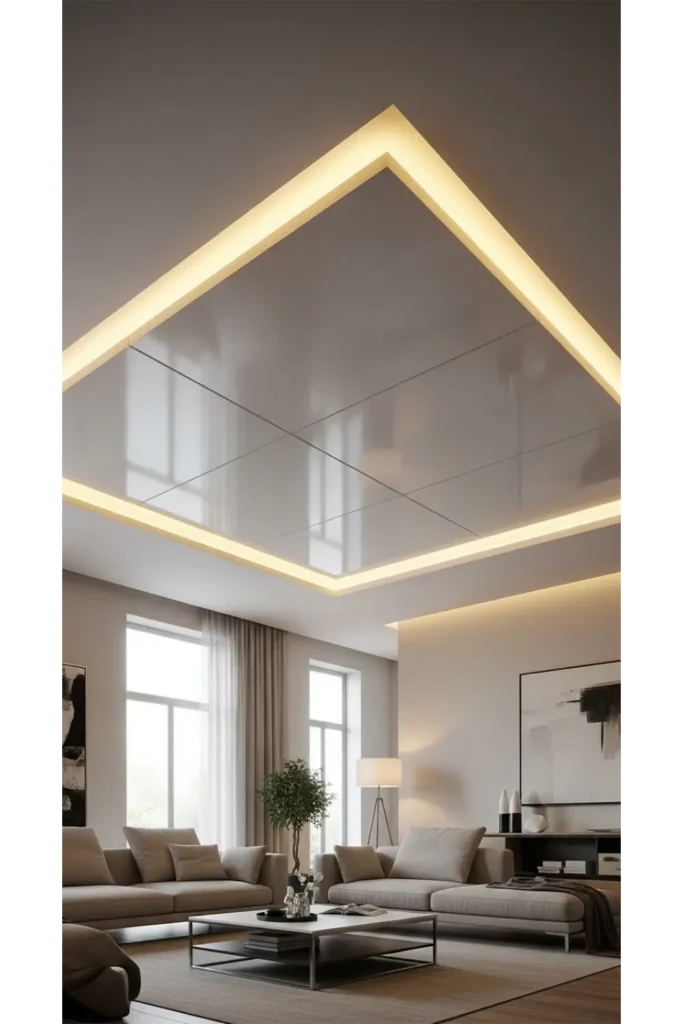
LED strips tucked into ceiling edges or grooves offer modern elegance. They provide continuous light lines that guide the eye and define the ceiling shape. This design works especially well in contemporary living rooms with clean lines.
The lighting enhances mood and adds a soft glow without dominating the space. Color temperature can be adjusted to suit different times of day. This ceiling style feels current and flexible, making it a favorite for modern homeowners.
12. Dual Tone False Ceiling
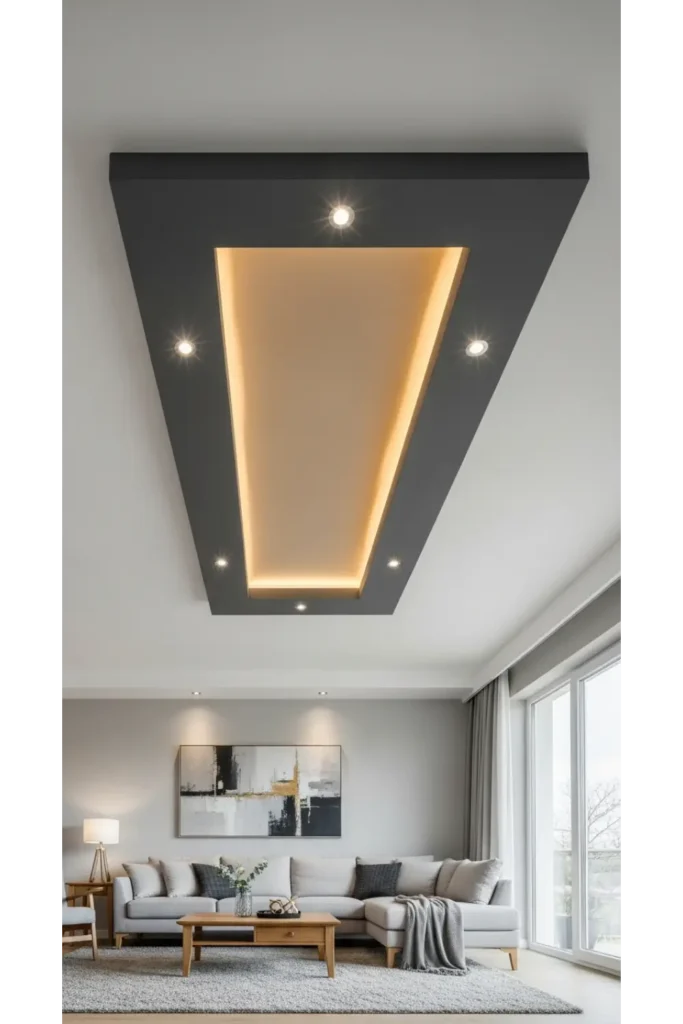
A dual tone ceiling uses two complementary shades to create contrast and depth. The colors define layers or sections, adding visual interest without heavy detailing. This approach works well in medium to large living rooms.
The contrast helps break flatness while maintaining harmony. Neutral combinations feel timeless, while subtle color accents add personality. Lighting ties the tones together, creating a cohesive look that feels intentional and balanced.
13. False Ceiling with Wooden Beams
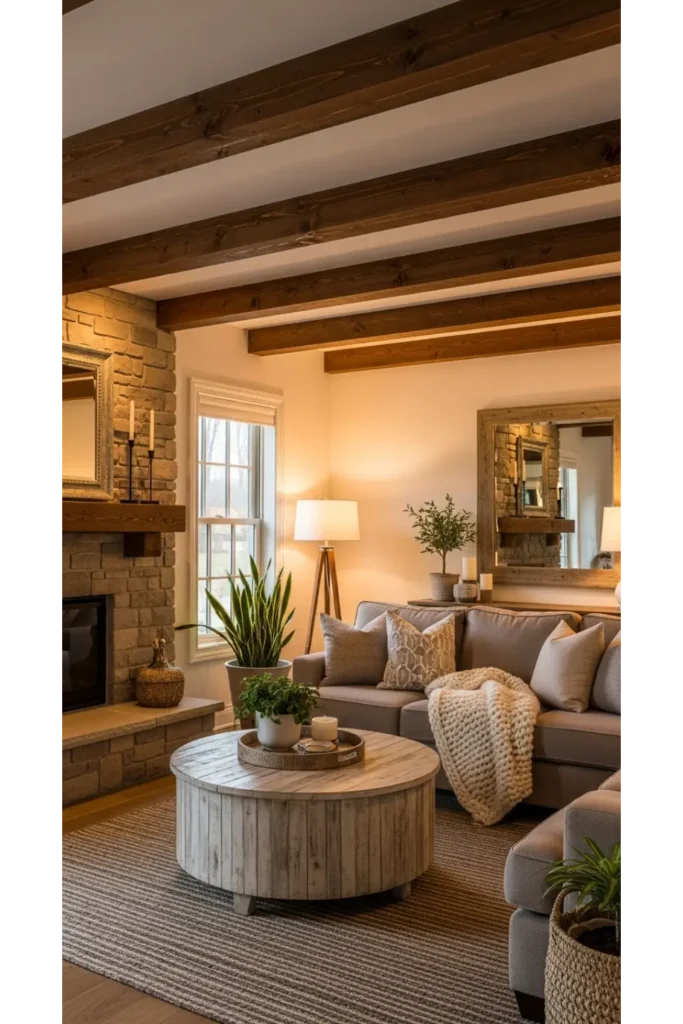
Wooden beams introduce rustic charm into a living room ceiling. Whether real or faux, they add structure and warmth. This design blends well with modern furniture, creating a balanced rustic-modern look.
Soft lighting between beams enhances texture and depth. The ceiling becomes a strong design feature while remaining welcoming. It suits homes that value comfort, craftsmanship, and a lived-in feel.
14. High Gloss False Ceiling
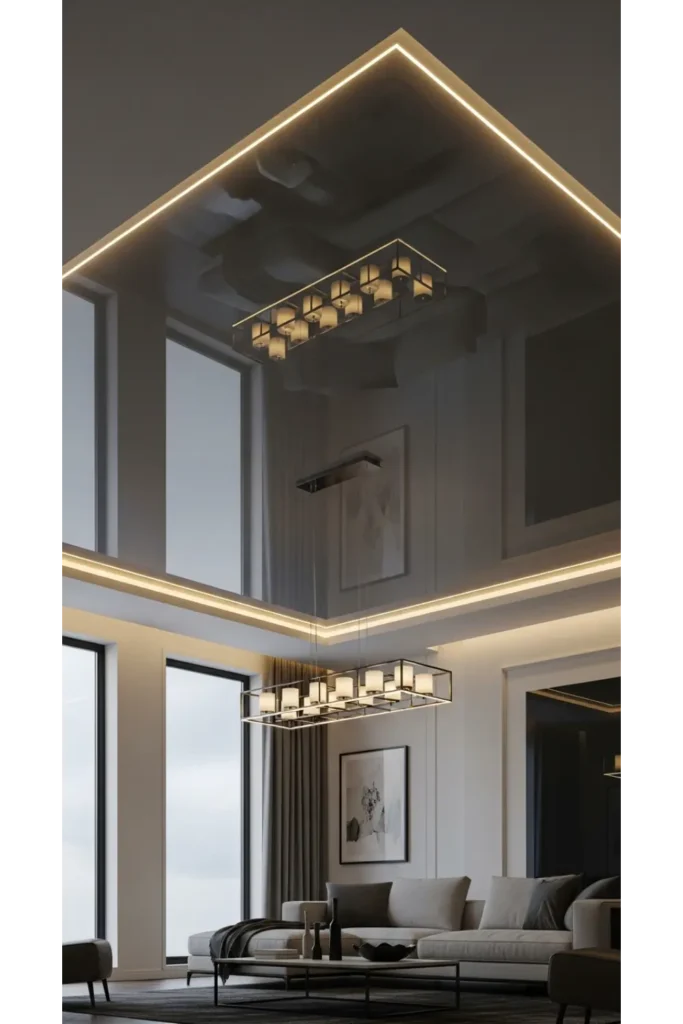
High gloss ceilings reflect light and make living rooms feel brighter. The reflective surface enhances both natural and artificial light. This design works best in modern interiors with controlled color palettes.
It adds a sense of luxury without additional décor. Proper lighting placement prevents glare and keeps the look refined. This ceiling style suits homeowners who enjoy a polished, contemporary atmosphere.
15. False Ceiling with Artistic Cutouts
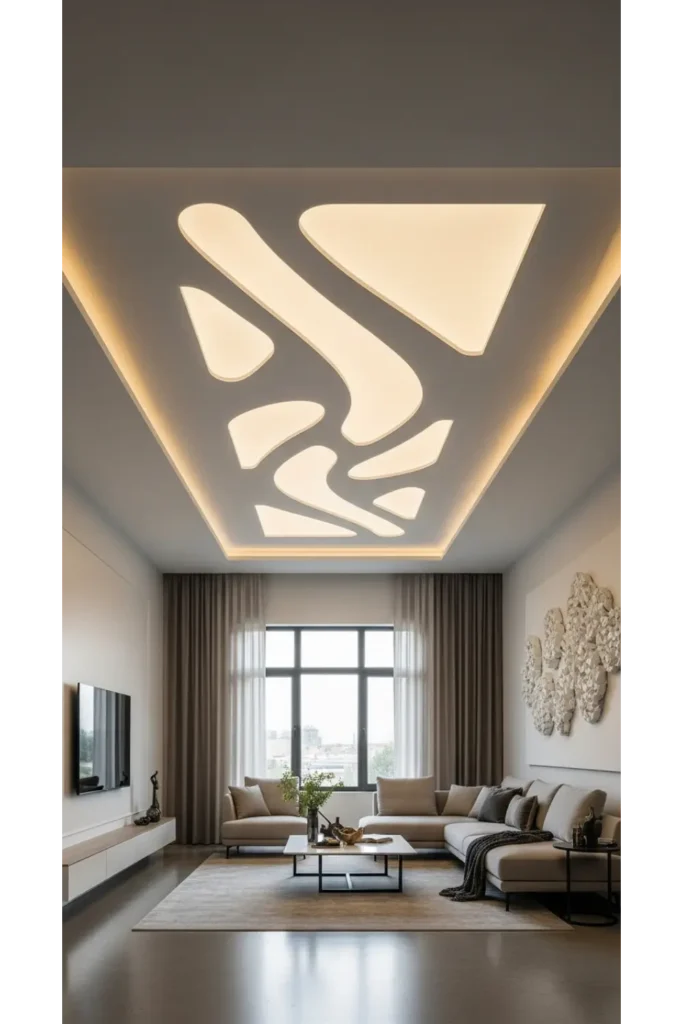
Artistic cutout ceilings transform the living room into a visually expressive space without relying on heavy décor. Carefully designed perforations allow light to filter through the ceiling surface, creating layered shadows that change throughout the day. This interaction between light and form adds depth and movement overhead. When done with precision, the ceiling feels intentional and architectural rather than decorative, making it suitable for homes that value creative yet controlled design choices.
This ceiling style works best when paired with soft ambient lighting and neutral wall tones. The cutouts should feel balanced and spaced thoughtfully to avoid visual noise. Furniture with simple lines helps keep the focus upward, while warm lighting ensures the ceiling remains inviting rather than dramatic. It is an excellent choice for homeowners who want a distinctive living room that feels personal, artistic, and refined without sacrificing comfort or functionality.
16. False Ceiling with Skylight Effect
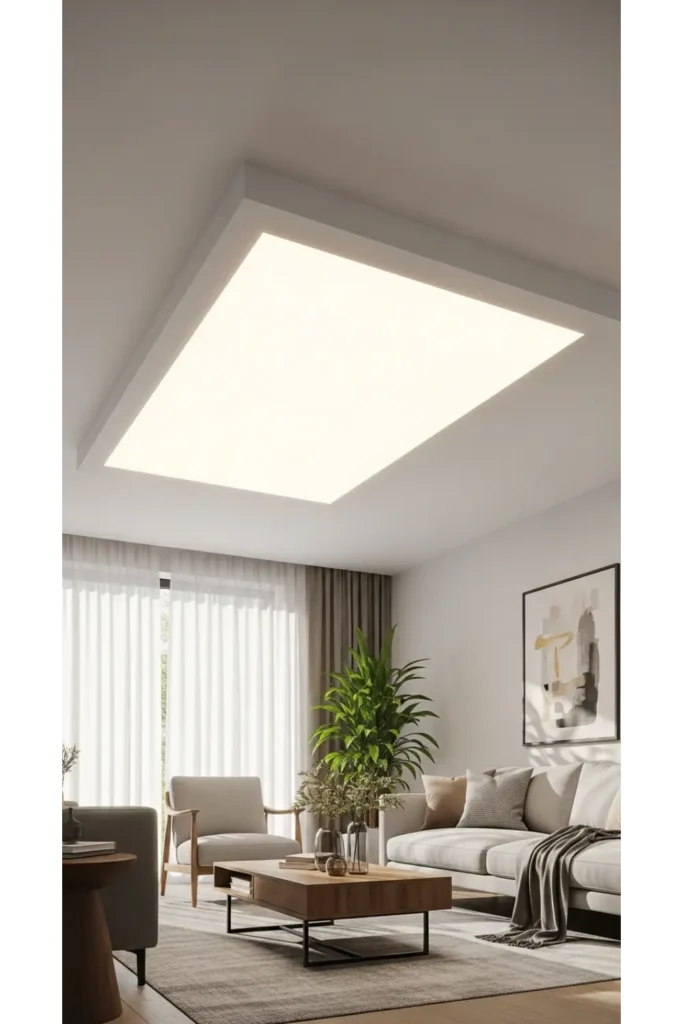
A skylight-effect ceiling brings the illusion of natural daylight into the living room, even when real skylights are not possible. Translucent panels or backlit surfaces simulate open sky, making the space feel brighter and more expansive. This design works especially well in apartments or homes with limited windows, where natural light becomes a design priority rather than a given architectural feature.
The gentle brightness improves the overall mood of the space and makes daily activities feel more pleasant. When combined with light-colored walls and minimal furnishings, the living room gains a fresh and airy presence. This ceiling design supports wellness by reducing visual heaviness and promoting openness. It suits modern homes that value light, clarity, and a calm indoor atmosphere that feels connected to the outdoors.
17. Matte Finish False Ceiling
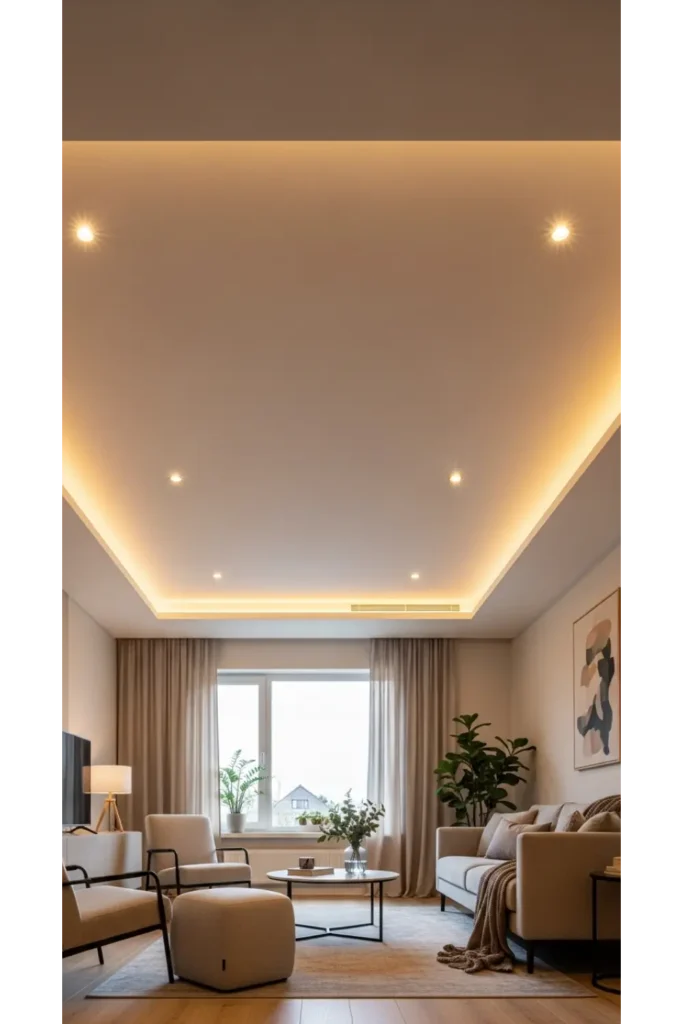
A matte finish ceiling creates a calm visual experience by absorbing light rather than reflecting it. This soft surface reduces glare and makes the living room feel more relaxed and grounded. Unlike glossy finishes that draw attention, matte ceilings quietly support the overall design, allowing furniture, textures, and lighting to take center stage without competition.
This ceiling style pairs beautifully with warm lighting and natural materials such as fabric sofas, wooden tables, or woven accents. The matte surface helps maintain visual balance and feels comfortable to the eye over long periods. It suits homes focused on everyday comfort rather than statement design. The result is a living room that feels timeless, welcoming, and easy to live in.
18. False Ceiling with Border Design
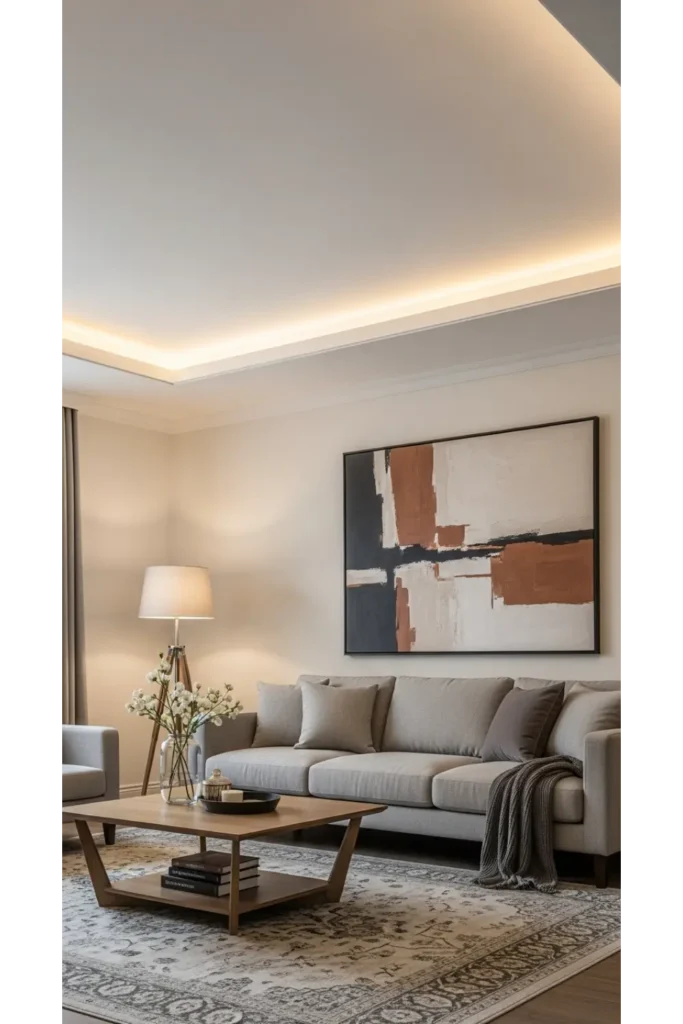
A border-style ceiling adds detail without overwhelming the living room. The central ceiling remains clean and open, while the edges introduce gentle depth through layered borders. This framing effect naturally defines the space and gives the room a finished look. It works particularly well in living rooms where symmetry and proportion play an important role in the overall layout.
Hidden lighting along the border enhances depth and creates a soft glow that spreads evenly across the room. This lighting approach improves ambiance while keeping fixtures discreet. The design adapts easily to both modern and classic interiors, depending on the border shape and finish. It is a reliable choice for homeowners who want elegance, clarity, and subtle visual interest.
19. Contemporary Grid Ceiling
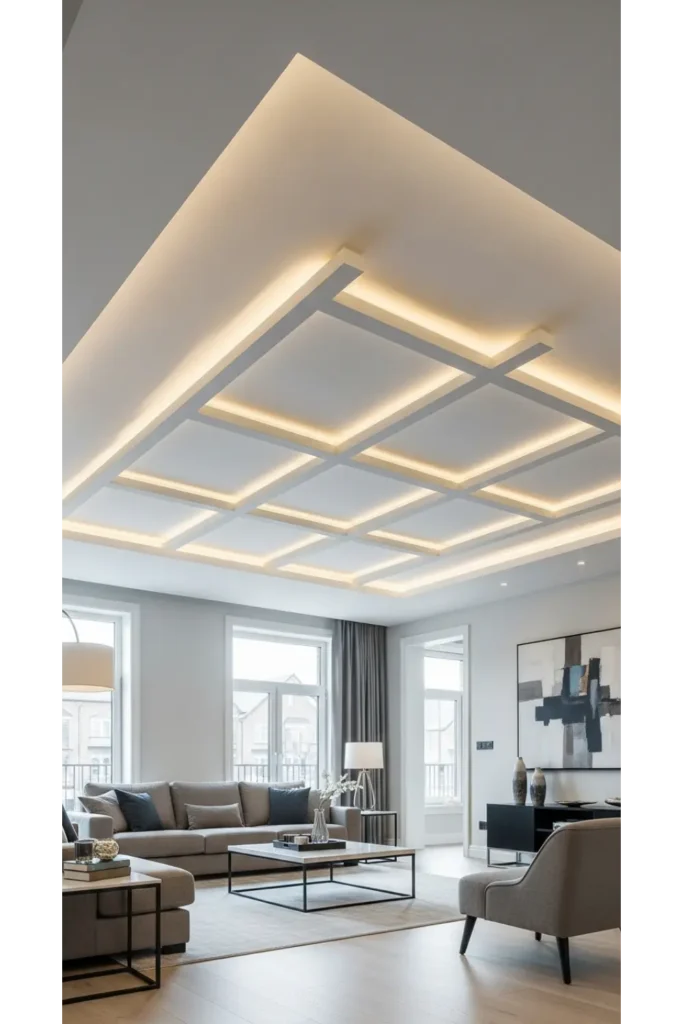
A grid ceiling introduces structure and order through clean, repeating lines. This design appeals to modern living rooms that value clarity and architectural rhythm. The grid pattern adds depth while maintaining a sense of discipline and balance. When designed with proper spacing, it enhances the ceiling without making the room feel busy or confined.
Lighting integrated within the grid helps define each section and improves overall illumination. Neutral finishes keep the design refined and prevent visual rigidity. This ceiling style pairs well with minimalist furniture and open floor plans. It supports a modern lifestyle by combining function, organization, and visual consistency thoughtfully and practically.
20. False Ceiling with Soft Color Accent
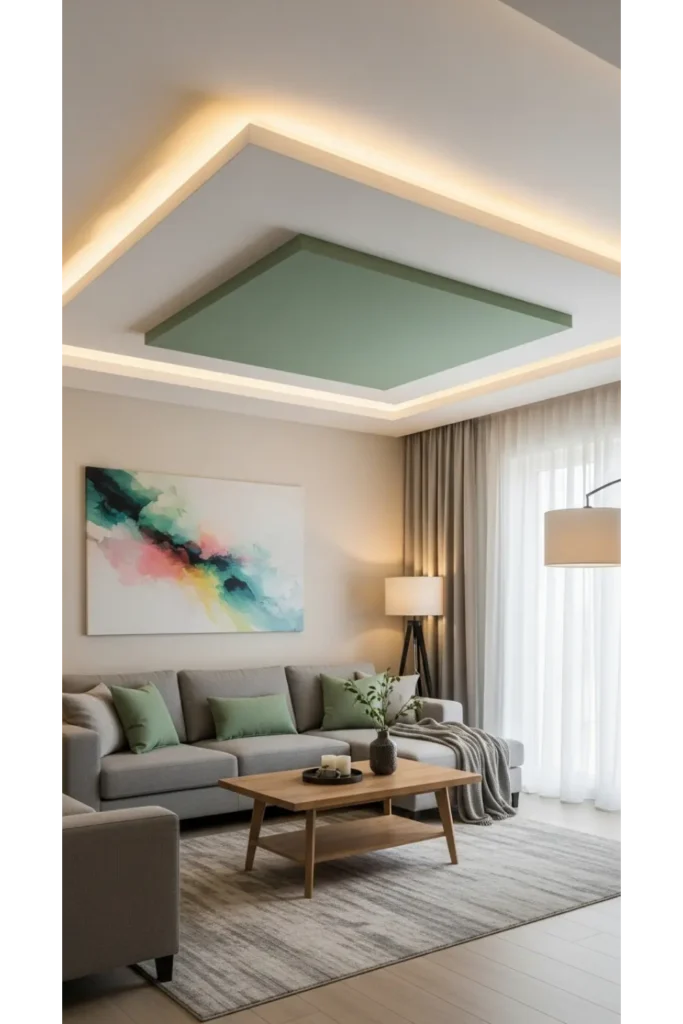
Adding a soft color accent to the ceiling introduces personality while keeping the living room calm and cohesive. Muted shades such as beige, pale grey, or soft pastels work best, as they enhance warmth without overpowering the space. The ceiling becomes a subtle design layer that complements walls and furnishings rather than competing with them.
This approach works well in homes that want gentle contrast without bold statements. Lighting plays a key role in maintaining balance, as it helps the color appear even and natural. When coordinated with textiles or artwork, the ceiling ties the room together visually. The result feels welcoming, thoughtful, and emotionally comfortable.
21. Minimal Drop Ceiling Design
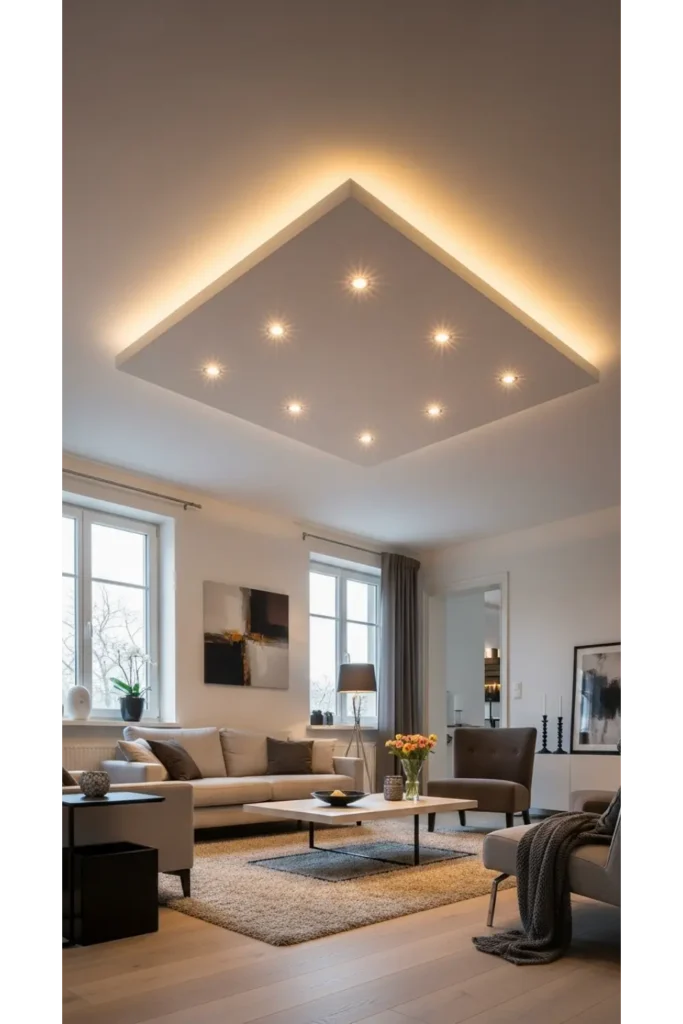
A minimal drop ceiling lowers the ceiling plane slightly to improve lighting control and visual definition. This subtle change helps organize the living room without introducing heavy design elements. It works especially well in open layouts where the living area needs gentle separation without walls or partitions.
The simplicity of this design keeps the room feeling open and uncluttered. Hidden lighting within the drop section adds warmth and reduces harsh shadows. This ceiling style supports modern living by focusing on function, comfort, and clean aesthetics. It is ideal for homeowners who prefer understated design with practical benefits.
22. False Ceiling with Mixed Materials
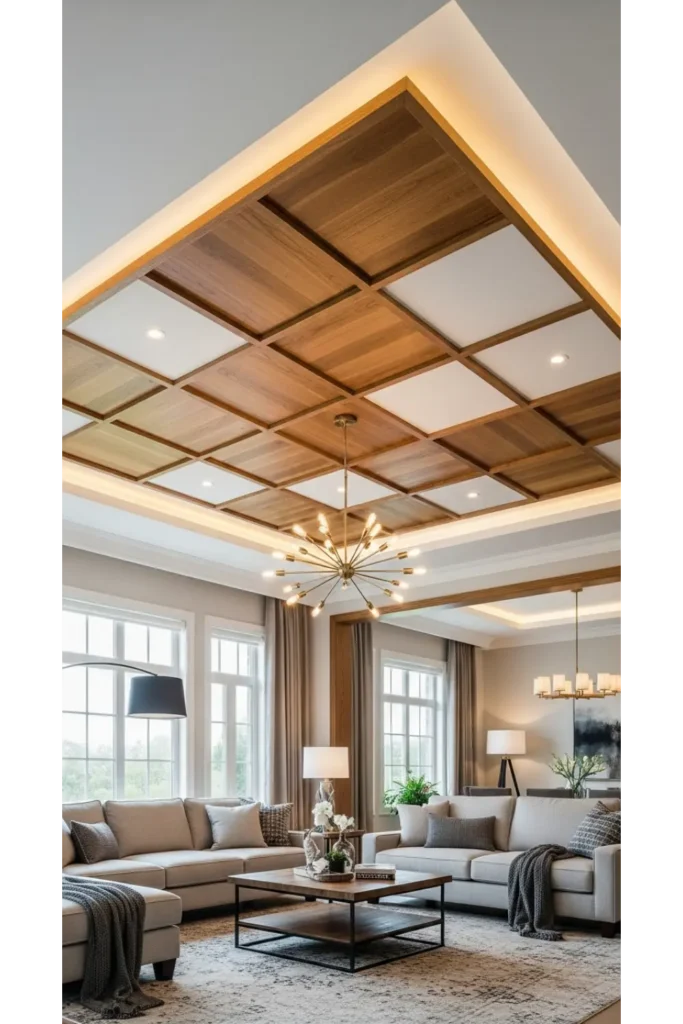
A mixed-material ceiling combines textures to create a richer visual experience. Wood adds warmth, while gypsum provides structure and clean lines. Together, they create balance between natural and modern elements. This approach works well in living rooms that aim to feel layered and thoughtfully designed rather than flat or uniform.
The success of this ceiling depends on proportion and restraint. Each material should have a clear role, supported by lighting that highlights transitions smoothly. When paired with neutral interiors, the ceiling becomes a quiet focal point. It suits homes that appreciate craftsmanship, contrast, and a refined sense of depth.
23. Elegant White False Ceiling
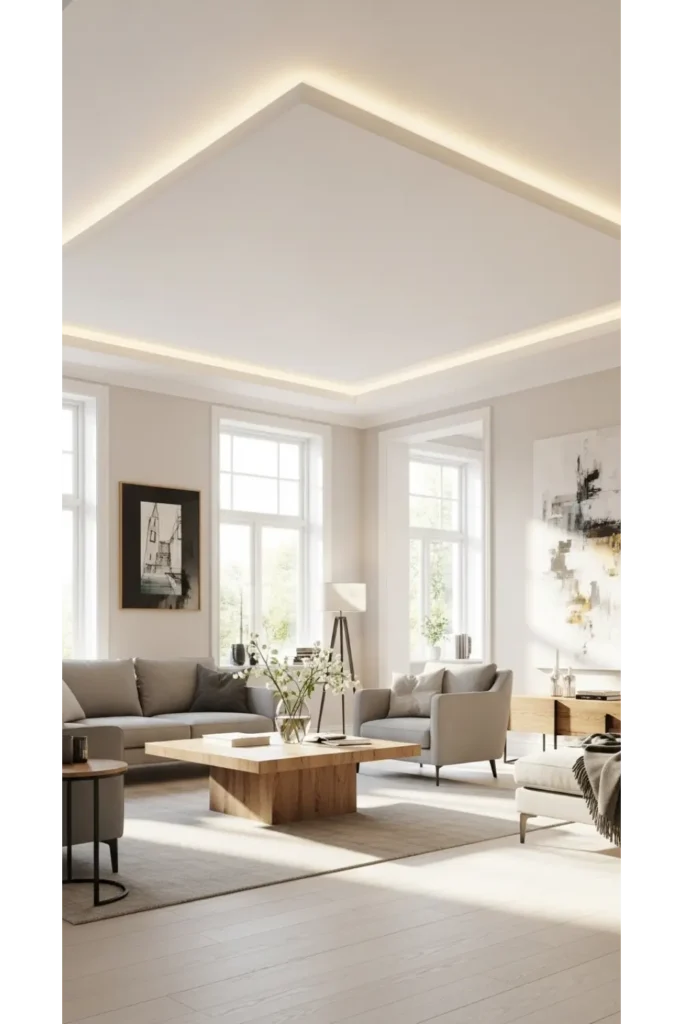
An elegant white ceiling remains one of the most versatile choices for a living room. It reflects light evenly, making the space feel larger and brighter. White ceilings adapt effortlessly to changing décor styles, allowing homeowners to update furniture or colors without reworking the ceiling design.
Subtle detailing and thoughtful lighting prevent the ceiling from feeling plain. Recessed lights or gentle coves add depth while preserving simplicity. This ceiling style supports the room quietly, offering clarity and balance. It is ideal for homeowners who value longevity, flexibility, and a clean, timeless living room atmosphere.
Conclusion
A well-designed false ceiling can transform how a living room looks and feels. It supports lighting, improves comfort, and adds character without demanding attention. The ideas shared here focus on balance, practicality, and long-term appeal rather than short-lived trends.
By choosing a ceiling design that matches the room size, lifestyle, and overall aesthetic, homeowners can create spaces that feel complete and welcoming. Thoughtful planning and quality execution ensure the ceiling enhances daily living for years to come.