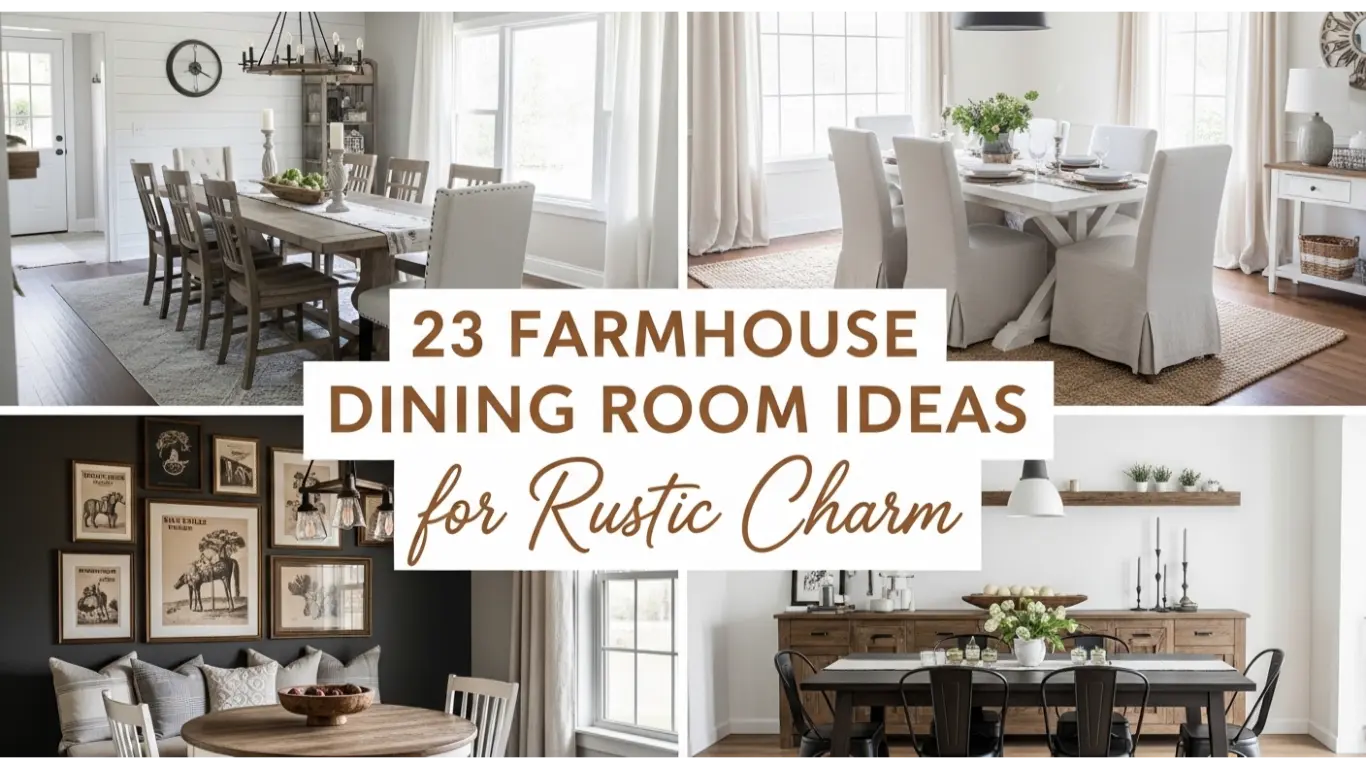
23 Farmhouse Dining Room Ideas for Rustic Charm
A dining room sets the tone for how people gather, connect, and linger. Farmhouse dining room ideas continue to attract homeowners because they feel honest, warm, and lived in. This style blends history with comfort and brings rustic charm into everyday moments. In this guide, you will find thoughtful, updated ideas that balance tradition and modern living while staying practical, welcoming, and visually rich for today’s homes.
1. Farmhouse Dining Room Ideas for Rustic Charm With Reclaimed Wood Tables
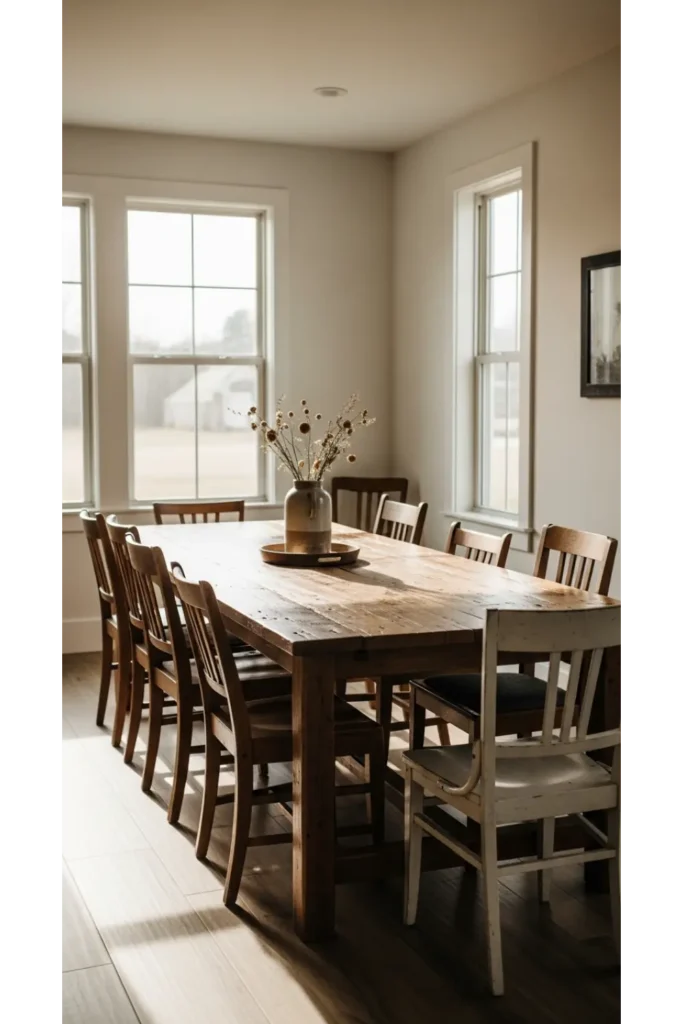
The heart of farmhouse dining room ideas for rustic charm often begins with a reclaimed wood table. The visible grain, knots, and imperfections tell a story that mass produced furniture cannot match. This table becomes a natural gathering place, grounding the room with warmth and authenticity while adding texture that feels both timeless and inviting.
Pair reclaimed wood with simple seating to keep the space balanced and functional. Linen chair cushions, muted tones, and minimal decor let the table stand out without overwhelming the room. This approach supports a relaxed atmosphere that feels welcoming for daily meals while still impressive enough for hosting guests.
2. Cozy Farmhouse Dining Rooms With Mixed Wood Finishes

Mixing wood tones adds depth and personality to farmhouse dining rooms without losing cohesion. Different finishes create visual interest while reinforcing the layered look that defines rustic charm. When done thoughtfully, this technique makes the room feel collected over time rather than styled all at once.
To keep harmony, stick to warm undertones and repeat finishes across the room. Exposed beams, wood flooring, or a sideboard can echo the table’s texture. This repetition helps the space feel intentional, comfortable, and naturally balanced rather than mismatched or chaotic.
3. Rustic Farmhouse Dining Spaces With Statement Lighting

Lighting plays a major role in shaping farmhouse dining room ideas. A statement chandelier in iron, wood, or aged brass adds character while anchoring the table below. This contrast between sturdy materials and soft light enhances the room’s rustic charm without making it feel heavy.
Choose lighting that feels handcrafted rather than polished. Open bulbs, candle style fixtures, or lantern inspired designs work well. Proper scale matters, so select a fixture large enough to visually ground the dining area while still allowing the room to breathe.
4. Farmhouse Dining Rooms With Neutral Layering
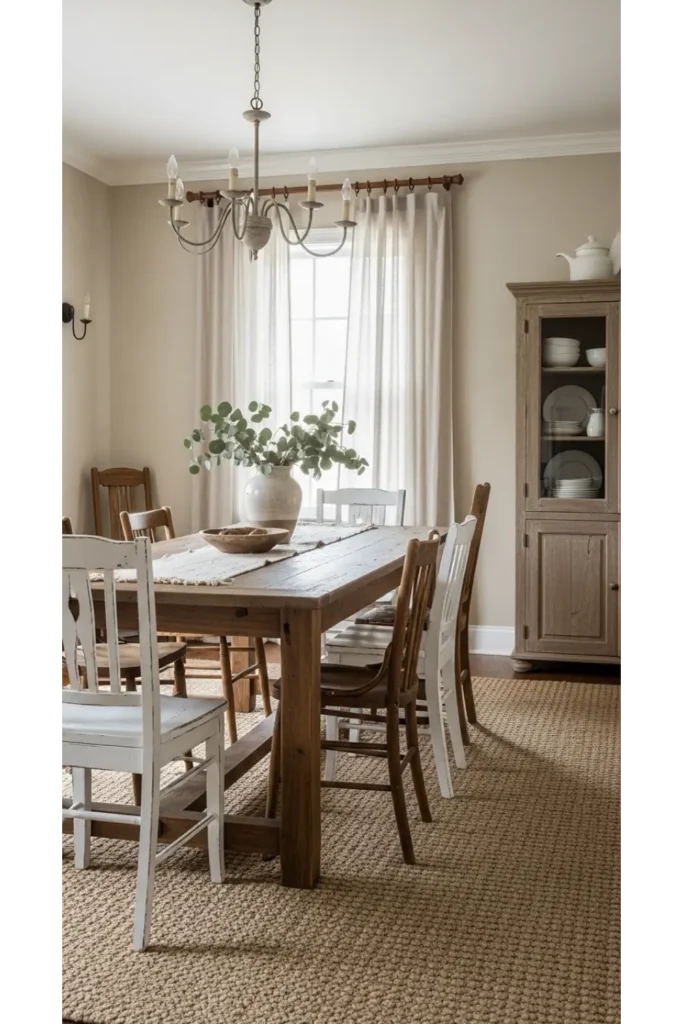
Neutral color palettes remain a cornerstone of farmhouse dining room ideas because they allow textures to shine. Soft whites, warm beiges, and gentle grays create a calm backdrop that highlights natural wood and tactile finishes. This layering adds depth without relying on bold color.
Textiles help bring the space to life. Linen curtains, woven rugs, and upholstered chairs introduce comfort while reinforcing the relaxed feel of rustic charm. These elements soften hard surfaces and make the dining room feel more welcoming and lived in.
5. Farmhouse Dining Rooms Featuring Open Shelving
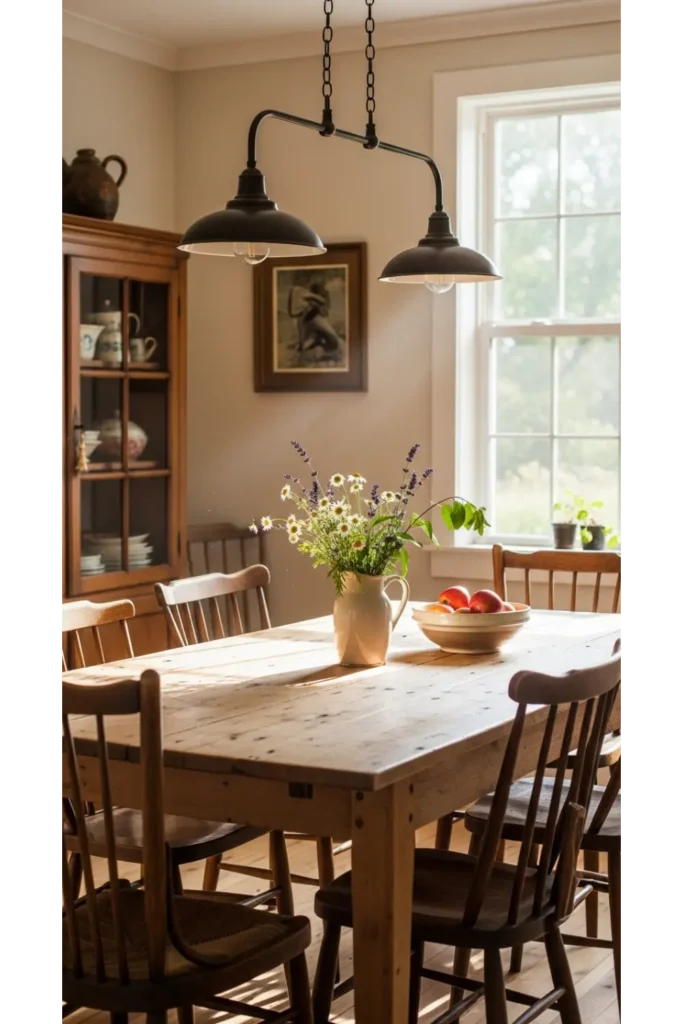
Open shelving adds both function and style to farmhouse dining rooms. Displaying everyday dishes, vintage pottery, or simple glassware reinforces the practical roots of rustic charm. This approach keeps essentials within reach while turning useful items into decor.
Keep displays curated to avoid clutter. Stick to cohesive colors and materials that complement the dining table. This balance ensures the room feels organized and intentional while still reflecting the warmth and personality that farmhouse style is known for.
6. Rustic Farmhouse Dining Rooms With Vintage Accents
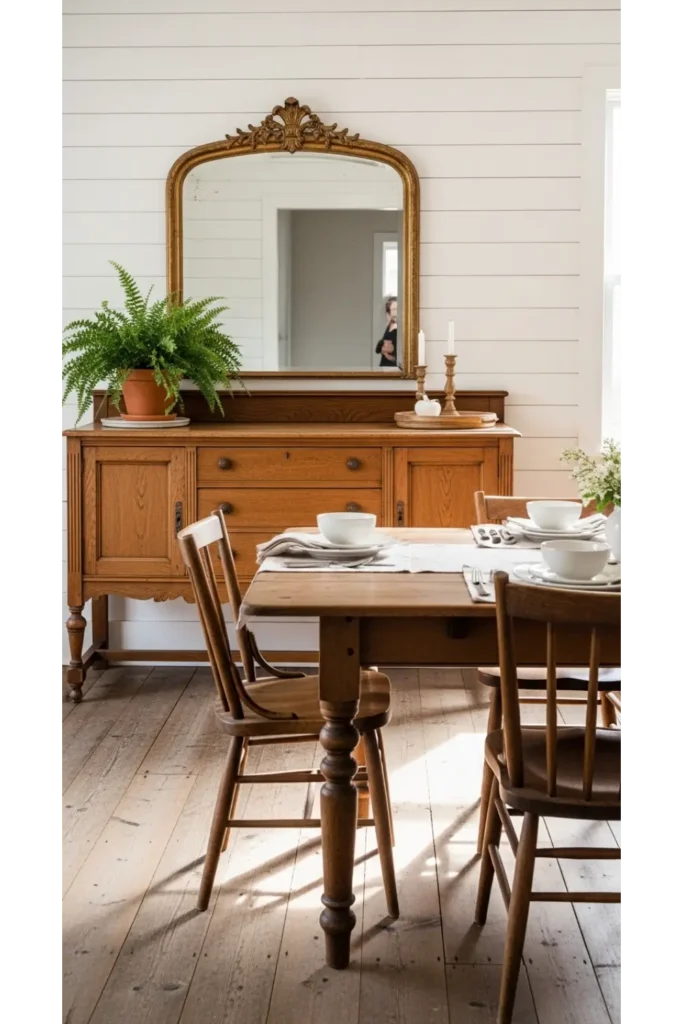
Vintage accents bring soul to farmhouse dining room ideas. An antique buffet, weathered mirror, or inherited decor piece adds authenticity that cannot be replicated. These elements introduce history and create emotional connection within the space.
Blend vintage finds with modern basics to keep the room functional. Clean lined tables or updated seating help balance older pieces. This mix supports a timeless look that feels personal, layered, and rooted in rustic charm rather than themed.
7. Farmhouse Dining Rooms With Natural Wall Treatments

Wall treatments like shiplap or beadboard instantly elevate farmhouse dining rooms. These textures add subtle detail while maintaining a clean and approachable feel. They create visual interest without overpowering furniture or decor.
Paint walls in soft neutral shades to keep the room light and open. This backdrop allows wood tones and furnishings to stand out naturally. The result feels cozy, balanced, and aligned with the relaxed elegance of rustic charm.
8. Farmhouse Dining Rooms Designed for Everyday Living
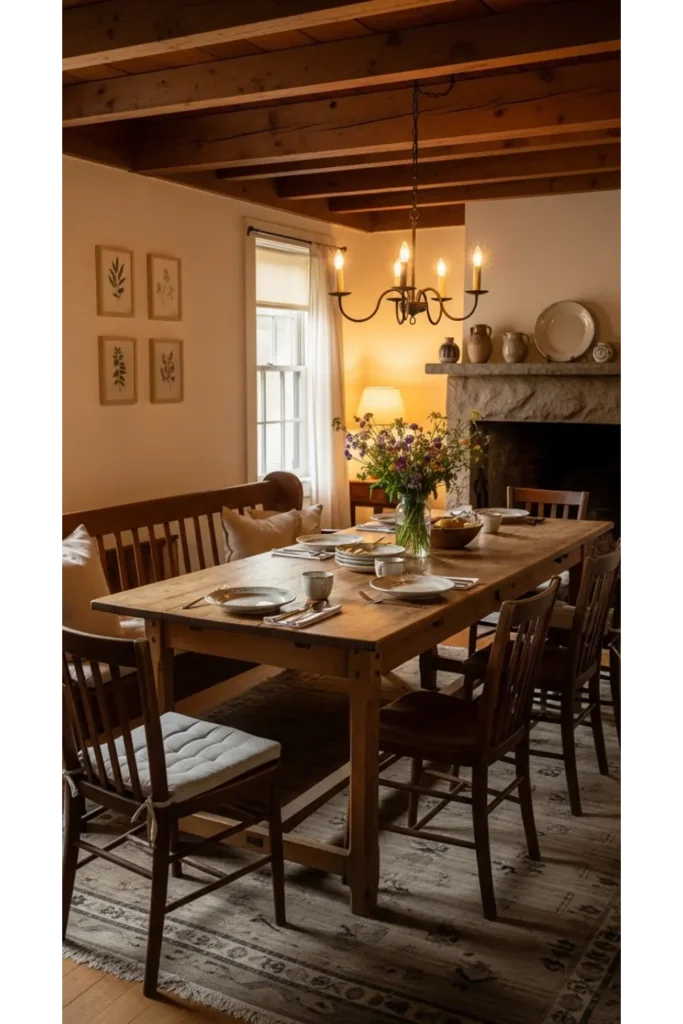
Practicality matters when designing farmhouse dining room ideas. Spaces that support daily use feel more authentic and inviting. Bench seating, durable finishes, and easy to clean surfaces ensure the room works for real life while still looking beautiful.
Focus on comfort and flow rather than perfection. A room that adapts to family meals, gatherings, and quiet mornings reflects the true spirit of rustic charm. This approach creates a dining space that feels warm, functional, and genuinely welcoming.
9. Farmhouse Dining Rooms With Bench Seating Warmth
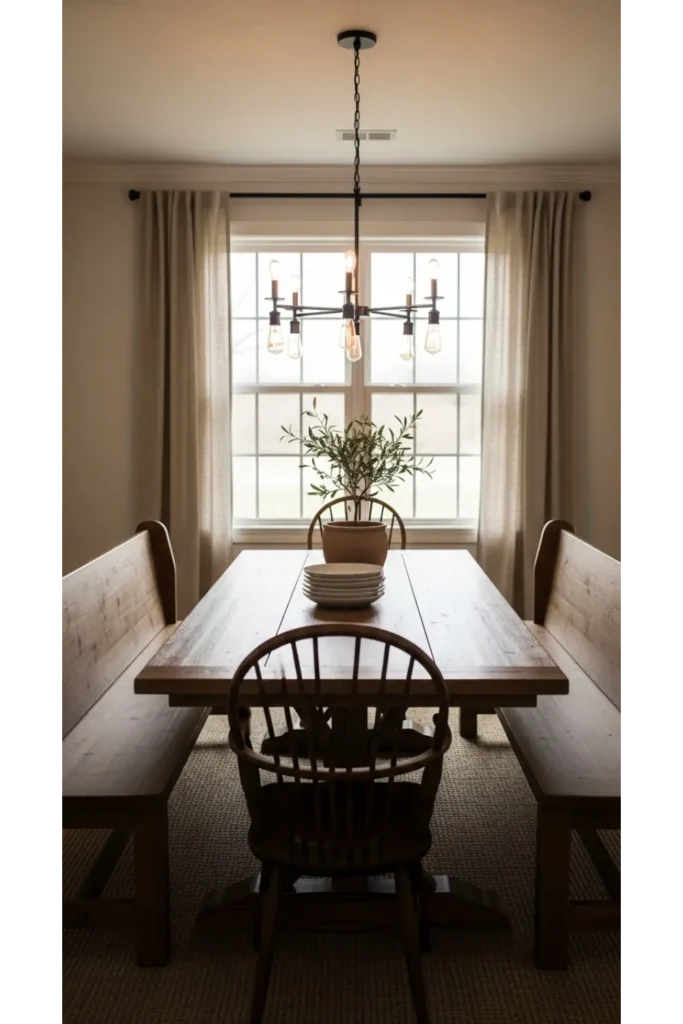
Bench seating brings a relaxed and communal feel to farmhouse dining room ideas. It encourages conversation and makes the space feel open and welcoming. Wooden benches, especially with a slightly weathered finish, enhance rustic charm while offering flexible seating for family meals or gatherings.
Add cushions or throws in natural fabrics to improve comfort without losing the farmhouse look. Bench seating also helps smaller dining rooms feel less crowded. This simple design choice supports everyday living while reinforcing the warmth that defines farmhouse style.
10. Rustic Farmhouse Dining Rooms With Exposed Beams
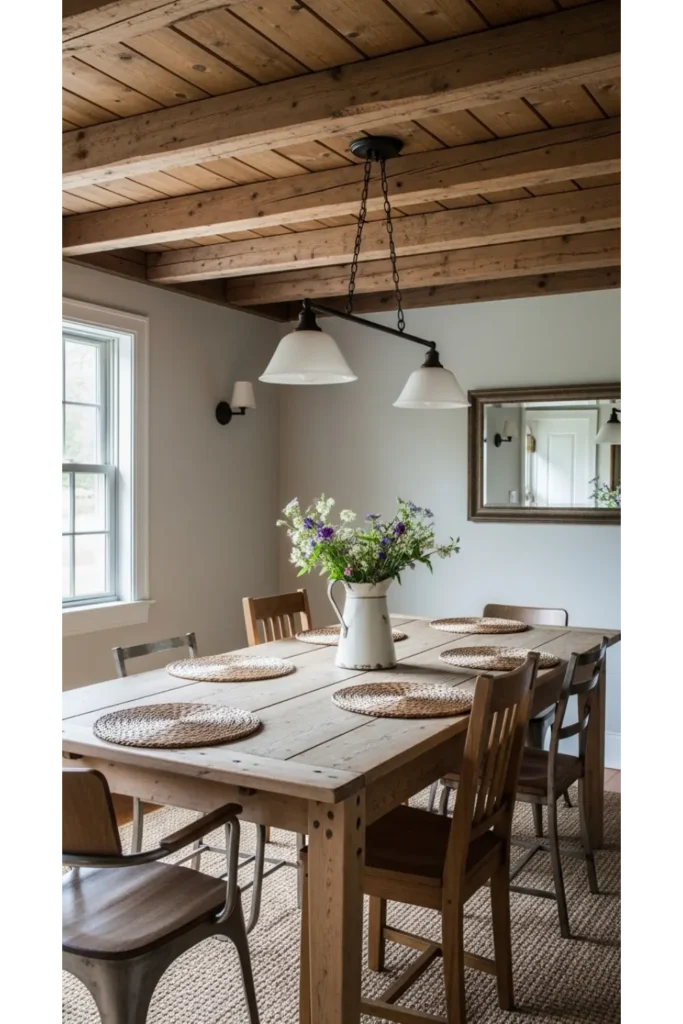
Exposed ceiling beams add architectural character to farmhouse dining rooms. They draw the eye upward and bring an authentic rural feel that enhances rustic charm. Whether original or added later, beams create a sense of history and craftsmanship.
Keep the rest of the room simple so the beams remain the focal point. Pair them with neutral walls and natural wood furniture. This balance keeps the space grounded and prevents it from feeling heavy or dated.
11. Farmhouse Dining Rooms With Antique Sideboards
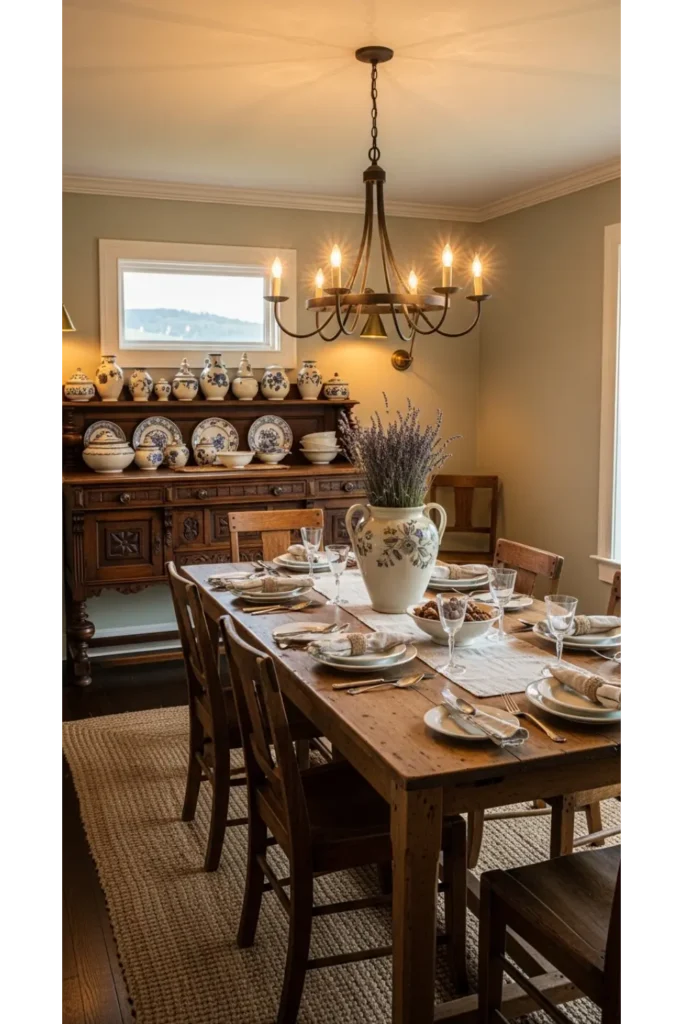
An antique sideboard adds storage and personality to farmhouse dining room ideas. It provides space for linens, dishes, and seasonal decor while reinforcing the collected feel of rustic charm. The worn finish and aged details bring depth to the room.
Style the surface with simple items like pottery or greenery. Avoid overcrowding to maintain a clean look. This approach keeps the dining room functional while highlighting its farmhouse roots.
12. Farmhouse Dining Rooms Using Natural Stone Elements
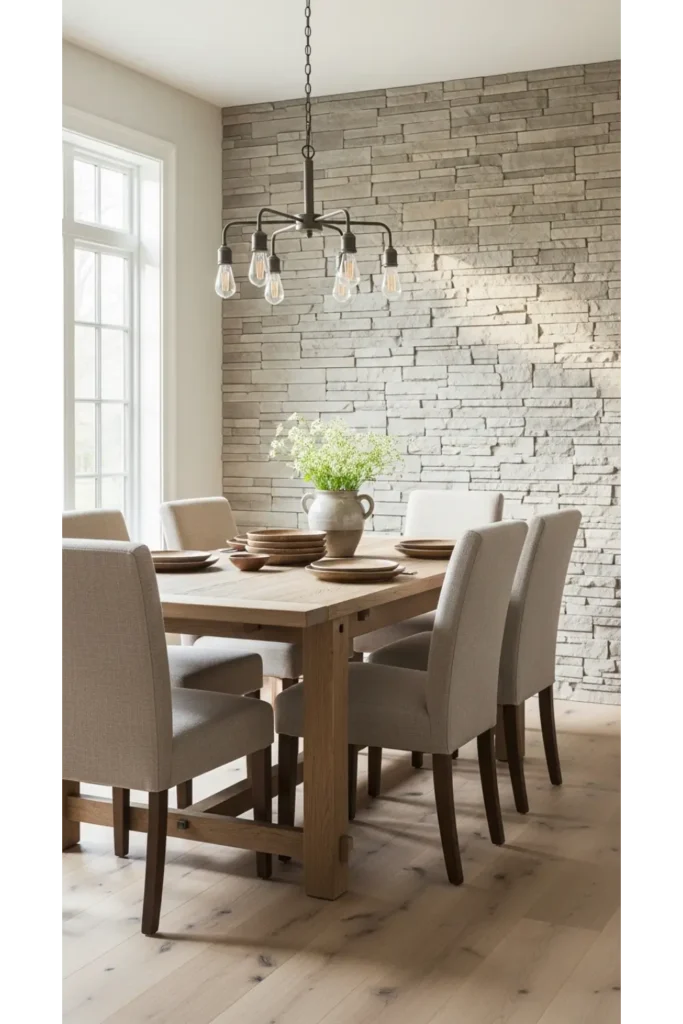
Natural stone adds a sense of permanence and grounding to farmhouse dining rooms, making the space feel deeply connected to the land. Stone accent walls, limestone flooring, or even a subtle stone fireplace introduce texture that cannot be replicated by manufactured materials. This tactile quality strengthens rustic charm by creating a visual contrast between rugged surfaces and refined furniture, helping the dining room feel both strong and welcoming.
To keep the room balanced, stone should work alongside softer elements rather than overpower them. Warm wood tables, linen upholstery, and gentle lighting help soften the stone’s natural weight. When paired thoughtfully, stone becomes a supporting feature that enhances comfort, adds authenticity, and allows the dining room to feel timeless instead of overly dramatic or cold.
13. Farmhouse Dining Rooms With Soft Earth Tones
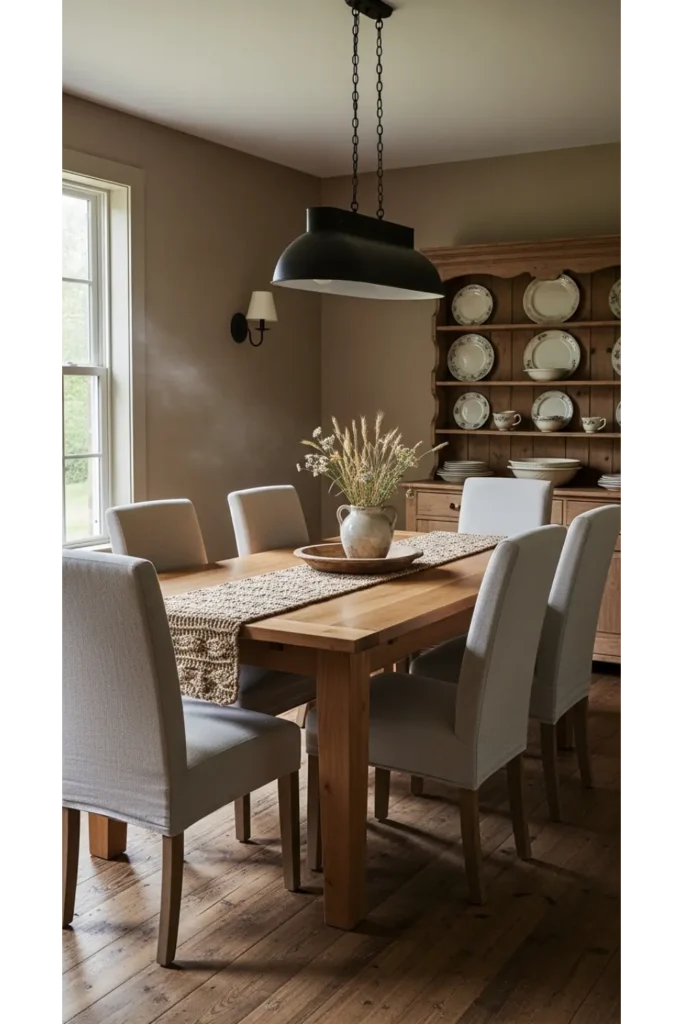
Soft earth tones bring calm and cohesion to farmhouse dining room ideas, creating an environment that feels grounded and relaxed. Colors inspired by nature, such as clay, sand, warm taupe, and muted olive, support rustic charm by blending seamlessly with wood, stone, and natural fibers. These tones reduce visual noise and allow textures and craftsmanship to take center stage.
Applying earth tones works best when layered gently throughout the room. Walls, textiles, and accessories can all carry subtle variations of the same palette. This approach creates depth without distraction, helping the dining room feel intentional, soothing, and welcoming for both daily meals and longer gatherings.
14. Rustic Farmhouse Dining Rooms With Woven Textures

Woven textures add warmth and approachability to farmhouse dining rooms, making the space feel relaxed and lived in. Materials like rattan, seagrass, jute, and wicker introduce softness that balances harder surfaces such as wood tables and plank floors. These textures naturally reinforce rustic charm by reflecting traditional craftsmanship and organic materials.
Using woven elements works best when they are layered with restraint. A jute rug beneath the table or woven chair backs can add depth without overwhelming the room. When combined with neutral colors and solid wood furniture, woven textures enhance comfort while maintaining a clean, cohesive farmhouse look.
15. Farmhouse Dining Rooms With Statement Rugs
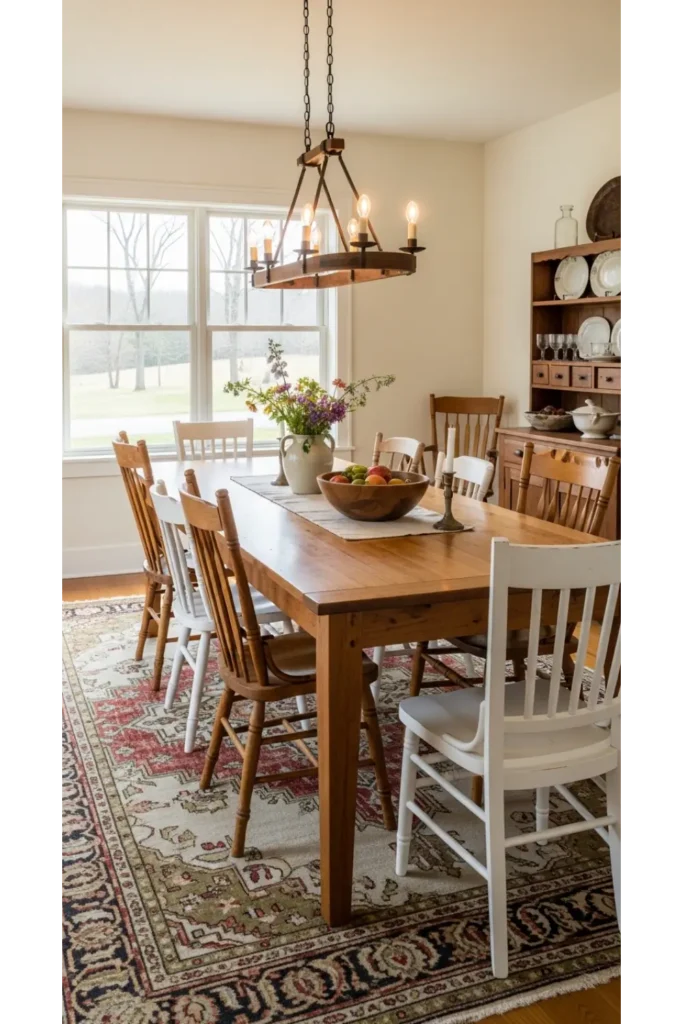
A statement rug helps anchor farmhouse dining room ideas by visually defining the dining area and adding character underfoot. Vintage inspired patterns, faded colors, and natural fibers contribute to rustic charm without pulling attention away from the table. Rugs also soften the space, making it feel warmer and more inviting for long meals.
Choosing the right rug means focusing on durability and balance. Muted tones work best with farmhouse interiors, allowing furniture and textures to remain the focus. A well sized rug ties the entire room together while adding subtle personality and comfort that enhances everyday use.
16. Farmhouse Dining Rooms With Simple Table Styling
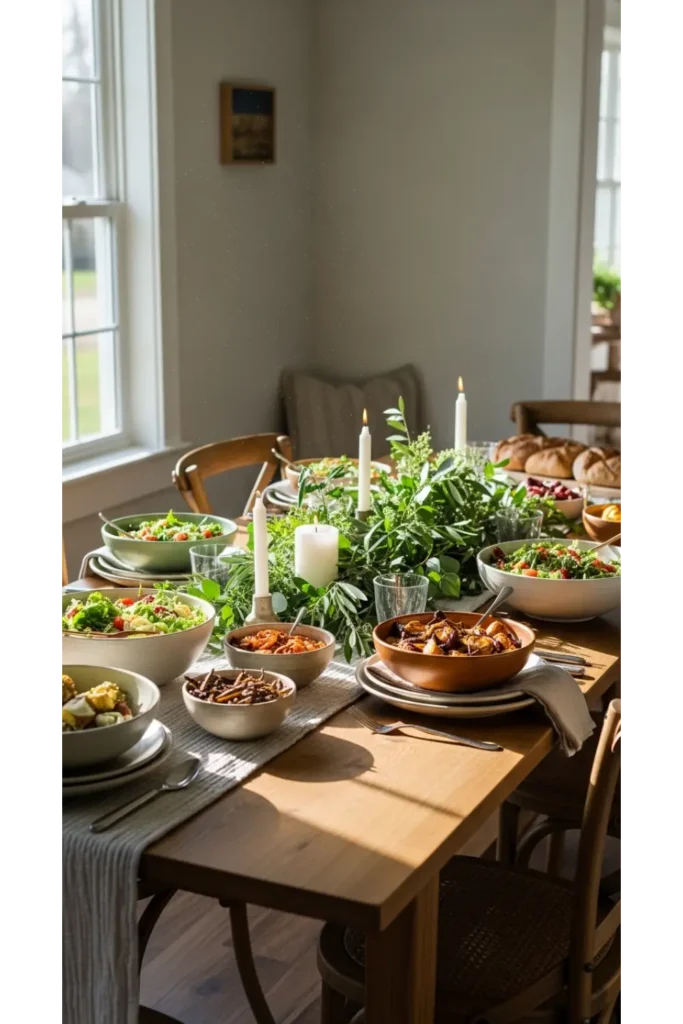
Simple table styling keeps farmhouse dining rooms authentic and functional. Everyday objects such as ceramic bowls, wooden trays, or fresh greenery reflect rustic charm through usefulness rather than decoration. This approach prevents the dining table from feeling staged and supports a more natural, welcoming atmosphere.
Keeping the table lightly styled allows it to adapt easily for meals, work, or gatherings. Avoid oversized centerpieces that block conversation or clutter the surface. Instead, let small, meaningful items add warmth while preserving the practical nature that defines farmhouse living.
17. Farmhouse Dining Rooms Featuring Sliding Barn Doors
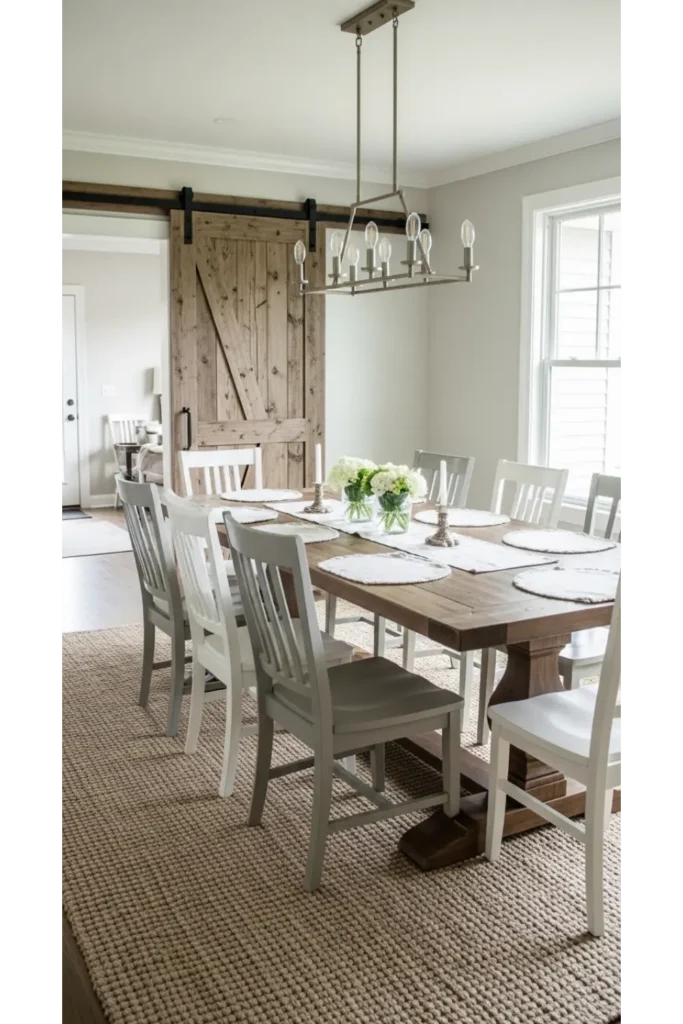
Sliding barn doors bring both function and character to farmhouse dining room ideas. Their simple construction and visible hardware add architectural interest while reinforcing rustic charm. Barn doors also save space compared to traditional doors, making them ideal for open layouts or smaller homes.
Choosing a door finish that complements existing wood tones helps maintain visual harmony. Whether stained, painted, or lightly distressed, the door should feel integrated rather than decorative. When done well, it becomes a natural extension of the farmhouse aesthetic rather than a focal distraction.
18. Farmhouse Dining Rooms With Layered Lighting

Layered lighting enhances farmhouse dining rooms by creating warmth and flexibility throughout the day. A central chandelier provides structure, while wall sconces or subtle lamps add depth and softness. This layered approach strengthens rustic charm by mimicking natural light patterns rather than relying on a single harsh source.
Thoughtful lighting supports different moods, from casual breakfasts to evening gatherings. Warm bulbs and simple fixtures keep the atmosphere relaxed and inviting. When lighting feels intentional, the dining room becomes more comfortable and visually balanced without relying on excessive decor.
19. Farmhouse Dining Rooms With Minimal Decor
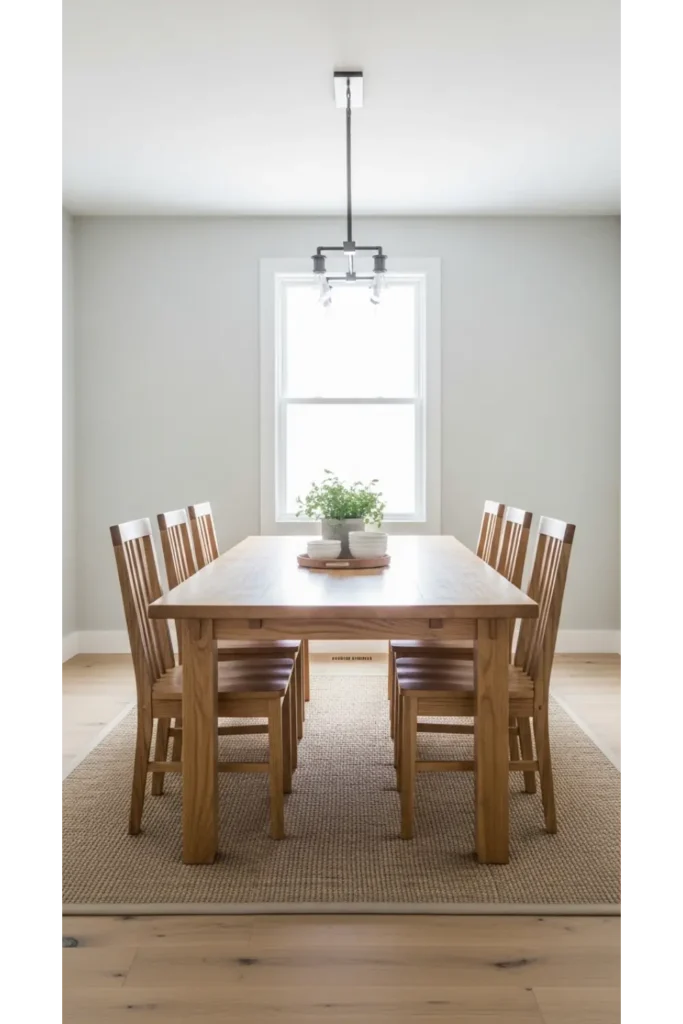
Minimal decor allows farmhouse dining room ideas to breathe, letting materials and craftsmanship speak for themselves. Fewer decorative items highlight natural wood, textures, and proportions, which strengthens rustic charm through simplicity. This approach creates a calm and uncluttered environment that feels honest and purposeful.
A minimal farmhouse dining room does not feel empty when proportions and materials are chosen carefully. Thoughtful spacing, quality furniture, and subtle textures create visual interest without excess. This balance supports a timeless look that remains functional and easy to maintain.
20. Farmhouse Dining Rooms With Seasonal Styling
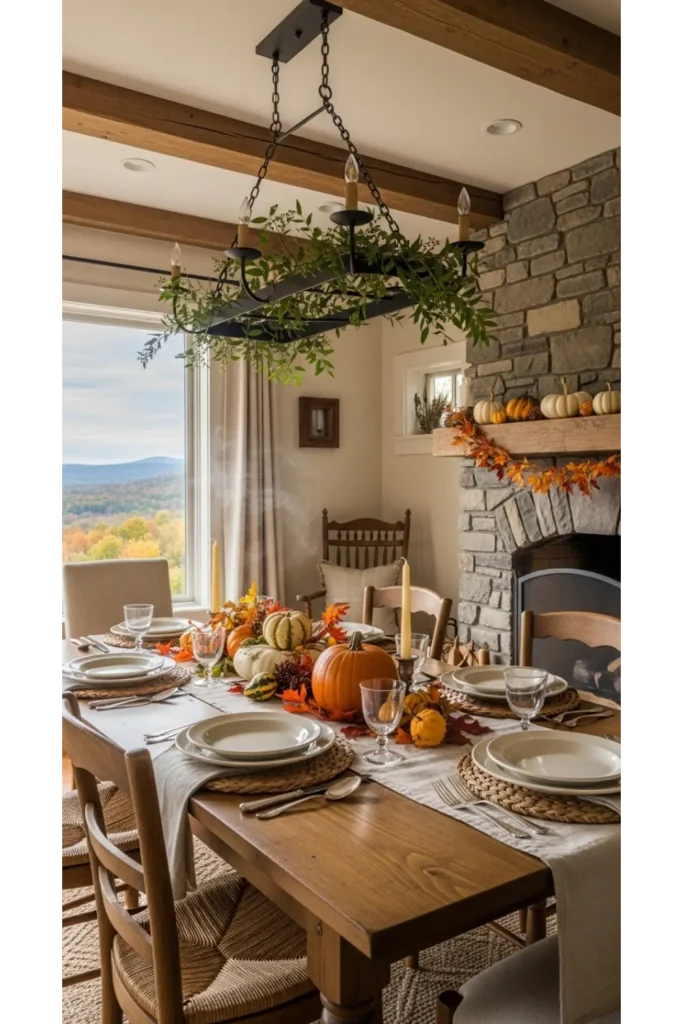
Seasonal styling keeps farmhouse dining rooms feeling fresh while staying rooted in rustic charm. Natural elements such as branches, dried flowers, or simple greenery reflect the changing seasons without requiring permanent design changes. This approach respects the farmhouse tradition of living in rhythm with nature.
Seasonal updates should remain subtle and cohesive with the existing palette. Swapping small accents rather than large pieces maintains consistency and avoids clutter. This gentle rotation keeps the dining room visually engaging while preserving its timeless foundation.
21. Farmhouse Dining Rooms With Painted Furniture
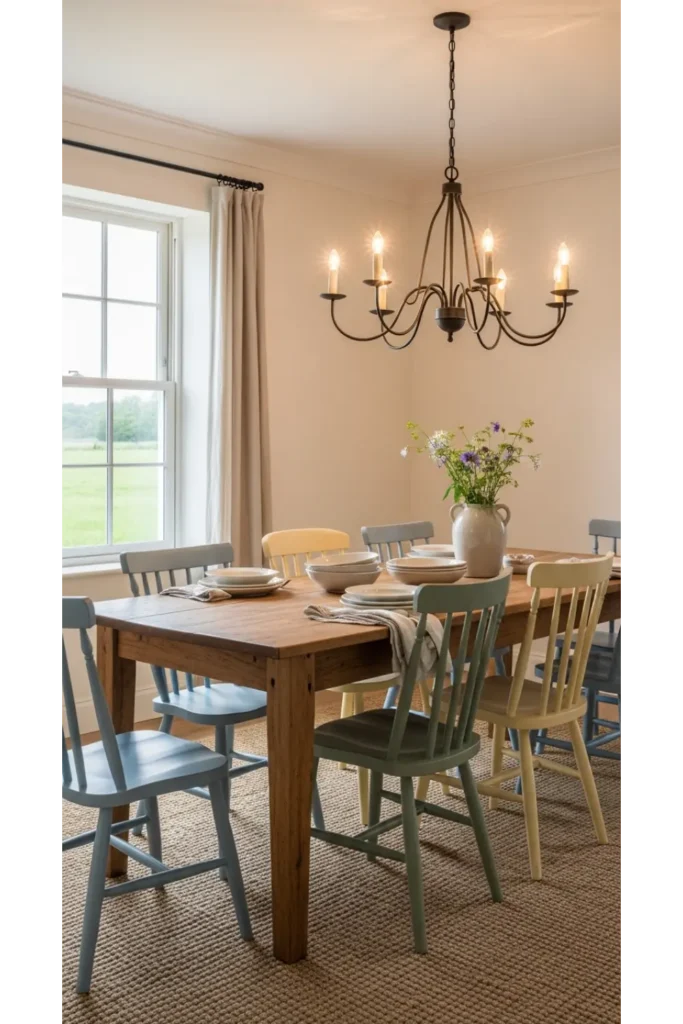
Painted furniture introduces contrast into farmhouse dining room ideas while maintaining warmth and balance. Soft whites, muted blues, or warm grays enhance rustic charm by highlighting craftsmanship without overpowering natural wood elements. Painted chairs or buffets can refresh the room while keeping it grounded.
The key is moderation and tone. Finishes should appear slightly worn or matte rather than glossy. This keeps the furniture aligned with farmhouse authenticity and prevents the space from feeling too modern or polished.
22. Farmhouse Dining Rooms With Large Windows
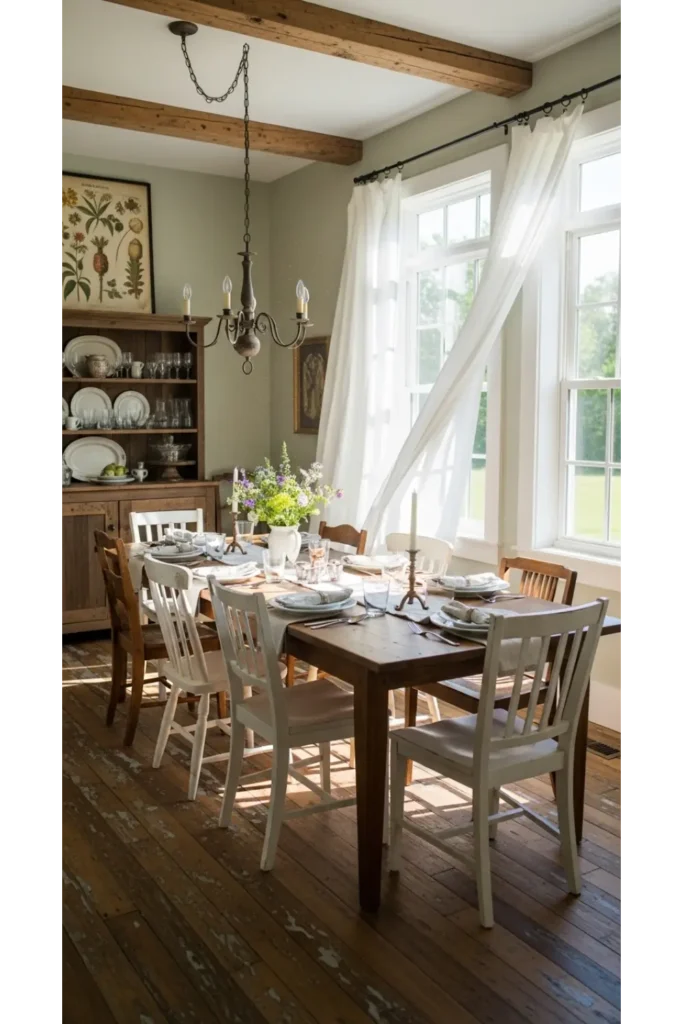
Large windows elevate farmhouse dining rooms by filling the space with natural light. Sunlight enhances textures, reveals wood grain, and strengthens rustic charm through warmth and openness. Bright dining rooms feel more inviting and support the relaxed, everyday nature of farmhouse living.
Window treatments should remain light and unobtrusive. Linen or cotton panels allow light to filter through while maintaining privacy. This approach keeps the dining room connected to the outdoors without distracting from the interior design.
23. Farmhouse Dining Rooms That Feel Collected Over Time
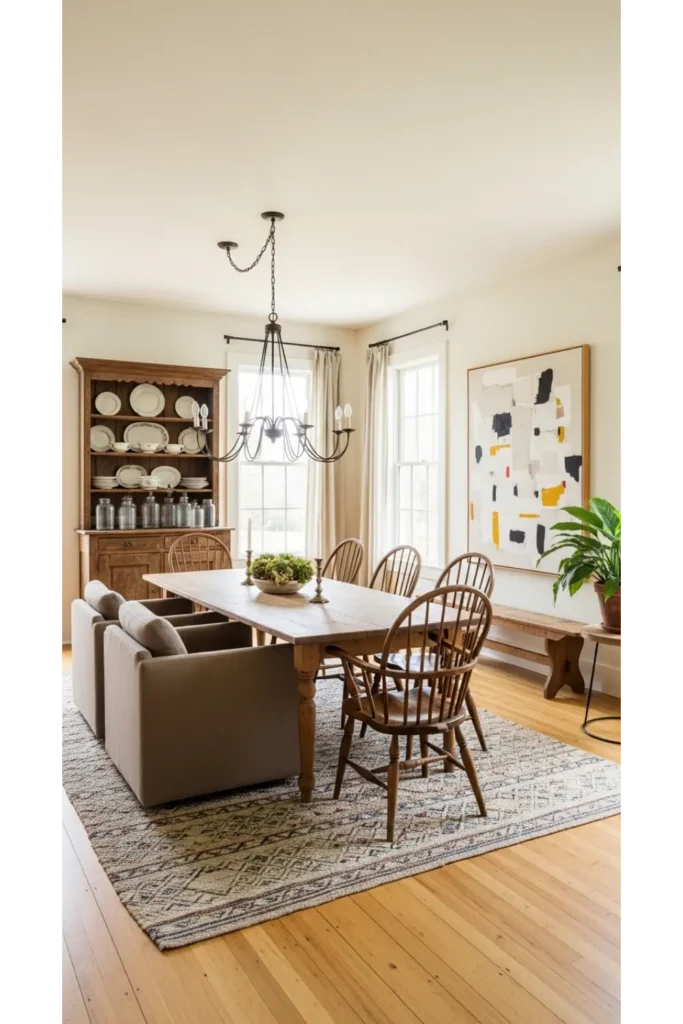
The most authentic farmhouse dining room ideas feel collected rather than designed all at once. Mixing old and new pieces creates layers of meaning that enhance rustic charm naturally. Furniture with history, personal finds, and practical additions work together to tell a story.
This approach values patience over perfection. Choosing items slowly allows the room to evolve in a way that feels personal and lasting. The result is a dining space that feels genuine, comfortable, and deeply connected to the people who use it.
Conclusion
Farmhouse style continues to resonate because it feels grounded, honest, and deeply human. These farmhouse dining room ideas show how rustic charm can evolve while staying true to its roots. By blending natural materials, thoughtful details, and practical design, you can create a dining room that feels timeless and personal. This style is not about trends but about building a space where people feel comfortable gathering and making memories.