
23 Half Bathroom Ideas Maximize Small Spaces
A half bathroom may be small, but it carries big design potential. With the right choices, even the tightest powder room can feel open, stylish, and intentional. This guide explores practical yet elevated ways to transform compact layouts into functional and visually appealing spaces. Every idea focuses on smart planning, visual balance, and real-life usability, helping homeowners create rooms that feel larger without major renovations.
1. Smart Layout Planning for Visual Space
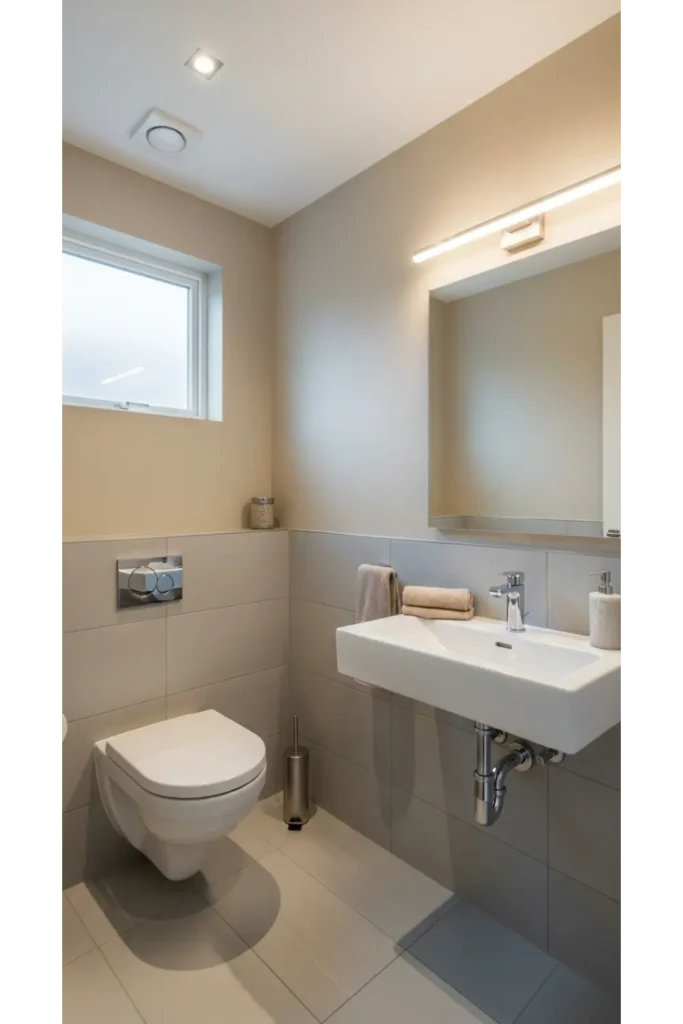
The foundation of successful half bathroom ideas maximize small spaces starts with layout planning. A thoughtful arrangement allows fixtures to breathe, even when square footage is limited. Positioning the sink and toilet with clear walking space improves comfort and flow. Keeping sightlines open from the door instantly reduces the feeling of crowding and helps the room feel intentional rather than squeezed.
A well-planned layout also supports future flexibility. Choosing standard clearances and wall-mounted fixtures leaves room for design upgrades later. Homeowners often overlook how much space poor placement wastes. When each element has a purpose and position, the bathroom feels calm, functional, and surprisingly roomy despite its size.
2. Wall Mounted Sinks for Open Floor Space
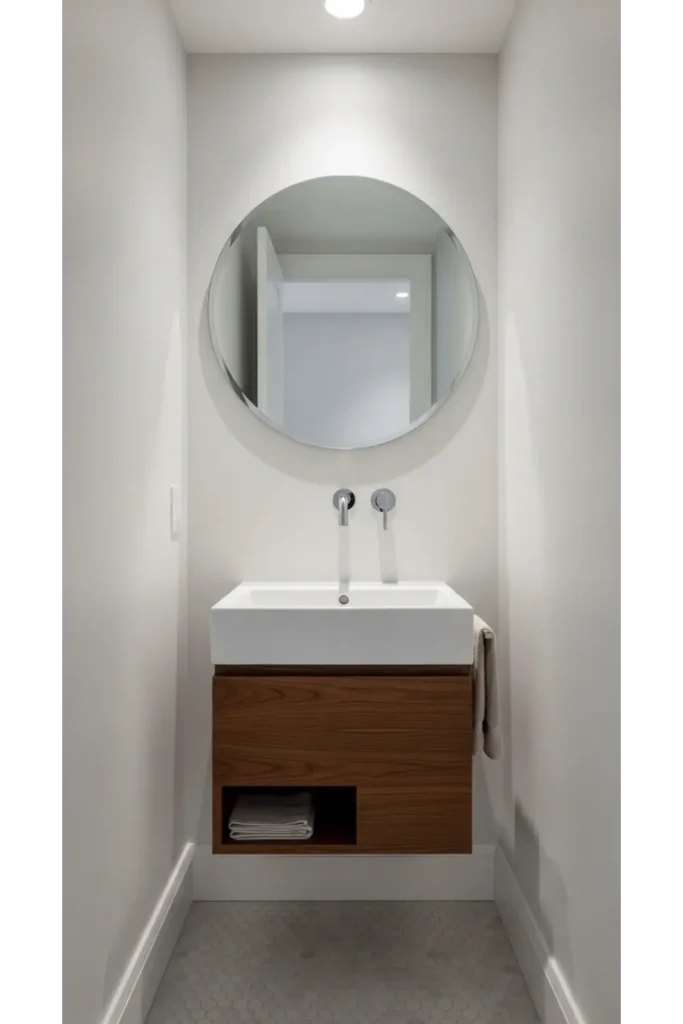
Wall-mounted sinks remove bulky bases that eat up valuable floor area. This design trick visually opens the room and makes cleaning easier. The exposed floor beneath the sink creates depth, which helps the bathroom feel less boxed in. These sinks work especially well in narrow or hallway-style powder rooms.
Beyond space savings, wall-mounted sinks bring a modern and airy aesthetic. Pairing them with sleek faucets and minimal plumbing covers keeps the look polished. When combined with light wall colors and simple lighting, the entire bathroom feels balanced and thoughtfully designed without overwhelming the eye.
3. Floating Vanities with Hidden Storage
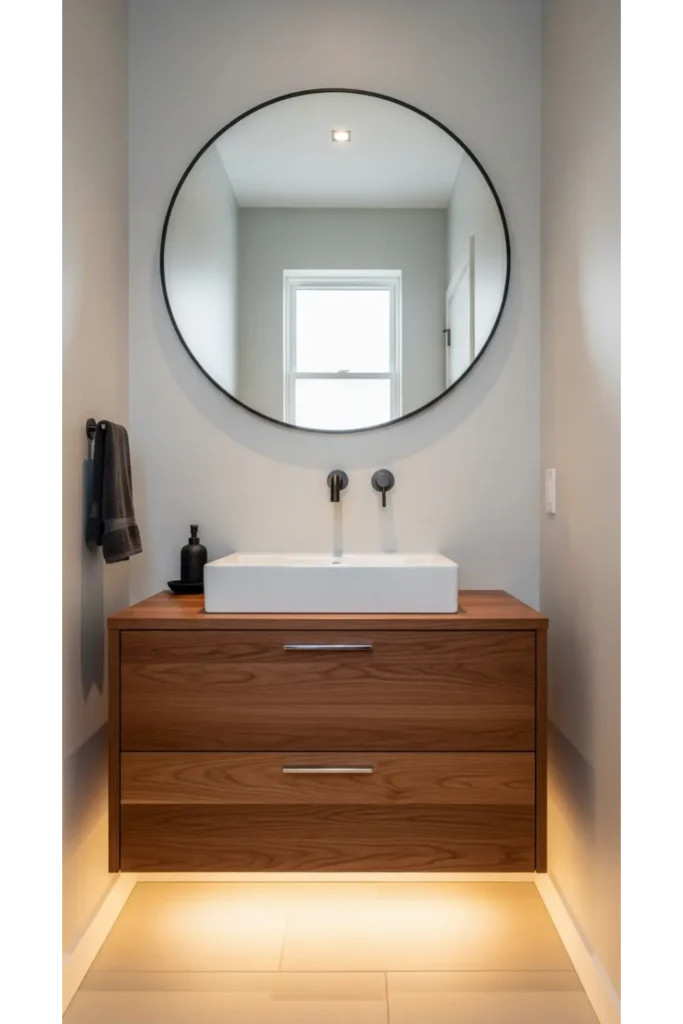
Floating vanities strike a balance between storage and openness. By lifting cabinetry off the floor, they create visual breathing room while still offering space for essentials. Drawers keep clutter out of sight, which is critical in a small half bath where every item is visible.
This approach works well for homeowners who want both function and style. Floating vanities also allow light to move freely across the floor, enhancing brightness. When paired with under-cabinet lighting, they add subtle depth that makes the room feel larger and more inviting.
4. Vertical Storage That Draws the Eye Up
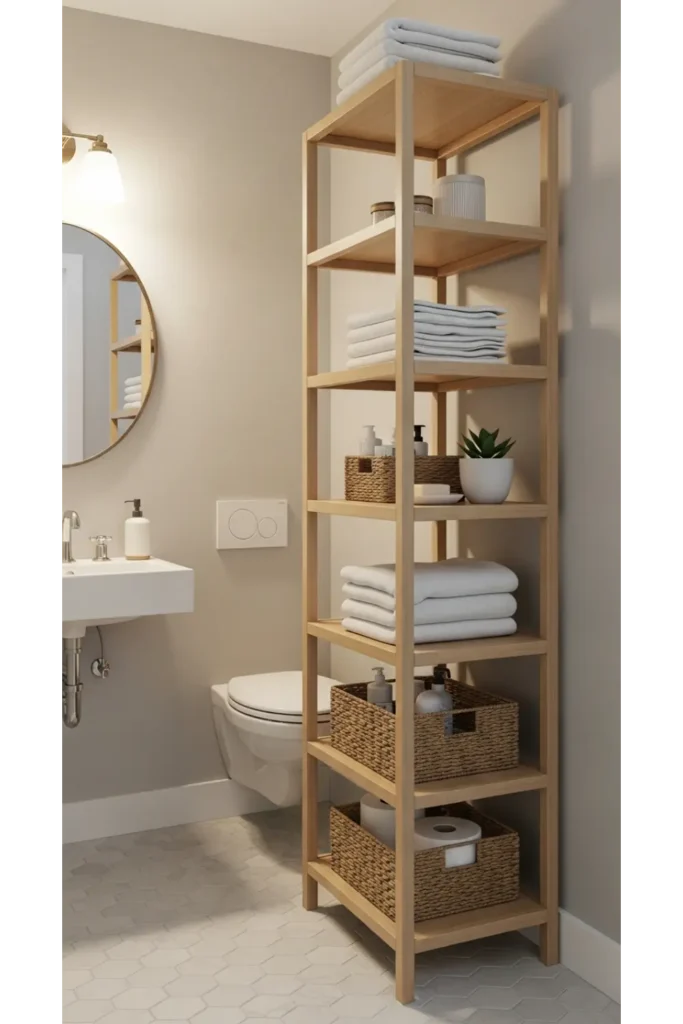
Using vertical storage shifts attention upward instead of outward. Tall cabinets or open shelves maximize wall height without crowding the floor. This strategy keeps essentials organized while maintaining a clean footprint. Vertical lines naturally elongate the room, making ceilings feel higher.
Choosing slim shelving prevents the space from feeling heavy. Materials like wood or metal add texture without bulk. When styled with restraint, vertical storage feels intentional rather than cluttered, helping the bathroom stay functional while still feeling open and balanced.
5. Oversized Mirrors for Depth and Light
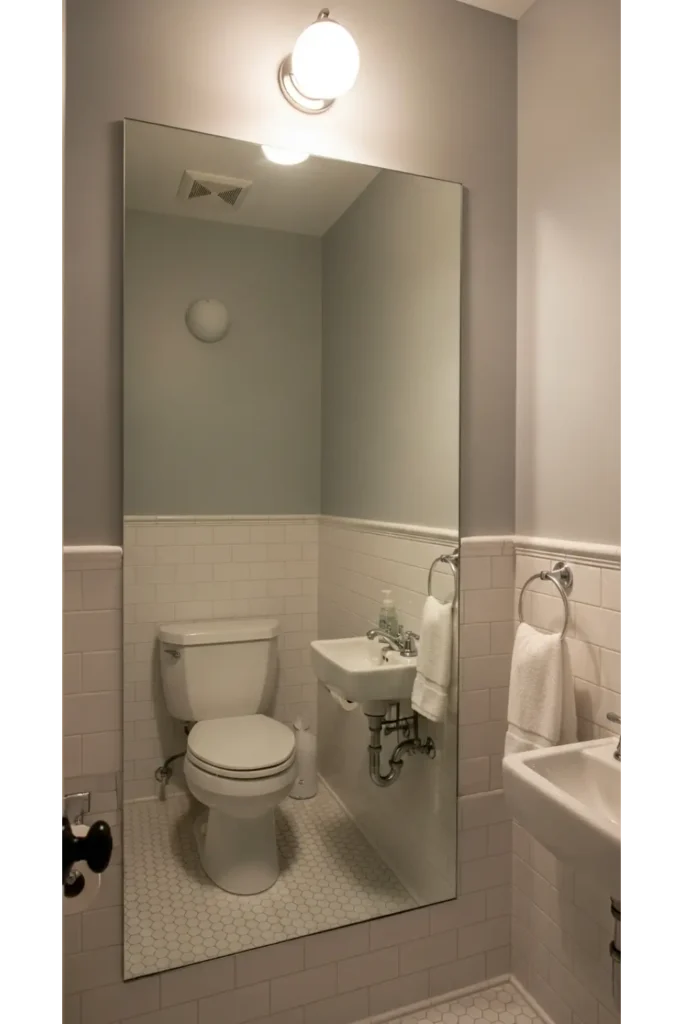
Oversized mirrors create instant depth in a compact bathroom. They reflect light across the room, reducing shadows and visually doubling the space. A mirror that spans most of the wall feels seamless and avoids visual breaks that make small rooms feel choppy.
Beyond function, mirrors anchor the design. Framed options add personality, while frameless styles keep things minimal. When paired with warm lighting, mirrors soften the space and create a welcoming feel that disguises the room’s limited size.
6. Light Color Palettes That Expand Space
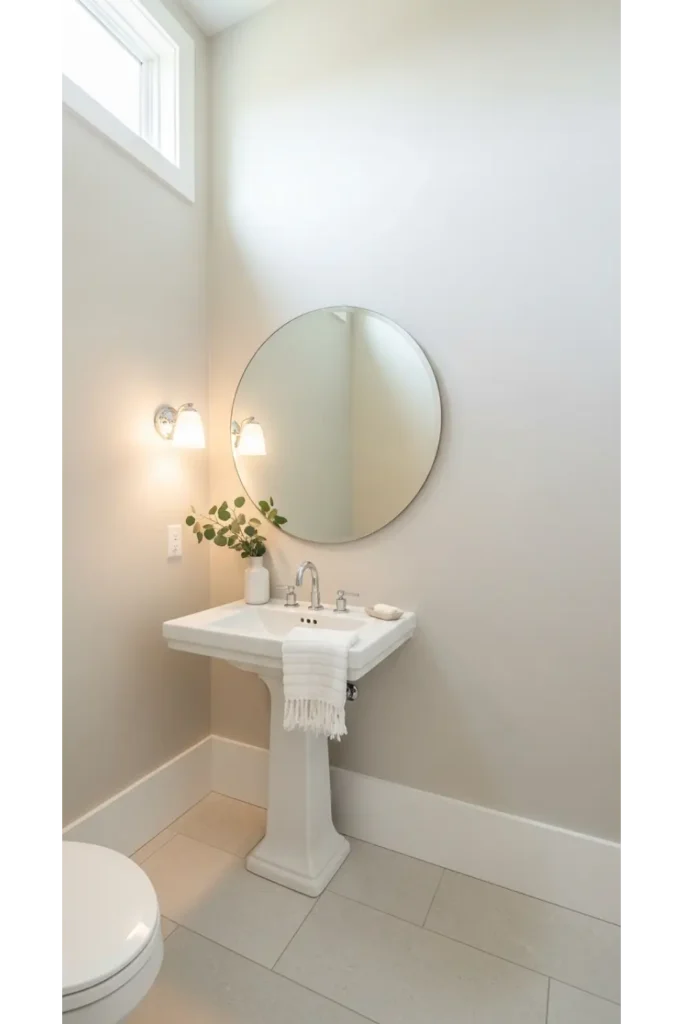
Light colors remain a reliable way to open up small interiors. Soft whites, warm beiges, and pale grays reflect more light, making the bathroom feel brighter and larger. These tones create continuity, which helps the eye move smoothly around the room.
A light palette does not mean boring. Texture through tile, paint finish, or subtle patterns adds interest without overwhelming the space. When walls and fixtures work together chromatically, the bathroom feels cohesive and calm rather than confined.
7. Pocket Doors to Save Swing Space

Pocket doors eliminate the need for clearance space required by traditional swinging doors. This simple change frees up valuable square footage inside and outside the bathroom. It also allows more flexibility when placing fixtures and storage.
From a design perspective, pocket doors keep the room feeling streamlined. They work well in tight hallways and small homes where every inch matters. When finished with quality hardware, they feel intentional and upscale rather than purely practical.
8. Compact Toilets with Modern Profiles
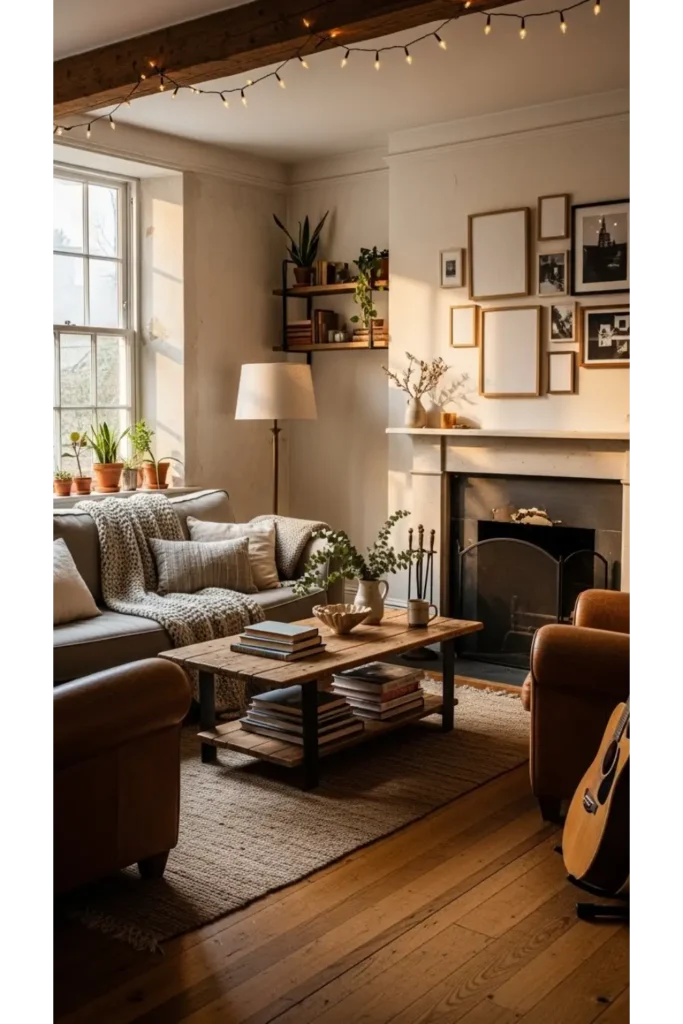
Compact toilets offer the same comfort as standard models while taking up less space. Their streamlined tanks and shorter depths make them ideal for half baths with limited dimensions. Choosing a modern profile keeps the room from feeling dated or bulky.
These toilets pair well with minimalist design choices. Wall-facing or concealed tank options further reduce visual clutter. When combined with clean lines and simple finishes, the toilet blends into the design rather than dominating it.
9. Open Shelving for an Airy Look
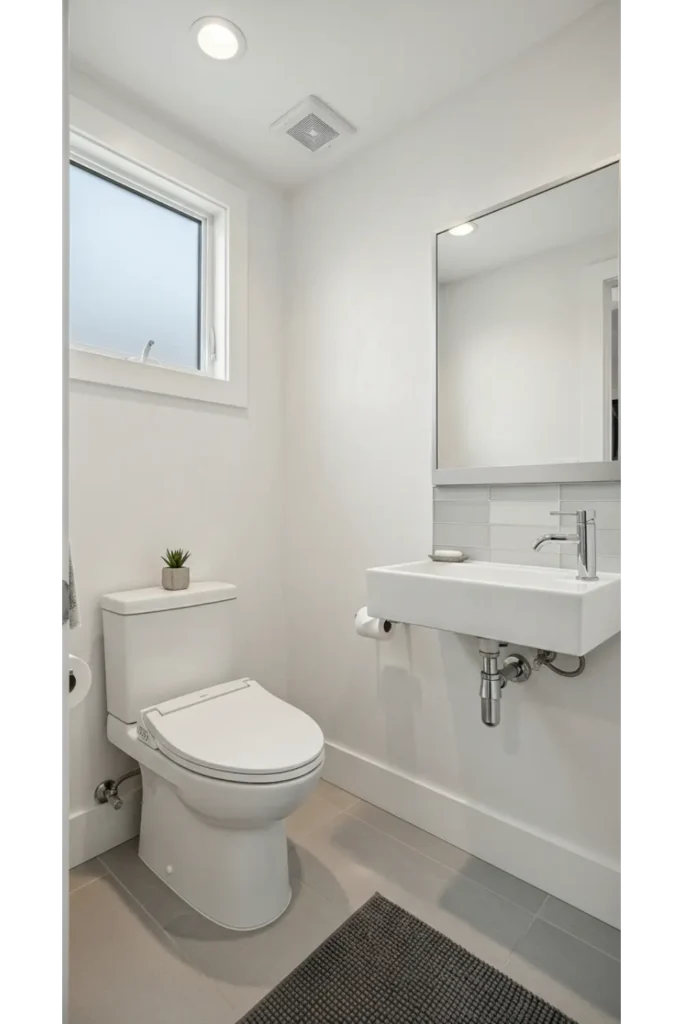
Open shelving reduces visual weight compared to closed cabinets. It keeps the space feeling open while still providing storage for essentials and decor. This approach works best when items are curated and limited to maintain a clean look.
Using matching containers or folded towels keeps shelves organized. Natural materials like wood soften the space and add warmth. When styled thoughtfully, open shelving supports both function and aesthetics without making the room feel crowded.
10. Statement Wallpaper Used Strategically
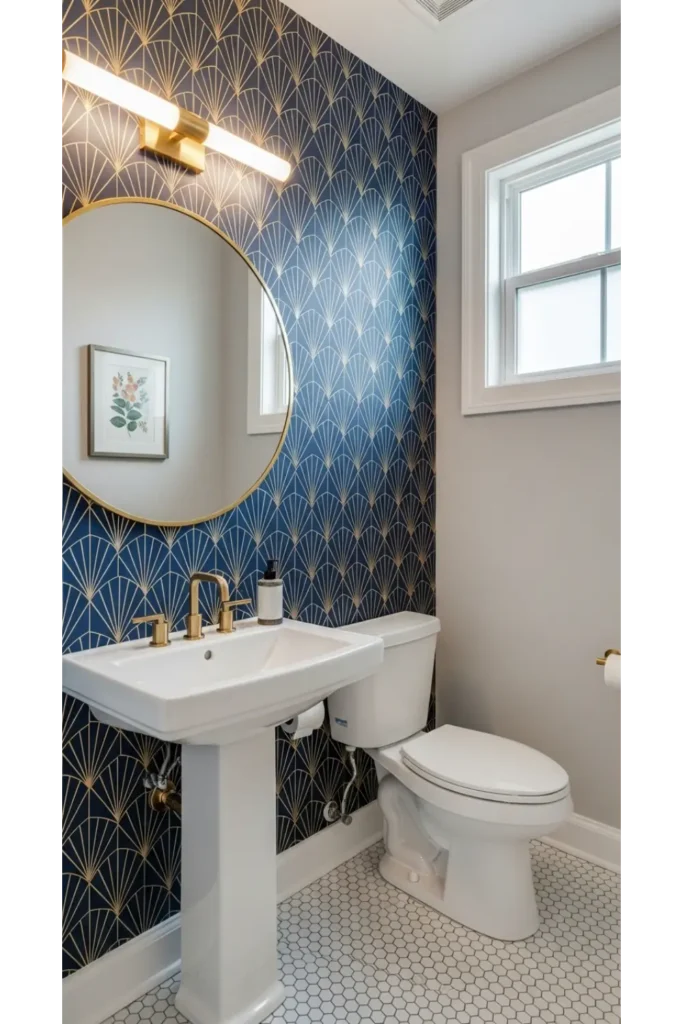
Wallpaper can add personality without sacrificing space. In a half bath, using it on one wall or above wainscoting creates visual interest while maintaining balance. Small rooms handle bold patterns well when applied intentionally.
The key lies in scale and color. Patterns with light backgrounds or vertical movement help maintain openness. When paired with simple fixtures, wallpaper becomes a focal point that enhances the room rather than overwhelming it.
11. Glass Fixtures That Reduce Visual Clutter
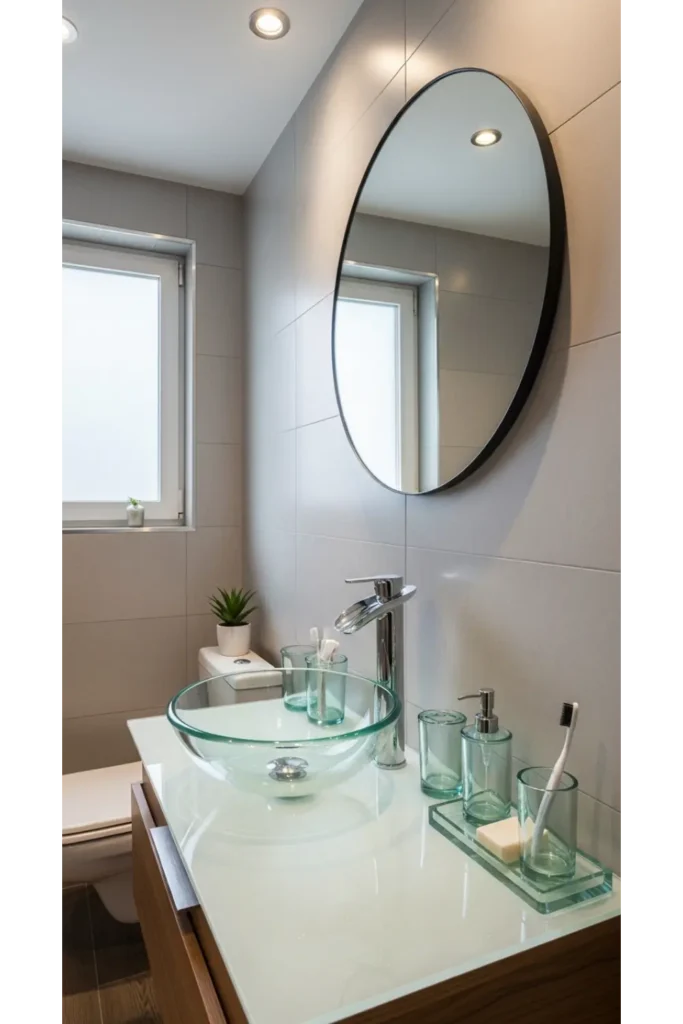
Glass fixtures and accessories reduce visual heaviness. Transparent materials allow the eye to pass through, creating a sense of openness. Glass sinks or shelves feel light and modern, especially in tight spaces.
These elements work best when paired with neutral surroundings. They reflect light subtly and add elegance without adding bulk. The result feels refined and spacious, even within a compact footprint.
12. Slim Profile Faucets and Hardware
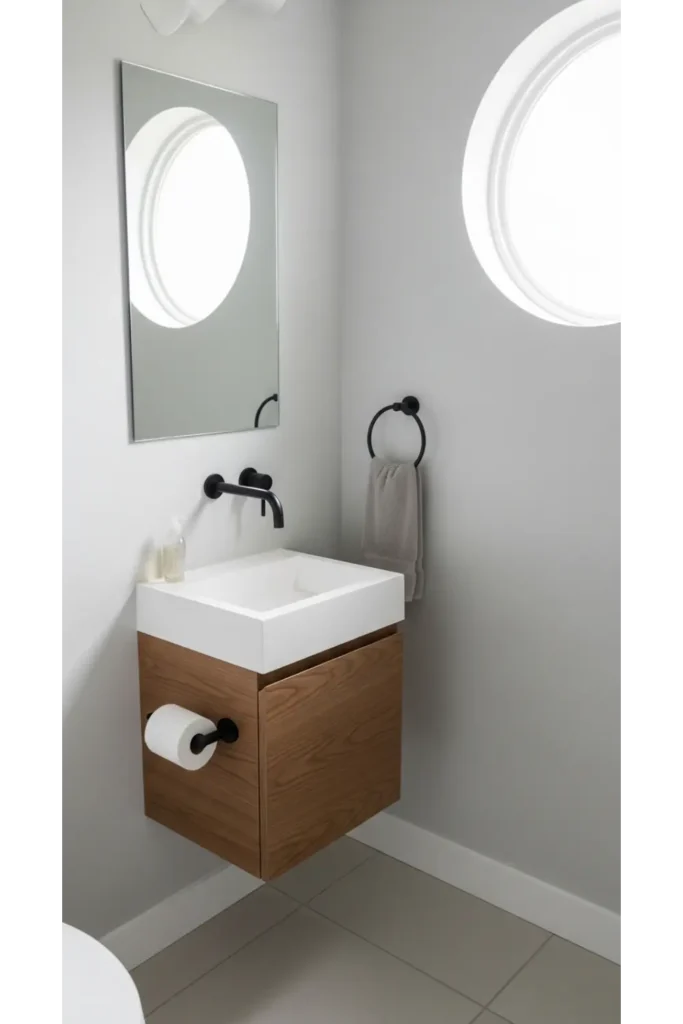
Slim faucets and hardware minimize visual noise. Their clean lines support a streamlined look that feels intentional and modern. Oversized fixtures can overpower a small bathroom, making scale an important consideration.
Choosing finishes like brushed nickel or matte black adds contrast without heaviness. When all hardware matches in style and finish, the room feels cohesive and thoughtfully designed.
13. Recessed Storage Niches
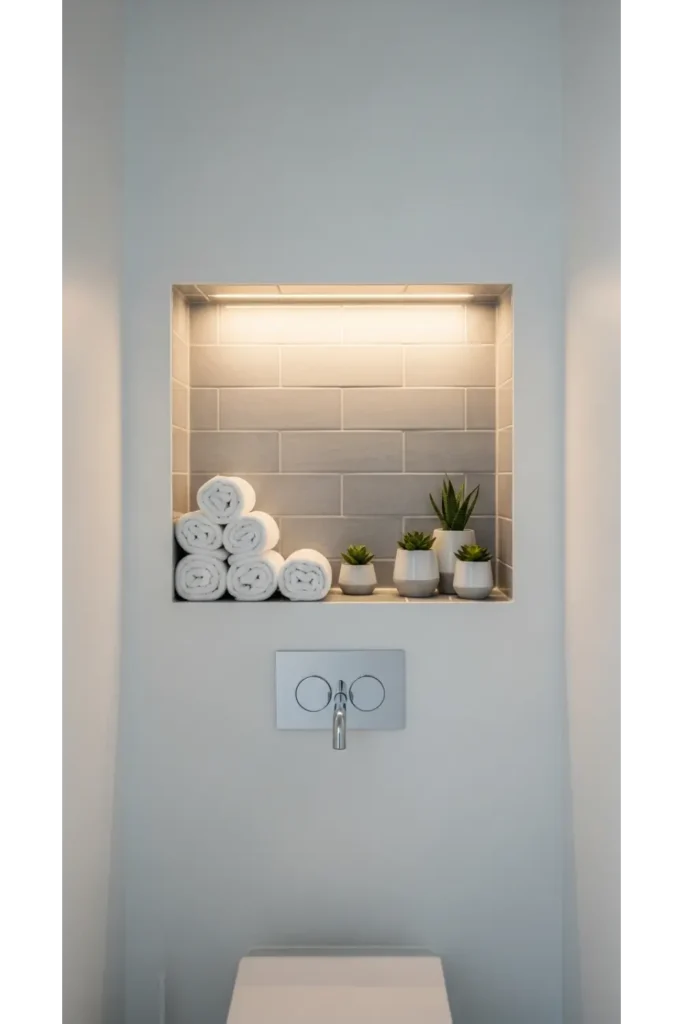
Recessed niches take advantage of wall depth without protruding into the room. Built into stud space, they offer storage for decor or essentials while maintaining a flush surface. This solution keeps pathways clear and walls visually clean.
Niches also add architectural interest. Lined with tile or contrasting paint, they become subtle focal points. This approach blends function and design seamlessly in compact bathrooms.
14. Vertical Tile Patterns for Height
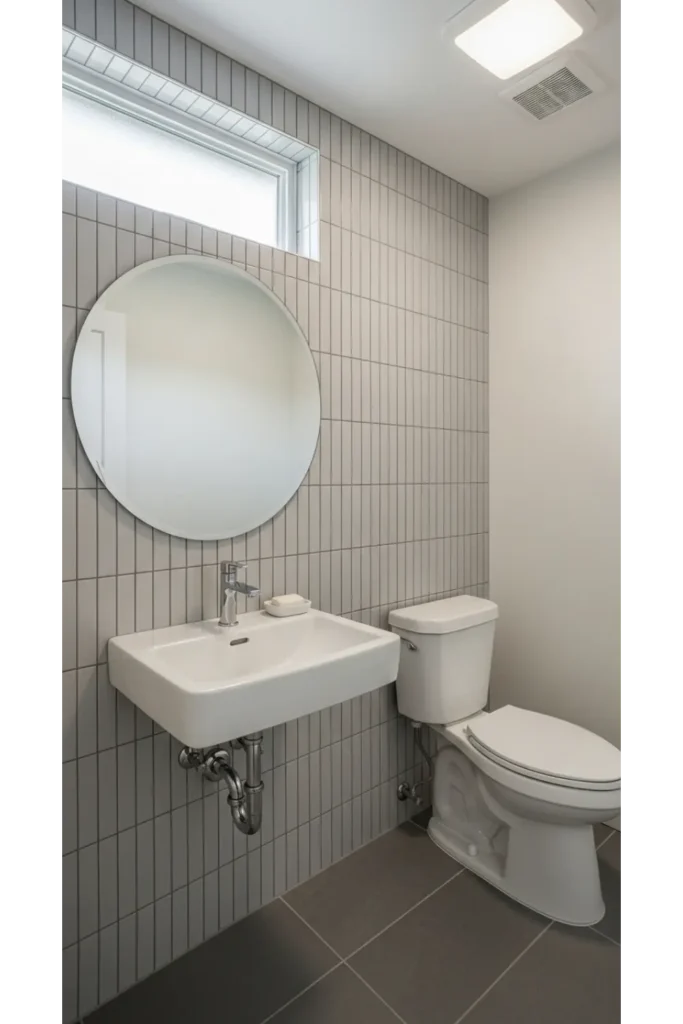
Vertical tile patterns draw the eye upward, making ceilings appear taller. This effect helps counteract the compact nature of half baths. Using rectangular tiles stacked vertically reinforces this illusion effectively.
Choosing light or neutral tile colors keeps the look open. Grout lines should stay minimal to avoid visual clutter. The result feels taller, cleaner, and more refined.
15. Minimalist Decor to Reduce Clutter
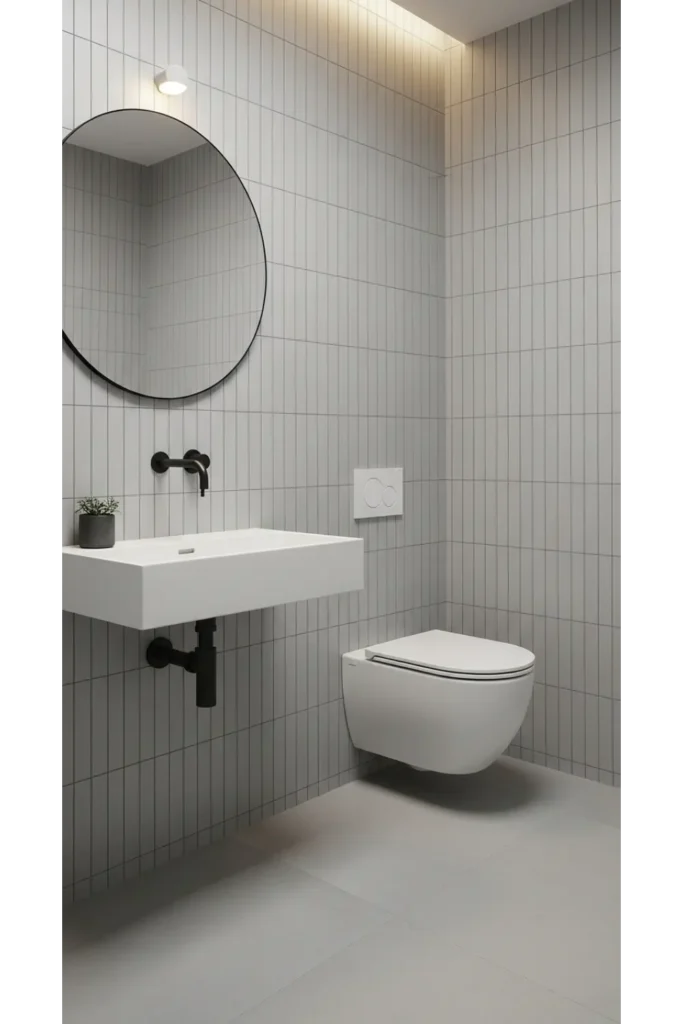
Minimal decor keeps small bathrooms feeling calm. Limiting accessories to one or two meaningful pieces prevents visual overload. Every item should serve a purpose, either functional or aesthetic.
This approach allows architectural features and materials to shine. Clean surfaces reflect light better and maintain openness. A minimalist mindset supports both style and practicality in compact spaces.
16. Strategic Lighting for Brightness
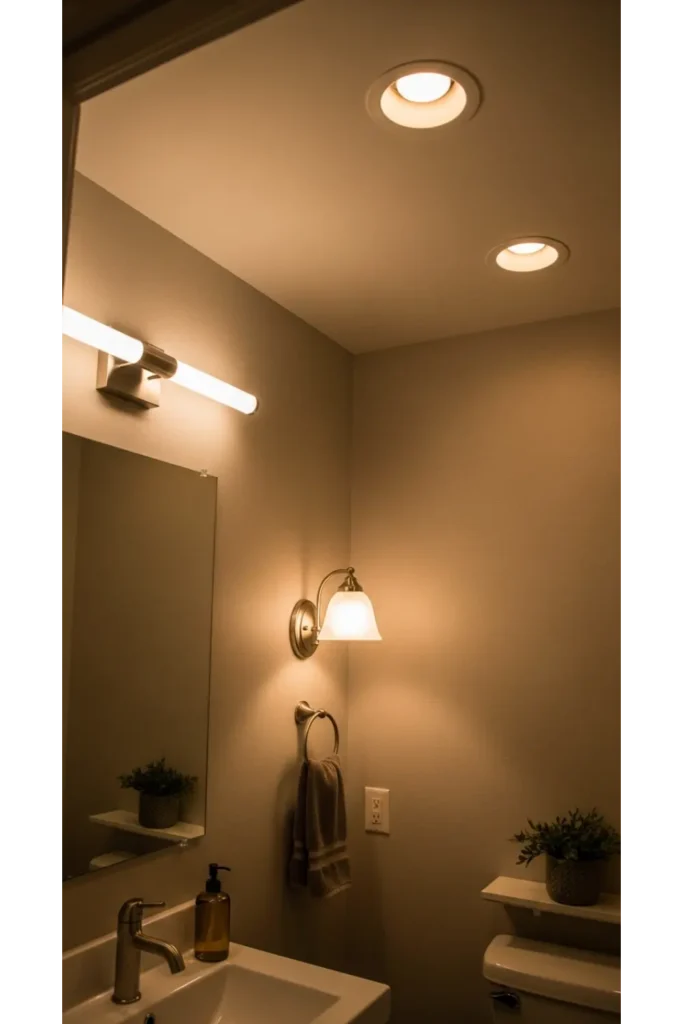
Proper lighting transforms small bathrooms. Layered lighting, including ambient and task sources, eliminates shadows that shrink the space. Bright, even illumination makes the room feel larger and more welcoming.
Wall sconces or recessed lights work well without taking up physical space. Warm lighting tones add comfort while maintaining clarity. Good lighting often matters more than square footage.
17. Corner Sinks for Tight Layouts
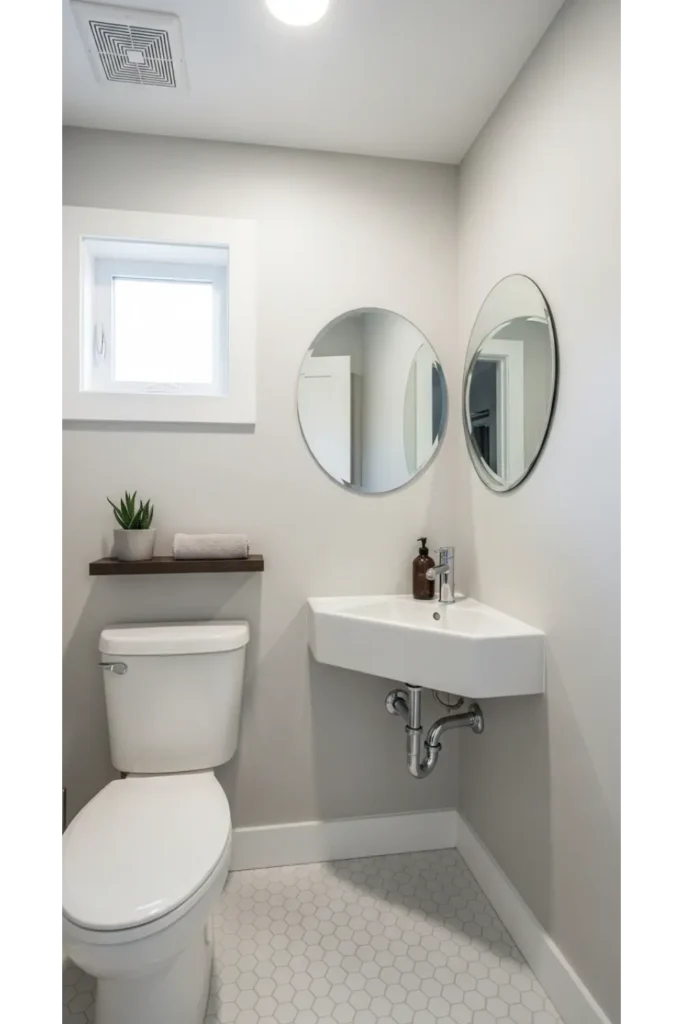
Corner sinks utilize often wasted space. They fit neatly into tight layouts where traditional sinks feel intrusive. This placement opens up the central floor area and improves movement within the room.
Despite their size, corner sinks can still feel stylish. Pairing them with modern fixtures keeps the look intentional. This solution proves that smart placement matters as much as fixture choice.
18. Continuous Flooring for Flow
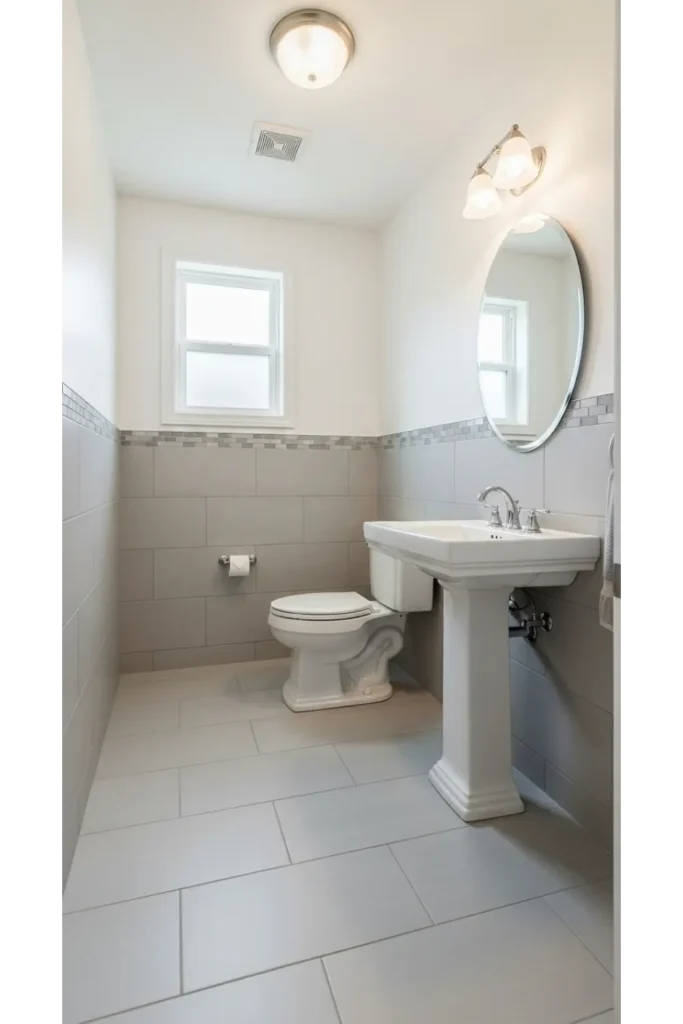
Using the same flooring throughout adjacent areas creates visual flow. When the eye does not stop at a threshold, the bathroom feels like part of a larger space. This trick works especially well in powder rooms near entryways.
Large format tiles further reduce visual breaks. Fewer grout lines mean less visual fragmentation. The result feels seamless and expansive despite limited dimensions.
19. Compact Accessories with Purpose
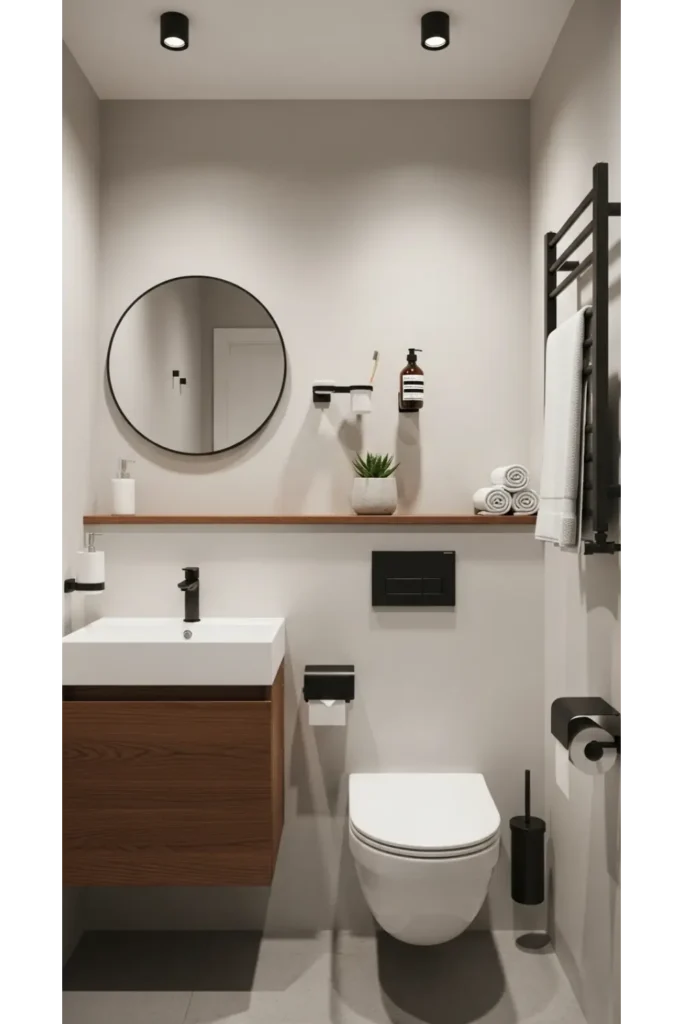
Choosing compact accessories keeps surfaces clear. Wall-mounted towel rings, soap dispensers, and toilet paper holders save space while maintaining function. Bulky accessories quickly overwhelm small bathrooms.
Purpose-driven design supports simplicity. When accessories align in finish and scale, they disappear into the background. This restraint helps the room feel organized and spacious.
20. Accent Walls to Define Space

Accent walls define character without consuming space. Using paint, tile, or texture on one wall adds depth while keeping the room balanced. This approach creates interest without clutter.
Choosing the right wall matters. Behind the sink or toilet often works best. A focused accent keeps the design intentional and visually controlled.
21. Mirrored Cabinets for Dual Function
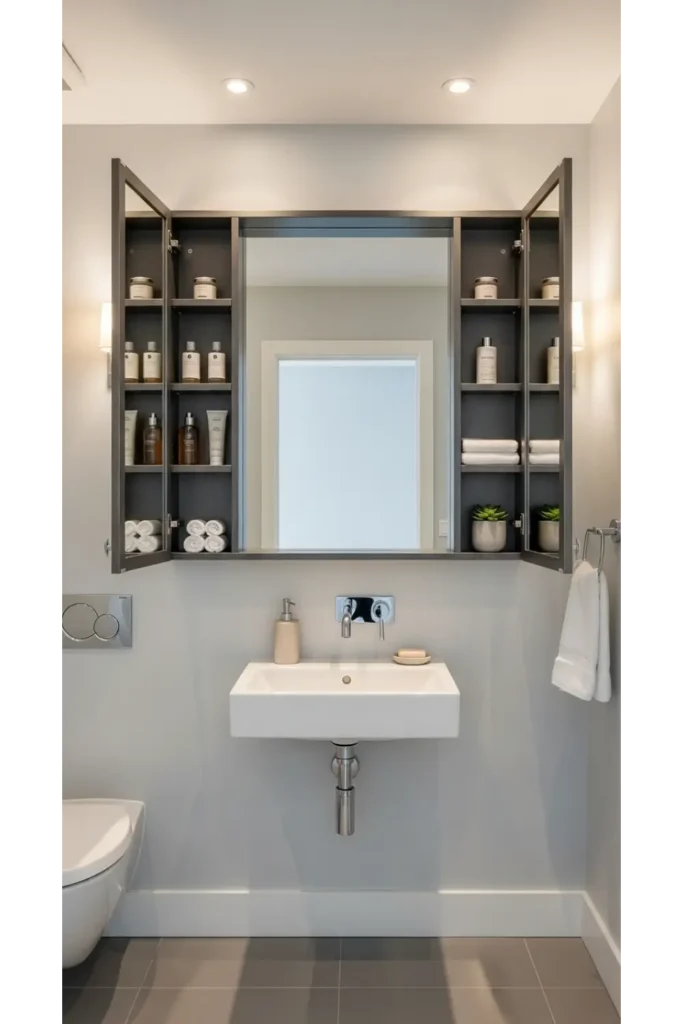
Mirrored cabinets combine reflection and storage. They eliminate the need for separate mirrors and cabinets, saving wall space. This dual-purpose solution works well in tight half baths.
When designed with slim profiles, these cabinets stay unobtrusive. They reflect light while hiding necessities, keeping the room tidy and visually open.
22. Neutral Textures for Warmth
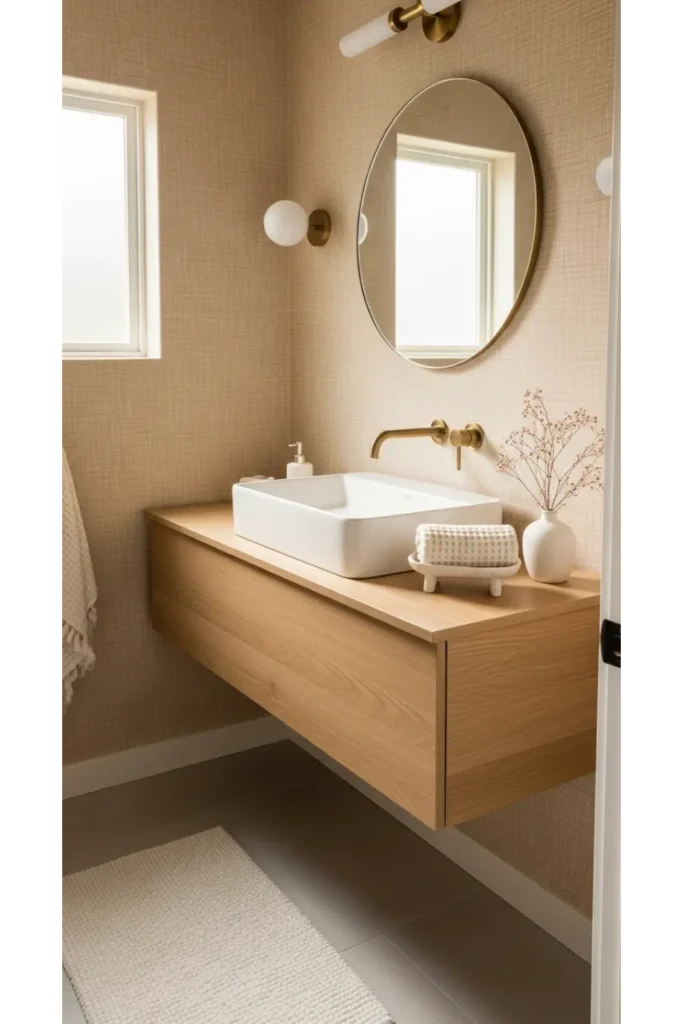
Neutral textures add warmth without visual weight. Materials like stone, wood, or plaster create interest while maintaining a light palette. Texture keeps the space engaging without clutter.
Balancing smooth and textured surfaces prevents monotony. This approach supports a calm, welcoming atmosphere that feels larger than its actual size.
23. Thoughtful Styling That Feels Intentional

Styling ties all design choices together. Coordinated finishes, limited decor, and intentional placement create harmony. When everything feels chosen rather than added, the room feels complete.
Small spaces demand discipline. Thoughtful styling ensures every element earns its place. This mindset results in half bathrooms that feel polished, functional, and surprisingly spacious.
Conclusion
A small half bathroom does not need to feel limited. With smart design strategies, careful planning, and intentional choices, compact spaces can deliver both beauty and function. These ideas prove that size does not define style. When every detail works together, even the smallest bathroom can feel open, inviting, and expertly designed.