
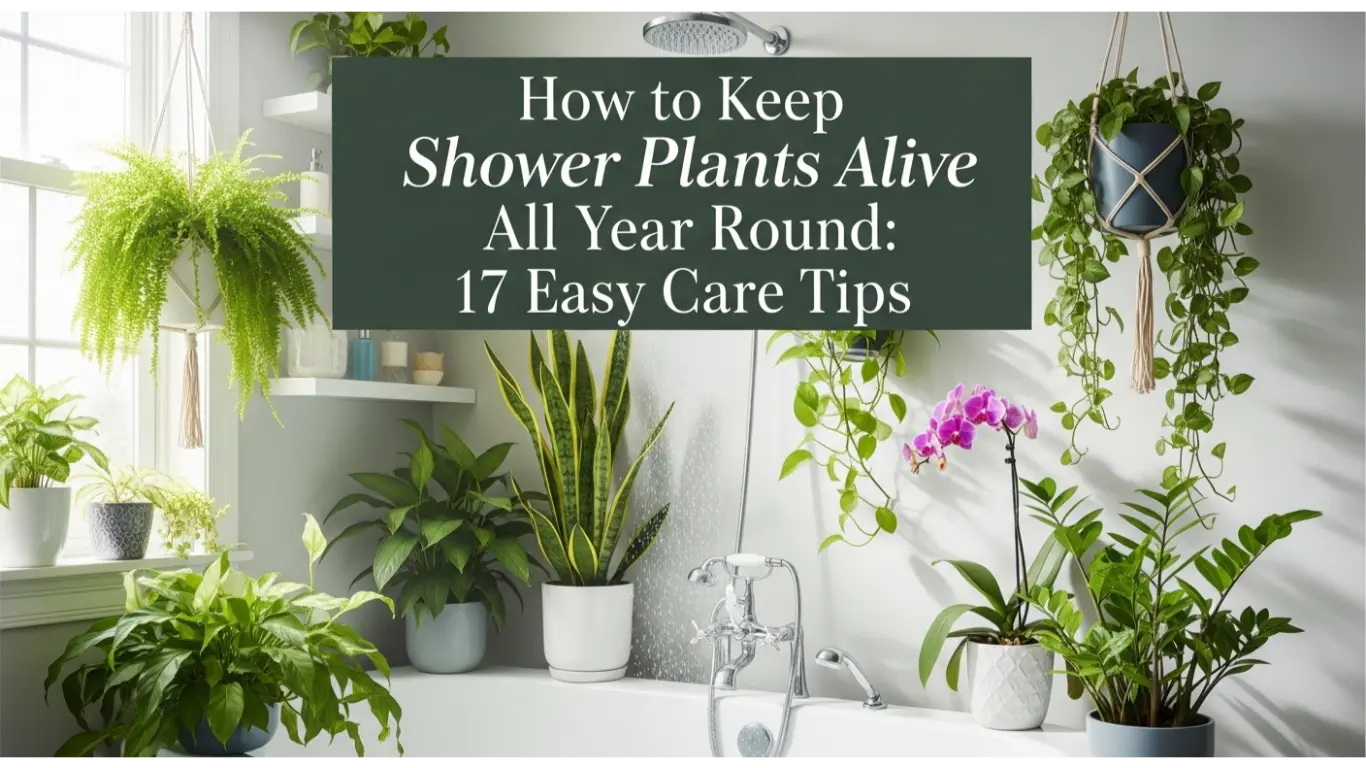
How to Keep Shower Plants Alive All Year Round: 17 Easy Care Tips
Bathrooms can feel like a tropical retreat, but they can also challenge even experienced plant lovers. If you have ever wondered how to keep shower plants alive all year round, you are not alone. Steam, low light, and changing temperatures create a unique growing space that needs the right strategy. With the right care, your shower can support lush greenery in every season.
This guide walks you through practical, proven ways to support shower plants, improve bathroom plant care, and create steady growth through winter, summer, and everything between. Each tip focuses on real results, simple actions, and smart plant choices that thrive in humid spaces.
1. Choose Plants That Love Humidity
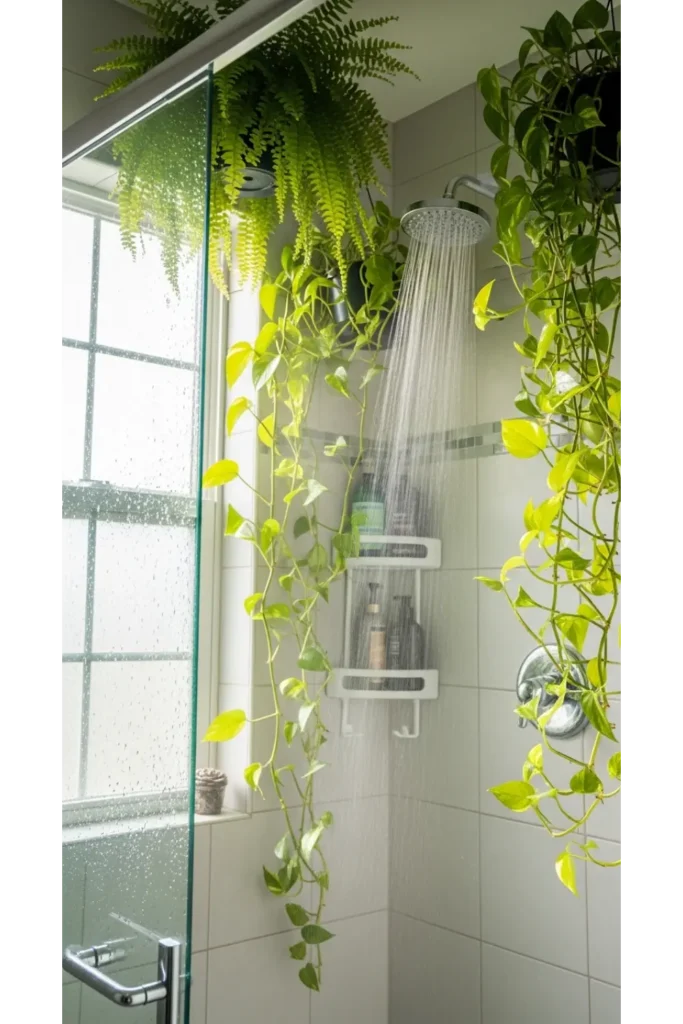
Selecting the right plants makes the biggest difference when learning how to keep shower plants alive all year round. Tropical species naturally grow in warm, moist forests, so they adapt easily to steamy bathrooms. Varieties like pothos, ferns, and philodendrons enjoy high humidity and tolerate filtered light.
When you match the plant to the environment, you reduce stress and prevent yellowing leaves or slow growth. Humidity loving plants use steam to stay hydrated between waterings. That balance helps maintain healthy roots and steady foliage growth without constant maintenance.
Pro Tip: Choose plants labeled as tropical or rainforest species to increase long term success in shower spaces.
2. Understand Your Bathroom Light
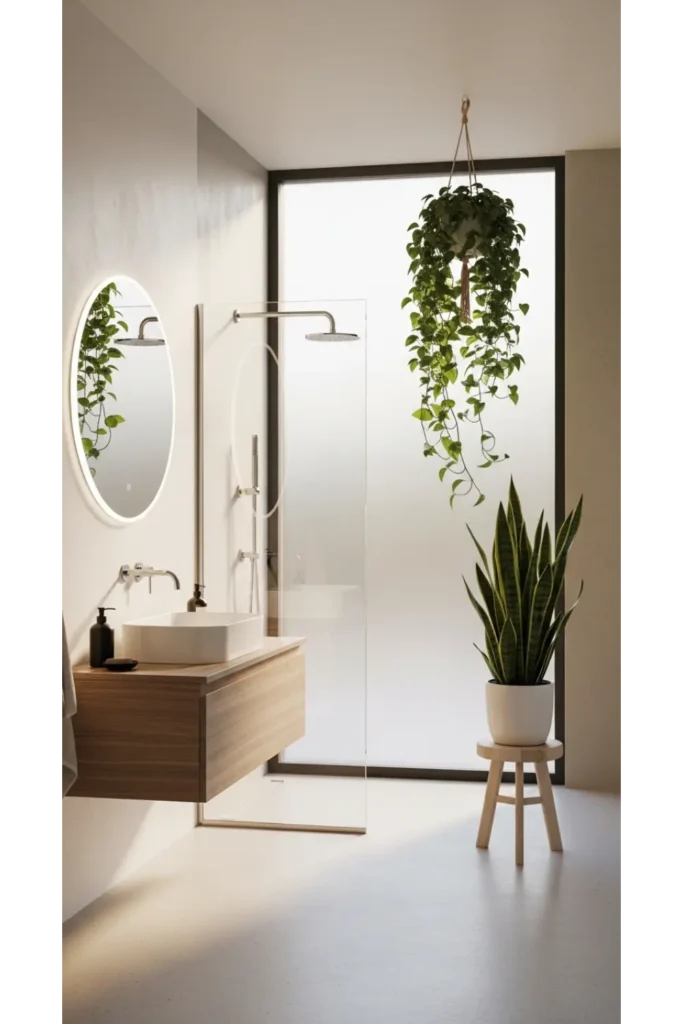
Light determines growth speed and leaf strength. Many bathrooms have small or frosted windows, which means filtered or indirect light. Knowing your light level helps you decide whether low light plants like snake plants or medium light plants like peace lilies will perform better.
If your bathroom lacks natural light, consider adding a small grow light above the shower area. Consistent light keeps leaves vibrant and prevents stretching. Good lighting is a major factor in successful indoor plant care for bathrooms.
Pro Tip: Observe shadows during the day to understand whether your shower area gets low, medium, or bright indirect light.
3. Rotate Plants for Even Growth
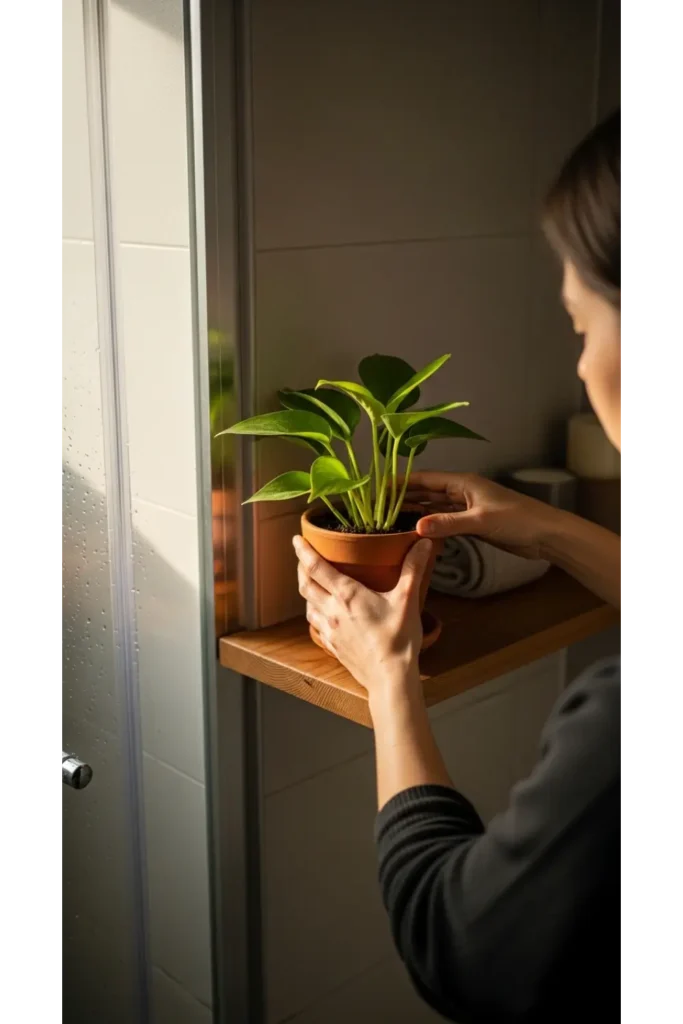
Plants lean toward light, even in humid spaces. Rotating your shower plants every two weeks keeps growth balanced and prevents one sided stretching. This simple habit supports fuller foliage and stronger stems.
Even in small bathrooms, uneven light can cause one side of the plant to weaken. Turning the pot slightly ensures all leaves receive light exposure. Over time, rotation supports uniform growth and healthier structure.
Pro Tip: Mark one side of the pot discreetly so you remember when it is time to rotate again.
4. Watch Watering Carefully
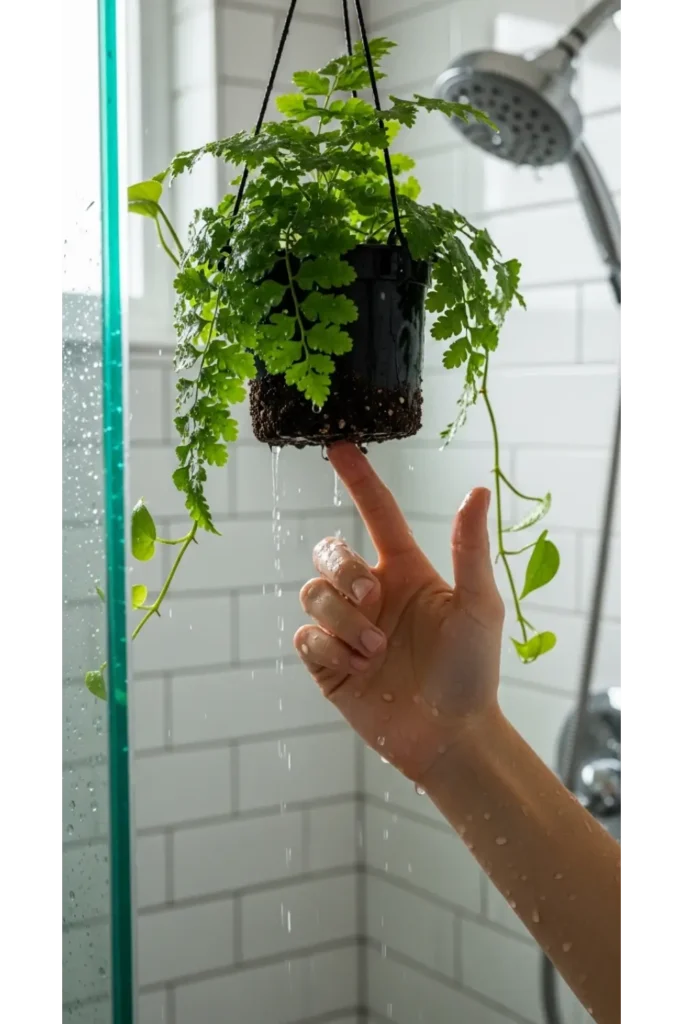
Steam adds moisture to the air, but it does not replace watering. Overwatering remains one of the biggest mistakes in bathroom plant care. Always check the top inch of soil before watering to prevent root rot.
High humidity slows evaporation, which means soil stays wet longer. Plants need oxygen around their roots to stay healthy. Allowing the soil to partially dry helps protect the root system and prevents fungal problems.
Pro Tip: Use pots with drainage holes to avoid trapped water at the bottom.
5. Improve Air Circulation
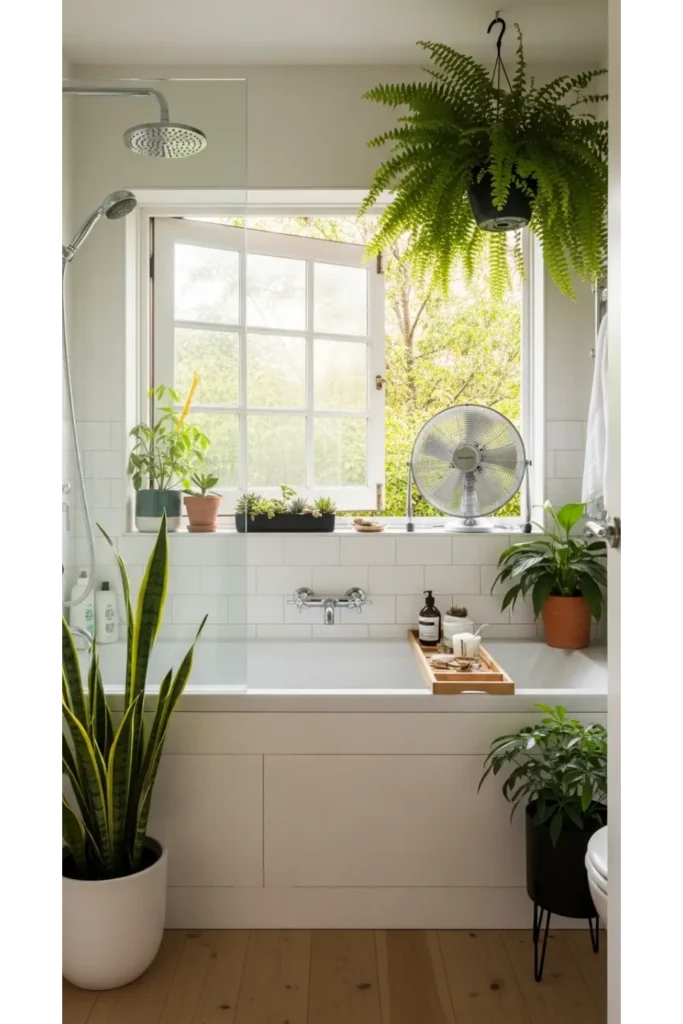
Humidity supports growth, but stagnant air can cause mold or mildew. Good air flow keeps leaves dry enough to avoid disease. Opening a window or running a bathroom fan after showers helps maintain balance.
Air movement strengthens stems and reduces fungal risk. Even tropical plants need fresh circulation to thrive. Balanced humidity and airflow work together to create a stable environment.
Pro Tip: Run your exhaust fan for at least fifteen minutes after each shower.
6. Clean Leaves Regularly
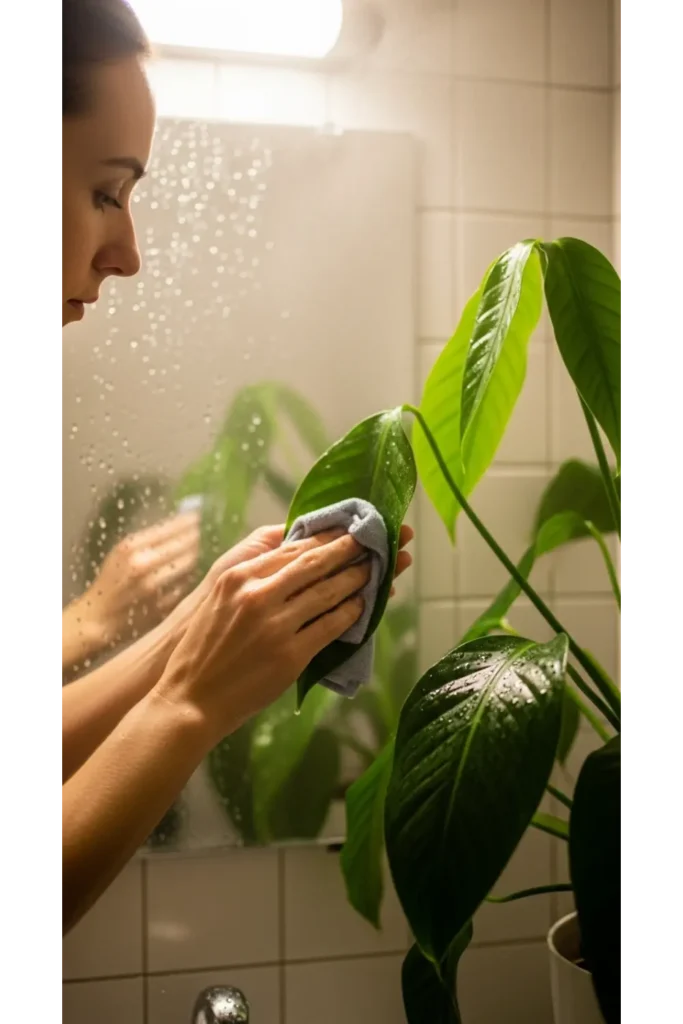
Dust and soap residue can settle on leaves over time. Cleaning leaves improves photosynthesis and keeps plants looking vibrant. Use a soft damp cloth to gently wipe each leaf.
Shiny, clean leaves absorb more light and breathe better. This simple step improves overall plant health and reduces pest attraction. It also helps you spot early signs of stress or insects.
Pro Tip: Clean leaves once a month to maintain steady plant performance.
7. Feed During Active Growth
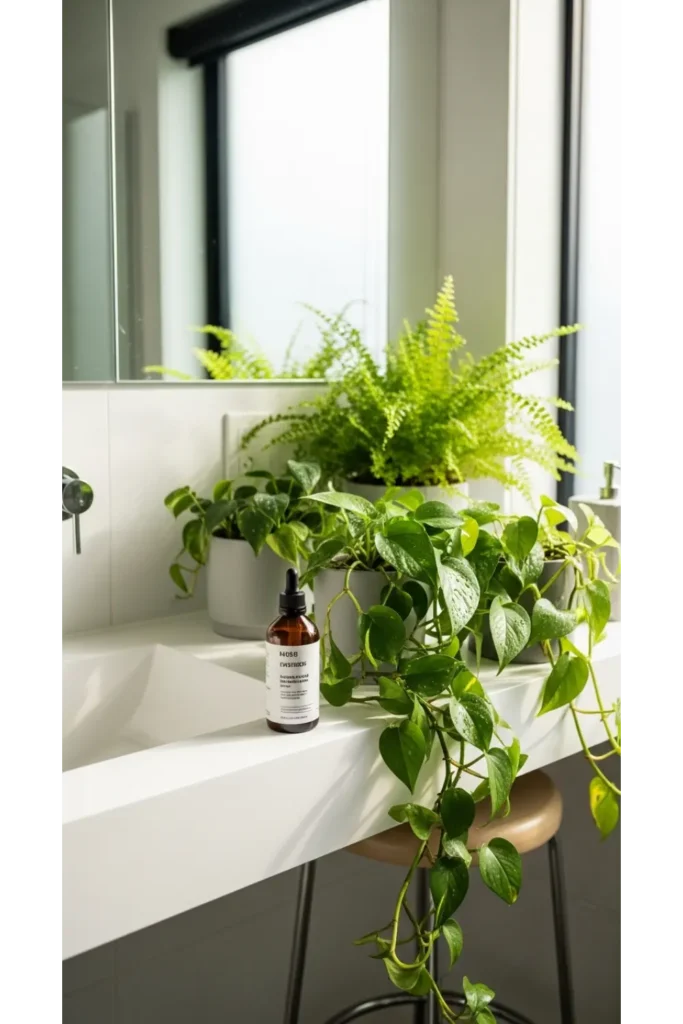
Plants growing in warm, humid spaces often grow faster. During spring and summer, use a balanced liquid fertilizer every four to six weeks. Feeding supports leaf production and root strength.
Avoid fertilizing during winter if growth slows down. Overfeeding can burn roots and weaken the plant. Seasonal feeding keeps your shower plants strong without overwhelming them.
Pro Tip: Dilute fertilizer to half strength to prevent nutrient buildup in small pots.
8. Monitor Temperature Changes
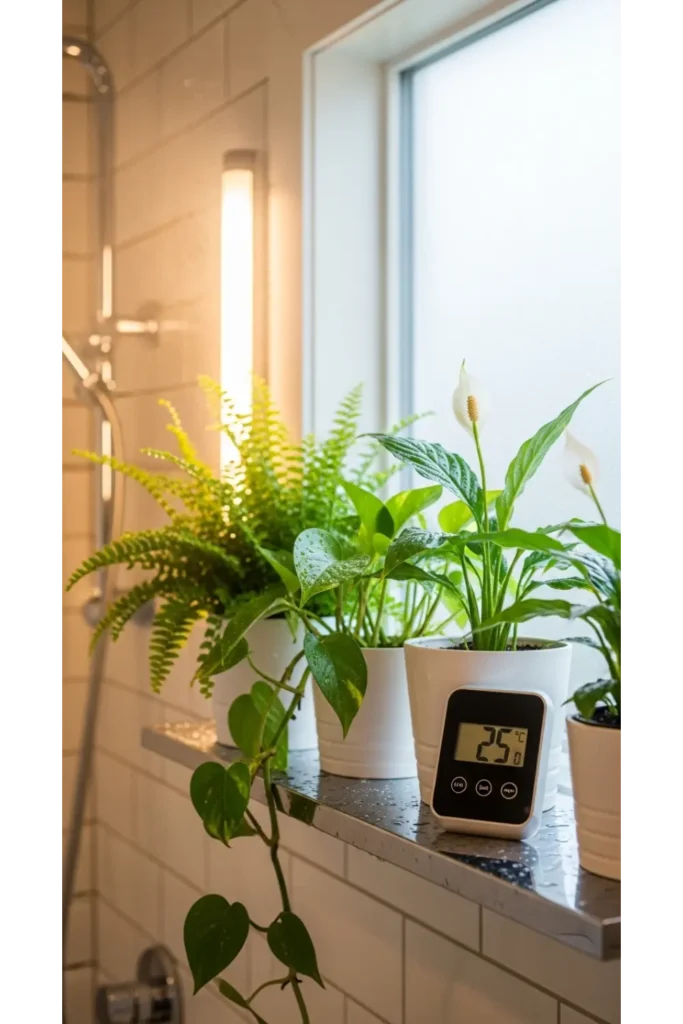
Bathrooms can experience sudden temperature shifts. Very hot showers followed by cool air may stress sensitive plants. Most tropical plants prefer temperatures between 65 and 80 degrees Fahrenheit.
Keep plants away from direct blasts of cold air from open windows during winter. Stable temperature supports consistent growth and reduces leaf drop. Temperature control plays a quiet but vital role in plant survival.
Pro Tip: Avoid placing plants directly under air vents or drafty windows.
9. Use Proper Potting Mix
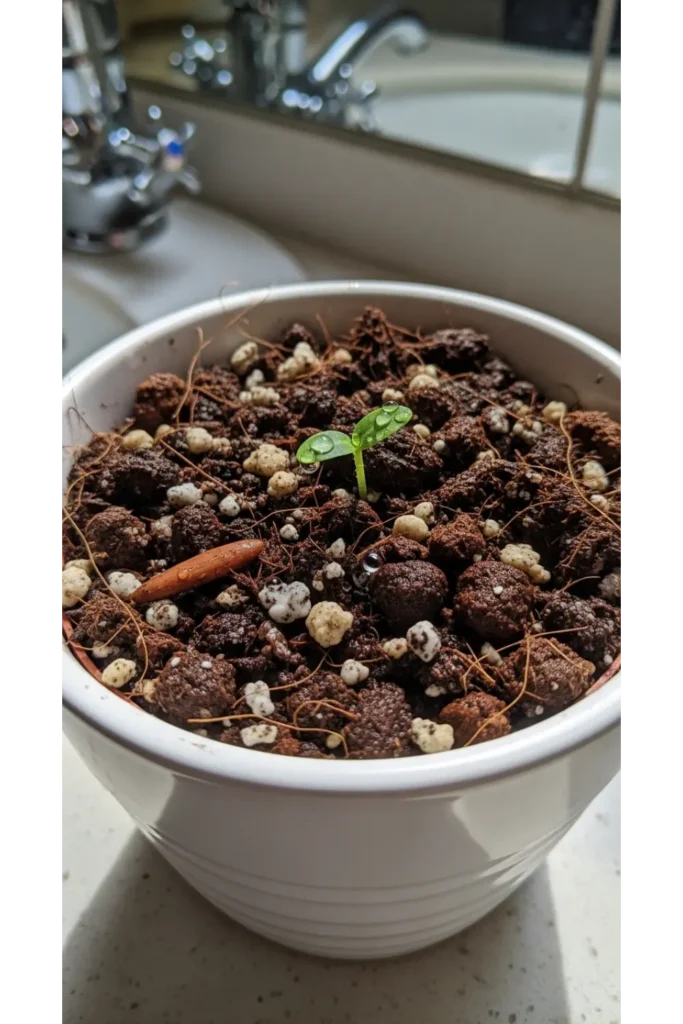
Standard garden soil often holds too much water for indoor plants. A well draining mix designed for houseplants protects roots and prevents compaction. Good soil structure supports oxygen flow.
Look for mixes containing perlite or bark for better drainage. Proper soil helps maintain the right moisture level in humid spaces. Strong roots create resilient plants year round.
Pro Tip: Refresh soil every year to prevent nutrient depletion.
10. Trim for Healthy Growth
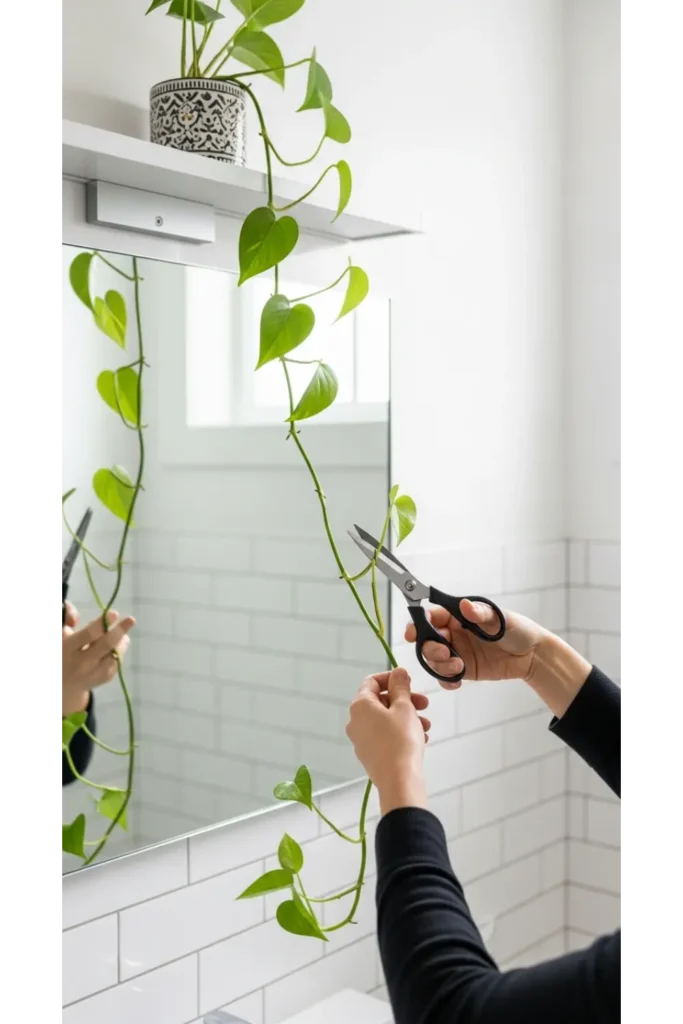
Pruning encourages fuller growth and removes weak stems. Cutting back leggy vines helps the plant focus energy on new leaves. Regular trimming also keeps your shower area neat and balanced.
Use clean scissors to avoid spreading disease. Remove yellow or damaged leaves quickly. Healthy pruning improves airflow and light exposure around the plant.
Pro Tip: Prune during active growth seasons for faster recovery.
11. Watch for Pests
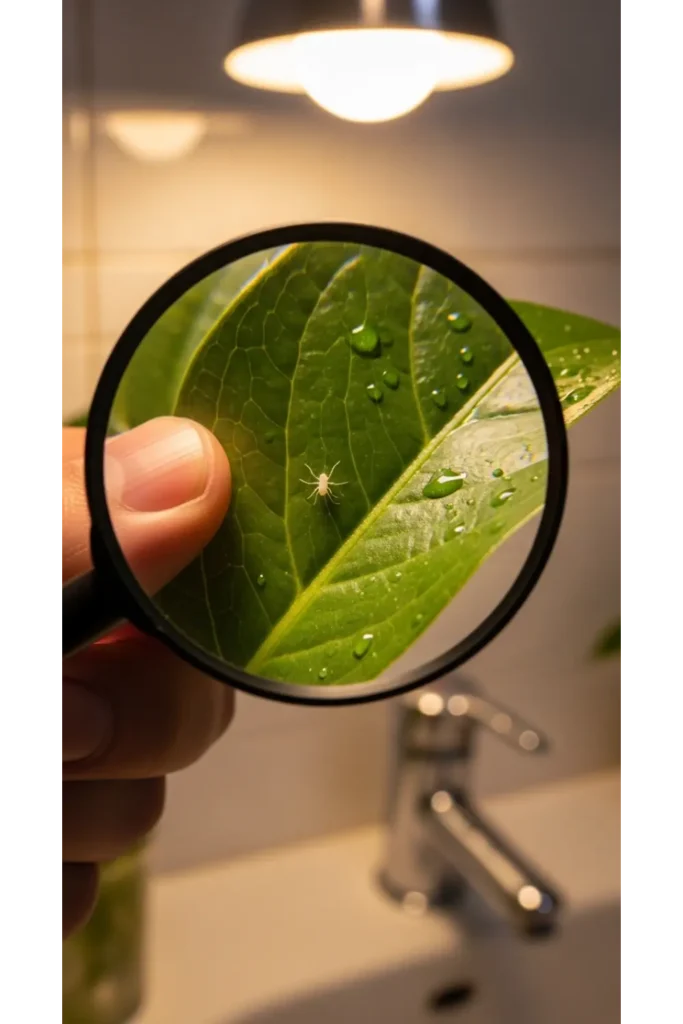
High humidity can attract fungus gnats or spider mites. Check the underside of leaves regularly. Early detection makes treatment easier and prevents spread.
Use gentle solutions like insecticidal soap if needed. Healthy plants resist pests better than stressed ones. Keeping soil balanced and leaves clean reduces infestation risk.
Pro Tip: Isolate affected plants immediately to protect others.
12. Elevate Plants for Better Steam Access
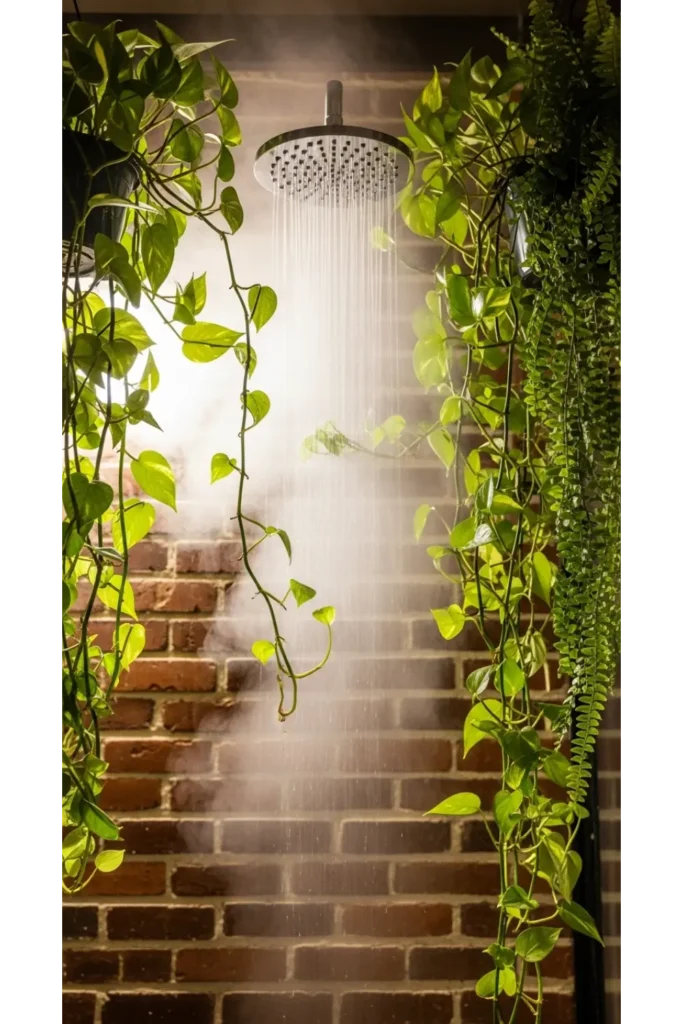
Placing plants slightly higher allows them to benefit from rising steam. Hanging baskets or shelves above the shower area create a natural humidity boost. This setup supports moisture loving varieties.
Avoid placing plants where water splashes directly onto leaves. Controlled exposure to steam works best. Positioning influences how effectively plants use bathroom humidity.
Pro Tip: Test placement for a week and adjust if leaves stay overly wet.
13. Reduce Soap Exposure
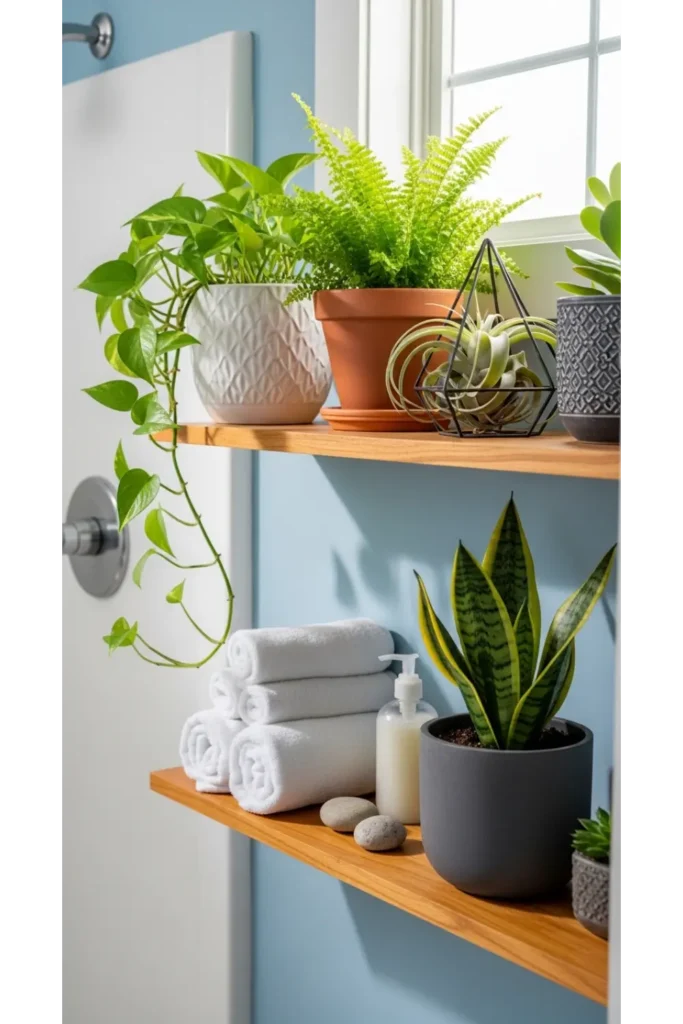
Soap residue can damage foliage over time. Keep plants out of direct spray range to protect leaves. Even mild shampoo mist may cause spotting.
Creating a safe distance between water spray and plants improves leaf quality. Healthy foliage resists discoloration and stays vibrant longer. Placement matters more than many people realize.
Pro Tip: Use a shower curtain guard to block accidental splashes.
14. Group Plants Together
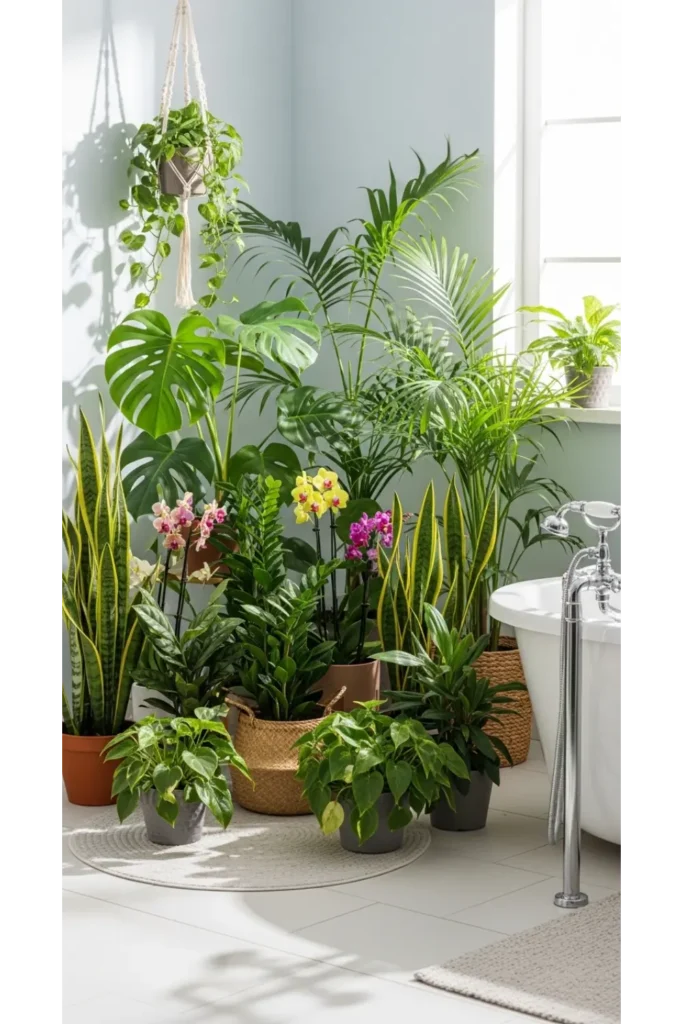
Grouping plants increases local humidity and creates a mini ecosystem. When plants sit together, they release moisture that benefits neighboring leaves. This supports long term stability.
Clusters also create visual impact and turn your shower into a green retreat. Balanced spacing allows airflow while keeping humidity levels supportive. Plant grouping strengthens overall growth.
Pro Tip: Leave small gaps between pots to maintain air movement.
15. Adjust Care in Winter
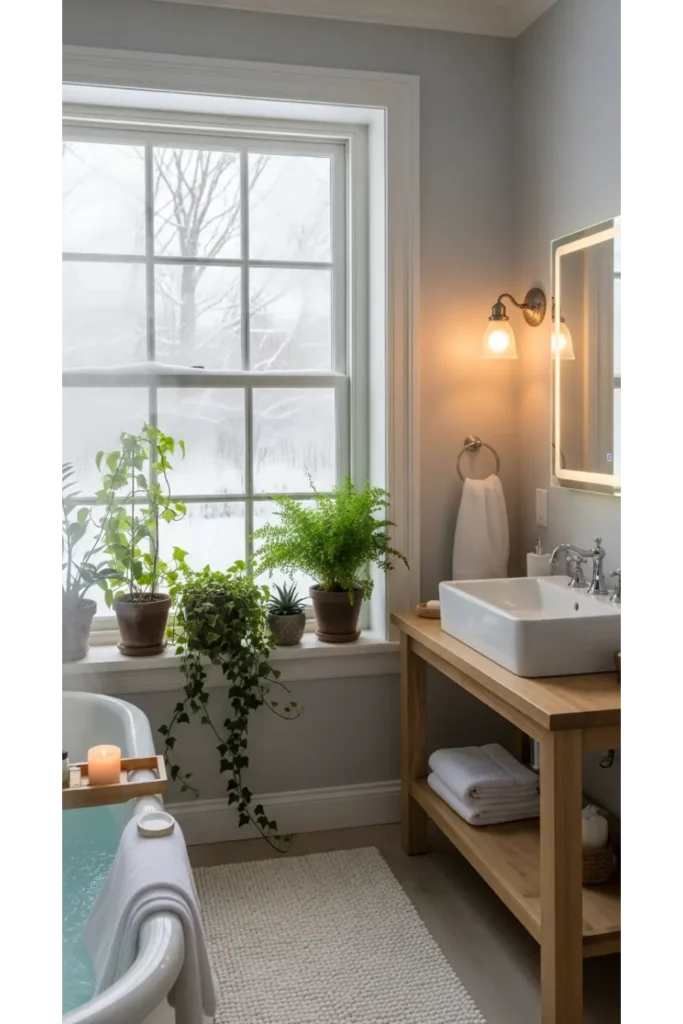
Winter often reduces natural light and slows growth. Reduce watering and pause feeding if plants show slower development. Adjusting your routine keeps roots healthy during low activity months.
Maintain warmth and protect plants from cold drafts. Seasonal awareness plays a key role in mastering how to keep shower plants alive all year round. Small winter adjustments prevent long term damage.
Pro Tip: Move plants closer to available light during darker months.
16. Repot When Roots Outgrow Containers
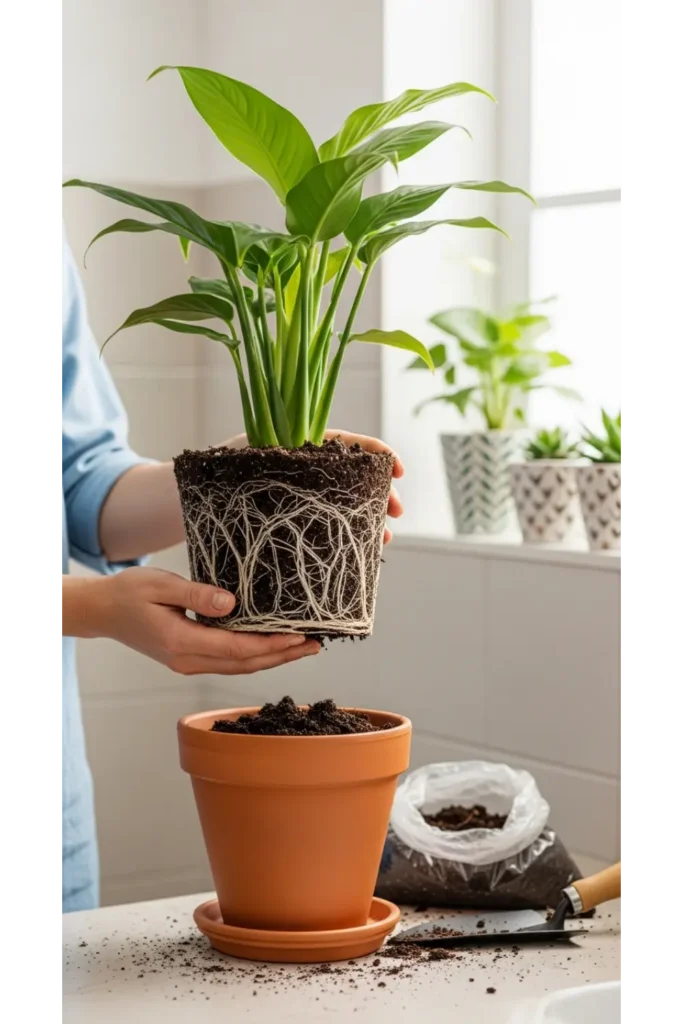
Roots that circle tightly inside the pot need more space. Repotting once roots outgrow containers encourages new growth. Choose a pot slightly larger than the current one.
Fresh soil improves nutrient access and drainage. Repotting supports long term health and stronger foliage. Crowded roots often lead to stunted growth.
Pro Tip: Repot in spring when growth naturally increases.
17. Observe and Respond Quickly
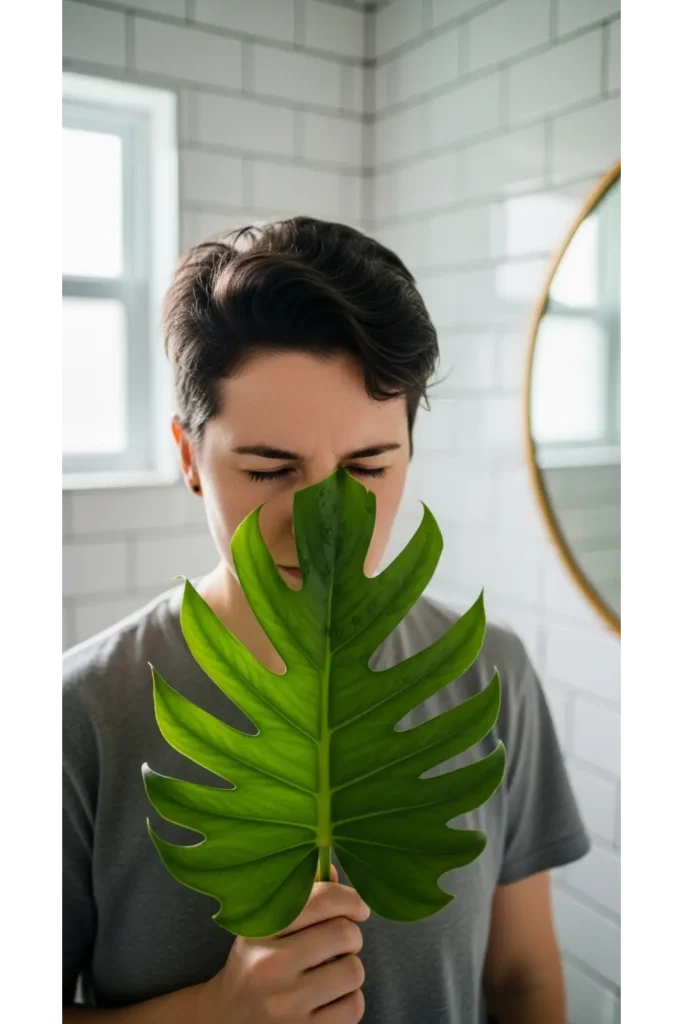
Plants communicate through leaf color and texture. Yellow leaves may signal overwatering, while brown tips may suggest low humidity or mineral buildup. Quick adjustments prevent lasting damage.
Regular observation builds confidence in indoor plant care. The more you notice small changes, the easier it becomes to maintain thriving greenery. Consistent attention creates lasting results.
Pro Tip: Keep a simple plant journal to track watering and growth patterns.
Frequently Asked Questions
What are the best plants for a shower environment?
Tropical plants like pothos, ferns, philodendrons, and peace lilies thrive in humid bathrooms with indirect light.
Can shower plants survive without natural light?
Some low light plants can survive with artificial grow lights. Consistent light remains important for steady growth.
How often should I water shower plants?
Always check soil first. Humid conditions slow drying, so most plants need less frequent watering than in dry rooms.
Do shower plants need fertilizer?
Yes during active growth seasons. Feed lightly in spring and summer and pause during winter if growth slows.
Why do my bathroom plants get mold?
Poor airflow and overly wet soil cause mold. Improve ventilation and adjust watering to solve the issue.
Conclusion
Creating a thriving bathroom garden does not require complicated steps. When you understand humidity, light, airflow, and soil balance, you master how to keep shower plants alive all year round. The right plant selection, steady observation, and small seasonal adjustments make the difference between struggling leaves and lush growth.
With these expert strategies, your shower can become a vibrant indoor oasis that supports healthy, resilient plants in every season.