

24 Japandi Bedroom Designs for Minimalist Comfort
1. Japandi Bedroom Designs for Minimalist Comfort With Soft Neutrals
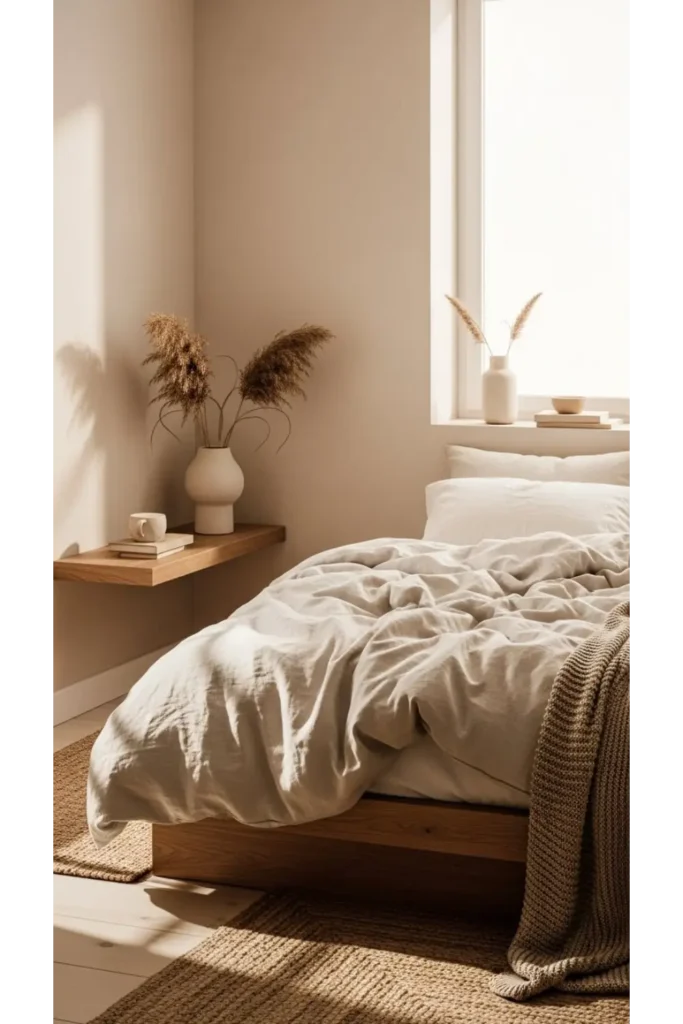
Japandi bedroom designs for minimalist comfort begin with a calm, neutral palette that instantly relaxes the mind. Soft beige, warm ivory, and muted taupe create a peaceful base while letting natural textures stand out. A low wooden bed with clean lines anchors the space, keeping the room grounded. Linen bedding adds breathable comfort, making the bedroom feel inviting without visual clutter. Discover even more beautiful bedroom decor inspiration in our full collection here.
Natural light plays a major role in this design approach. Large windows dressed with sheer curtains allow sunlight to wash over the room gently. Minimal decor keeps the focus on quality materials rather than excess items. Each piece feels intentional, supporting rest and balance. This design suits individuals who value simplicity but also desire warmth and emotional comfort in their private space.
2. Warm Wood Focused Japandi Bedroom

Warm wood tones define this Japandi bedroom by bringing nature indoors in a subtle way. Oak or ash furniture adds depth while keeping the room light and breathable. The bed frame stays low to the ground, which reflects Japanese design influence. Simple bedding in cotton or linen balances the wood elements and prevents the space from feeling heavy.
The beauty of this style lies in restraint. One textured wall or wood panel adds interest without overwhelming the senses. Soft lighting enhances the natural grain of the wood, creating a calm evening mood. This bedroom design works well for those who want a grounded space that feels modern yet deeply connected to nature.
3. Minimalist Japandi Bedroom With Earthy Accents
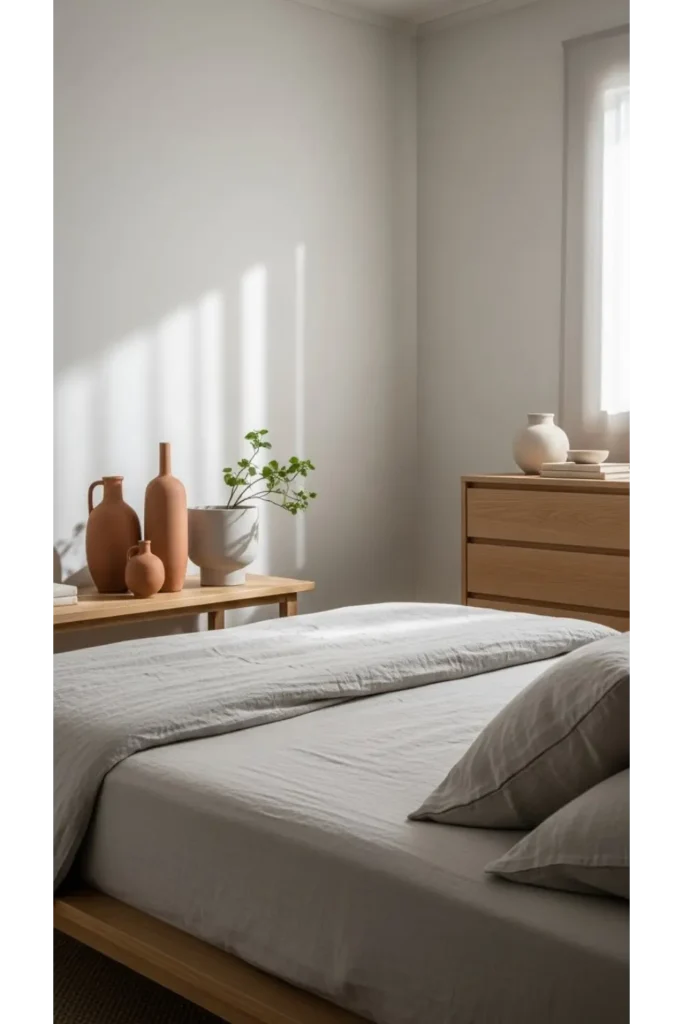
Earthy accents bring quiet character to a Japandi bedroom without breaking its minimalist nature. Clay, sand, and stone inspired tones appear through cushions, throws, or ceramic decor. These subtle colors pair well with neutral walls and pale wood furniture. The result feels balanced and rooted, never loud or distracting.
This design supports relaxation by keeping visual noise low. Each accent has purpose and complements the whole room. Soft textures replace bold patterns, allowing the eye to rest. The bedroom becomes a space that encourages slow mornings and restful nights, perfect for people who want comfort without excess styling.
4. Japandi Bedroom With Natural Textiles
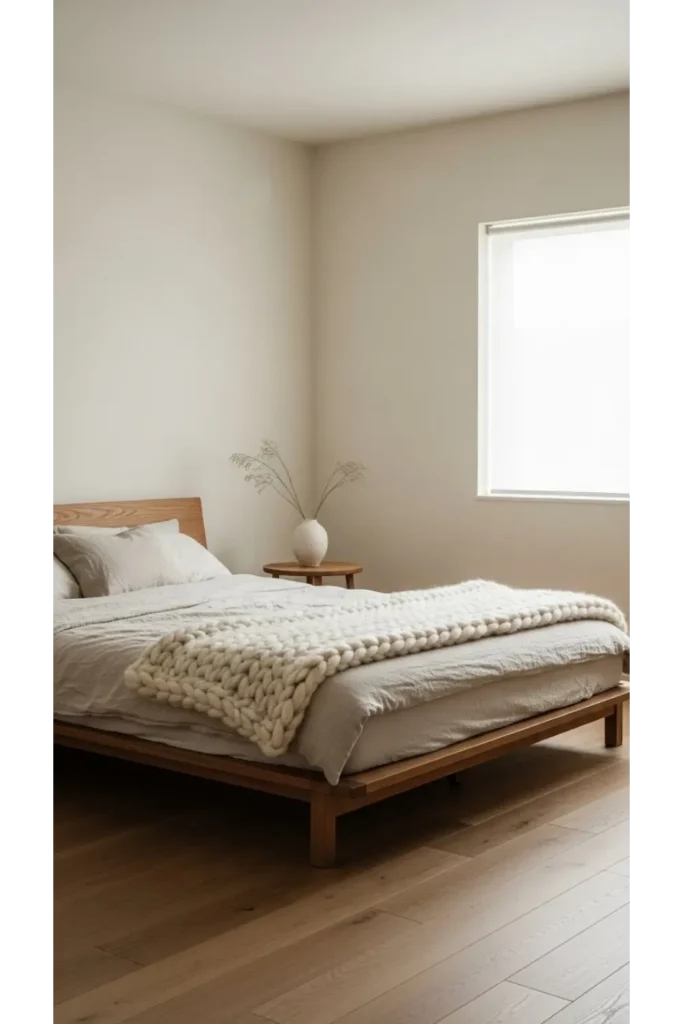
Natural textiles play a key role in Japandi bedroom styling. Linen sheets, cotton duvets, and wool throws provide comfort while adding texture. These materials age beautifully and feel pleasant against the skin. Their imperfect weave fits perfectly with the Japandi appreciation for authenticity and simplicity.
Layering textiles keeps the room cozy without adding clutter. Neutral colors allow the textures to stand out naturally. This approach creates a bedroom that feels lived in yet refined. It supports better rest by making the environment feel safe, warm, and free from visual stress.
5. Low Profile Bed Japandi Style
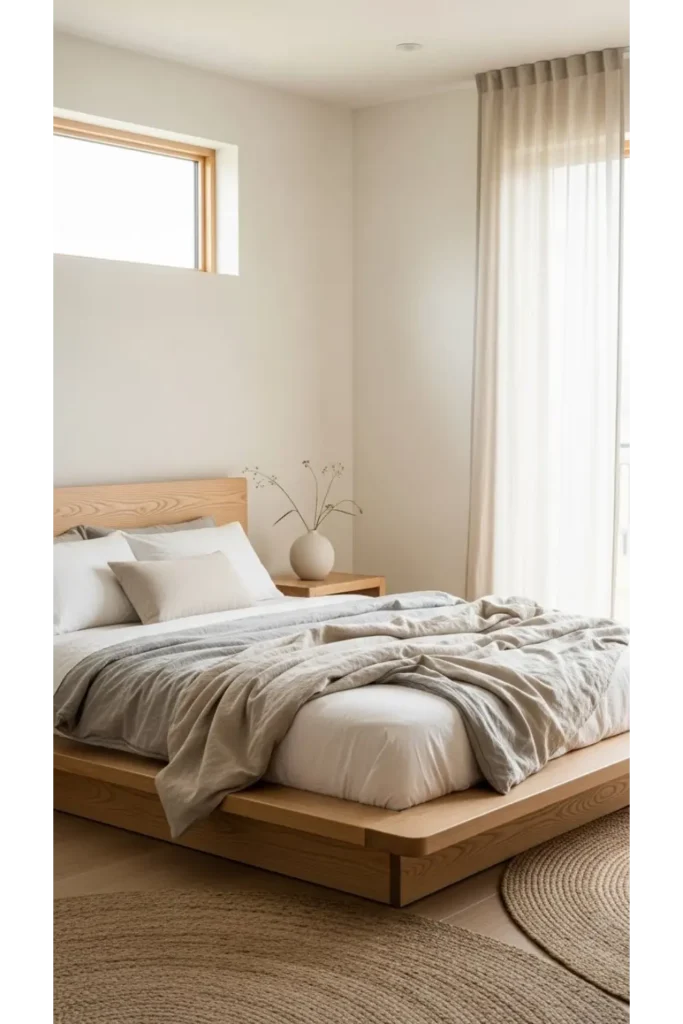
A low profile bed is a signature element in Japandi bedroom design. It keeps the room feeling open and grounded while honoring Japanese design roots. The lower height also emphasizes horizontal lines, which visually calm the space. Light wood frames work best to maintain an airy feel.
This bed style pairs well with minimal decor and open floor space. The absence of bulky furniture helps the room breathe. The result is a bedroom that feels intentional and uncluttered, making it easier to relax and disconnect from daily distractions.
6. Japandi Bedroom With Soft Lighting Layers
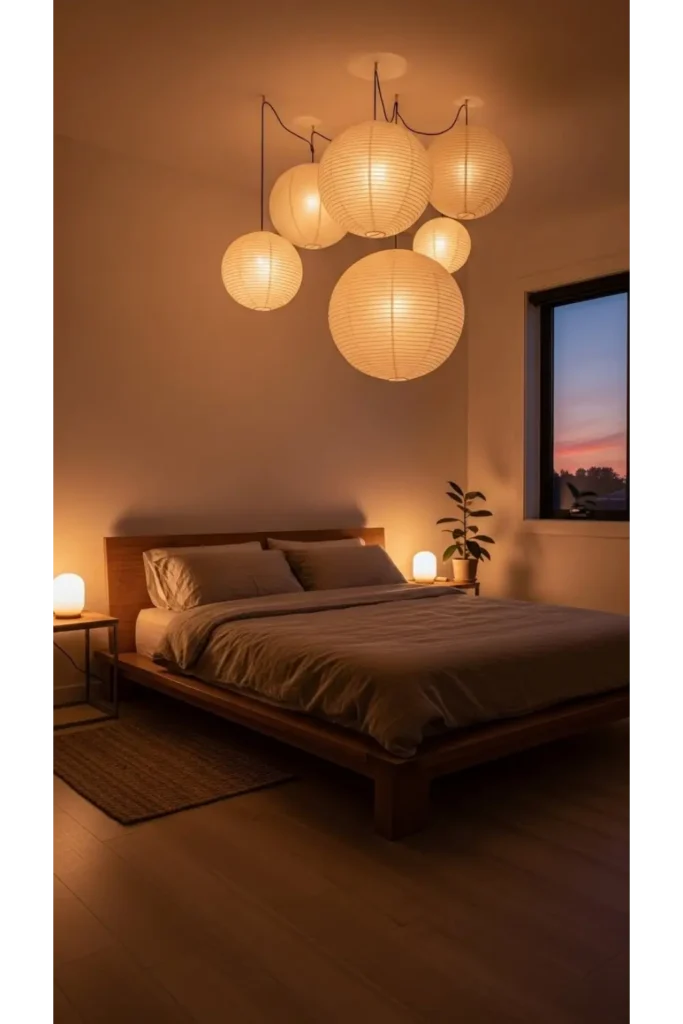
Lighting shapes the mood of a Japandi bedroom more than any decorative item. Soft layered lighting replaces harsh overhead fixtures. Paper lanterns, wall sconces, and small bedside lamps create a gentle glow that supports rest. Warm light tones enhance natural materials and calm the nervous system.
This lighting approach allows flexibility throughout the day. Bright daylight energizes the space, while dim evening light signals the body to slow down. The bedroom becomes a true retreat, designed to support healthy sleep and quiet moments of reflection.
7. Neutral Monochrome Japandi Bedroom
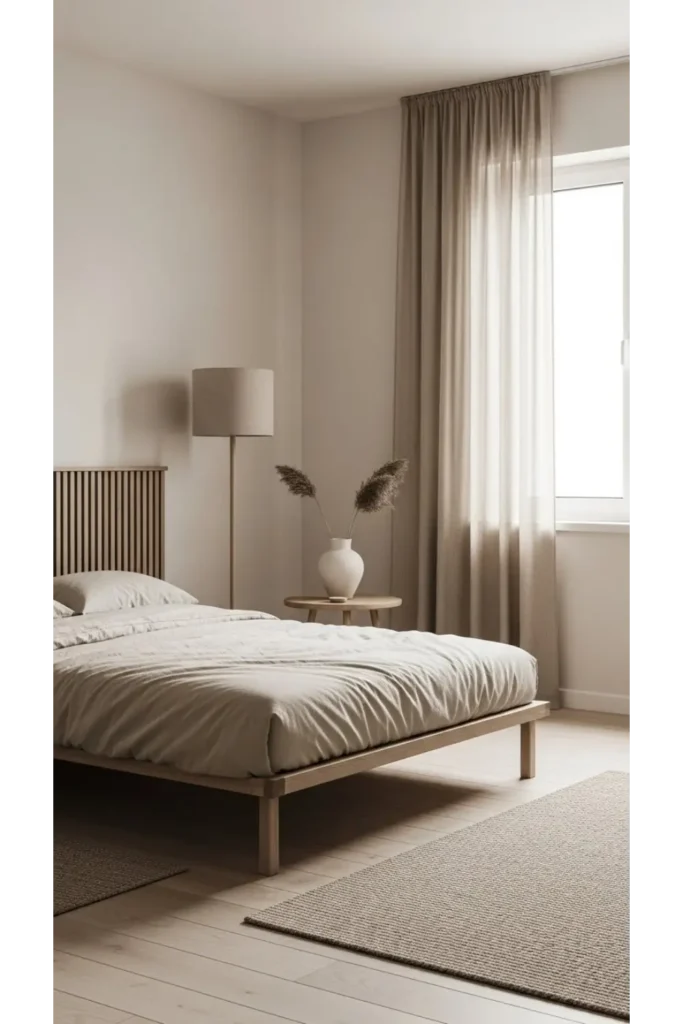
A monochrome neutral palette gives a Japandi bedroom a refined and timeless look. Shades of beige, cream, and soft brown flow seamlessly throughout the space. This consistency reduces visual breaks and helps the mind relax. Subtle contrast appears through texture rather than color.
Wood grain, fabric weave, and matte finishes add depth while keeping the palette calm. The bedroom feels cohesive and thoughtfully designed. This style works especially well in smaller rooms, where visual simplicity makes the space feel larger and more peaceful.
8. Japandi Bedroom With Open Space Flow
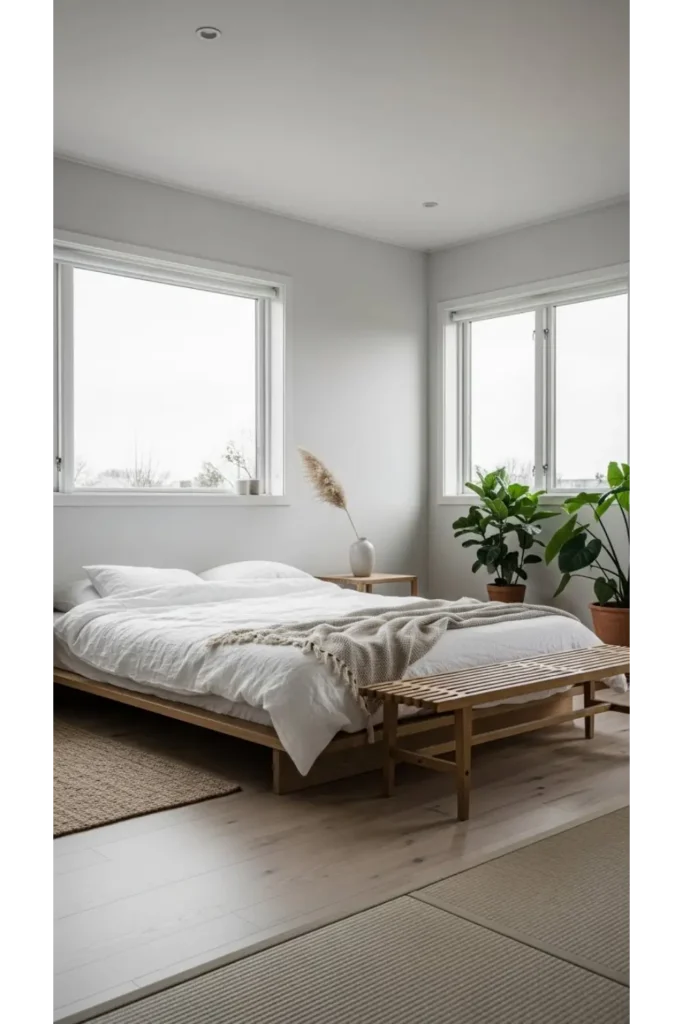
Open space is essential in Japandi design philosophy. Leaving areas of the bedroom uncluttered allows energy to move freely. Furniture placement feels intentional, never crowded. This openness supports mental clarity and emotional ease.
The room feels lighter and more breathable, even with limited square footage. Storage stays hidden to maintain clean lines. This design appeals to people who value calm surroundings and want their bedroom to feel like a quiet pause from a busy world.
9. Japandi Bedroom With Organic Decor

Organic decor adds personality without disturbing the minimalist balance. Handcrafted ceramics, wooden bowls, or stone objects introduce subtle imperfections. These items bring warmth and humanity into the bedroom. Each piece feels meaningful rather than decorative for its own sake.
Keeping decor minimal ensures the space remains restful. Objects are chosen slowly and intentionally. This thoughtful approach aligns with Japandi values and helps create a bedroom that feels personal, calm, and deeply comforting.
10. Japandi Bedroom With Textured Walls
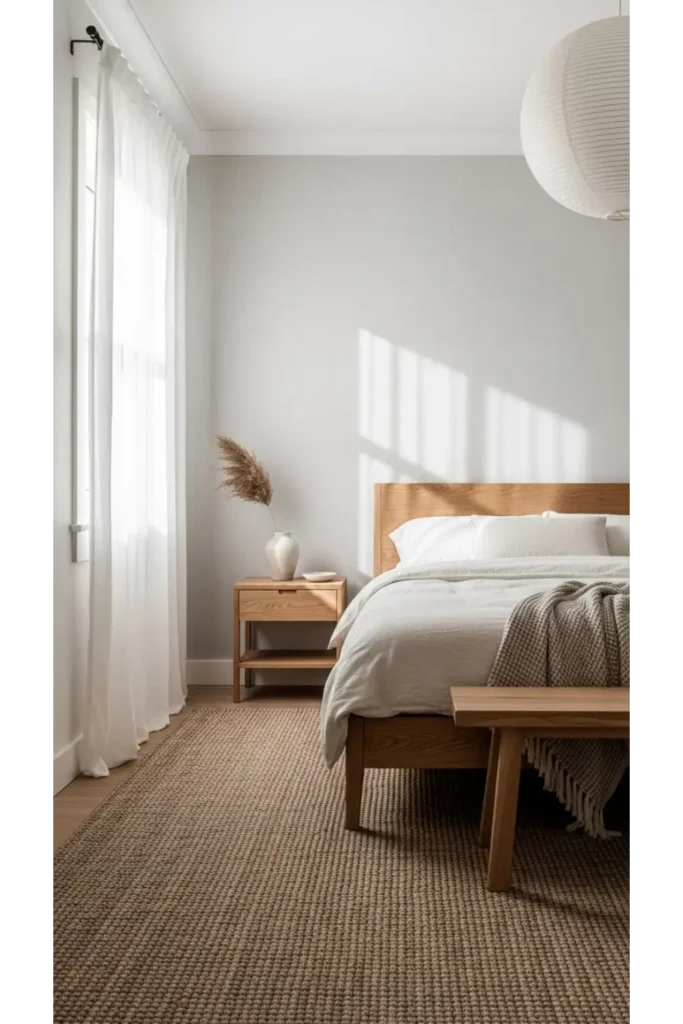
Textured walls add quiet depth to a Japandi bedroom. Limewash or clay finishes create subtle movement without strong patterns. These surfaces reflect light softly, enhancing the room’s natural warmth. The texture feels organic and timeless.
Paired with simple furniture, textured walls elevate the entire space. They remove the need for excessive decor. This design choice suits people who appreciate understated beauty and want their bedroom to feel rich without feeling busy.
11. Japandi Bedroom With Scandinavian Influence
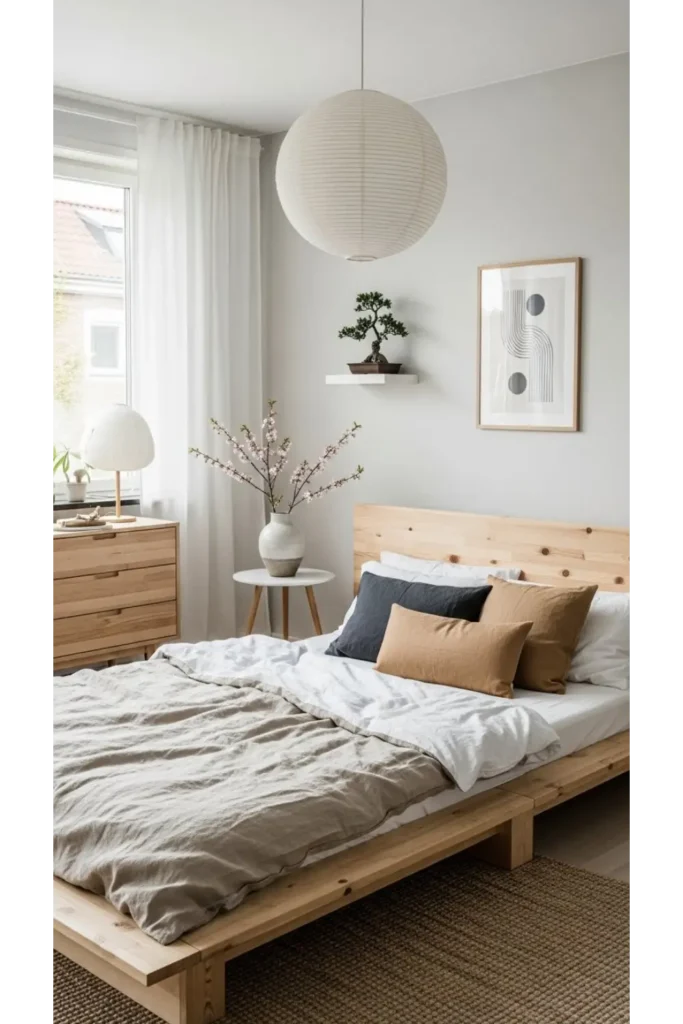
Scandinavian elements bring brightness and practicality to Japandi bedrooms. Clean lines, light wood, and functional furniture create an easy living environment. These features blend seamlessly with Japanese minimalism, resulting in a balanced design language.
The bedroom feels cozy yet uncluttered. Practical storage solutions keep everyday items out of sight. This fusion works well for modern lifestyles where comfort, beauty, and function matter equally.
12. Japandi Bedroom With Floor Seating
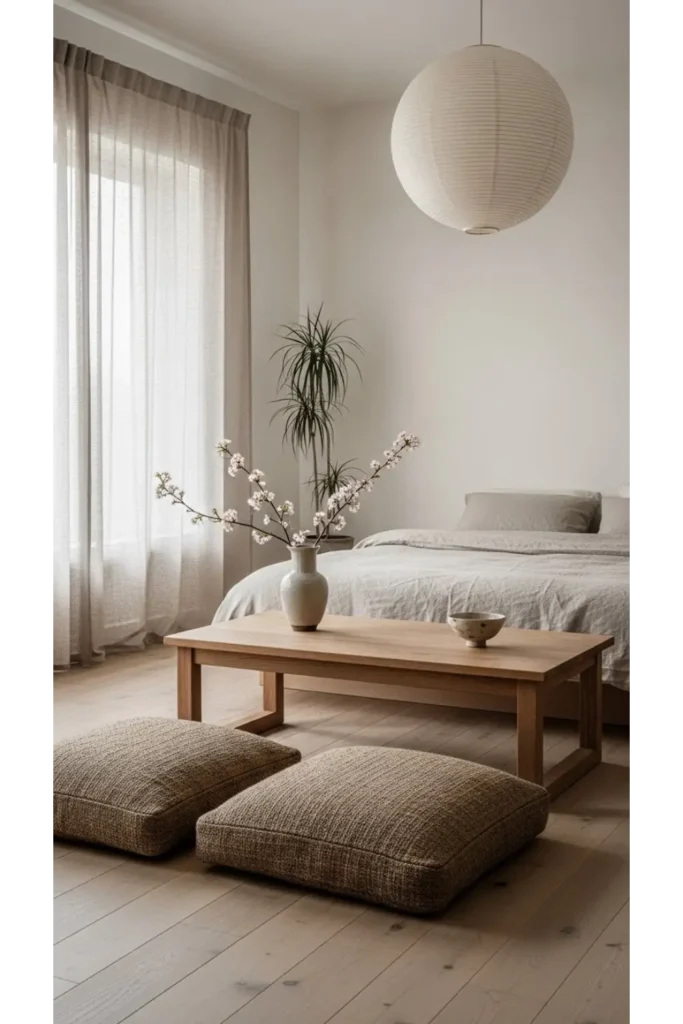
Floor seating introduces a relaxed and grounded feeling to the bedroom. Cushions or a low bench create a space for reading or quiet reflection. This element connects the room to Japanese living traditions while staying functional.
The key is moderation. One seating area adds purpose without clutter. This setup encourages slower moments and mindful routines, making the bedroom more than just a place to sleep.
13. Japandi Bedroom With Hidden Storage

Hidden storage preserves the clean look essential to Japandi design. Built-in drawers, under bed storage, and concealed closets keep surfaces clear. This approach reduces visual stress and supports better rest.
When everything has a place, the bedroom feels calm and controlled. The focus stays on comfort rather than clutter. This design is ideal for modern homes where space efficiency matters.
14. Japandi Bedroom With Soft Contrast
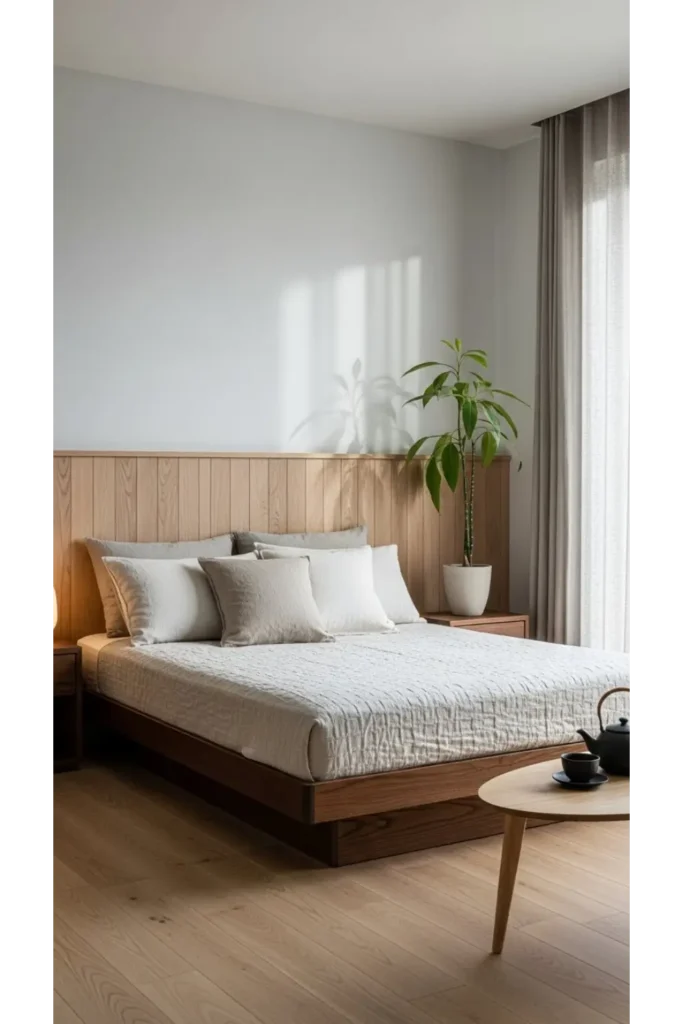
Soft contrast adds interest without breaking the calm. Light walls paired with slightly darker wood furniture create gentle definition. The contrast remains subtle and natural.
This balance prevents the room from feeling flat while maintaining harmony. The bedroom feels thoughtfully layered, offering visual comfort that never overwhelms.
15. Japandi Bedroom With Nature Views
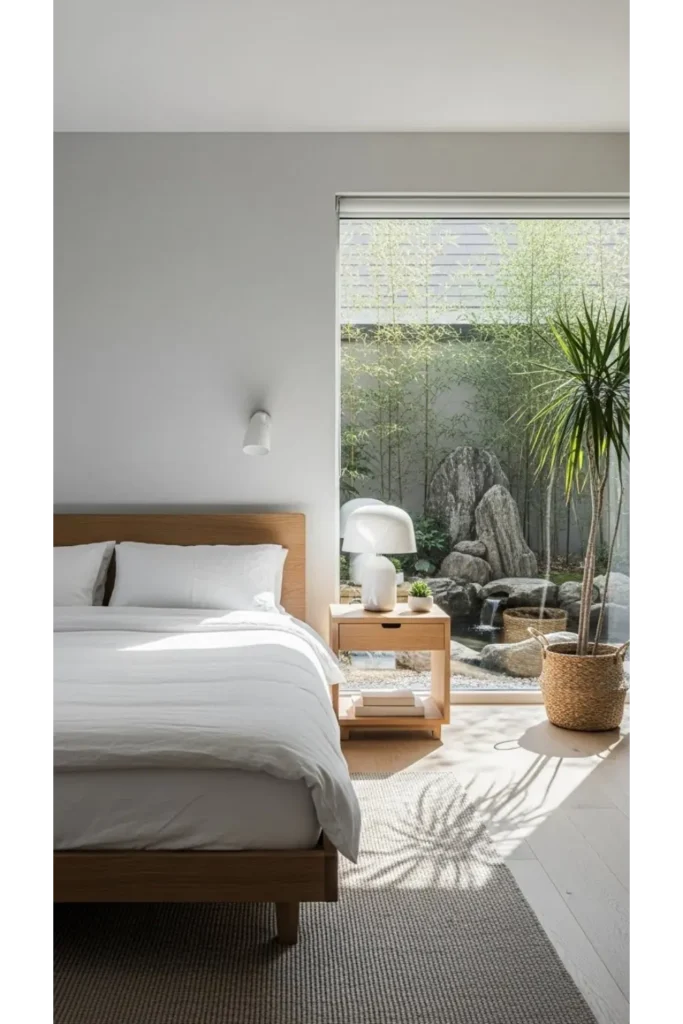
A connection to nature enhances the Japandi bedroom experience. Large windows frame outdoor views and invite natural light inside. The outside landscape becomes part of the decor.
This connection supports mental well being and deep rest. The bedroom feels peaceful and grounded, reminding the body to slow down and breathe.
16. Japandi Bedroom With Simple Art
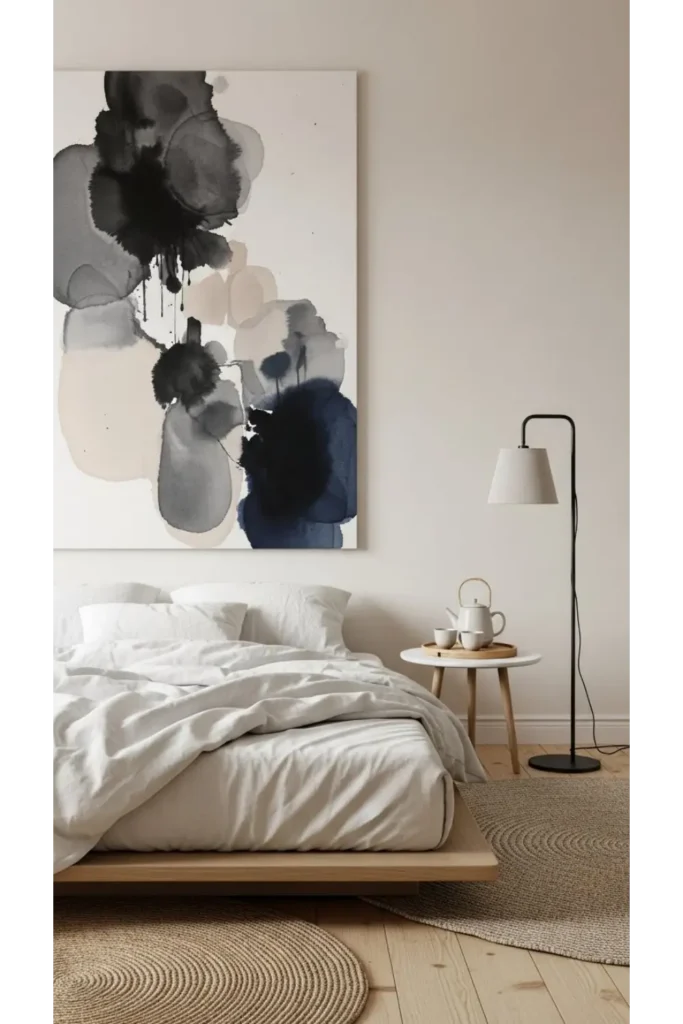
Art in a Japandi bedroom stays simple and intentional. One or two pieces with soft forms or abstract lines add personality. The art never dominates the space.
This restraint keeps the room calm while allowing self expression. The bedroom feels curated, not decorated, supporting long term comfort and visual peace.
17. Japandi Bedroom With Matte Finishes

Matte finishes play a quiet but powerful role in shaping a calming Japandi bedroom. Surfaces with low sheen absorb light instead of reflecting it, which reduces visual sharpness and helps the room feel softer overall. Matte wood furniture, clay finished walls, and brushed metal accents create a tactile environment that feels grounded and natural. This visual softness supports relaxation and keeps the space from feeling cold or overly modern.
Beyond aesthetics, matte finishes contribute to daily comfort. They show fewer reflections and distractions, which helps the mind slow down at the end of the day. When paired with linen bedding and textured rugs, the bedroom gains depth without visual noise. The result is a space that feels warm from morning to night, encouraging rest, focus, and a stronger sense of emotional ease.
18. Japandi Bedroom With Balanced Symmetry
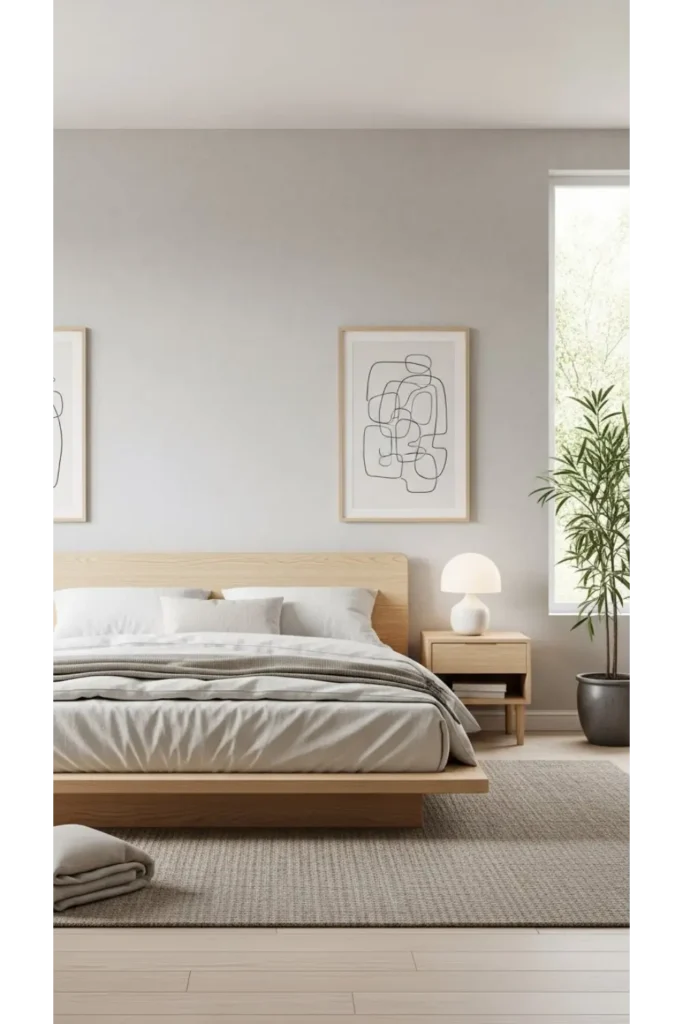
Balanced symmetry brings a sense of order that feels deeply calming in a Japandi bedroom. When elements like bedside tables, lamps, or wall art mirror each other, the room feels stable and visually organized. This gentle balance helps the brain process the space more easily, which supports relaxation. Unlike rigid symmetry, Japandi balance stays soft and flexible, guided by natural proportions rather than strict rules.
This sense of order improves how the bedroom feels during daily use. Waking up and winding down in a balanced space reduces mental clutter and decision fatigue. The layout feels intentional but never forced. Combined with natural materials and soft lighting, symmetry creates a quiet rhythm that supports better sleep and a feeling of calm control within the space.
19. Japandi Bedroom With Minimal Color Accents

Minimal color accents bring life into a Japandi bedroom without breaking its peaceful mood. A single muted tone like sage green, clay, or soft charcoal adds character while respecting the neutral foundation. These colors often appear through cushions, throws, or small decor pieces. Their purpose is not to stand out, but to gently support the overall harmony of the room.
This restrained approach to color keeps the space feeling calm and timeless. Instead of overwhelming the senses, the accent guides the eye and adds warmth. It allows personal expression without visual clutter. Over time, this balance helps the bedroom remain soothing rather than tiring, making it a space that feels fresh and comforting every single day.
20. Japandi Bedroom With Paper Elements
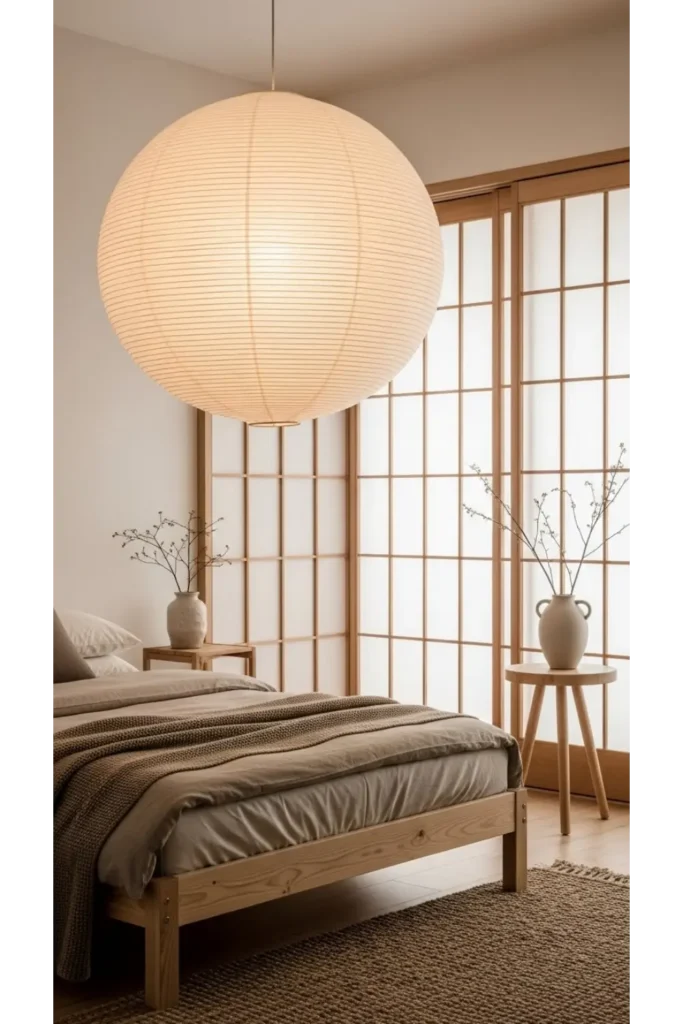
Paper elements introduce softness that few other materials can achieve. In a Japandi bedroom, paper lanterns or shoji inspired panels diffuse light gently across the space. This creates a warm glow that reduces harsh shadows and supports a relaxed evening atmosphere. The texture of paper also adds a subtle visual layer without drawing attention away from the room’s simplicity.
These elements connect the bedroom to Japanese design traditions while staying functional in modern homes. The filtered light feels calming and intimate, ideal for winding down at night. When paired with natural wood and neutral textiles, paper features enhance the emotional comfort of the room and help transform it into a quiet personal retreat.
21. Japandi Bedroom With Cozy Corners
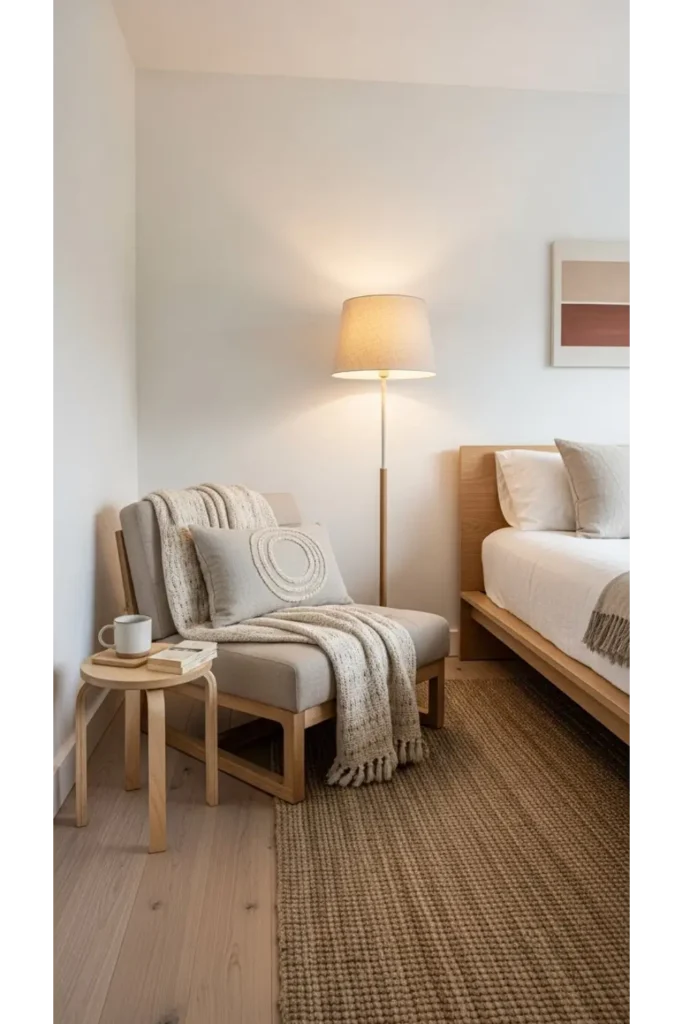
A cozy corner adds depth and purpose to a Japandi bedroom without cluttering the space. A simple chair, floor cushion, or bench paired with soft lighting creates a spot for reading or reflection. This area encourages slow moments and supports mindful routines. Its design stays minimal, ensuring the corner blends naturally into the rest of the room.
Having a dedicated quiet space within the bedroom improves how the room functions daily. It becomes more than just a place to sleep. This corner supports relaxation before bed and calm mornings after waking. The bedroom feels nurturing and complete, offering comfort that goes beyond appearance and into everyday living.
22. Japandi Bedroom With Minimal Patterns
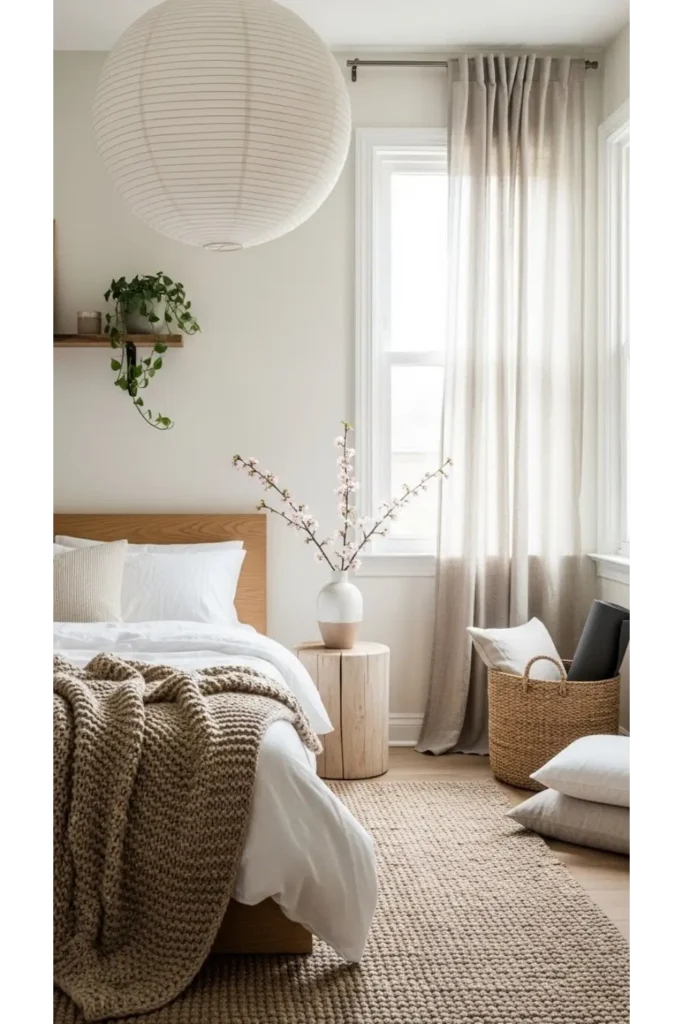
Patterns in a Japandi bedroom remain subtle and intentional. Instead of bold prints, the design relies on woven textures, gentle stripes, or natural fiber details. These patterns appear in rugs, bedding, or cushions, adding quiet interest without overwhelming the senses. The goal is to create depth while preserving visual calm.
This approach keeps the bedroom cohesive and easy to live in. The eye moves smoothly across the space without stopping at loud details. Over time, minimal patterns prevent visual fatigue and help the room remain restful. The focus stays on comfort, texture, and balance, which are central to the Japandi philosophy.
23. Japandi Bedroom With Natural Flooring
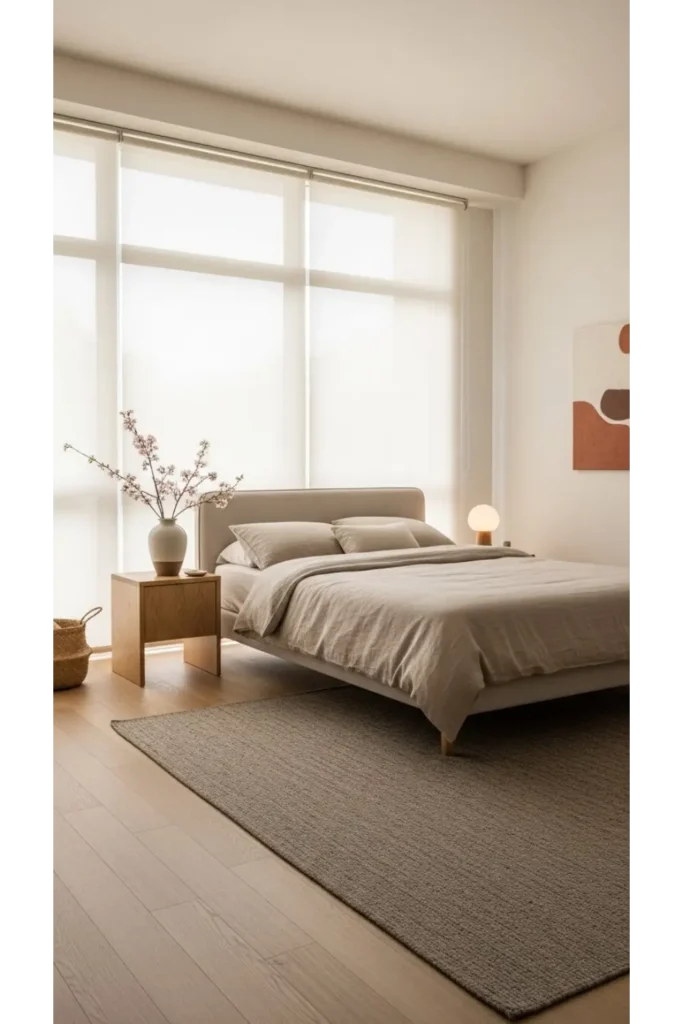
Natural flooring forms the foundation of a well balanced Japandi bedroom. Wood floors bring warmth, texture, and authenticity to the space. Their natural grain adds quiet character while supporting the minimalist aesthetic. A simple neutral rug introduces softness underfoot without hiding the beauty of the floor itself. Don’t miss our complete bedroom decor guide packed with stylish inspiration.
This combination enhances comfort and durability. Wood flooring ages gracefully and connects the room to nature. The bedroom feels grounded and stable, which supports emotional calm. When paired with low furniture and open space, natural flooring helps create a bedroom that feels both peaceful and enduring.
24. Japandi Bedroom With Timeless Simplicity
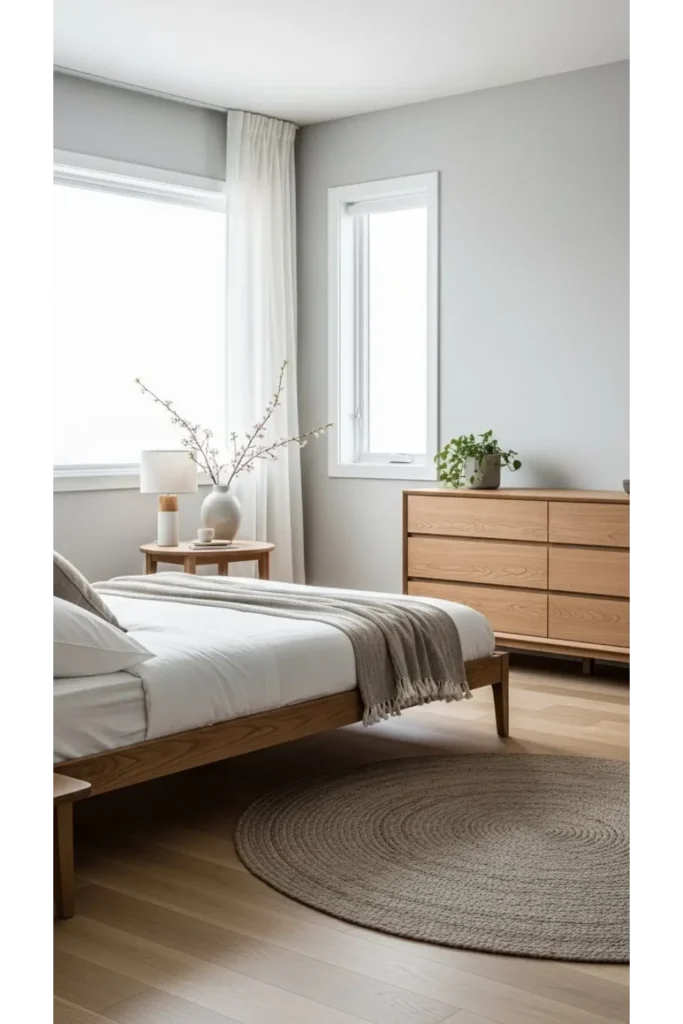
Timeless simplicity defines the most successful Japandi bedrooms. Clean lines, thoughtful spacing, and natural materials create a space that never feels outdated. Each element serves a clear purpose, reducing excess and visual stress. This simplicity allows the bedroom to adapt easily over time without losing its calm identity.
By avoiding trends and focusing on balance, the bedroom supports long term comfort and well being. The space feels honest and easy to live in. This lasting simplicity turns the bedroom into a dependable retreat, one that continues to offer peace, warmth, and clarity year after year.
Conclusion
Japandi bedroom designs offer a refined approach to minimalist comfort by blending warmth, balance, and intention. From materials and lighting to layout and texture, every choice supports calm living. These ideas show how thoughtful simplicity can improve rest and emotional well being. When designed with care, a Japandi bedroom becomes more than a style choice. It becomes a peaceful daily experience built to last.