

23 Japandi Dining Room Ideas for Minimalist Comfort
1. Japandi Dining Room Ideas for Minimalist Comfort With Natural Balance

Japandi dining room ideas for minimalist comfort begin with balance. This style blends Japanese calm with Scandinavian warmth to create a dining space that feels grounded and welcoming. A solid wood dining table anchors the room, while simple chairs keep the look light. Neutral walls and natural textures help the space feel peaceful without looking empty or cold. Discover even more beautiful dining room decor inspiration in our full collection here.
Comfort comes from thoughtful simplicity rather than excess decor. Soft lighting, smooth wood finishes, and breathable fabrics make the room pleasant for daily meals. When every item has a purpose, the dining area feels calm and functional. This approach supports mindful living and encourages slow, enjoyable dining experiences with family and guests.
2. Soft Neutral Color Palette Dining Space
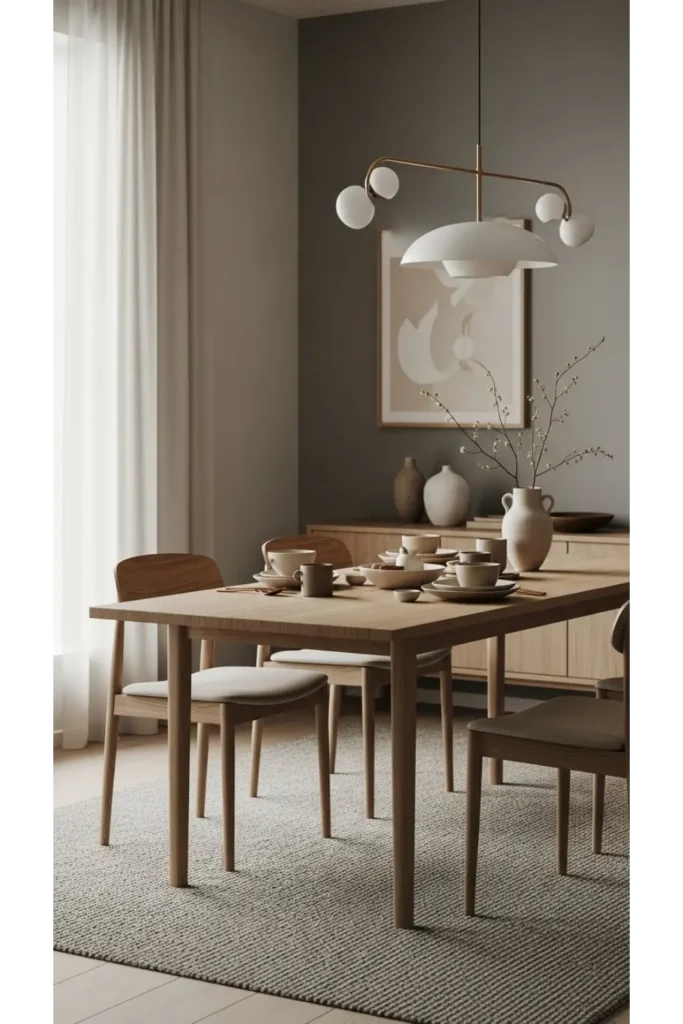
A soft neutral palette sets the tone for a relaxing Japandi dining room. Shades of beige, warm gray, and off white create visual calm while allowing natural materials to shine. These colors reflect light gently, making the room feel open and serene. They also pair well with wood grain and stone textures found in Japandi interior
Neutral tones help reduce visual noise and support a minimalist mindset. Instead of bold contrast, the room relies on subtle variations in texture and tone. This makes the dining space feel cohesive and timeless. The result is a room that stays stylish for years and always feels comfortable and inviting.
3. Solid Wood Dining Table as the Centerpiece

A solid wood dining table is the heart of a Japandi dining room. Natural wood brings warmth and character without overwhelming the space. The visible grain adds quiet detail, making the table feel alive and grounded. Simple shapes keep the design clean and aligned with minimalist principles.
This type of table encourages connection and presence during meals. It feels sturdy and dependable, perfect for daily use. Paired with understated seating, the table becomes a place for both routine dinners and meaningful conversations. Its timeless quality makes it a long term investment in comfort and style.
4. Low Profile Seating for Calm Living
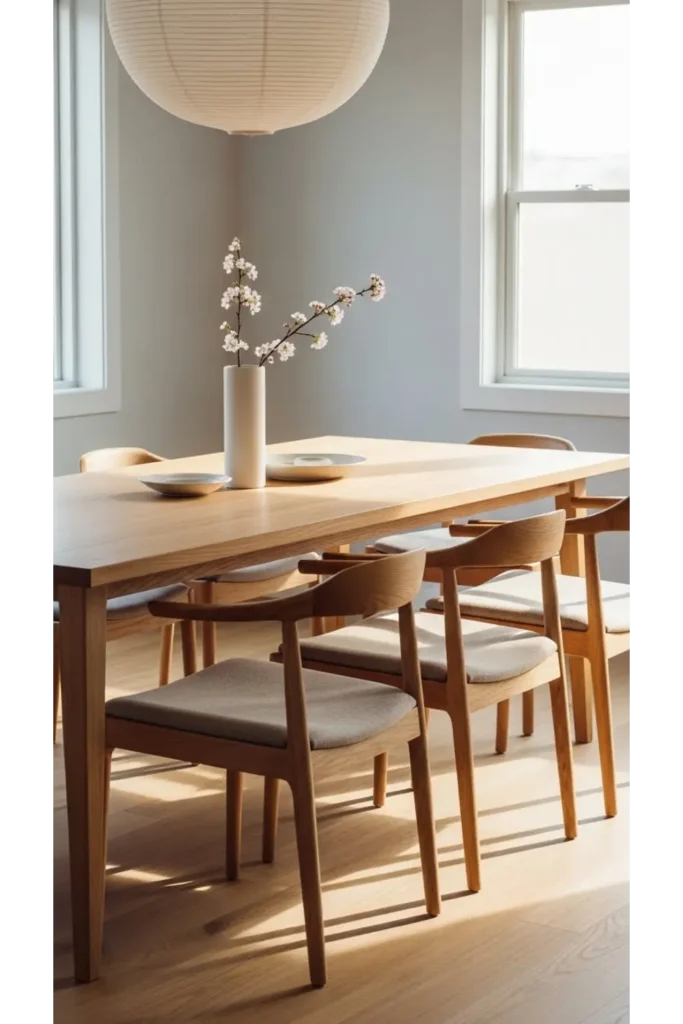
Low profile seating draws inspiration from Japanese interiors and helps create a grounded feeling. Chairs with lower backs or subtle cushions keep the visual weight minimal. This seating style encourages relaxed posture and slower dining, which aligns with the Japandi philosophy of mindful living.
The simplicity of the chairs allows other elements to breathe. Clean lines and natural materials keep the focus on comfort without unnecessary detail. When paired with a solid table, low seating enhances balance and harmony. The dining room feels calm, intentional, and easy to enjoy every day.
5. Minimal Pendant Lighting Above the Table
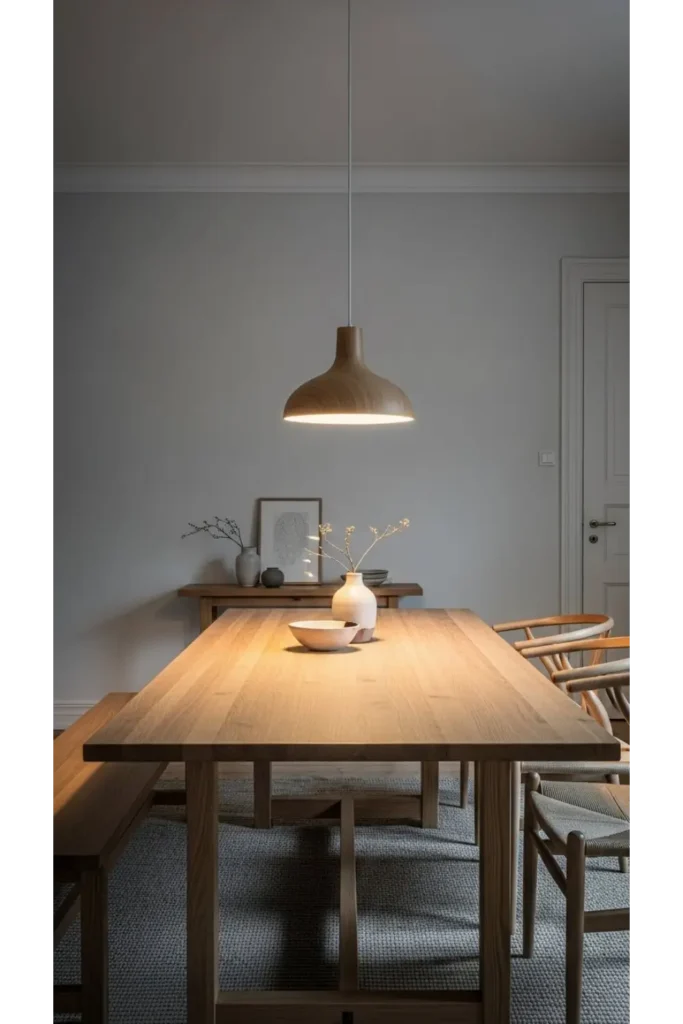
Lighting plays a key role in shaping the mood of a Japandi dining room. A simple pendant light above the table provides focused illumination without visual clutter. Warm light tones soften the space and make meals feel more intimate and inviting.
The fixture itself should feel light and natural, often made from paper, wood, or matte metal. Avoid decorative excess and let the shape speak quietly. Proper lighting enhances comfort and function while supporting the minimalist aesthetic. It helps the dining room feel cozy during evenings and calm during the day.
6. Natural Textiles for Subtle Warmth

Natural textiles bring softness into a minimalist dining room. Linen table runners, cotton seat cushions, or wool throws add comfort without clutter. These materials feel breathable and relaxed, supporting the Japandi focus on natural living.
Textiles also introduce gentle texture, which keeps the space from feeling flat. Stick to neutral or earthy tones to maintain harmony. The goal is quiet warmth rather than decoration. When used thoughtfully, textiles make the dining room more inviting while preserving a clean and uncluttered look.
7. Functional Storage With Clean Lines
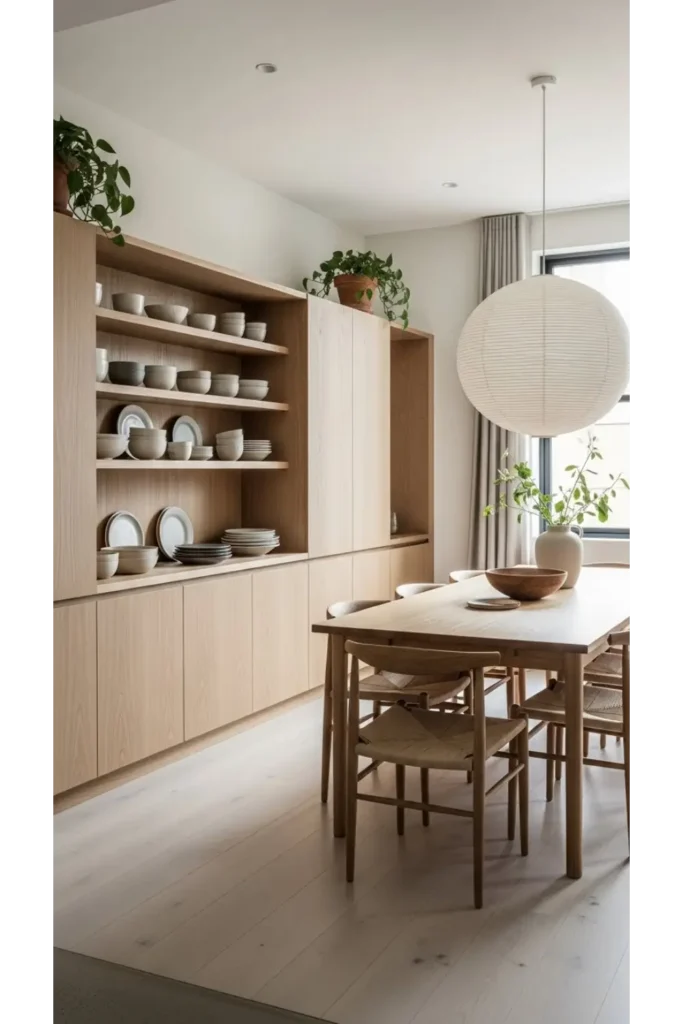
Storage in a Japandi dining room should feel calm and purposeful. Built in cabinets or sideboards with clean lines keep dining essentials organized and out of sight. This reduces visual noise and helps maintain a peaceful environment.
Choose storage made from natural wood or matte finishes. Simple handles or push open doors support the minimalist look. A few ceramic pieces or wooden bowls can remain visible for warmth. Functional storage allows the dining room to stay tidy and comfortable without sacrificing style.
8. Ceramic Tableware as Subtle Decor
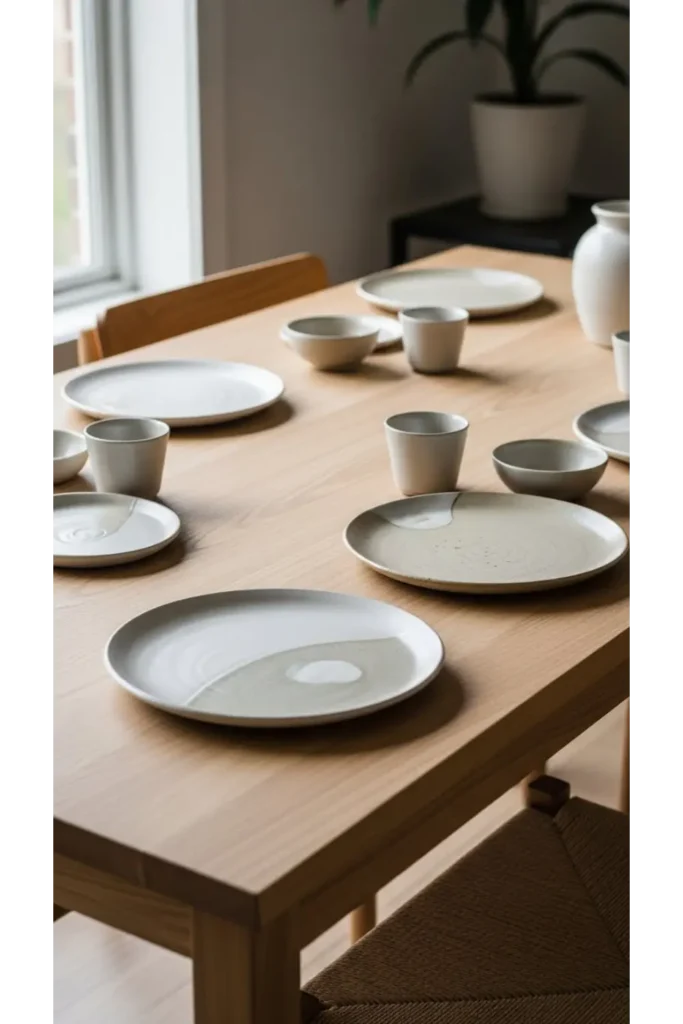
Ceramic tableware adds character to a Japandi dining room without overwhelming it. Handmade plates and bowls bring subtle variation through texture and glaze. Their imperfect beauty reflects Japanese design values and adds warmth to everyday meals.
When not in use, ceramics can sit openly on shelves or a sideboard. Their neutral tones blend naturally with wood and stone. This approach turns practical items into quiet decor. It keeps the dining space functional while adding a human, lived in feel.
9. Open Space and Breathing Room
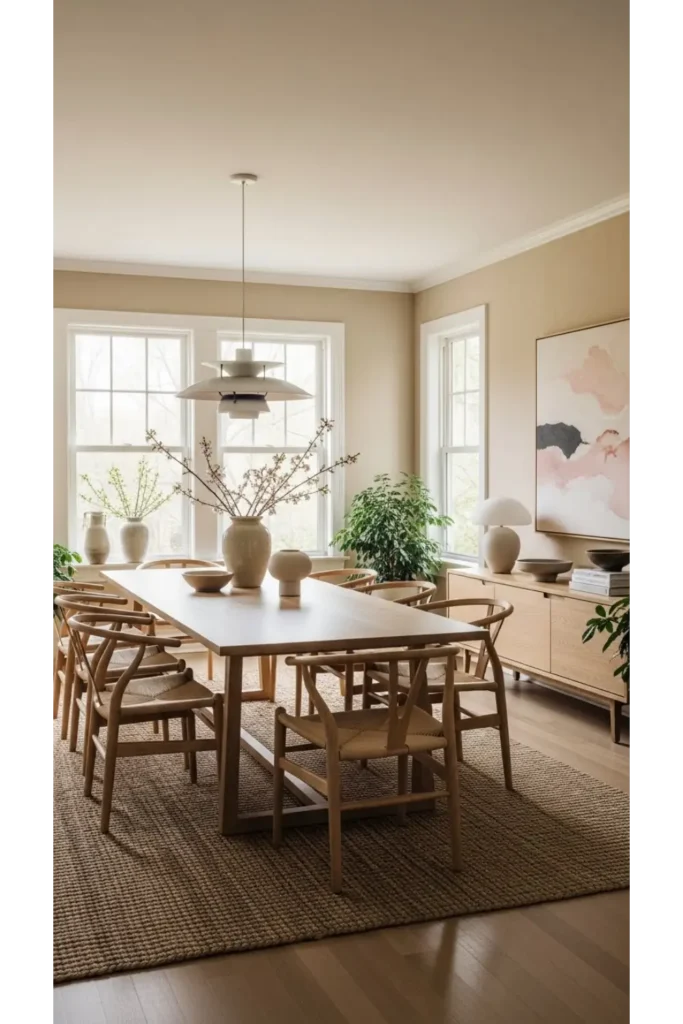
A key feature of Japandi design is open space. Allowing room between furniture pieces helps the dining area feel calm and uncluttered. Avoid filling every corner and let the room breathe.
Open layouts support ease of movement and mental clarity. The dining room becomes a place to slow down rather than rush. This simplicity enhances comfort and makes the space more enjoyable for daily use. Less furniture often leads to more peace and better flow.
10. Indoor Plants for Natural Life

A few well chosen indoor plants bring life into a Japandi dining room. Plants add organic shape and soft color without disrupting minimalism. Choose simple greenery with clean forms, such as a small tree or leafy plant.
Plants improve the atmosphere and connect the room to nature. Keep placement intentional and avoid overcrowding. Even one plant can shift the mood of the space. This touch of green supports balance and makes the dining area feel fresh and comforting.
11. Matte Finishes for a Soft Look
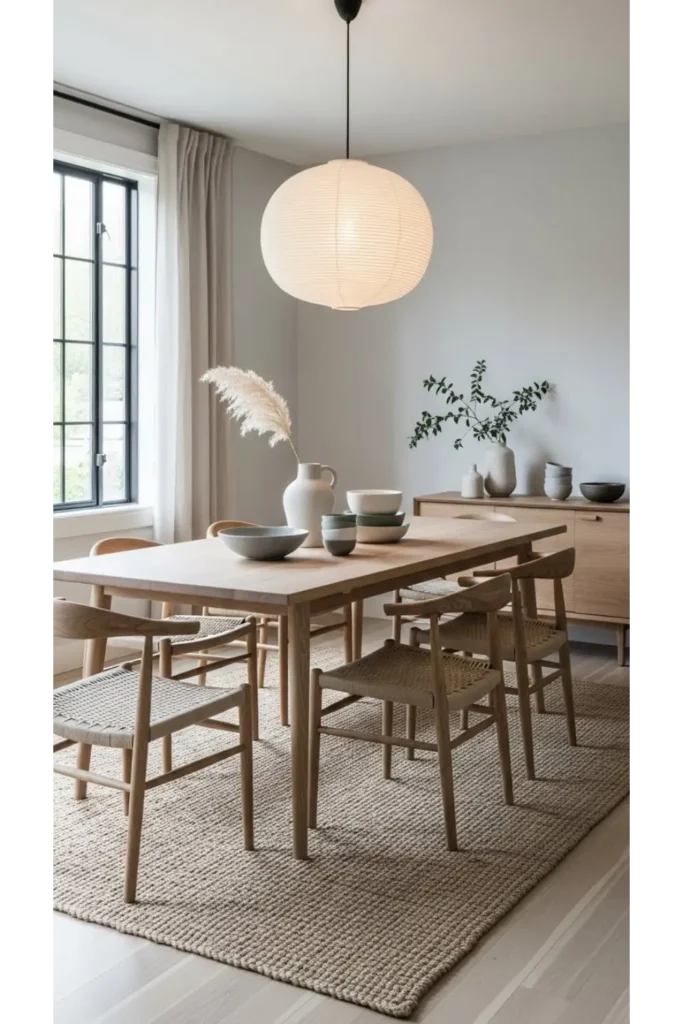
Matte finishes help create a soft and calming dining environment. Unlike glossy surfaces, matte materials absorb light gently. This reduces glare and keeps the room feeling relaxed.
Use matte wood, stone, or ceramics throughout the dining space. These finishes feel natural and understated. They support the Japandi focus on quiet beauty and comfort. The result is a dining room that feels warm, calm, and easy on the eyes.
12. Neutral Wall Art With Meaning

Wall art in a Japandi dining room should feel intentional and restrained. Choose pieces with neutral colors or nature inspired themes. Simple line art or soft landscapes work well without dominating the space.
Art adds personality when used sparingly. It should support the room’s calm mood rather than distract from it. A single meaningful piece can be enough. This approach keeps the dining room visually clean while still feeling personal and thoughtful.
13. Balanced Mix of Japanese and Nordic Design

Japandi design thrives on balance between Japanese simplicity and Scandinavian comfort. In the dining room, this might mean pairing Nordic wood tones with Japanese inspired shapes. The blend feels warm yet refined.
This balance avoids extremes. The space feels cozy without clutter and minimal without feeling cold. By respecting both influences, the dining room becomes timeless and comfortable. The harmony between styles supports everyday living and relaxed gatherings.
14. Stone or Concrete Accents

Stone or concrete accents add subtle contrast to a Japandi dining room. These materials bring weight and texture without overpowering the space. A stone tabletop or small accent piece works well.
The cool surface balances the warmth of wood. Together, they create visual interest through material contrast rather than color. This keeps the room minimalist while adding depth. The dining area feels grounded and thoughtfully designed.
15. Simple Window Treatments
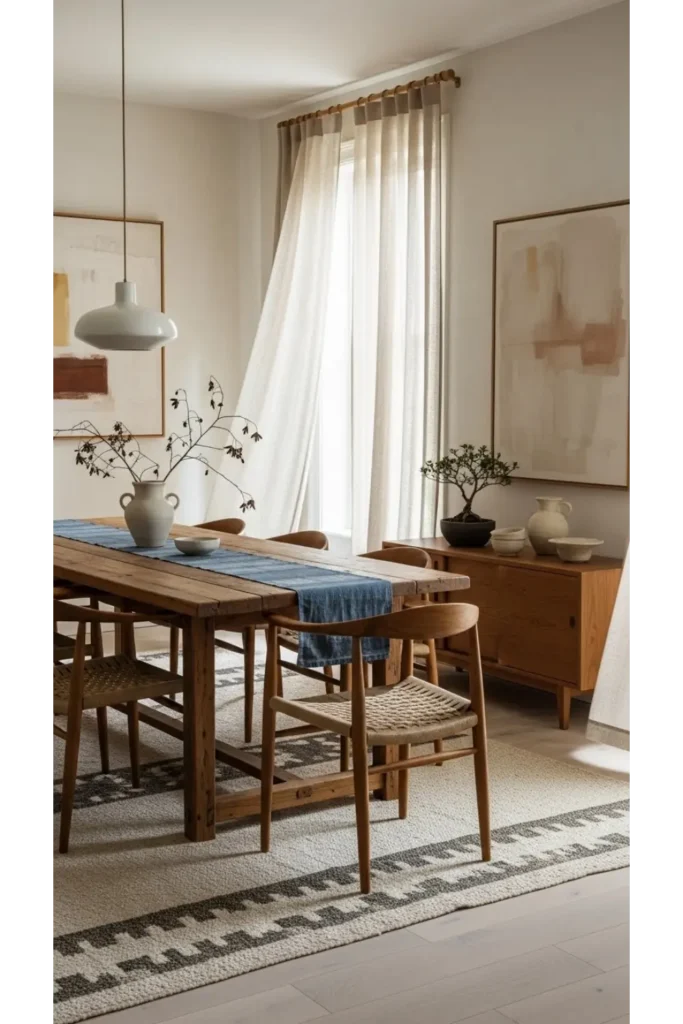
Window treatments should feel light and functional. Sheer linen or cotton curtains allow natural light to filter through gently. This supports the calm atmosphere of a Japandi dining room.
Avoid heavy drapes or bold patterns. Simple fabrics keep the focus on light and space. Natural light enhances comfort and highlights textures. The dining room feels open, fresh, and connected to the outdoors.
16. Rounded Edges for Softness

Rounded edges soften the look of a minimalist dining room. Tables or chairs with gentle curves feel more inviting and less rigid. This small detail adds comfort both visually and physically.
Soft shapes balance the clean lines typical of Japandi interiors. They help the space feel human and welcoming. Rounded forms encourage relaxation and make the dining room pleasant for long meals and conversations.
17. Neutral Rugs for Grounding
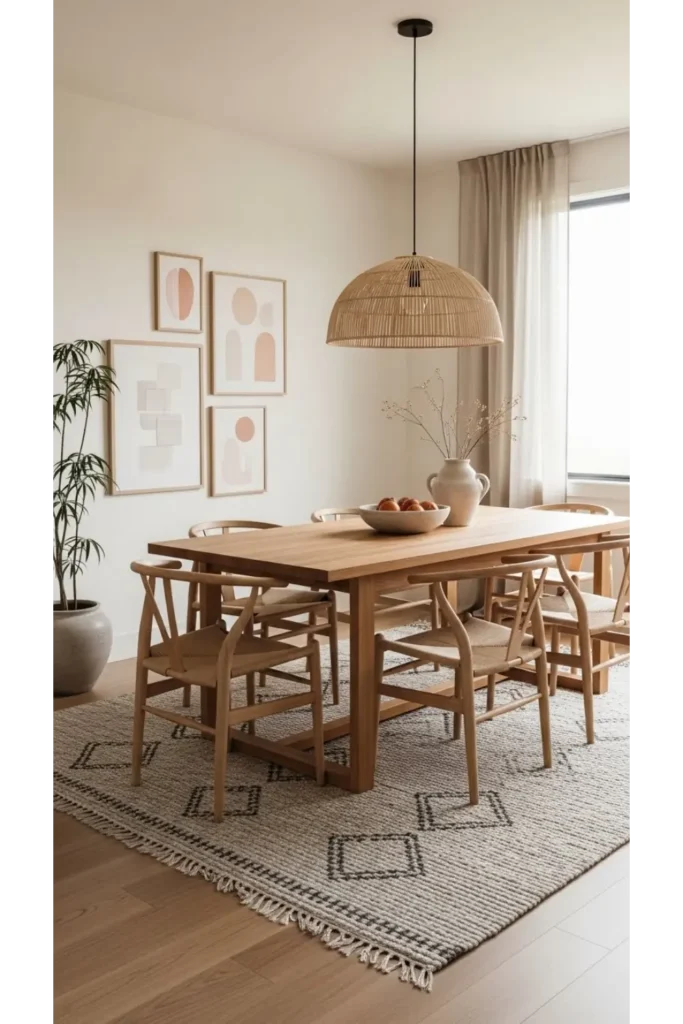
A neutral rug can ground the dining area and add warmth. Choose natural fibers like jute or wool in subtle tones. The rug should define the space without drawing attention.
Rugs also improve comfort by softening sound and adding texture. Keep patterns minimal to maintain harmony. This simple addition makes the dining room feel complete and cozy while staying true to minimalist values.
18. Thoughtful Table Styling
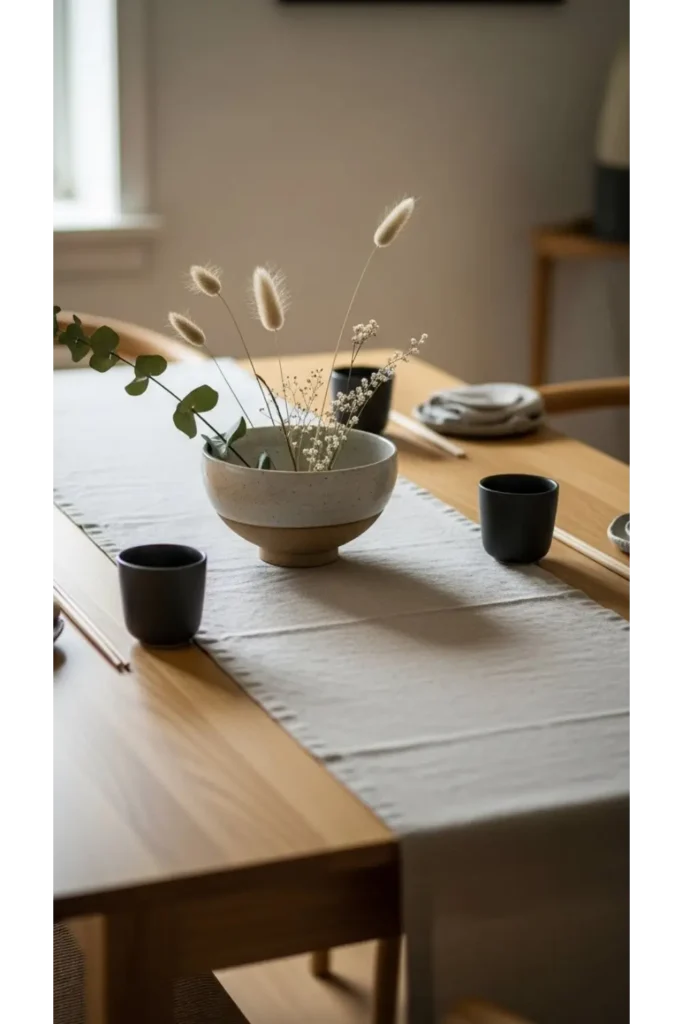
Table styling in a Japandi dining room should feel effortless. A single ceramic bowl or small branch can serve as a centerpiece. Keep items low and simple to avoid clutter.
This approach keeps the table functional for daily use. Styling should never interfere with comfort or practicality. Thoughtful restraint creates beauty through simplicity. The dining table remains welcoming and easy to use.
19. Warm Wood Tones Over Cool Ones

Warm wood tones help create a cozy dining environment. Oak, ash, or walnut bring richness without heaviness. These tones pair well with neutral walls and natural textiles.
Warm woods make the dining room feel inviting and lived in. They support comfort and balance the minimalist layout. Choosing the right wood tone helps the space feel welcoming year round.
20. Hidden Clutter for Visual Calm
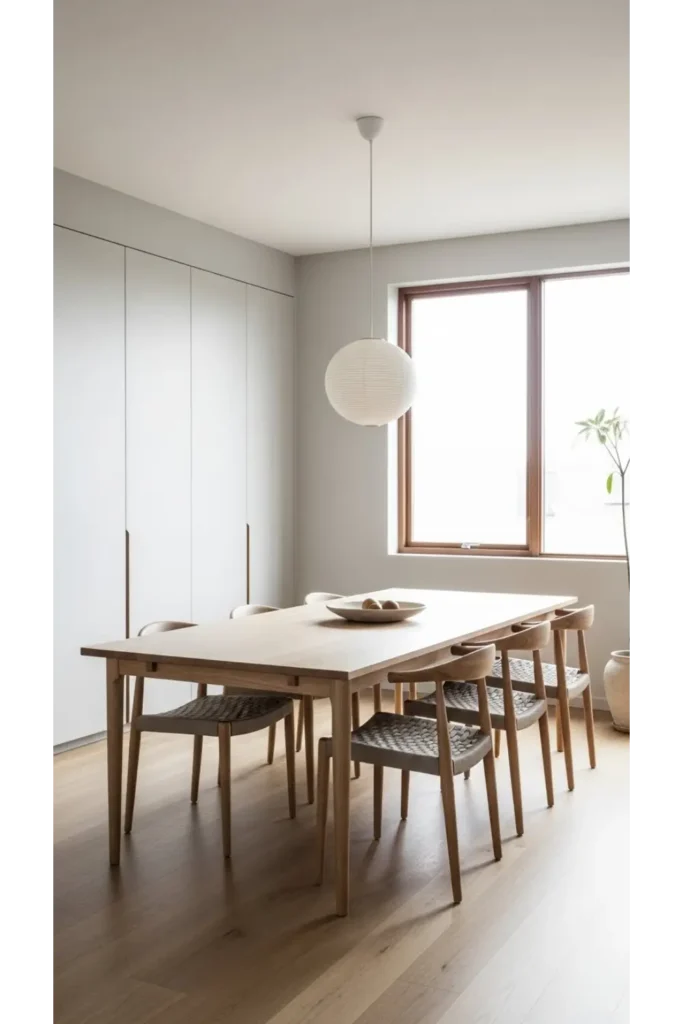
Keeping surfaces clear is essential for visual calm. Hide clutter through smart storage solutions. This allows the dining room to feel peaceful and organized.
When clutter disappears, attention shifts to form and material. The room feels lighter and more comfortable. This simplicity supports focus and relaxation during meals. A clutter free space encourages mindful dining.
21. Soft Contrast Instead of Bold Statements

Japandi dining rooms rely on soft contrast rather than bold statements. Differences appear through texture and material instead of color. Wood against stone or linen against ceramic creates interest.
This gentle contrast feels calm and refined. It keeps the space visually engaging without overwhelming the senses. Soft contrast supports long term comfort and timeless appeal.
22. Everyday Comfort Over Formal Design
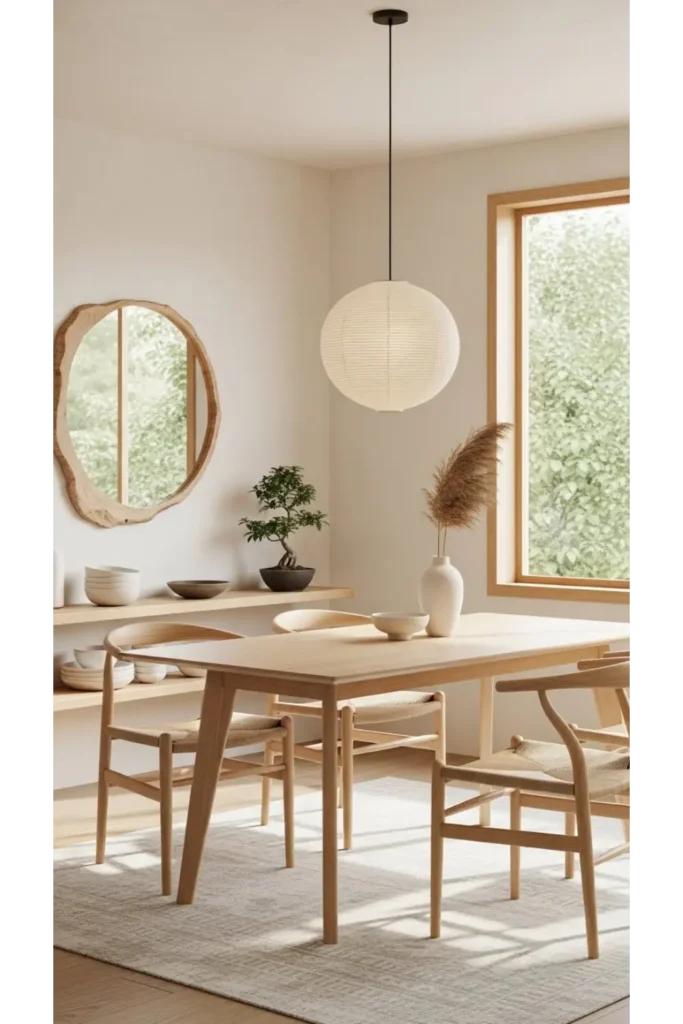
Japandi dining rooms prioritize everyday comfort. The design supports daily meals, not just special occasions. Furniture feels approachable and durable. Don’t miss our complete dining room decor guide packed with stylish inspiration.
This mindset keeps the space relaxed and welcoming. The dining room becomes a place for connection rather than performance. Comfort driven design helps the room stay useful and enjoyable.
23. Timeless Design That Ages Well
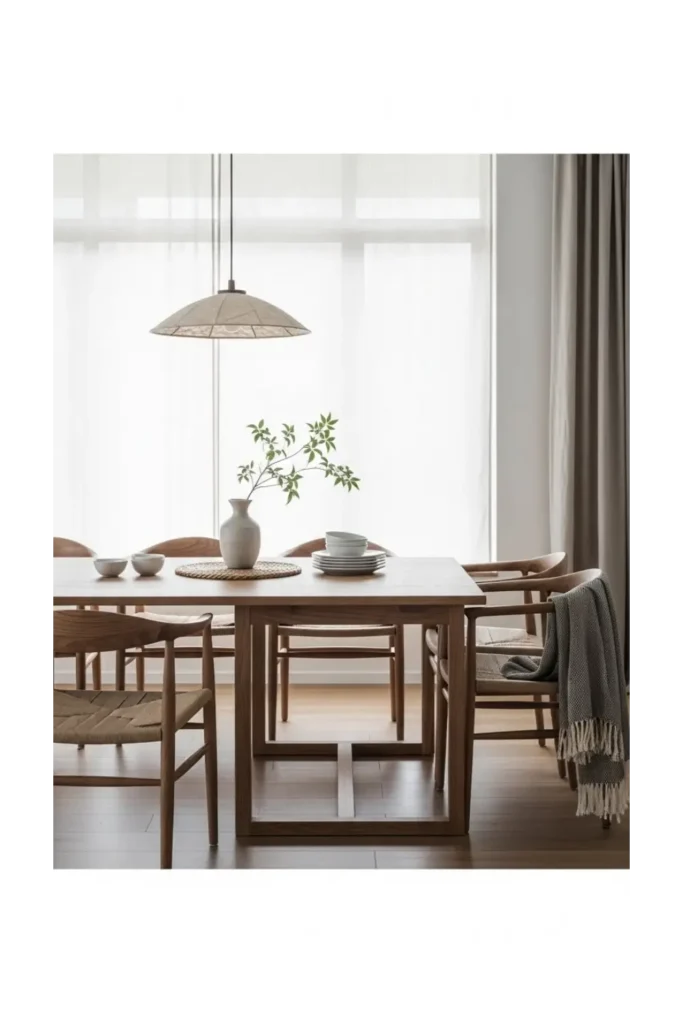
A Japandi dining room should age gracefully. Timeless materials and simple forms avoid trends that fade quickly. This ensures the space remains relevant and comfortable.
By focusing on quality and restraint, the dining room becomes a long term part of the home. It adapts easily to changing needs. Timeless design supports sustainable living and lasting comfort.
Conclusion
Japandi dining rooms offer a thoughtful blend of calm, comfort, and function. By focusing on natural materials, soft tones, and purposeful design, these spaces support everyday living without excess. Each idea centers on simplicity that feels warm rather than cold. When done well, a Japandi dining room becomes more than a place to eat. It becomes a space for connection, balance, and quiet enjoyment that lasts for years.