

Minimalist Bedroom: 23 Ideas for Calm, Clean Living
A peaceful space can change how you feel every day. When your room feels simple, your mind also feels lighter. A well designed minimalist bedroom focuses on calm colors, clean layouts, and only the items that truly matter. Instead of filling the space with decorations, this style values breathing room, comfort, and thoughtful design. The goal is not to remove personality but to create a balanced environment where rest becomes easier and the room feels naturally organized.
Many people choose minimalist decor, simple bedroom design, and clutter free spaces because they reduce stress and improve sleep quality. A room that feels open and quiet allows your mind to slow down after a long day. The following ideas explore practical ways to design a peaceful retreat. Each idea focuses on smart design, natural light, and intentional choices so your bedroom becomes a place where calm living happens naturally.
1. Neutral Color Foundation
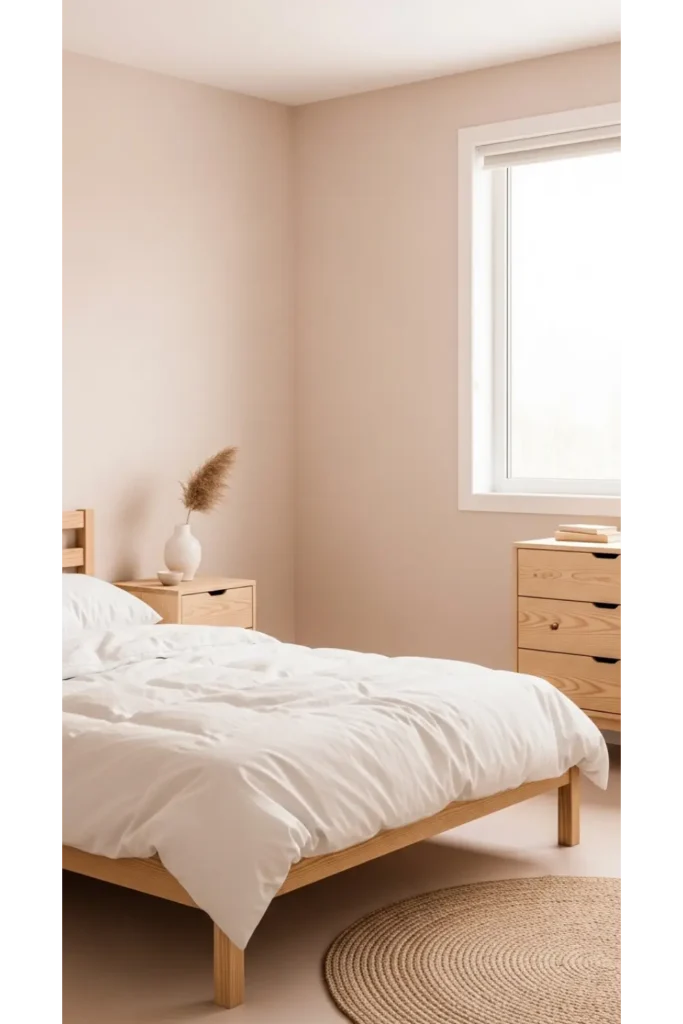
The easiest way to create a calm space starts with color. A neutral palette builds the foundation of a minimalist bedroom because it removes visual noise and makes the room feel larger. Soft shades like warm white, beige, pale gray, and light sand reflect natural light and create a relaxed mood. When walls and bedding share similar tones, the room feels balanced and restful without needing many decorations.
Neutral colors also make it easier to add small accents without creating clutter. A light wood nightstand, simple cotton bedding, or linen curtains can add depth while still keeping the room peaceful. This approach works well for minimalist decor because it lets texture replace busy patterns. The result feels timeless, simple, and naturally inviting.
Pro tip: Choose one base neutral color and two supporting shades to keep the room visually calm.
2. Low Profile Bed Frame
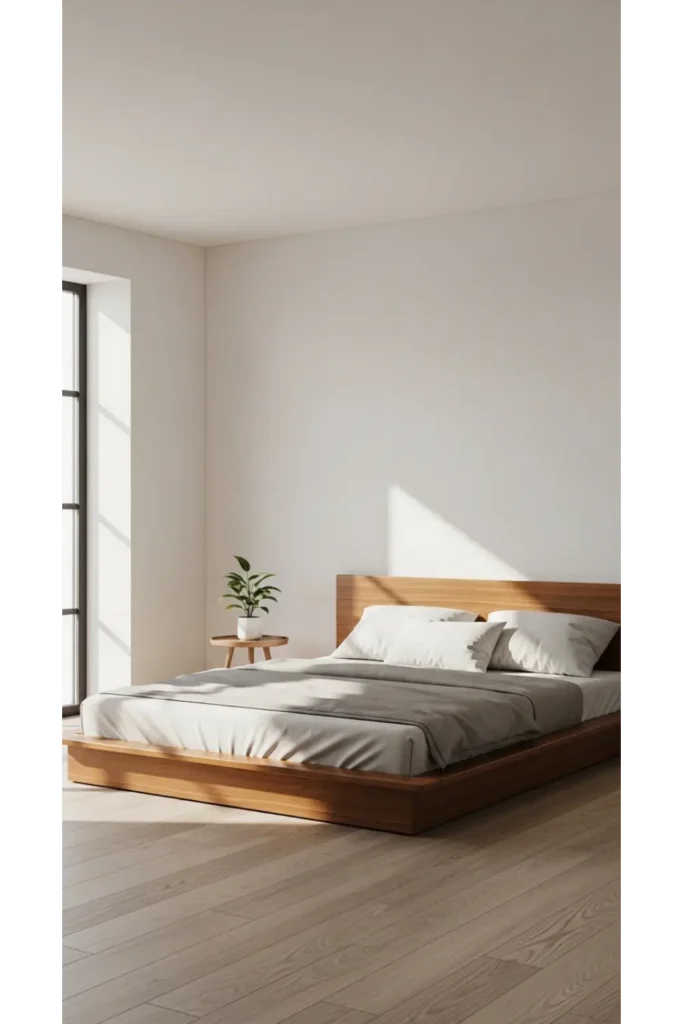
A low bed frame instantly changes the visual balance of a bedroom. It keeps furniture close to the ground, which creates an open and relaxed feeling. In a simple bedroom design, this style allows the ceiling height to feel larger and the room to appear more spacious. Platform beds with clean lines work especially well because they avoid heavy details that can make the space look crowded.
Low beds also encourage a more grounded atmosphere that supports rest and comfort. When paired with soft bedding and minimal accessories, the bed becomes the natural focal point of the room. This style blends well with modern minimalist interiors because it keeps the layout calm while still looking elegant and intentional.
Pro tip: Choose a platform bed with hidden storage if you want function without visual clutter.
3. Under Bed Organization System
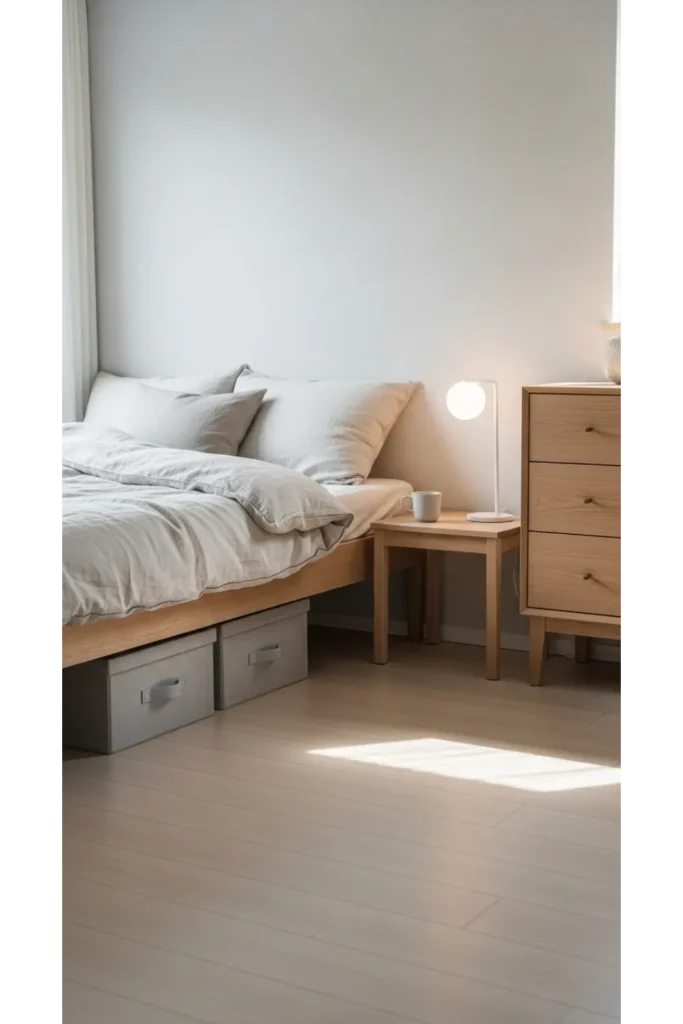
A well used under bed area can quietly transform how organized a room feels. Instead of leaving the space empty or messy, structured storage boxes or low profile drawers create a smart organization system. In a minimalist bedroom, this approach keeps extra bedding, seasonal clothing, or spare linens stored neatly without filling closets or shelves. The room stays visually calm because everything remains tucked away while still staying accessible when needed.
This solution also supports a more thoughtful daily routine. When storage stays simple and organized, cleaning becomes easier and surfaces stay clear. Many people designing simple bedroom decor rely on this technique because it preserves open space while maintaining practicality. With fewer visible items in the room, the environment feels lighter, more peaceful, and naturally aligned with minimalist living spaces.
Pro tip: Choose low fabric or wooden storage boxes that slide smoothly under the bed while matching the room’s neutral palette.
4. Soft Layered Textures
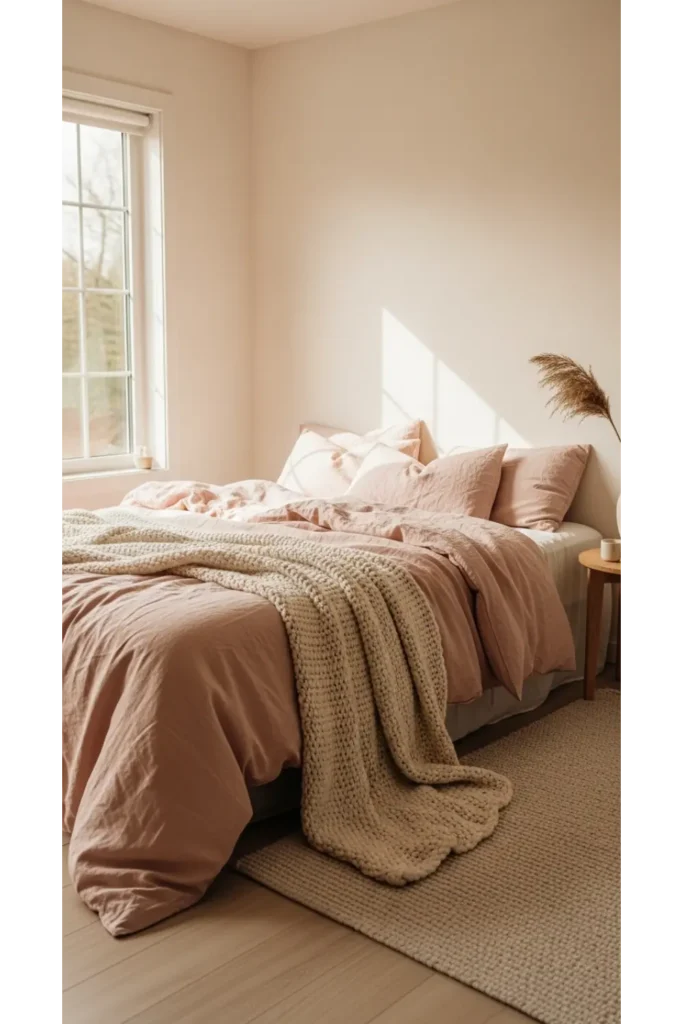
Minimal design does not mean a cold space. Soft textures add warmth and comfort without adding clutter. Linen sheets, cotton bedding, and a knitted throw create layers that make the room feel inviting. In a minimalist bedroom, texture often replaces bold colors or heavy decoration.
These materials also bring a sense of natural comfort. Organic fabrics help the room feel breathable and relaxed. When textures remain simple and neutral, they still support the calm atmosphere while adding visual depth. The result feels balanced, soft, and welcoming.
Pro tip: Limit textured items to two or three layers to maintain simplicity.
5. Sunlit Window Styling
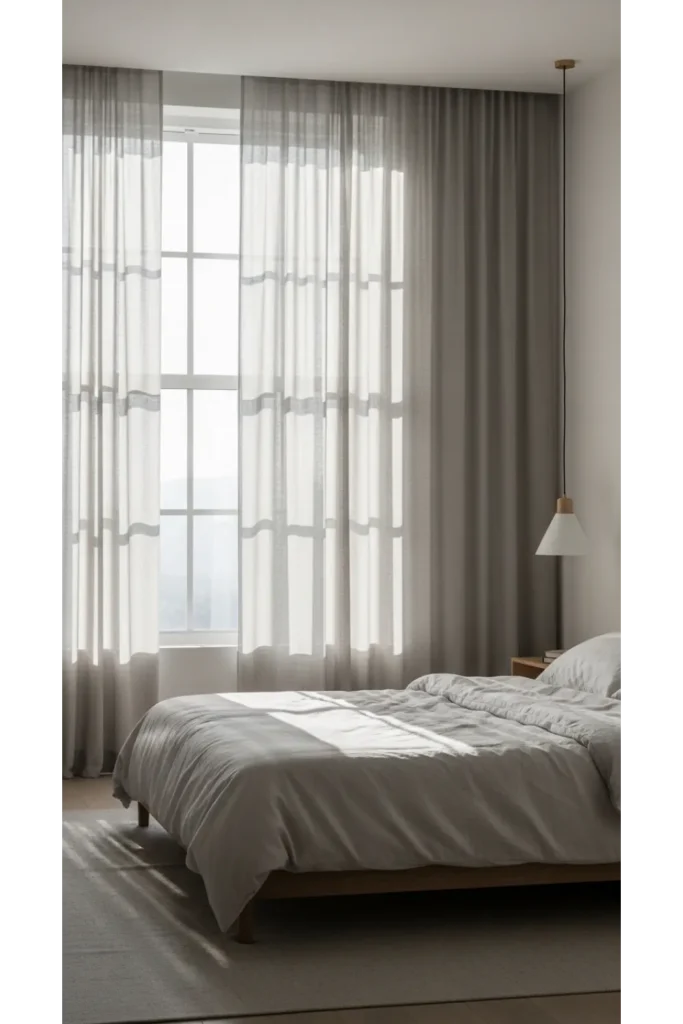
Thoughtful window styling can completely shape the atmosphere of a room. Instead of blocking daylight, a well designed minimalist bedroom allows sunlight to become part of the decor. Soft linen curtains, light shades, or simple blinds help filter brightness while still keeping the room open and airy. When daylight spreads across neutral walls and bedding, the space instantly feels lighter, calmer, and more welcoming.
Sunlight also highlights textures and natural materials inside the room. Wooden furniture, linen fabrics, and soft cotton bedding appear warmer when natural light touches them. Many minimalist interior design spaces rely on window styling rather than heavy decoration to create visual interest. With fewer distractions, the light itself becomes the feature that gives the bedroom life and balance.
Pro tip: Position the bed where morning light reaches it softly without shining directly into your eyes.
6. Floating Nightstands
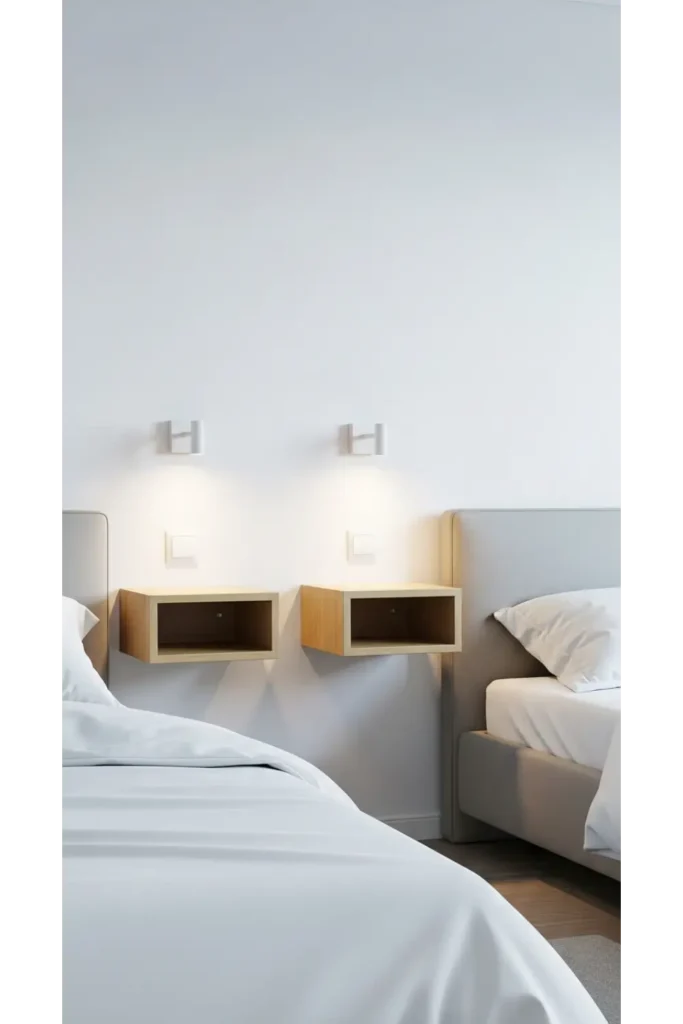
Floating furniture keeps the floor visible, which makes the room feel larger. Wall mounted nightstands provide enough space for essentials while maintaining a light visual appearance. In modern minimalist decor, this design trick helps reduce visual weight in small rooms.
These nightstands also make cleaning easier. With less furniture touching the floor, the space feels cleaner and more organized. A small lamp, book, and plant can sit neatly without creating clutter.
Pro tip: Choose a narrow floating shelf instead of a bulky nightstand.
7. One Statement Artwork
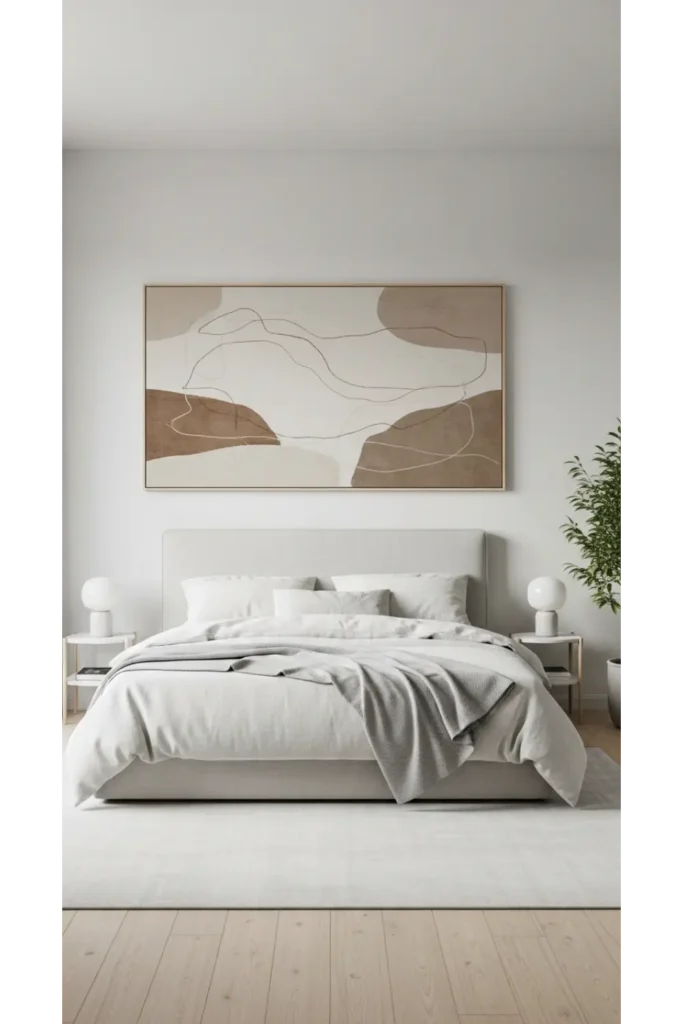
Instead of filling walls with many decorations, one large piece of art can create focus. A single artwork adds personality while still keeping the room simple. In a minimalist bedroom, this approach prevents visual overload while still making the space feel intentional.
Large art also creates a natural focal point above the bed or dresser. Choose calming colors or abstract shapes that match the overall palette. The goal is quiet visual interest rather than loud decoration.
Pro tip: Select artwork with soft tones that blend with the room palette.
8. Decluttered Bedside Surface
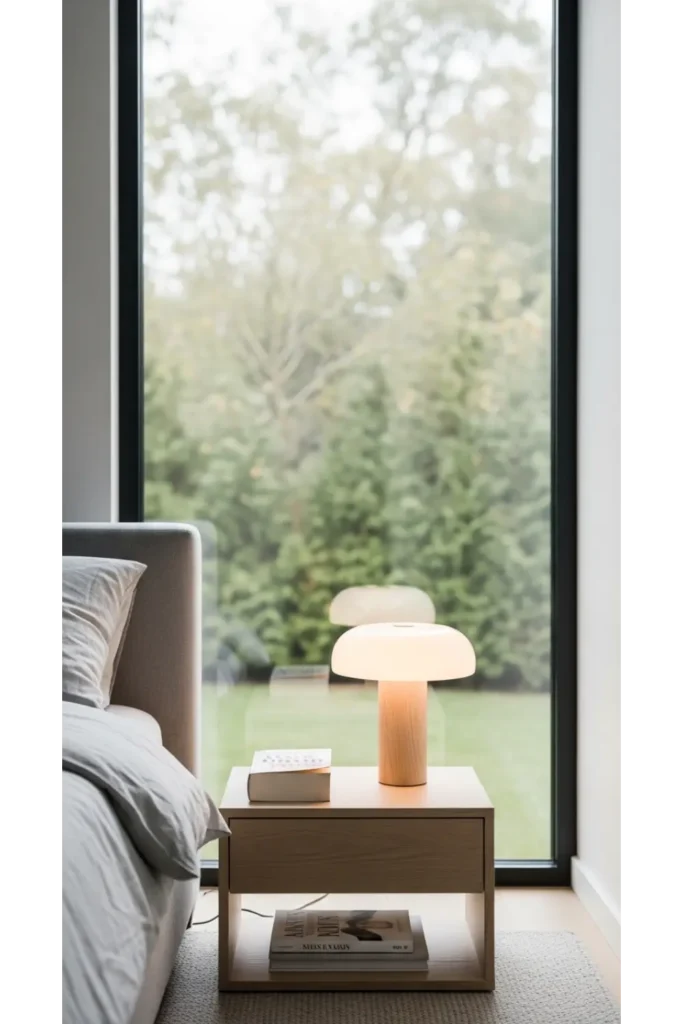
A clean bedside surface supports a peaceful routine. Keeping only a lamp, book, or small plant prevents unnecessary clutter from building up. In simple bedroom design, empty space plays an important role in creating calm energy.
Clear surfaces also make the room easier to maintain. When the bedside area stays organized, the whole room feels lighter and more balanced. This small habit helps reinforce a clutter free lifestyle.
Pro tip: Keep only two bedside items visible at a time.
9. Layered Evening Light Setup
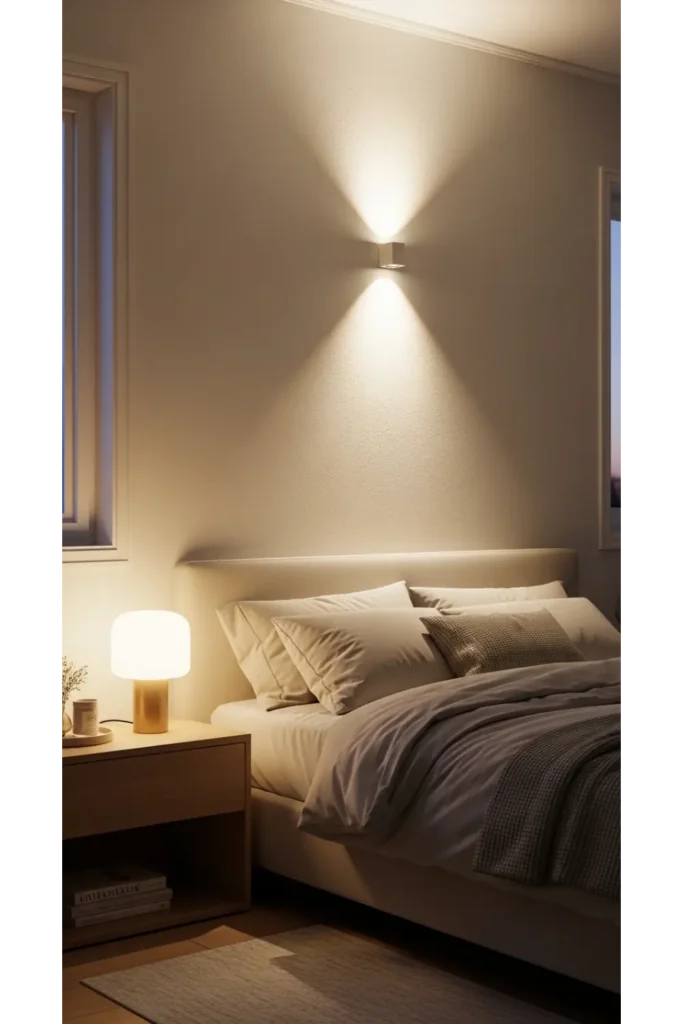
Evening lighting plays an important role in shaping the mood of a restful space. Instead of relying on one bright ceiling fixture, a minimalist bedroom benefits from a gentle layered lighting setup. Small bedside lamps, subtle wall lights, or a soft corner lamp create a calm glow that spreads evenly across the room. This softer illumination reduces harsh shadows and makes the environment feel quiet and comfortable.
A layered approach also supports a relaxing night routine. When light levels stay soft and balanced, the mind begins to slow down naturally. Many minimalist interior spaces use lighting as a design element rather than decoration. Warm light reflecting on neutral fabrics and wood textures enhances the peaceful atmosphere while maintaining the clean look that defines minimalist decor.
Pro tip: Use dimmable lamps so you can easily adjust brightness as the evening becomes more relaxing.
10. Natural Wood Elements
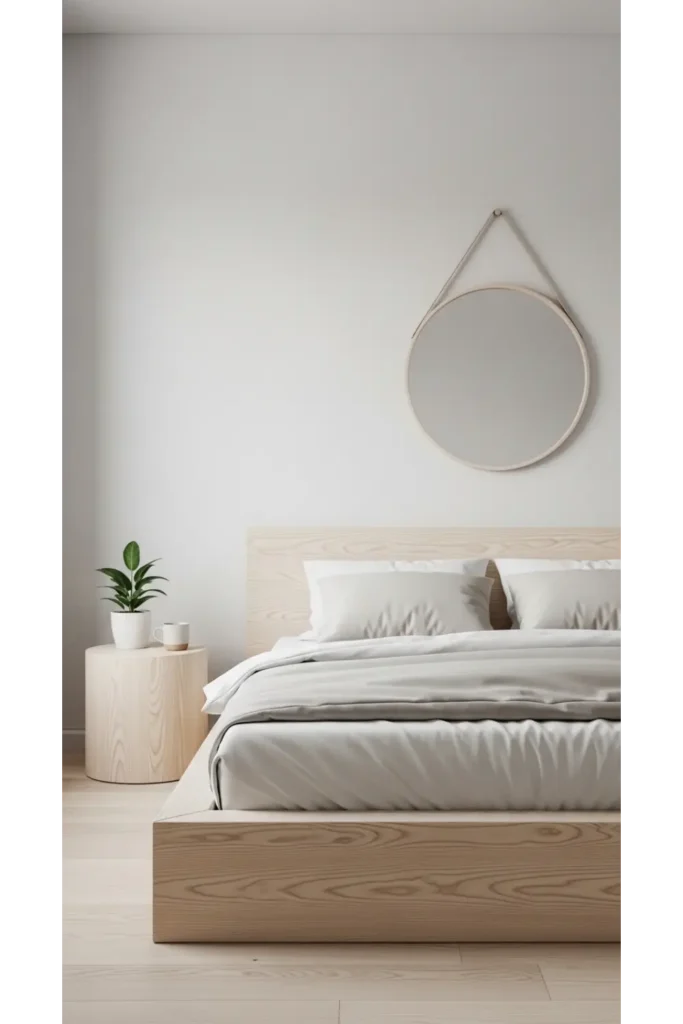
Natural wood introduces warmth into a minimal space. Light oak, maple, or birch finishes work well in minimalist decor because they add texture while keeping the room simple. Wood furniture also creates a connection with nature.
A wooden bed frame, nightstand, or bench can provide contrast against neutral fabrics. The combination feels organic and balanced. This approach works especially well in Scandinavian inspired interiors.
Pro tip: Stick with one wood tone to keep the room cohesive.
11. Indoor Plant Accent
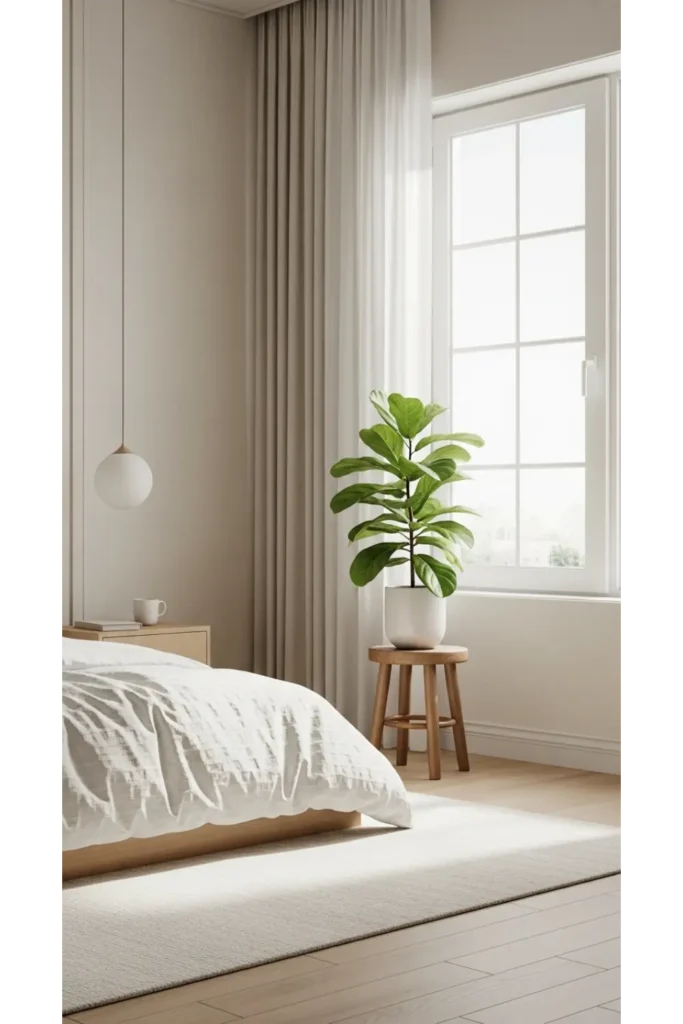
A single indoor plant can bring life into a quiet room. Plants introduce color in a natural way without overwhelming the design. In a minimalist bedroom, one carefully chosen plant often feels more impactful than several decorations.
Greenery also improves air quality and creates a fresh atmosphere. A simple ceramic pot keeps the look clean while letting the plant become a subtle focal point.
Pro tip: Choose low maintenance plants like snake plant or pothos.
12. Symmetrical Layout
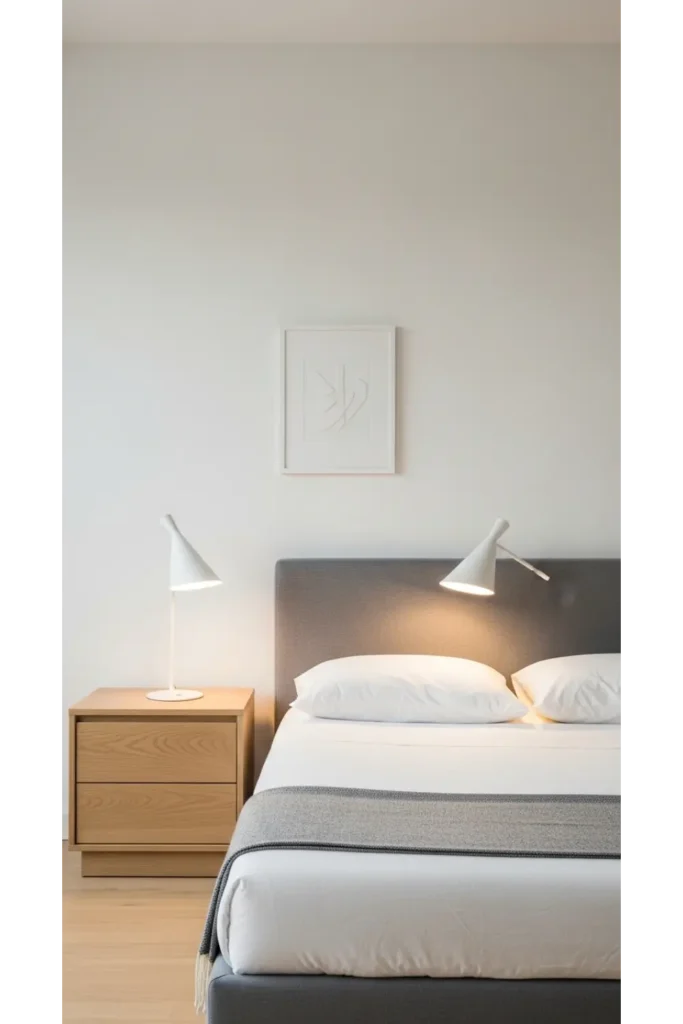
Symmetry naturally creates visual calm. Matching lamps or nightstands on both sides of the bed make the space feel balanced and organized. In minimalist interior design, symmetry often replaces decorative complexity.
This layout also makes the room feel structured and relaxing. When furniture lines up neatly, the eye moves easily through the space without distraction.
Pro tip: Use matching bedding pillows to reinforce the balanced layout.
13. Soft Area Rug
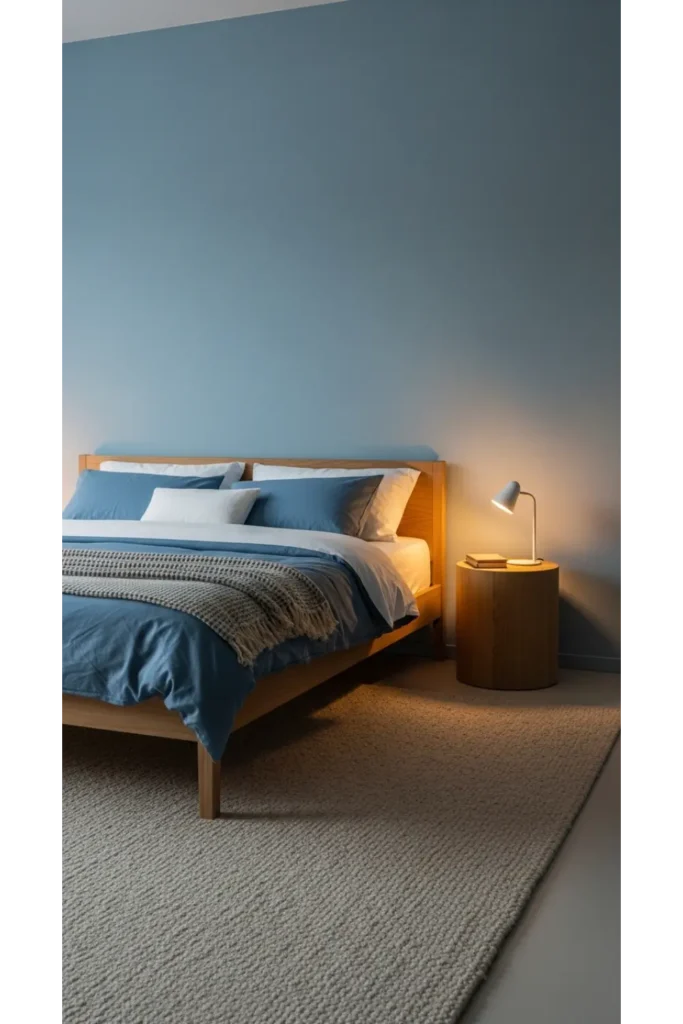
A soft rug can anchor the room and add comfort underfoot. In a minimalist bedroom, choose a neutral rug with subtle texture rather than bold patterns. This adds warmth without disturbing the calm palette.
Rugs also help define the sleeping area, especially in larger rooms. A simple woven or wool rug works well for creating a cozy yet uncluttered environment.
Pro tip: Select a rug large enough to extend beyond both sides of the bed.
14. Built In Wardrobe
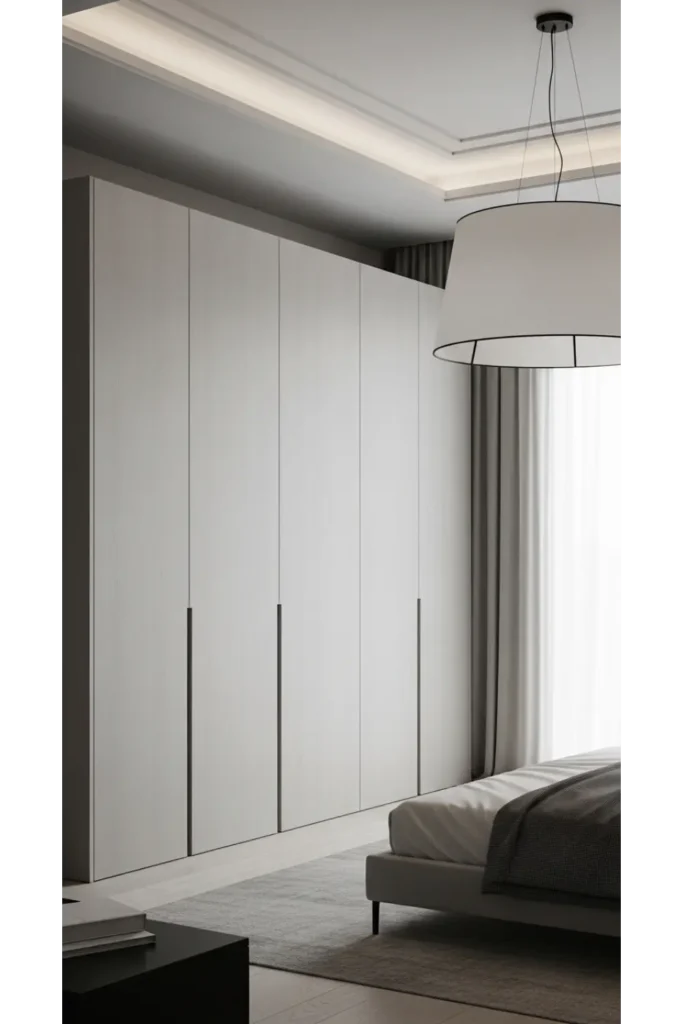
Built in wardrobes keep storage integrated into the wall. This design hides visual clutter and maintains a seamless look. In minimalist living spaces, built in storage helps the room appear cleaner and more spacious.
Flat cabinet doors without handles enhance the modern look. The room feels streamlined and calm because storage blends naturally into the architecture.
Pro tip: Use push to open cabinets for a sleek appearance.
15. Minimal Wall Decor
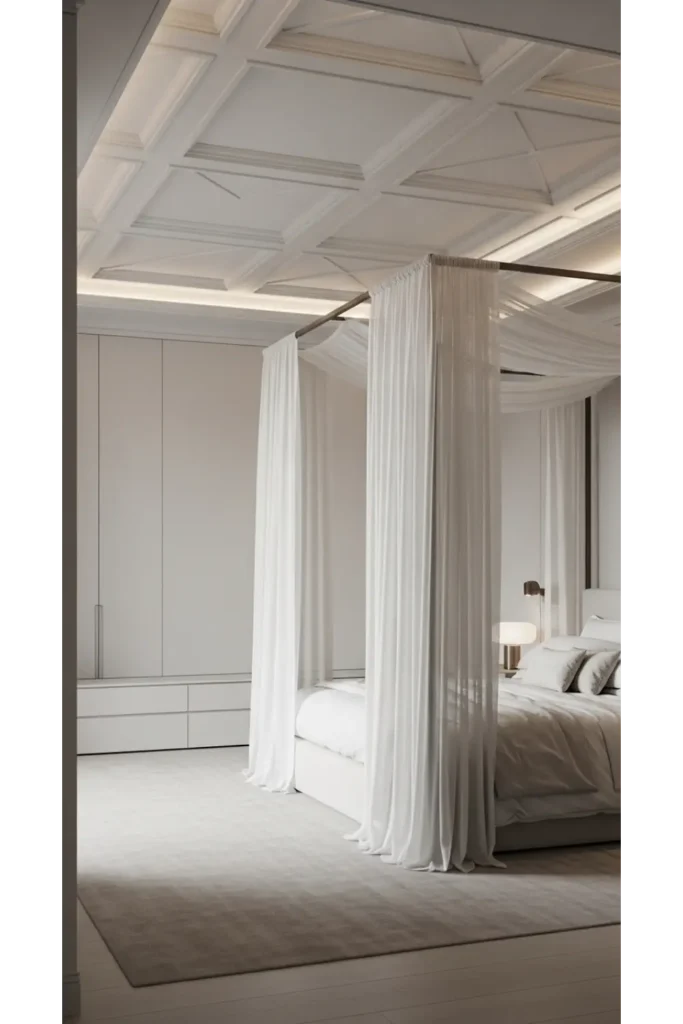
Empty walls often make a room feel larger and more peaceful. Instead of filling every space, leaving walls mostly clear creates breathing room. In simple bedroom decor, this approach helps the mind rest visually.
Selective decoration also highlights the few items that remain. One mirror or artwork stands out more when the rest of the wall stays clean.
Pro tip: Leave at least one wall completely undecorated.
16. Light Linen Curtains
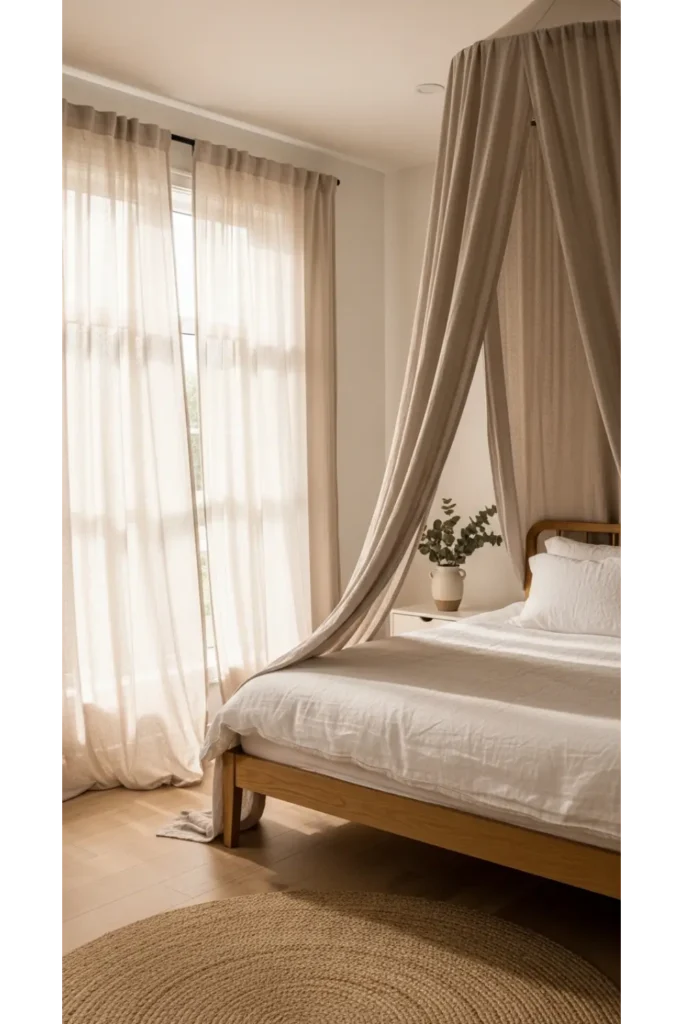
Linen curtains add softness while still allowing light to pass through. Their natural texture complements minimalist bedroom decor beautifully. Light fabrics keep the room feeling open and airy.
These curtains also move gently with airflow, which adds subtle movement to the space. The effect feels relaxed and peaceful without adding visual noise.
Pro tip: Choose floor length curtains for a clean elegant look.
17. Soft Headboard Design
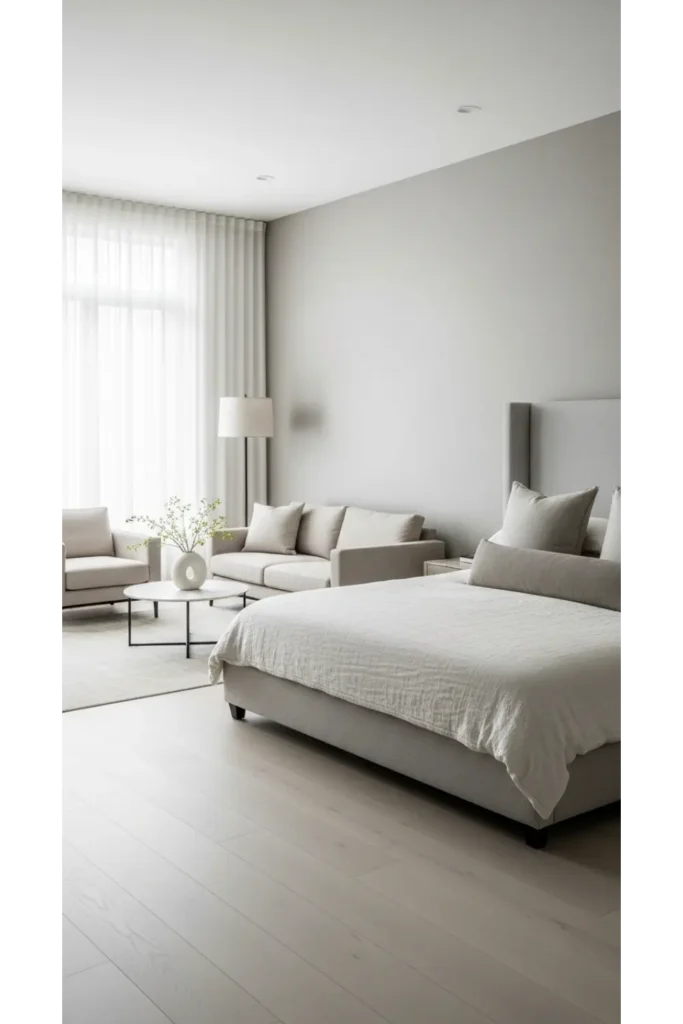
A simple upholstered headboard adds comfort without complexity. Soft fabrics such as linen or cotton provide gentle texture. In minimalist interiors, a headboard can act as a subtle design feature.
Neutral upholstery blends with bedding while still framing the bed nicely. This keeps the room visually balanced and comfortable.
Pro tip: Select a headboard color close to the wall shade.
18. Minimal Color Accents
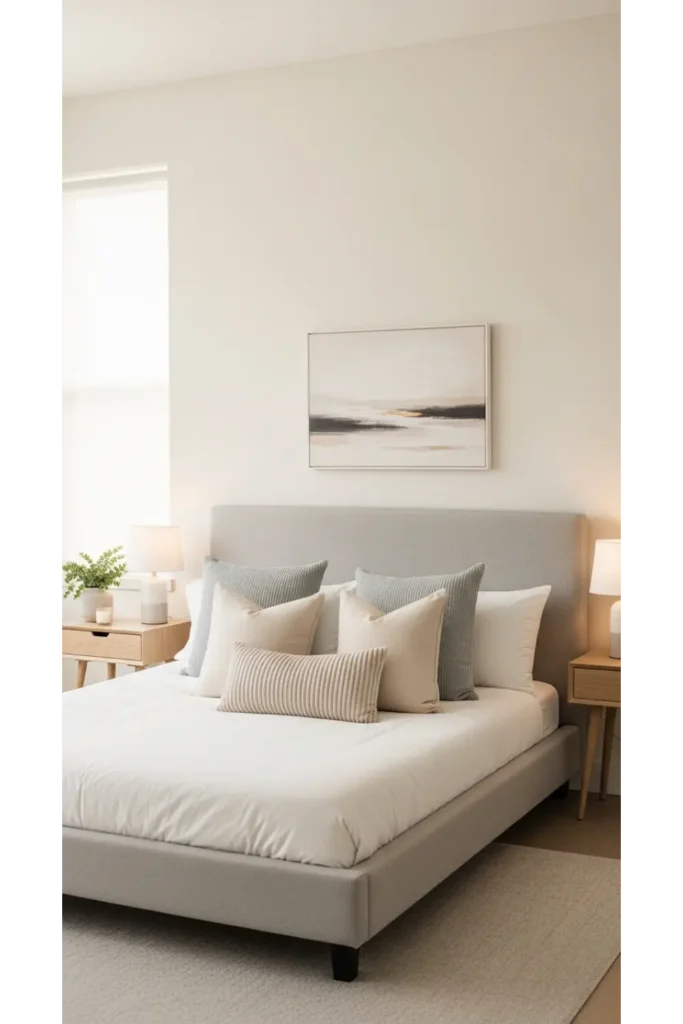
Small color accents add personality without overwhelming the design. In a minimalist bedroom, muted colors such as sage, dusty blue, or clay work well with neutral tones.
These accents can appear in pillows, blankets, or small decor items. Keeping the color palette controlled maintains the peaceful feeling.
Pro tip: Limit accent colors to one or two shades.
19. Clean Bed Styling
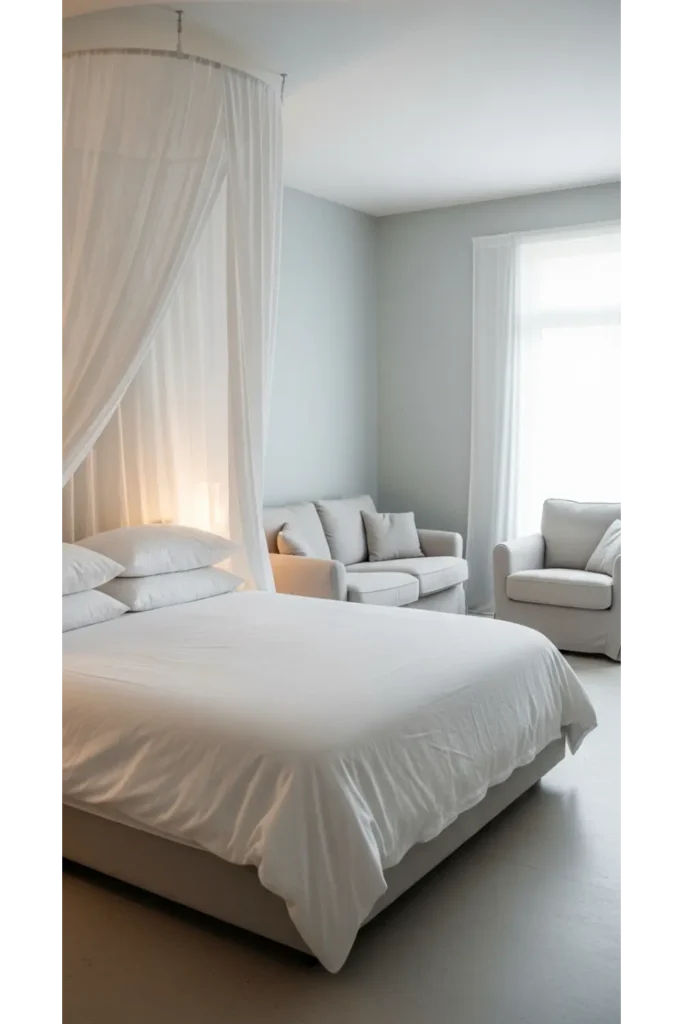
Simple bed styling creates a calm focal point. Smooth bedding, two pillows, and one throw blanket often look more elegant than complicated arrangements. In minimalist decor, restraint creates visual clarity.
This styling also makes daily routines easier. Making the bed takes only a minute while still maintaining a polished look.
Pro tip: Choose high quality cotton or linen sheets for comfort.
20. Open Floor Space
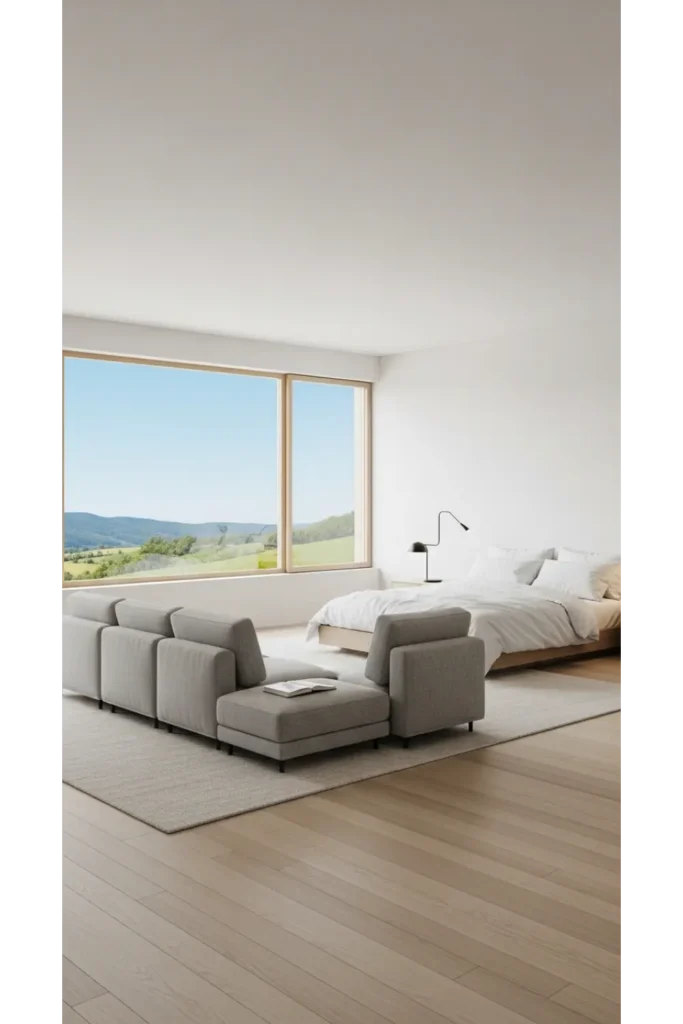
Keeping open space around furniture allows the room to breathe. In a minimalist bedroom, empty floor space improves movement and visual calm.
A room that feels spacious instantly supports relaxation. This design choice works well even in smaller rooms because it prevents overcrowding.
Pro tip: Remove one unnecessary piece of furniture.
21. Simple Bench at Bed End
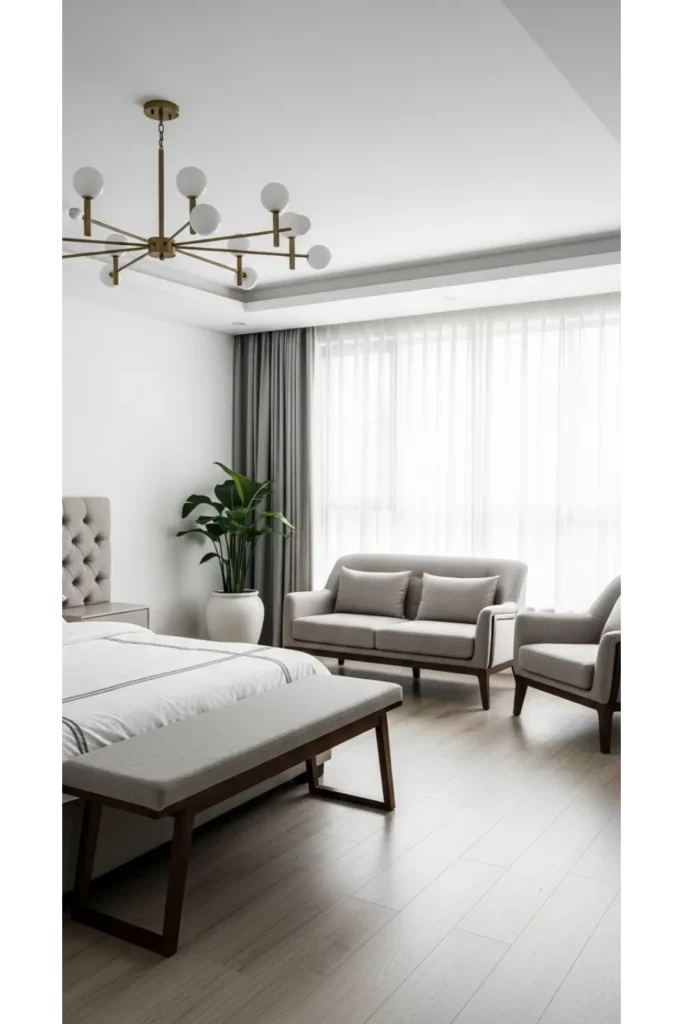
A bench at the foot of the bed adds function without clutter. It provides a place for blankets or clothing while maintaining a clean design.
In simple bedroom design, multifunctional furniture helps reduce extra storage pieces. A small wooden bench keeps the look natural and balanced.
Pro tip: Choose a narrow bench to keep pathways clear.
22. Calm Scent Atmosphere
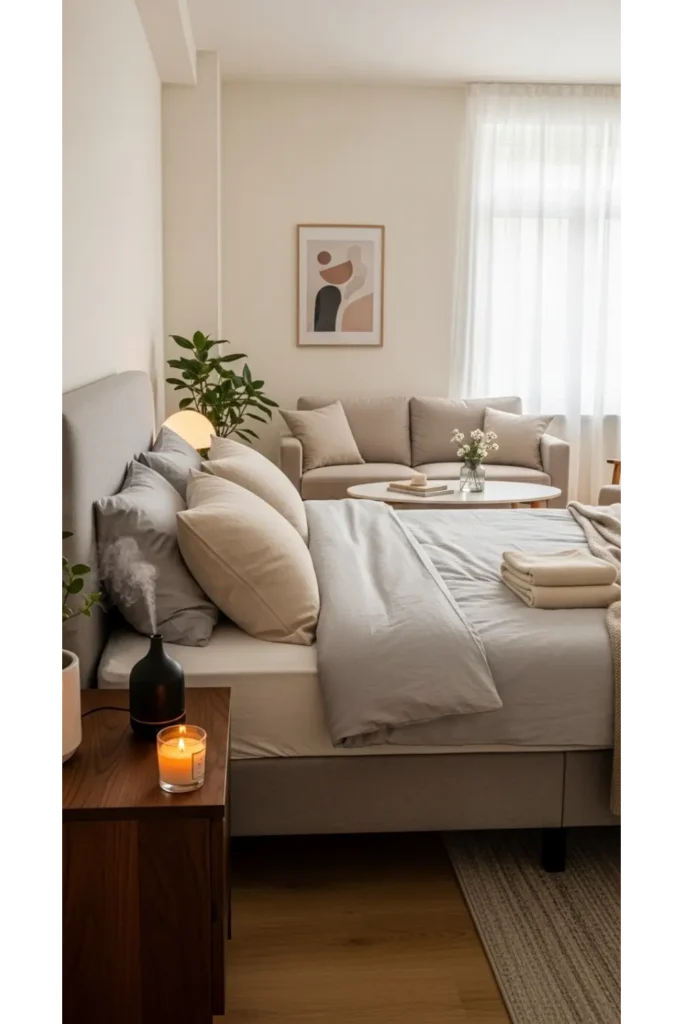
Scent influences how relaxing a room feels. Light natural fragrances such as lavender or sandalwood support a peaceful environment. In a minimalist bedroom, scent becomes part of the sensory experience.
A small candle or diffuser adds atmosphere without visual clutter. The room feels calm, warm, and welcoming.
Pro tip: Use subtle scents rather than strong fragrances.
23. Intentional Personal Items
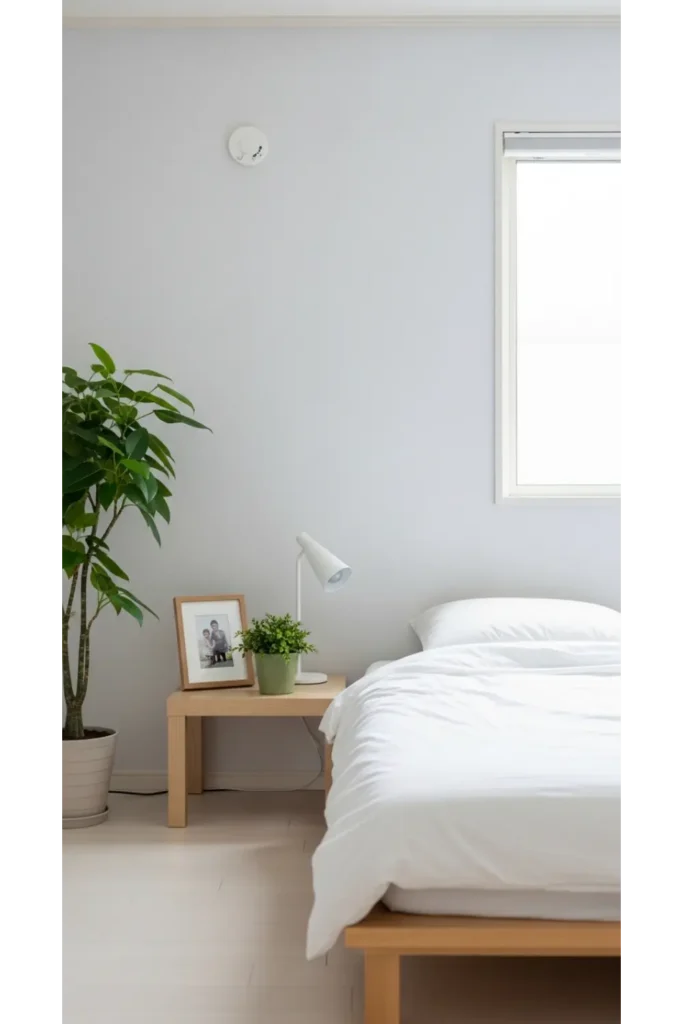
A minimal room still reflects personality. Carefully chosen personal items such as one framed photo or meaningful object add warmth to the space.
In minimalist living, intentional choices replace excessive decoration. The room feels authentic while remaining peaceful and uncluttered.
Pro tip: Display only items that hold real meaning.
FAQs
What makes a bedroom truly minimalist?
A minimalist bedroom focuses on simplicity, functional furniture, and a limited color palette. The design removes clutter and keeps only essential items. Clean surfaces, natural light, and calming textures help create a peaceful environment that supports relaxation.
Can a minimalist bedroom still feel cozy?
Yes. Texture, warm lighting, soft bedding, and natural materials make minimalist spaces feel inviting. Cozy does not require many decorations. Comfort comes from quality materials and thoughtful design choices.
How do I start decluttering my bedroom?
Begin by removing items that you rarely use. Clear surfaces first, then organize clothing and storage areas. Keep only what supports daily life or holds meaning. Small steps gradually transform the room into a calm space.
What colors work best for minimalist bedrooms?
Neutral colors such as white, beige, light gray, and soft earth tones work best. These shades reflect light and create a peaceful mood while making the room feel larger.
Does minimalist design improve sleep?
Many people find it easier to relax in clutter free spaces. A calm environment reduces visual stress and helps the brain shift into rest mode, which can support better sleep quality.
Conclusion
Creating a calm bedroom does not require expensive furniture or complex design. The most effective minimalist bedroom ideas focus on clarity, comfort, and thoughtful choices. Neutral colors, natural textures, and simple layouts work together to build a peaceful retreat where the mind can rest.
When each item in the room serves a purpose, the space begins to feel lighter and more balanced. By focusing on intentional design, natural light, and uncluttered surfaces, anyone can create a bedroom that supports calm living every single day.