

18+ Minimalist Bedroom Ideas for a Calm and Clutter-Free Space
If you want a bedroom that feels peaceful the moment you walk in, these minimalist bedroom ideas will help you design it with purpose. A clean layout, soft textures, and thoughtful storage choices can change how you sleep and how you start your mornings.
This guide focuses on real design strategy, not surface styling. Each idea builds on the last so you can create a cohesive, calm and clutter-free space that feels intentional, warm, and easy to maintain long term.
1. Soft Neutral Foundation With Warm Undertones
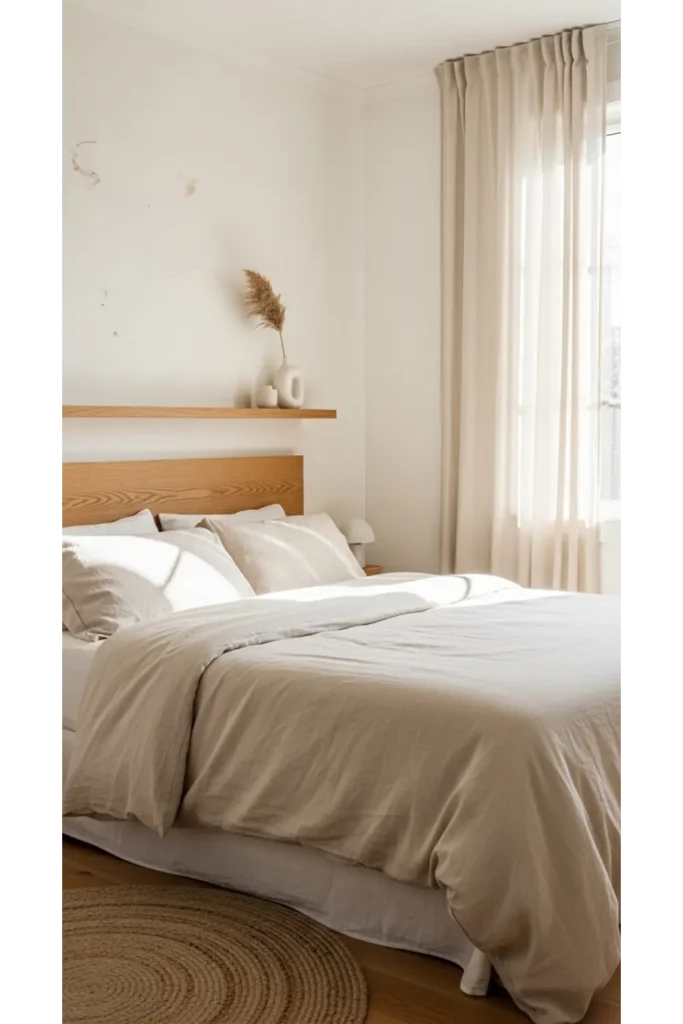
The strongest minimalist bedroom ideas begin with a warm neutral base. Choose creamy white, soft beige, or light taupe instead of cool gray. Warm tones reflect natural light and make the room feel open yet inviting. Paint walls in a single shade and match large furniture pieces within the same tone family for visual harmony.
Layer linen bedding, light wood finishes, and subtle woven accents to prevent the room from looking flat. Keep contrast gentle and controlled. A balanced palette creates calm without feeling empty.
• Warm white or beige walls
• Coordinated neutral bedding
• Light wood or soft matte finishes
Pro tip: View paint samples in morning and evening light before finalizing.
2. Elevated Low-Profile Bed Frame
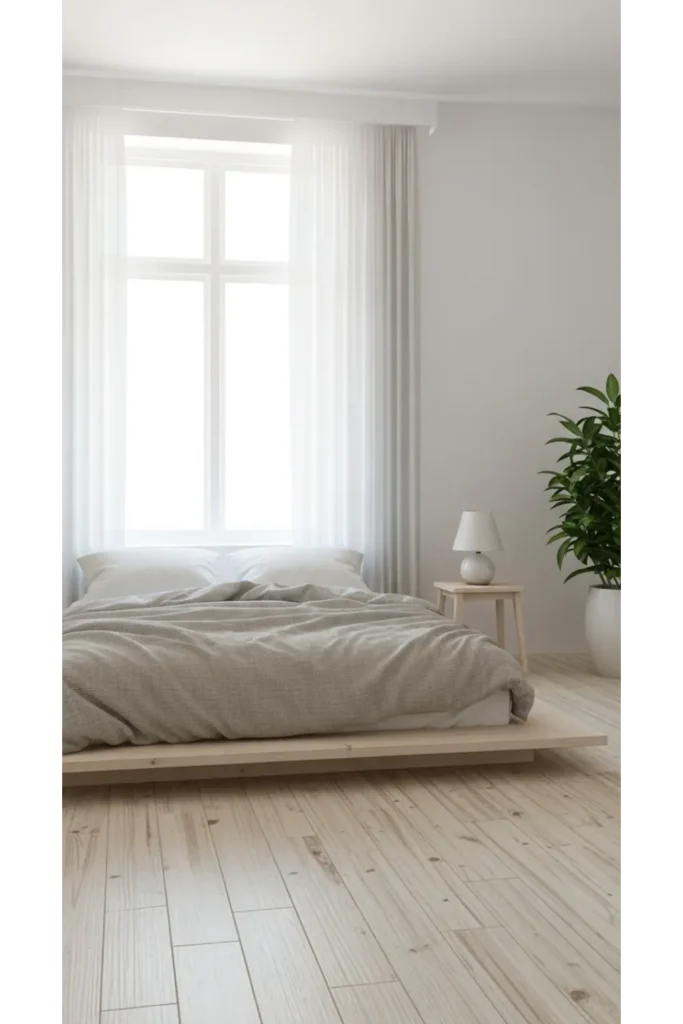
A low platform bed helps ceilings feel taller and keeps the room visually grounded. Clean lines and simple materials work best. Avoid bulky headboards or heavy carving. The goal is quiet presence rather than statement drama.
Use two to four pillows in coordinated tones instead of layered decorative cushions. This supports a clean aesthetic and makes daily bed making simple.
• Platform or simple upholstered frame
• Limited pillows
• Neutral or textured duvet
Pro tip: Keep at least two feet of walking space around the bed for better flow.
3. Seamless Wardrobe Niche With Sliding Panels
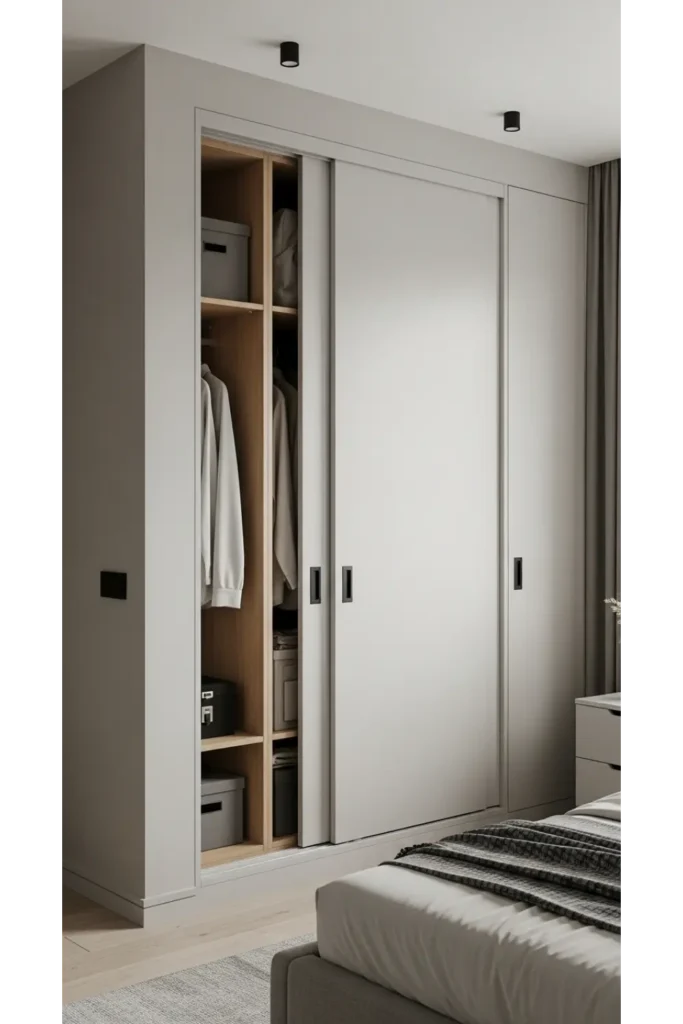
Instead of a full built-in storage wall, create a recessed wardrobe niche with smooth sliding panels. This keeps storage integrated into the room without making it feel heavy. Sliding doors in the same color as your walls help the storage blend in rather than stand out. The result feels architectural but softer and more flexible than traditional cabinetry.
Inside the niche, divide sections clearly for hanging, folded items, and closed boxes. When storage stays structured, your room maintains a clean rhythm and open feel. This subtle solution supports long term organization without overpowering the space visually.
• Wall-matched sliding panels
• Clearly zoned interior sections
• Closed storage boxes for small items
Pro tip: Use soft-close sliding tracks to keep movement quiet and smooth for a peaceful bedroom environment.
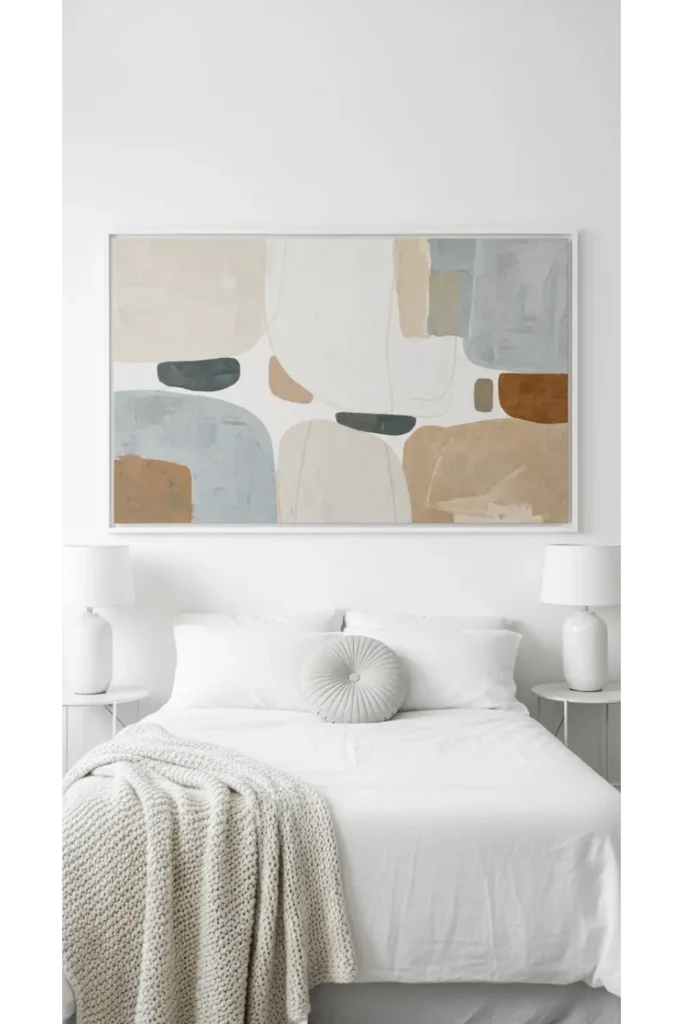
One large art piece creates focus without clutter. Choose artwork with neutral tones and generous white space. This draws the eye while keeping the room calm.
Center it above the bed at eye level. Proper proportion keeps the room balanced and refined.
• Artwork at two thirds bed width
• Simple frame
• Neutral palette
Pro tip: Avoid gallery walls in a minimalist layout.
5. Layered Warm Lighting
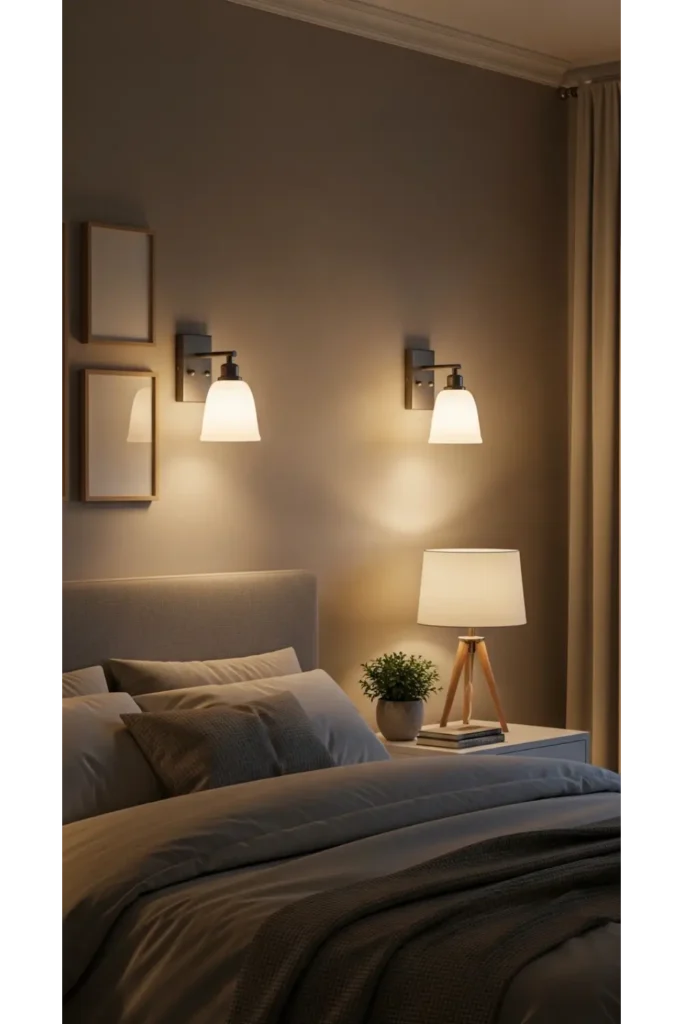
Lighting shapes mood more than decor. Combine ceiling light, bedside lamps, and subtle accent lighting. This creates depth and comfort.
Use warm bulbs around 2700K to support relaxation. Soft light enhances your calm and clutter-free space naturally.
• Warm white bulbs
• Slim fixtures
• Dimmable switches
Pro tip: Install dimmers for better evening atmosphere.
6. Streamlined Nightstand Styling
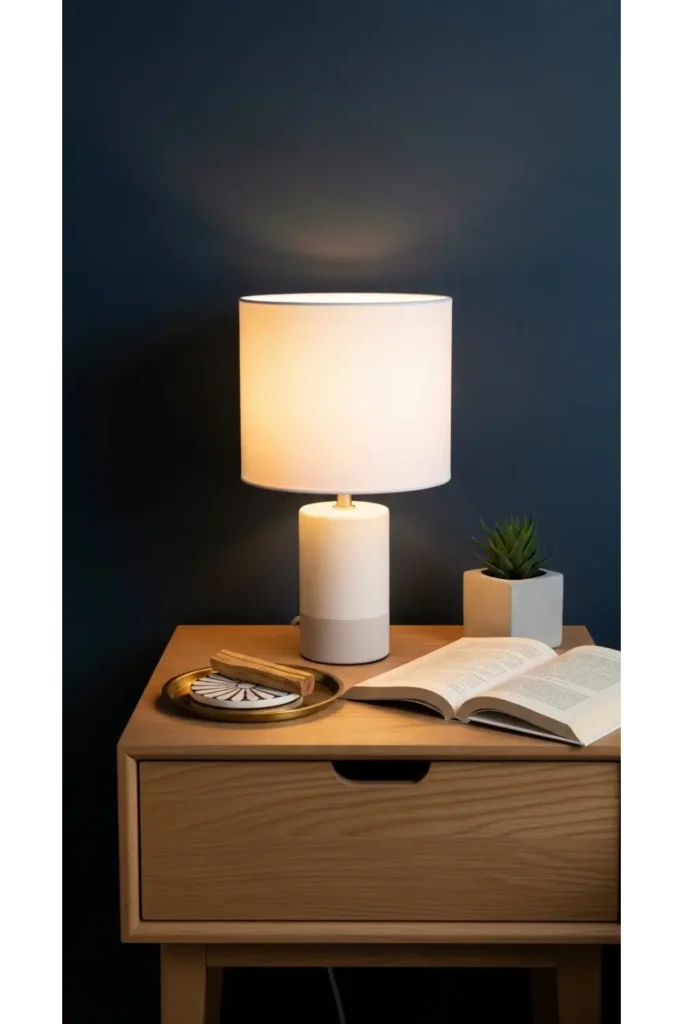
Keep surfaces almost empty. Limit items to one lamp, one book, and one small tray for essentials. This prevents visual overload before sleep.
Choose a compact nightstand with a hidden drawer. Clean surfaces improve mental clarity.
• One practical drawer
• Minimal decor
• Clear surface space
Pro tip: Reset weekly to prevent buildup.
7. Subtle Textured Accent Wall
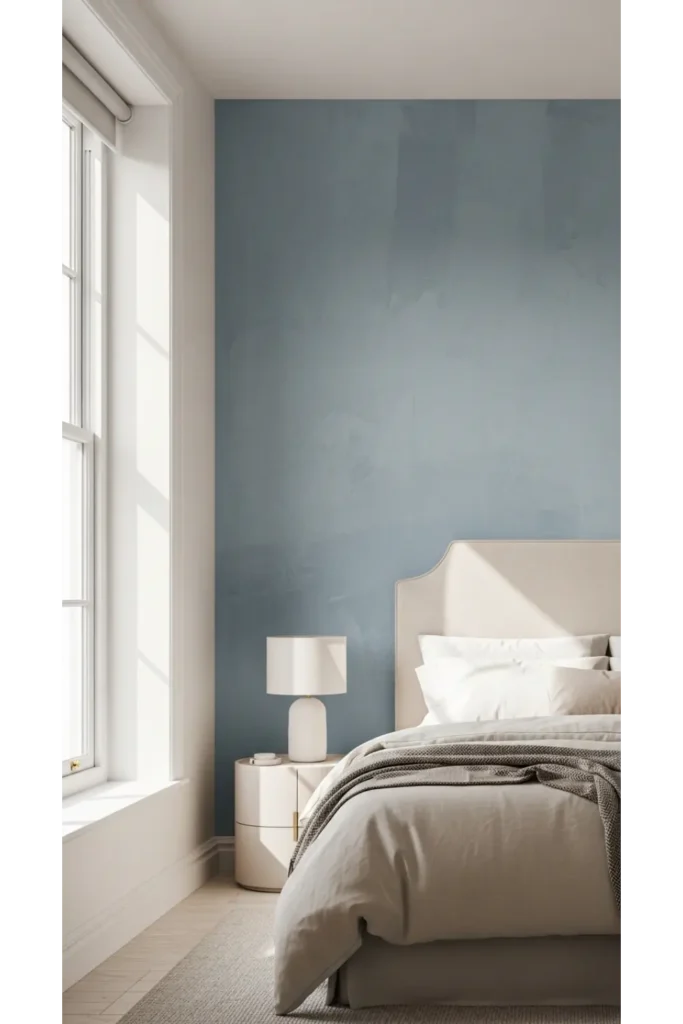
Texture adds depth without bold color. Limewash paint or subtle plaster gives dimension while staying quiet.
Keep surrounding walls simple to maintain balance. Texture should enhance, not compete.
• Limewash finish
• Soft vertical slats
• Fabric panel detail
Pro tip: Use texture on one wall only.
8. Under-Bed Drawer System

Under-bed storage removes the need for extra furniture. This keeps floor space open and easy to clean.
Organize drawers by season to reduce daily clutter. Smart storage strengthens functional design.
• Built-in drawers
• Rolling bins
• Vacuum bags
Pro tip: Rotate items every season.
9. Single Indoor Plant Accent
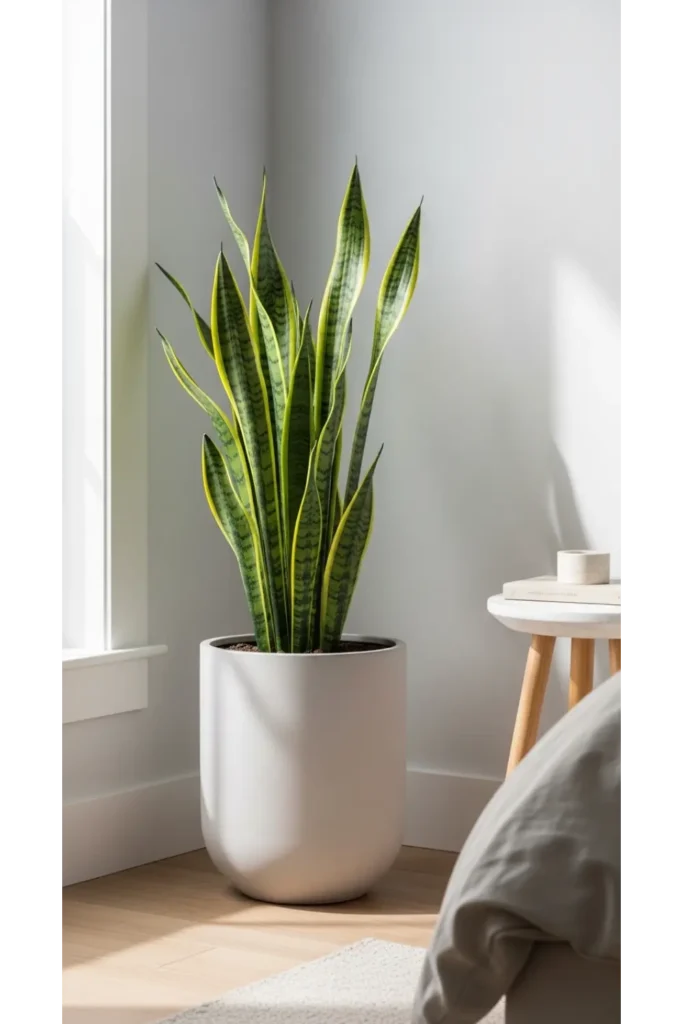
One plant softens clean lines and improves air quality. Choose low maintenance varieties.
Place near natural light but keep surrounding space clear. This keeps the room open and fresh.
• One medium plant
• Neutral pot
• Clear corner placement
Pro tip: Avoid overcrowding with greenery.
10. Floating Shelves Instead of Dressers
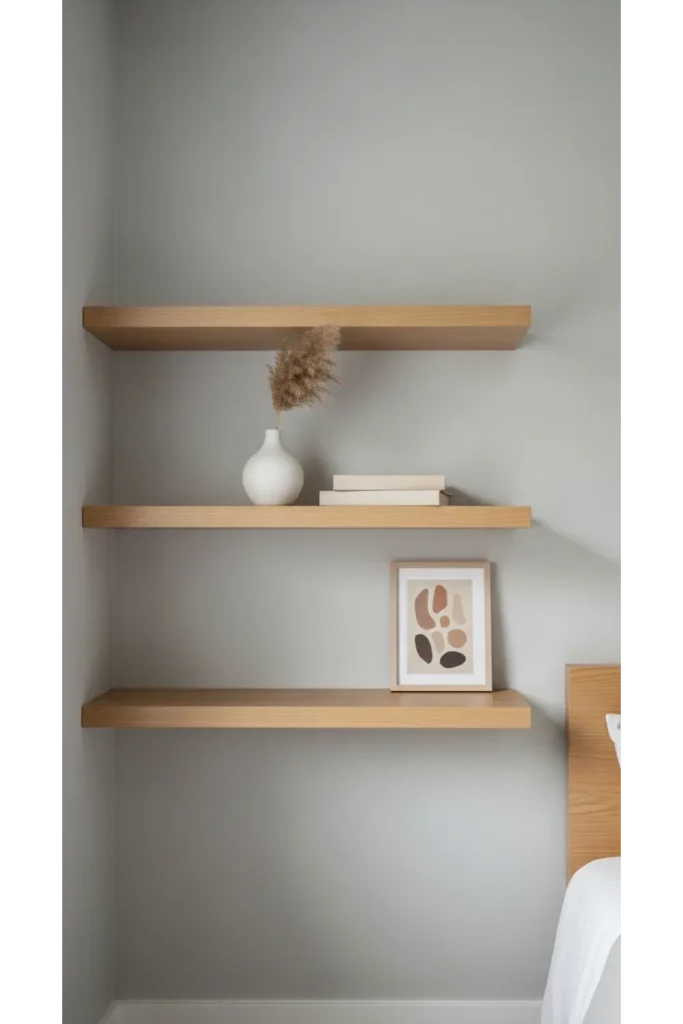
Replace bulky dressers with wall-mounted shelving. This frees floor space and creates lightness.
Style shelves with restraint. Display only meaningful items.
• Slim floating shelves
• Balanced spacing
• Limited decor objects
Pro tip: Follow the rule of three for shelf styling.
11. Soft Area Rug With Low Contrast
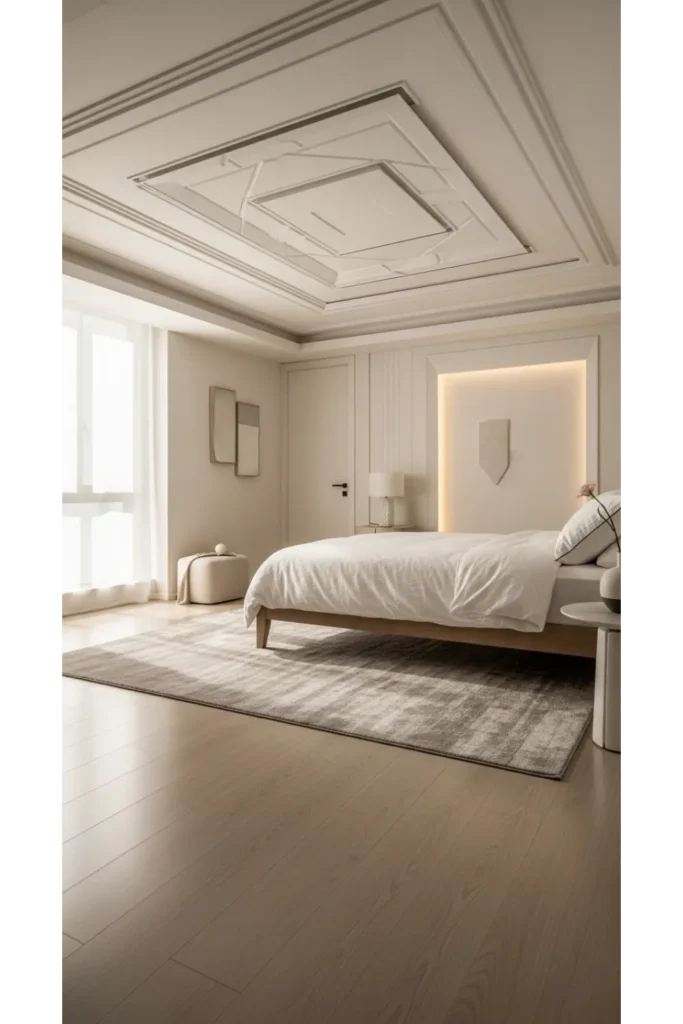
A soft rug anchors the bed and adds comfort. Choose low contrast tones that blend into the room. Keep patterns subtle to maintain simplicity. Texture works better than bold prints.
• Neutral wool or cotton rug
• Large enough to frame bed
• Subtle texture
Pro tip: Extend rug at least 18 inches beyond bed edges.
12. Symmetrical Bedside Layout
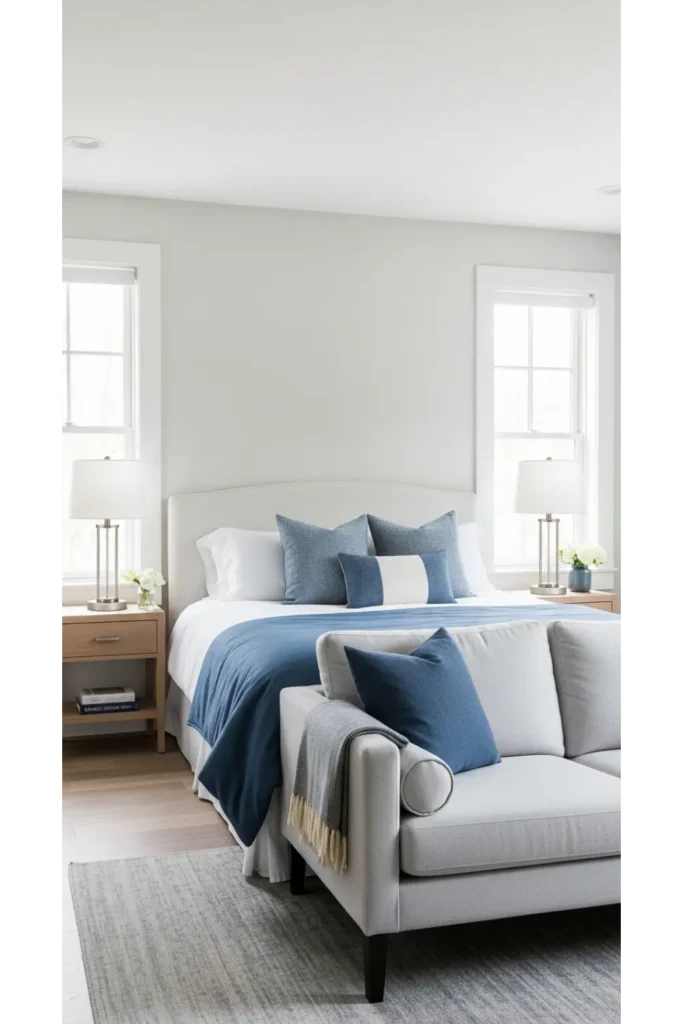
Symmetry creates calm structure. Match lamps or tables for visual stability. Balanced design feels intentional and restful.
• Matching lamps
• Even spacing
• Equal height surfaces
Pro tip: Keep proportions consistent.
13. Frameless Window Styling With Clean Lines
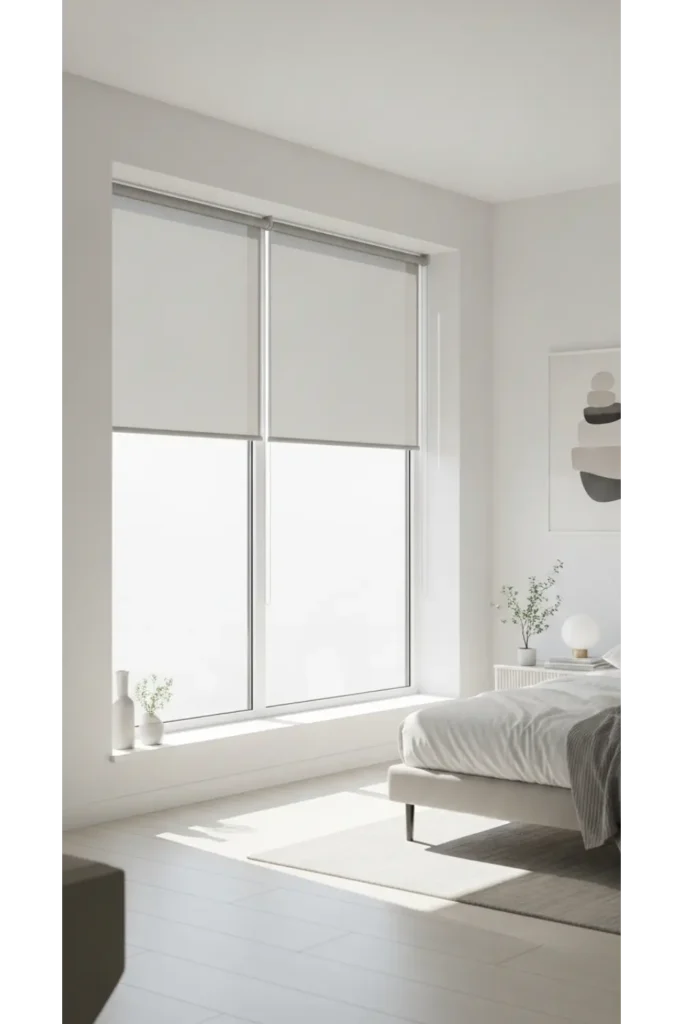
Instead of traditional curtains, consider sleek roller blinds or simple panel shades in a soft neutral tone. This approach keeps the window area clean and modern while still offering privacy and light control. Removing heavy drapery reduces visual weight and allows architectural lines to stand out naturally.
Choose slim hardware and mount blinds close to the ceiling for a taller wall effect. Keep the fabric smooth and free from bold patterns so the window blends seamlessly into the overall design. This subtle shift keeps your minimalist layout refined and distraction free.
• Neutral roller or panel blinds
• Slim, concealed hardware
• Smooth, pattern-free fabric
Pro tip: Select light-filtering fabric instead of blackout if you want to maintain a soft daytime glow.
14. Decluttered Wall Space
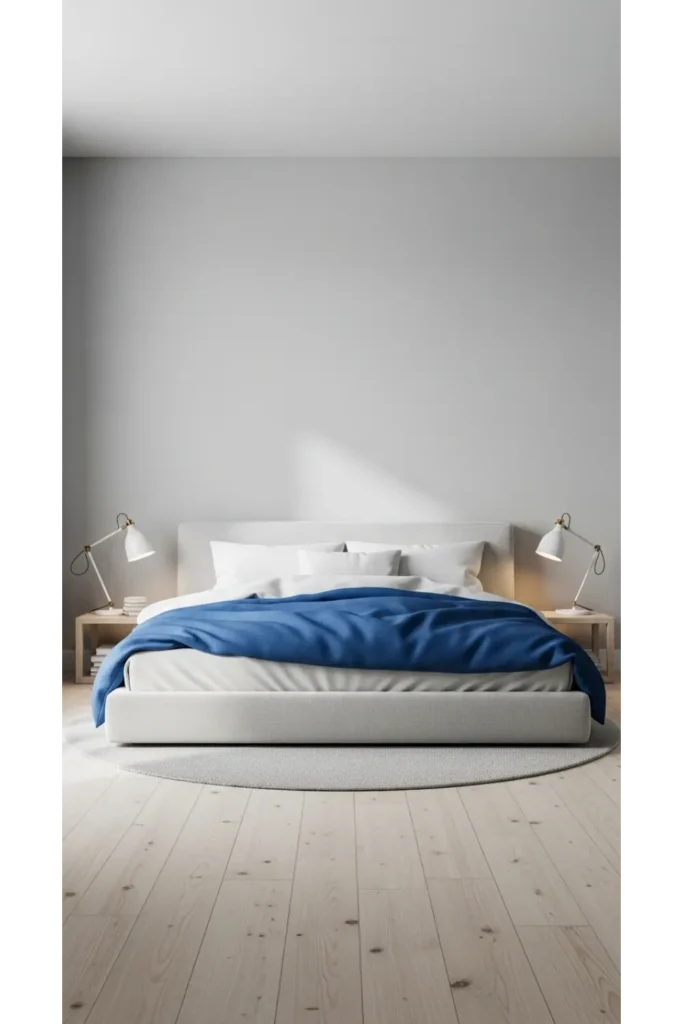
Space is part of design. Avoid filling every wall. Negative space improves focus.
Let architectural lines stand out without distraction.
• One main focal wall
• Clear secondary walls
• No excess frames
Pro tip: Step back and assess before adding decor.
15. Built-In Bench Storage
image prompt: window bench with hidden storage, neutral bedroom decor, with simple black bed
A storage bench adds seating and hidden space. Place under a window for functionality.
Keep the cushion neutral to blend into the palette.
• Hidden storage lid
• Neutral upholstery
• Slim profile
Pro tip: Store extra bedding inside.
16. Minimal Tech Visibility
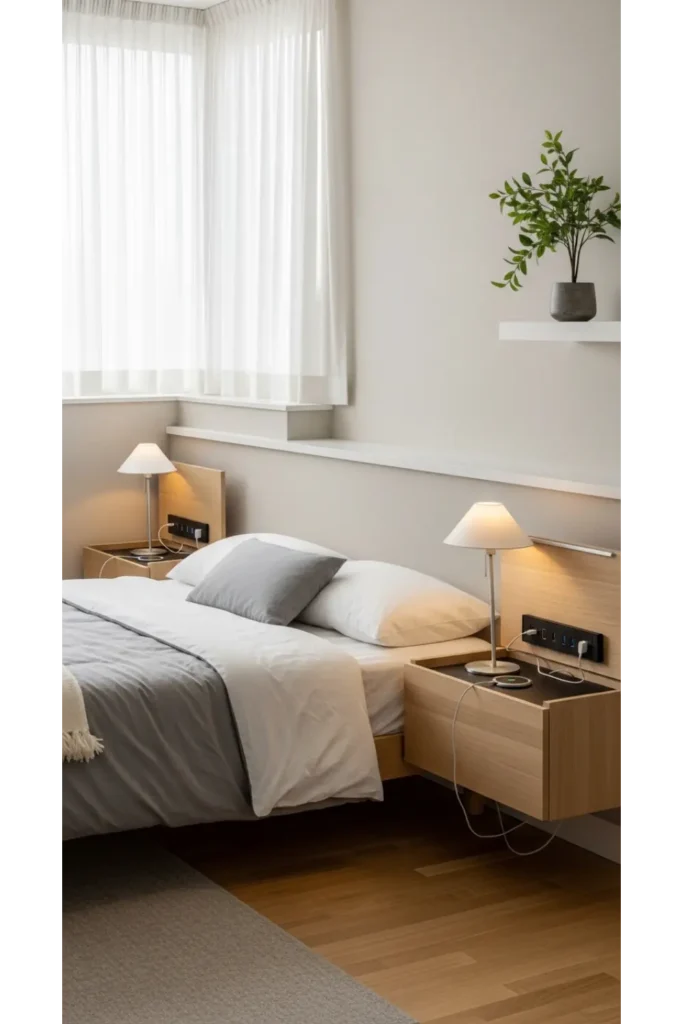
Hide cables and devices to maintain clean lines. Visible wires create chaos.
Use concealed charging drawers or wall clips.
• Cable organizers
• Wireless charging pad
• Hidden power strip
Pro tip: Mount power strips under furniture.
17. Soft Monochrome Bedding Layers
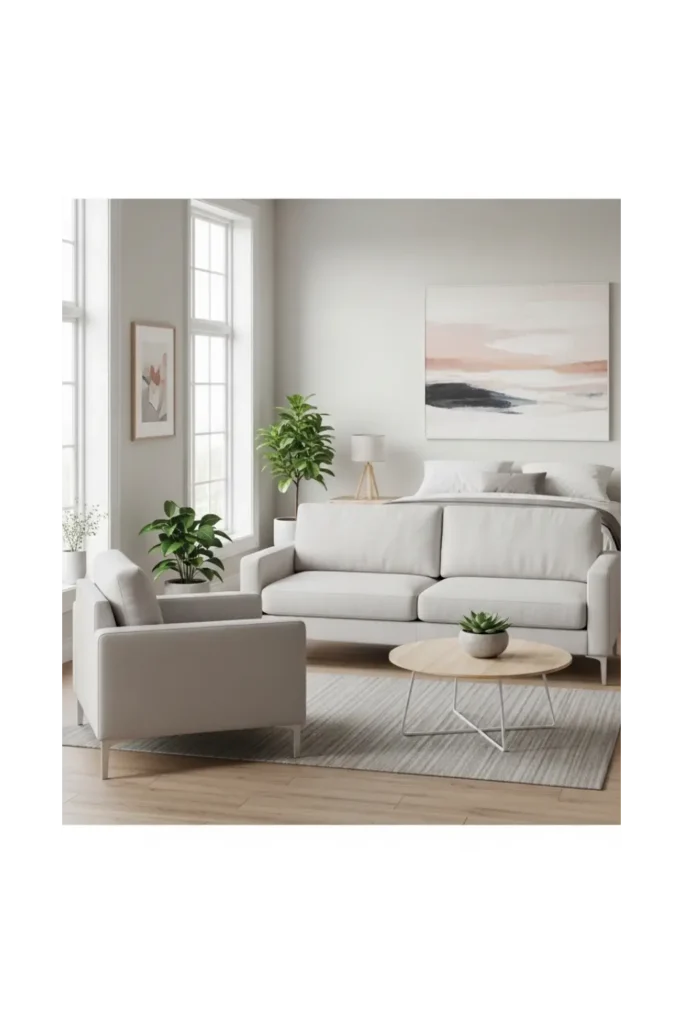
Layer shades within one color family for depth. Mix textures instead of colors.
This keeps the design cohesive and calming.
• Linen duvet
• Cotton sheets
• Knit throw
Pro tip: Stick to two main tones only.
18. Intentional Open Space Planning
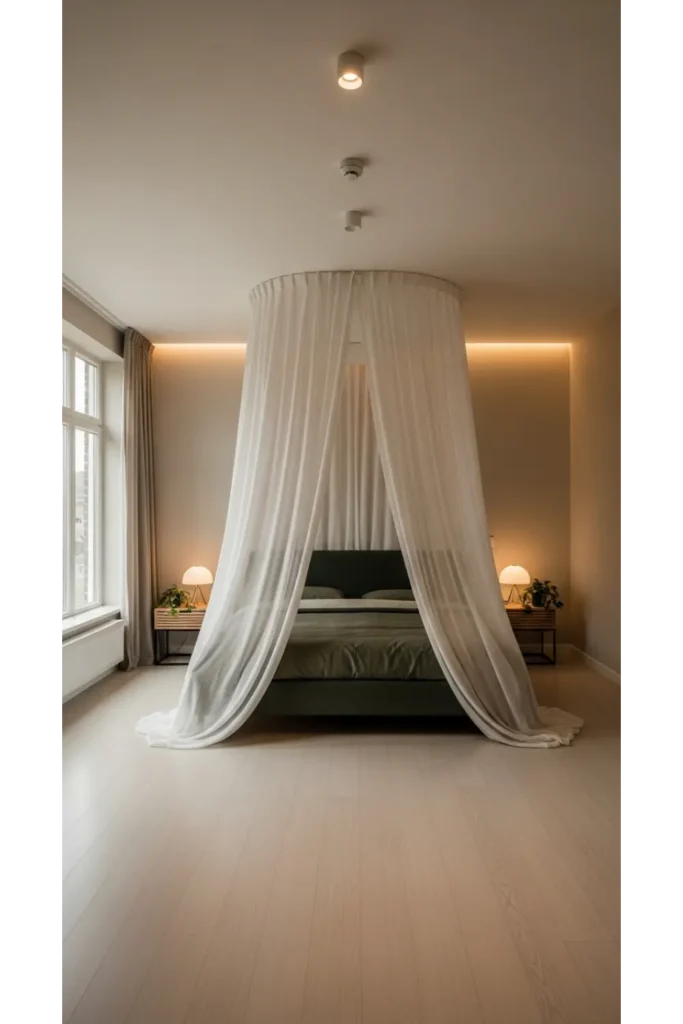
Prioritize movement and breathing room. Remove any furniture that blocks flow.
Open space improves relaxation and visual clarity. Thoughtful spacing defines true minimalist bedroom ideas more than decoration does.
• Clear pathways
• Reduced furniture count
• Balanced layout
Pro tip: Rearrange furniture before buying new pieces.
Conclusion
A truly restful bedroom comes from intention, not excess. These minimalist bedroom ideas show how color, lighting, storage, and layout work together to create a refined, calm and clutter-free space. When every item has purpose and every surface feels open, your bedroom becomes more than a place to sleep. It becomes a space that supports clarity, comfort, and daily renewal.