23 neutral living room ideas for a calm, modern home
Introduction
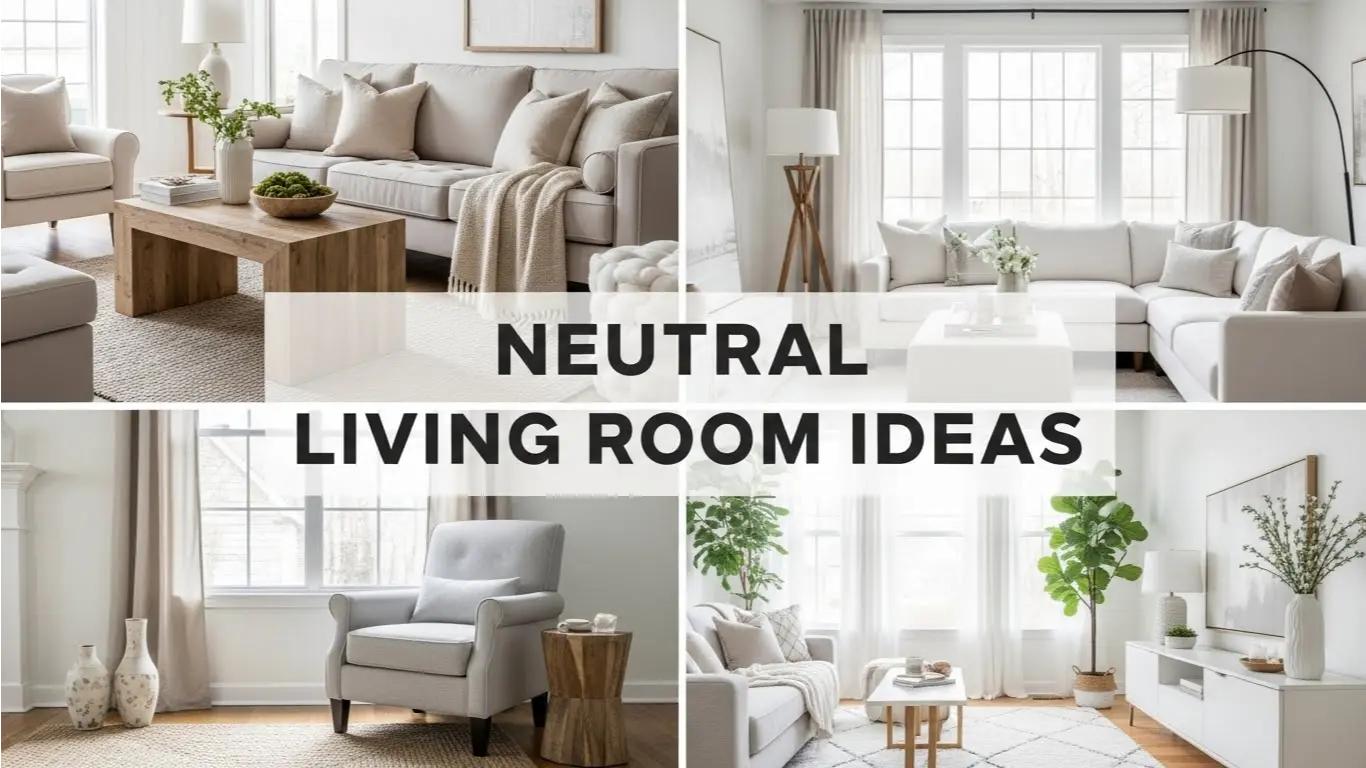
A neutral living room creates a sense of ease that feels modern, warm, and lasting. Instead of chasing trends, neutral spaces focus on balance, texture, and thoughtful details that age well over time. This guide explores 23 carefully designed approaches that help you build a calm, modern home without sacrificing personality. Each idea reflects real design principles used by professionals, explained clearly and practically so you can apply them confidently in your own space.
Section One: Foundational Neutral Styles
1. Soft Beige Layered Comfort
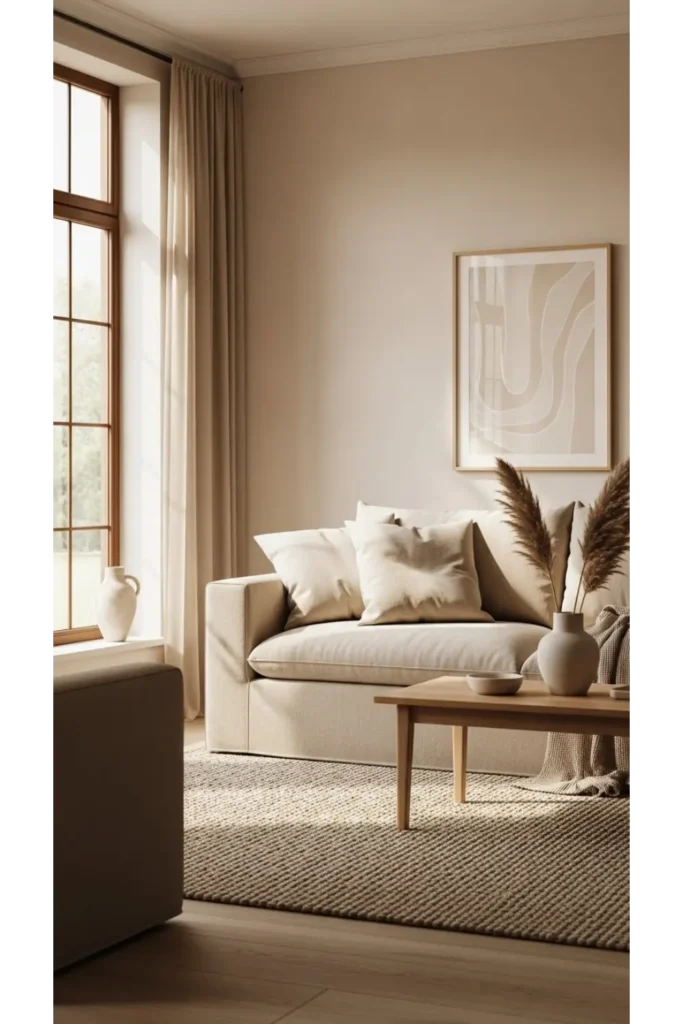
Neutral living room ideas often start with beige because it feels warm without overpowering a space. In this style, soft beige walls set a calm backdrop while layered fabrics add depth. Linen sofas, cotton throws, and wool rugs work together to create visual comfort. Natural light enhances the softness, making the room feel open and inviting throughout the day. Explore more inspiring living room decor ideas in our complete style guide here.
This approach suits both small and large rooms because beige adapts easily. Wood accents keep the space grounded, while subtle contrast from cream or taupe prevents flatness. The result feels modern but lived in, offering a timeless look that supports daily life rather than competing with it.
2. Warm White With Natural Texture
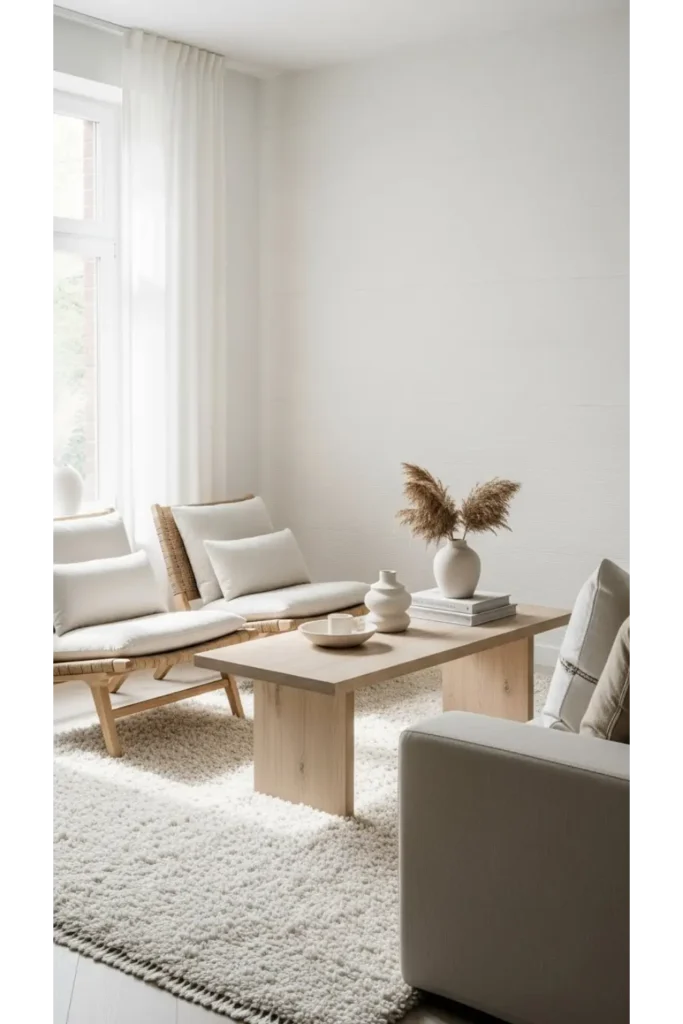
Warm white tones give a room clarity while avoiding starkness. This style relies on texture rather than color for interest. Plaster walls, woven chairs, and lightly grained wood bring quiet movement into the space. The room feels fresh but not cold, making it ideal for homes that value simplicity.
Natural materials play a key role here. Jute rugs, ceramic accents, and unfinished wood add depth without clutter. The palette stays restrained, yet the room feels rich because every surface offers a tactile experience that draws people in naturally.
3. Greige Balance for Modern Homes
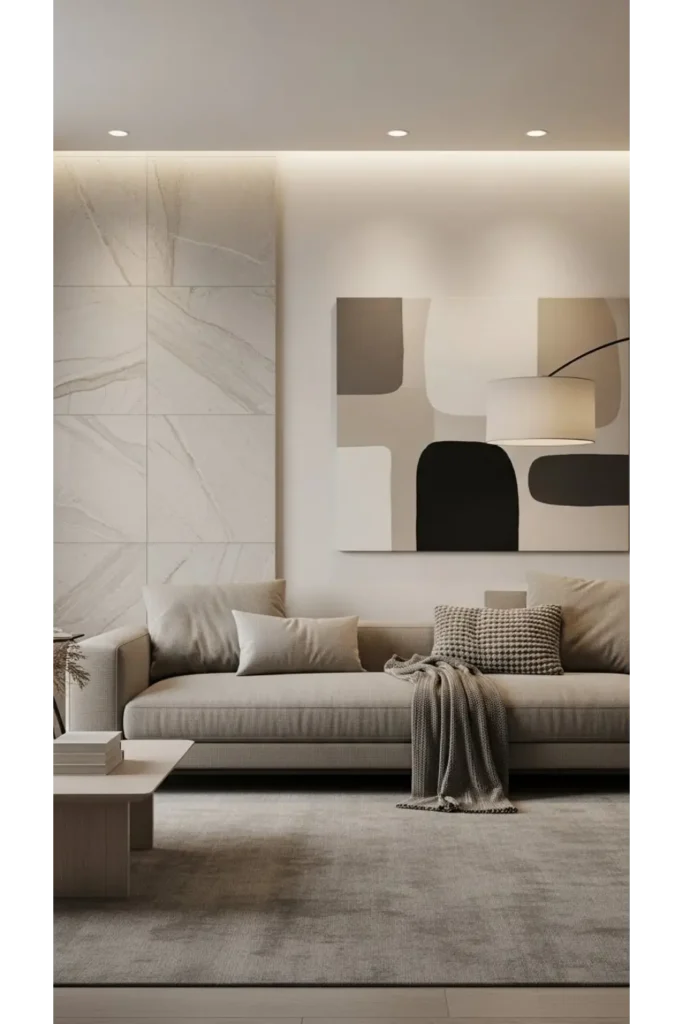
Greige blends gray and beige, offering balance between warm and cool. This style works well in modern homes that need flexibility. Walls in greige adapt to changing light, while furniture in similar tones keeps the space cohesive. Clean lines maintain a contemporary feel without harsh edges.
Stone accents and simple artwork support the calm mood. This look pairs well with metal or glass details, adding quiet contrast. Greige allows personal style to shine through decor choices while keeping the overall space relaxed and polished.
4. Earth Tone Neutral Harmony
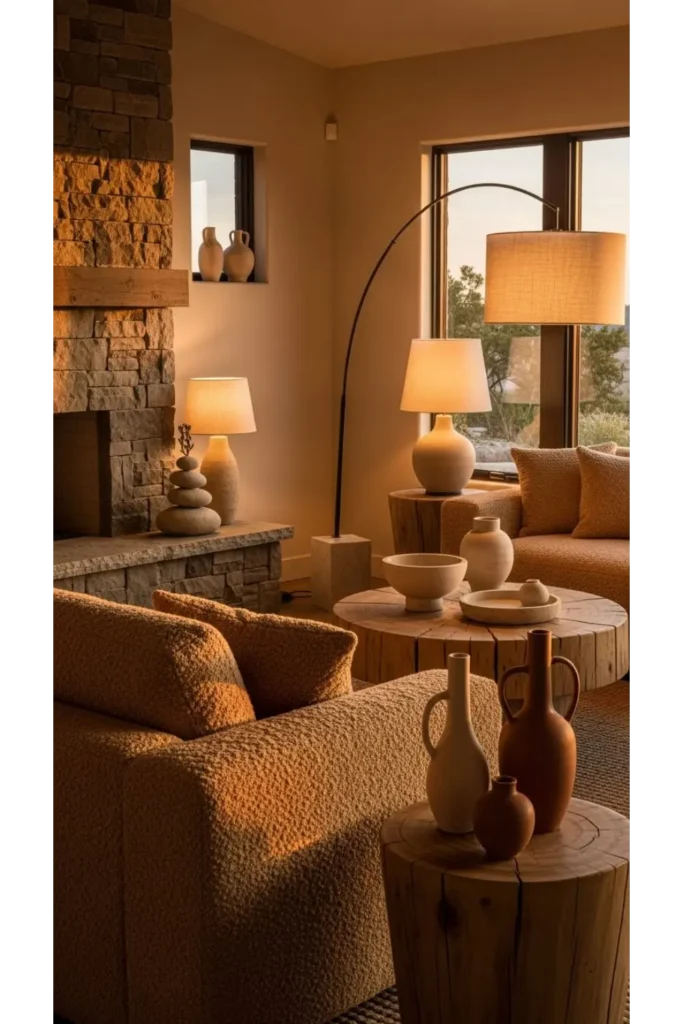
Earth tones bring a grounded feel to a neutral living room. Shades inspired by clay, sand, and stone connect the space to nature. These colors work together naturally, creating harmony without effort. Furniture with soft curves reinforces the organic mood.
This style feels especially calming in busy households. It supports relaxation while still looking intentional. Subtle variations in tone add richness, and natural light enhances the warmth. The room feels stable, welcoming, and deeply comfortable.
5. Minimal Taupe Elegance
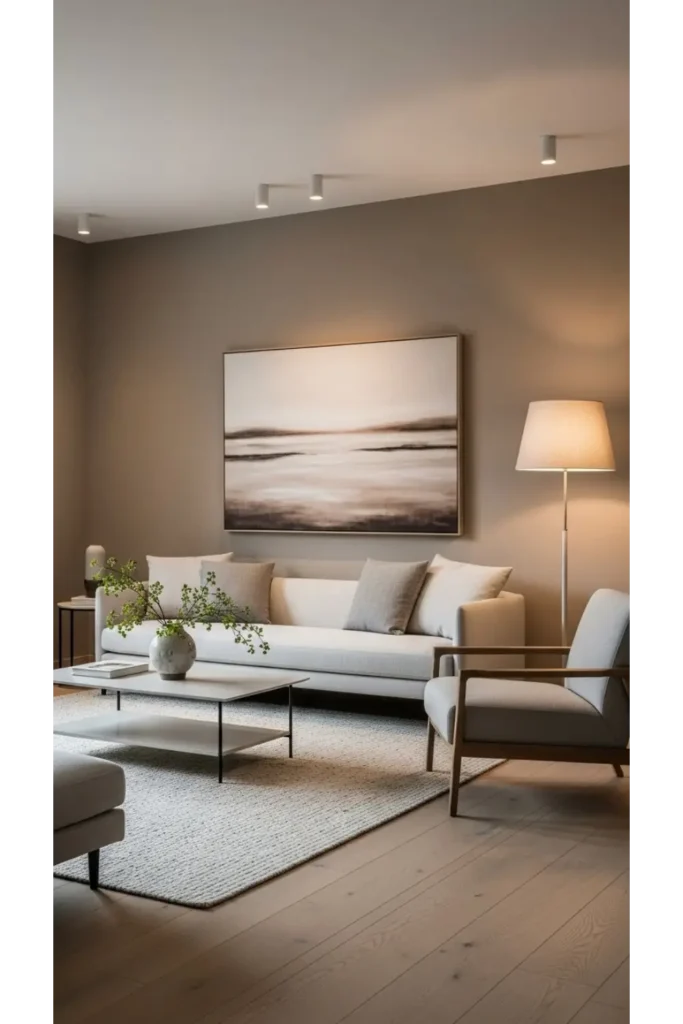
Taupe offers quiet elegance when used with restraint. In a minimalist setting, taupe walls and seating create softness without distraction. Simple furniture shapes keep the focus on proportion and balance rather than decoration.
Lighting plays a crucial role here. Soft, indirect light highlights the warmth of taupe while maintaining a modern edge. This style suits those who appreciate calm spaces that still feel refined and thoughtful.
6. Cream and Wood Classic Blend
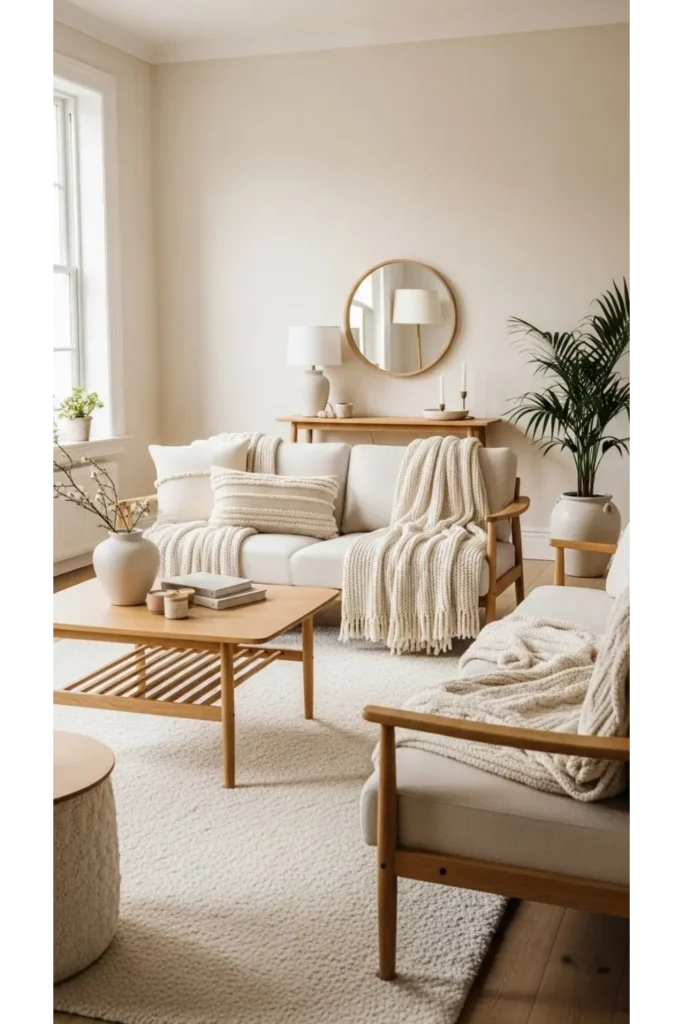
Cream paired with light wood creates a timeless look that feels both fresh and familiar. Cream walls brighten the space, while wood furniture adds warmth and structure. This combination works well in both traditional and modern homes.
Layered textiles prevent the room from feeling too formal. The balance between soft and solid elements creates comfort. This style adapts easily over time, making it a reliable choice for long term living.
7. Neutral Scandinavian Calm
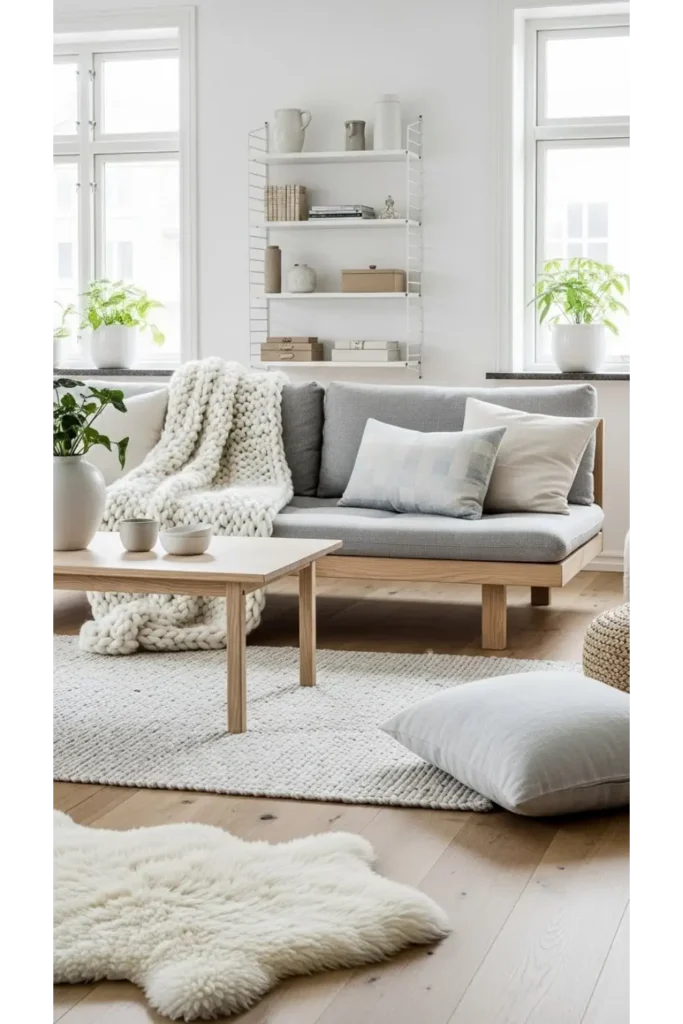
Scandinavian design relies on light neutrals and function. Pale wood floors and simple furniture shapes define this look. The room feels open and calm, even in smaller spaces.
Textiles add warmth without clutter. Throws and cushions in soft tones support comfort while maintaining visual order. This style promotes ease and clarity, making the living room a peaceful retreat.
8. Modern Sand Tones
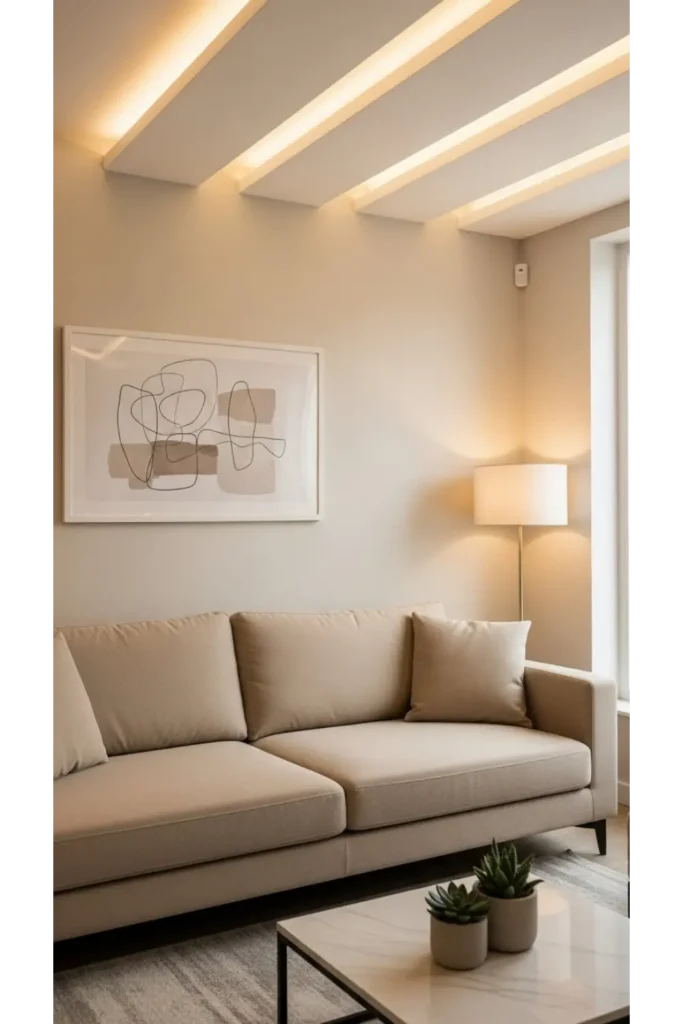
Sand tones offer warmth without heaviness. This style feels modern because it avoids strong contrast. Furniture blends smoothly into the space, creating a unified look.
Decor stays minimal but intentional. Subtle art and soft lighting add personality without breaking the calm. The room feels cohesive and easy to live in.
9. Stone Inspired Neutral Palette
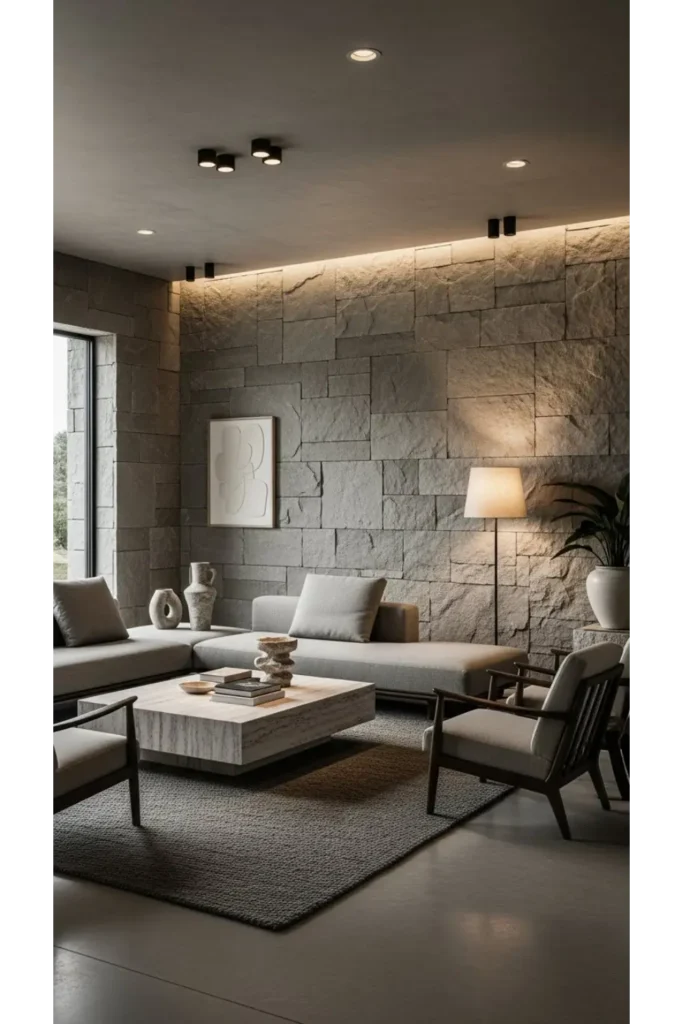
Stone inspired palettes bring quiet strength to a living room. Soft grays mixed with beige tones create stability. Furniture feels solid but comfortable, supporting everyday use.
Texture matters more than color here. Stone, concrete, and woven elements add interest. The space feels modern yet timeless, offering visual calm and durability.
10. Soft Gray With Warm Accents
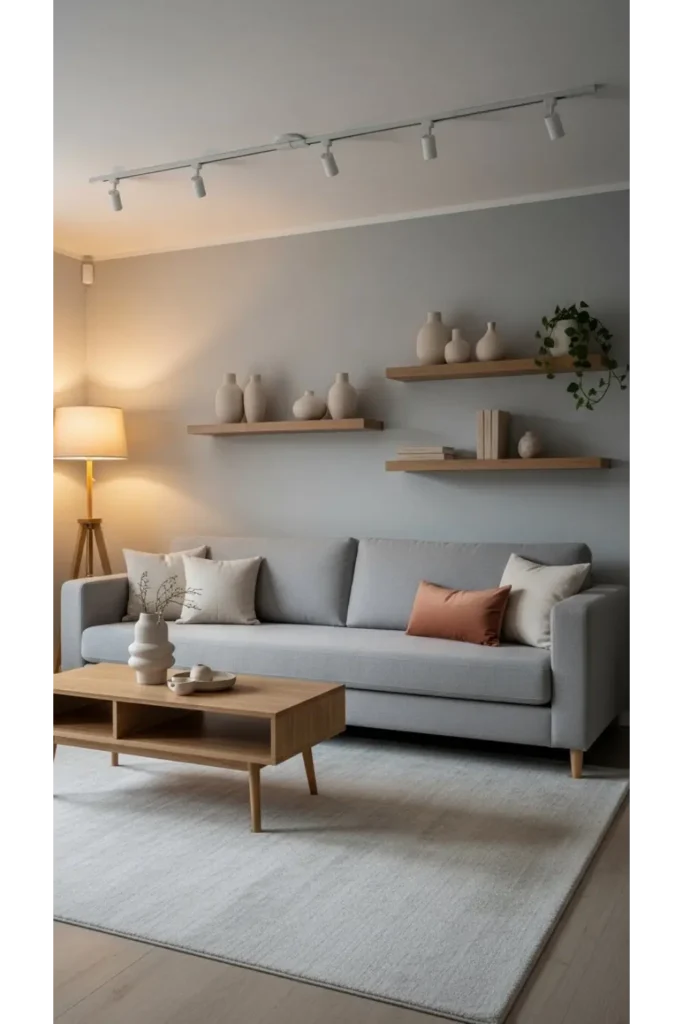
Soft gray creates a clean base while warm accents prevent coldness. Wood tables, warm lighting, and textured fabrics balance the cool tone.
This style suits urban homes where light changes throughout the day. Gray adapts easily, while warm elements keep the space inviting and human.
11. Neutral Coastal Influence
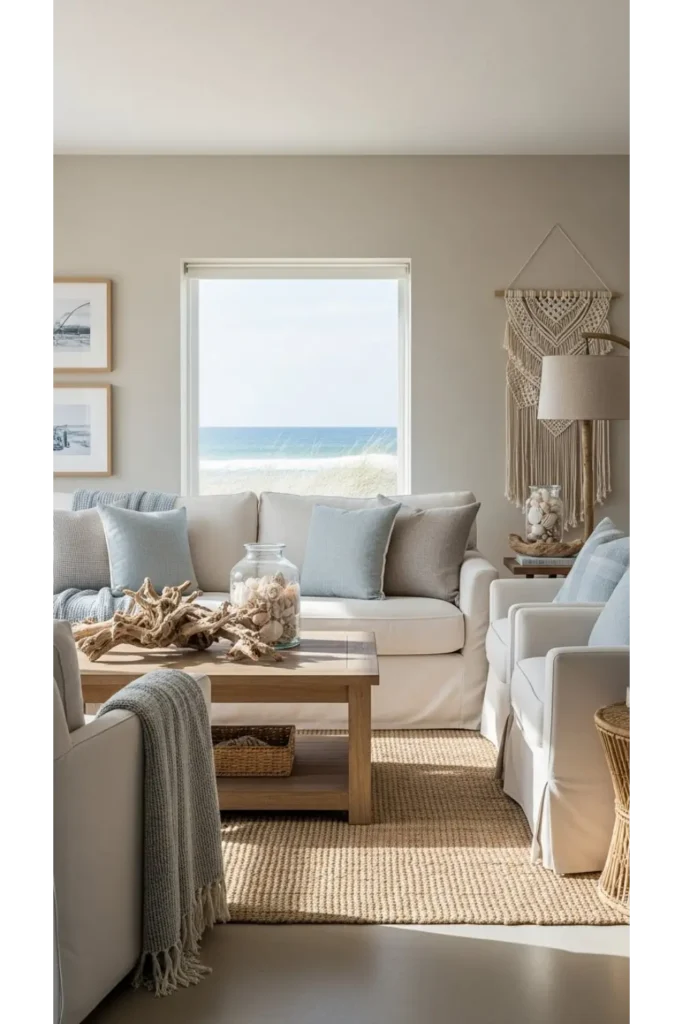
Coastal neutrals focus on lightness rather than theme. Soft whites, sand tones, and airy fabrics define the space. The room feels open and relaxed without obvious coastal symbols.
Natural textures support the mood. Linen, cotton, and light wood keep the space breathable. This style encourages calm living and everyday comfort.
12. Monochrome Neutral Depth
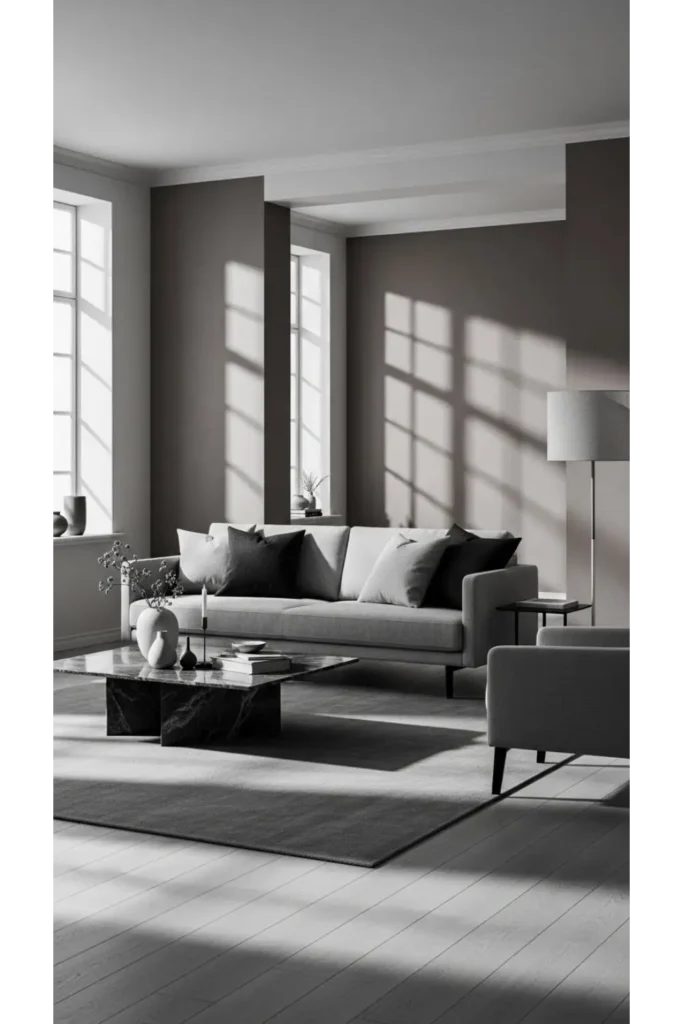
Using one color family creates depth through variation. Different shades of beige or gray add interest without contrast. The room feels cohesive and intentional.
Lighting and texture become essential. Shadows and surfaces create movement. This style works well for those who appreciate subtle sophistication.
Section Two: Elevated and Personalized Neutrals
13. Neutral With Black Contrast
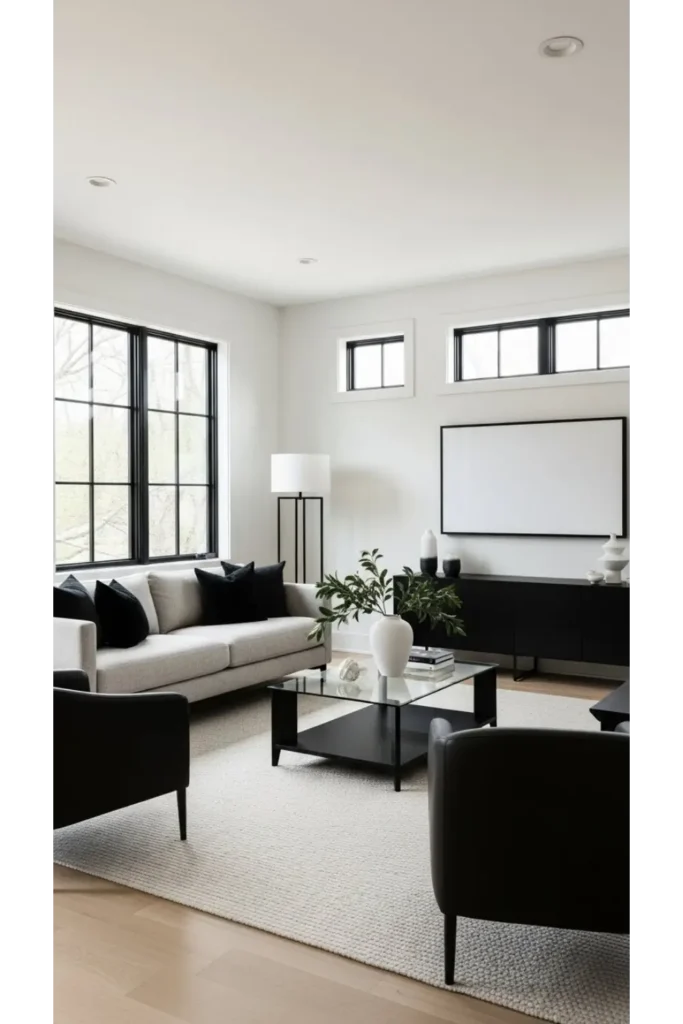
Black accents add structure to a neutral space. Used sparingly, they define edges and anchor the room. The neutral base remains calm while contrast adds clarity.
This approach suits modern interiors. Clean lines and balanced placement prevent harshness. The room feels confident and well designed.
14. Textured Neutral Luxury
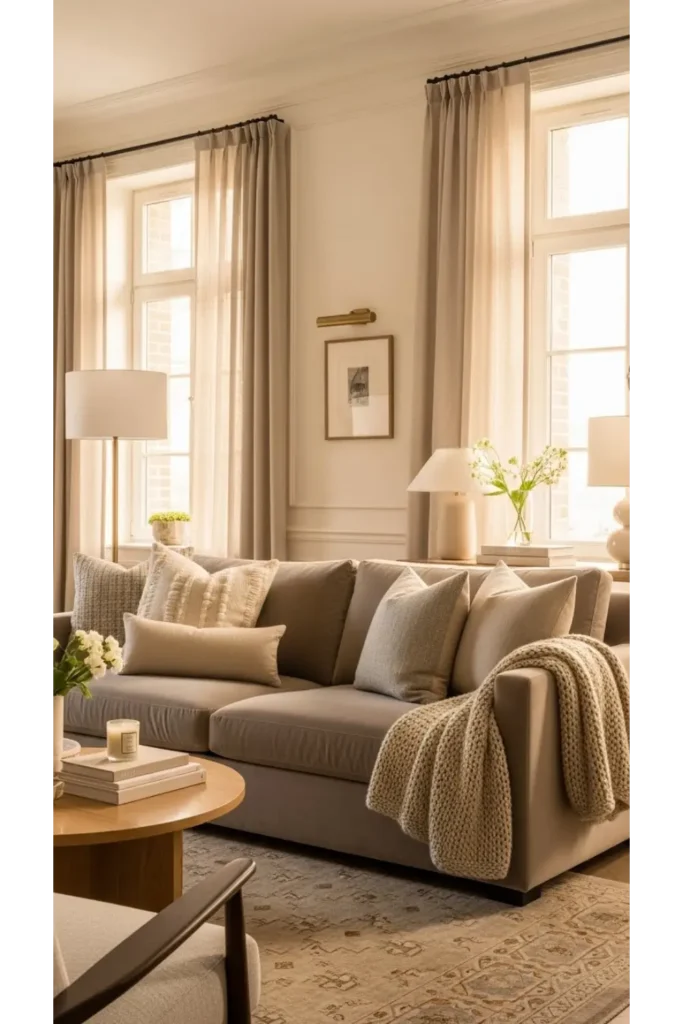
Luxury in neutrals comes from texture. Velvet, boucle, and silk add richness without bold color. The room feels refined and comfortable.
Lighting enhances the effect. Warm tones highlight textures and create intimacy. This style feels elevated but still welcoming.
15. Organic Modern Neutral
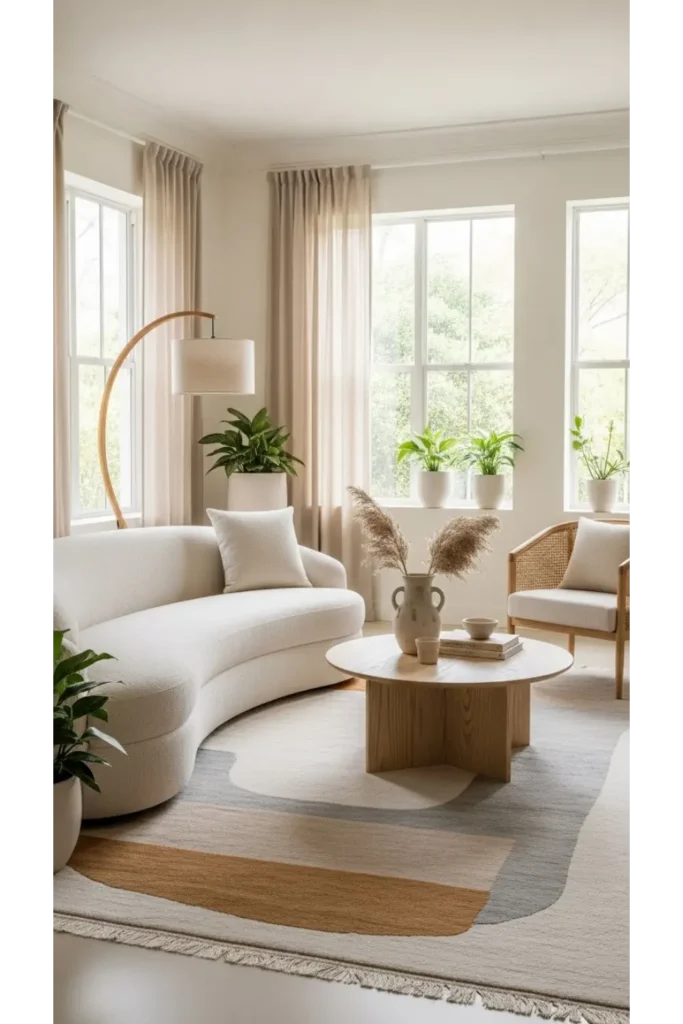
Organic modern design blends clean lines with soft shapes. Neutral colors support the flow, allowing furniture forms to stand out gently.
Natural materials ground the space. The result feels modern yet relaxed, offering visual interest without noise.
16. Neutral With Artistic Focus
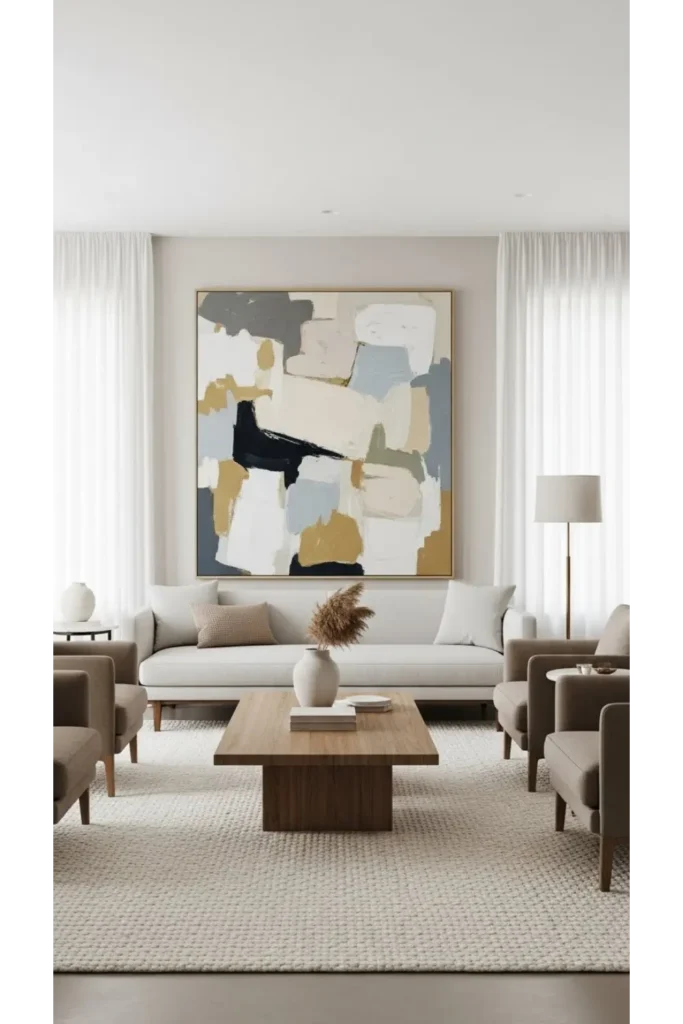
Art becomes the focal point in this style. Neutral surroundings allow artwork to shine without competition. Walls and furniture stay understated.
This approach suits creative homeowners. The room feels personal while maintaining balance. Art adds energy without disrupting calm.
17. Warm Neutral Transitional Style

A warm neutral transitional living room brings together the comfort of traditional design and the clean feel of modern spaces. Soft beige or warm taupe walls create a flexible backdrop that works well with both classic furniture shapes and updated finishes. Upholstered sofas with gentle curves pair naturally with streamlined tables, creating a space that feels balanced rather than divided by style.
This approach works especially well for homeowners who want longevity in their design. Warm neutrals help different elements coexist without visual tension, allowing the room to evolve over time. As trends change, the foundation remains steady, making it easy to refresh the space with new accents while keeping the overall look cohesive and welcoming.
18. Neutral With Subtle Pattern
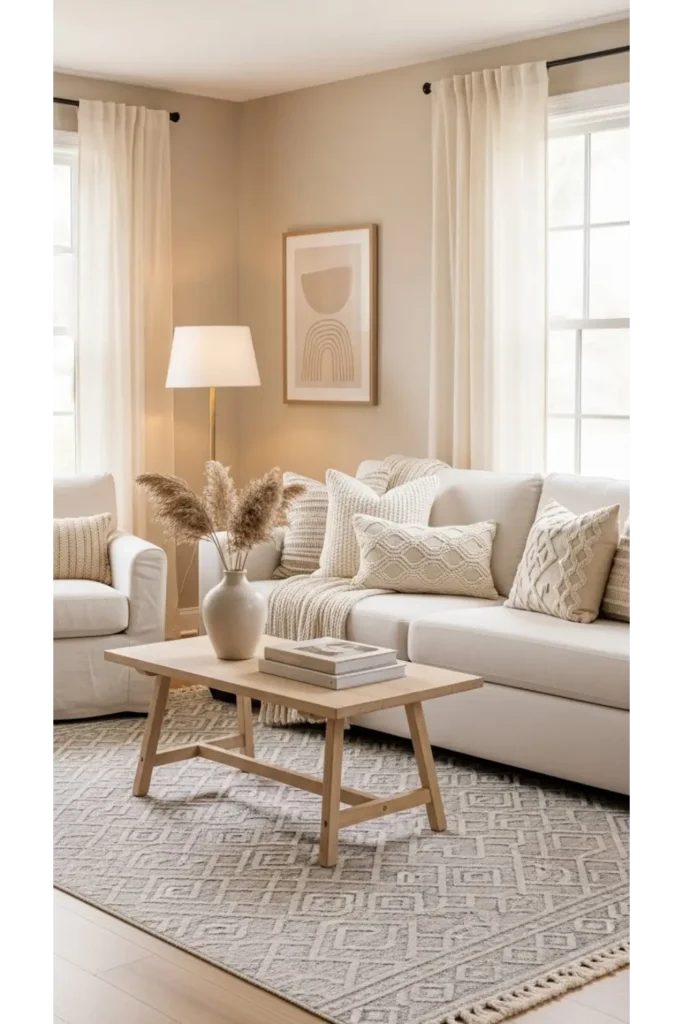
Subtle pattern adds personality to a neutral living room without disrupting its calm nature. A lightly patterned rug or softly textured cushions introduce movement that keeps the space visually engaging. When patterns stay within the same color family, they enhance depth while preserving a quiet and cohesive atmosphere.
This style is ideal for those who appreciate detail but prefer restraint. The key lies in balance, allowing patterns to support the space rather than dominate it. By pairing gentle motifs with solid furniture and walls, the room feels thoughtfully layered, comfortable, and visually interesting without becoming busy or overwhelming.
19. Soft Neutral Family Space
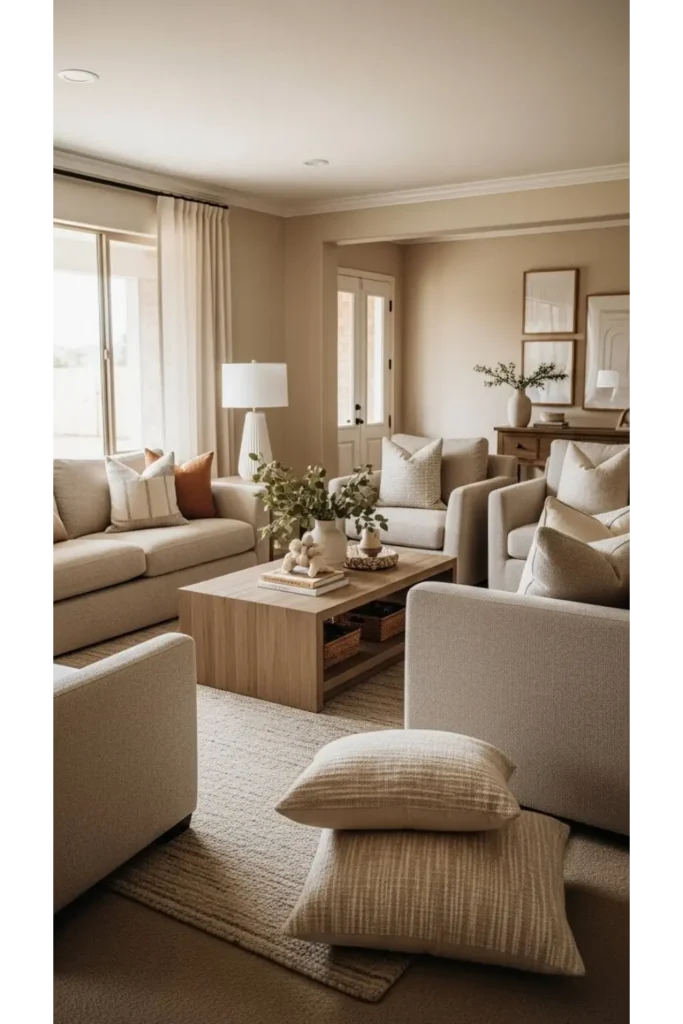
A soft neutral family living room prioritizes comfort while maintaining a polished look. Warm grays, creams, and light browns create a forgiving palette that hides everyday wear without feeling dull. Durable upholstery and easy to clean surfaces ensure the room supports daily activity while still looking intentional and well designed.
The layout encourages connection and ease of movement, making the space practical for both relaxation and gathering. Layered textures such as woven throws and cushioned seating add warmth and softness. The result is a room that feels calm and welcoming, proving that family friendly design can still feel stylish and considered.
20. Neutral With Natural Light Focus
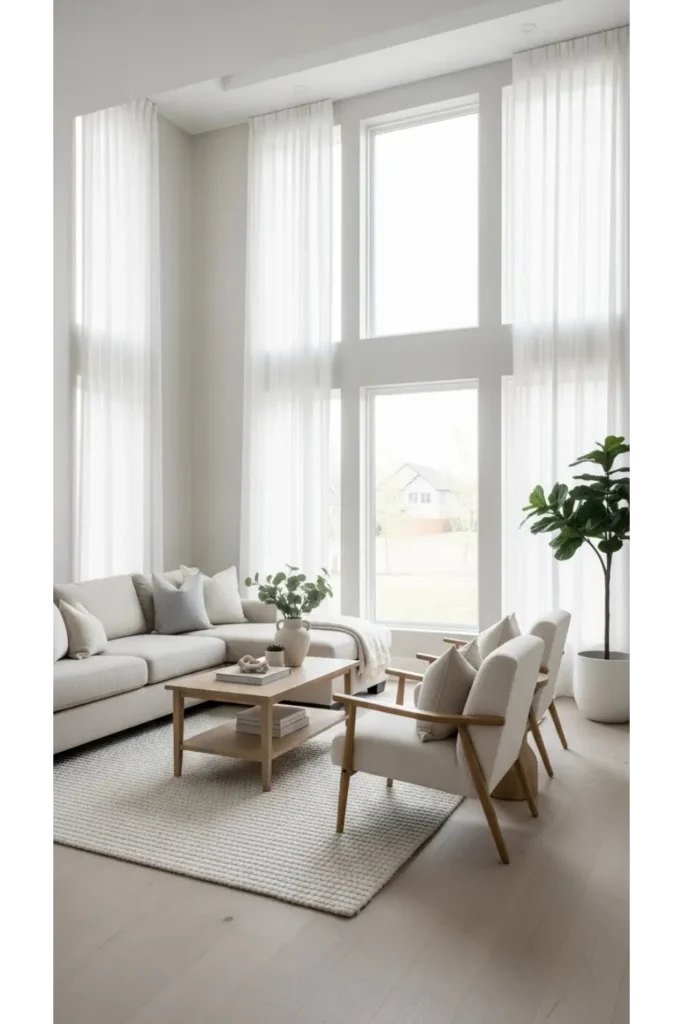
Natural light transforms a neutral living room by enhancing softness and clarity. This style centers on openness, using light colored walls and furniture to reflect daylight throughout the space. Large windows, sheer curtains, and minimal window treatments allow light to move freely, creating a sense of calm and spaciousness.
Decor remains intentionally minimal to keep attention on light and proportion. Neutral tones appear warmer and more dynamic as the light shifts throughout the day. This approach works especially well in homes that value a peaceful atmosphere, where brightness supports mood and makes the living room feel open and uplifting.
21. Calm Neutral Urban Living
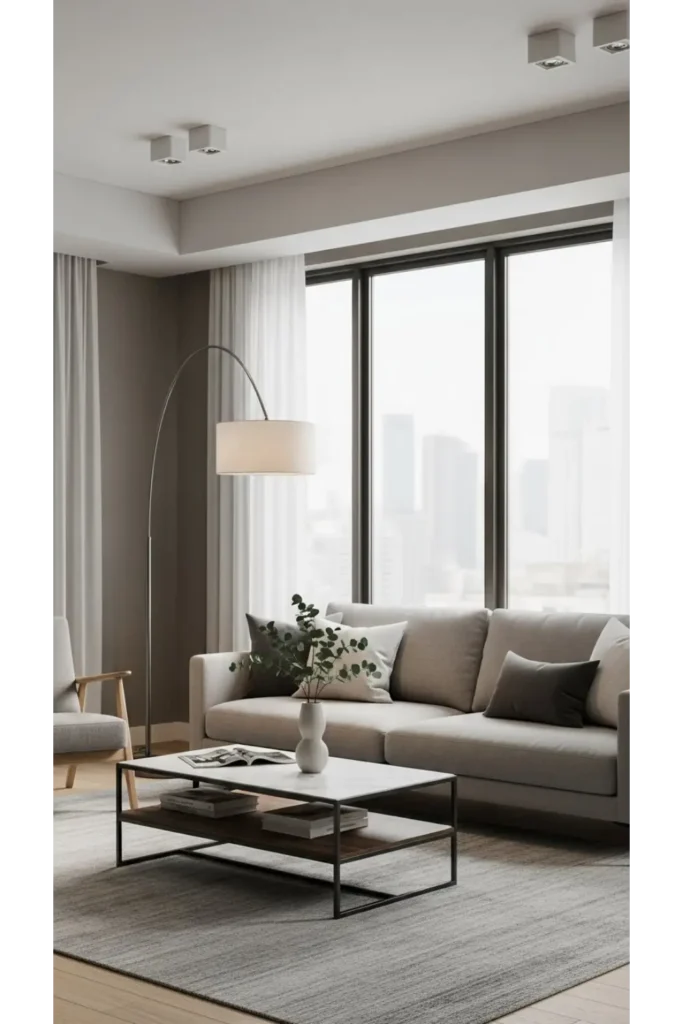
In urban homes, neutral living rooms provide a sense of calm amid fast paced surroundings. Soft grays, muted beiges, and warm whites help soften architectural lines often found in city apartments. Streamlined furniture keeps the space feeling open, while thoughtful spacing prevents visual clutter.
Lighting plays an important role in creating balance. Warm ambient light offsets concrete or metal elements, making the room feel more human and inviting. This style supports modern living by offering a quiet retreat where residents can unwind, recharge, and enjoy a sense of calm without sacrificing a contemporary edge.
22. Neutral With Vintage Touches
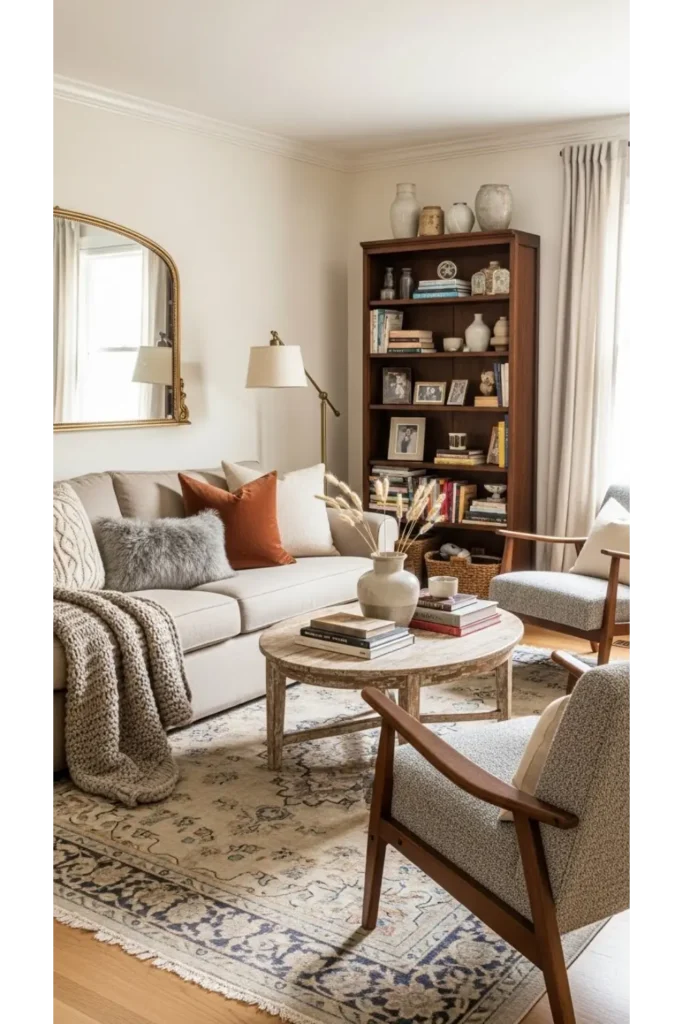
Vintage elements bring character and depth to a neutral living room. A weathered wood table, an antique mirror, or a classic armchair adds history and warmth. Neutral walls and upholstery allow these pieces to stand out naturally, giving the room a curated and personal feel rather than a staged appearance. Browse our full living room decor inspiration hub for even more ideas.
Warm tones support the aged finishes found in vintage decor, creating harmony between old and new. Layered textures such as linen, leather, and wood enhance the sense of story within the space. This approach feels timeless and lived in, making the living room both stylish and deeply personal.
23. Serene Neutral Retreat
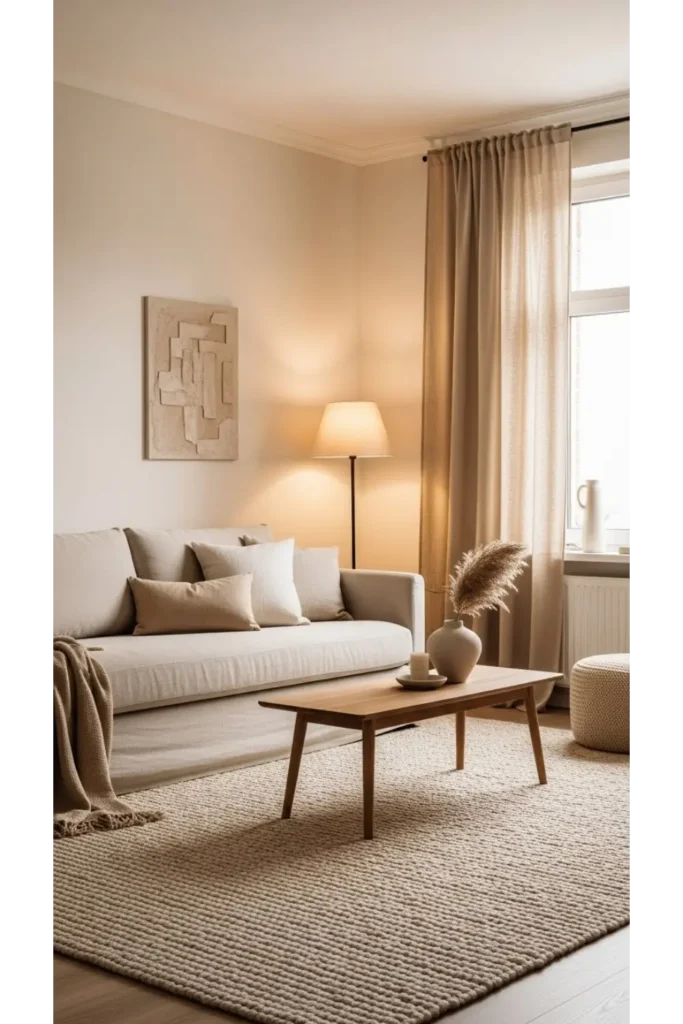
A serene neutral living room focuses on rest and simplicity. Soft seating, gentle color transitions, and minimal decor work together to create a peaceful environment. Warm neutrals such as cream and light taupe support relaxation, while uncluttered surfaces allow the mind to settle and slow down.
Every element in this space serves a purpose, whether it supports comfort or visual calm. Natural materials and soft lighting reinforce the tranquil mood. This style turns the living room into a quiet retreat, offering a sense of balance and stillness that feels especially valuable in a busy, modern world.
Conclusion
Neutral living rooms succeed when they balance warmth, texture, and intention. These 23 ideas show how subtle choices shape spaces that feel calm, modern, and deeply livable. By focusing on materials, light, and proportion, you can create a room that supports daily life while remaining timeless. Neutral design is not about absence. It is about clarity, comfort, and thoughtful living.