
24 Open Kitchen Design Concepts For Spacious Living
An open kitchen does more than remove walls. It changes how a home feels, how people connect, and how space flows from one area to the next. Homeowners searching for comfort, light, and flexibility often turn to open layouts because they support real life, not just visual appeal. When designed well, an open kitchen feels calm, balanced, and welcoming instead of busy or exposed.
This in depth guide explores open kitchen design concepts, layout strategies, material choices, and styling ideas that support spacious living naturally and practically. Each concept focuses on flow, function, and long term comfort. These ideas work for modern homes, apartments, and family spaces where openness and warmth matter equally.
1. Seamless Flow With Living Areas
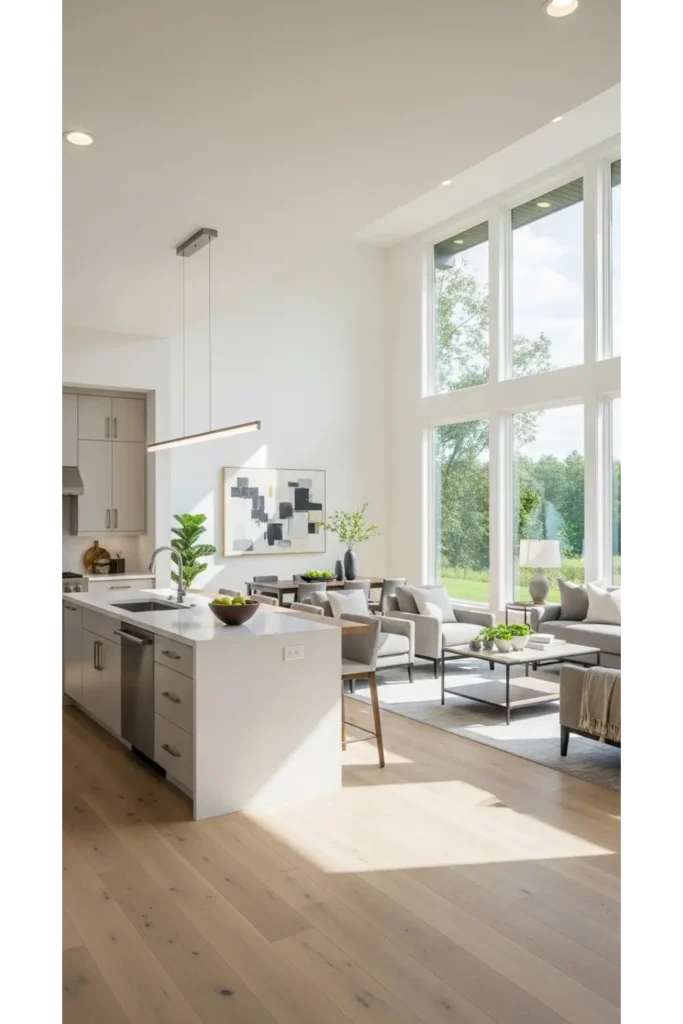
This concept centers on open kitchen design concepts for spacious living by blending the kitchen directly with the living area. Removing visual barriers allows the eye to travel freely across the space, which instantly makes the home feel larger. Matching finishes between cabinetry and living room furniture creates harmony and reduces visual breaks that can make a space feel crowded.
Furniture placement plays a key role in defining zones without closing them off. Rugs, lighting, and seating arrangements subtly separate functions while keeping the layout open. This design supports conversation, shared activities, and daily comfort, making it ideal for families and social households that value connection and ease.
2. Central Island As A Social Anchor

A central island creates a strong focal point while maintaining openness. It provides workspace, storage, and seating without adding walls or bulk. When designed with slim proportions and open sides, the island supports clear movement paths and uninterrupted sightlines across the kitchen and adjoining areas.
This layout encourages interaction by placing cooking and gathering in one shared zone. Choosing light materials and integrated appliances prevents the island from dominating the room. The result feels balanced and functional, supporting open plan kitchen living without sacrificing comfort or flow.
3. Floor To Ceiling Natural Light

Natural light expands a space in a way artificial lighting never can. Floor to ceiling windows or wide glass doors blur the boundary between indoors and outdoors, making the kitchen feel open and breathable. Sunlight reflects off surfaces and reduces shadows that can visually shrink a room.
Soft finishes amplify this effect by spreading light evenly across the space. This approach supports energy, mood, and clarity while enhancing spacious living. A well lit kitchen feels calm throughout the day and more inviting during everyday use.
4. Minimal Cabinetry With Clean Lines
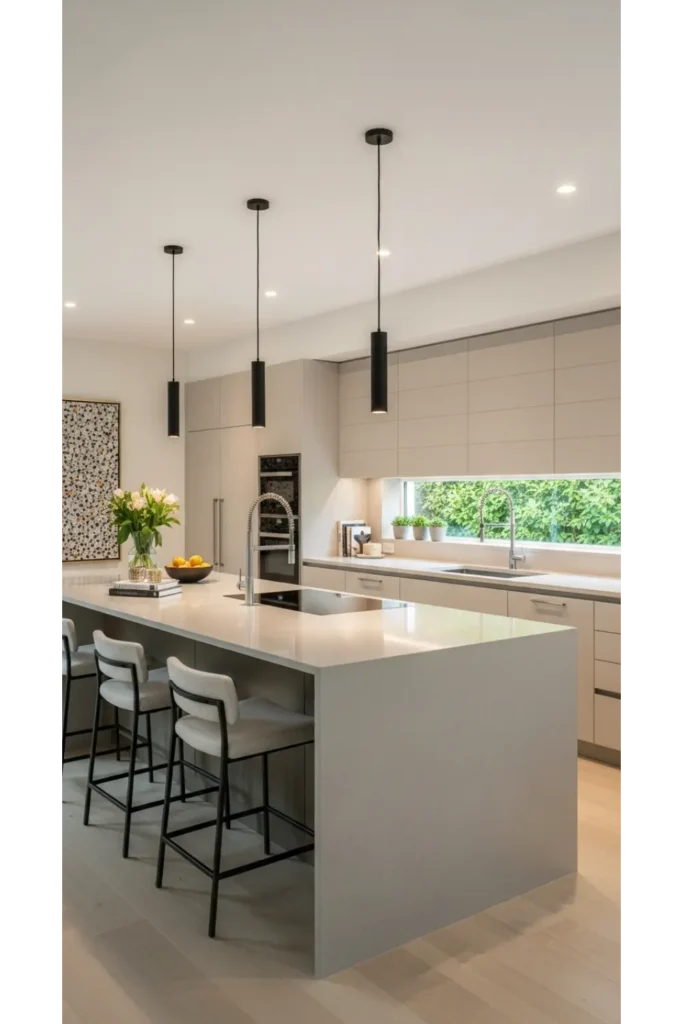
Minimal cabinetry reduces visual noise and helps the kitchen blend into the surrounding living areas. Flat panels, hidden handles, and flush finishes keep surfaces calm and uninterrupted. This design choice works especially well in homes where the kitchen shares space with dining or lounging areas.
Reducing upper cabinets opens sightlines and prevents the kitchen from feeling heavy. Storage shifts toward lower cabinets and islands, keeping essentials accessible without overwhelming the room. This approach supports modern kitchen design while preserving openness.
5. Integrated Dining For Daily Living
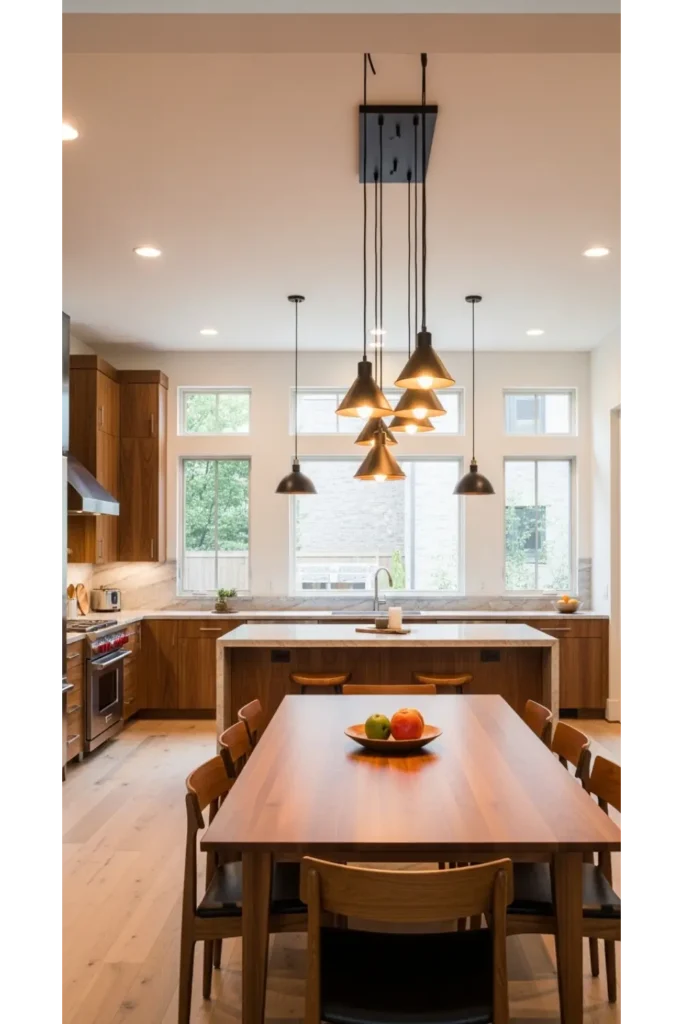
Integrating the dining area directly into the kitchen creates one shared experience instead of separate zones. A dining table placed close to the kitchen supports easy meals, homework time, and casual gatherings. Matching materials between the two areas strengthens visual flow.
Lighting helps define each function without walls. Pendants over the table and softer ambient lighting around the kitchen maintain balance. This layout supports open kitchen living that feels practical, social, and comfortable every day.
6. Neutral Color Palettes That Expand Space
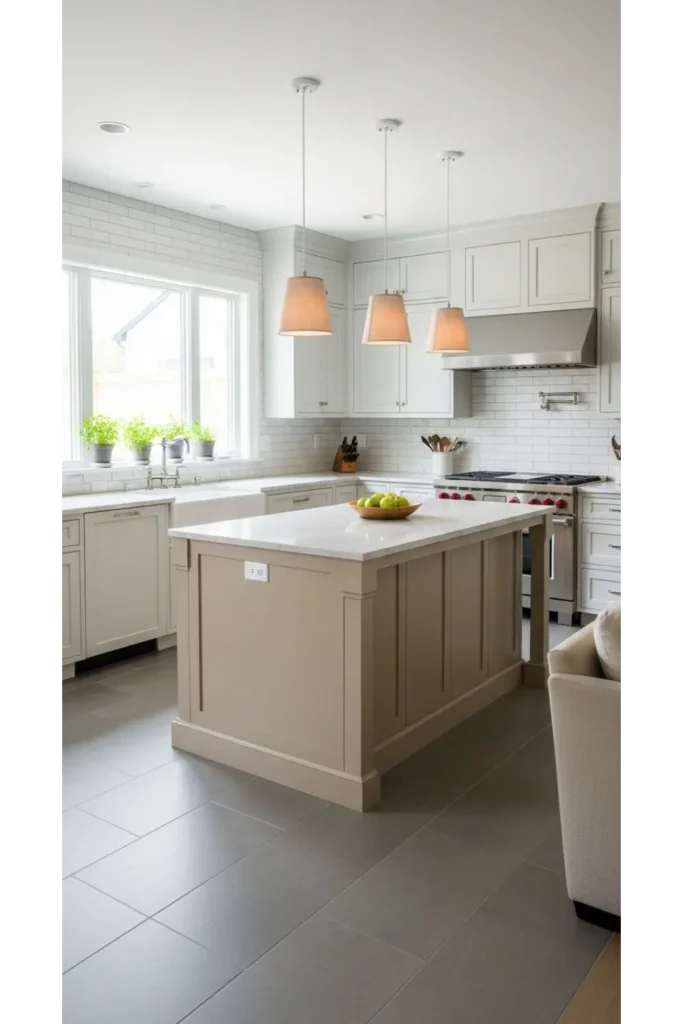
Neutral colors help an open kitchen feel calm and spacious. Whites, warm grays, and soft beige tones reflect light and reduce contrast between areas. This creates visual continuity, which makes the entire space feel larger and more connected.
Texture prevents neutral palettes from feeling flat. Wood grain, stone surfaces, and fabric accents add warmth without clutter. This combination supports spacious living while keeping the kitchen timeless and adaptable to changing styles.
7. Curated Display Shelving For Visual Openness
image prompt: open kitchen with curated display shelving, minimal dishware, warm wood tones, airy modern space
Curated display shelving focuses less on storage and more on visual breathing room. Instead of filling walls with closed cabinets, this approach uses carefully planned shelves to showcase essential items while keeping the space open. In open kitchen design concepts, this method reduces visual weight and allows walls to feel lighter. Thoughtful spacing and limited shelf runs prevent clutter and help the kitchen blend smoothly with surrounding living areas.
The key lies in restraint and purpose. Display shelving works best when it highlights everyday pieces with clean shapes and neutral finishes. Ceramics, glassware, and simple cookware add character without distraction. This strategy supports spacious living by keeping sightlines open, encouraging organization, and making the kitchen feel personal yet calm rather than crowded or decorative.
8. Continuous Flooring Across Spaces
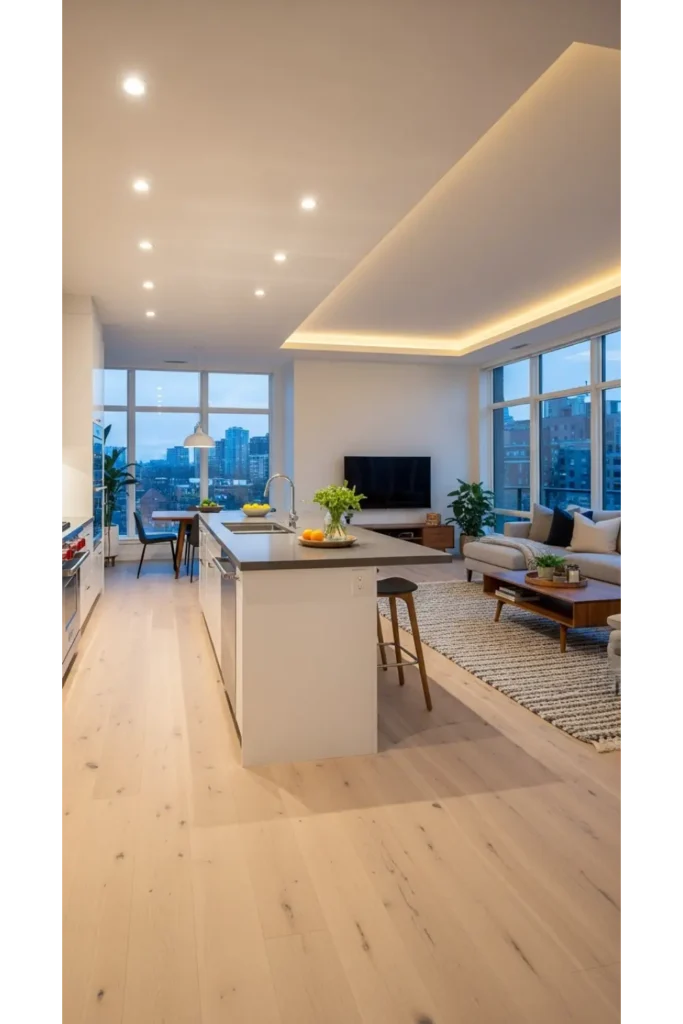
Using the same flooring throughout the kitchen and living areas removes visual breaks. This simple decision makes the space feel wider and more cohesive. The eye moves freely across the room, which enhances the sense of openness.
Durable materials like engineered wood or large format tile work well for kitchens while maintaining comfort underfoot. This choice strengthens the connection between zones and supports open plan kitchen layouts that feel unified.
9. Hidden Storage For Visual Calm
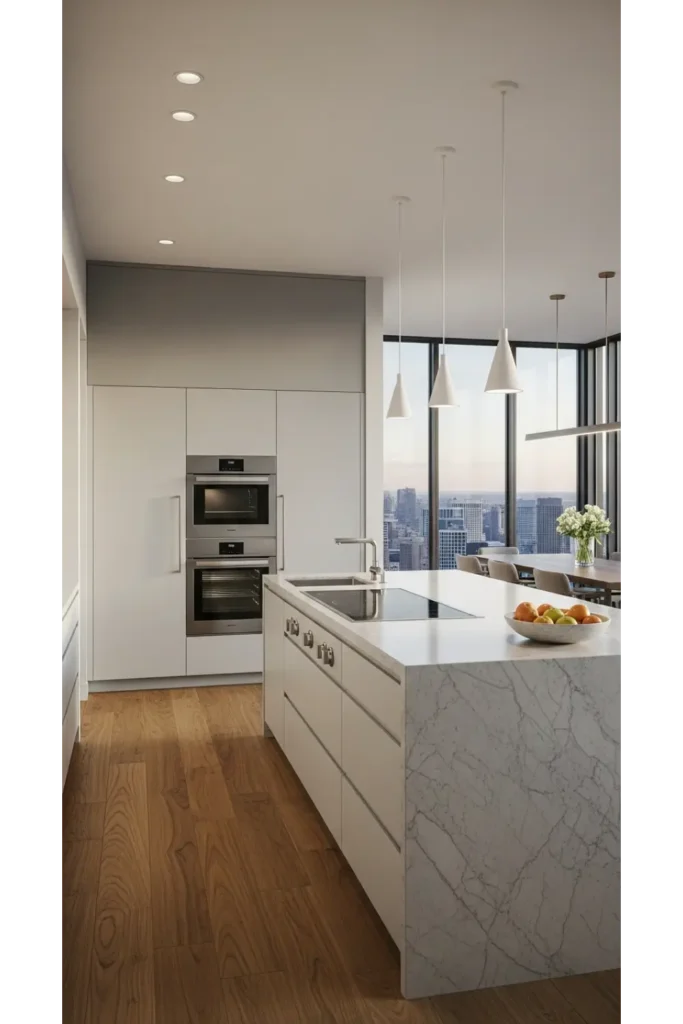
Hidden storage keeps clutter out of sight and preserves clean lines. Pull out pantries, appliance garages, and integrated refrigerators maintain a streamlined look that suits open layouts.
This approach allows the kitchen to function efficiently without visually dominating shared spaces. A clutter free environment supports focus, comfort, and spacious living, especially in homes where the kitchen stays visible at all times.
10. Lighting That Softly Defines Zones
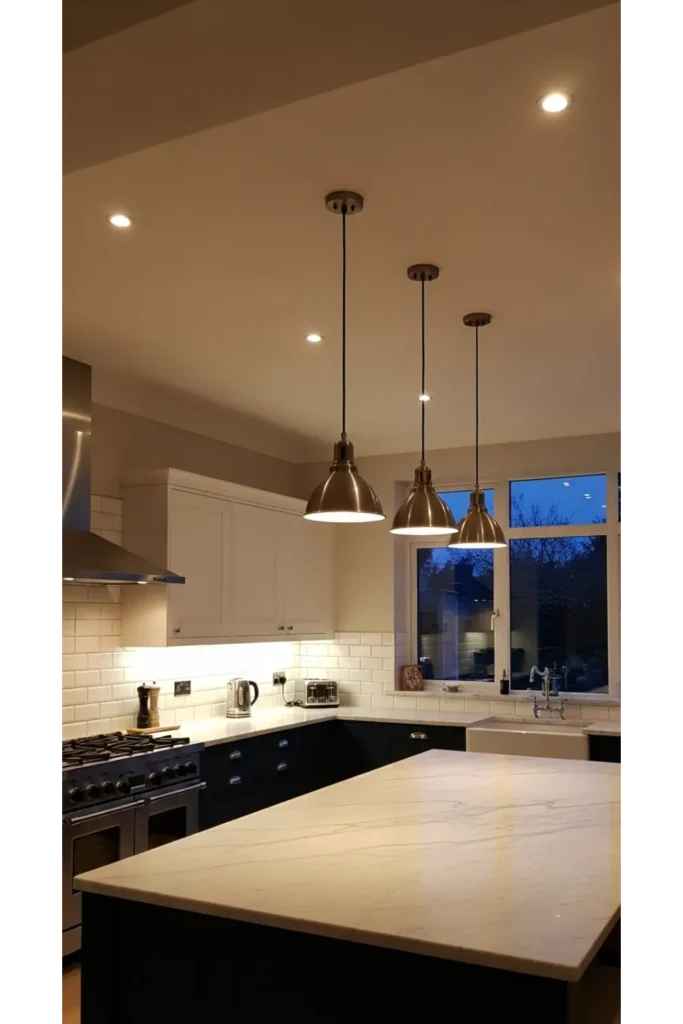
Lighting helps define different areas without walls. Pendant lights signal the kitchen zone, while recessed lighting supports general brightness across the space. This layered approach keeps the layout open while improving usability.
Warm light tones create comfort and prevent harsh contrasts. Thoughtful lighting design supports open kitchen spaces that feel welcoming both day and night.
11. Low Profile Built In Appliances
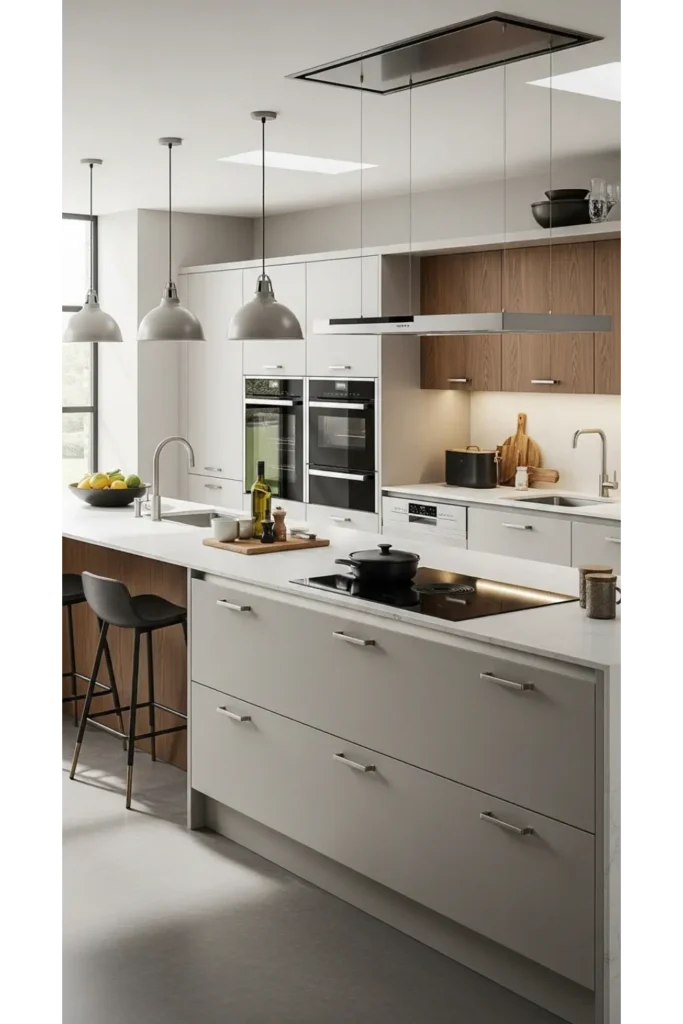
Low profile appliances reduce visual interruptions and help the kitchen blend into its surroundings. Built in ovens, refrigerators, and dishwashers maintain clean lines and consistent surfaces.
This choice enhances flow and supports modern kitchen design without sacrificing performance. The kitchen feels more like part of the living space rather than a separate work zone.
12. Warm Wood Elements For Balance
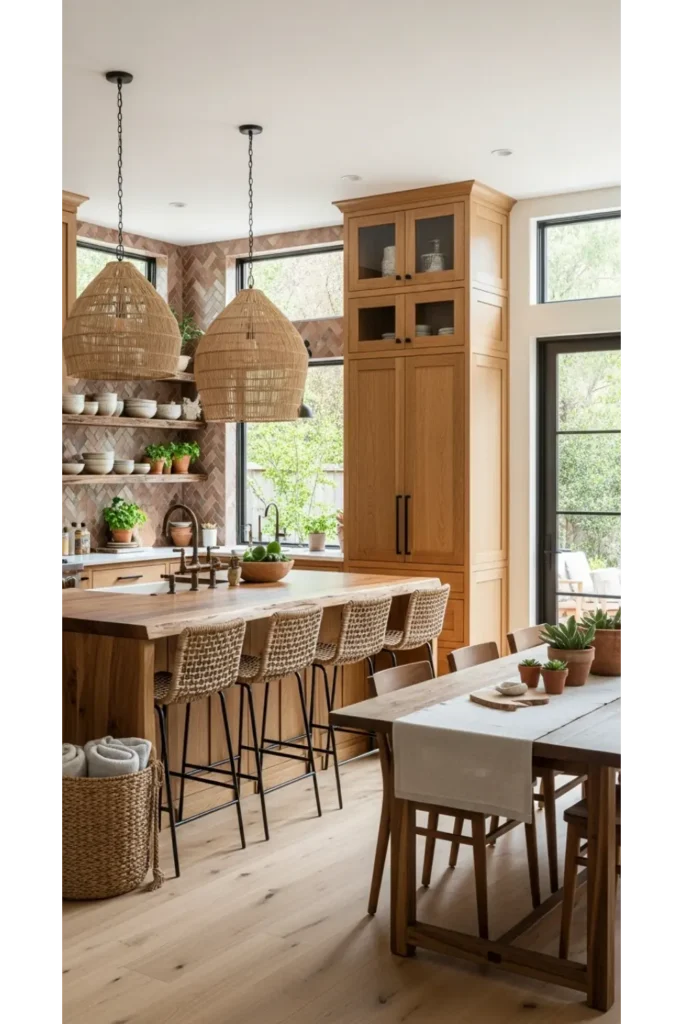
Wood introduces warmth and texture into open kitchens. It softens modern finishes and connects the kitchen to living areas. Used on cabinets, islands, or shelving, wood creates visual comfort.
Balancing wood with light colors prevents heaviness. This combination supports spacious living while maintaining a welcoming atmosphere that feels natural and grounded.
13. Glass Partitions For Flexible Separation
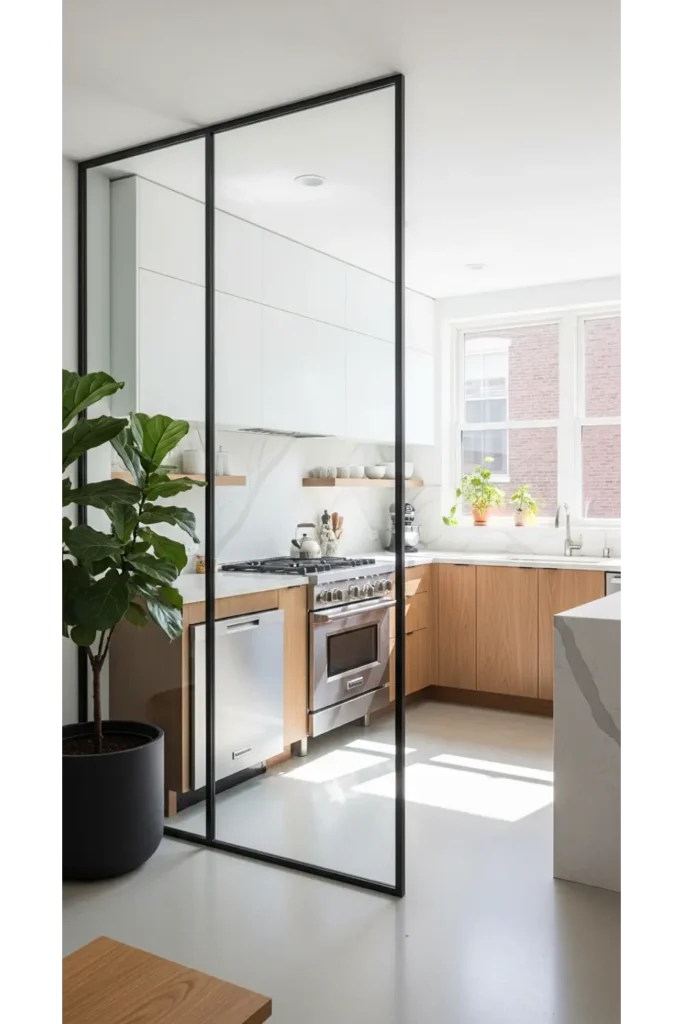
Glass partitions allow homeowners to control openness without sacrificing light or visual connection. In open kitchen design concepts, glass works as a soft boundary that separates cooking areas from living spaces while keeping the room bright and connected. Clear or lightly framed panels preserve sightlines, making the kitchen feel like part of a larger whole instead of an isolated zone.
This approach works especially well in homes that need flexibility throughout the day. Sliding or pivot glass panels help manage noise, cooking smells, and visual focus when needed. When opened, the space returns to full openness, supporting spacious living that adapts to real daily routines without feeling rigid.
14. Emphasizing Ceiling Height
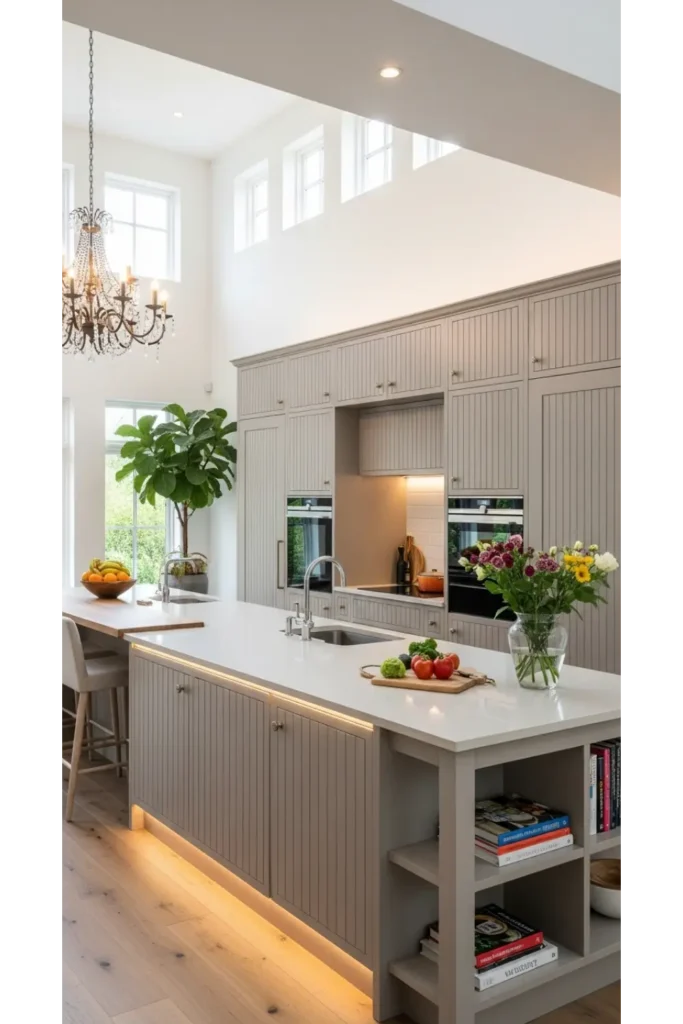
Using vertical space effectively can transform how large a kitchen feels. High ceilings paired with tall cabinetry draw the eye upward and visually stretch the room. This technique strengthens open kitchen design concepts by enhancing airflow, light distribution, and overall balance. Vertical elements reduce the boxed in feeling that shorter cabinets sometimes create.
Even in modest homes, emphasizing ceiling height improves openness. Full height storage maximizes function while maintaining clean lines. When paired with light colors and simple finishes, the kitchen feels expansive and calm. This design choice strongly supports spacious living without increasing the physical footprint of the home.
15. Matte Finishes For Visual Ease
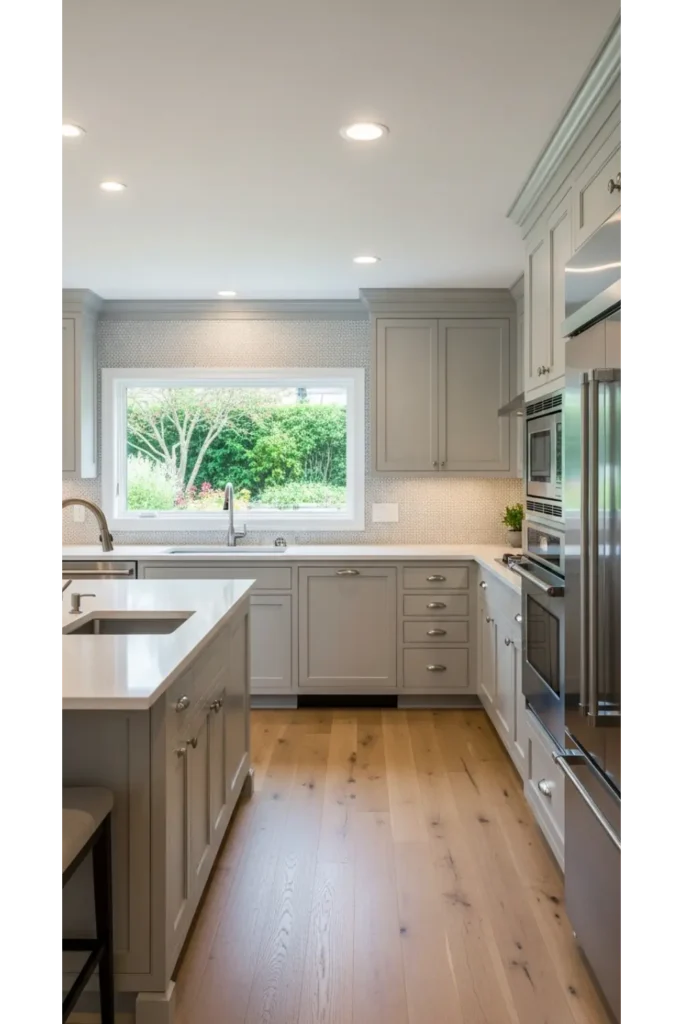
Matte finishes help open kitchens feel relaxed and visually grounded. Unlike glossy surfaces, matte materials reduce glare and reflections that can make shared spaces feel busy. In open kitchen design concepts, this softness allows the kitchen to blend naturally with living areas instead of demanding attention.
Matte cabinets and countertops also hide fingerprints and everyday wear, making them practical for active households. When paired with warm lighting and subtle textures, they support comfort and clarity. This finish choice enhances open plan kitchen spaces by keeping the environment calm, balanced, and easy to live in long term.
16. Efficient Compact Open Layouts
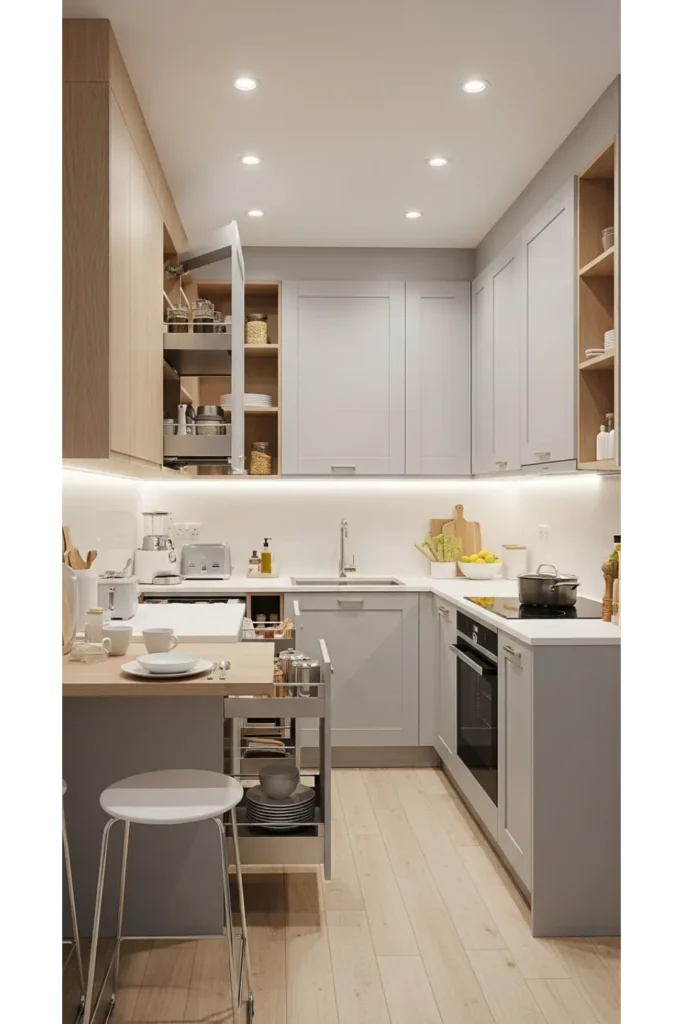
Small kitchens can still feel open when designed with intention. Compact layouts focus on efficiency, clear circulation, and thoughtful storage placement. In open kitchen design concepts, reducing unnecessary elements keeps the space functional without visual clutter. Every cabinet, surface, and pathway serves a purpose.
Light colors, integrated appliances, and vertical storage help compact kitchens breathe. Open layouts prevent tight spaces from feeling boxed in and disconnected. This approach proves that spacious living is not about size alone, but about clarity, organization, and smart design decisions that respect how people actually use their kitchens.
17. Indoor Outdoor Visual Connection
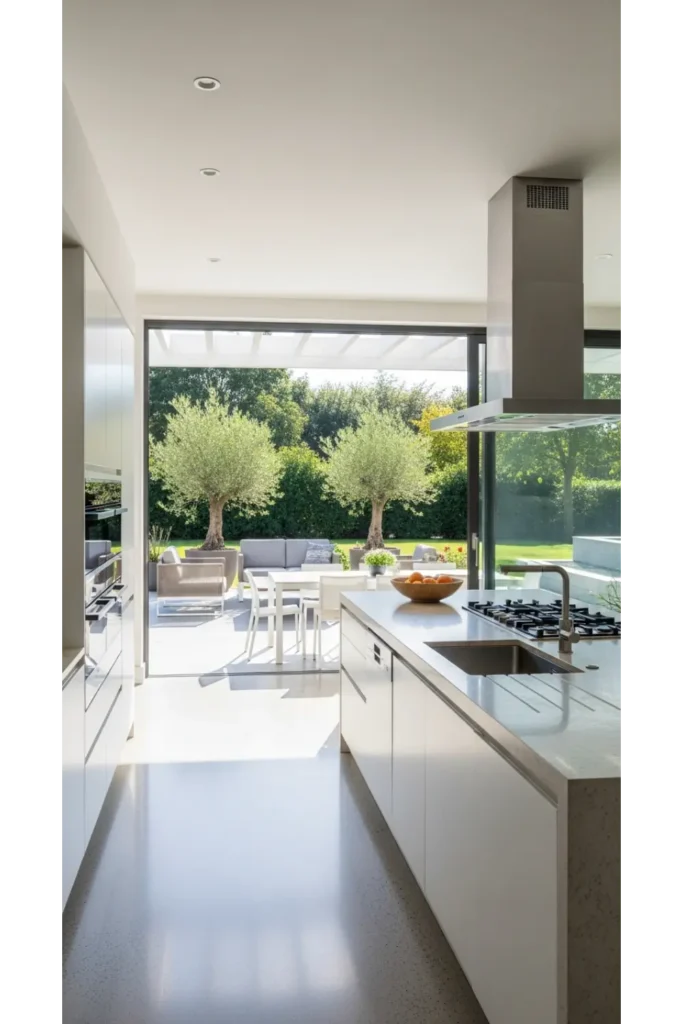
Creating a visual link between the kitchen and outdoor spaces expands the sense of openness instantly. Large glass doors, matching floor materials, and aligned sightlines blur the boundary between inside and outside. In open kitchen design concepts, this connection brings in light, movement, and a feeling of freedom.
Outdoor views add depth and reduce visual confinement. Whether opening to a patio, garden, or balcony, this design supports spacious living by extending the kitchen beyond its walls. It also encourages natural ventilation and relaxed daily living that feels connected to the surrounding environment.
18. Subtle Statement Backsplashes

A backsplash can add personality without overpowering an open kitchen. Subtle textures, soft patterns, or natural stone surfaces create visual interest while keeping the space calm. In open kitchen design concepts, restraint matters because bold designs can disrupt flow between shared areas.
Neutral backsplashes support continuity across the kitchen and living spaces. They act as a quiet backdrop rather than a focal point. This approach strengthens modern kitchen design by adding depth and character while preserving openness and balance throughout the home.
19. Curved Elements For Smooth Flow

Curved elements soften movement and improve how people circulate through an open kitchen. Rounded islands and counters reduce sharp transitions and encourage natural flow between zones. In open kitchen design concepts, curves help the space feel more welcoming and less rigid.
Beyond aesthetics, curves improve safety and comfort in busy households. They guide movement gently and reduce visual tension. This design choice supports spacious living by making the kitchen feel fluid, approachable, and well integrated into the overall layout of the home.
20. Soft Monochrome Styling
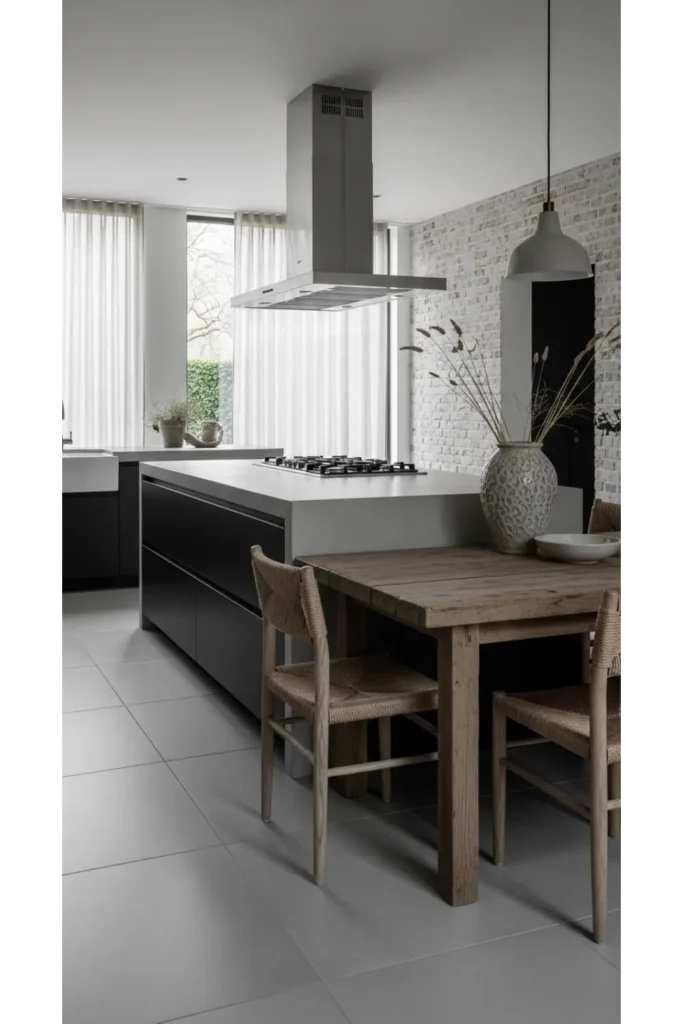
Using a monochrome palette creates harmony and visual continuity across an open kitchen. Variations of one color reduce contrast between surfaces, helping the space feel calm and cohesive. In open kitchen design concepts, this approach prevents visual breaks that can make a room feel smaller.
Texture plays a key role in keeping monochrome kitchens interesting. Wood grain, stone, and fabric accents add depth without clutter. This balance supports spacious living by simplifying the visual experience while maintaining warmth and character.
21. Clear Functional Work Zones
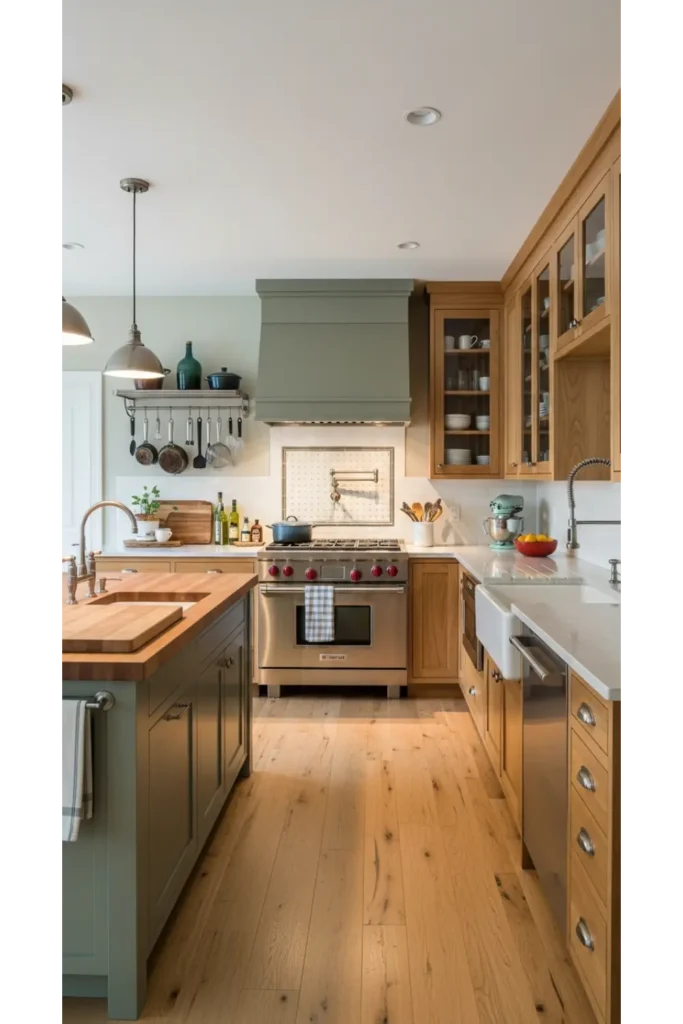
Clear work zones improve efficiency and reduce daily frustration. In open kitchen design concepts, defining prep, cooking, and cleaning areas helps the kitchen function smoothly without physical barriers. Organization replaces walls as the primary structure.
When zones flow logically, movement feels effortless and clutter stays contained. This layout keeps the kitchen practical while remaining visually open. It supports open plan kitchen living by balancing usability with connection to surrounding spaces.
22. Textured Minimalism
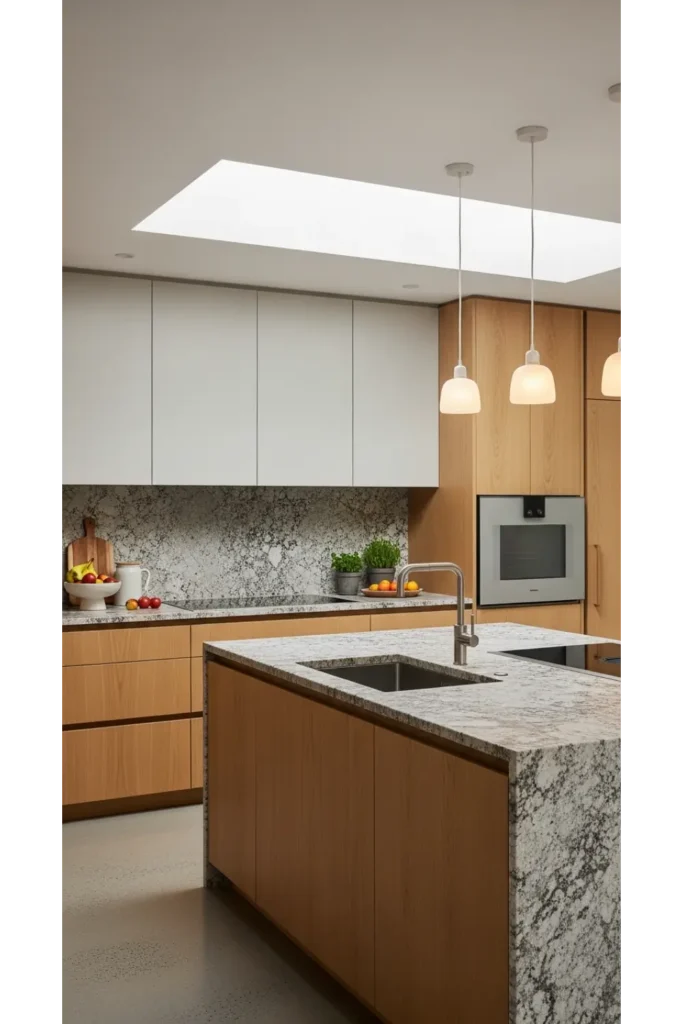
Minimalism works best when paired with texture. Clean lines and simple forms create openness, while natural materials prevent the space from feeling cold. In open kitchen design concepts, textured minimalism offers clarity without sacrificing comfort.
Stone countertops, wood cabinetry, and subtle fabric elements add depth naturally. This approach supports spacious living by removing excess while keeping the environment warm, human, and inviting for everyday use.
23. Family Focused Open Layouts
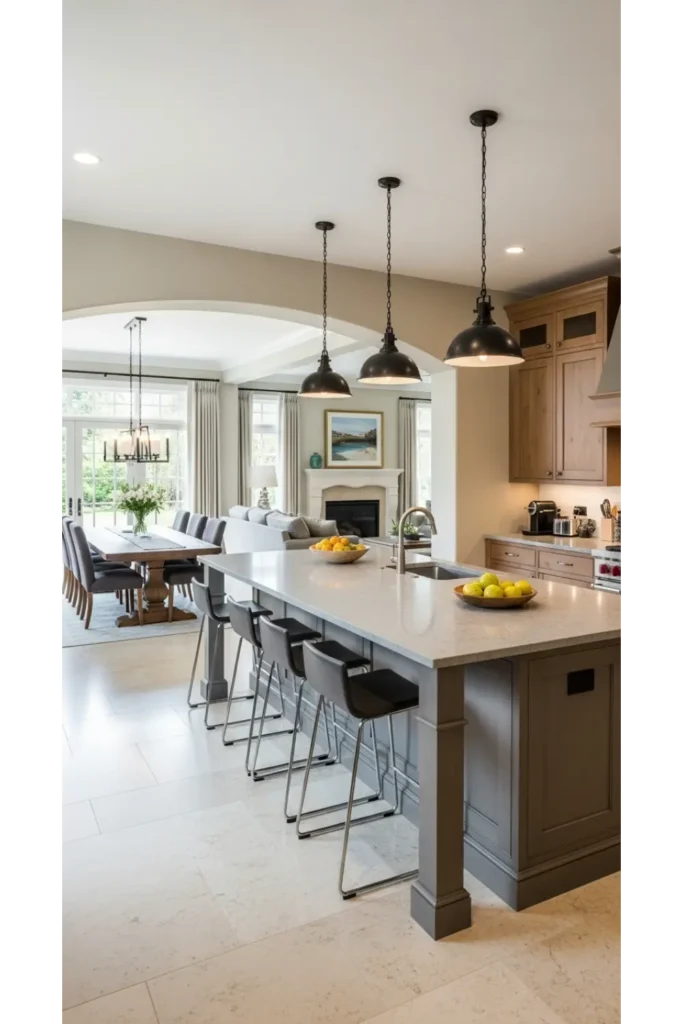
Family focused open kitchens prioritize visibility and connection. Clear sightlines allow parents to cook while staying engaged with children or guests. In open kitchen design concepts, this openness supports communication and shared routines.
Durable materials, open seating, and safe circulation paths make the space practical for daily life. This layout strengthens spacious living by turning the kitchen into a shared hub rather than a closed off workspace.
24. Timeless Design For Long Term Comfort
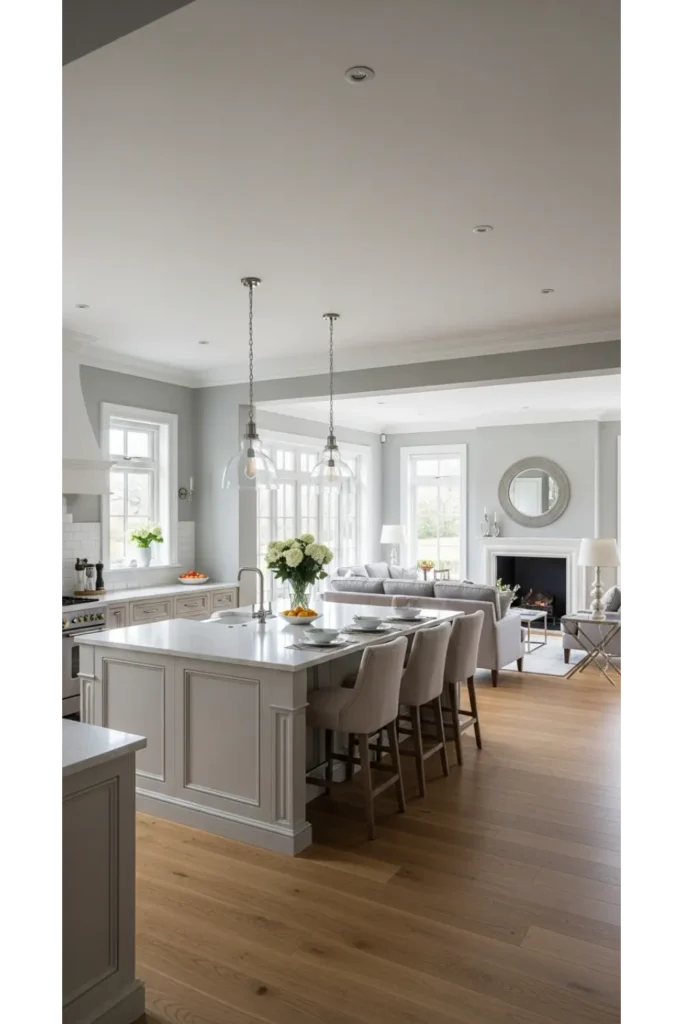
Timeless design focuses on proportion, material quality, and simplicity. Neutral palettes and classic layouts age well and adapt to changing lifestyles. In open kitchen design concepts, timeless choices prevent the space from feeling dated or overwhelming over time.
This approach supports spacious living by maintaining visual calm year after year. Instead of chasing trends, it prioritizes comfort, flexibility, and lasting appeal that continues to serve the home and its people naturally.
Conclusion
A well designed open kitchen supports more than aesthetics. It shapes how people move, connect, and live in their homes. By choosing thoughtful layouts, balanced materials, and human centered details, these open kitchen design concepts help create spaces that feel open, calm, and enduring.