24 Shipping Container Homes for Smart Living
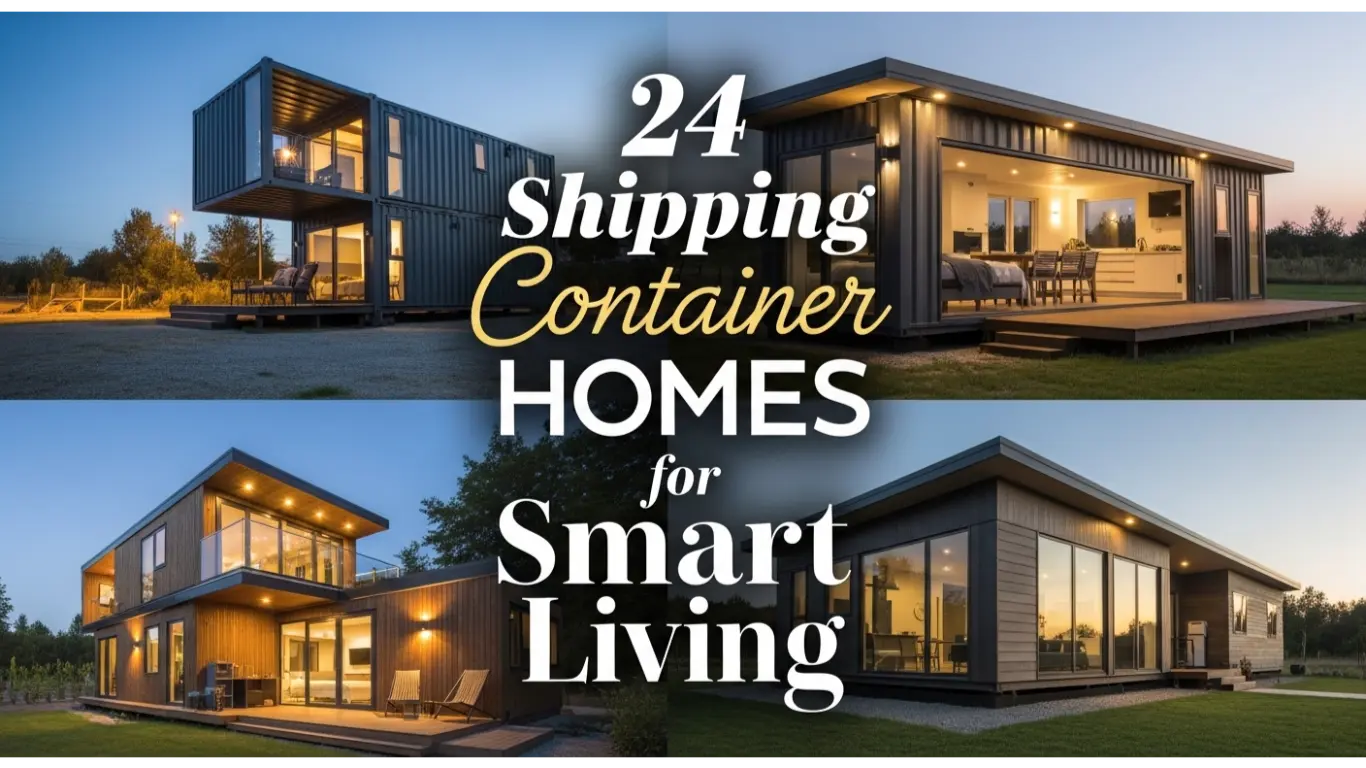
Smart design begins with bold thinking. Shipping container homes turn industrial steel boxes into efficient, stylish living spaces that support modern lifestyles. Homeowners choose them for affordability, faster construction, durability, and eco conscious design. These homes adapt to cities, suburbs, coastlines, and remote land. If you want a flexible space that saves money and feels unique, these fresh ideas will help you imagine what smart living can truly look like.
1. Modern Minimalist Retreat
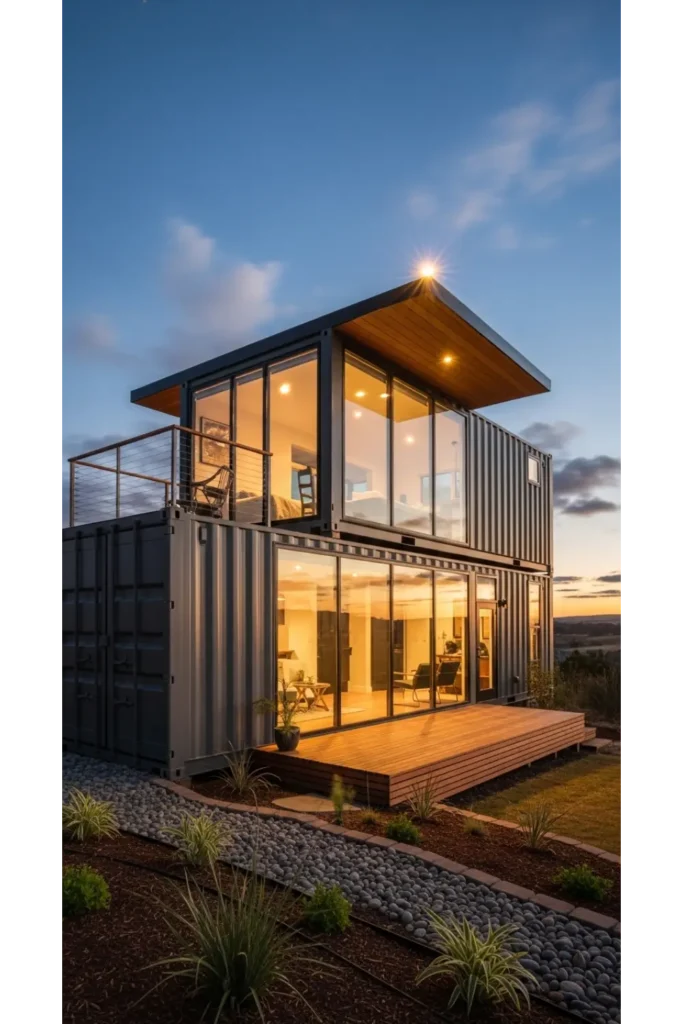
Shipping container homes fit perfectly with minimalist design because their clean lines support simple architecture. Large sliding glass doors open the living area to natural light, while pale wood floors soften the steel frame. Neutral walls, hidden storage, and built in shelving keep the space clutter free. This layout works well for couples or small families who value calm interiors and efficient planning.
Inside, an open concept kitchen connects smoothly to the living area. Smart insulation keeps the temperature stable year round. Tall ceilings created by modifying container walls make the room feel larger. Every design choice serves a purpose, which reduces waste and supports practical daily living.
Pro Tip: Choose multi functional furniture like storage benches to maximize compact floor space.
2. Two Story Urban Stack
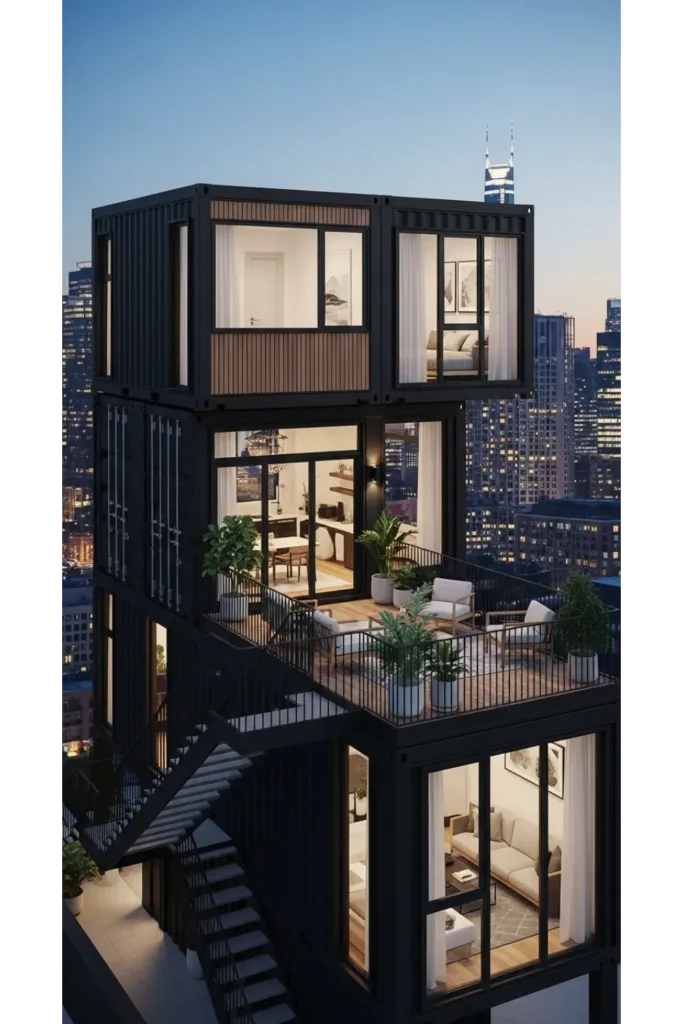
Stacked containers create vertical living for tight city lots. The lower level often holds the kitchen and lounge area, while bedrooms sit upstairs for privacy. A rooftop terrace adds outdoor space without using extra land. This design suits urban neighborhoods where property prices run high.
Wide windows on both levels bring in daylight and reduce electricity use. Smart staircases include built in drawers for extra storage. With proper engineering, stacked steel units remain strong and safe. This layout offers townhouse comfort with a bold architectural look.
Pro Tip: Add rooftop planters to create privacy and improve insulation.
3. Off Grid Eco Cabin
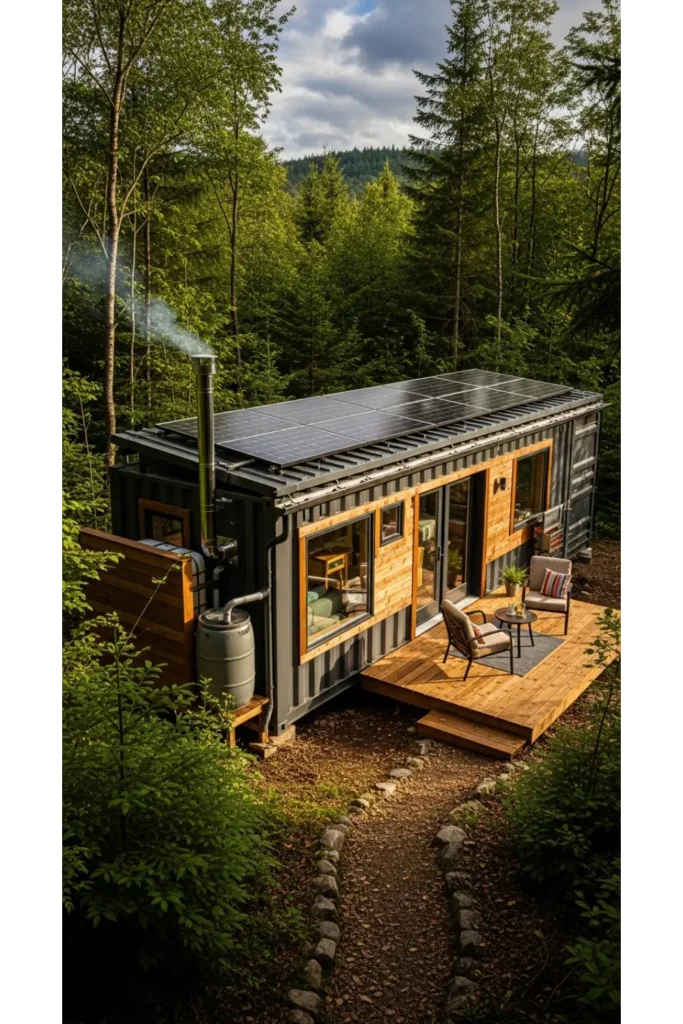
An off grid cabin supports sustainable living through solar panels and rainwater collection. Thick insulation and energy efficient windows reduce heating needs. Composting systems lower water use and protect the environment. This setup works well in rural areas where utilities may not reach.
Warm wood paneling inside balances the industrial shell. Large glass doors frame views of trees or mountains. Compact kitchens and smart storage keep daily life simple and organized. Owners enjoy independence while lowering long term energy bills.
Pro Tip: Face the longest side toward sunlight for better natural heating.
4. Family Courtyard Design
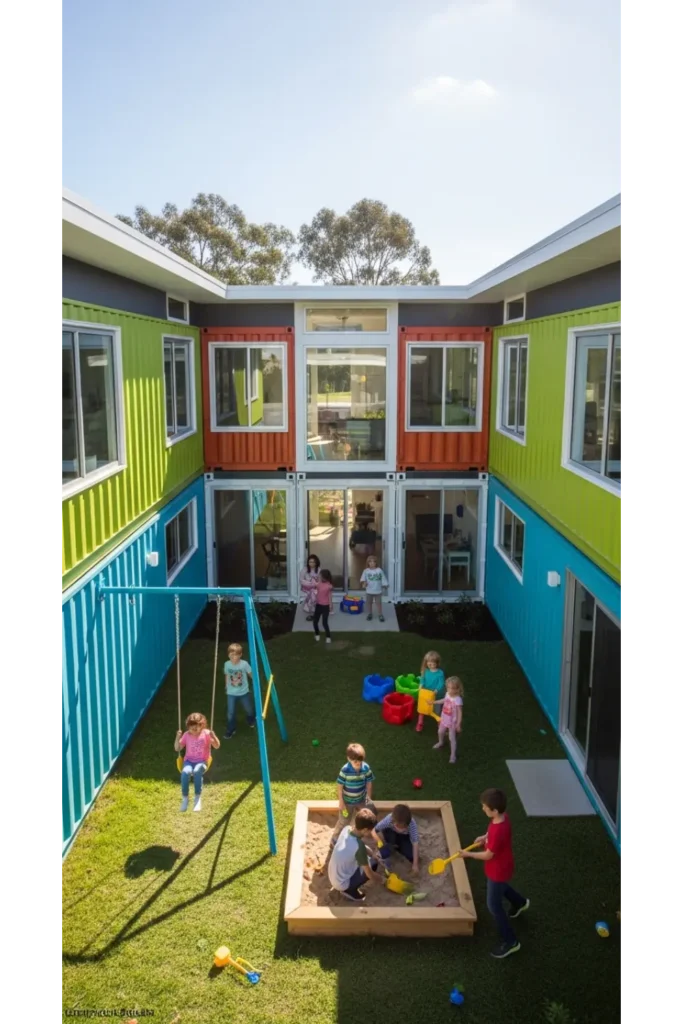
Arranging containers in a U shape creates a protected courtyard at the center. Families gain a safe outdoor space where children can play within sight. Bedrooms sit in separate wings, which adds privacy. The shared living area connects everyone at the heart of the home.
Glass doors open directly to the courtyard, allowing airflow and natural light. A small garden or seating area turns the space into an outdoor living room. This design blends comfort with smart planning for growing households.
Pro Tip: Install sliding doors to improve ventilation during warm seasons.
5. Luxury Industrial Loft
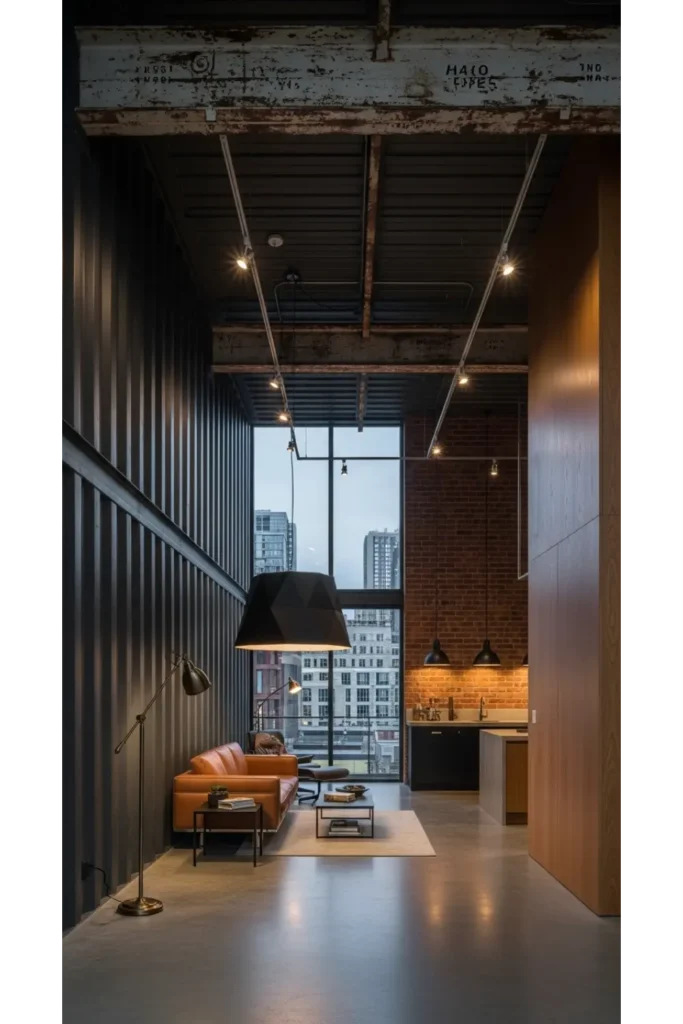
A loft style layout highlights exposed steel and concrete finishes. High ceilings and open living areas create a bold, modern feel. Custom kitchens, smart appliances, and spa inspired bathrooms elevate comfort. This concept suits homeowners who enjoy urban design with character.
Large factory style windows brighten the interior and highlight textures. Soft furniture and layered lighting balance metal surfaces. The result feels upscale yet authentic. It proves container construction can support high end living.
Pro Tip: Use warm lighting tones to soften the industrial elements.
6. Compact Studio Pod
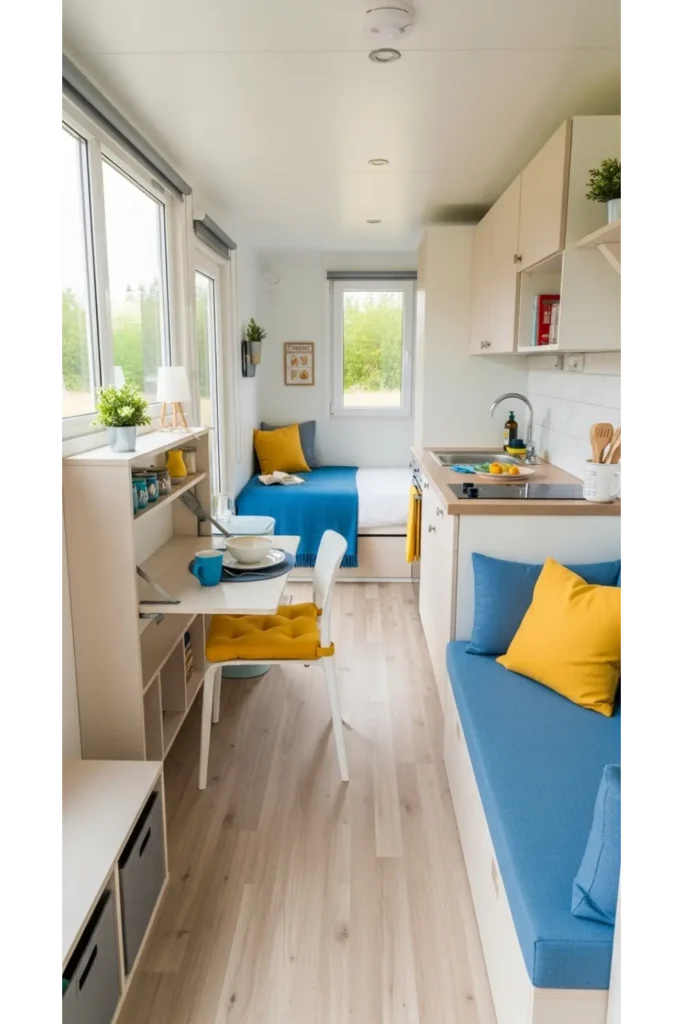
A single container can become a fully functional studio. Designers include a small kitchen, bathroom, sleeping nook, and work desk in one efficient layout. Foldable tables and wall beds create flexible space during the day. This style suits students, remote workers, or rental investors.
Large windows prevent the unit from feeling tight. Light paint colors and mirrors enhance the sense of space. Proper insulation keeps energy costs low. It offers affordable housing without sacrificing comfort.
Pro Tip: Install vertical shelving to free up floor space.
7. Coastal Breeze Retreat
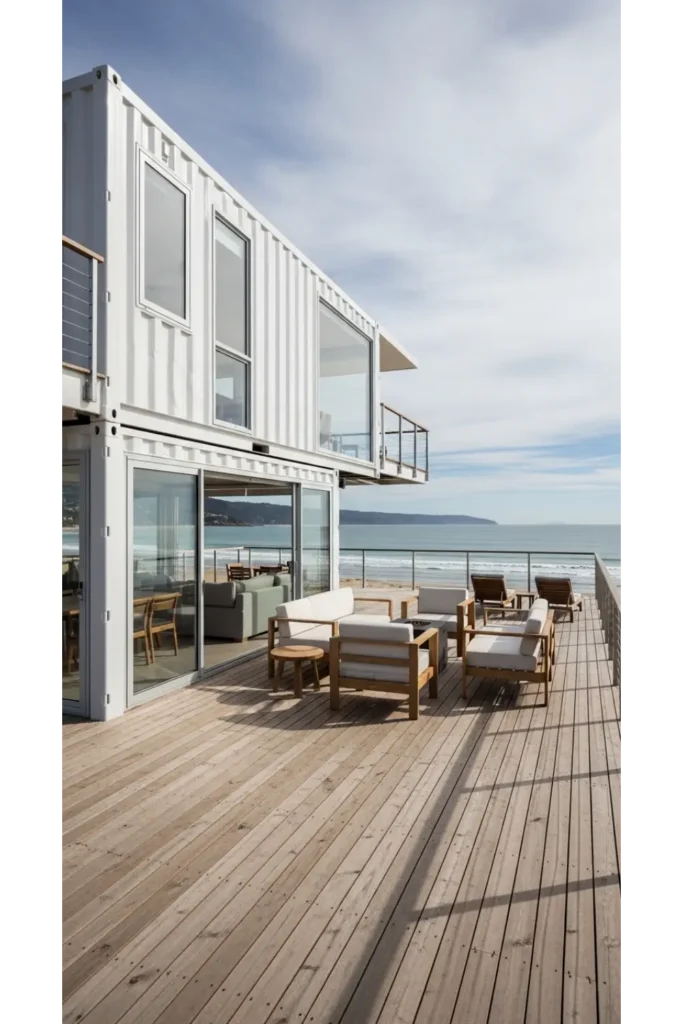
A coastal design focuses on airflow and outdoor living. Elevated foundations protect the structure from moisture and flooding. Wide decks extend the living space toward the ocean. Durable finishes resist salt air and humidity.
Inside, airy fabrics and light colors reflect natural sunlight. Large sliding doors encourage cross ventilation. This setup creates a relaxed seaside lifestyle with modern durability.
Pro Tip: Choose corrosion resistant paint to extend exterior life.
8. Green Roof Garden Home
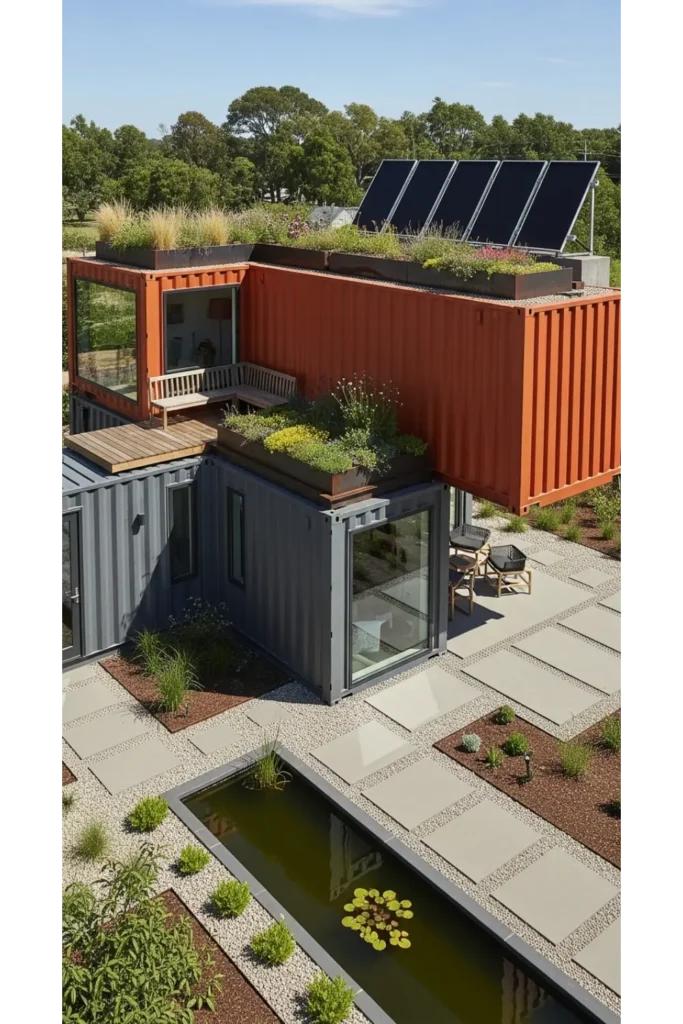
A rooftop garden transforms unused space into a natural retreat. Plants improve insulation and manage rainwater runoff. Solar panels often share the roof, increasing efficiency. This eco conscious design suits urban environments.
Indoor spaces benefit from cooler temperatures in summer. Residents can grow herbs or vegetables above their living area. The blend of sustainability and design supports long term savings.
Pro Tip: Consult a structural engineer before installing heavy soil systems.
9. Glass Wall Panorama
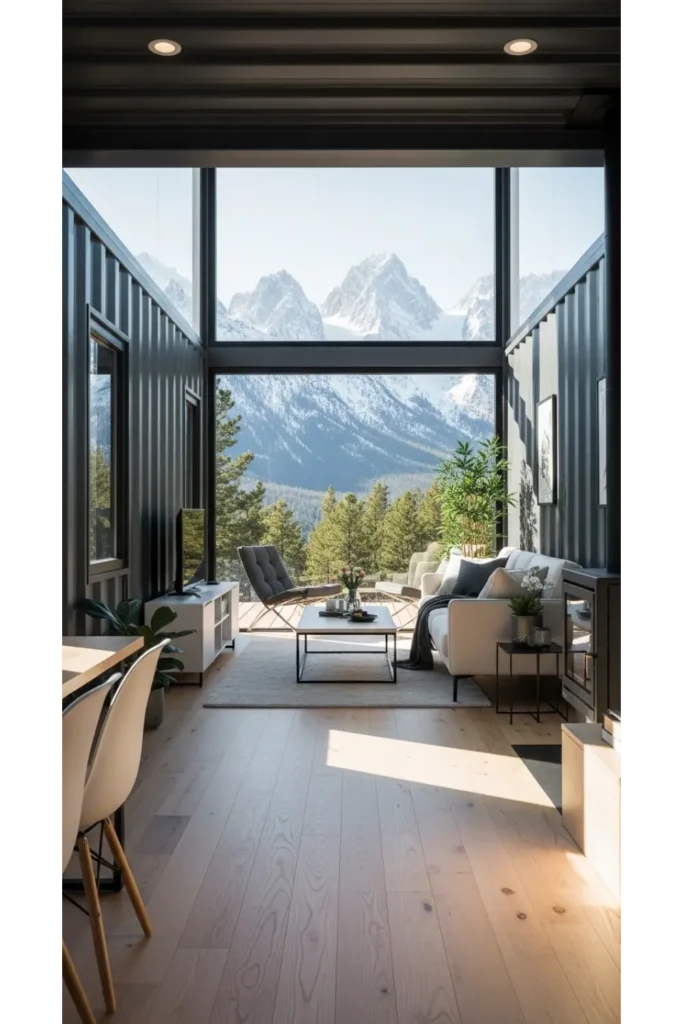
Replacing one wall with reinforced glass opens the home to stunning views. Natural light fills the interior, reducing daytime energy use. This design works best in scenic areas with privacy.
Strategic shading controls heat during hot months. Open layouts maximize the impact of outdoor scenery. Owners enjoy a bright and uplifting environment daily.
Pro Tip: Use double glazed glass for better insulation.
10. Smart Tech Integrated Home
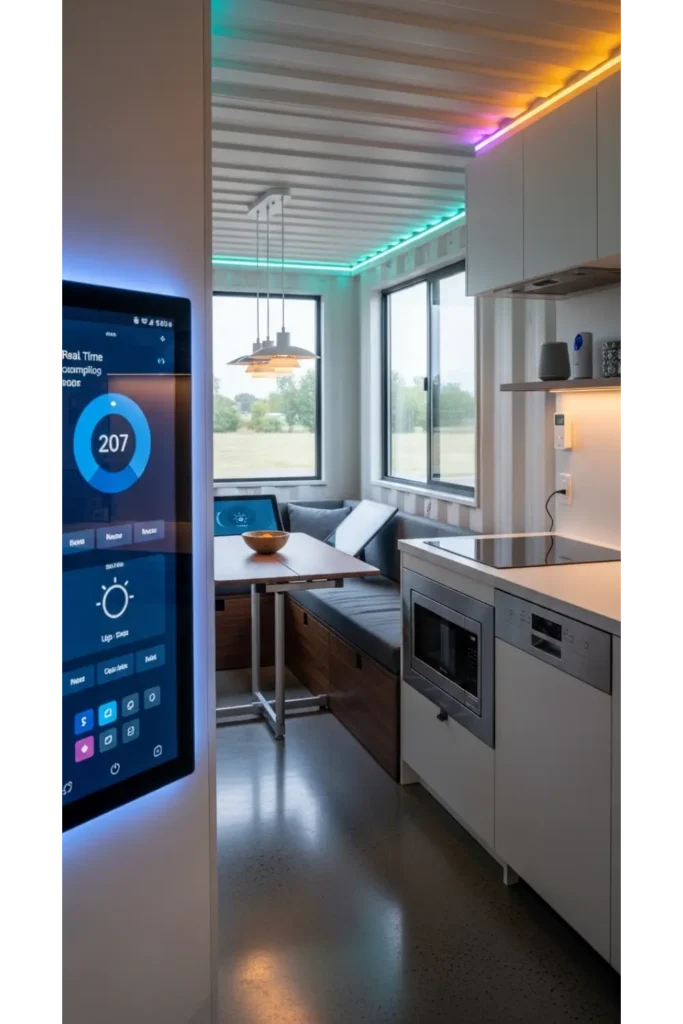
Smart technology upgrades everyday living. Automated lighting, climate control, and security systems improve efficiency. Compact layouts pair well with tech driven design.
Energy monitoring apps track usage and reduce waste. Voice controlled devices add convenience without clutter. This approach blends innovation with practical housing.
Pro Tip: Install programmable thermostats to cut heating costs.
11. Backyard Guest Suite
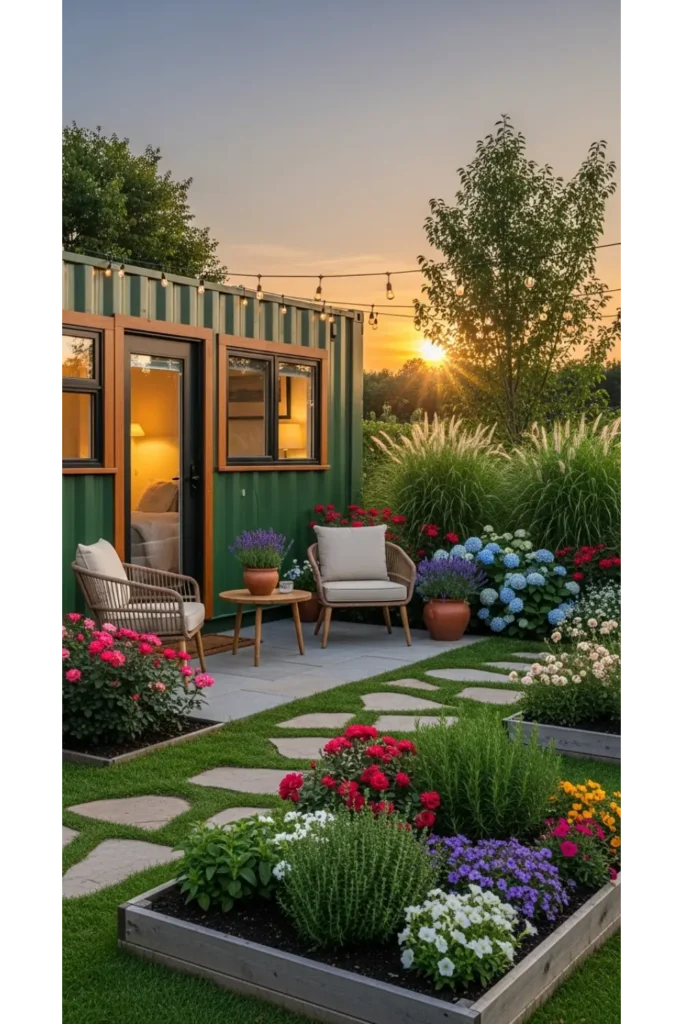
A backyard suite adds space without full renovation. It works well for guests or rental income. Separate entrances maintain privacy for both households.
Compact kitchens and bathrooms provide full independence. Quick construction reduces disruption to the main house. This option increases property value efficiently.
Pro Tip: Match exterior finishes to the main home for visual harmony.
12. Rustic Farmhouse Blend
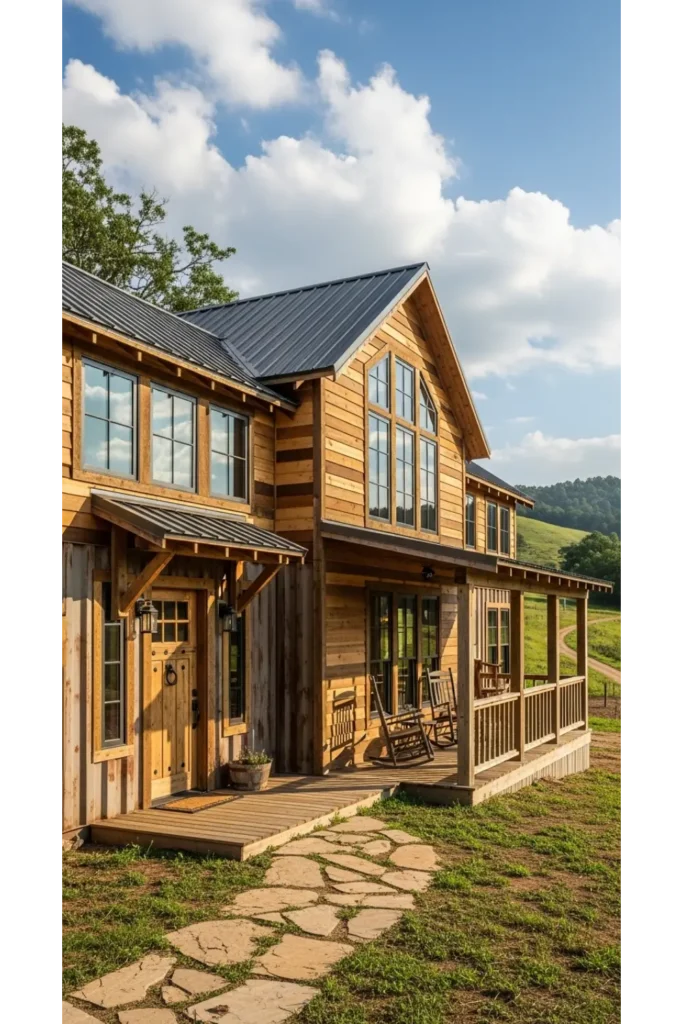
Combining steel frames with reclaimed wood creates farmhouse charm. Wide porches and metal roofs protect against weather. This design suits countryside land.
Open kitchens and cozy fireplaces bring warmth indoors. Natural textures balance industrial strength. It delivers comfort with durability.
Pro Tip: Use reclaimed wood for sustainable character.
13. L Shaped Corner Layout
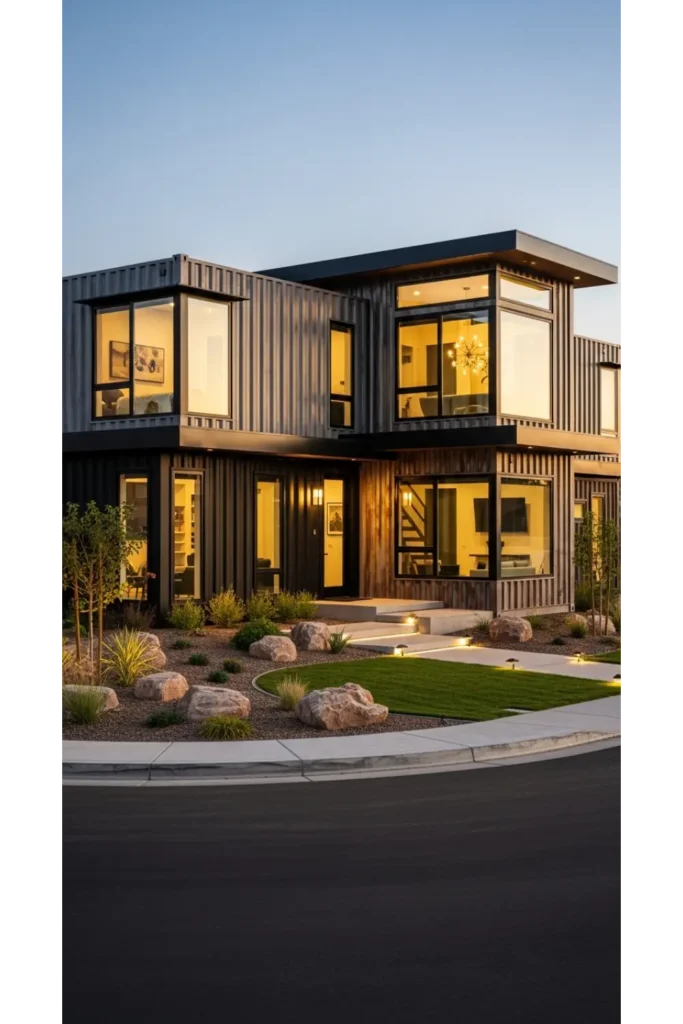
An L shaped layout creates a natural division between public and private zones, which improves both comfort and privacy. One wing can hold bedrooms and bathrooms, while the other supports the kitchen and living area. This structure works especially well on corner lots because it defines outdoor space clearly. Homeowners gain a protected patio area that feels intentional rather than leftover.
Large corner windows bring in sunlight from two directions, making the interior feel open and bright throughout the day. The angle of the layout also improves airflow, which supports energy efficiency in warm climates. Smart placement of doors allows smooth movement between indoor and outdoor areas. This design blends practical zoning with modern architectural appeal.
Pro Tip: Add built in bench seating along the inner corner patio to maximize function without crowding the yard.
14. Floating Lake House
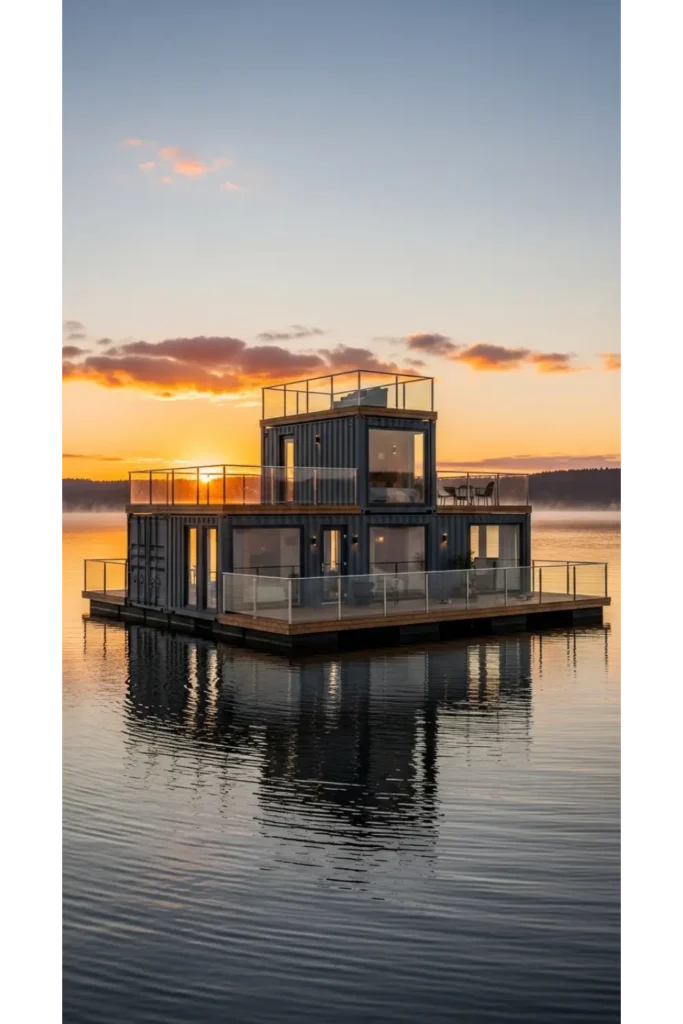
A floating lake house transforms durable steel modules into a peaceful waterfront retreat. Engineers secure the structure on reinforced floating platforms designed for stability and balance. This approach creates a unique lifestyle where water surrounds the home on all sides. Residents enjoy privacy, scenic views, and direct lake access without traditional shoreline construction challenges.
Panoramic windows reflect the changing colors of the water and sky throughout the day. Thoughtful waterproofing and marine grade insulation protect the structure from moisture damage. Interior layouts often feature open living spaces that connect directly to a deck. The result feels calm, immersive, and connected to nature.
Pro Tip: Install adjustable anchoring systems to maintain stability during seasonal water level changes.
15. Desert Climate Design
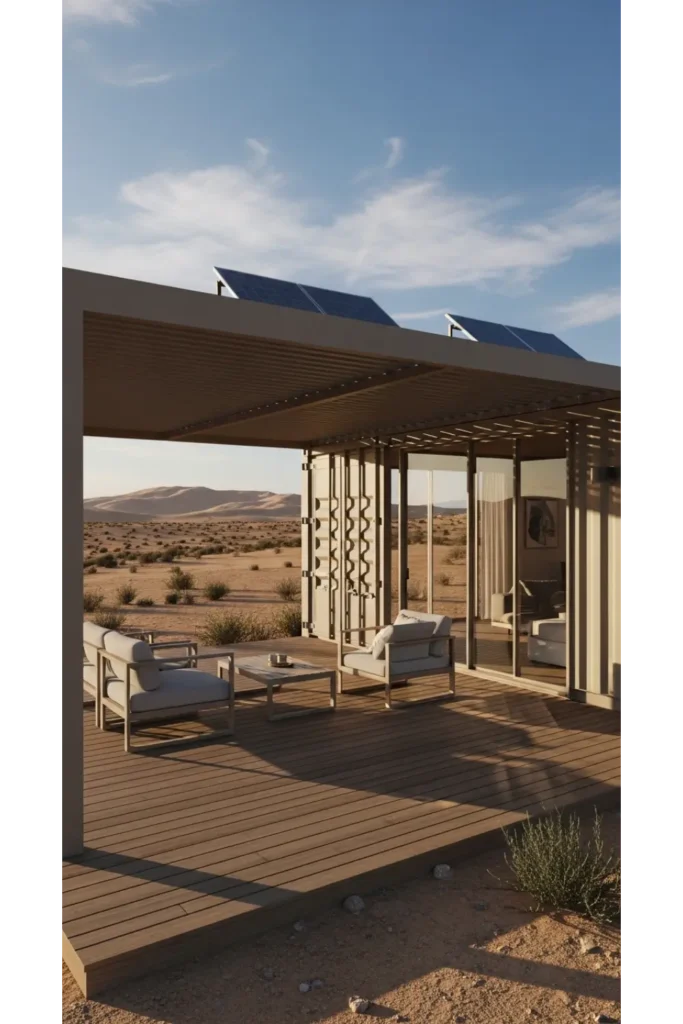
Designing for desert regions requires careful planning around heat and sun exposure. Extended roof overhangs and shaded patios block direct sunlight during peak hours. High quality insulation and reflective exterior coatings reduce heat absorption. This approach keeps indoor temperatures stable even during intense summer days.
Interior layouts focus on cross ventilation and airflow to cool the space naturally. Light colored finishes reflect sunlight instead of trapping heat. Solar panels perform efficiently in sunny climates, which lowers electricity costs over time. This concept proves that strong design choices can turn extreme environments into comfortable living spaces.
Pro Tip: Position windows strategically to capture morning light while avoiding harsh afternoon sun.
16. Multi Container Mansion
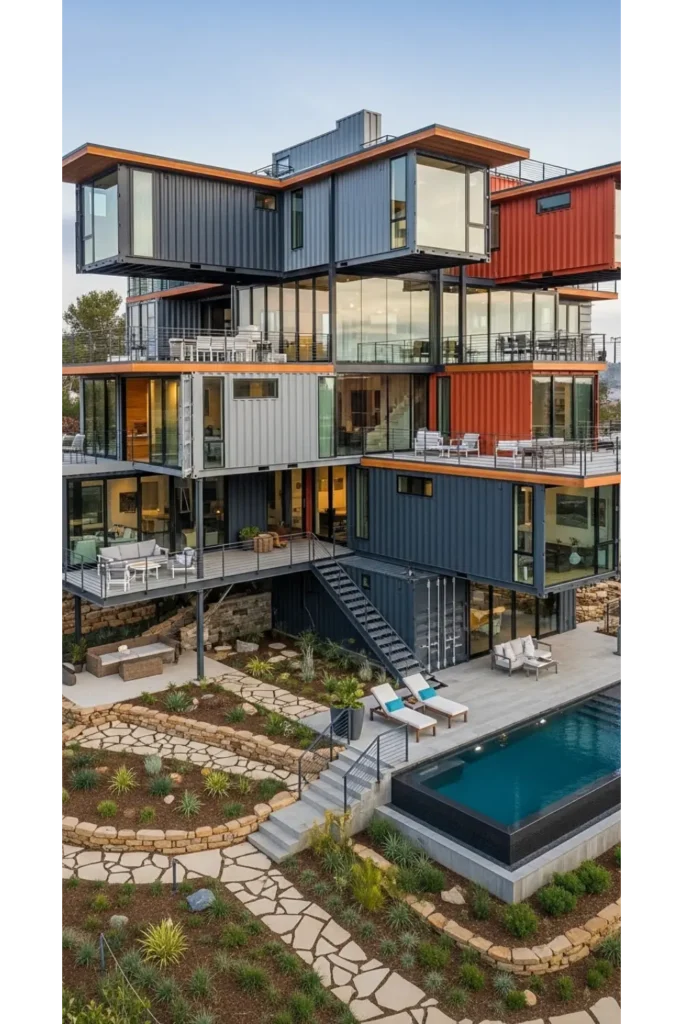
Combining several containers creates a spacious residence that rivals traditional houses in scale. Designers remove selected interior walls to open large living rooms and expansive kitchens. Multiple bedrooms, home offices, and entertainment areas fit comfortably within the expanded footprint. This layout works well for larger families who want both flexibility and modern design.
Exterior facades often mix steel with wood, stone, or glass to soften the industrial look. Thoughtful floor planning ensures plumbing and electrical systems remain efficient despite the size. High ceilings and wide hallways prevent the space from feeling segmented. This design demonstrates how modular construction can support luxury living without sacrificing durability.
Pro Tip: Plan utility lines early in the design phase to avoid costly structural changes later.
17. Portable Tiny Home
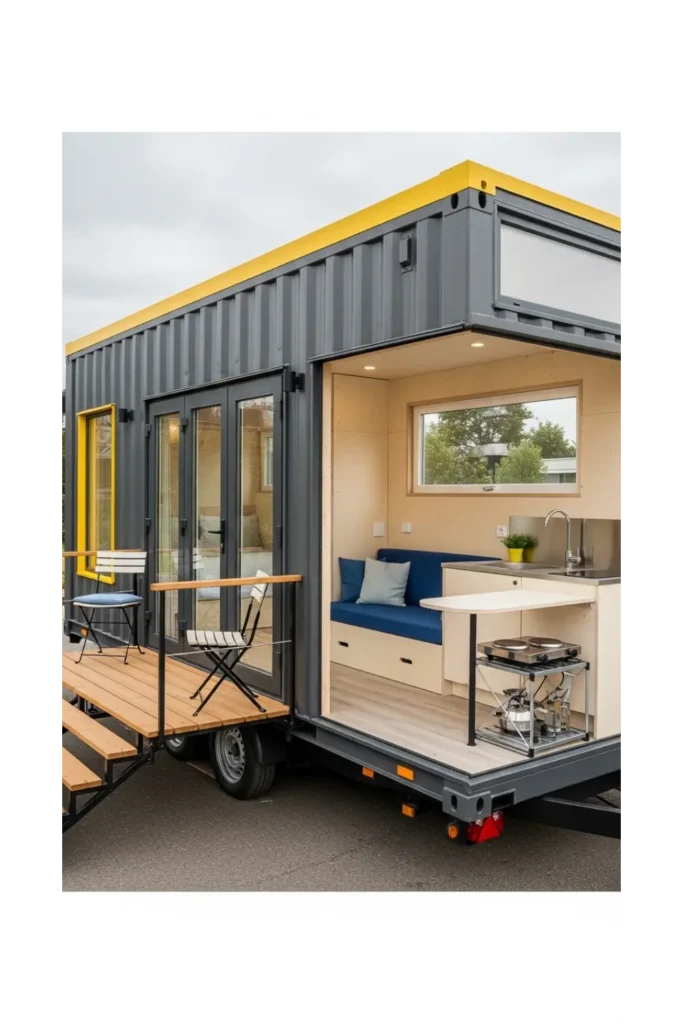
A portable tiny home appeals to those who value mobility and independence. Builders mount the container securely onto a reinforced trailer base that meets road safety standards. This design allows owners to relocate without giving up the comfort of a permanent structure. It suits travelers, remote workers, and minimalist homeowners.
Inside, foldable furniture and hidden storage maximize every square foot. Compact kitchens and bathrooms use space saving fixtures that maintain daily comfort. Smart insulation ensures the home performs well in different climates. Owners enjoy flexibility without sacrificing durability or style.
Pro Tip: Research regional transport regulations before finalizing dimensions and weight.
18. Container and Glass Hybrid
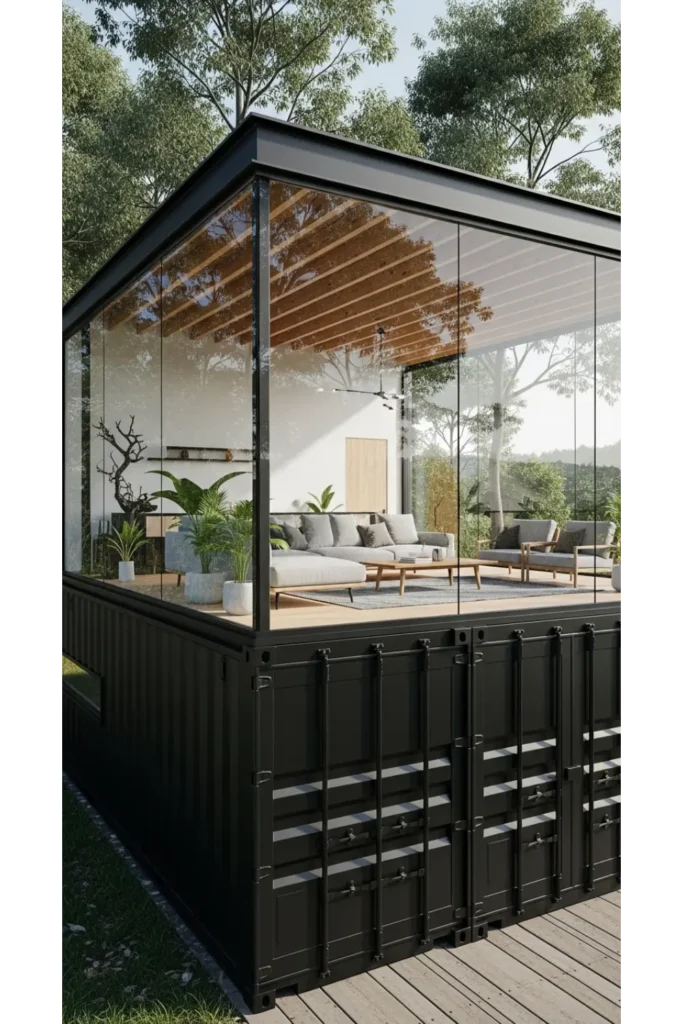
Blending steel modules with expansive glass sections creates a bold architectural statement. The solid container frame provides strength, while glass panels introduce openness and transparency. This combination suits homeowners who want modern aesthetics with structural reliability.
Open interiors benefit from abundant daylight, which reduces reliance on artificial lighting. Strategic placement of glass walls frames outdoor views while maintaining insulation through double glazing. The contrast between industrial steel and clear glass adds visual interest. This design balances strength and elegance in a practical way.
Pro Tip: Reinforce load bearing areas carefully before replacing steel walls with glass panels.
19. Hillside Step Design
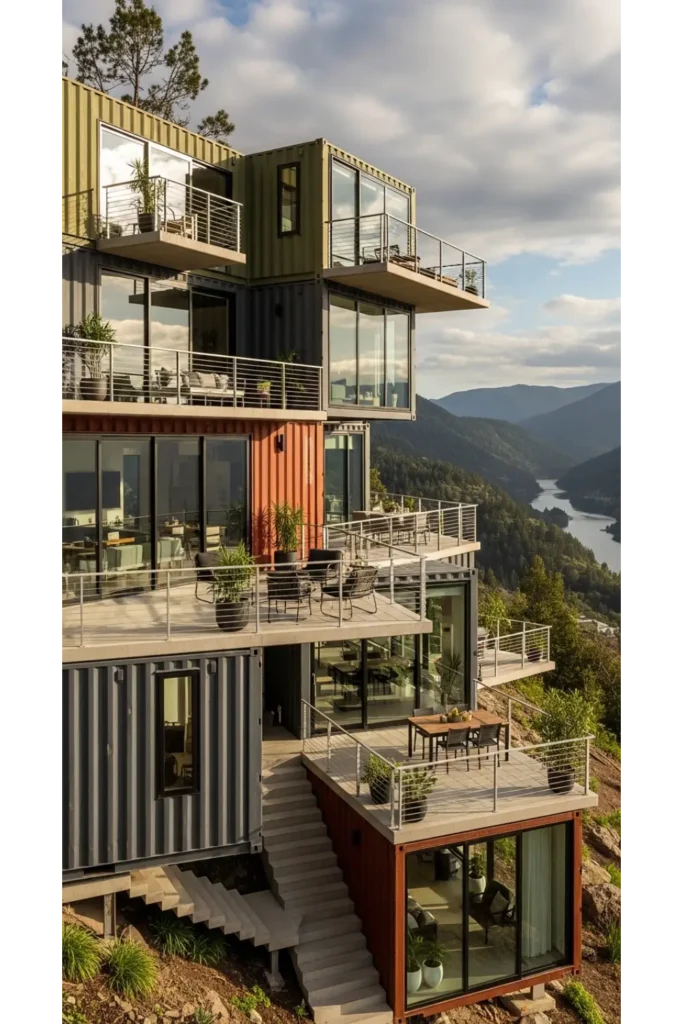
Building on sloped land becomes easier with a stepped layout that follows natural contours. Instead of flattening the terrain, each container level rests slightly above the next. This approach reduces excavation costs and preserves the landscape.
Each tier can feature a private terrace or balcony overlooking the valley. Interior spaces connect through short staircases that create distinct yet cohesive zones. Proper foundation planning ensures long term stability on uneven ground. This design turns challenging terrain into a visual advantage.
Pro Tip: Conduct a detailed soil analysis before placing foundations on a slope.
20. Snow Ready Mountain Home
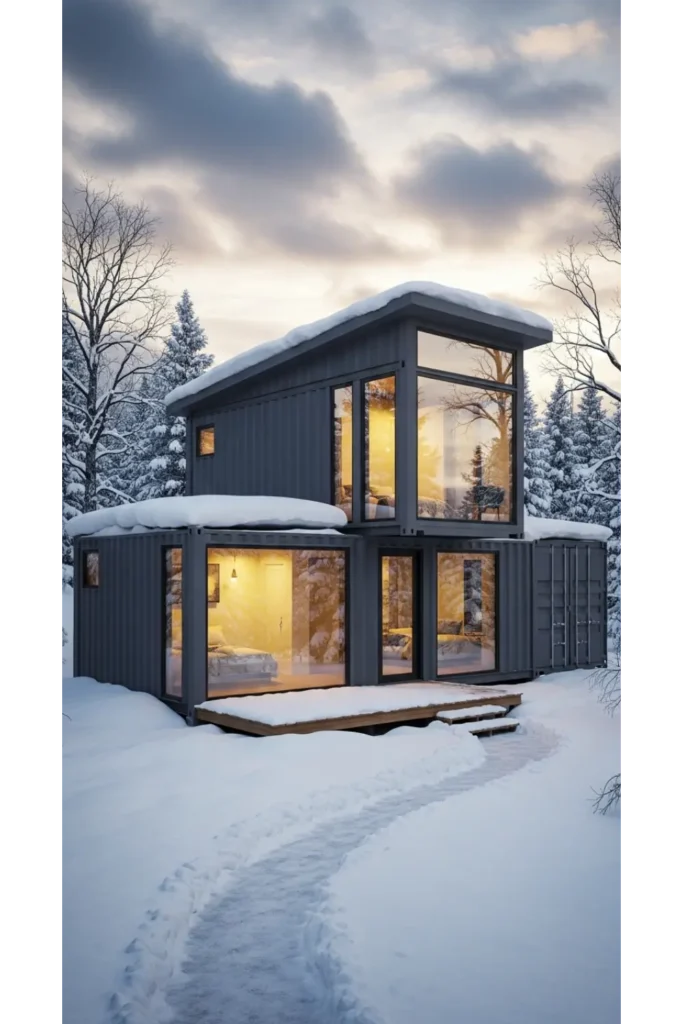
Mountain climates demand strong insulation and smart roof design. Steep roof angles prevent heavy snow buildup and protect the structure. High performance insulation keeps indoor temperatures steady during freezing winters.
Triple pane windows minimize heat loss while allowing natural light inside. Interiors often feature warm wood finishes that create a cozy atmosphere against the snowy backdrop. This design handles harsh conditions while maintaining comfort and style.
Pro Tip: Install radiant floor heating for consistent warmth throughout winter months.
21. Creative Artist Studio
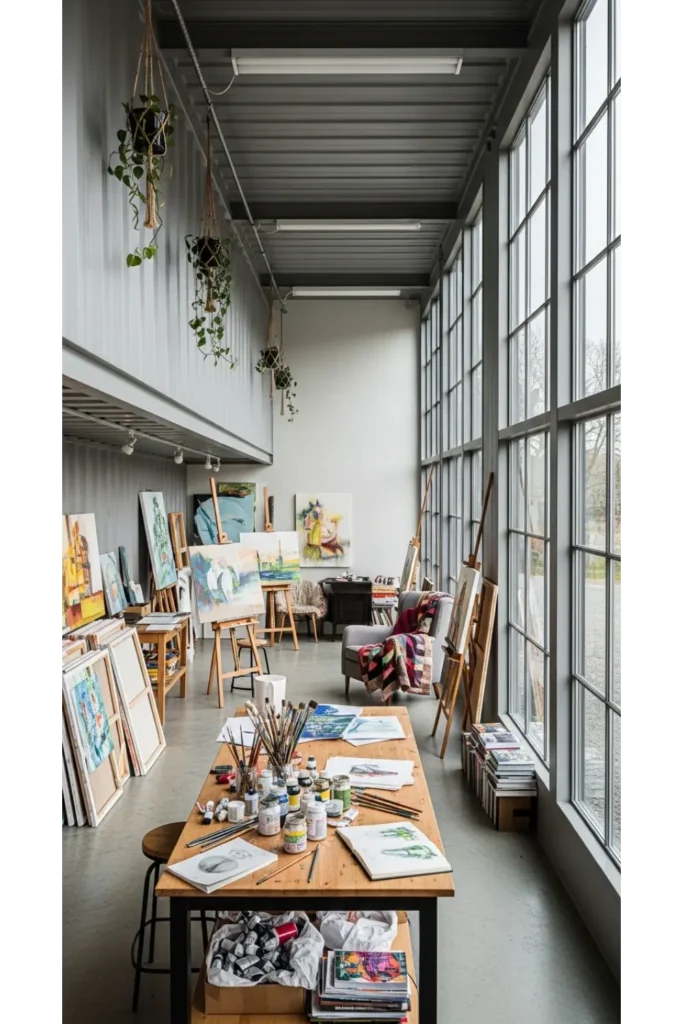
An artist studio built from containers offers a durable and flexible workspace. Wide doors and large windows bring in natural light, which supports painting, sculpting, and design projects. The open interior allows easy movement and rearrangement of equipment.
Durable flooring withstands heavy tools and materials without damage. High ceilings create vertical space for larger artwork or storage racks. This setup provides an affordable and inspiring environment for creative professionals.
Pro Tip: Use adjustable track lighting to control brightness for detailed work.
22. Dual Rental Duplex
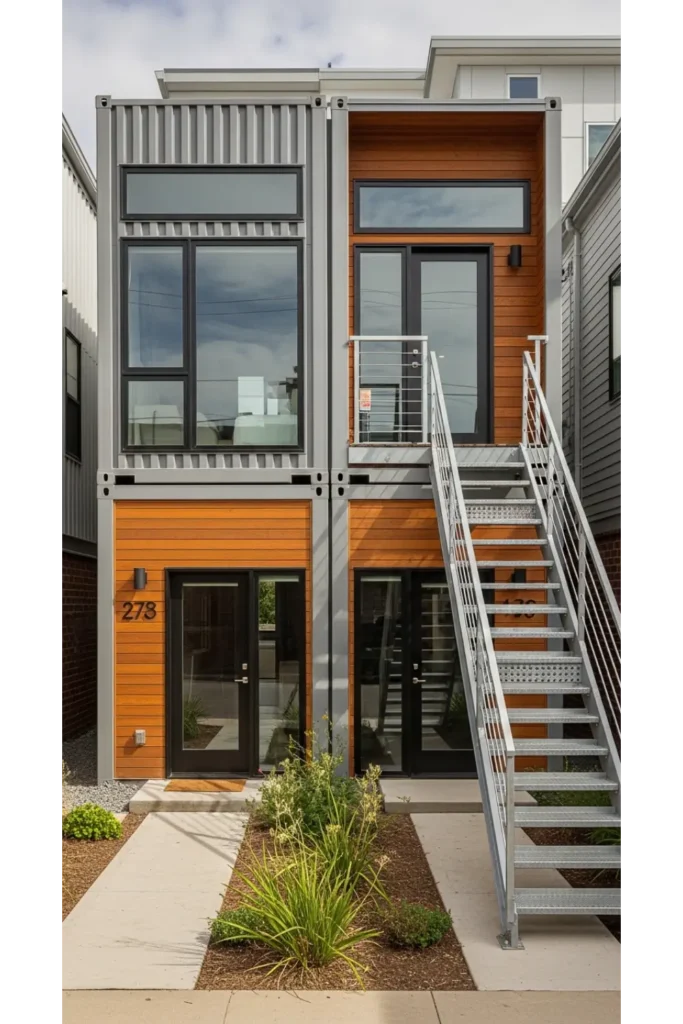
A duplex layout divides the structure into two independent living units. Separate entrances ensure privacy for each household. This design works well for rental income or multi generational living arrangements.
Efficient floor plans reduce construction costs while maintaining comfort. Proper sound insulation between units enhances privacy and livability. Owners benefit from steady income potential while maximizing land use.
Pro Tip: Install separate utility meters for accurate billing and easier management.
23. Garden Integrated Home
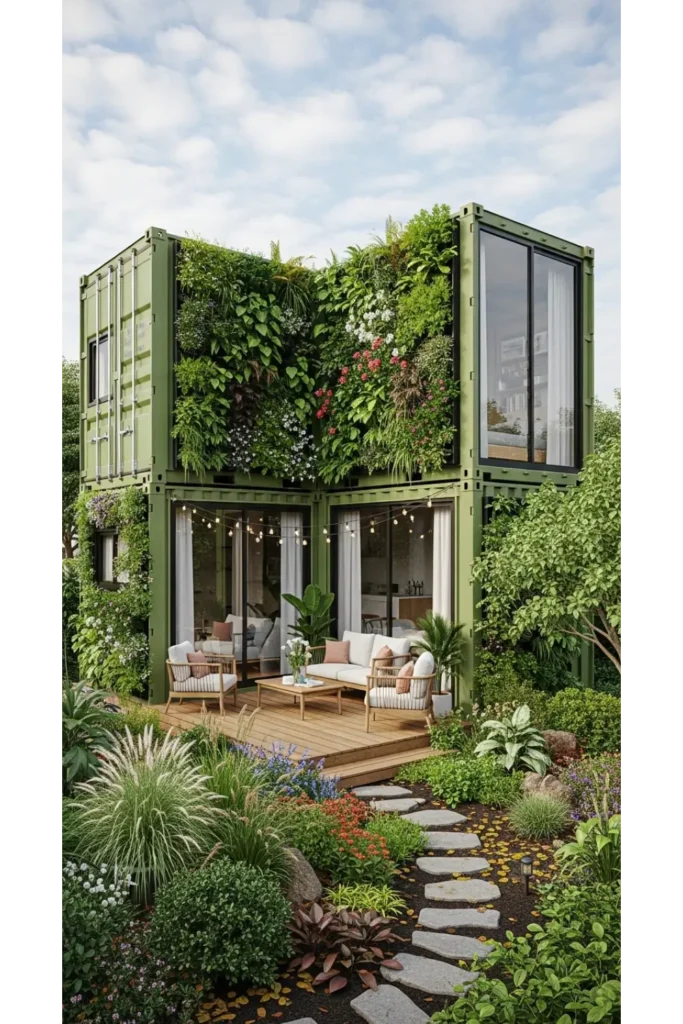
Integrating gardens directly into the design softens the steel exterior and enhances natural beauty. Vertical planters attach securely to outer walls, creating living green surfaces. This approach improves air quality and reduces surrounding heat.
Outdoor seating areas blend seamlessly with landscaped pathways and plant beds. Large sliding doors connect interior rooms to garden views. The home feels healthier and more relaxing with nature woven into daily life.
Pro Tip: Choose native plants that thrive in your local climate for easier maintenance.
24. Courtyard Pool Escape
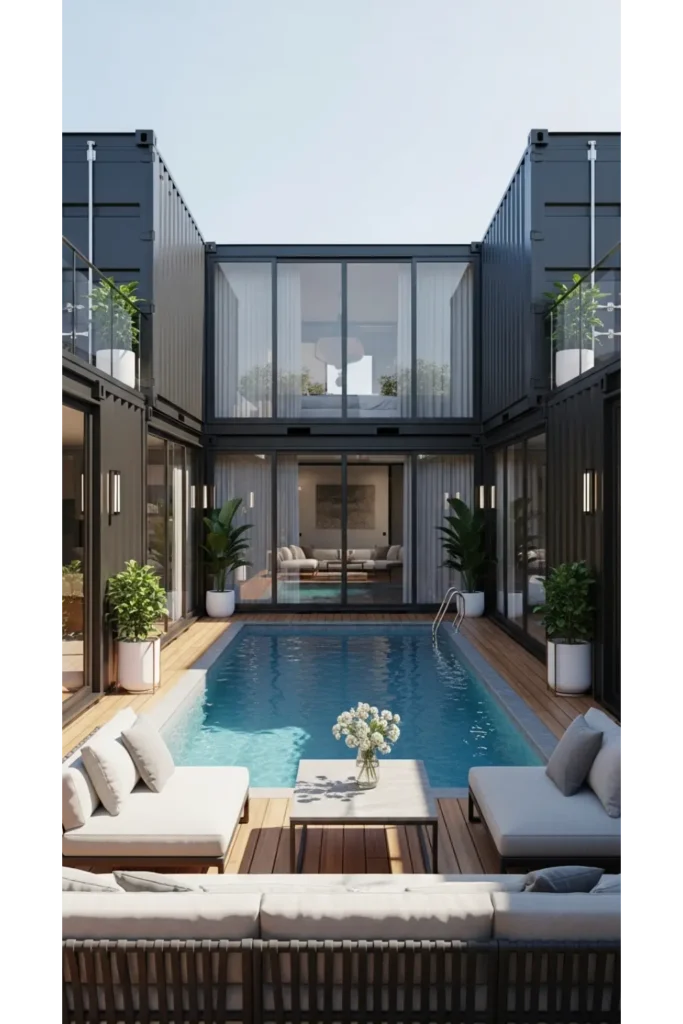
A courtyard pool placed at the center creates a private retreat atmosphere. Containers frame the water on multiple sides, which enhances security and seclusion. This layout suits homeowners who value relaxation and entertainment space.
Floor to ceiling glass doors open directly to the pool area, blending indoor and outdoor living. Proper drainage and slip resistant materials improve safety. The result feels like a boutique resort while remaining practical for everyday use.
Pro Tip: Install energy efficient pool pumps to reduce long term operating costs.
FAQs
Are container houses durable for long term living?
Yes. With proper insulation, ventilation, and structural planning, they last for decades and resist harsh weather.
Do they require special permits?
Local building codes vary. Always consult authorities before construction.
Can they be energy efficient?
Yes. Solar panels, quality insulation, and smart systems reduce energy use significantly.
Are they suitable for families?
Larger multi container layouts comfortably support family life
Conclusion
Smart living focuses on efficiency, sustainability, and thoughtful planning. Container based design delivers flexibility, strength, and modern appeal. From compact studios to luxury compounds, these ideas show how creative planning transforms steel modules into comfortable homes. With the right vision and expert guidance, you can build a space that saves money, respects the environment, and truly feels personal.