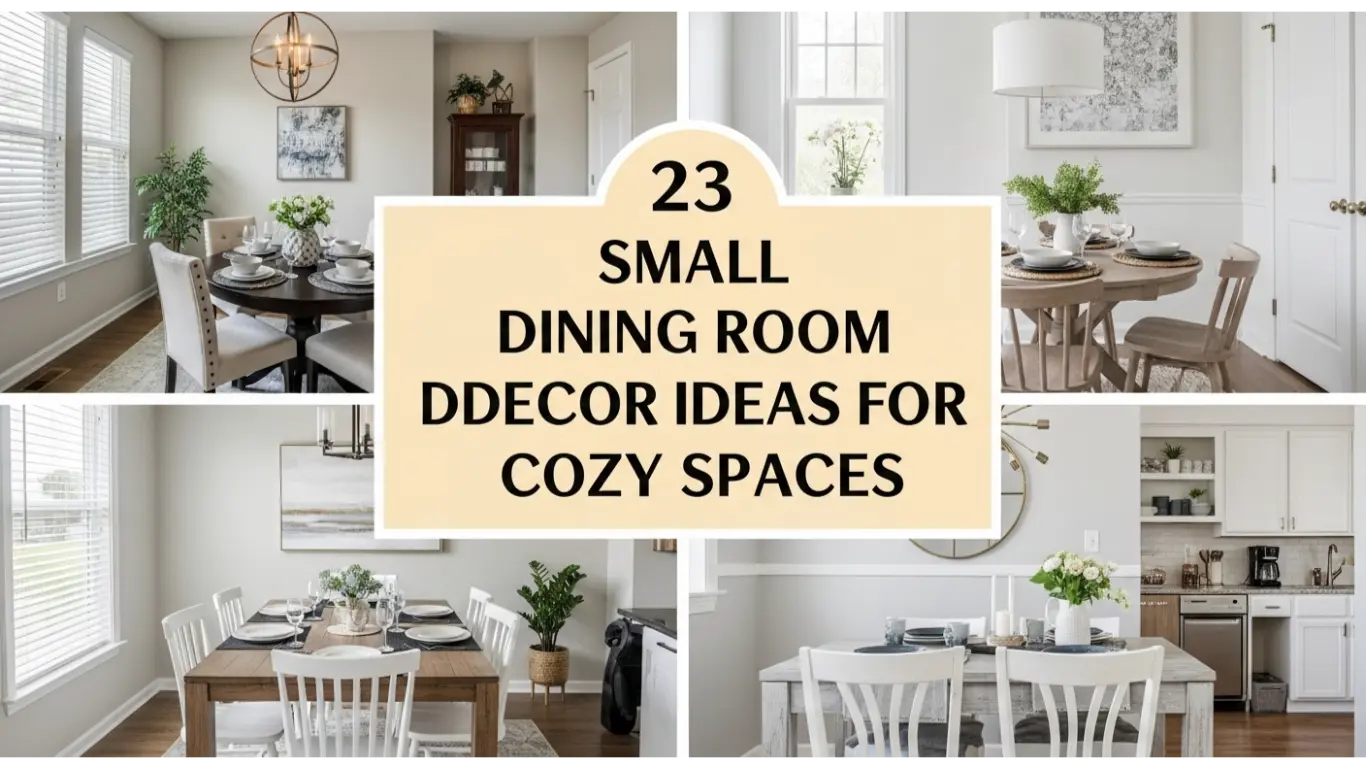
23 Small Dining Room Decor Ideas for Cozy Spaces
A small dining room can feel just as inviting and stylish as a larger one when design choices are thoughtful and intentional. With the right balance of layout, color, lighting, and furniture, compact dining areas can become warm gathering spots that feel personal and functional. This guide explores expert approved ideas that focus on comfort, visual flow, and smart use of space while keeping the room practical for daily meals and special moments alike.
1. Small dining room decor ideas with round table charm

Small dining room decor ideas often begin with choosing the right table, and a round table creates instant flow. Its curved shape removes harsh corners, making movement easier and conversations more natural. This option works especially well in tight layouts where space feels limited. A pedestal base adds even more legroom, keeping the area open and balanced without visual clutter.
Pair the table with slim chairs that tuck in easily to maintain breathing room. Light wood finishes or soft neutral tones help reflect light and visually expand the space. Adding a simple centerpiece keeps the table styled without overwhelming it. This approach supports comfort, function, and a welcoming dining atmosphere.
2. Wall mounted seating for space efficiency
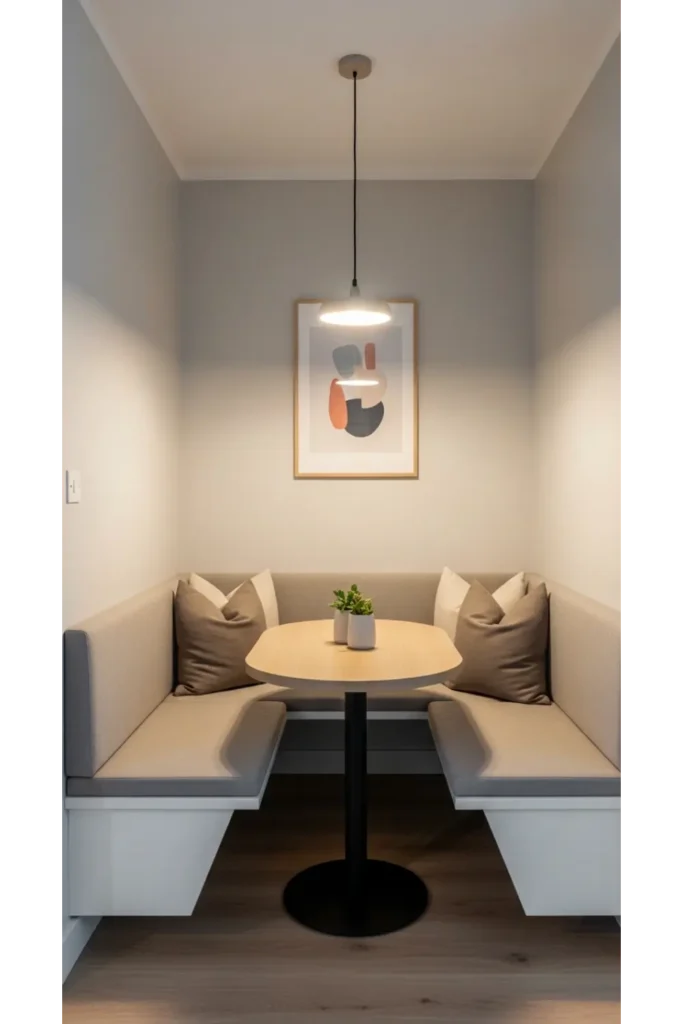
Built in benches save floor space and offer flexible seating for small dining rooms. When attached to a wall, they reduce visual bulk and allow the table to sit closer without feeling cramped. Upholstered cushions add comfort while keeping the look relaxed and inviting. This setup works well for families and casual meals.
Choose storage benches to maximize functionality without adding furniture. Soft fabrics and neutral colors help the bench blend into the room rather than dominate it. With thoughtful styling, wall seating can make a small dining area feel intentional and cozy instead of crowded.
3. Light color palettes that open the room
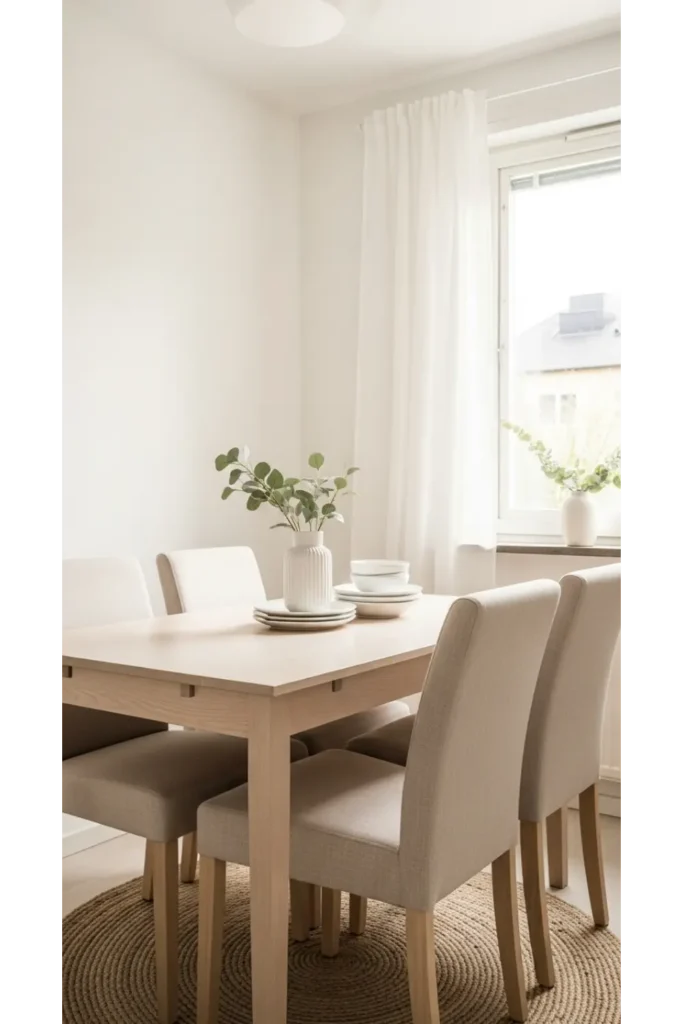
Lighter color palettes help small dining spaces feel open and airy. White, cream, and pale gray reflect light and reduce visual boundaries. These tones create a calm backdrop that allows furniture and decor to feel less heavy. This approach supports a sense of openness without removing warmth.
Layering light colors with subtle textures prevents the room from feeling flat. Wood grain, linen fabrics, and matte finishes add depth while keeping the space visually soft. This balance creates a dining room that feels comfortable and bright at the same time.
4. Mirrors to expand visual space
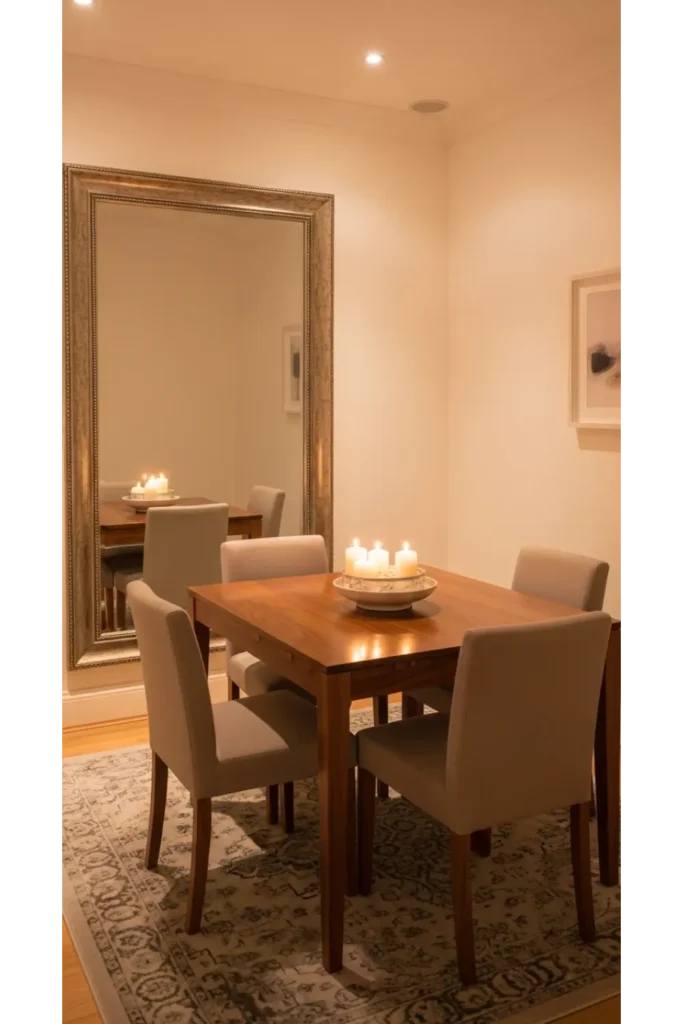
Mirrors reflect light and visually double the space, making them powerful tools in compact dining rooms. A well placed mirror can bounce natural light across the room and create the illusion of depth. This effect helps reduce the boxed in feeling that small rooms often have.
Choose a simple frame that complements the room style without overpowering it. Placing the mirror near a window or light source enhances its impact. When styled correctly, mirrors add elegance while improving the overall sense of space.
5. Statement lighting as a focal point
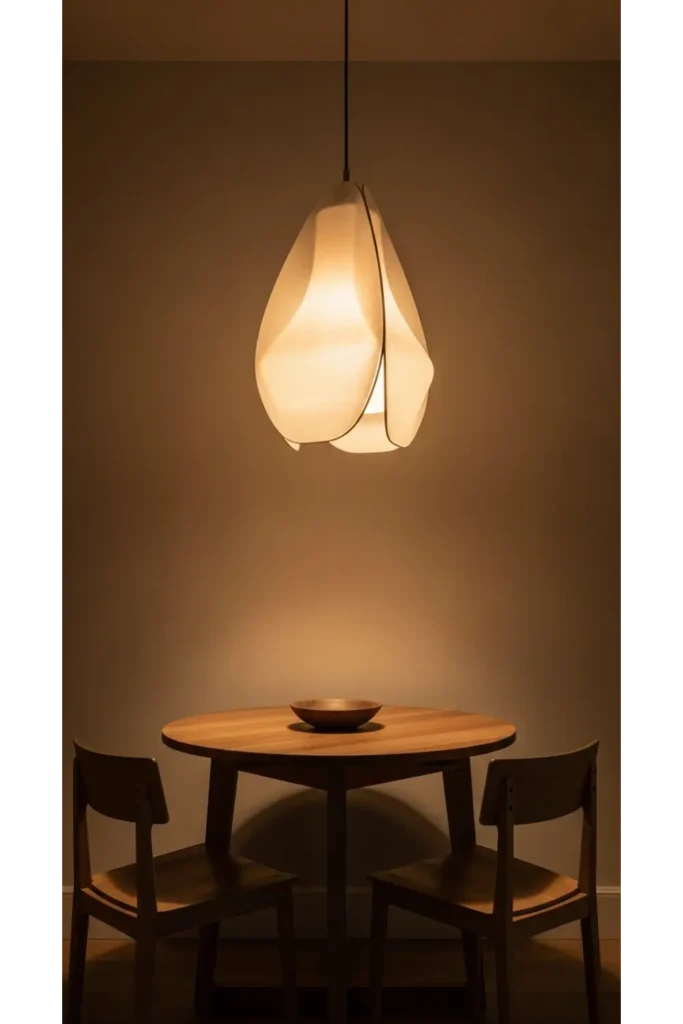
Lighting plays a major role in defining dining spaces, especially when square footage is limited. A single statement pendant draws the eye upward, making the ceiling feel higher. This creates visual interest without taking up floor space or adding clutter.
Warm lighting tones help create a cozy dining experience. Choose fixtures with simple lines to avoid overwhelming the room. When lighting acts as the focal point, the rest of the space can remain clean and understated.
6. Slim furniture for easy movement

Slim profile furniture keeps small dining rooms functional and comfortable. Tables with thin legs and chairs with open backs reduce visual weight. This makes the room feel lighter and easier to navigate during meals or gatherings.
Look for furniture designed for apartments or compact homes. These pieces often balance comfort and scale well. When furniture feels proportional, the dining area remains practical without sacrificing style.
7. Vertical wall decor for height
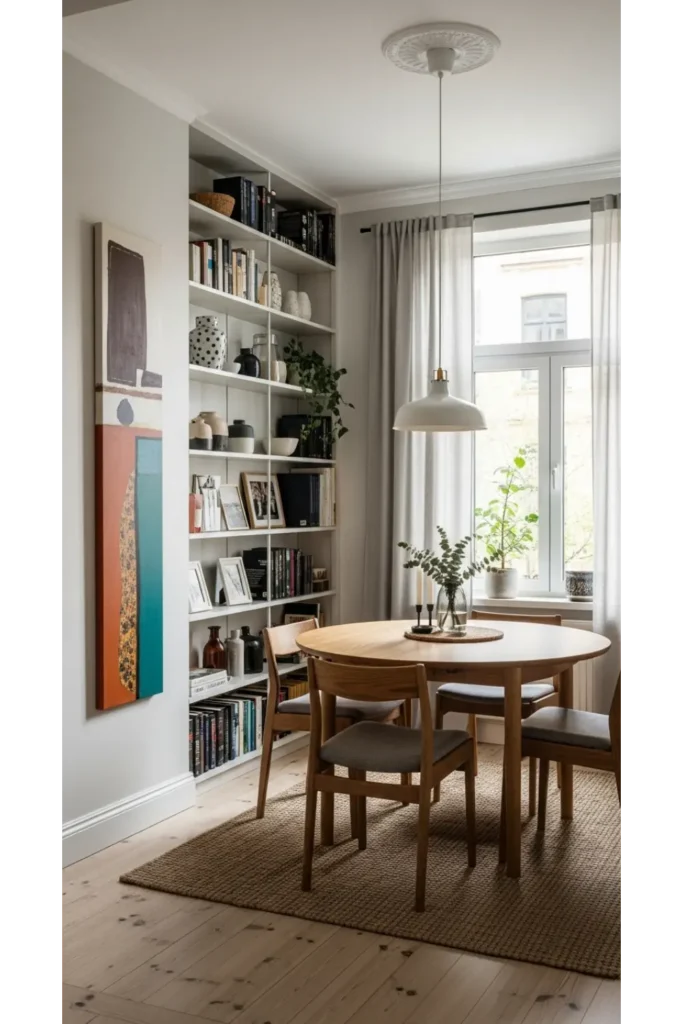
Using vertical space helps draw the eye upward, creating the illusion of height. Tall artwork or shelves emphasize wall height rather than width. This technique keeps the room from feeling compressed and adds character without crowding the floor.
Choose decor that feels cohesive with the rest of the room. Simple frames and coordinated colors maintain a clean look. Vertical styling adds interest while preserving valuable space.
8. Multifunctional furniture solutions
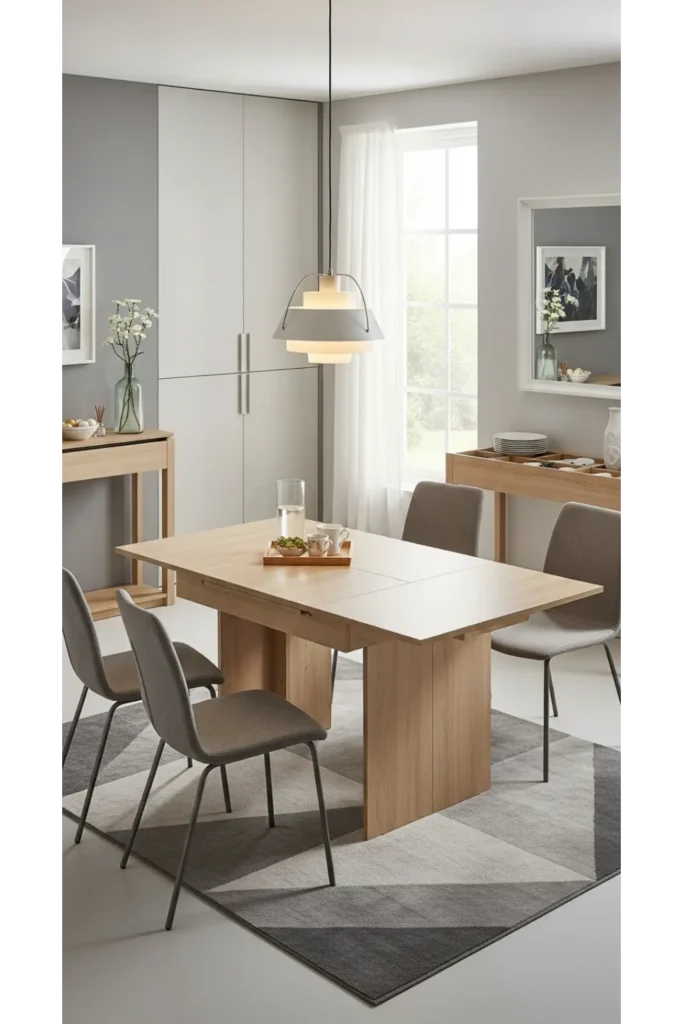
Multifunctional furniture supports flexibility in small dining rooms. Extendable tables adapt to both daily meals and guests. This allows the room to serve multiple purposes without permanent bulk.
Furniture with built in storage further improves efficiency. Hidden compartments keep linens and tableware close by without cluttering cabinets. These smart choices make the dining area adaptable and organized.
9. Soft textiles for warmth
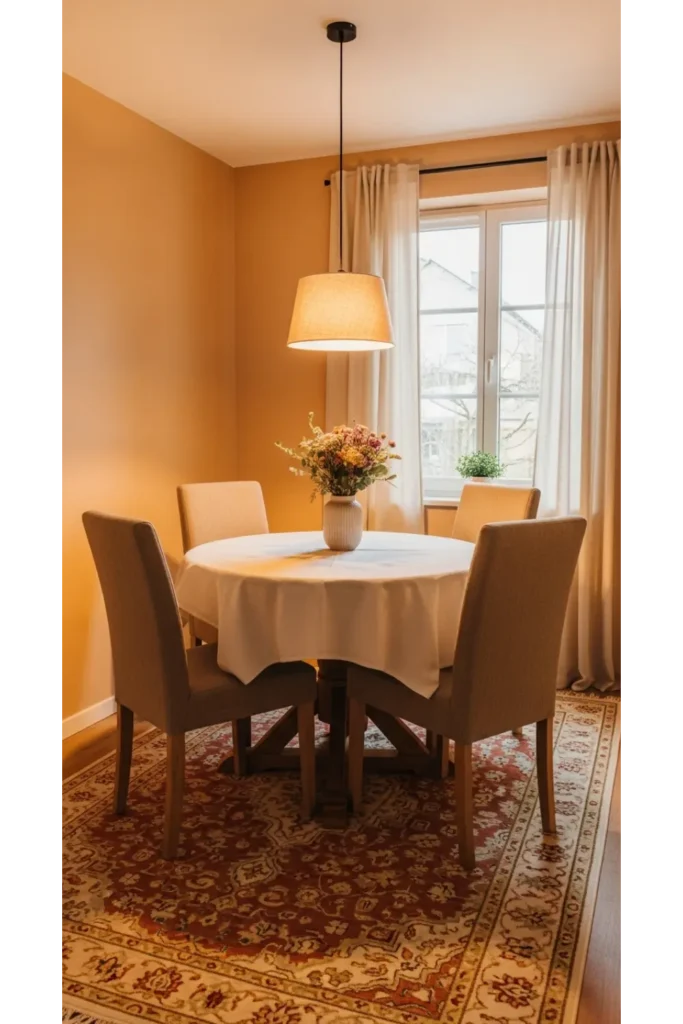
Textiles add softness and warmth to compact dining areas. Upholstered chairs or a subtle rug make the space feel comfortable and inviting. These elements help reduce echo and improve acoustics in smaller rooms.
Choose durable fabrics that handle daily use. Neutral or muted patterns keep the room cohesive. When textiles are balanced, the dining space feels cozy without appearing busy.
10. Open shelving for display and storage
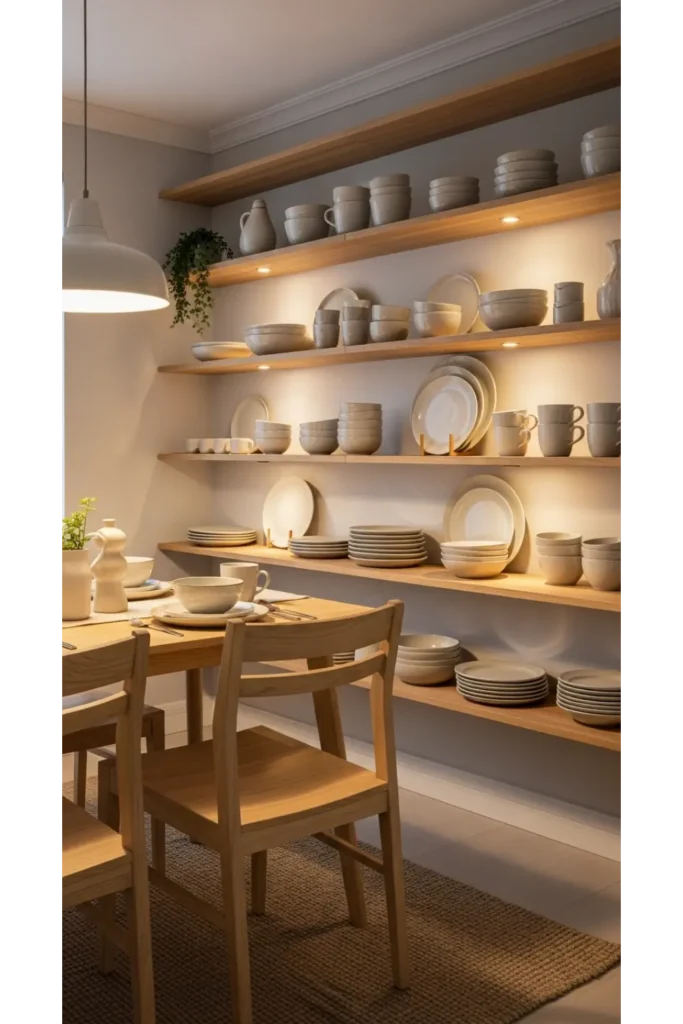
Open shelving is a smart solution when cabinet depth overwhelms a small dining room. By removing bulky upper cabinets, the walls feel lighter and more open, which immediately improves visual flow. Shelves allow everyday items like plates, bowls, and glasses to become part of the decor, adding personality without adding furniture. When styled intentionally, open shelving balances storage needs with a clean, breathable look.
To keep shelves functional, limit them to frequently used items and maintain consistent spacing. Choose materials that echo the dining table or flooring to create cohesion. Neutral ceramics, clear glassware, and natural wood finishes prevent visual noise. When shelves feel curated rather than crowded, they enhance both usability and atmosphere, making the dining area feel purposeful and calm.
11. Compact rug placement
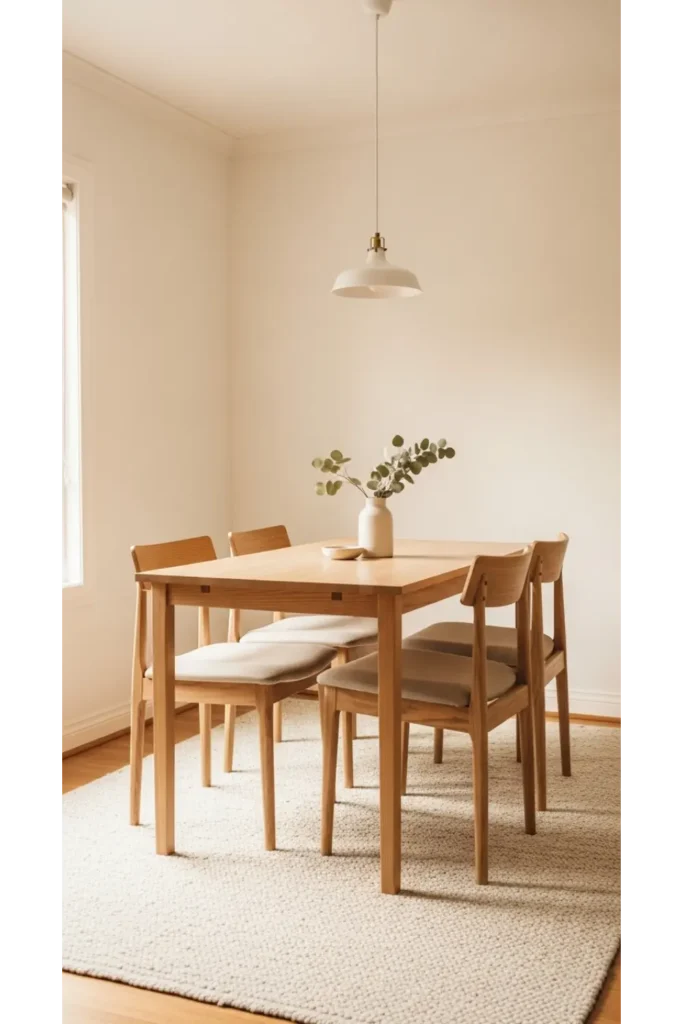
A compact rug helps define a small dining area while grounding the furniture visually. In open layouts, it creates a clear boundary that separates dining from living space without walls. The right rug size allows chairs to slide comfortably without catching edges, which improves daily use. This detail matters in tight rooms where every movement needs to feel effortless and intuitive.
Low pile rugs work best because they stay flat and clean easily. Subtle patterns or texture add interest without pulling focus from the table. Keeping the color palette soft helps the rug blend into the room instead of shrinking it. When chosen carefully, a rug adds comfort and polish while preserving openness.
12. Window focused layouts
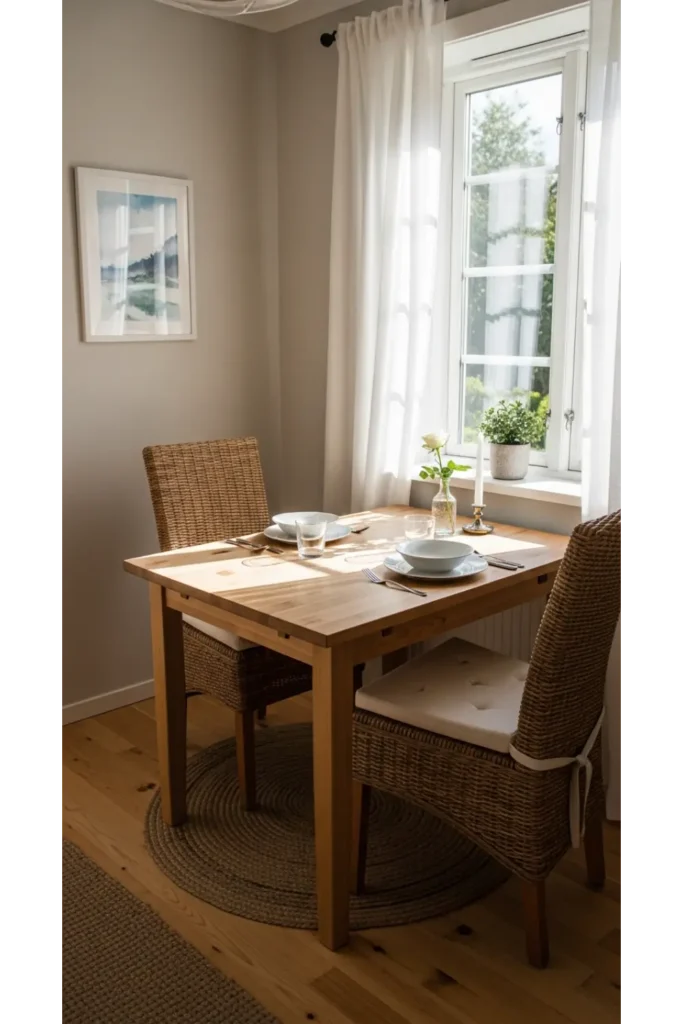
Placing the dining table near a window instantly improves how a small dining room feels. Natural light softens the space, improves mood, and visually expands the room. Meals feel more relaxed and inviting when daylight fills the area. This layout also creates a connection to the outdoors, which reduces the boxed in feeling common in compact interiors.
Sheer curtains or light fabric shades maintain privacy without blocking brightness. Avoid heavy drapes that darken the room and visually weigh down walls. When natural light becomes part of the design, the dining space feels warmer, more open, and easier to enjoy throughout the day.
13. Minimal wall art styling
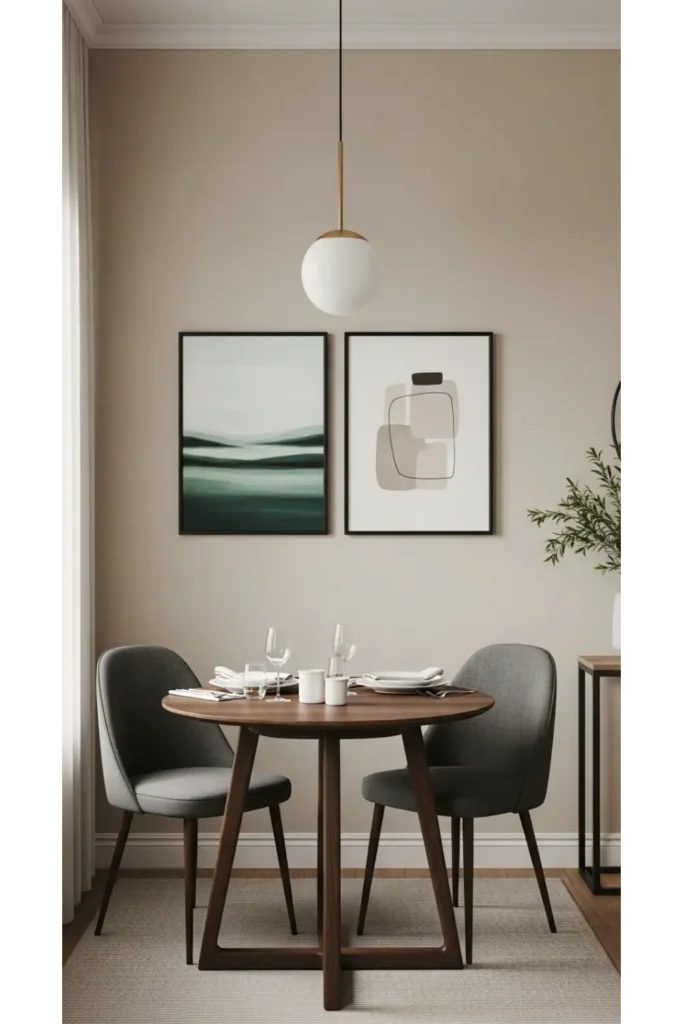
Minimal wall art helps maintain calm in a small dining room where visual overload can happen quickly. Instead of filling every wall, choosing a few meaningful pieces creates focus and breathing room. Art should support the space, not compete with furniture or lighting. When done right, minimal styling feels intentional and refined rather than empty.
Select artwork that aligns with the room’s color palette and scale. Oversized pieces work better than multiple small frames because they reduce clutter. Simple frames and balanced placement keep attention centered. This approach allows personality to shine without sacrificing visual clarity.
14. Neutral base with accent color
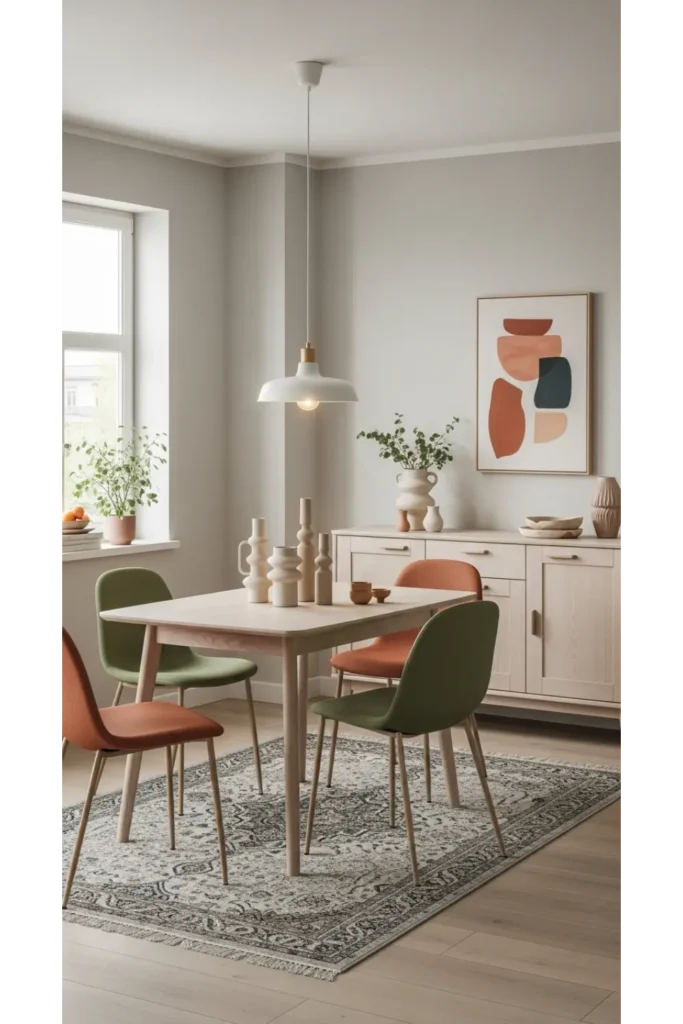
A neutral base provides flexibility and calm in a small dining room, allowing the space to feel larger and more balanced. Soft whites, warm beiges, and light grays reflect light and support visual flow. This foundation prevents the room from feeling closed in while making it easier to layer texture and detail without clutter.
An accent color adds personality without overwhelming the space. Introduce it through chairs, artwork, or table linens rather than walls. Limiting accent use keeps the room cohesive and adaptable. This strategy allows updates over time without redesigning the entire space.
15. Transparent furniture elements
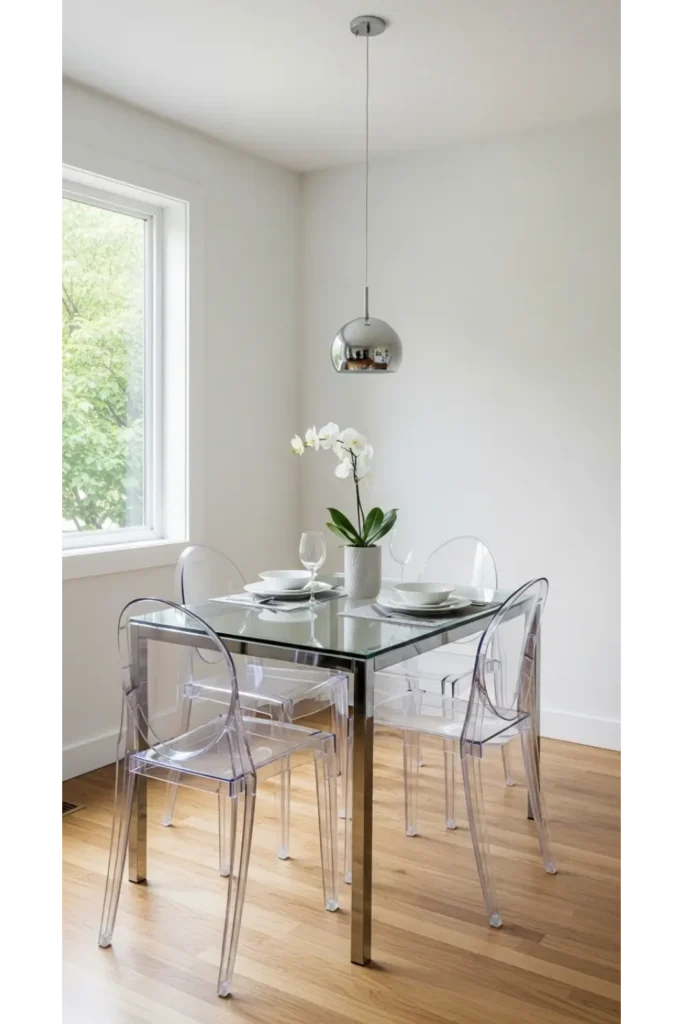
Transparent furniture reduces visual weight, which is especially valuable in a small dining room. Acrylic chairs or glass tables allow light to pass through, making the room feel open and less crowded. These pieces visually disappear while still providing full function, which supports a clean and modern aesthetic without sacrificing comfort.
Balance transparency with solid materials to avoid a cold look. Pair clear chairs with a wood table or soft textiles to add warmth. When used thoughtfully, transparent furniture enhances openness while maintaining a welcoming dining environment.
16. Built in corner dining nooks
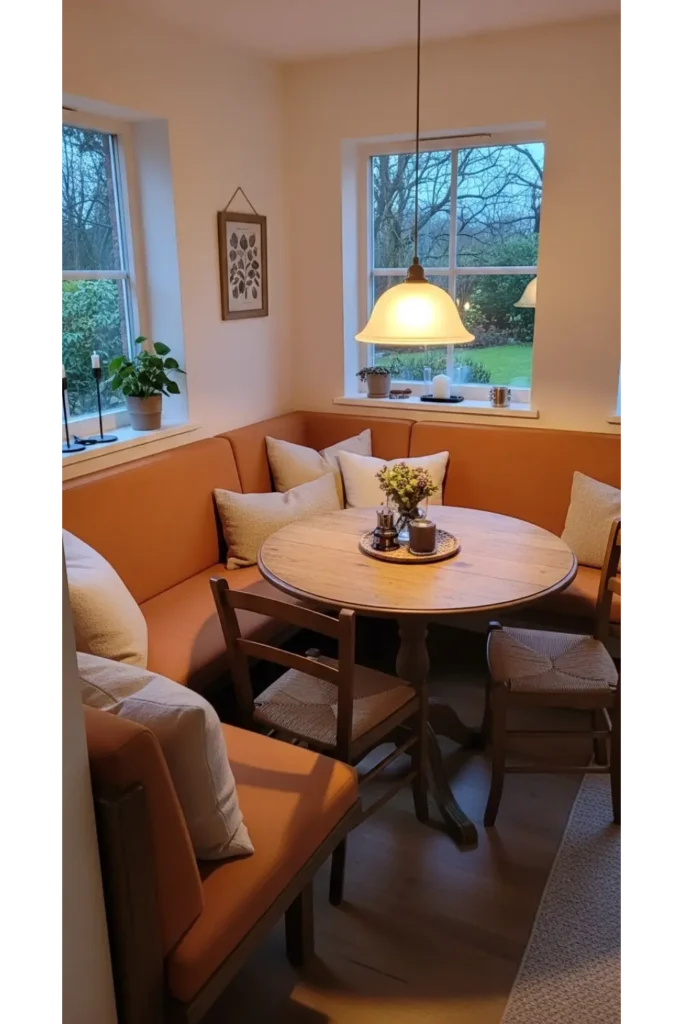
Built in corner nooks transform underused space into a functional dining area. By fitting seating directly into corners, floor space opens up and traffic flow improves. This layout feels cozy and intentional, making it ideal for small homes where efficiency matters. Built ins also provide a sense of permanence that elevates the overall design.
Adding cushions and pillows increases comfort while introducing texture. Wall mounted lighting or a small pendant completes the nook without clutter. Corner seating creates intimacy and warmth while maximizing every inch of the room.
17. Simple table settings
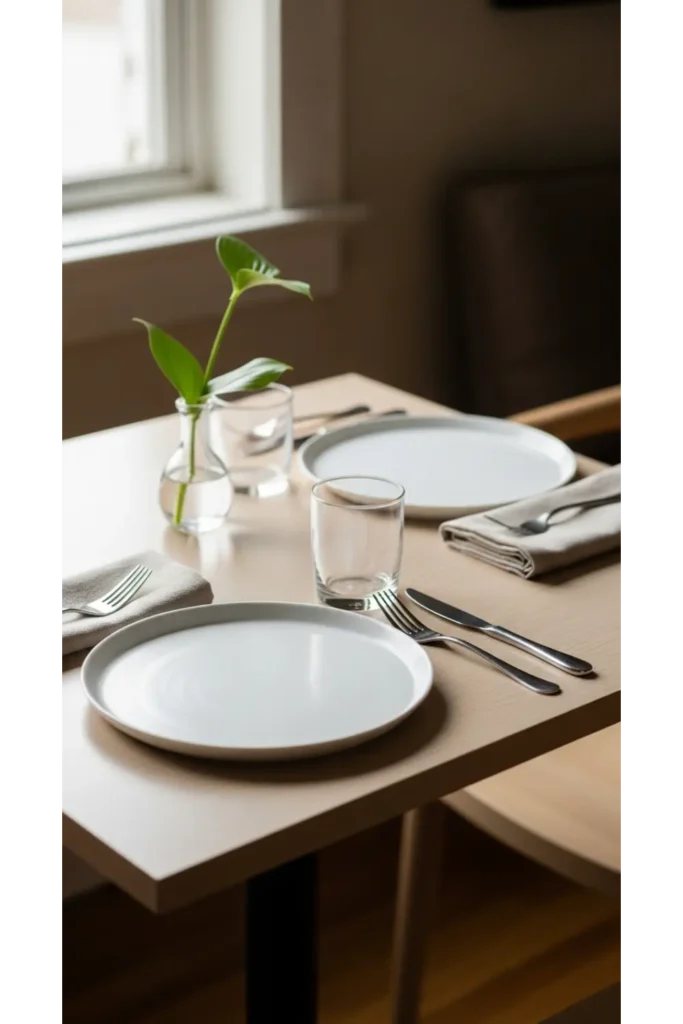
Simple table settings help a small dining room feel calm and uncluttered. Clean lines and limited accessories keep the focus on the space rather than excess decor. This approach works well for everyday living, allowing the table to stay styled without constant maintenance.
Quality basics such as neutral plates, linen napkins, and understated centerpieces elevate the table naturally. Avoid oversized decor that restricts movement. When the table remains easy to use, the dining room feels more functional and inviting.
18. Floating shelves for decor

Floating shelves provide display space without the heaviness of cabinets or bookcases. Because they sit directly on the wall, they preserve floor space and maintain openness. In small dining rooms, this balance allows decor to exist without overwhelming the layout.
Styling shelves with restraint keeps them from feeling cluttered. Use a mix of greenery, ceramics, and negative space. Keeping items cohesive in color and scale ensures the shelves enhance the room rather than dominate it.
19. Plants for natural balance

Plants bring life and softness to a small dining room by introducing natural texture and color. Even one well placed plant can change how the room feels, making it more relaxed and welcoming. Greenery also improves air quality and visual comfort.
Choose plants that suit the available light and require minimal upkeep. Position them near windows or corners where they do not block movement. Plants add warmth without taking up much space, making them ideal for compact interiors.
20. Compact sideboards
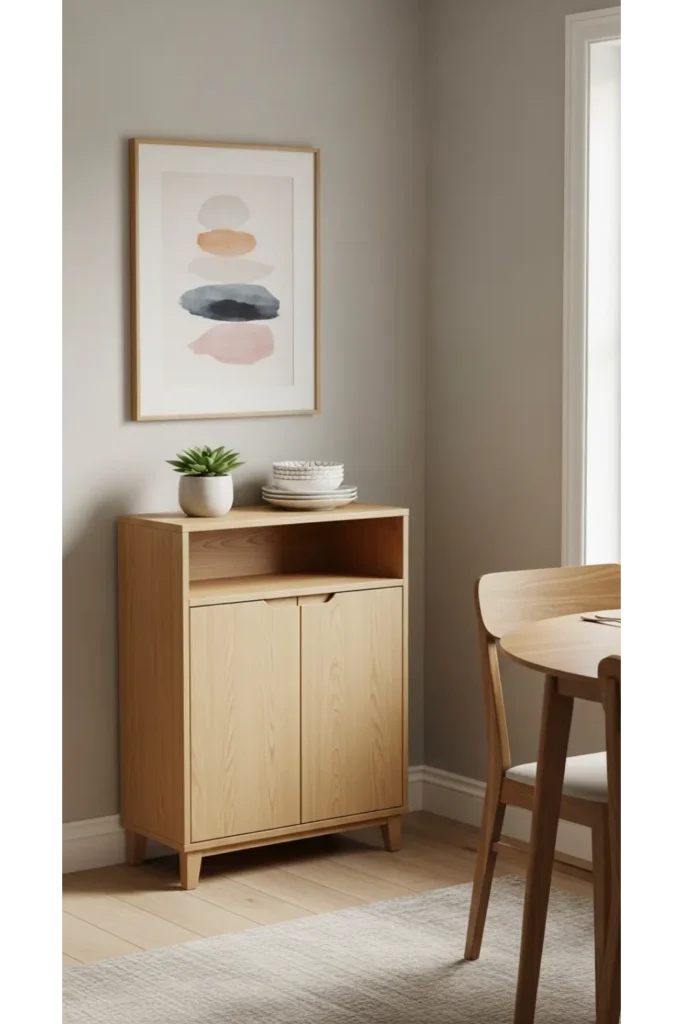
Compact sideboards offer valuable storage while maintaining a streamlined profile. They hold dining essentials like linens and serving pieces without dominating the room. Slim designs work especially well along walls where depth is limited.
Keep the top surface styled simply to avoid clutter. A lamp, tray, or small plant adds interest without overcrowding. When storage stays organized, the dining room feels calmer and easier to use.
21. Consistent material choices
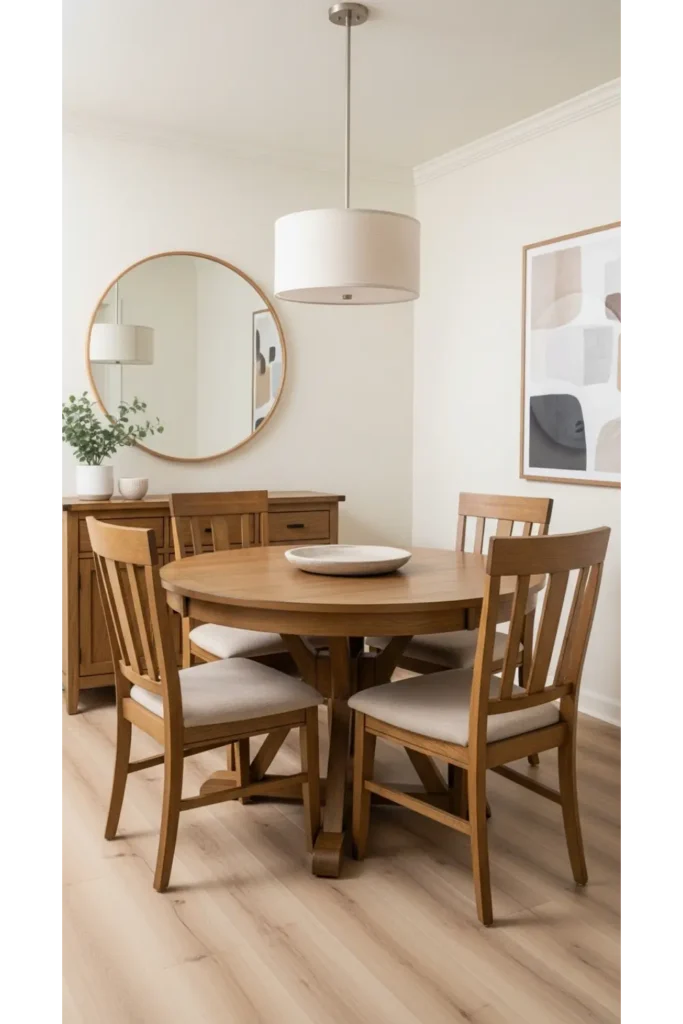
Using consistent materials creates harmony in a small dining room. Repeating wood tones or finishes helps the eye move smoothly through the space without interruption. This reduces visual fragmentation, which can make small rooms feel chaotic.
Limit the number of materials to maintain clarity. When furniture, shelving, and decor share common finishes, the room feels intentional and balanced. Consistency supports comfort and long term design cohesion.
22. Soft ceiling treatments

Ceilings often go unnoticed, but subtle treatments can add depth to a small dining room. Soft paint tones or gentle texture draw the eye upward, making the room feel taller. This technique adds interest without consuming valuable wall or floor space.
Keep ceiling treatments light to avoid heaviness. Pair them with warm lighting for balance. When handled carefully, ceiling details enhance dimension quietly and effectively.
23. Personalized decor touches
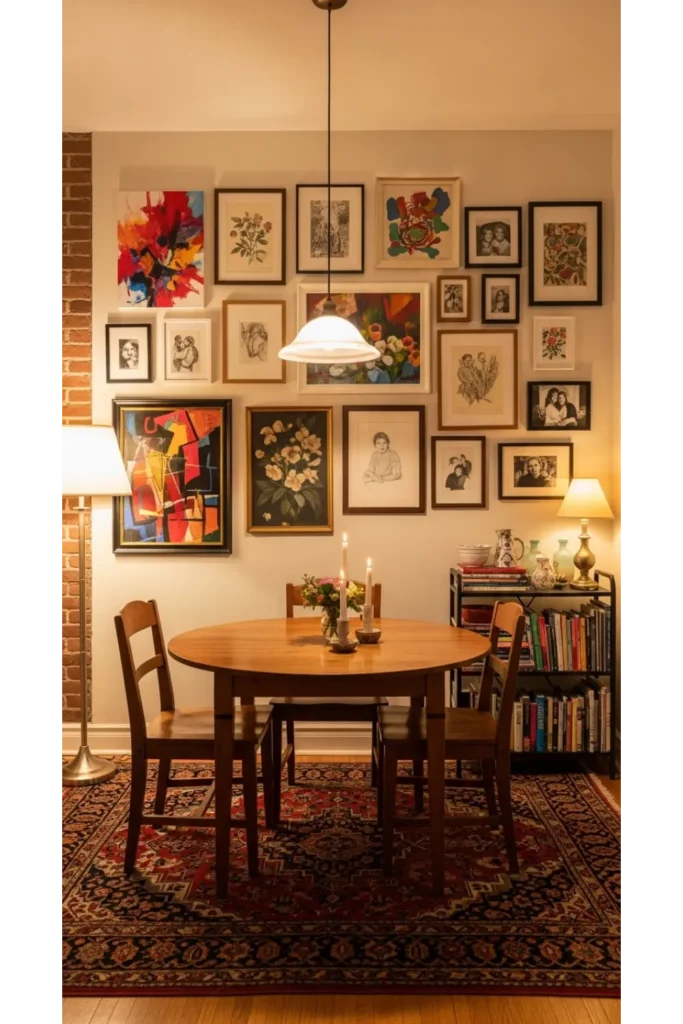
Personal decor adds emotional warmth and character to a small dining room. Meaningful artwork or photos make the space feel lived in rather than staged. These elements create connection and comfort, which matter just as much as layout.
Balance personal items with restraint to avoid clutter. Choose a few impactful pieces and give them space to breathe. When personality and simplicity work together, the dining room feels authentic and welcoming.
Conclusion
Designing a small dining room requires smart choices that balance function, comfort, and style. With careful attention to layout, lighting, and scale, even compact spaces can feel open and welcoming. These ideas show how thoughtful details and intentional design create cozy dining areas that support daily life while reflecting personal style.