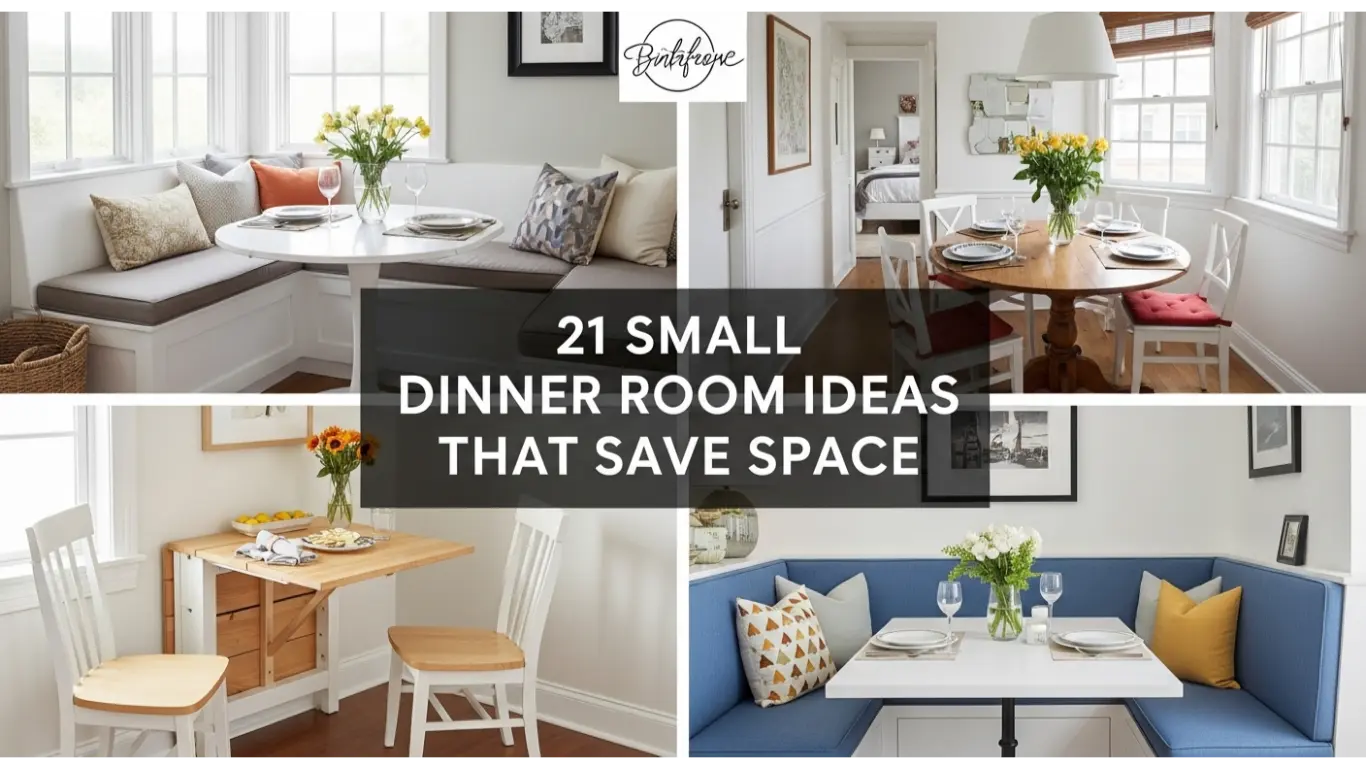
21 Small Dinner Room Ideas That Save Space
A compact dining area does not have to feel cramped or limiting. With the right design choices, even the smallest dinner space can feel comfortable, functional, and inviting. This guide explores thoughtful ways to design a dining room that works harder without feeling crowded. These ideas focus on smart layouts, visual balance, and practical furniture choices that support daily living while still feeling personal and warm.
Each idea below is designed for real homes and real routines. You will find inspiration that blends style with purpose, helping you create a dining space that feels open, efficient, and easy to live with. These concepts are timeless, adaptable, and grounded in how people actually use their dining rooms every day.
1. Small Dinner Room Ideas with a Wall Mounted Table
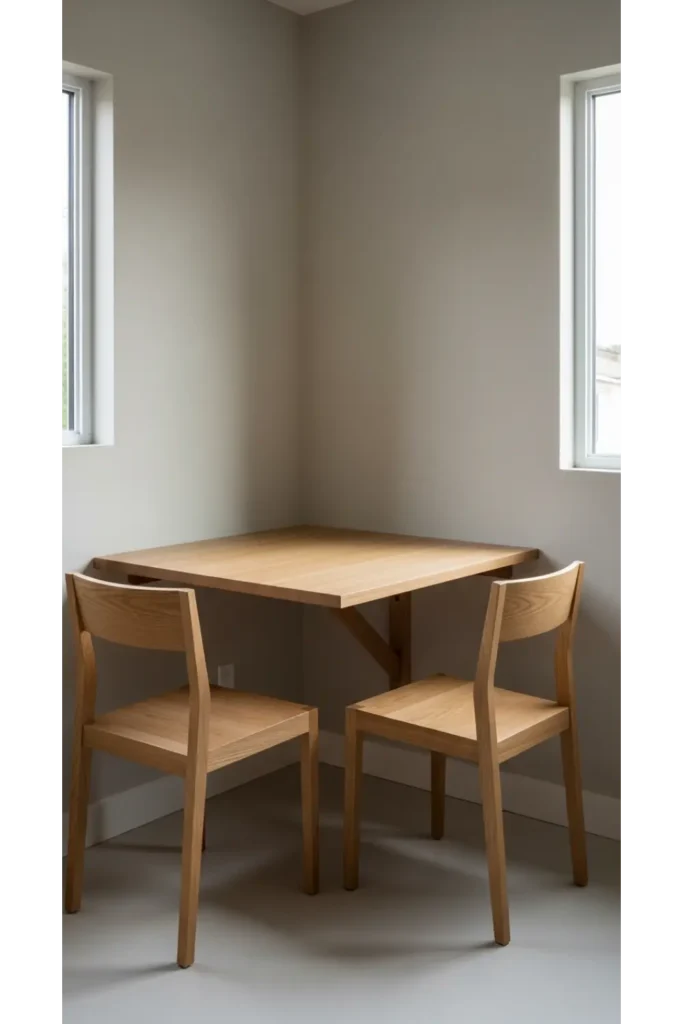
Small dinner room ideas often work best when furniture stays light and flexible. A wall mounted table folds down only when needed, freeing up floor space the rest of the day. This setup works well in apartments or narrow rooms where every inch matters. When paired with slim chairs or stools, the room feels open and easy to move through without losing function.
This approach also supports a clean visual flow. The wall mounted table can match the wall color or wood tone to blend in naturally. Storage shelves above can hold tableware or decor, reducing the need for bulky cabinets. The result feels intentional and practical, making daily meals more relaxed and organized.
2. Built In Bench Seating Along One Wall

Built in bench seating saves space by removing the need for chairs on one side of the table. It allows the dining table to sit closer to the wall while still offering comfortable seating. This solution works especially well in narrow rooms or dining nooks where traffic flow feels tight.
The bench can include hidden storage underneath for linens or seasonal items. Upholstered cushions add comfort and warmth without visual clutter. When designed well, bench seating turns an awkward corner into a cozy dining spot that feels custom and welcoming.
3. Round Dining Table for Better Flow

A round dining table improves movement in small spaces because it removes sharp corners. People can walk around it more easily, which makes the room feel less crowded. It also creates a natural sense of balance, helping the space feel softer and more inviting.
Round tables encourage conversation and work well in square or compact rooms. Choosing a pedestal base instead of four legs adds even more legroom. This simple shift in shape can dramatically improve how the dining room functions day to day.
4. Glass Table to Visually Open the Space
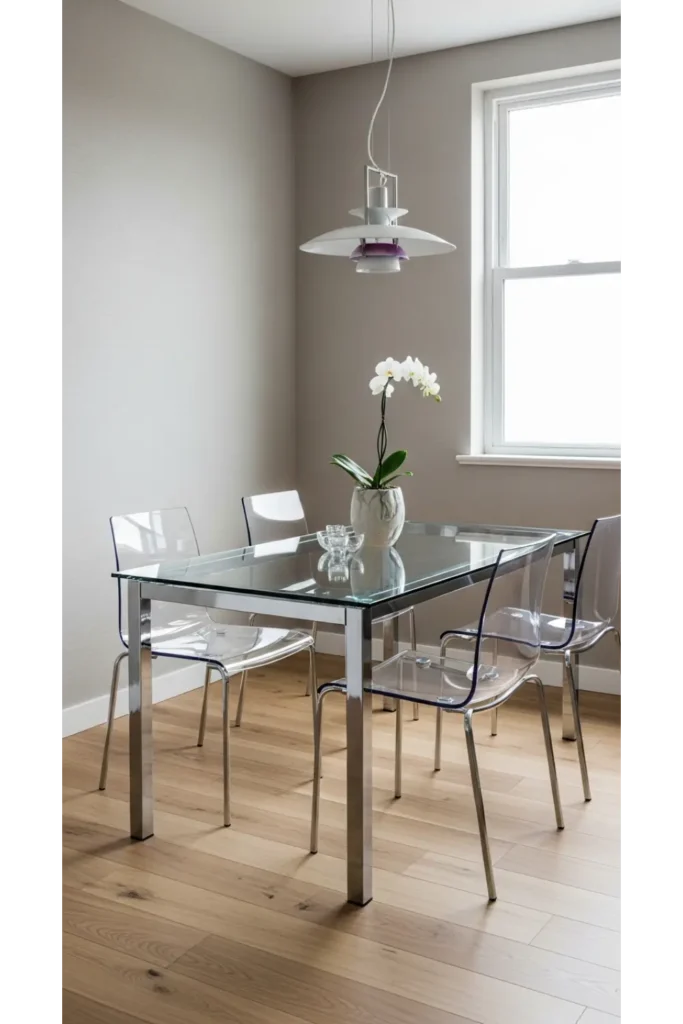
Glass tables create the illusion of more space because they allow light to pass through. In a tight dining room, this helps reduce visual weight and makes the room feel airier. The transparent surface keeps the focus on the room itself rather than the furniture.
This choice works well in modern or contemporary interiors. Pairing a glass table with slim metal or acrylic chairs keeps the look cohesive. The room feels lighter and more open without sacrificing seating or style.
5. Dining Area Integrated into the Kitchen
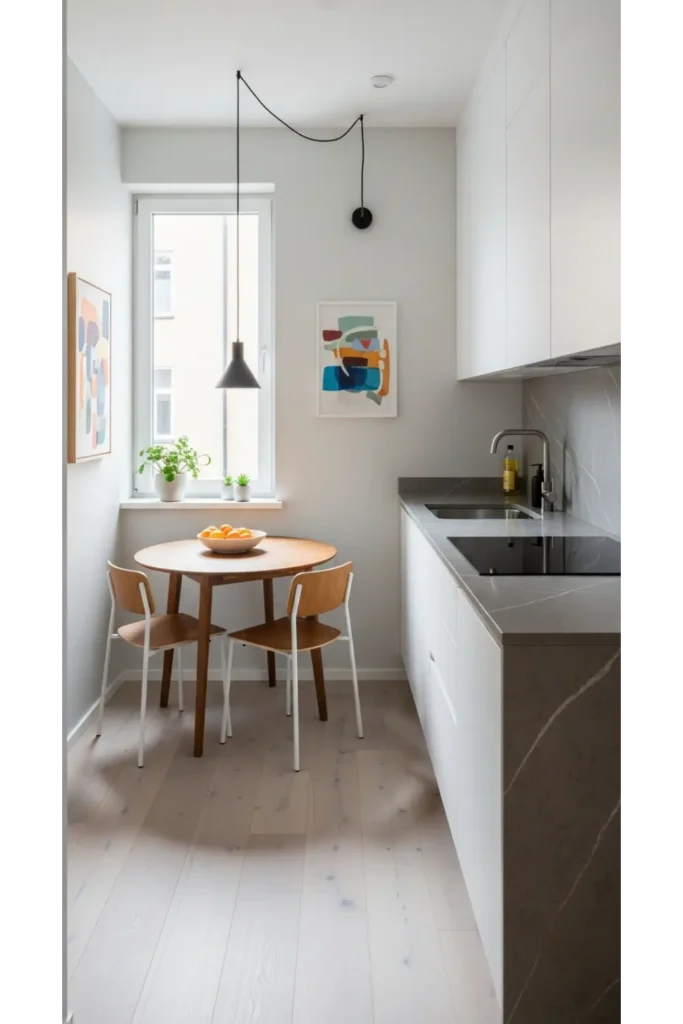
Combining the dining space with the kitchen saves room and improves efficiency. A small table placed near the kitchen counter creates a natural eating area without needing a separate room. This layout supports daily routines and keeps everything within reach.
Using consistent materials and colors helps both areas feel connected. Lighting can define the dining zone without walls. This approach works especially well in open plan homes where flexibility matters most.
6. Drop Leaf Table for Flexible Use
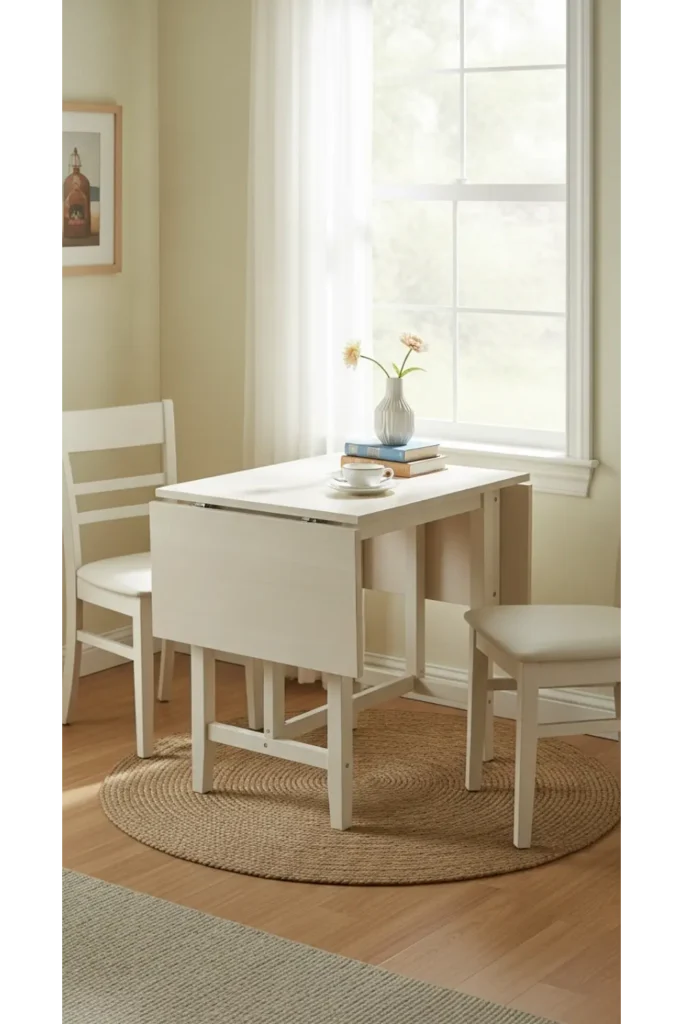
Drop leaf tables adapt to your needs by expanding only when required. When folded down, they take up very little space, making them ideal for small dining rooms. This flexibility supports both everyday meals and occasional guests.
The table can sit against a wall when not fully extended. When opened, it provides enough surface area for dining without overwhelming the room. This balance of function and restraint keeps the space feeling calm and usable.
7. Corner Dining Setup
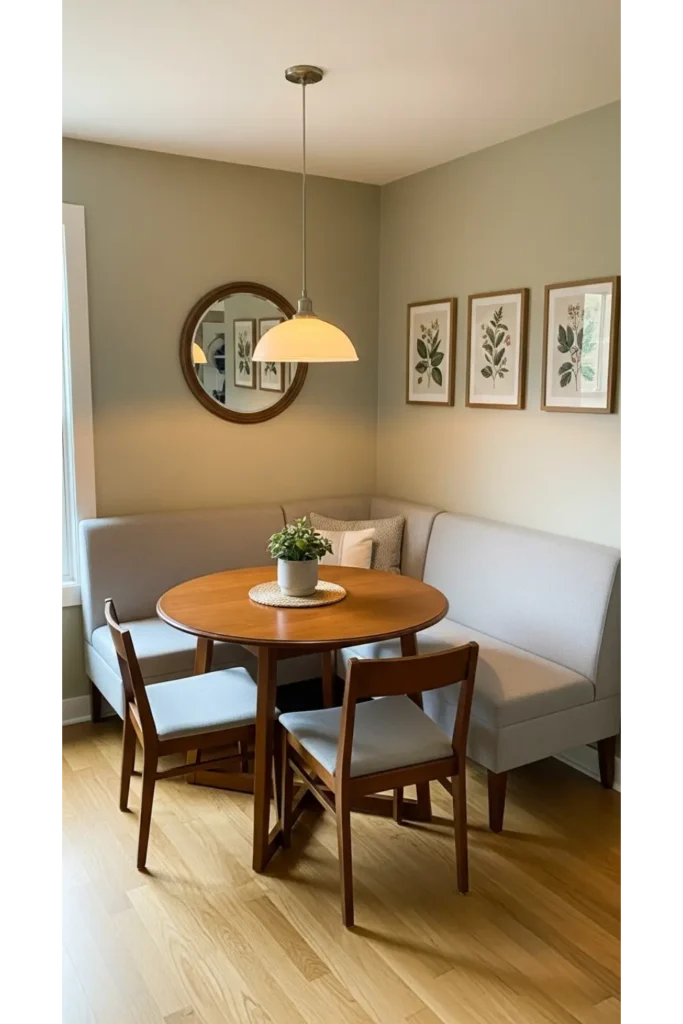
Using a corner for dining helps maximize unused space. A small table paired with corner seating fits neatly into the room, leaving the rest of the area open. This layout feels efficient and intentional rather than squeezed in.
Corner dining works well in studio apartments or open layouts. It creates a defined eating area without walls. With the right lighting and seating, it can feel cozy and well planned.
8. Floating Shelves Instead of Cabinets
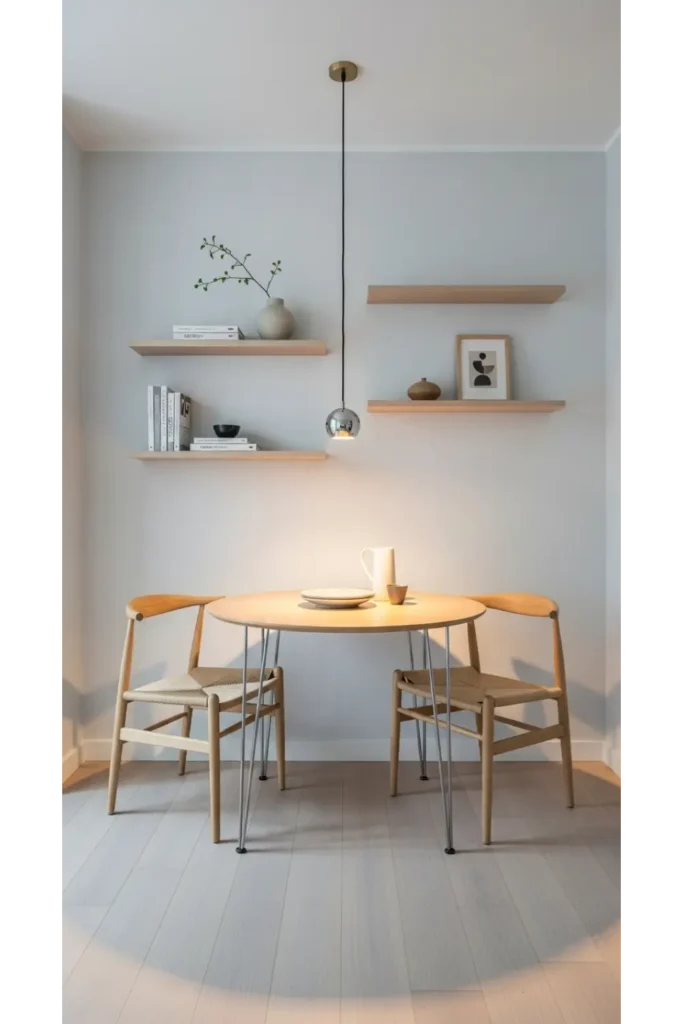
Replacing bulky cabinets with floating shelves keeps the dining room feeling open. Shelves provide storage for dishes and decor without closing in the space. This choice supports both function and visual lightness.
Keeping shelves styled but not overcrowded helps maintain balance. Matching shelf materials to the table or floor creates cohesion. This approach works well in rooms where floor space is limited but storage is still needed.
9. Slim Profile Dining Chairs
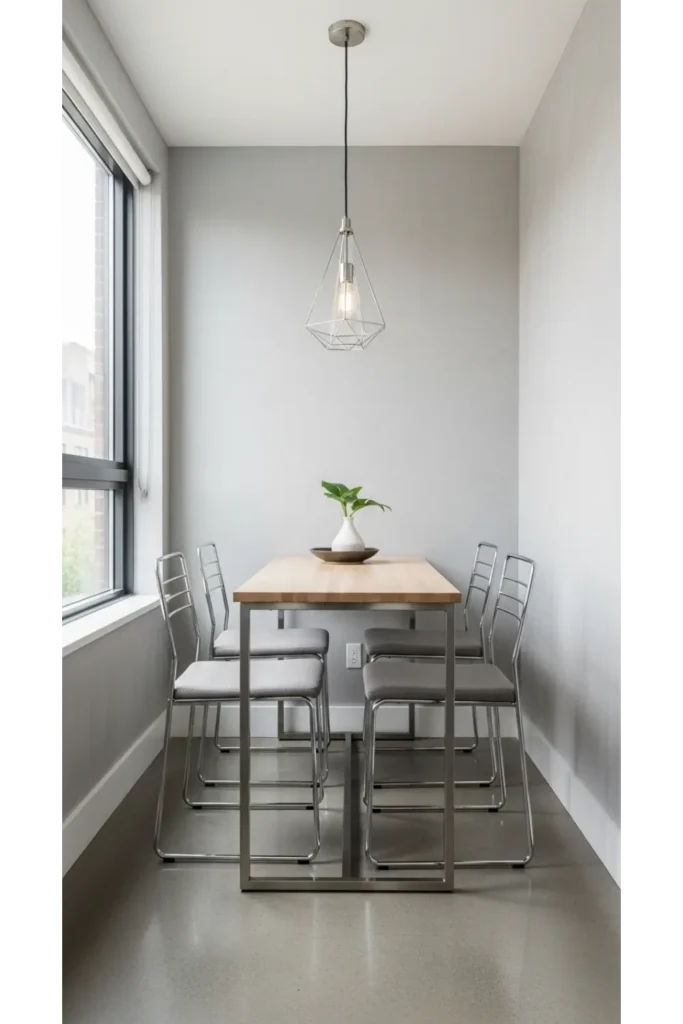
Chairs with slim frames take up less visual and physical space. They tuck in easily and allow more room to move around the table. This makes the dining room feel less cluttered and more comfortable.
Choosing chairs with open backs or lighter materials enhances the effect. Comfort does not have to be sacrificed for size. Well designed slim chairs support long meals while keeping the room open.
10. Wall Mirrors to Expand Visual Space
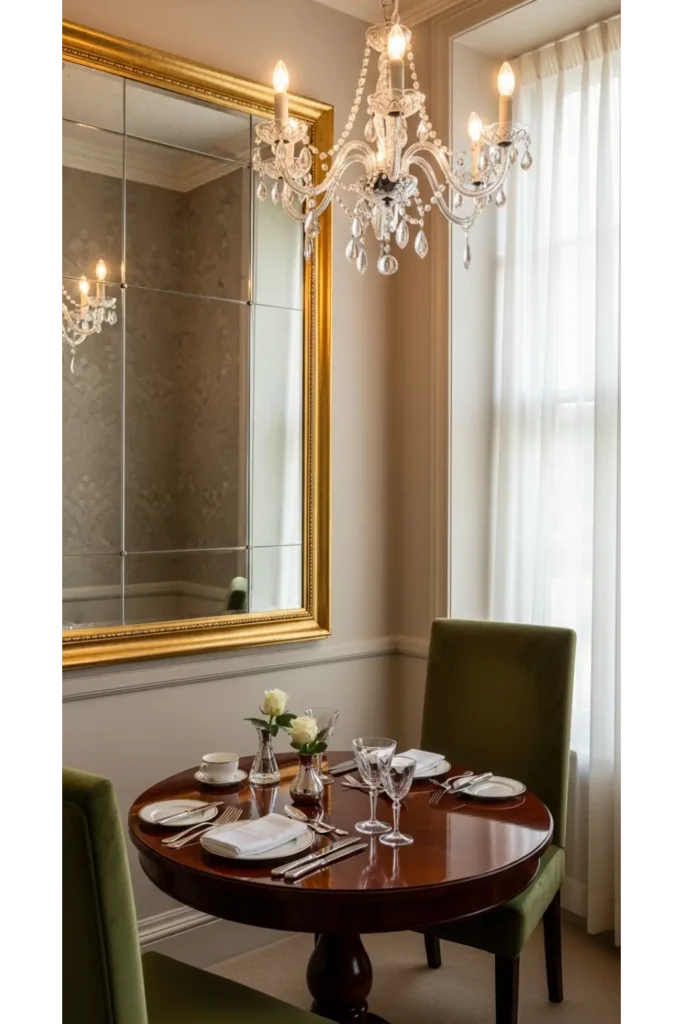
Mirrors reflect light and create the illusion of depth. In a small dining room, a well placed mirror can make the space feel twice as large. It also adds brightness and visual interest.
Positioning the mirror to reflect a window or light source enhances the effect. Framing should stay simple to avoid visual clutter. This technique supports both style and function in compact rooms.
11. Narrow Rectangular Table
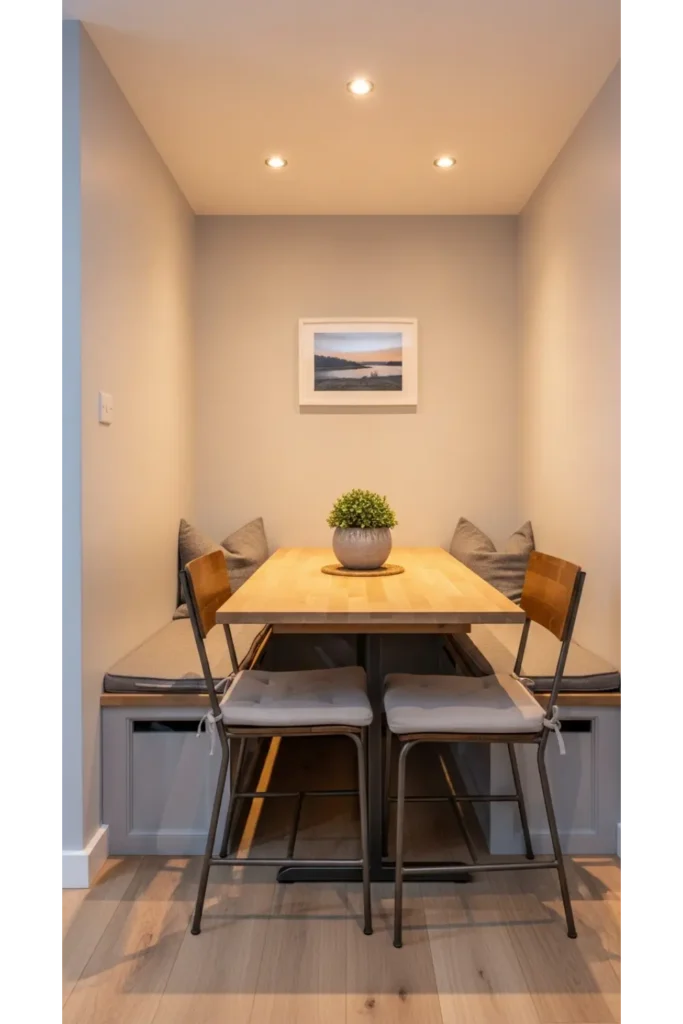
A narrow table fits comfortably in tight spaces while still offering enough surface for dining. This shape works well in long or narrow rooms where width is limited. It supports a clear walking path on either side.
Pairing the table with chairs that slide fully underneath helps maintain flow. The room feels organized and intentional rather than crowded. This choice prioritizes movement and comfort.
12. Light Color Palette
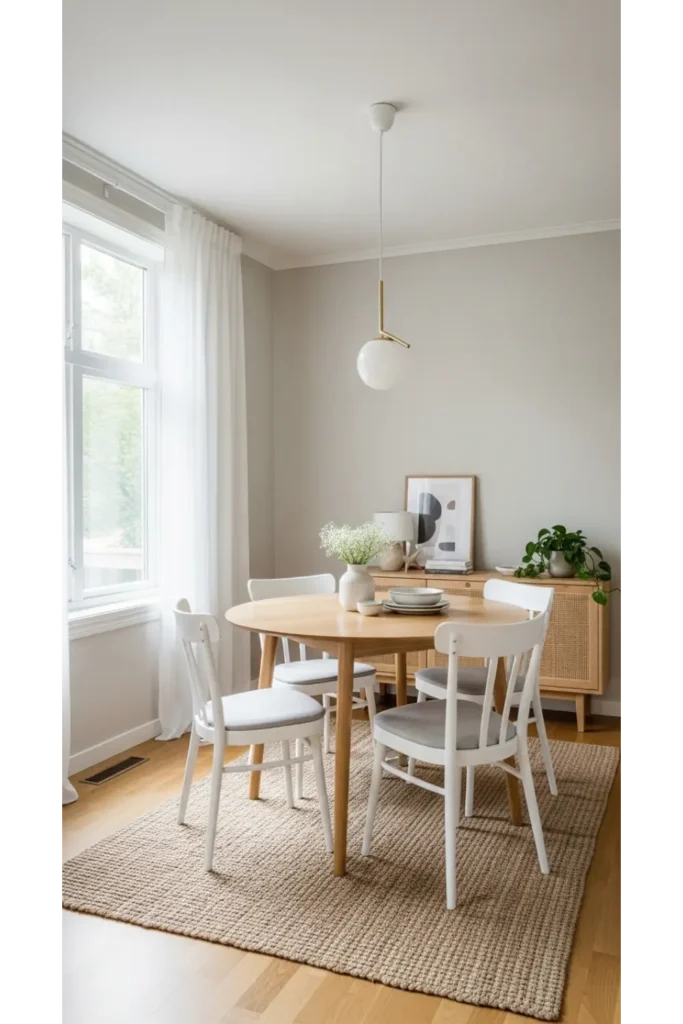
Light colors help small spaces feel larger and more open. Using soft neutrals on walls and furniture reflects light and reduces visual weight. This creates a calm and welcoming dining environment.
Adding texture through fabric or wood keeps the space from feeling flat. The goal is balance rather than starkness. Light palettes support a relaxed atmosphere that works well for everyday meals.
13. Built In Storage Under Seating
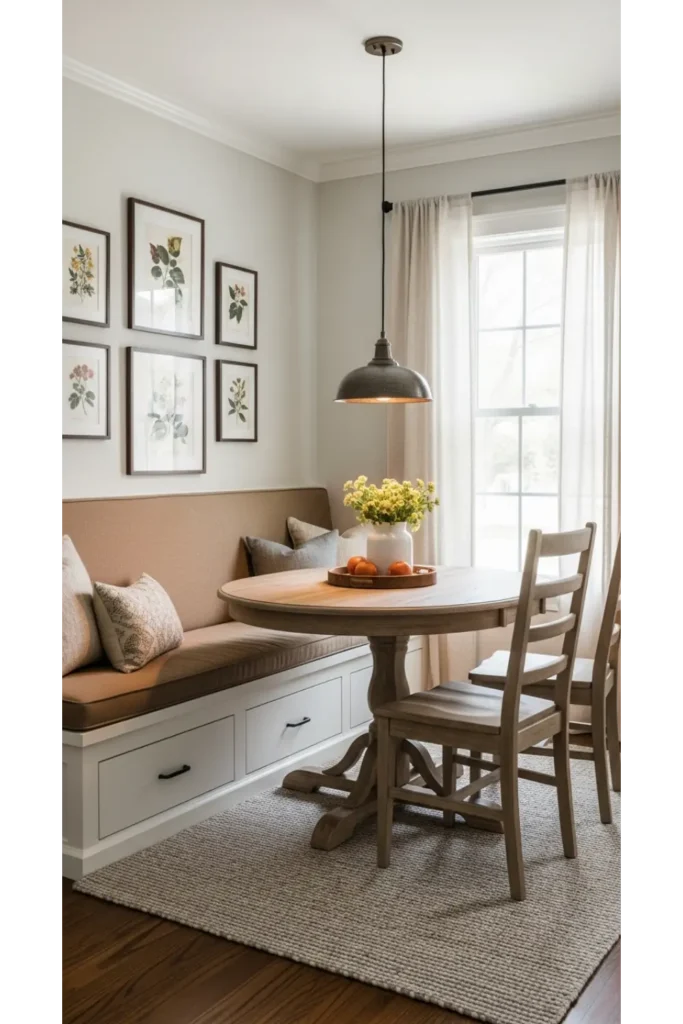
Hidden storage under seating keeps essentials close without adding clutter. This design uses space efficiently while maintaining a clean look. It works especially well in dining nooks or bench setups.
Storage compartments can hold items used less often, keeping surfaces clear. This supports a more organized dining room that feels easy to maintain. Function blends seamlessly with comfort.
14. Minimal Lighting Fixtures
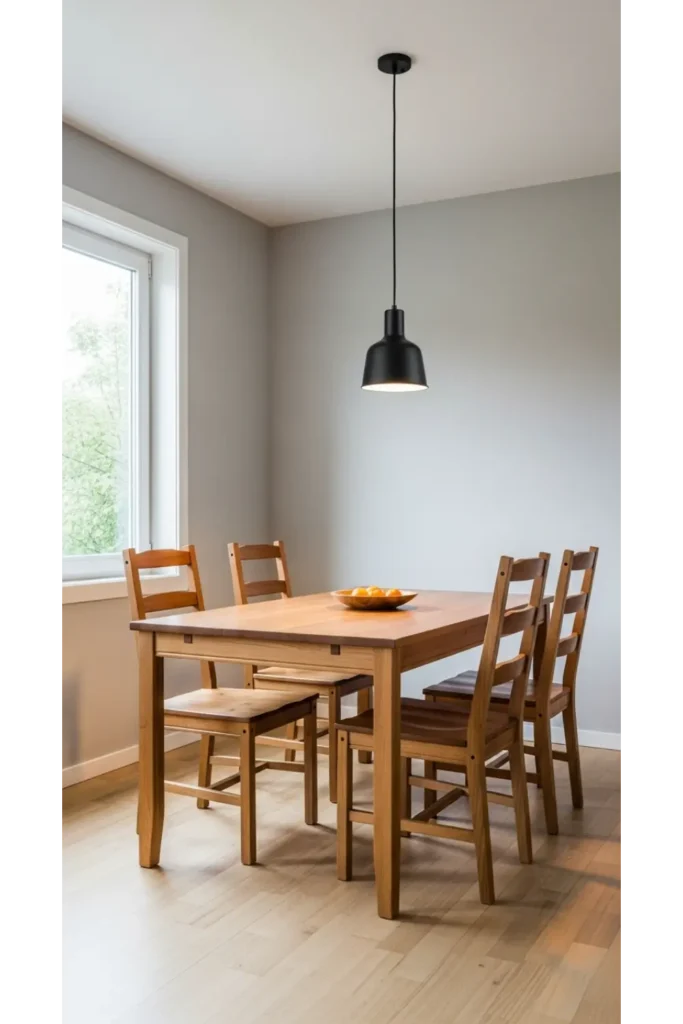
Oversized lighting can overwhelm a small dining room. Choosing minimal fixtures keeps the focus on the space itself. Simple pendants or flush mounts provide enough light without visual heaviness.
Warm lighting enhances comfort and makes the room feel inviting. Placement should center over the table to define the dining area. This approach keeps the design balanced and practical.
15. Wall Mounted Lighting

Wall mounted lights free up ceiling space and reduce clutter. They provide focused lighting for meals while keeping the room open. This works well in rooms with low ceilings or limited space.
Sconces can add character without taking up room. Adjustable designs offer flexibility for different moods. This choice supports both function and style in compact dining areas.
16. Foldable Chairs for Extra Seating

Foldable chairs offer extra seating only when needed. When not in use, they can be stored away, keeping the dining room uncluttered. This flexibility suits homes that entertain occasionally.
Choosing well designed foldable chairs ensures comfort and style. They should feel intentional, not temporary. This solution supports adaptability without compromising aesthetics.
17. Dining Table as Multi Purpose Surface
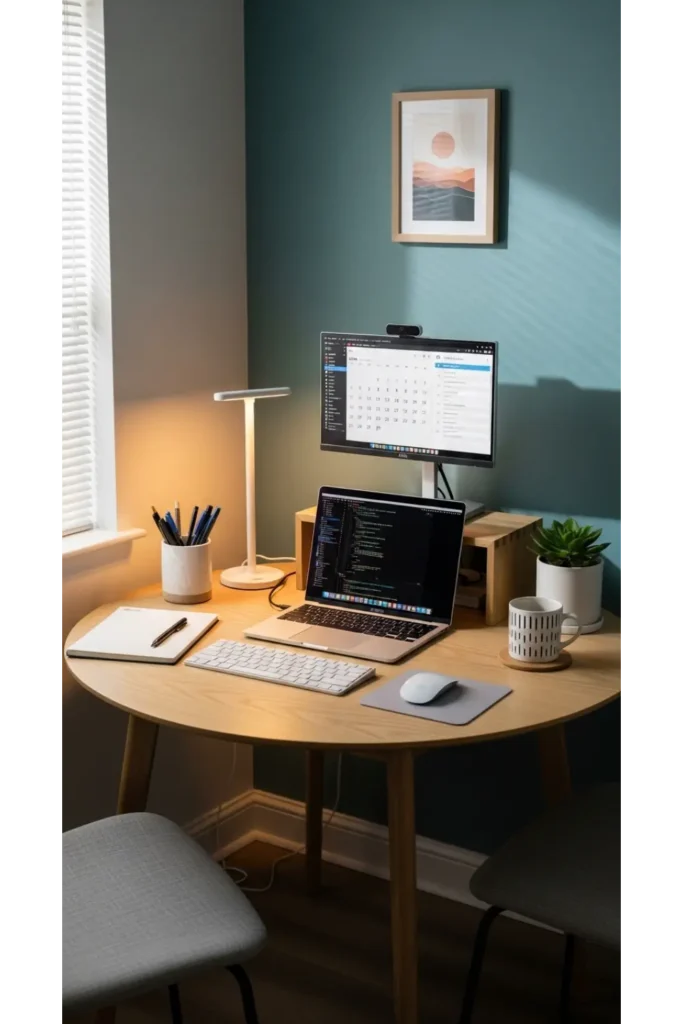
In small homes, the dining table often serves multiple roles. It can function as a workspace, homework station, or hobby area. Choosing a table that supports these uses adds value without adding furniture.
Keeping the design simple helps it adapt easily. Storage nearby can hold work items when not in use. This approach supports modern living where flexibility matters.
18. Vertical Storage Solutions
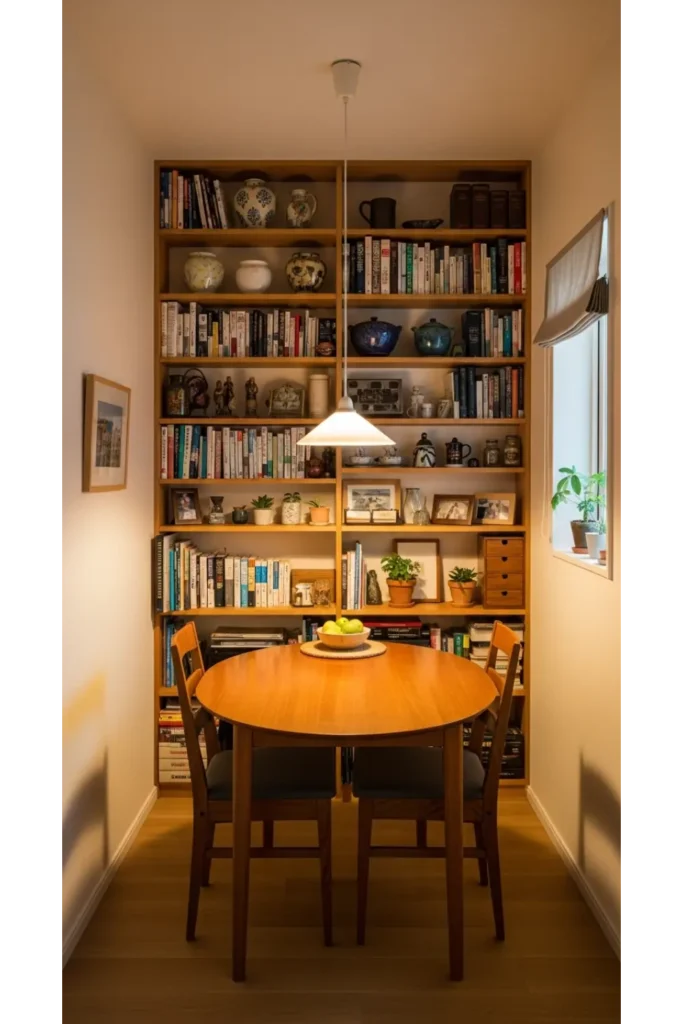
Using vertical space reduces the need for floor furniture. Tall shelves or cabinets draw the eye upward, making the room feel taller. This keeps the dining area organized without crowding it.
Vertical storage works best when kept visually light. Open shelving or glass doors help maintain balance. This solution maximizes capacity while preserving openness.
19. Compact Rug to Define the Space

A small rug helps define the dining area without overwhelming it. It anchors the table and chairs, creating a clear zone within the room. This works especially well in open layouts.
The rug should fit just under the table and chairs. Simple patterns or neutral tones keep the look cohesive. This subtle addition adds warmth and structure.
20. Minimal Decor with Purpose
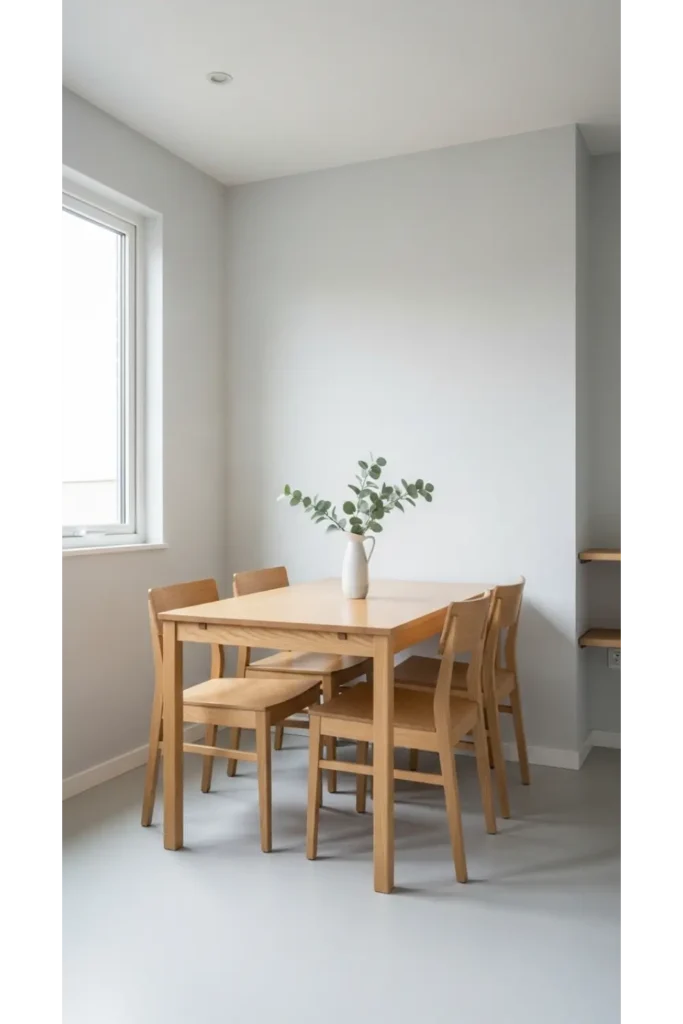
Too much decor can make a small dining room feel crowded. Choosing a few meaningful pieces keeps the space calm and personal. Every item should serve a purpose or bring joy.
Wall art, plants, or a centerpiece can add character without clutter. Restraint helps the room feel intentional. This approach supports a relaxed and functional dining experience.
21. Balanced Layout with Clear Pathways
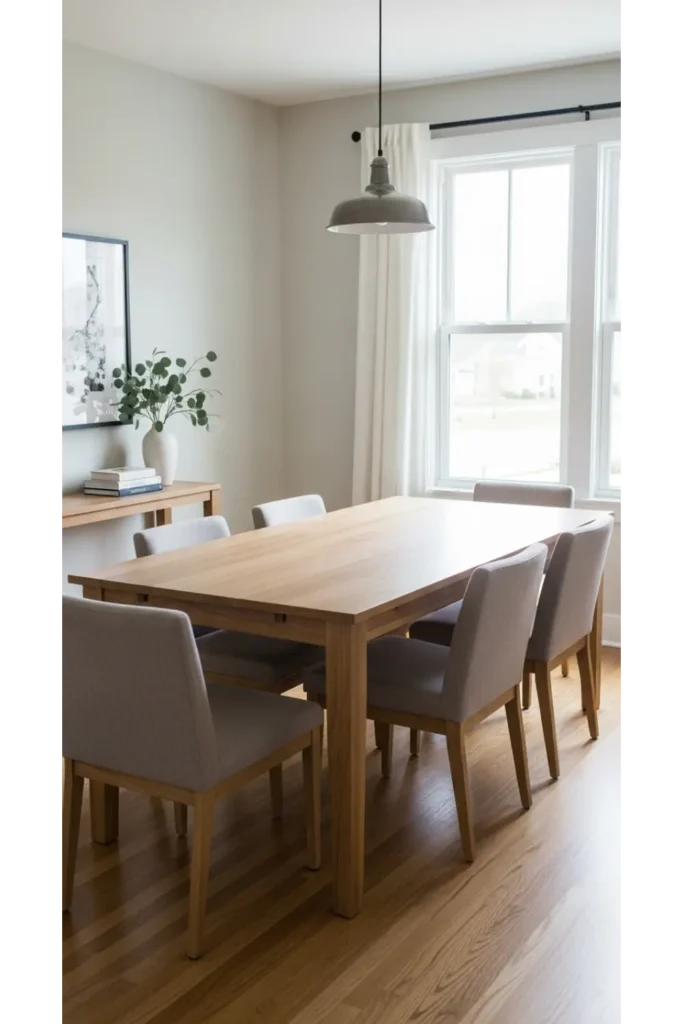
The most effective small dinner room ideas focus on movement. A layout with clear pathways feels comfortable and easy to use. Furniture placement should support natural flow through the room.
Avoid pushing everything against the walls if it disrupts balance. Sometimes small adjustments make a big difference. A well planned layout supports both comfort and efficiency.
Conclusion
Designing a dining room in a limited space requires thoughtful choices and a clear understanding of how the room will be used. These ideas show that saving space does not mean sacrificing comfort or style. With smart layouts, flexible furniture, and intentional design, a small dining area can feel open, welcoming, and perfectly suited to everyday life.