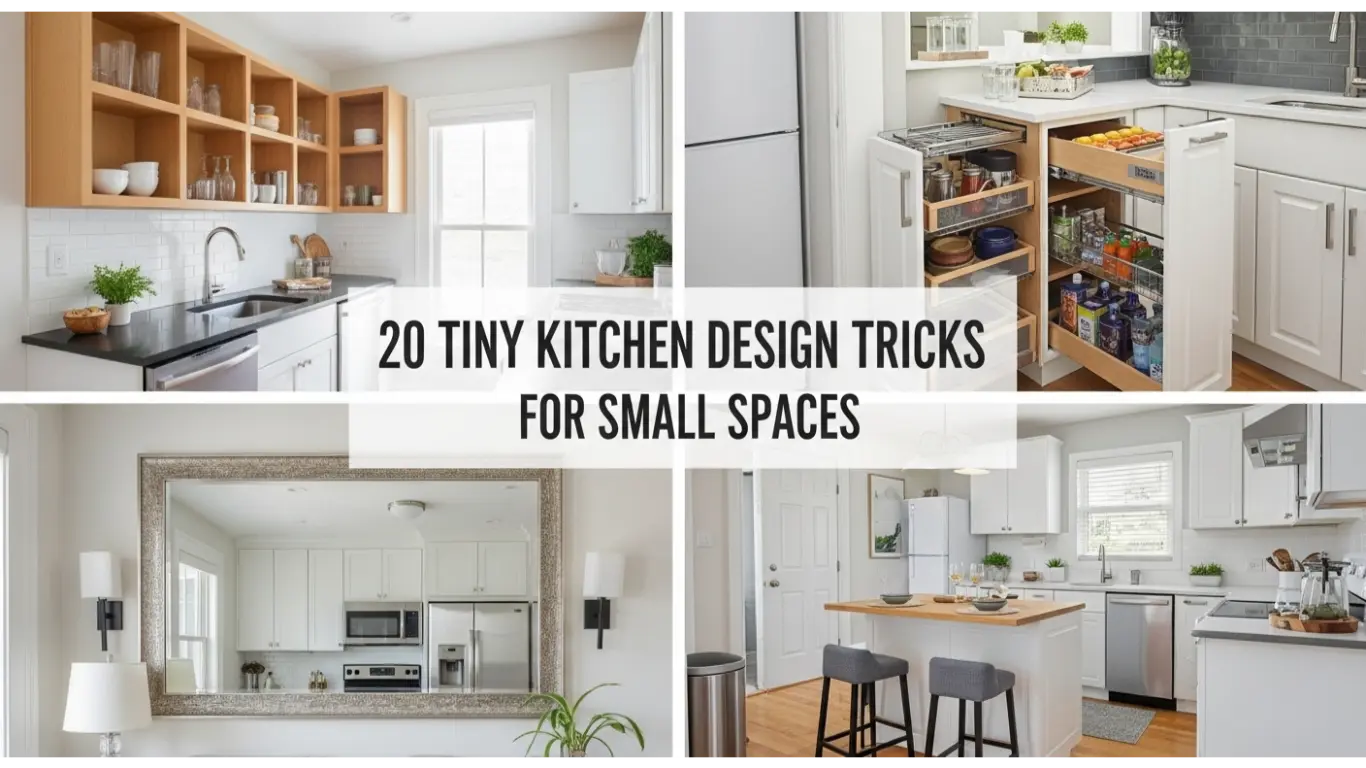
20 Tiny Kitchen Design Tricks for Small Spaces
Small kitchens can feel limiting, but smart design choices change everything. With the right approach, even the tightest space can look open, organized, and welcoming. This guide dives deep into proven ideas that designers actually use in real homes. You will learn how to stretch visual space, improve storage, and make daily cooking easier. These ideas focus on function first, then beauty, so your kitchen works hard and looks great doing it.
1. Layered Storage Zones That Balance Function and Flow
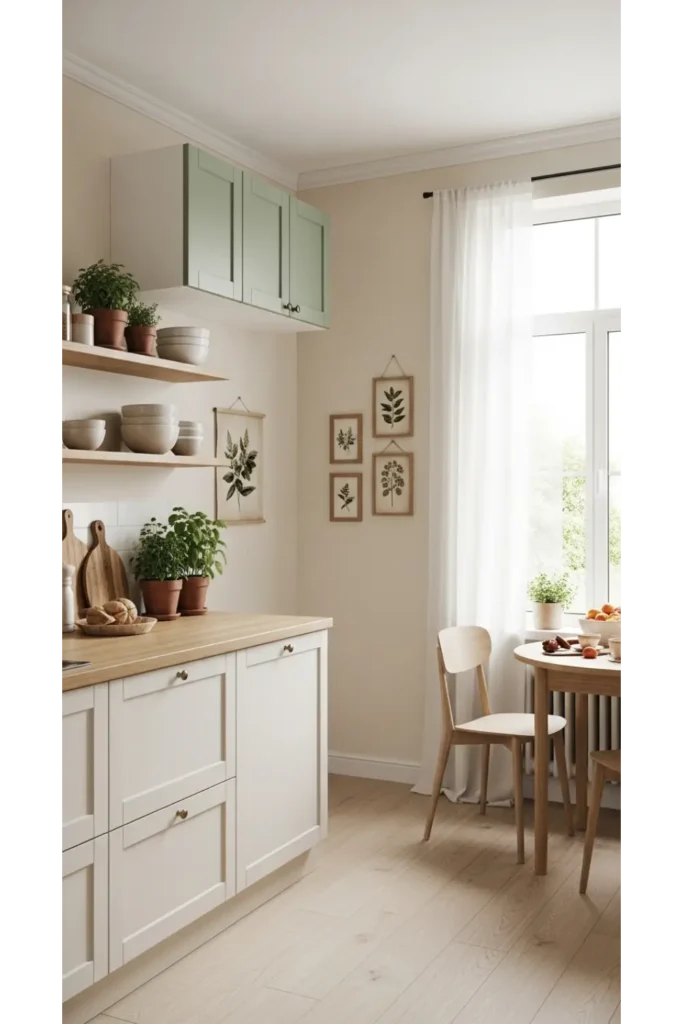
Instead of pushing everything upward, this approach divides storage into smart, usable zones. Lower cabinets handle heavy cookware, while mid level shelves keep daily items within easy reach. This balance reduces strain and makes the kitchen feel more intuitive to use. The space feels organized without looking overwhelming, which matters a lot in compact layouts where every movement counts.
Layered storage also improves how the kitchen feels visually. Mixing closed cabinets with selective open areas breaks monotony and adds depth. When designers control spacing and alignment, the kitchen feels wider and calmer. This method supports efficiency while maintaining a comfortable, lived in look that works well for small homes.
2. Seamless Surfaces That Reduce Visual Breaks
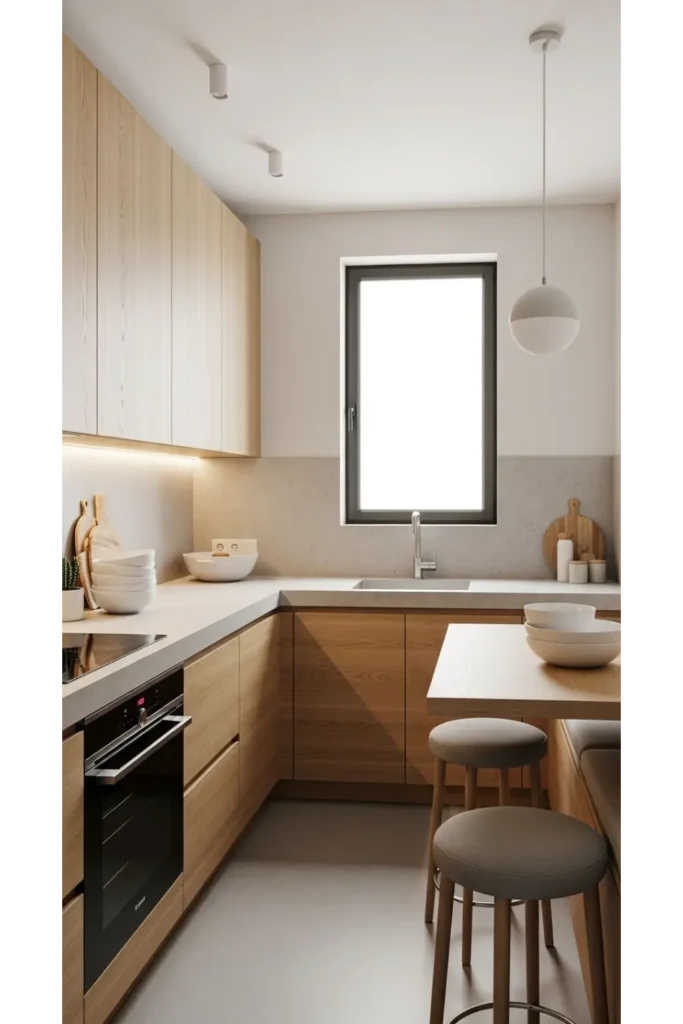
In small kitchens, too many surface changes can make the space feel chopped up. Using the same material for countertops and backsplashes creates a smooth, uninterrupted flow that visually stretches the room. When the eye does not stop at edges or contrasts, the kitchen feels calmer and more open. This design choice also highlights craftsmanship, making even compact kitchens feel intentional and well designed.
Seamless surfaces also support daily function. Fewer joints mean easier cleaning and better durability over time. Materials like quartz or solid stone work especially well because they offer consistency without looking flat. When paired with simple cabinetry, this approach keeps the focus on space and usability rather than visual noise, which is essential in compact layouts.
3. Open Shelving Used With Intention
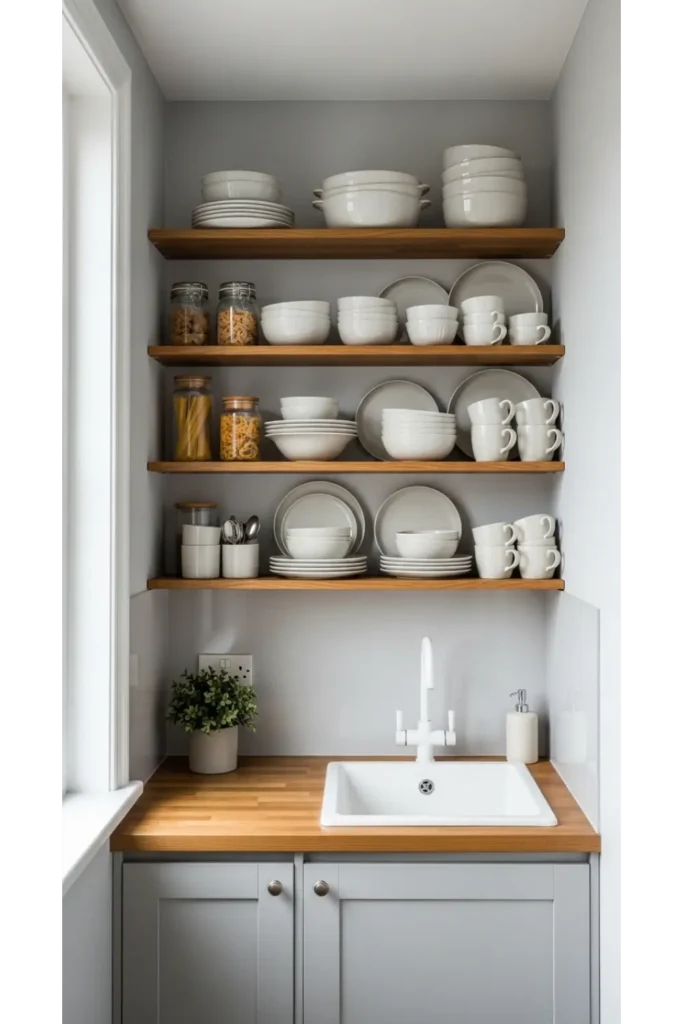
Open shelves can make a small kitchen feel less boxed in when used carefully. They remove visual weight created by bulky upper cabinets. When shelves hold everyday items like dishes and glasses, they also improve efficiency and encourage thoughtful organization.
The key lies in restraint. Limiting shelves to one wall or a short run prevents clutter from taking over. Neutral dishware and consistent spacing keep the look calm. This balance helps the kitchen feel personal while staying functional and visually open.
4. Reflective Backsplashes for Depth
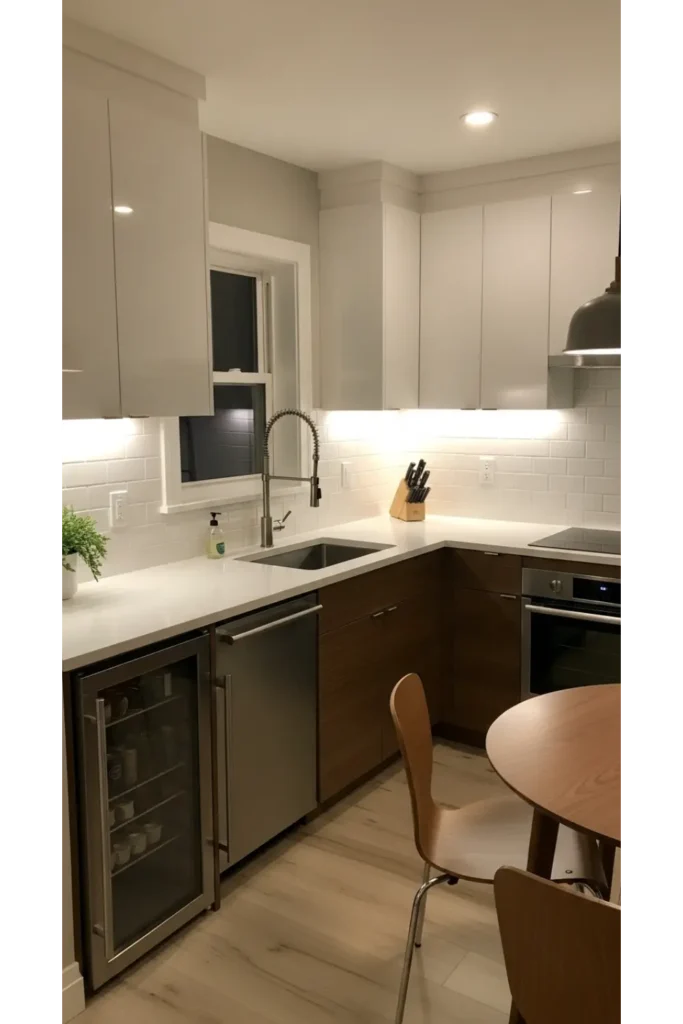
A reflective backsplash adds depth without taking up physical space. Glossy tiles, glass panels, or polished stone bounce light around the kitchen, which makes the room feel wider. This effect works especially well in kitchens with limited natural light.
When paired with under cabinet lighting, reflective surfaces amplify brightness where you need it most. Choosing simple patterns keeps the focus on the light-enhancing quality rather than visual noise. This subtle design move delivers big impact in tight layouts.
5. Slim Appliances That Save Inches
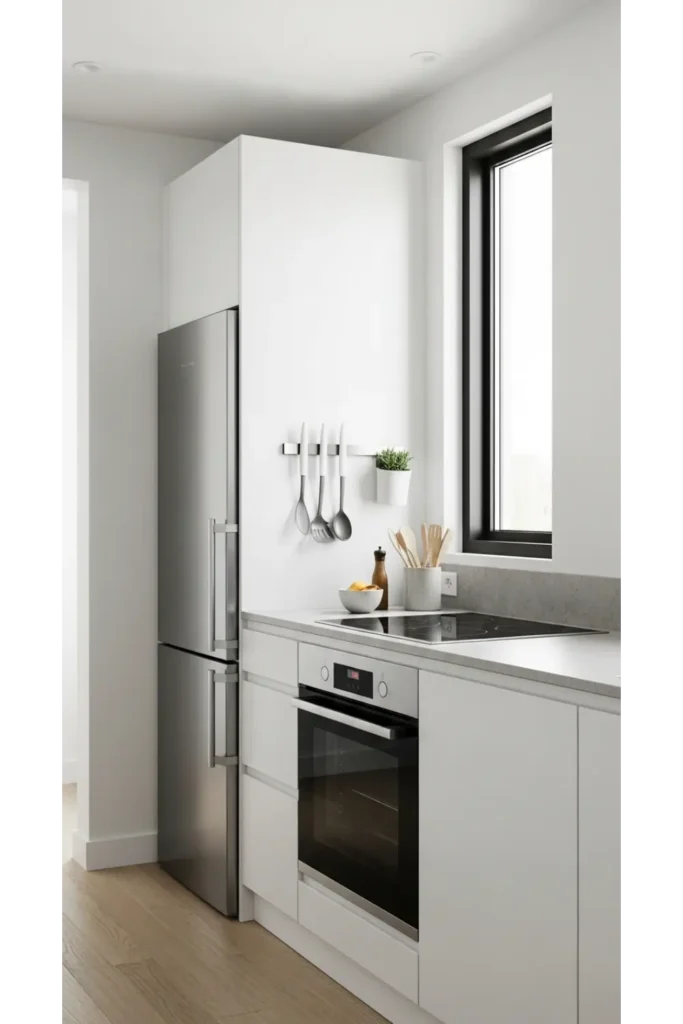
Standard appliances often waste valuable space in small kitchens. Slim or compact versions provide the same function while freeing up inches for movement and storage. Narrow refrigerators and shallow depth ranges help maintain clear walkways without sacrificing performance.
These appliances also improve layout flexibility. Designers can fit more counter space or add storage where bulky units once stood. Modern compact appliances now offer strong features, so you do not have to compromise on cooking quality or convenience.
6. Handleless Cabinet Fronts for Clean Lines
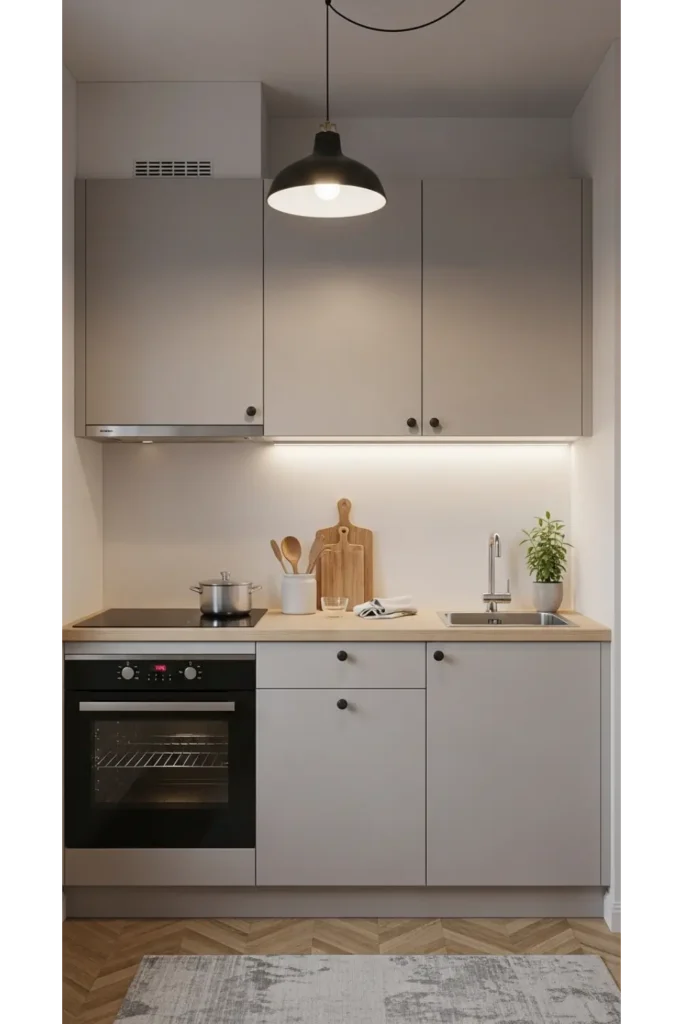
Visual clutter shrinks a space faster than anything else. Handleless cabinets create smooth, uninterrupted surfaces that help a kitchen feel calm and open. Push to open mechanisms or integrated pulls keep function intact while improving the overall look.
This design choice also enhances safety and flow in tight spaces. Without protruding hardware, movement feels easier and less cramped. Clean lines allow other elements like lighting or textures to stand out without overwhelming the room.
7. Smart Corner Solutions That Eliminate Dead Space
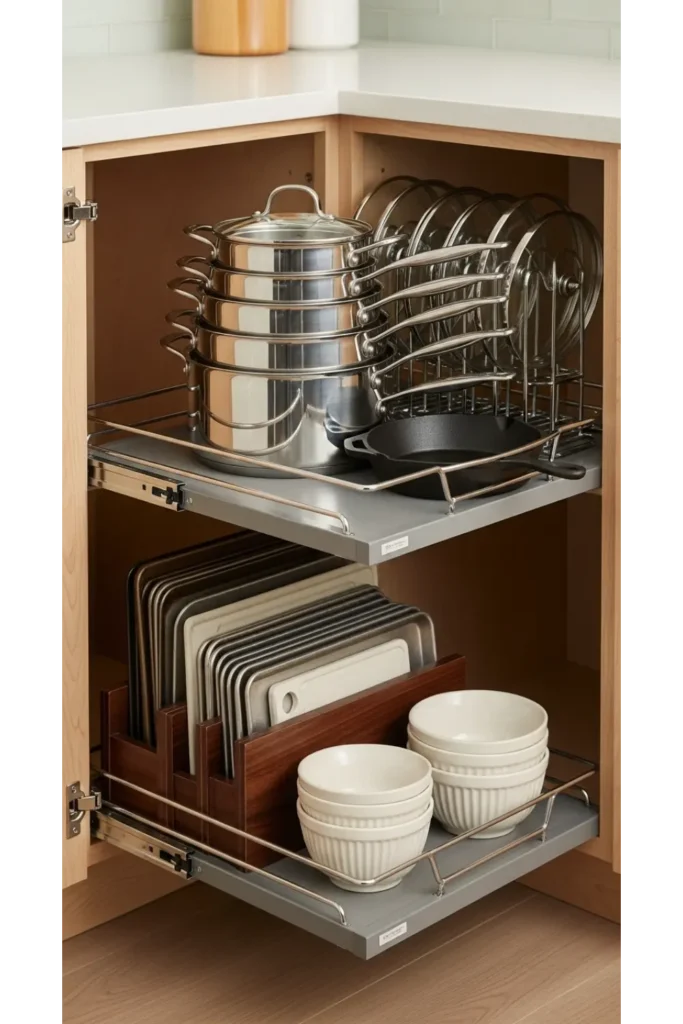
Corners often become wasted zones in small kitchens. Smart solutions like pull out shelves or rotating trays transform awkward spaces into usable storage. These systems bring items forward, so nothing gets lost or forgotten in the back.
Better corner access improves daily efficiency. You spend less time searching and more time cooking. When storage works smoothly, the kitchen feels larger because every inch serves a purpose. This practical upgrade delivers both function and peace of mind.
8. Single Bowl Sinks for More Counter Space
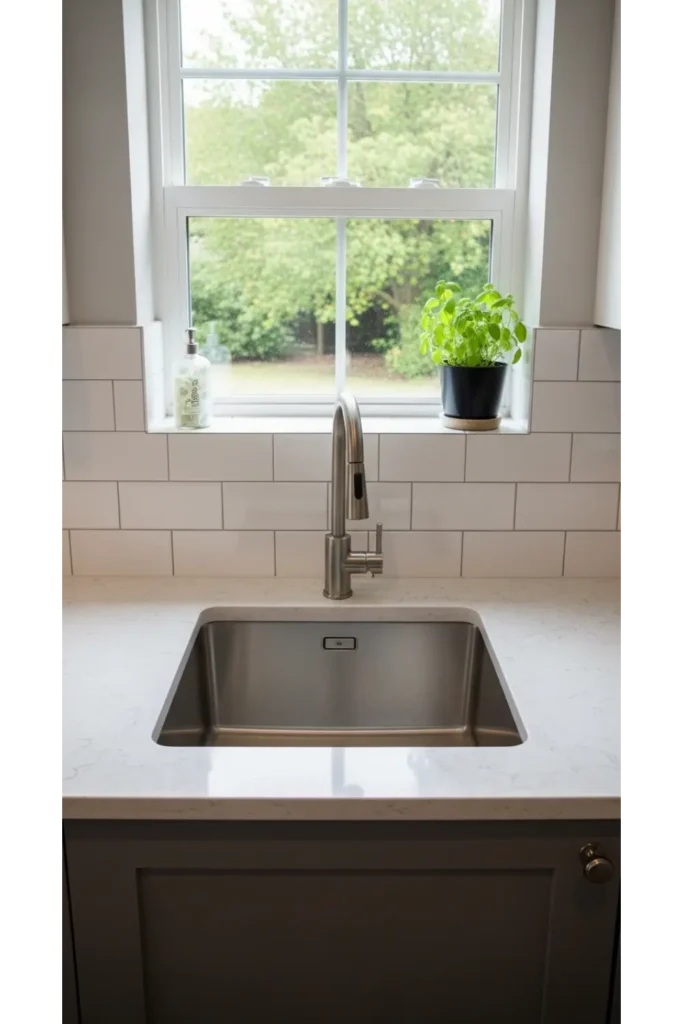
A single bowl sink takes up less visual and physical space than divided versions. This choice opens up valuable counter area on both sides, which matters in small kitchens. It also creates a cleaner look that feels modern and uncluttered.
Single bowl sinks handle large pots with ease, making them practical as well as stylish. Pairing the sink with a streamlined faucet keeps the area simple. The result supports smoother workflows and a more spacious feel.
9. Under Cabinet Lighting That Lifts the Room
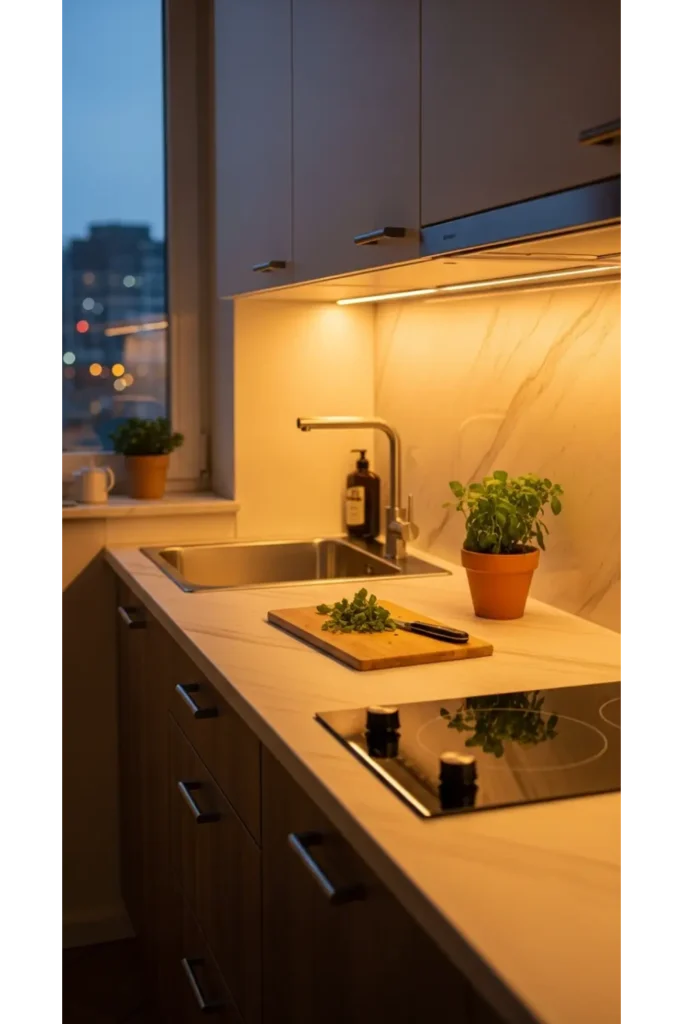
Lighting plays a major role in how space feels. Under cabinet lighting removes shadows from work surfaces and makes the kitchen feel brighter overall. This layered lighting approach adds depth and warmth without taking up space.
Good lighting also improves safety and comfort. When countertops stay well lit, cooking feels easier and more enjoyable. The glow draws attention to horizontal surfaces, which helps balance the vertical elements in a small kitchen.
10. Consistent Flooring That Connects Spaces
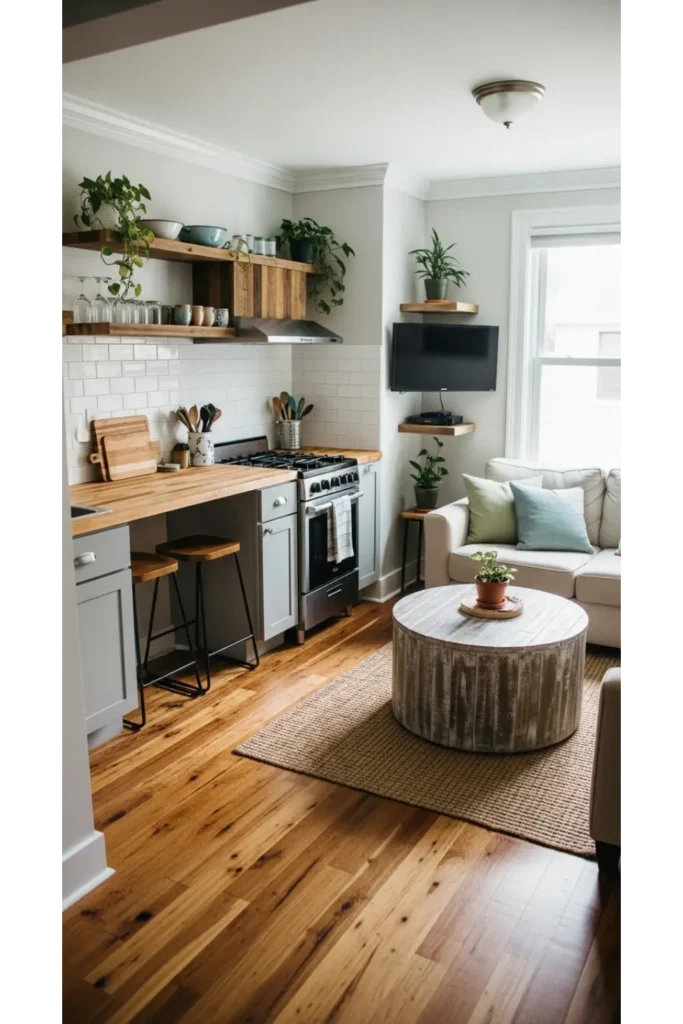
Using the same flooring throughout connected spaces creates visual continuity. This trick helps the kitchen feel like part of a larger whole rather than a separate box. The eye moves freely, which increases the sense of space.
Durable materials like tile or engineered wood work well in kitchens while extending into nearby rooms. Consistent flooring reduces visual breaks and makes even the smallest kitchen feel more open and integrated.
11. Glass Cabinet Doors for Visual Breathing Room
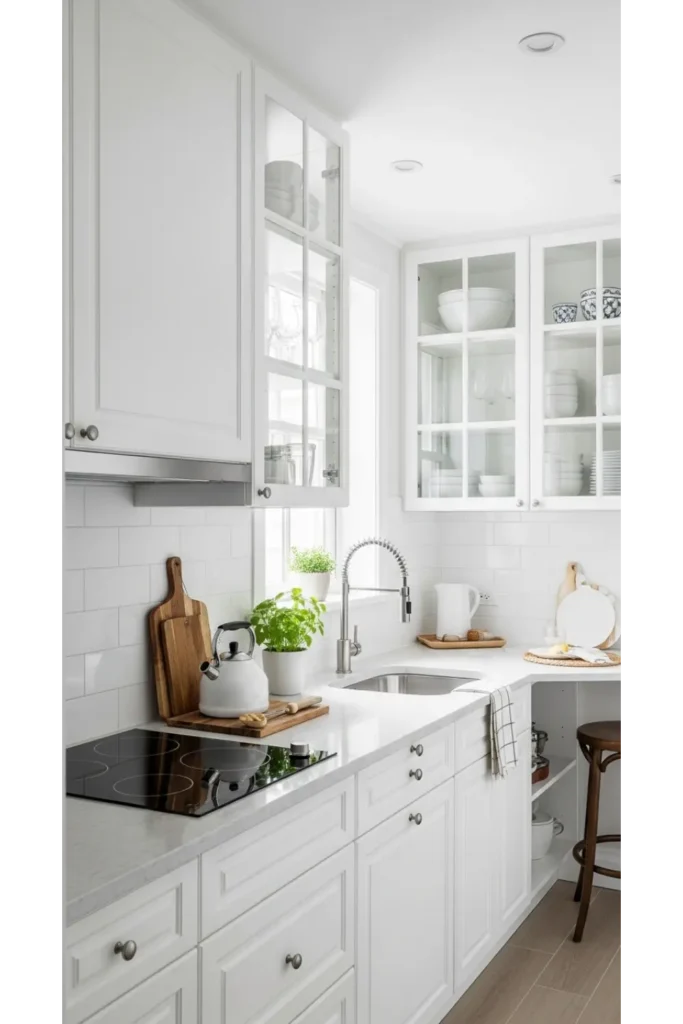
Glass front cabinets add depth and lightness to upper storage. They allow the eye to travel through the cabinet instead of stopping at a solid surface. This subtle transparency reduces the boxed in feeling common in small kitchens.
Keeping items organized behind glass remains important. Simple dishware and consistent colors maintain a calm look. This approach balances storage needs with a more open and airy visual effect.
12. Fold Down and Pull Out Work Surfaces
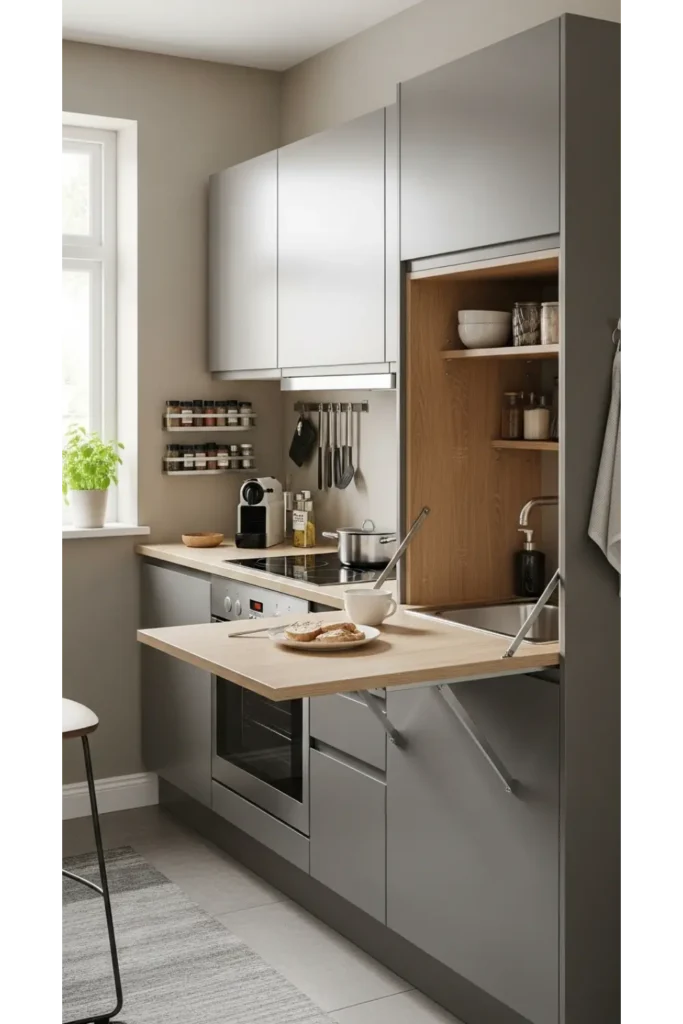
Extra counter space matters, but it does not need to be permanent. Fold down or pull out surfaces provide room for prep when needed and disappear when not in use. This flexibility supports daily cooking without crowding the layout.
These additions work especially well near sinks or appliances. They increase function while preserving clear walkways. Thoughtful placement ensures the kitchen adapts to your routine rather than restricting it.
13. Built In Seating for Multifunctional Use
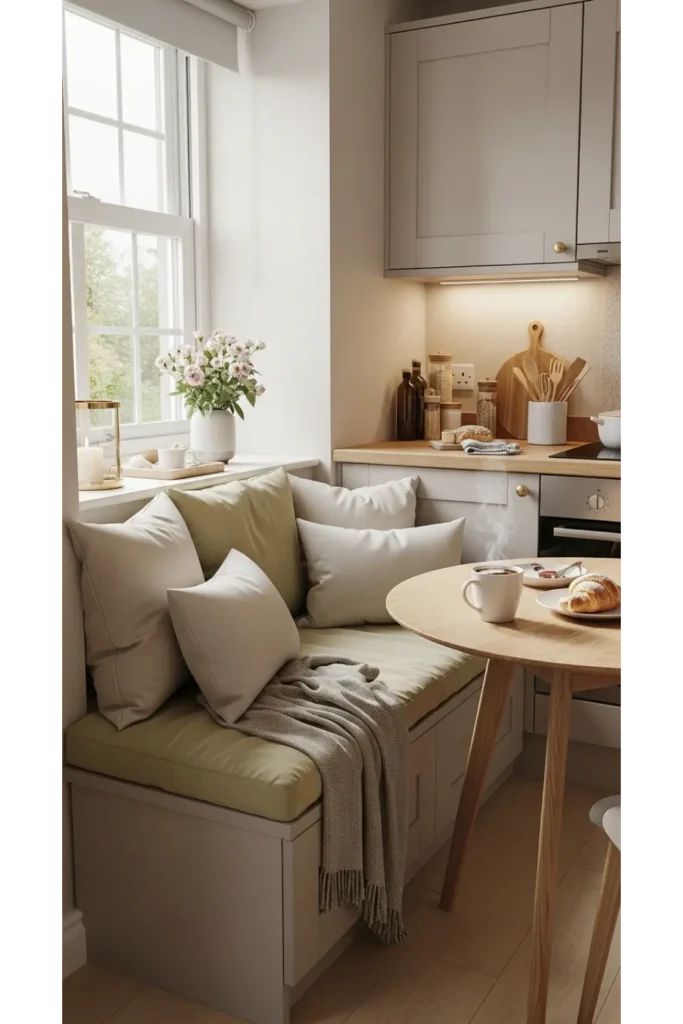
Built in seating turns unused corners into functional zones. A small breakfast nook can double as dining and prep space without adding furniture bulk. This approach keeps the kitchen efficient while supporting daily living.
Integrated seating also improves flow. By fitting the space exactly, designers avoid awkward gaps or oversized pieces. The kitchen feels intentional, comfortable, and surprisingly spacious.
14. Minimal Decor That Supports Function
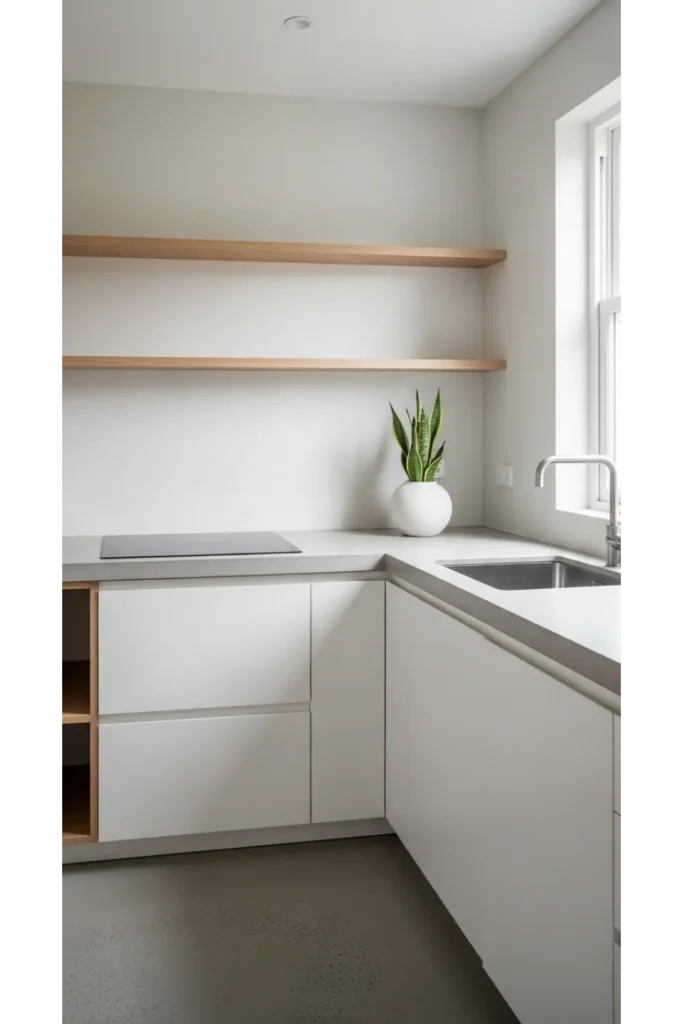
Decor should enhance function, not fight it. In small kitchens, limiting decorative items keeps surfaces clear and the room feeling open. Choosing a few meaningful pieces adds personality without clutter.
Functional decor like attractive storage jars or cutting boards works best. These items earn their place by serving a purpose. The kitchen stays tidy, calm, and easy to maintain.
15. Narrow Islands With Storage Benefits
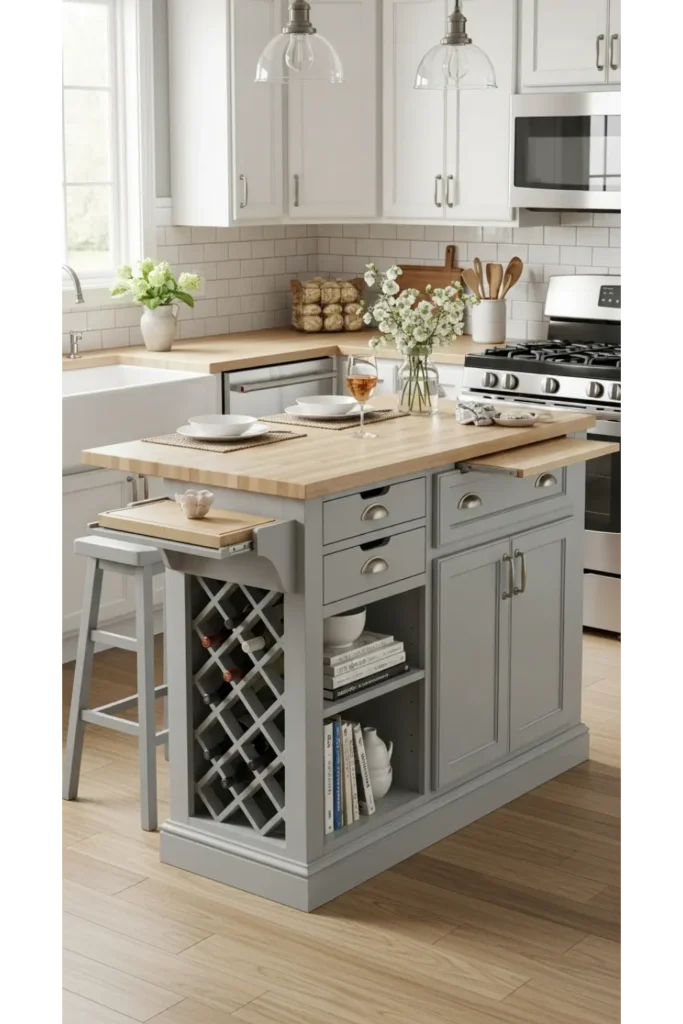
A narrow island can work in small kitchens when designed carefully. Slim profiles maintain clear paths while adding storage and prep space. Built in shelves or drawers increase capacity without expanding the footprint.
Islands also create a natural work zone. They support cooking, serving, and casual dining in one spot. When proportioned correctly, an island enhances rather than crowds the kitchen.
16. Matching Appliances With Cabinetry
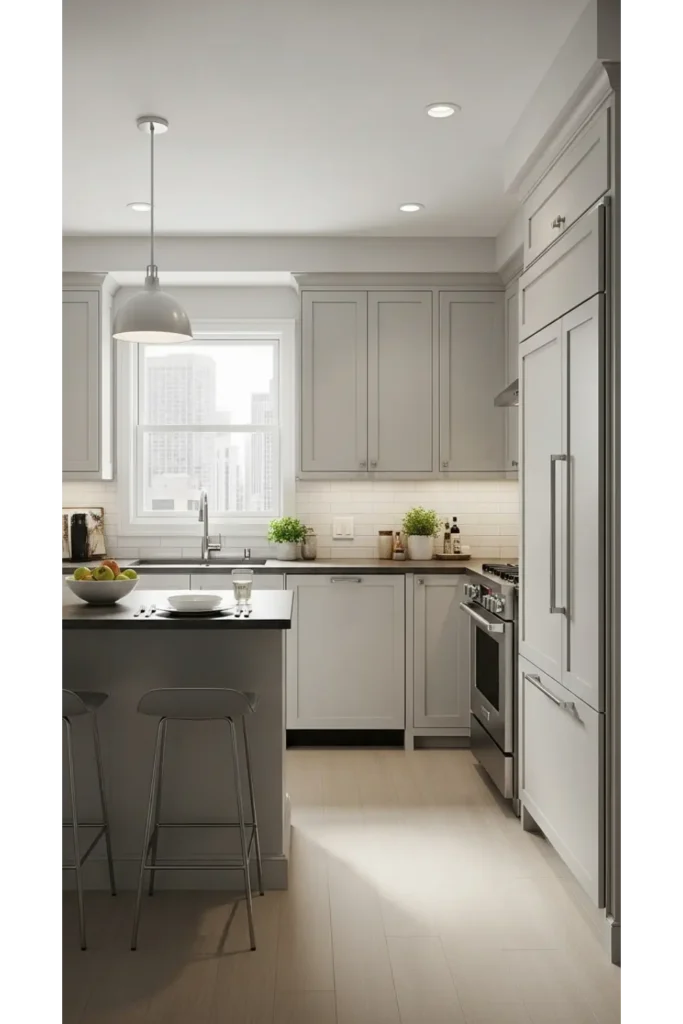
Panel ready appliances blend into cabinetry, reducing visual breaks. This unified look helps the kitchen feel calmer and more spacious. The eye reads the space as one continuous surface rather than separate bulky elements.
This approach works well in open layouts where the kitchen stays visible. By minimizing contrast, the kitchen integrates smoothly with surrounding rooms. The result feels polished and intentional.
17. Floating Shelves Over Heavy Units
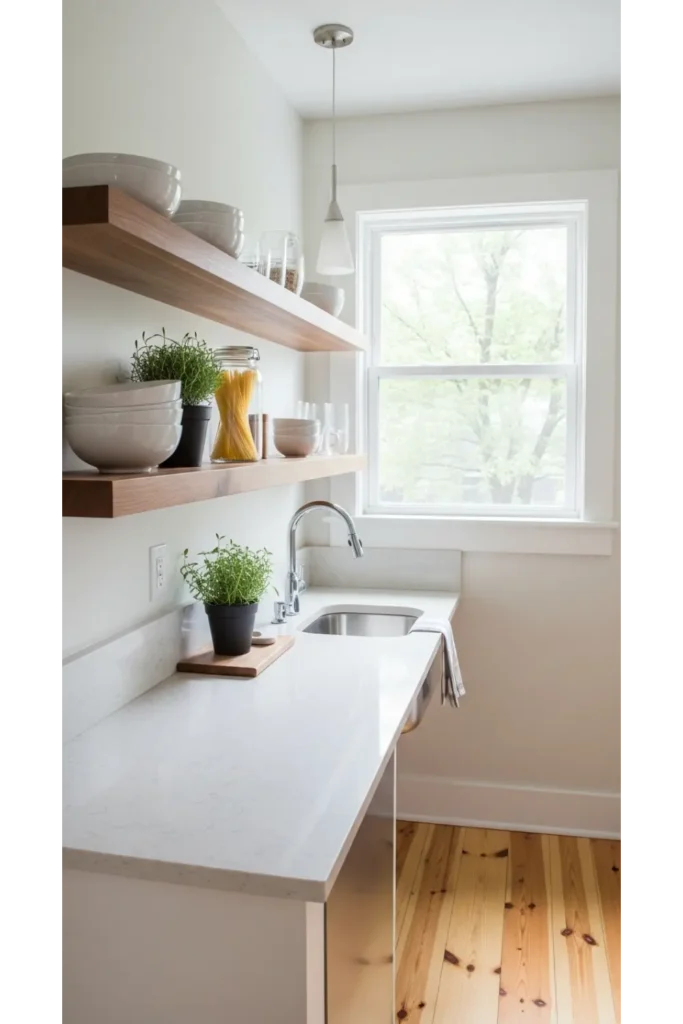
Floating shelves feel lighter than traditional cabinets. They create storage without closing off the wall. This openness improves airiness while keeping essentials close at hand.
When styled simply, floating shelves support both function and design. Limiting shelf depth prevents overcrowding. This balance keeps the kitchen practical and visually relaxed.
18. Strategic Mirror Placement
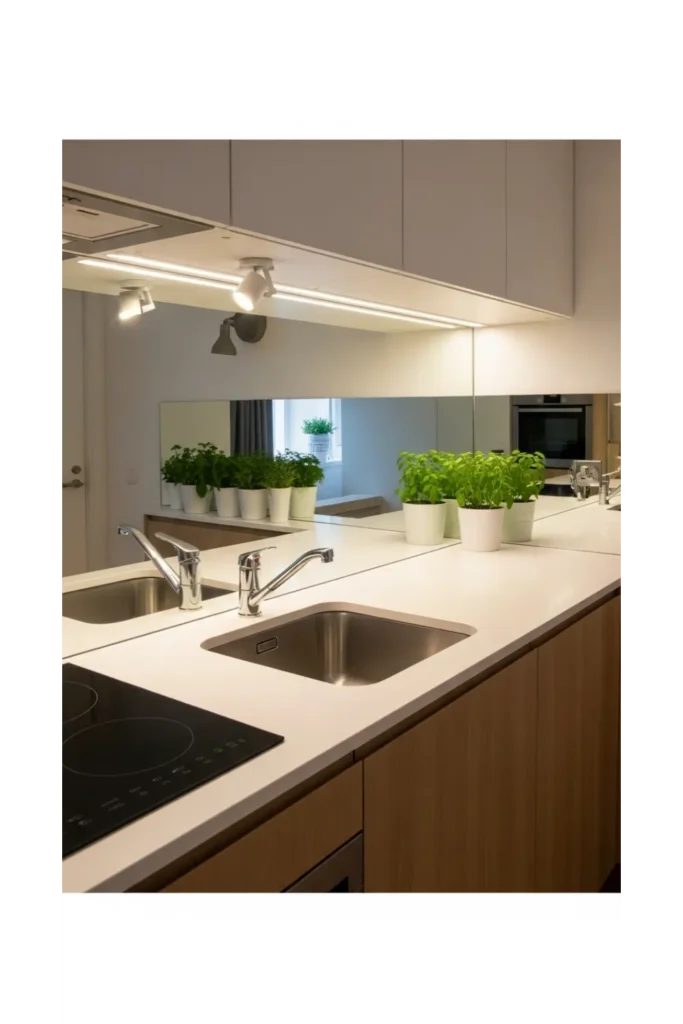
Mirrors reflect light and create the illusion of added depth. In kitchens, subtle mirror use works best, such as a small panel or reflective backsplash. This avoids overwhelming the space.
Placed correctly, mirrors brighten dark corners and visually widen narrow areas. This technique adds dimension without structural changes. It remains one of the most effective visual tricks for tight layouts.
19. Integrated Storage Around Appliances
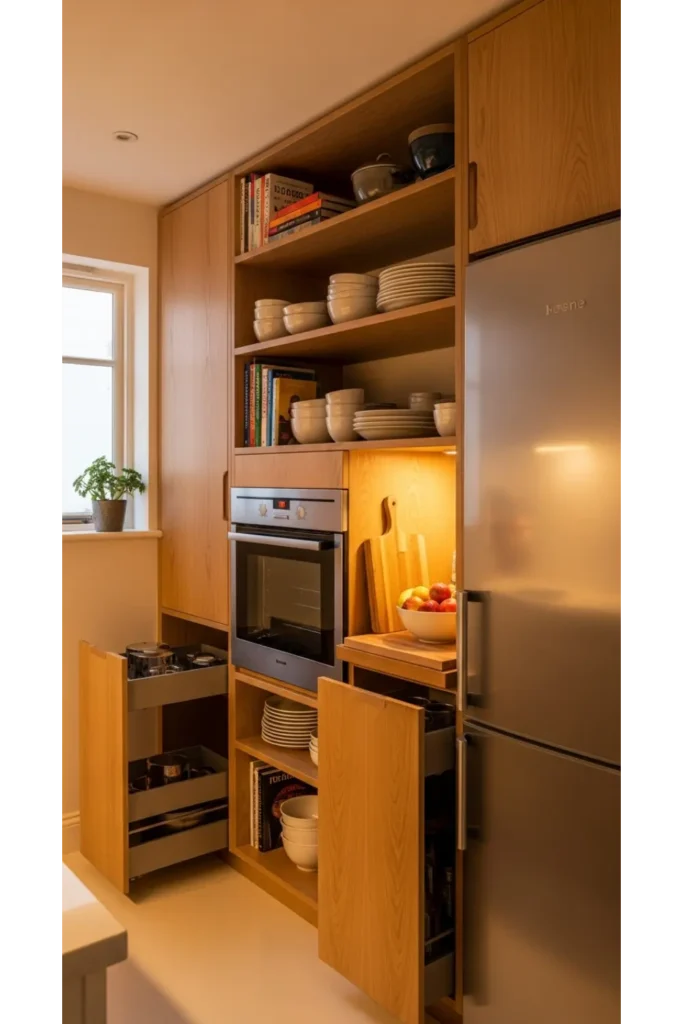
Surrounding appliances with storage maximizes efficiency. Custom cabinetry fills gaps and keeps everything aligned. This reduces wasted space and improves overall organization.
Integrated storage also enhances visual flow. Appliances feel part of the design rather than obstacles. The kitchen looks cohesive and thoughtfully planned.
20. Clear Countertops That Emphasize Space
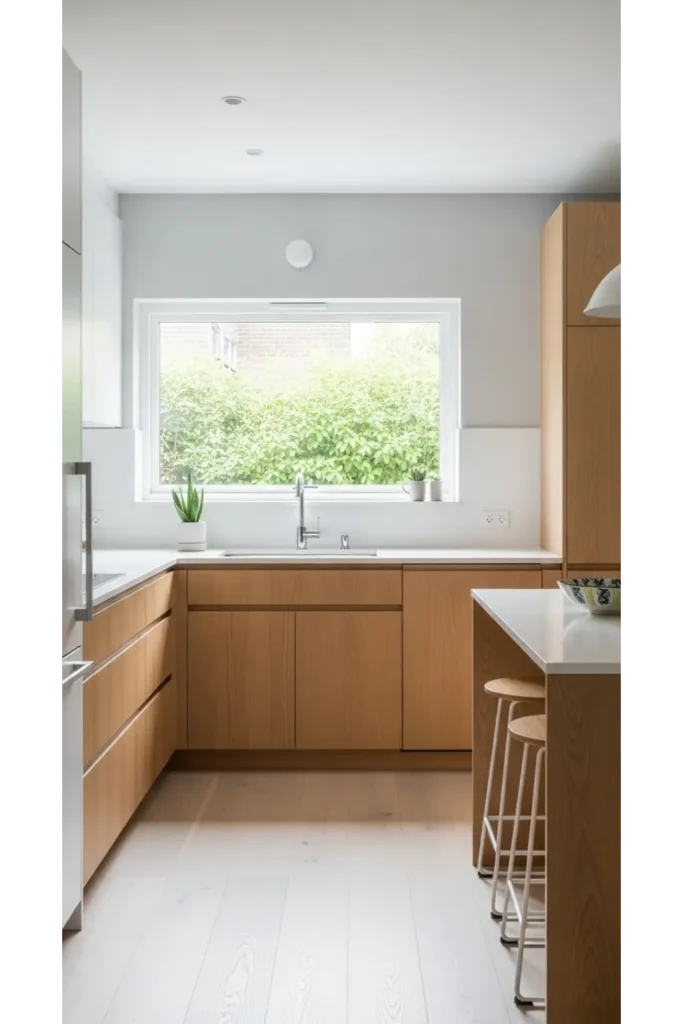
Clear countertops make a kitchen feel instantly larger. Keeping only daily essentials visible reduces visual noise. This simple habit supports every other design choice.
Storage solutions matter here. When everything has a home, counters stay open. This clarity improves both function and comfort, helping the kitchen feel calm and spacious.
Conclusion
Designing a small kitchen requires intention, creativity, and restraint. The most effective solutions focus on how the space works and how it feels. By applying these ideas thoughtfully, you can transform even the tightest layout into a kitchen that feels open, efficient, and welcoming. The right choices make small spaces not just livable, but truly enjoyable.