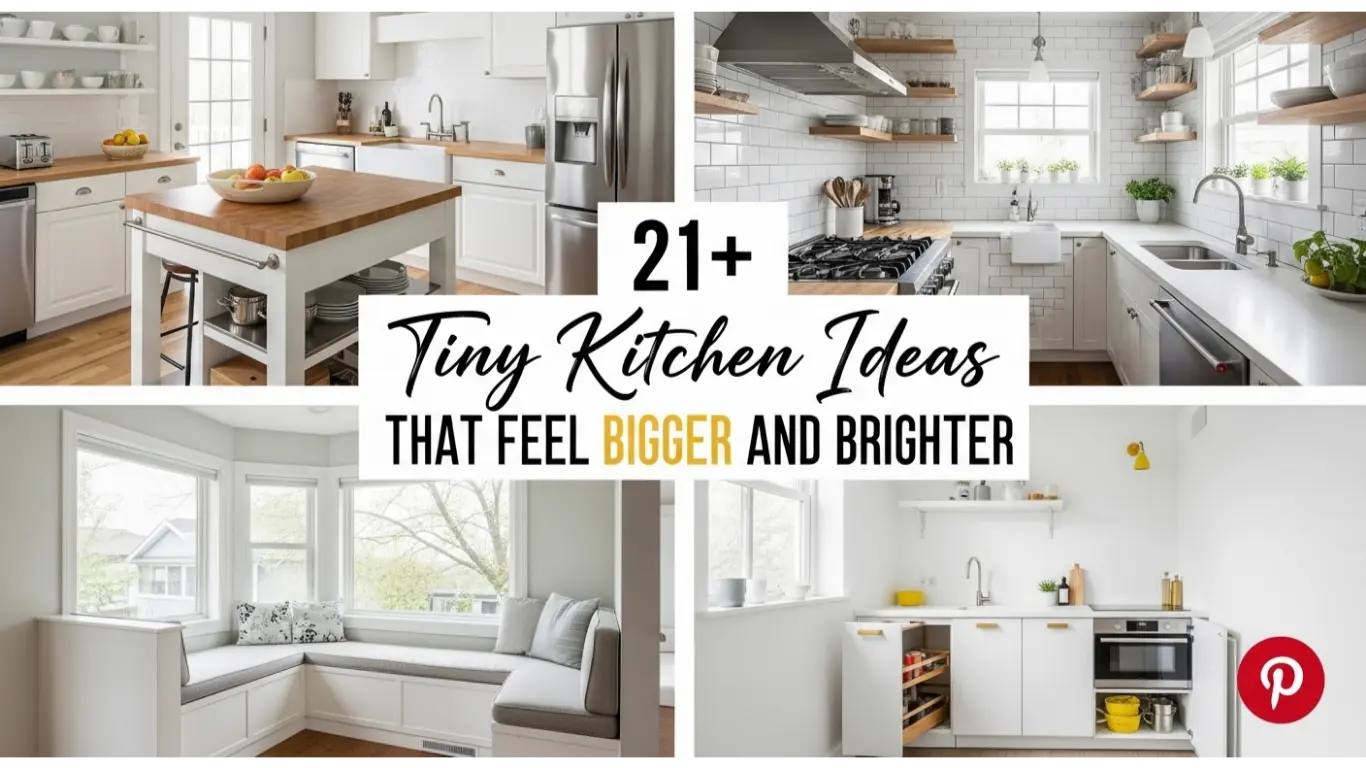
21+ Tiny Kitchen Ideas That Feel Bigger and Brighter
If you feel boxed in every time you step into your kitchen, you are not alone. Small spaces can feel tight, dark, and limiting. The good news is that smart design can completely change that experience. These tiny kitchen ideas that feel bigger and brighter focus on layout, storage, color, and visual flow so you can create a kitchen that looks open, works harder, and feels inviting every single day.
Below you will find fresh, practical strategies designed for real homes, renters, apartments, and compact layouts. Each idea goes deeper than surface styling. So you can actually transform your space.
1. Paint Upper Cabinets Soft White to Reflect Natural Light

Choosing a soft white for upper cabinets instantly lifts visual weight from the room. When light hits the surface, it reflects instead of absorbing brightness, which creates the illusion of more square footage. This simple update ranks high among tiny kitchen ideas that feel bigger and brighter because it works in almost every layout, including galley and apartment kitchens.
For best results, pair white uppers with slightly warmer lower cabinets to ground the space. This keeps the room from looking flat or sterile. Consider finishes like satin or semi gloss to improve reflection while keeping maintenance simple and practical for daily cooking use.
• Choose warm whites instead of stark tones
• Use semi gloss paint for easy cleaning
• Keep hardware minimal for a cleaner look
2. Extend Cabinets to the Ceiling for Seamless Height
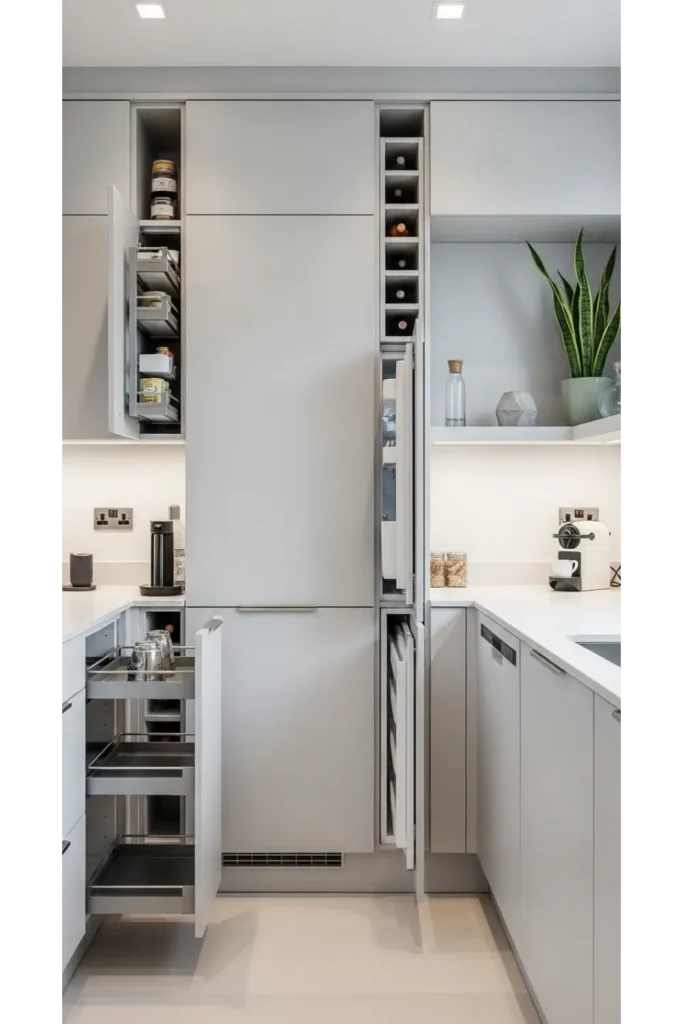
Short cabinets create a hard visual stop that makes ceilings feel lower. Extending cabinetry to the ceiling draws the eye upward and creates continuous vertical lines. This design strategy improves both storage and perception of height, which makes compact kitchens feel far more open and structured.
If full replacement is not possible, you can add trim or small topper cabinets above existing units. Paint everything the same color so the addition blends in. This removes dust collecting gaps and creates a custom built in effect without major remodeling.
• Add crown molding to existing cabinets
• Use matching paint to unify old and new sections
• Store seasonal items in top compartments
3. Install Under Cabinet LED Strips for Even Lighting
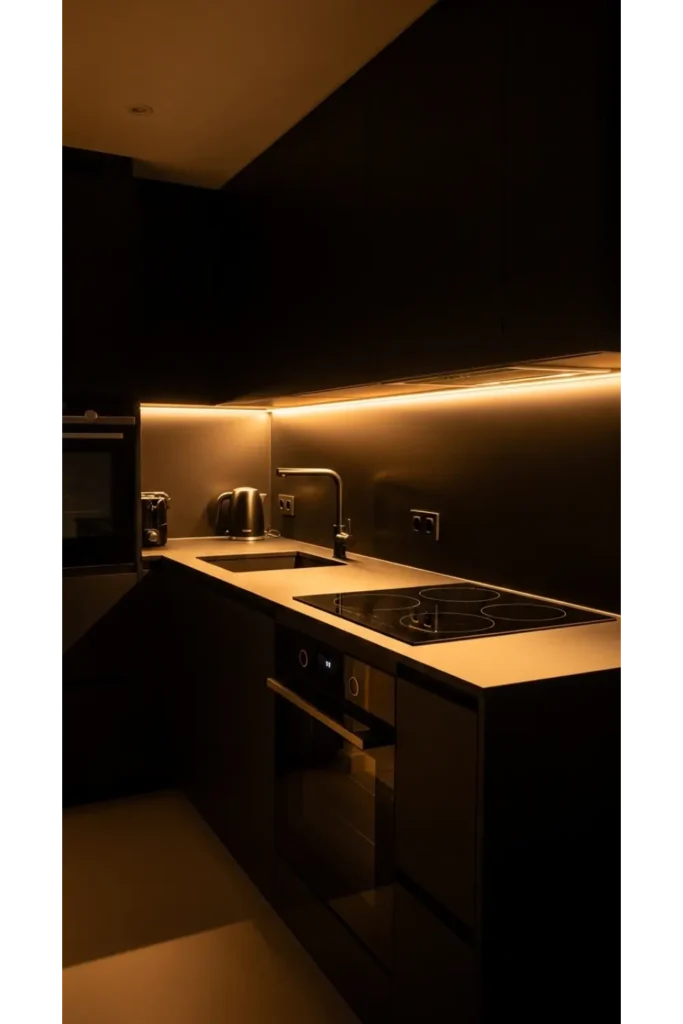
Dark counters shrink a kitchen visually. Installing LED strips under upper cabinets brightens prep zones and removes shadows that make walls feel closer than they are. Good lighting improves depth perception and makes finishes look cleaner and more intentional.
Choose warm white tones instead of blue light for a welcoming feel. Adhesive LED strips offer a renter friendly solution that does not require wiring changes. When you layer lighting properly, your kitchen feels balanced rather than cramped.
• Use warm white 2700K to 3000K lighting
• Hide wires behind cabinet lips
• Connect to dimmers for flexibility
4. Replace Solid Cabinet Doors With Glass Panels

Solid cabinet fronts can feel visually heavy. Glass inserts break up that weight and create depth. When you see through cabinetry, even partially, the room feels less boxed in. This technique works especially well in narrow kitchens where visual flow matters.
Keep the inside organized since contents remain visible. Frosted glass works well if you prefer privacy but still want brightness. This upgrade improves style while supporting the goal of tiny kitchen ideas that feel bigger and brighter in a refined way.
• Display neutral dishware for cohesion
• Use interior cabinet lighting for added glow
• Avoid overcrowding shelves
5. Use a Slim Rolling Island for Flexible Prep Space

A bulky island can overwhelm a compact layout. A slim rolling island provides prep space when needed and moves aside easily. This flexibility makes tight kitchens feel adaptable instead of crowded. Mobility creates breathing room, especially in studio apartments.
Choose light wood or painted finishes that match existing cabinets. Built in shelving underneath adds storage without blocking sight lines. This solution balances function and openness in small footprints.
• Look for islands under 18 inches deep
• Choose locking wheels for stability
• Use open shelving instead of closed panels
6. Create a Continuous Backsplash to Add Depth
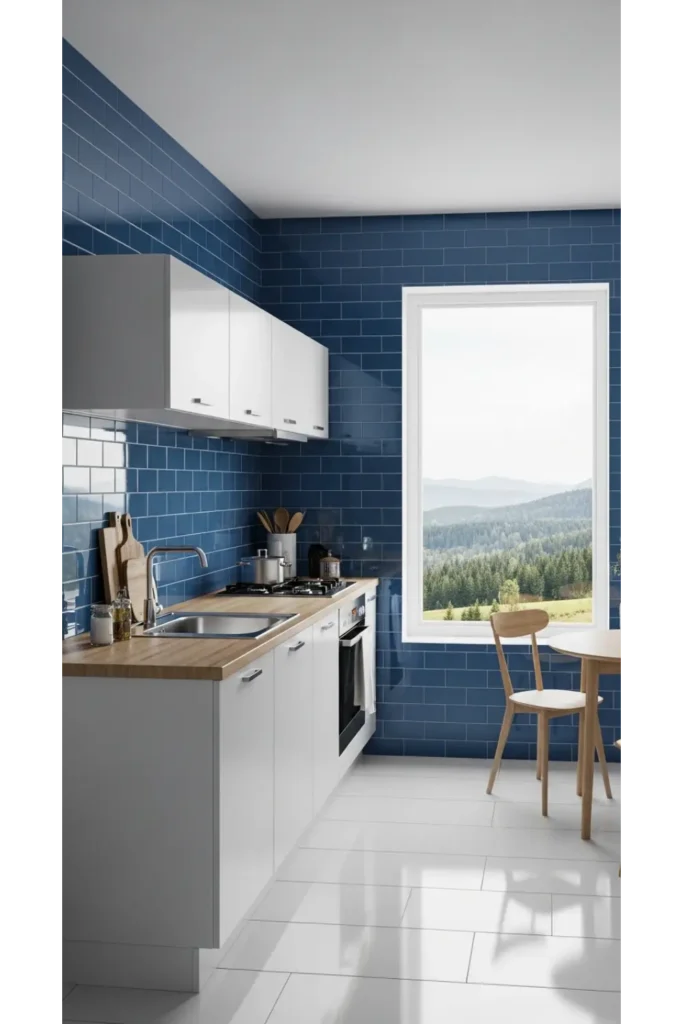
Stopping backsplash halfway up the wall cuts visual height. Extending tile to the ceiling elongates the room and adds texture. Glossy finishes reflect light and enhance depth perception without changing layout dimensions.
Choose vertical stacked tile patterns to exaggerate ceiling height. A seamless backsplash keeps walls feeling expansive rather than segmented. This design approach feels intentional and high end.
• Use vertical tile alignment
• Select light neutral shades
• Continue behind open shelving
7. Swap Upper Cabinets for Open Shelving on One Wall
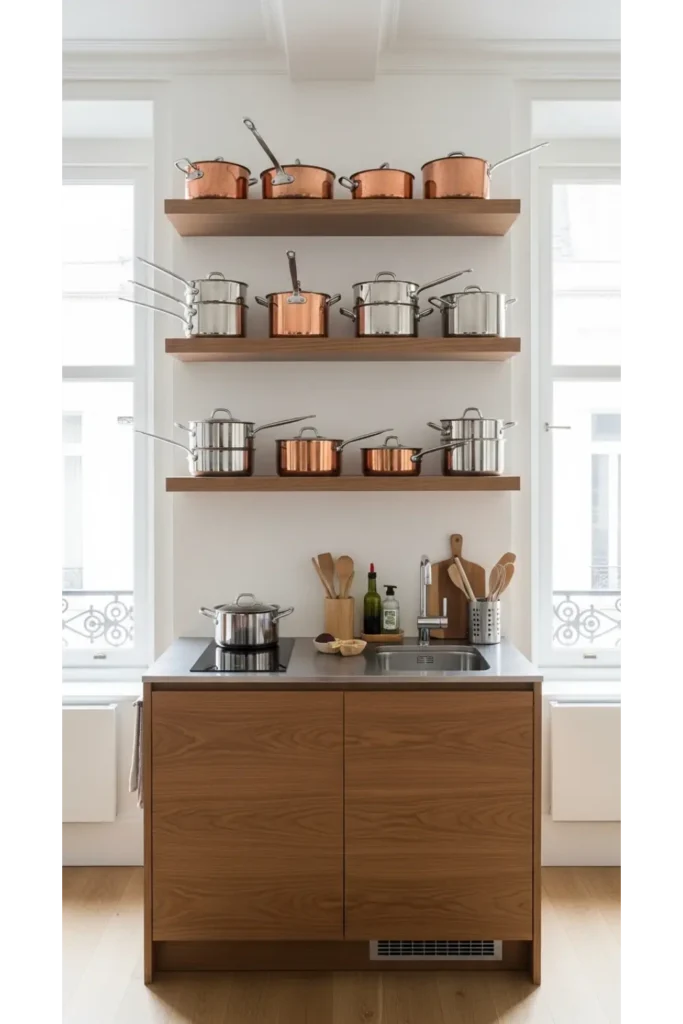
Removing one row of upper cabinets can transform how your kitchen feels. Open shelving reduces bulk and introduces breathing space. When styled thoughtfully, it creates personality without sacrificing storage.
Limit shelves to one wall so you maintain practical closed storage elsewhere. This balanced approach keeps daily life organized while improving openness.
• Keep items color coordinated
• Leave space between objects
• Avoid overcrowding with decor
8. Use Large Floor Tiles to Expand Visual Scale
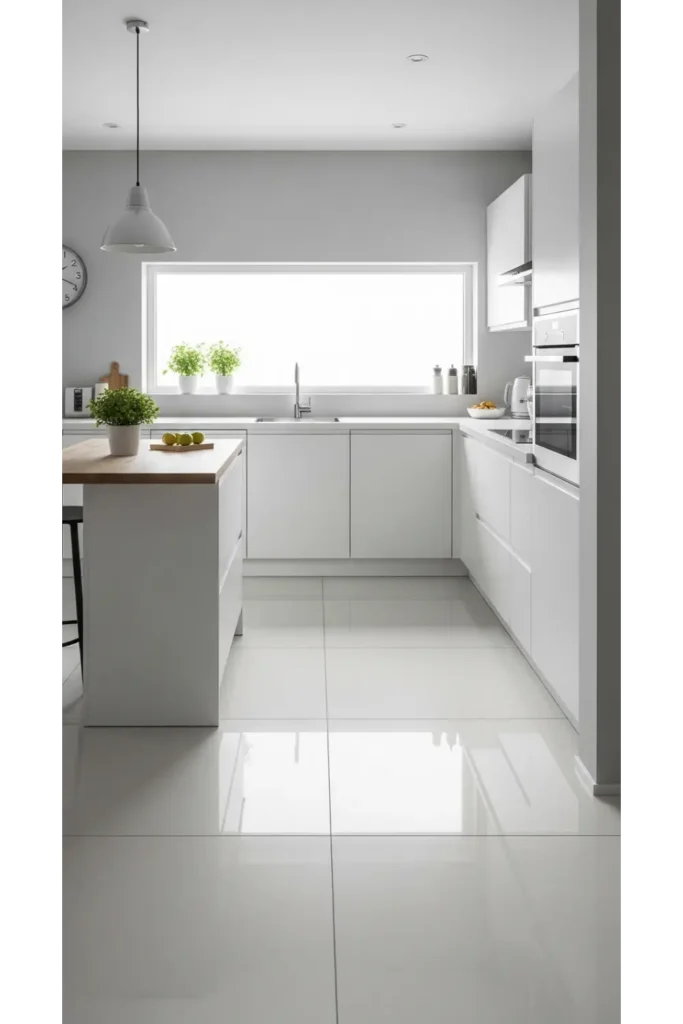
Small tiles create busy patterns that shrink perception. Large format tiles reduce grout lines and make floors appear wider. Continuous surfaces trick the eye into seeing more area than exists.
Match the grout color closely to the tile to keep the floor cohesive. Light tones enhance brightness and help reflect natural light across the room.
• Choose tiles at least 12 by 24 inches
• Use light gray or beige tones
• Minimize contrasting grout
9. Install Pocket or Sliding Doors
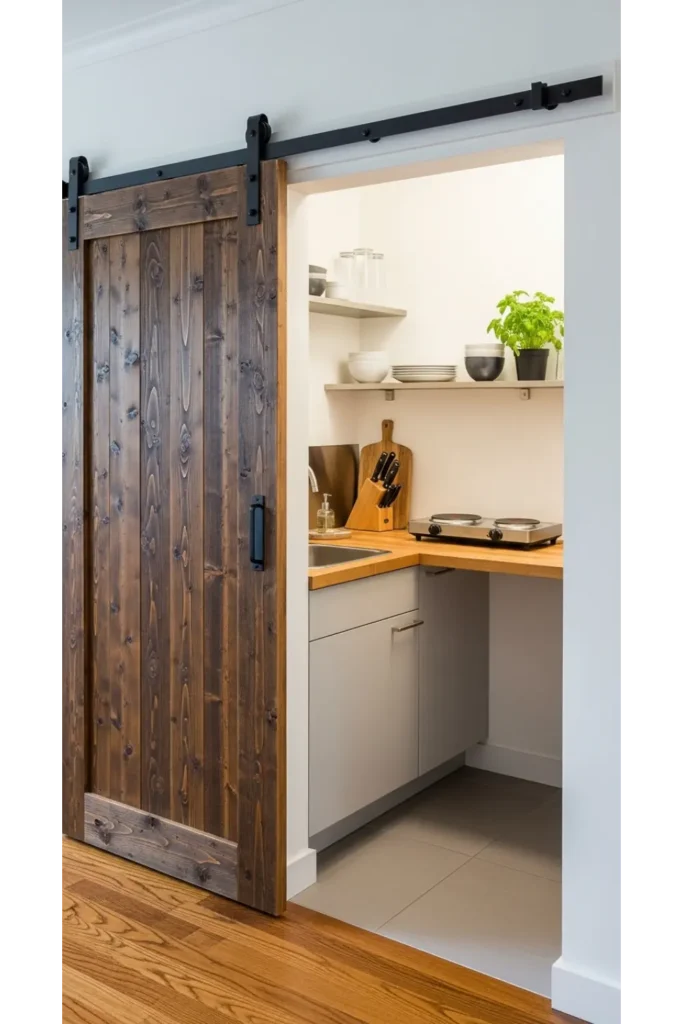
Traditional swinging doors take up valuable clearance space. Pocket or sliding doors free up square footage and allow smoother transitions between rooms. This makes small kitchens feel connected instead of boxed in.
Even a surface mounted sliding door can improve function in tight hallways. Removing door swing zones increases usable layout options immediately.
• Consider frosted glass for light flow
• Use slim hardware for minimal bulk
• Match door color to walls
10. Add a Mirror Backsplash Section
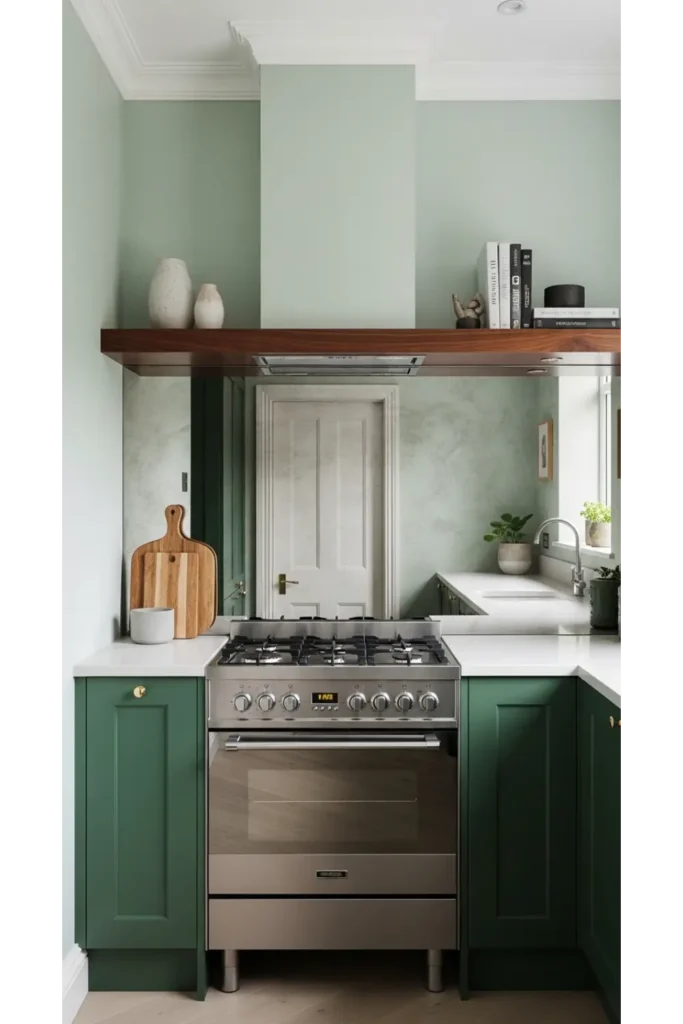
Mirrors bounce light and visually double depth. A mirror panel behind the stove or sink creates openness without overwhelming the design. Used strategically, it elevates compact kitchens dramatically.
Keep mirror areas easy to clean and framed subtly. This approach works best in contemporary spaces where sleek finishes complement reflection.
• Use tempered mirror panels
• Frame edges with thin trim
• Pair with neutral cabinetry
11. Choose Integrated Appliances for a Seamless Look
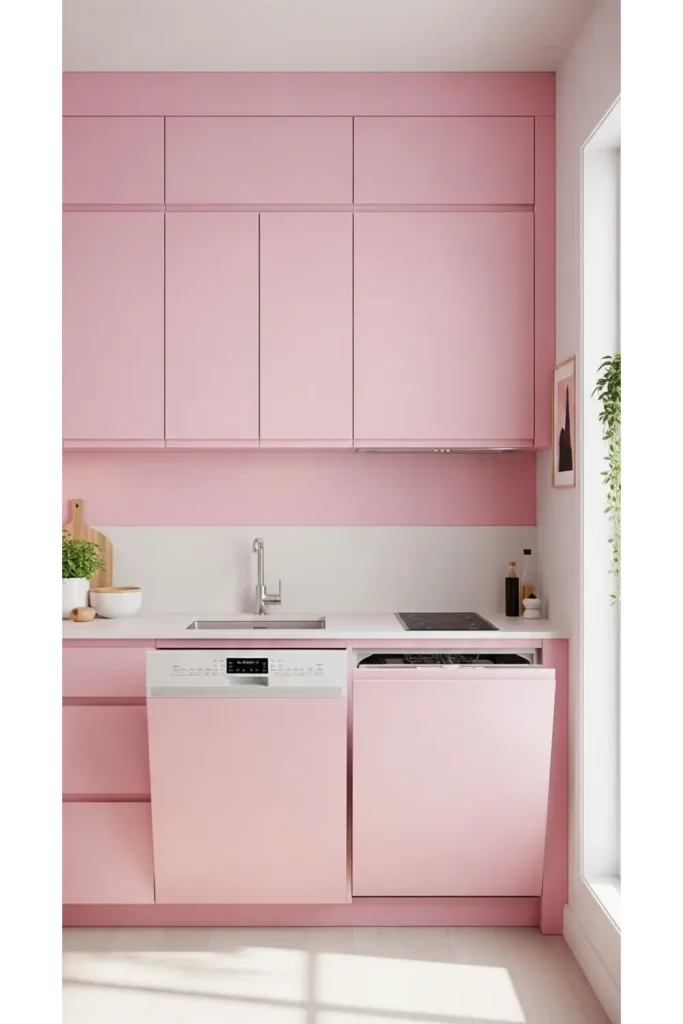
Integrated appliances remove visual breaks that make a compact kitchen feel busy. When refrigerators and dishwashers blend into cabinetry, the room appears streamlined and calm. Clean sight lines reduce visual clutter, which plays a huge role in making tight spaces feel open and breathable.
Panel ready appliances work especially well in apartment kitchens or galley layouts. Matching finishes create one continuous surface rather than multiple bulky elements competing for attention. This simple upgrade supports the goal of tiny kitchen ideas that feel bigger and brighter by reducing heaviness and distraction.
• Use cabinet matching panels
• Keep hardware consistent
• Avoid oversized appliance handles
12. Install Floating Shelves Near the Ceiling
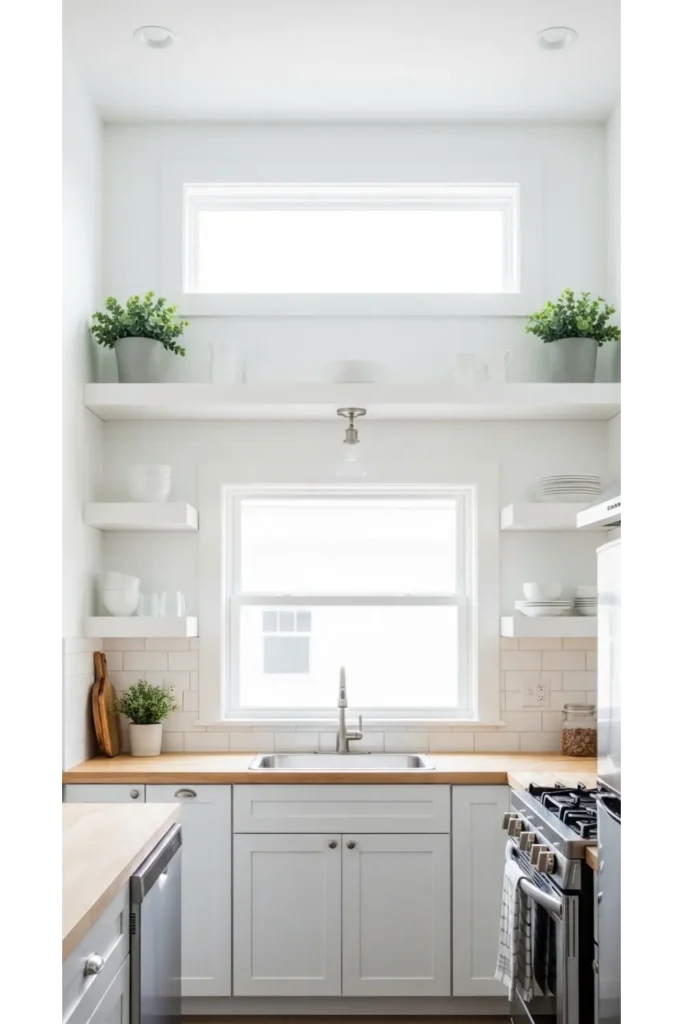
Most people ignore the space near the ceiling, but that area offers visual height. Installing slim floating shelves higher on the wall draws the eye upward and expands perceived scale. This makes the kitchen feel taller and less compressed.
Use these upper shelves for decorative storage rather than daily items. Neutral baskets or coordinated dishware keep the look intentional. Avoid overcrowding so the shelves enhance openness rather than create visual noise.
• Mount shelves at least 12 inches below ceiling
• Use light wood or white finishes
• Keep spacing balanced
13. Opt for a Monochromatic Color Scheme
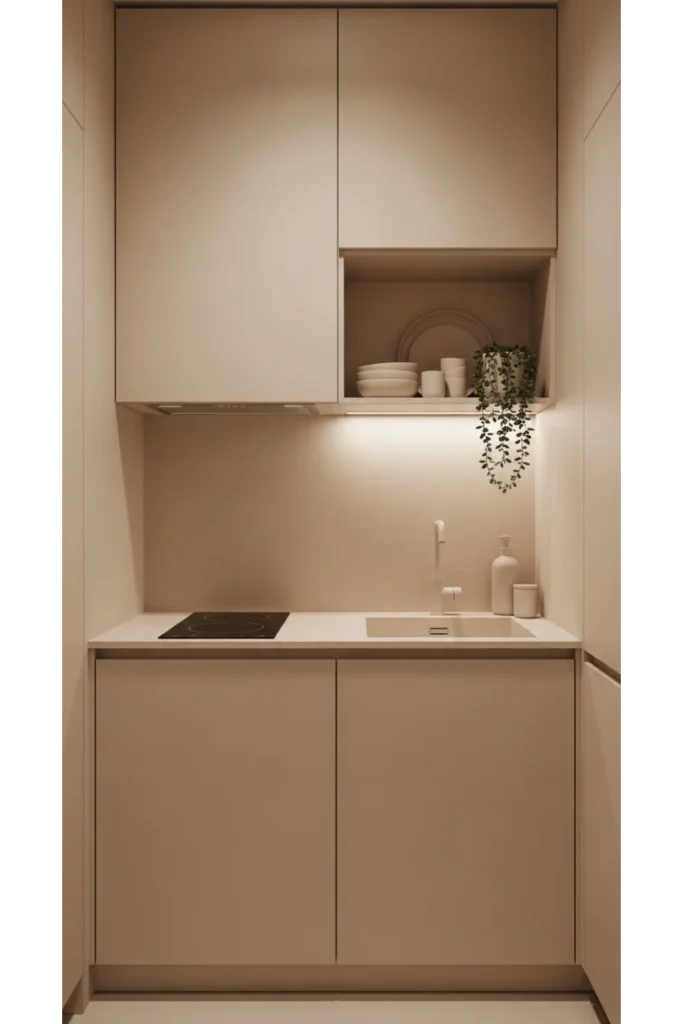
High contrast color breaks can divide a small room into sections. A monochromatic palette keeps the eye moving smoothly without interruption. When walls, cabinets, and trim stay within one color family, the kitchen feels unified and expansive.
Choose warm neutrals, soft grays, or muted tones instead of harsh contrasts. Add depth with texture rather than bold color changes. This technique makes even the narrowest layouts feel calmer and larger.
• Select one dominant base color
• Layer textures instead of new hues
• Keep decor within the same palette
14. Use Open Leg Furniture Instead of Solid Bases
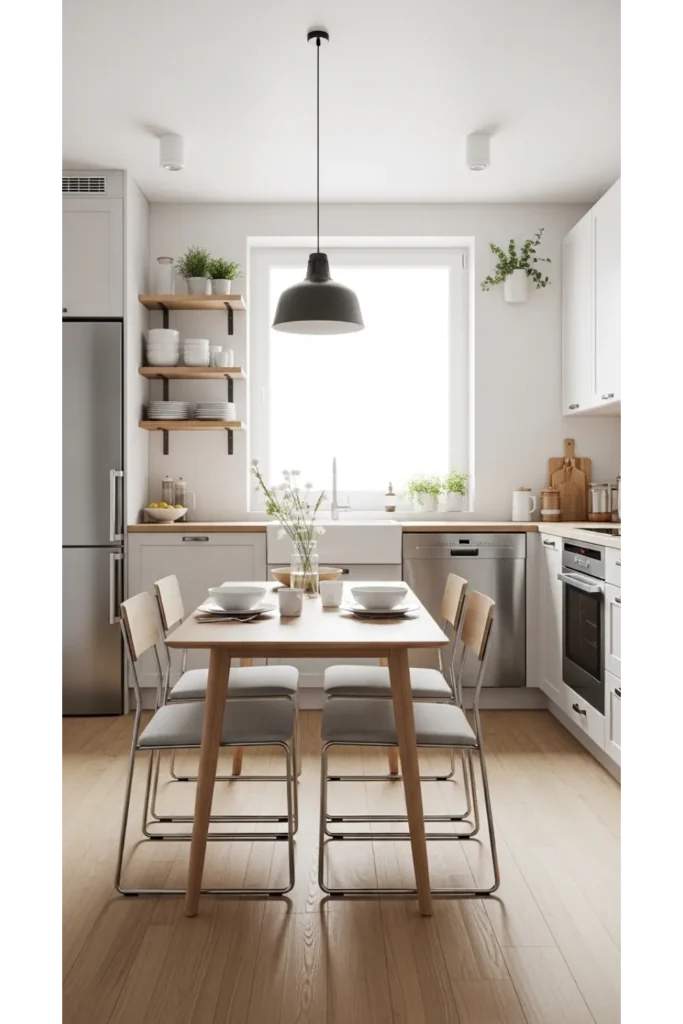
Furniture that sits directly on the floor can block sight lines and shrink perception. Open leg tables and stools allow the eye to travel across the floor, creating more visual space. Seeing more flooring makes the kitchen feel wider instantly.
Choose slim metal or light wood legs for a delicate profile. Avoid bulky pedestal bases in tight kitchens. Even small changes in furniture structure can shift the overall sense of openness.
• Choose narrow frame chairs
• Avoid thick table edges
• Keep leg finishes light
15. Install a Continuous Countertop Material
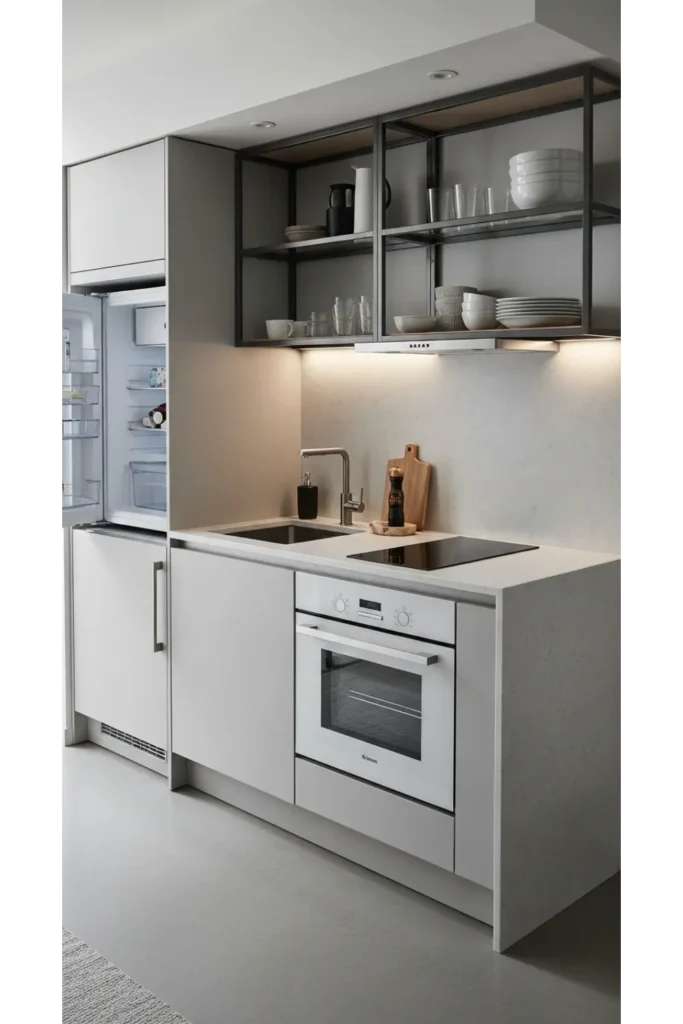
Using multiple countertop materials creates visual stops. A continuous surface that flows into the backsplash adds depth and unity. Seamless quartz or solid surface materials reflect light and eliminate distracting transitions.
Keep edges simple and squared for a modern feel. When surfaces appear uninterrupted, the kitchen looks larger and more polished without adding square footage.
• Extend countertop into backsplash
• Avoid heavy edge profiles
• Choose light reflective finishes
16. Incorporate Glass or Acrylic Bar Stools
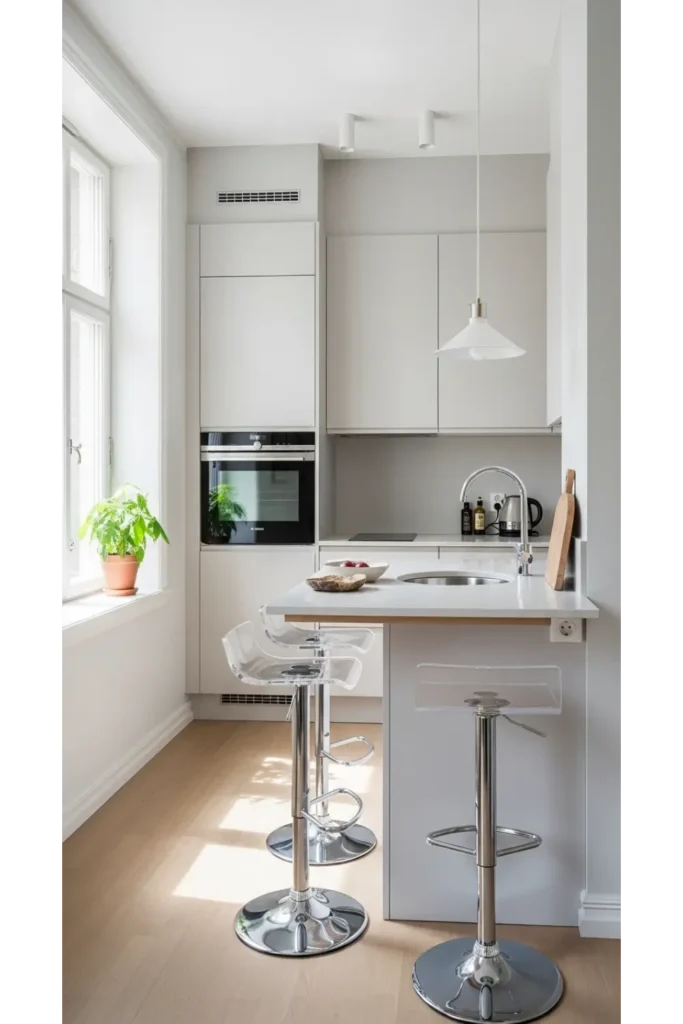
Transparent seating keeps visual weight low. Acrylic or glass stools allow light to pass through, which prevents the area from feeling crowded. This small detail can dramatically affect how spacious your kitchen feels.
Clear seating pairs well with both modern and traditional styles. It works especially well in studio apartments where kitchens flow into living spaces.
• Use backless clear stools
• Avoid dark heavy fabrics
• Keep lines simple
17. Add Vertical Shiplap or Paneling
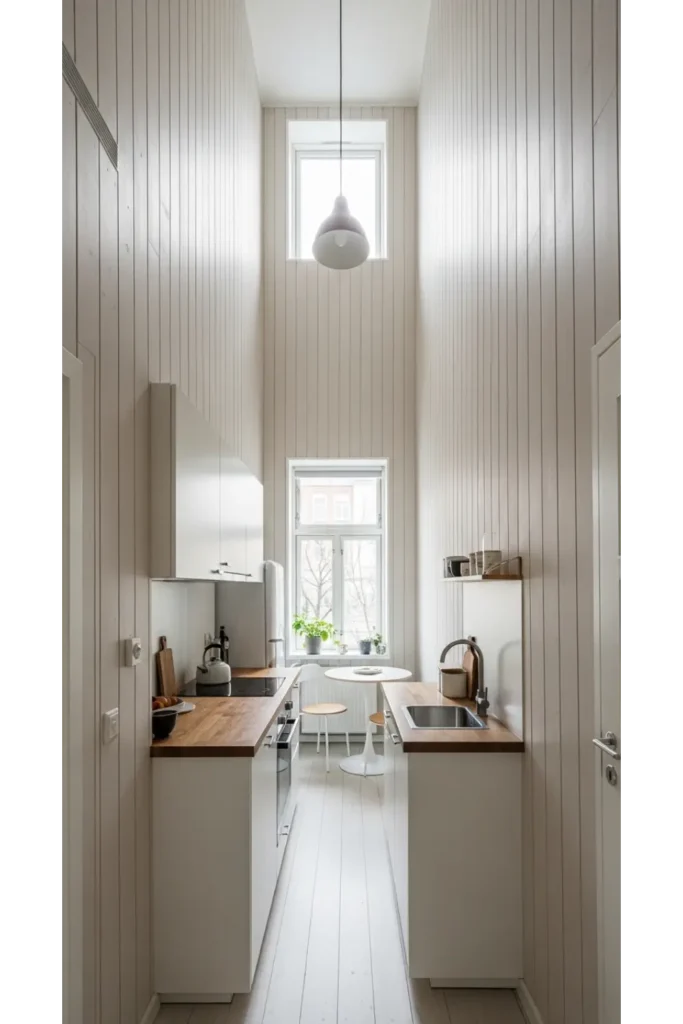
Horizontal elements widen a room, but vertical paneling stretches it upward. Adding subtle vertical lines creates the illusion of higher ceilings. Painted in a light tone, paneling adds texture without heaviness.
Keep grooves narrow and spacing consistent. This detail works beautifully in farmhouse or modern transitional kitchens.
• Paint paneling same color as walls
• Use narrow boards
• Avoid dark stains
18. Choose a Single Large Statement Light Fixture
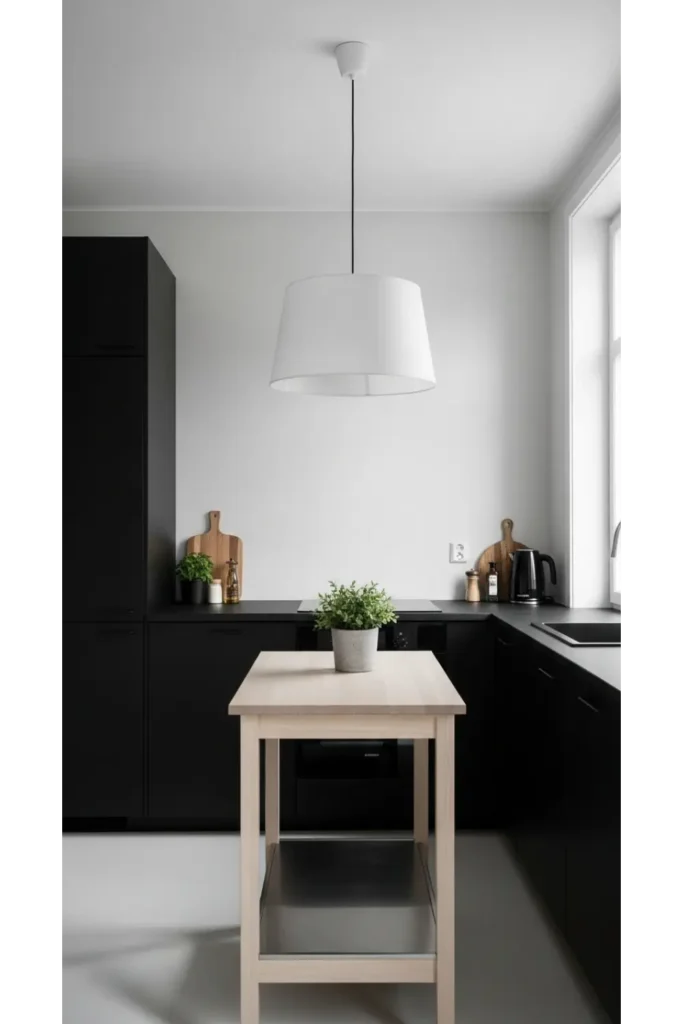
Too many small light fixtures can make ceilings feel cluttered. One larger pendant creates focus and reduces visual fragmentation. This gives the ceiling a cleaner and more open look.
Choose a light with an open frame or glass shade so it does not block brightness. A balanced focal point enhances proportion in compact layouts.
• Hang centered above the island
• Choose airy open designs
• Keep finish cohesive
19. Keep Window Areas Completely Unblocked
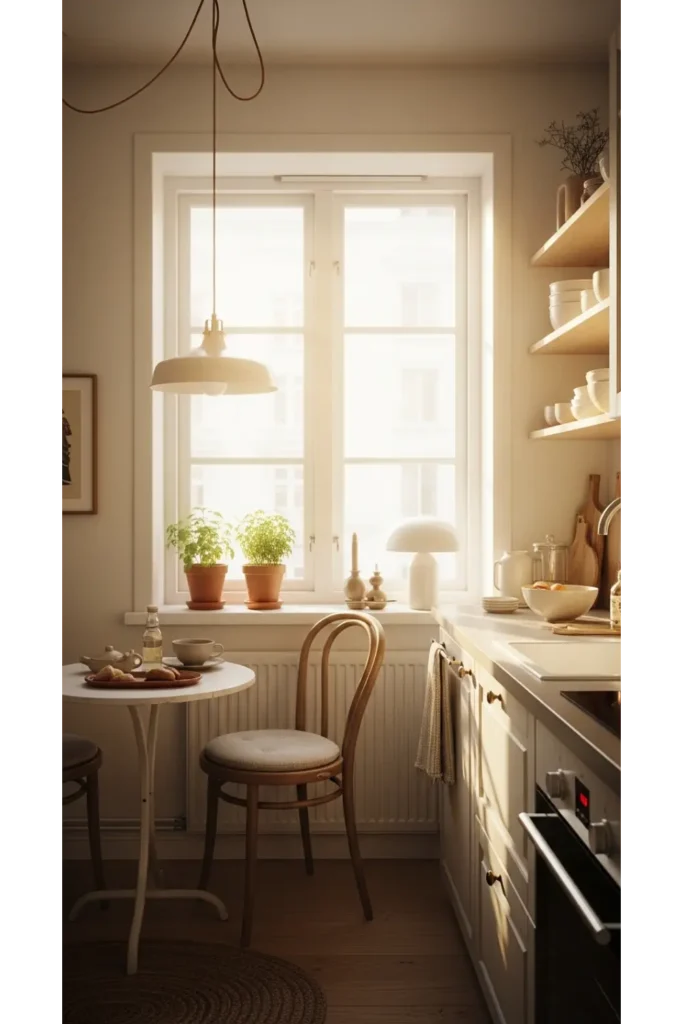
Natural light is one of the most powerful tools in small space design. Avoid heavy curtains or bulky blinds that block sunlight. Letting light flood in makes walls recede visually.
If privacy matters, choose sheer treatments or slim roller shades. Brightness instantly supports the goal of tiny kitchen ideas that feel bigger and brighter by expanding visual depth naturally.
• Use sheer white fabric
• Mount curtain rods higher
• Keep window sills clear
20. Use Matching Hardware Throughout
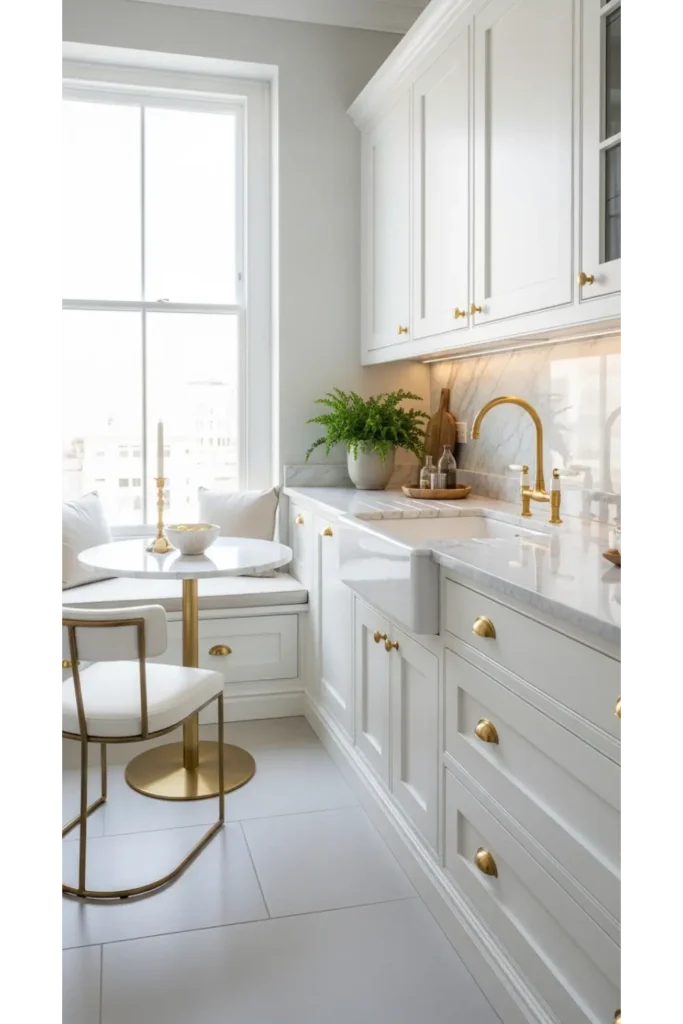
Mixed finishes can create visual noise in tight spaces. Matching hardware throughout the kitchen builds cohesion. When pulls, knobs, and faucets align in finish and style, the space feels intentional and balanced.
Choose slim hardware profiles rather than oversized designs. Subtle details help maintain openness while still adding character.
• Stick to one metal finish
• Choose slim linear pulls
• Keep scale proportional
21. Declutter Visually With Hidden Storage Inserts
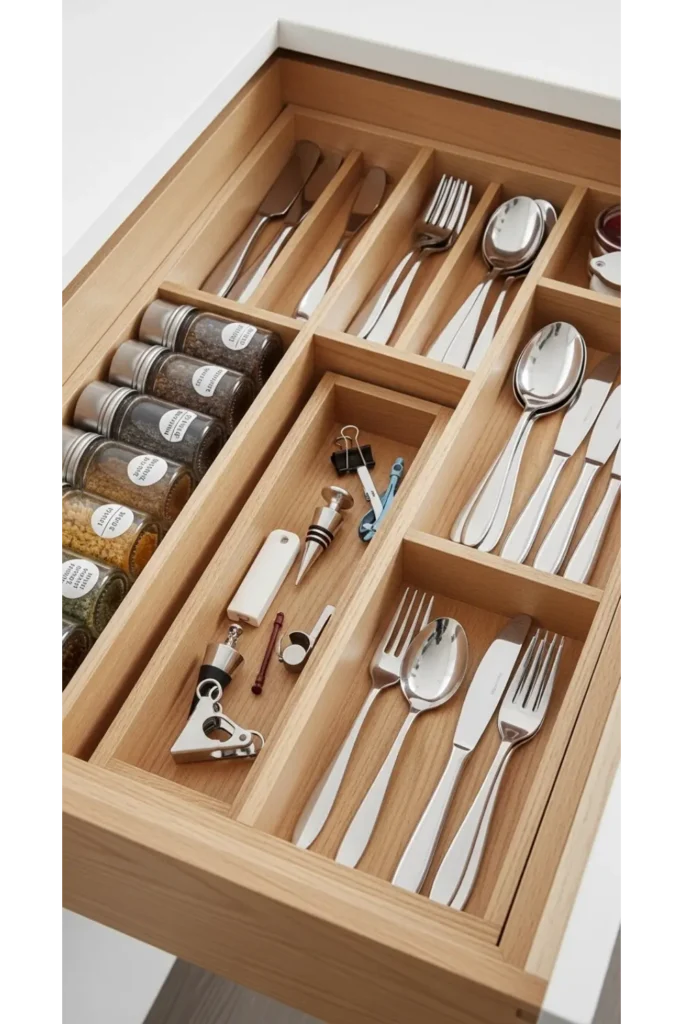
Even the best design fails if clutter takes over. Hidden drawer dividers and pull out organizers keep tools contained and off countertops. Clear surfaces allow light to move freely across the room.
Invest in smart inserts that maximize depth inside cabinets. When everything has a place, your kitchen naturally feels calmer and larger.
• Use adjustable dividers
• Install pull out pantry racks
• Store small appliances inside cabinets
22. Frame the Kitchen With Consistent Flooring Into Adjacent Rooms
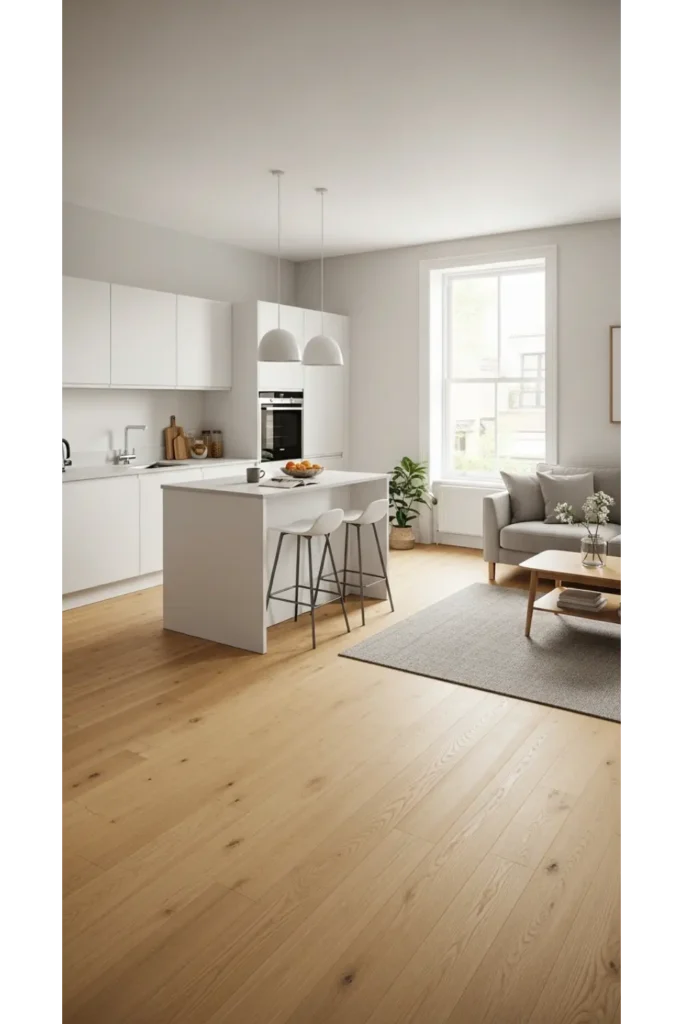
When flooring changes at the kitchen boundary, it visually shrinks the space. Extending the same flooring into nearby areas creates continuity. The eye sees one large area instead of separate small zones.
This works especially well in open concept apartments. Light wood or neutral tile makes the entire layout feel unified and expansive.
• Use same flooring throughout
• Avoid threshold breaks
• Keep tones consistent
Conclusion
A small kitchen does not need more square footage to feel open. It needs smart visual flow, thoughtful lighting, cohesive materials, and intentional storage. These carefully selected tiny kitchen ideas that feel bigger and brighter go beyond surface styling and focus on real design principles that reshape perception and function at the same time.
When you combine vertical emphasis, seamless finishes, integrated storage, and natural light, your kitchen begins to feel breathable and balanced. With the right strategy, even the most compact layout can look refined, organized, and welcoming every single day.