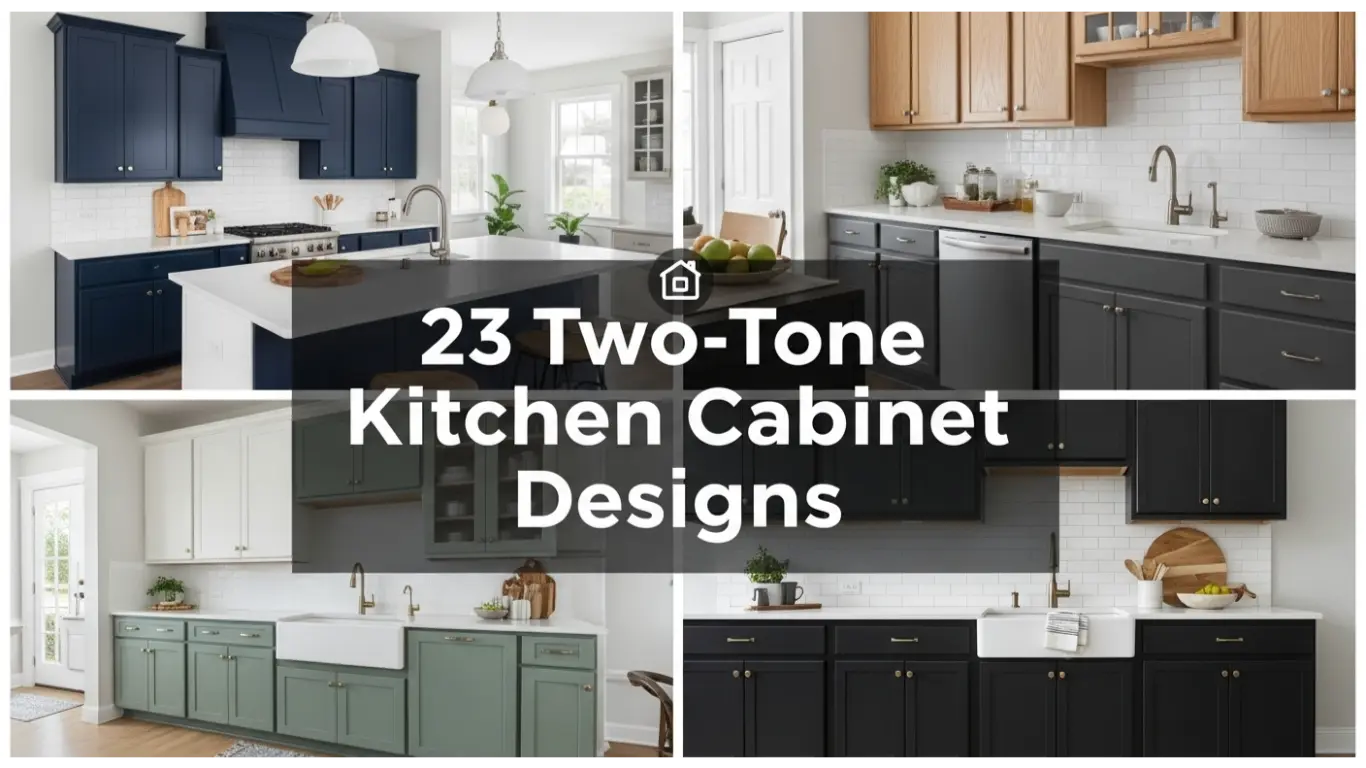
23 Two-Tone Kitchen Cabinet Designs
Two tone kitchens have become a favorite because they balance style and function without feeling overwhelming. Mixing cabinet colors adds depth, personality, and visual movement while keeping the space practical for daily use. This guide explores thoughtful color pairings, finishes, and layouts that work in real homes, not just showrooms. Each idea focuses on timeless appeal, smart contrast, and design choices that help your kitchen feel welcoming, organized, and visually refined.
1. Classic White Uppers and Navy Lowers
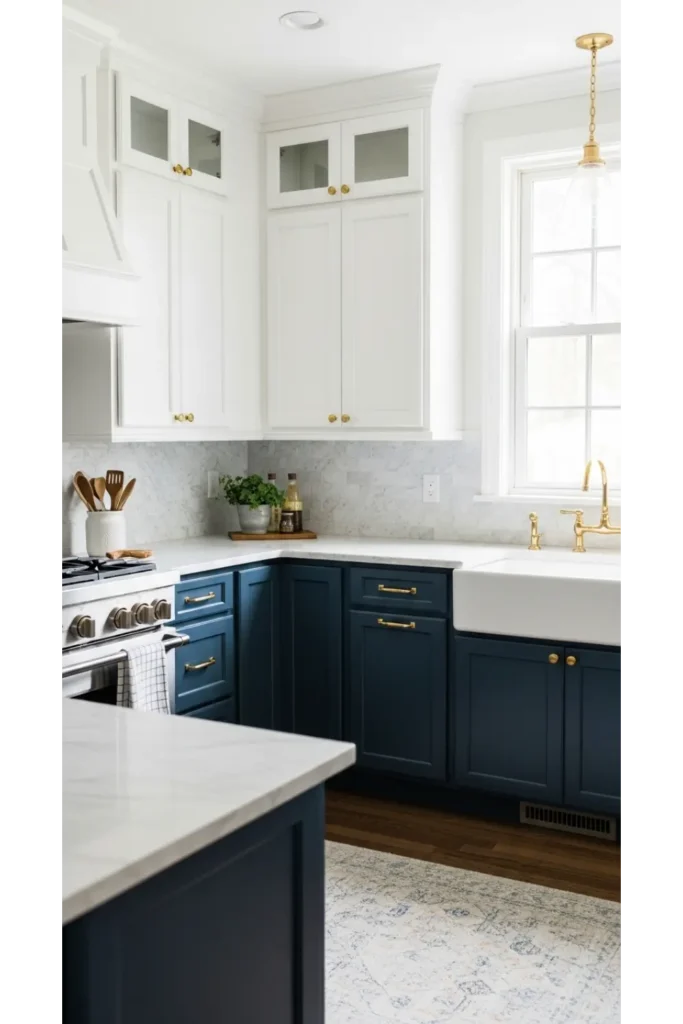
Two tone kitchen cabinet designs often start with this timeless pairing because it feels clean yet grounded. White upper cabinets keep the kitchen open and airy, while navy lowers add depth and a sense of permanence. This contrast draws the eye downward, making the room feel balanced and calm. It works especially well in medium to large kitchens where light matters.
The navy base hides wear and daily mess better than lighter shades, making it practical for busy households. Pairing this look with brass or brushed gold hardware adds warmth and polish. A marble or light quartz backsplash connects both tones, creating a cohesive flow that feels elegant without trying too hard.
2. Warm Wood Lowers With Soft Gray Uppers
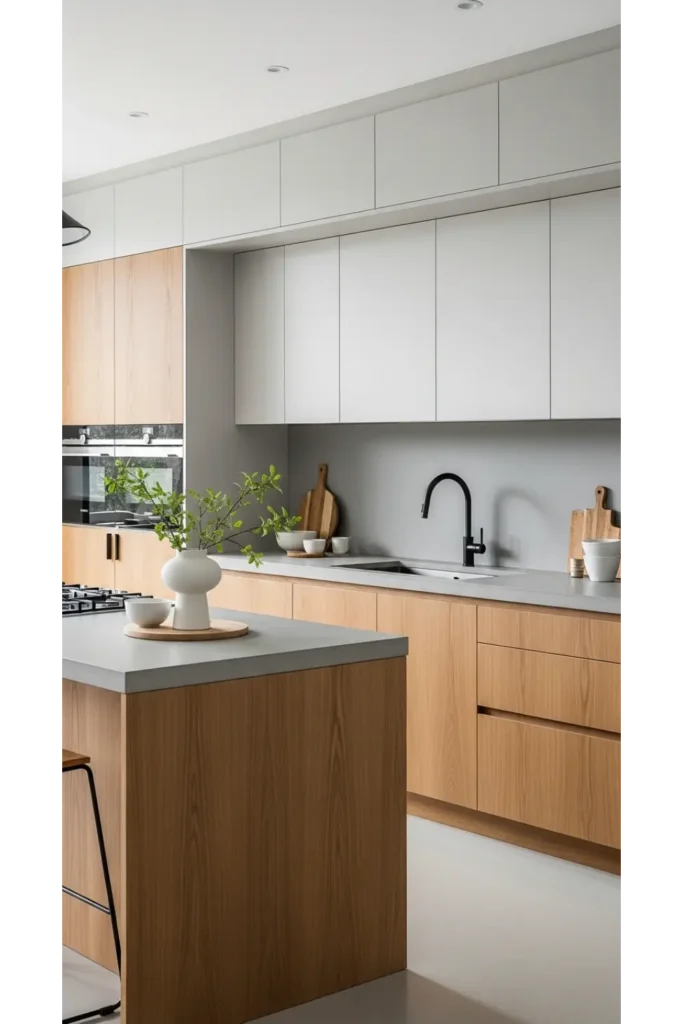
This combination brings warmth and modern simplicity together in a way that feels natural and relaxed. Wood lower cabinets ground the space and add texture, while gray uppers soften the look without feeling stark. The result feels cozy yet contemporary, ideal for homes that value comfort as much as style.
Using a matte finish on the gray cabinets keeps the design subtle and refined. The wood tone can lean light or medium depending on your space and lighting. When paired with neutral countertops and simple lighting, this design creates a kitchen that feels calm, inviting, and easy to live with.
3. Black Base Cabinets With Crisp White Uppers
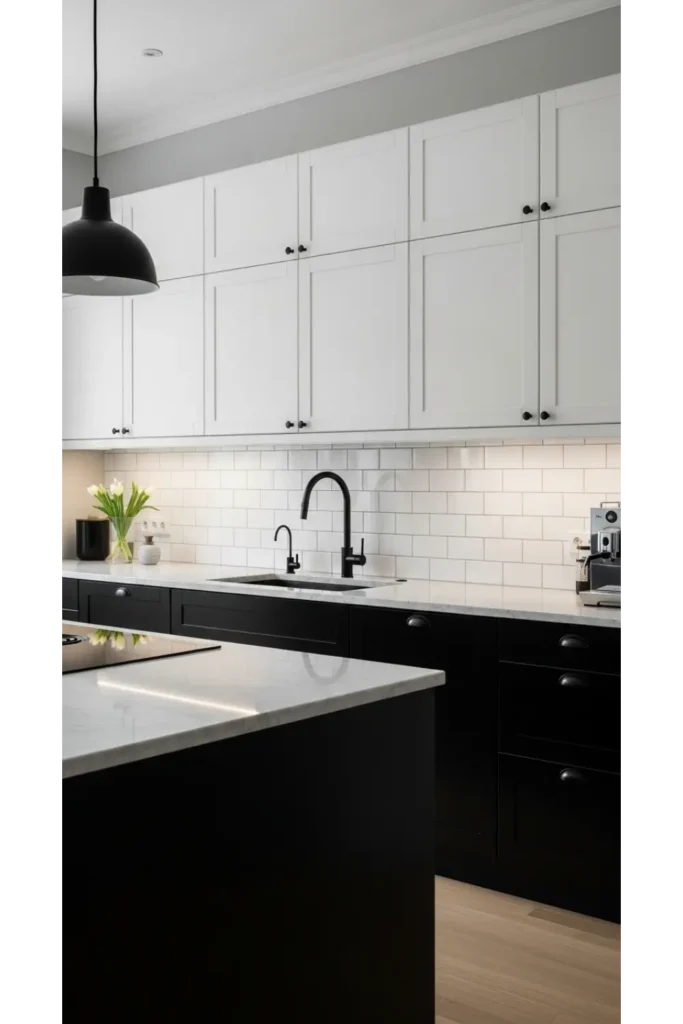
This bold contrast delivers a striking visual impact while remaining surprisingly versatile. Black lower cabinets anchor the kitchen and create a strong foundation, while white uppers prevent the space from feeling heavy. The balance keeps the room looking sharp and intentional rather than dark.
To make this look work, lighting plays a key role. Natural light or layered lighting helps soften the black and highlight details. White subway tiles or light stone backsplashes tie the two tones together, creating a polished kitchen that feels confident and timeless.
4. Sage Green Uppers With Creamy Beige Lowers
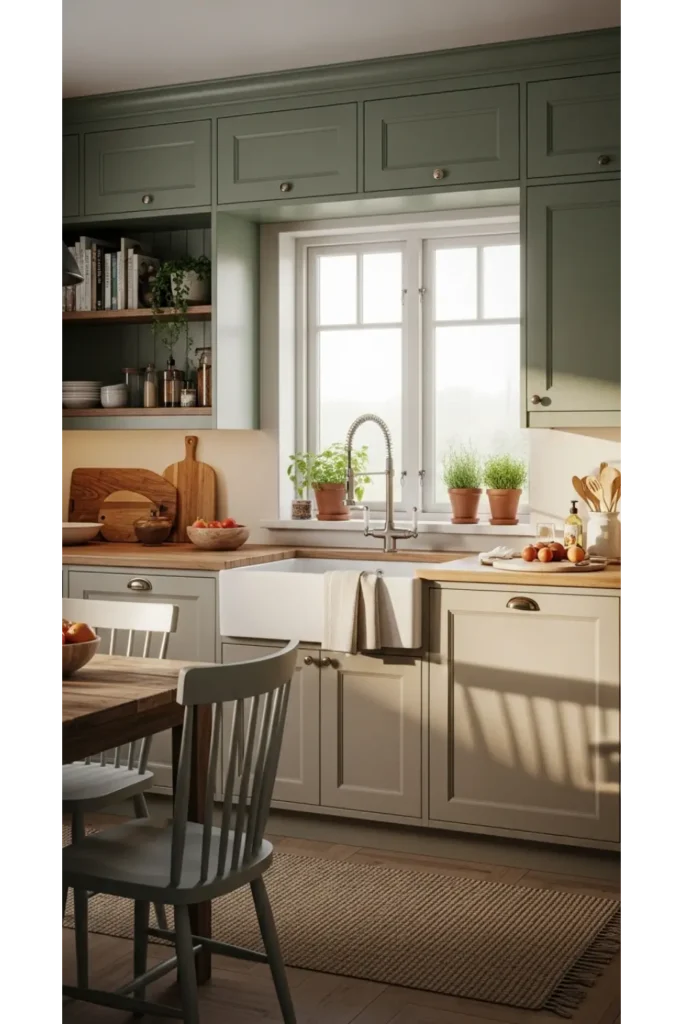
Soft color pairings like sage and beige create a soothing kitchen environment. Sage green uppers introduce a natural, calming feel, while beige lowers add warmth without overpowering the space. This combination works beautifully in homes that lean toward organic or cottage inspired styles.
Natural materials elevate this look even more. Wood shelves, stone countertops, and simple ceramic tiles complement the muted tones. The result is a kitchen that feels peaceful, lived in, and welcoming, perfect for slow mornings and relaxed gatherings.
5. Charcoal Gray Lowers With Light Oak Uppers
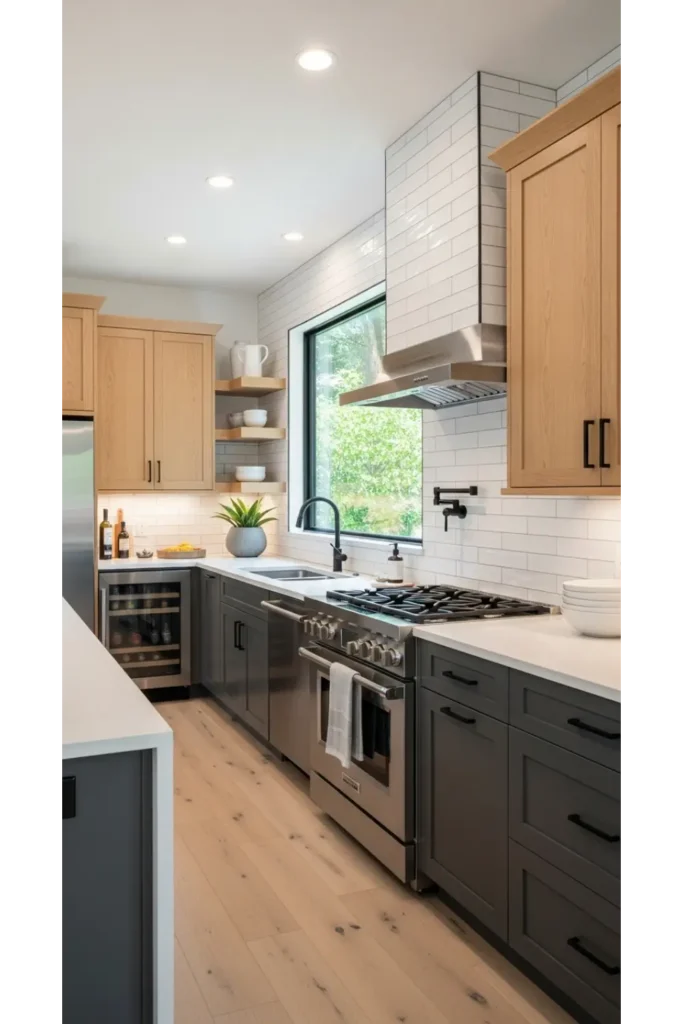
This pairing flips the usual approach by placing darker tones below and lighter wood above. Charcoal gray lowers provide a modern base, while oak uppers add warmth and texture. The contrast feels fresh and intentional, especially in open plan homes.
The key to success lies in keeping finishes clean and consistent. Flat panel cabinets and simple hardware allow the materials to shine. With neutral walls and subtle lighting, this design creates a sophisticated kitchen that feels modern but still comfortable.
6. Soft Blue Uppers With White Lowers
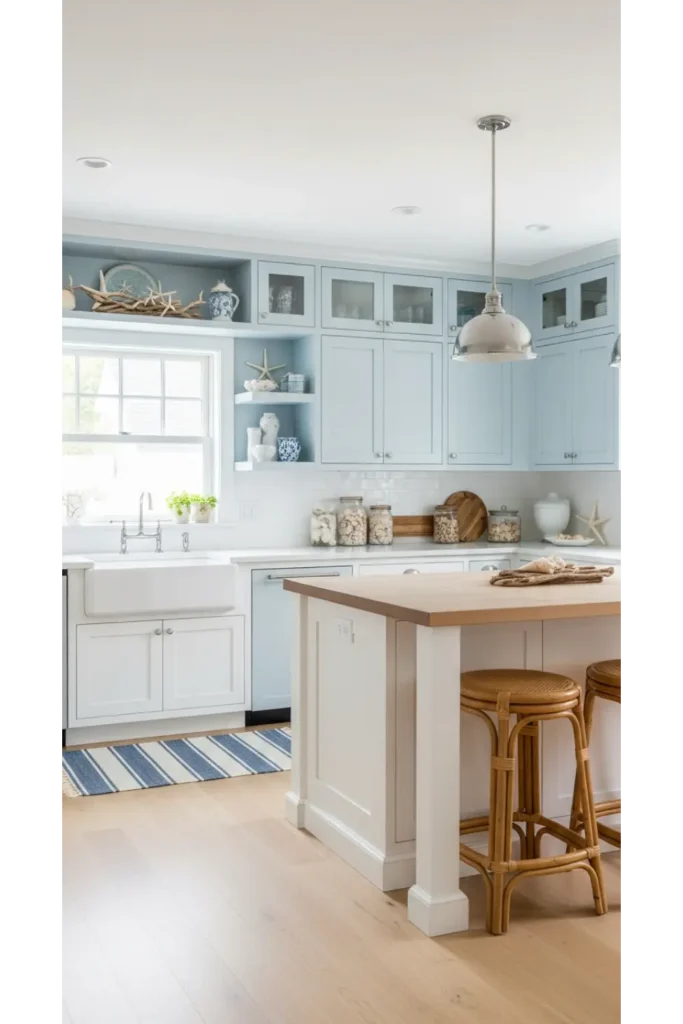
Soft blue cabinets bring a gentle pop of color without overwhelming the space. When paired with white lower cabinets, the kitchen feels bright and breezy. This combination suits coastal, cottage, and casual modern homes alike.
The blue shade should stay muted to maintain balance. White lowers keep the room grounded and easy to style. Adding natural textures like woven lighting or wood floors enhances the relaxed feel, making the kitchen feel open and effortlessly stylish.
7. Dark Green Lowers With Off White Uppers
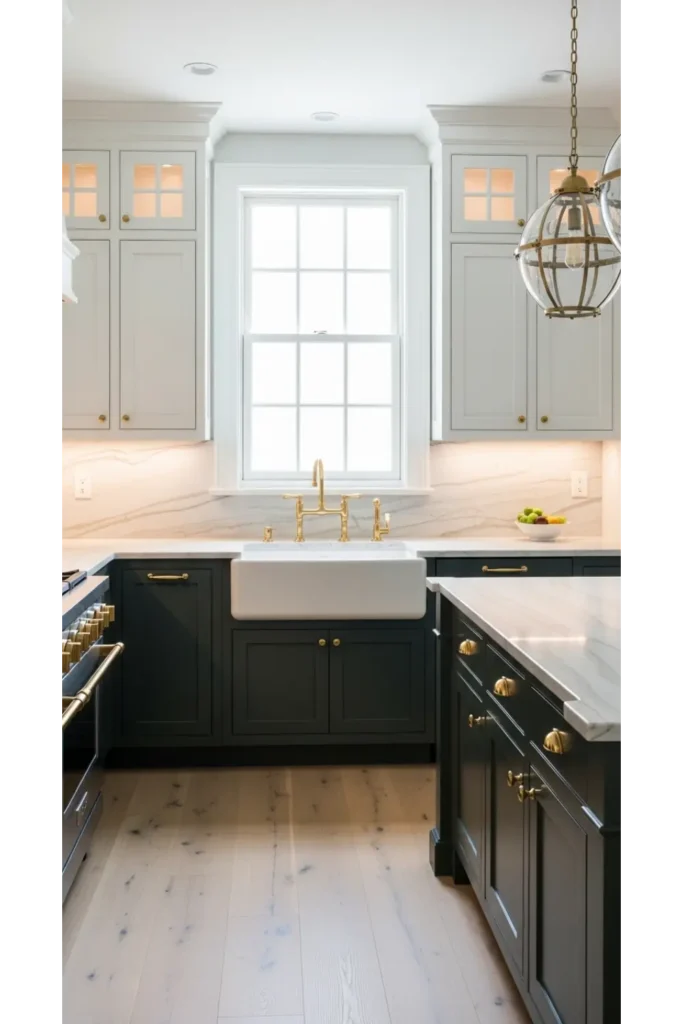
Deep green cabinets have a rich, classic appeal. Using them on the lower cabinets adds drama without overpowering the room. Off white uppers soften the look and keep the space feeling light and welcoming.
This combination works well with traditional and modern kitchens alike. Brass hardware and stone surfaces elevate the palette, giving it a refined edge. The result feels luxurious yet approachable, perfect for homeowners who want character without excess.
8. Matte Black Uppers With Warm Wood Lowers
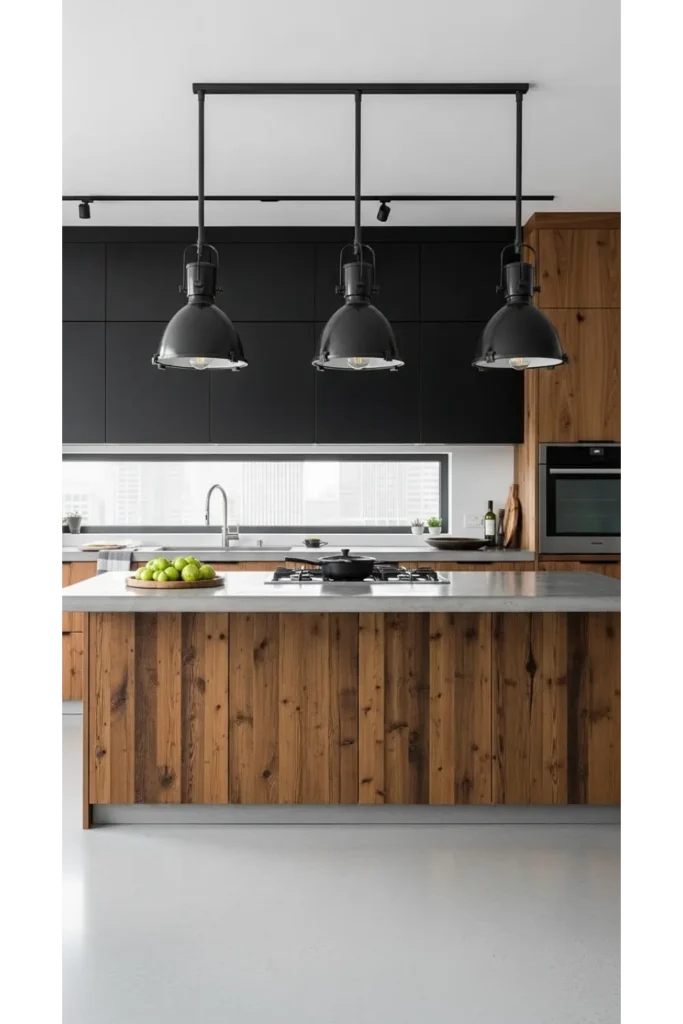
This reverse contrast creates a bold, contemporary statement. Matte black uppers draw attention upward, while wood lowers keep the design grounded and warm. The balance between dark and natural tones feels intentional and modern.
Proper lighting is essential here. Under cabinet lighting prevents the black from feeling heavy. Wood textures add visual interest, ensuring the kitchen remains inviting rather than stark.
9. Gray Blue Lowers With White Uppers
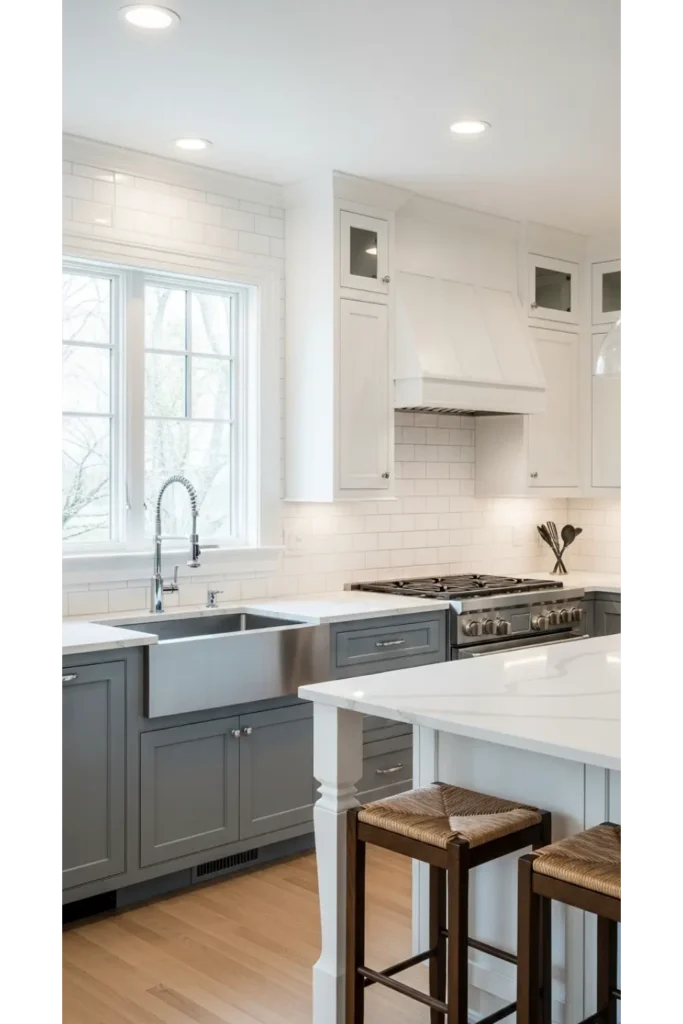
Gray blue lower cabinets introduce color in a subtle, versatile way. White uppers maintain brightness and help the space feel open. This pairing works well in transitional kitchens that blend classic and modern elements.
The muted blue adds personality without limiting future decor changes. Clean countertops and simple backsplashes keep the focus on the cabinetry, creating a balanced and timeless kitchen design.
10. Cream Uppers With Espresso Brown Lowers
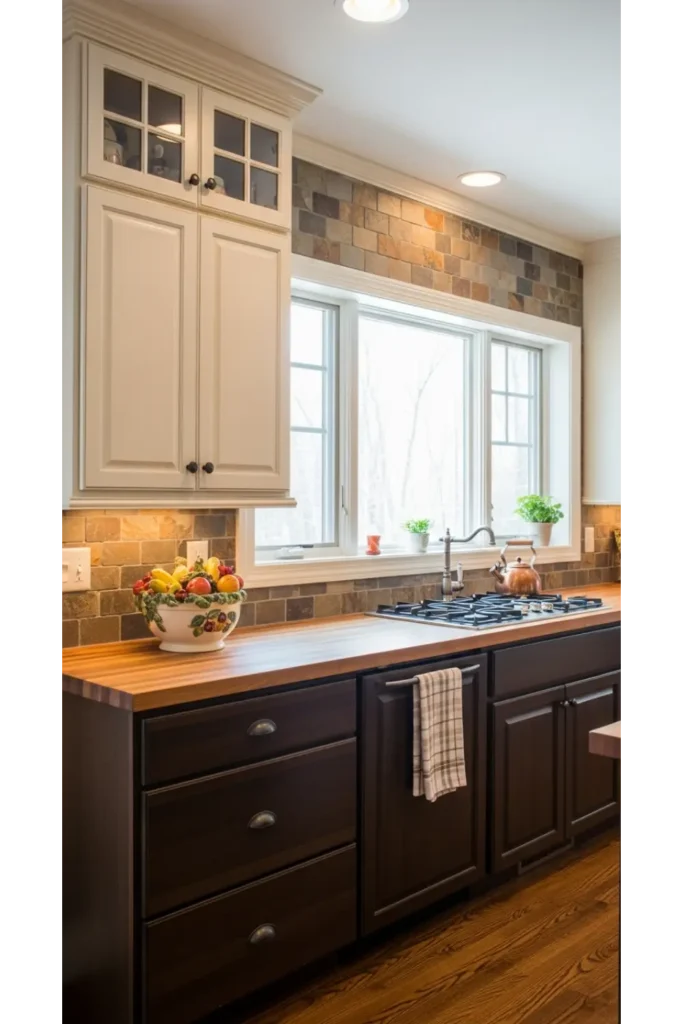
Cream and espresso create a rich, inviting palette. Cream uppers reflect light and keep the kitchen feeling open, while dark brown lowers add depth and warmth. This pairing suits traditional and rustic inspired homes.
Natural stone and warm metals complement the tones beautifully. The result feels grounded and comfortable, perfect for kitchens designed around family and everyday living.
11. Light Gray Uppers With Navy Lowers

This refined pairing offers contrast without harshness. Light gray uppers soften the space, while navy lowers provide structure and visual weight. The combination feels polished and versatile.
It works especially well in kitchens with stainless steel appliances and neutral countertops. The subtle contrast allows other elements like lighting and decor to shine without competing.
12. White Uppers With Forest Green Lowers
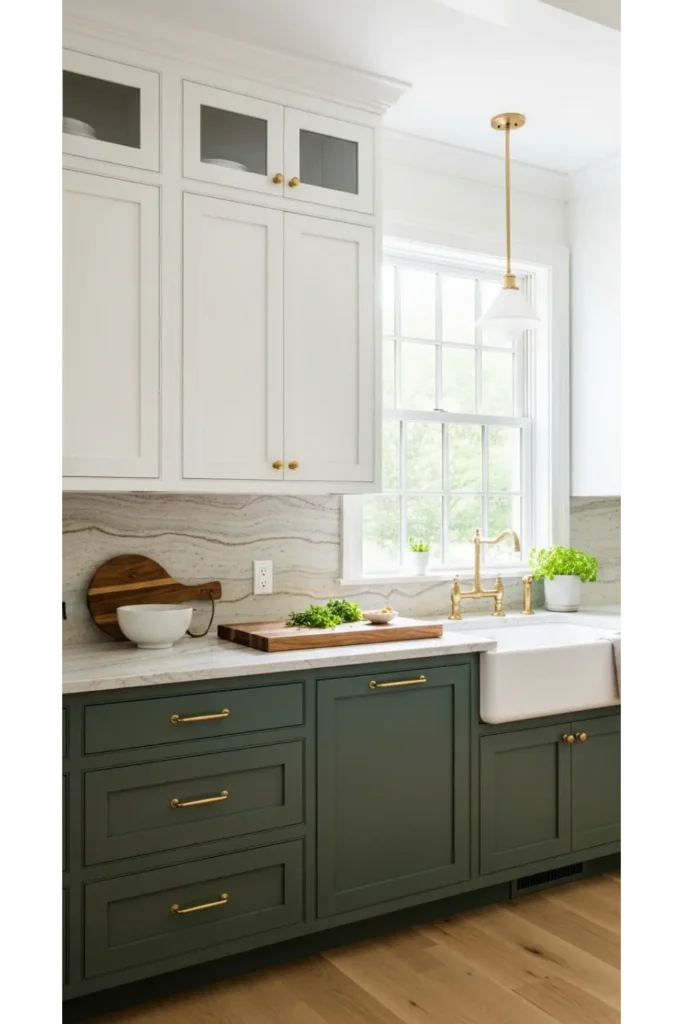
White upper cabinets paired with forest green lowers create a kitchen that feels grounded yet fresh. The white keeps the upper space open and reflective, preventing the darker green from closing in the room. Forest green adds depth and character, making the cabinetry feel intentional rather than decorative. This balance works especially well in kitchens that receive good natural light throughout the day.
Forest green pairs beautifully with warm metals, natural stone, and wood flooring. The color brings a subtle connection to nature while staying refined and timeless. This approach suits homeowners who want a statement without chasing trends. The contrast also helps visually define zones in the kitchen, creating a sense of structure that feels calm, elegant, and livable.
13. Taupe Uppers With Charcoal Lowers

Taupe upper cabinets introduce warmth and softness, making them ideal for kitchens that need a neutral but welcoming tone. When combined with charcoal lower cabinets, the space gains visual weight and contrast without feeling harsh. The darker base anchors the kitchen, while the lighter taupe keeps the upper area airy and approachable. This pairing works well in both modern and transitional interiors.
Charcoal lowers are practical for everyday use, as they hide scuffs and stains better than lighter shades. Taupe offers flexibility, blending seamlessly with stone countertops, stainless appliances, and wood accents. Together, they create a balanced kitchen that feels polished yet relaxed, perfect for homeowners who want understated sophistication with long term appeal.
14. Pale Yellow Uppers With White Lowers
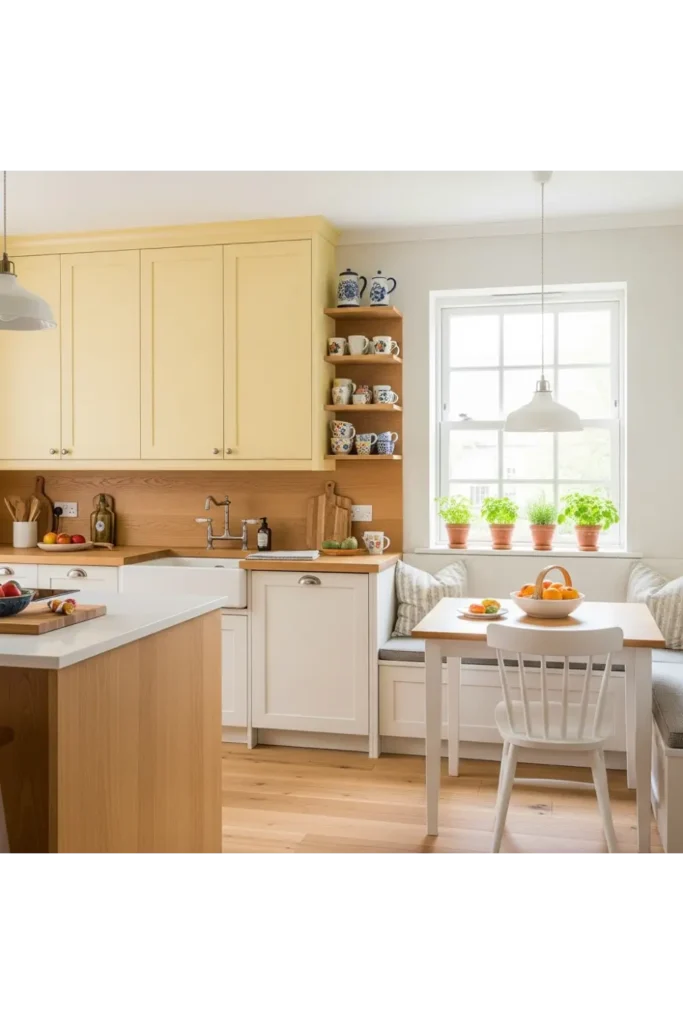
Pale yellow upper cabinets bring warmth and gentle energy to the kitchen without overwhelming the space. Used on the uppers, this color reflects light beautifully, making smaller or darker kitchens feel brighter and more welcoming. White lower cabinets ground the design, keeping it clean and timeless. This combination feels especially inviting in family centered homes.
The key to success lies in choosing a soft, muted yellow rather than a bold tone. When paired with white counters and simple hardware, the kitchen feels fresh rather than dated. Natural textures like wood or woven accents enhance the warmth, creating a space that feels cheerful, comfortable, and easy to enjoy every day.
15. Slate Blue Lowers With Cream Uppers

Slate blue lower cabinets offer a refined alternative to navy, adding depth without heaviness. Cream upper cabinets soften the look and keep the kitchen light and approachable. This pairing feels calm and elegant, making it a strong choice for kitchens that aim for a timeless yet distinctive appearance. The contrast feels intentional and well balanced.
Cream tones work well with stone surfaces and warm metals, enhancing the overall harmony of the space. Slate blue provides character while remaining versatile enough to adapt to changing decor. This combination suits homeowners who want color without boldness, resulting in a kitchen that feels polished, welcoming, and thoughtfully designed.
16. White Uppers With Natural Wood Lowers
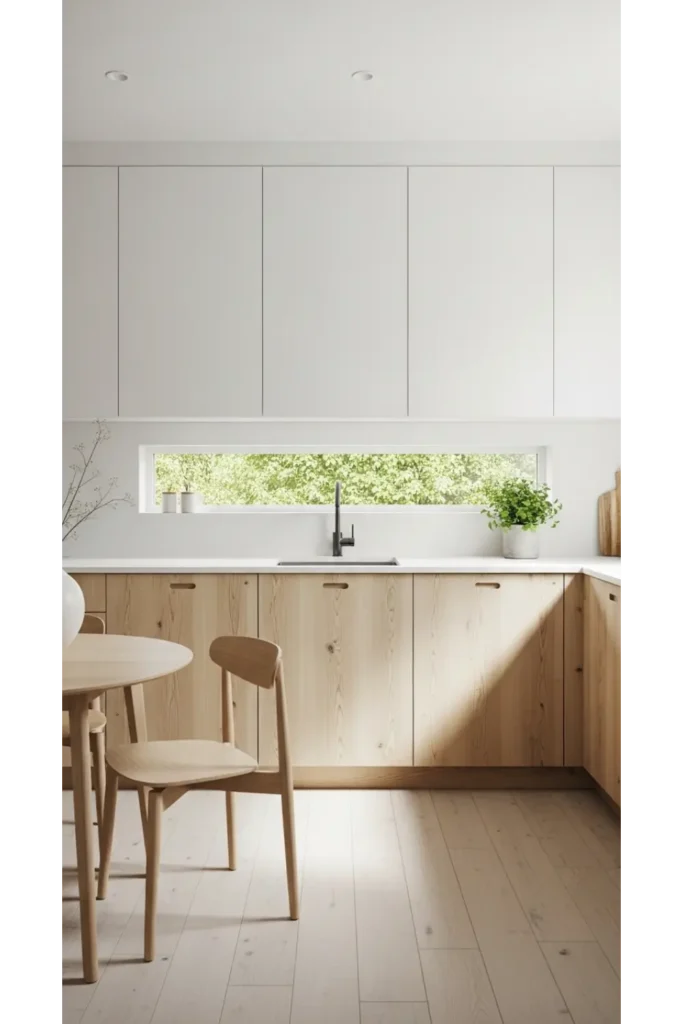
White upper cabinets create a clean and open feeling that works well in kitchens of any size. When paired with natural wood lowers, the space gains warmth, texture, and a sense of balance. This combination highlights the beauty of simple materials, making the kitchen feel calm and functional rather than overly styled.
Natural wood tones bring authenticity and comfort, grounding the design visually. White uppers reflect light and keep the space from feeling heavy. Together, they form a kitchen that feels timeless and easy to live with. This pairing works especially well in Scandinavian, modern farmhouse, and contemporary homes.
17. Greige Uppers With Dark Gray Lowers
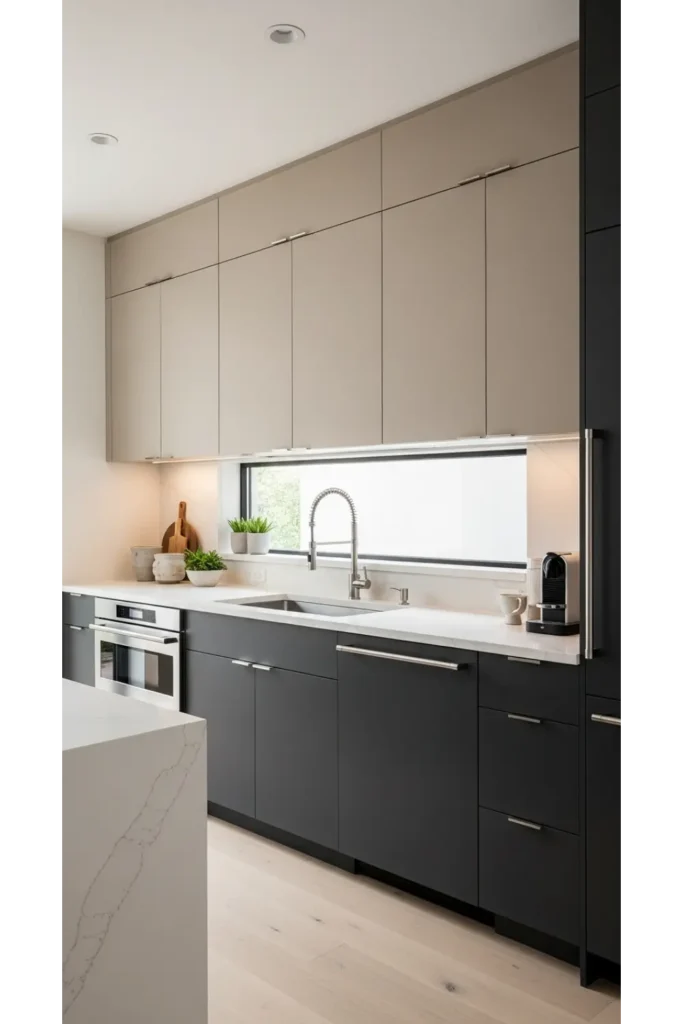
Greige upper cabinets offer the perfect blend of warmth and neutrality, making them highly adaptable. When paired with dark gray lower cabinets, the kitchen gains contrast and structure without feeling cold. This combination works well in open plan homes, where the kitchen must connect visually with surrounding spaces.
Dark gray lowers provide durability and hide daily wear, while greige keeps the upper space soft and inviting. The palette allows flexibility with finishes and decor, from wood accents to metal fixtures. The result is a cohesive kitchen that feels modern, balanced, and designed for real life.
18. Powder Blue Uppers With Soft Gray Lowers
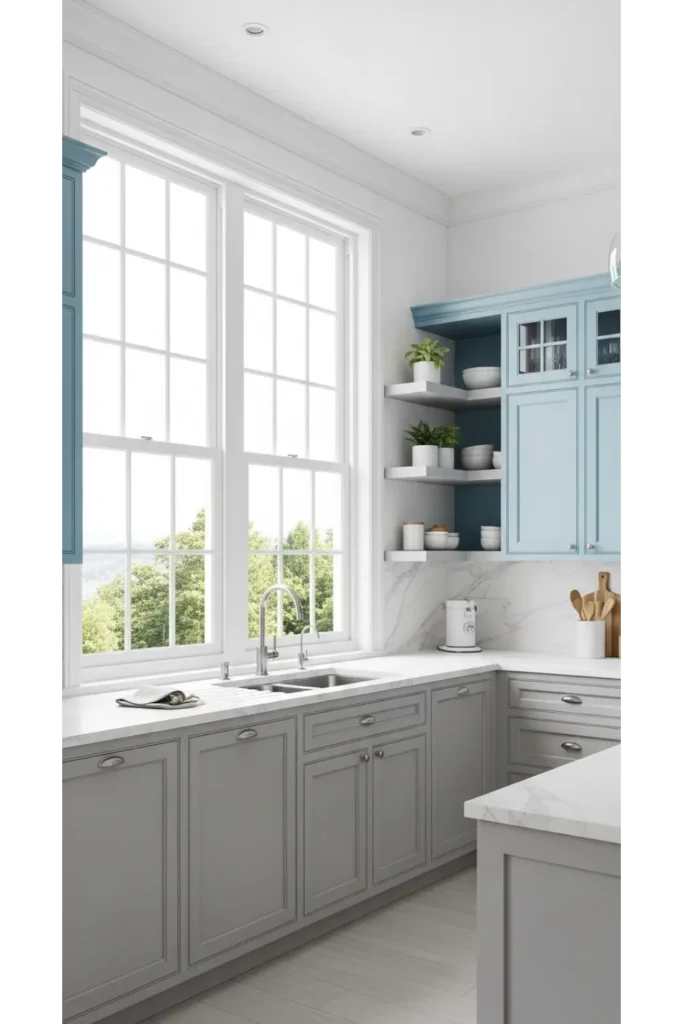
Powder blue upper cabinets introduce a light, refreshing feel that keeps the kitchen visually uplifting. Using this shade on the uppers prevents it from dominating the space. Soft gray lower cabinets add stability and contrast, ensuring the design feels grounded and mature rather than playful.
This pairing works best with clean surfaces and simple backsplashes that allow the colors to breathe. Powder blue reflects natural light, while gray lowers provide subtle depth. Together, they create a kitchen that feels relaxed, approachable, and well balanced, ideal for homes that value comfort and quiet style.
19. Black Uppers With White Lowers
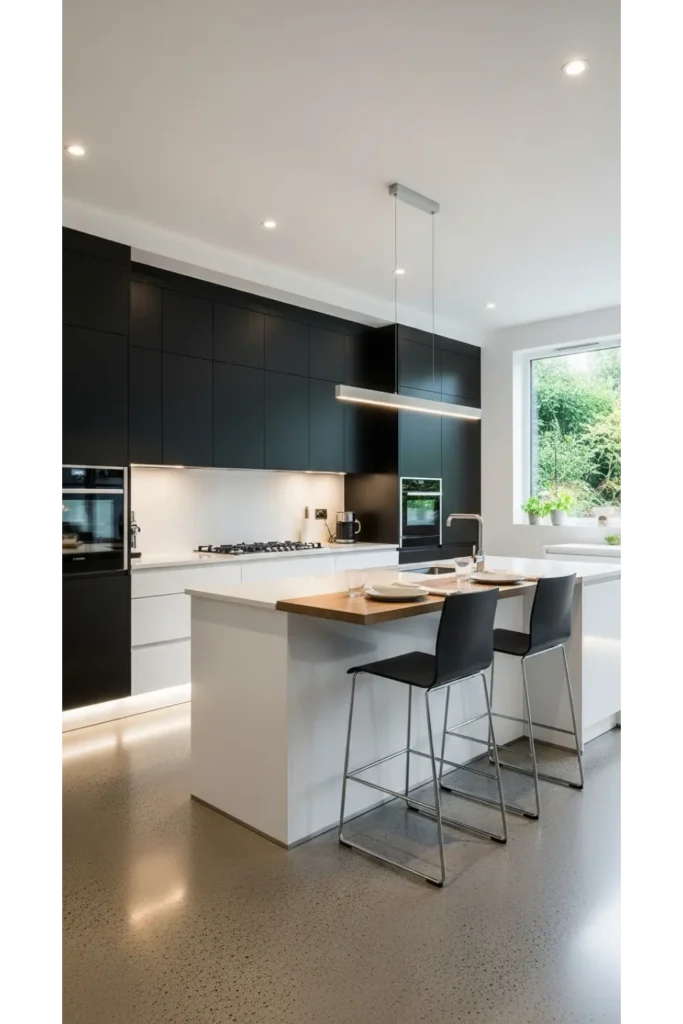
Black upper cabinets create a bold visual statement, drawing the eye upward and adding drama to the kitchen. When paired with white lower cabinets, the contrast feels intentional rather than overwhelming. White lowers keep the space grounded and practical, preventing the darker tone from making the kitchen feel closed in.
Strong lighting is essential for this design to succeed. Under cabinet lights and natural daylight help soften the black finish. This combination suits modern kitchens that embrace contrast and clean lines. The result is a confident, striking kitchen that feels modern yet controlled.
20. Olive Green Lowers With Ivory Uppers
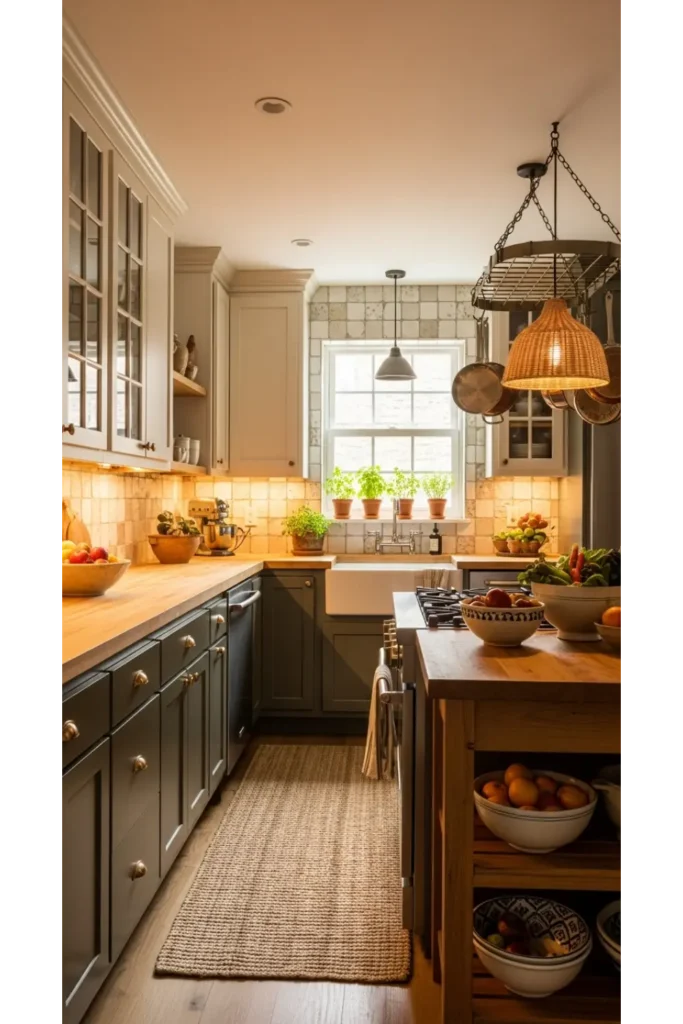
Olive green lower cabinets bring an earthy, grounded feel that connects the kitchen to nature. Ivory upper cabinets lighten the space and add warmth without the starkness of pure white. This pairing feels timeless and calming, making it ideal for kitchens meant to feel welcoming and lived in.
Olive green works beautifully with wood floors, stone counters, and warm metal finishes. Ivory softens the contrast and keeps the overall look balanced. Together, these colors create a kitchen that feels organic, comfortable, and thoughtfully composed for everyday living.
21. Dusty Rose Uppers With Gray Lowers
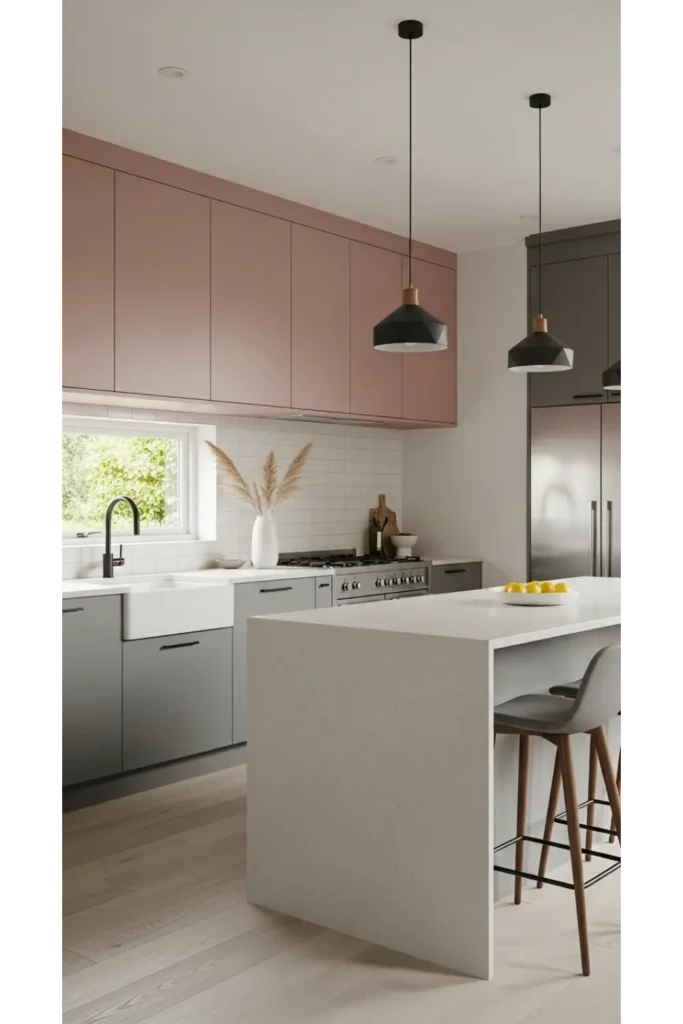
Dusty rose upper cabinets introduce personality in a soft, controlled way. Used above, the color feels refined rather than bold. Gray lower cabinets ground the design, ensuring the kitchen maintains a sense of structure and balance. This pairing feels modern and expressive without being overpowering.
Neutral finishes help keep the look cohesive and timeless. Gray lowers offer durability and versatility, while dusty rose adds warmth and individuality. This combination suits homeowners looking for something unique yet tasteful, resulting in a kitchen that feels personal, stylish, and inviting.
22. White Uppers With Teal Lowers
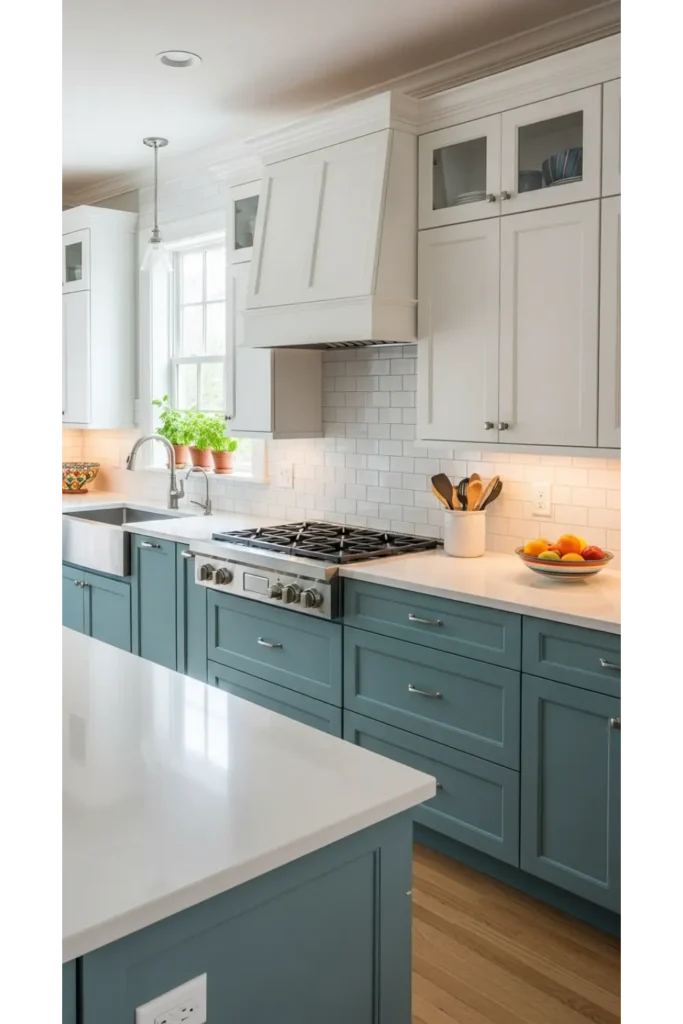
Teal lower cabinets add depth and energy to the kitchen, creating a strong visual foundation. White upper cabinets balance the boldness by keeping the space open and bright. This contrast allows the color to stand out without overwhelming the room, making it ideal for creative yet practical kitchens.
Choosing a muted teal ensures the design stays timeless rather than trendy. White uppers reflect light and maintain clarity. Together, they create a kitchen that feels lively, confident, and well balanced, offering personality without sacrificing long term appeal.
23. Soft Beige Uppers With Chocolate Brown Lowers
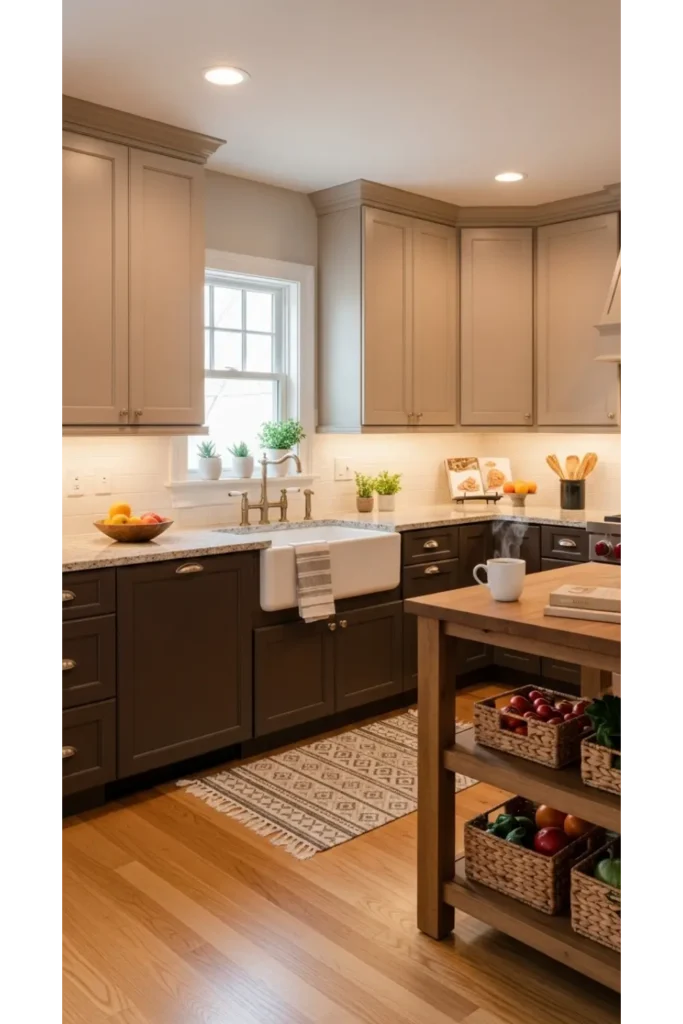
Soft beige upper cabinets bring warmth and light, making the kitchen feel welcoming and relaxed. Chocolate brown lower cabinets add richness and depth, grounding the space visually. This combination creates a comforting atmosphere that feels classic rather than modern driven.
Natural textures enhance the palette, from wood accents to stone surfaces. Beige keeps the upper space open, while dark lowers provide durability and contrast. The result is a kitchen that feels cozy, timeless, and designed for everyday comfort rather than fleeting trends.
Conclusion
Choosing the right color balance can transform your kitchen into a space that feels personal and functional. Thoughtful two tone kitchen cabinet designs allow you to add contrast, depth, and character without overwhelming the room. By selecting colors that suit your layout, lighting, and lifestyle, you create a kitchen that looks beautiful and works effortlessly for everyday living.