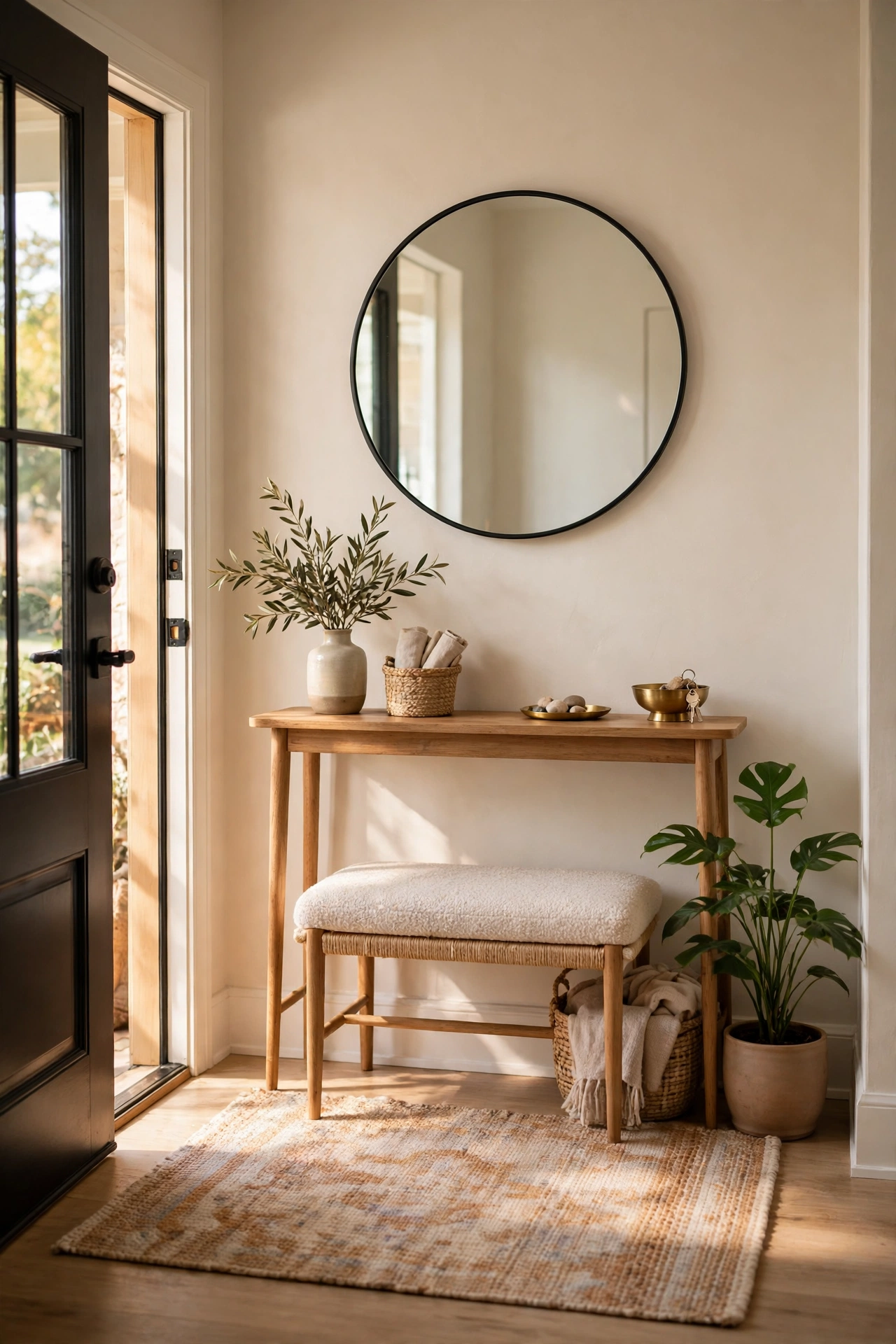
18 Entryway Decor Ideas That Make a Small Hall Feel Welcoming
The entryway is the first room anyone sees, and it is also the room most homes get wrong. Shoes pile up by the door, keys disappear, coats slide off a hook, and the space ends up looking like a storage corner instead of a welcome. An entryway does not need to be large to work well. It needs a clear job for every item that lands there, a surface for the things you carry in and out, and one or two details that make it feel like part of the home rather than a passage.
This guide gives you 18 practical entryway decor ideas that work in real homes, including narrow halls, rented flats, and homes with no separate entry at all. It covers how to measure the space, how to choose furniture that fits, how to organise shoes and coats without clutter, and how to add light, colour, and texture on a modest budget. The full list, measurements, and step by step plan are in this post, because a photo alone cannot tell you what size console to buy or how much clearance a door needs.
Start by measuring, not shopping
Before you buy anything, measure three things. First, the width of the entry area from wall to wall. Second, the depth you can spare without blocking the door swing or the main walkway. Third, the height available if you plan to hang a mirror, art, or hooks.
Keep at least 90 centimetres, about 36 inches, of clear walkway through the entry. That is the minimum comfortable width for one person carrying a bag, and it matters more than any decor piece. If your entry is narrower than that after furniture, the furniture is too deep. Most entry consoles are 25 to 35 centimetres deep, about 10 to 14 inches, and that shallow depth is what makes them work in a hall. A standard chest of drawers, at 45 to 50 centimetres deep, will usually block the path.
Check the door swing too. Open the front door fully and mark where it stops. Nothing fixed, like a bench, a tall plant, or a shoe cabinet, should sit inside that arc. A rug can sit there, because it lies flat, but furniture cannot.
Finally, note where the light comes from. An entry with no window needs a mirror, a light wall colour, and a lamp or a ceiling light that is actually bright enough. An entry with a window can take a darker console or a deeper wall colour, because daylight does the work.
1. A slim console table as the anchor
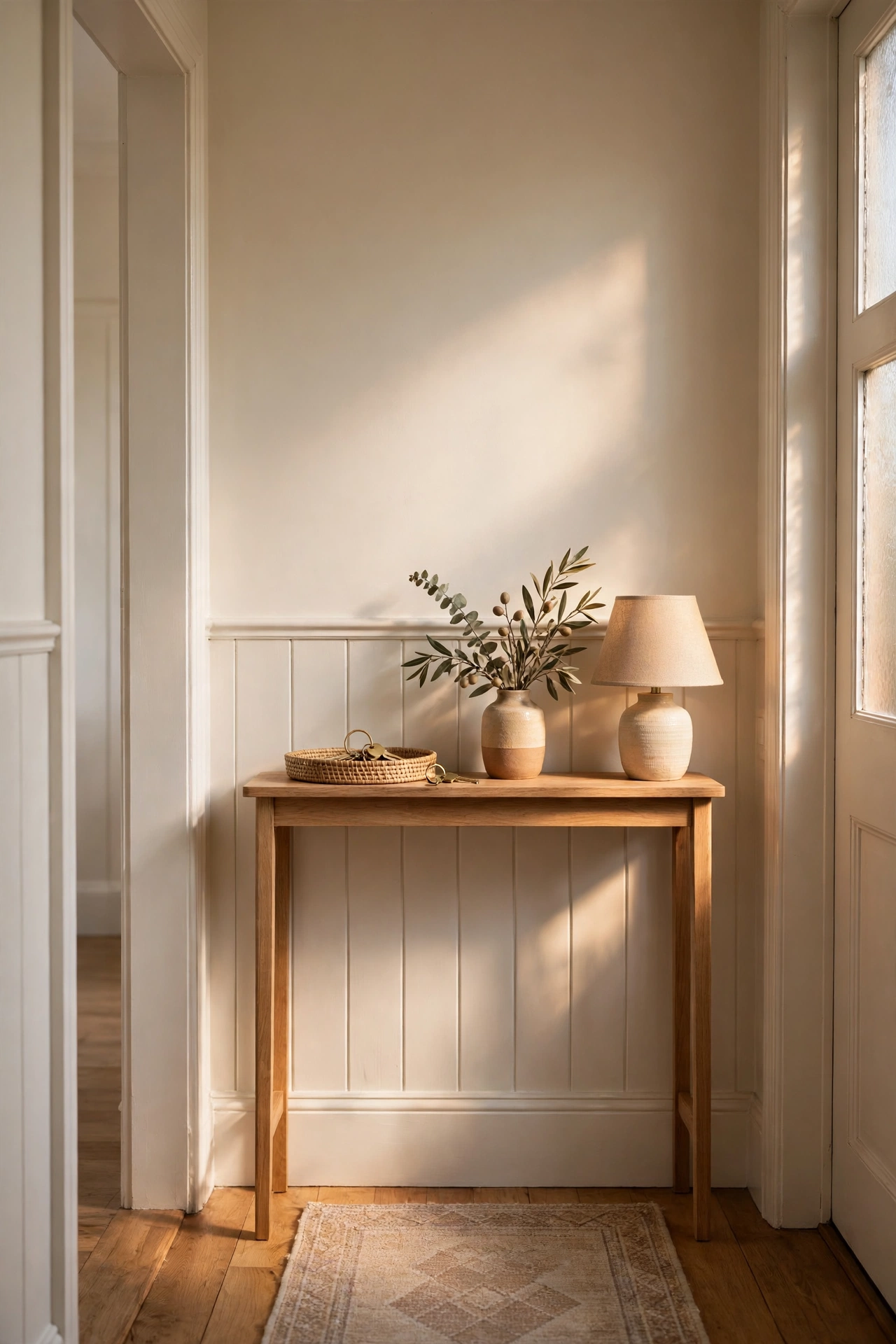
A slim console is the single most useful entryway piece. It gives you a landing surface for keys, post, and a bag, without eating the walkway. Choose one 25 to 35 centimetres deep, with a height of 75 to 85 centimetres, so it sits at a comfortable height for dropping things as you walk in.
Keep the top simple: a small tray for keys, a lamp or a vase, and one decorative object. If the top holds more than five items, it will look cluttered within a week. Use the shelf below, if there is one, for a basket or two books, not for a second layer of clutter.
If your entry is very narrow, skip the console and use a floating shelf at the same height instead. It gives you the landing surface with zero floor footprint, and you can add hooks below it.
2. A mirror that doubles the light
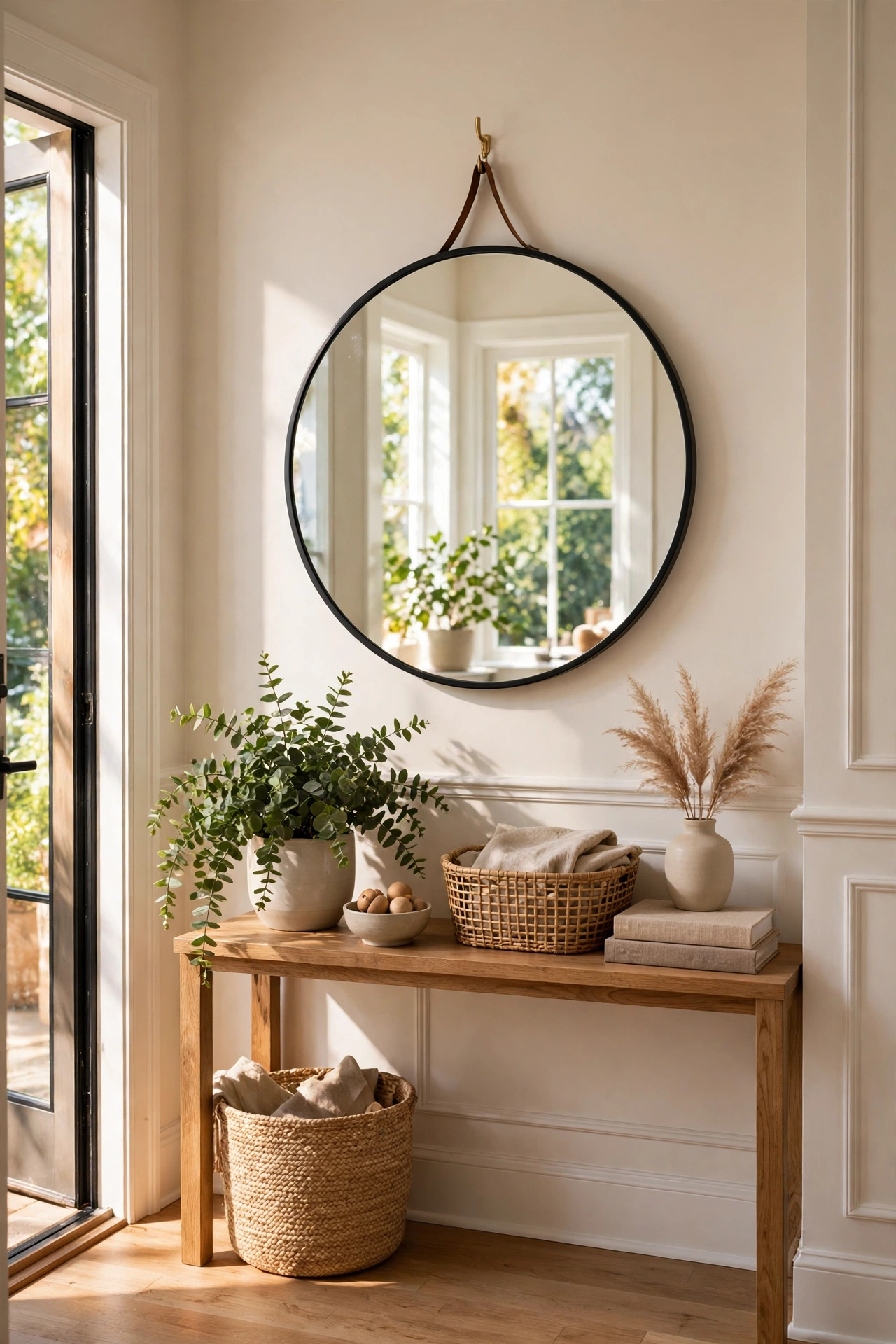
A mirror is the best value decor piece for a dark entry. It bounces light from the door or a lamp, and it makes a narrow hall feel wider. Hang it at eye level, with the centre about 145 to 155 centimetres from the floor, about 57 to 61 inches.
Choose a shape that suits the wall. A round mirror softens a hall full of straight lines. A tall rectangular mirror makes a low ceiling feel higher. A mirror with a simple frame in wood, black, or brass works with almost any style, and it is easier to live with than a heavily decorated frame that fights the rest of the room.
Place the mirror where it reflects something pleasant, like a window, a plant, or a piece of art on the opposite wall. A mirror that reflects a blank wall or a pile of coats does nothing for the room.
3. Hooks at two heights
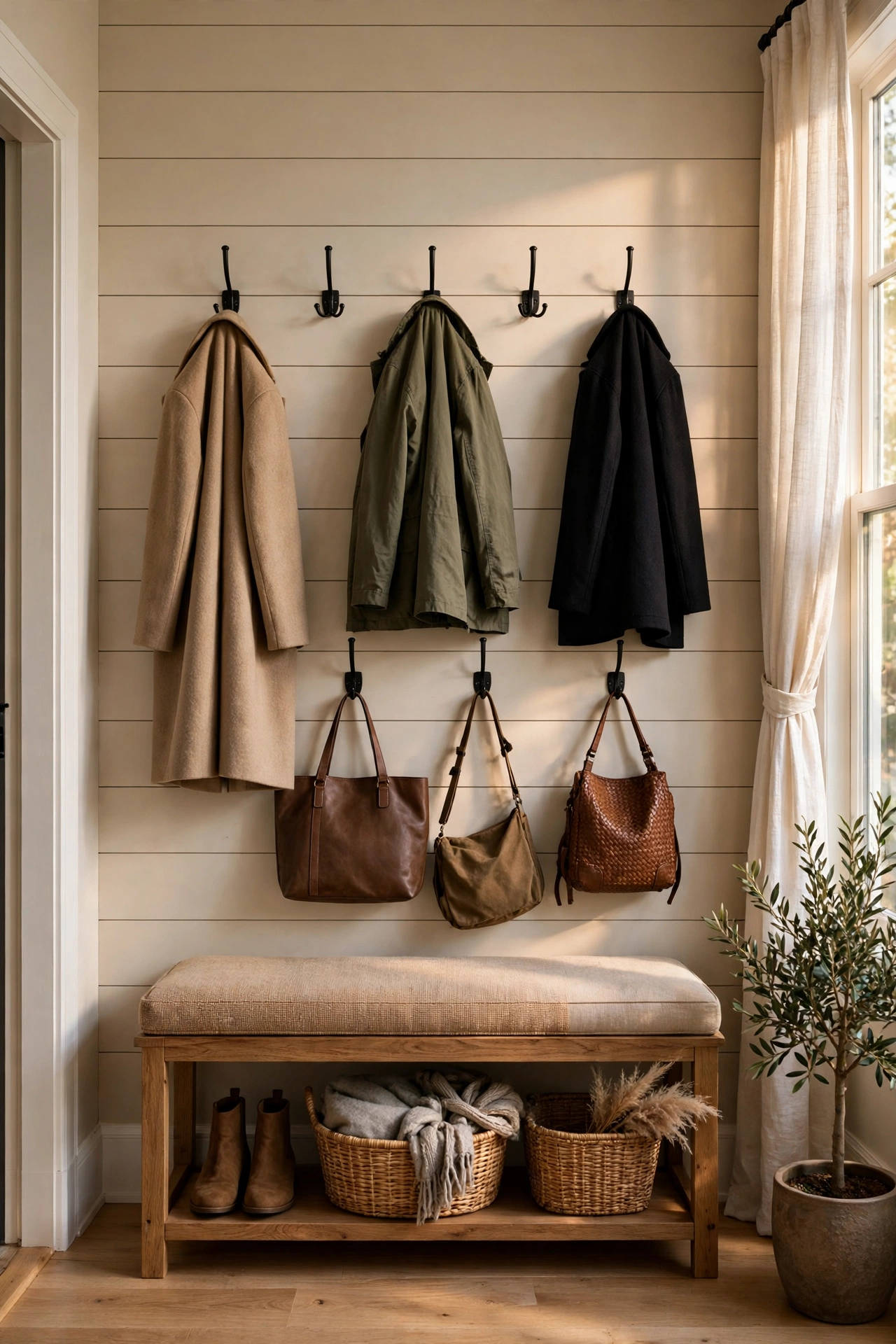
Coat hooks are more practical than a coat stand in a small entry, because they use wall space instead of floor space. Fit hooks at two heights: adult hooks at about 165 to 175 centimetres, and lower hooks at about 120 centimetres for children, or for bags and dog leads.
Leave at least 15 centimetres between hooks so coats do not bunch together. Limit the hooks to the number of people who live in the home, plus one spare for a guest. If every hook is full all the time, coats will end up on chairs and door handles, so keep a rule that out of season coats live in a cupboard, not in the entry.
4. A bench with storage underneath

A bench solves two problems at once: a place to sit while putting on shoes, and hidden storage below. Choose a bench 90 to 120 centimetres long for a family entry, or 60 to 75 centimetres for a single person or a couple. The seat height should be about 45 centimetres, standard chair height.
Use the space under the bench for shoe baskets, one per person, or for a pair of boots each. Open baskets are easier to use than closed boxes, because you can see what is inside and you will actually put shoes away. If you prefer a cleaner look, use baskets with lids, but keep them labelled or shallow enough that you can find things quickly.
5. A shoe cabinet that hides the pile

If shoes are the main problem, a slim shoe cabinet is worth the space. The shallow tilt out kind is usually only 15 to 20 centimetres deep, so it fits even a narrow hall, and it holds more pairs than an open rack because the shoes stand upright.
Count the pairs you actually wear in a normal week before you buy. A household of two adults usually needs space for 6 to 8 pairs in the entry, not every pair you own. The rest belong in a bedroom cupboard. A cabinet with two or three compartments, each holding 3 to 4 pairs, is enough for most homes.
6. A rug that defines the entry
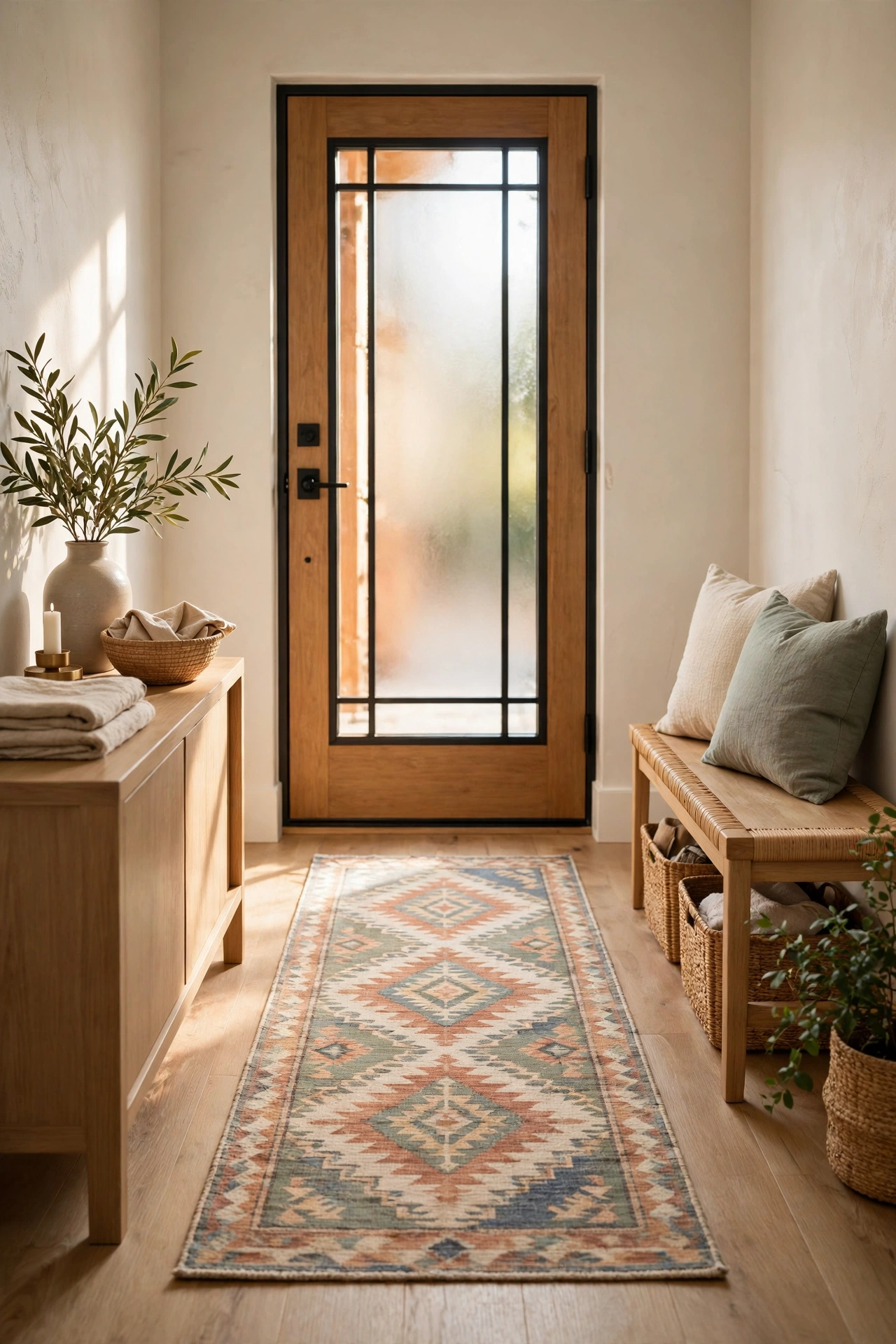
A rug does three jobs in an entry: it defines the zone, it catches dirt, and it adds colour and texture. Choose a rug that is at least as wide as the door, and long enough to cover the main standing area, usually 120 to 180 centimetres long for a standard entry.
Use a low pile rug, or a flat weave, so the door can open over it. A thick rug will catch on the door and bunch up. Choose a washable rug, or a dark pattern that hides marks, because entry rugs get dirty faster than any other rug in the home. A runner works well in a long narrow hall, while a small rectangular rug suits a square entry.
7. A tray for keys, post, and small things
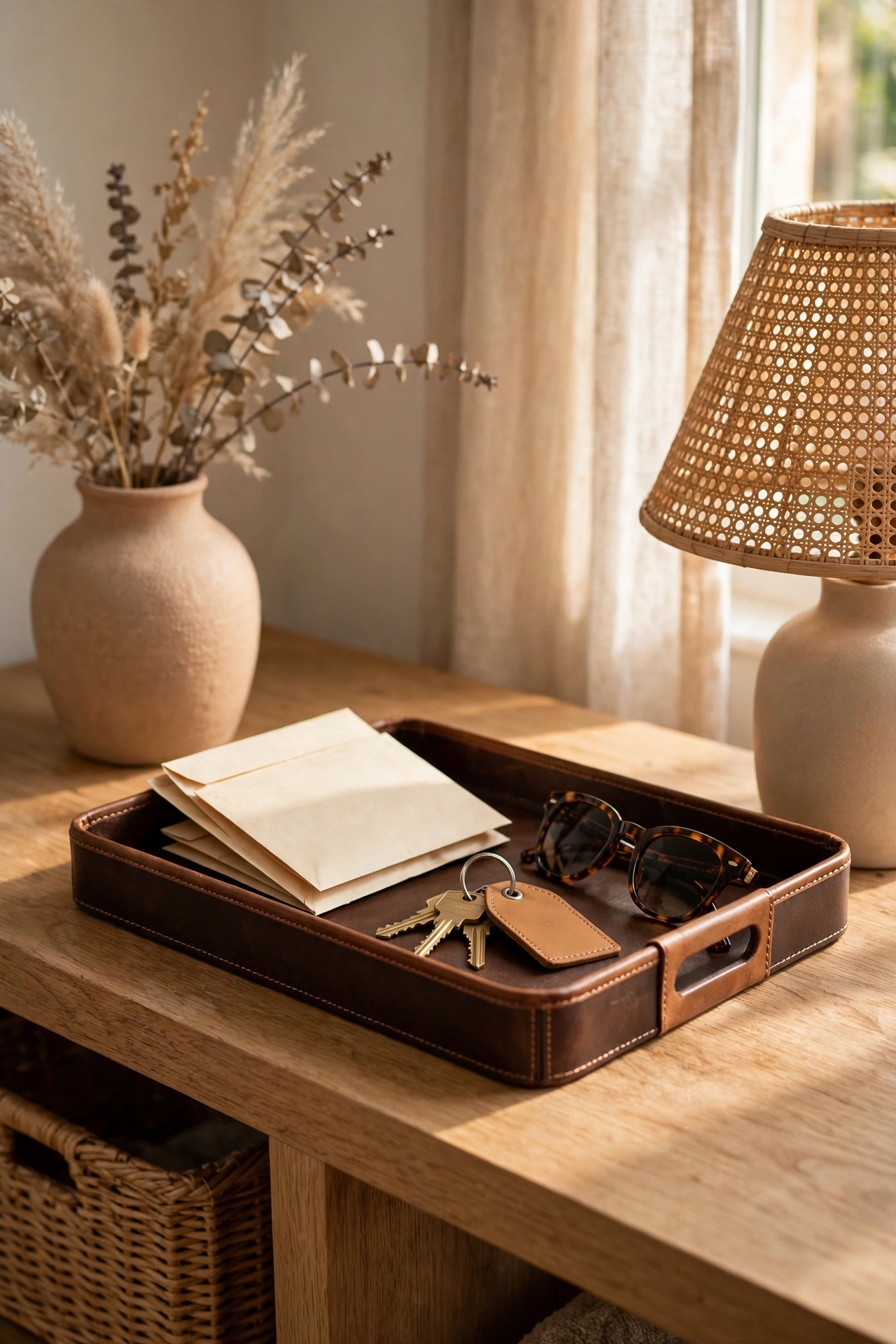
A tray is a small idea with a large effect. Without one, keys, post, sunglasses, and coins spread across the whole console. With one, they stay in a defined area, and the rest of the surface stays clear.
Choose a tray about 25 to 35 centimetres across, in a material that contrasts with the console, like leather on wood, or ceramic on a painted table. Keep only the daily items in it. Post that needs action goes in a separate upright holder or a wall pocket, not in the tray, or the tray becomes a pile.
8. A wall shelf for the things you need at eye level
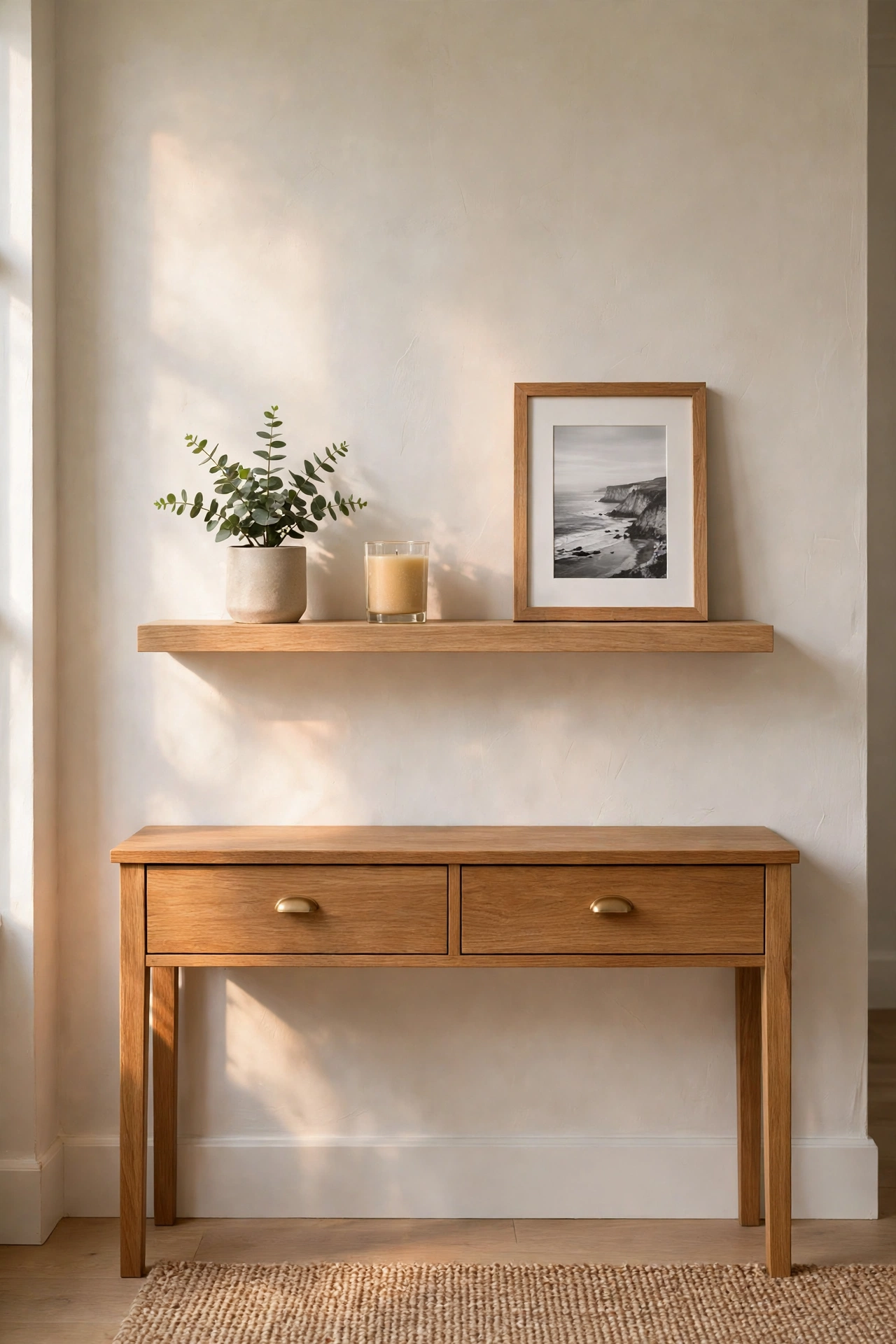
A single floating shelf above a console, or on its own in a tiny entry, gives you a display spot and a practical spot in one. Use it for a small plant, a candle, a framed photo, and the items you reach for last, like sunscreen in summer or gloves in winter.
Hang the shelf about 35 to 45 centimetres above the console top, so there is room for a lamp or a vase below it without crowding. Keep the shelf to three or four items. A shelf with seven small objects looks like a shop display, not a home entry.
9. Baskets for the overflow
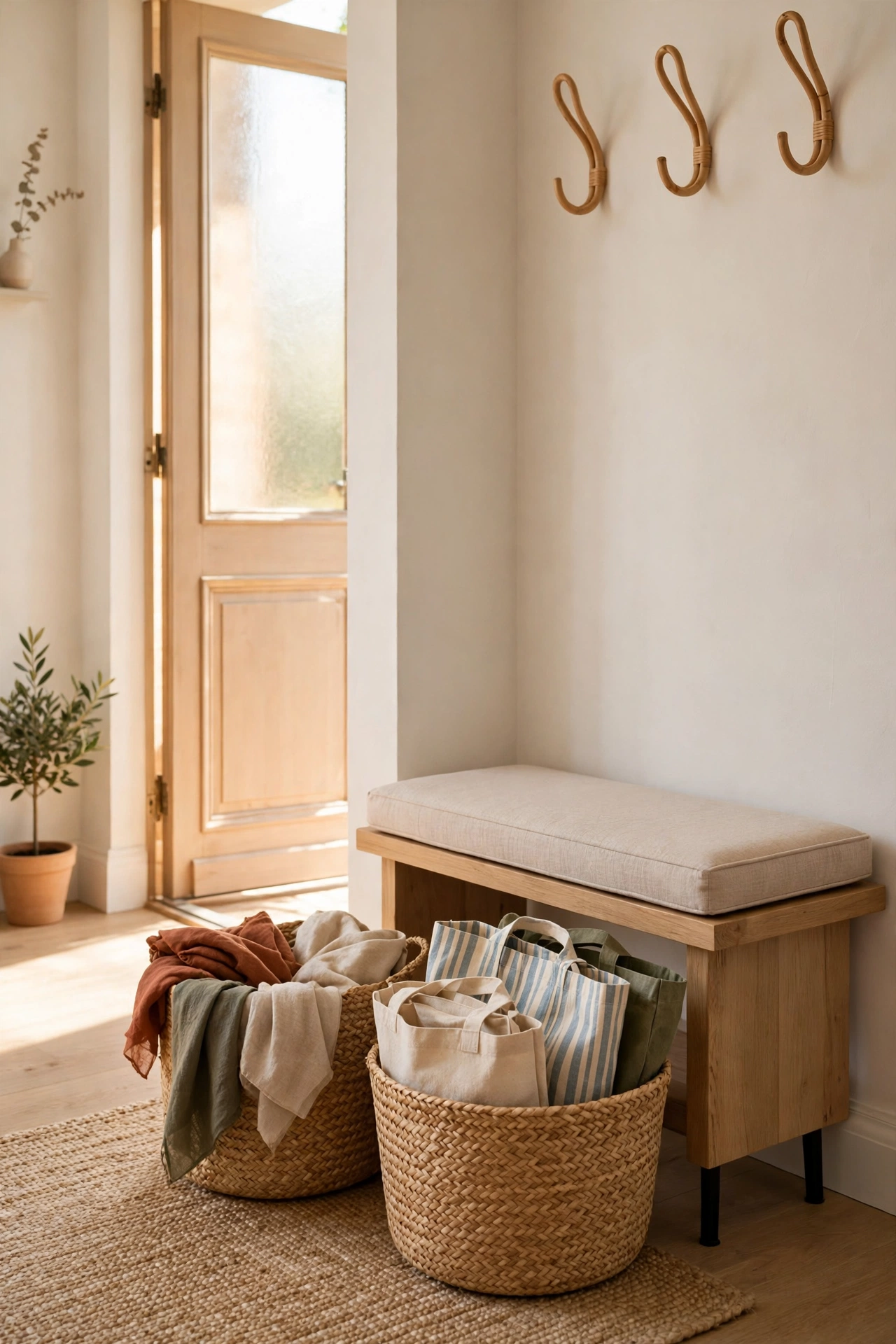
Baskets are the kindest storage for an entry, because they hide mess without looking like storage. Use one large basket for scarves, hats, and gloves in winter, and one for reusable shopping bags all year round.
Place baskets on the floor beside the bench, under the console, or on a shelf. Choose baskets with handles so you can lift them out to clean behind them. Natural materials like seagrass or cotton look warm in an entry, and they are forgiving about scuffs from shoes and bags.
10. Lighting that actually lights the entry
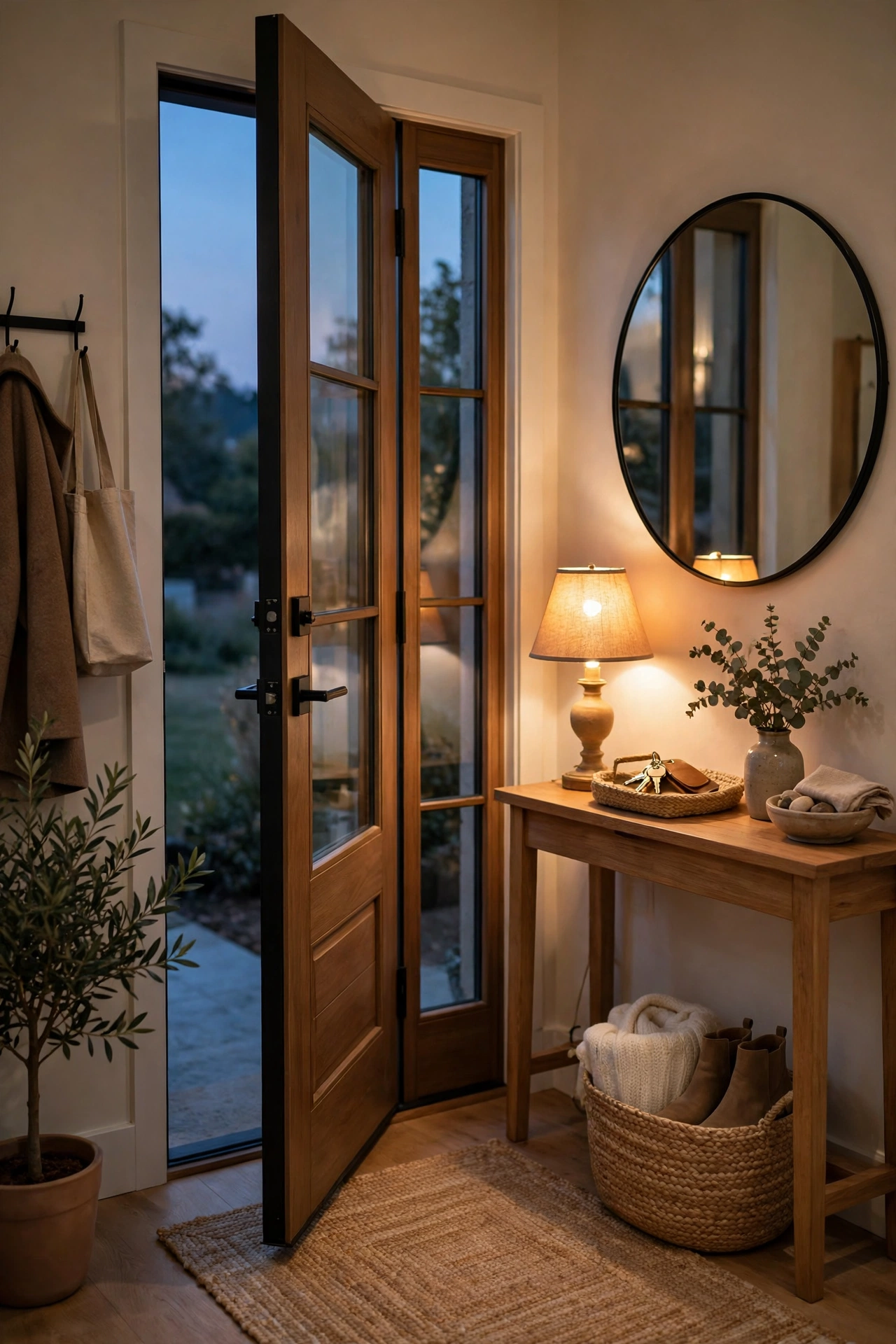
Many entries have a single dim ceiling light, and that is why they feel unwelcoming. If you can, add a second light source: a small table lamp on the console, a wall light beside the mirror, or a plug in lamp on a shelf.
Use warm white bulbs, and make the light bright enough to see faces and read post at the door. A lamp with a shade that directs light down onto the console is more useful than a bare bulb that glares. If the entry has no socket, a battery operated lamp or a rechargeable lamp is a practical fix, and it can be moved when you need it elsewhere.
11. A statement piece, just one
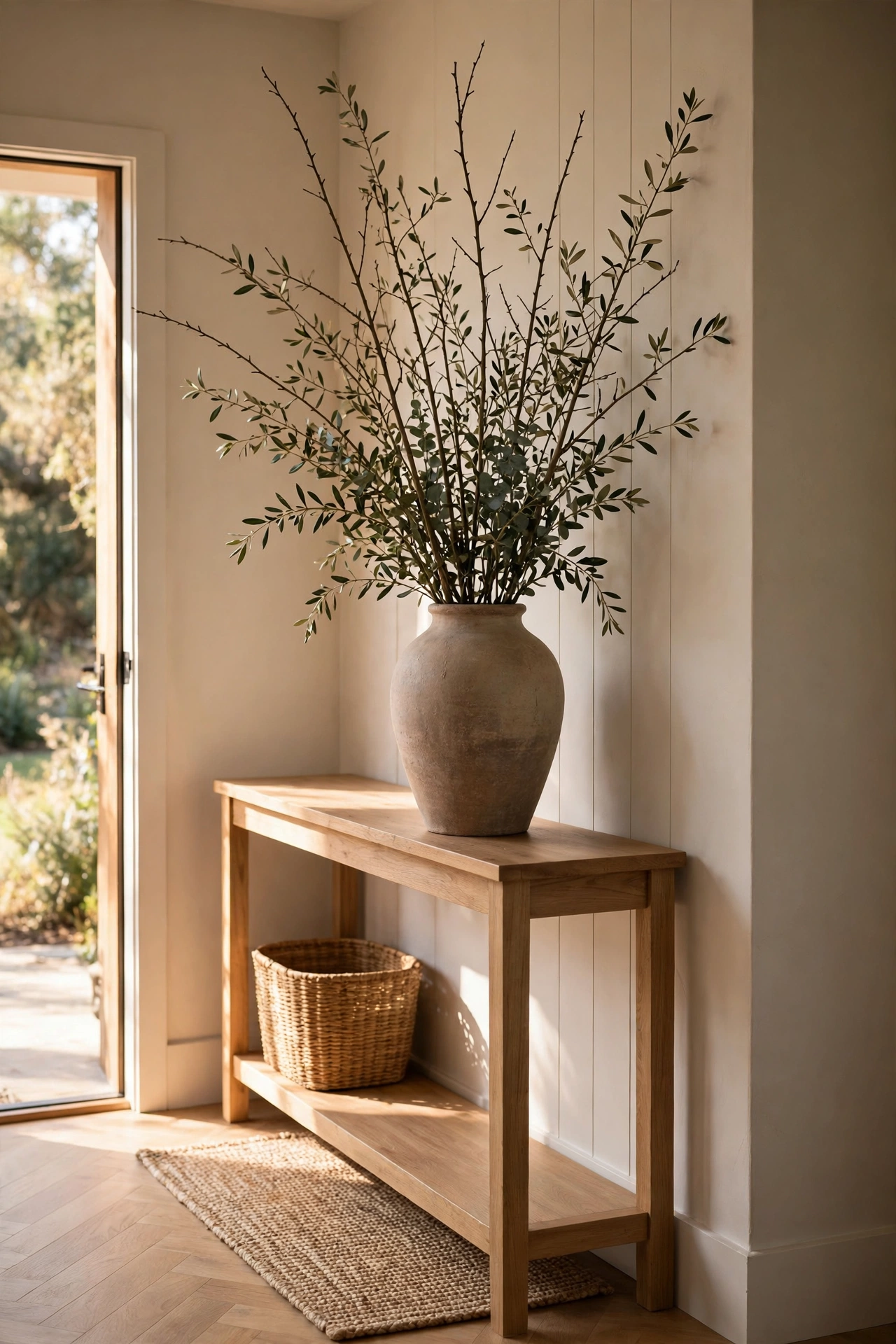
A welcoming entry needs one thing that is there for looks alone, not for storage. It could be a large vase with branches, a piece of art, a sculptural bowl, or a vintage mirror with an interesting frame.
Choose one statement piece and give it space. A large vase needs an empty stretch of console beside it, and a large artwork needs a clear wall. Two statement pieces in a small entry compete with each other, and both lose. If you love two, put one in the entry and the other in the living room, where it can be seen from the entry.
12. Art at eye level, not above the door

Art in an entry works when it is at eye level, where you actually look at it as you come in. Hang the centre of the piece about 145 to 155 centimetres from the floor, the same height as a mirror.
Choose art that sets the tone for the home: a landscape, a simple abstract in the colours of the living room, or a framed map of a place you love. Avoid art that is too small for the wall, because it will look lost. A piece that fills about two thirds of the wall width above a console is about right.
13. A plant that survives low light
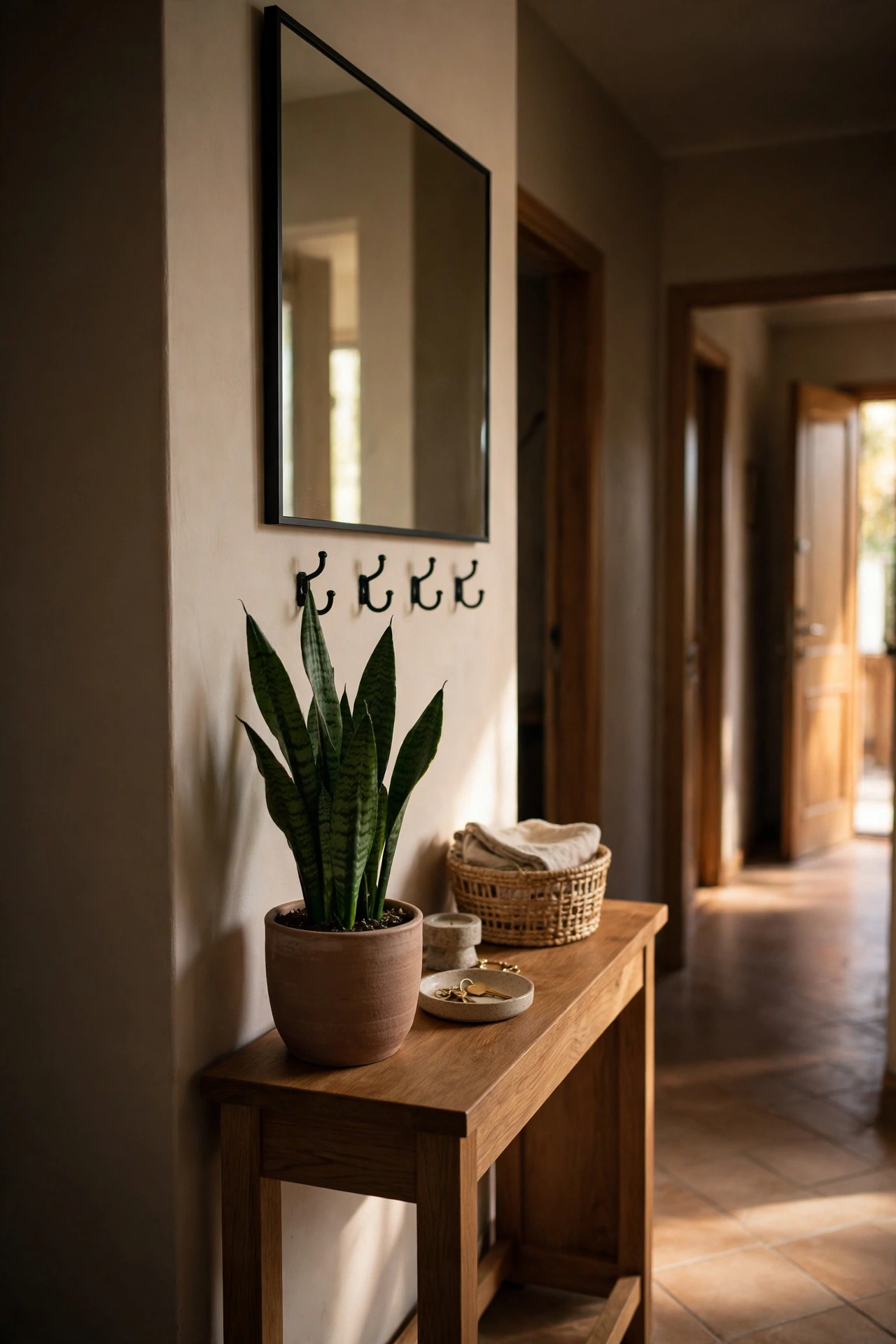
A plant softens the hard edges of an entry, the door frame, the console, the mirror, and it makes the space feel alive. Choose a plant that tolerates low light and irregular watering, because entries are often dark and easy to forget.
Good choices for a low light entry are a snake plant, a pothos, or a ZZ plant. All three cope with little direct light and survive a missed watering. Place a small plant on the console or shelf, and a tall plant on the floor only if there is at least 30 centimetres of clear space around it, so it does not block the walkway.
14. Colour that connects to the living room
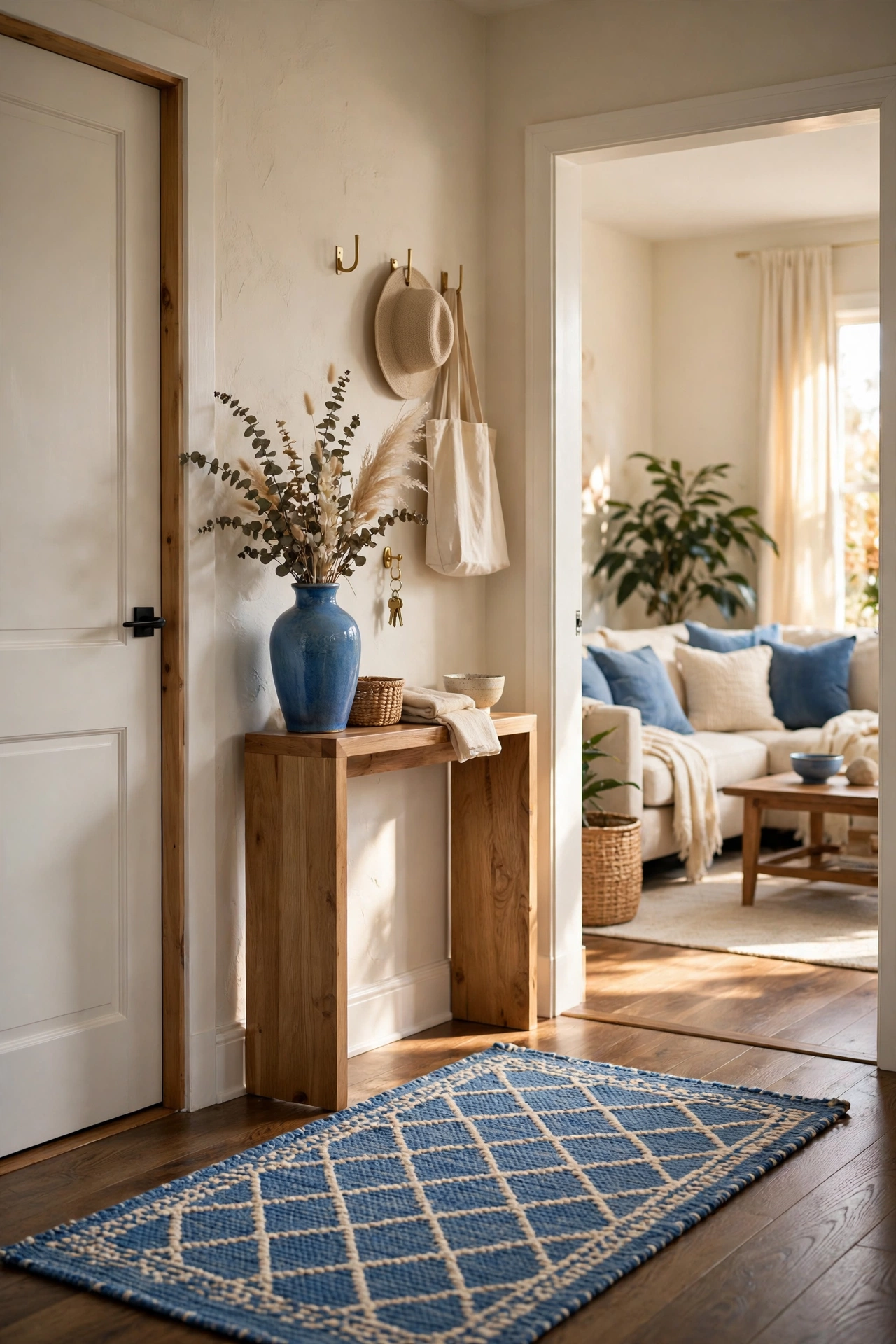
The entry should feel like the start of the home, not a separate room. The simplest way to do that is to repeat one colour from the living room in the entry, in the rug, the art, the vase, or the tray.
You do not need to paint the entry the same colour as the living room. A neutral entry wall with one repeated accent colour looks calm and connected. If the living room is blue and cream, a blue rug or a blue vase in the entry ties the two spaces together without any painting.
15. A seasonal swap, kept simple
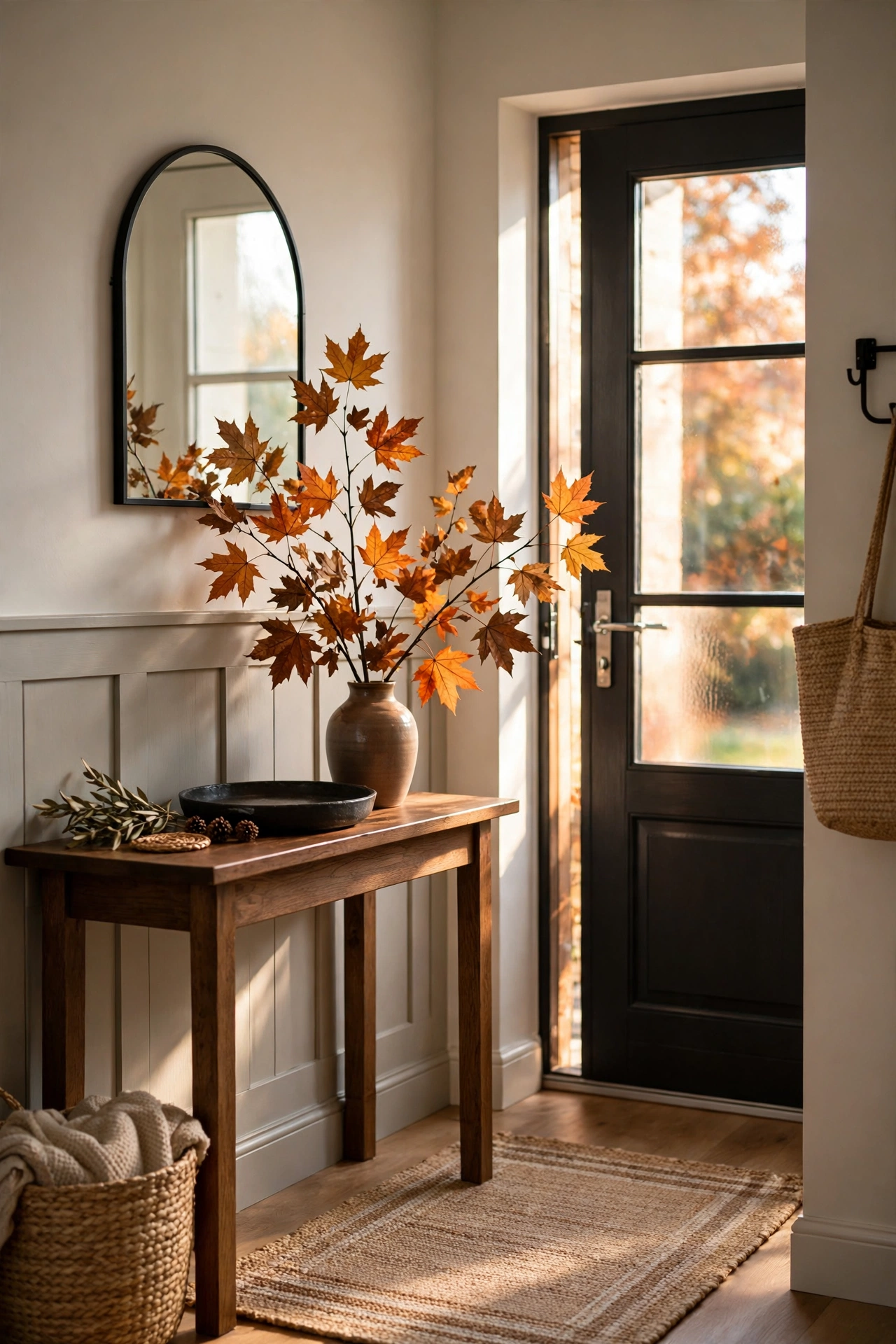
A seasonal touch keeps the entry feeling fresh, but it should be a swap, not an addition. In autumn, swap a green plant for a branch with autumn leaves. In winter, swap a light tray for a darker one, and add a wreath to the door. In spring, swap heavy scarves in the basket for lighter ones, and add fresh flowers.
Keep the seasonal change to two or three items. If you add seasonal decor on top of the everyday decor, the entry will feel crowded, and you will have to clear it all away again in a few weeks.
16. A place for bags and the dog lead
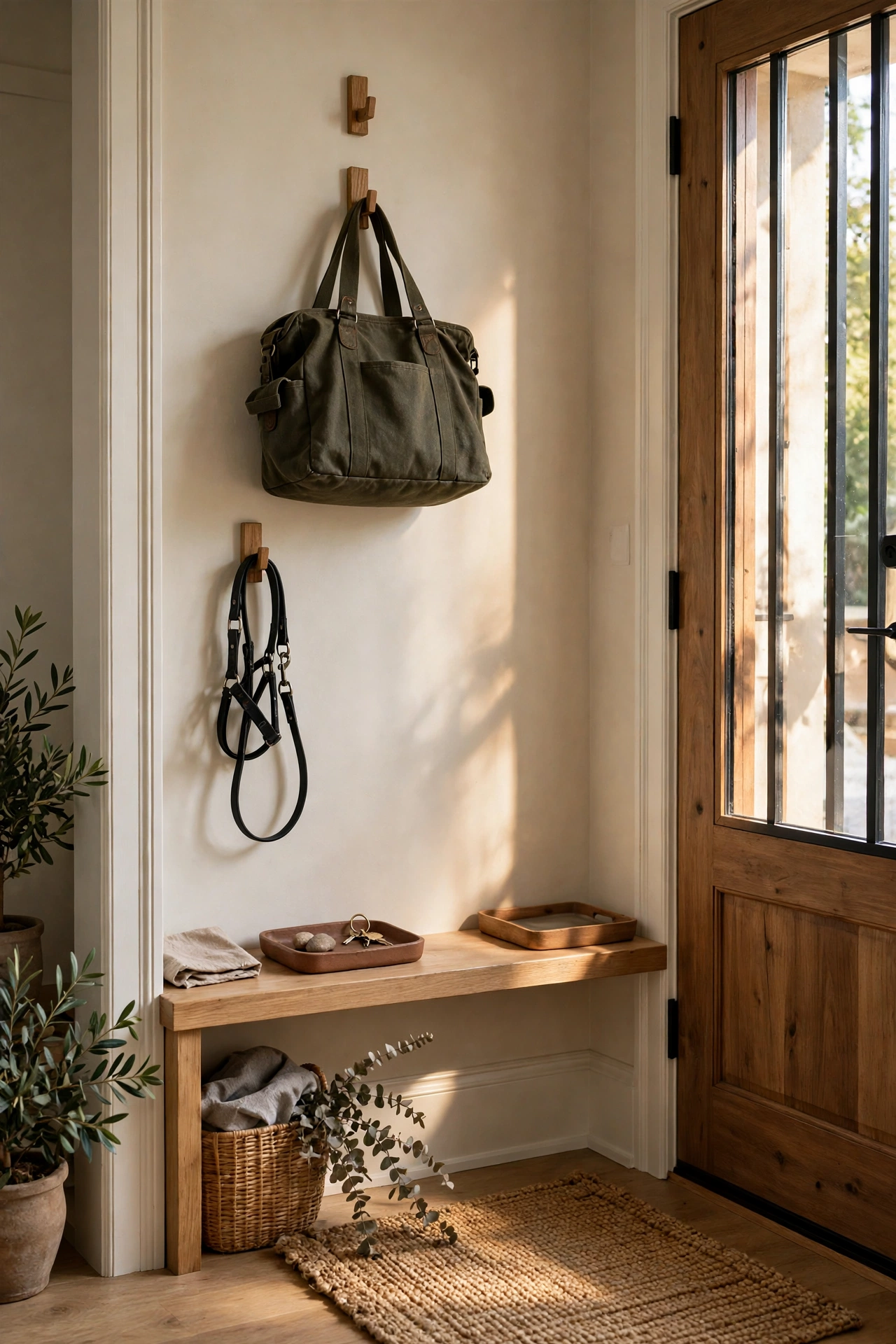
Bags and dog leads are daily items, so they need a daily home. A hook by the door for the most used bag, and a small hook or a tray for the dog lead, stops them landing on the bench or the floor.
If you carry a work bag, a gym bag, and a shopping bag, give each one a hook or a basket slot, and keep the spares in a cupboard. A bag that lives in the entry should be the one you use tomorrow, not every bag you own.
17. A small seat for a tiny entry
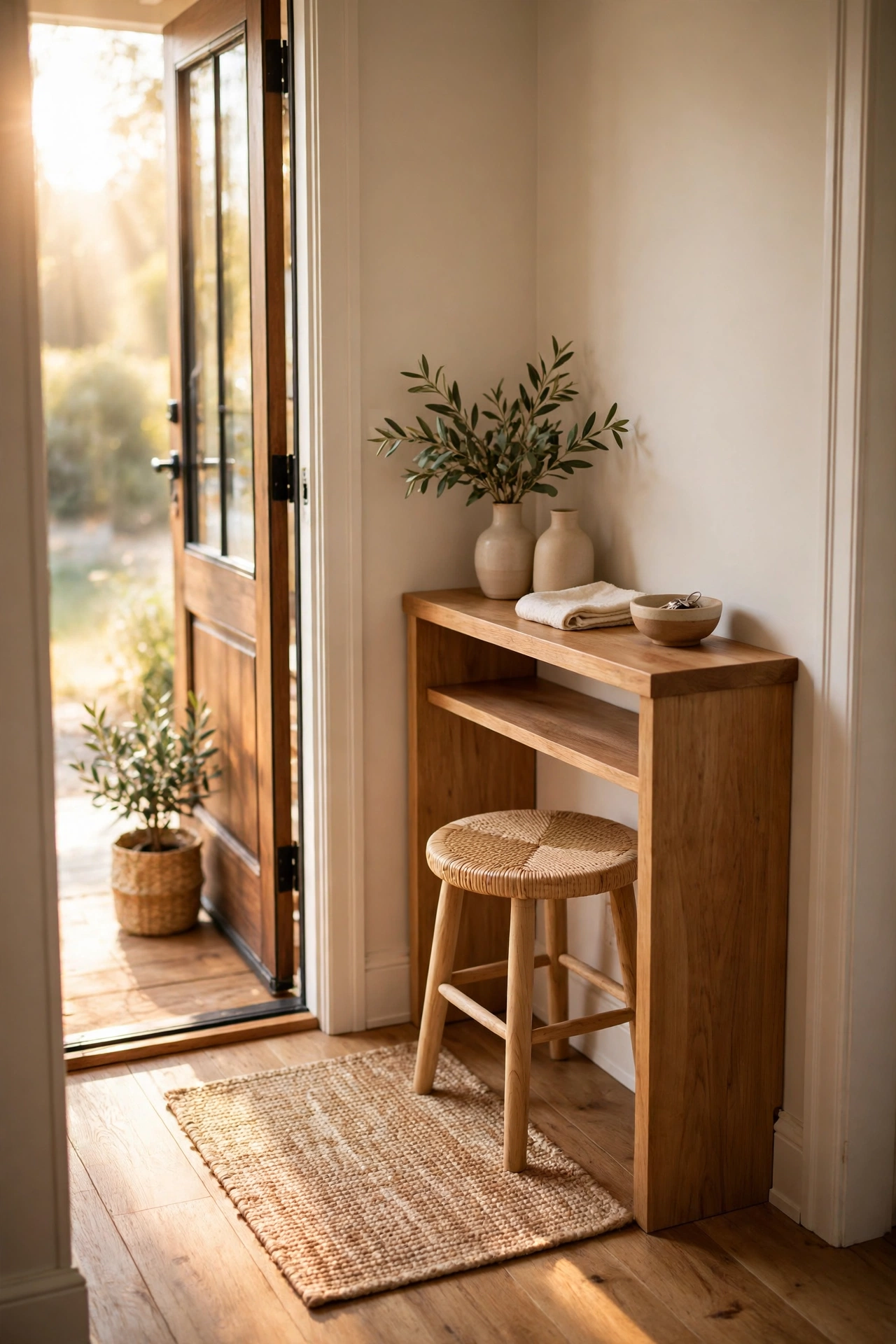
If there is no room for a bench, a small stool or a pouffe does the same job in less space. A round stool about 35 to 40 centimetres across tucks under a console or into a corner, and it can be pulled out when you need to sit.
Choose a stool with a firm top, so it is stable to sit on, and a base that does not tip easily. A stool with storage inside is a bonus, because it can hold the shoe cleaning kit, spare laces, or the umbrella you only use in heavy rain.
18. A clear exit routine
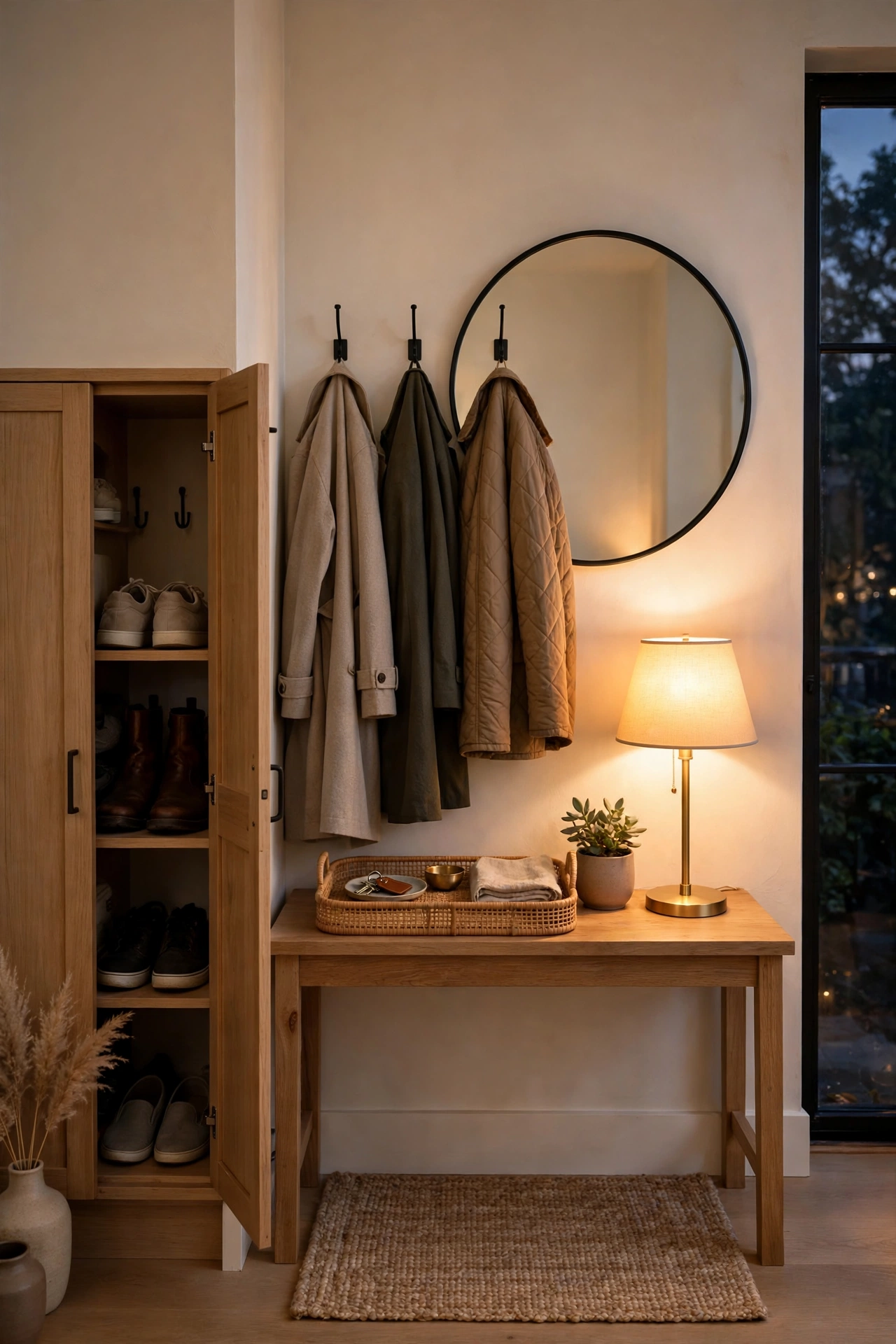
The best entryway decor is a routine, not a product. Give every daily item a home, and give the entry a two minute reset each evening: shoes in the cabinet, coats on hooks, post sorted, tray tidy.
When the entry is reset daily, the decor you chose, the mirror, the art, the plant, the rug, actually shows. When it is not, no amount of decor can cover the clutter. Build the routine first, then add the decor, and the entry will stay welcoming between deep cleans.
How to put it together in one afternoon
You do not need to do all 18 ideas at once. Start with the five that change the function of the entry, then add the decor.
Step 1: Clear everything out of the entry, and clean the floor and walls.
Step 2: Measure the width, the depth, and the door swing, and write the numbers down.
Step 3: Put back only the items that belong in the entry: daily shoes, daily coats, keys, post, bags.
Step 4: Add the anchor piece, a console, a bench, or a shelf, in the right size for your measurements.
Step 5: Add the mirror and the lighting, because they change how the space feels more than any other single change.
Step 6: Add the rug, the tray, and the baskets, which are the organisation pieces.
Step 7: Add one statement piece and one plant, then stop. Live with it for a week before you add anything else.
What to avoid in an entryway
Avoid furniture that is too deep for the walkway. Avoid a mirror opposite the front door if it reflects the street or a neighbour, because it will feel exposed rather than bright. Avoid open shoe racks with many pairs on show, because they read as clutter even when they are tidy. Avoid too many small decorative objects on the console, because they collect dust and make the surface hard to clean. And avoid a rug that is too small for the space, because a small rug in a large entry looks like a mat that drifted in from outside.
Frequently asked questions
1. What size console table should I use in an entryway?
Choose a console 25 to 35 centimetres deep, about 10 to 14 inches, and 75 to 85 centimetres high. The length depends on the wall: 80 to 120 centimetres suits most entries. Keep at least 90 centimetres of clear walkway in front of it, and check that the front door can open fully without hitting it.
2. How do I decorate a very small entryway with no space for furniture?
Use the wall instead of the floor. Fit a floating shelf at console height for keys and post, hooks at two heights for coats and bags, a mirror to add light, and a washable rug to define the zone. A small stool that tucks into a corner gives you a seat without a permanent bench.
3. How do I keep shoes tidy in the entryway?
Keep only the pairs you wear in a normal week in the entry, usually 6 to 8 pairs for two adults, and store the rest elsewhere. Use a slim tilt out shoe cabinet, or baskets under a bench, one per person. A daily two minute reset, shoes away each evening, matters more than the storage you buy.
4. Where should I hang a mirror in an entryway?
Hang the centre of the mirror about 145 to 155 centimetres from the floor, at eye level. Place it where it reflects a window, a plant, or art on the opposite wall, so it adds light and a pleasant view. Avoid hanging it where it reflects a pile of coats or a blank wall.
5. How can I make a dark entryway feel brighter without renovating?
Add a mirror, use a light wall colour or a light rug, and add a second light source such as a table lamp on the console. Keep the furniture pale or mid toned rather than very dark, and keep the surfaces clear, because clutter makes a dark space feel darker. A plant with glossy leaves also reflects a little light.
Conclusion
A welcoming entryway is not about buying more decor. It is about giving the space a clear job, measuring before you shop, and choosing a few pieces that fit. A slim console, a mirror at eye level, hooks at the right height, a rug that defines the zone, and a tray for keys will change how the entry works, and one statement piece and one plant will change how it feels. Start with the function, add the decor slowly, and keep the two minute evening reset, and the first room in your home will finally feel like an invitation, not a storage corner.