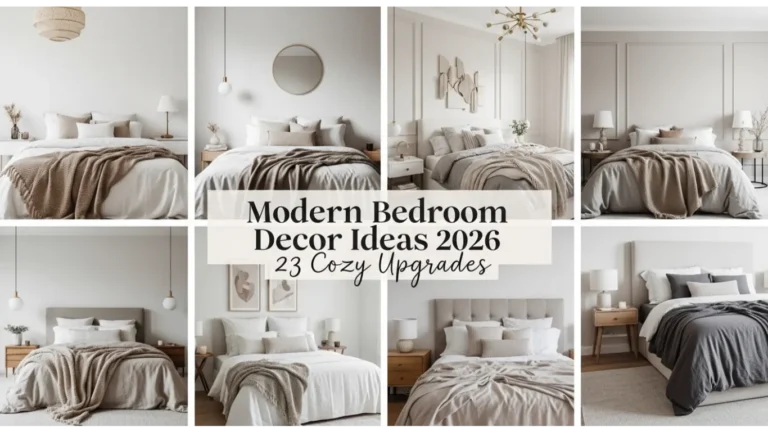
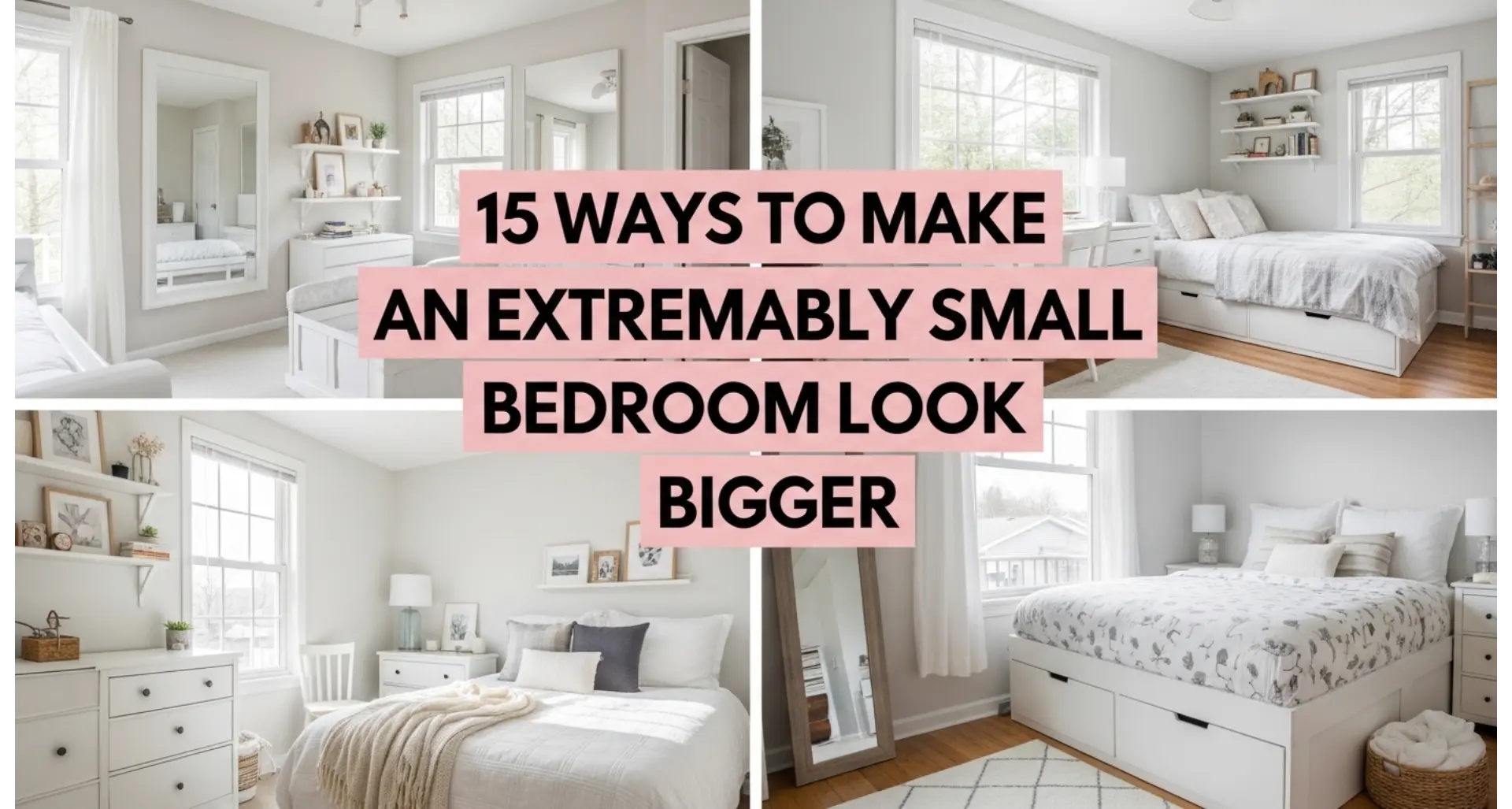
15 Ways to Make an Extremely Small Bedroom Look Bigger
If your bedroom feels tight, crowded, or hard to style, you are not alone. A small space can quickly feel overwhelming when every piece of furniture, storage, and decor competes for attention. The good news is that you do not need to knock down walls or spend a fortune to make it feel better. With the right design choices, even an extremely small bedroom can feel brighter, calmer, and far more open.
This guide shares practical, high impact ideas that work in real homes. From layout tricks and smart storage to lighting and color choices, each tip is designed to help you create a room that feels bigger without losing comfort or personality. Whether you are working with a box room, apartment bedroom, or compact guest space, these ideas will help you make every inch count.
1. Use Light Colors to Open Up an Extremely Small Bedroom
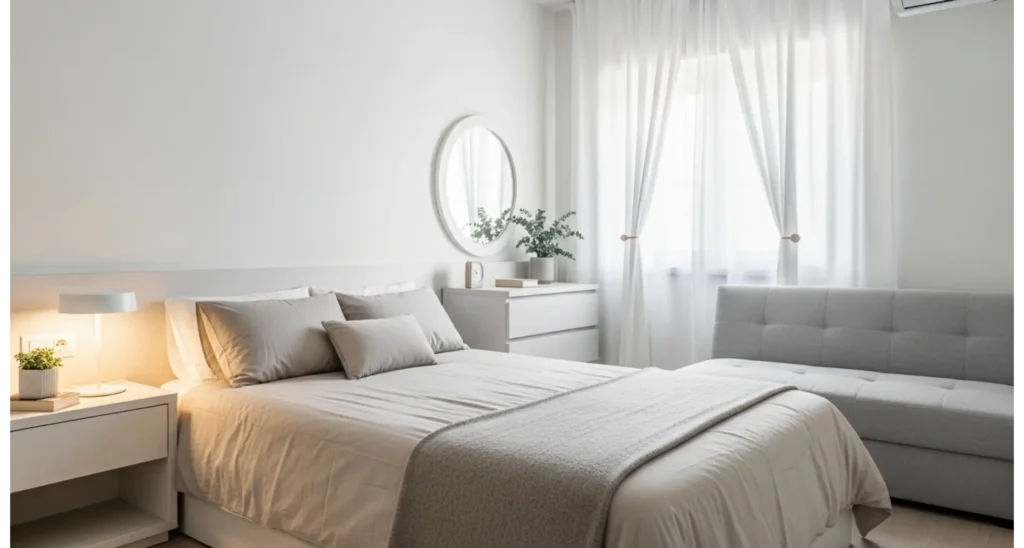
A light color palette helps a cramped room feel more open the moment you walk in. Soft shades like white, cream, pale gray, and warm sand reflect more natural light, which makes walls seem farther apart. In an extremely small bedroom, dark tones can make corners feel boxed in. Lighter walls, bedding, and curtains create visual breathing room without needing extra square footage.
You can also layer tone on tone to keep the room from feeling flat. Use subtle texture through knit throws, linen sheets, or woven rugs. This adds warmth while keeping the room bright. Matching your wall color to larger furniture pieces also helps reduce visual breaks, making the space feel calmer and more continuous from floor to ceiling.
Pro Tip: Paint the ceiling one shade lighter than the walls to create the illusion of added height.
2. Add Mirrors to Reflect Light and Depth
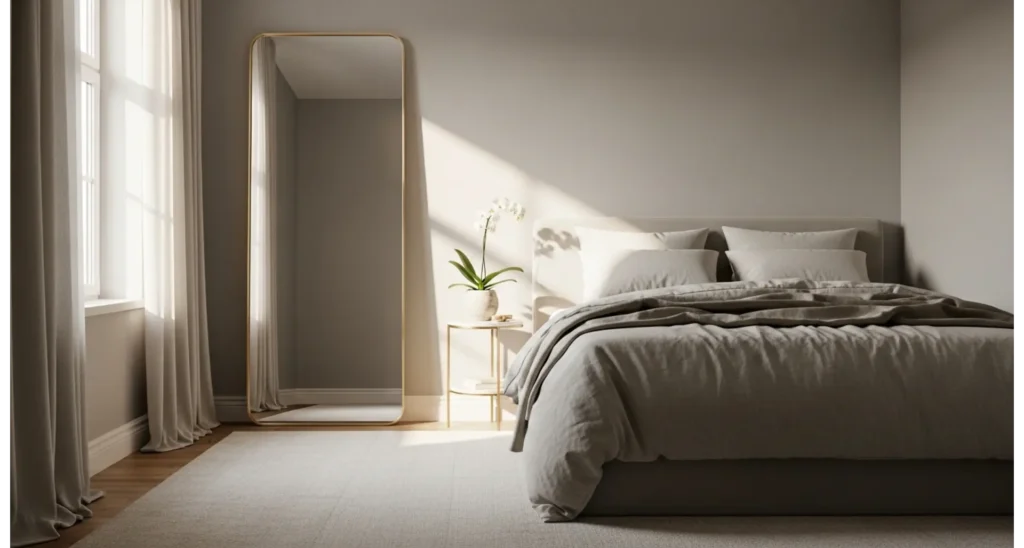
Mirrors are one of the smartest tools for making a tight room feel larger. A well placed mirror bounces both daylight and artificial light around the room, making the space feel brighter and less enclosed. In a small bedroom, this simple trick creates depth without taking up valuable floor space.
A full length mirror leaned against the wall or mounted opposite a window works especially well. Mirrored closet doors can also visually double the room. The goal is to reflect something beautiful, such as natural light, clean bedding, or a tidy corner, so the room feels fresh rather than crowded.
Pro Tip: Place a mirror across from your largest light source for the strongest sense of spaciousness.
3. Choose Multi Functional Furniture
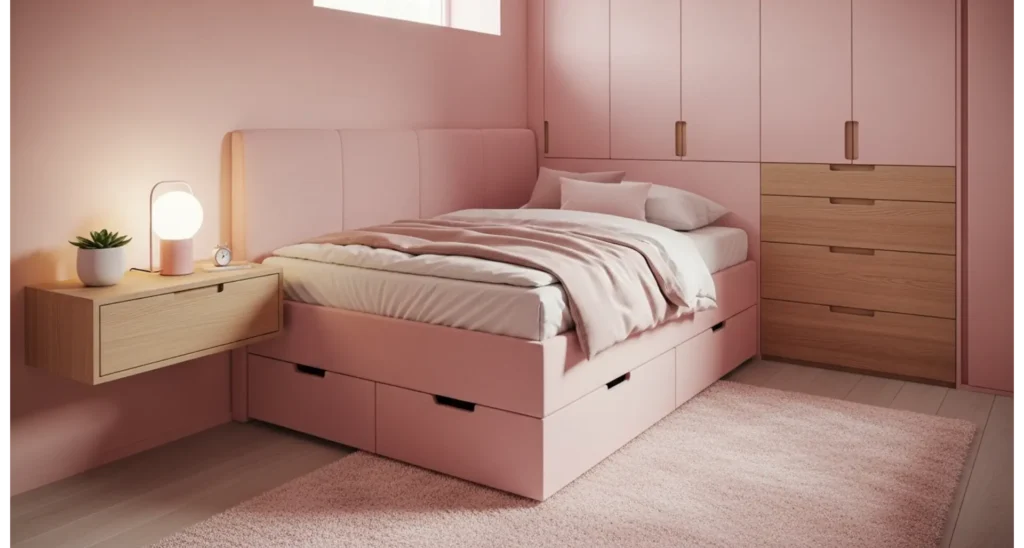
Furniture that does more than one job can transform a small bedroom. A bed with built in drawers, a storage bench, or a fold out desk helps you save space while keeping daily essentials close. This reduces clutter, which is one of the biggest reasons small rooms feel even smaller.
The best pieces look clean and simple rather than bulky. Choose slim profiles, raised legs, and hidden storage whenever possible. Smart furniture helps every inch work harder while keeping the room visually light. That balance makes the space feel useful, peaceful, and much easier to enjoy.
Pro Tip: Pick one statement piece with storage instead of several small pieces that crowd the room.
4. Lift Furniture Off the Floor
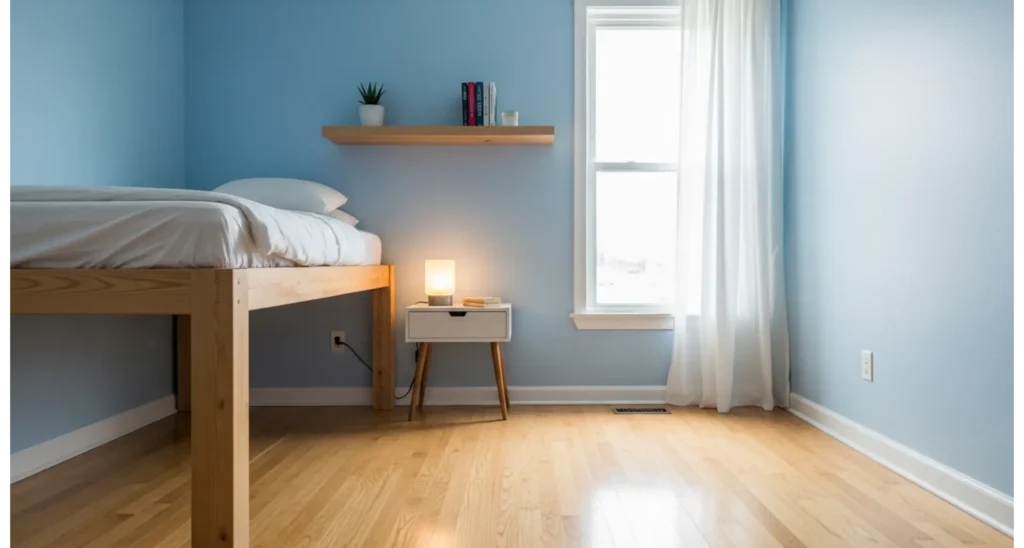
Seeing more floor makes a room feel larger. Furniture with visible legs creates open sightlines underneath beds, chairs, and side tables. This small design detail can make a big difference because the eye reads the room as less packed and more breathable.
Floating nightstands and wall mounted shelves work especially well in compact rooms. They free up floor space and make cleaning easier too. Even if your room is tiny, keeping the lower half visually open helps the entire layout feel lighter and less closed in.
Pro Tip: Avoid furniture skirts or heavy bases that block floor visibility.
5. Use Vertical Storage to Free Floor Space
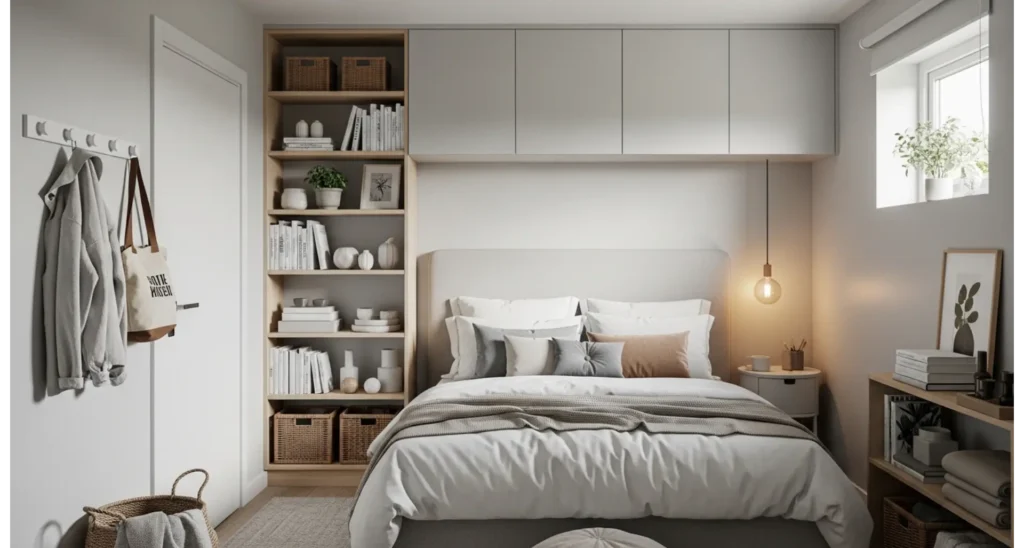
When floor space is limited, your walls become valuable real estate. Vertical storage helps you use height instead of width. Tall shelves, wall hooks, mounted cabinets, and hanging organizers keep essentials accessible without crowding your walking space.
This approach also draws the eye upward, which makes ceilings feel taller. The key is to keep wall storage neat and intentional. Too many open shelves can feel busy. A balanced setup with baskets, books, and decor helps the room feel both functional and visually calm.
Pro Tip: Install shelves above the bed or door to use overlooked space.
6. Keep Window Treatments Light and Simple
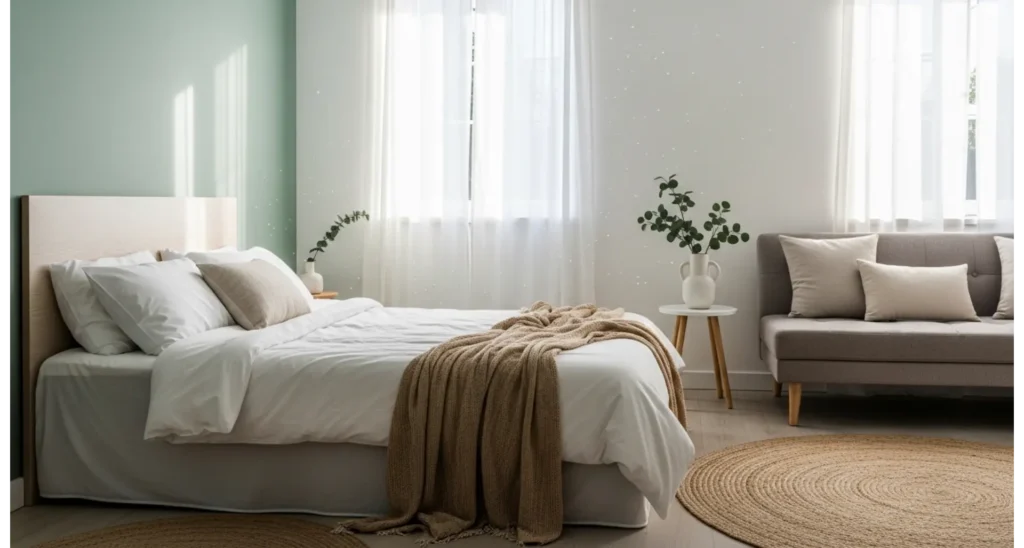
Heavy curtains can make a small room feel boxed in. Light window treatments let more sunlight in, which instantly helps the room feel bigger. Sheer panels, linen drapes, or simple blinds keep the look soft and uncluttered.
Natural light expands visual space better than almost any design trick. Hang curtains higher than the window frame and extend the rod wider than the window. This makes the window appear larger and brings a more open feeling to the entire bedroom.
Pro Tip: Choose curtain fabric that softly filters light instead of blocking it completely.
7. Declutter Surfaces and Hidden Corners
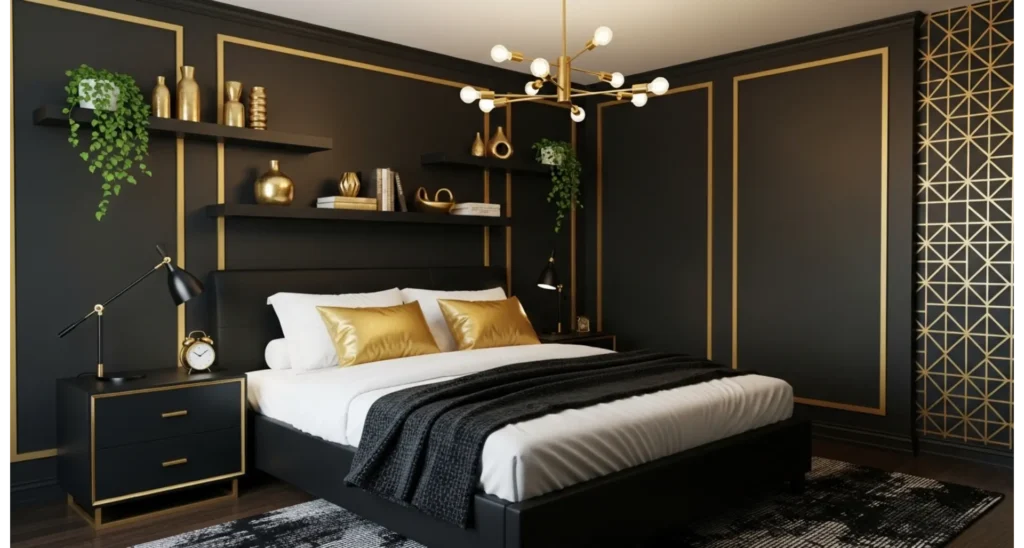
Clutter makes even a beautiful room feel tight. In a small bedroom, too many items on dressers, bedside tables, and open shelves create visual noise. A clean surface gives the eye a place to rest and instantly makes the room feel calmer.
Start by editing what you actually use. Store extras out of sight and keep only a few meaningful pieces on display. Clear corners, tucked away cords, and tidy bedding all work together to make the room feel bigger without changing the layout.
Pro Tip: Use trays or baskets to group small items and keep surfaces visually clean.
8. Choose a Low Profile Bed
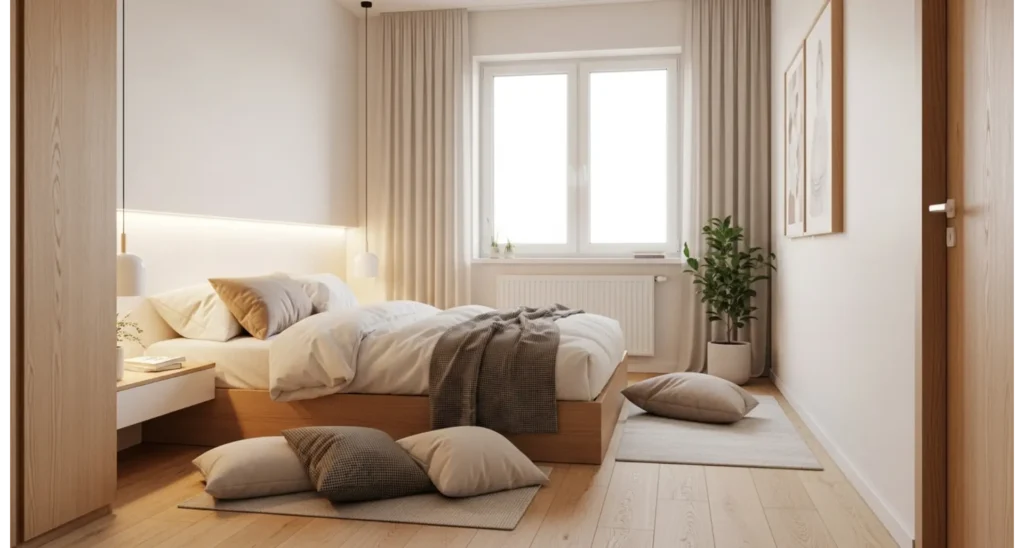
A low bed frame can make ceilings feel taller because it creates more visible wall space above the bed. This visual stretch helps a tight room feel more open. It also gives the bedroom a modern, relaxed feel that works well in compact layouts.
Low profile beds are especially useful in rooms with short ceilings or awkward shapes. Pair one with simple bedding and slim side tables to keep the room balanced. The less visual bulk your bed creates, the larger the room will feel overall.
Pro Tip: Use under bed storage bins to add function without extra furniture.
9. Stick to a Cohesive Color Story
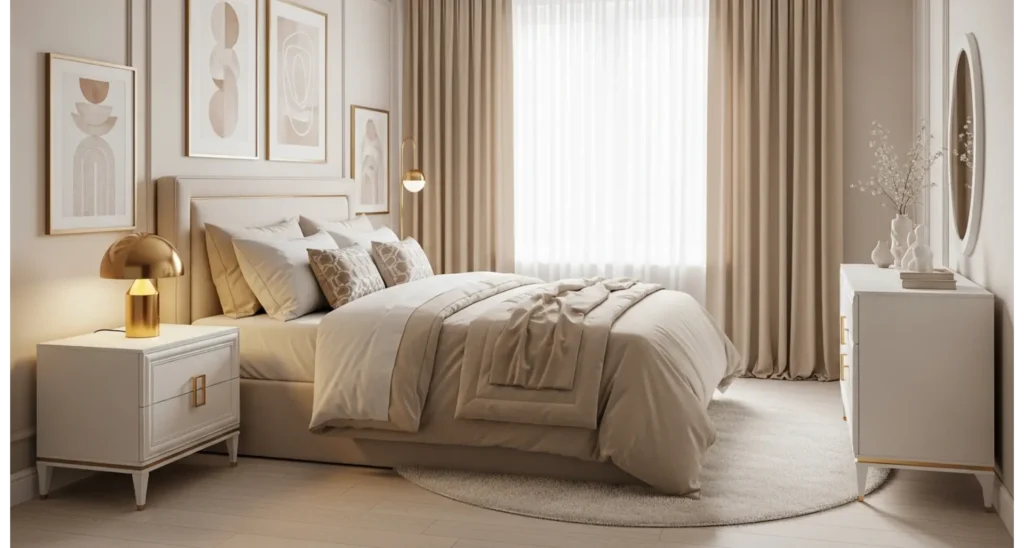
Too many colors can break up a small room and make it feel choppy. A cohesive palette creates flow, which helps the eye move smoothly through the space. Soft neutrals, warm whites, muted greens, or dusty blues work beautifully in small bedrooms.
You do not need everything to match exactly. Instead, stay within a related family of tones. This creates depth while still keeping harmony. A unified look feels polished, restful, and naturally more spacious than a room with sharp contrast everywhere.
Pro Tip: Repeat one accent color in textiles and decor for balance.
10. Use Large Rugs to Expand the Room Visually
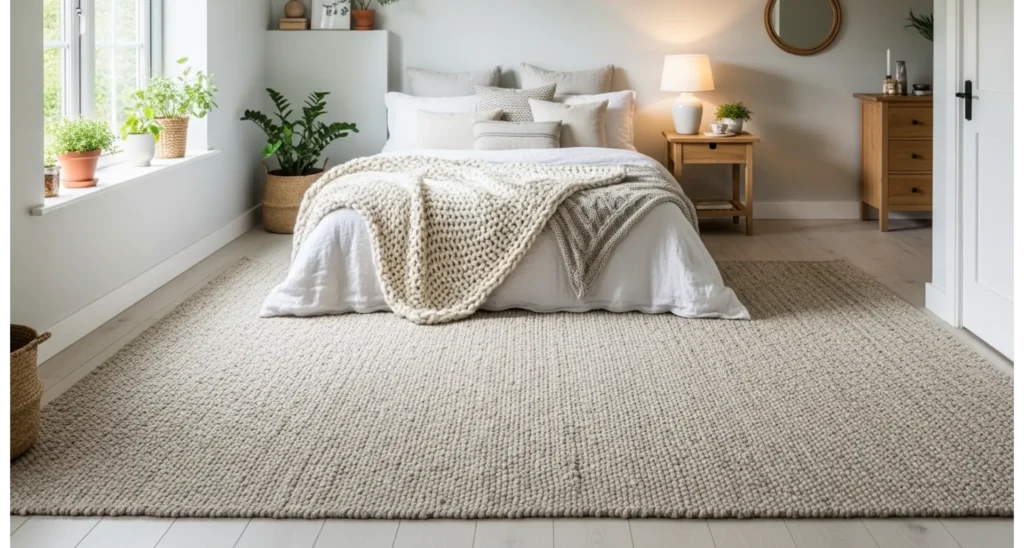
Many people choose small rugs for small rooms, but that often makes the space feel smaller. A larger rug helps anchor the room and visually stretches the floor area. It creates a stronger sense of scale and makes furniture feel more grounded.
Place the rug partly under the bed so it extends beyond the sides. This helps define the room without cutting it into sections. Soft texture also adds comfort, which makes the room feel inviting rather than cramped.
Pro Tip: Choose a rug with a subtle pattern to add interest without visual clutter.
11. Install Wall Mounted Lighting
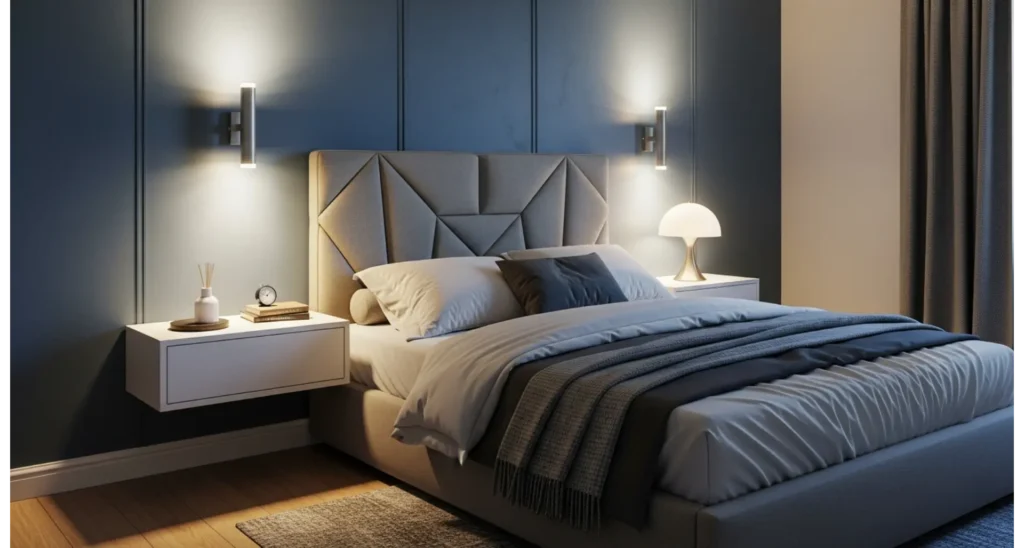
Table lamps can eat up valuable bedside space. Wall mounted lights free your surfaces while still giving you the glow you need. This simple switch makes your room feel cleaner and more functional right away.
Sconces, swing arm lamps, or pendant lights can also add style without bulk. Good lighting helps a small room feel warm and layered rather than flat. It also improves comfort, especially if your room has limited natural light.
Pro Tip: Use warm bulbs to make the room feel soft and inviting at night.
12. Create One Focal Point
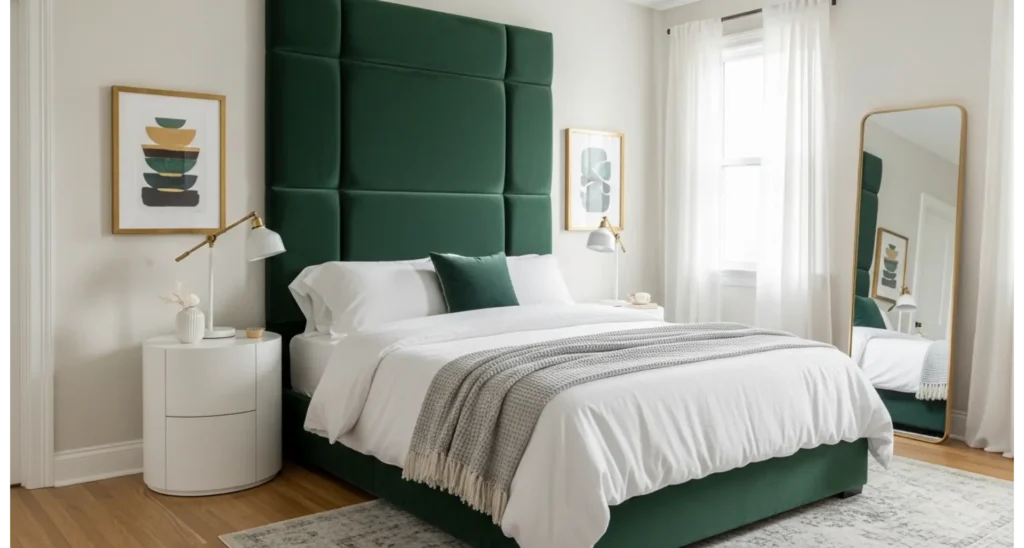
A small room feels more balanced when the eye knows where to land first. A clear focal point, such as a beautiful headboard, artwork, or styled bed wall, gives structure and reduces visual chaos.
Without a focal point, every object competes for attention. In compact spaces, that feels overwhelming fast. Keep the rest of the room simple so your chosen feature stands out and gives the space a sense of intention.
Pro Tip: Keep your focal point centered to make the room feel more symmetrical.
13. Use Clear or Reflective Furniture
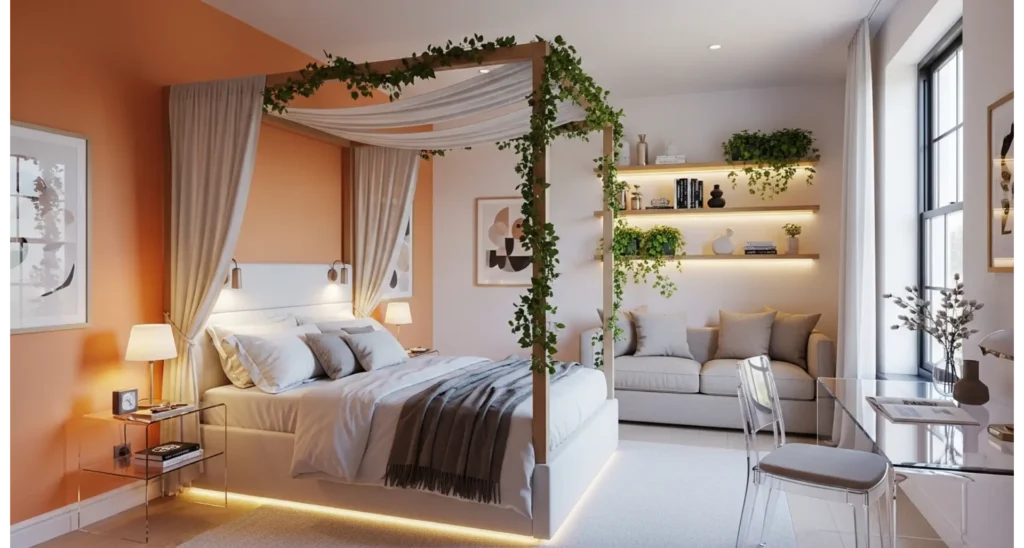
Transparent furniture helps reduce visual weight. Acrylic nightstands, glass desks, or reflective finishes take up less visual space because they do not block sightlines in the same way solid pieces do.
This design trick works especially well in tight corners or narrow layouts. It keeps the room practical while preserving openness. Clear materials blend into the room, making everything feel less crowded and more effortless.
Pro Tip: Use one transparent piece in a tight zone to create instant lightness.
14. Style with Fewer but Bigger Decor Pieces
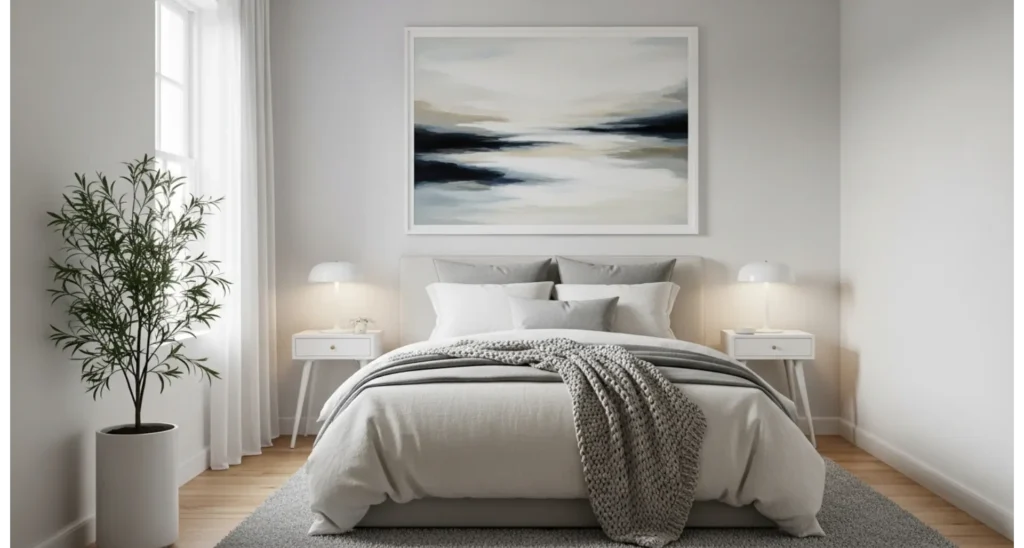
Too many tiny decor items can make a room feel busy. In a small bedroom, fewer larger pieces create a cleaner and more intentional look. A big art print, one oversized pillow, or a simple statement lamp can have more impact than many little accents.
Larger decor also helps simplify visual flow. It keeps the room feeling styled without looking cluttered. The goal is to create personality while protecting openness, which matters more in smaller spaces.
Pro Tip: Limit visible decor to pieces that add either beauty or function.
15. Keep Layout Simple and Easy to Move Through
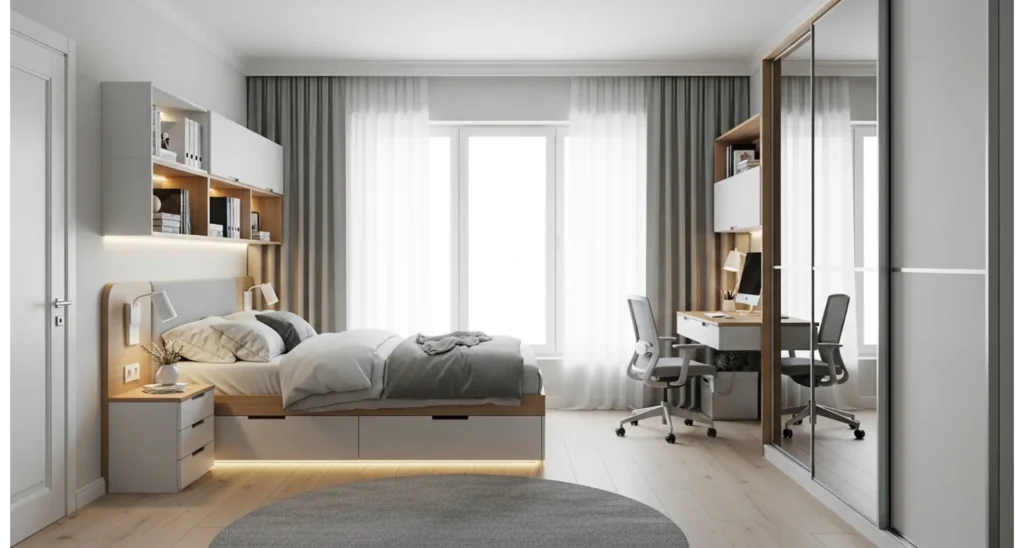
A crowded layout can make even a decent sized room feel tiny. In a small bedroom, smooth movement matters. Keep clear walking paths around the bed and avoid blocking windows, doors, or storage areas.
Start with your largest furniture piece and build around it with purpose. Every item should earn its place. When the room feels easy to move through, it also feels larger, calmer, and more comfortable for daily life.
Pro Tip: Leave at least one side of the bed open for easier flow.
FAQs
How can I make a very small bedroom look bigger without renovating?
Focus on light colors, smart storage, mirrors, and clutter control. These simple updates can change how the room feels without construction.
What colors make a small bedroom feel bigger?
Soft whites, warm neutrals, pale grays, and muted earth tones reflect light and create a more open feel.
Does furniture size matter in a small bedroom?
Yes. Choose pieces that fit the room scale. Oversized furniture can quickly overwhelm a compact space.
Are mirrors really effective in small bedrooms?
Yes. Mirrors reflect light and create visual depth, which helps a room feel brighter and larger.
What is the biggest mistake in a small bedroom?
Too much clutter and bulky furniture. Both reduce flow and make the room feel tighter than it is.
Conclusion
A small bedroom does not have to feel cramped. With the right design choices, even the tightest space can feel brighter, calmer, and more open. The best results come from combining light, layout, storage, and visual simplicity. Start with one or two changes that fit your space, then build from there. Small upgrades often create the biggest difference.