
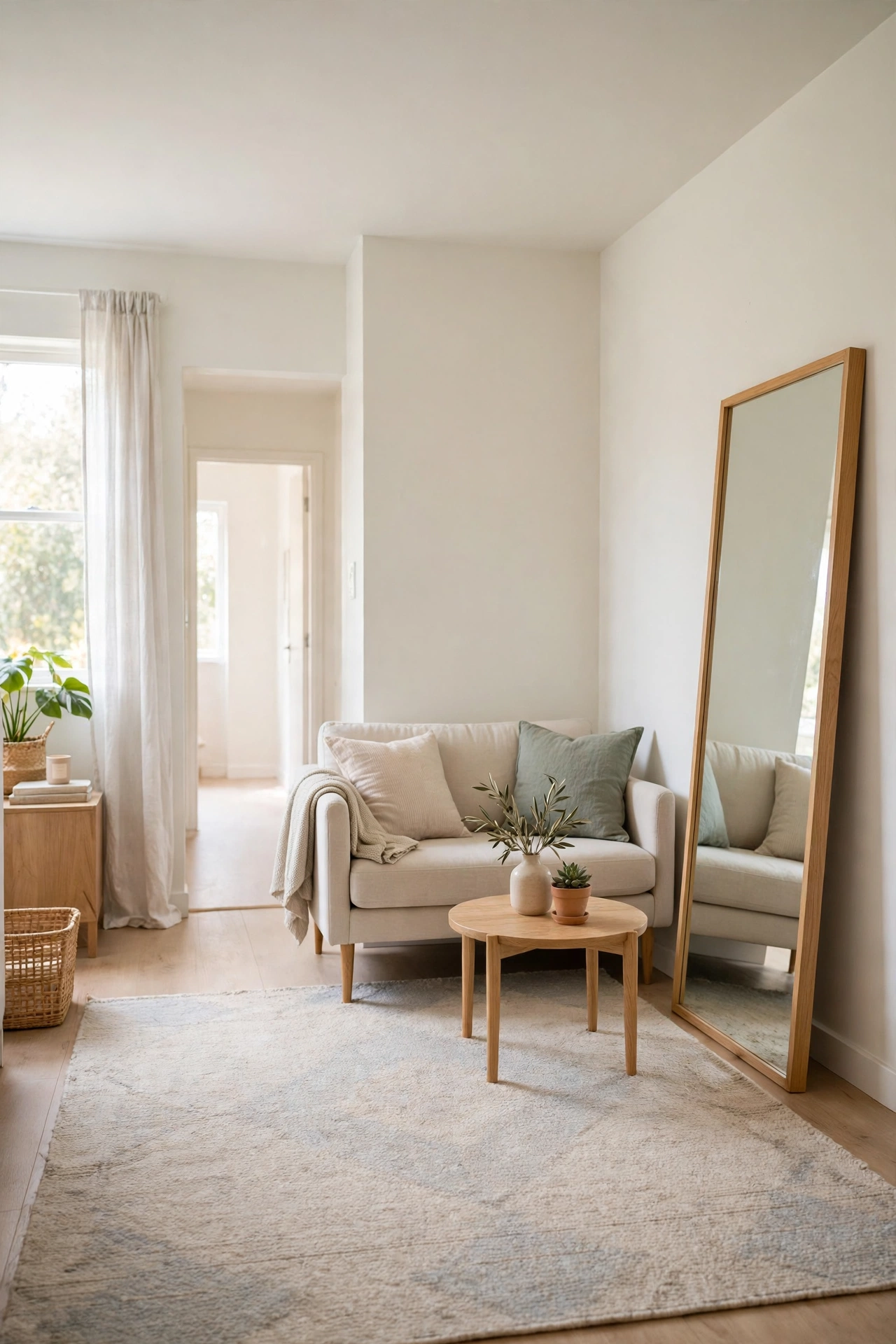
17 Small Apartment Decorating Ideas That Make a Tiny Home Feel Larger
A small apartment does not need less decorating. It needs smarter decorating. The same mistakes appear in almost every small home: furniture that is too large for the room, too many small objects on every surface, dark corners that are never used, and storage that is either invisible or overflowing. Fix those, and a small apartment can feel calm, light, and larger than its floor plan suggests.
This guide gives you 17 small apartment decorating ideas that work in rented flats and small owned homes, with measurements, furniture sizes, and layout rules you can use without renovating. It covers how to choose furniture that fits, how to use light and mirrors, how to zone one room into two uses, and how to store what you own without living in clutter. The full measurements, layout plan, and furniture guidance are in this post, because a photo of a small room cannot show you the walkway clearance or the sofa size that makes the layout work.
Measure first, then choose furniture
Before you buy or move anything, measure the room. Note the length and width, the ceiling height, the door swings, the window positions, and the location of sockets. Then measure the walkways: keep at least 75 to 90 centimetres, about 30 to 36 inches, clear on the main path through each room.
Use those numbers to choose furniture. A sofa for a small living room is usually 160 to 190 centimetres long, not 220 centimetres or more. A dining table for two to four people is usually 90 to 120 centimetres long. A bedside table is usually 40 to 50 centimetres wide. If a piece is larger than those guides and the room is small, it will dominate the room, even if it is beautiful on its own.
Draw the layout on paper, or mark it on the floor with tape, before you move heavy furniture. A layout that looks right on paper will usually look right in the room, and it will save you from moving a sofa three times.
1. Choose furniture that fits the room, not the shop
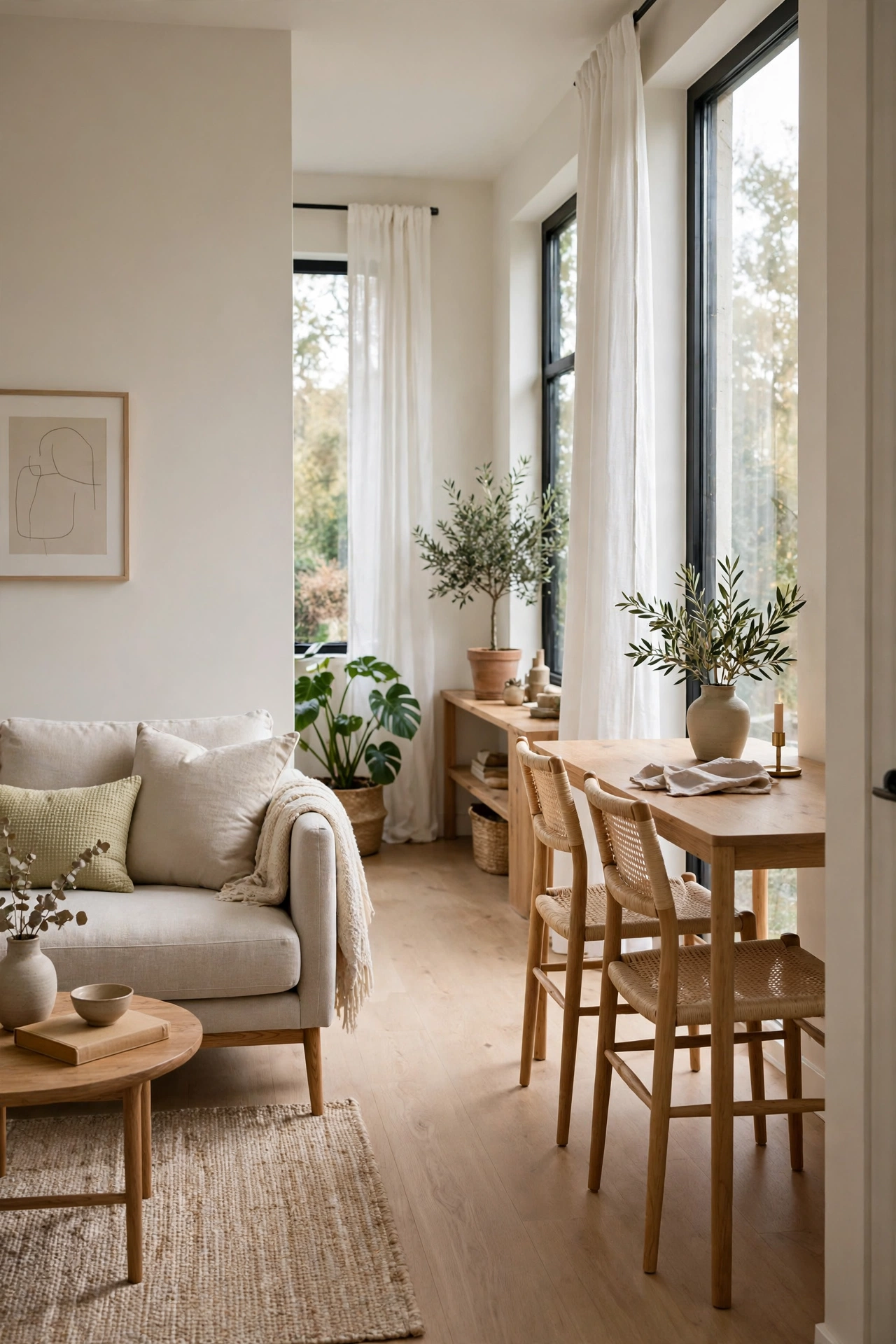
Furniture in a shop looks smaller than it does at home, because the shop is large and the ceilings are high. Measure the piece, measure the room, and check the walkway after it is in place.
In a small apartment, choose a sofa with slim arms and visible legs, because it looks lighter than a sofa with wide arms and a solid base. Choose a dining table with a slim top and legs at the corners, so chairs can tuck under it. Choose a bed with a low headboard, or no headboard, if the ceiling is low, because a tall headboard will make the room feel shorter.
2. Use multi purpose furniture
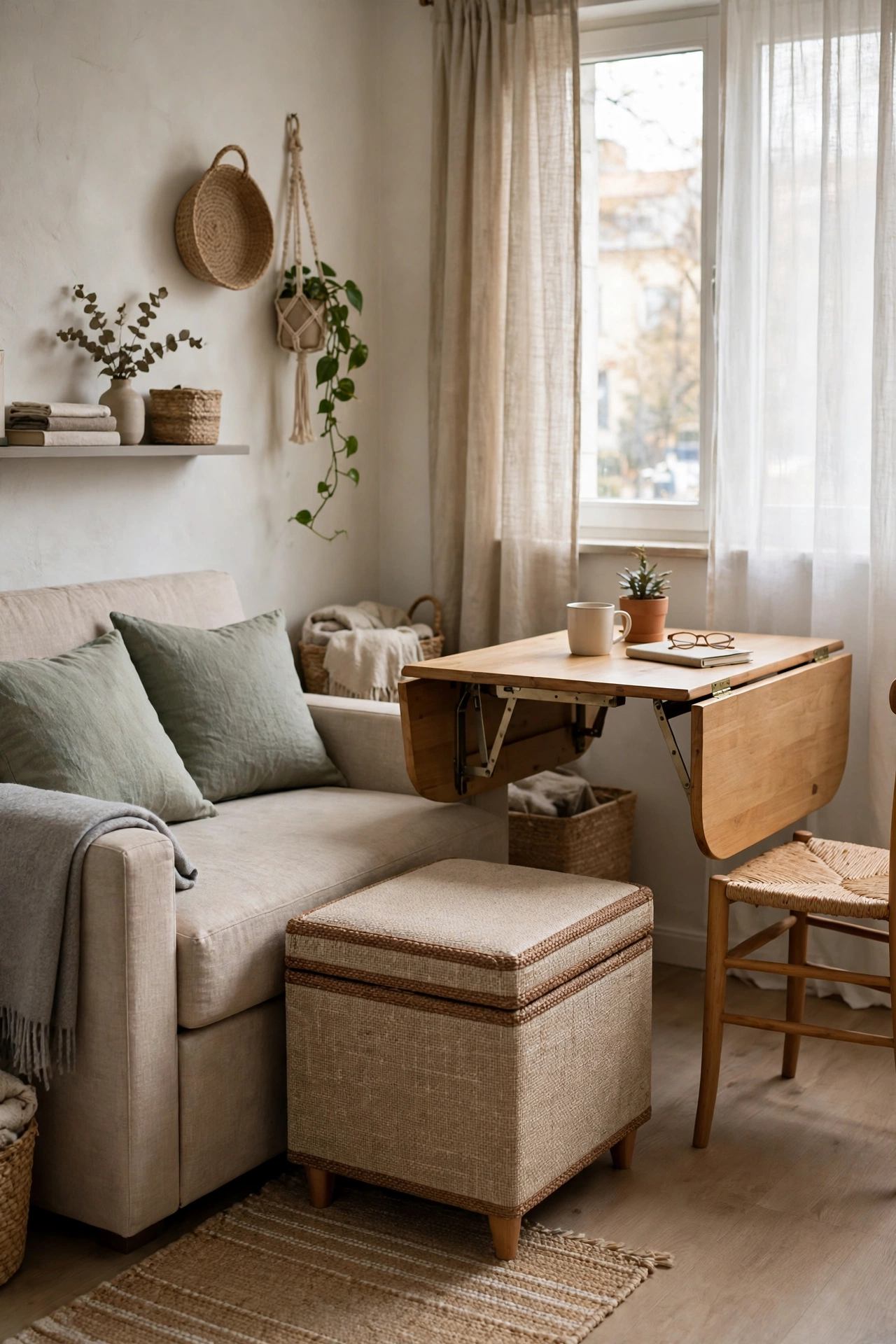
In a small home, every piece should do at least two jobs. A storage ottoman is a footstool, a coffee table, and a blanket store. A dining table with a drop leaf is a desk by day and a dinner table by night. A sofa bed is a sofa and a guest bed. A bench with storage is a seat and a shoe store.
Choose multi purpose furniture that you will actually use in both ways. A sofa bed that is hard to open will stay a sofa, and a drop leaf table that wobbles will stay folded. Test the second function before you buy, and choose the version that is easy to change.
3. Go vertical: use the walls and the height
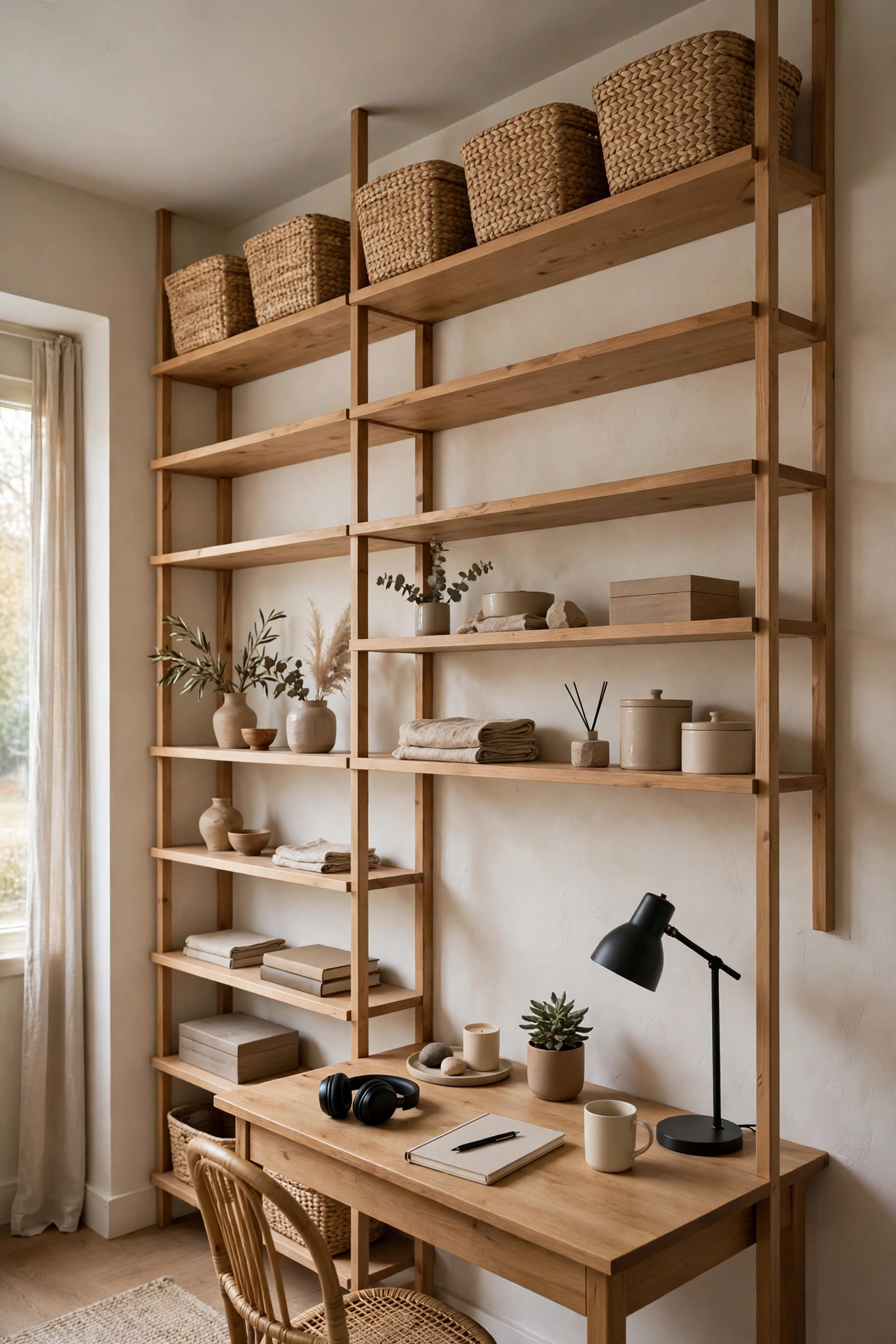
Small apartments often have unused wall space above eye level, and that is free storage. Fit shelves above a desk, above a door, or above a bed, and use them for books, boxes, and the items you use less often.
Hang the shelves at a height you can reach with a small step, usually with the lowest shelf at about 150 to 170 centimetres from the floor, and keep the top shelf for light items, because you will not want to lift heavy boxes that high. Use matching boxes or baskets on high shelves, so the storage looks tidy from below.
4. Light colours on the walls, deeper colours in the details
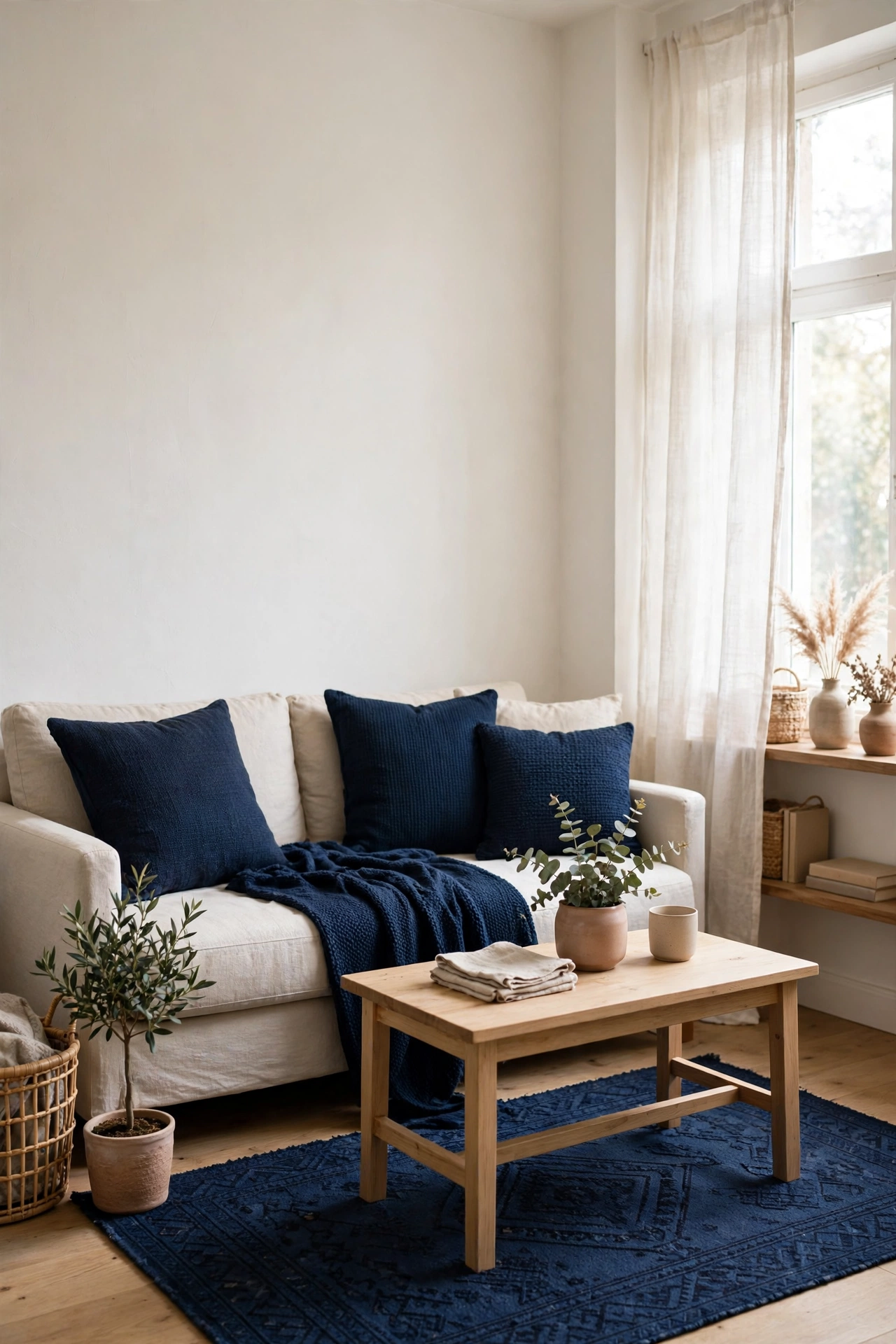
Light walls reflect light and make a small room feel larger. A warm white, a pale grey, or a soft cream on the walls is the safest choice for a small apartment, especially a rented one where you cannot paint a dark colour and change it back easily.
Add colour in the details you can change: cushions, a throw, art, a rug, and a plant. Those pieces give the room personality without making the walls feel closer. If you love a deep colour, use it on one piece of furniture, like an armchair, or on one wall that you see least, rather than on all four walls.
5. One large mirror, not many small ones
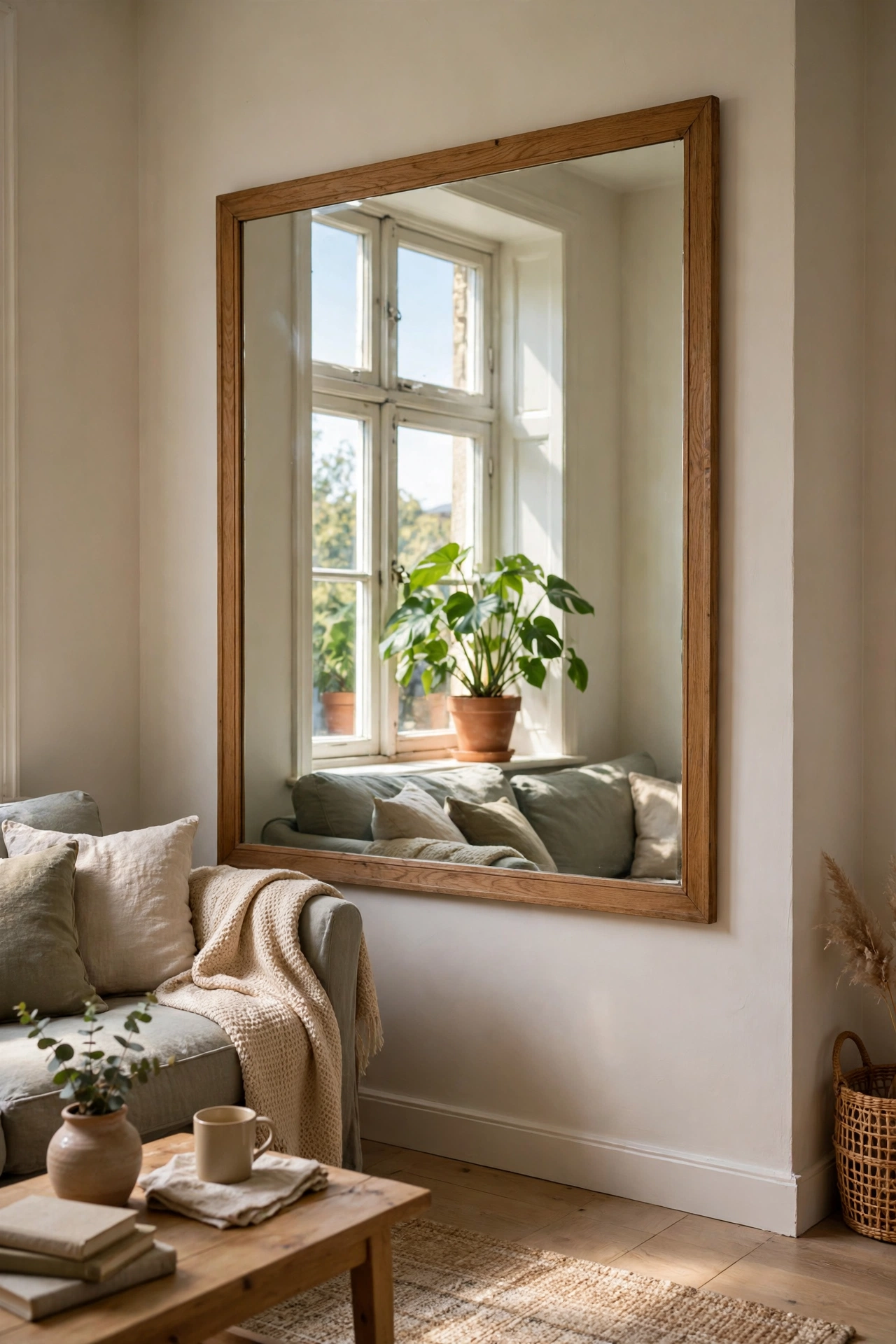
A large mirror makes a small room feel larger, because it reflects light and the view across the room. A single mirror 80 to 100 centimetres wide, hung opposite a window or beside it, will do more than four small mirrors scattered around the room.
Hang the mirror at eye level, with the centre about 145 to 155 centimetres from the floor, and place it where it reflects a window, a plant, or a pleasant view, not a blank wall or a pile of clutter. A leaning floor mirror can work in a bedroom, if it is secured to the wall so it cannot fall.
6. A rug that is large enough
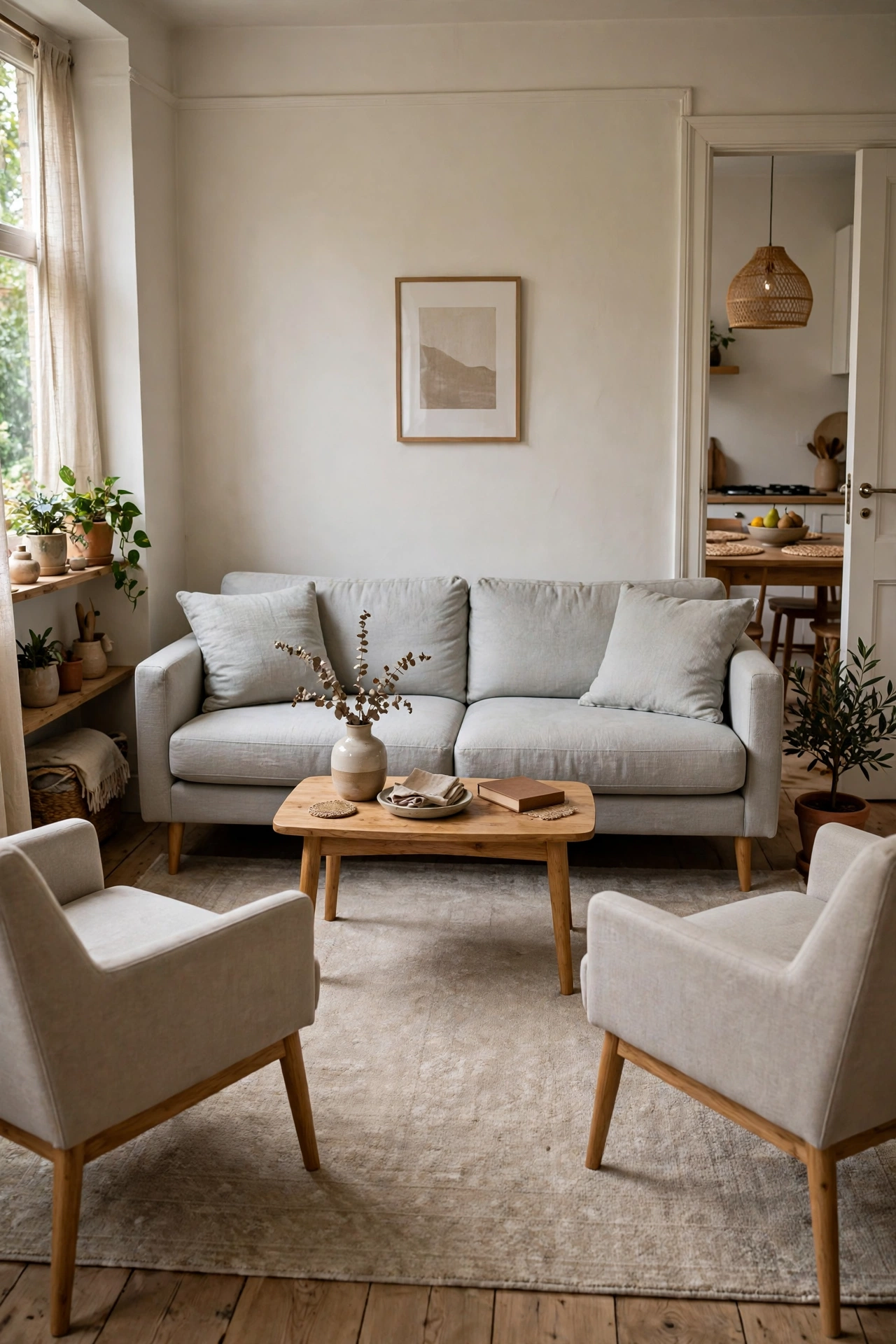
A rug that is too small makes a room look smaller, because it breaks the floor into pieces. In a living room, choose a rug large enough for the front legs of the sofa and the chairs to sit on it, usually at least 160 by 230 centimetres for a small living room, or 120 by 170 centimetres for a very small one.
In a bedroom, choose a rug that extends at least 60 centimetres beyond the sides of the bed, so your feet land on rug, not on cold floor. Use a low pile rug in a small room, so doors can open over it and chairs can move on it easily.
7. Zone one room into two uses
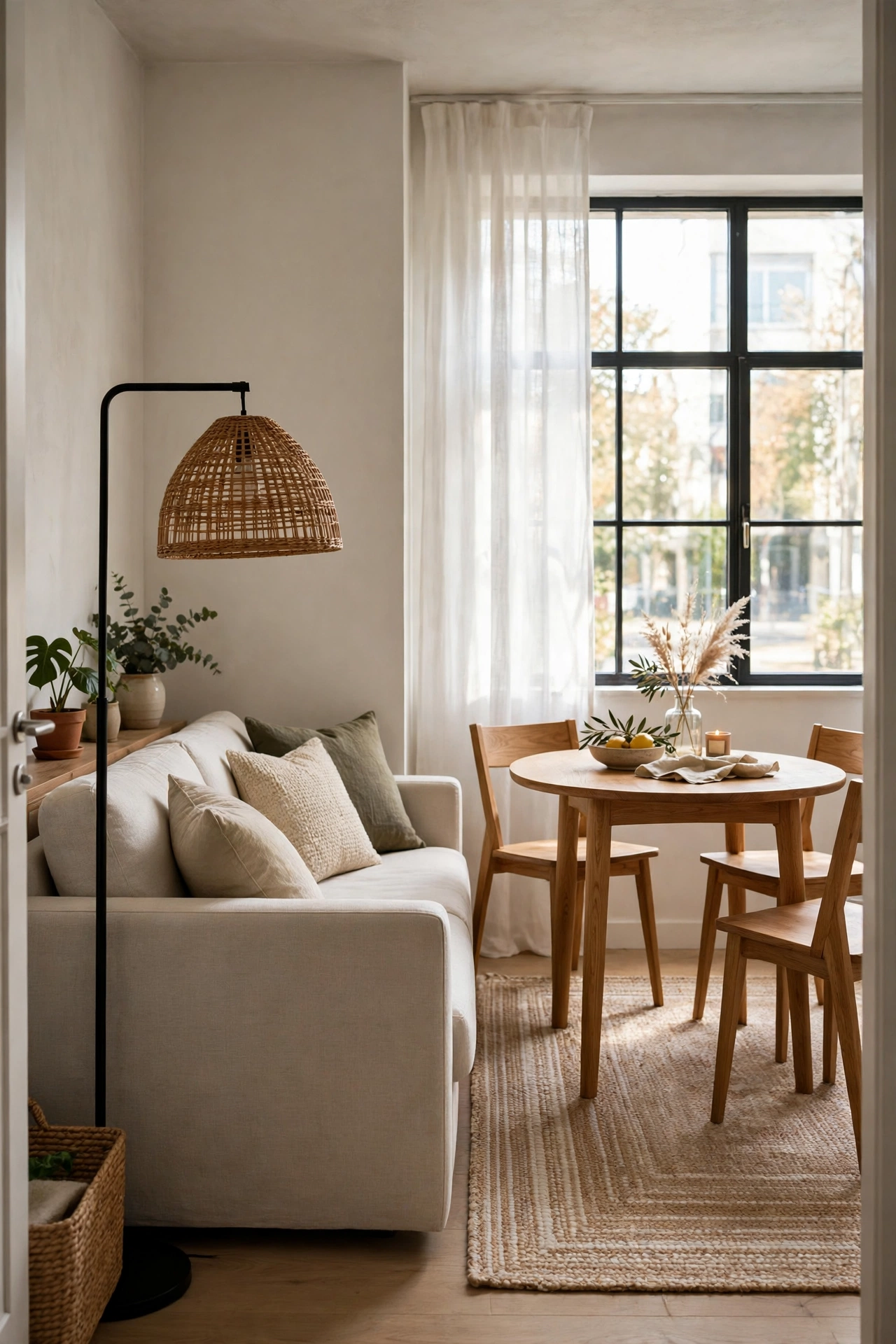
Many small apartments have one room that must do two jobs: living and dining, living and working, or bedroom and working. Zone the room with a rug, a light, and a piece of furniture, rather than with a wall.
Place a rug under the dining table to mark the dining zone, and a different rug, or no rug, under the sofa to mark the living zone. Use a floor lamp in the living zone and a pendant or a desk lamp in the working zone. Place a low shelf or a sofa with its back to the dining area to divide the zones without blocking light.
8. Keep the walkways clear
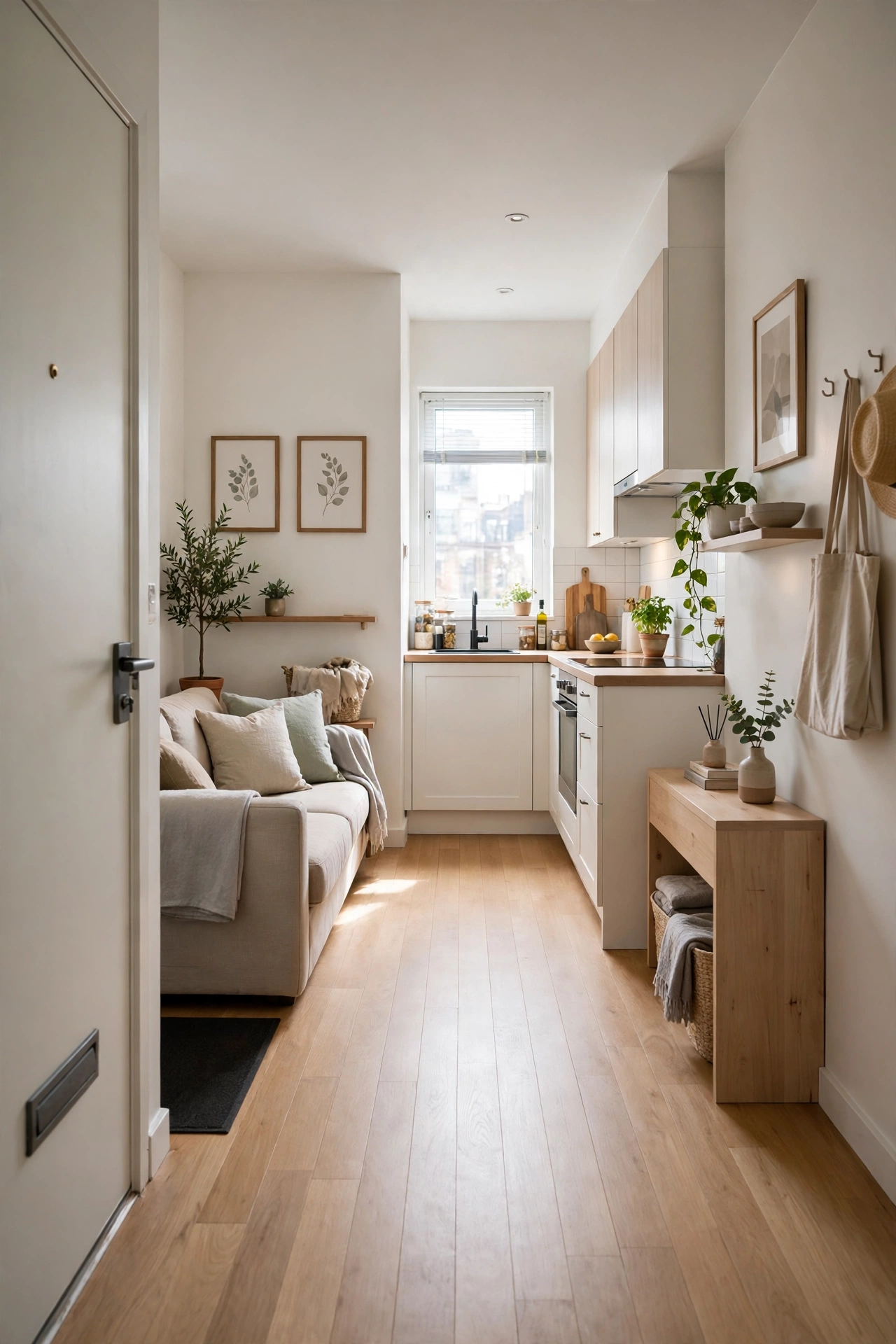
A small apartment feels smaller when you have to squeeze past furniture. Keep the main walkway 75 to 90 centimetres clear, and keep the path from the door to the kitchen, the bathroom, and the bedroom free of furniture, baskets, and shoes.
If a piece of furniture blocks a walkway, move it, even if it looked good in that spot in a photo. A room that is easy to walk through feels larger than a room that is beautifully styled but hard to move in.
9. Storage with doors, not open shelves everywhere
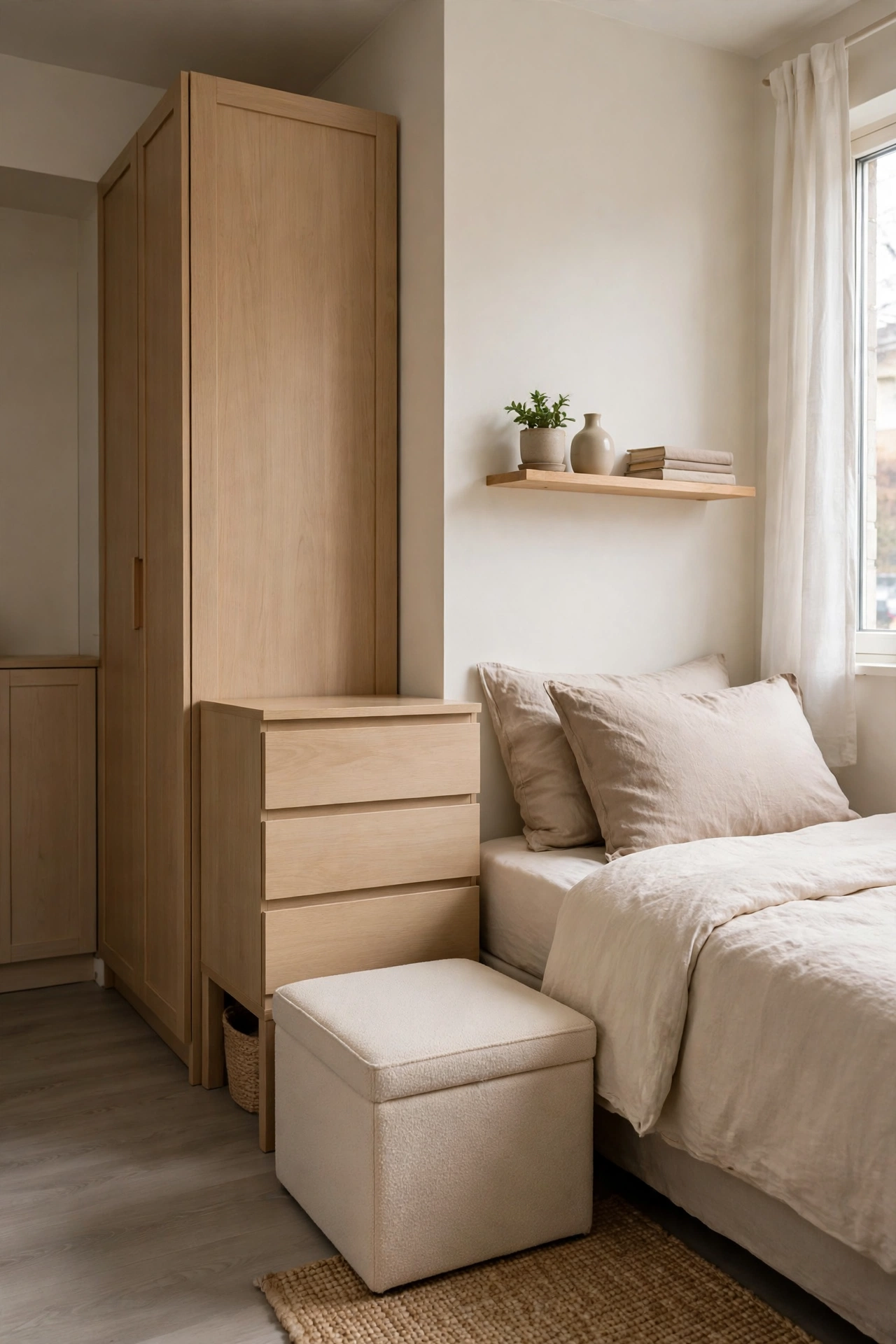
Open shelves look good in photos, but in a small apartment they collect dust and they show every item you own. Use storage with doors for most things, a wardrobe, a cupboard, a chest of drawers, and a storage ottoman, and keep open shelves for the few things you want to display.
If you do use open shelves, limit each shelf to three or four items, and leave empty space on the shelf, so it looks curated rather than crowded. A shelf that is full from end to end will make the room feel like a shop, not a home.
10. Fold away and stackable pieces
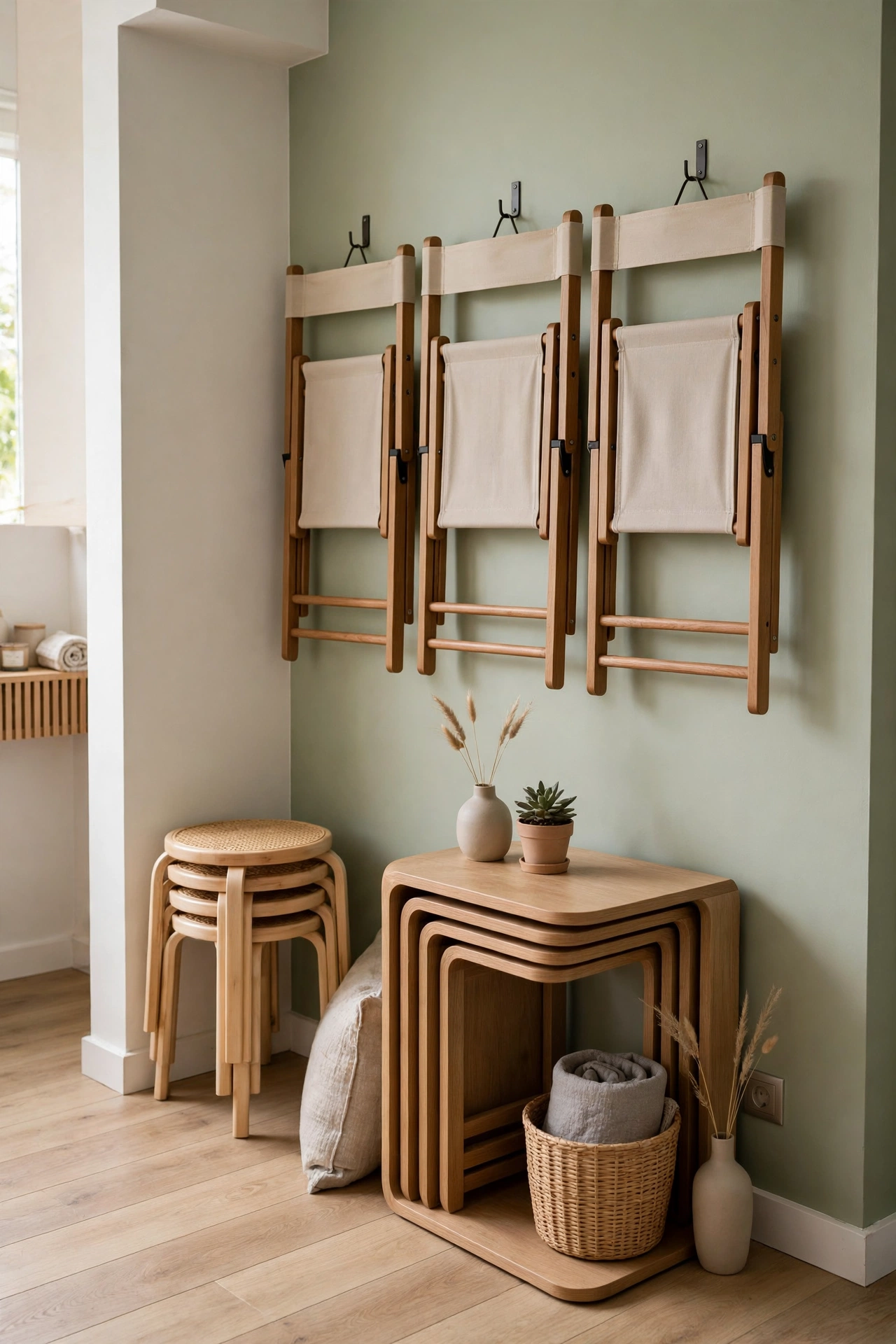
A small apartment needs furniture that can disappear when you do not need it. Folding chairs that hang on a wall hook, a nesting table that slides under a larger table, and stackable stools that tuck into a corner will give you seating for guests without permanent clutter.
Store folding and stackable pieces in one place, like a cupboard or a corner behind a door, so you can find them quickly when guests arrive. A piece that is stored in three different places will not be used, because you will not want to hunt for it.
11. Use the back of doors and the inside of cupboards
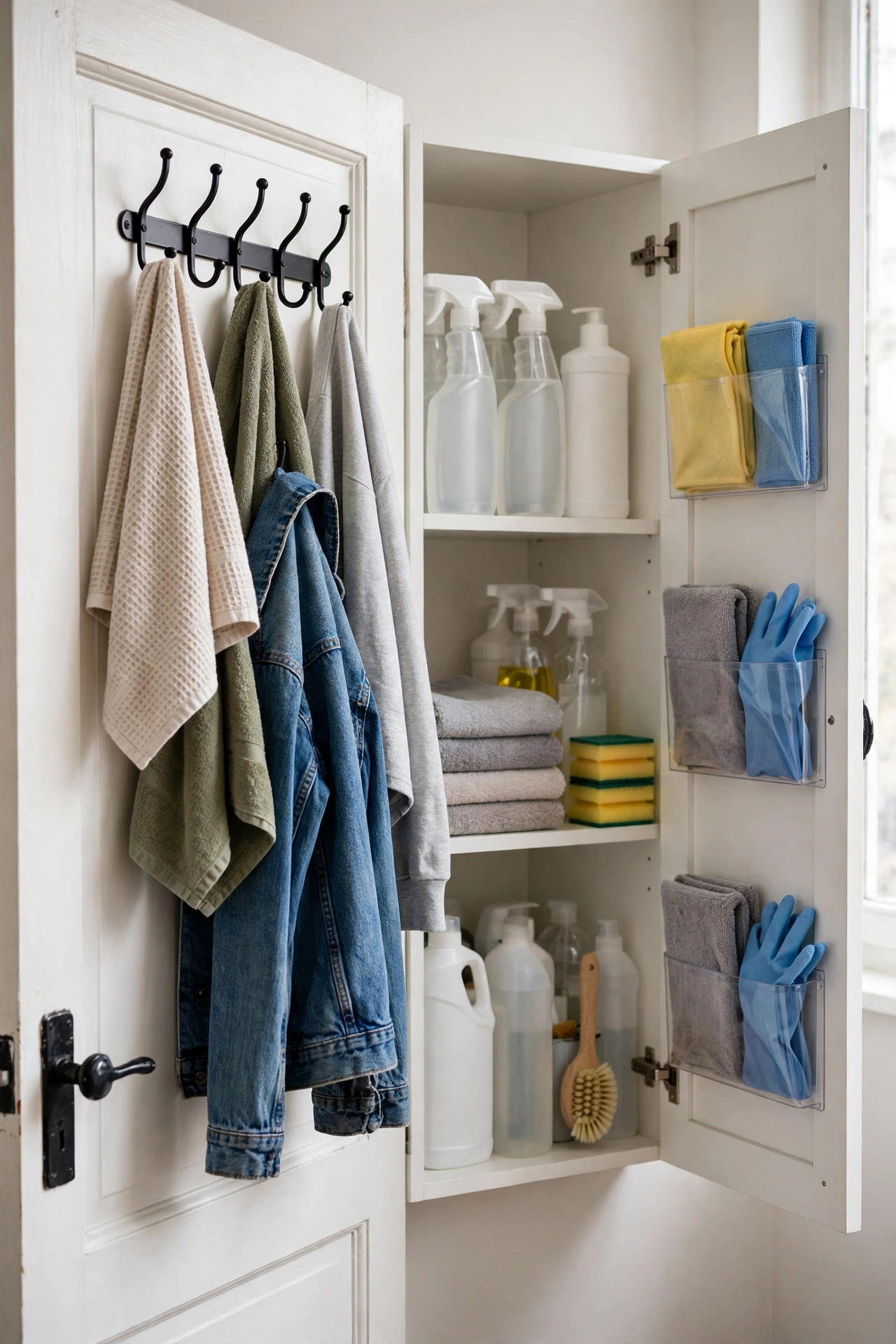
The back of a door is free storage. Fit hooks on the back of the bedroom door for clothes, on the back of the bathroom door for towels, and on the inside of a cupboard door for cleaning supplies or shoes.
Use over door hooks that do not need screws if you are renting, and check that the door can still close fully with the hooks in place. Keep the items on the back of a door to the ones you use daily, so the door does not become a second wardrobe that you never open.
12. A small dining table that seats four
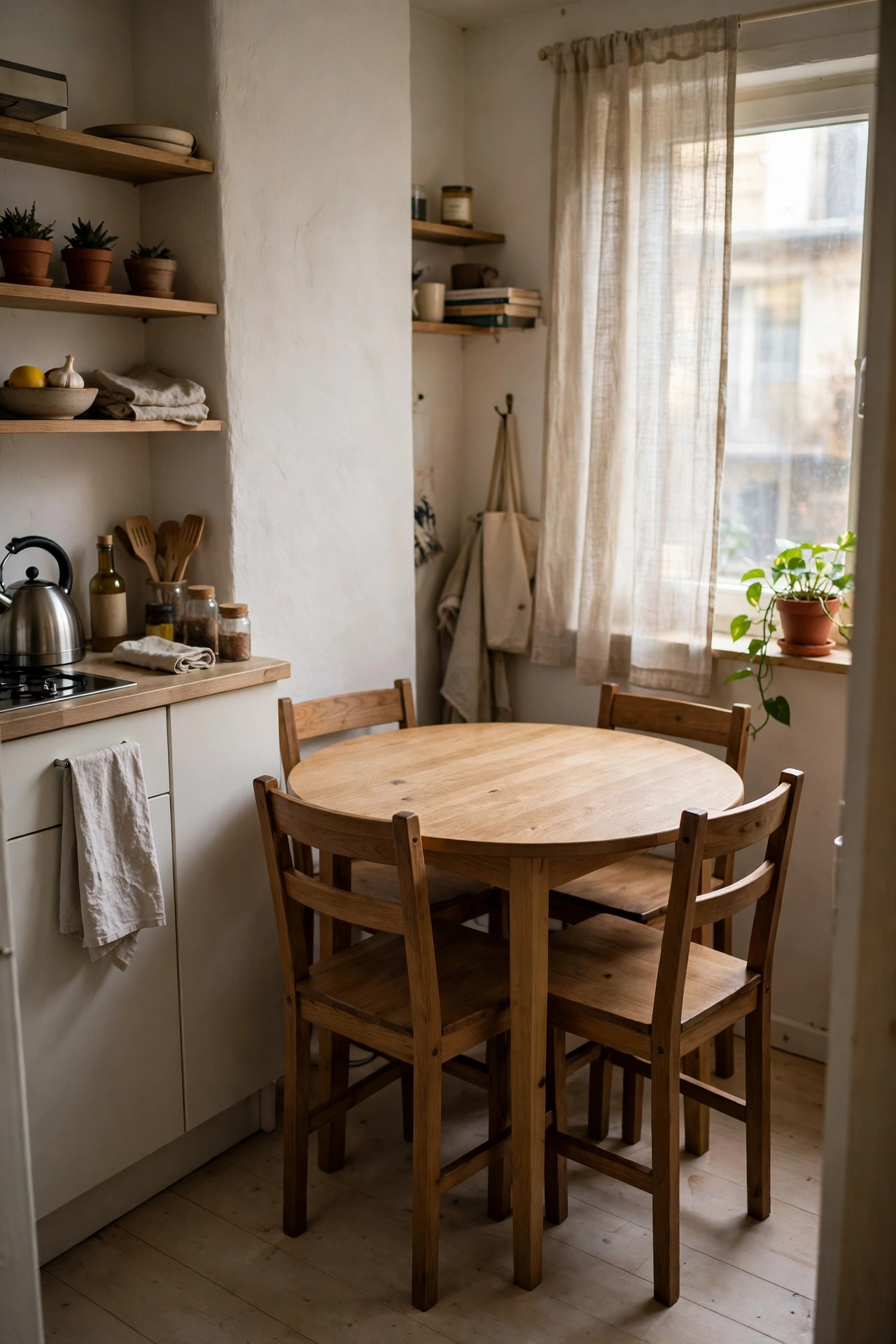
A dining table in a small apartment should seat the people who live there, plus one or two guests, without filling the room. A round table 90 to 110 centimetres across seats four people comfortably and takes up less visual space than a rectangular table, because it has no corners to walk around.
Choose chairs that tuck fully under the table when not in use, and avoid chairs with wide arms in a dining area, because they take up more space than you think. If you work at the dining table, keep the work items in a basket that can be cleared in two minutes, so the table can be a dining table again at dinner.
13. A bed that stores, or a bed that lifts
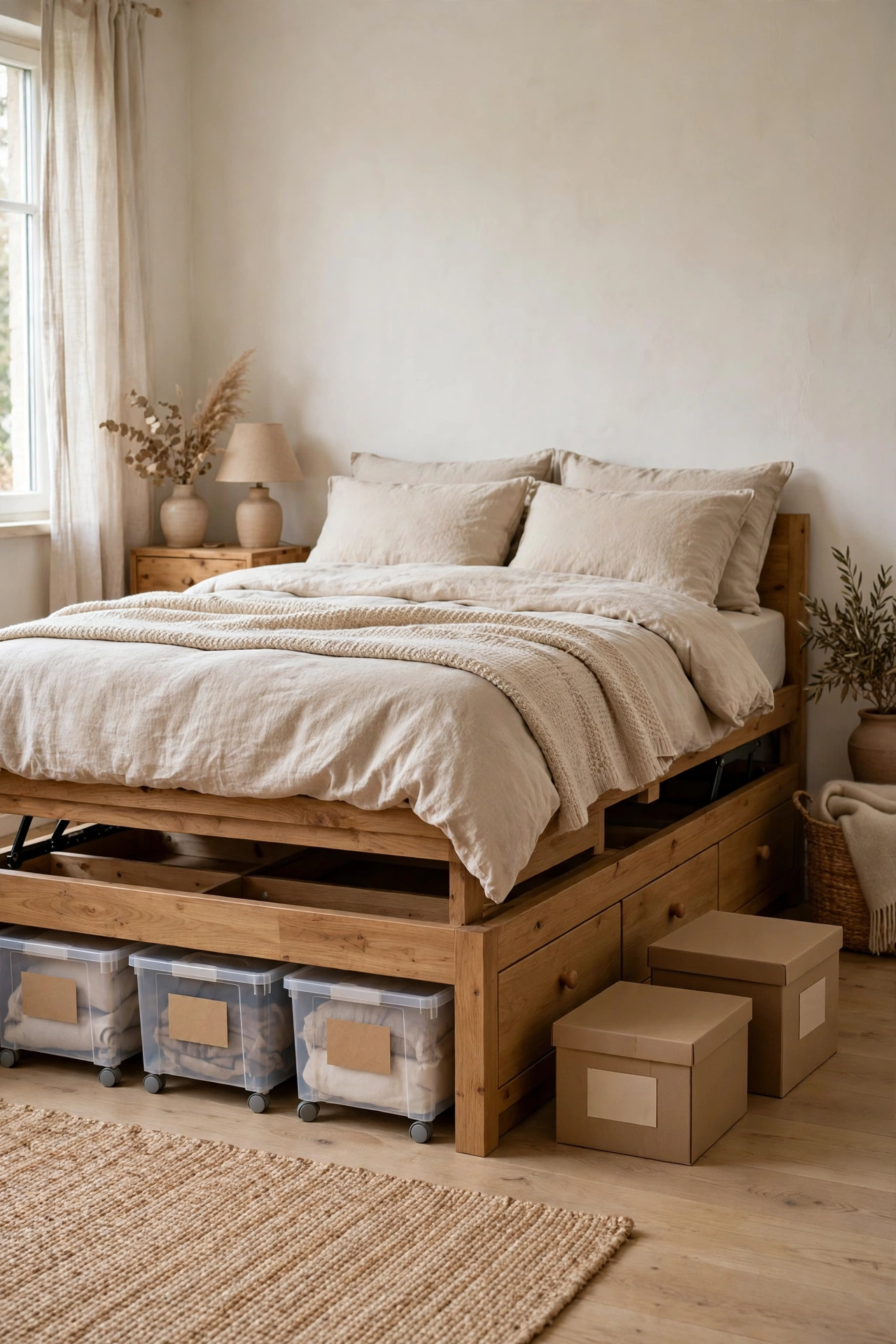
A bed takes up the largest area in a bedroom, so it should store as well as sleep. A bed with drawers underneath, or a bed with a lift up base, can hold out of season clothes, spare bedding, and luggage that would otherwise need a cupboard.
If you cannot change the bed, use low storage boxes under the bed, on wheels if possible, so you can pull them out to clean. Keep the boxes to one layer, and label them, so you can find what you need without pulling out every box.
14. Curtains that make the ceiling feel higher
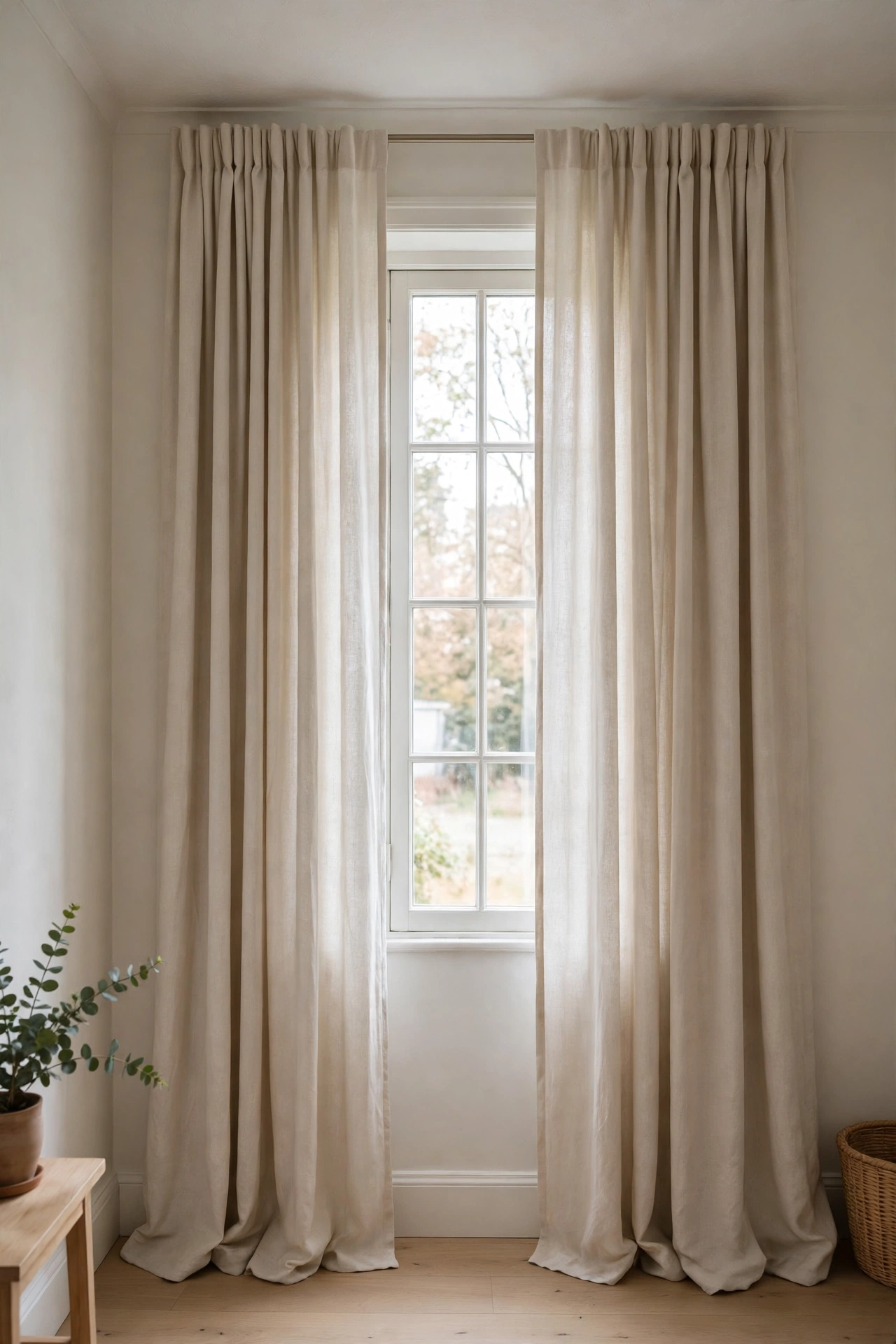
Hang curtains from close to the ceiling, not from just above the window frame, and let them fall to the floor. A curtain rod fitted 10 to 15 centimetres below the ceiling, with curtains that reach the floor, will make the window and the ceiling feel taller.
Choose curtains in a light colour or a colour close to the wall colour, so they blend with the wall rather than cutting the room in half. Avoid heavy, dark curtains in a small room with one window, because they will block light and make the room feel smaller.
15. Plants in the corners, not on every surface
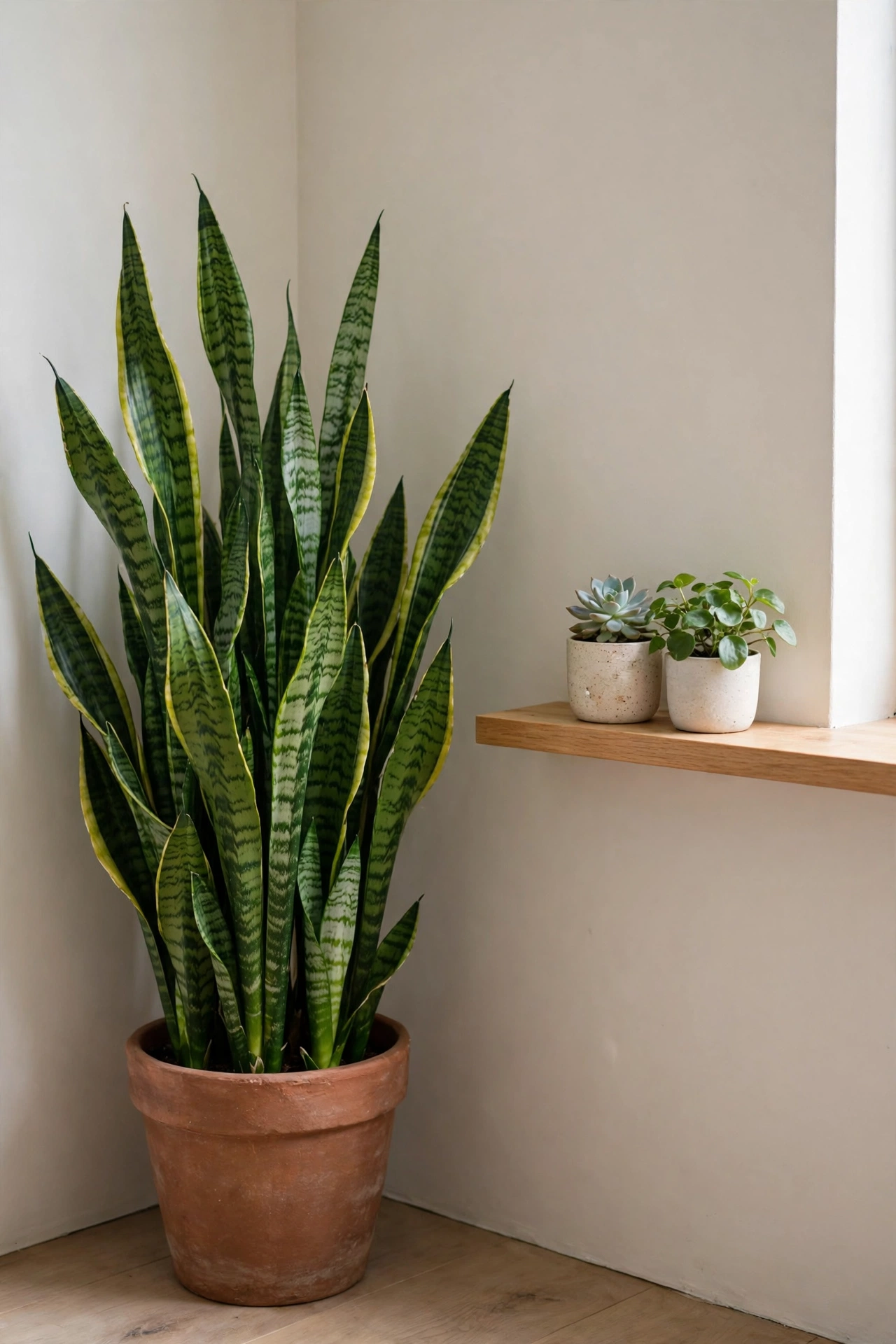
A plant makes a small apartment feel alive, but a plant on every surface makes it feel crowded. Use one large plant in a corner, or two or three small plants grouped together on one shelf, rather than a single plant on each table, shelf, and windowsill.
Choose plants that suit the light in your apartment. A snake plant, a pothos, or a ZZ plant will cope with low light and irregular watering, which suits a small apartment where the light may be limited. Place a tall plant in a corner to soften the angle, and keep it at least 30 centimetres from the walkway.
16. Keep the surfaces clear: the one in, one out rule
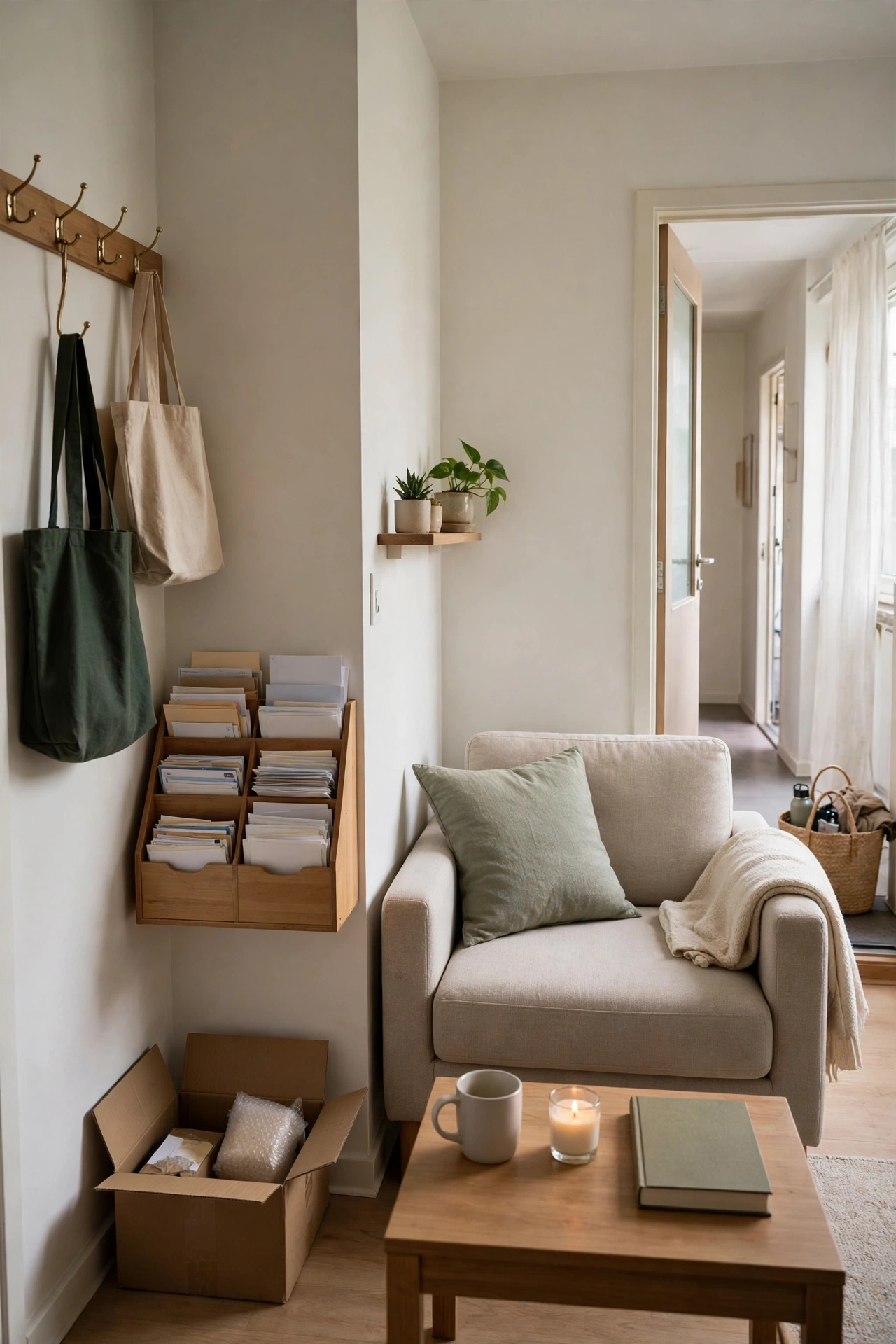
In a small apartment, clutter accumulates faster than in a large home, because there is nowhere for it to hide. Use the one in, one out rule: when a new item comes in, an old item goes out, to a charity shop, to recycling, or to storage.
Clear the surfaces once a day, for two minutes: post sorted, dishes in the kitchen, clothes in the wardrobe, bags on hooks. A small apartment that is cleared daily will feel larger than a large apartment that is cluttered, because the eye can see the floor and the surfaces.
17. A home for every daily item
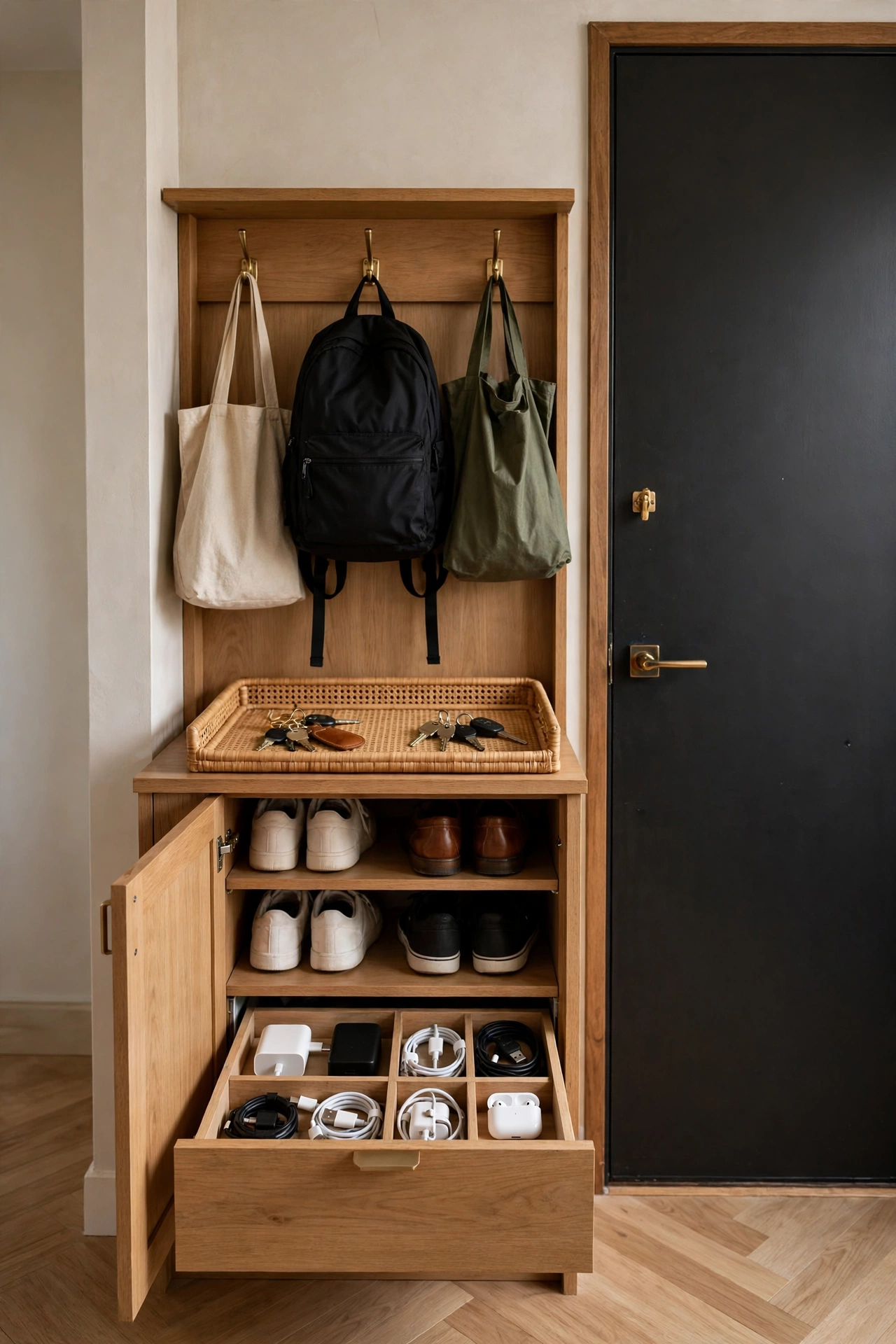
Give every daily item a home, and make the home easy to use. Keys in a tray by the door, shoes in a cabinet or a basket, bags on a hook, post in a holder, chargers in a drawer, and cleaning supplies in one cupboard.
When every item has a home, you will spend less time looking for things, and the apartment will stay tidy between cleans. When items have no home, they will land on the nearest surface, and the surfaces will fill up within days.
A layout plan for a small living room
Use this as a starting plan, and adjust it to your room shape.
Place the sofa against the longest wall, with at least 75 centimetres of walkway in front of it. Place the coffee table 35 to 45 centimetres from the sofa, so you can reach it without stretching, and so you can walk around it. Place the television or the main art on the opposite wall, at eye level when seated, about 100 to 110 centimetres from the floor to the centre of the screen or the art. Place a floor lamp behind one end of the sofa, and a small side table at the other end. Place the rug under the front legs of the sofa and the chairs, and keep the dining table, if there is one, in the brightest part of the room, near the window.
What to avoid in a small apartment
Avoid furniture that is too large for the room, even if it was a bargain. Avoid too many small decorative objects, because ten small objects take up more visual space than one large object. Avoid dark walls in a small room with little natural light, and avoid blocking a window with a tall piece of furniture. Avoid open storage for everything, because it will look cluttered, and avoid a rug that is too small for the seating area. And avoid buying storage before you have cleared the clutter, because new storage will fill up with the same clutter if you do not clear first.
Frequently asked questions
1. How do I make a small apartment feel larger without renovating?
Choose furniture that fits the room, keep walkways 75 to 90 centimetres clear, use light walls, one large mirror, and a rug large enough for the seating area. Zone one room into two uses with a rug and a lamp, use vertical storage, and clear surfaces daily, so the eye can see the floor and the walls.
2. What size sofa should I buy for a small apartment?
Choose a sofa 160 to 190 centimetres long for a small living room, with slim arms and visible legs, so it looks lighter. Measure the room and the walkway before you buy, and mark the sofa size on the floor with tape, so you can see how much space it will take before it arrives.
3. How do I fit a dining table and a living room in one small room?
Zone the room with a rug under the dining table and a lamp in the living area, and use a round table 90 to 110 centimetres across, with chairs that tuck fully under it. Place the dining table near the window, and the sofa against the longest wall, with a low shelf or the back of the sofa dividing the zones without blocking light.
4. How can I add storage to a small rented apartment without drilling?
Use furniture with storage, like a storage ottoman, a bed with drawers, and baskets under a bench. Use over door hooks, freestanding shelves, and tension rods inside cupboards. Use removable hooks for light items, and check your tenancy agreement before you fit anything that needs screws.
5. What is the best way to decorate a small apartment on a budget?
Start by clearing clutter and measuring the room, then spend on the pieces that change the function: a rug large enough for the seating, a mirror, and storage with doors. Add colour with cushions, a throw, and art you can move, rather than with paint or large furniture, and use the one in, one out rule so new items do not add to the clutter.
Conclusion
A small apartment feels larger when the furniture fits, the walkways are clear, the light is used well, and every item has a home. Start by measuring, choose multi purpose furniture in the right size, use vertical storage and a large mirror, zone one room into two uses with a rug and a lamp, and keep the surfaces clear with a daily two minute reset. You do not need more space to feel at home in a small apartment. You need a layout that respects the space you have, and decor that works for the life you actually live in it.


