

8 Ways to Refresh Your Living Room Without Renovating
A living room can feel tired even when the furniture is still in good shape. The usual causes are simple: a layout that blocks movement, lighting that comes from only one ceiling fixture, cushions that have lost their shape, a rug that is too small, bare walls, and shelves that hold too much. A renovation is not needed to fix those problems. A careful refresh, done in the right order, can change how the room looks, how it feels, and how easy it is to use every day.
This guide is written for homeowners and renters, for small spaces and real budgets. Every idea below can be done without knocking down a wall, moving plumbing, or changing wiring. Start with layout and light, then move to soft furnishings, walls, and styling.
Start With Layout and Decluttering
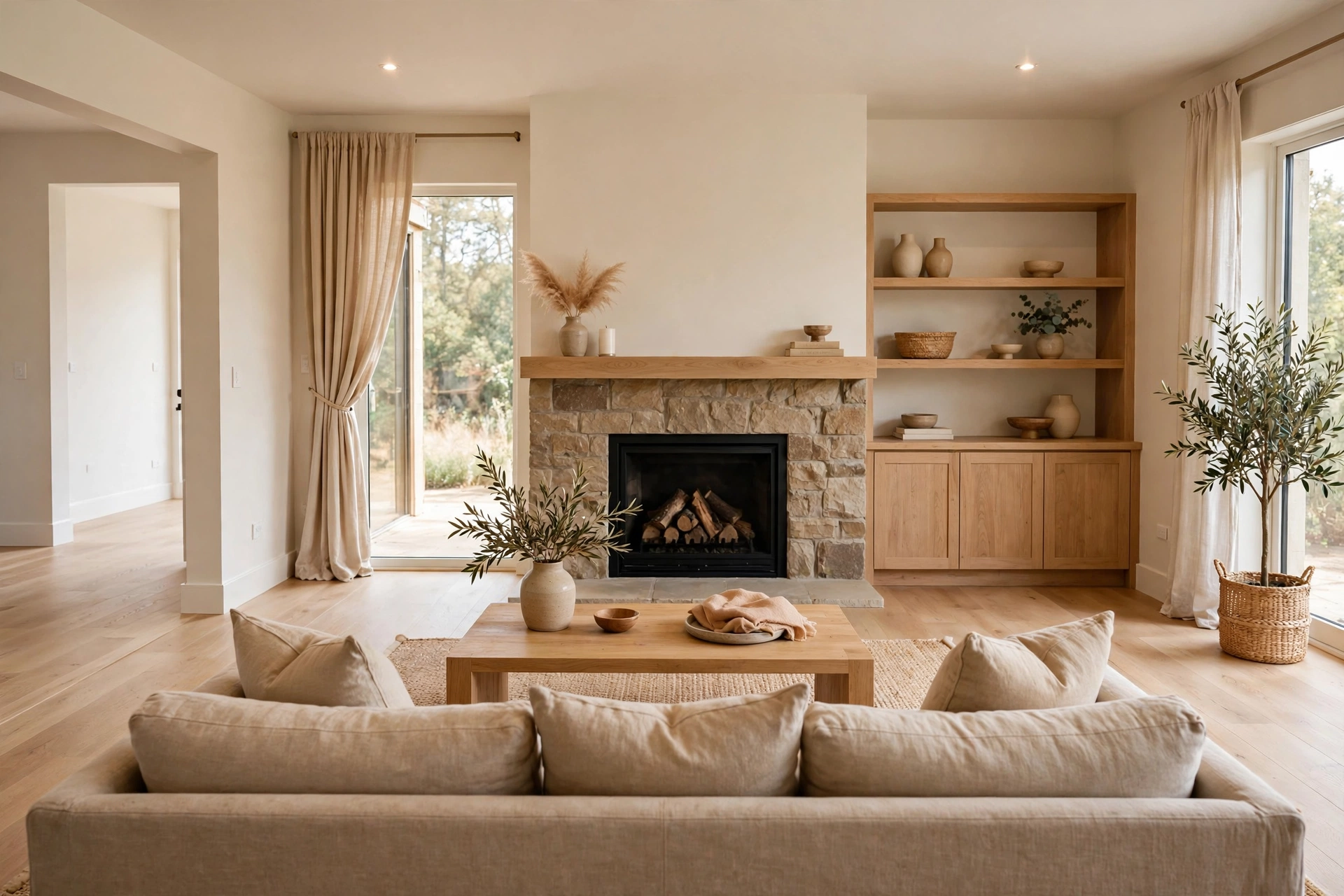
Before buying anything, look at how you move through the room. Stand at the main doorway and walk to the sofa, to the window, and to any other seating. A comfortable main walkway needs about 30 to 36 inches of clear width. A secondary path, for example behind a chair or beside a side table, needs at least 24 inches. If a coffee table, basket, or plant forces you to turn sideways, that item is in the wrong place.
Try the simplest test first. Pull the sofa a few inches away from the wall, if space allows. In many rooms, a gap of 3 to 6 inches behind a sofa makes the room feel planned rather than pushed to the edges, and it gives room for curtains or a narrow console. In a very small room, keep the sofa against the wall, but leave the walkways clear and avoid a coffee table that is wider than two thirds of the sofa length.
Next, remove everything that does not belong in the room, and everything that is broken, faded beyond use, or duplicated. Work in one pass, not room by room over several days, so you can see the floor and the walls clearly. Keep a box for items to move to another room, a box for donations, and a box for repairs. If an item has no clear use and no clear place, it is usually better to remove it than to buy storage for it.
Once the room is clear, check the focal point. A living room feels calm when the eye has one main place to rest: a fireplace, a large window, a television, or a main piece of art. Arrange the largest seating piece to face that focal point, or at an angle toward it, rather than facing a blank wall. Side chairs should angle slightly inward, not sit in a straight line against the wall. Leave 14 to 18 inches between a sofa and a coffee table, so you can set down a cup without stretching, and leave 12 to 18 inches between a chair and a side table for the same reason.
A common layout mistake is pushing every piece of furniture against the walls and leaving a large empty middle. In a medium or large room, grouping seating around a rug, even if the group floats a little away from the walls, makes conversation easier and makes the room feel smaller in a good way, more like a sitting area and less like a hallway. In a small room, the opposite rule applies: keep the main pieces close to the walls, choose one clear seating group, and avoid a second group that blocks the main path.
Lighting Layers: The Fastest Change You Can Make
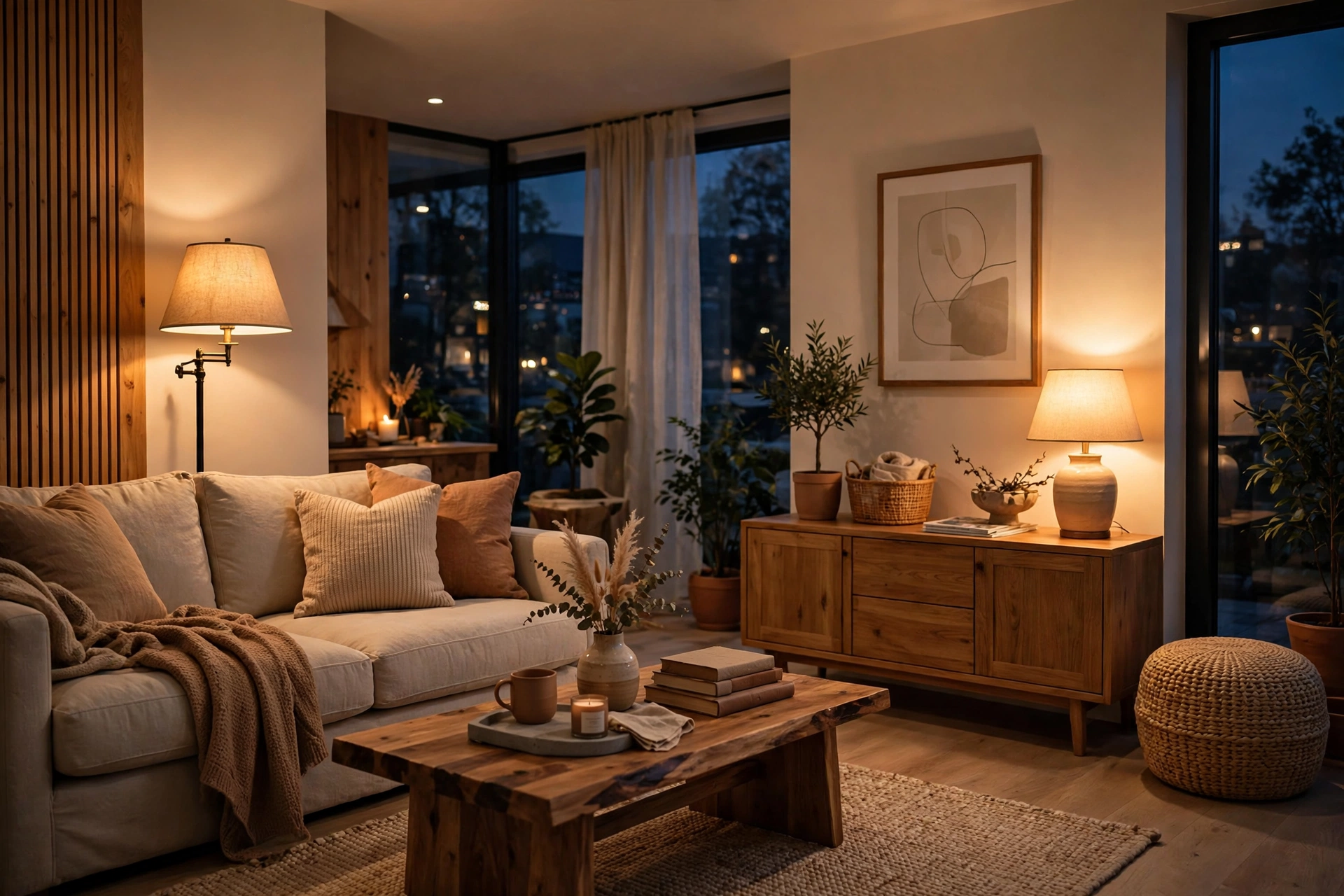
Lighting changes a room more quickly than paint or new furniture, and it costs less. Most tired living rooms rely on one overhead light, which creates harsh shadows and a flat look in the evening. A better plan uses three layers: ambient light for general brightness, task light for reading and work, and accent light for warmth and focus.
Ambient light can come from a ceiling fixture on a dimmer, if the fixture already has one, or from two or three lamps placed around the room. If a dimmer is not available, use bulbs of a lower brightness in the evening and brighter bulbs during the day, or use a plug in dimmer for a floor lamp. Warm white light, around 2700K to 3000K, usually looks best in a living room. Cooler light can feel like office lighting and can make warm wood and fabric look cold.
Task light belongs beside seating. A floor lamp beside a sofa should be tall enough that the bottom of the shade sits at about eye level when you are seated, usually 58 to 64 inches from the floor for a standard floor lamp. A table lamp on a side table should be 24 to 30 inches tall in total, including the shade, so the light falls on a book or a phone, not directly into your eyes. Place the lamp on the side you read from, and keep the cord tucked behind furniture so it does not cross a walkway.
Accent light adds depth. A small lamp on a shelf, a battery candle inside a lantern, or a picture light over art can make one corner glow without lighting the whole room. String lights are useful only when they are used with restraint: one strand along a shelf or inside a glass jar can look warm, while several strands across every wall can look busy. Keep accent light warm and low, and turn it on in the evening even when the main light is off, so the room has a soft second mood.
Sofa and Cushions: Comfort First, Then Colour
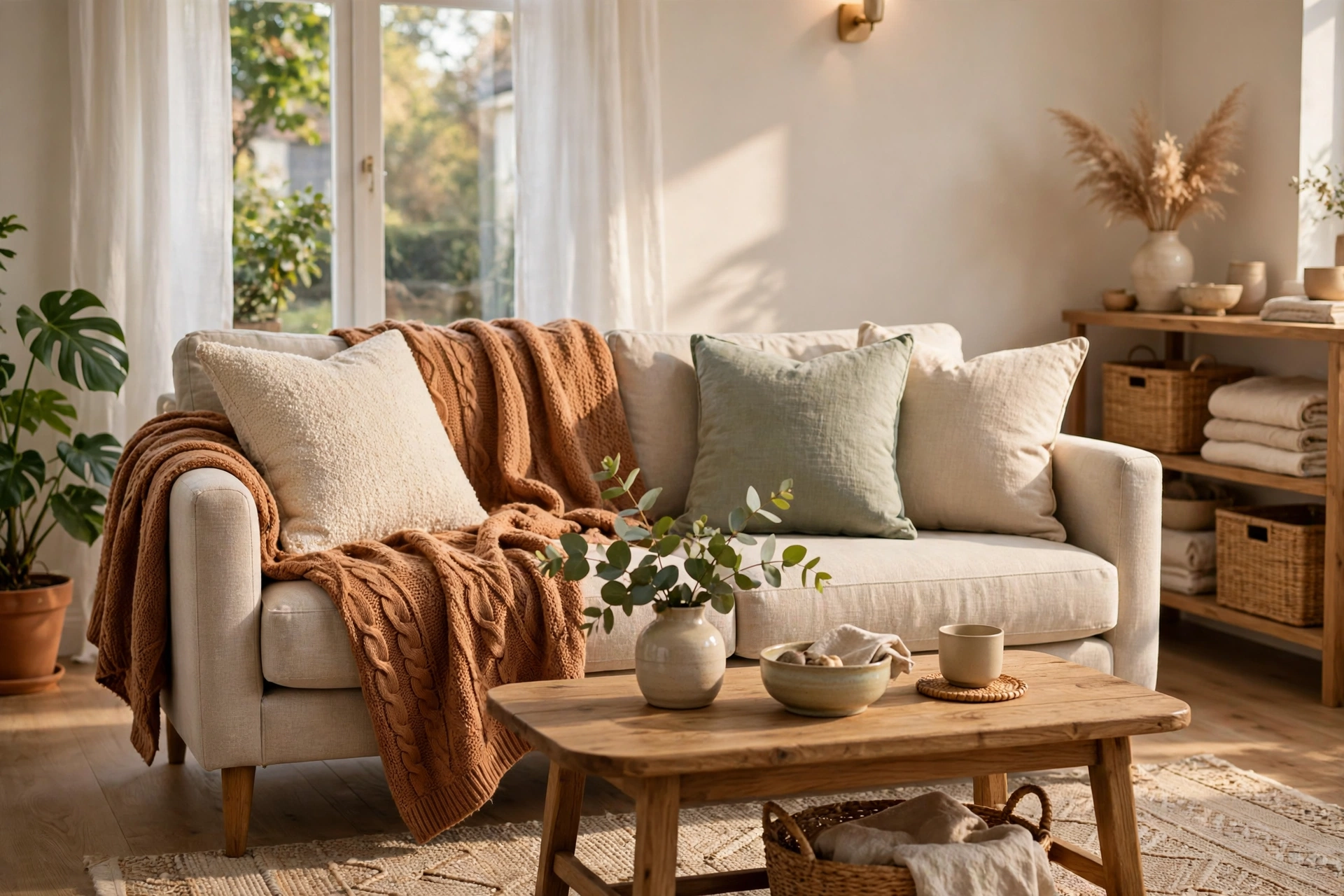
A sofa does not need to be replaced to look refreshed. Start with structure and comfort. Check the cushions: if they sag in the middle, unzip the covers, if the covers are removable, and rotate and fluff the inserts. Foam inserts can often be turned over and rotated from left to right, which spreads wear more evenly. If a cushion cover is washable, follow the care label, and wash all cushion covers at the same time so the colour stays even.
Cushion sizes matter more than cushion numbers. A standard sofa usually looks best with cushions in two sizes, not five different sizes. For a three seat sofa, use two 20 inch square cushions and two 18 inch square cushions, plus one lumbar cushion about 14 inches by 24 inches if you like extra back support. For a two seat sofa or loveseat, use two 18 inch cushions and one lumbar cushion. For a single chair, one 18 inch cushion is usually enough. Avoid filling every inch of the sofa with cushions, because that leaves no place to sit comfortably.
Colour and texture should be layered, not matched exactly. Choose one main cushion colour that relates to the rug or the art, one contrasting colour, and one textured option, such as linen, velvet, knit, or cotton with a visible weave. A room with all cushions in the same fabric can look flat in photos and in real life. A room with cushions in three unrelated bright colours can look scattered. The middle path works best: two calm colours, one accent colour, and at least one textured fabric.
Rugs and Sizing: The Rule That Fixes Most Rooms
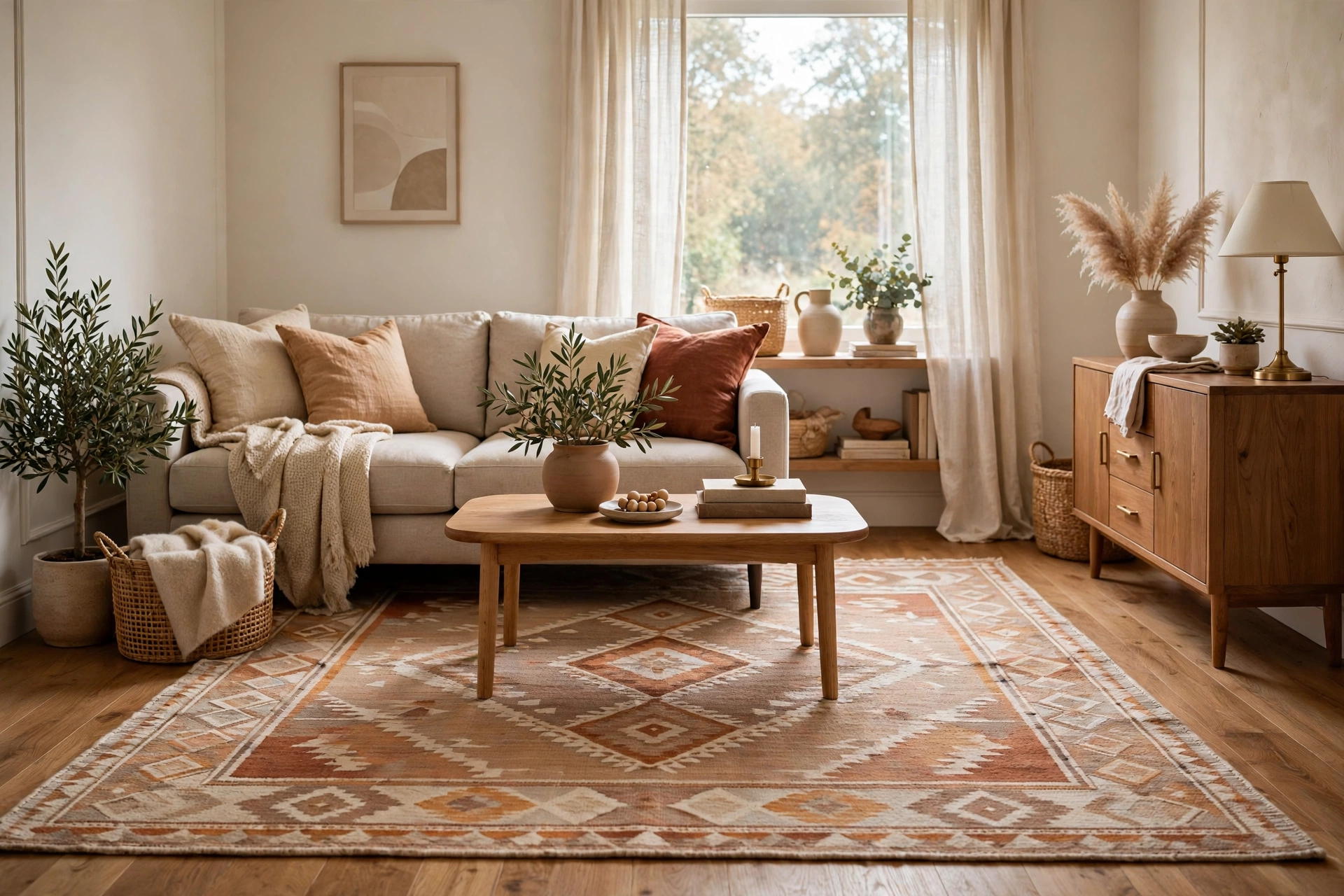
A rug that is too small is one of the most common living room mistakes, and it makes even good furniture look disconnected. The rug should anchor the seating group, not float under a coffee table alone. Use these size guides as a starting point, and measure your room before buying.
For a standard three seat sofa, about 84 inches wide, a rug of 8 feet by 10 feet usually works well in a medium room, with the front legs of the sofa and chairs on the rug. For a larger sectional, a rug of 9 feet by 12 feet is often needed to reach under the main seating pieces. For a small room with a loveseat, about 60 inches wide, a rug of 5 feet by 8 feet can work, provided the front legs of the seating sit on the rug and at least 6 inches of rug extends beyond each side of the coffee table.
Three placement options cover most rooms. First, all legs on the rug: the rug is large enough that the sofa, chairs, and coffee table all sit fully on it. This looks most finished, but it needs the largest rug. Second, front legs on the rug: the front legs of the sofa and chairs sit on the rug, while the back legs sit on the floor. This is the most common and most practical option. Third, coffee table only: only the coffee table sits on the rug. This usually looks too small, unless the room is very small and the rug is used mainly for colour under the table.
Leave a border of bare floor around the rug, usually 12 to 18 inches between the rug edge and the wall in a medium room, and at least 8 inches in a small room. Always use a rug pad underneath, unless the rug already has a non slip backing.
Walls and Art: Height, Scale, and Grouping
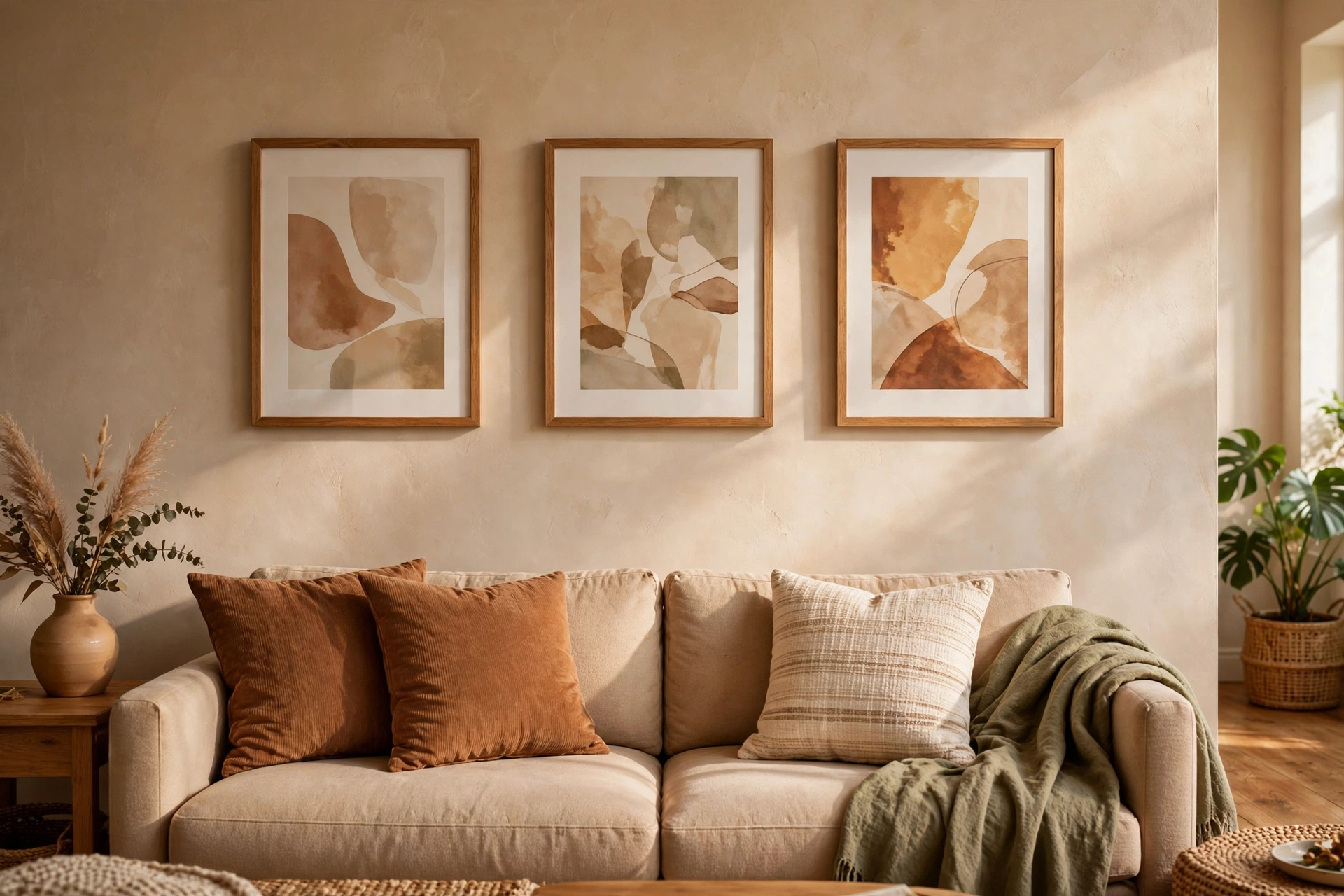
Bare walls make a room feel unfinished, but a wall covered in small, unrelated frames can feel busy. Start with scale. A piece of art over a sofa should be about two thirds of the sofa width. For an 84 inch sofa, that means art about 56 inches wide in total, which can be one large piece or a group of two or three pieces with small gaps between them. Art that is much smaller than the furniture below it will look lost, even if the art itself is beautiful.
Hanging height is more important than most people realise. The centre of a single piece of art should sit at about 57 to 60 inches from the floor, which is close to average eye level. Over a sofa, hang art 6 to 8 inches above the top of the sofa back, not high near the ceiling. Over a console or sideboard, hang art 6 to 10 inches above the furniture. If you hang art too high, the wall and the furniture will look disconnected, and the room will feel taller in an awkward way.
Grouping art works when the pieces share something: a similar frame colour, a similar subject, a similar colour palette, or a similar size. A gallery wall with many different frame colours, sizes, and subjects can still work, but it needs a clear plan. Lay the pieces on the floor first, in the arrangement you plan to hang, and leave 2 to 4 inches between frames. Take a photo of the floor layout, so you can refer to it while hanging. Start with the largest piece in the centre or slightly off centre, then build outward.
Mirrors can help a small or dark living room, but only when they reflect something pleasant. A mirror opposite a window can double daylight. Hang it at the same centre height as art, about 57 to 60 inches from the floor. If you cannot hang art because you rent, use leaning art, picture ledges, or removable hanging strips rated for the weight of the frame.
Shelves and Styling: Less, Grouped, and Useful
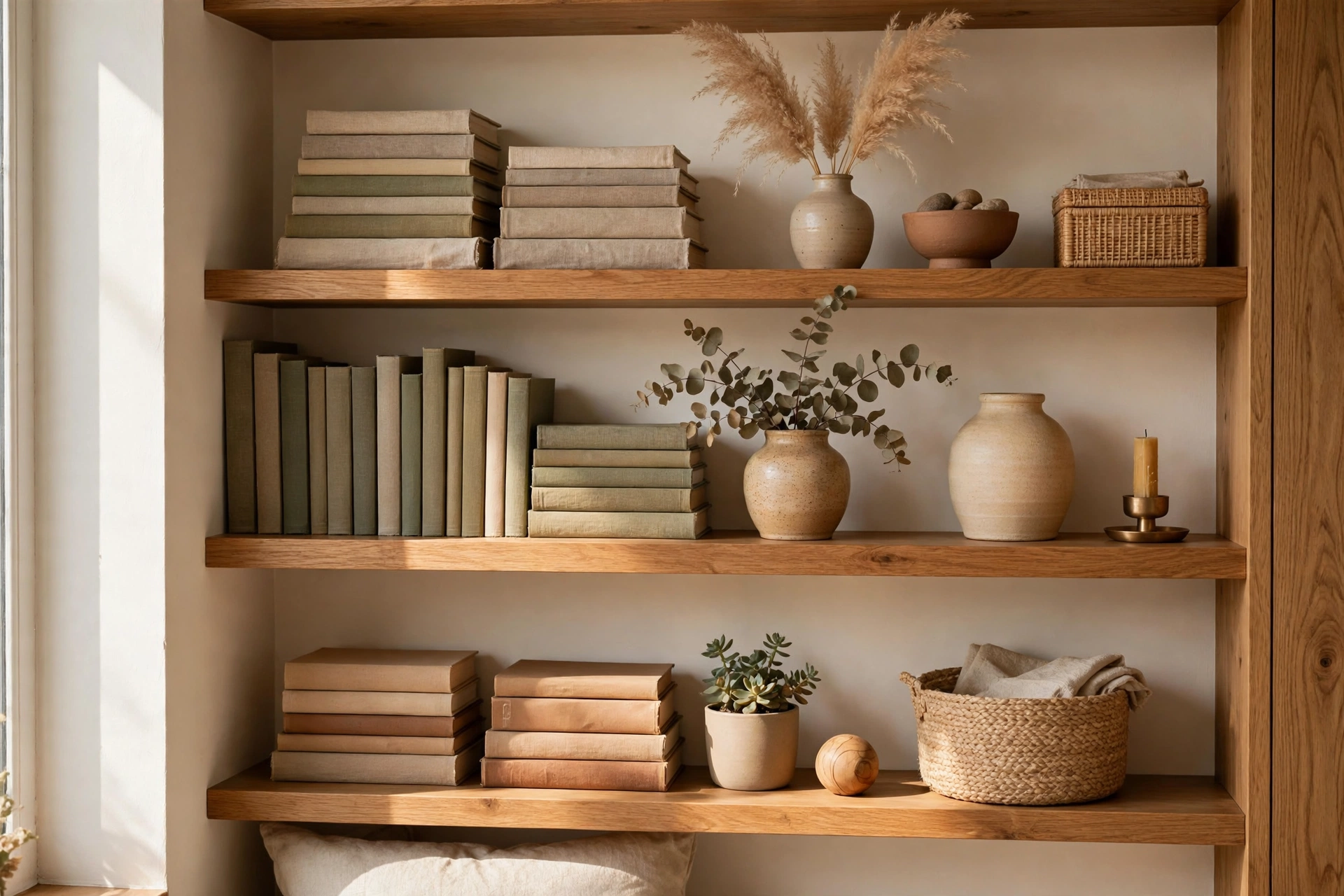
Shelves look best when they hold fewer items, grouped by size and use, with some empty space left visible. A shelf packed edge to edge with books, frames, and small objects will look like storage, even if every object is attractive. A shelf with three groups, each group made of two or three items, plus one empty section, will look styled.
Use a simple grouping method. Place books horizontally in a stack of three to five, then place one small object on top of the stack, such as a small plant, a candle, or a decorative box. Place taller items, such as vases or tall frames, at the ends of a shelf, and shorter items in the middle, so the eye moves across the shelf without a sudden jump. Leave at least one shelf, or one section of a shelf, partly empty, so the room can breathe.
Mix materials, but keep a colour limit. Wood, ceramic, glass, metal, and plants can sit together, provided the colours stay within a small palette. If every shelf object is a different bright colour, the shelf will compete with the rest of the room. If every object is the same colour, the shelf can look flat. A palette of two main colours, plus wood tones and green from plants, usually works well.
Avoid placing many small objects in a straight line with equal gaps, placing only one tiny object on a large shelf, or leaving routers and chargers visible on an open shelf. Use a cable box or a lidded basket for chargers, and keep cables behind furniture where possible.
Plants: Scale, Light, and Low Maintenance Choices
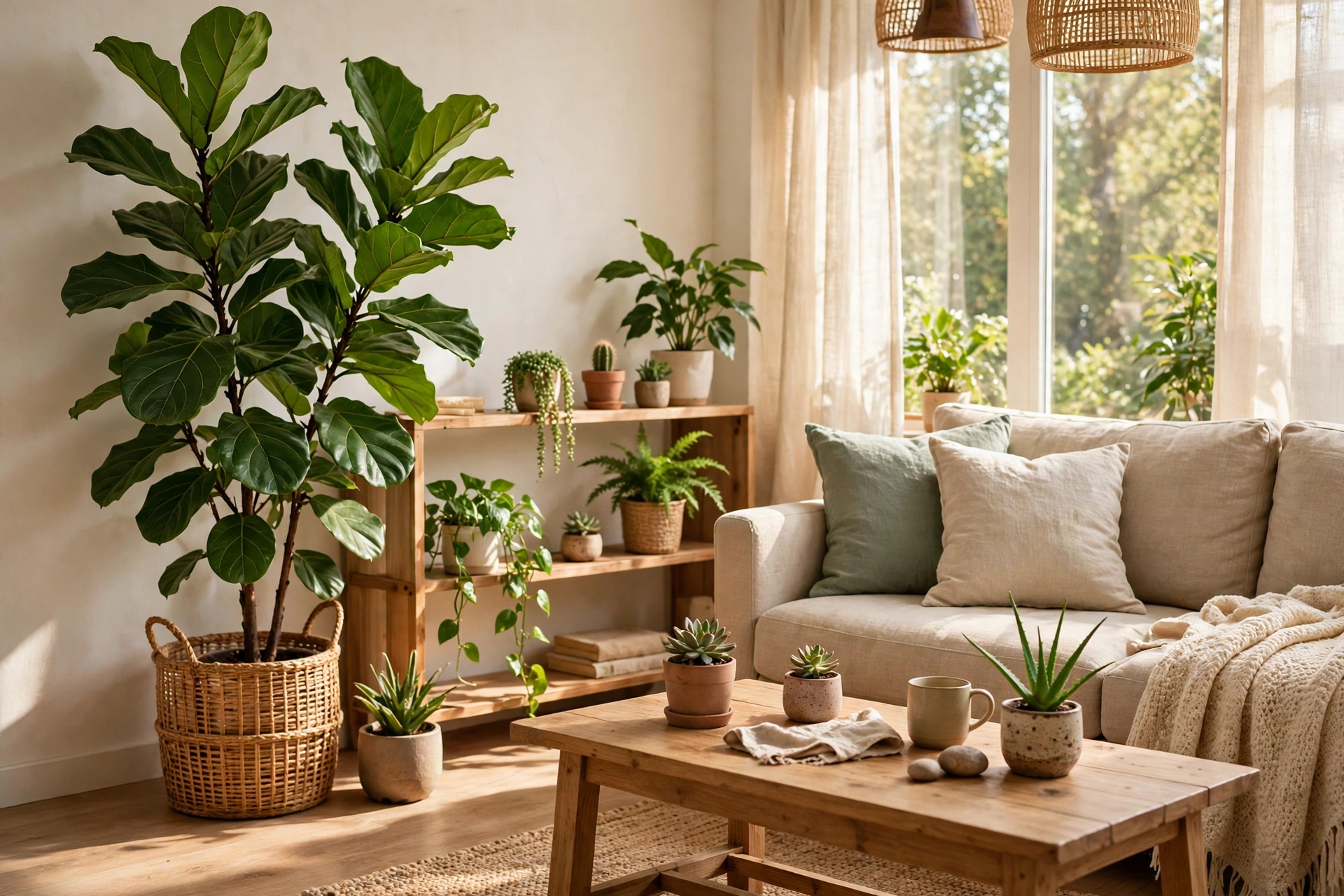
Plants add life, colour, and softness, but only when they match the light in your room and the care you can realistically give. Start by checking light. A south facing window, in the northern hemisphere, gives the brightest light. An east facing window gives gentle morning light. A north facing window gives low, even light. Most common indoor plants prefer bright, indirect light, which means near a window but not in direct sun for most of the day.
Choose plant sizes to match the room. A large floor plant, in a pot 12 to 14 inches wide and a plant 4 to 6 feet tall, works as a focal point in a corner or beside a sofa. A medium plant, in a pot 8 to 10 inches wide, works on a side table, a stool, or a plant stand. A small plant, in a pot 4 to 6 inches wide, works on a shelf, a windowsill, or a coffee table, provided it does not block conversation across the table. Avoid placing many tiny plants in a row on every surface, because that can look cluttered and can make watering a chore.
Low maintenance options are a good starting point if you are new to plants or if you travel often. Snake plants, pothos, ZZ plants, and spider plants are commonly recommended for beginners because they tolerate missed watering better than many other houseplants. Always check the care needs for the specific plant you buy, because even hardy plants can suffer from overwatering. In most cases, it is safer to let the top inch of soil dry before watering again, rather than watering on a fixed schedule regardless of soil moisture.
Small Room Ideas: Make a Small Living Room Feel Larger
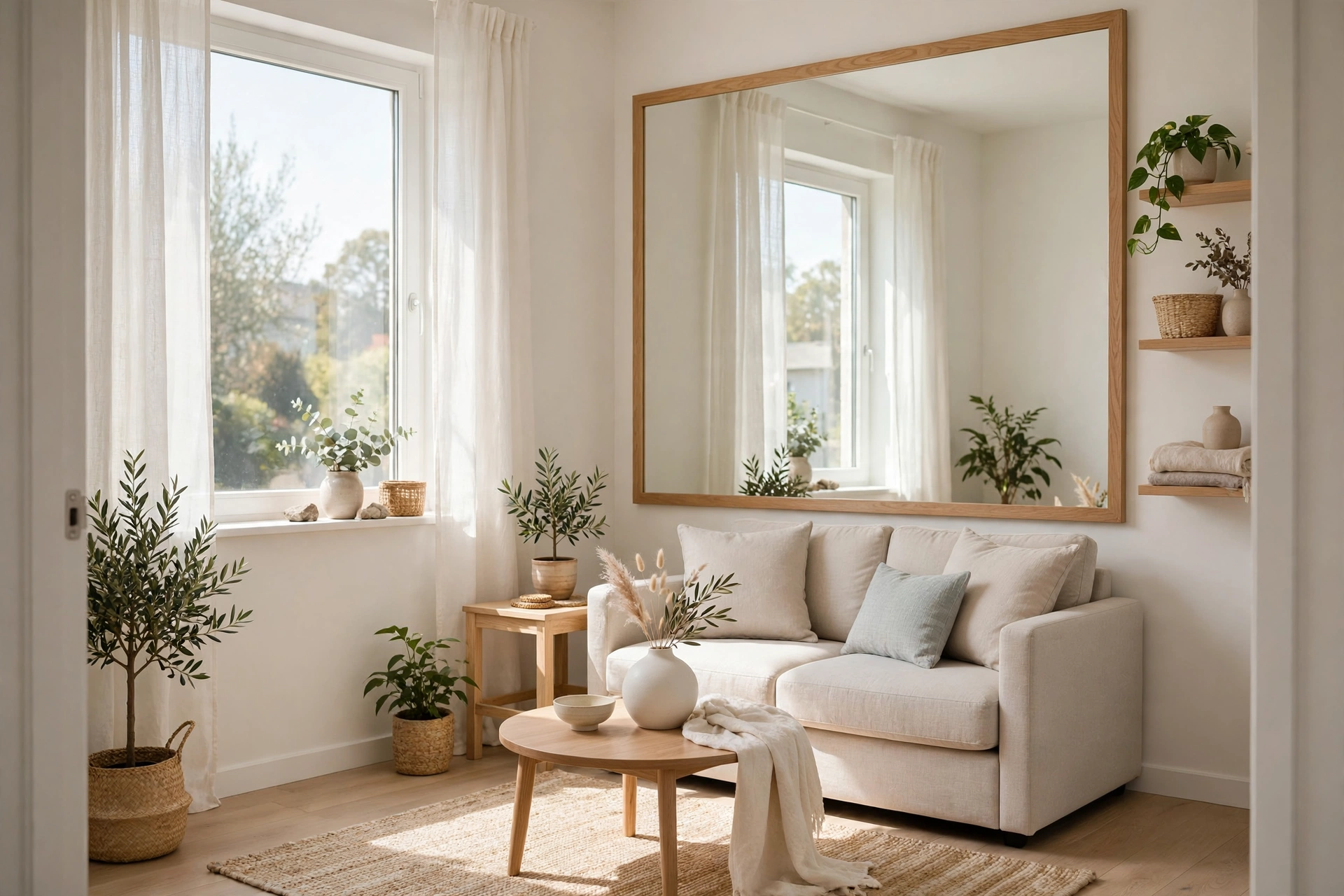
Small living rooms need different choices, not just smaller versions of large room ideas. The goal is to keep sight lines open, keep furniture low and light in appearance, and use vertical space without cluttering it.
Choose furniture with visible legs, rather than furniture that sits flat on the floor, because visible floor underneath makes a room feel larger. Choose a sofa with a lower back, if possible, so it does not block a window or a view across the room. Choose a coffee table with a glass top or an open shelf underneath, rather than a solid, heavy table that blocks the view of the rug and floor.
Use light wall colours, such as warm white, pale grey, or pale sage, with deeper colour in cushions and art for contrast. Keep storage closed where possible: a storage ottoman or a console with doors hides everyday items better than open shelves in a small room.
Avoid a rug that is too small, a television that is too large for the viewing distance, and curtains that stop at the windowsill. For curtains, hang the rod 4 to 6 inches above the window frame, and extend it 6 to 10 inches beyond each side of the window, so the curtains can be pulled fully to the sides during the day. Curtain length should reach the floor, or just brush the floor, usually within 0.5 inches of the floor, rather than stopping halfway down the wall, which can make a window look short.
Weekend Plan: A Simple Order That Works
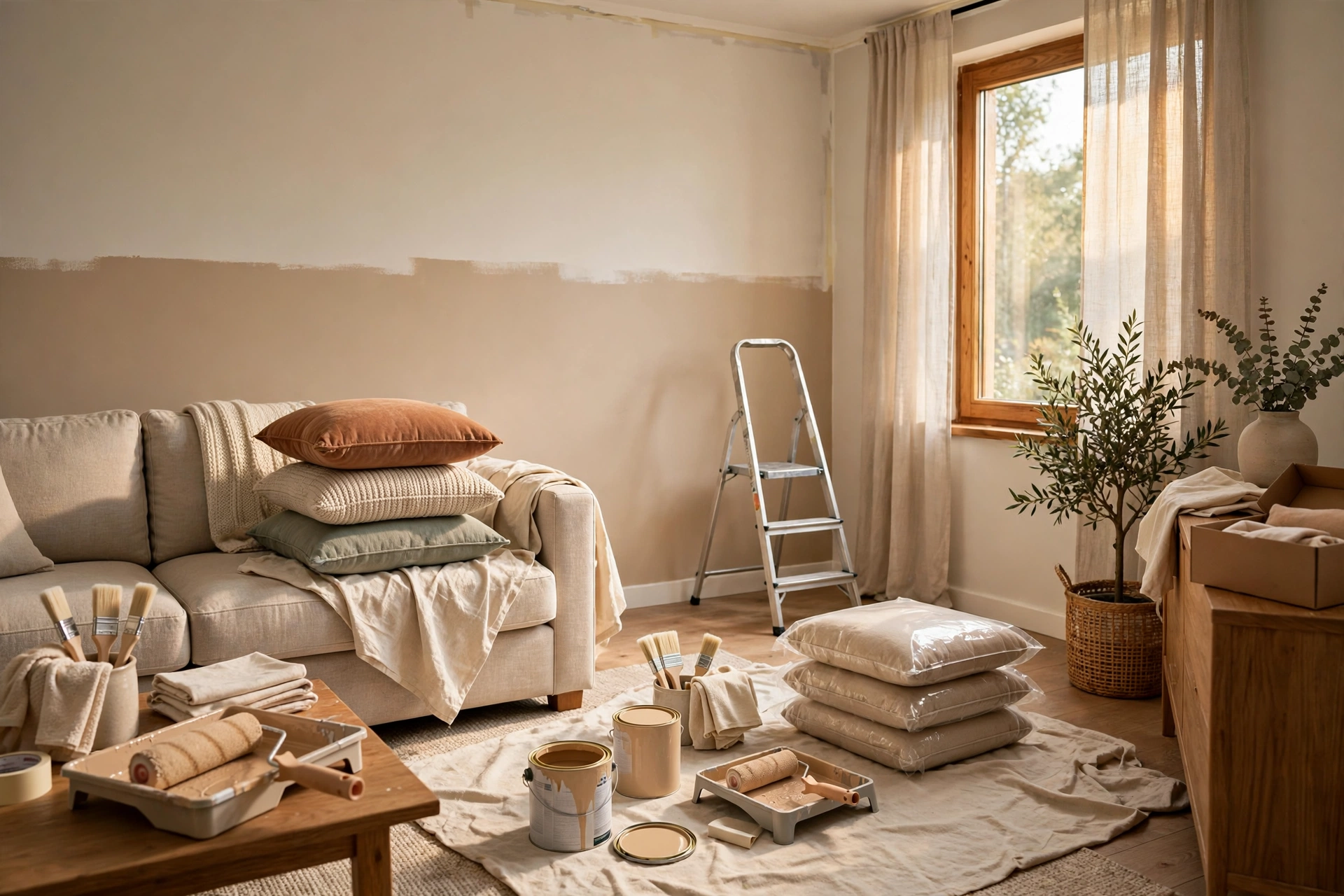
Start on Saturday morning by decluttering and cleaning, including dusting shelves, vacuuming under furniture, and wiping light fixtures. In the afternoon, test a new layout, moving only the largest pieces first, and live with that layout for a few hours before deciding. On Sunday, add lighting layers and a rug, if you have bought one, then style shelves, hang or move art, and add plants last. This order prevents the common problem of buying cushions and decor first, then finding that the layout still does not work.
Budget Tiers: Start Small, Add Layers
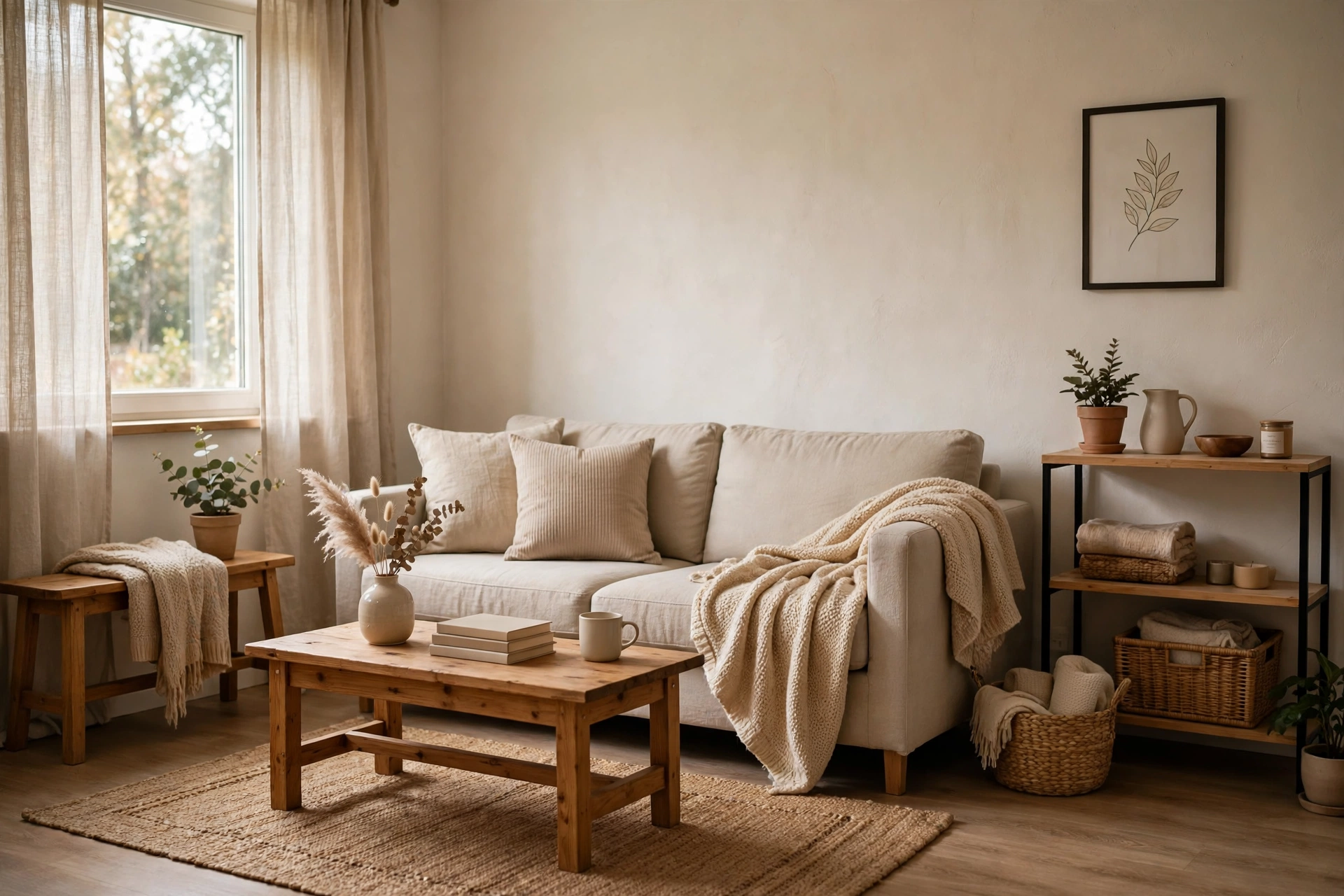
A refresh does not need a large budget to work. Start with free changes: decluttering, moving furniture, rotating cushions, and cleaning light fixtures and windows. These steps alone can make a room feel lighter and more open, and they help you see what actually needs buying.
Next, add low cost layers: new cushion covers, a throw, a rug pad, a new lamp shade, and a plant. These items usually cost less than furniture, and they can be changed again later without a large loss. If you buy one larger item, make it the item that touches the most of the room, usually a rug or a lamp, rather than many small decorations.
For a larger budget, focus on items that last: a good rug, a quality floor lamp, and one large piece of art. Avoid buying a full set of matching decor at once, because a room built in layers usually looks more personal and more comfortable than a room bought in one shopping trip. Keep receipts and measure twice, especially for rugs and art, because return costs for large items can be high.
What to Avoid When Refreshing
The most common mistake is buying decor before fixing layout and light. A new cushion will not fix a blocked walkway, and a new frame will not fix a room that has only one harsh overhead light. Another common mistake is adding too many small items at once. If you add five new objects in one weekend, the room can feel busy even if each object is attractive. Add one layer at a time, live with it for a day, then decide what is still missing. Finally, avoid ignoring measurements. A rug, a lamp, and art all have size guides for a reason, and guessing often leads to returns and extra cost.
FAQ
What is the cheapest way to refresh a living room?
Start with free changes: decluttering, moving furniture, cleaning windows and light fixtures, and rotating cushions. After that, low cost layers such as cushion covers, a throw, and a plant usually give the largest visual change for the smallest cost.
What size rug should I buy for a standard sofa?
For a standard three seat sofa, about 84 inches wide, a rug of 8 feet by 10 feet usually works well, with the front legs of the sofa and chairs on the rug. For a small loveseat, a rug of 5 feet by 8 feet can work, provided the front legs sit on the rug.
How high should I hang art above a sofa?
Hang art 6 to 8 inches above the top of the sofa back, with the centre of the art at about 57 to 60 inches from the floor for a single piece. This keeps the art connected to the furniture below it, rather than floating near the ceiling.
Can I refresh a rented living room without painting?
Yes. Layout, lighting, rugs, cushions, throws, plants, and removable art can change a room without paint. Use picture ledges, leaning art, and removable hanging strips rated for the frame weight, and check your lease before hanging anything heavy.
How many cushions should I use on a sofa?
For a three seat sofa, use two 20 inch square cushions and two 18 inch square cushions, plus one lumbar cushion if you like extra back support. For a two seat sofa, use two 18 inch cushions and one lumbar cushion. Avoid filling every inch of the sofa, so there is still room to sit comfortably.
Conclusion
A living room refresh does not need a renovation. Start with layout and decluttering, add lighting layers, fix the rug size, refresh the sofa with cushions and texture, hang art at the right height, style shelves with less, and add plants last. Work in that order, measure before buying, and add one layer at a time. The result is a room that looks newer, feels calmer, and works better for everyday life, without knocking down a wall.